Vintage clothes deserve more than a hanging rod. They deserve a closet that feels like a warm storybook.
When you set up your space with care, getting dressed turns into a fun little ritual.
-
1.
Sort by “eras,” not by hangers
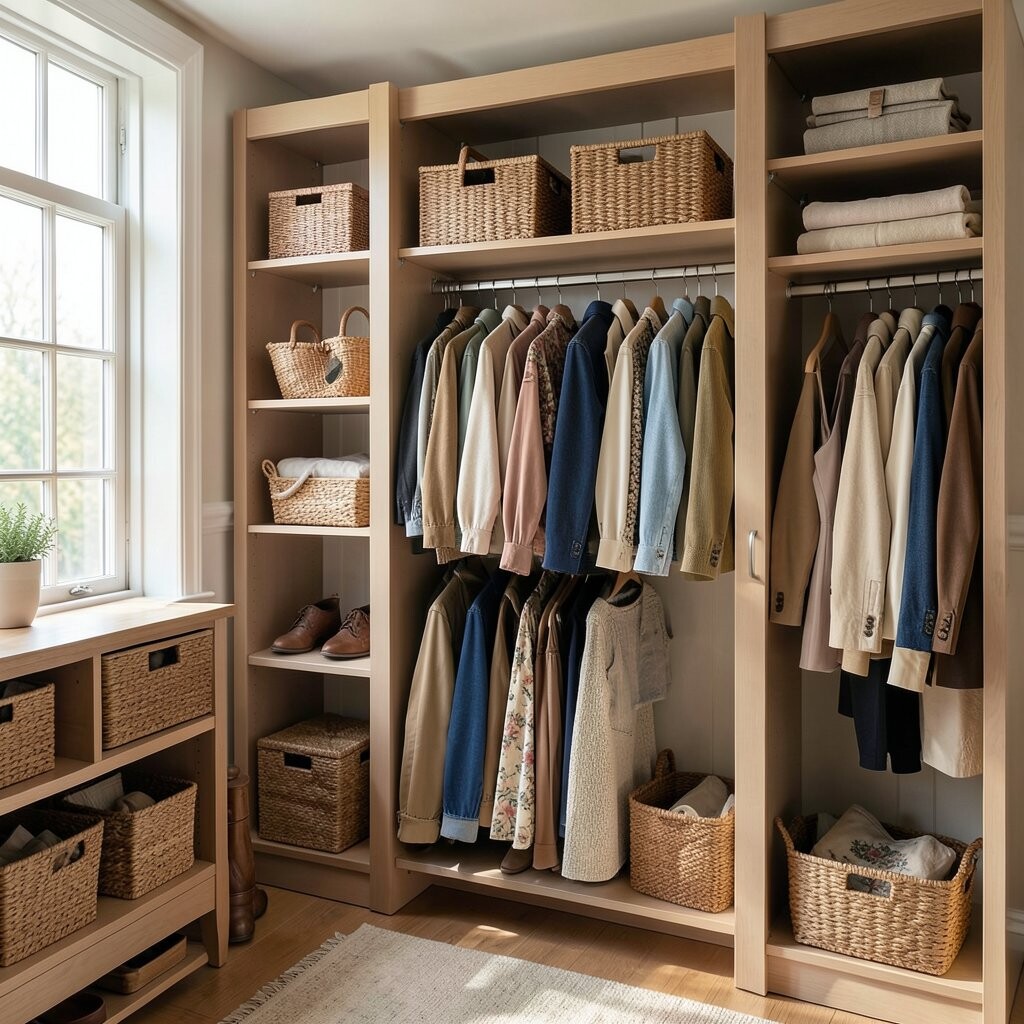
Sort by “eras,” not by hangers Pick a few broad time periods you love, like flirty decades or old-school classics. Then give each one a clear zone in your closet with matching hangers or labels.
Now you can grab an outfit fast because everything that feels similar is already together. This also helps you see gaps in your collection, like missing pieces from a favorite era. A small tip: use color-coded hang tags so each zone feels playful.
-
2.
Hang vintage scarves like artwork

Hang vintage scarves like artwork Instead of hiding scarves in a drawer, display them on hooks or a scarf rack. Fold them neatly and let the colors peek out like little banners.
This makes your closet look styled even on busy mornings. It also keeps delicate fabric from getting crushed and tangled. If you want personalization, group scarves by color mood: sunset tones, jewel shades, or soft pastels.
For cost, try what you already own: binder rings, tension rods, or simple wall hooks. A current trend is “soft accessory styling,” where scarves are treated as finishing touches, not afterthoughts.
-
3.
Use shadow boxes for buttons and small treasures
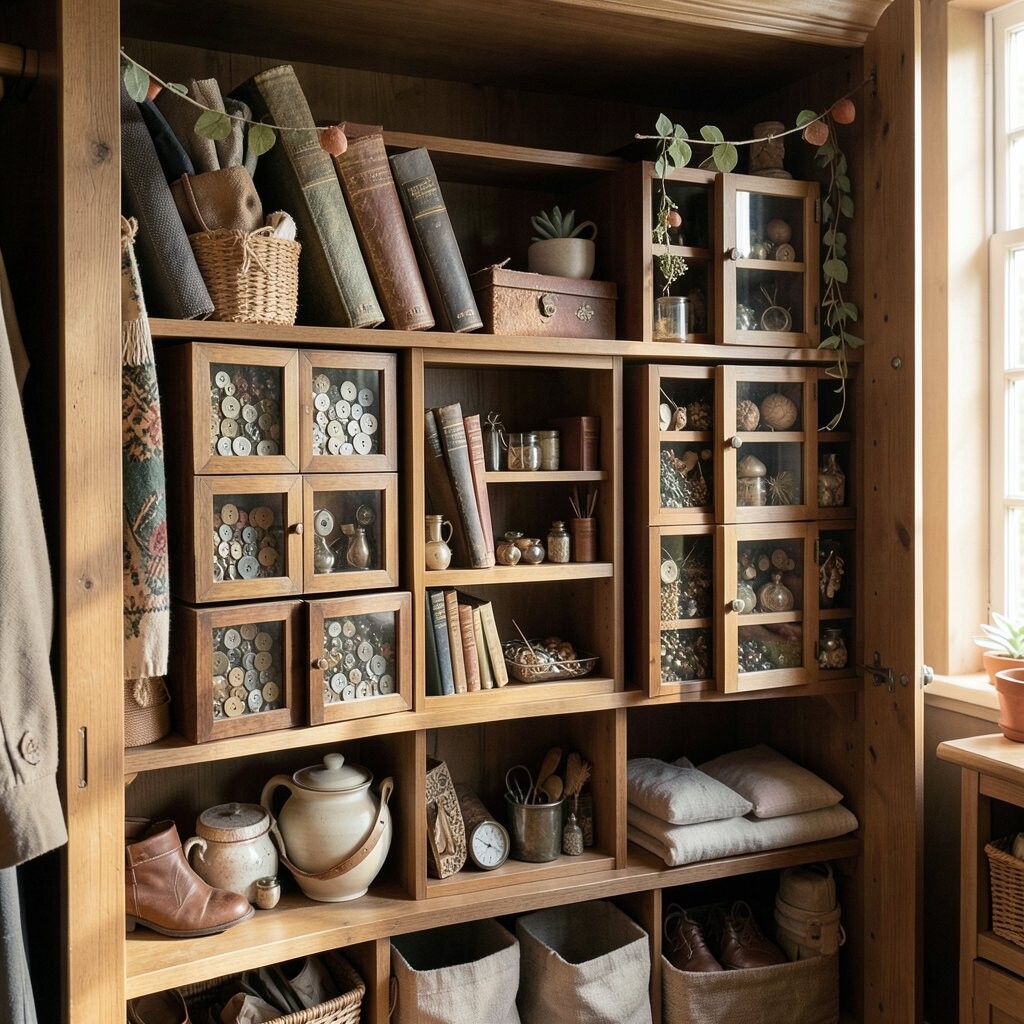
Use shadow boxes for buttons and small treasures Find old buttons, brooches, and sewing charms you love, then place them in small shadow boxes. Label each one by use, like “coat repairs” or “dress accents.”
When your supplies are visible, you are more likely to mend instead of replace. That helps vintage pieces last longer and keeps your outfits feeling special. Try adding a tiny card with where you found the items or why you keep them.
For a budget-friendly option, repurpose picture frames from thrift stores. This idea is unique because it turns repair tools into decoration, which feels very vintage-craft.
-
4.
Create a “repair corner” with supplies in reach
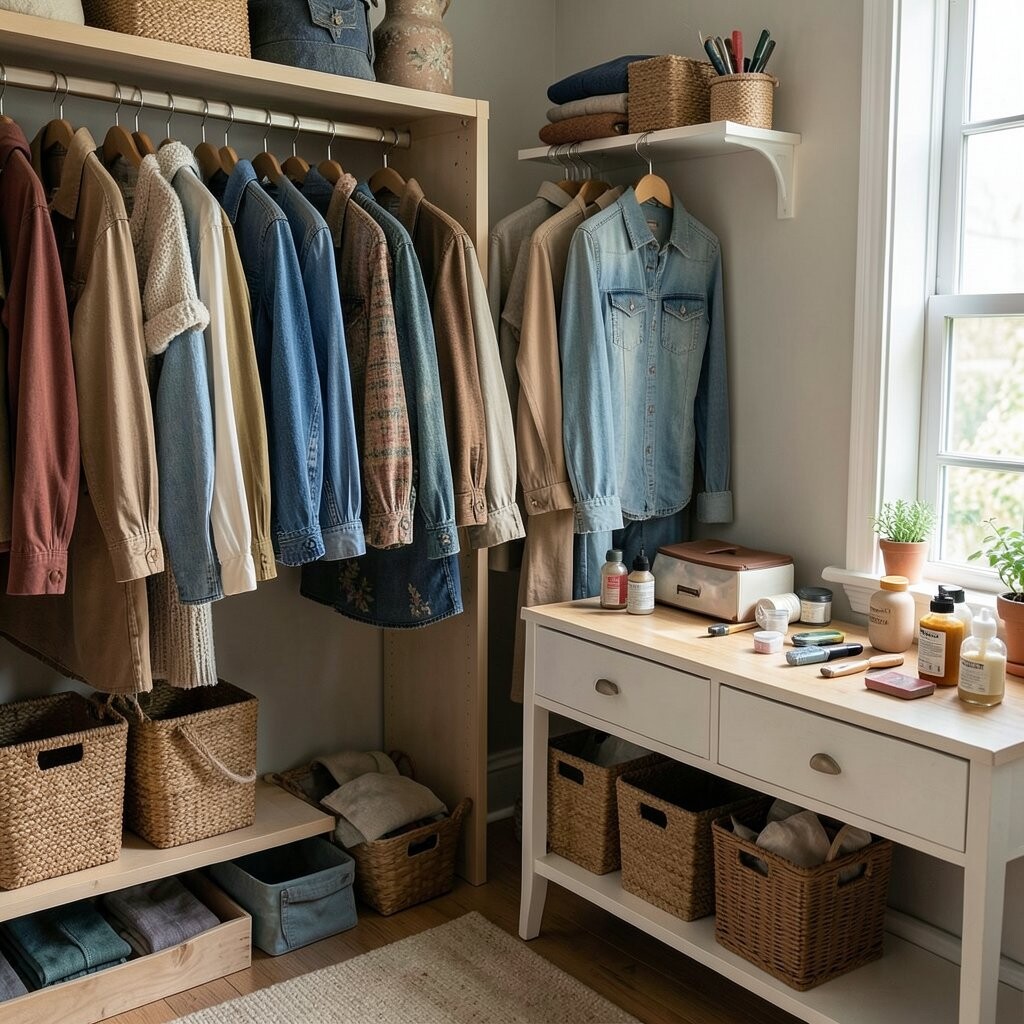
Create a “repair corner” with supplies in reach Set up a small shelf or caddy with thread, needles, a lint brush, and fabric tape. Put your best tools on top so you see them every time you open the closet.
This prevents tiny issues from becoming big problems. You will also feel calmer when you can fix a loose button or smooth a wrinkled collar right away. A helpful tip is to keep a measuring tape nearby for quick fit checks.
-
5.
Install a second rod at different heights

Install a second rod at different heights A lower rod is great for skirts, dresses, and hanging knits. A higher rod works for jackets, coats, and pieces that need extra airflow.
This setup makes your closet feel balanced and helps clothes stay wrinkle-free. You also avoid the “everything gets squished” problem that happens in one crowded space. Personalization idea: hang your most-loved pieces at eye level so they feel like stars.
Cost depends on what you install, but you can start with simple hardware kits. The current trend is “vertical styling,” where people use height to show off fabric textures and silhouettes.
-
6.
Swap plastic hangers for slim, matching ones
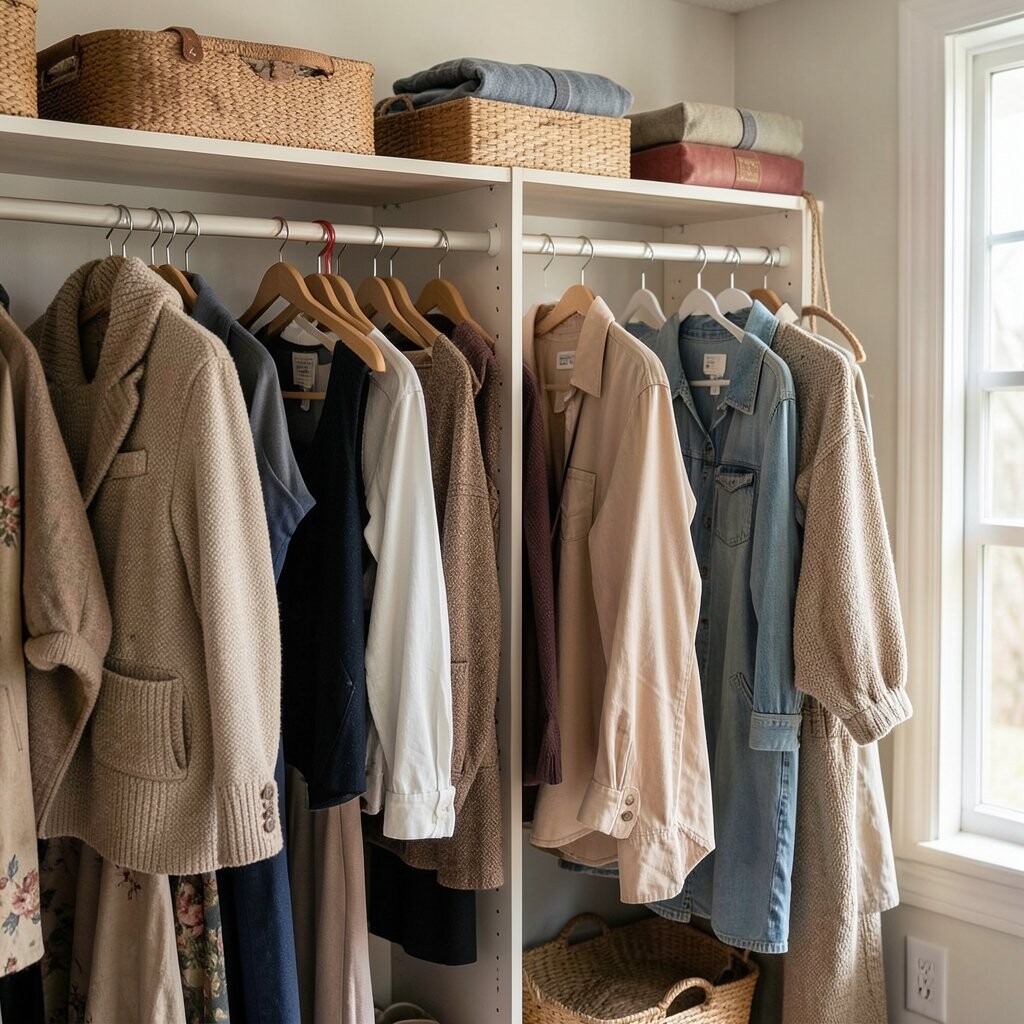
Swap plastic hangers for slim, matching ones Choose sturdy wooden or slim velvet hangers that match your style. When your hangers look neat, your closet instantly feels calmer and more “curated.”
Velvet is especially nice for vintage fabrics because it helps prevent slipping. Matching hangers also make it easier to spot gaps in your outfits. Tip: for heavy coats, use strong hangers and add a hook for scarves nearby.
If you want to spend less, hunt for a thrift bundle and upgrade slowly. This is a small change with a big visual payoff.
-
7.
Make a “cape and coat” hook wall
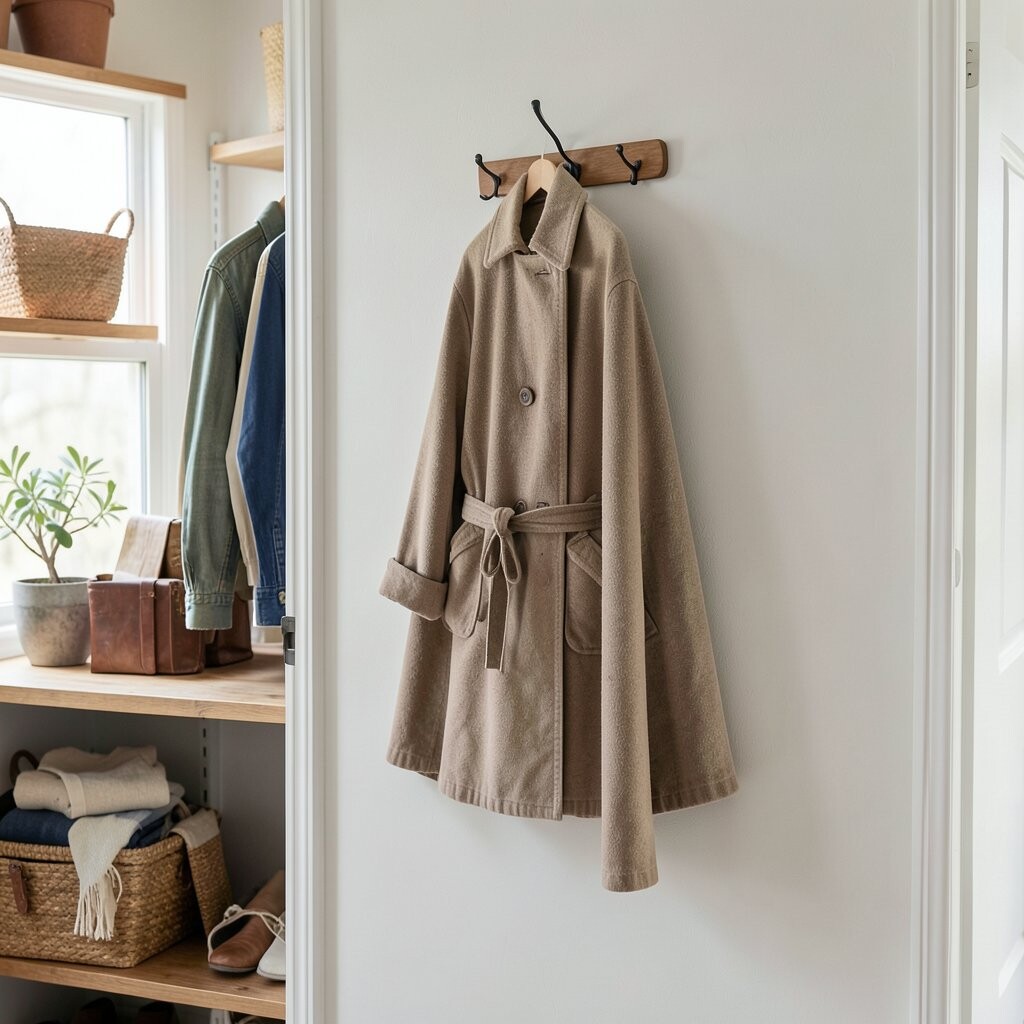
Make a “cape and coat” hook wall Use decorative hooks on a wall or inside the closet door for capes, shawls, and long coats. Hang them like characters on a stage, with fabric spread just a little.
This keeps layers from getting tangled and makes seasonal dressing faster. It also protects delicate sleeves because you can arrange each piece without stress. For personalization, paint or stain the hooks to match your closet mood: creamy, brass-like, or dark and moody.
Cost can be low if you use old hooks from a yard sale or flea market. A trend right now is “door organization styling,” where the closet entrance becomes part of the look.
Tip: add fabric clips for slippery items so they keep their shape.
-
8.
Keep a labeled “vintage hanger label” system

Keep a labeled “vintage hanger label” system Attach small labels to hangers that say things like “button-front,” “silk,” or “special occasion.” You can also note size changes if you tailor pieces. This helps you build outfits with fewer guesswork moments.
The benefit is smart matching, so you can style faster and waste less time. It also supports personalization because your labels become like a personal clothing journal. A budget-friendly way is using masking tape and a simple marker until you decide on final labels.
-
9.
Use clear bins for seasonal vintage accessories
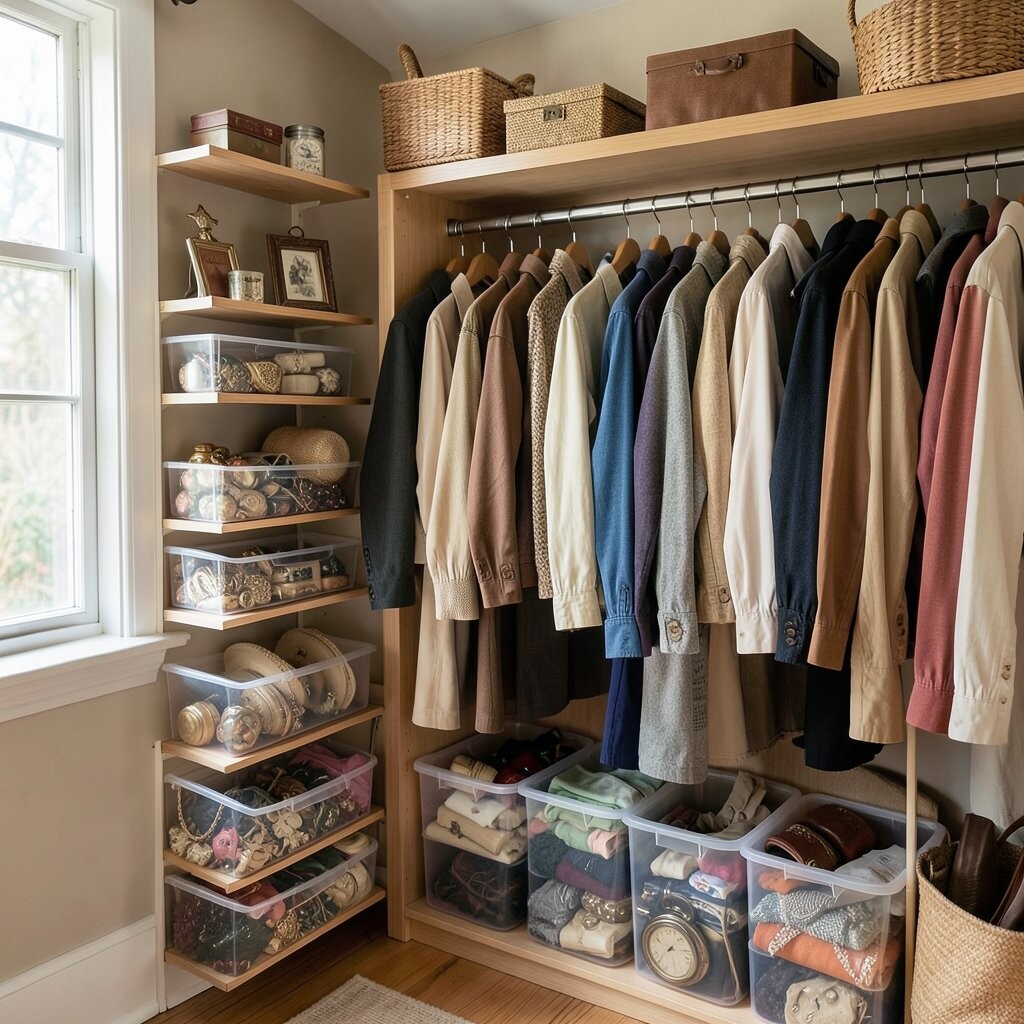
Use clear bins for seasonal vintage accessories Clear bins let you see what is inside without opening everything. Use one bin for winter accessories and another for warm-weather extras.
This protects items from dust and keeps your closet from feeling crowded. You can also avoid the “where is it?” stress when an outfit calls for the perfect scarf or gloves. Personalize the bins with stickers that match your outfit colors or seasonal vibes.
If you want to stay on budget, look for mismatched bins but keep the labels consistent. This matches the current trend of “quiet organization,” where storage looks neat but not overly fancy.
-
10.
Install vintage-inspired drawer pulls
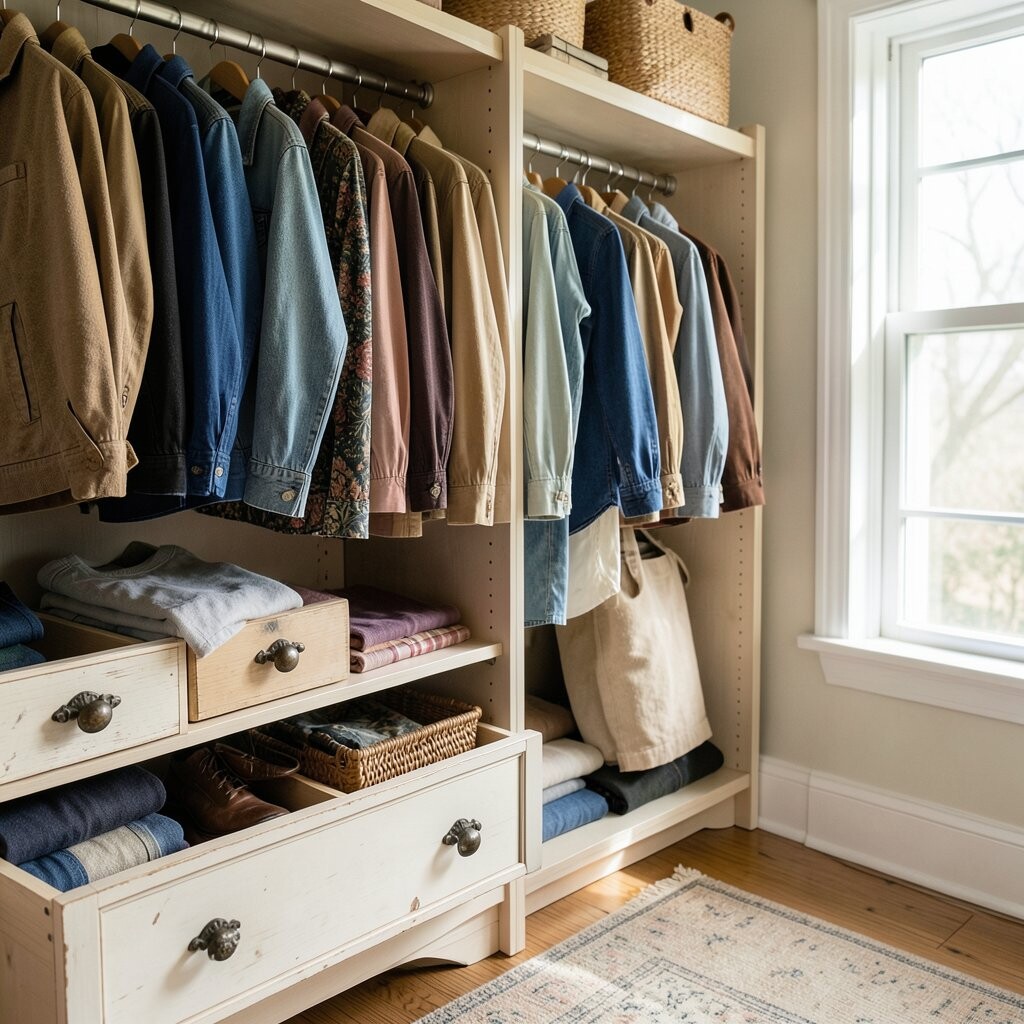
Install vintage-inspired drawer pulls Swap basic drawer handles for brass knobs, porcelain pulls, or carved wooden pieces. Even one new knob can make the whole closet feel dressed up.
The benefit is emotional: you will actually want to open drawers and enjoy your clothes. It also helps you remember which drawer holds what, especially if you label them. Tip: choose pulls that are easy to grip, so you do not struggle with small drawers.
Cost depends on what you buy, but thrift stores often have matching hardware sets. This idea feels unique because it adds vintage charm without needing new furniture.
-
11.
Fold knits using the “air-flow fold” method
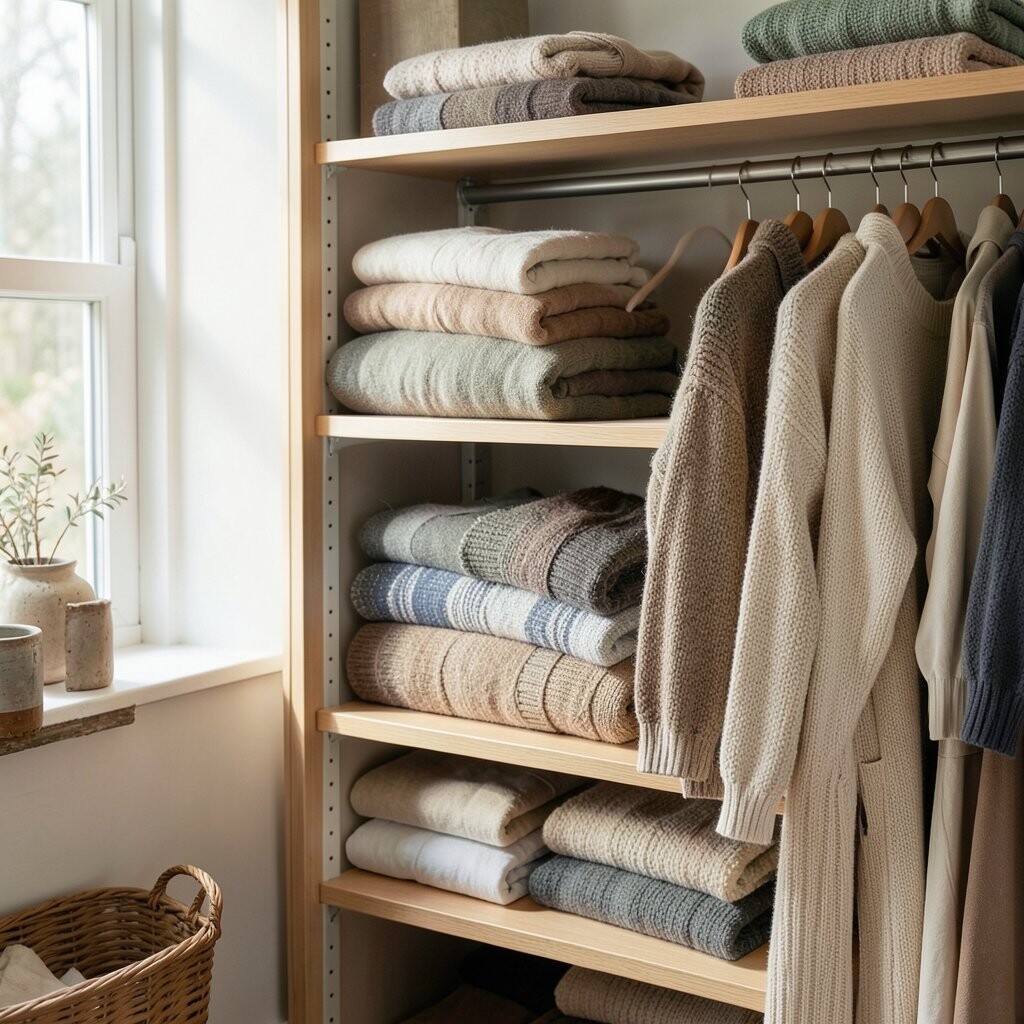
Fold knits using the “air-flow fold” method Knits can stretch when folded wrong, so give them a gentle fold that protects their shape. Store them so air can move, like lining them loosely in a drawer or using breathable shelf dividers.
This helps keep vintage sweaters from looking stretched out or misshapen. It also makes it easier to grab a sweater without pulling everything down. For personalization, separate knits by thickness, like light layers and cozy heavy knits.
Cost can be near zero if you use paper or fabric dividers you already have. The trend is “fabric-first storage,” where people treat each material with respect instead of forcing everything into the same fold.
Tip: keep a small sachet in the drawer for a fresh, gentle scent.
-
12.
Add a low stool for trying outfits

Add a low stool for trying outfits Place a small stool or bench inside the closet so you can try on pieces while you style. When you sit, it is easier to check fit, zip buttons, and test shoe pairings.
This saves time and helps you feel confident in your choices. You will notice small fit details faster, like sleeve length or collar gaping. If you want personalization, cover the stool with a fabric you love, like a vintage floral or neutral linen.
-
13.
Style a mini “outfit rack” for next-day dressing
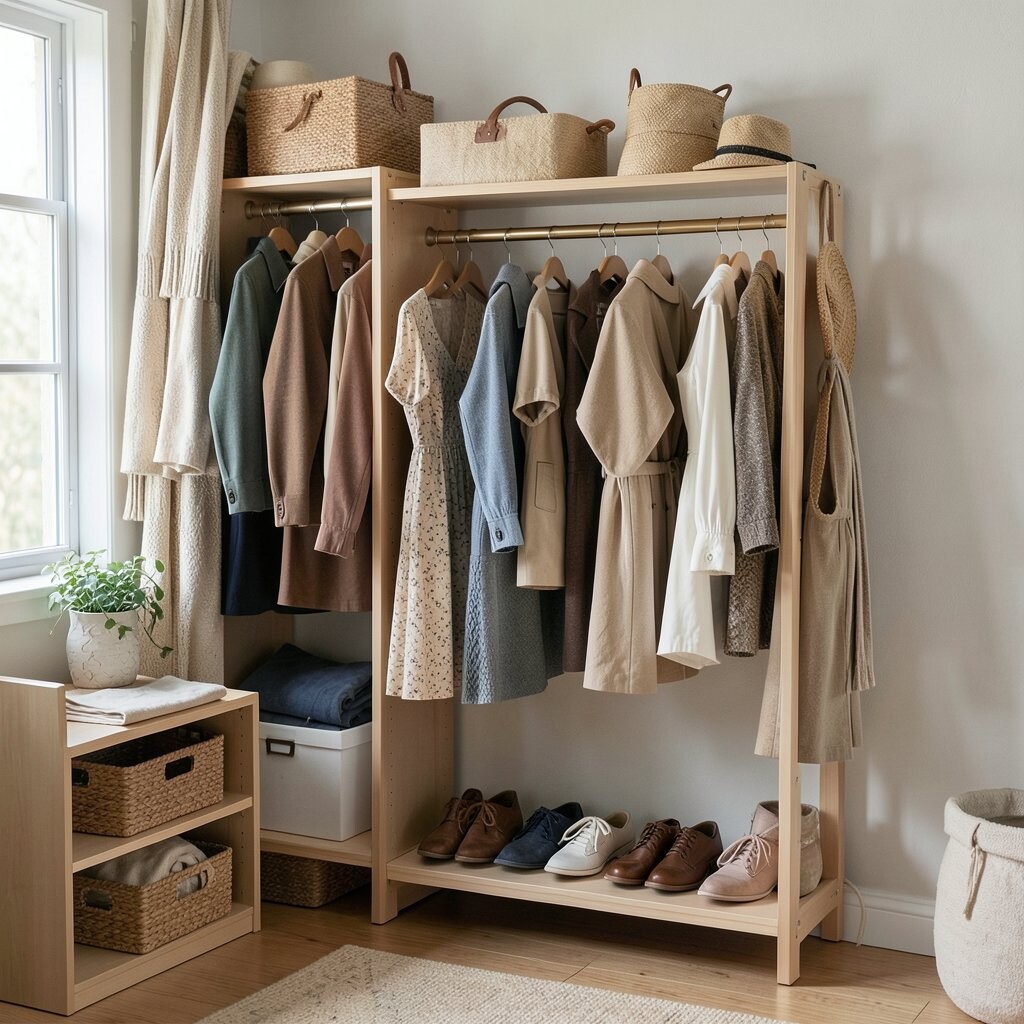
Style a mini “outfit rack” for next-day dressing Create a small area where you can hang one or two outfits ready to go. Use a hook rail, a short rod, or even a wall-mounted bar.
This makes mornings feel smooth and helps you avoid last-minute outfit panic. It also encourages personalization because you can rotate outfits based on your mood. Tip: hang your most “confidence booster” pieces here so you start the day feeling great.
Cost can be low if you use a clearance bar or an old closet rod. The current trend is “intentional morning prep,” where people style ahead for a calm, organized day.
-
14.
Use fabric garment covers for delicate vintage pieces
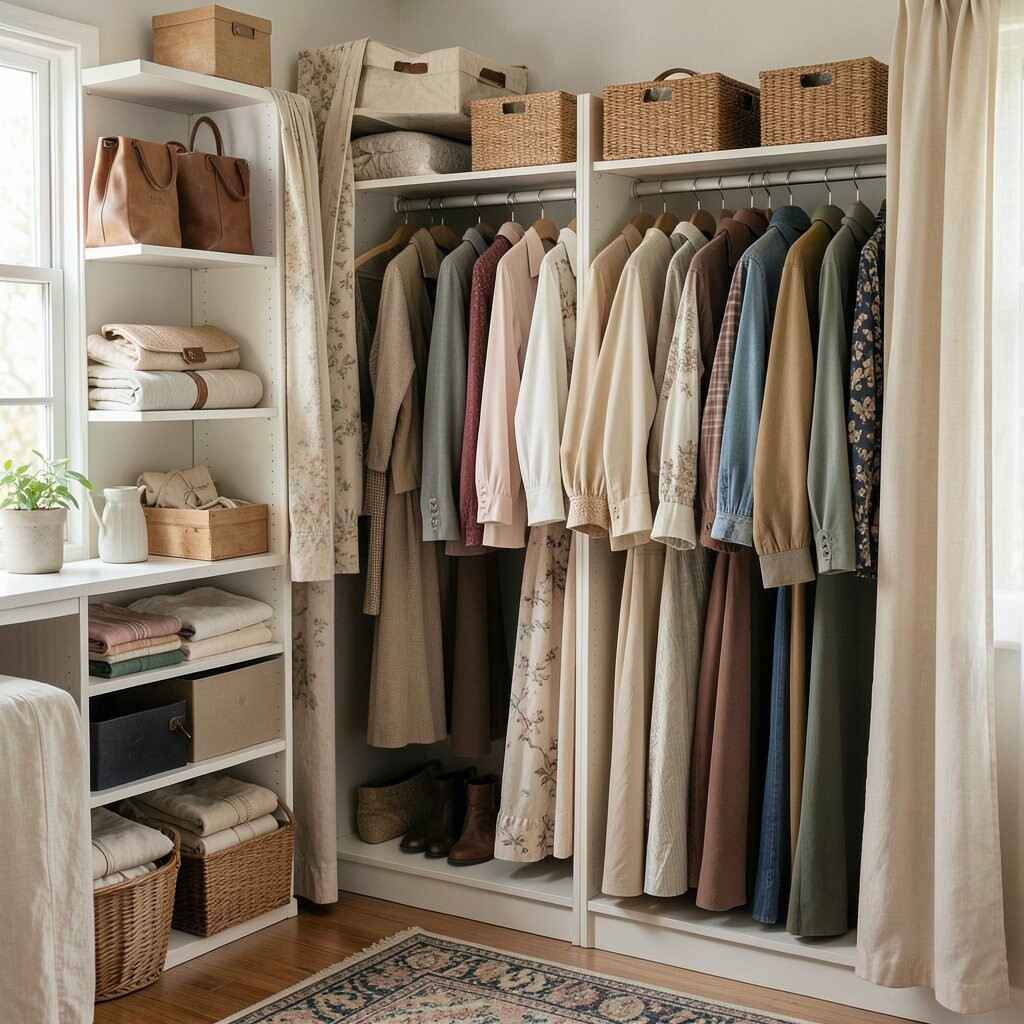
Use fabric garment covers for delicate vintage pieces For items like lace, beaded tops, or soft silk, use breathable fabric garment covers. Keep them slightly open at the bottom so air still moves.
This protects your favorite pieces from dust and helps prevent fabric snagging. It also keeps vintage colors fresher because the fabric is shielded from too much light and grime. Personalization idea: choose covers in calm cream or light gray so the closet feels cozy.
-
15.
Frame your best vintage belt collection

Frame your best vintage belt collection Belts are small, stylish, and they look good on display. Mount a belt holder or frame on the wall, then hang belts so the buckles face outward.
This makes it easy to match the right belt to the right dress or skirt. It also keeps them from curling and tangling in drawers. For uniqueness, mix belt widths and metals like silver and gold for a gallery vibe.
Cost varies, but you can start with a sturdy picture frame and hooks. This fits a popular look lately: “accessories as decor,” where the closet becomes part of your home style.
-
16.
Choose vintage-friendly shoe storage with airflow

Choose vintage-friendly shoe storage with airflow Use shoe shelves, a shoe rack, or breathable boxes so your footwear stays fresh. Avoid stacking too tightly, especially for leather and delicate materials.
This helps shoes keep their shape and reduces musty smells over time. It also makes it easier to pair shoes with specific outfits, which matters a lot in vintage styling. Personalization idea: add shoe tags with the style name, like “Mary Jane” or “buttery loafers.”
For cost, start with simple racks and upgrade to nicer boxes later. A current trend is “scent-smart organization,” where storage includes ventilation and gentle odor control.
-
17.
Place a small mirror and a lint tool station
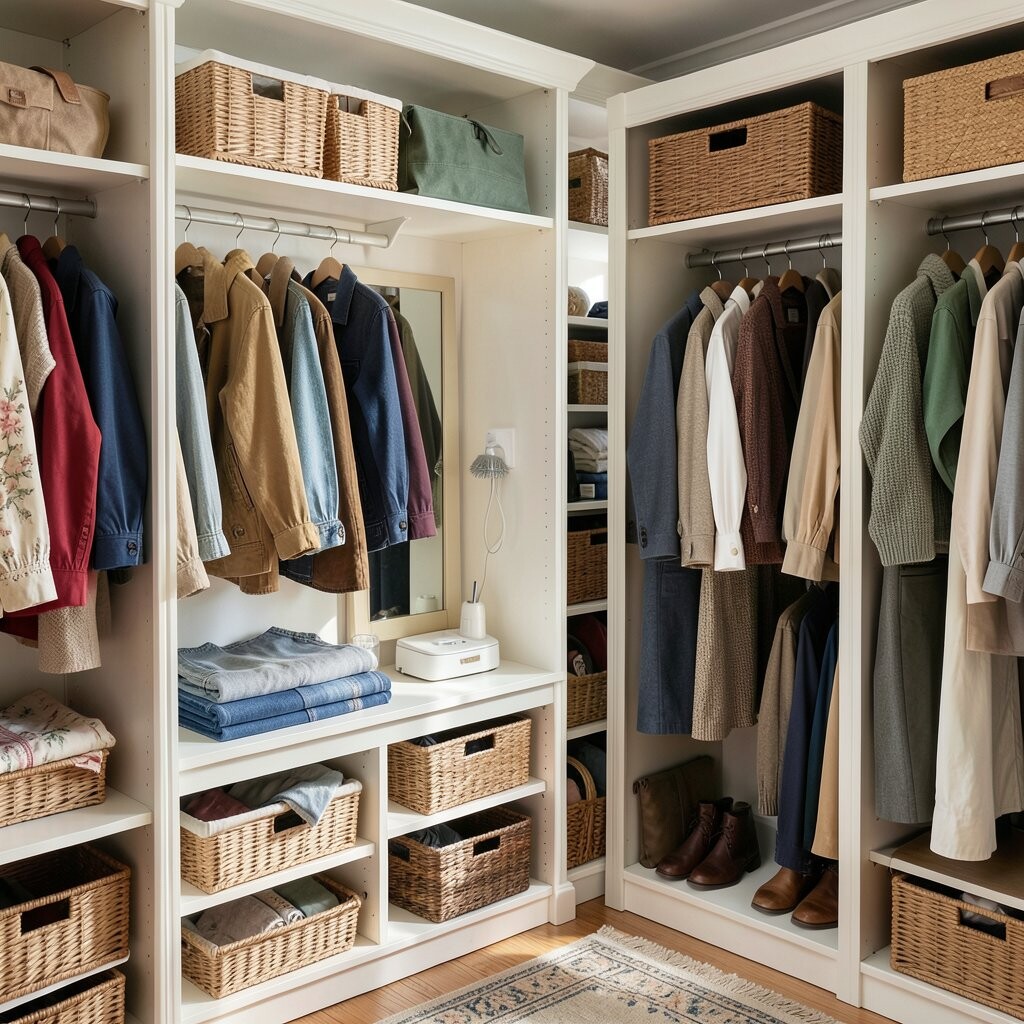
Place a small mirror and a lint tool station A mirror inside or near your closet makes outfit checks quick and friendly. Pair it with a lint roller, a soft brush, and a stain pen so you are always ready.
This benefit is huge for vintage clothes because lint shows up fast on textured fabrics. You also avoid the awkward moment of noticing a speck after leaving the house. Tip: store tools in a small tray so everything stays in one tidy spot.
For cost, use a budget mirror and add a simple tray from a thrift shop. Personalization is easy: decorate the tray with vintage-style stickers or a fabric scrap wrap.