
Your front door is the home’s front stage, and the plants around it do the talking. With a few smart choices, it can feel warm, neat, and full of personality.
Ready to make that first impression pop? Below are practical, stylish ideas you can use right away.
-
1. Add a welcoming pathway edge with fresh edging plants

Add a welcoming pathway edge with fresh edging plants Line the path with low plants so people feel guided to the door. A tidy edge makes the whole yard look cared for.
Try boxwood, dwarf grasses, or low evergreen shrubs that stay neat through the seasons. Keep plants spaced so they fill in over time without crowding. For best results, choose a shape that matches your walkway, like curved for curved paths and straight for straight steps.
To personalize, pick a plant color that echoes your front door paint. If your door is bold, go with calmer greens; if your door is soft, add a hint of texture with variegated foliage. Costs can range from a few small liners to bigger established plants, so you can start small and expand.
-
2. Frame the door with matching planters on both sides
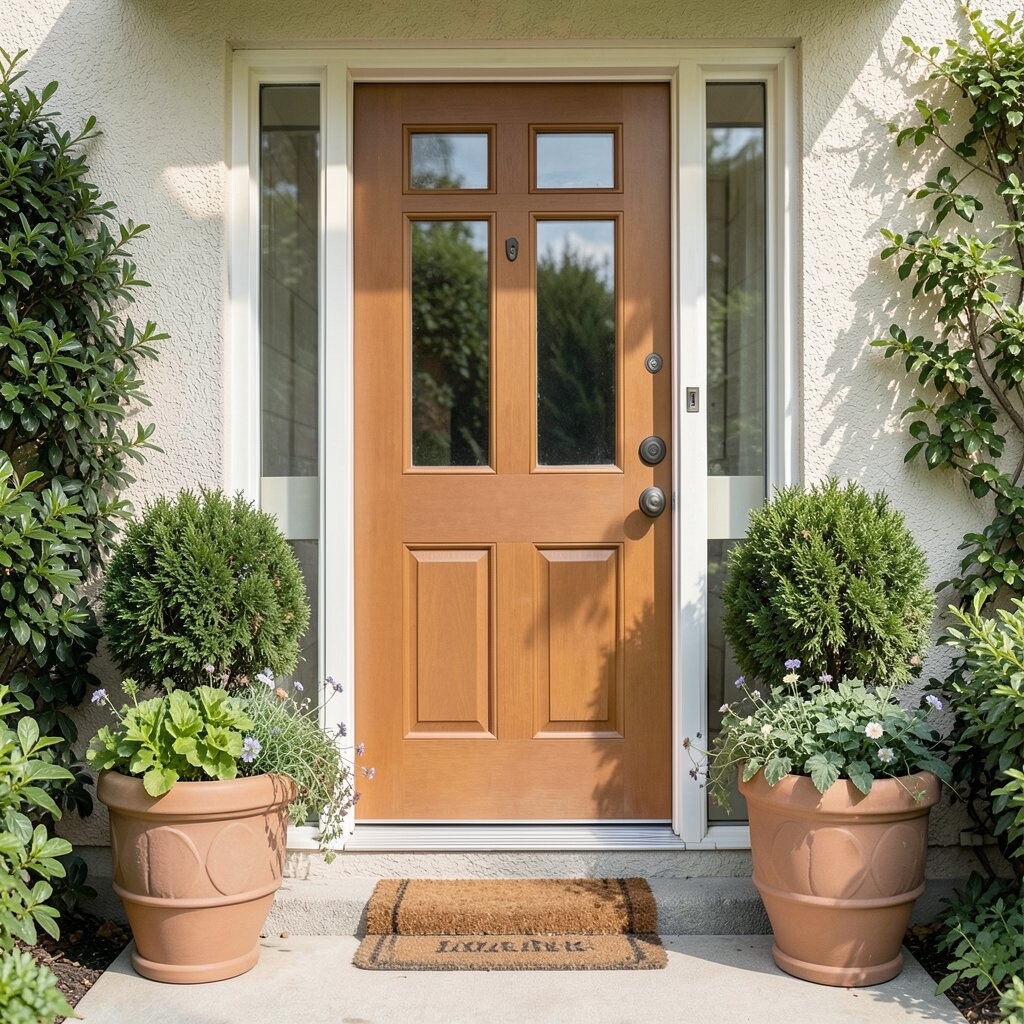
Frame the door with matching planters on both sides Place two matching planters beside the door so the entry looks balanced. Symmetry is an easy trick that instantly feels polished.
Use hardy containers like fiberglass, stone-look resin, or treated wood for a clean look. Fill them with layered plantings: tall plant for height, middle filler for fullness, and low trailing plants for softness.
For personalization, match the planter color to your house trim or mailbox. In current landscaping trends, many homeowners mix modern planters with lush plant textures, not sterile rocks only. If budget is tight, buy one quality planter first and duplicate it later after you find a perfect match.
-
3. Hang a vibrant wreath and let plants do the rest

Hang a vibrant wreath and let plants do the rest A wreath is like a friendly smile, and it makes the door feel lived-in. Pair it with nearby greenery so everything looks planned.
Choose a wreath style that fits your home, such as boxwood for a classic look or seasonal dried flowers for a rustic vibe. Add a small bed of mulch under the wreath area so the base looks neat. Swap out seasonal inserts to keep the front porch looking fresh without major changes.
To personalize, tie ribbons that match your door hardware or mailbox accents. This idea stays popular because it’s simple and changes easily with the seasons. Costs are usually low, especially if you start with a sturdy frame and add new accents over time.
-
4. Use layered mulch and stones for a clean, modern base

Use layered mulch and stones for a clean, modern base Fresh mulch makes landscaping look instantly updated. Add a border of stones to give it a crisp, tidy edge.
Consider using a mulch color that blends with your home, like warm brown for traditional looks or darker mulch for a modern feel. Keep the bed shape simple and consistent so it doesn’t look messy. For personalization, create a small focal circle near the door, using stones or a slightly different mulch tone.
-
5. Plant a small ornamental tree for “instant wow”
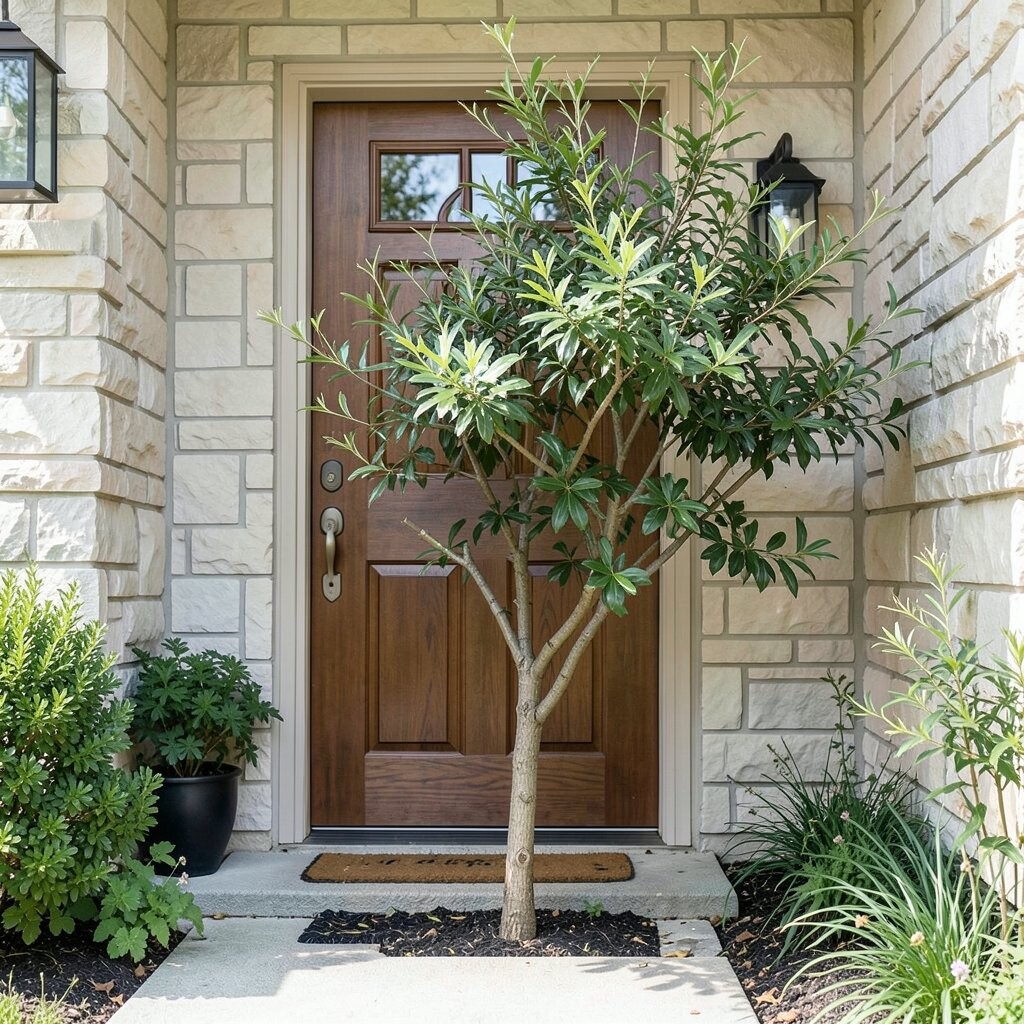
Plant a small ornamental tree for “instant wow” A small ornamental tree near the entrance adds height and drama. It also makes the area feel like a real outdoor room.
Look for compact varieties that fit your space, such as Japanese maple (if your climate supports it) or a dwarf flowering tree. Choose a tree that offers year-round interest like colorful leaves, nice bark, or attractive blooms. Keep the trunk area clear so the tree looks intentional and not hidden.
For trends, homeowners are loving “statement plants” that stand out in front, not just in the back yard. Costs can be moderate because trees cost more than annual plants, but they last for years. If you want to control budget, plant a smaller size now and plan for growth over time.
-
6. Create a cozy border with flowering perennials

Create a cozy border with flowering perennials Perennials add color that comes back each year, which feels like money well spent. They also make the entrance look lively and cared for.
Pick blooms that match your style, like purple for calm charm or bright reds for cheerful energy. Plant in clusters so the colors show clearly from the sidewalk. Add mulch and tidy the soil surface so everything looks crisp and fresh.
-
7. Add outdoor lighting to highlight plants and steps

Add outdoor lighting to highlight plants and steps Lighting turns your entry into a welcoming scene after sunset. It makes paths safer and makes plants look more vivid.
Try low-voltage step lights, small spotlights aimed at planters, or a wall-mounted lantern by the door. Use warm white bulbs for a soft glow that feels friendly. Place lights so they illuminate without shining directly into anyone’s eyes.
For personalization, match lamp finishes to your door handles or house numbers. Lighting trends right now include low-profile fixtures that look sleek and clean. Costs vary based on how many fixtures you add, but starting with two lights near the door is a great beginning.
-
8. Choose a “theme color” for the entire entry bed
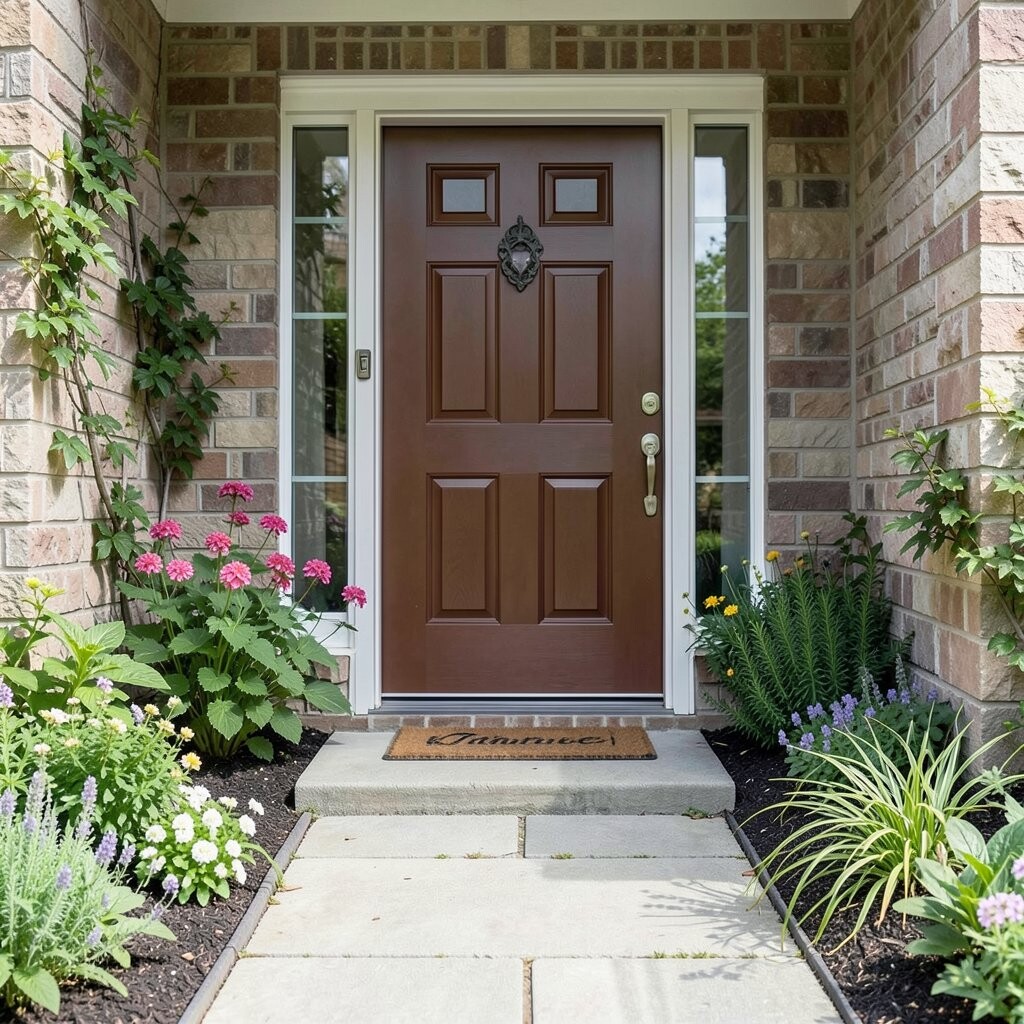
Choose a “theme color” for the entire entry bed When plants share one main color, everything looks more like a designed space. It also makes the area feel calmer and easier to maintain.
Pick one hero color, one supporting color, and a neutral green. For example, pair blue flowers with white blooms and lots of green foliage. Keep the color theme consistent across planters, bed plants, and small accents like stones.
To personalize, pull your theme from your front door color or window trim. This keeps the look cohesive even when you change seasonal flowers. Budget tips: start with a small set of plants in the same palette, then add more later as you see what grows best in your sun conditions.
-
9. Build a small raised bed for easy planting
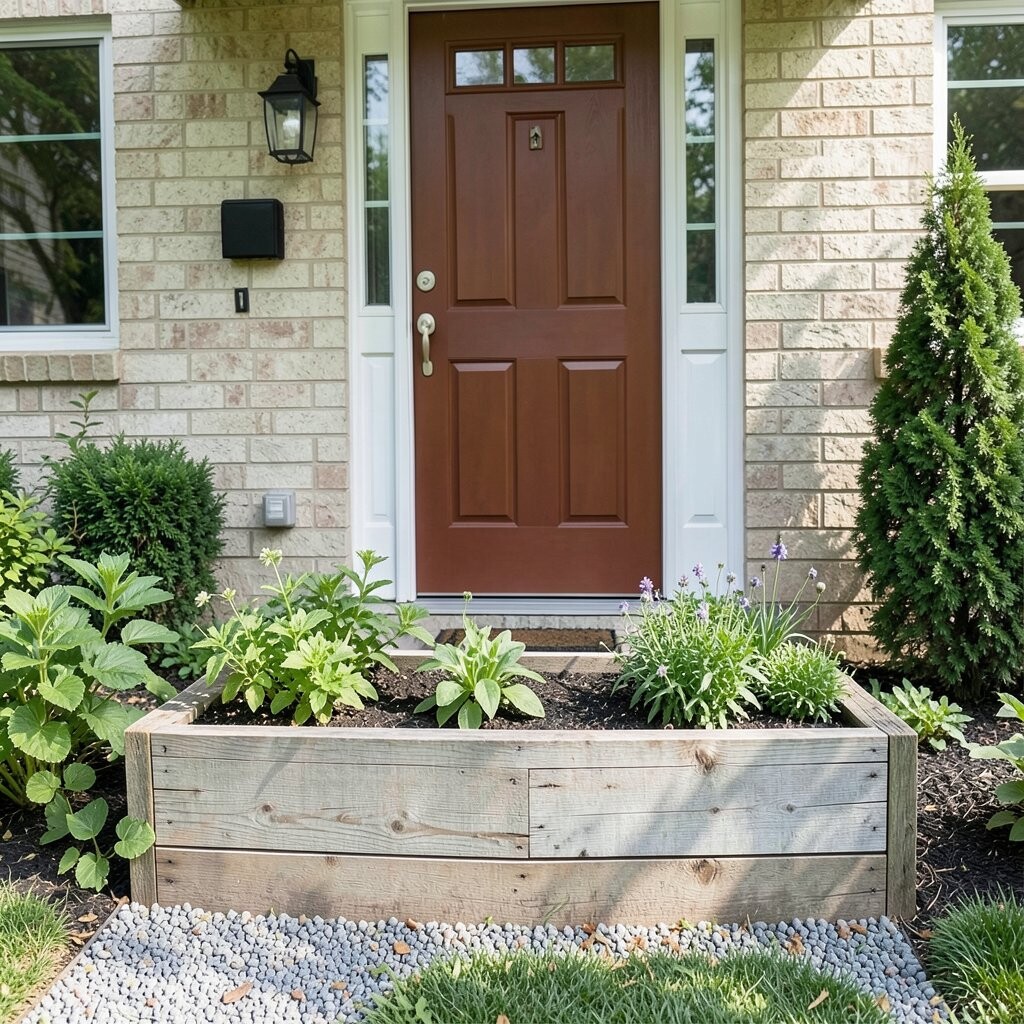
Build a small raised bed for easy planting A raised bed near the door makes planting simpler and keeps weeds down. It also gives the entry a tidy, structured look.
Use cedar, composite boards, or stone blocks, and keep the height manageable so you can reach plants easily. Fill it with quality soil so plants establish faster and look healthy. Add a front edge lip to create a clean line that frames the entrance.
-
10. Plant groundcovers to cover bare spots fast
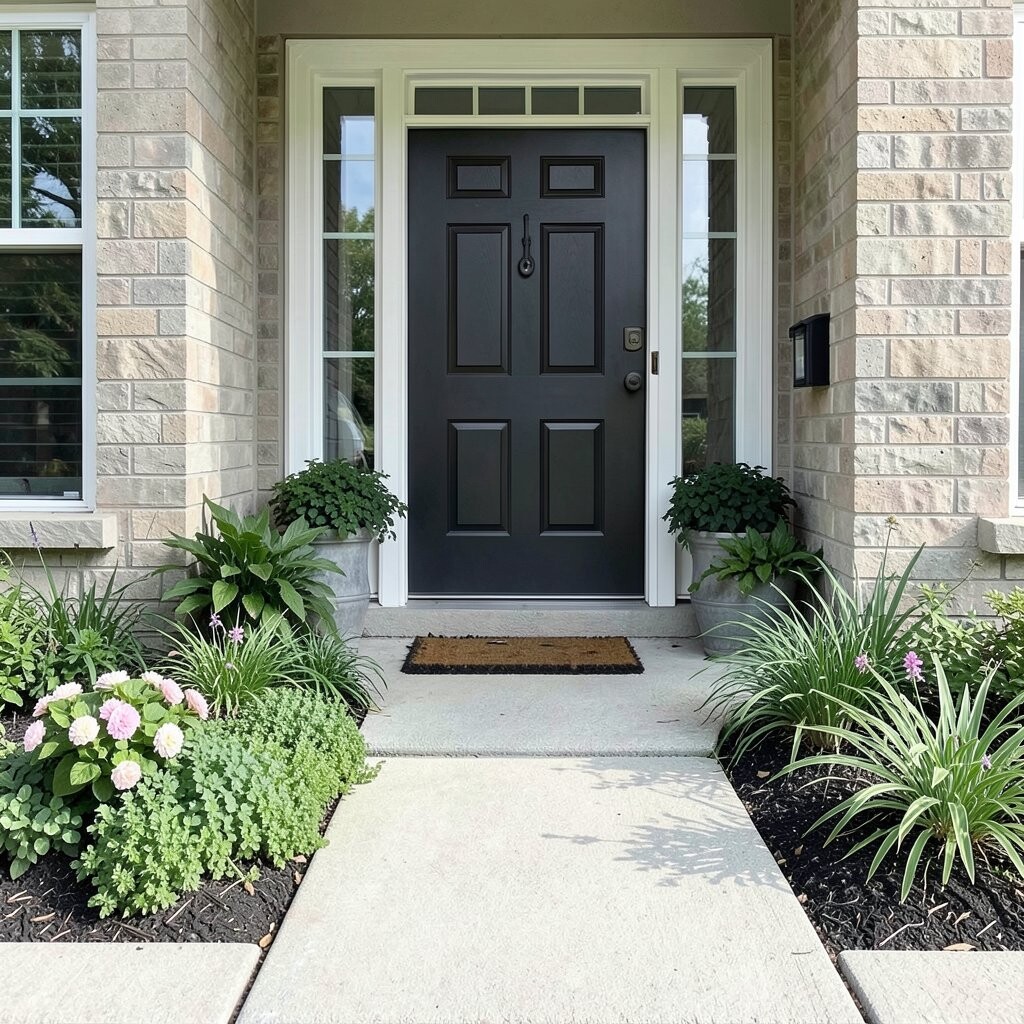
Plant groundcovers to cover bare spots fast Bare soil looks unfinished, but groundcovers fix that quickly. They also soften hard surfaces like walkways and steps.
Choose groundcovers that match your light level, such as creeping thyme in sunny areas or shade-loving ivy-type plants where appropriate. Plant edges slightly thicker so coverage starts sooner. Water well at first, then reduce as the plants settle in.
For personalization, use groundcovers for a gentle “ripple” shape rather than a straight border. Groundcovers are a current favorite because they look great with low upkeep. Costs can be lower than buying lots of individual tall plants since one groundcover variety can cover a wide area.
-
11. Add a decorative welcome mat and tie it to the landscape

Add a decorative welcome mat and tie it to the landscape A nice doormat is small, but it’s an instant mood-setter. When it matches the colors of nearby plants, the entry looks more put together.
Pick a mat with a pattern or color that echoes your flowers, such as leafy greens or warm earth tones. Add a matching planter or small accent nearby so the theme feels consistent. Keep the mat clean and replace it when it starts to look worn.
-
12. Use tall grasses for movement and texture
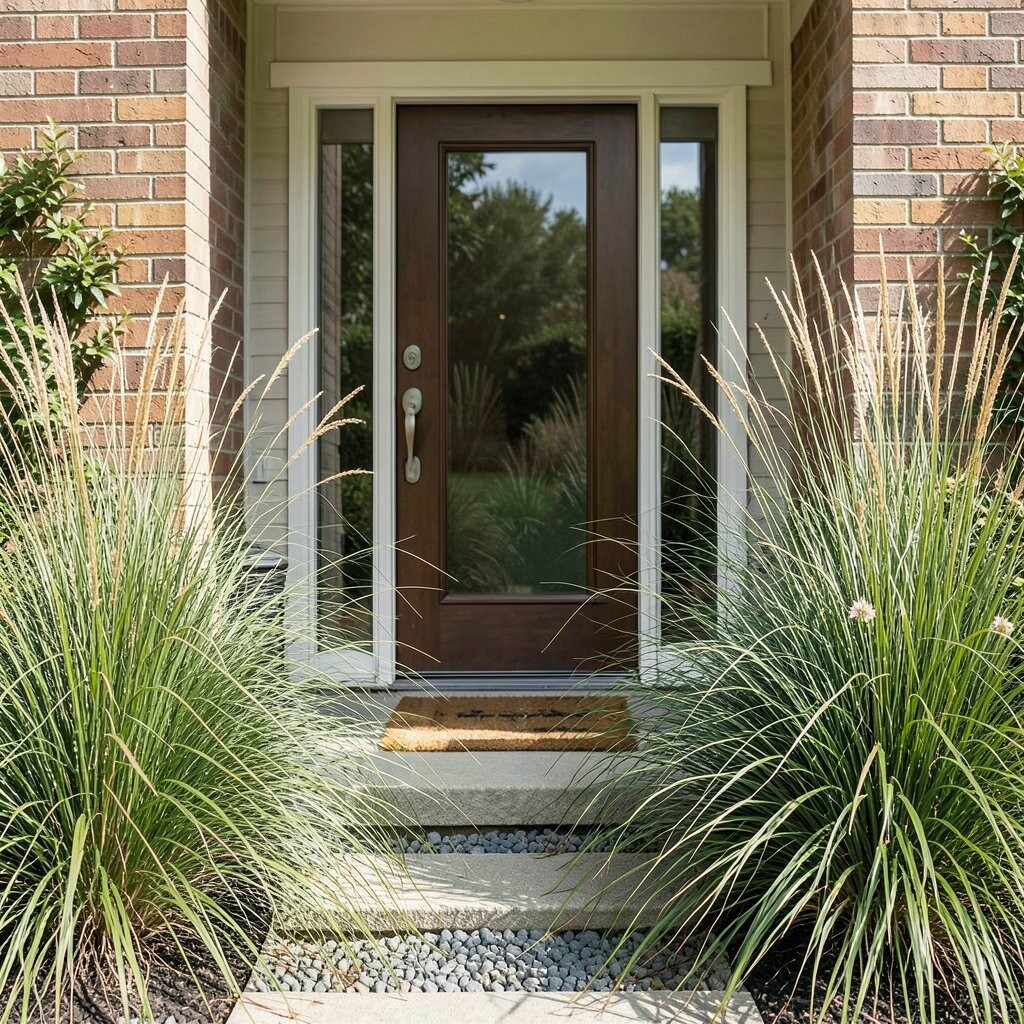
Use tall grasses for movement and texture Tall ornamental grasses bring a breezy look right in front. They sway in wind and add texture that flowers can’t always match.
Try hardy varieties like fountain grass (in warmer areas) or smaller ornamental grasses for cooler climates. Plant them slightly off-center to create a natural shape rather than a perfect block. Pair them with shorter flowers so the bed has layers.
For personalization, choose grasses with different tones, like chartreuse or deep green, to match your door. This is trending because it looks modern and stays attractive for a long time. Budget-wise, grasses often look good in a few clumps, so you may not need many plants to get impact.
-
13. Install a matching border around the entry bed

Install a matching border around the entry bed A border helps define where landscaping starts and ends. It also stops mulch from washing onto the walkway.
Use metal edging, brick, or natural stone to create a strong line. Keep the border height consistent so it looks clean from the street. After installation, top it with mulch and add plants right away so the space looks finished.
Personalize the border style to match your home materials. If your walkway is stone, use stone edging; if you have metal railings, choose metal trim. Costs depend on the edging type, but even simple edging can make a big difference.
-
14. Add a statement bench or chair near the door

Add a statement bench or chair near the door A bench by the entry invites people to pause and enjoy the view. It also gives you a place to add seasonal decor.
Choose a bench that fits your space, like a narrow garden bench for small porches. Add a throw pillow and simple decor that matches your plant colors. Make sure the bench doesn’t block the walkway or door swing.
-
15. Create a “pollinator corner” with nectar plants

Create a “pollinator corner” with nectar plants Pollinator-friendly plants make your yard feel alive. Bees and butterflies also make the scene more interesting to watch.
Pick nectar-rich plants like salvia, coneflower, bee balm, or lavender (if climate allows). Group them so insects can easily find the flowers. Add a small water source like a shallow dish or birdbath nearby for extra help.
For personalization, select plants that match your landscape palette while still offering blooms. This trend is popular because it helps the environment and looks beautiful at the same time. Costs can vary, but starting with a small “corner” bed lets you control your spending while you learn what grows best.
-
16. Use planters with trailing vines for softness
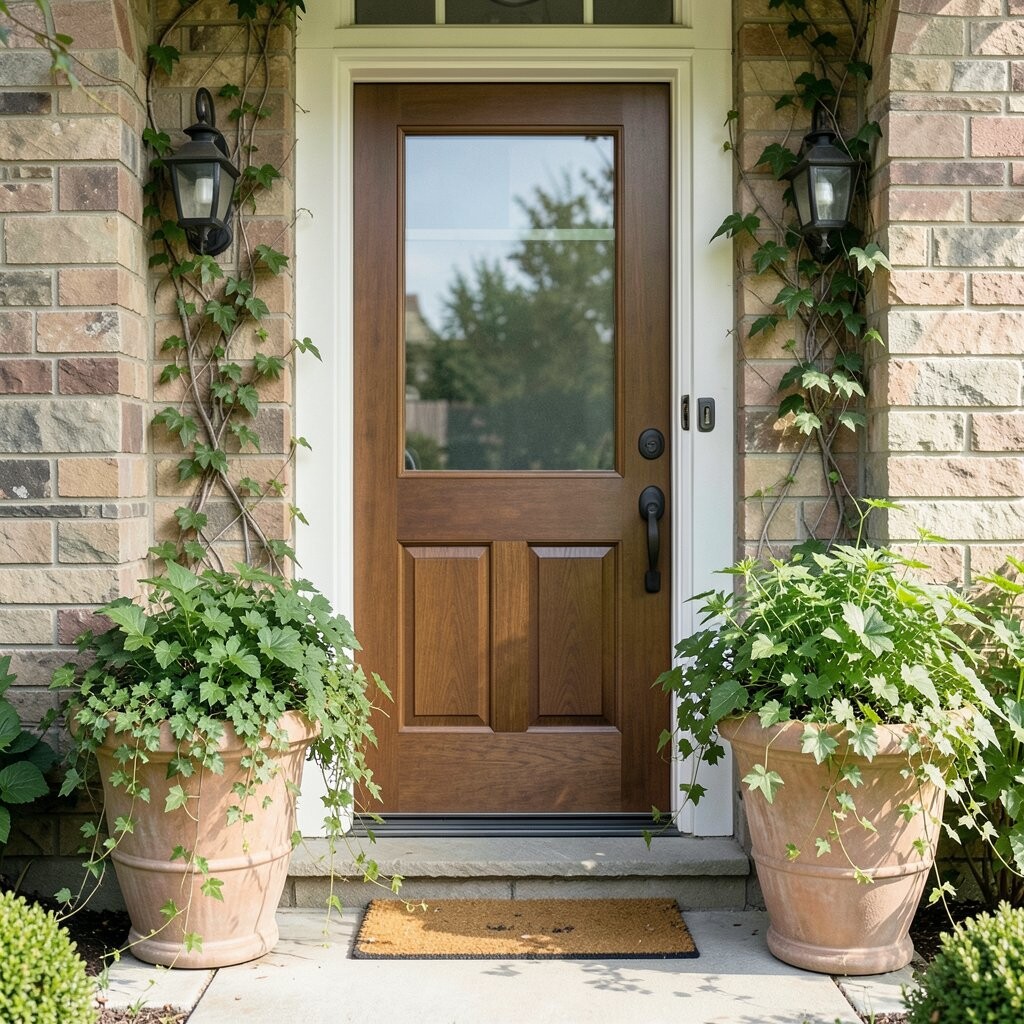
Use planters with trailing vines for softness Trailing plants soften the edges of planters and steps. This makes the entry feel gentle instead of sharp.
Try trailing options like ivy, sweet potato vine (warm-season), or creeping sedum for a sturdy look. Place the planter where people can see the trailing leaves spill down. Trim lightly so the vines stay neat and don’t cover pathways.
-
17. Refresh the house numbers and surround them with greenery

Refresh the house numbers and surround them with greenery Readable house numbers are part of curb appeal, and they guide guests. When you frame the numbers with plants, they look like a styled feature.
Choose modern numbers in a finish that matches your lighting and door hardware. Then add a small bed of low greenery around the display area. Keep it low enough that the numbers remain easy to see from the street.
For personalization, use tiny seasonal accents like dwarf bulbs in fall or small flowers in spring. This idea pairs well with current “small details” trends where homeowners focus on clean, cohesive styling. Costs are usually moderate, especially if you start with the numbers first and add plants later.
-
18. Add a vertical trellis with climbing plants

Add a vertical trellis with climbing plants A trellis gives your entry vertical interest, even when space is tight. It also turns a plain wall area into a living feature.
Pick climbing plants that fit your region, such as clematis, climbing roses, or jasmine-type plants where appropriate. Train them slowly, tie them gently, and check growth regularly so they don’t tangle. Place the trellis near the door where it won’t interfere with opening and closing.
To personalize, choose trellis material that matches your home’s style, like painted metal for modern homes or rustic wood for cottage looks. Trellis gardens are trending because they create big impact without wide horizontal beds. Budget-wise, you can start with one small trellis and add one climbing plant at a time.
-
19. Place a seasonal flower pot rotation plan

Place a seasonal flower pot rotation plan Seasonal pots keep the entry looking new even when the rest of the yard stays steady. It’s a simple way to add color changes throughout the year.
Create a plan for when you switch out plants, such as cool-season pansies in colder months and summer blooms in warm months. Choose plants that match your light exposure so they last longer. Consider using the same pot designs each time so everything looks consistent.
-
20. Keep it tidy with a clear maintenance schedule

Keep it tidy with a clear maintenance schedule Even the prettiest landscape looks better when it stays clean. A simple maintenance plan can save you from stress later.
Set reminders for watering checks, trimming, and weeding so the bed never gets out of control. Remove dead leaves and faded blooms so plants keep looking fresh. Mulch top-ups once or twice a year can keep the bed looking sharp.
For personalization, design a “daily quick check” routine that takes just a few minutes. Current trends love low-stress yards that look great with consistent care, not constant fixing. Budget tip: regular small maintenance is usually cheaper than big replacements after neglect.