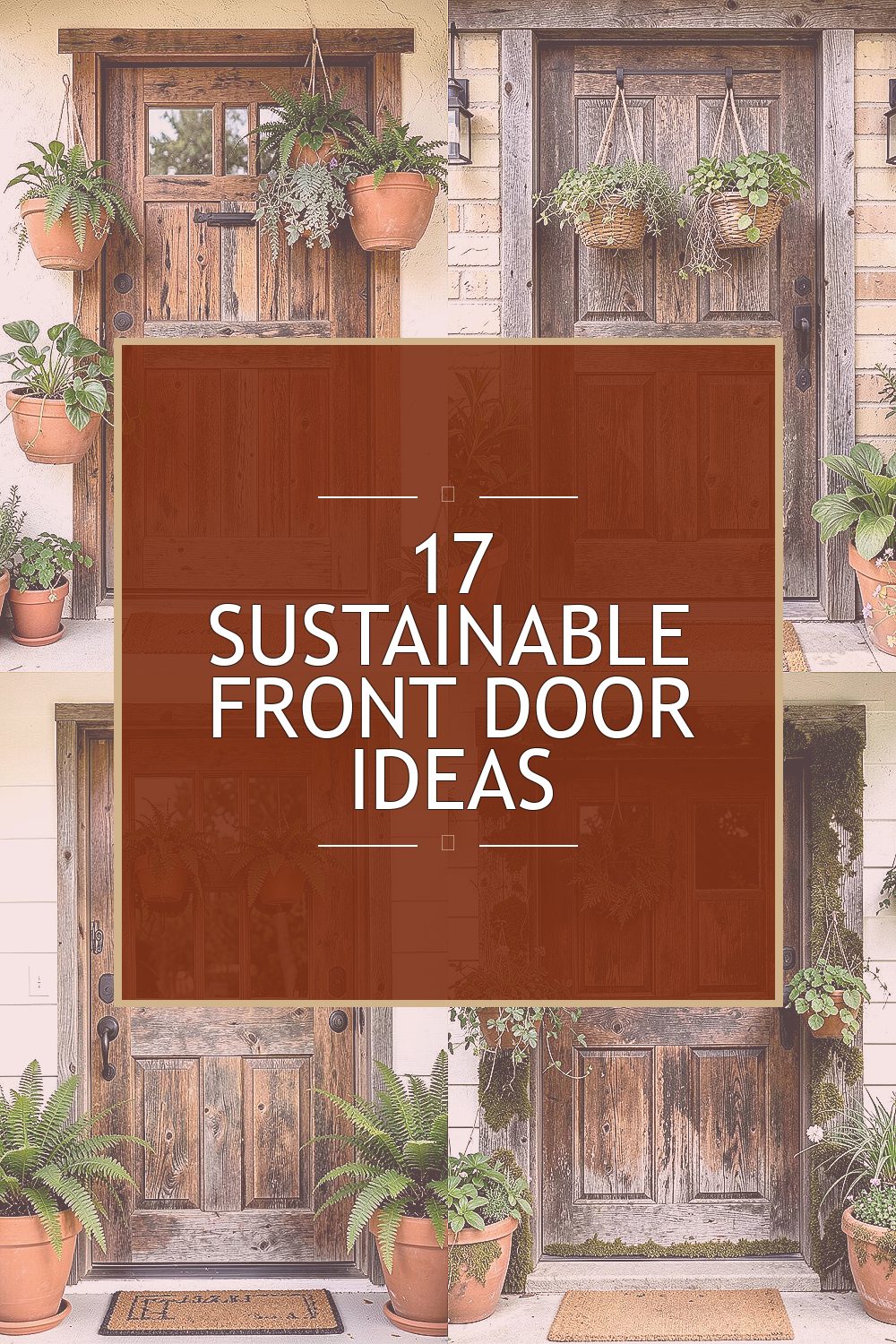
Your front door can be the first “hello” your home sends. Reclaimed wood and plants make that hello feel warm, natural, and personal.
Below are creative, friendly ideas you can use to build a greener entry that looks great and lasts.
-
1. Reclaimed Cedar Door With Living Wall Planters

Reclaimed Cedar Door With Living Wall Planters Picture a front door made from reclaimed cedar boards, each one showing soft knots and gentle color changes. Around the door, slim planter rails hold small plants that spill into the entry like a green curtain.
This setup brings shade for the doorstep and helps soften hard lines in the entrance. It can also improve curb appeal by making the doorway feel cared for, not plain. For best results, choose plants that match your light, and give the planters easy drainage so roots stay happy.
For a personal touch, paint only the trim and keep the reclaimed wood in its natural tone. You can also add a small door mat with a simple pattern that matches your plant colors. Cost-wise, planter systems and plants can add up, but reclaimed boards often balance the budget if you source them locally.
Right now, people love “vertical garden” looks because they feel fresh and tidy. If you want it to look modern, use a few plant types with similar leaf shapes and stick to a repeat pattern.
-
2. Barn-Style Reclaimed Wood Door With Hanging Herbs

Barn-Style Reclaimed Wood Door With Hanging Herbs Imagine a slightly weathered barn-style door, hung with sturdy hardware and finished with a low-tox protective coat. On either side, hanging pots hold herbs that look cheerful and smell amazing.
This idea is useful and pretty, since you can snip herbs for cooking or for a quick kitchen scent boost. The wood brings warmth, and the plants bring motion when a breeze moves the leaves. If you live in a dry area, pick drought-tolerant herb varieties and water them on a simple schedule.
To personalize, hang a small chalk sign that lists the herb names, or place a tiny rainwater can nearby for easy watering. A door like this may cost more because of hardware, but you can save by reusing hinges or choosing basic handles. Barn doors are still a strong trend because they feel cozy and a little rustic.
-
3. Glass-Panel Reclaimed Wood Door With Potted Ferns
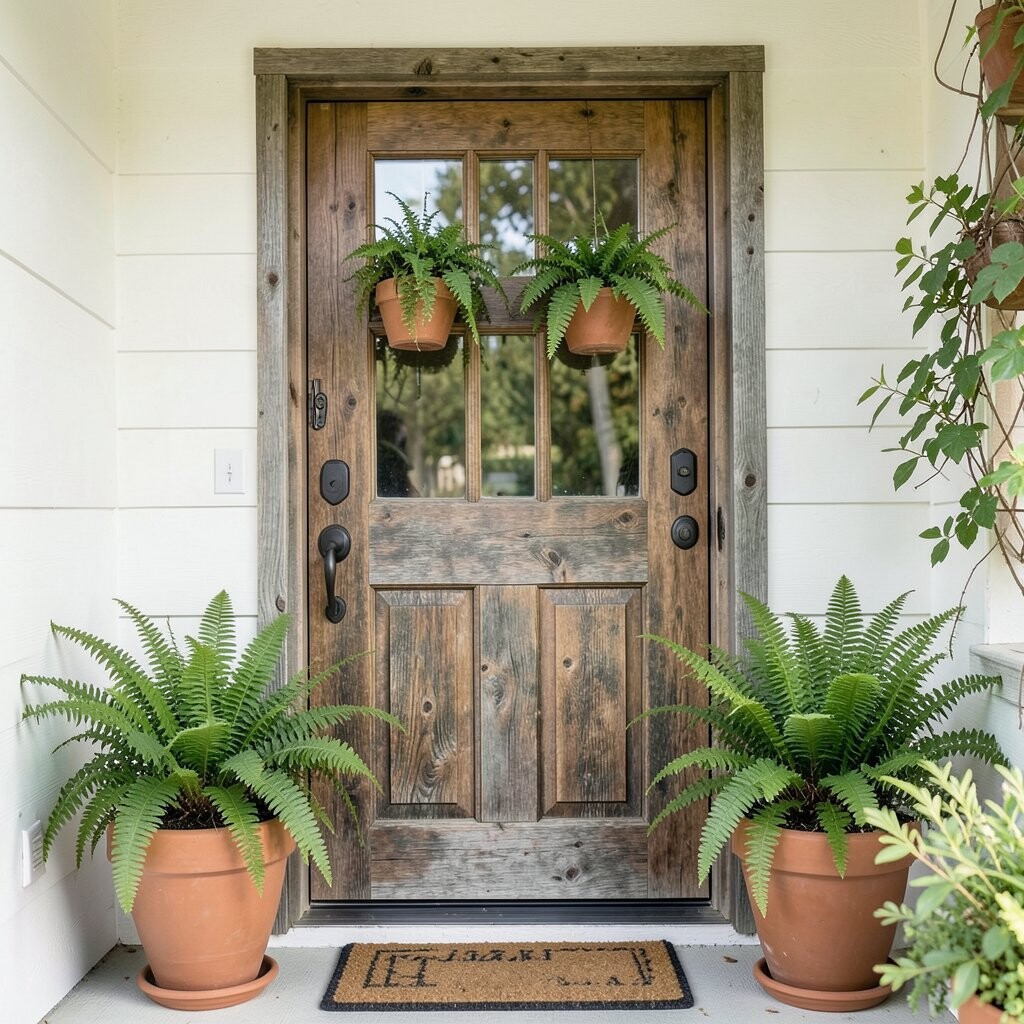
Glass-Panel Reclaimed Wood Door With Potted Ferns Picture reclaimed wood framing clear glass panels, letting warm light pass into your entry. At the base and along the edges, potted ferns gather like a soft green welcome.
This door style can make your entry look brighter without needing major changes. Plants help cool the look and add a natural texture that feels calm. Choose ferns that match your shade level, and keep their soil slightly moist but not soggy.
For personalization, add a thin line of stained glass film that matches the wood tone. You can also swap the ferns with trailing plants if you want a more flowing feel. Costs vary a lot based on glass quality, so set a budget for the glass first, then plan your plant setup around that.
Today, many homeowners like “warm modern” blends, where natural wood meets clean lines and simple greenery. If you want that look, keep planter colors neutral and let the leaves do the talking.
-
4. Salvaged-Board Door With Mossy Doorframe Planters
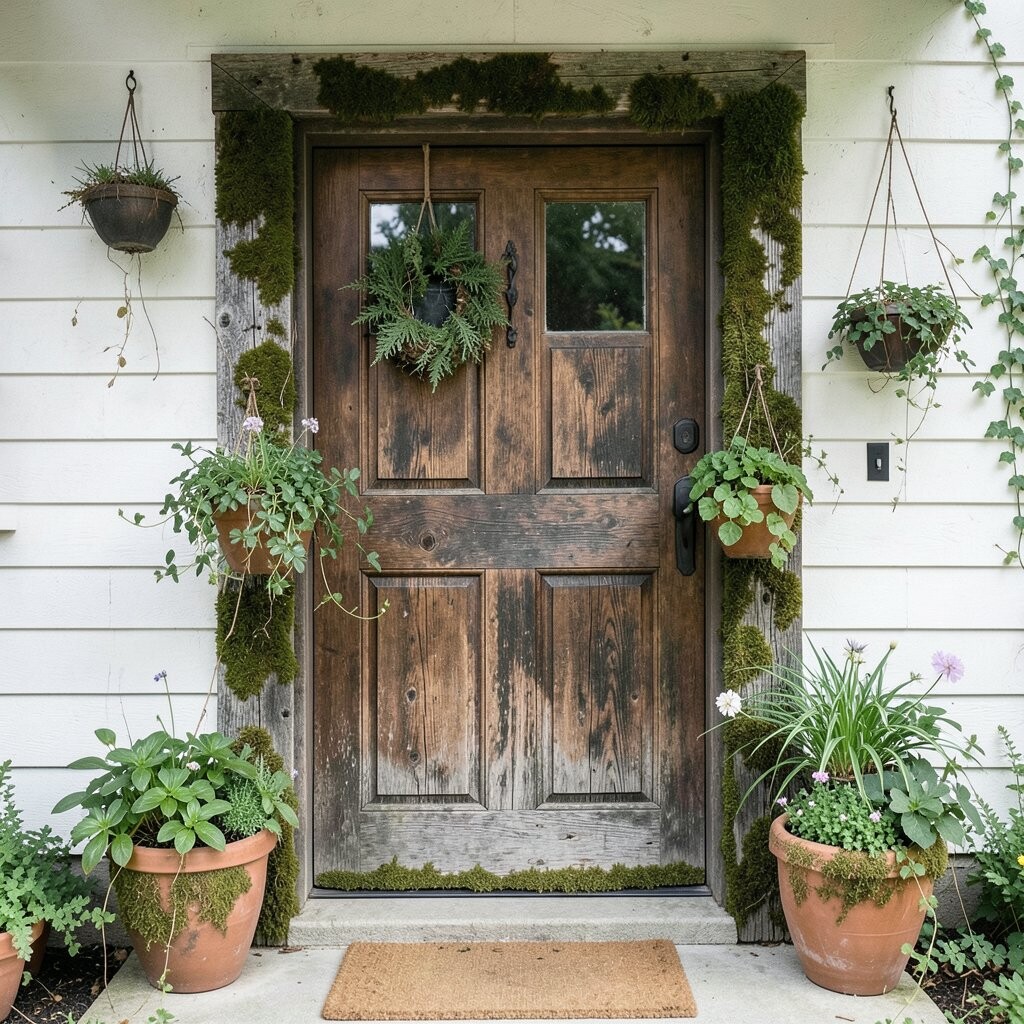
Salvaged-Board Door With Mossy Doorframe Planters Think of a reclaimed board door with a rough, honest texture, bordered by planters filled with living moss or moss-like ground cover. Near the handle, small starter plants pop out like little green sparks.
This can make the doorway feel like a miniature forest path, which is great for homes that need more softness. Plants also help hide small imperfections and add a gentle layer that makes the entry feel inviting. If you try moss, keep it misted lightly at first and protect it from drying out in hot sun.
To personalize, tuck in tiny seasonal accents like miniature pinecones, flower stems, or small stones. Cost can stay reasonable if you source moss sustainably and start with a few plants rather than many. The trend toward biophilic design—bringing nature into everyday spaces—is strong right now, and this idea fits perfectly.
For upkeep, check moisture levels after rain and adjust your watering so the plants stay healthy without extra fuss.
-
5. Reclaimed Wood Door With Vertical Trellis And Climbing Vines
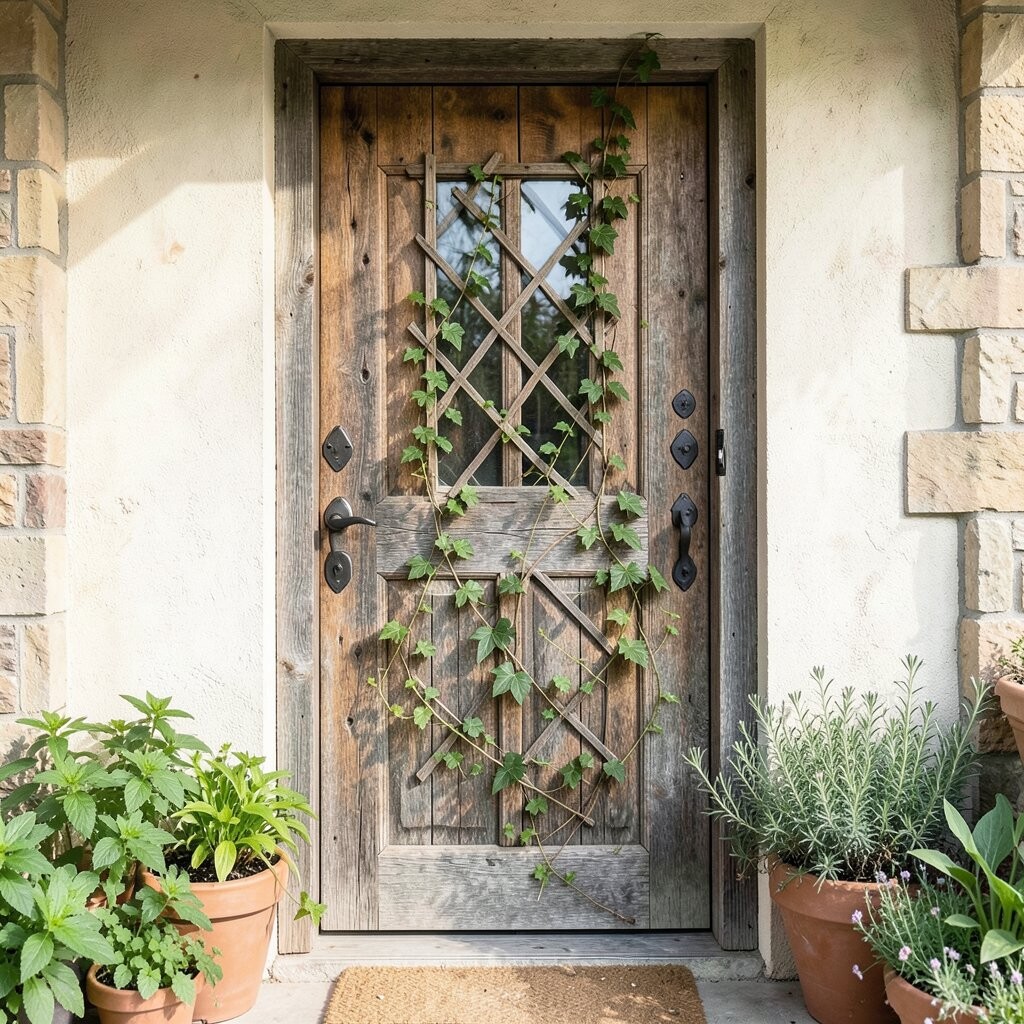
Reclaimed Wood Door With Vertical Trellis And Climbing Vines Imagine a sturdy reclaimed wood door with a slim trellis mounted nearby, guiding climbing vines upward. The vines wrap around the doorway slowly, giving you a living look that changes with the seasons.
This design adds privacy and helps the entrance feel more sheltered. It also creates a natural sound barrier from outside wind and street noise. For success, choose vine types that suit your climate, and give them a strong trellis structure that can handle growth.
To personalize, paint the trellis a dark earthy color so the greenery stands out. You can also add string lights along the trellis for a cozy evening vibe. Costs can be moderate when you build a simple trellis yourself, but plan for replacement if vines outgrow the system too fast.
-
6. Upcycled Pallet-Style Door With Planters On Both Sides

Upcycled Pallet-Style Door With Planters On Both Sides Picture a front door made from reclaimed pallet wood boards, arranged in a friendly pattern and sealed for outdoor use. On each side, matching planter boxes sit low and wide, making a balanced “frame” around the door.
This look feels bold and creative, which is great if you want your entry to stand out. Plants add softness and help the doorway look more welcoming than plain wood alone. To keep things from getting messy, use simple plant shapes like round shrubs or tidy grasses.
Personalization idea: keep one planter with colorful flowers and the other with mostly green plants so you get a clear focal point. Cost can be lower because pallet wood may be cheaper, but make sure you sand well and use safe, exterior-grade finishes. The current trend is “lived-in charm,” and this fits right in when you keep it neat.
Before installing, check the wood for any unsafe treatment and only use material that’s suitable for outdoor projects. That small step protects your plants and your family.
-
7. Weathered Reclaimed Door With Bamboo Planters And Drip Lines
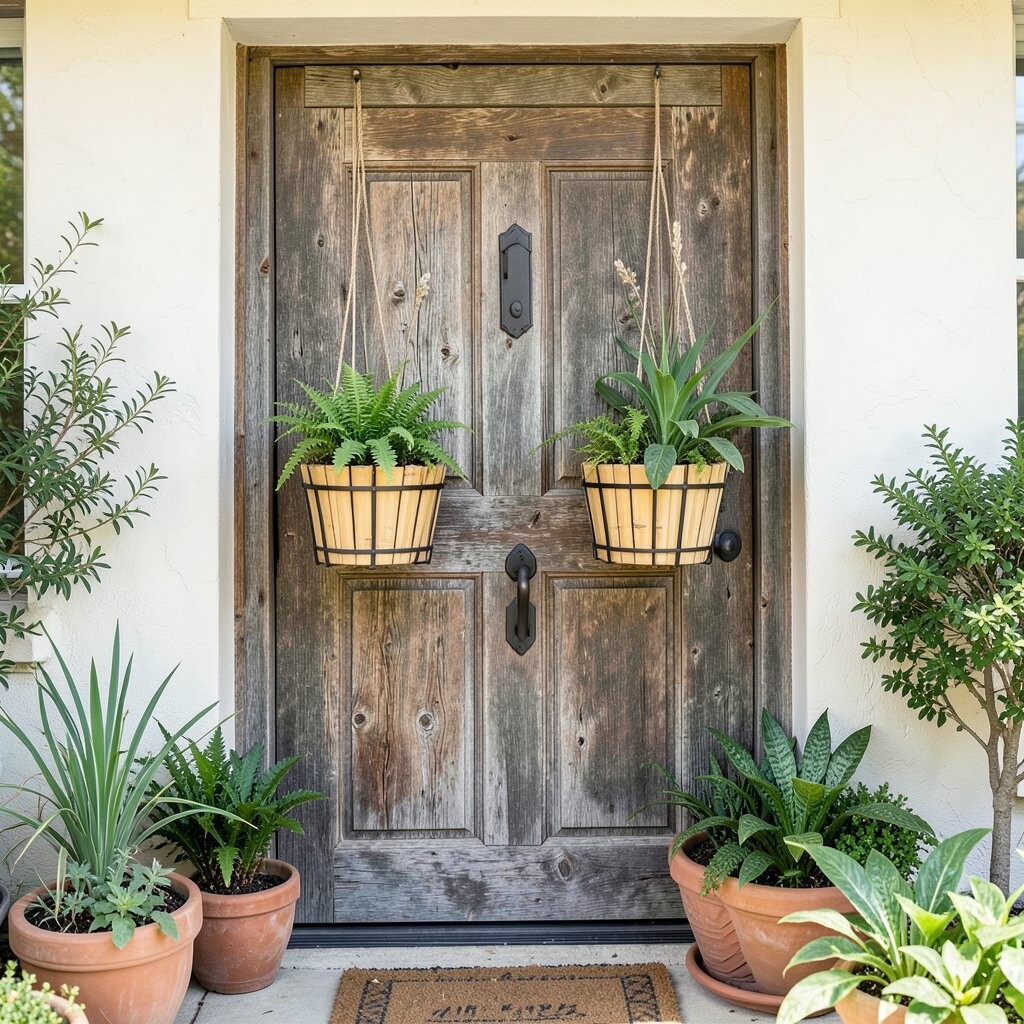
Weathered Reclaimed Door With Bamboo Planters And Drip Lines Imagine a weathered reclaimed wood door with a matte finish, paired with tall bamboo planters and clean drip irrigation. The entry feels calm and modern, with greenery placed in a clear, intentional way.
This approach makes plant care simpler because drip lines help deliver water right where it’s needed. The bamboo gives a natural vertical vibe that makes small spaces look taller. If you want low effort, choose hardy plants that do well with steady watering.
To personalize, wrap the drip line neatly and hide it behind planter edges or small covers. You can also add a simple outdoor timer so you don’t forget during busy weeks. Costs can climb because irrigation parts add up, but the payoff is fewer plant problems and less water waste.
-
8. Reclaimed Wood Door With Hand-Painted Wildflower Motif

Reclaimed Wood Door With Hand-Painted Wildflower Motif Picture a reclaimed wood door with a delicate wildflower motif painted near the upper panels, as if nature is peeking in. Around the door, small pots hold flowers that match the colors in your design.
This idea is memorable and fun, and it turns the doorway into a piece of art. Plants keep the theme going and help the door feel connected to the outdoors. Choose hardy flowers for your climate, and use planters with good drainage so petals don’t get soggy.
To personalize, choose one flower you truly love, then repeat that shape in your paint and your plant picks. Cost considerations: painting materials are usually affordable, while your main spending is in the door finish and any special planters. A popular trend is “handmade details,” and a painted motif makes your home feel uniquely yours.
If you want it to look polished, use outdoor-safe sealant and keep the pattern simple enough to read from the sidewalk.
-
9. Reclaimed Wood Door With Succulent Scallop Planter Steps
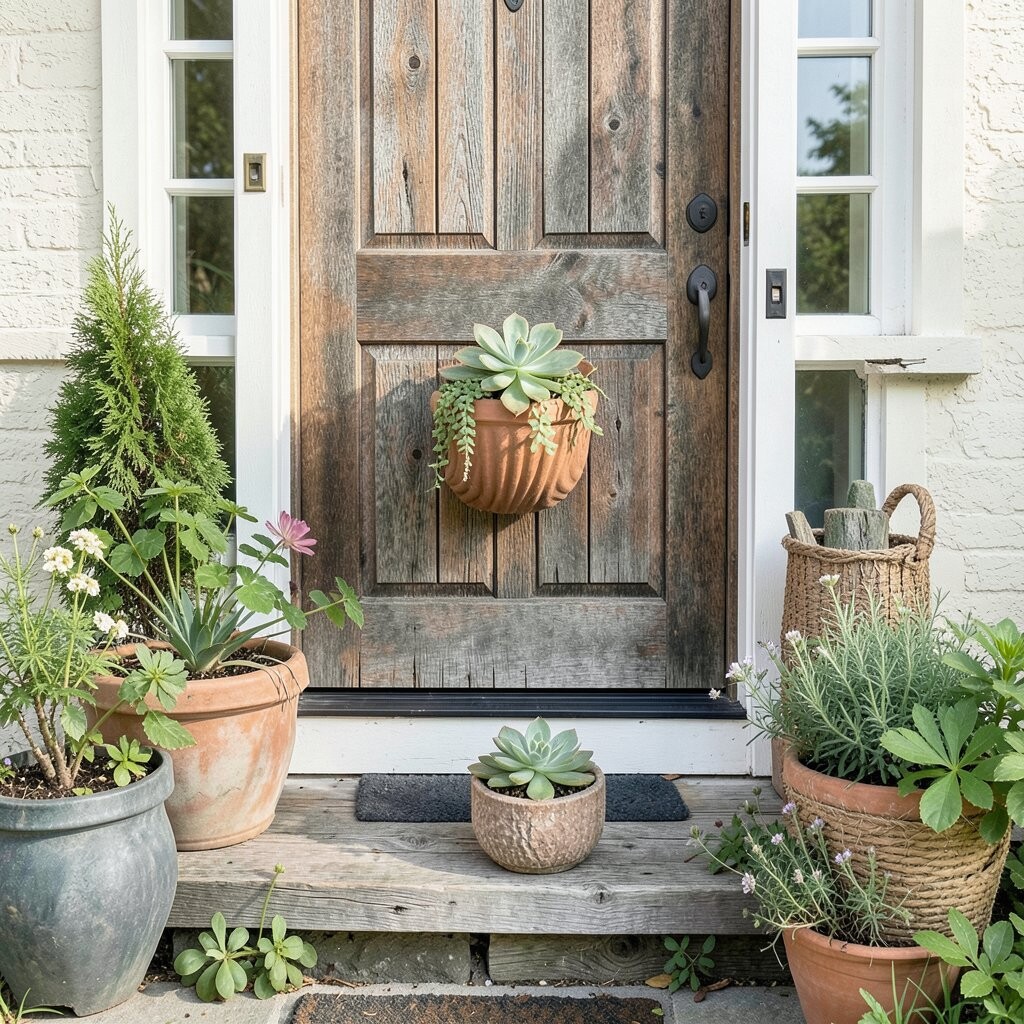
Reclaimed Wood Door With Succulent Scallop Planter Steps Imagine a reclaimed wood door framed by shallow scalloped planter steps leading down to the entrance. On each step, succulents sit in neat rows like living tiles.
This design looks tidy and modern while still feeling natural. Succulents are low water and can handle sunny spots better than many other plants. For best results, mix textures like spiky leaves and rosette shapes, and use gritty soil designed for succulents.
Personalization idea: use a few larger “statement” plants in the corners and fill the rest with smaller ones for a balanced look. Cost can be managed because succulents often spread over time, reducing future purchases. The trend toward “xeriscape-friendly” front yards makes this a great match for dry climates.
If you want extra charm, add small pebbles in a matching color for a clean finish around the planters.
-
10. Folding Reclaimed Wood Screens With Hanging Pots
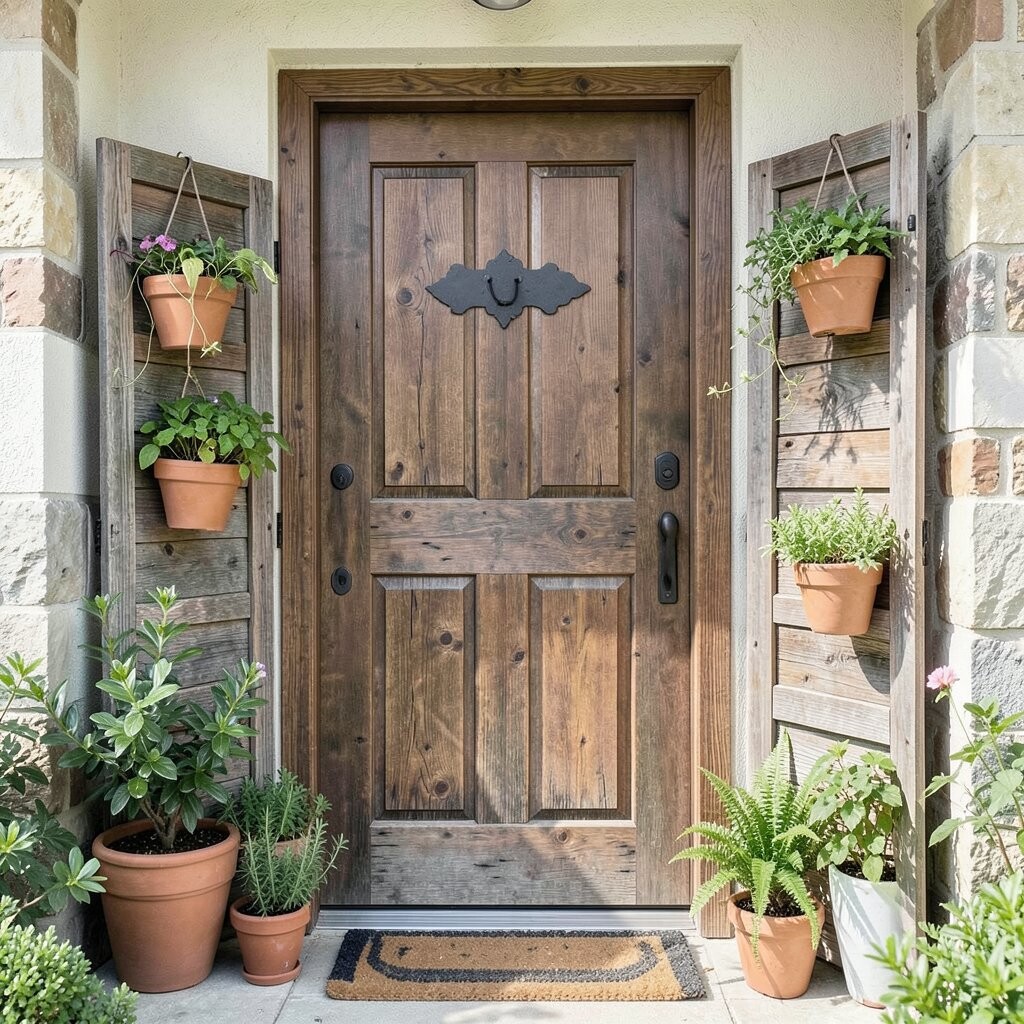
Folding Reclaimed Wood Screens With Hanging Pots Picture a reclaimed wood screen panel near the doorway that adds privacy and creates a mini garden room. Pots hang from hooks along the screen, and the plants spill gently toward the steps.
This setup is flexible, because you can shift where the greenery sits as seasons change. It can also make wind feel less harsh at the entrance. Use lightweight hanging baskets and check hooks often so everything stays secure.
To personalize, paint the screen a warm neutral color and choose plant mixes with different leaf heights. Cost depends on how many hooks and baskets you add, so start with a few and expand when you love how it looks. The current trend is creating “outdoor rooms,” and this turns your entry into something cozy.
-
11. Reclaimed Wood Door With Citrus Pots And Rosemary Wreath

Reclaimed Wood Door With Citrus Pots And Rosemary Wreath Imagine a reclaimed wood door with a simple wreath made from rosemary, plus two large pots near the corners. Small citrus trees or citrus-ready plants bring bright color and a fresh smell.
This is a fun way to mix edible and decorative plants, so your front door feels lively even when it’s not blooming. Plants add a welcoming scent and can make your entry seem more “special” without expensive upgrades. Pick citrus varieties that handle your climate, and consider bringing potted plants indoors if needed.
For personalization, tie the pots with natural twine or add small plant markers made from scrap wood. Cost considerations: large pots can cost more, so use durable containers you can reuse each year. A popular trend is using fragrance-forward greenery, and rosemary is a perfect match for that style.
To keep the door looking neat, use a matching saucer set under pots so water doesn’t stain the entry floor.
-
12. Reclaimed Wood Door With Planter Box Under The Handle
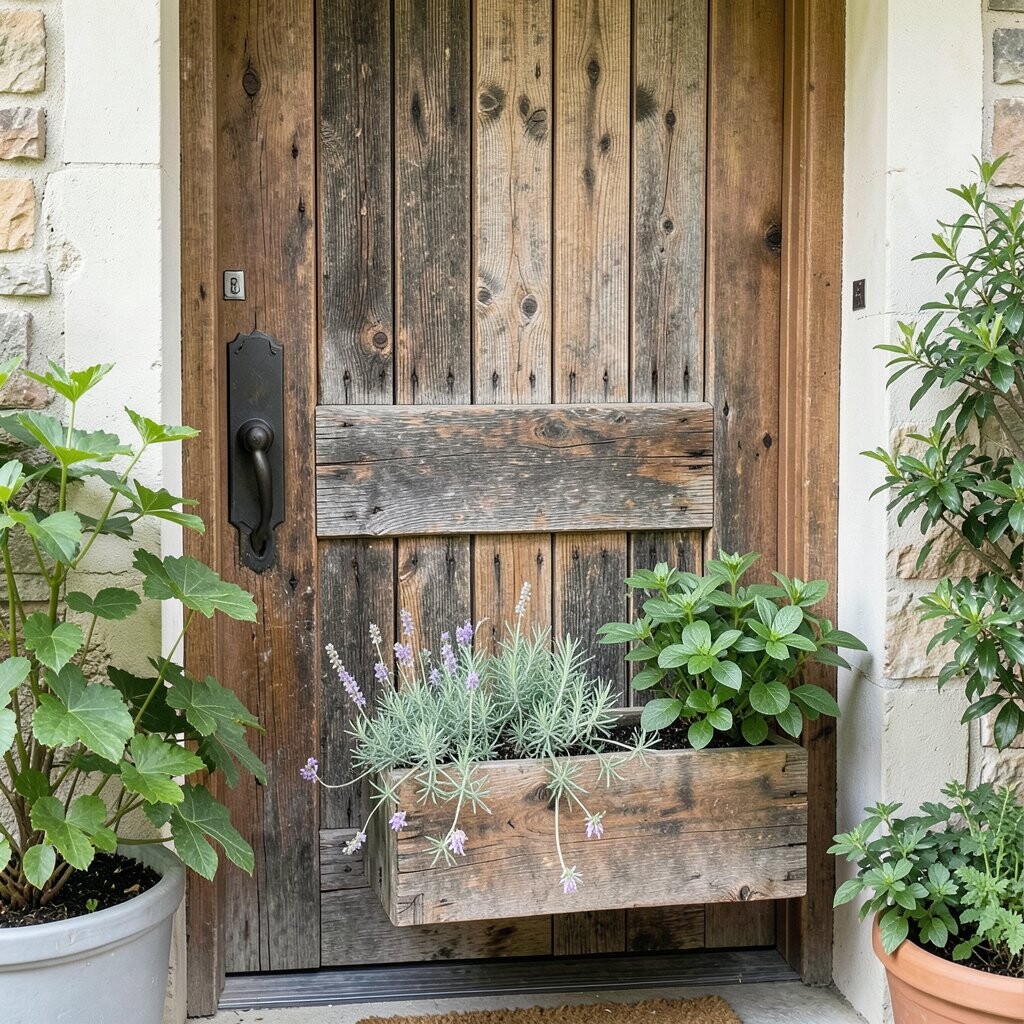
Reclaimed Wood Door With Planter Box Under The Handle Picture a reclaimed wood door where a planter box sits just below the handle area, like a built-in garden nook. Small plants with tidy growth form a compact patch that greets you every time you arrive.
This design keeps the greenery close and makes the entry feel intentional. It can also protect the lower part of the doorway area by adding extra coverage and hiding dirt marks. Choose plants that don’t grow too tall and that can handle footsteps from nearby traffic.
To personalize, select plants with different leaf colors, such as deep green and silvery tones. Costs can be moderate because you may need carpentry for the built-in box, but you’ll save on extra standalone planters. This idea also fits a growing trend toward “integrated planting,” where the entry architecture supports the garden.
-
13. Shiplap-Style Reclaimed Door With Corner Herb Gardens

Shiplap-Style Reclaimed Door With Corner Herb Gardens Imagine reclaimed wood arranged in a shiplap-like rhythm, with a front door that looks clean and coastal but still warm. On the corners of the doorway, narrow herb gardens grow in long, simple planters.
This layout feels neat and gives you a clear reason to care for it, since herbs are useful. Plants make the corners look full and prevent the entry from feeling empty. Pick herbs that match the sun exposure, and use a mix of upright and trailing varieties for a natural look.
To personalize, label herbs with small weatherproof tags made from scrap wood or metal. Cost considerations: long planters can cost a bit, but you can reuse containers and build dividers to keep plants from crowding. Today, “practical beauty” is a favorite trend, and herbs are both pretty and functional.
Keep a simple watering routine and check soil once a week, especially during hot spells.
-
14. Reclaimed Wood Door With Stained Glass Salvage Accents And Moss Pots

Reclaimed Wood Door With Stained Glass Salvage Accents And Moss Pots Picture a reclaimed wood door with small salvaged stained glass accents that catch light as you approach. At the base, moss pots soften the scene and make the colors feel more magical.
This idea is unique because it blends reclaimed materials with gentle texture, like a nature-inspired glow. The moss adds a plush look and helps the entry feel grounded. If moss is hard for your area, try a moss-style ground cover sold for outdoor planters and follow the care guide.
Personalization tip: choose glass colors that match your plant leaves, like warm amber tones with golden plants or cool blues with silvery herbs. Cost can vary because stained glass pieces depend on what you find, but you can keep spending low by using small accents instead of full panels. The current trend leans toward “found art” and recycled details, so this is right on trend.
For durability, seal the wood well and protect glass edges so they handle weather and touch.
-
15. Reclaimed Wood Door With Rain Garden Planters Along The Walk

Reclaimed Wood Door With Rain Garden Planters Along The Walk Imagine a reclaimed wood door paired with a rain garden strip that curves from the walkway toward the plants. The greenery forms a gentle line of colors and textures that stays beautiful even after rain.
This design helps manage water better by giving runoff a place to soak in. That can protect your entry area and reduce puddles near the door. Choose plants that handle wet and dry cycles, such as native grasses and hardy perennials.
To personalize, pick plants with a seasonal rhythm, like early spring blooms followed by fuller summer texture. Cost considerations: rain garden plants and mulch can be affordable, and you may save money over time by preventing water damage. A big trend now is “water-smart landscaping,” and this idea is a strong match.
Keep an eye on how water flows during the first few storms, then adjust the plant spacing if needed.
-
16. Reclaimed Wood Door With Ground-Level Wicker And Plant Shelves
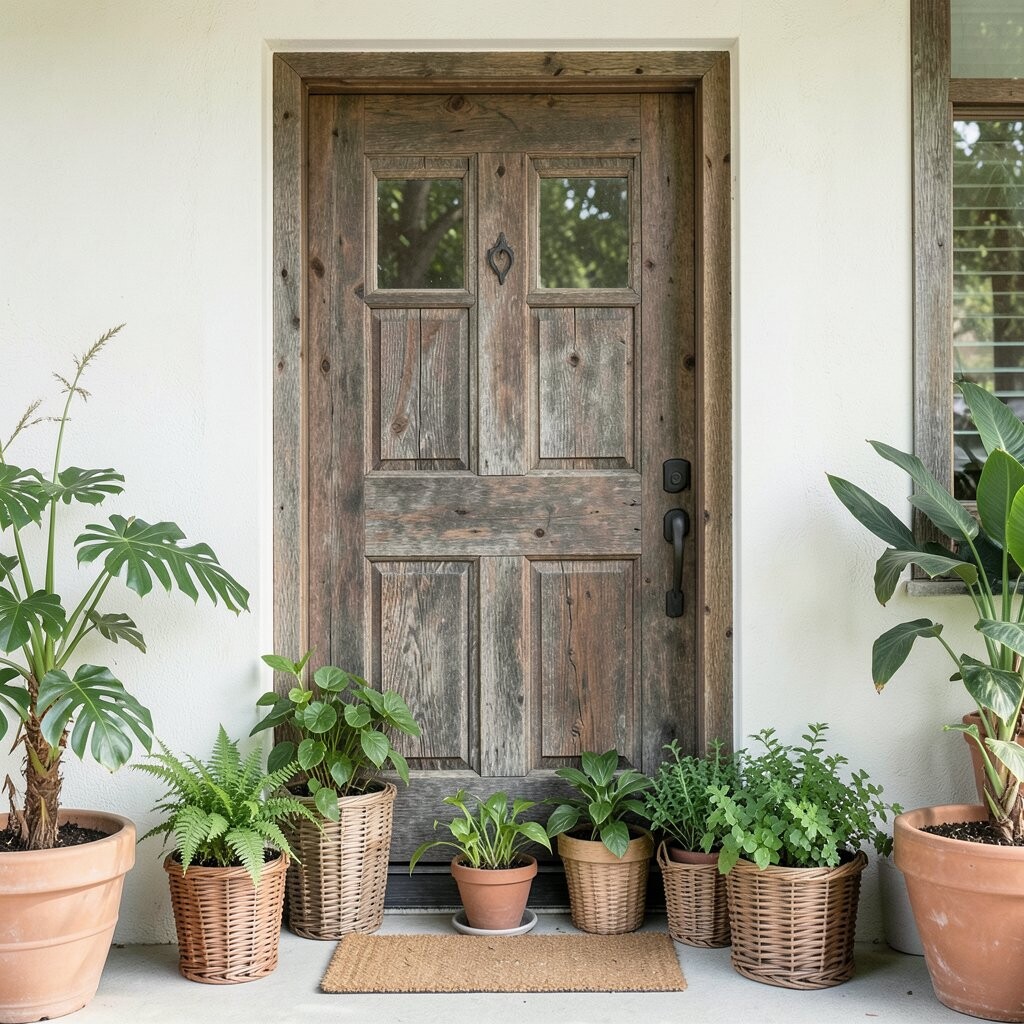
Reclaimed Wood Door With Ground-Level Wicker And Plant Shelves Picture reclaimed wood as the main door, then add a cozy look with wicker shelves and ground-level planters. Plants sit at different heights so the entrance feels layered and inviting.
This creates a warm, cottage-style vibe that feels friendly even in winter. The plants help soften the look of hardware and make the entry feel more natural. For tips, use sealed planters if you place them directly on surfaces that hold moisture.
Personalization idea: mix a few tall plants with shorter ones so your entry has a clear shape from far away. Cost can be balanced because wicker and shelving can sometimes be sourced secondhand. The trend toward mixing materials—wood, wicker, stone, and plants—is still going strong and looks great when you keep the palette simple.
-
17. Minimal Reclaimed Wood Door With Large Statement Planter

Minimal Reclaimed Wood Door With Large Statement Planter Imagine a minimal reclaimed wood door with clean lines, finished in a warm, natural seal. Just one big statement planter sits beside it, loaded with a bold plant like a small tree or a striking shrub.
This idea keeps the look calm and modern, while still adding lots of life. A single planter can be easier to maintain than many small ones, and it makes your doorway the main hero. Choose a container that drains well and a plant that fits your light conditions.
To personalize, pick a pot color that matches your outdoor accents, like black for a sleek style or terracotta for a classic warmth. Cost considerations: a large planter and one strong plant can be a smart use of budget because you won’t need lots of extra pieces. Right now, “less but better” plant styling is a favorite trend, especially for small front porches.
For upkeep, rotate the plant occasionally so growth stays even and the shape looks intentional.