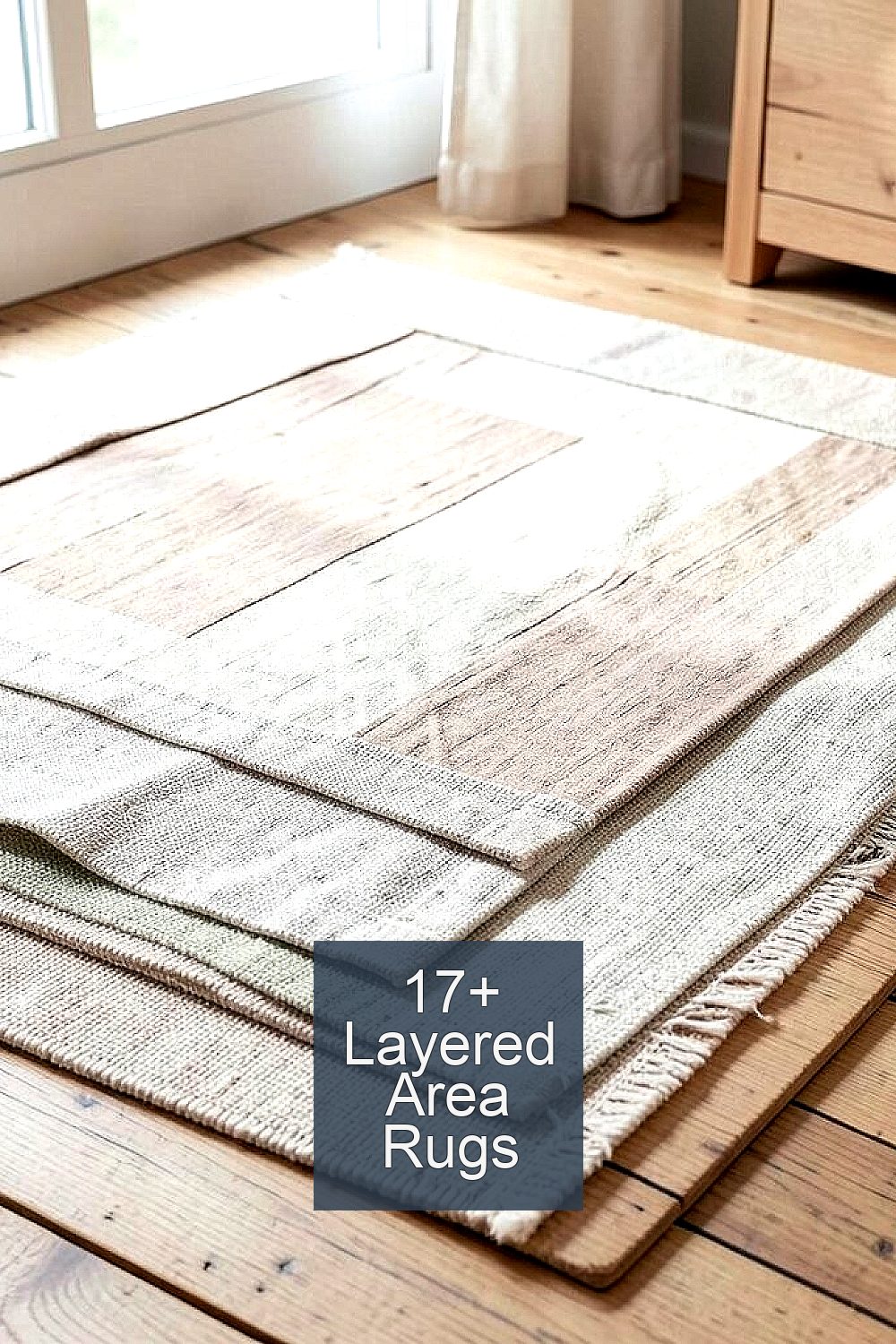
Layering rugs can make a room feel instantly softer and more “lived in.” With the right pairings, your space can look styled without feeling fussy.
1. Boho Fringe Meets Warm Neutral Base

Start with a solid jute or cream rug as the calm foundation. Then add a second area rug with boho patterns and fringe for movement.
This combo makes floors feel warmer and adds texture you can see from across the room. Choose a base that matches your wall color so the pattern rug looks intentional. Keep the fringe rug centered under the coffee table for a tidy, cozy look.
2. Scandinavian Planks and Layered Light Linens

Go bright with a light gray or oatmeal rug and layer a thinner rug on top. Aim for similar tones, but with different weaves so the layers show up clearly.
Pick one rug with subtle stripes and the other with a gentle geometric design. This pairing helps small rooms feel airy while still adding cushioning underfoot. Use rug pads for both layers so the top rug stays put when you walk.
For personal style, swap in a slightly darker accent pattern to tie in throw pillows. If you love minimal decor, keep the top rug closer to the furniture legs. If you like a cozier vibe, allow a little extra border to peek out on all sides.
3. Monochrome Overlap for a Gallery-Like Living Room
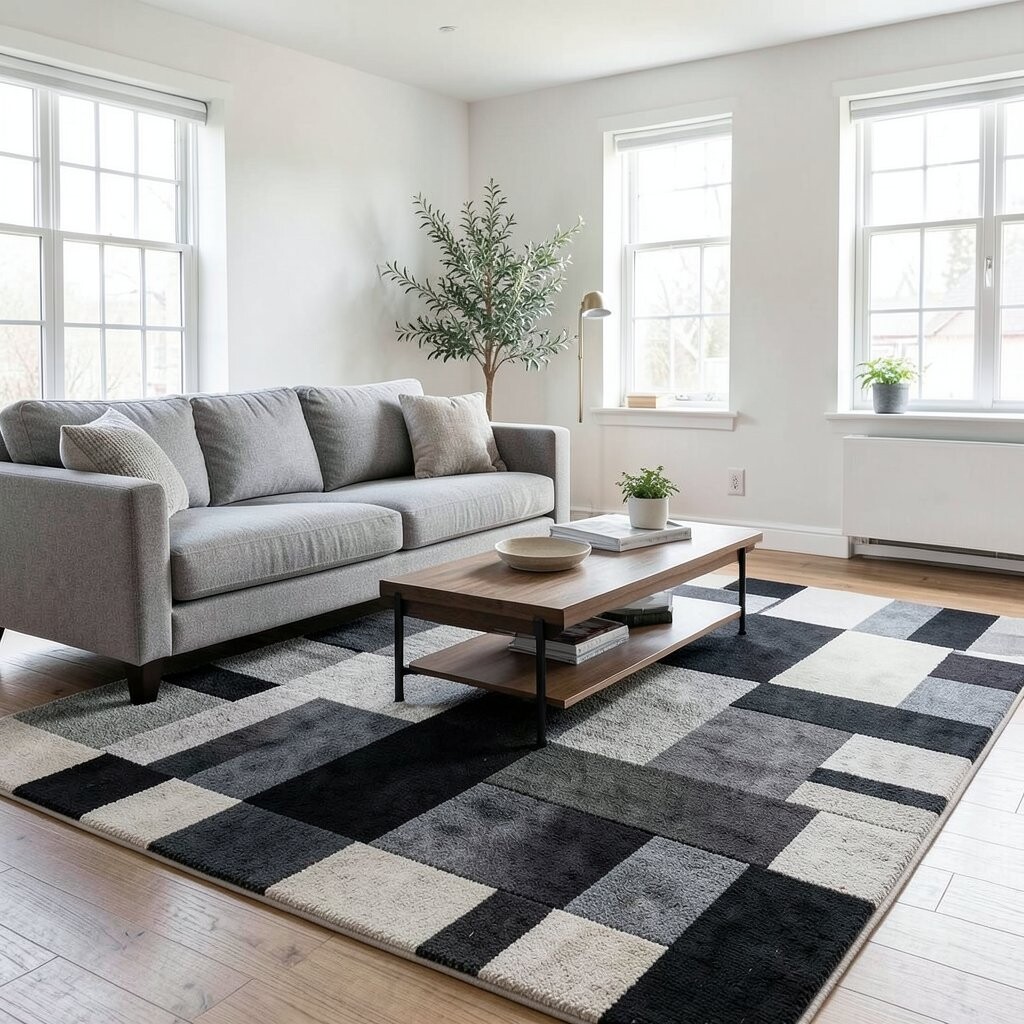
Layer two rugs that share the same color family, like black, charcoal, and soft gray. Keep one rug solid and the other patterned so you get contrast without chaos.
This look feels modern yet comfortable, especially when your sofa is neutral. Choose a low-pile rug under a plush or high-pile rug to balance comfort and style. When the lighting hits, the texture difference makes the room look curated.
To personalize it, try a slightly different shade of gray in the top rug than in the bottom one. If your space has dark furniture, make the top rug a touch lighter to avoid heaviness. Watch scale too: a large patterned rug looks best when it extends beyond the coffee table.
For cost, you can buy one nicer patterned rug and pair it with a more affordable flatweave. Layering helps even budget rugs look styled and layered rather than random.
4. Vintage Persian Look with a Solid Border Underlay

Choose a vintage-inspired Persian rug and place it over a simple solid rug. The solid underlay frames the detailed pattern like a mat in a picture.
This method adds classic charm while keeping the overall floor design calm. Match the underlay color to a highlight in the Persian rug, such as rust, navy, or faded rose. If you want extra coziness, pick a thicker underlay for softer footfalls.
5. Coastal Texture: Sisal Base and Striped Accent

Start with a sisal or rope-texture rug as the foundation for a coastal feel. Add a striped rug on top to bring in a light, breezy rhythm.
The textures create a natural look that works in beachy homes or everyday modern spaces. Keep the stripe direction consistent with your room layout, like horizontal stripes for a wider feel. Use warm whites and sandy tones if you want it to feel sunny, not stark.
To personalize, add a second accent pattern through nearby decor, such as a striped throw blanket. For practical placement, center both rugs under the main seating area. If you worry about slipping, use a rug pad that covers the full bottom rug.
6. Earthy Terracotta Patterns Over Soft Beige
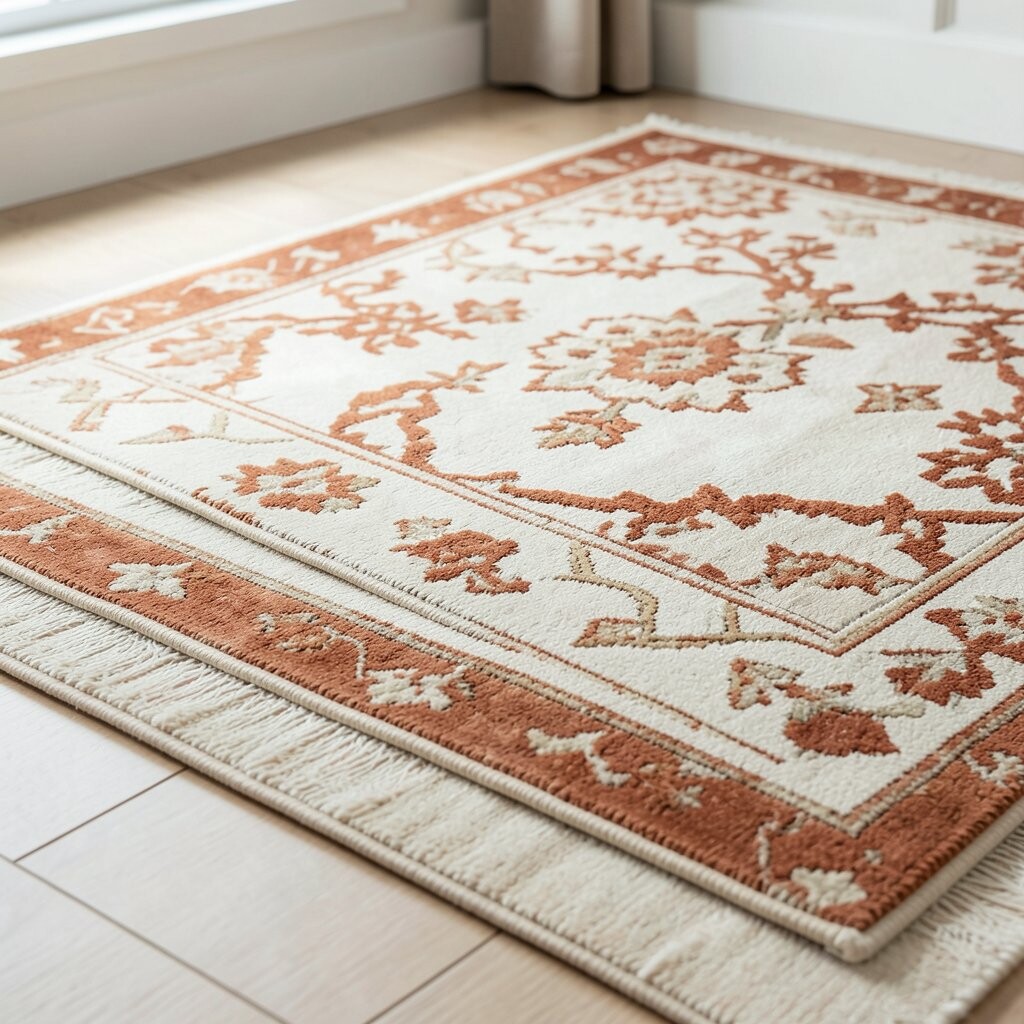
Layer a terracotta patterned rug on top of a soft beige rug to create grounded warmth. The beige base keeps the room feeling light while terracotta adds personality.
This combination is perfect for living rooms and dining areas where you want a cozy, welcoming vibe. Look for patterns with warm reds, rust, and clay to match natural wood and leather. Aim for a top rug that has visible texture so the layers don’t blend together.
For tips, keep the terracotta rug slightly smaller so the beige border shows around the edges. That border is what makes the layered look feel intentional. If your budget is tight, choose a simpler beige underlay and spend more on the top statement rug.
7. Deep Navy Over Cream for Nighttime Coziness

Pick a deep navy rug and layer it over a cream or light oatmeal rug. The contrast looks bold but still cozy because cream keeps it bright.
This is a great choice if your walls are neutral and your furniture is mid-tone wood. Navy adds richness, while the lighter underlayer softens the overall look. Consider a rug with subtle patterning so the space feels styled without feeling busy.
To personalize, bring navy into your decor with curtains, baskets, or accent ceramics. For cost, consider buying a large cream underlay first since it’s the visual base. Then add a smaller navy rug with stronger design details to finish the layered effect.
8. Warm Greige Woven Under a Cozy Plaid Layer
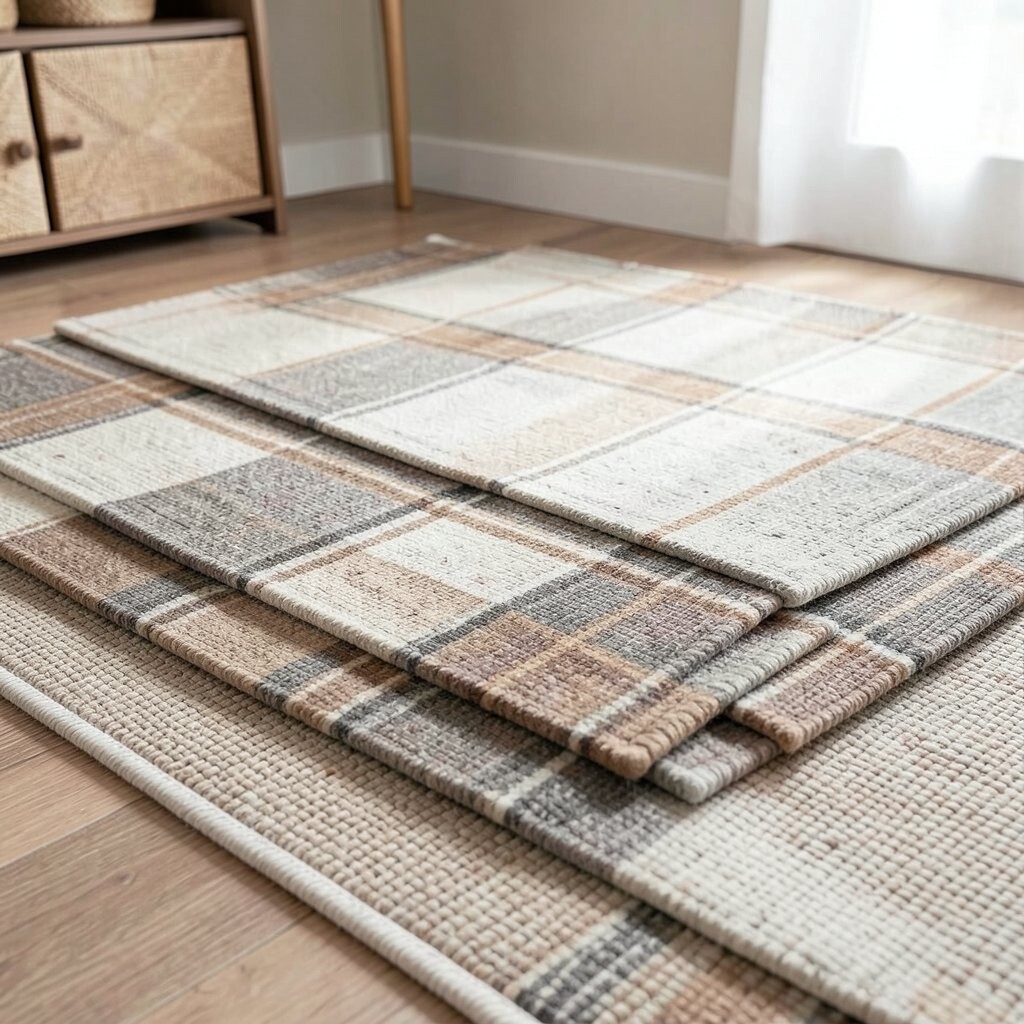
Use a woven greige rug as your foundation and top it with a plaid or checked rug. The woven texture pairs beautifully with the crisp lines of plaid.
This layered look feels like a cozy cabin, especially when paired with knit throws and wooden furniture. Choose plaid colors that match your existing palette, like taupe, oatmeal, and a muted green. You’ll get visual interest without needing loud colors.
For practical tips, make sure the plaid layer is centered so the checks look balanced. Keep the greige rug slightly larger so it frames the plaid like a border. If you prefer a cleaner look, opt for a smaller plaid and tighter spacing around the edges.
If you’re shopping on a budget, look for washable or low-pile options. Plaid rugs often come in practical materials that work well in high-traffic areas.
9. Soft Pastel Florals on Neutral Flatweave

Layer a pastel floral rug over a neutral flatweave like natural cotton or light jute. The flatweave helps the florals look fresh instead of overwhelming.
This combo gives a gentle, springy vibe and makes the room feel more inviting. Choose florals with muted shades such as dusty blue, blush, and soft yellow. Keep the underlay close to the dominant pastel tone for a smooth visual blend.
For personalization, rotate the floral rug so the stems align with your furniture lines. That tiny detail makes the room look carefully styled. If you have patterned curtains, keep the floral rug simpler to avoid visual competition.
To manage cost, purchase one “hero” floral piece and rely on the neutral flatweave for the layered base. Flatweaves are often more affordable and easy to find in different sizes.
10. Monochrome Texture Mix: Chunky Knit + Smooth Weave

Try a chunky knit style rug over a smoother, tightly woven base. The difference in texture creates depth even when colors are simple.
This is a cozy trend for people who love tactile decor. Use creamy, beige, or soft charcoal so the textures become the main feature. Make sure both rugs are the right thickness together so doors still open smoothly.
Practical tip: choose a non-slip pad under the knit rug because it can shift more easily. Center the knit rug where everyone naturally gathers, like under a reading chair. Personalize with a few matching knit accessories, such as a pouf or throw pillow.
11. Two-Pattern Layering with One Shared Color Thread

Layer two patterned rugs by sharing one color thread between them. For example, pair a subtle stripe rug with a small geometric rug that both include the same warm tone.
This approach keeps the design cohesive, even though you’re mixing patterns. Choose one pattern to be dominant and the other to support it. A good rule is to make one rug larger and the other slightly smaller so the eye knows where to land.
For practical placement, align one edge of the rugs with your room’s longest sightline. That visual alignment makes layering look intentional rather than accidental. If you want an easier win, pick patterns that share similar contrast levels, like both being light on dark or both being dark on light.
Cost-wise, you can often find coordinating rugs in different sizes even if they aren’t from the same set. Focus on the shared color and texture, and the pairing will look designed.
12. Outdoor-Inspired Layering for Sunrooms
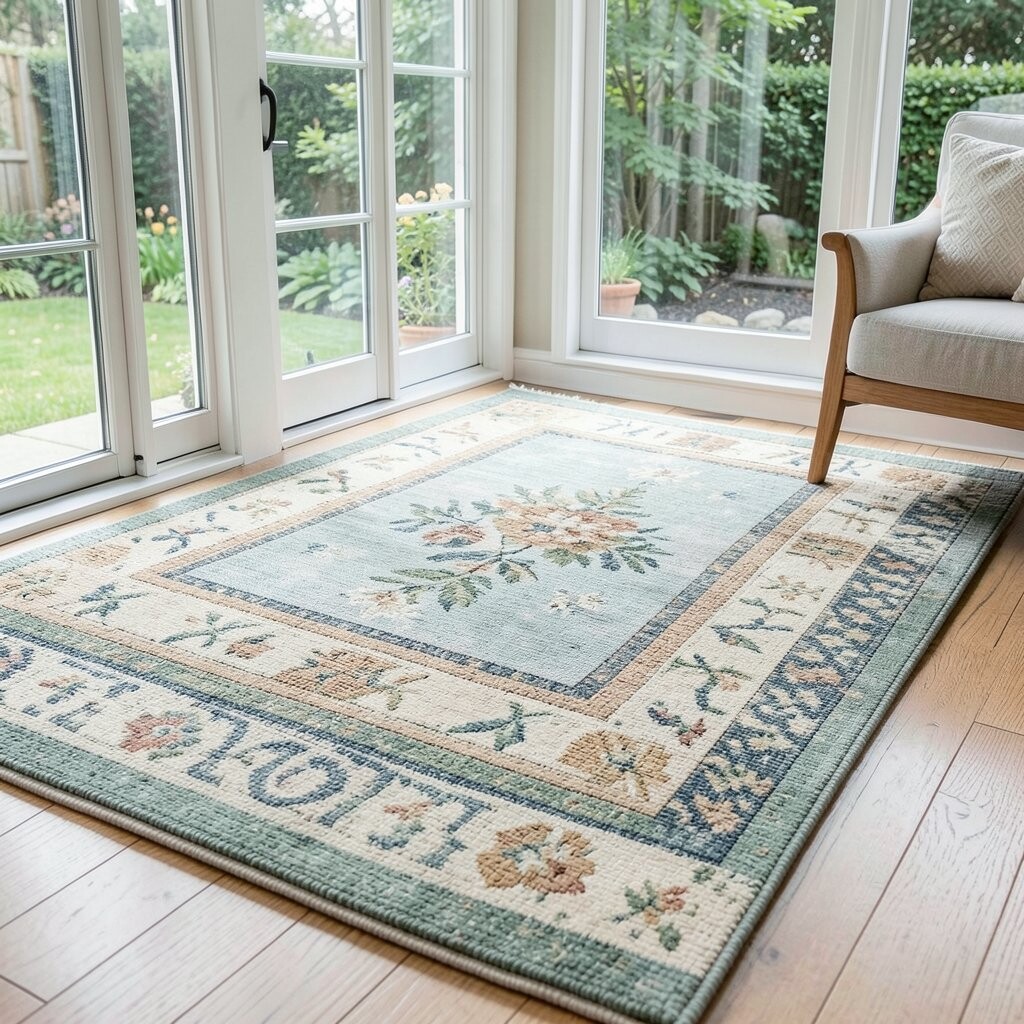
If your space gets lots of light, layer a durable indoor-outdoor rug with a softer indoor rug. The outer layer can handle traffic, while the top layer adds comfort and style.
This looks especially good in sunrooms because light makes textures stand out. Choose an outdoor rug base in neutral tones like sand, slate, or weathered gray. Then add a patterned indoor rug with a similar palette so everything feels connected.
Practical tips include checking washing care and choosing materials that dry well. A removable top layer is handy when spills happen. Personalize with colors that echo nearby plants, like muted greens and warm yellows.
13. Layered Runners Under a Coffee Table Seating Zone
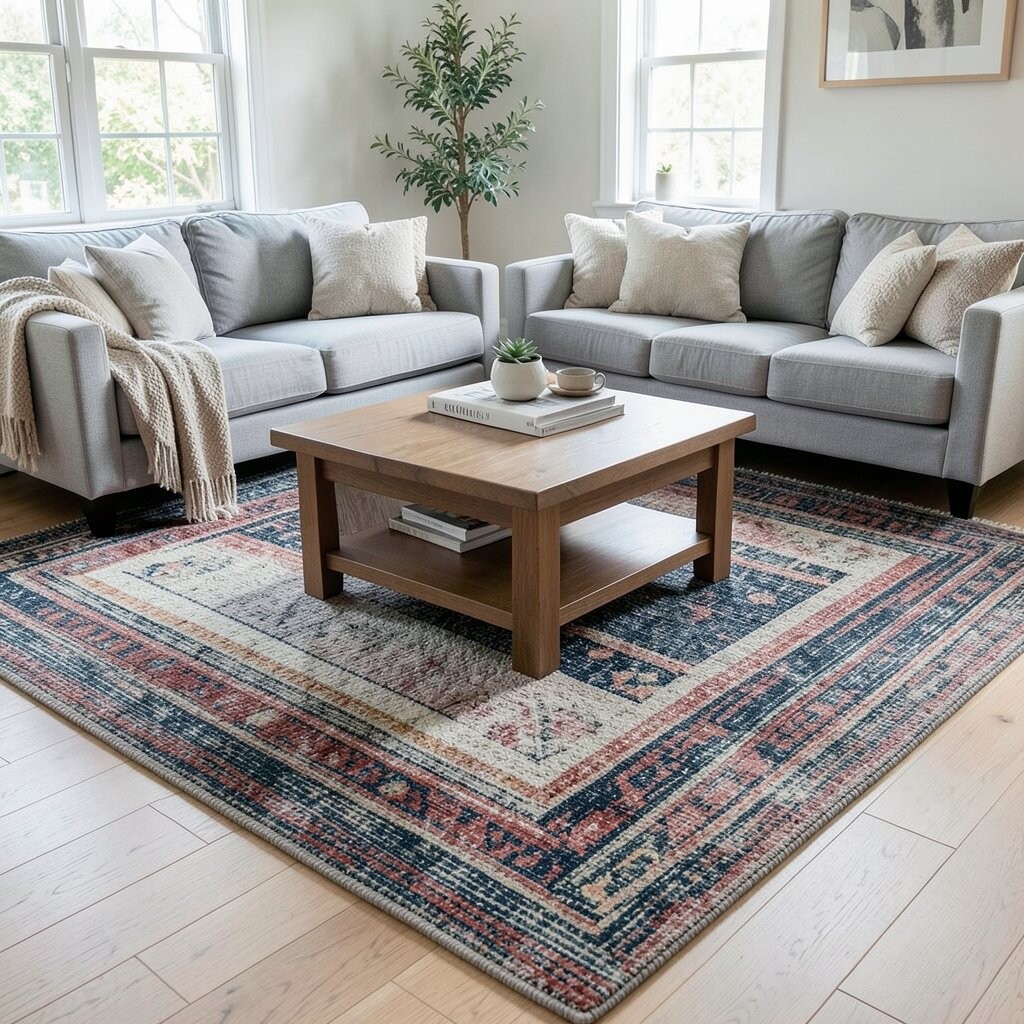
Use a wide runner beneath your coffee table, then layer a smaller square or round rug on top. This creates a floating effect and adds visual interest without covering the whole floor.
This works well in rooms with open layouts where you want comfort but not bulk. Pick a runner with a low pile so it doesn’t fight the furniture legs. Then select a top rug with a soft pattern that matches your decor theme.
For personalization, rotate the round rug slightly so it doesn’t look too perfectly centered. That small imperfection feels natural and stylish. Cost considerations are helpful here because runners are often cheaper than full-size rugs.
Keep the top rug large enough that at least the front legs of seating feel anchored. That’s the key to making layered rugs look purposeful.
14. Round Rug on Square Base for Cozy Visual Framing
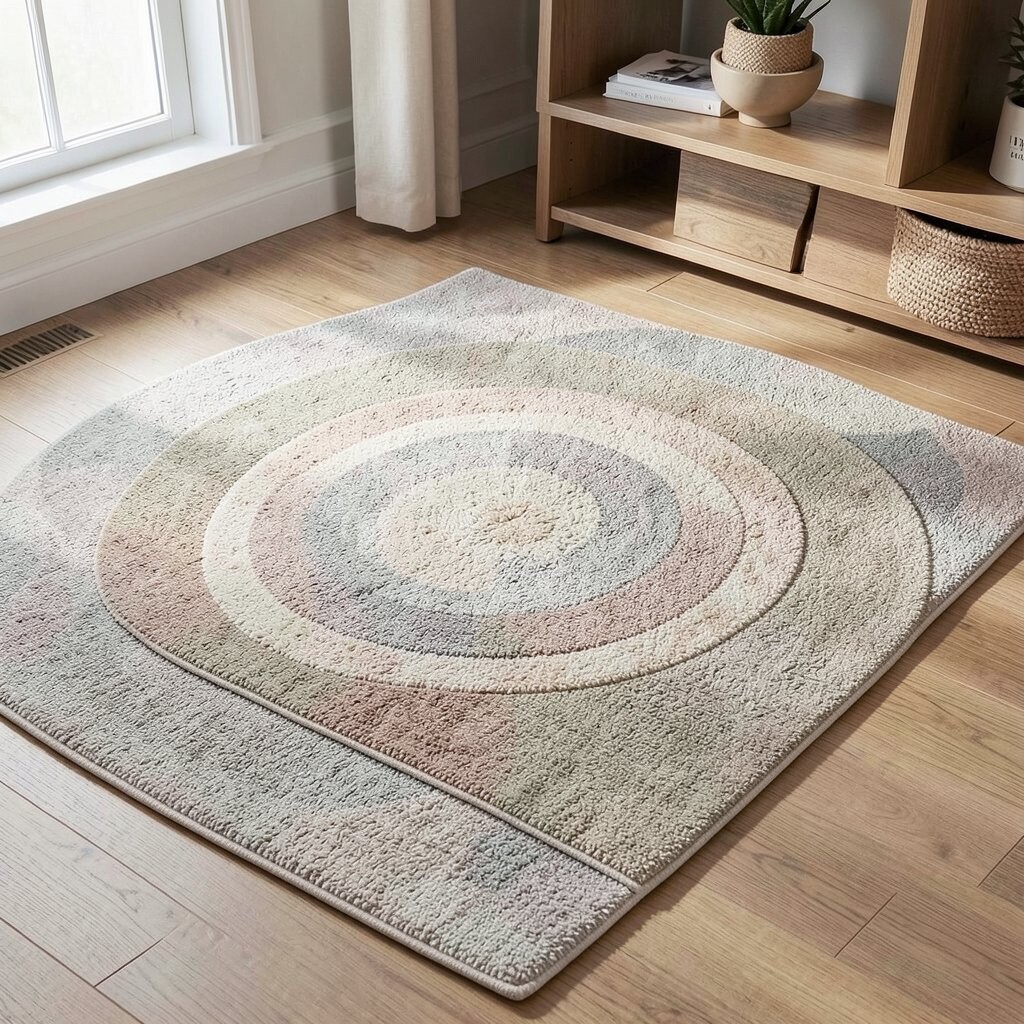
Pair a round rug with a square rug underneath to create gentle shape contrast. The round layer softens sharp corners and makes the seating area feel friendlier.
This combo is unique because it adds a playful geometry without changing your color palette too much. Choose a square underlay with a neutral pattern and a round top rug with warmer tones. If you have a lot of straight-lined furniture, the circle helps balance the room.
15. Warm Taupe Base with a Black-and-White Graphic Top

Start with a taupe or beige rug, then top it with a black-and-white graphic design. The underlayer keeps things cozy, while the graphic layer brings energy.
This style looks great in modern homes and can anchor bold art on the walls. Look for graphic rugs with strong but clean lines, like abstract strokes or minimal shapes. Try to match the scale so the graphic design doesn’t overwhelm the room.
For practical tips, keep the graphic top rug smaller than the taupe base so you get a clear border. Use a rug pad to prevent sliding and reduce wear. Personalize with black accents in frames, lamps, or vases to make the pairing feel complete.
16. Layering with Global Ikat Colors for an Artsy Look
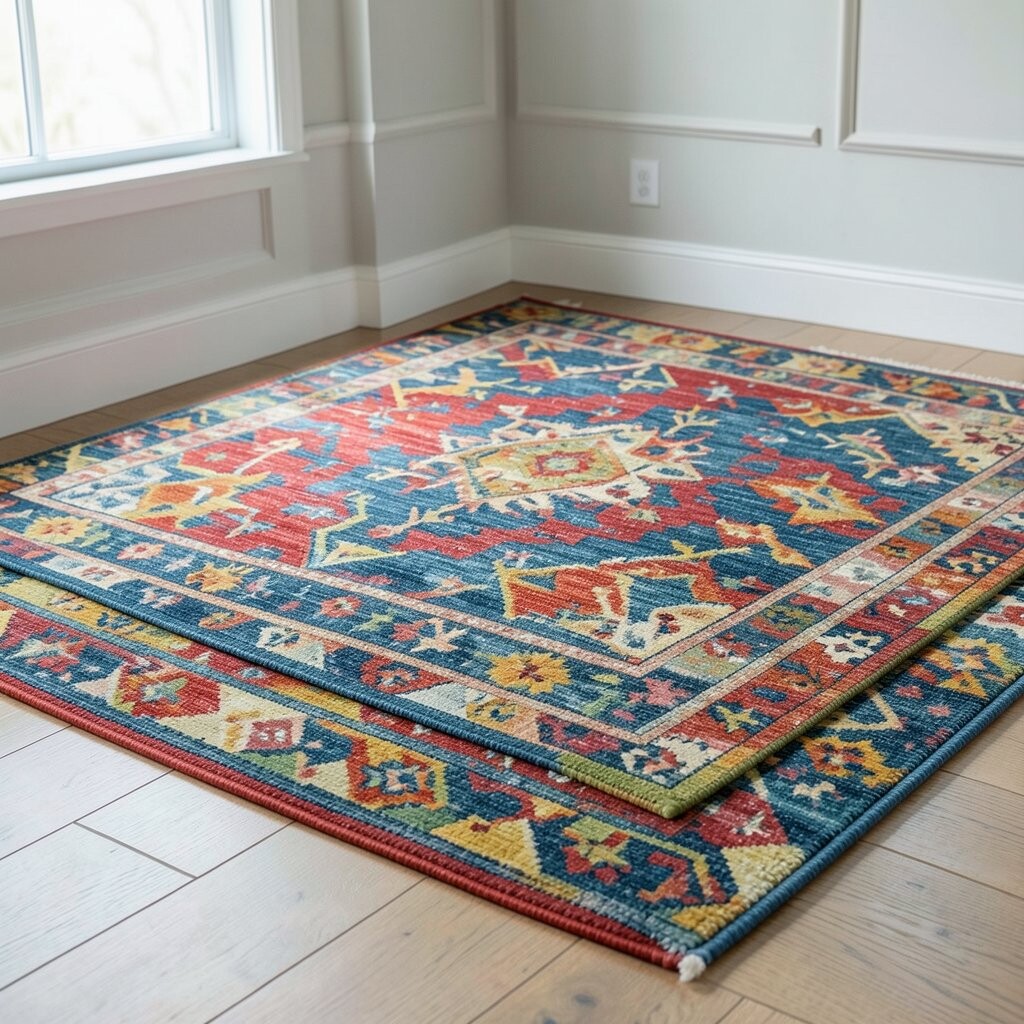
Use a neutral base rug and layer an ikat-style rug on top with rich, global color. Think warm spice tones, inspired by textiles and markets.
This pairing feels creative and lively, and it’s a great way to add personality without changing all your furniture. Choose one dominant color in the ikat rug to repeat in throw pillows or wall art. The neutral underlayer helps those colors look intentional instead of scattered.
For practical placement, center the ikat rug where you want the room’s main focal point. If your room is large, go wider with the base rug so the layered look feels grounded. For cost, consider mixing a budget ikat-inspired rug with a slightly more expensive neutral foundation.
When the trend energy feels strong, soften it with calming fabrics like linen or soft cotton. That balance makes the whole space feel cozy, not chaotic.
17. Soft Gray Pile with a Shag-Free Micro-Pattern Top

Layer a soft gray pile rug with a top rug that has a small micro-pattern. The result is plush comfort with subtle visual detail.
This combination works well in bedrooms and family rooms because it feels soft underfoot. Choose a micro-pattern that is close in tone to the gray, like lighter and darker shades of the same color family. That way, the layering looks rich without feeling too busy.
Practical tips include keeping the top rug flat enough for easy vacuuming. Personalize by adding color through bedding, like a warm cream duvet or muted teal accents. If you want a trend-forward look, choose minimal patterns that feel “designed,” not overly busy.
18. Matching Texture Layers: Two Kilim-Style Rugs in Different Sizes

Layer two kilim-style rugs in the same general color story, but in different sizes. This keeps the look cohesive while still showing a clear layered effect.
This style is unique because the pattern stays consistent across both layers. Try one rug in a slightly lighter tone and the other a bit deeper so the borders show. Use rug pads under both rugs so they stay aligned during everyday life.
To personalize, choose a kilim top with a motif that echoes your decor, such as arrows, diamonds, or earthy blooms. If you’re thinking about cost, kilim-inspired rugs are often available in many price ranges. It’s usually cheaper to buy two mid-priced pieces than one extra-large premium rug.