
Steam and sound can be part of the drink. The right brewing setup can make your shop feel like a craft lab.
1. The Clear-Flow “Decanter” Pour-Over Tower

A wall-mounted glass tower with a clear flow path turns each pour into a visible event. Guests can watch the water ribbon down like a slow waterfall while it blooms the grounds.
This setup helps customers trust the process because they literally see the extraction. It also gives you consistent control over grind size and pour speed without guessing. For best results, calibrate the tower height, use a flow restrictor, and keep the bed undisturbed during drainage so the cups stay predictable.
2. The Retro Glass Syphon “Stage Lamp” Brewer

Picture a syphon brewer sitting under a warm lamp, like a little stage for science coffee. The moment vapor rises and the brew siphons through is genuinely mesmerizing.
Syphons can produce a clean, aromatic cup with bright notes and a smooth body when you manage temperature well. To make it practical, set a fixed brew schedule for staff and pre-weigh filters so each drink starts the same way. For a unique look, choose etched glass, add a small brass scale, and place a tasting card beside each station.
Cost is moderate because you’re buying a showpiece plus filters and bulbs, but it can pay off through longer customer stays and higher drink curiosity. A good trend to ride is “watch-then-sip” service, where you time the show and invite guests to notice aroma changes as the draw happens. Personalize by offering two lamps or two recipes so the shop can run “light and floral” alongside “deep and syrupy.”
3. The Countertop Cold-Infusion “Waterfall Jar” System
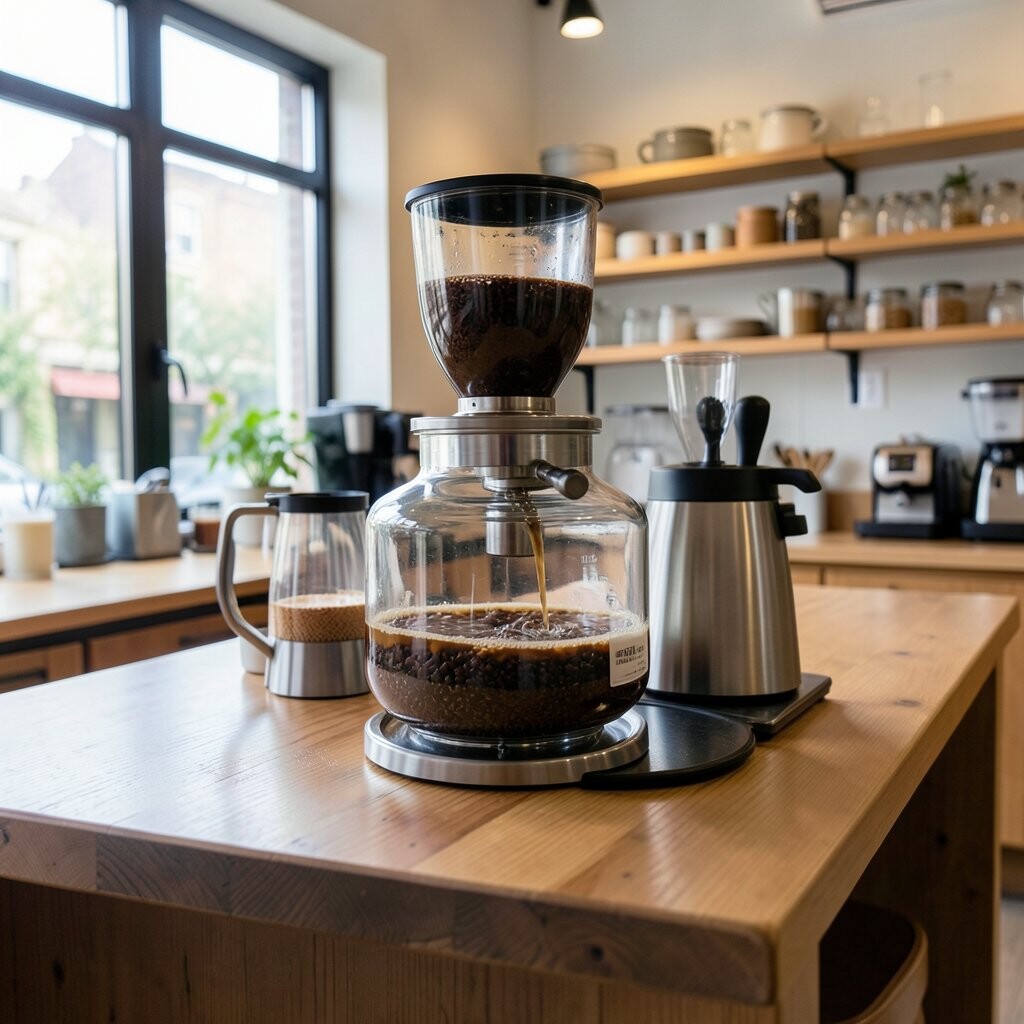
Instead of a simple pitcher, use multiple tall jars where cold water drips like a waterfall over coffee. It looks calm and modern, and it makes the slow process feel intentional.
Cold infusion jars reduce agitation, which can make smoother, lower-acid drinks for milk-based blends. For practical use, label each jar with a start time and target ratio, then automate the drip flow with a timer and valve so staff can focus on other tasks. Keep the jars in a shaded cooler area to maintain a steady temperature throughout the steep.
This is unique because you can visually show two stages: pre-wet, then steady extraction. Guests love seeing sediment stay low and watching the drip rate settle after the first few minutes. To personalize, offer “single-origin drip routes,” like a jar for Ethiopia and another for Colombia, and let customers mix their own strengths.
In cost terms, the initial equipment is relatively affordable, but you’ll spend on filters, jars, and a good cold storage plan. A current trend is “streamed cold brew,” where slow drip replaces the usual steep method and becomes part of the brand story. Keep consistency by using the same jar volume, same drip rate, and same water mineral profile, since that changes taste more than many owners expect.
4. The Herb-Garden “Steam-Whisk” Espresso Wand Bar

Mount a wall shelf of small herb planters near an espresso bar, then pair it with a steam wand station designed for thick textures. The visual mix of greens and steam makes the shop feel fresh and alive.
Having a dedicated wand setup encourages better microfoam technique for cappuccinos and latte art. For practical tips, use a temperature-managed steam system, train staff with short refresher drills, and keep a cleaning schedule that prevents milk residue buildup. Personalize your menu with “garden notes,” like rosemary-infused sugar or orange blossom syrup, and make the option visible near the steaming station.
5. The Pedestal “Mechanical Grinder-to-Brewer” Workflow

Turn your workflow into a kinetic display by designing a pedestal that routes freshly ground coffee straight into brewing. Guests see the path, from grinding to dosing to extraction, like a timed machine.
This kind of integrated station can reduce heat loss, limit staling, and speed up service during rush hours. For uniqueness, add a small transparent chute, use soft LED lighting, and show the brew cycle with a simple color indicator. Practical tip: place heat shielding between grinder and brewer and calibrate every batch so the dose stays stable under different rush conditions.
Cost considerations depend on how advanced the routing becomes, but you can start simple with a dosing funnel plus a mechanical dosing timer before upgrading later. A trend you can lean into is “process transparency,” where the shop feels honest and educational. Personalize by adding “hopper zones” that let staff choose between two roasts without re-measuring every time.
6. The Rotating “Batch Brew Carousel” for Filter Coffee

Build a carousel of brewers on a central counter so baristas can rotate through recipes like a set of flavors. Each compartment looks tidy, and the rotation adds energy during peak hours.
This approach keeps batch brewing consistent and can lower wait times because multiple recipes are prepped in parallel. To make it practical, set standard brew volumes for each carousel slot and use batch timers so the extraction window stays tight. For personalization, label compartments with mood-based names like “sunrise,” “midday,” and “after-hours,” then match roast profiles to those moods.
Costs can be controlled by starting with fewer slots and upgrading as demand grows. A current trend is offering “rotating seasonal filter menus,” and a carousel makes the rotation feel special rather than chaotic. Keep it easy for staff by placing a color-coded SOP card for grind size, ratio, and pour timing next to the base.
7. The “Micro-Bloom” Espresso Pre-Soak Ring
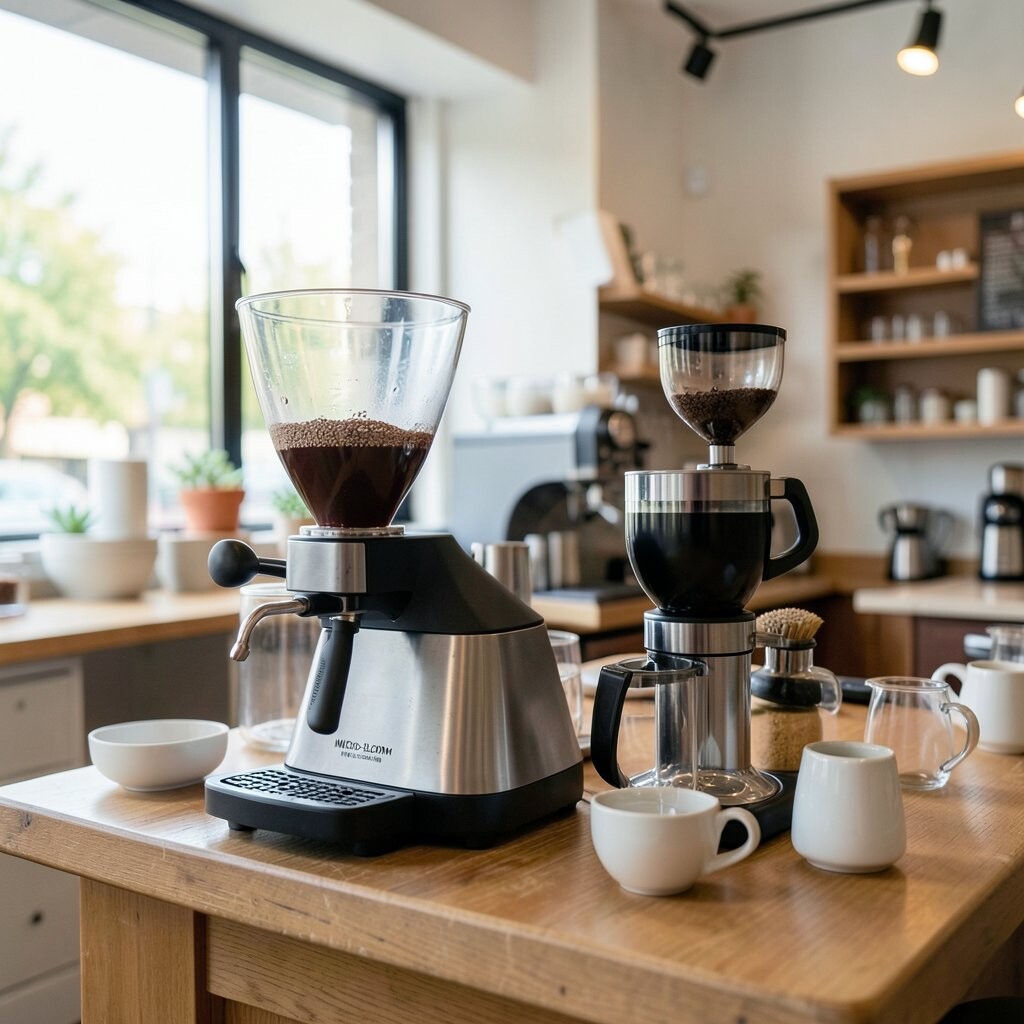
For espresso, use a pre-soak ring attachment that creates a gentle micro-bloom right before full pressure. It looks like a neat metal crown around the portafilter, and it signals a new kind of attention.
This can improve clarity and balance by giving coffee more even saturation without over-extracting. Practical tips include calibrating pre-soak duration, keeping puck prep consistent, and testing with a fixed basket size so results don’t drift. To personalize, offer a “soft bloom” option for chocolatey drinks and a “bright bloom” option for fruity shots.
Cost is often lower than a full espresso overhaul because you’re adding a targeted accessory. A trend that fits is “precision comfort,” where the shop talks about small changes that make a big difference. Make it customer-friendly by describing it as a “gentle warm-up step” that helps the crema taste fuller instead of harsh.
8. The Bamboo “Gravity Brewer” With Flow-Lock Spout

Use a bamboo-themed gravity brewer where water drops from a top reservoir through a filter bed using a lockable spout. The sound of water and the wood texture make the station feel natural and handcrafted.
Gravity brewing often gives a syrupy cup with good sweetness, especially with medium roasts and a careful grind. Practical advice: measure head pressure by keeping the reservoir at a consistent height, and lock the spout timing so each cup follows the same extraction rhythm. Personalize by offering two grind stations, one for “silky” and one for “brighter,” so customers can choose their style without extra confusion.
Budget-wise, gravity brewers can be mid-range depending on materials, and bamboo styling can be done without expensive hardware if you choose quality seals. A current trend is “eco-forward design,” where the station looks like it belongs in a calm café garden. Keep maintenance simple by using food-safe finishes and replacing filters on a clear schedule so taste stays steady.
To make the experience memorable, place a small aroma guide beside the brewer and invite customers to smell right after the first dripping phase. This turns a normal drink into a small moment they’ll remember.
9. The Interactive “TDS Tasting Dial” Station

Create a tasting station that uses a simple display dial to show how different extractions change flavor strength. The equipment is more about measurement than brewing drama, but it can still look high-tech on your counter.
This uniqueness helps customers learn without reading long explanations, because you can pair the dial readings with taste notes. It can also help you standardize recipes when new staff join, since you’ll have targets for consistency. Practical tip: test the same recipe across days, note how changes in water or grind shift the dial, and then adjust only one variable at a time.
Cost can range from low to moderate depending on whether you add refractometers and a conductivity meter. A trend right now is “data-informed coffee,” where shops offer short, friendly education instead of heavy science talk. Personalize by letting regulars choose their preferred dial zone for darker chocolate profiles or lighter fruit profiles.
Make it approachable by training staff to use simple language like “strong and smooth” instead of jargon. Your customers will feel included, not tested, and the station can become a natural upsell for tasting flights.
10. The “Single-Doser” Lightbox for Bean Freshness Brewing

Use a bright lightbox display that houses single doses in a rotating window, showing exactly which roast is being used. It creates an immediate sense of freshness and makes customers feel the beans are handled with care.
This can reduce waste and speed up prep because each order pulls from a labeled dose. Practical tips: choose doses sized for typical drink volumes, store beans with good humidity control, and keep a log of roast dates so you can adjust extraction as freshness changes. Personalize the lightbox by showing harvest region cards, plus a “flavor dial” label that matches your menu descriptions.
11. The “Heat-Tuned” Electric Kettle With Pour-Shape Guidance

Install an electric kettle that comes with pour-shape guidance, using a visual ring to show how to tilt for consistent flow. The ring can be simple, but it turns pour technique into something guests can learn fast.
This benefits quality because consistent flow improves saturation and reduces channeling in pourovers. For practical use, set recommended pour speeds and create a quick staff routine for calibrating the kettle weekly. Personalize by making a “two-pour method” for different roasts, where the first pour focuses on bloom and the second pour finishes the extraction cleanly.
Cost depends on how smart the kettle is, but you can start with a medium kettle plus a stand guide system if you want to keep spending under control. A current trend is coaching customers through technique, and the kettle display supports that style. Keep it friendly by printing a tiny “tilt guide” card near the station in plain language.
12. The Steam-Powered “Carbonated Cold Brew” Bar

Build a station that infuses cold brew with carbonation using a controlled tank and a clear charging line. The whole setup can look like a mini beverage brewery, and the glass lines make it fun to watch.
Carbonated cold brew can taste crisp and lively, and it often feels lighter than traditional iced coffee. Practical tips include controlling pressure, using cold temperatures to prevent aroma loss, and standardizing how long the carbonation step lasts. Personalize by offering three carbonation levels and letting customers pick “refreshing,” “sparkling,” or “bold fizz.”
Cost considerations include safety-rated tanks and extra cleaning supplies, so plan for maintenance and staff training from day one. The trend here is “coffee cocktails” and sparkling coffee at café price points, even for non-alcoholic drinks. Keep your process consistent by using batch sizes that match demand and never changing multiple variables at once.
13. The “Wall Rack” Dedicated Brewer for Turkish-Style Micro Batches
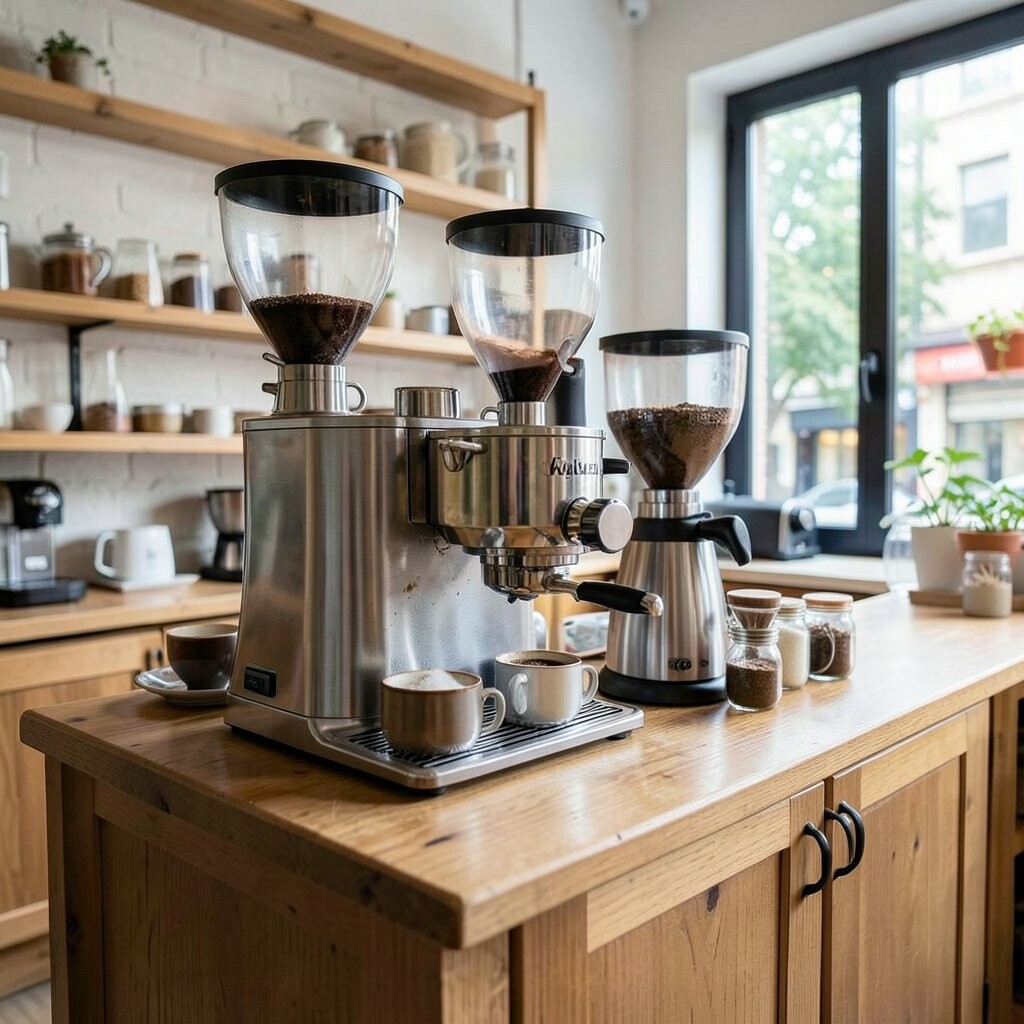
Set up a wall rack that holds a dedicated brewer for Turkish-style coffee made in small batches. The look can be beautiful and traditional, while the workflow stays modern and efficient.
This method can create a thick, aromatic cup with strong flavor, ideal for customers who like body and intensity. Practical tips: measure fineness carefully, keep stirring consistent, and use a temperature approach that avoids burning. Personalize by offering choice of sweetness levels and serving it with small tasting notes like “spiced cocoa” or “toasted almond.”
Cost is usually manageable because you’re buying a few pots and accessories rather than a full lab of equipment. A current trend is slow, heritage styles served with clarity, so make sure staff can explain the process in simple steps. To keep it smooth during busy hours, pre-portion sugar and coffee blends so the line moves fast.
Finally, protect taste by using clean, dry pots every time and maintaining a strict rinse routine after each service. That one habit keeps the flavor stable and prevents stale residue from creeping in.
14. The Reusable “Brew-Sculpture” Filter Holder
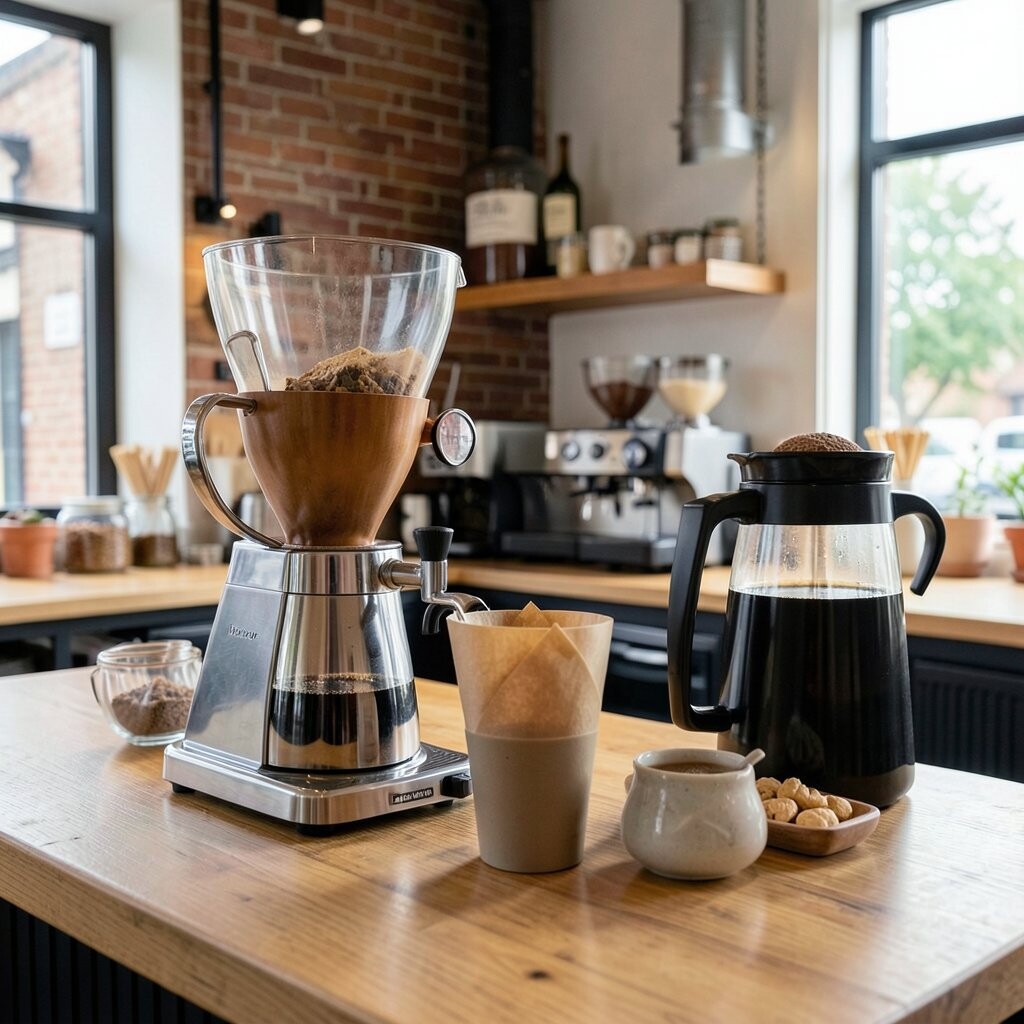
Create a filter holder that looks like a sculpted metal or ceramic artwork, with channels shaped to guide water evenly. When a guest sees the holder, it feels like their cup is made by design, not by accident.
This unique equipment can improve balance by directing flow more evenly across the bed, which may help reduce bitter edges. Practical tips include testing grind size for the holder’s flow pattern, keeping the filter type consistent, and documenting your favorite ratio so recipes don’t drift. Personalize the artwork by customizing colors or engravings for seasonal roasts, and offer a “signature pour” line where staff can dial in your house flavor with confidence.