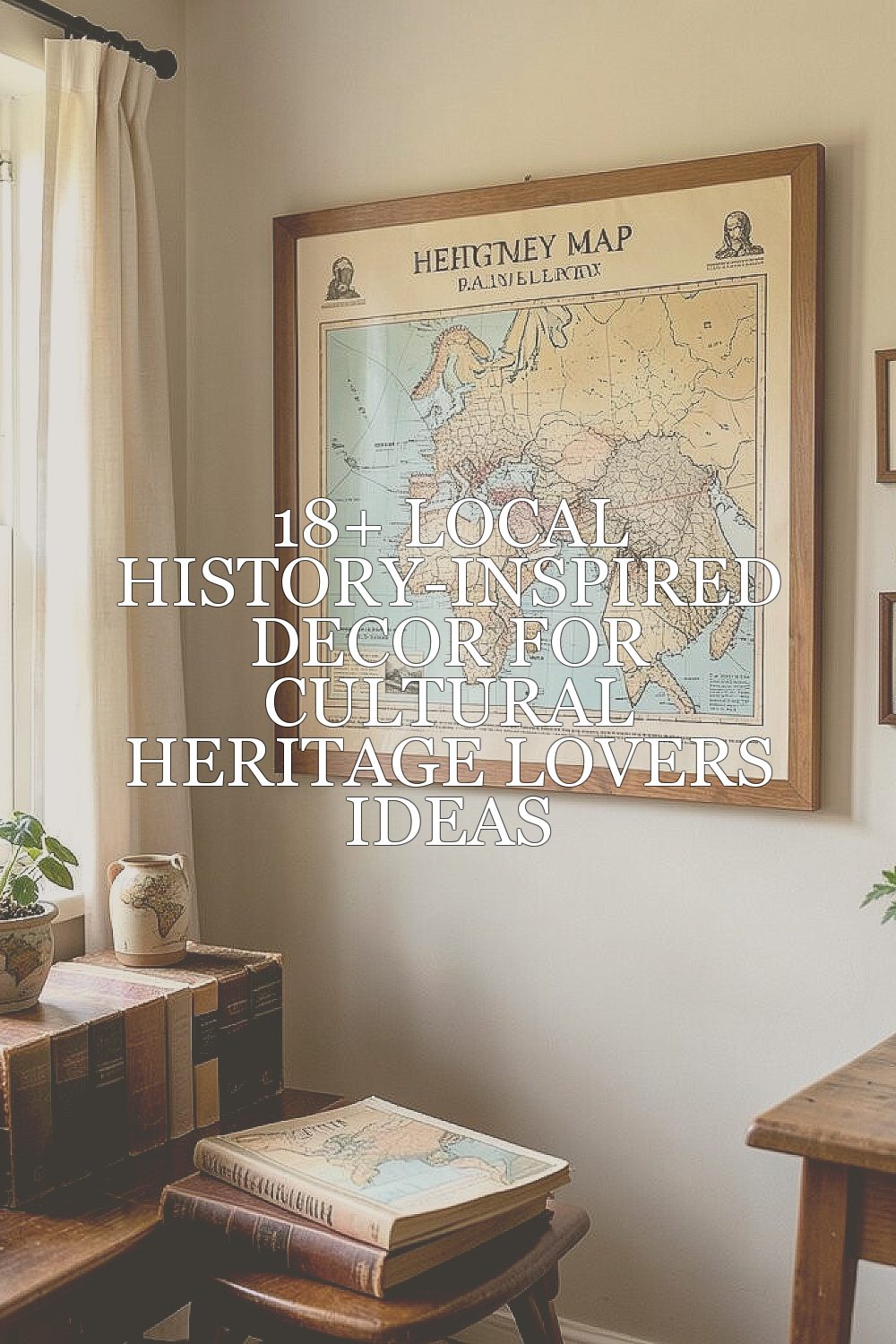
Local history decor can make your home feel story-filled and personal. Each room becomes a small tribute to the places, people, and crafts that shaped your community.
1. Framed “Found in the Attic” Letter Wall

Hang reproduced letters, postcards, or scanned notes in matching frames for a curated old-time vibe. Use archival-style paper or prints so the textures feel authentic.
Pick one local theme first, like neighborhood schools, famous events, or a particular decade. Arrange the pieces by date or by street name to create a clear timeline. For uniqueness, include a small label card for each item with where it came from and what it meant to the writer.
2. Heritage Map Gallery with Pin Labels

2. Heritage Map Gallery with Pin Labels

Cover a wall with a large map print and add neat pins or thread markers for meaningful locations. It looks both vintage and organized, like a community bulletin board.
Choose a map from your city’s early plan, a historical atlas page, or a regional coastline survey. Keep it practical by placing everyday spots—grandparent streets, community landmarks, and favorite walks—so the display stays personal. Update it each year with one new pin to keep the project feeling alive and current.
For personalization, use different pin colors for culture, family roots, and seasonal traditions. Use acid-free backing and avoid direct sunlight if your prints are fragile. Cost is usually moderate: look for affordable map prints online, then invest in frames or a simple gallery-hanging system.
3. Quilt-Inspired Table Runner from Local Patterns

Use quilt-like fabric blocks or pattern-printed cloth as a table runner or wall hanging. It brings warmth fast and turns everyday meals into a cultural moment.
Pick a pattern linked to a region, like repeating florals, geometric stars, or familiar folk motifs. If you can sew, create patchwork panels; if you cannot, choose fabric panels that already match and hem the edges. For uniqueness, stitch or applique one symbol that matches your family story, such as a bird, tree, or house shape.
Practical tips matter: pre-wash fabric, use a simple interfacing for structure, and consider a light backing for durability. To stay on trend, mix classic patterns with modern tableware colors so the room feels balanced, not stuck in the past. If cost is a concern, search for remnant fabric, use one long runner instead of multiple pieces, and consider a no-sew approach with fusible web.
To personalize on a budget, add a small stitched label patch with the year you made it. When you switch seasons, swap accessories like napkins or small centerpiece items while keeping the runner steady.
4. Pottery Shelf with Maker-Story Tags

Display everyday pottery—small bowls, mugs, or planters—on an open shelf with tiny “maker story” tags. It keeps your decor grounded in craft, not just decoration.
Source pieces from local markets, artisan fairs, or family collections, then write a short tag about the glaze, the town, or the craft tradition. For uniqueness, group items by use, such as tea items together, or by color family like cobalt and earth tones. If you’re worried about clutter, keep just one shelf section dedicated to the pottery and let the rest of the room breathe.
5. Community-Event Shadowbox with Memorabilia

Create a shadowbox wall piece using ticket stubs, festival flyers, or church program scans. The glass front makes it feel like a mini museum, and it sparks conversation.
Choose a single event theme, such as a local parade, harvest festival, or cultural night, then arrange items in layers with spacing for readability. Use photo corners or small mounts so paper edges don’t bend. To personalize, add a handwritten note about what you remember most and date it.
Consider cost carefully: you can start with one shadowbox and expand later, or use a larger frame with acrylic backing. Current trends lean toward gallery walls and “collected memories,” so this style fits well in modern homes. For long-lasting displays, print on archival paper and keep the shadowbox away from heavy moisture.
6. Restored Vintage Sign Replica in Your Entryway

Hang a restored sign style print, like a vintage street marker or small business placard, near your entry. It instantly tells guests you care about local roots.
Look for design cues from old storefronts: bold lettering, muted paint colors, and simple icons. Make it unique by choosing a sign design that matches your town’s era, then add a small plate with your house number in a matching font. For practical tips, measure your wall carefully and keep the sign at eye level so it looks intentional rather than random.
Costs can range widely, but you can control them by buying a quality print and using a frame from a standard size. Trends right now favor “heritage signage” in entry halls, especially when paired with modern lighting. If you want to DIY, use stencil letters on plywood and seal with matte clear coat for a durable finish.
7. Family Photo Tiles with Street-Name Captions

Use a grid of small photo tiles and pair each photo with a street name caption. It feels both personal and historical, like a timeline you can walk past every day.
Choose photos that show people, places, and moments tied to neighborhoods, not just portraits. For uniqueness, add a subtle border color matching local landmarks—river blue, brick red, or wheat gold. Keep it practical by using printed captions on waterproof labels or laminated paper.
When planning cost, consider print cost first, then think about mounting. You can use lightweight foam board tiles or adhesive tile hooks for easy swaps. This decor also feels current because many homes now use small-format photo grids instead of one large traditional portrait.
8. Historical Cookbook Display with Stand-Up Clips

Show a cookbook or recipe booklet on an attractive stand with clipped “page highlights” for favorite dishes. It makes your kitchen feel like it has traditions on display.
Select editions that connect to your region, like a local cookbook, a church recipe collection, or a community festival pamphlet. Add practical personalization by clipping a recipe card and writing a note about who cooked it and when. For uniqueness, frame one stained or handwritten page as a focal item if you have a genuine family copy.
To keep it easy, rotate pages seasonally so the display changes without extra work. Costs are usually manageable because you can use a library book, a thrift copy, or a reprint of a recipe page. Trends show a rise in “kitchen storytelling,” so this style fits right in with rustic counters and warm lighting.
If you want to keep originals safe, use scans for display and store the real book in a folder or archival sleeve. This protects fragile paper while still giving your home that heritage feeling.
9. Loomed Basket Wall or Woven Hanging

Hang woven baskets or a loom-style wall piece to bring texture and a calm, handcrafted look. It adds depth in a way that flat prints cannot.
Pick baskets with patterns tied to local regions, like repeated waves, strong geometric steps, or plant-inspired textures. For benefits, woven decor softens acoustics and makes rooms feel cozier, especially near hard floors and windows. To personalize, group them in a gentle arc and vary sizes so the wall feels collected, not uniform.
Practical tips include checking for sturdy hooks and using wall anchors for heavier pieces. Budget-wise, start with one larger basket as your anchor piece, then add smaller ones later. Current trends often highlight natural fibers, so this is a safe and stylish choice that won’t feel outdated.
If you’re shopping, ask about the material and care instructions. Many woven items can be dusted with a soft brush and kept away from direct rain or long sun exposure.
10. “Railroad or River” Centerpiece Tray

Build a centerpiece using a tray, then layer small items inspired by your region’s transport history, like river stones, tiny route prints, or model-era tags. It’s a clever way to connect local geography to everyday hosting.
Visualize the theme first: did your town grow around trains, canals, or river trade? Then choose decor elements that match that story, such as vintage-style compass graphics, small maps, or a miniature dock photo print. For uniqueness, add a single symbolic object like a brass key tag, a navigation chart segment, or a tiny lantern.
Cost considerations are flexible: you can keep it simple with printed art and a tray, or add found objects over time. For practical tips, keep surfaces protected with felt liners and avoid items that could rust. To personalize further, include a short card describing why that route mattered to your family or community.
11. Farmhouse Mantel with Seasonal Heritage Objects

Use your mantel as a rotation space for heritage-inspired objects. Think of it as a seasonal storytelling shelf rather than a permanent display.
Choose items that connect to local traditions, like small woven napkin holders, old-style candle cups, or region-linked pottery. The benefit is that you can change the look without replacing everything, which saves money and time. For uniqueness, include one “story” object each season, like a mini tool, a labeled seed packet replica, or a festival-themed print.
Practical tips: keep the color palette consistent so the mantel doesn’t feel chaotic, and use varying heights for a natural look. If you want a trend-forward touch, pair warm heritage tones with simple modern frames or minimalist candle holders. Budget is manageable when you shop your own storage first and build slowly.
To personalize, write a small seasonal note to your family—one sentence about what you’re celebrating and why. That tiny detail makes the decor feel meaningful, not just styled.
12. Old Newspaper Print Wallpaper Accent Corner

Make one corner of a room feel historic with a wallpaper accent that uses vintage newspaper headlines or local report-style text. It gives a bold backdrop without needing many objects.
Pick a design that uses muted ink colors so it doesn’t overwhelm the space. For benefits, text-based wall accents can create visual texture and interest, especially in hallways or reading nooks. To personalize, choose headlines that match local landmarks or your family era, then keep furniture colors simple so the wall stays readable and calm.
Practical tips include measuring your wall carefully and using paste or peel-and-stick depending on your setup. Cost can be controlled by covering a smaller area rather than multiple rooms. Current trends show “heritage text” decor in modern interiors, especially paired with neutral rugs and warm wood tones.
13. Hand-Drawn Local Landmark Prints with Simple Frames

Create or commission small prints of local landmarks, then hang them in simple frames. This is a straightforward way to show pride in your place.
Choose a consistent art style, like watercolor, line drawing, or sepia sketch, so the set looks intentional. For uniqueness, add a small margin note that includes your connection, such as “visited with Grandma” or “built the year we moved here.” Keep it practical by buying ready-to-hang frames in one size so installation is quick.
Cost considerations vary, but you can keep it friendly by selecting affordable prints from local artists or printing your own high-quality images. Trend-wise, minimal frames and cohesive art sets are popular, and this idea fits perfectly. Personalization gets even better if you include one “in-between” landmark, like an old bridge or local cemetery gate.
14. Heritage-Inspired Coat Hooks with Painted Symbols

Install coat hooks shaped like small heritage symbols, such as tiny leaves, local animals, or regional emblems. It’s useful decor that still feels like a story.
Choose a mount that fits your entryway wall and paint it in tones connected to local craft traditions, like deep forest green or warm clay. For benefits, you get better organization while adding character. To personalize, match the symbols to your family story—maybe a bird tied to a village name, or a star shape tied to a festival.
Practical tips: pre-drill screw holes, use anchors where needed, and keep screws hidden if possible. Cost is usually low if you buy a small hardware set and paint it yourself. Current trends like “functional art” make hooks and racks feel more intentional than plain storage.
15. Ceramic Tile Trivet Wall for Cooking Traditions

Turn your trivet or display-friendly ceramic tiles into a small wall gallery near your kitchen. It nods to cooking traditions without taking over the room.
Choose tile patterns that feel local, such as repeating border designs, river motifs, or heritage color palettes. For uniqueness, display one tile with your own short “recipe story,” like a caption for a dish your family makes at holidays. Practical tips include using lightweight tiles if you’re mounting on drywall and testing hook strength before committing.
Costs can be controlled by using a few larger tiles instead of many small ones. Trends show kitchen walls shifting toward decorative functionality, like chalkboard menus and open shelving, so this idea fits nicely. Personalization can be as simple as using your family initials in a corner tile.
16. “Local Work” Tools as Repurposed Shelf Decor

Repurpose real or vintage local tools into shelves, pen holders, or decorative stands. Even when they’re not used, they carry the memory of practical work.
Look for tools linked to your region’s history, like woodworking tools for a craft town or farming tools for rural areas. The benefit is that the decor feels grounded in effort, not just appearance. For uniqueness, clean and display one tool as a focal point, then pair it with small labeled cards about what it was used for.
Practical tips: sand rust lightly if needed, seal with a clear protective coat, and avoid placing heavy tools where they can fall. Cost can range from low to moderate depending on whether you buy or refurbish. Current trends include industrial and “found object” decor, so this will feel modern as long as you style it with care and balance.
17. Heritage Textile Coasters with Embroidered Edges

Make or buy textile coasters that use heritage-inspired patterns and embroidered edges. They protect surfaces while adding a charming, handmade layer.
Choose motifs that reflect regional crafts, such as simple cross-stitch lines, woven geometric borders, or folk-style florals. For benefits, textiles reduce noise and make dining feel softer. To personalize, stitch a small year or initials into one corner, or add a tiny thread color that matches your home’s theme.
Practical tips include using absorbent fabric layers and a non-slip backing so they stay stable. Cost considerations are friendly when you use scrap fabric or create a small batch rather than a full set at once. Trends favor warm, tactile materials, and these coasters match the movement toward cozy interiors.
If you want a modern look, keep the colors neutral and let the embroidery detail do the talking. That approach keeps the pieces stylish while still honoring heritage.
18. Cultural Calendar Wall with Monthly Mini Cards

Turn the concept of a calendar into heritage decor by using monthly mini cards tied to local events. Each card can include a small photo, a short note, and a date marker.
Pick events that matter to your community, like local anniversaries, seasonal harvest days, or cultural celebrations. The benefit is that your decor changes naturally across the year, so the space never feels “done.” For uniqueness, include one photo per month that shows a local landmark or tradition, then pin the card in a consistent color system.
Practical tips: use a cork board, magnetic sheet, or a frame with removable clips so you can update easily. Cost is moderate because you can buy a base once and print cards cheaply. Current trends show more personalization on walls, and a rotating calendar display is both practical and expressive.
19. Handwritten “Place Names” Shelf Labels

Create handwritten shelf labels that highlight local place names, street histories, or neighborhood nicknames. This small detail turns storage into a respectful nod to culture.
Pick a set of words that reflect your area, then write them in a consistent style using pen or brush lettering. For benefits, labeled shelves make it easier to find items while also adding a charming vintage feel. To personalize, add a tiny note under each label with one sentence about why that place name matters to you.
Cost considerations are low since you can start with paper tags, card stock, or printable label blanks. Practical tips include sealing labels with matte spray for durability and using a label holder if your labels need to be removed later. Trends favor warm, handmade typography in homes, and these labels fit right into that look.