
A safe deck turns everyday play into calm, happy moments. With the right features, a wood deck can feel welcoming and secure for kids of all ages.
1. Stabilize the Deck Surface with Non-Slip Finishes

A wood deck can look smooth and inviting, but it can also get slippery when wet. A non-slip finish adds grip without ruining the natural warmth of the boards.
Look for textured coatings made for exterior wood and follow the exact drying times. For practical tips, test a small corner with the finish you plan to use, then wait for full cure before letting kids walk on it. Many families like reapplying or spot-touching high-wear areas once a season so traction stays strong.
2. Add Kid-Height Railings with Smart Spacing

Railings are the first line of defense when toddlers climb or scoot toward edges. Choosing the right height and spacing can help prevent slips and risky falls.
Many families benefit from rail systems designed with tighter gaps near the lower portion, plus a smooth top rail that’s easy for small hands to grip. If you want personalization, you can match railing wood tones to your deck boards while keeping the structure consistent.
For cost considerations, rail upgrades often cost more than coatings, but they protect high-traffic zones for years. A popular trend is pairing wood rails with matching aluminum or stainless balusters for durability and low maintenance.
3. Install Secure, Rounded Edge Caps on Every Step

Deck steps get more wear than almost anywhere else, and sharp corners can be an accident waiting to happen. Rounded edge caps make the surface more forgiving for little feet.
Choose caps rated for outdoor wood applications and confirm they install tightly with proper fasteners. This is especially helpful if your family enjoys barefoot running from kitchen doors to the yard.
To keep it looking great, wipe off leaves and rinse after heavy rain, since grime can reduce grip. Families often find that edge caps also make the deck look more polished, almost like furniture-grade craftsmanship.
When budgeting, prioritize step edges first, because that’s where impacts and trips are most likely. If you’re upgrading during a season when crews are busy, plan ahead so materials arrive on time.
4. Keep Board Gaps Even with Quality Installation

Gaps that are too wide can catch small toes and encourage wobbly steps. Even spacing also helps water drain while keeping the deck’s rhythm consistent.
During installation or repair, use appropriate spacers and check alignment board by board. If you’re replacing only a few boards, match the spacing style so the deck feels uniform underfoot.
5. Use Lighting That Shows Every Edge and Landing

Nighttime play is fun, but kids move fast and parents scan constantly for safe footing. Well-placed deck lighting can brighten every stair edge and landing.
Consider step lights, low-profile deck lights, or recessed options that don’t protrude into walking paths. Many families like warm white bulbs because they feel cozy and reduce harsh glare.
For practical tips, aim lights so they illuminate the ground where feet land, not just the wall. Current trends include motion-activated fixtures near doors, which save energy and add an extra layer of visibility when someone approaches late.
6. Add a Non-Slip Tread Surface to Stairways
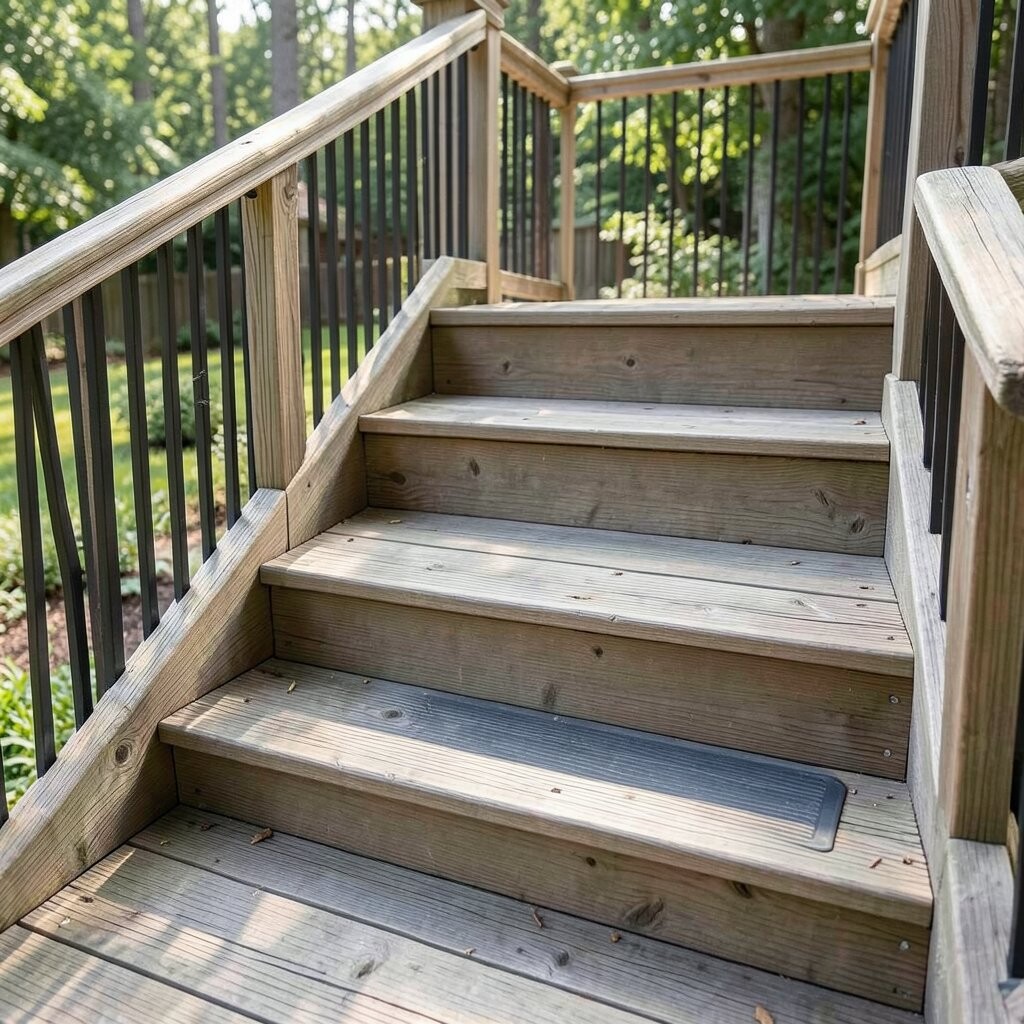
Stairs invite slips if the wood surface gets slick or worn. Adding a non-slip tread gives kids stable traction exactly where it matters most.
Look for treads made for outdoor use that can handle rain, temperature swings, and frequent foot traffic. Families often choose rubberized or textured materials that blend with the wood rather than looking like an afterthought.
For personalization, you can coordinate tread color with your deck trim or matching outdoor decor. Cost-wise, stair tread upgrades are usually more affordable than full railing replacements, yet they deliver quick safety wins.
7. Protect Hands with Smooth Hardware and Rounded Transitions
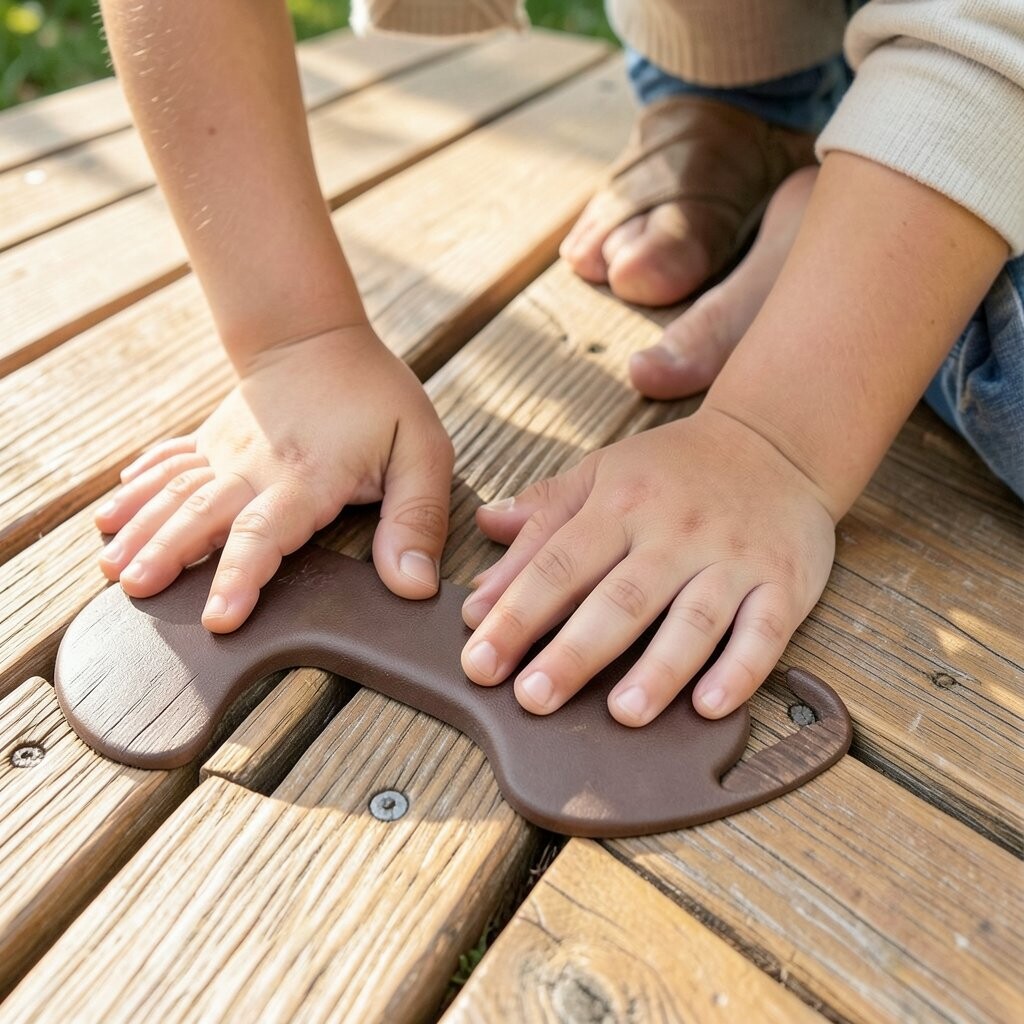
Little hands explore by grabbing, pushing, and feeling textures. Smooth, rounded hardware helps prevent pinches and gives kids better control on transitions.
Check for protruding screw heads, splinters, and sharp corners on railings, brackets, and stair edges. Using hardware designed for outdoor decks, like corrosion-resistant fasteners, also keeps surfaces tidy and safer over time.
If you want a unique look, consider matching metal finishes to your outdoor lighting. Many families find that taking time to sand or cap rough edges during maintenance reduces recurring splinters after storms.
8. Maintain Drainage with Clear Weep Paths and Proper Slope

Standing water is a safety issue and a wood-health issue. Good drainage helps prevent slippery puddles and reduces moldy spots that feel slimy underfoot.
Make sure the deck is installed with a slight slope away from the house and that water can move off the surface. Cleaning debris from gaps and checking that downspouts aren’t dumping directly on the deck can make a big difference.
Families often like simple routines like clearing leaves after storms and checking corners where dirt collects. A practical trend is using small drainage mats near doors to catch mud and keep the transition dry.
When budgeting, remember that drainage repairs are often cheaper than replacing rotted boards later. If you suspect hidden water issues, it’s worth inspecting early rather than waiting for visible signs.
9. Install Tight-Fit Skirting to Reduce Small-Step Hazards

Under-deck space can collect dirt, tools, and even loose items from the yard. Skirting creates a cleaner barrier and reduces places where kids might reach or trip.
A tight-fit design also discourages pests and helps keep the understructure drier, which supports the life of the wood. If you love a finished, cozy look, skirting can be stained to match the deck for a smooth, continuous style.
For cost considerations, skirting varies widely based on material and height, so choose an approach that matches your DIY comfort level. A helpful tip is to keep an eye on ventilation requirements so the deck’s underside can breathe.
10. Screen or Guard Open Risers on Outdoor Steps

Open risers can be a fall risk and can also invite a kid’s foot to slip through. Adding guards or changing the stair design can make stepping safer.
Look for stair guard systems that fit your exact riser height and don’t create new trip edges. Many families choose removable options because it’s easier to access the structure for cleaning and repairs.
For practical tips, check the fit after seasonal swelling and make sure no gaps widen over time. If you want personalization, you can match guard finishes to railing posts so the whole stair area looks intentional.
11. Keep the Deck Clutter-Free with Built-In Storage Solutions

A cluttered deck turns into an obstacle course, even when everything is “mostly safe.” Storage reduces tripping hazards from toys, balls, and outdoor gear.
Consider bench storage, outdoor cabinets, or deck-side hooks mounted in safe zones away from walkway paths. Families with active kids often love having a specific spot for watering cans, chalk, and sandbox toys.
Cost wise, built-ins can be a bigger project, but smaller add-ons like lockable bins and sturdy storage benches still help a lot. A trend you’ll see more often is modular outdoor storage that can move or expand as kids grow.
To make it work long-term, label storage spots in kid-friendly language and encourage quick “reset” habits after playtime.
12. Add a Safe, Sturdy Gate at the Stairs

If your deck connects to the yard, a gate can control where toddlers wander. A solid, well-installed gate helps prevent unsupervised stair trips.
Choose gates that open smoothly for adults but latch securely for kids. Many families prefer gates with non-snag materials and hardware that resists rust, especially near coastal air or frequent rain.
13. Use Weather-Resistant Wood and Proper Sealing for Grip

Some wood species handle outdoor exposure better, and the right sealant supports a safer surface. Selecting durable wood and sealing it properly can reduce warping and uneven wear.
Look for products designed for decks, including sealers that don’t create slick films. For practical tips, apply sealant in dry weather and give it full time to cure before high traffic.
Families often notice that consistent sealing reduces the “patchy” feel of worn boards. If you want a unique look, stain colors can shift from honey to deeper tones while still maintaining traction when you choose the right finish.
14. Add Anti-Slip Mats at Doorways and Play Zones

Doorways collect mud, water, and quick spills that make floors feel unsafe. Anti-slip mats provide an instant traction boost right where people enter and exit.
Choose outdoor mats with drainage holes and a backing that won’t slide on wood. Many families place them near the main door and also at the path kids take from the yard.
Cost is usually manageable, and mats can be replaced without redoing the entire deck surface. A current trend is using slim, durable mats that don’t trap too much debris while still offering reliable grip.
15. Strengthen Rail Posts and Check for Movement Regularly

Even a beautiful deck can feel unsafe if rail posts loosen over time. Strong anchoring gives parents confidence and helps kids stay steady.
At least a few times per year, inspect for wobble, check fasteners, and look for cracks around connections. Families find that a simple maintenance schedule prevents bigger problems and keeps safety consistent.
16. Prevent Splinters with Ongoing Sanding and Spot Repairs

Splinters show up when wood weathers, especially after repeated wetting and drying. Regular sanding and quick spot repairs keep the deck comfortable to touch and safer to walk on.
For practical tips, focus on hand-contact areas like rail tops and step edges, then inspect after storms. If you prefer personalization, you can refinish select boards so the repaired section blends with the deck’s overall color and sheen.
Cost-wise, maintenance sandpaper and stain are far cheaper than emergency replacements. A trend many families love is “refresh in place” projects where small repairs happen often, instead of waiting for a full overhaul.
17. Plan Family-Friendly Zones with Clear Walk Paths

A deck feels safest when kids know where to run and where not to sprint. Creating clear walk paths reduces surprise collisions and keeps parents’ supervision easier.
Try arranging furniture and planters so there’s a continuous route from the door to the yard seating. Families often use contrasting stains or rugs to mark boundaries in a way that looks good and also guides behavior.
For cost considerations, you can start small with outdoor rugs, planters, and furniture placement before making structural changes. A current trend is using modular outdoor seating to rearrange zones as kids grow, which keeps the deck functional for different ages.