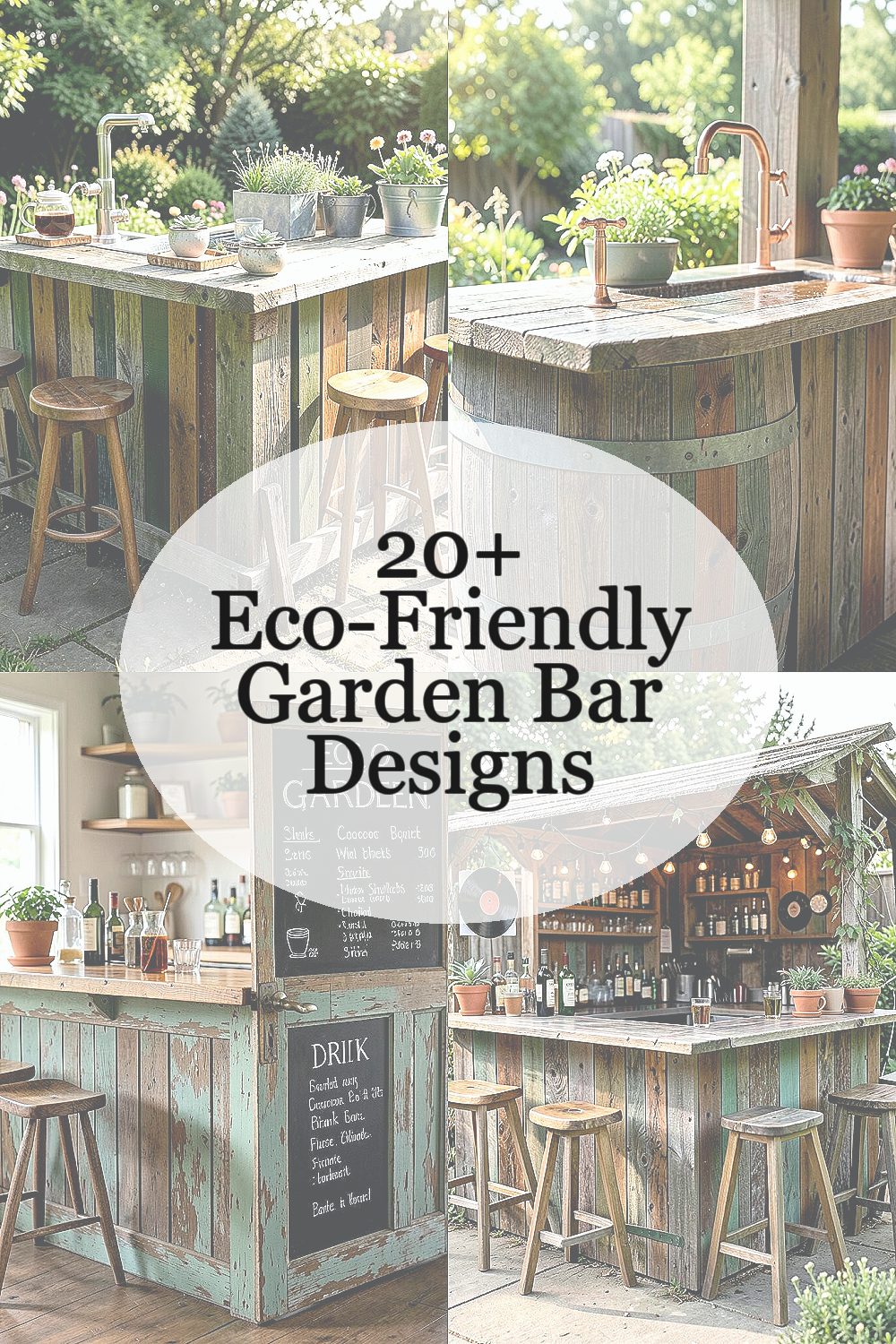
A yard bar made from recycled materials can feel like a small celebration every time you step outside. It’s a smart way to cut waste, save money, and still get a stylish hangout spot.
1. Pallet-Top Pour Station With Weathered Charm

Build a bar using a sturdy pallet frame, then add a reclaimed wood tabletop that shows natural grain and nail holes. The whole setup looks rustic and warm, like it belongs in a country café.
To make it last, sand the pallet pieces and seal them with a water-based outdoor finish. Add a salvaged cooler or repurposed wine rack underneath for quick storage of bottles and glassware. For a unique touch, paint one section in a muted color, like sage or clay, while keeping the rest in its natural “found” look.
2. Rain- Barrel Bar With Copper-Inspired Faucet Handles
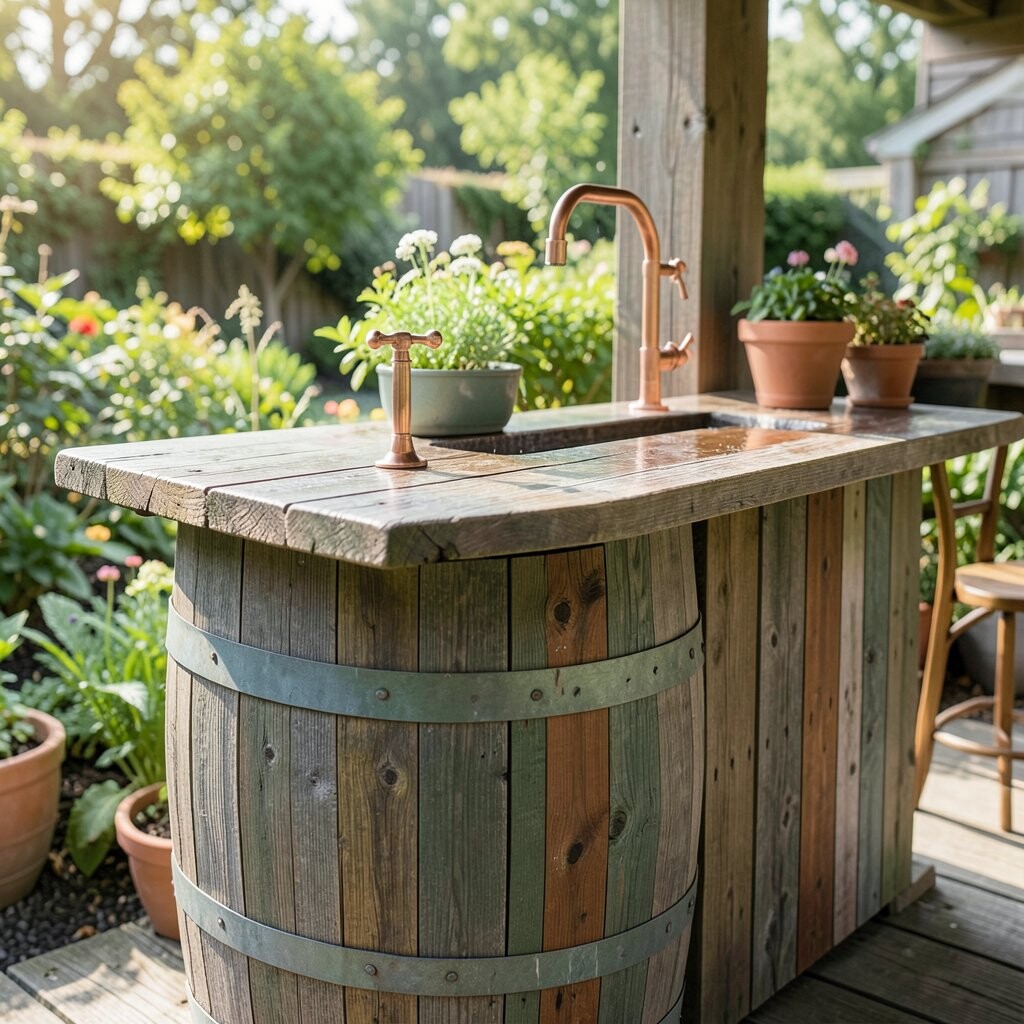
Use an old rain barrel as the base and mount a repurposed countertop on top for a bold, conversation-starting design. The curved silhouette makes it feel like a sculpture, not just a bar.
Pair the barrel with salvaged metal spigots or hardware to create faucet-style bottle openers. This design is eco-friendly because you reuse materials that still have shape and character. For practicality, add a simple drain cover and line the interior shelf with food-safe, water-resistant material so spills clean up easily.
If you want personalization, wrap the barrel stand with upcycled rope or reclaimed leather strips. When planning cost, remember that the barrel itself might be free or low-cost, while sealants and mounting hardware are the main purchases. A trend that fits this look is “industrial farm” style, where metal details and earthy colors stay in the spotlight.
3. Salvaged Door Bar With Chalkboard Drink Menu

Turn a reclaimed cabinet door or old interior door into a tall bar back, with the door’s panels giving instant texture. It looks artsy and tidy, especially when the door swings open like a storage cabinet.
Attach a salvaged wood shelf or pallet plank for the serving surface, then sand the edges so hands won’t snag. Create a chalkboard panel using a leftover sign board, or paint a scrap sheet with chalkboard coating. This helps you write tonight’s drink ideas without buying new décor every season.
For practical tips, add hooks made from reclaimed nails or bent rebar for hanging mugs and utensils. If you plan parties, reinforce the door hinges or use heavy-duty brackets so the bar stays stable. A nice personalization idea is to outline the door panels with contrasting stain to highlight the original craftsmanship.
Cost is usually moderate since you’re mainly paying for hardware, sealant, and chalkboard paint. A current trend is “vintage functionality,” where old household items become practical outdoor features.
4. Vinyl Record Wind-Sail Bar for a Fun Party Vibe
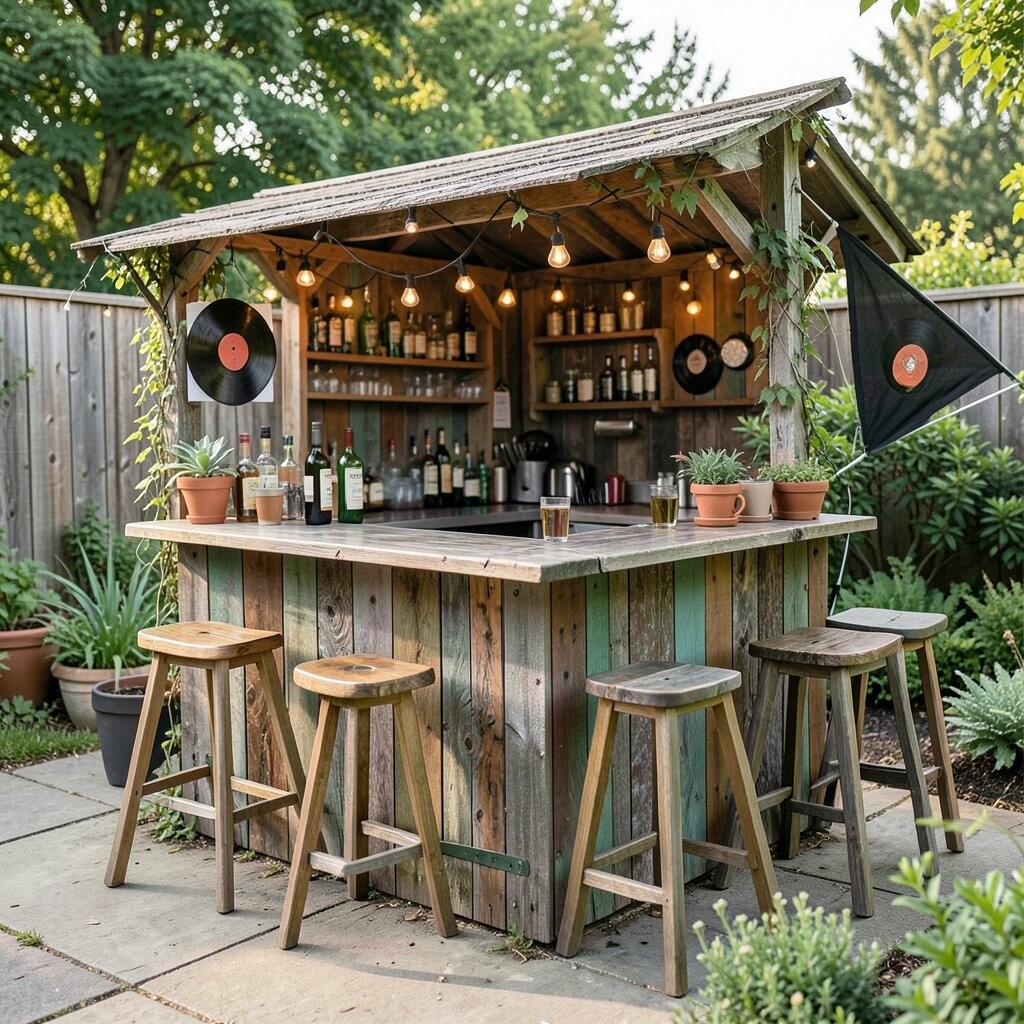
Repurpose a set of vinyl records into a wind-sail backdrop behind a small outdoor bar top made from reclaimed wood. When the breeze moves, the records spin and throw playful reflections across the yard.
Use an old solid-surface scrap or pallet plank for the serving counter, then keep the storage simple with a repurposed crate. This setup is unique because it creates motion and visual energy, not just a static structure. To make it practical, mount the records securely and leave enough clearance so they don’t hit bottles or guests.
5. Cinder Block and Reclaimed Wood Window Bar
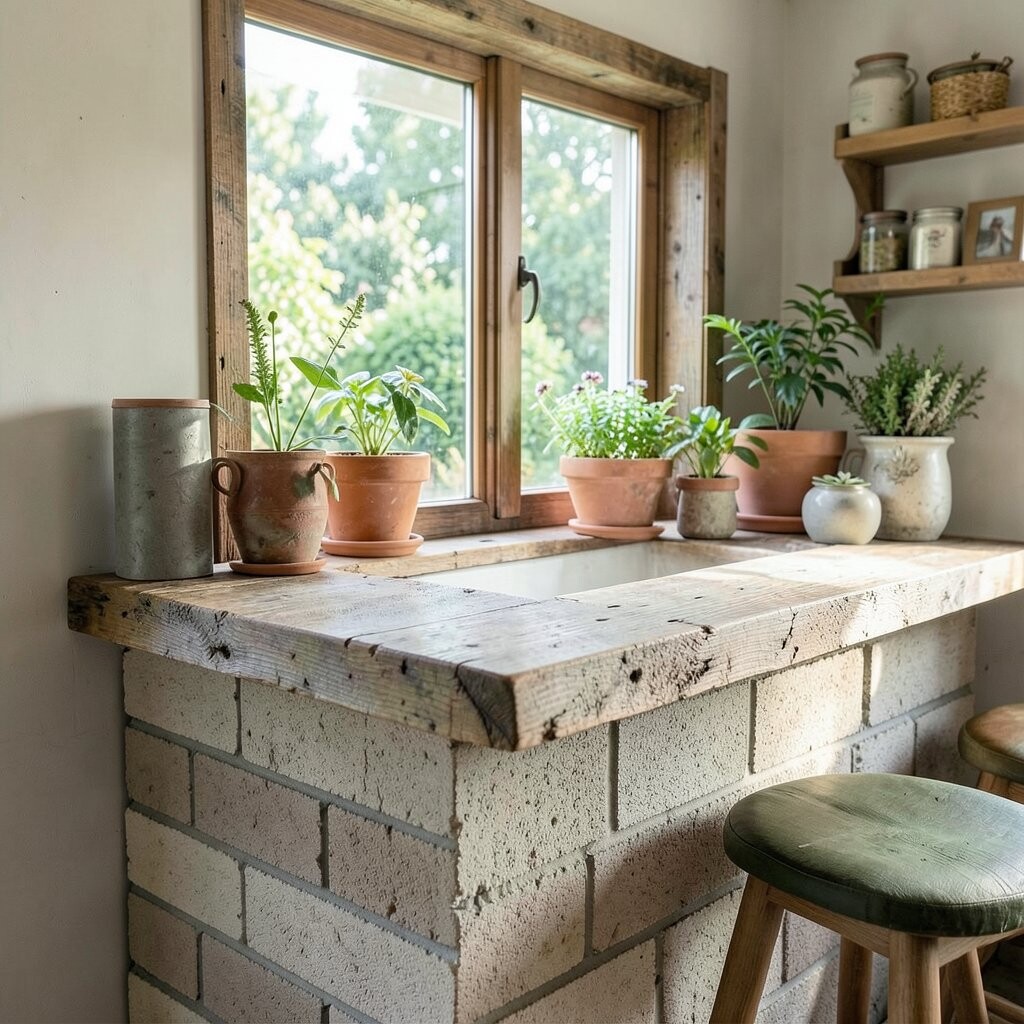
Stack cinder blocks into a low bar base and top it with reclaimed wood or an old window frame shelf. The mix of rough masonry and warm wood looks modern and grounded.
For comfort, add a liner on the top surface so drinks don’t sit directly on dusty pores. Use reclaimed glass from a broken window to create side panels, or install salvaged trim pieces along the back. This design is cost-conscious because cinder blocks are often affordable and the wood can come from offcuts.
Personalize it with paint or stain in a look that matches your garden, like dark walnut with hints of green. A practical tip is to check level and add a simple waterproof seal between materials so rain doesn’t soak into wood. Current trends favor mixed textures like stone-and-wood, which makes this bar feel fresh without being flashy.
6. Thrifted Cabinet Drawer Bar With Pull-Out Serving

Find an old cabinet with drawers, then remove doors so you can use the drawers as bottle and accessory storage. The bar top can be made from reclaimed butcher-block scraps for a clean serving surface.
To make it unique, turn the front drawers into pull-out serving trays, so guests can grab napkins, garnish, or ice without reaching far. Seal everything well and add outdoor-grade feet so the wood doesn’t sit directly on wet ground. This design helps you reuse furniture pieces instead of buying a dedicated bar cabinet.
For practical tips, label drawer sections with small paint swatches or stamped tags cut from scrap metal. Cost is often lower than new furniture, especially if you score the cabinet during a thrift sale. Personalize by changing the drawer pulls with mismatched knobs for a quirky, gallery-like feel.
7. Old Fence Rail Bar With Hanging Upcycled Planters

Use reclaimed fence rails as the bar frame and serving ledge, letting the old wood slats create a naturally patterned backdrop. Add hanging planters made from recycled containers so your “bar” also grows herbs and small flowers.
This design stands out because it blends a drink station with a living garden wall, which feels fresh during spring and summer. For practical tips, attach planters securely with brackets, and keep heavier planters lower for stability. Add a simple tray on the bar top to catch drips so the wood stays cleaner.
When planning cost, the rails might be free or low-cost, while planter lining, soil, and sealant are the typical expenses. A personalization idea is to line planter buckets in matching colors, like two shades of green and one warm terracotta accent. Trends are leaning toward functional landscaping, and this bar fits that mindset perfectly.
8. Barrel Stave Bar With Small Glass Sconce Lighting

Build a bar around vertical barrel staves, using reclaimed hoops or straps to hold everything in place. The curved wood slices give a strong “cooper” look that instantly feels like a backyard tasting room.
Add a reclaimed glass lantern or jar lighting piece mounted near the bar to create cozy evening ambiance. This is beneficial because lighting helps you enjoy the space after sunset and makes gatherings feel special. To personalize, swap in different jars or shades so the light colors look layered and warm.
For practical tips, seal the stave edges and choose a sturdy tabletop that won’t warp, like laminated scrap wood with outdoor sealant. Cost can be moderate if you need a new top board, but many stave pieces can be reclaimed from old barrels for little money. A current trend is “bar cart lighting,” but in a larger outdoor scale, and this design nails it.
Also consider adding a small utensil bar made from repurposed wire shelving so guests can grab bottle openers quickly. Keeping a simple cleaning cloth nearby makes upkeep easy.
9. Pallet Slat Bar With Upcycled Metal Siding Back Panel

Use pallet slats for the bar top and build a back panel from reclaimed metal siding for a sleek industrial feel. The metal catches light and protects the wall area behind from splashes.
This design is practical because it combines durable materials, plus you get built-in texture without buying décor. Add shelves made from leftover wood strips underneath to hold glasses and a small cooler bin. For personalization, paint the metal panel with a rust-inspired finish or keep it bare for a raw look.
When planning costs, focus spending on outdoor-rated fasteners and a protective sealant for wood. A useful tip is to countersink screws so bottle bottoms won’t scrape and chip. This style matches a popular trend called “industrial garden,” where old workshop materials look intentional in outdoor spaces.
To keep it comfortable during long chats, add a small seating ledge made from another repurposed board. Even one extra surface can make the bar feel more social and less like a storage spot.
10. Scrapped Brick and Reclaimed Mantel Beverage Nook
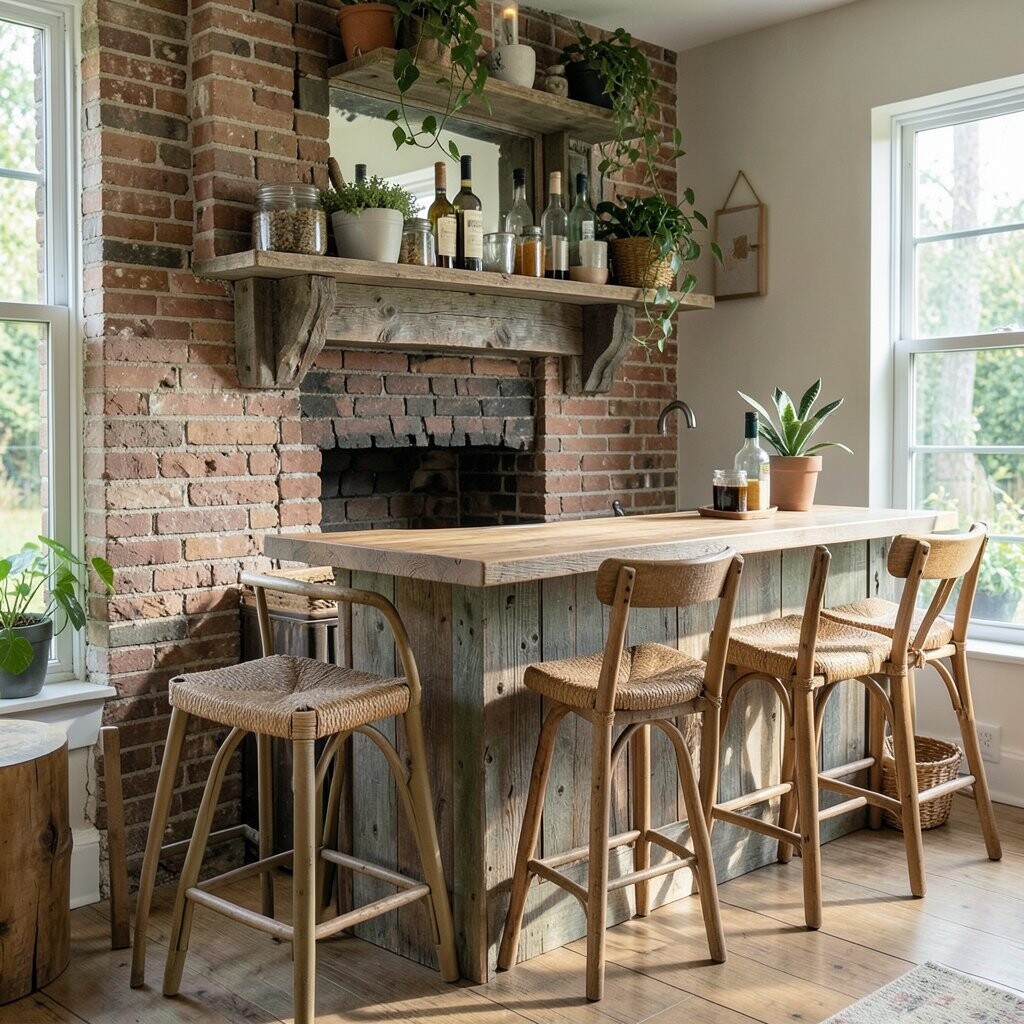
Build a small alcove with reclaimed bricks, then top it with an old fireplace mantel made from salvaged wood. The result looks like a cozy indoor-style corner, but it’s made for outdoor drinks.
Use the nook for a bar shelf, then add a reclaimed tile or stone offcut as a splash guard on the back edge. This keeps cleanup easy and protects the brick from stains. For uniqueness, install a salvaged mirror shard arrangement in a frame to reflect light and make the bar area feel larger.
Practical tip: ensure proper drainage at the base so water doesn’t pool between bricks. Cost considerations are usually good because bricks can often be sourced cheaply, while the mantel may require careful sanding and sealing. Personalize by staining the mantel to match your fence or deck color for a cohesive yard look.
11. Old Window Frame Bar With Bottle-Label Display
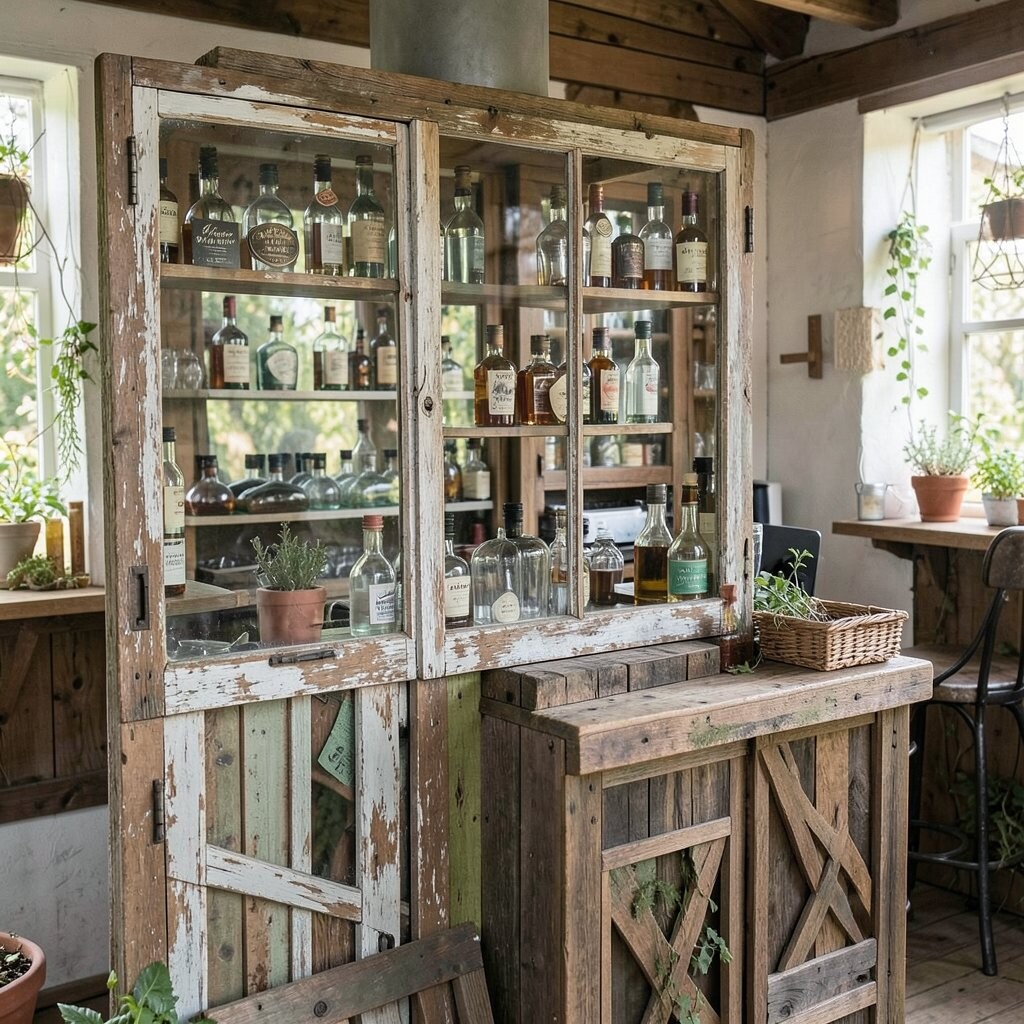
Turn a large reclaimed window frame into the bar back, then mount reclaimed wood shelves beneath it. The window panes can become a “label display” by swapping in glass or sturdy plastic with removable labels.
This design feels unique because it turns everyday bottles into part of the décor. Use a simple tabletop made from reclaimed boards so the serving area stays solid. Add a small bottle opener strip along the front edge using salvaged metal hardware.
For practical tips, use weatherproof sealant on any wood and add corner protectors where hands might bump. Cost can be low if you find a window in a salvage yard, while the main spend is outdoor finishing materials. Personalize by painting the frame in a color that matches your garden theme, like soft blue or warm white.
A trend you can borrow is “collectible styling,” where curated items like favorite bottles or glassware are shown neatly, almost like a gallery wall.
12. Pallet Bench Bar With Reused Cooler Drawer
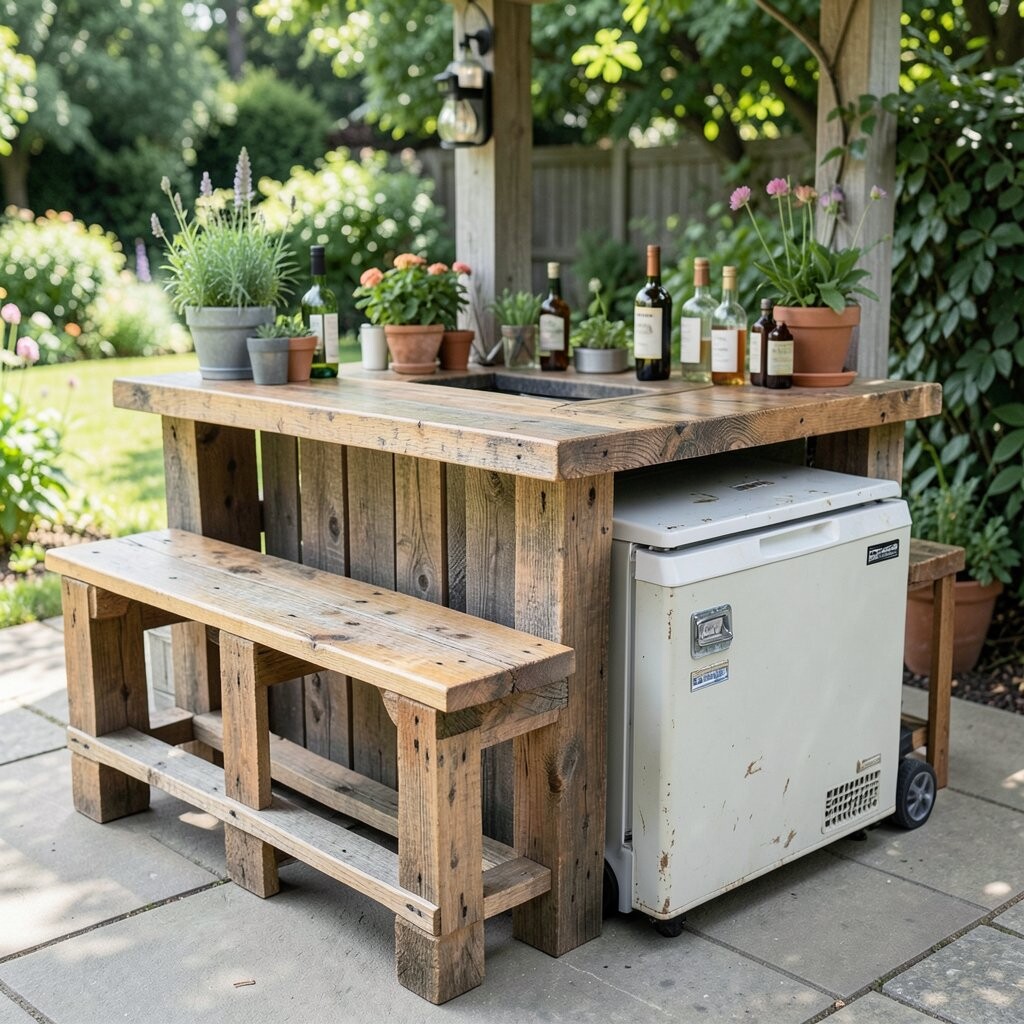
Combine a pallet bench base with a repurposed cooler drawer system that pulls out for easy access to ice. It feels friendly and comfy because guests can sit right next to the drinks.
To make it unique, hinge or slide a reclaimed drawer unit into the bench area, then top it with a sealed wood or reclaimed countertop. This is beneficial because it reduces clutter, keeping bottles contained and making cleanup faster. Add cup hooks made from old spoons or bent rods for a charming “upcycled kitchen” vibe.
When planning costs, check for pallet sizing to avoid extra cuts and sanding, which can add time. A practical tip is to reinforce the bench frame so it handles both weight and daily use. Personalization ideas include painting seat slats in a two-tone pattern or stenciling a small seasonal design on the drawer front.
13. Upcycled Screen Door Bar With Wire Mesh Drying Rack
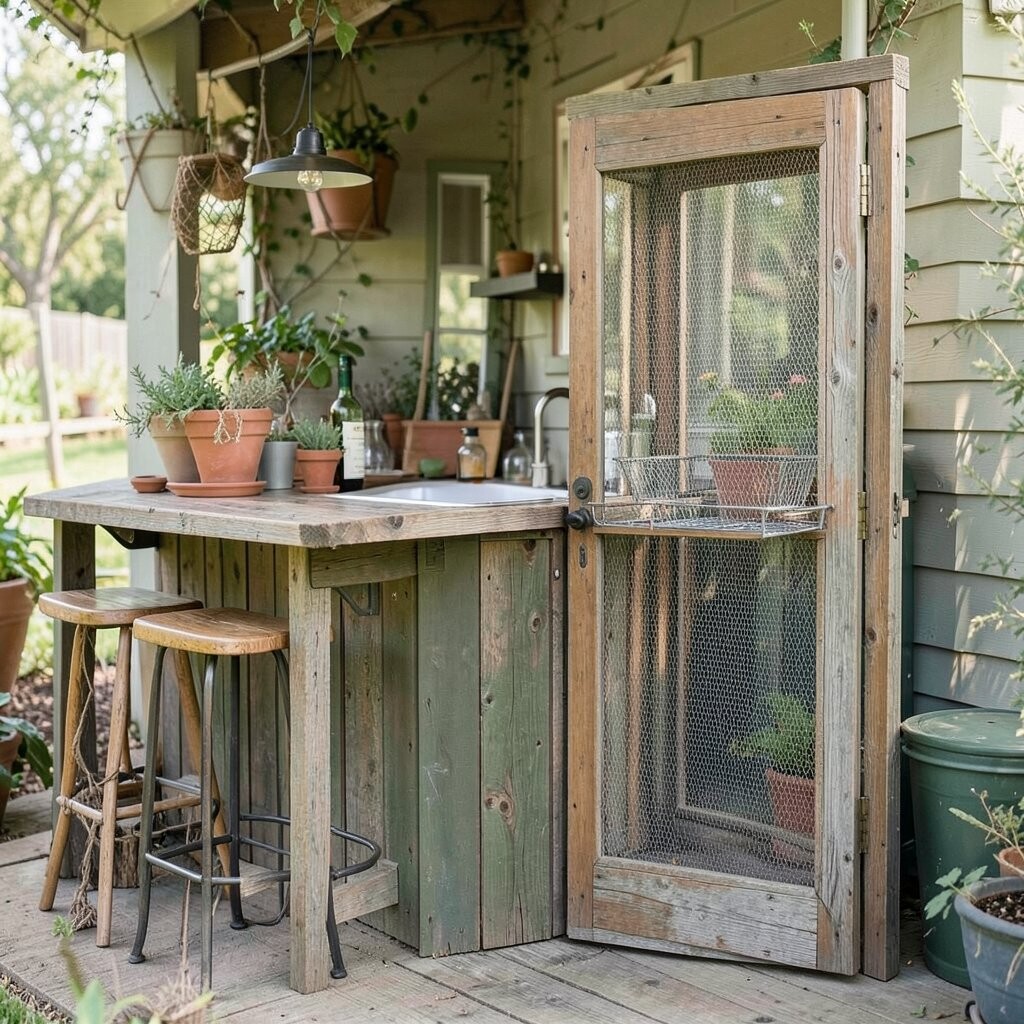
Use a reclaimed screen door as the main bar feature, turning its mesh into a backdrop that looks airy and light. Add a reclaimed wood counter on top and use the door’s structure as a place to hang tools.
For practicality, attach a wire mesh drying rack made from old shelving to hold rinsed glasses or fruit garnishes. This design is unique because the mesh lets you see through, making the bar feel less bulky in smaller yards. Seal wood edges and reinforce hinges so the door doesn’t sag over time.
Cost considerations are usually favorable since screen doors can be inexpensive, especially at secondhand stores. Personalize by adding small plant pots to the bottom rack, making it both decorative and functional. Current trends like “lightweight outdoor styling” fit this bar perfectly because it doesn’t visually overwhelm the space.
A helpful tip is to use rust-resistant paint on metal parts if they’re not already coated.
14. Reclaimed Boat Oar Bar With Rustic Serving Shelf

Mount a reclaimed boat oar across two sturdy posts, then attach a reclaimed wood shelf beneath it as the serving surface. The oar creates instant character and gives your bar a nautical wink without needing expensive décor.
This design benefits from strong, weathered materials that can handle outdoor use, especially if the wood is sealed well. Use the oar handle as a visual focal point, and add cup hooks made from salvaged cleats or metal rings. For practical tips, secure everything with heavy brackets so the oar stays steady even when guests bump the counter.
Cost is often low because oars can be found at salvage stores, flea markets, or online marketplaces. Personalize by adding a small engraved nameplate or a strip of patterned tape on the shelf edge for color. A trend that fits is “themed rustic,” where one meaningful recycled element anchors the whole design.
15. Recycled Pallet “Ice Block” Bar With Built-In Drain Tray

Create a bar that centers around an ice-friendly setup using reclaimed pallet wood and a removable drain tray. The look is practical and clever, with a dedicated spot for ice without messy puddles.
Build a small compartment under the serving counter using a scrap metal or reclaimed plastic tray lined with waterproof material. This keeps melting ice contained and makes it easy to dump and rinse after parties. For uniqueness, add a front panel made from recycled decking boards so it feels coordinated.
Personalization ideas include painting a small arrow or label on the tray area so everyone knows where to pour the melted ice. When planning costs, choose sealants designed for outdoor wood and avoid cheap finishes that wash off quickly. This design matches a current trend toward “prep zones,” where every part of hosting is organized.
16. Repurposed Drum Bar With Mosaic Bottle-Top Counter

Use an old metal drum as a base, then top it with a mosaic counter made from bottle caps, broken tiles, or ceramic scraps. The surface looks dazzling in sunlight and makes the bar feel like art.
This is beneficial because mosaics are tough and easy to clean, and the materials you use can be nearly free. Seal grout properly and ensure the counter edges are smooth so guests won’t get cut. For practical tips, keep a small brush or sponge nearby for quick wipe-downs after gatherings.
Personalize by choosing a theme, like “citrus summer” with yellow and green tiles, or “ocean night” with blue and teal fragments. Cost considerations depend on where you source tiles, but reusing broken pieces usually keeps it budget-friendly. A trend worth noting is maximal texture, where small details add personality instead of needing a polished, minimal look.
If you want extra storage, attach a repurposed drum lid cabinet underneath, using strong hinges and outdoor hardware.
17. Ladder-Shelf Bar With Reclaimed Wood Steps and Hanging Hooks

Turn an old wooden or metal ladder into a vertical bar shelf, where each rung holds glasses, bottles, or tools. It’s a great option for small yards because it uses height instead of taking up floor space.
This design stands out because the ladder becomes both structure and style, showing the recycled character right away. Add a reclaimed wood plank across two sides as the top serving surface. For practical tips, sand the ladder steps and apply sealant, especially if wood, so it feels smooth to touch.
Cost is usually manageable since ladders are often easy to find secondhand. Personalization ideas include painting only the top shelf area in a bold accent color, like coral or navy, and keeping the rest natural. A trend you’ll see often is “vertical hosting,” where bars are tall, slim, and easy to style.
18. Pallet Frame Bar With Reused Glass Bottle Wall

Build a pallet frame bar and attach a reclaimed glass bottle wall behind it for a sparkly, layered effect. The bottles catch light and create a sea-glass look, even on cloudy days.
This design is unique because the bottle wall doubles as décor and a splash guard, depending on how you mount it. Use safe, sturdy methods for mounting, and keep glass away from where hands will grab. For practicality, seal the bottle edges and add a solid backing behind the glass so it doesn’t rattle.
Personalize it by mixing bottle shapes and colors, like clear, green, and amber, to match your outdoor lighting. Cost considerations are typically low if you source bottles gradually from recycling or friends. Current trends favor “upcycled glass accents,” and this design uses that idea in a functional way.
19. Salvaged Wheelbarrow Bar With Herb Planter Side Pockets
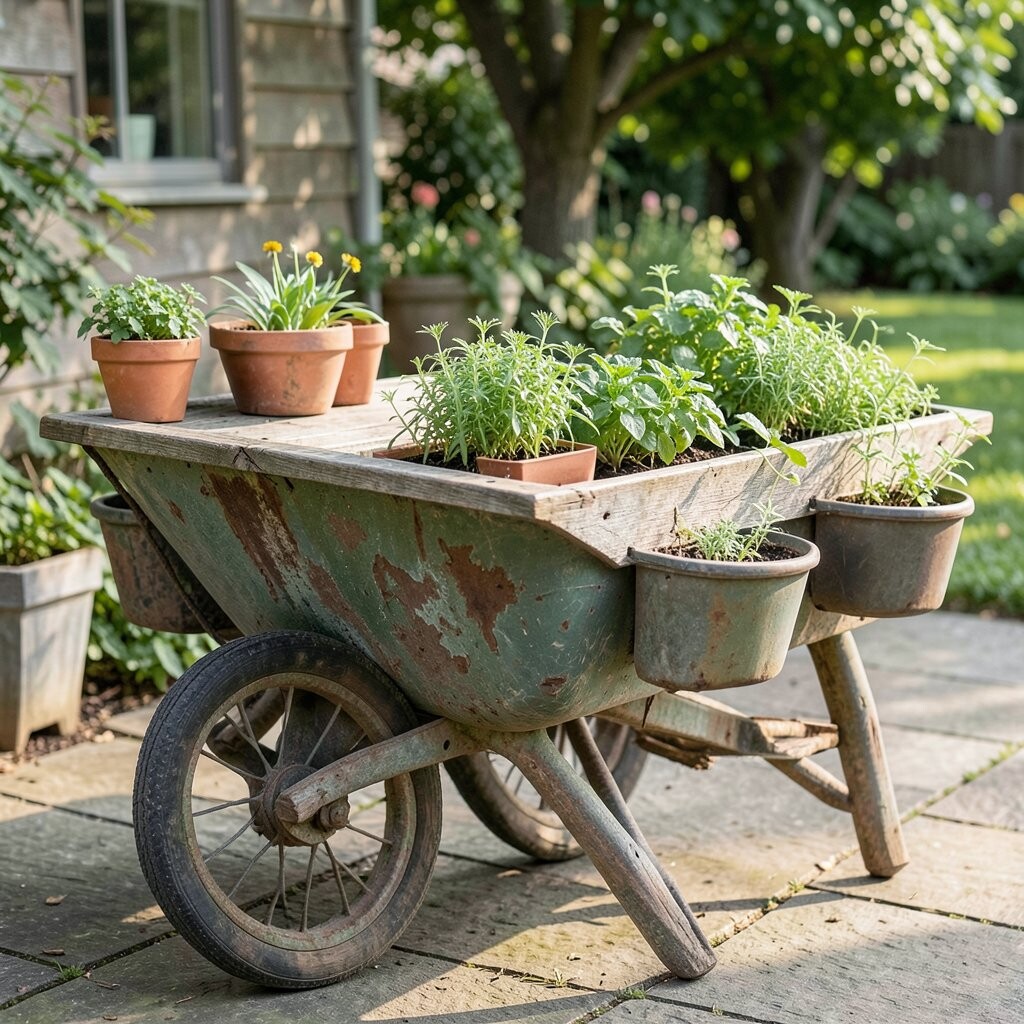
Use a sturdy, old wheelbarrow as the bar body, then level it and add a reclaimed wood top where drinks can rest. The bar feels playful and mobile, like your yard has a built-in delivery cart for refreshments.
For practicality, install herb planter pockets along the sides using small reclaimed containers or cut-up pots sealed with waterproof lining. This keeps garnishes close by, so you can grab mint, basil, or rosemary without running inside. Add a bottle opener strip along one edge so guests can serve themselves.
This design is unique because it blends a functional bar with a gardening layout, making it perfect for summer hosting. When planning cost, wheelbarrows are often inexpensive, while the main expenses are sealants and potting materials. Personalize by painting the wheelbarrow in a color that matches your patio cushions or garden flowers.
20. Reclaimed Metal Tool Cabinet Bar With Magnetic Spice Holders
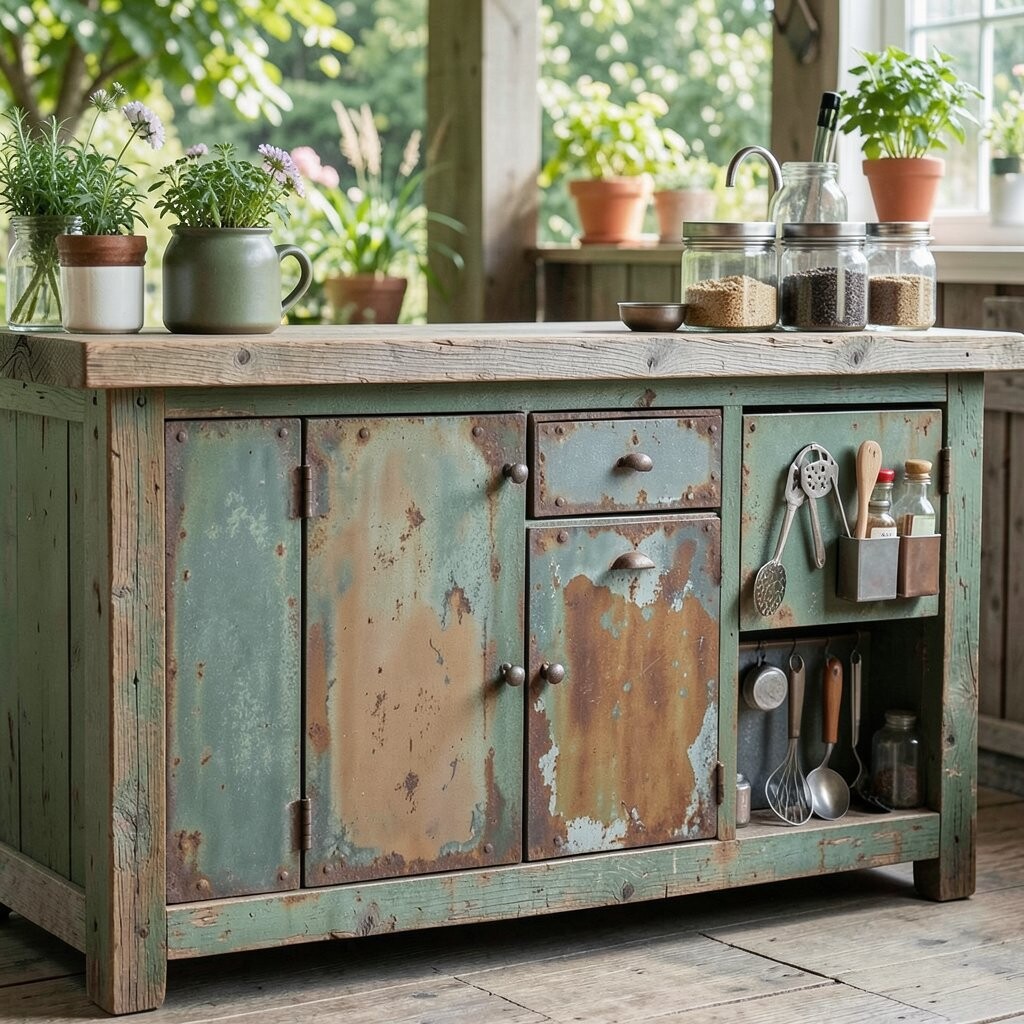
Turn an old metal tool cabinet into a bar by adding a reclaimed countertop and using the cabinet doors for storage. Since metal already exists, it’s easier to attach extra holders and keep the overall look cohesive.
This design benefits from organization because metal surfaces can handle hooks, magnetic strips, and durable fasteners. Add magnetic spice holders made from salvaged tins to keep garnish bags and small items neatly in place. For practical tips, use rust-resistant paint and seal any exposed edges so it stays clean in rain.
Cost considerations can vary, but many tool cabinets are cheap, especially if they’re slightly dented, which can look stylish outdoors. Personalize by painting the cabinet doors in a bold color and leaving the wear marks visible so it doesn’t look too perfect. A current trend is “functional hardware styling,” where magnets, hooks, and compartments are part of the aesthetic, not hidden.
21. Recycled Porch Post Bar With Reclaimed Deck Board Top and Side Rail

Create a bar anchored by reclaimed porch posts, then build a serving top from deck boards salvaged from a renovation. Add a side rail made from leftover fencing or gate parts so drinks feel supported and comfortable to use.
This design is unique because it uses strong, recognizable yard materials, making the bar look like it was always part of your property. For practical tips, brace the posts properly and choose screws and brackets meant for outdoor load. Seal the deck boards and sand the edges so the surface feels smooth and safe.
Personalization ideas include staining the top in a weathered tone and adding a small cup rack made from recycled metal. Cost is often reasonable because posts and deck boards can be sourced through salvage projects, while finishes and hardware are the main purchases. This style also fits a popular trend toward “heritage materials,” where reclaimed parts are celebrated rather than disguised.