
A marble island can make a kitchen feel instantly more upscale and calm. Pair it with modern lines and you get a look that stays stylish for years.
1. Warm Bianco Marble With Soft Walnut Touches

Picture a bright island slab in Bianco marble with gentle gray movement running like fine ink across white. The surrounding cabinetry in warm walnut keeps the whole space inviting instead of cold.
A marble island helps elevate daily life because it looks elegant even when you’re just slicing fruit. It also wipes clean easily, which matters when cooking gets busy. If you want a practical upgrade, choose a matte or honed finish so fingerprints and small smudges don’t stand out.
2. Slim-Pocket Waterfall Edge With Minimal Chrome

A floating-feeling island with a slim waterfall edge turns your marble into the main showpiece. Thin chrome pulls and a few high-gloss accents make everything feel crisp and modern.
This design works well because a waterfall edge gives a clean visual line from countertop to floor-facing sides. Marble’s natural pattern makes each island one of a kind, so you don’t need extra decoration to get character. For planning, measure carefully for cabinet clearance and think about seating height if you add bar stools.
If you’re budgeting, remember that the waterfall effect can increase fabrication time. You can still get the same refined look by using a simpler edge on the sides and focusing the dramatic waterfall on the front. Add warm lighting under the overhang to keep the island looking bright at night.
3. Veined Calacatta Island With Stacked Pendant Lighting

Calacatta marble brings dramatic contrast, with bolder veins that feel almost artistic. When you pair it with stacked pendants above the island, the ceiling-height glow makes the whole kitchen feel gallery-like.
The benefit of this setup is that marble becomes the centerpiece while the lighting handles the mood. Layered pendants also brighten the work zone so chopping and cooking feel easier and safer. Choose pendants with warm LED bulbs to keep the marble from looking too stark.
To keep the look refined, pick a metal finish that matches your faucets and hardware, like brushed brass or satin nickel. If you want personalization, consider a marble book-match for the front face so the veining lines up neatly. That detail can raise the visual impact without changing the footprint.
Cost-wise, Calacatta varieties often run higher, especially for larger slabs. You can manage spend by using the most dramatic section for the island face and using a quieter piece for the backsplash. A professional template and seal can also help protect the surface for long-term use.
4. Monochrome Marble Island With Clean Flat-Panel Cabinets
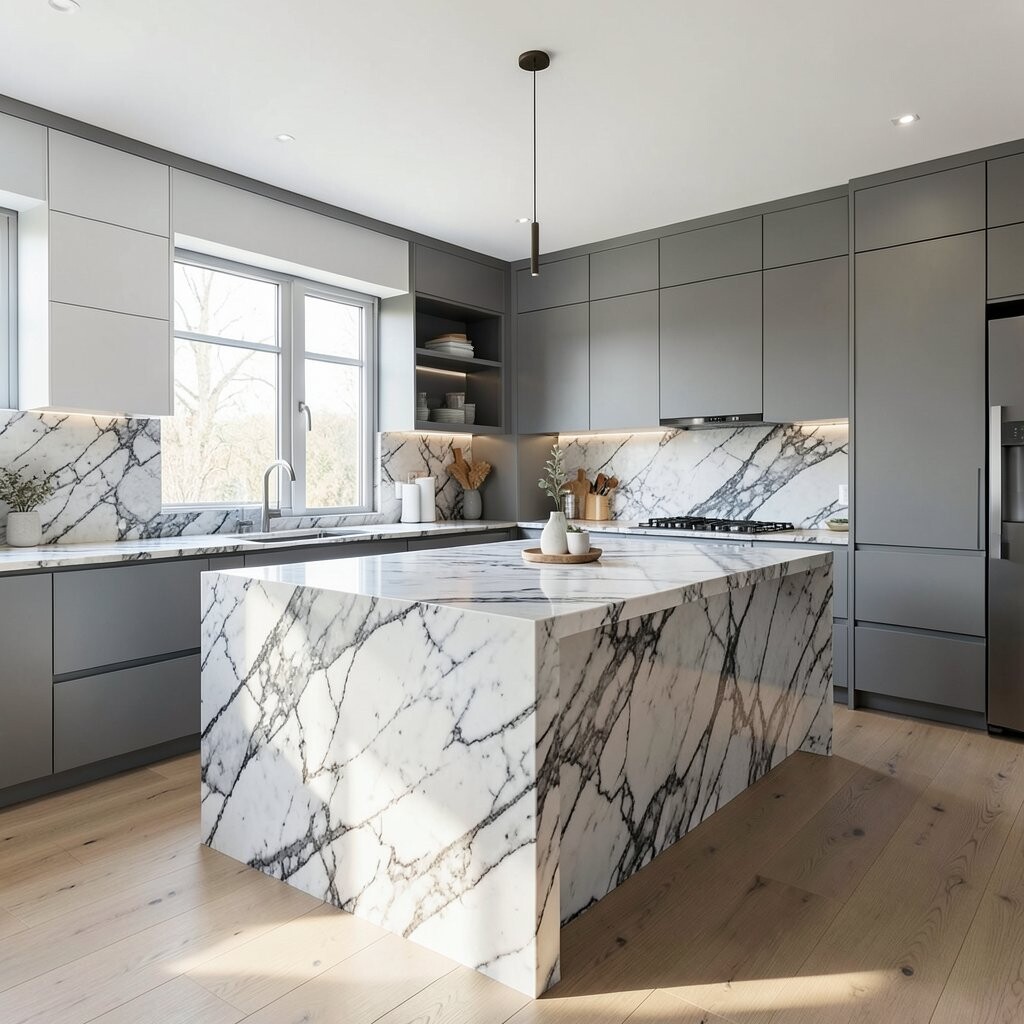
Think of a sleek kitchen where flat-panel cabinets meet a crisp marble island in soft gray tones. The monochrome look feels modern and steady, with no visual noise around the room.
One big advantage of this style is how easy it is to maintain a calm atmosphere. Marble’s natural veining gives texture without turning into clutter. For practical tips, keep your grout lines minimal on the backsplash and choose a single cabinet color so the island stays the focal point.
5. Soft Greige Quartz Surround With Marble Highlight Island
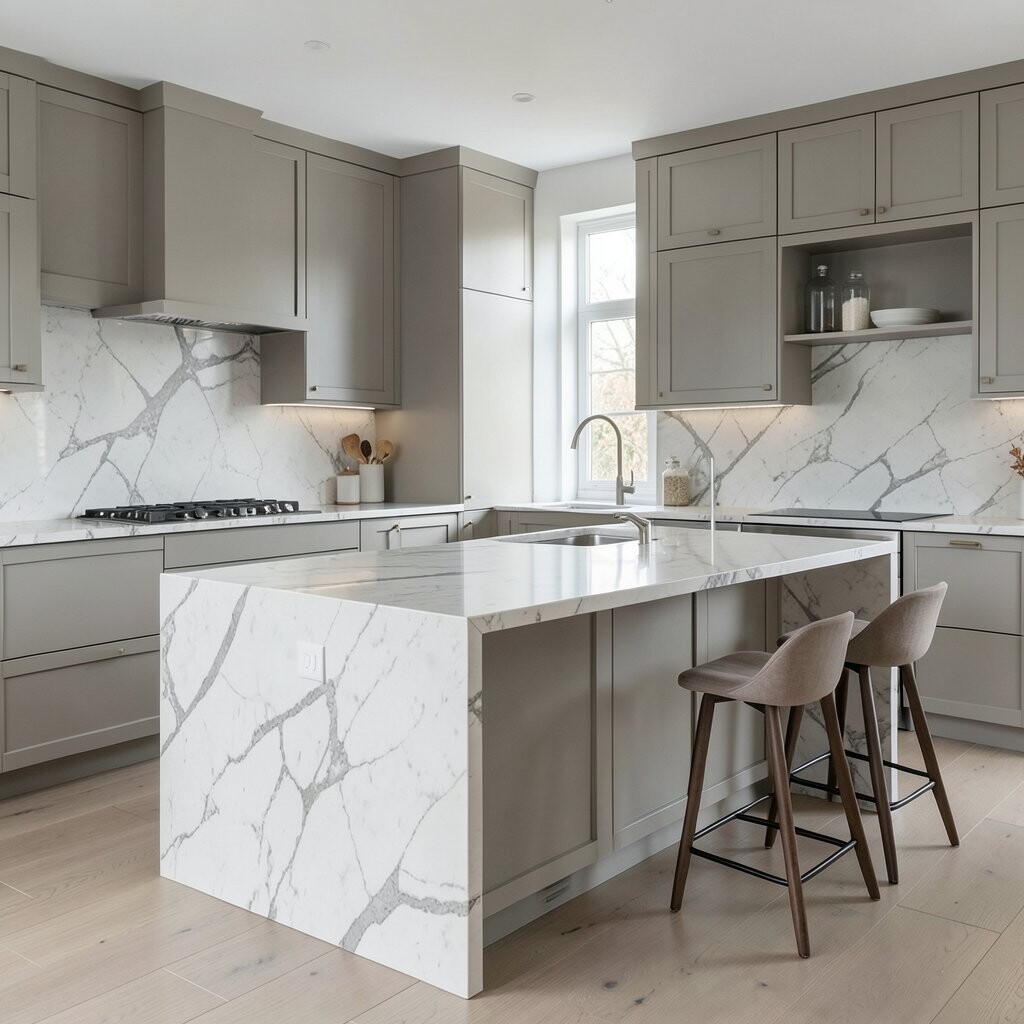
If you want marble elegance but prefer a gentler vibe, use marble only on the island. A soft greige surrounding countertop can buffer the contrast and make the room feel balanced.
This approach is unique because it lets you enjoy marble’s signature beauty without covering every surface in a higher-cost material. Marble also tends to feel cooler and more luxurious under your hands, so the island becomes the “special” station for prep. For personalization, match the backsplash finish to the island’s undertones, such as warm whites or light taupe.
When you plan your budget, focus spending on the front face of the island, where veining is most visible. A simple waterfall edge can be optional; a clean straight edge can still look high-end. Add matte black bar pulls or subtle brass accents to connect the island with the rest of the kitchen.
6. Bold Green-Gray Veining With Narrow Bar-Seat Overhang

Some marble has a greener cast, and it can turn a modern kitchen into something memorable. In this idea, a narrow overhang creates a built-in bar seat that’s perfect for quick coffee chats.
The benefit here is efficiency, since the seat adds function without eating up floor space. Marble is sturdy for everyday use, and the countertop height can be dialed in for comfort. For practical tips, protect the edge corners with precise finishing so chips don’t become an issue over time.
To make it feel cohesive, choose cabinet fronts in a light neutral and keep the backsplash simple. Add a runner-style rug under the seating area if your kitchen has wood or stone floors to reduce echoes. A small tray set for oils and salt can also make the bar area feel styled, not messy.
7. Two-Tone Island: Marble Top With Painted Base Cabinets
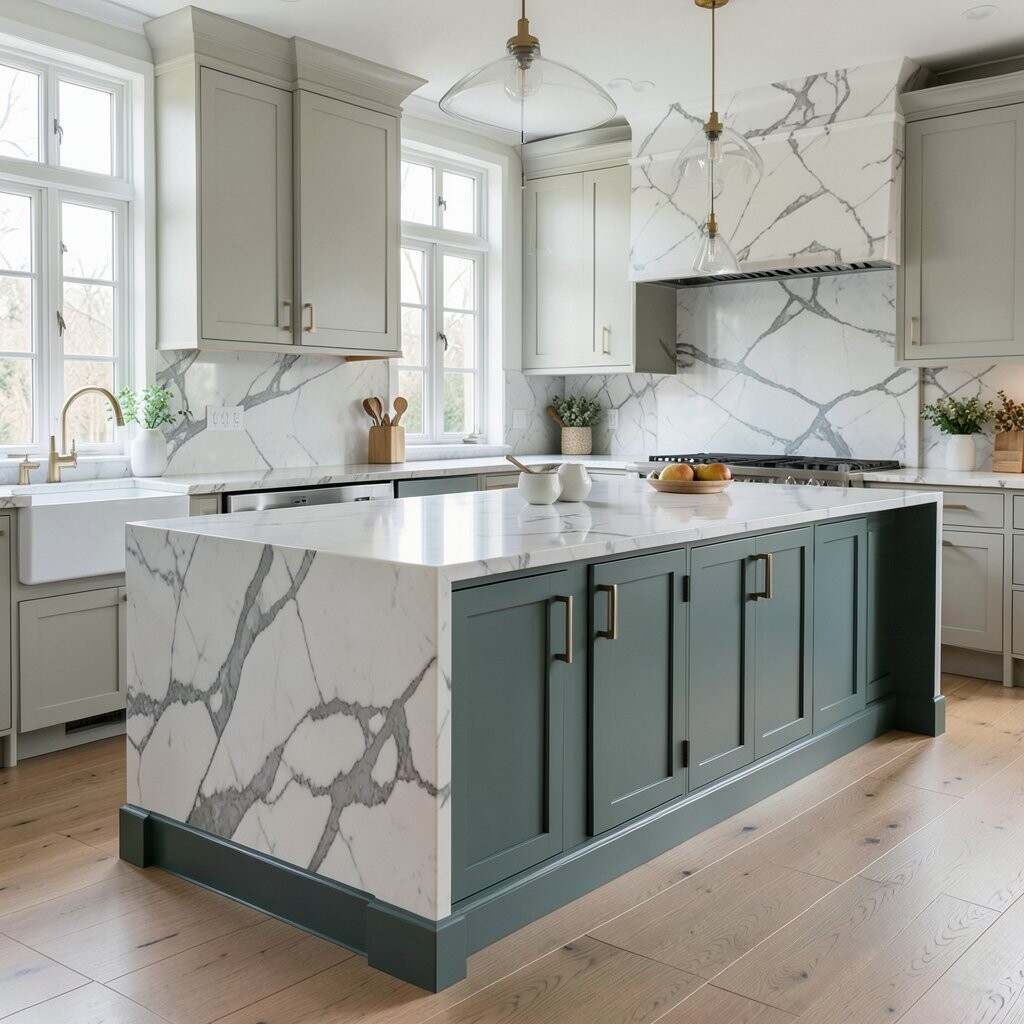
A marble top paired with a painted base cabinet gives your island a friendly, custom feel. The marble reads elegant, while the color adds personality and warmth to the room.
This combination is unique because it breaks the “all stone” look that sometimes feels too formal. Marble stays the premium surface, and the painted base helps define zones for storage and style. Personalize by choosing a paint tone that matches your dining chairs or nearby decor.
For practical planning, choose durable cabinet paint and hardware rated for frequent use. Consider soft-close drawers and pull-out trash bins so the island stays as functional as it looks. Budget-wise, adding a painted base can sometimes cost less than full custom cabinetry in multiple matching areas.
8. Polished White Marble With Dark Shiplap-Style Accent Wall
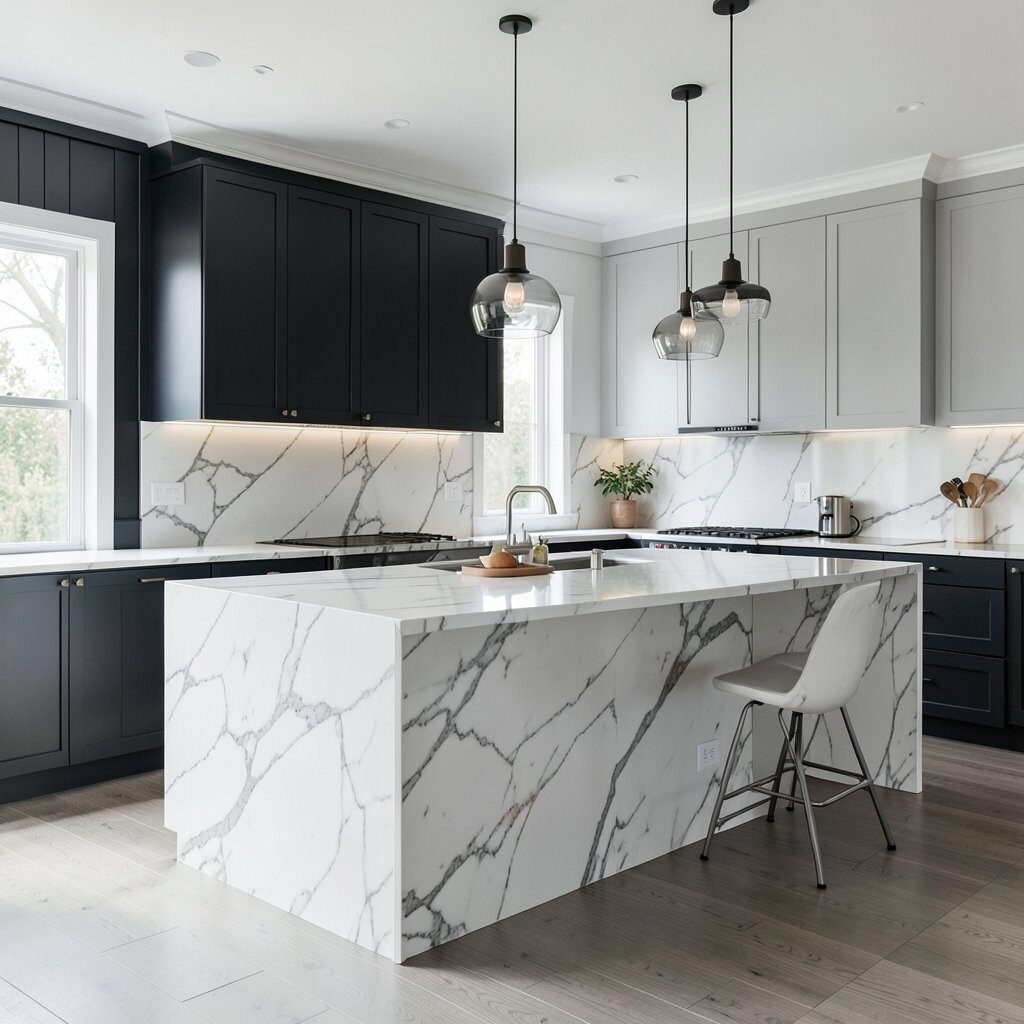
Bright polished marble against a darker accent wall creates a strong “wow” moment. The reflective stone catches light, while the depth of the wall adds drama.
This style can make a larger kitchen feel more anchored and cozy. It also helps define the island as a focal point without needing extra décor. If you like a cleaner look, keep the accent wall limited to the area behind or beside the island rather than wrapping the entire kitchen.
For personalization, add simple molding lines on the dark wall so it feels intentional. Use a marble seal to reduce staining, especially if you cook with oils, coffee, or citrus. The cost can vary depending on the stone grade, so ask about slabs that offer similar veining at a slightly lower price point.
To avoid high maintenance, choose a polished finish only if you’re okay with visible water spots and fingerprints. A honed finish might keep the marble more forgiving while still feeling refined.
9. Honed Marble Island With Integrated Sink and Hidden Lighting

Honed marble offers a softer, chalky elegance that looks upscale without glare. When you add an integrated sink and hidden lighting, the island feels almost architectural.
This setup is practical because the sink area becomes part of the island’s structure, giving you a smooth workflow. Hidden LEDs under the overhang can highlight the marble veins and make evening cooking safer. For tips, keep the plumbing run in mind during layout so the sink placement supports both seating and dish prep.
To personalize, choose a faucet with a gentle curve and a matching soap dispenser so the sink zone stays streamlined. Consider adding a small niche or toe-kick storage for dish towels and cleaning tools. Budget considerations include the complexity of built-in plumbing and the cost of undermount fixtures.
10. Narrow Island With Thick Marble Skirt and Floating Shelf
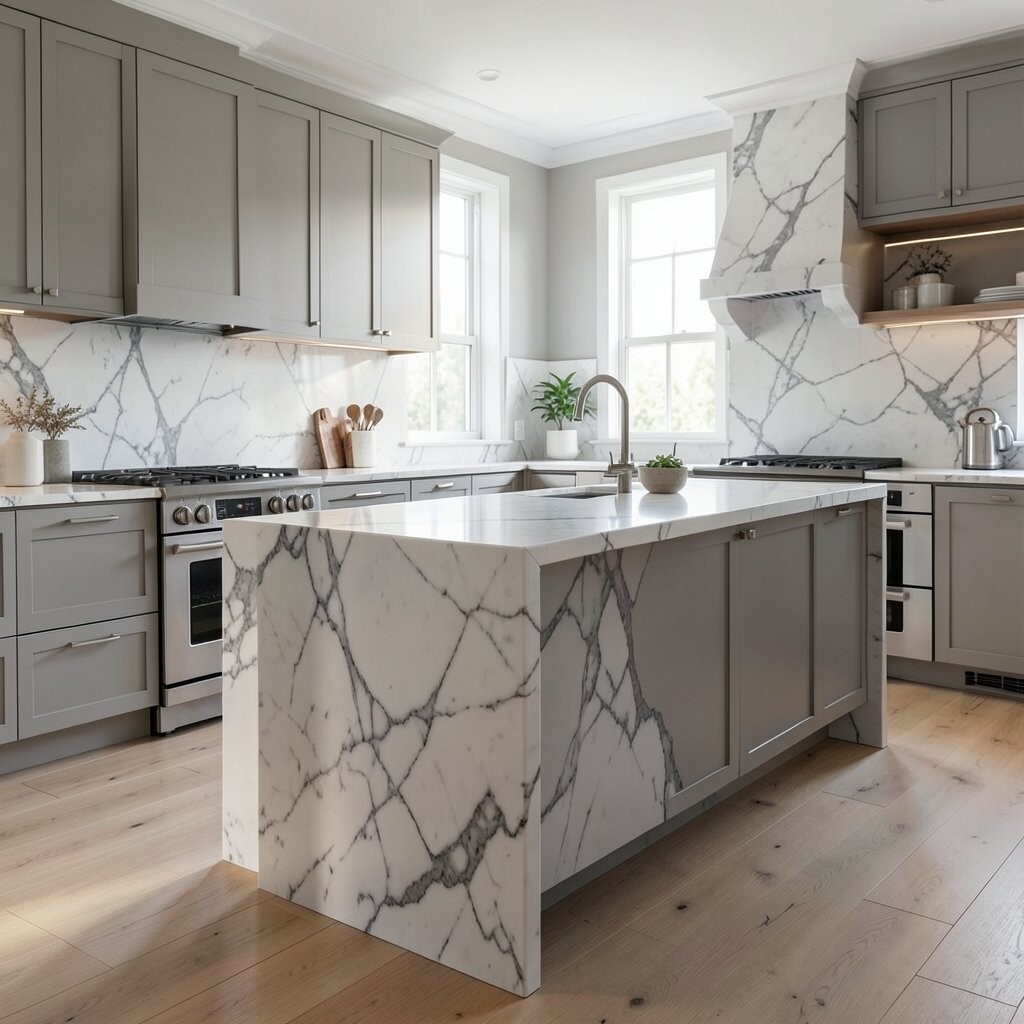
A narrower island can still feel luxurious when the marble is thick and the design is light. This idea uses a bold marble skirt detail while keeping the back wall open with a floating shelf.
The benefit is balance, especially in smaller kitchens where a wide island might feel crowded. Marble’s thickness adds weight visually, so the island looks substantial even with fewer square feet. For practical tips, plan for comfortable circulation around the island and keep the shelf styling minimal.
If you want personalization, show a few curated items on the floating shelf, like a vase and a wooden cutting board. Use matching finishes for your light fixtures to keep the space cohesive. Cost-wise, thick slabs may raise material price, but you can manage it by selecting a slab with similar movement at a better grade.
11. Beige Marble With Soft Curves and Rounded Cabinet Edges

Beige marble with subtle veining feels calm and modern, especially paired with rounded cabinet edges. The result is a kitchen that feels gentle, not harsh.
This design stands out because the marble’s neutral movement blends with organic curves for a softer aesthetic. Marble can also make the island feel stable and grounded, which is great for everyday cooking. For practical suggestions, choose cabinet fronts with durable edging and keep the countertop overhang comfortable for seating.
To personalize, add warm lighting that enhances the beige tones, and use light wood accents for a cozy contrast. If you cook often, consider a slightly larger prep space near the cooktop so you don’t constantly shift ingredients. Budget-wise, beige marble can sometimes be more affordable than the brightest high-contrast options.
12. Charcoal Base Cabinets With White Marble Highlight Strip

Charcoal cabinetry creates a striking backdrop for a white marble island that feels crisp and clean. A highlight strip of marble on the island face adds extra refinement without needing full coverage everywhere.
This is unique because it mixes bold color with a controlled marble detail, so the look stays modern rather than busy. Marble keeps the center of attention while the charcoal base anchors the design. For personalization, coordinate the countertop edge with the charcoal finish so everything feels intentional.
Practical tips include choosing stain-resistant sealant and keeping cutting boards handy to reduce surface wear. If you’re worried about cost, partial marble use can cut material expenses while still giving you the “marble island” moment. Add brushed steel or matte black bar stools to connect the charcoal theme.
When selecting stone, look for a pattern that reads evenly across the face of the island. That helps the highlight strip feel like it’s designed, not accidental.
13. Marble Island With Patterned Backspash in Complementary Tones

Pairing a marble island with a patterned backsplash can add a layer of creative charm. The key is to choose patterns that echo the marble’s undertones, like warm gray or soft gold.
This combination feels elegant because the island remains the smooth, refined anchor while the backsplash adds artful energy. Marble’s movement and the tile design can work together when they share similar colors. For practical tips, keep the backsplash scale appropriate for your space so it doesn’t overwhelm the island.
Personalize the look by choosing a backsplash that matches one of the marble vein colors, such as a muted charcoal line. To keep maintenance easy, choose materials that wipe clean and consider sealing grout if needed. Cost considerations include tile labor, which can be higher depending on the pattern complexity.
14. Textured Matte Marble With Minimalist Hardware and Warm Lighting

Matte marble feels smooth but not shiny, giving your kitchen a quietly luxurious look. This style leans on minimalist hardware and warm lighting to keep the design relaxed.
The advantage is that matte surfaces hide tiny water marks and fingerprints better than polished stone. It also gives the marble veins a softer appearance, so the island looks refined in daytime and evening. For practical suggestions, use warm LED bulbs and keep hardware finishes consistent across faucets and light fixtures.
If you want personalization, incorporate a subtle pattern in bar stools or chairs that complements the marble’s tone. You can also add a thin wood tray system on the island to organize spices and daily items. Budget-wise, matte finishes can sometimes reduce the need for frequent polishing touch-ups, which helps over time.
15. Oversized Marble Island With Built-In Breakfast Nook Wall

An oversized marble island can define your kitchen like a centerpiece in a living room. By adding a breakfast nook wall behind it, you create a cozy place for casual meals.
This setup is unique because it combines prep space with a built-in dining feel, making the kitchen more social. Marble islands handle daily wear well, and the large surface gives room for meal prep, mixing, and serving. For practical tips, plan power outlets thoughtfully so appliances stay convenient for cooking and baking.
Personalize the nook with cushions, bench upholstery, or a light wall panel finish that works with the marble’s undertones. Consider storage under the bench if you want to keep clutter off counters. Cost considerations include the added built-in structure and upholstery work, which can raise totals but also increases usability.
To keep the island from feeling too dominating, balance the scale with lighter cabinet colors or open shelving nearby.
16. Marble Island With Integrated Wine Storage and Glass Rail
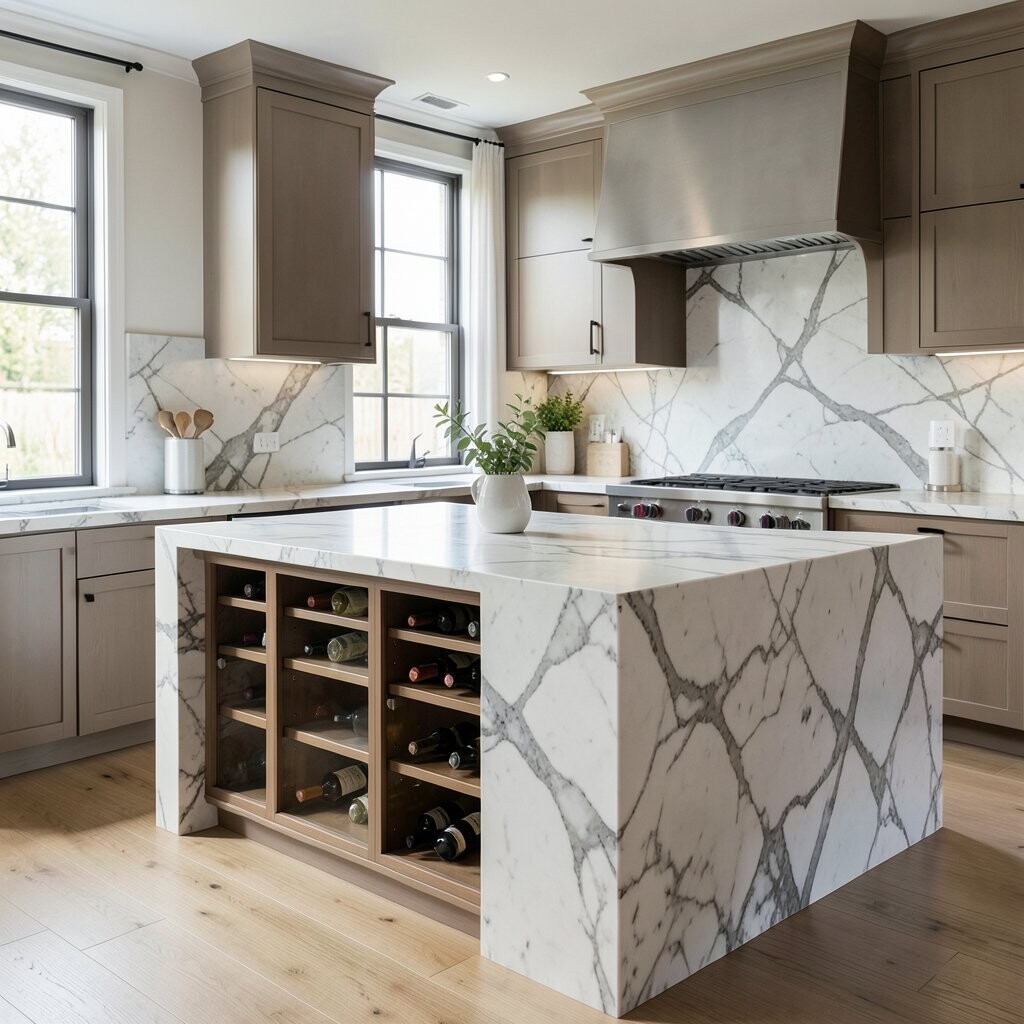
For a kitchen that loves hosting, a marble island can pair with built-in wine storage and a sleek glass rail. The marble top makes the serving surface feel elevated, while the storage keeps bottles neatly organized.
This idea stands out because it turns an island into a multifunction hub, not just a countertop. Marble’s easy-clean surface is helpful when guests arrive and you’re moving quickly. For practical suggestions, ensure your rail placement doesn’t block movement around the cooktop or sink zone.
Personalize it with warm wood wine racks that contrast the stone for a richer feel. Add subtle accent lighting to the storage so bottles look like part of the décor. Budget-wise, built-ins and rails add cost, but they can replace separate furniture pieces and make the kitchen feel cohesive.
17. Compact L-Shaped Marble Island With Floor-To-Ceiling Pantry

An L-shaped island can be perfect when you want more workspace but still need traffic flow. Pair it with a floor-to-ceiling pantry wall so the design feels streamlined and full of storage.
This design is unique because it creates multiple prep zones, helping you separate chopping, mixing, and plating. Marble offers a smooth, premium countertop that works for everyday tasks and special meals. For practical tips, check the layout for comfortable arm reach so you don’t feel cramped while cooking.
Personalize the pantry wall with matching finishes and a handle style that echoes the faucet. If you want visual harmony, choose marble veins that don’t clash with the pantry’s color. Cost considerations include extra cabinet framing for the L-shape and the need for precise stone fabrication around corners.
To protect the stone, use coasters for hot items and keep a cutting board where you prep. Small habits help marble look beautiful for longer.
18. Bright Marble Island With Light Stone Backsplash and Brass Details
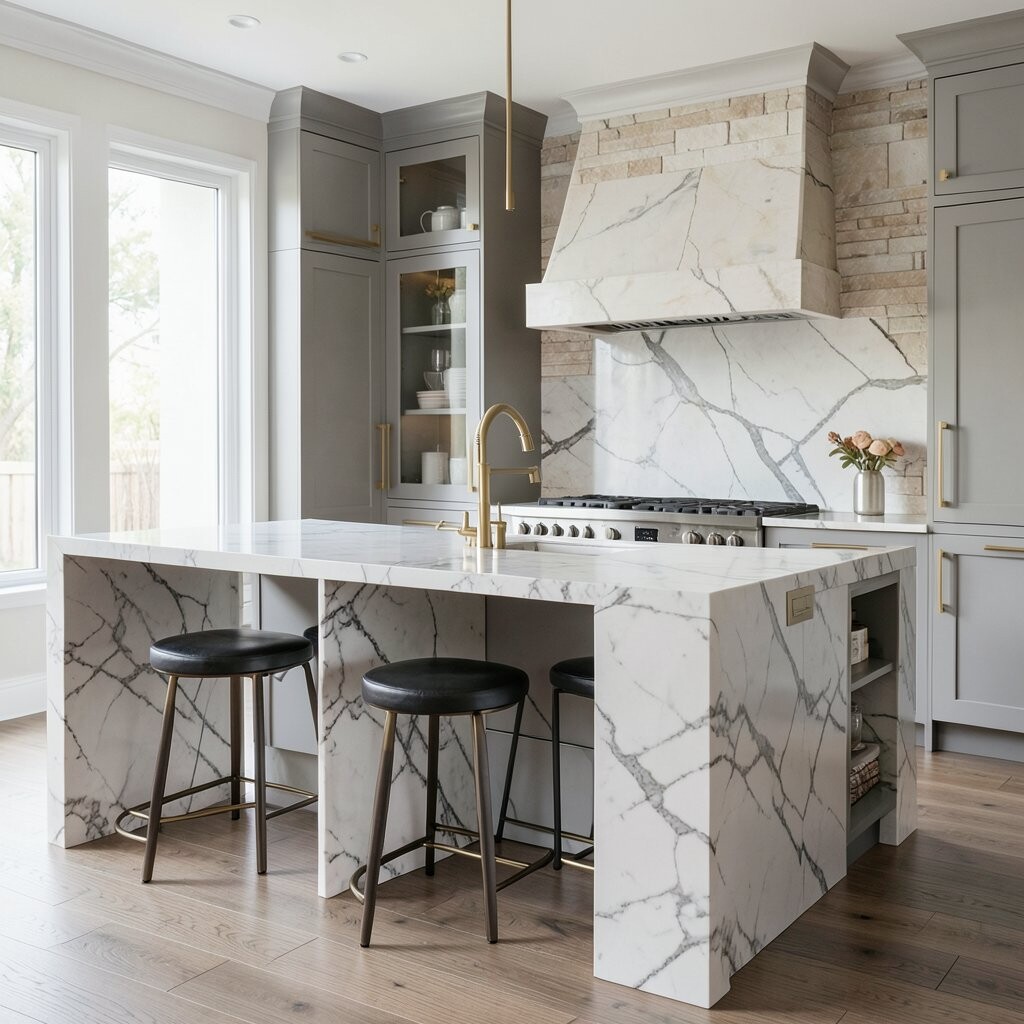
A bright marble island in white or soft ivory tones makes the entire kitchen feel open and airy. When you add a light stone backsplash and brass details, you get warmth without losing the modern clean look.
This style benefits from strong coordination, because light materials reflect daylight and make the space feel bigger. Marble’s natural veining adds movement that still reads calm in a bright palette. For practical suggestions, choose brass finishes that won’t overwhelm the marble pattern and keep your grout lines neat and consistent.
Personalize with statement bar stools in a warm neutral, like cream or light taupe. You can also add a slim brass rail for hanging utensils, which keeps tools within reach. Budget considerations depend mostly on the marble grade, but choosing a mid-range slab with elegant veining can give a high-end effect.
19. Dramatic Marble Island With Sculptural Corner Base
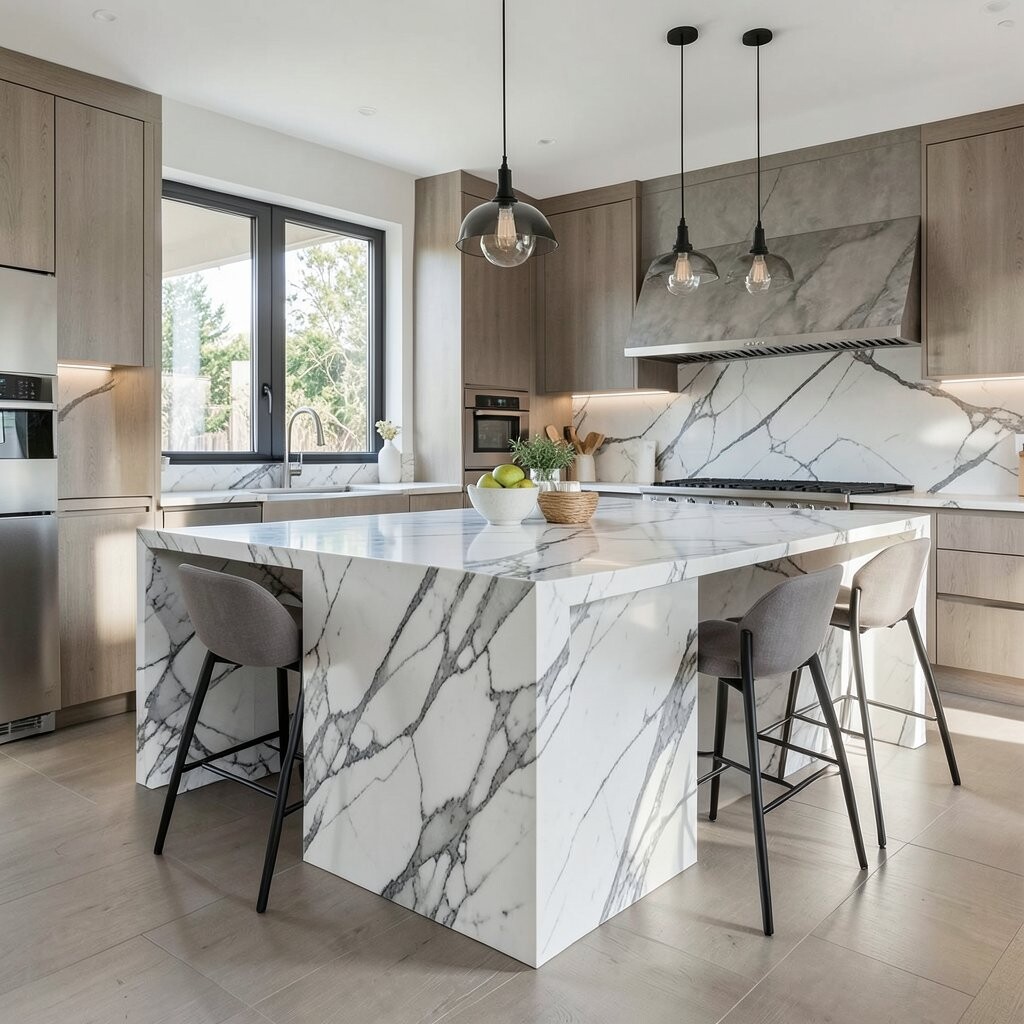
If you love modern design drama, a sculptural corner base can make your marble island feel like custom art. The marble top stays elegant, while the corner base adds a bold architectural silhouette.
This concept is unique because it combines practicality with sculptural form, turning the corner into a strong visual anchor. Marble remains easy to wipe down and ideal for prep, and the sculptural base helps the island feel designed rather than standard. For practical tips, plan the corner detailing carefully during installation so the countertop sits flush and the edges look sharp.
To personalize, match the base finish to other elements like cabinet hardware or ceiling accents. Choose lighting that grazes the stone surface so the veining shows texture and depth. Cost considerations may be higher due to custom carpentry, but the payoff is a one-of-a-kind look that feels truly yours.
For everyday care, seal the marble and avoid harsh cleaners that can dull the finish. With the right maintenance, the sculptural island becomes a lasting centerpiece for both cooking and entertaining.