Your countertop should feel like part of the room’s personality. The right material makes daily life smoother and the kitchen look sharper.
1. Quartzite
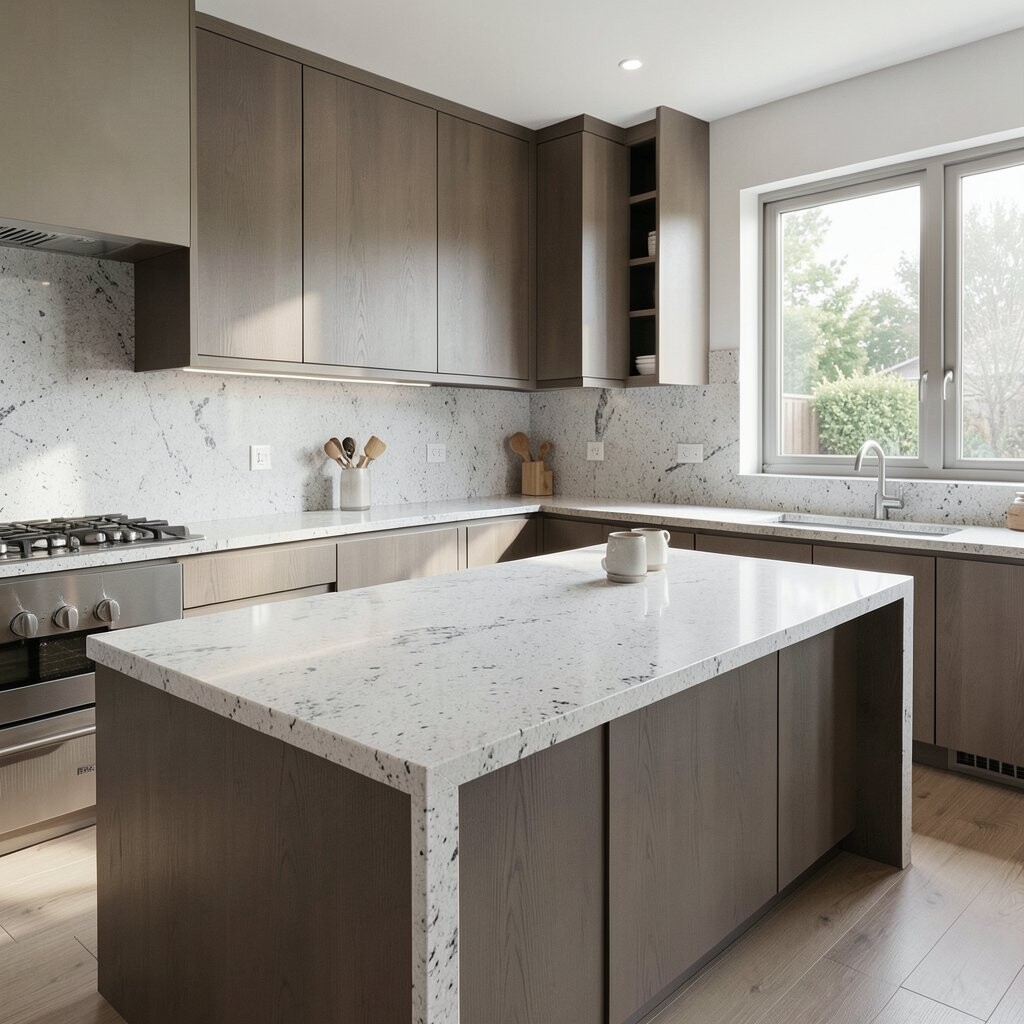
Quartzite looks like a natural gemstone slab from a distance. Up close, you’ll see subtle veining that can shift from soft gray to warm cream tones.
It brings a premium, contemporary feel without needing paint or patterns. Quartzite is heat resistant compared to many stones, which is great for busy cooking days. For practical use, seal it properly based on the finish you choose and wipe up spills quickly.
2. Engineered Quartz
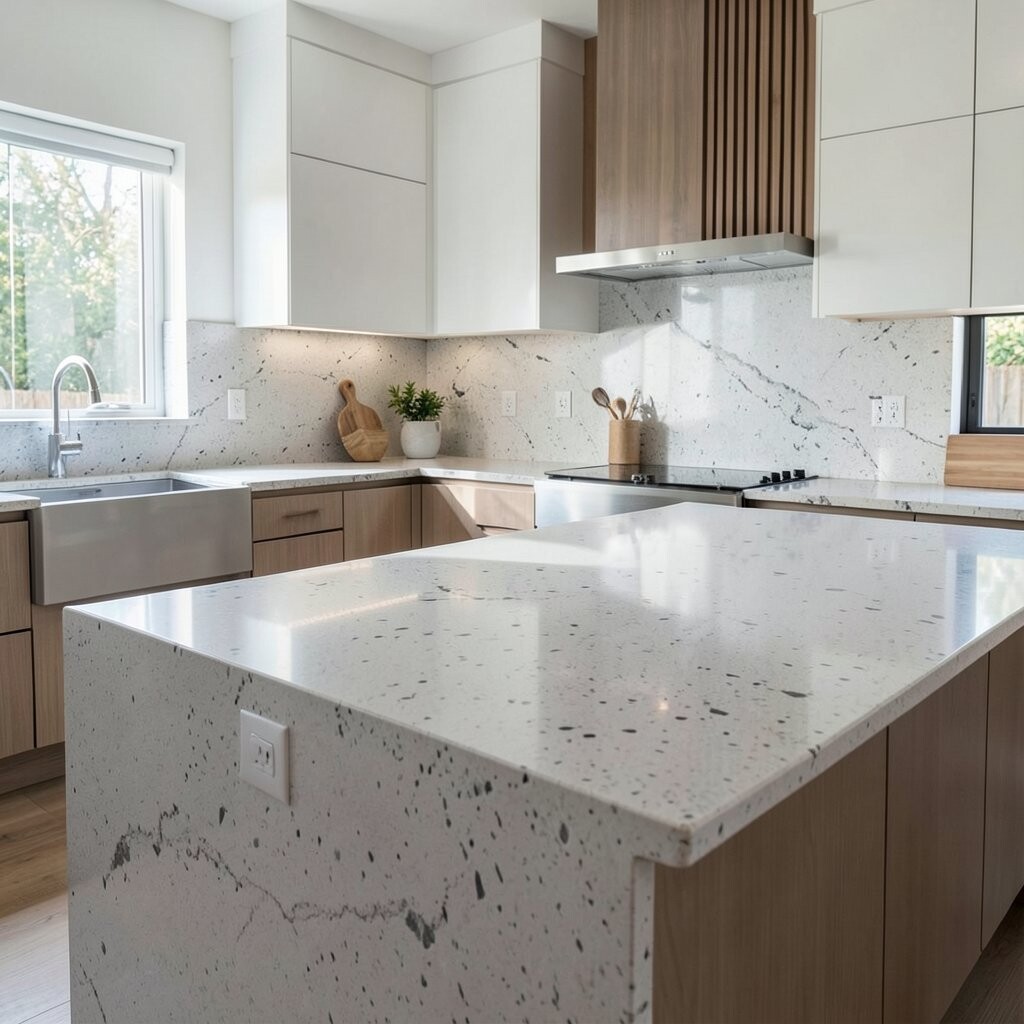
Engineered quartz countertops are designed for a clean, modern look. The surface often feels uniform and crisp, with flecks that read elegant under kitchen lighting.
This material resists stains well and handles everyday spills with less worry. It’s also low maintenance, which means fewer hours spent scrubbing after meals. When you want personalization, pick a color family that matches your cabinet undertones, and consider a matte finish to reduce glare.
For cost, engineered quartz is usually mid-range, but pricing changes with brand, thickness, and edge style. Current trends favor slightly warm whites, light stone looks, and slabs with consistent movement for a tailored appearance. Keep in mind that some quartz can be sensitive to extremely hot pans, so use trivets for roasting dishes straight out of the oven.
3. Recycled Glass Composite
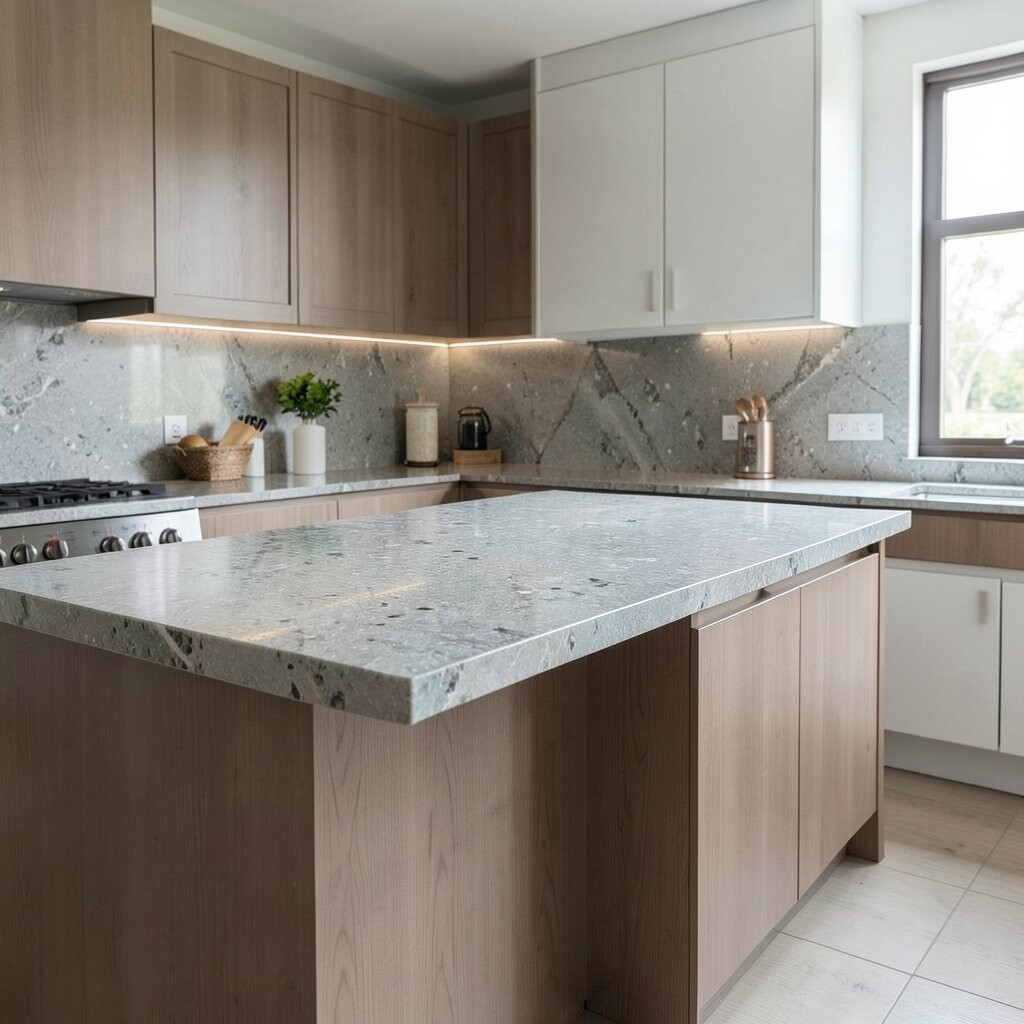
Recycled glass composite can look like colored pebbles caught in clear resin. Depending on the mix, you may see glittery flecks that brighten the whole kitchen.
It’s unique because no two blends are exactly alike, even when you choose a similar palette. Many people love it for the way it catches light near windows and under cabinets. For practical tips, choose a finish that won’t feel too glossy if you hate reflections, and use gentle cleaners that won’t dull the surface.
In a contemporary kitchen, it pairs beautifully with sleek metal fixtures and minimal cabinet hardware. Budget-wise, glass composites can range from moderate to higher, especially for custom colors and thicker slabs. If you want personalization, ask about custom pigment options so the countertop echoes backsplash tile tones.
Also, plan seams thoughtfully because the visual texture can be a design feature. A well-planned layout makes the pattern feel intentional instead of scattered. With proper care, it stays vibrant for years.
4. Concrete with a Polished Finish

Polished concrete countertops bring an industrial-modern vibe that feels bold yet steady. You might choose a light gray for a bright look or a darker mix for dramatic contrast.
They’re unique because you can tailor aggregate color, edge profiles, and sheen level to match your style. Concrete also pairs well with under-cabinet lighting, since the smooth surface can glow softly. For practical use, seal the counter and re-seal on a schedule, and wipe up acidic spills like citrus to prevent etching.
5. Stainless Steel

Stainless steel always reads modern and professional. In contemporary kitchens, it often feels like an upgrade in both style and function.
It’s heat tolerant and easy to sanitize, which is helpful when you’re cooking often. The non-porous surface can be a plus for busy households, especially if you frequently prepare sauces or bake. For practical tips, use the right cloth and cleaner to avoid streaking, and consider a brushed finish if you want less visible fingerprints.
Cost considerations vary because size and thickness matter, plus fabrication can add to the total. Trends frequently lean toward stainless-look appliances and complementary countertops, creating a coordinated “chef kitchen” mood. If you want personalization, pair steel with warm wood cabinetry or matte black hardware for balance.
6. Solid Surface (Acrylic or Polyester)
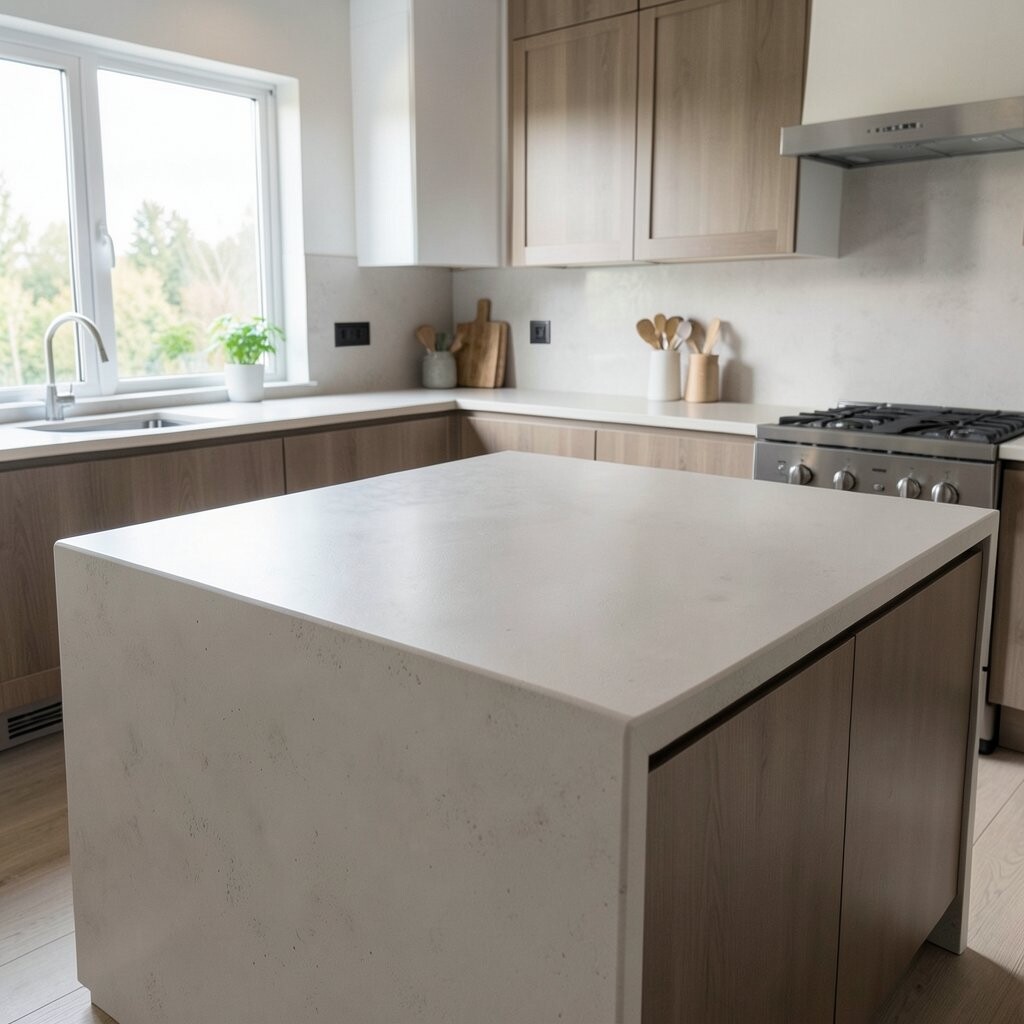
Solid surface countertops look sleek and continuous, with colors that feel even and friendly. Many contemporary kitchens use them because seams can be minimized for a streamlined appearance.
This material is unique because small scratches can often be sanded out by a professional, helping the surface stay looking fresh. It’s also great for custom shapes, like waterfall edges or integrated sinks. For practical tips, choose a color that hides everyday wear if you have a high-traffic kitchen, and follow manufacturer cleaning recommendations.
When you’re cost planning, solid surface is often a more budget-friendly option than some natural stones. Current trends include soft neutrals, subtle marbling, and uniform colors that make the whole room feel calm. Personalization ideas include matching the countertop to a backsplash panel for a clean, architectural look.
Be mindful that while it can handle regular daily use, it still benefits from pads under hot cookware. With good care, it can look great for a long time.
7. Wood (Engineered or Thermo-Treated)
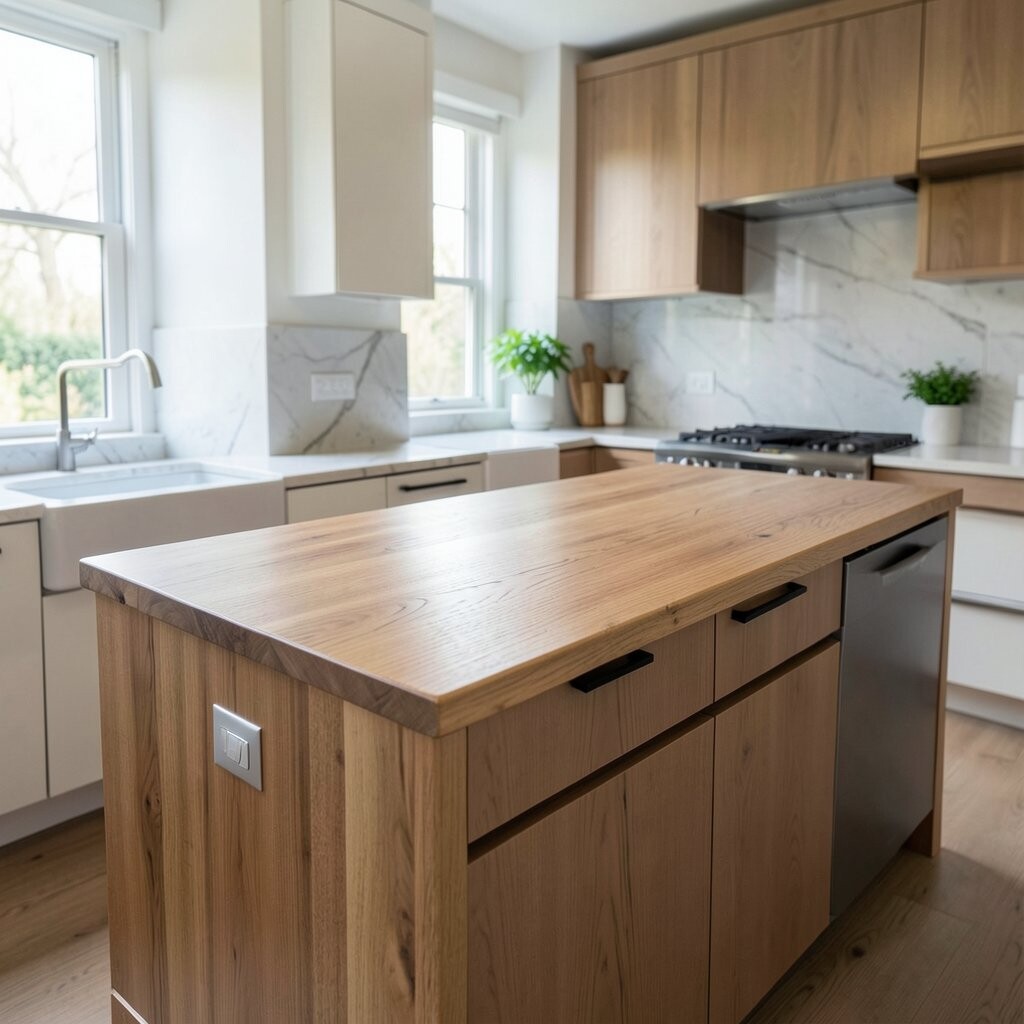
Wood countertops bring warmth to a contemporary kitchen and soften sharp angles. You may choose a light oak tone for airy spaces or darker walnut for a richer, calmer mood.
Wood is unique because it adds texture you can feel with your eyes, and it can age beautifully. It’s also a great choice if you love a natural look without stone patterns. For practical use, use cutting boards, wipe spills soon, and keep humidity stable to reduce movement.
Cost can be mid-range depending on the species and thickness, but it often feels like a worthwhile investment because it creates a distinct style. Trends often favor butcher-block style edges, modern mounting, and warm neutrals that contrast with cool cabinetry. For personalization, consider combining wood with a stone backsplash or using a satin finish to keep the surface smooth without looking shiny.
8. Marble (With a Sealed Finish)
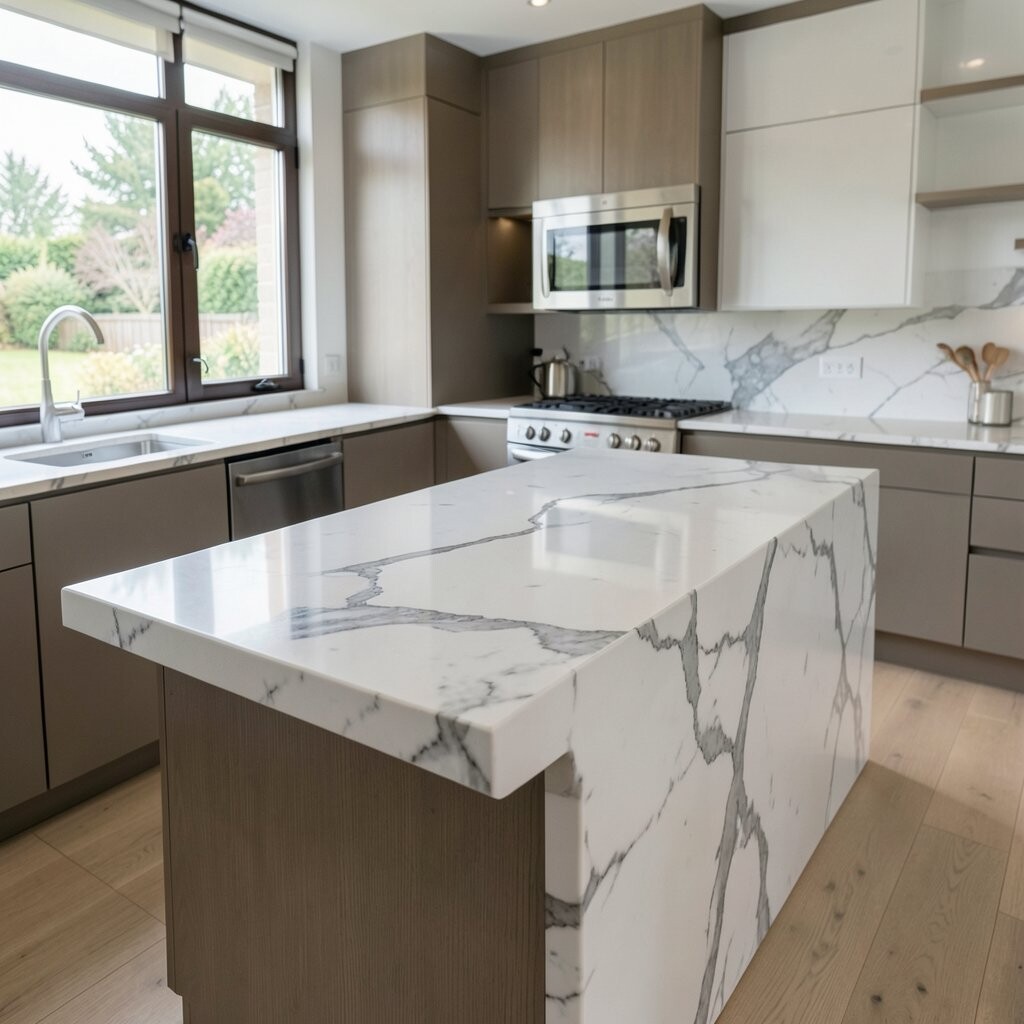
Marble is the classic luxury material, and it still looks stunning in contemporary kitchens. Think clean white slabs, gentle gray veining, and that bright, airy look under modern pendant lights.
Its uniqueness comes from natural patterning that feels like art, with each slab telling its own story. Marble also pairs beautifully with minimalist cabinet styles and sleek hardware. For practical tips, choose a high-quality sealer and reapply as recommended, then clean using pH-neutral products to help prevent staining and etching.
9. Limestone
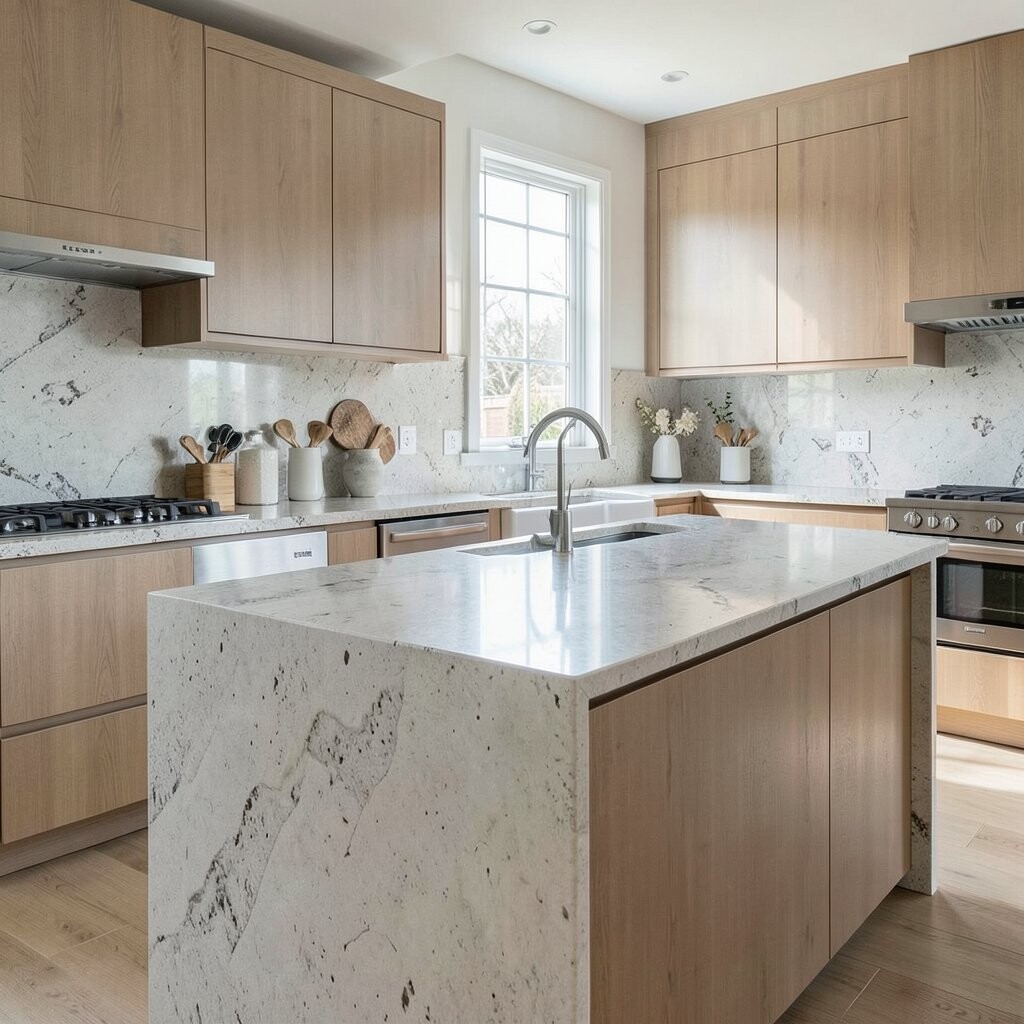
Limestone offers a softer, less “sparkly” look than many other stones. Colors often feel muted and modern, like warm white, sand, or pale greige.
It’s unique because limestone can look more organic and matte, helping it fit naturally with contemporary design. Many people love the subtlety when they want a stone look that feels calm rather than bold. For practical use, sealing is important, and wiping spills quickly helps protect the surface.
Limestone can be mid-range in cost, though pricing depends on region and slab availability. Current trends include textured finishes and honed surfaces that reduce glare. Personalization ideas include matching limestone tones with warm metal accents like brass or bronze for a cohesive, modern theme.
If you cook with lots of acidic foods, use caution and always use coasters and trivets. With the right care routine, limestone can stay elegant without feeling too delicate for daily life.
10. Terrazzo (Modern Aggregate Mix)
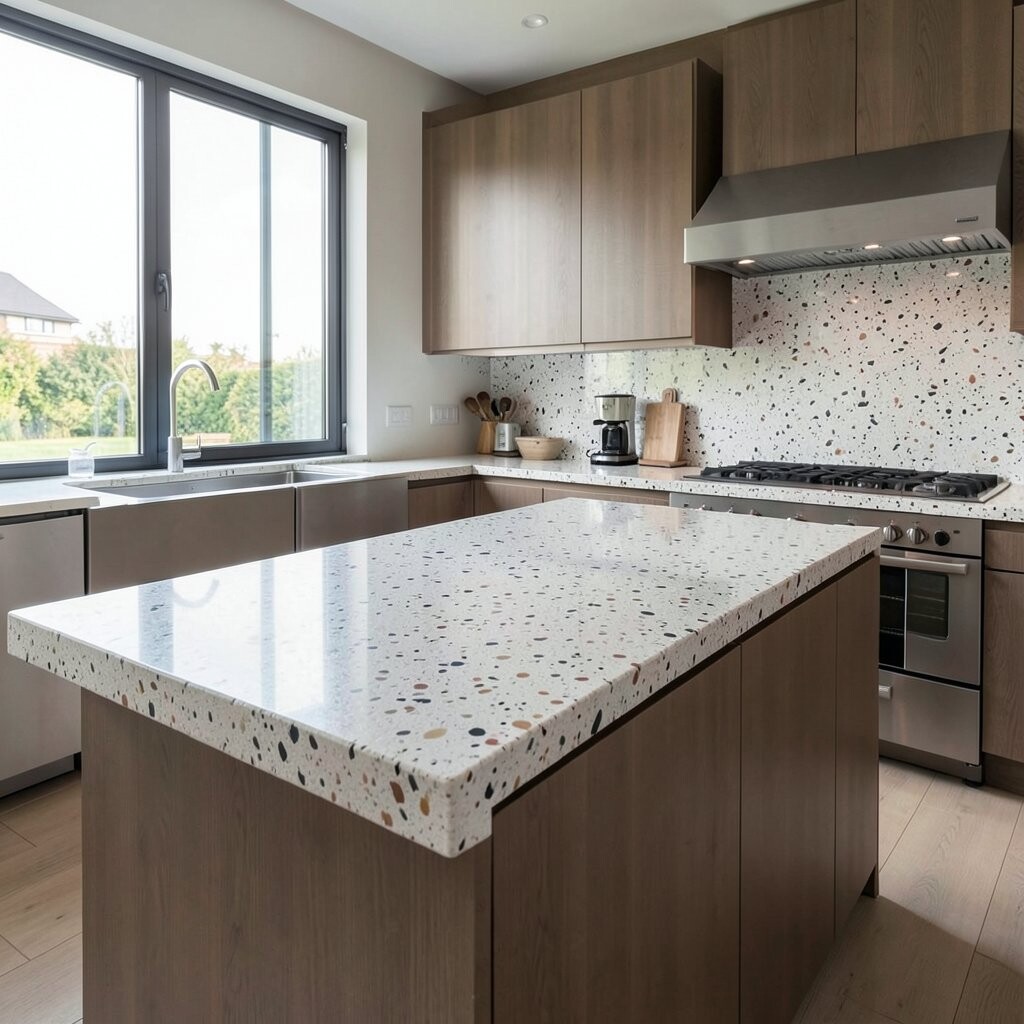
Terrazzo is colorful in a grown-up way, especially when you choose modern, restrained palettes. A speckled mix of stones and resin can make your kitchen countertop look like a finished piece of design.
It’s unique because it blends patterns into a unified surface, so the look feels artistic without being busy. Terrazzo can be durable, and many versions are designed for residential kitchens. For practical tips, pick a finish that matches your lifestyle, and keep a gentle stone cleaner on hand.
11. Natural Porcelain Slabs

Porcelain slabs can create a sleek, high-end surface with very controlled patterns. You can find designs that mimic stone veining or go for a solid modern color.
This material stands out because it’s engineered for strength and consistent performance. Porcelain is often resistant to staining and handles daily use well, which is a practical win. For personalization, choose a slab with a pattern direction that makes sense for your countertop layout, and consider edges that match the modern lines you want.
Cost can be moderate to higher depending on the thickness and design complexity. Right now, trends favor large-format panels, slim profiles, and nature-inspired looks that don’t feel too busy. If you want a contemporary feel, pair porcelain with matte black or brushed stainless accents and a simple, clean backsplash.
12. Basalt
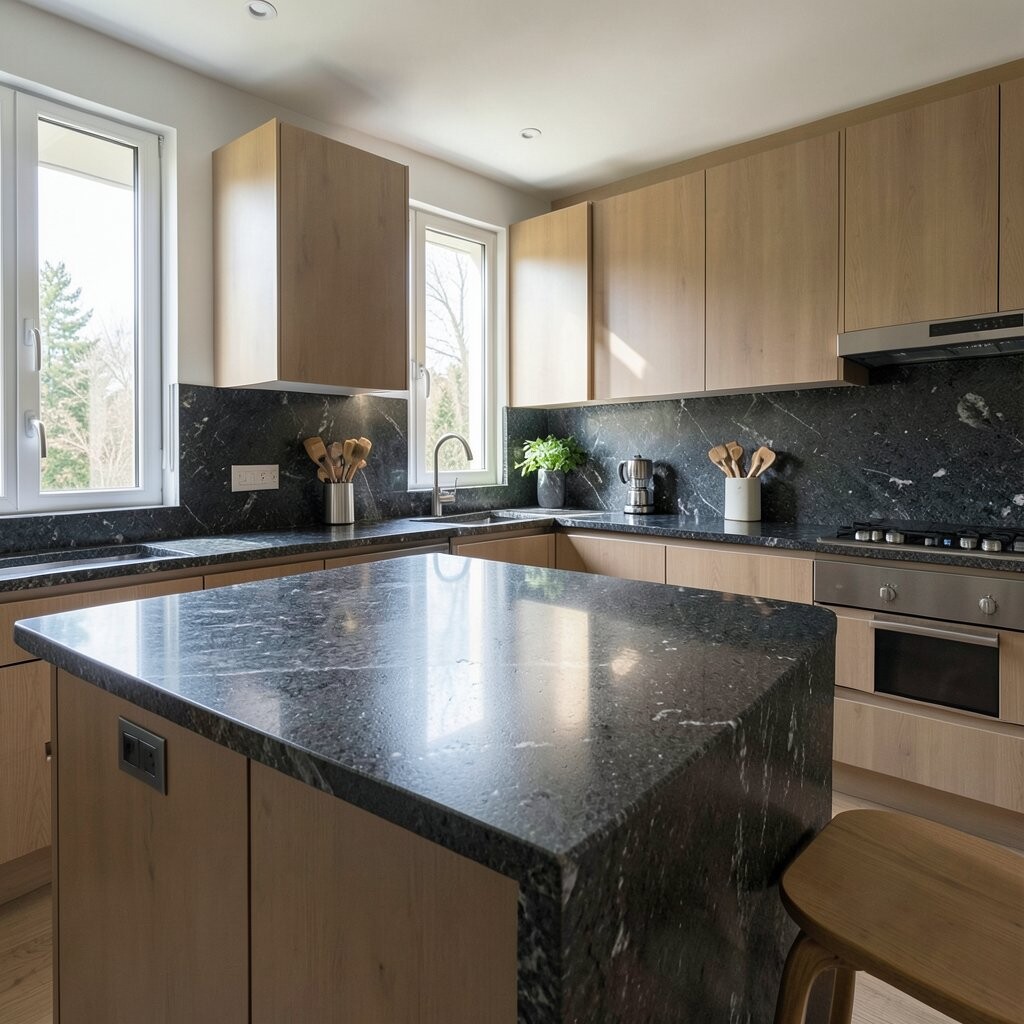
Basalt feels dark, grounded, and modern, with a naturally dense look. Even when the color is subtle, basalt often brings depth that makes light-colored rooms feel richer.
It’s unique because basalt can have a naturally mottled texture and movement that differs from typical marble-style veining. Many homeowners like it when they want a dramatic statement without bright colors. For practical tips, choose a finish—honed or brushed—that fits your preference for glare, and seal according to manufacturer guidance for long-term performance.
Basalt can vary in price based on availability, but it’s sometimes comparable to other natural stones. Current trends include darker counters, especially when combined with warm woods and brass fixtures. If you want personalization, plan your countertop edge and consider pairing basalt with a lighter backsplash to keep the look balanced.