Open shelving turns everyday kitchen items into part of the decor. Done right, it keeps your space feeling warm, useful, and inviting.
1. Floating Shelves With a Traditional Trim
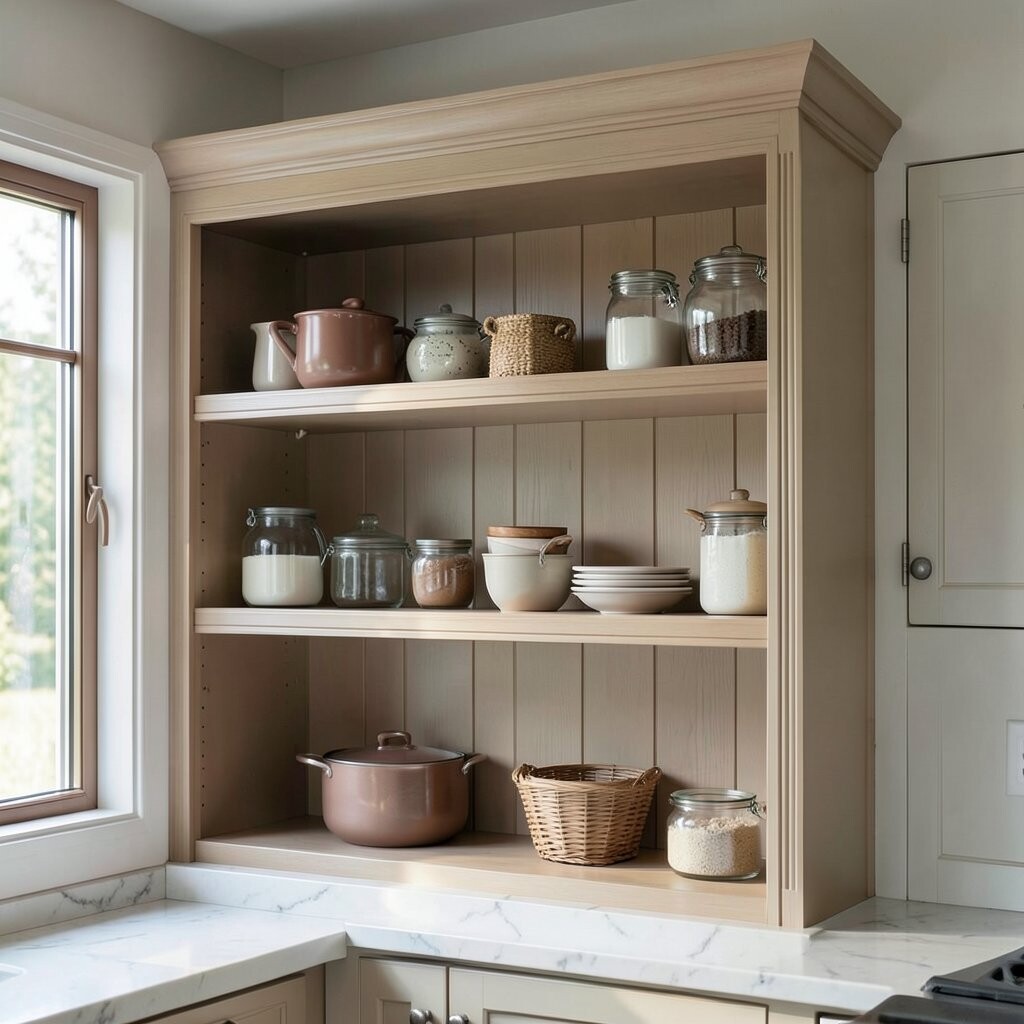
Floating shelves with a classic trim look clean but still cozy. They make a kitchen feel taller because the wall stays light.
Use a trim profile that matches your door or window casing for a connected look. Keep the shelf depth modest so plates and glass don’t feel crowded. Arrange items by size, with taller pieces toward the back and smaller ones in front.
2. Whitewashed Wood for a Soft Vintage Mood
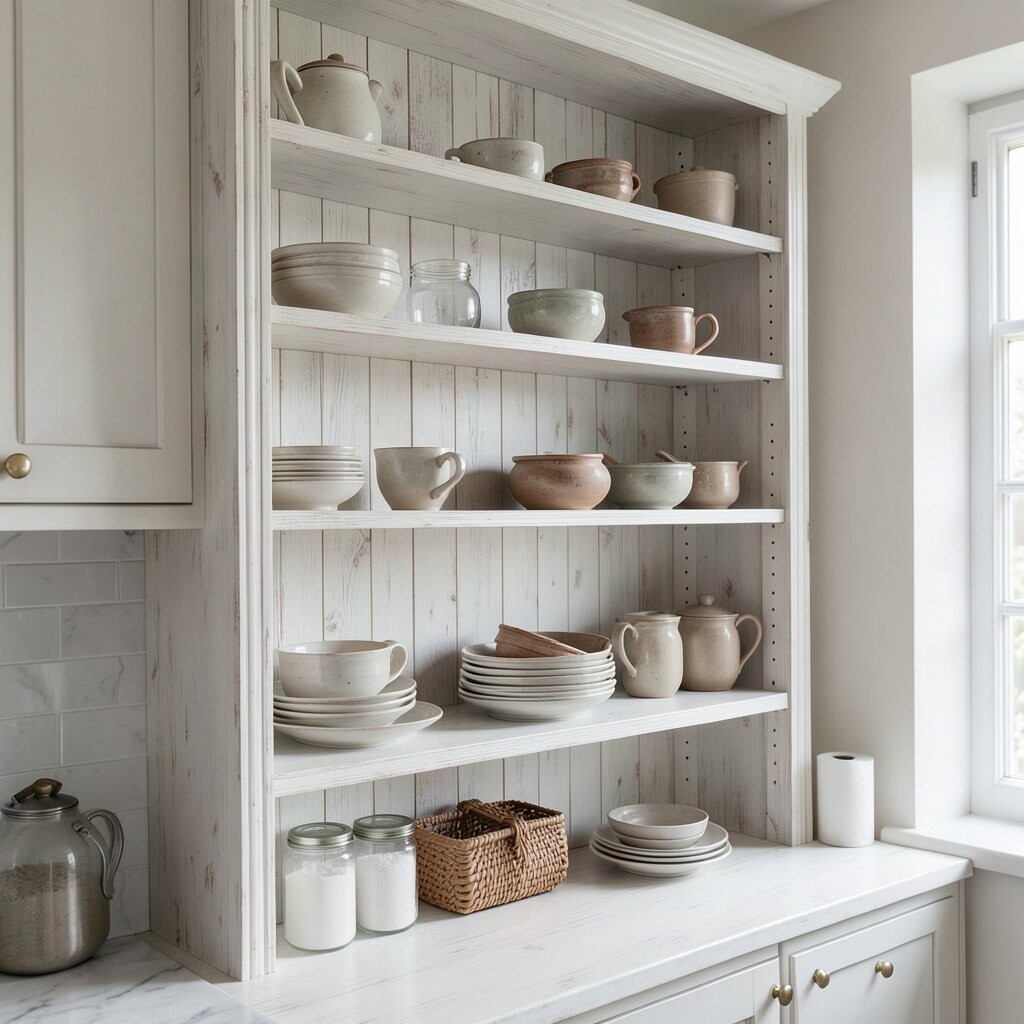
Whitewashed shelving brings an airy, lived-in charm to classic kitchens. It pairs beautifully with warm whites, light gray, and creamy neutrals.
Choose wood boards with visible grain so the texture shows through the finish. Style with mismatched ceramic mugs and vintage-style canisters for instant character. Leave a little breathing space between items so the shelves don’t turn into clutter.
For practical care, wipe shelves often because white finishes show dust faster. Consider adding a clear protective topcoat to prevent staining from oils or coffee. This idea can fit many budgets depending on whether you buy new boards or refinish reclaimed wood.
3. Farmhouse Shelf Styling With Lived-In Balance
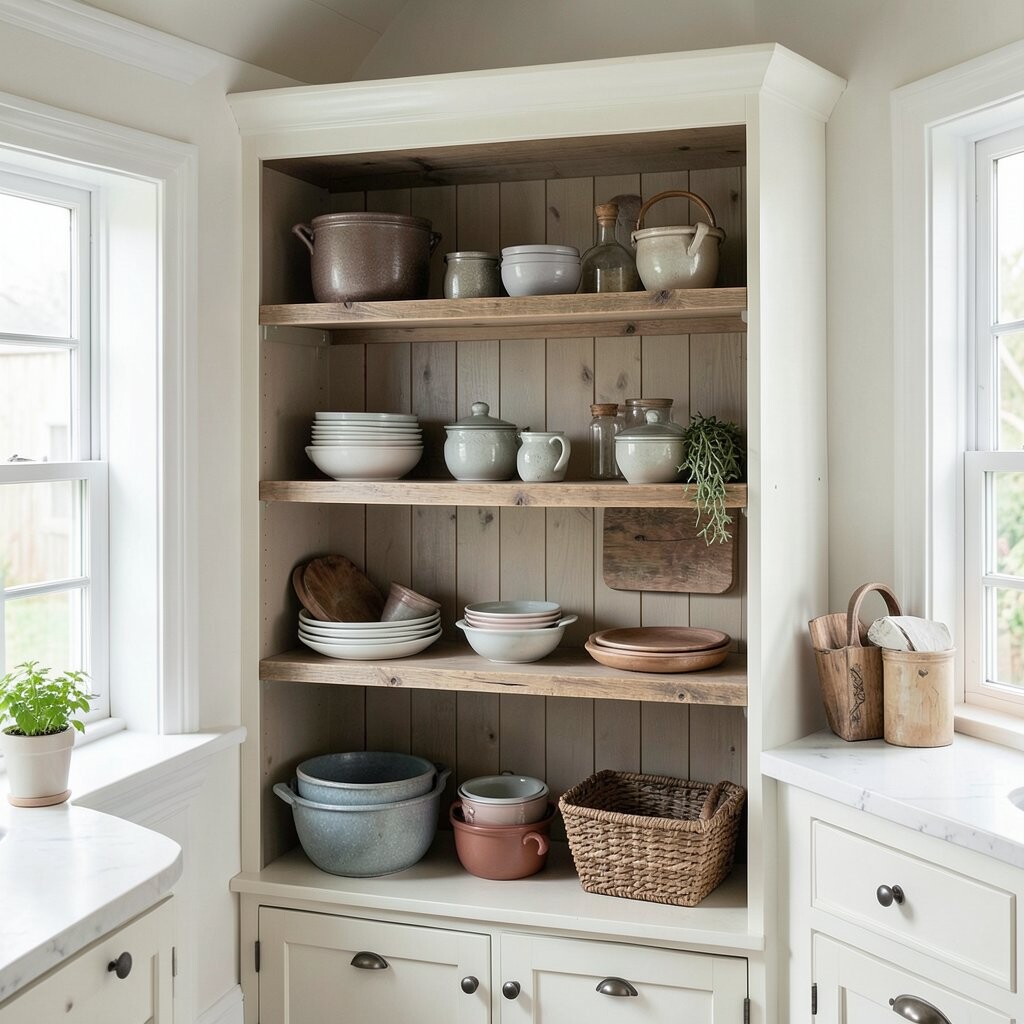
Farmhouse open shelving feels friendly and practical at the same time. It’s a classic look that makes the kitchen feel like home right away.
Hang shelves at a height where daily items are easy to grab, like bowls, mugs, and everyday plates. Mix durable stoneware with simple wire baskets to balance pretty and functional. Keep the heaviest items on the lower shelf to reduce stress on brackets.
To make it unique, add one personal touch like a framed recipe card or an heirloom serving spoon. Use a neutral color theme, then add small accents in sage, navy, or rust. When you personalize, you also make the shelves feel curated instead of random.
If you’re watching costs, use thrifted jars and paint labels yourself. If you want faster results, purchase matching canisters and baskets in a similar style. Either way, aim for consistency in materials so the display stays classic.
4. Glass-Front Display Shelves for Classic Elegance
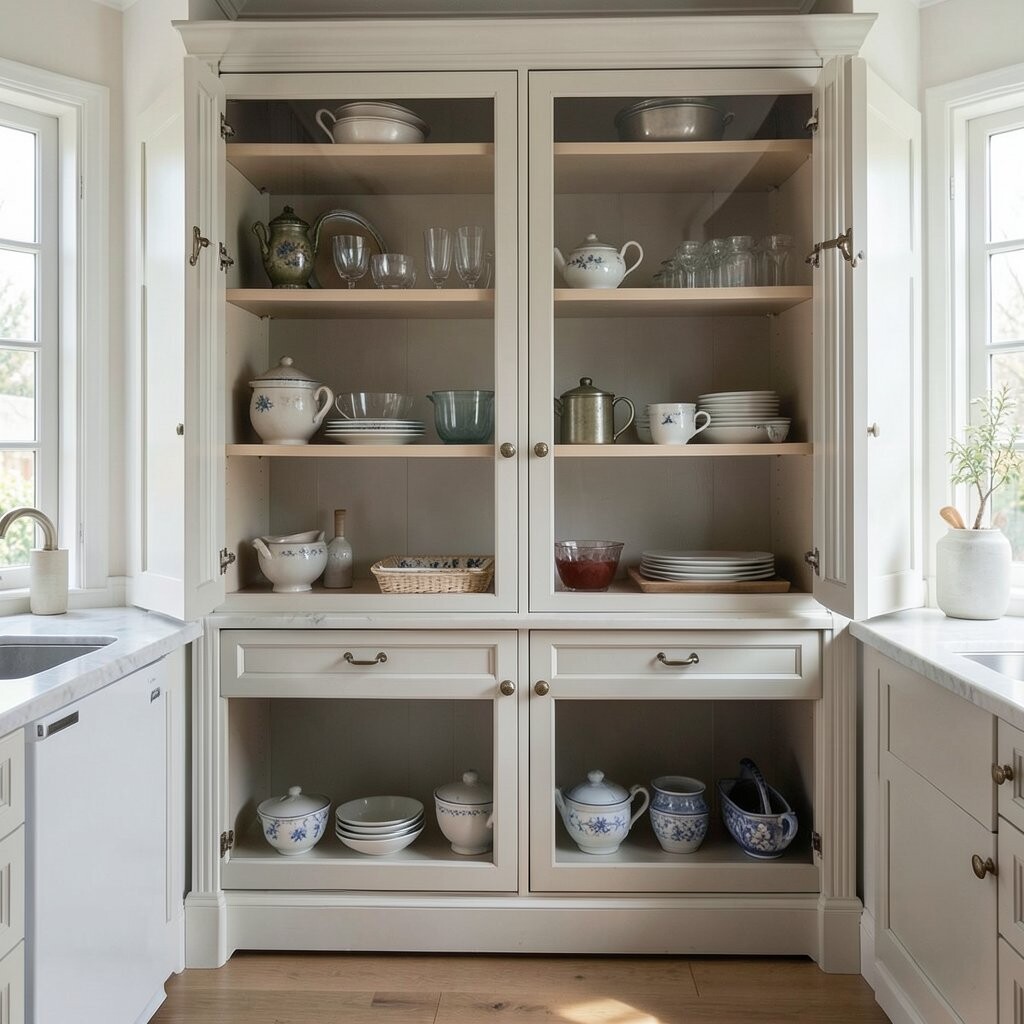
Glass-front shelving adds a polished, traditional feel. It’s great for showing off special dishes while keeping dust away.
Look for a classic frame in wood or black metal to match your hardware. Place frequently used items behind glass if you want easy cleanup, and reserve the top shelf for decorative pieces. Add soft lighting near the display, if possible, to make it feel like a curated showroom.
5. Ladder-Look Shelving for a Cozy Country Accent
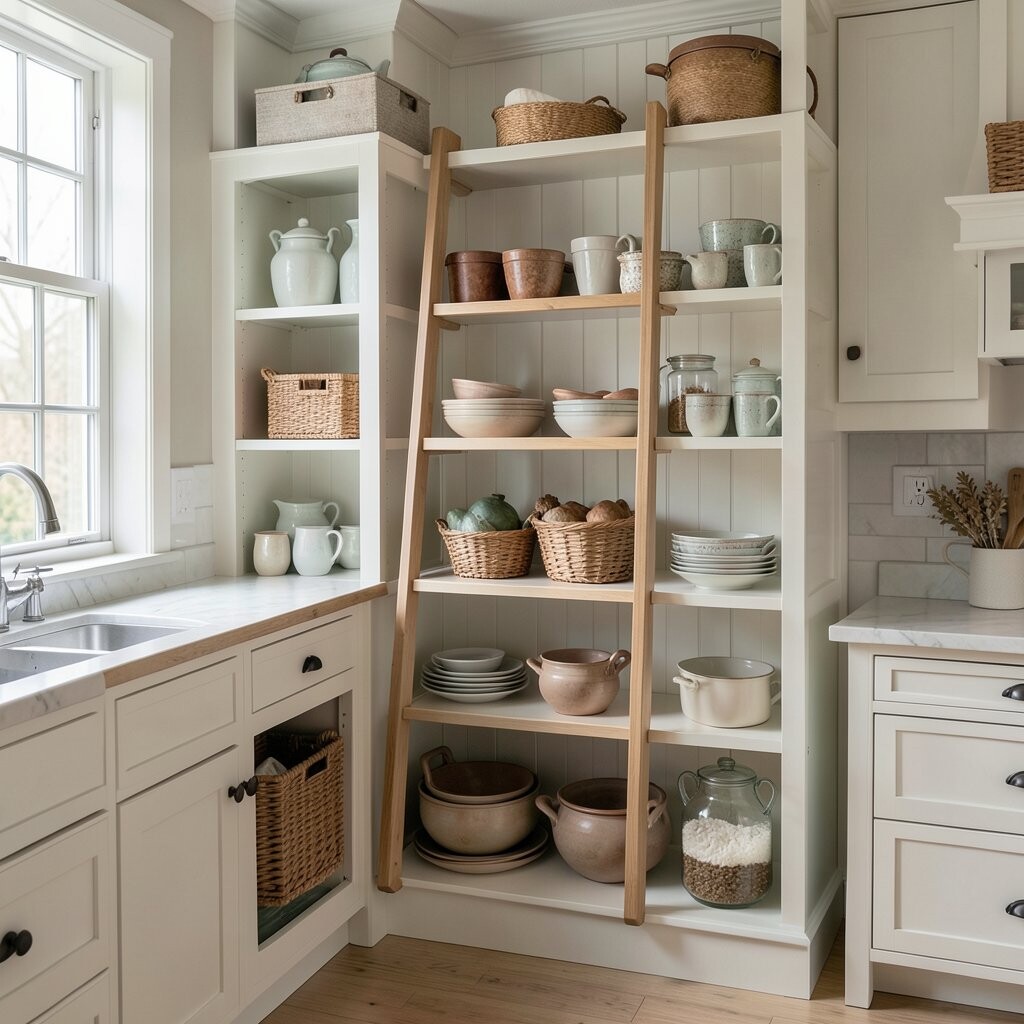
Ladder-style open shelves bring height and charm without needing upper cabinets. They can make a small kitchen feel more open and playful.
Choose a design with strong side rails so it feels sturdy when you load it. Style the middle sections with everyday cookware, like mixing bowls and baking trays. Keep the top section lighter by using books, small plants, or decorative tins.
For a classic twist, use a warm finish such as oak, maple, or matte black. Pair the shelving with striped dish towels and simple ceramic holders for a tidy, cohesive look. Budget-friendly versions can be found online, but confirm weight limits before installation.
6. Walnut or Dark Stained Shelves for Depth
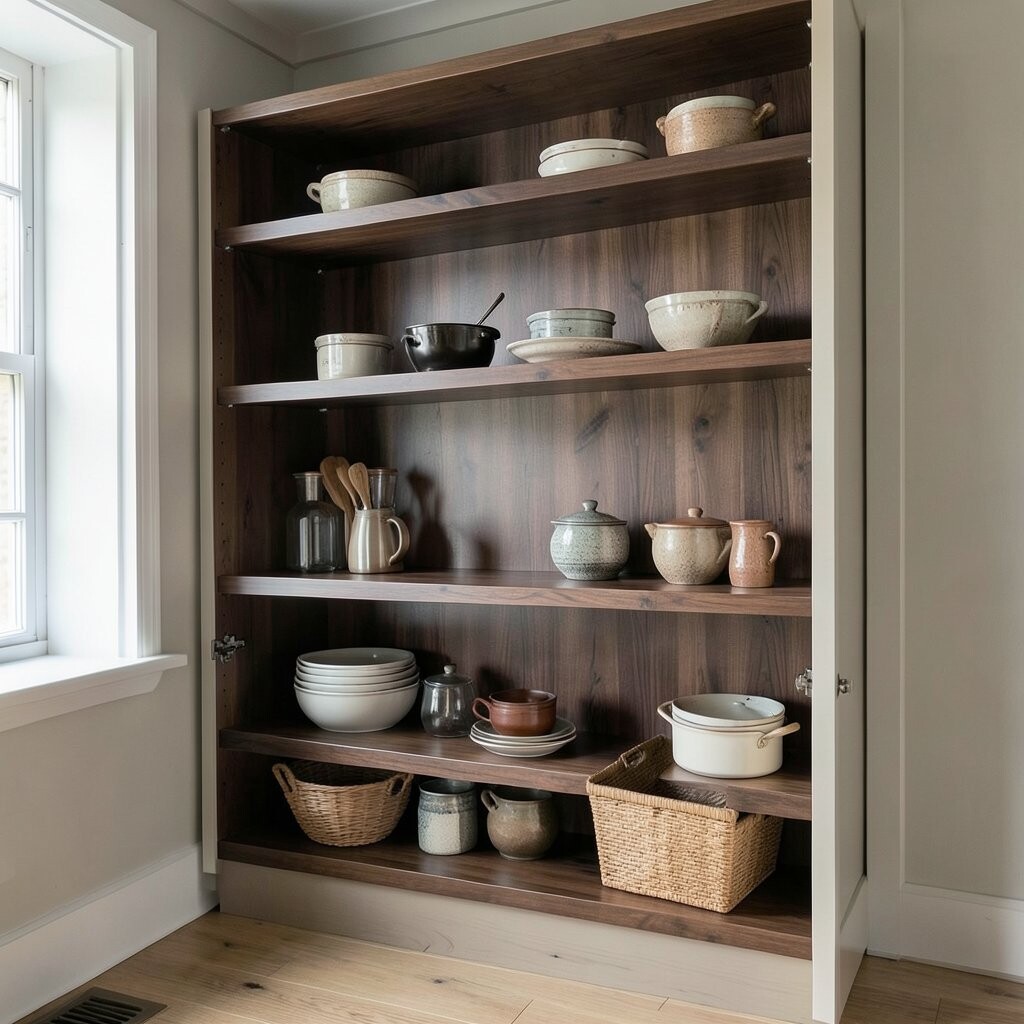
Dark stained wood shelves add rich contrast to bright kitchens. They make even plain dishes look intentional and elegant.
Go for walnut-like tones if you want a classic upscale vibe. Keep metals consistent by matching shelf hardware to your faucets and cabinet pulls. Arrange serving platters and bowls so the darker pieces anchor the display visually.
For practical tips, use shelf liners or felt pads to prevent scratches on wood. If your kitchen gets a lot of sunlight, choose a finish that resists fading. This option can cost more than painted shelves, but the long-lasting look is often worth it.
7. Brass Bracket Shelves With a Polished Look
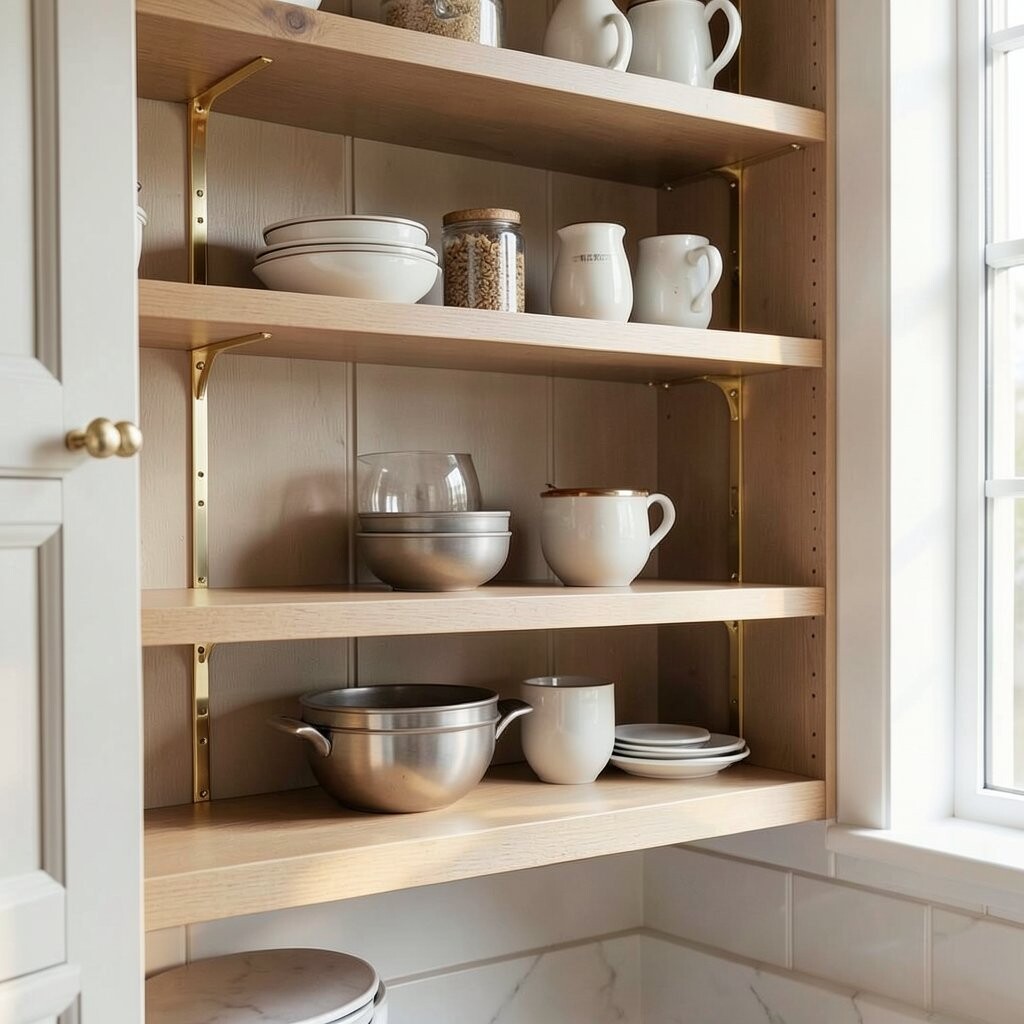
Brass brackets make open shelving look instantly classic. The warm shine feels upscale and pairs well with traditional hardware.
Install brackets securely into studs and use the right anchors if you must place them carefully. Style with clear glass jars, white plates, and neatly folded dish towels in a basket. Keep one or two standout items, like a vintage pitcher, to avoid visual noise.
To personalize, add brass trays or small wooden cutting boards on the shelf surface. If brass isn’t your thing, matte gold or brushed nickel can give the same classic vibe. Consider wipe-down time, because metal accents show fingerprints more than darker finishes.
8. Open Shelves Above the Coffee or Tea Station
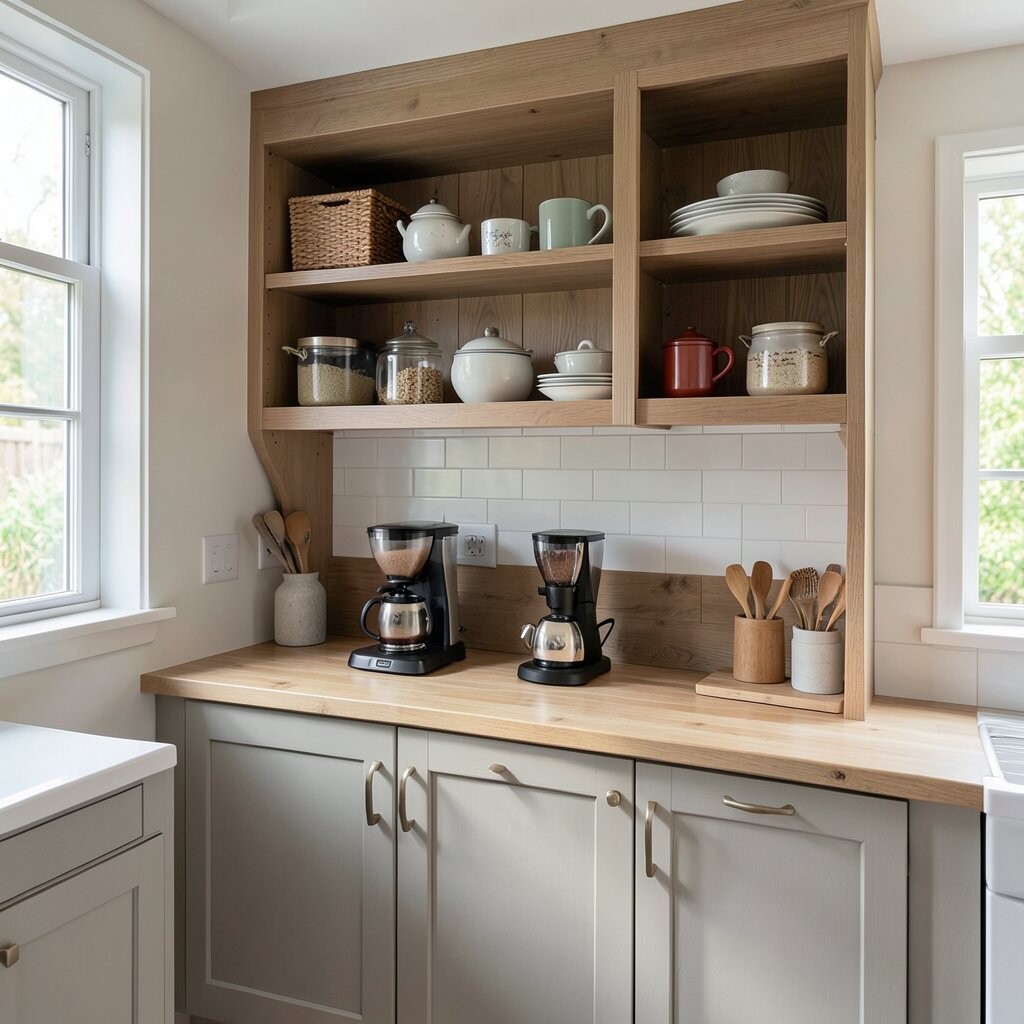
Using open shelving for your coffee and tea area keeps the morning routine simple. It also turns a small corner into a focal point.
Set a consistent system: mugs on one shelf, canisters in the center, and stir spoons or filters on the bottom. Use uniform jar sizes to make the display look organized even when you’re busy. Label containers with chalk or printed tags for a neat, classic touch.
For uniqueness, include a small tray for daily items like sugar, honey, and a spoon. Choose a color theme that matches the rest of your kitchen, such as cream and brown or navy and white. When you’re choosing containers, think about refills and how often you’ll clean them.
In terms of cost, concentrate spending on durable canisters and a sturdy shelf. Cheaper mugs can work, but make sure they’re comfortable to use. This setup stays current because it looks styled yet practical, which many kitchens aim for now.
9. Color-Blocked Shelves With a Traditional Palette
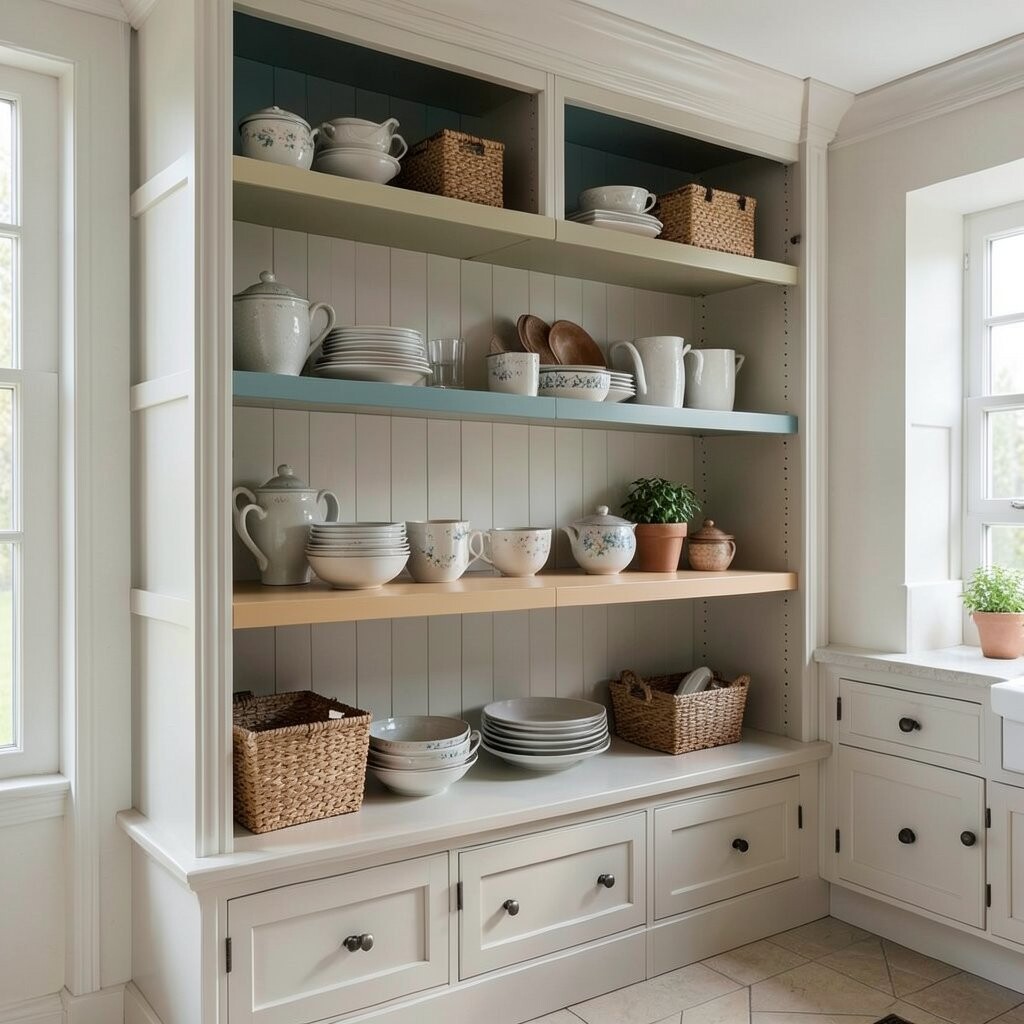
Color-blocked shelving can still feel classic when you keep the palette timeless. Think warm white shelves with a gentle pop like sage, terracotta, or soft blue.
Paint the shelf backing board or the wall behind the shelves rather than coating every board. That gives the look structure and makes dishes stand out. Use plain dishware for one section and pattern or textural pieces for the other to create balance.
Try personal touches like a small framed botanical print or a vintage cookbook leaning upright. Rotate seasonal items, such as spring sprigs in light green jars. If you love change, pick colors you can update with small accents rather than repainting everything.
For budget planning, painting is usually cheaper than replacing shelves. If you’re using store-bought shelves, choose a finish that works with your color scheme. This style feels current because it adds personality without losing that classic foundation.
10. Shelf-Top Rail or Decorative Back Panel
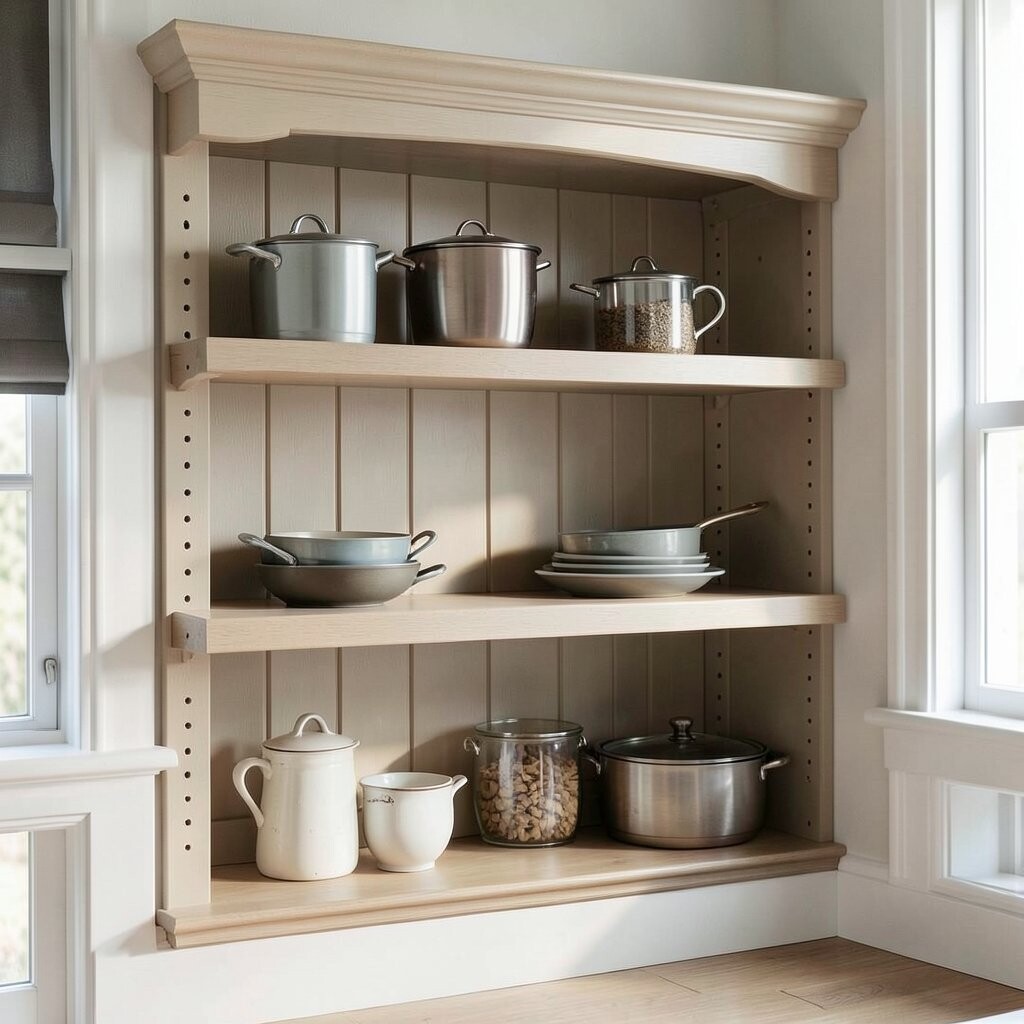
A decorative back panel or a simple rail keeps items from sliding and adds visual structure. It’s a subtle upgrade that still feels classic and practical.
Choose a panel design with traditional details like simple molding, scroll edges, or a raised pattern. Style the top shelf with larger items such as platters and bowls so the panel frames them nicely. Keep smaller items toward the bottom to maintain a tidy visual rhythm.
11. Ceramic Tile-Backed Open Shelving
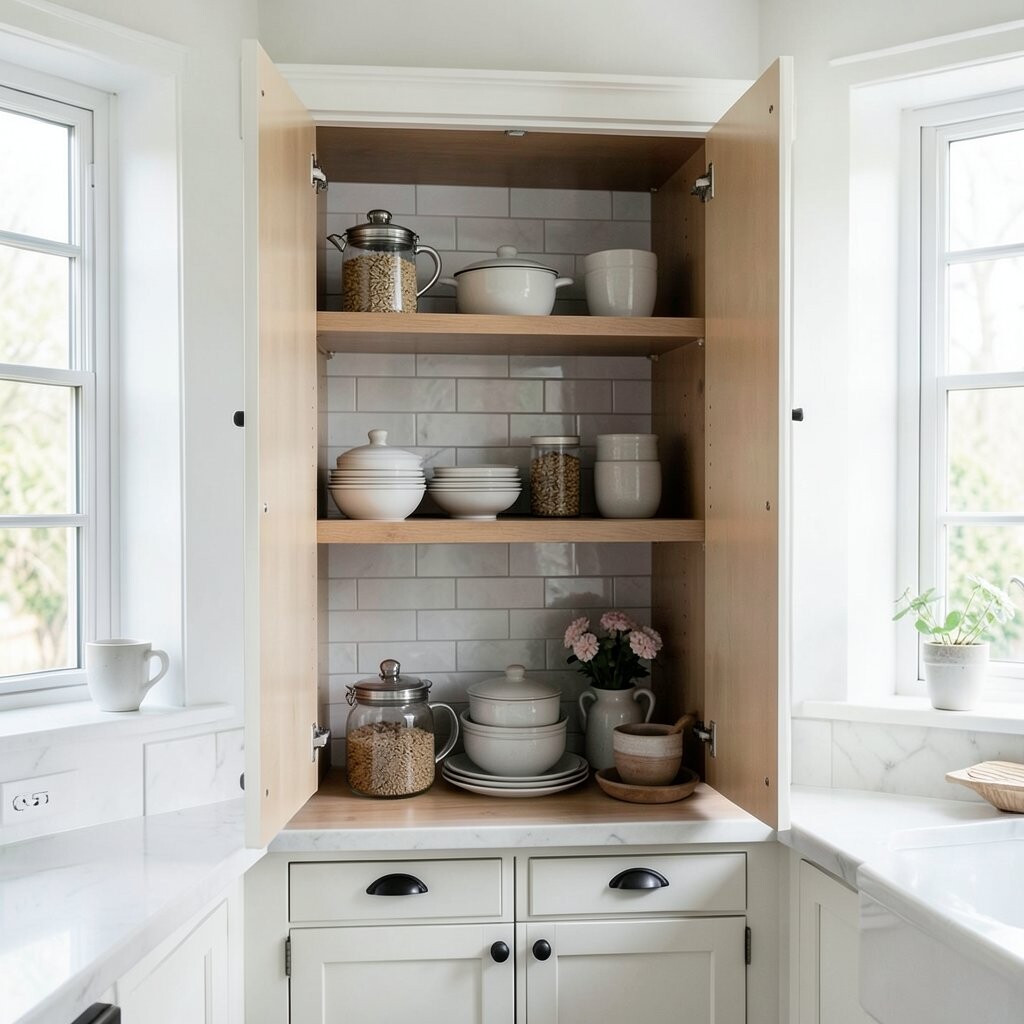
Tile-backed open shelving looks timeless and adds texture to the wall. It’s especially stunning above a sink, stove, or prep area.
Pick classic tile shapes like small subway tiles or gentle herringbone patterns. Match the tile colors to existing backsplash tones so everything feels connected. Use neutral ceramics and let the tile provide most of the visual interest.
For practical tips, sealed grout and water-resistant shelves help in splash zones. Add hooks under the shelf rail for utensils so drawers stay uncluttered. This idea can cost more upfront because tile work takes time, but it creates a long-lasting “designer” look.
If you want a lighter budget, consider a removable tile panel system or a pre-made backsplash insert. Either way, keep shelves a consistent distance from the wall so the tiled area looks intentional. Tile is a trend that keeps coming back because it feels classic and functional.
12. Simple White Shelves With Minimal Clutter
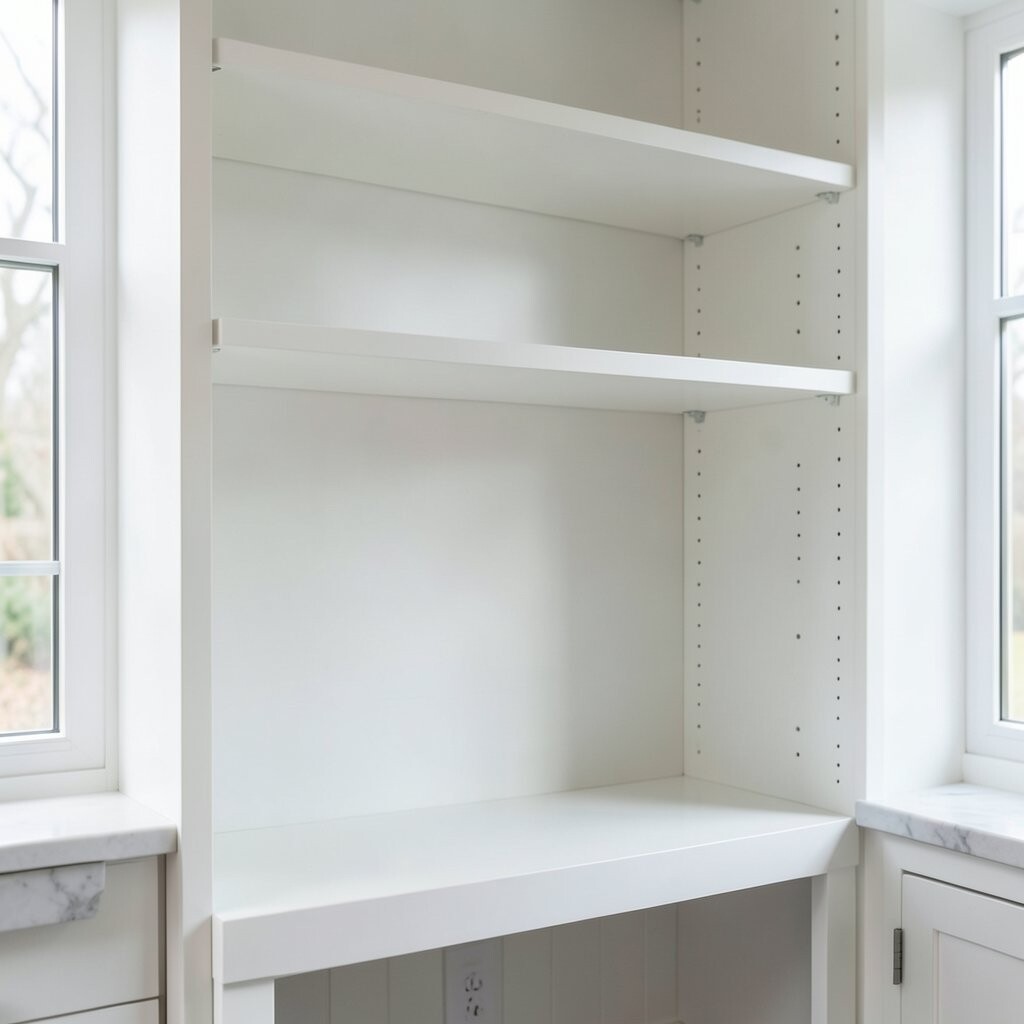
Minimal white open shelving is classic because it relies on clean lines and good placement. It makes your kitchen look crisp, even if you use it all day.
Use a limited set of dishware so the display doesn’t feel busy. Keep everyday items grouped by type, like plates on one shelf and bowls on the next. Place one or two decor pieces—like a small plant or a framed print—to prevent the shelves from looking empty.
To make it unique, vary the textures slightly with matte ceramics, glossy mugs, or wood cutting boards. Consider using matching canisters for staples like flour and sugar. For cost, minimal styling can stretch a budget because fewer items create more impact.
13. Dark Metal Pipe Shelving for Industrial-Classic Mix
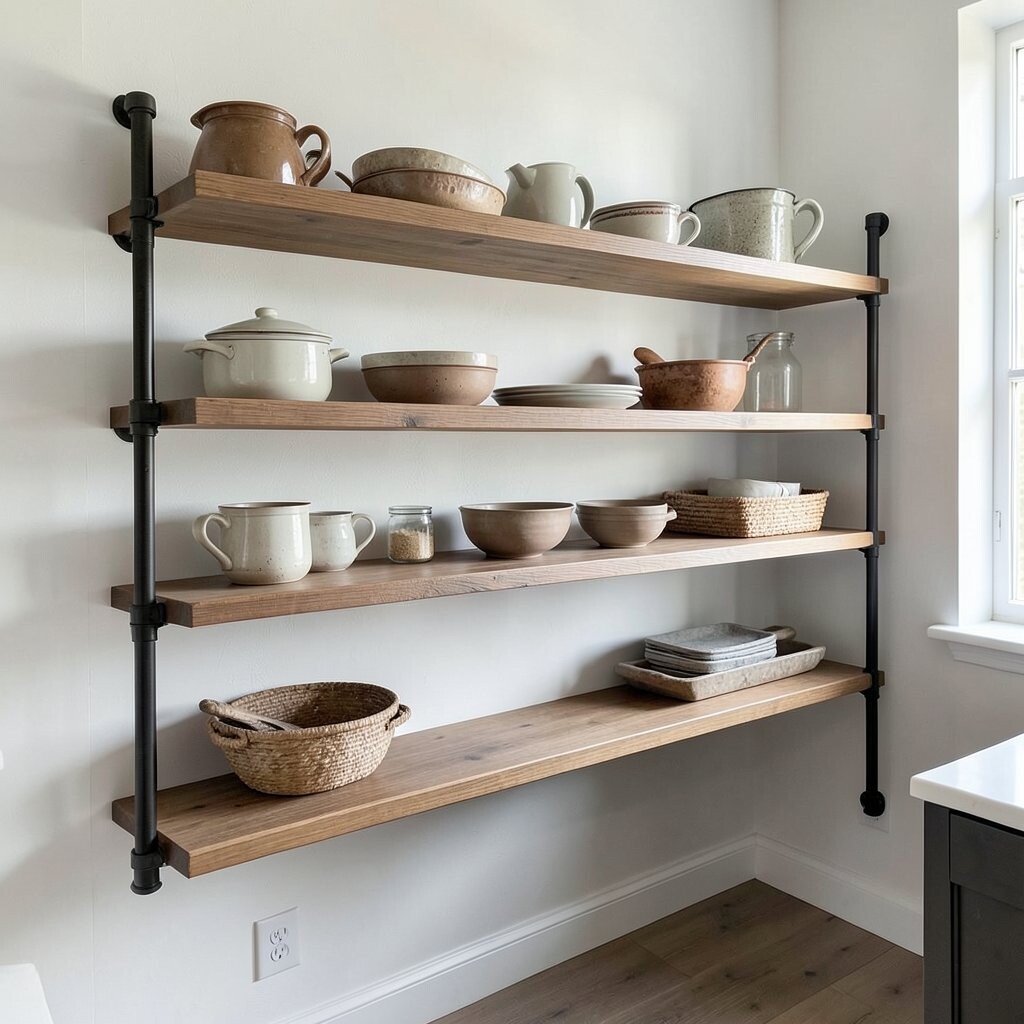
Pipe shelving blends classic open storage with an industrial edge. The look feels bold, but it can still match traditional kitchens when styled carefully.
Choose black pipes and connect them with wood shelves to keep the warmth. Style with mostly classic white dishware, then add a few darker pieces for contrast. Use sturdy baskets for linens and keep small items contained to avoid a messy look.
For practical tips, confirm pipe ratings and fasten everything tightly so it feels secure under real kitchen use. Use coasters and tray bases if you store decorative oils or bottles on the shelf. This mix is popular right now because it pairs well with both vintage and modern kitchen elements.
14. Open Shelves With a Built-In Bar Tray System
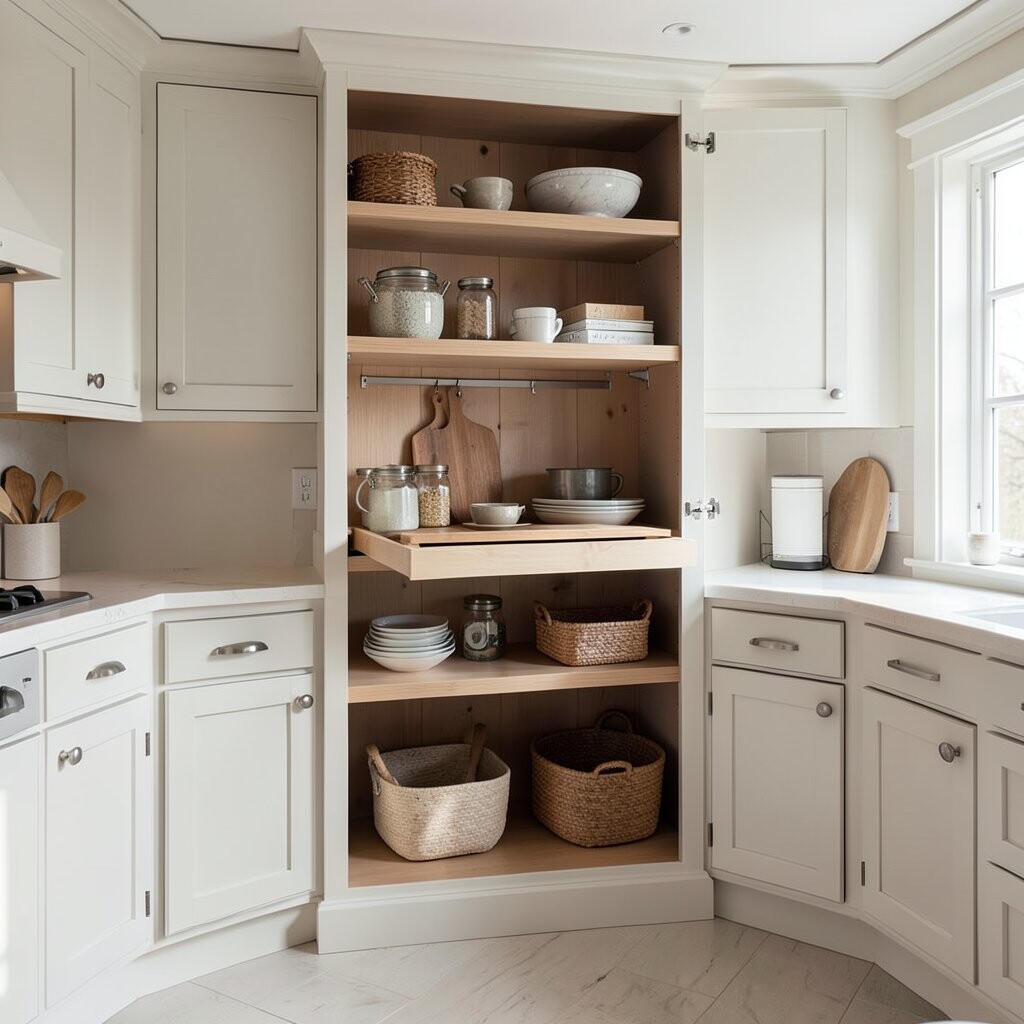
A built-in bar tray approach makes open shelving feel organized and special. It’s perfect if you love hosting or just want a neat drink station.
Use one shelf specifically for glassware, then add a small tray system for mixers and garnishes. Keep bottles grouped by size so the lineup looks clean. Personalize with a favorite liquor decanter, a vintage bottle label, or a small chalkboard tag.
For cost considerations, trays and organizers are often cheaper than custom shelving. You can also repurpose a bar cart tray or a wall-mounted utensil caddy. If you want a more classic vibe, choose brass or wood accents rather than bright plastics.
15. Open Shelves Styling With Books and Cookbooks
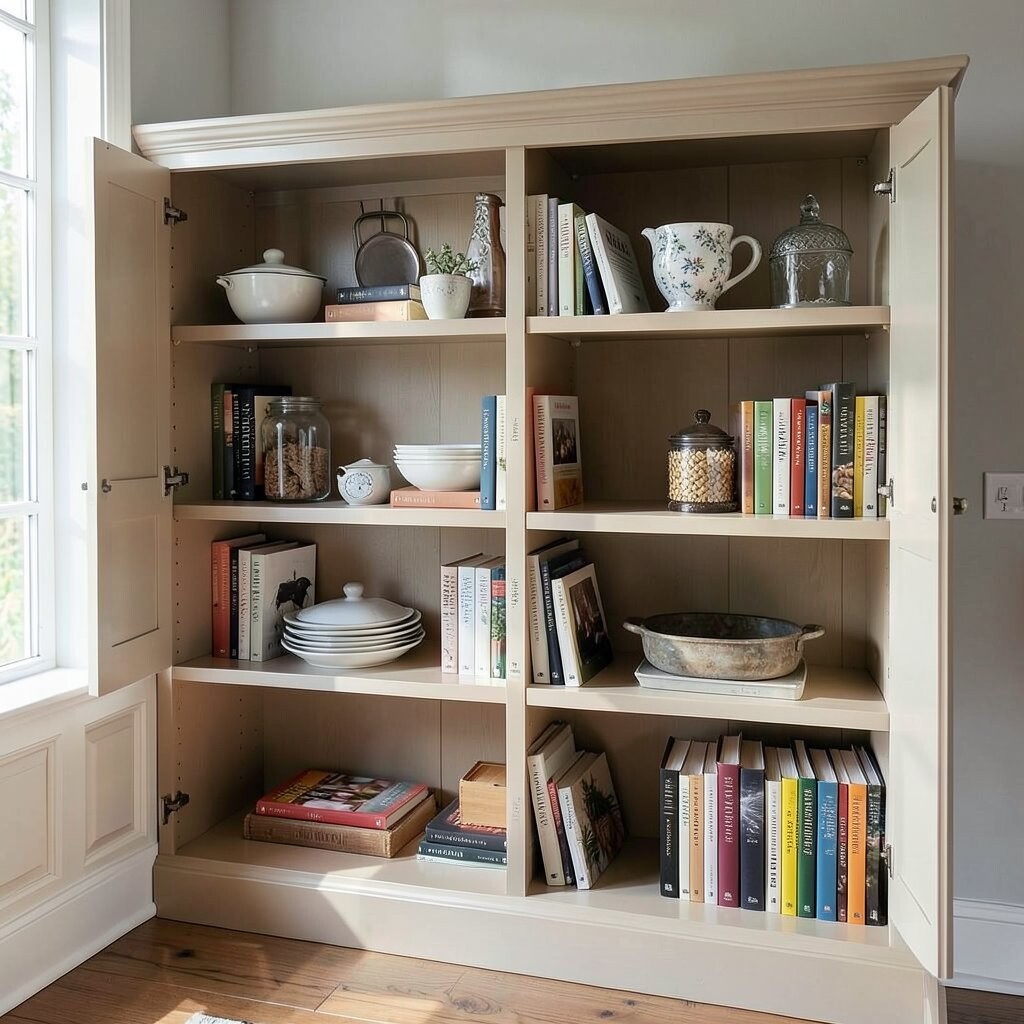
Cookbook display on open shelves adds personality and everyday inspiration. It makes the shelves feel like a lived-in library, not just storage.
Stack books upright and alternate the colors of covers so the shelf looks balanced. Pair the books with simple decor like ceramic bowls, small plants, or framed family recipes. Keep a consistent shelf height so the reading display looks calm instead of cramped.
For practical tips, use shelf bookends and keep paper books protected from kitchen steam. Rotate cookbooks occasionally so the display feels fresh. This idea is unique because it combines function and storytelling in a classic kitchen style.
Budget-wise, old cookbooks and thrift finds are great, and you can refresh covers with minimal effort. If you prefer a neater look, choose uniform cookbooks or use one featured cookbook each season. The trend toward “intentional display” keeps this approach feeling current.
16. Shallow Shelves for Mixing Bowls and Canisters Only
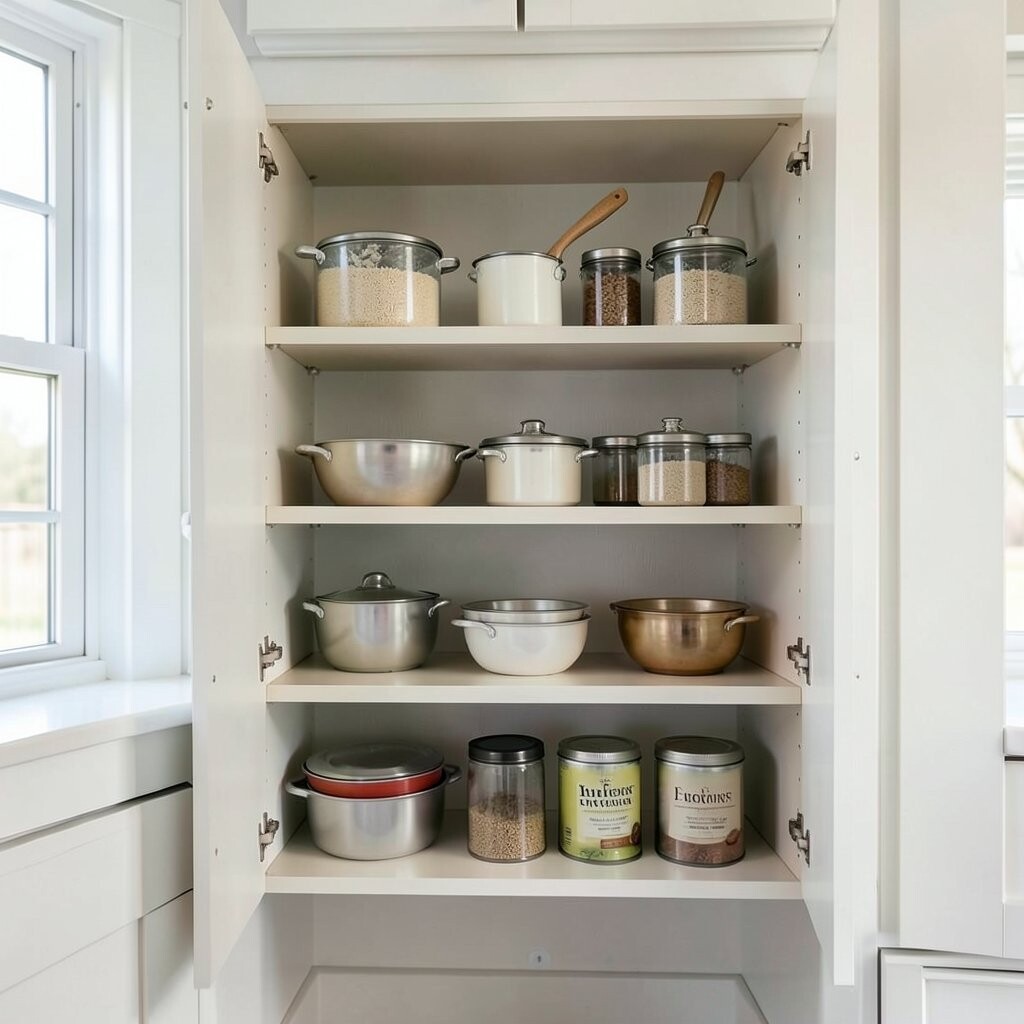
Shallow shelves reduce clutter because they limit what can fit. They’re also easier to style in a classic, tidy way.
Use shallow depths for lightweight items like canisters, bowls, mugs, and small serving dishes. Keep large platters on deeper shelves or counter space instead. This setup helps you maintain a clean look even when you’re cooking often.
17. Corner Open Shelves With Matching Routines
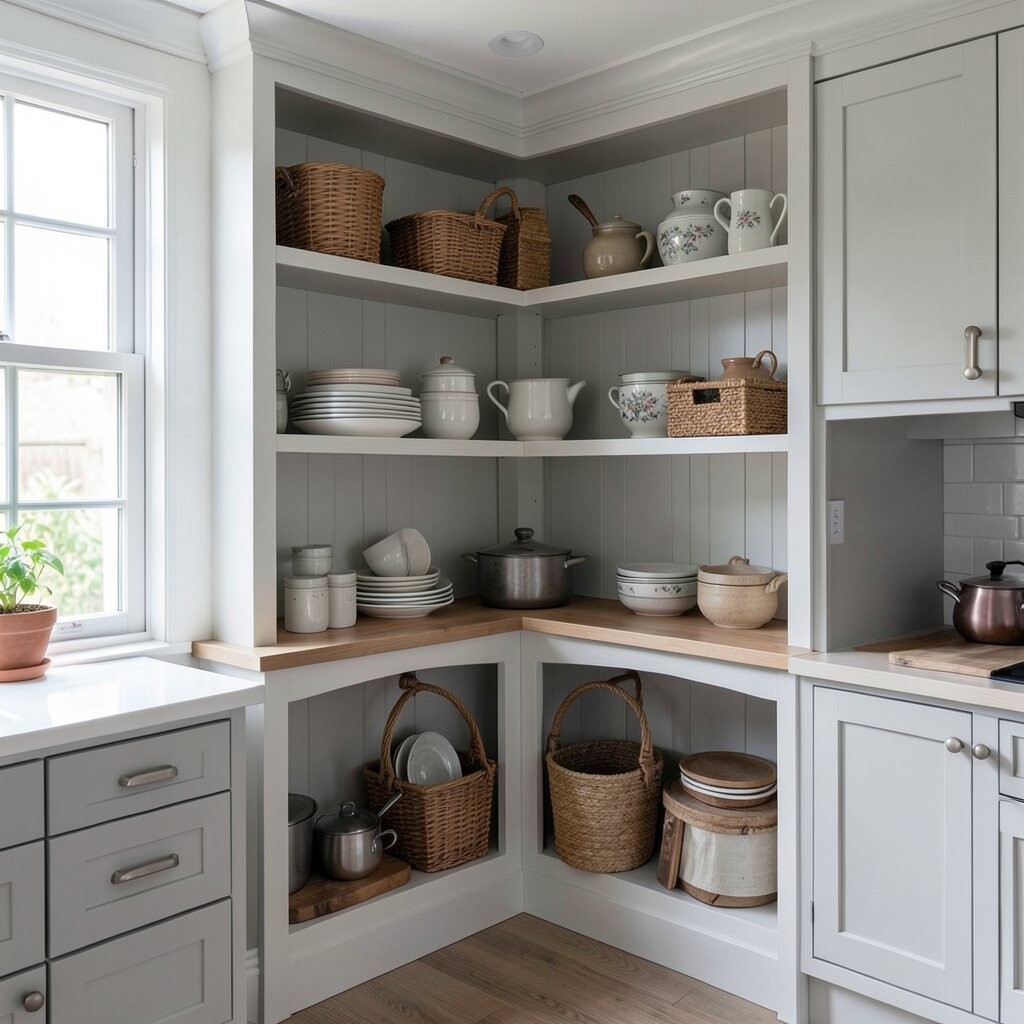
Corner open shelves make use of awkward space that often goes unused. When styled well, they turn into a classic detail that’s both functional and decorative.
Install corner shelves so the edges line up with your main shelving rhythm. Style with matching sets—like two coordinating jars, two bowls, or a pair of framed prints—to create a balanced look. Keep items easy to reach by placing frequently used pieces closest to the front.
Personalize with a small accent such as a ceramic vase, a woven basket, or a framed heritage label. For cost, corner shelf systems can be affordable if you choose ready-made brackets and boards. This idea stays on-trend because many kitchens now prioritize smart storage layouts without adding more cabinets.