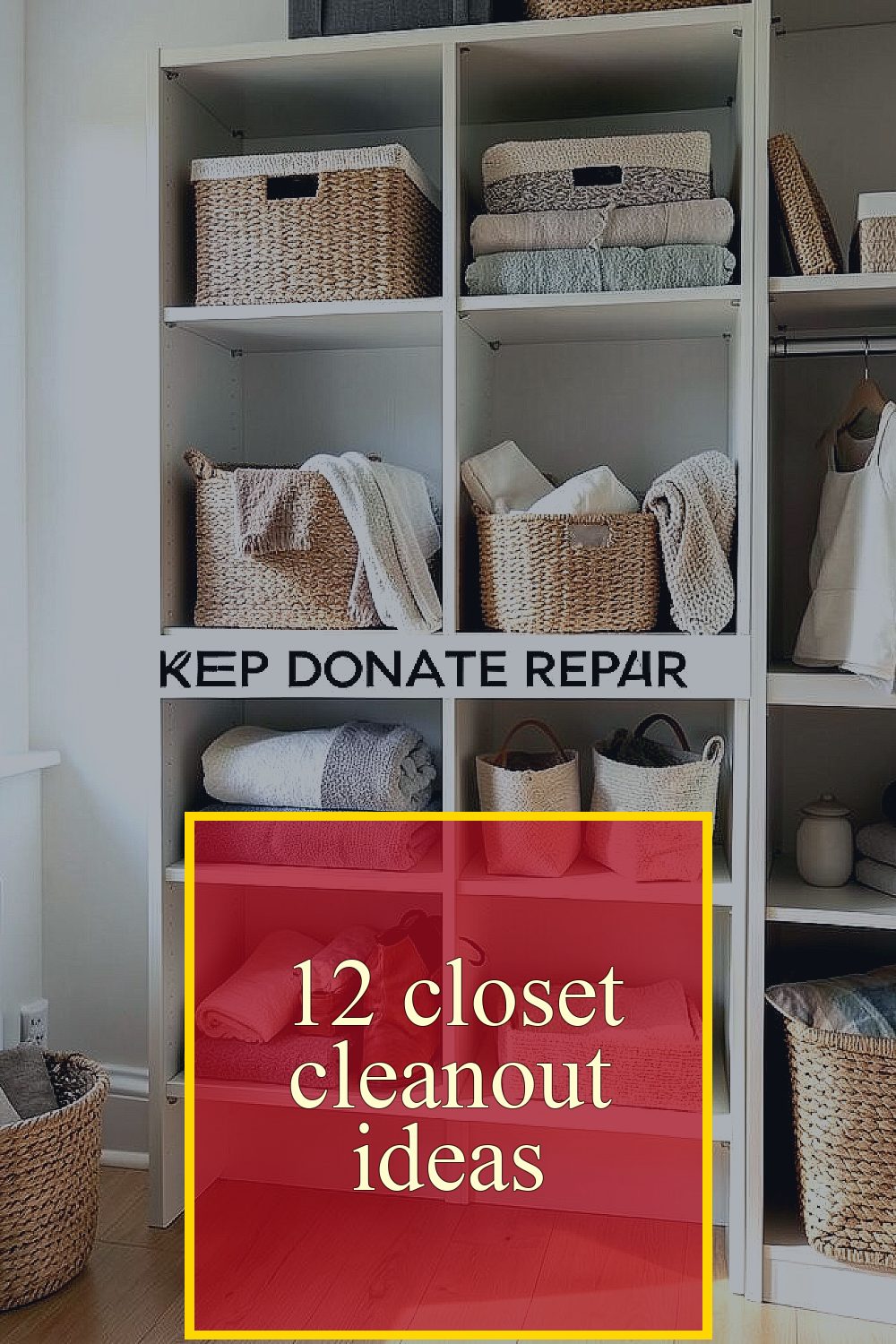
There’s a special kind of calm that shows up when your closet finally makes sense. A tidy hang space can feel like fresh air for your whole home.
When clothes, shoes, and accessories are in the right places, you save time and stress every day. Use these home closet cleanout ideas to make your space feel new again, without needing a huge makeover.
-
1. Start With a “Wear Test” Bag
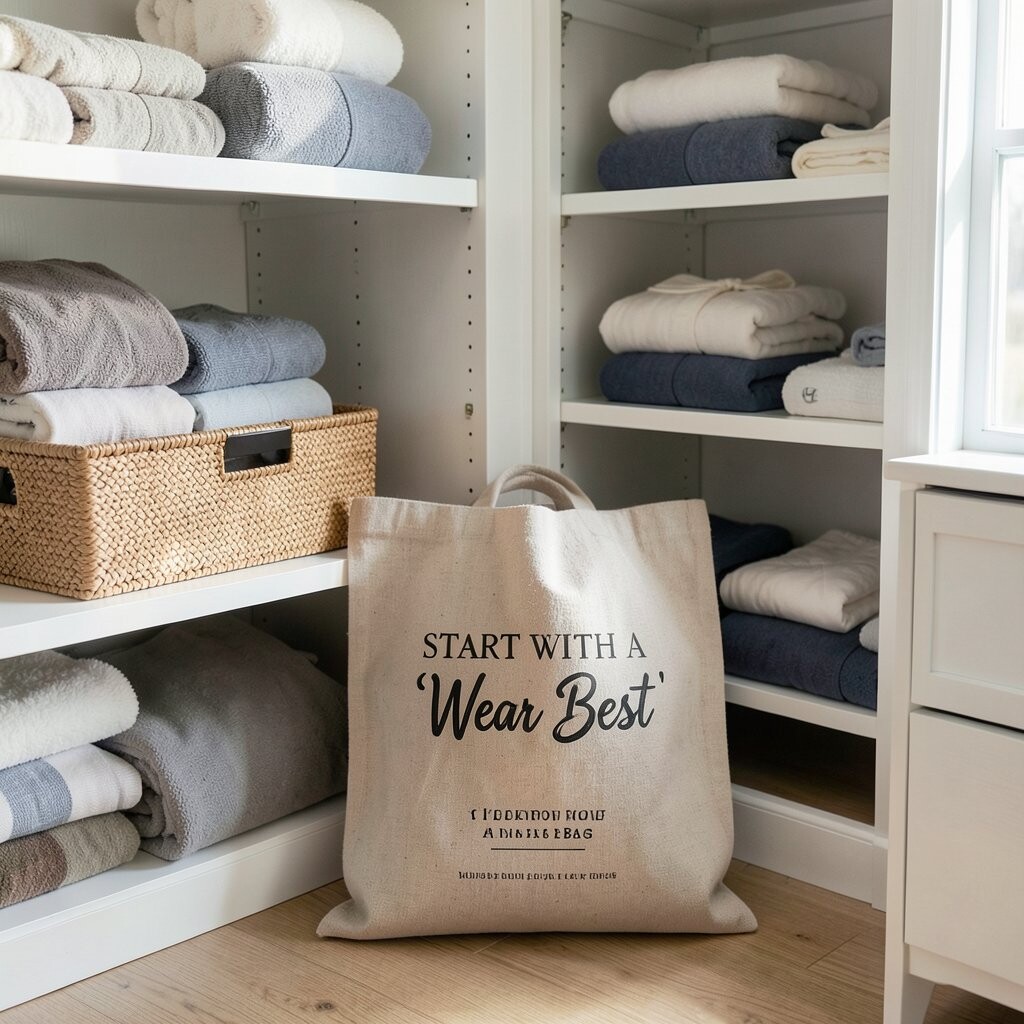
Start With a “Wear Test” Bag Pick a bag and label it “Wear Test.” As you clean, move anything you’re unsure about into that bag, and decide on a simple plan for using it this month.
Visually, you’ll see your closet sorting itself, like a neat little sorting station. This helps you stop guessing and start learning what you actually reach for. Keep the bag where you’ll notice it, and set a reminder to try a few items on during your busiest days.
For benefits, you’ll cut down on decision fatigue and make mornings faster. It also keeps your closet from turning into a storage pile of “maybe” items. If you want a personalization twist, color-code the bag with a sticky note that matches your style theme, like soft neutrals or bright pops.
Cost is usually very low since you’re reusing a bag you already have. A current trend is “system closets,” where small rules help people maintain order after the initial cleanout. If you’re on a budget, this one idea alone can create big momentum.
-
2. Clear One Shelf at a Time, Not the Whole Closet
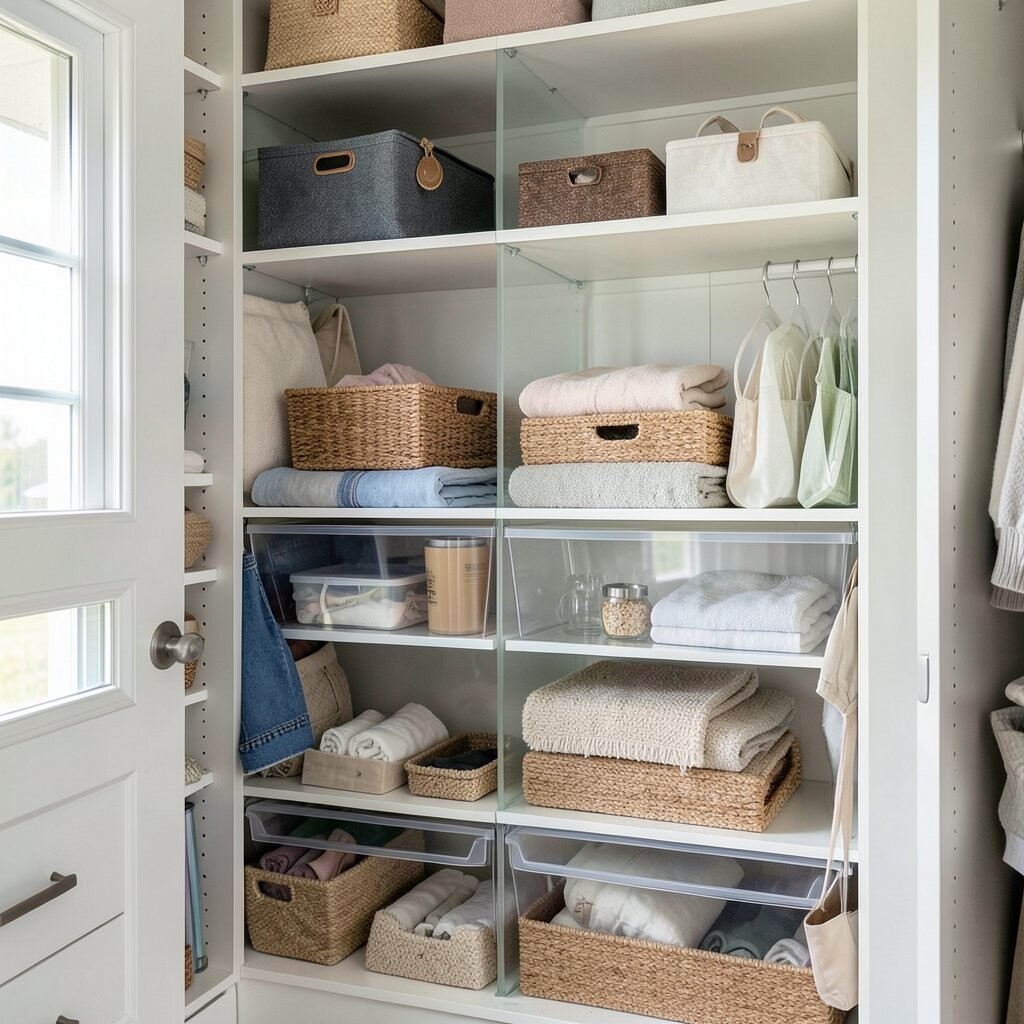
Clear One Shelf at a Time, Not the Whole Closet Choose a single shelf or drawer and focus only on that section. Move items out, sort them, and then put back the pieces that truly fit your life.
This method makes the room feel calmer because progress is visual and immediate. You’ll notice empty space where clutter used to be, and that visual relief is powerful. It also prevents “cleanout chaos,” where everything ends up in a messy pile on the floor.
To make it personal, assign each shelf a job, like “everyday knits,” “weekend items,” or “work essentials.” If you share space, you can label the sections by person so everything stays fair and organized. For trends, many people are using “micro-zones” in storage, which means smaller areas get attention more often.
-
3. Use the “Three Piles” Rule: Keep, Donate, Repair
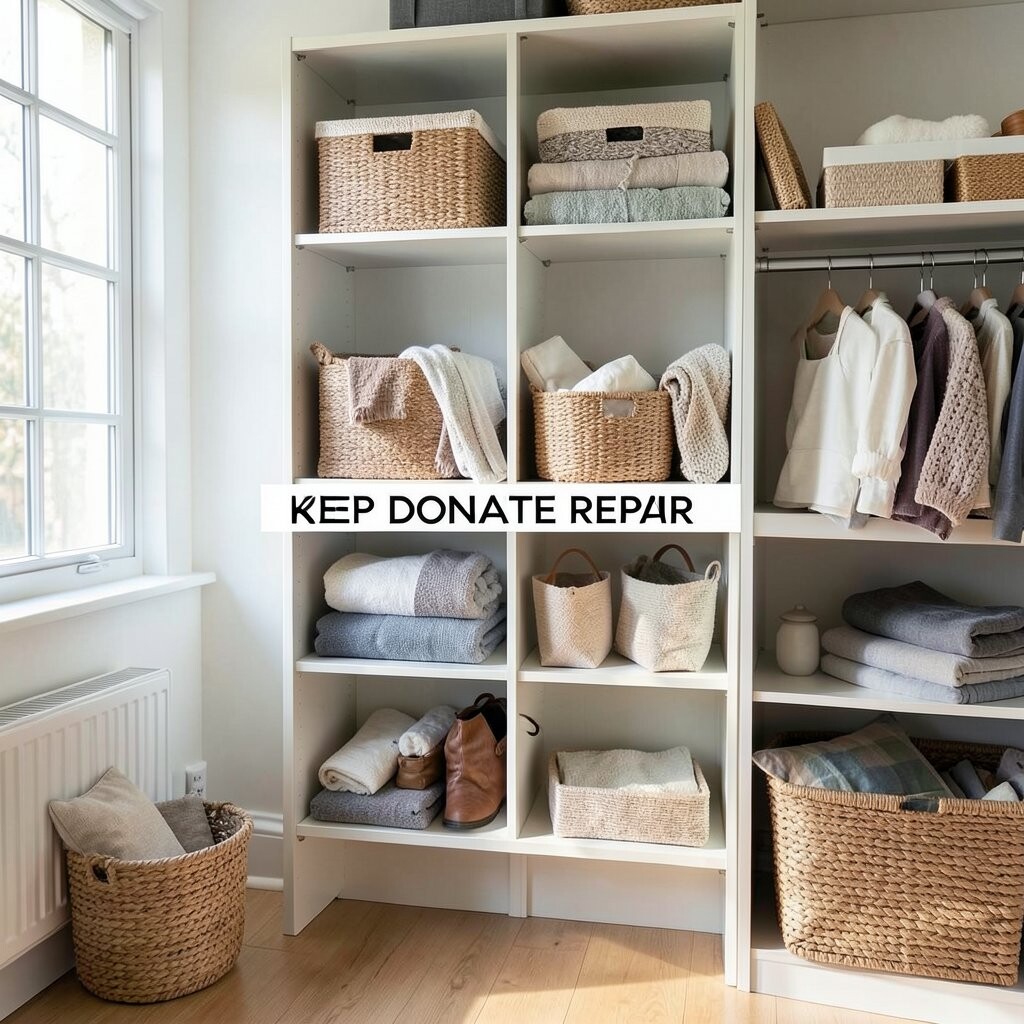
Use the “Three Piles” Rule: Keep, Donate, Repair Set up three containers and be honest while you sort. Keep means it fits, you like it, and you’ll use it soon.
Donate means it’s still good but not for your current needs. Repair means it has value but needs a button, hem, or gentle fix before it earns its spot.
This creates a clear visual path from messy to meaningful. You’re not just throwing things away; you’re making a plan for what happens next. The benefit is that your closet becomes a “yes space,” where you can find what you want quickly.
For uniqueness, try using a different color bin for each pile, like green for keep, blue for donate, and yellow for repair. Cost can stay low because containers can be as simple as boxes or laundry baskets. If you like personalization, add small notes like “need a new cuff” or “try with boots” to make future decisions easier.
-
4. Do a Season Swap With a Simple Label System
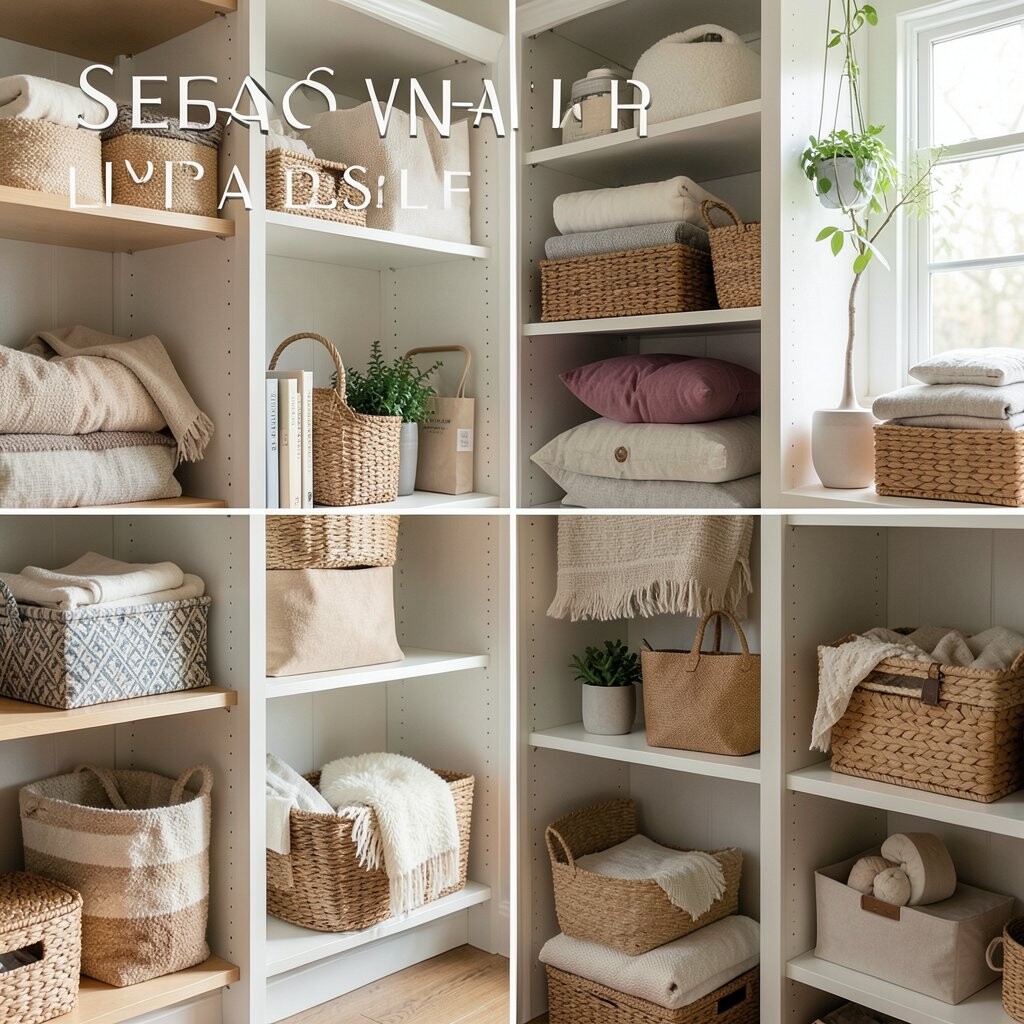
Do a Season Swap With a Simple Label System Choose a time to rotate off-season items into storage, and label everything clearly. Use bins or vacuum bags for bulky pieces, and keep everyday items easy to reach.
When your closet has only what you need right now, the space feels brighter and less crowded. You’ll likely spot how many hangers are wasted on items you can’t use this month. This helps you save time and reduces the stress of searching for the “right” thing.
Personalize the labels with your own style words, like “Summer Light Layers” or “Winter Cozy.” If you want a current-trend approach, many organizers use “seasonal zones” with neat labels that look like mini store displays. Cost is flexible: you can use recycled storage bins and sticker labels, or upgrade to nicer containers if your budget allows.
-
5. Add Matching Hangers for an Instant Makeover
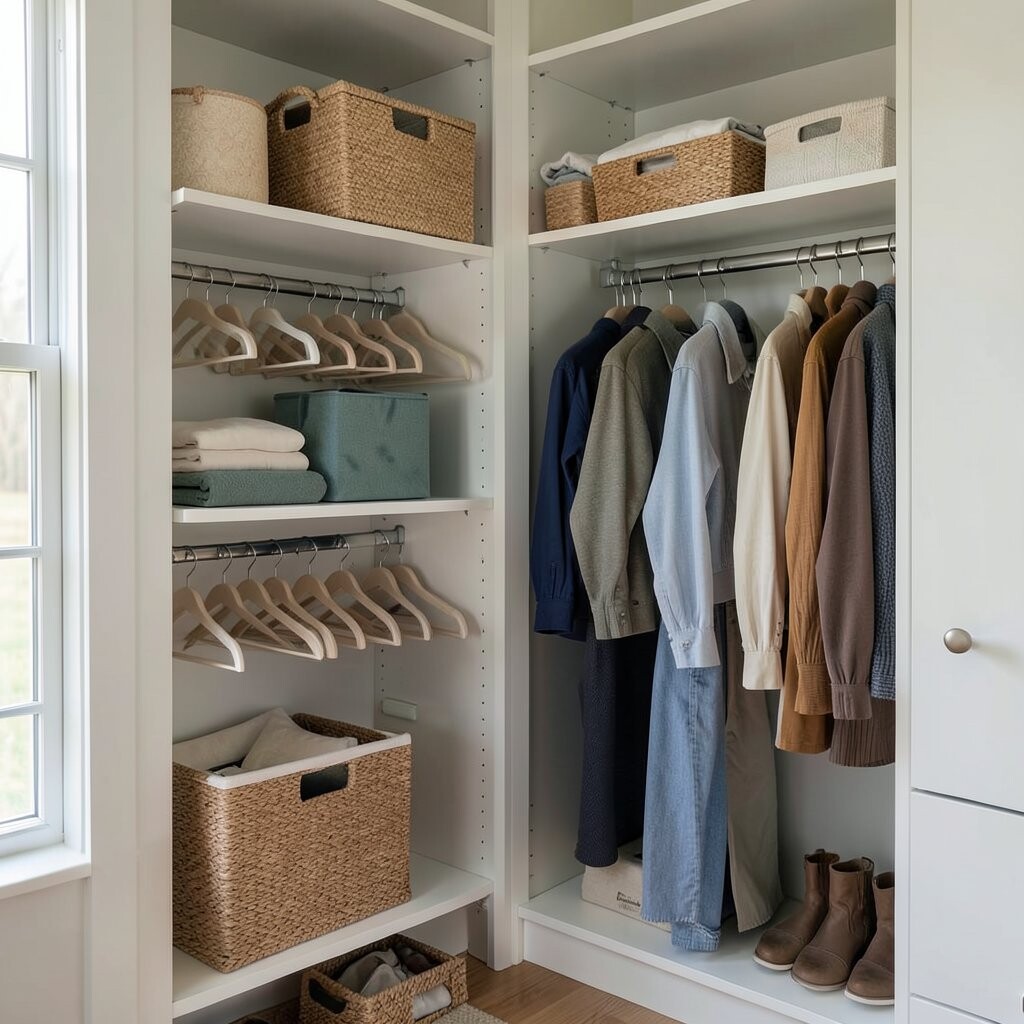
Add Matching Hangers for an Instant Makeover Switch to hangers that look the same, and your closet will instantly look more put together. Even if nothing else changes, your eye will notice the clean, uniform lines.
Visually, you get a smooth wall of clothing instead of a mix of shapes and colors. That neat look makes it easier to spot what you own, and it can even help you stop buying duplicate items. For benefits, matching hangers reduce snagging and help garments keep their shape.
Personalize by choosing hangers that fit your needs: slim hangers for tight spaces, padded ones for delicate fabrics, and clips for pants. Consider cost by starting small—do one rod first, then move to the next. A popular trend right now is “small visual upgrades,” where simple swaps create big style payoff.
-
6. Create a “Home Uniform” Section
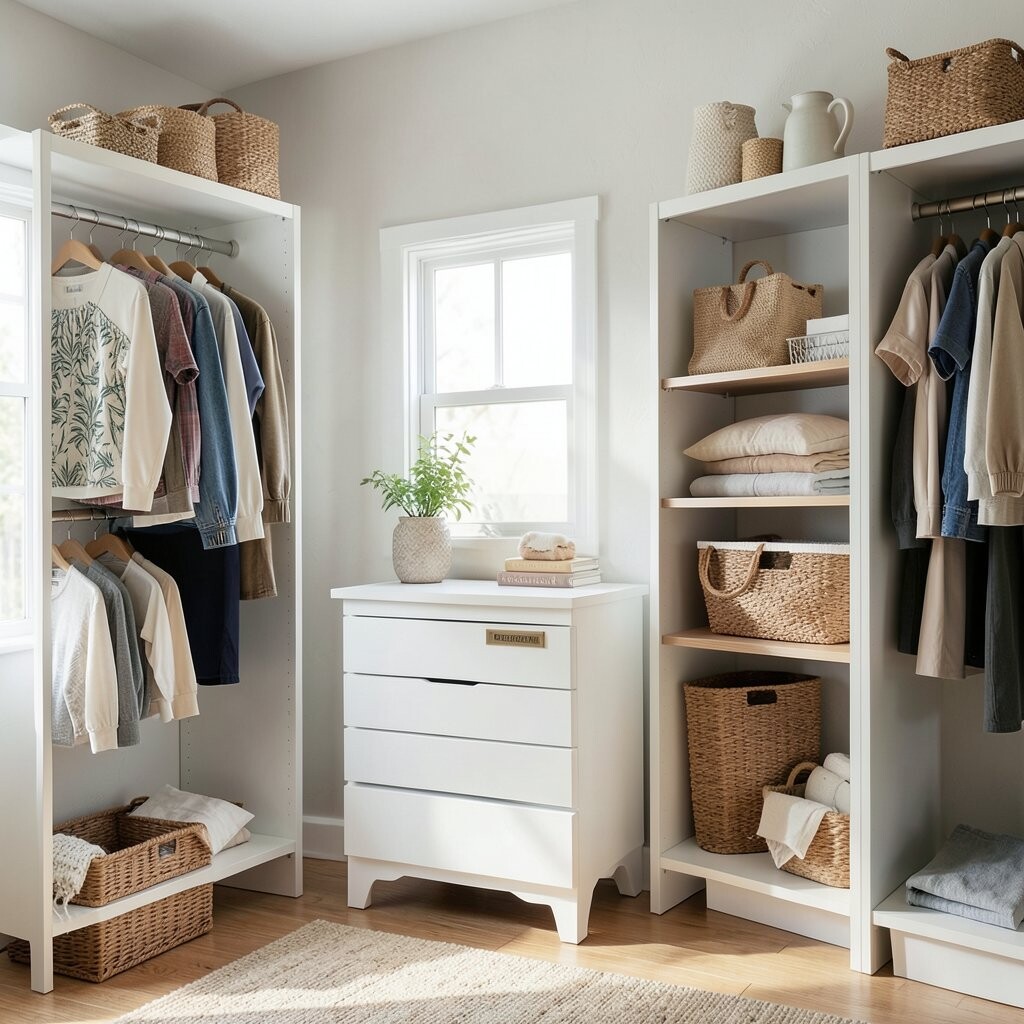
Create a “Home Uniform” Section Pick a small corner for clothes you wear most often at home. Think soft sets, comfy tops, and shorts or leggings you already love.
When your “home uniform” is together, you’ll reach for it without thinking. The visual benefit is huge because you’ll see a tidy mini wardrobe that feels like comfort on display. This reduces the urge to wear something random and then miss your favorite pieces.
Make it personal by using a color theme, like all grays, all earth tones, or a mix of your favorite cozy prints. If you want to add uniqueness, include one “special treat” outfit you save for movie nights or relaxing weekends. Cost considerations are easy here, since you can use baskets or a single organizer tray rather than buying a full system.
-
7. Sort Shoes by Height and Function
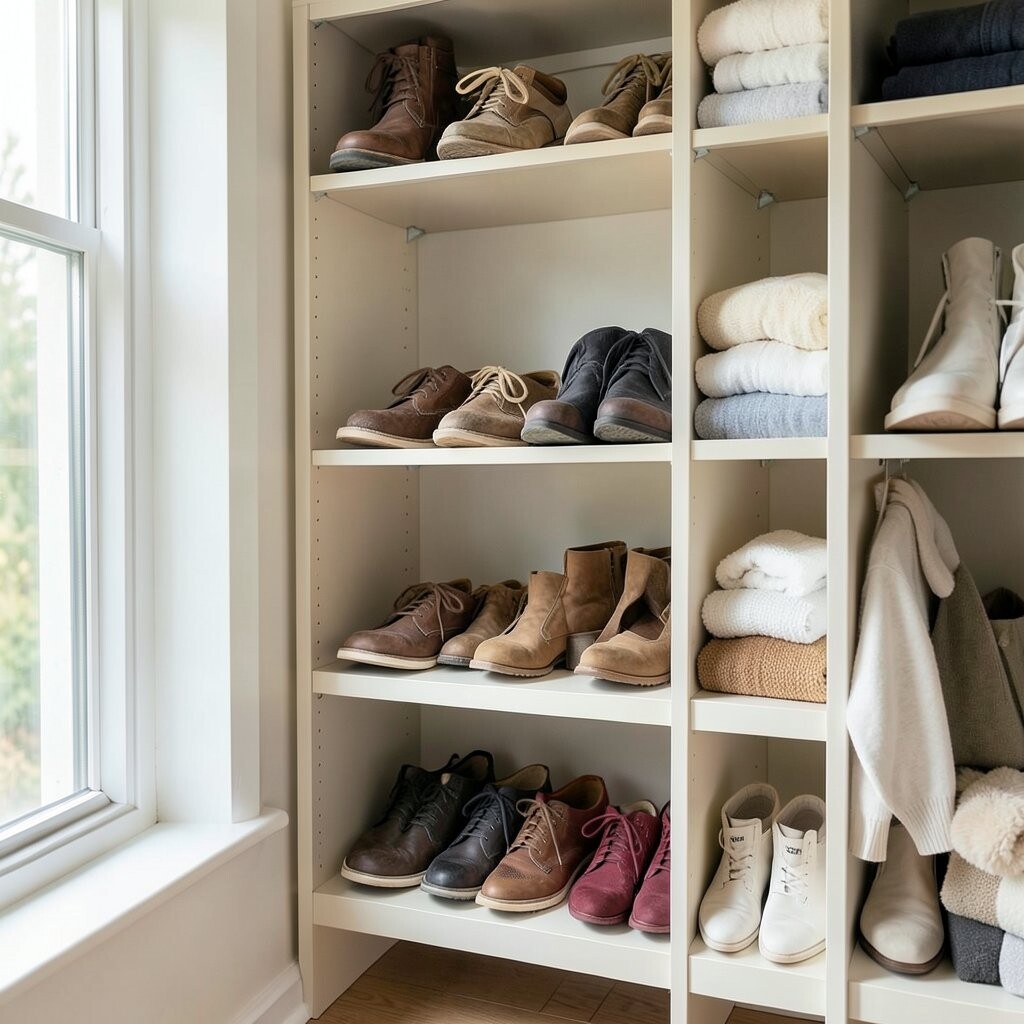
Sort Shoes by Height and Function Before you store shoes, group them in a way your brain understands. Separate sneakers from boots, and keep dress shoes apart from everyday slip-ons.
As you line them up, you’ll see the floor space look cleaner and more organized. Your search time goes down because you know exactly where each type lives. This is a great benefit for people with lots of pairs, because shoe chaos is usually “type chaos,” not just clutter.
For tips, use shoe shelves, clear boxes, or drawer inserts that hold pairs upright. Personalize the setup by placing the shoes you wear most at eye level, and save the rest for lower storage. Cost can range from very low (shoe racks you already have) to medium (clear organizers), so choose what fits your budget.
-
8. Clean and Condition One Category of Items
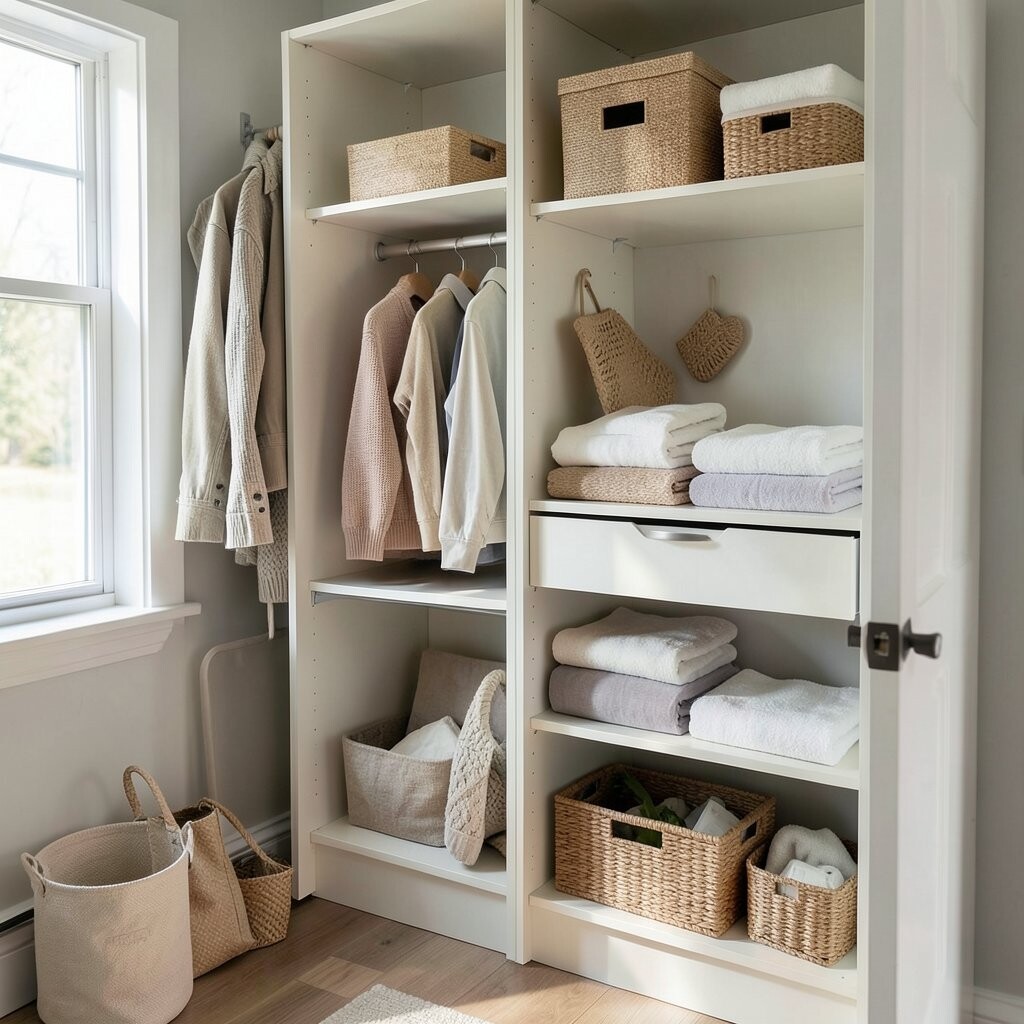
Clean and Condition One Category of Items Pick one category, like sweaters, denim, or jackets, and do a mini care session. Wash, spot clean, steam, and check for moth damage or loose buttons.
When you handle items with care, the closet feels fresh because the clothes look and smell better. You’ll see fewer wrinkles, better color, and more “ready to wear” pieces. The benefit is that you’re not just sorting—you’re improving how your items perform.
To personalize, make a small “care checklist” and tuck it into a closet drawer for quick fixes. Add a small fragrance-free fabric spray if you like a clean scent, and test it first on a hidden spot. Cost is mostly based on supplies like lint rollers, stain remover, and basic tools, which are usually affordable.
-
9. Turn Accessories Into a “Grab and Go” Layout

Turn Accessories Into a “Grab and Go” Layout Gather belts, scarves, hats, and bags in one spot and sort them by how you use them. Place the items you grab often where your hand can reach them quickly.
Visually, you’ll create order in places that usually feel messy, like hooks, drawers, and top shelves. This helps you match outfits faster because you can see options clearly. The benefit is less time digging and more time enjoying your style.
Personalize by grouping accessories by vibe, such as “work polish,” “weekend casual,” or “outdoor ready.” For tips, hang belts on a rack, store scarves in a small basket, and use a jewelry tray with separate sections. Cost considerations are friendly here: many organizers are inexpensive, and you can reuse small containers.
-
10. Measure Your Closet and Build Around Your Real Space
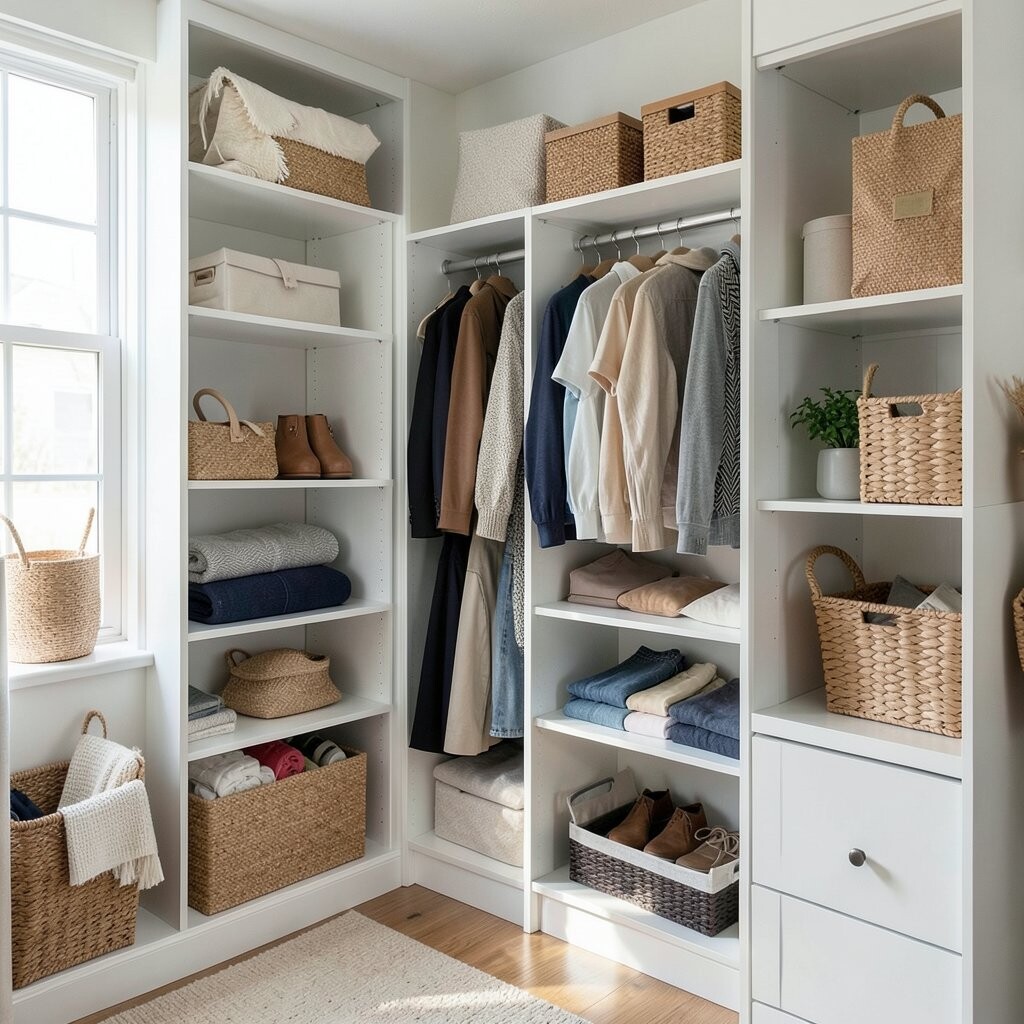
Measure Your Closet and Build Around Your Real Space Take a quick measurement of shelves, hanging space, and drawer sizes before buying anything. Use those numbers to plan where each item group should go.
This step makes your closet feel custom because storage matches your exact layout. You’ll avoid the frustration of buying a bin that doesn’t fit, which saves money and time. The benefit is better flow—your closet becomes easier to use every day.
For personalization, think about your routine: do you dress sitting down or standing up? Place drawers and bins where they match your usual motion. Cost can be controlled because measuring first helps you buy only what works, instead of over-ordering organizers.
-
11. Put a “Donation Date” on Your Calendar
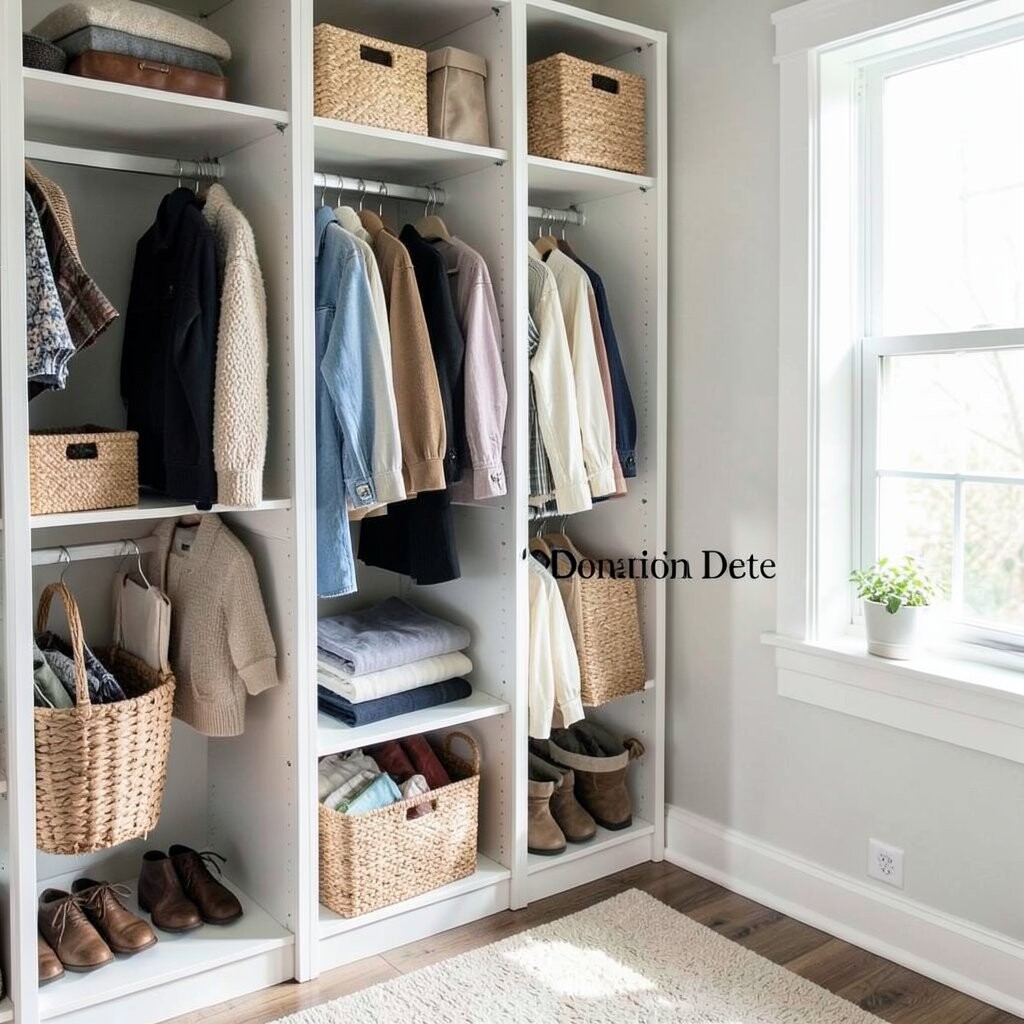
Put a “Donation Date” on Your Calendar Once you pull out donate items, don’t let them sit forever. Set a donation date, then schedule drop-off or pickup right away.
Seeing a clear date on your calendar gives your closet a real next step. Visually, the bag or bin becomes a promise instead of a lingering pile. This benefit matters because the longer clutter stays, the harder it can be to finish the job.
To personalize, tie the donation date to something you already do, like a monthly errand or weekend trip. If you like it extra, write a note on the bin about who the clothes might help. Cost is usually minimal, especially if you use local drop-off centers or community drives.
Current trend: people are using “time-bound organizing,” meaning tasks have a finish line. That approach keeps your closet from going half-done for months.
-
12. Add Small Lighting or a Reflective Touch
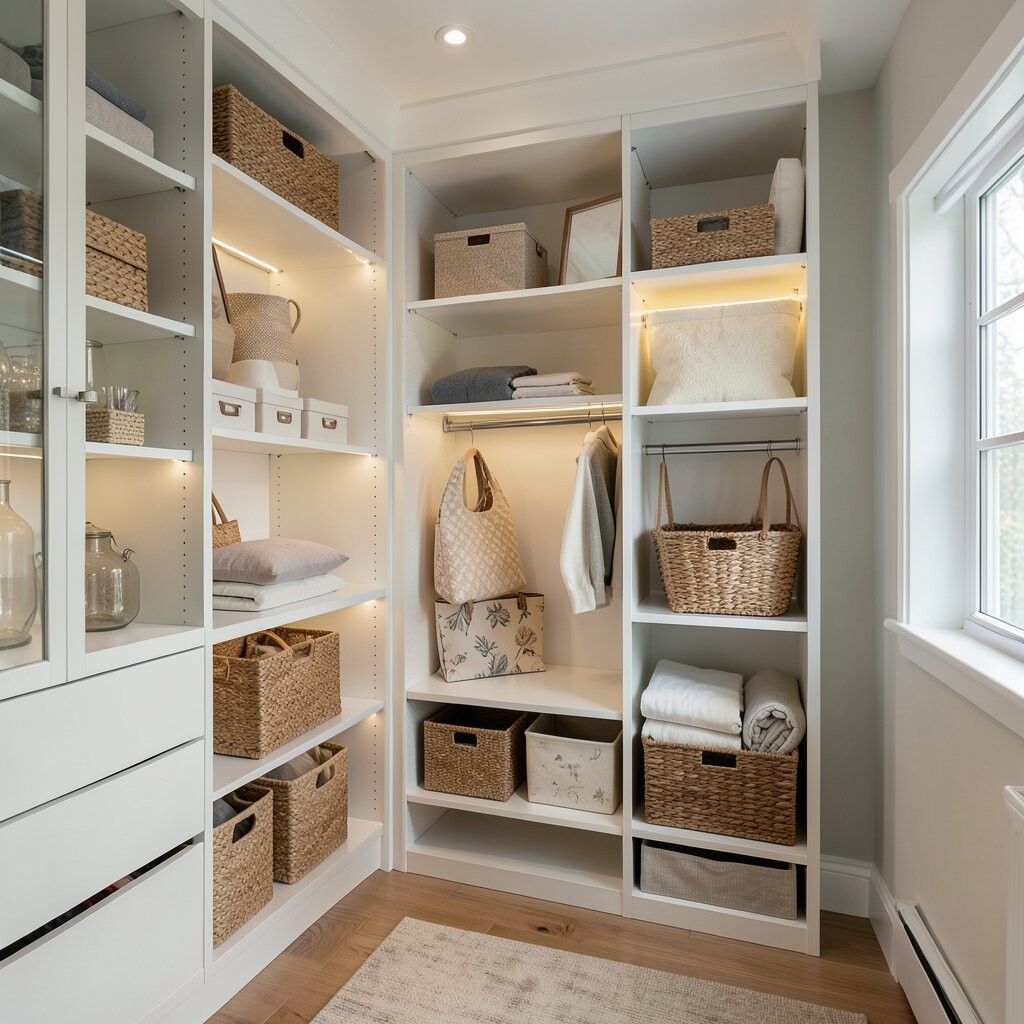
Add Small Lighting or a Reflective Touch Improve how your closet looks by adding better light or a reflective detail. A battery LED strip, a brighter bulb, or a small mirror can make a closet feel larger.
When the space is brighter, colors pop and you can spot missing items or stains faster. This gives you confidence because you’ll see the full lineup of what you own. The benefit is both practical and emotional: it feels easier to stay organized when you can see clearly.
Personalize with a style match, like warm lighting for cozy vibes or cool lighting for a clean, crisp look. If you want uniqueness, use a small decorative tray near a mirror for keys or lip balm, so the closet becomes a mini prep station. Cost considerations vary, but you can start with low-cost lighting and upgrade later if you want.
Many people are leaning into “closet styling,” where lighting and small decor details make storage feel like part of the home’s design. With the right touch, your cleanout becomes a refresh, not just a chore.