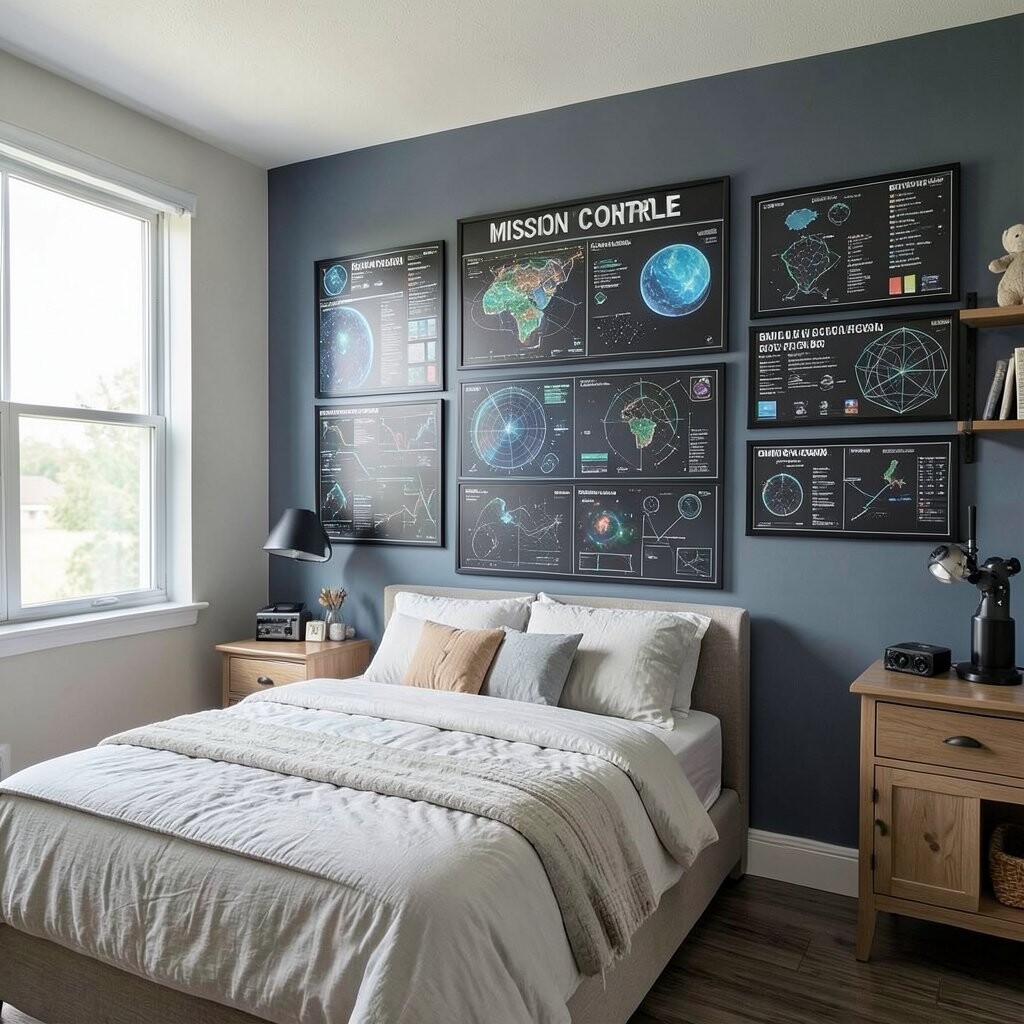
1. Build a “Mission Control” Wall with a Realistic Layout
Build a “Mission Control” Wall with a Realistic Layout
Think of a wall that looks like it belongs on a starship control deck. Use tape lines, labeled panels, and a simple map-like design to create sections for tasks and hobbies.
This helps your child practice organization like a budding engineer. Add a small “data station” where he can log projects, sketches, and reading notes. For an extra STEM touch, label zones with fun words like “Test,” “Design,” and “Launch.”
2. Add a Growth-Chart Style “Progress Ladder” for Skills
Add a Growth-Chart Style “Progress Ladder” for Skills
Picture a ladder graphic climbing the wall, with each rung showing a goal. The colors can be bright, like a game screen, with icons for math, coding, building, and reading.
It turns effort into something visual and exciting. He’ll feel proud when he moves upward, and parents get an easy way to talk about learning. Keep it flexible by using removable labels, so the ladder can change as interests grow.
If you’re watching costs, print ladder tiles at home or use a poster printer service. Personalize it with his name and favorite subjects, so it feels like his room, not a template.
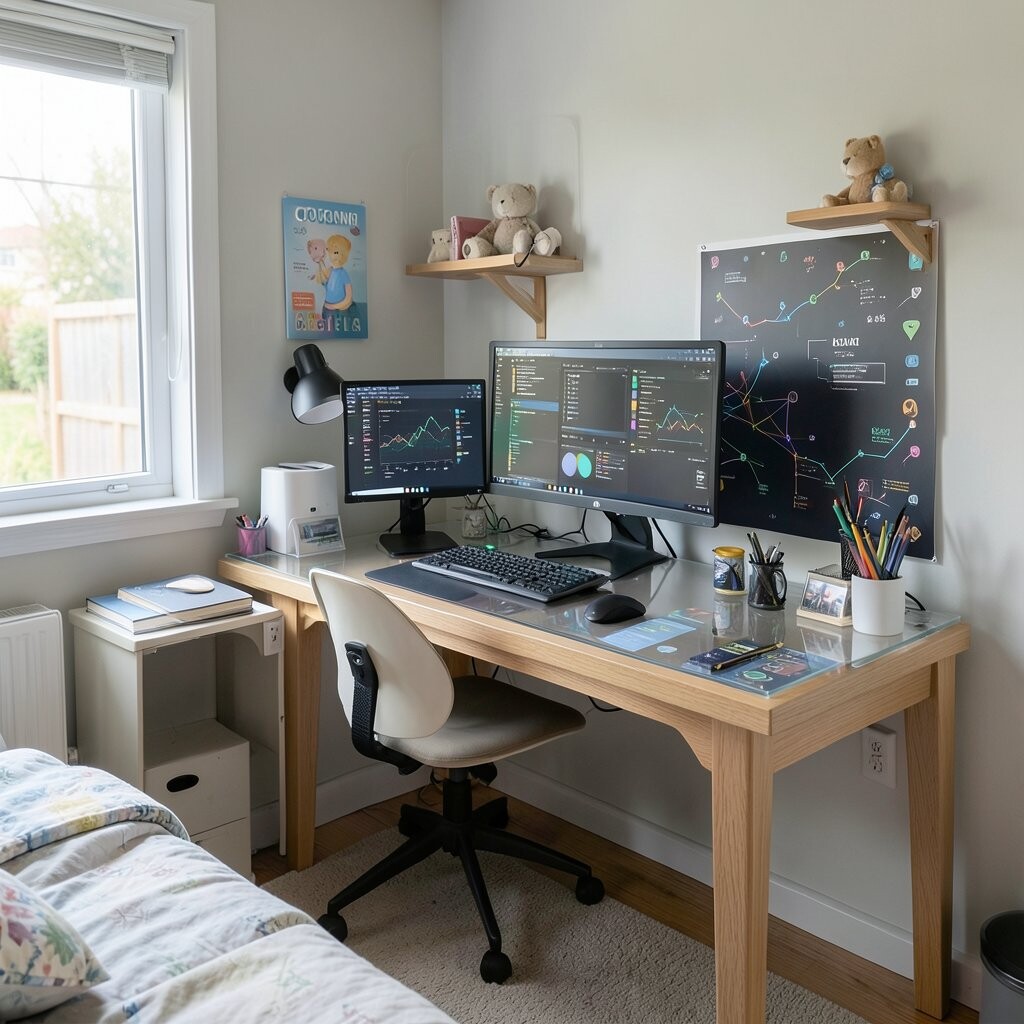
3. Create a “Coding Corner” with a Clear Desk Setup
Create a “Coding Corner” with a Clear Desk Setup
Imagine a tidy desk with a monitor, a lamp, and a wall organizer that keeps cables in line. Add a small whiteboard for practice prompts and a tray for tablets, notepads, or building tools.
This layout supports focus, which is a big part of STEM learning. Use gentle lighting so he can work comfortably and avoid eye strain. Then add a printed “debug checklist” card for simple steps like “Try again” and “Check the steps.”
To make it unique, let him choose desk art that matches the theme, such as robots, circuit lines, or retro arcade graphics. For budget, start with storage bins, a lamp, and one wall organizer before upgrading bigger items.
Keep an eye on current trends like cozy tech workspaces, where learning and comfort blend. When the room looks inviting, kids want to use it more.
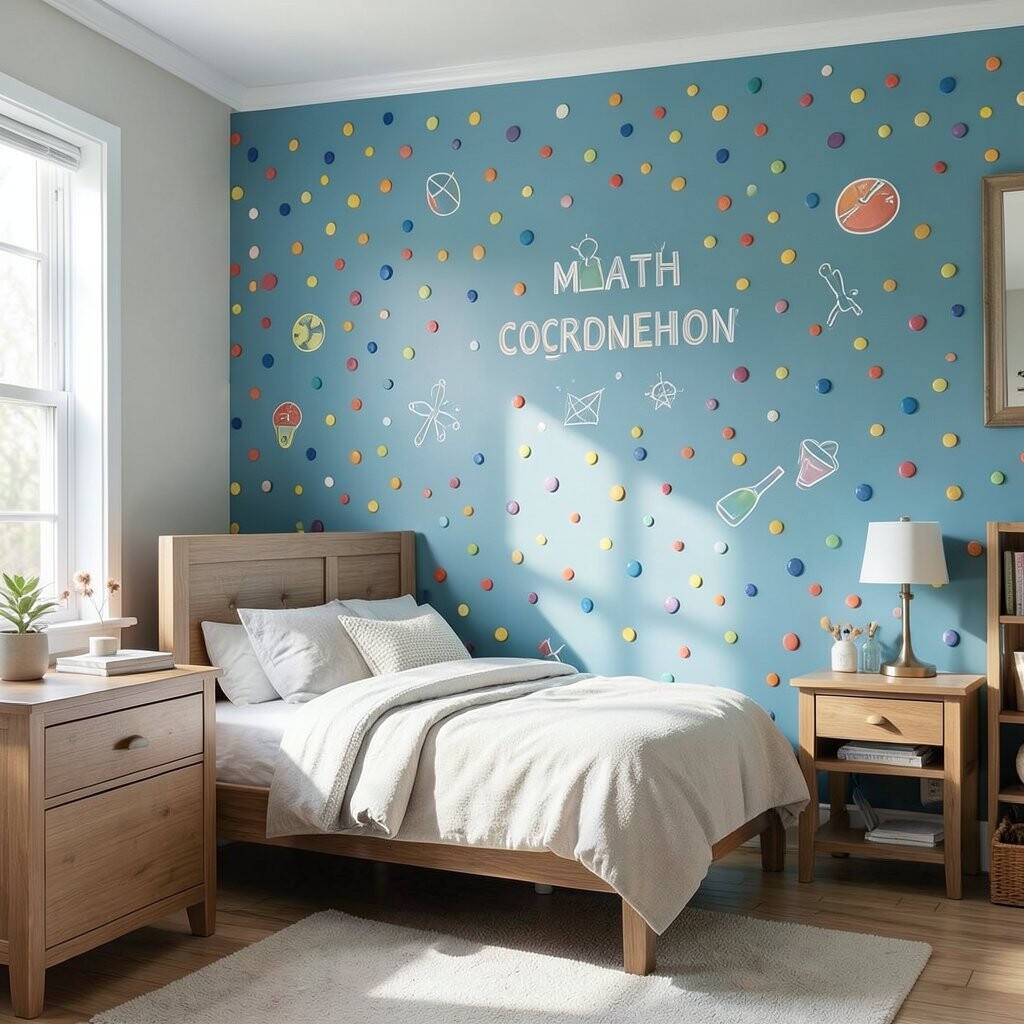
4. Paint a “Math Coordinates” Accent Wall with Fun Dots
Paint a “Math Coordinates” Accent Wall with Fun Dots
Picture a wall with a playful grid and floating dots, like a light constellation map. Choose a color scheme that fits your room, such as navy and teal or black and lime for a bold look.
This gives math a visual home, not a scary subject. Kids can practice simple coordinate games while drawing or solving puzzles. You can also place removable stickers that act like points he can move around.
For a tip, use washable paint or test small patches first. If painting feels too big, try peel-and-stick grid wallpaper or a large poster. Either way, personalization is easy: add his favorite planet names or sports team colors into the dot pattern.
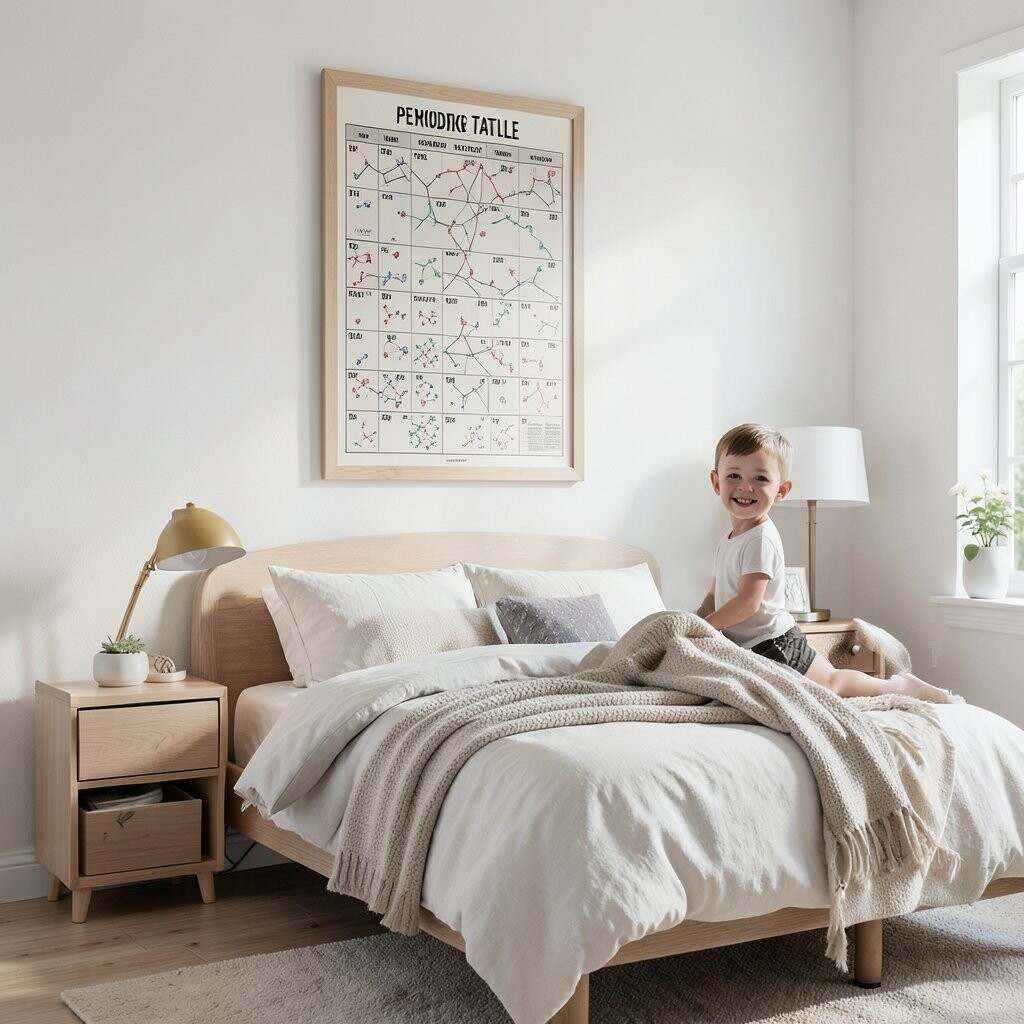
5. Hang a “Periodic Table” Poster That Matches His Style
Hang a “Periodic Table” Poster That Matches His Style
Choose a periodic table poster with artwork that looks cool, not only textbook serious. Make it match his colors, like bright pastels, neon outlines, or vintage blueprint lines.
This is a low-effort way to bring STEM into daily life. He’ll see it while getting ready, doing homework, or building models. Try adding a small caption box that lists elements he likes, such as ones related to space or favorite materials.
For cost, posters are usually one of the cheapest upgrades. To keep it personal, let him pick the design and add a couple of favorite “element facts” notes on sticky tabs.
6. Turn Storage into a “Lab System” with Labeled Bins
Turn Storage into a “Lab System” with Labeled Bins
Imagine storage shelves filled with bins that look like lab drawers. Each bin can have a label, like “STEM tools,” “Build parts,” “Paper,” and “Science books.”
This turns cleaning into a smart routine, which is great for learning. When items have places, he can practice planning before starting a project. Make labels that match the theme, using simple icons and big, readable text.
Uniqueness comes from using what he truly uses. Add a bin just for drawing, one for LEGO-style pieces, and one for STEM kits. You can also add a color code so he finds things fast.
Cost considerations are friendly here: bins can be reused and upgraded later. Start with a few key shelves, then add more labels as his projects grow.
7. Design a “Maker Table” with a Dedicated Build Spot
Design a “Maker Table” with a Dedicated Build Spot
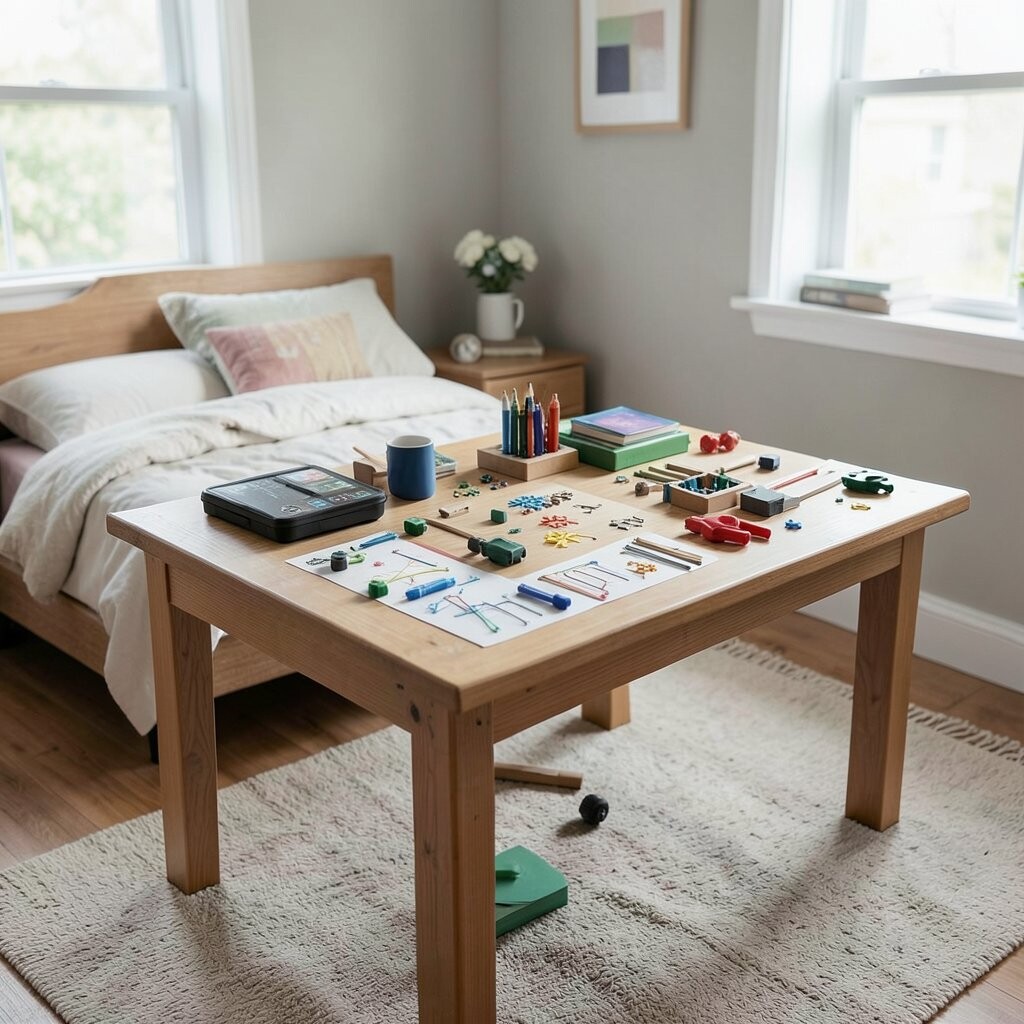
Picture a strong table or desk surface where he can spread out blocks, kits, and craft items. Use a mat or tray so small pieces don’t scatter across the room.
This creates a clear place for building, which boosts confidence. It also helps him switch from “idea” to “trying,” a core STEM skill. Add a drawer for screwdrivers, tape, and safe tools, and keep it kid-friendly.
To personalize, let him choose a theme mat, like space grids or robot footprints. You can also add a timer on the wall for short build challenges, which feels like a game.
8. Use “Circuit-Like” Lighting for a Cozy, Techy Glow
Use “Circuit-Like” Lighting for a Cozy, Techy Glow
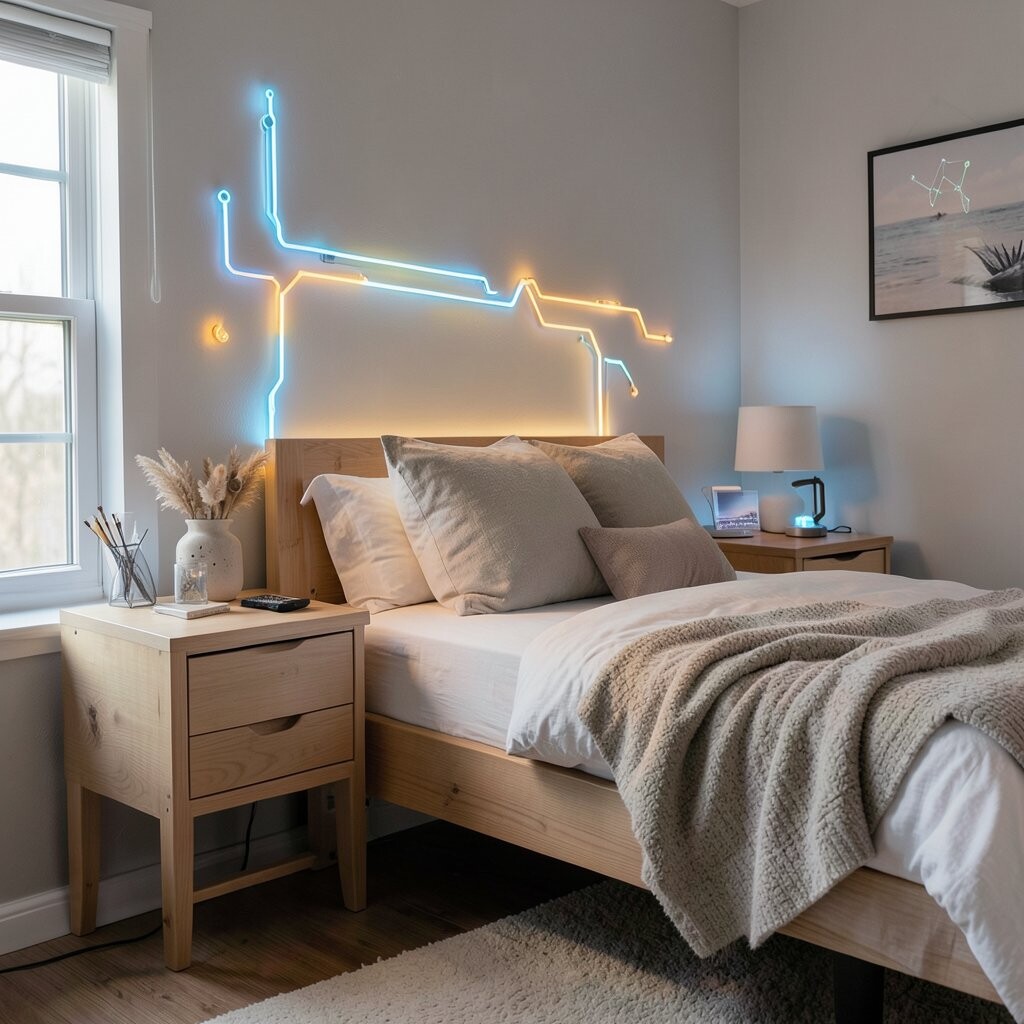
Think of soft LED lights that wrap around shelves like bright circuit lines. Choose warm or neutral white lights so the room feels calm, not harsh.
This lighting can make STEM themes feel magical at night. It also supports evening reading and hobby time without dim corners. Place a small desk lamp with adjustable brightness for focused work.
For uniqueness, add a wall switch label like “Power Mode” or “Night Lab.” Keep safety in mind by using child-friendly, low-voltage LED strips and routing cables neatly.
If you want a budget plan, start with one LED strip near the bed or desk. Trends right now show more playful accent lighting, and it’s one of the easiest ways to upgrade the mood.
9. Make Bedtime Interactive with a “Story Quest” Theme
Make Bedtime Interactive with a “Story Quest” Theme
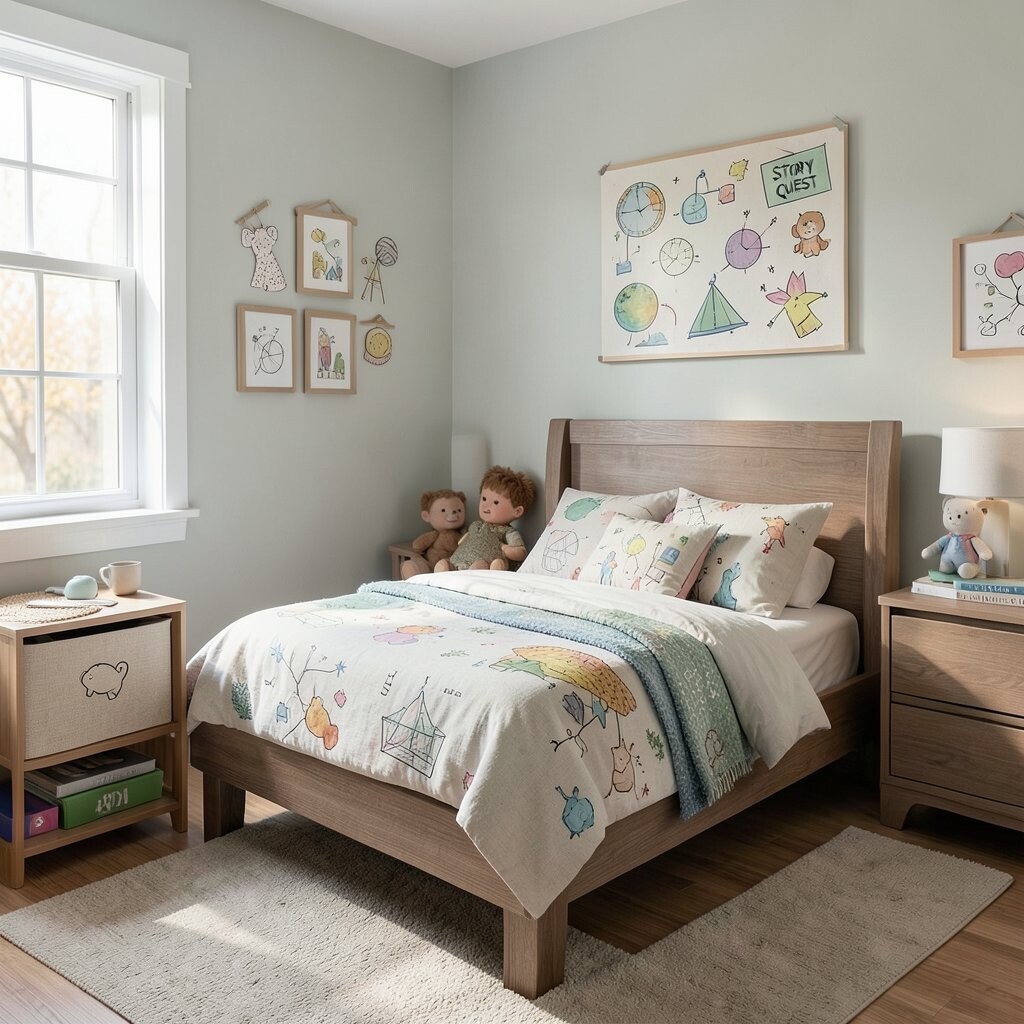
Imagine a headboard or wall panel with small quest badges, like “Chapter 1: Solve,” “Chapter 2: Build,” and “Chapter 3: Predict.” The room becomes a gentle game that supports reading habits.
This helps literacy connect with STEM curiosity. He can read science fiction, problem-solving stories, or “how it works” books. Add a simple “choose your quest” card next to the bed so he picks what to read.
To personalize, use his favorite characters or hobbies as quest labels. If cost is a concern, print badges at home and use easy adhesive hooks. It’s a fun, creative option that doesn’t require expensive furniture changes.
10. Create a “Weather Station” Corner with a Mini Display
Create a “Weather Station” Corner with a Mini Display
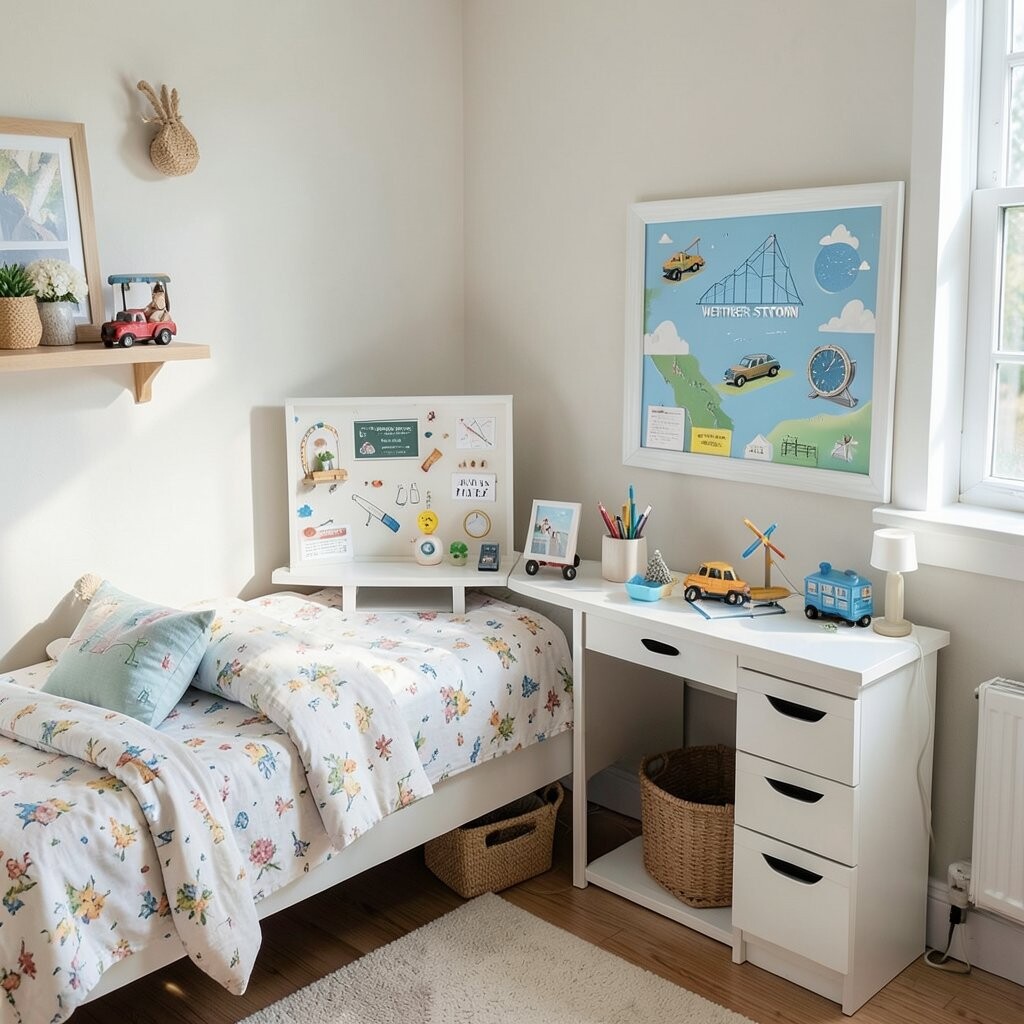
Picture a small shelf with a thermometer, a rain gauge style container, or a simple weather chart. Add a clipboard so he can write daily observations.
This makes everyday science feel real. He’ll learn about patterns like temperature changes, cloud types, and seasonal shifts. Even if you only start for a week, it teaches how data works.
For uniqueness, let him design a “weather forecast” card in his favorite colors. Add sticker icons for sunny, cloudy, windy, and rainy days. Then he can take turns explaining predictions with family members.
Costs can vary, but you can start small with a printable chart and a basic thermometer. Many affordable options exist at home stores and educational shops.
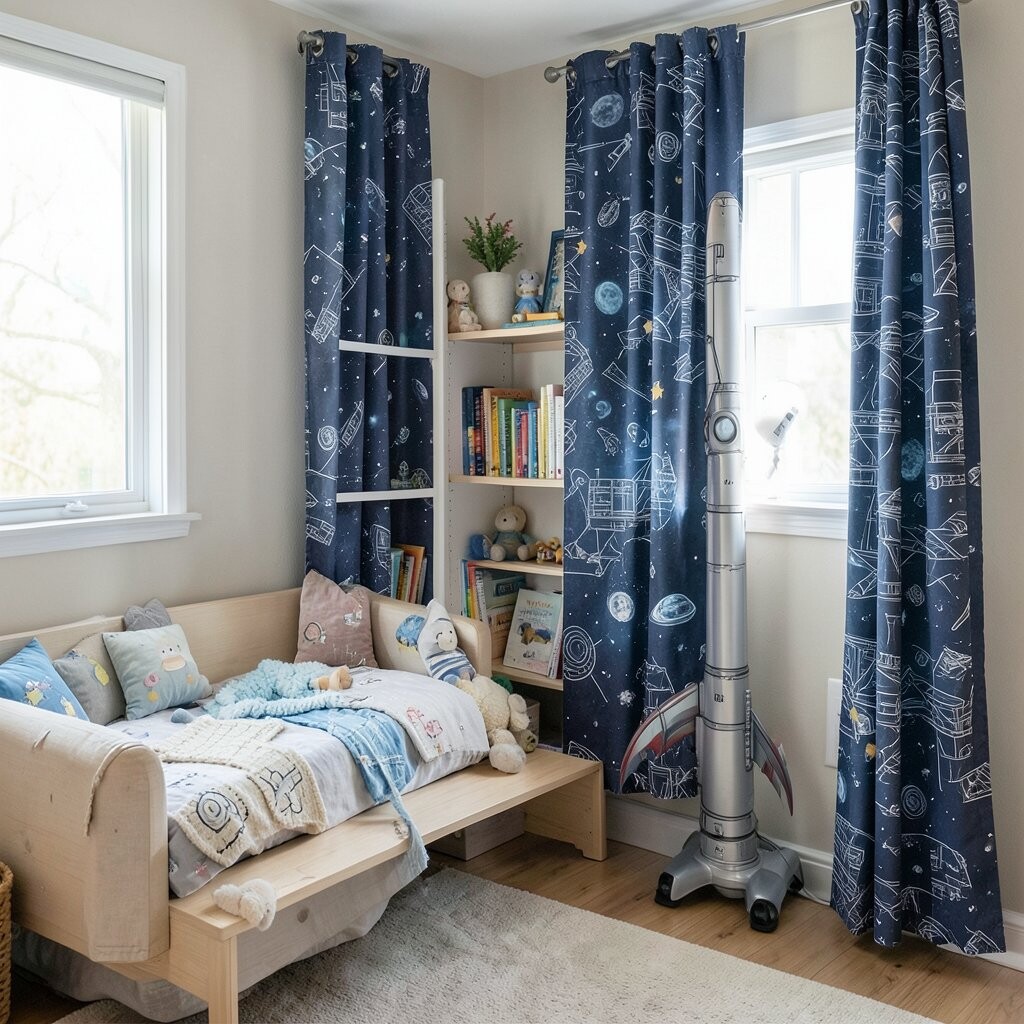
11. Build a “Space Launch” Reading Nook with Blueprint Curtains
Build a “Space Launch” Reading Nook with Blueprint Curtains
Imagine a cozy corner with a comfy chair and curtains that look like blueprint lines. Hang a small ceiling light topper shaped like a star or planet for a dreamy effect.
This nook makes STEM themes feel calm, not loud. Reading space supports focus and helps him learn new science ideas. Add a soft blanket and a small bookshelf for space, engineering, and math storybooks.
To personalize, let him pick star colors and add a name plaque like “Commander” or “Captain.” For budget, search for affordable curtain panels and use fabric markers for extra details.
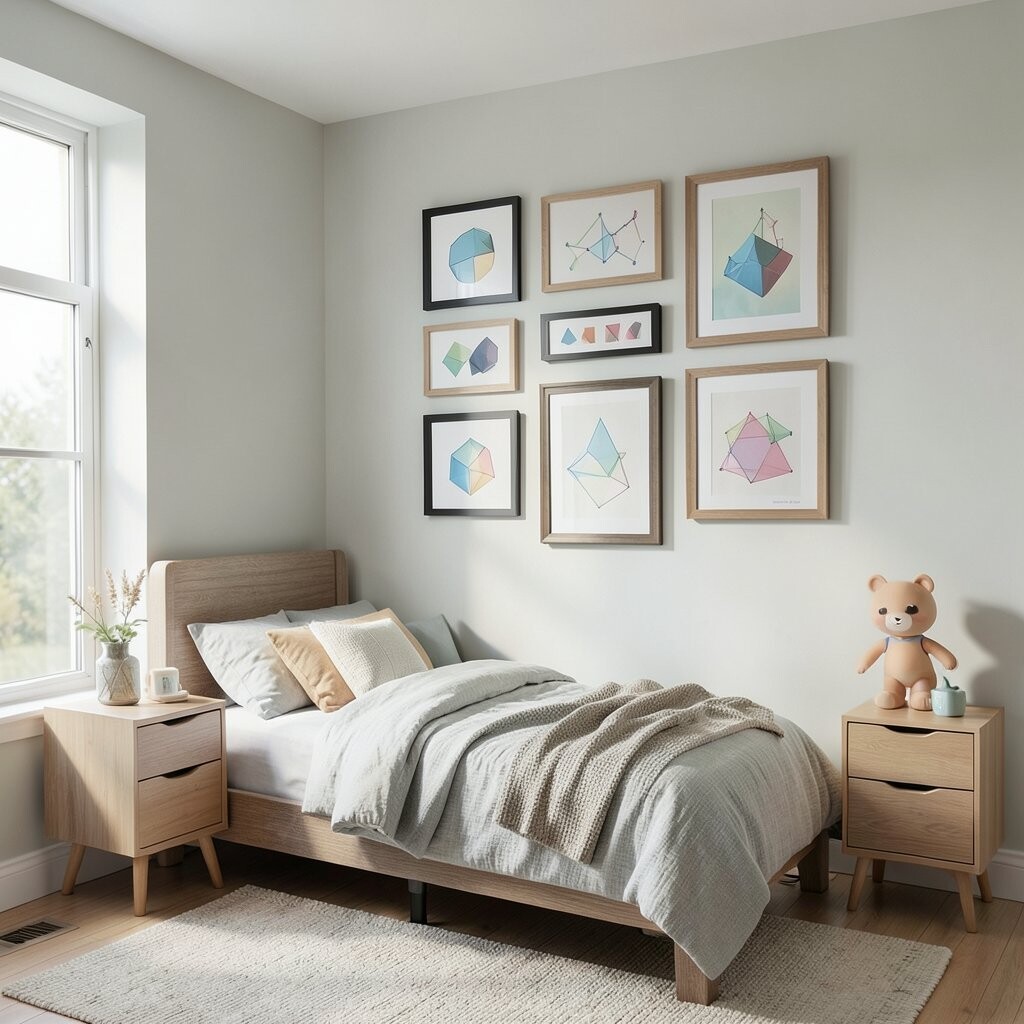
12. Use a “Geometry Gallery” of Frames and Wall Shapes
Use a “Geometry Gallery” of Frames and Wall Shapes
Think of the wall showing neat framed prints of triangles, circles, and squares in different colors. Mix sizes and styles, like a gallery, but keep everything coordinated.
This turns geometry into something that feels creative. He can look at patterns and shapes while planning art, puzzles, or building projects. Add a small statement beside the frames, like “Math can be art.”
Uniqueness comes from letting your child choose which shapes get the spotlight. You can also add a DIY frame using cardboard and paint if you want it more personal. For cost, print simple shape templates and place them in thrifted frames.
Current trends favor gallery walls and mixed textures, so this fits right in with modern bedroom styles. It’s also easy to update as his interests change.
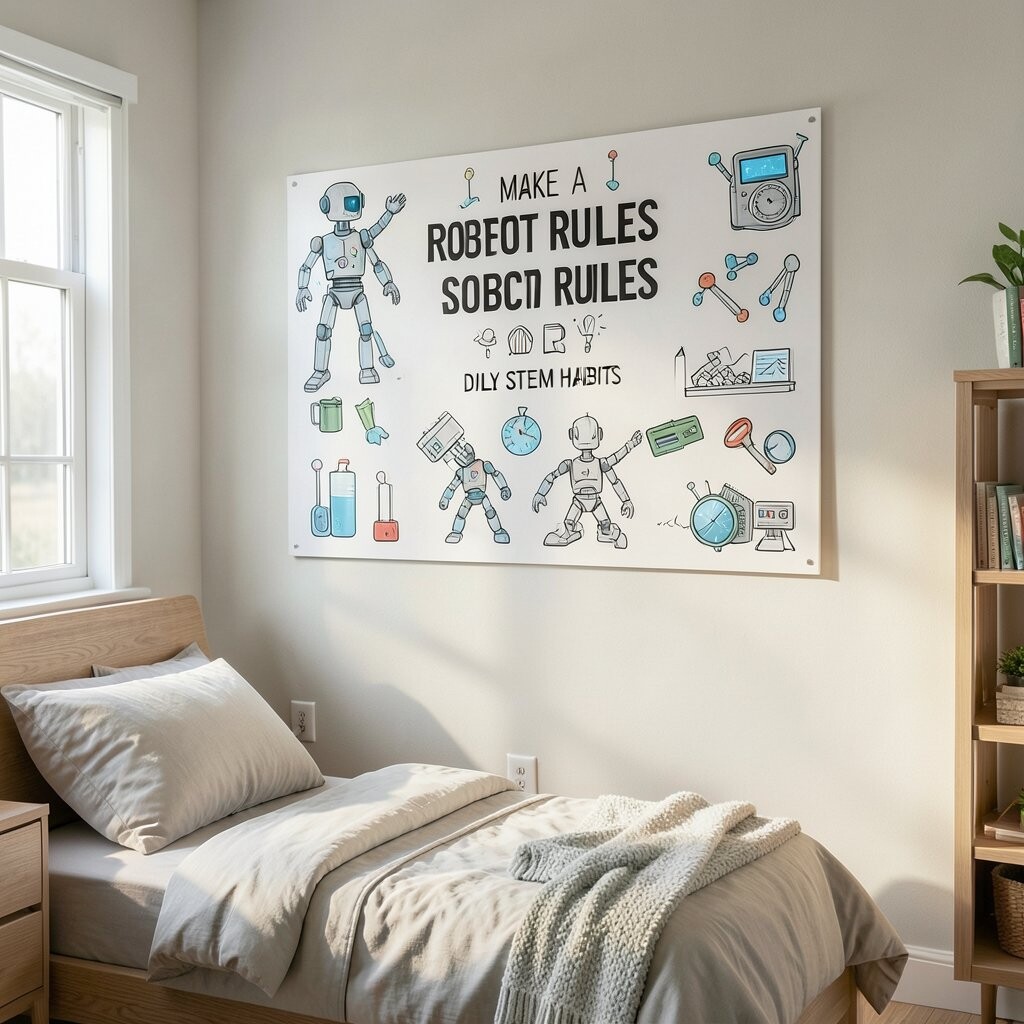
13. Make a “Robot Rules” Wall for Daily STEM Habits
Make a “Robot Rules” Wall for Daily STEM Habits
Picture a board with friendly rules written like robot commands. Use icons for “charge your brain,” “sort your tools,” and “try again,” and place magnets for small add-ons.
This creates consistent learning routines without feeling strict. When he follows the rules, he practices discipline and problem-solving. Make it fun by using a chart that tracks daily reading, practice time, or project cleanup.
To personalize, let him design a robot logo in a corner. Use his favorite colors and add a “mission today” spot where you or he writes the plan.
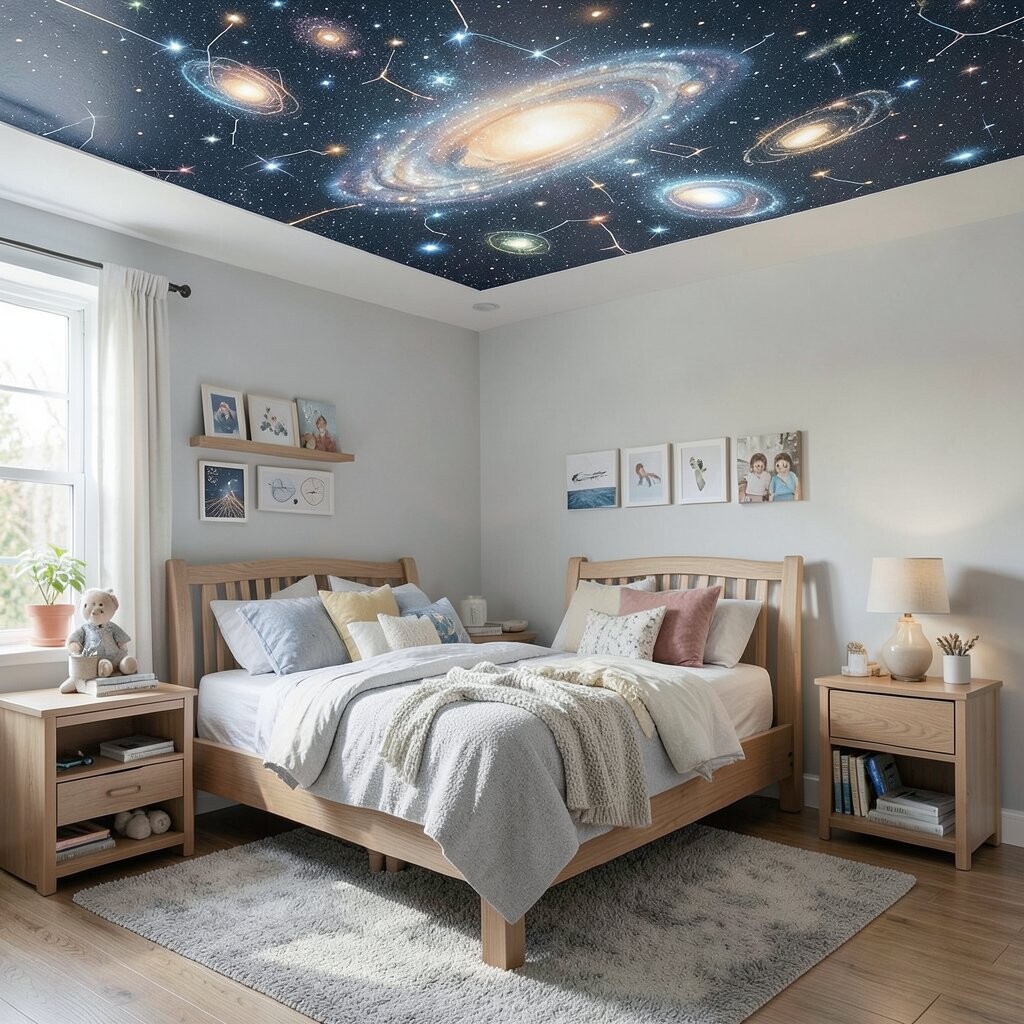
14. Add a “Solar System” Ceiling or Light-Pattern Feature
Add a “Solar System” Ceiling or Light-Pattern Feature
Imagine tiny stars on the ceiling that glow like a nighttime sky. You can also use a projection lamp that shows planets and orbits during bedtime.
This adds wonder, and wonder is what pulls kids toward questions. He can associate STEM topics with calming moments, like falling asleep with a science story. It’s a gentle way to build curiosity without pressure.
For uniqueness, place constellations that match his favorite planets, or create “personal planets” using photos in small frames around the room. For cost, a projection light is often less expensive than a full ceiling makeover.
15. Choose a STEM-Themed Quilt or Bedding with Patterns That Teach
Choose a STEM-Themed Quilt or Bedding with Patterns That Teach
Picture bedding covered with small icons like gears, rockets, and math symbols. Pair it with solid color sheets so the pattern stays neat and easy to read.
This makes STEM themes feel cozy, not only educational. Kids are more likely to spend time in a comfortable room. You can also use the pattern for simple learning games, like spotting shapes or counting stars.
Personalization is easy: add a name tag pillow, or choose a blanket that matches his favorite hobby color. If budget is tight, swap only one item like a pillow cover or a themed throw.
16. Create a “Blueprint Closet” with Matching Labels and Color Codes
Create a “Blueprint Closet” with Matching Labels and Color Codes
Imagine his closet shelves labeled like a blueprint plan. Shirts can go in color-coded sections, and shoes can sit in labeled bins that look like small drawers.
This supports sorting skills, which are part of early science thinking. He learns categories and systems, and getting dressed becomes faster. Add simple icons for shirts, hoodies, books, and sports gear.
For uniqueness, make a closet legend on the inside door. Cost-wise, you can use printable labels and basic organizing bins. If you want a bigger upgrade later, you can add closet organizers that look more custom.
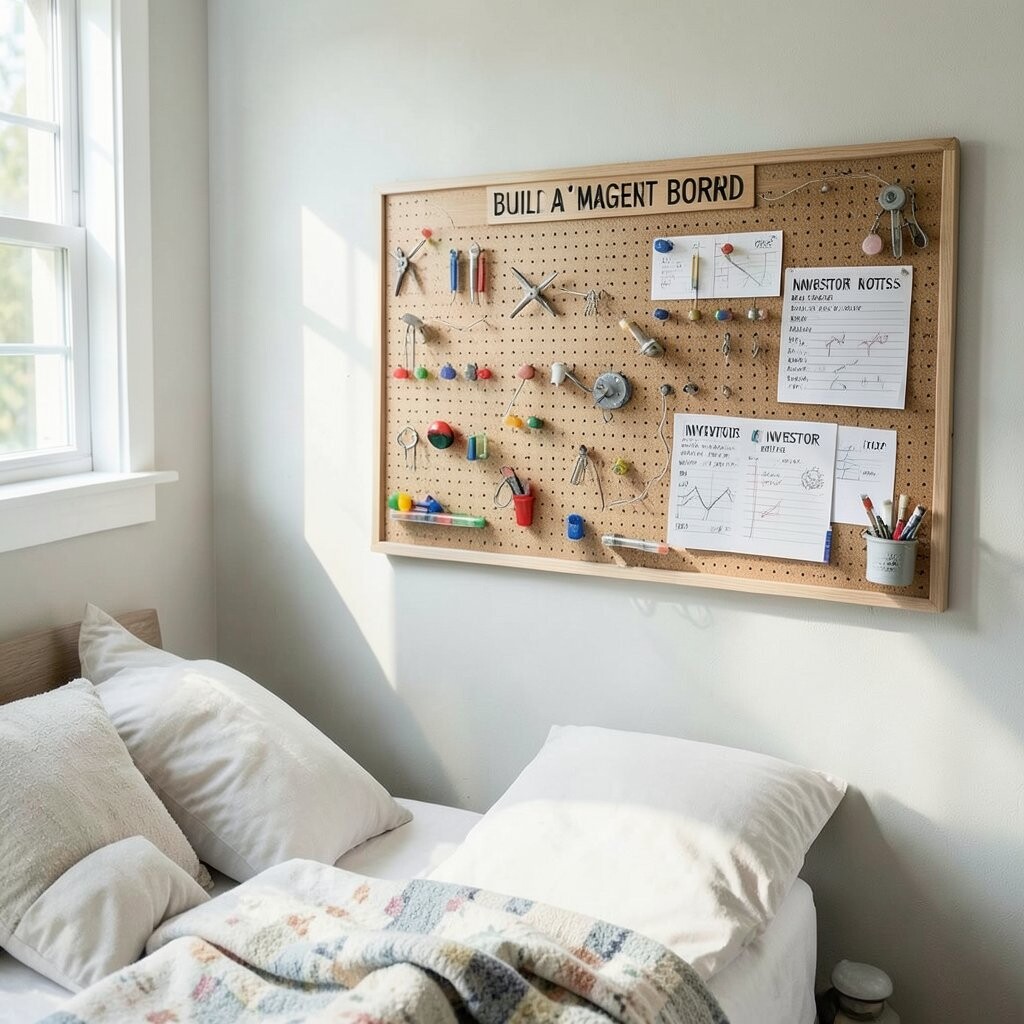
17. Build a “Magnet Board” for Experiments and Inventor Notes
Build a “Magnet Board” for Experiments and Inventor Notes
Picture a metal board on the wall where he can pin ideas, pictures, and experiment steps. Use magnets shaped like bolts, planets, or stars to make it playful.
This supports the STEM habit of planning and tracking results. When he writes what he tried, he learns that mistakes can lead to better outcomes. Add a small template card for “Question, Plan, Try, Record.”
To personalize, use his own drawings as the experiment record pages. For cost, you can start with a small magnet board and add paper sheets over time. Many kids love current “maker journaling” styles, and this is a simple way to bring that trend into the bedroom.
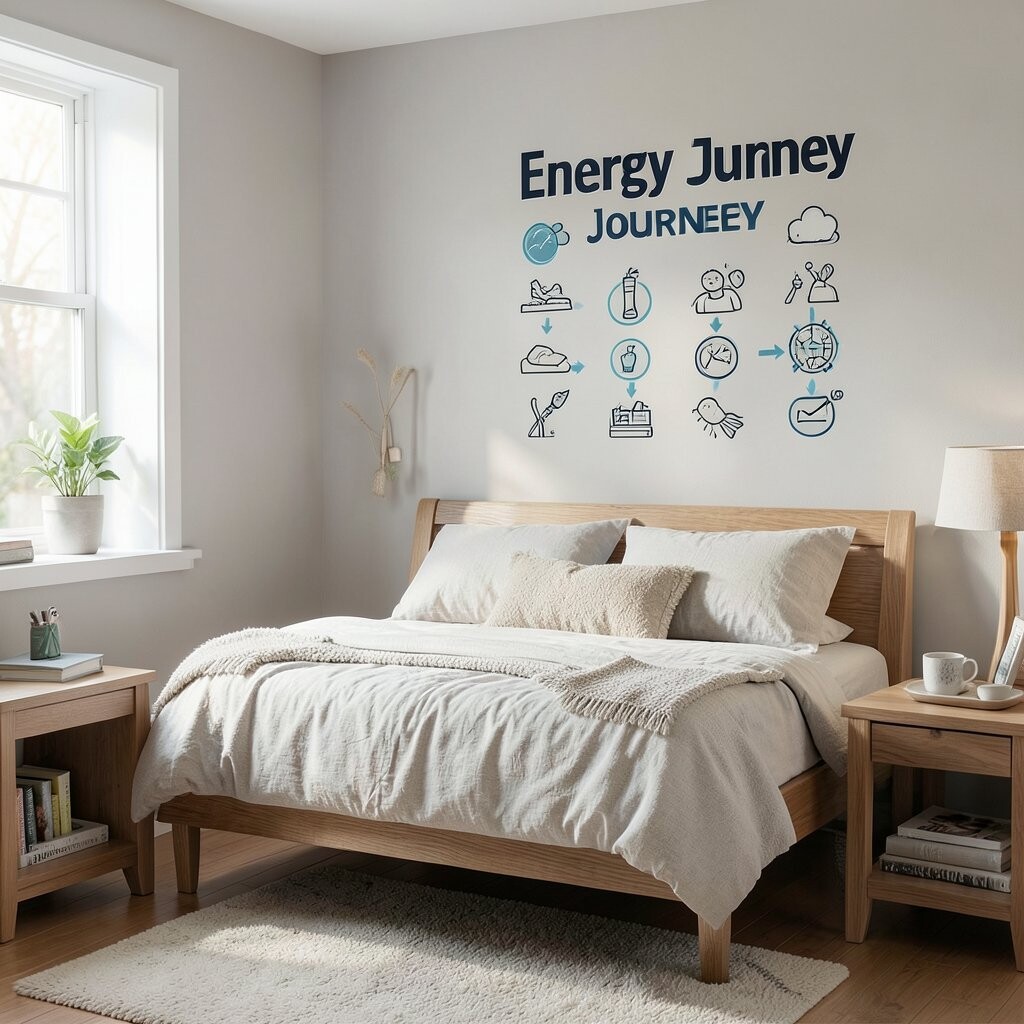
18. Add an “Energy Journey” Wall Decal with Step-by-Step Icons
Add an “Energy Journey” Wall Decal with Step-by-Step Icons
Imagine a wall decal showing an energy journey, like a path from the sun to plants to animals. Use arrows, icons, and simple labels that your child can understand.
This supports science learning through visuals, not long lectures. He can talk about how energy moves while drawing or eating breakfast. Add small sticky notes where he can write “what I learned today.”
Uniqueness comes from linking the journey to his favorite foods, pets, or hobbies. If cost is a concern, decals are usually more affordable than large murals. You can also use printable sheets and laminate them for a sturdier look.
For personalization, let him pick one “stop” on the journey to place his name, like “Alex’s Energy Lab.” It makes the theme feel owned by him.
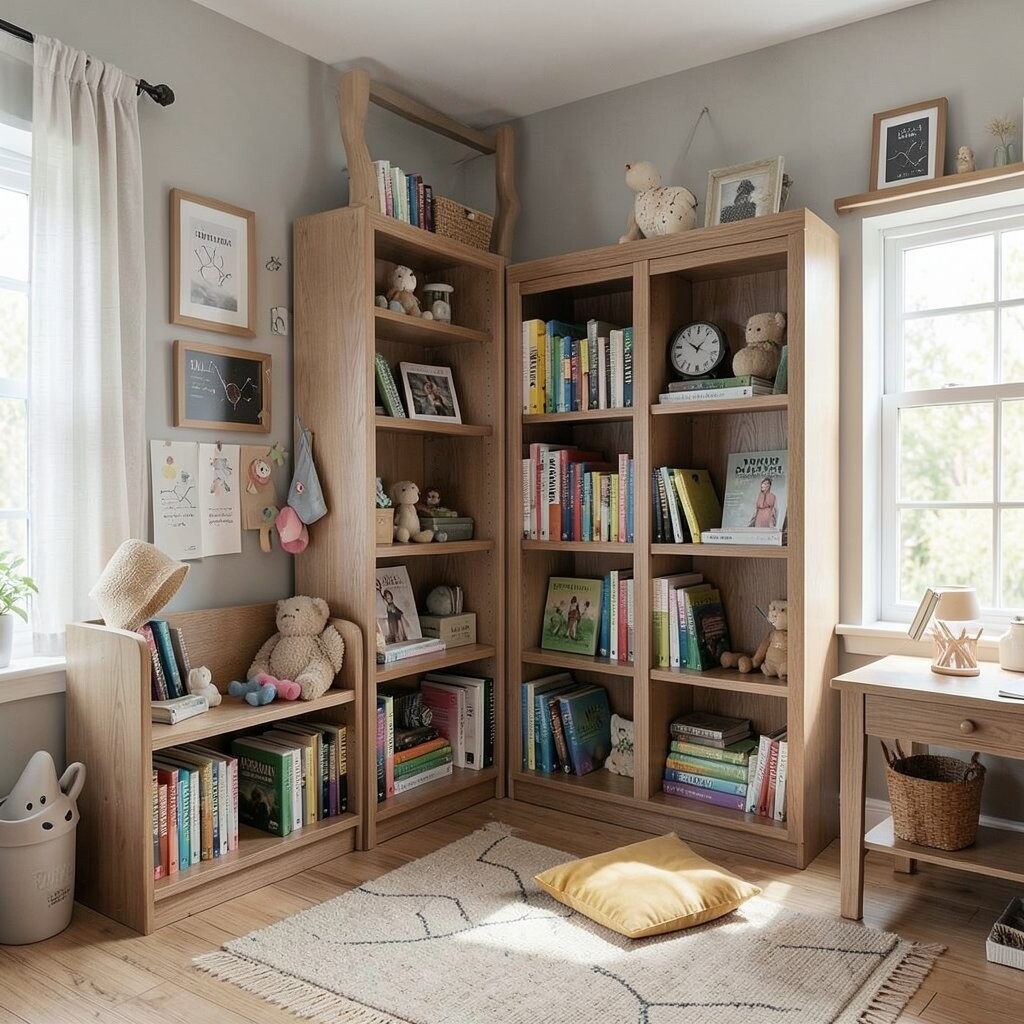
19. Upgrade a Reading Shelf into a “Data and Stories” Library
Upgrade a Reading Shelf into a “Data and Stories” Library
Picture a shelf where books are arranged by themes like “Rockets,” “Robots,” and “Real-Life Science.” Add small labels so each section looks like a mini dataset.
This makes it easier for him to pick a book quickly, which boosts reading time. When reading becomes simple, learning happens more naturally. Pair the shelf with a bookmark holder that looks like a tiny tool rack.
To keep it unique, include a “wild card” slot for his newest favorite topic. Costs can stay low by rearranging what you already own and printing labels. If you want to add new books, choose a couple of high-interest STEM titles and rotate them over time.
Current trends show that kids like personalized libraries and themed organization. When the shelf looks like a place for discovery, it feels inviting every day.
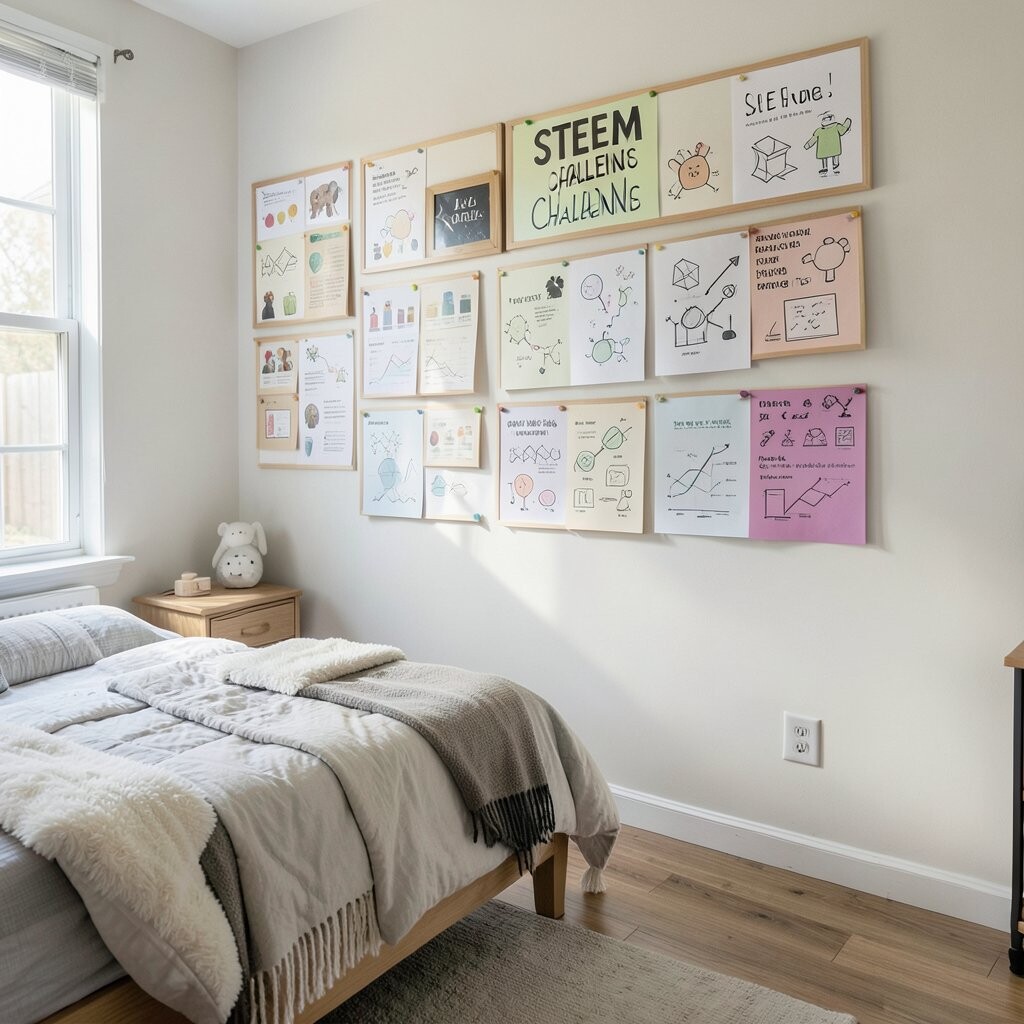
20. Design a “STEM Challenge Wall” with Changeable Sections
Design a “STEM Challenge Wall” with Changeable Sections
Imagine a wall with boards or frames that you can swap like a game board. Each section can hold a new challenge, such as a build prompt, a puzzle, or a simple science question.
This keeps the room fresh and prevents the theme from feeling boring. He gets a small mission that encourages trying, testing, and learning. Add a “points” area where he earns stickers for completing steps, like planning and cleanup.
For uniqueness, let him create some challenges himself using index cards. If you want to manage costs, use clear plastic sleeves, clipboards, and printable templates. This design also helps with personalization because you can update it weekly or monthly as interests change.
Keep the layout easy to use so he can change it without help. A bedroom that supports action makes STEM feel like a habit, not just a theme.