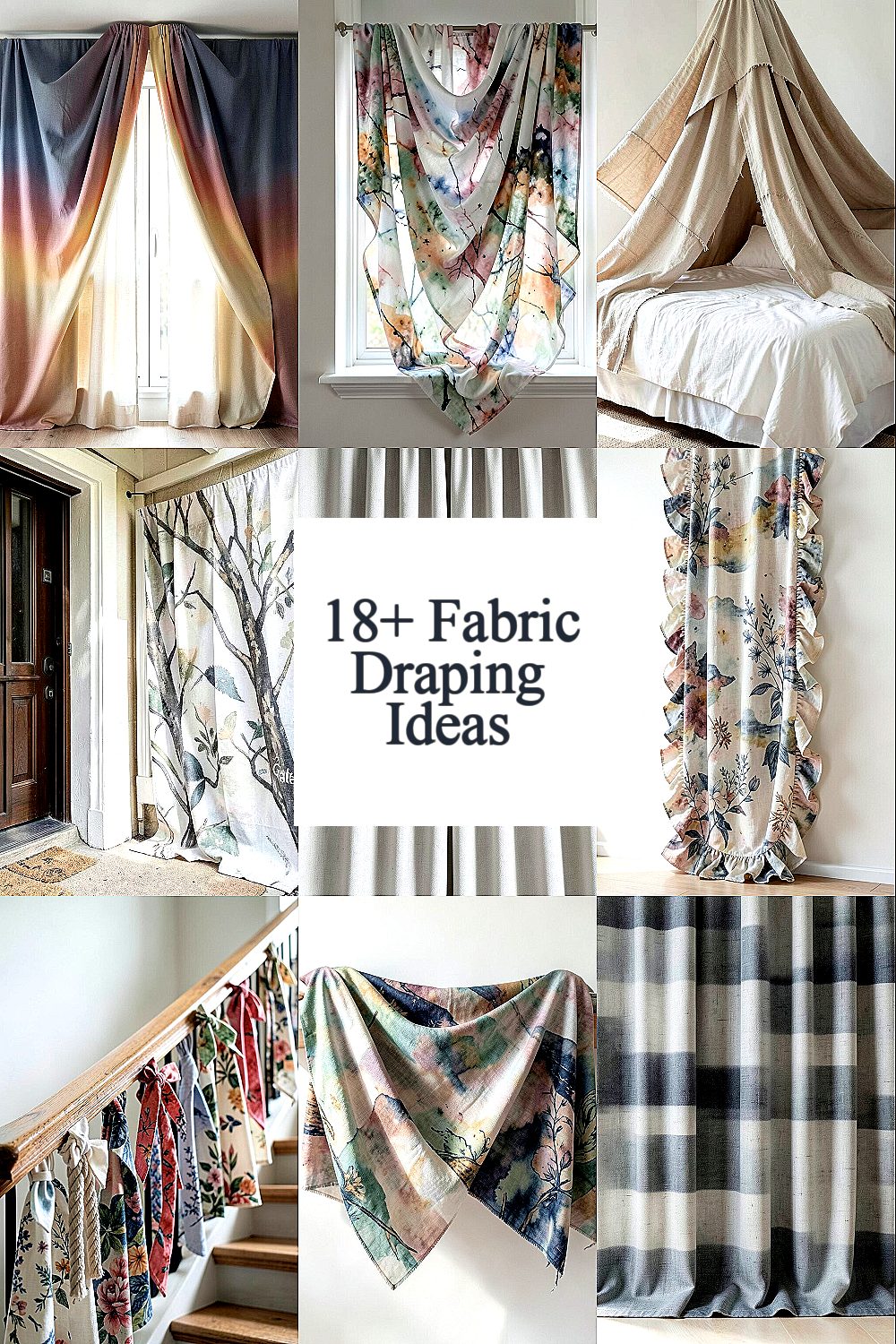
Soft fabric can change the whole mood of a room in minutes. A simple drape can look both calm and creative.
1. Ceiling-to-Floor Ombre Curtain Drift
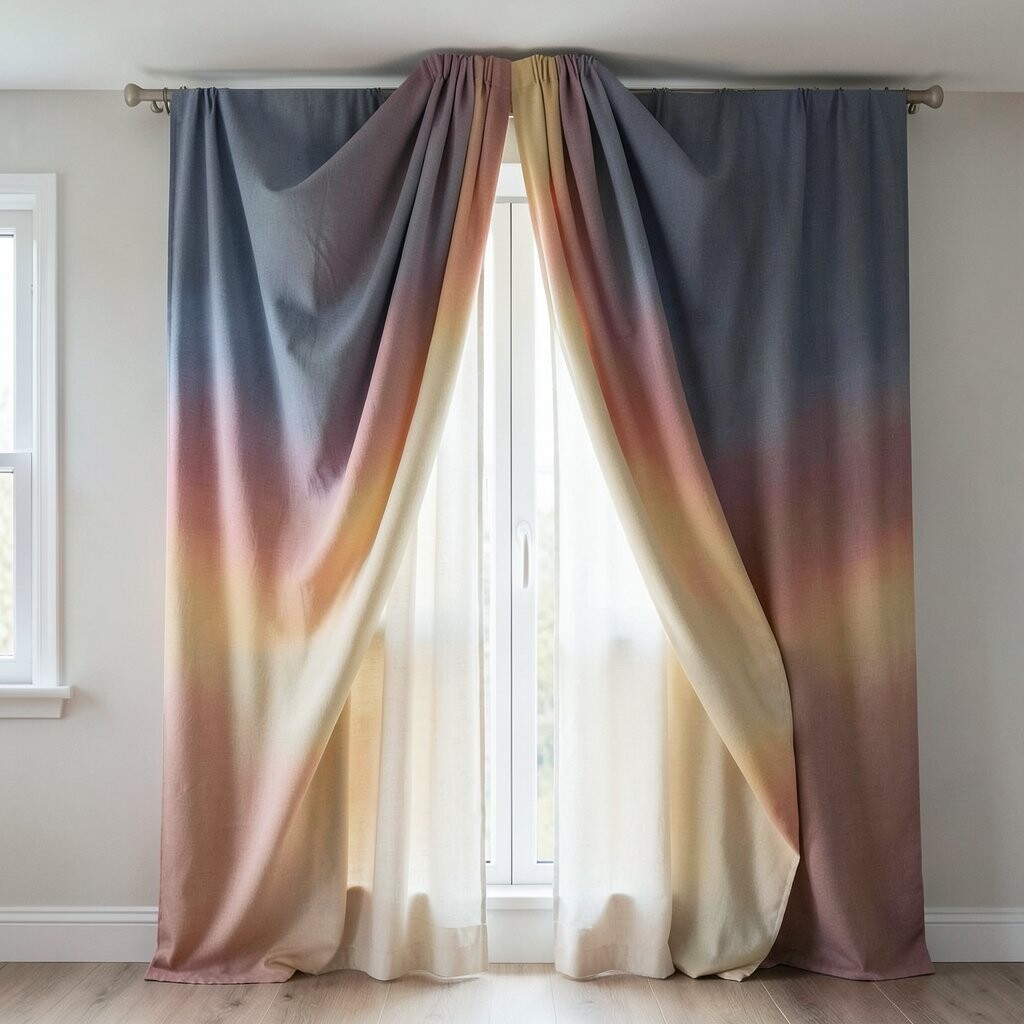
Start with airy fabric that fades from light to deep color. Let it hang from the ceiling track so it looks like a gentle breeze captured in cloth.
This style makes walls feel taller and gives a smooth color story without sharp lines. Choose a fabric with good movement, like cotton voile or lightweight linen-blend. For practicality, measure the height from floor to ceiling and add extra length so puddling looks intentional, not messy.
2. Cascading Swag Over a Window Niche

Use one long panel and pin it slightly off-center to form a soft “swag” curve. The drape should fold like waves rather than hanging straight.
This idea softens strong window shapes and adds a tailored look even on a small budget. Try a medium-weight sheer to keep light flowing while still showing texture. For uniqueness, add a second fabric layer in a contrasting tone at the fold points.
If you’re cost-conscious, shop for remnant fabrics and combine them. Use upholstery tape or small curtain clips to secure the swag so it stays in place. Modern trend-wise, people are pairing muted neutrals with one bold accent color, so pick one shade to highlight the folds.
3. Bed Canopy With Uneven, Art-School Layers

Hang a canopy frame or ceiling hooks and let several fabric pieces fall at different lengths. Keep the edges irregular so it feels artistic rather than perfectly staged.
This draping idea brings a hotel-like calm to bedrooms and makes the bed feel like a special zone. Use breathable layers so the room stays comfortable, like cotton lawn or lightweight rayon. It is also great for privacy, because you can pull one layer forward when you want more cover.
To personalize, choose one solid color plus one patterned fabric that echoes your bedding palette. If you want a cozy look, add slightly heavier fabric on the outside and lighter fabric inside for contrast. Budget tip: mix store-bought panels with longer scarf lengths to create “designed” movement without buying one expensive set.
For current trends, many people are leaning into layered neutrals and subtle pattern repeats, which look intentional in photos and real life.
4. Tension-Rod Fabric “Art Gate” Near an Entry

Mount a tension rod above a doorway or hallway spot and drape a single fabric panel like a sliding gate. Leave it slightly open so the fabric frames the path instead of blocking it fully.
This creates instant visual interest and a feeling of arrival. Choose a sturdy textile like linen or a thicker cotton for clean lines, and use a tieback cord to adjust it during the day. For practical personalization, match the fabric color to your throw pillows so everything feels connected.
5. Gathered Wall Drapes With a Hidden Support Line

Hang two vertical drapes across a blank wall and gather them so they form soft columns. Add a thin support line behind the fabric so the pleats hold their shape.
This style makes a room feel layered and curated without needing a gallery wall. It is especially helpful in rentals because you can use adhesive hooks for temporary mounting. Use a neutral base with a slightly textured weave to hide minor imperfections on the wall.
For uniqueness, vary the gathering density—more gathered at the bottom for a relaxed look. Cost-wise, you can buy two simple panels and gather them yourself with fabric tape or discreet ties. A trend you’ll see often is “quiet luxury,” where texture does the work more than bright prints.
6. Ruffled Table Runner Draping as Wall Styling
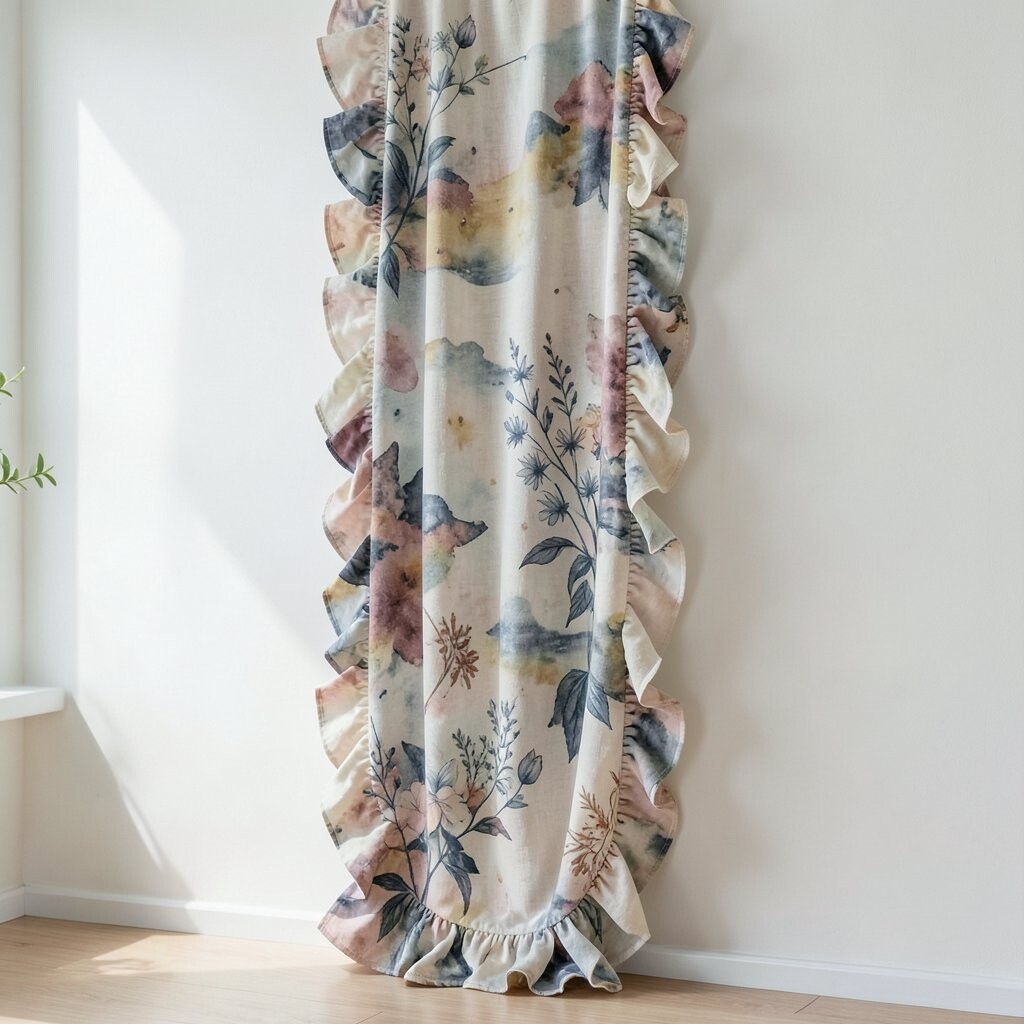
Take a long ruffled table runner and hang it vertically or diagonally on a wall. Let the ruffles cascade like a mini waterfall of fabric.
This is a clever way to repurpose decor and add softness to a room with little effort. Look for runners with soft edges and secure stitching so they hold up visually. For practical tips, measure the wall area first and use command hooks or a picture rail for easy removal.
Personalization can be as simple as choosing a runner color that matches your lampshade or curtain tiebacks. If you want a modern twist, layer the runner over a plain fabric strip so the ruffles create depth. For cost considerations, table runners are usually cheaper than custom wall textiles, and you can swap seasons easily.
7. Fabric Rope Bowties Along a Stair Rail
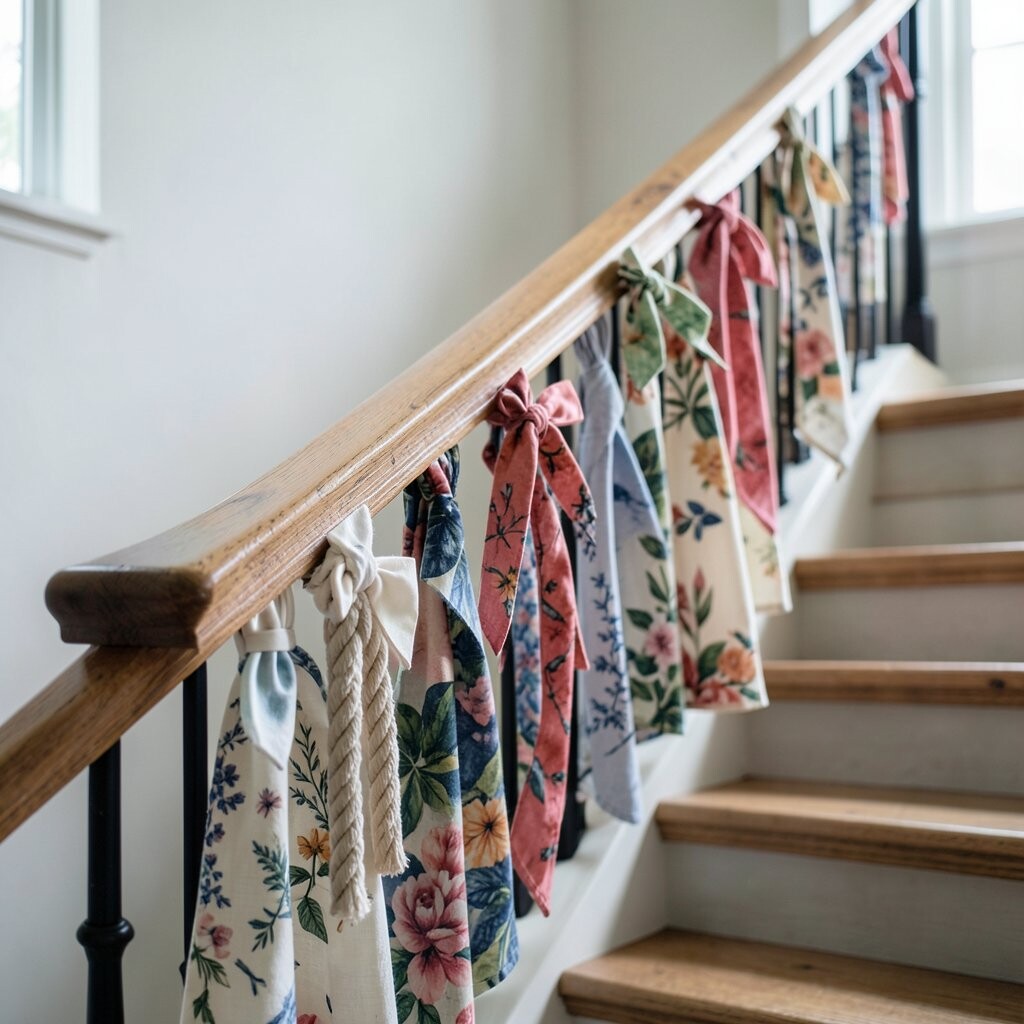
Use wide fabric strips and wrap them into bow shapes around stair rail posts. Keep the drapes slightly loose so they flutter when someone moves past.
This adds charm to entryways and helps stairs feel safer by creating a visual rhythm. It also makes a strong first impression without expensive renovation. Choose fabrics that are easy to iron or steam so the bow shapes look crisp.
To personalize, mix two fabric tones—like cream and sage—for a gentle contrast. Cost-wise, you can cut fabric from larger yardage or use old curtains you no longer love. Current trends favor soft, nature-inspired colors and playful details, so this idea fits right in.
8. Oversized Scarf Draped Like a Floating Shelf

Pin an oversized scarf to the wall on both ends and let the center sag slightly. Place it at a height where it looks like a floating “soft shelf.”
It brings instant color and texture, and it can hide wall marks or bare spots. This is also great for renters because the installation is light and reversible. Use a scarf with fringe or tassels if you want extra movement.
For practical tips, secure with small hooks and use fabric-safe tape where needed. Personalization is easy: pick scarves from your closet so the design feels collected over time. For cost considerations, scouring thrift stores for scarves can be surprisingly affordable compared to full fabric panels.
To keep the look modern, avoid clutter and leave enough empty wall space around the scarf so it breathes.
9. Double-Layer Curtain “Shadow Stripe” Effect

Hang two layers of curtains, but offset them slightly so one layer peeks out as a stripe. The overlap creates a soft shadow line across the room.
This makes ordinary windows feel designer-level and adds dimension to flat wall colors. It also helps with light control when you choose a sheer inner layer and a heavier outer layer. For practical tips, make sure both rods are level so the stripe effect stays consistent.
To personalize, choose two fabric colors in the same family, like beige and taupe, for a gentle gradient. Cost-wise, you can buy one full set and one smaller panel or cut-to-size fabric for the second layer. A current trend is monochrome layering, where texture and tone differences replace loud patterns.
If you want the best drape, press both fabrics lightly and let them hang for a day to settle.
10. Fabric “Folded Fan” Above the Mantel

Create a folded fan look using pleated fabric panels pinned to a mantel or shelf. Space the pleats so they radiate outward like a subtle accordion.
This draping idea draws the eye upward and turns a simple mantel into a focal point. It feels decorative without requiring a full background like wallpaper. Use a crisp fabric such as cotton poplin or a light home-dec fabric blend for clean folds.
Personalization can be done with color blocking—one solid layer plus one patterned accent at the tips. For practical tips, use removable pins or clear wall clips so you can change seasons easily. Budget-wise, pleated fan drapes can be made from fabric scraps if you keep widths generous enough to fold nicely.
11. Floor-Length Sheers as a Room Divider

Drape sheers from a ceiling-mounted track to create a flexible divider. Leave a small gap at the bottom so light still travels through the space.
This helps separate zones in open-plan rooms without making them feel boxed in. It is also useful for hiding everyday items while staying airy and bright. Choose lightweight, slightly transparent fabric for a soft, modern effect.
To personalize, add a thicker “handle” panel on one side so you can pull the divider open smoothly. Cost considerations vary, but you can start with two panels and a basic track kit. Current trends often favor soft zoning, especially in studios, where partitions must be both beautiful and functional.
For practicality, tie the ends neatly with fabric ties so the divider doesn’t twist or drag.
12. Draped Picture Rail With Fabric Loops

Install a picture rail or ceiling track and hang fabric loops at different heights. The loops should sway slightly, like hanging lanterns made of cloth.
This makes art walls feel softer and adds motion without needing artwork. It is unique because the fabric itself becomes the decoration. Choose a variety of loop lengths to create a rhythm across the rail.
Personalization ideas include using one color for calm or mixing small patterned scraps for an eclectic vibe. For practical tips, use lightweight rods and strong clips so the fabric stays even. Cost-wise, you can use old curtains or bedsheets cut into strips, which is usually much cheaper than buying new yardage.
13. Corner Draping With a “Curtain Cloud” Over the Sofa
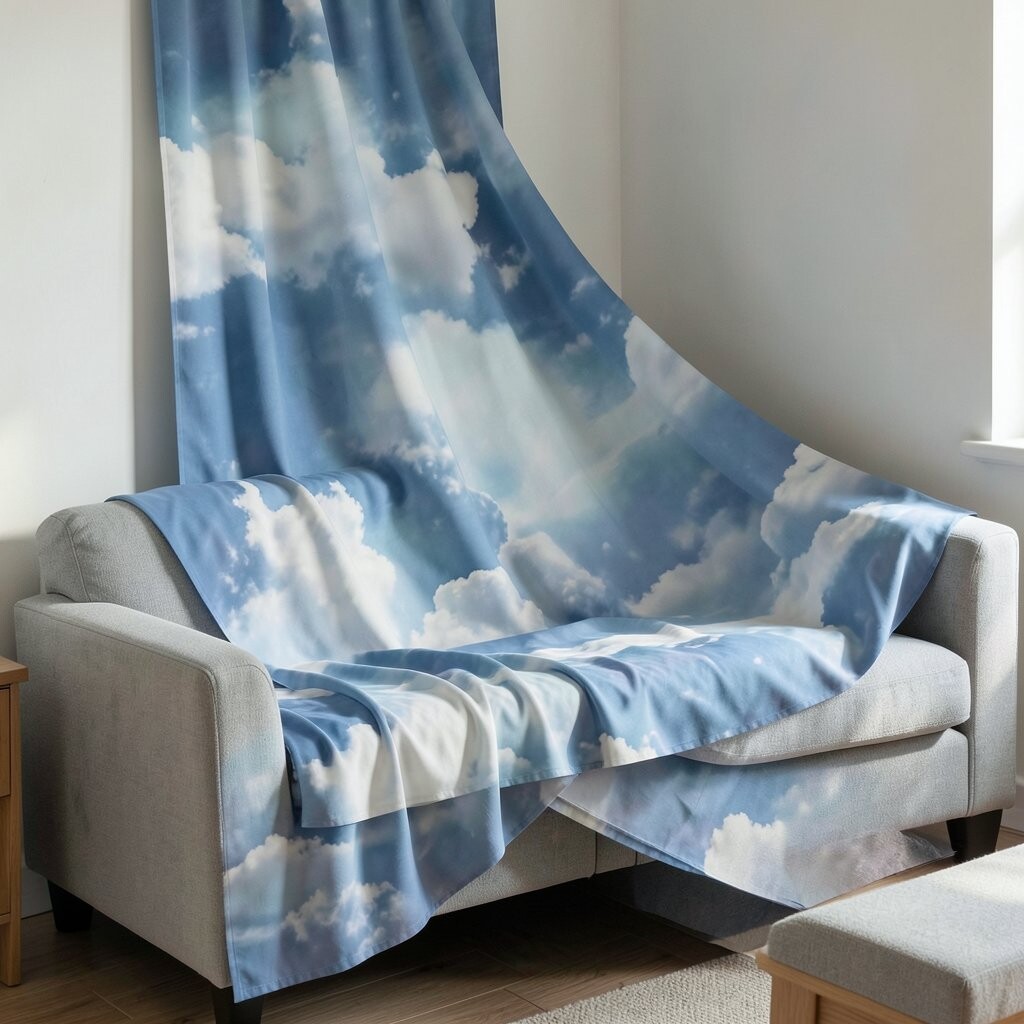
Let a fabric panel float from the wall corner down behind the sofa in a cloud-like shape. Slightly bunch it so it looks like a soft tumble rather than a straight curtain.
This style instantly makes a living room feel cozy and styled. It softens hard edges like corner shelves and provides visual warmth around seating. For practical tips, use a rod end bracket or ceiling hook near the top to keep the drape anchored.
To personalize, pick a fabric that matches your rug tones and consider a subtle pattern to add depth. Budget considerations are friendly here because you can use fabric you already own and adjust the drape to hide thin spots. A current trend is comfort-forward interiors, and this “cloud corner” look fits right in.
Make it move-friendly by choosing fabric with natural drape, such as linen or rayon blends.
14. Suspended Fabric Panels Like Paper Lanterns (But Fabric)
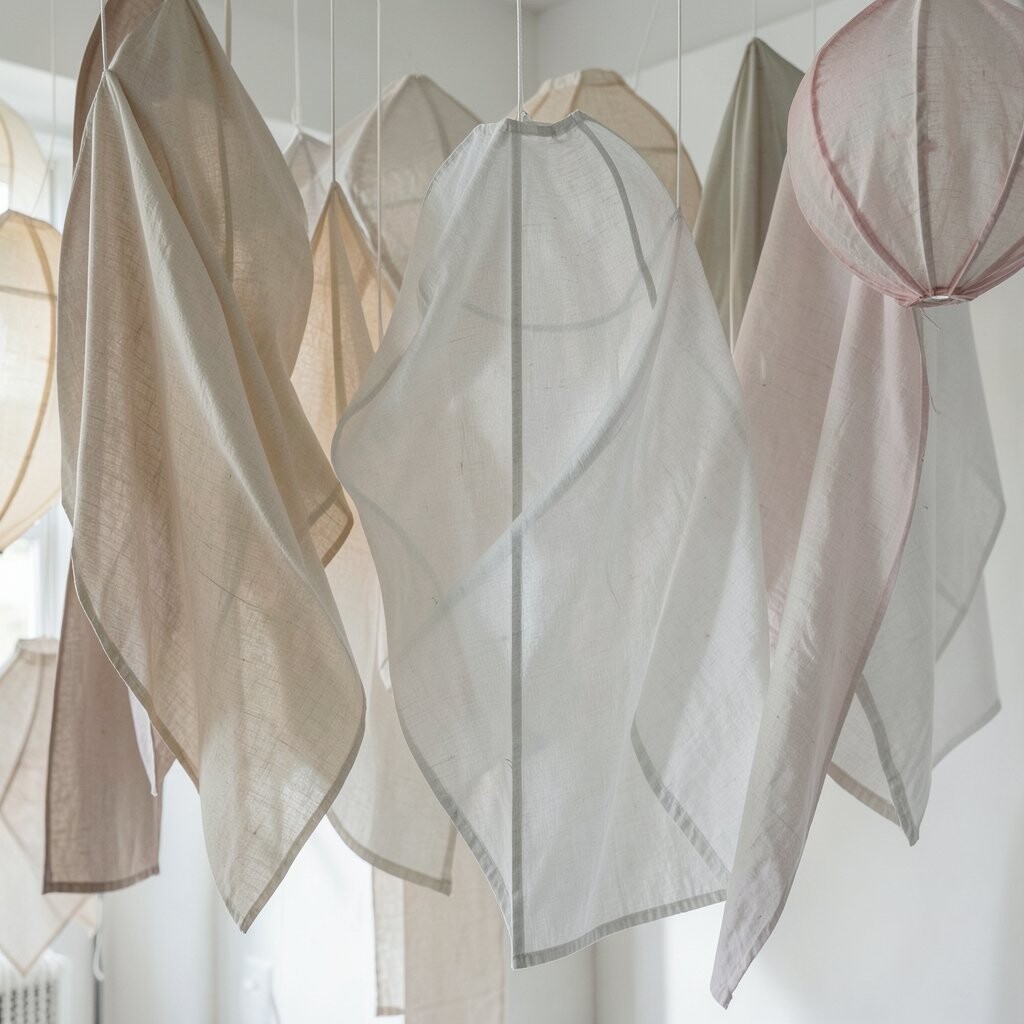
Hang short fabric panels from the ceiling with multiple heights, forming a clustered “lantern” effect. Use thin dowels or rings so the cloth stays open instead of collapsing.
This adds a sculptural, playful vibe and works beautifully over dining areas or reading nooks. The benefit is flexibility—you can rearrange the panels anytime for a new mood. Choose fabrics that can handle air and movement, and avoid super-fragile materials in busy spaces.
For personalization, mix textures such as matte cotton with a slightly glossy silk-like fabric for contrast. Cost-wise, you can keep it affordable by using fabric scraps and simple hardware. Trends right now show more “soft sculpture” lighting and decor, and this drape idea fits that theme.
To get the look right, keep the palette tight and let the shapes do the talking rather than many loud prints.
15. Balcony or Patio Hanging Panels With Ripple Ties

If you have outdoor space, drape lightweight fabric panels across a balcony railing. Tie them at intervals to create ripples instead of flat hanging lines.
This gives outdoor seating a shaded, resort-like feel and makes conversations more inviting. Choose weather-considerate fabric finishes if it’s exposed to sun or mist. A practical tip is to use removable ties so you can take fabric down during storms.
For personalization, match the fabric to outdoor cushions or add a single contrasting color panel as an accent. Cost considerations can stay low if you repurpose indoor sheers that have a nice weave. A trend you’ll notice is calm, neutral outdoor styling with one gentle accent, which looks elegant in photos.
16. Curtain “Picture Frame” Draping Around a Mirror

Wrap fabric around a mirror like a soft frame, with draped tails reaching the sides. Keep the folds loose so the frame feels romantic, not stiff.
This makes a mirror look intentional and turns it into decor, even when it’s not catching much light. It also softens reflective surfaces, which can feel harsh in modern rooms. Choose fabric that matches your room color story so the mirror blends smoothly.
Personalization ideas include adding a thin ribbon belt in the middle or using sheer overlay for a dreamy effect. For practical tips, use invisible hooks behind the mirror frame so the drape doesn’t slip. Cost-wise, mirrors are already a focal piece, so adding fabric can be an inexpensive upgrade compared to new hardware.
For a modern look, avoid heavy fringe and instead rely on texture like linen weave or light ruffles.
17. Dining Chair Back Drapes With Soft Edge Pull-Through

Drape fabric over the backs of dining chairs so it falls in graceful folds. Leave a small tail that pulls through and settles naturally instead of securing everything tightly.
This makes everyday meals feel special and visually unifies mismatched chair styles. It also protects chairs from scuffs if you use a durable fabric. Choose a fabric that can be wiped or washed, since dining areas get messy.
To personalize, use themed colors for holidays or keep a consistent everyday palette for calm. Budget considerations are manageable because chair back covers can be made from rectangles of fabric and simple ties. A trend that’s growing is flexible dining styling that looks good for both daily life and gatherings.
Practical tip: tie drapes securely enough that they won’t brush against food or trip during seating.
18. Spiral Rope Draping on a Plant Stand or Shelf

Wrap a long fabric strip around a plant stand or shelf edge in a loose spiral. Let the fabric twist slightly as you go so the texture looks alive.
This is a quirky, artsy way to add softness to corners that usually feel bare. It also highlights your plants by giving them a decorative “stage.” For practical tips, secure the ends with fabric-safe glue dots or small ties so the spiral doesn’t unravel.
Personalization is easy: use one strip color for a clean look or combine two strips for a ribbon-like effect. Cost considerations can be low if you use worn fabric scarves or repurposed curtain remnants. Trends often favor natural elements, and spiral fabric draping pairs nicely with greenery and woven baskets.
For best results, choose strips that are wide enough to show the spiral pattern from a distance.
19. Window Wall “Fabric Wave” for Soft Seasonal Changes

Create a fabric wave across the wall beside a window by pinning two ends and shaping the middle into a gentle curve. Use a repeating pattern of folds so the wave looks intentional.
This draping idea lets you refresh your room seasonally without repainting or buying new furniture. It also creates a soft frame for the window and makes daylight feel curated. For practical tips, use removable wall clips and keep the fabric length slightly longer so you can adjust the wave height.
Personalization suggestions include switching fabric colors to match your seasonal decor, like warm tones in fall and cool tones in spring. Cost-wise, this is a great project because it can be made from one or two panels and updated whenever you want. Current trends lean into flexible decor systems, and a wave drape is one of the simplest ways to keep your space feeling new.