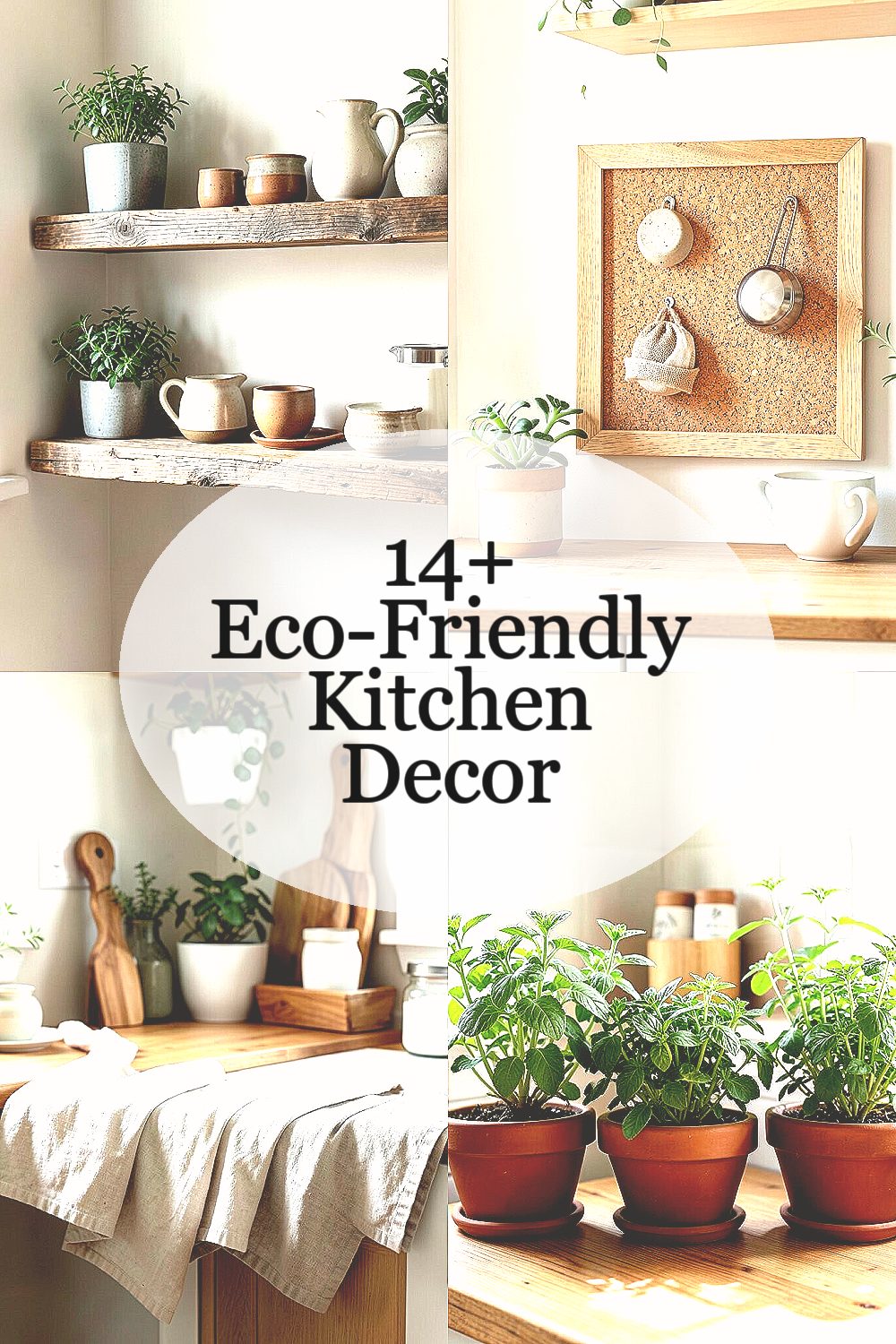
Small kitchens can still feel warm and stylish. Eco-friendly decor helps them feel fresh without waste.
1. Reclaimed Wood Floating Shelves

Swap bulky cabinets for light floating shelves made from reclaimed wood. You get warmth and character while reusing materials that already have a past.
Keep the look tidy by grouping items like mugs, a cutting board, and one small plant. For tiny spaces, mount shelves higher to free up counter space and reduce clutter. Choose a low-VOC finish so the wood smells less strong and stays friendlier to your indoor air.
2. Corkboard Recipe Center With Natural Frames

Turn a corkboard into a cozy recipe and note station for your kitchen. The natural texture looks soft and doesn’t feel harsh like plastic organizers.
Place it near where you cook, but off to the side so it doesn’t block movement. Use pushpins that match your theme, and add a simple frame from reclaimed wood or bamboo. To personalize, pin handwritten recipes on weathered paper and swap seasonal cards monthly.
For cost, look for cork offcuts at craft stores or repurpose a sheet from an older board. A corkboard also helps you avoid printing extra copies, which saves paper over time.
3. Low-waste Dish Towels in Organic Cotton or Linen
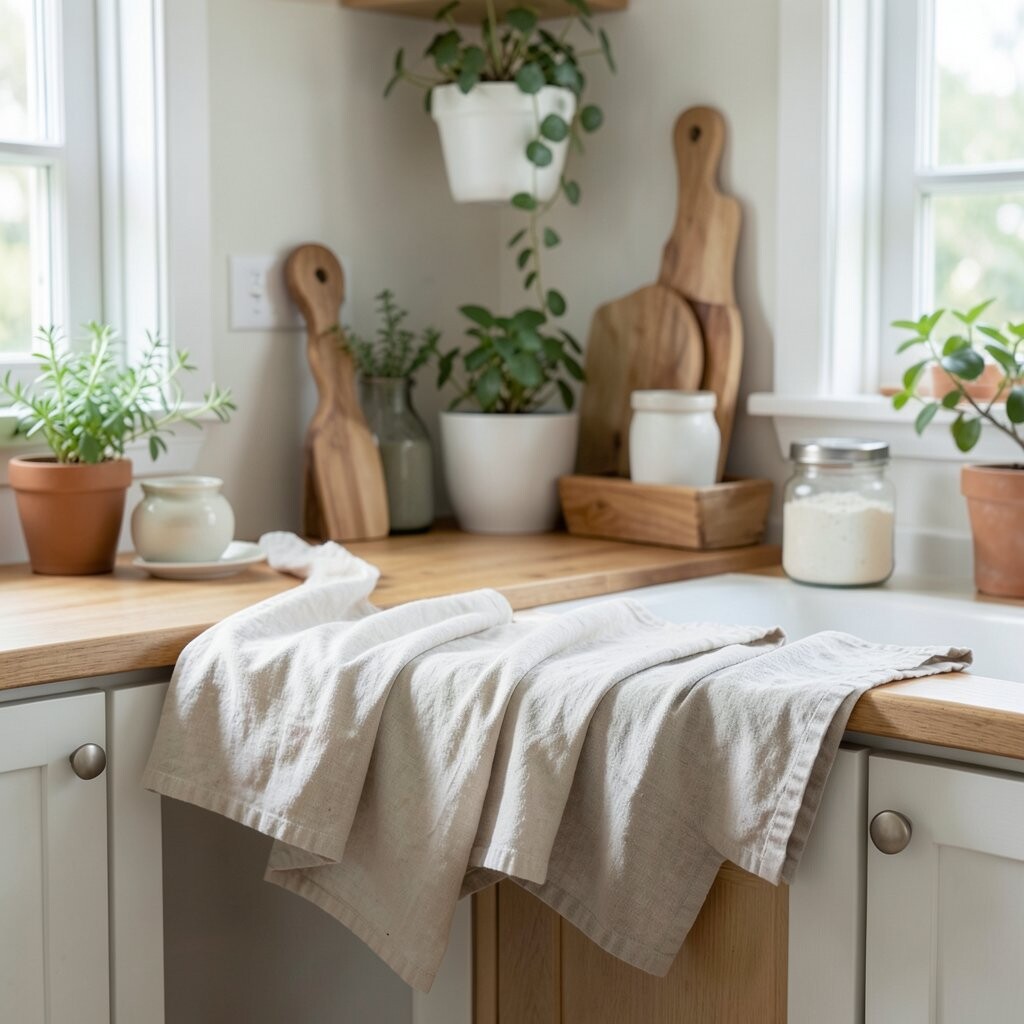
Hang or fold beautiful organic cotton or linen towels for an easy eco upgrade. They add color and softness while still working hard every day.
Choose a hanging bar or wall hook so towels are visible and quick to grab. Linen often dries faster, which can help reduce musty smells in small kitchens. Rotate between two sets so you’re not constantly washing the same batch.
To make it unique, tie a small ribbon or use cloth tags to label towel use, like “plates” or “hands.” Look for certified organic fibers and durable stitching, since low-quality towels wear out sooner. If you want a trend, try muted earth tones paired with one bright accent like terracotta or deep green.
When budgeting, watch for end-of-season bundles and buy replacements one at a time. Even one high-quality set can last longer than multiple bargain packs.
4. Terracotta Planters With Indoor Herbs
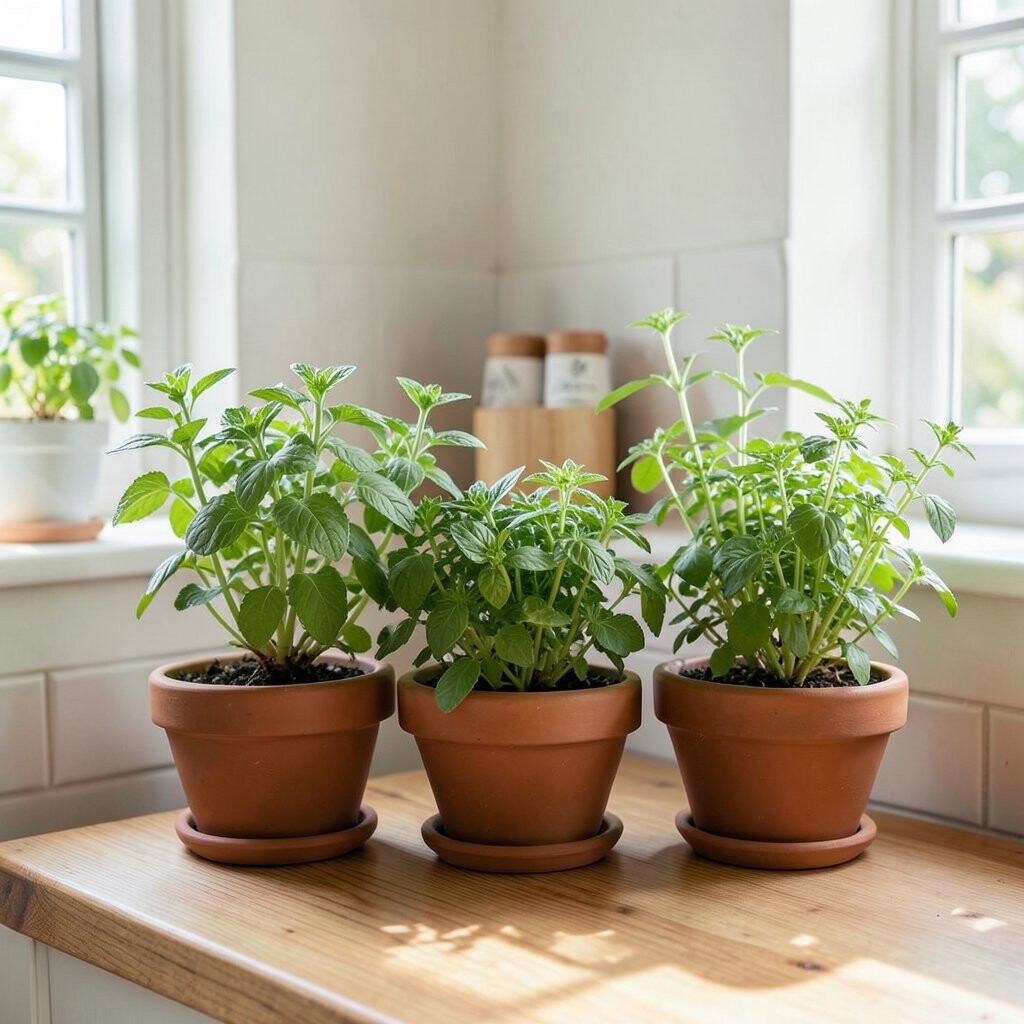
Add life to a tiny kitchen with terracotta planters and simple herb growth. The warm clay look makes counters feel calmer and more inviting.
Use a windowsill rack or a small wall shelf to save space, and keep basil, mint, or thyme where they can get light. Terracotta helps soil breathe, which can reduce overwatering issues for new plant parents. Personalize by painting plant labels with natural ink or chalk and writing the harvest dates.
5. Woven Seagrass Baskets for Pantry Zones
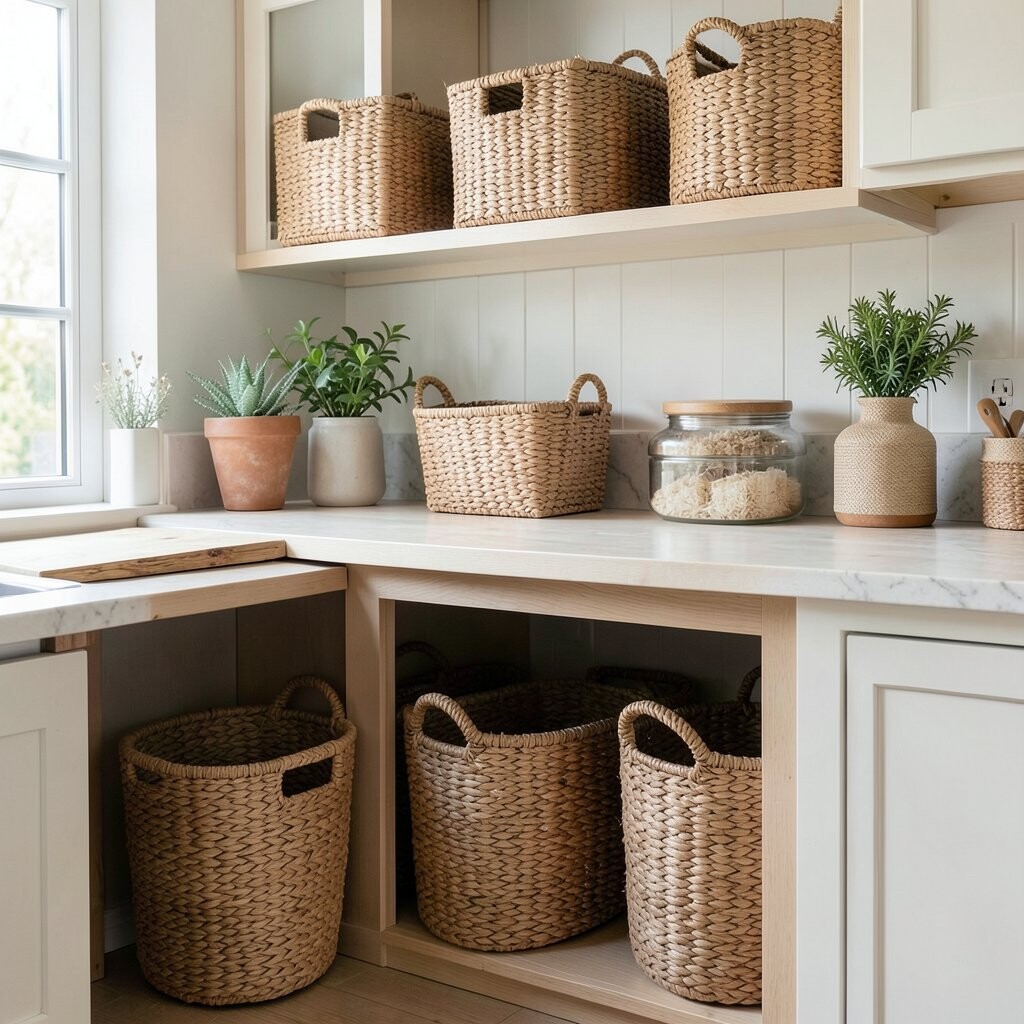
Use woven seagrass baskets to organize dry goods and create visual order. The texture brings a beachy, natural vibe without feeling busy.
Sort items like pasta, oats, and snacks into baskets so you can spot what you need quickly. For tiny spaces, keep the baskets uniform in size and place them on shelves rather than taking up floor room. Add small label cards made from recycled paper to keep everything easy to return.
This idea stays eco-friendly because baskets can last for years when kept dry. It also reduces packaging clutter since you can store foods in reusable containers once opened. If you want a modern trend, choose a neutral basket set and add one woven mat under a cutting board for extra warmth.
6. Glass Jar Storage With Reused Lids
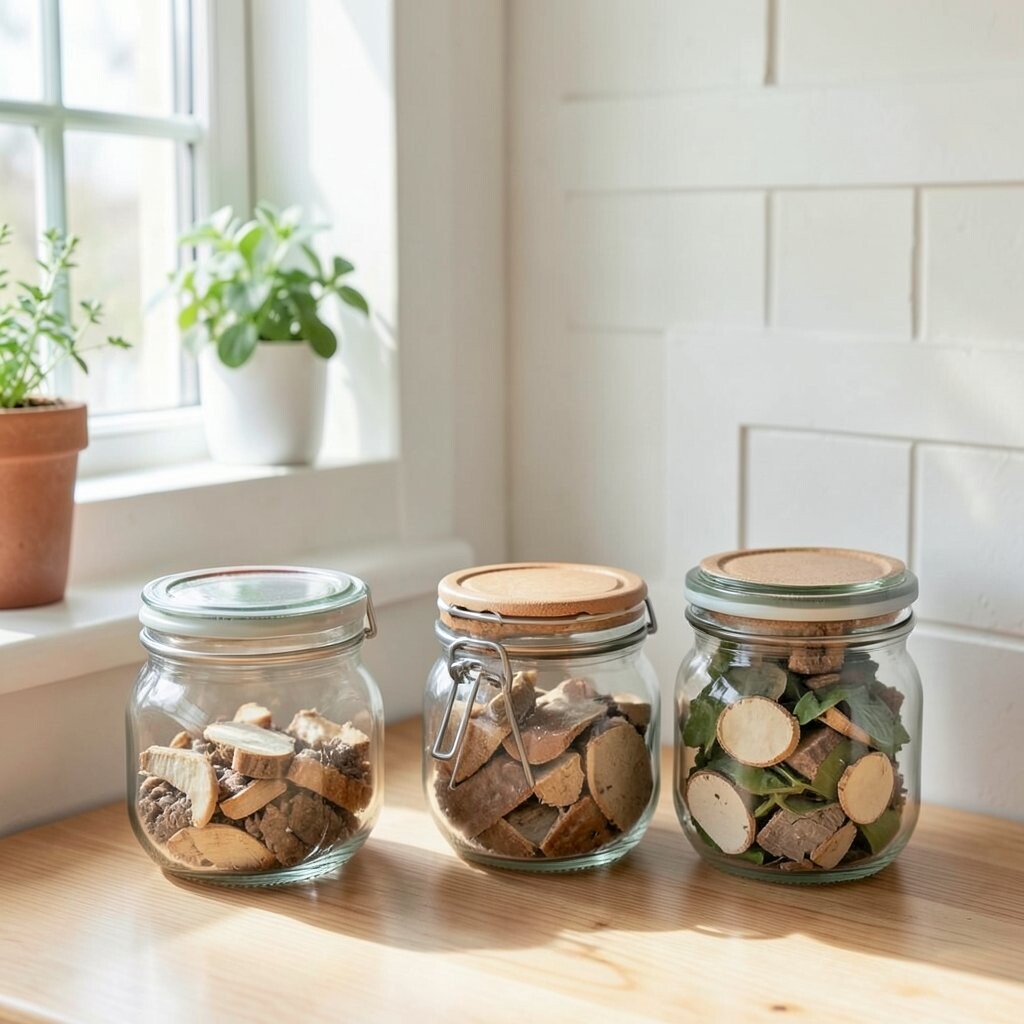
Display pantry staples in clear glass jars for a clean, light-catching look. It also helps you avoid single-use packaging, which is great for both style and waste.
Pick jars you already have or buy a small set and slowly expand. Use matching jars for a tidy visual rhythm, and keep labels simple with recycled paper. Try using the original lids from jars you bring home, and store them in a drawer until needed.
For personalization, wrap twine around the lid and write contents on a cloth tag. This stays trendy because minimalist storage is always in style. Cost can be low if you reuse jars from pasta sauce, pickles, or bulk purchases, then replace only what’s damaged.
7. FSC-certified Wood Cutting Board Wall Display
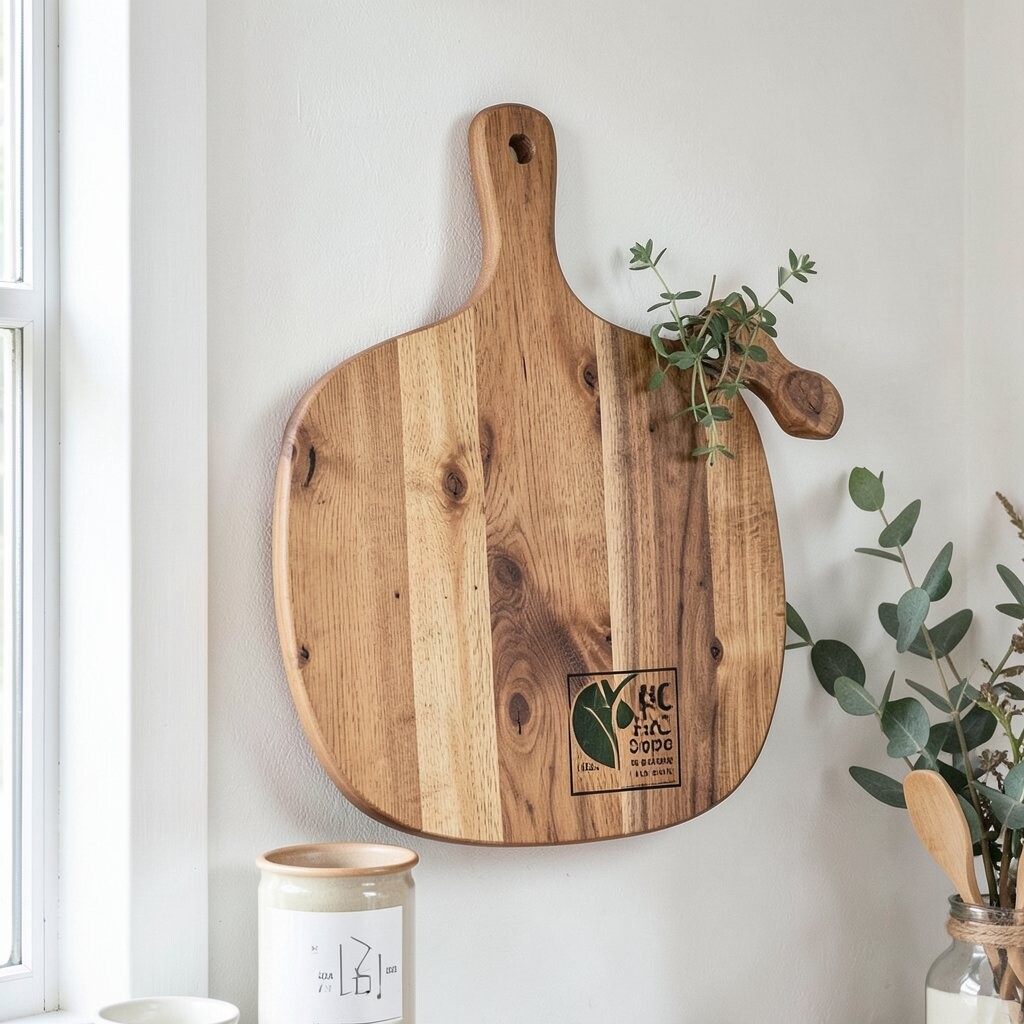
Turn cutting boards into wall decor instead of hiding them in a drawer. It’s practical because you can grab the right size board quickly.
Choose one larger board and two smaller ones, then hang them using simple hooks or a rail. The natural grain becomes a warm backdrop that makes a small kitchen feel styled. Keep boards clean and dry, and oil them with food-safe mineral oil to extend their life.
For uniqueness, mix shapes like oval and rectangle, but keep the wood tones close so the wall looks intentional. This is a current favorite because it mixes function and decor in one move. If you’re watching costs, search for board sets with minor cosmetic marks and treat them as display pieces first.
8. Patterned Table Linens From Plant-based Dyes
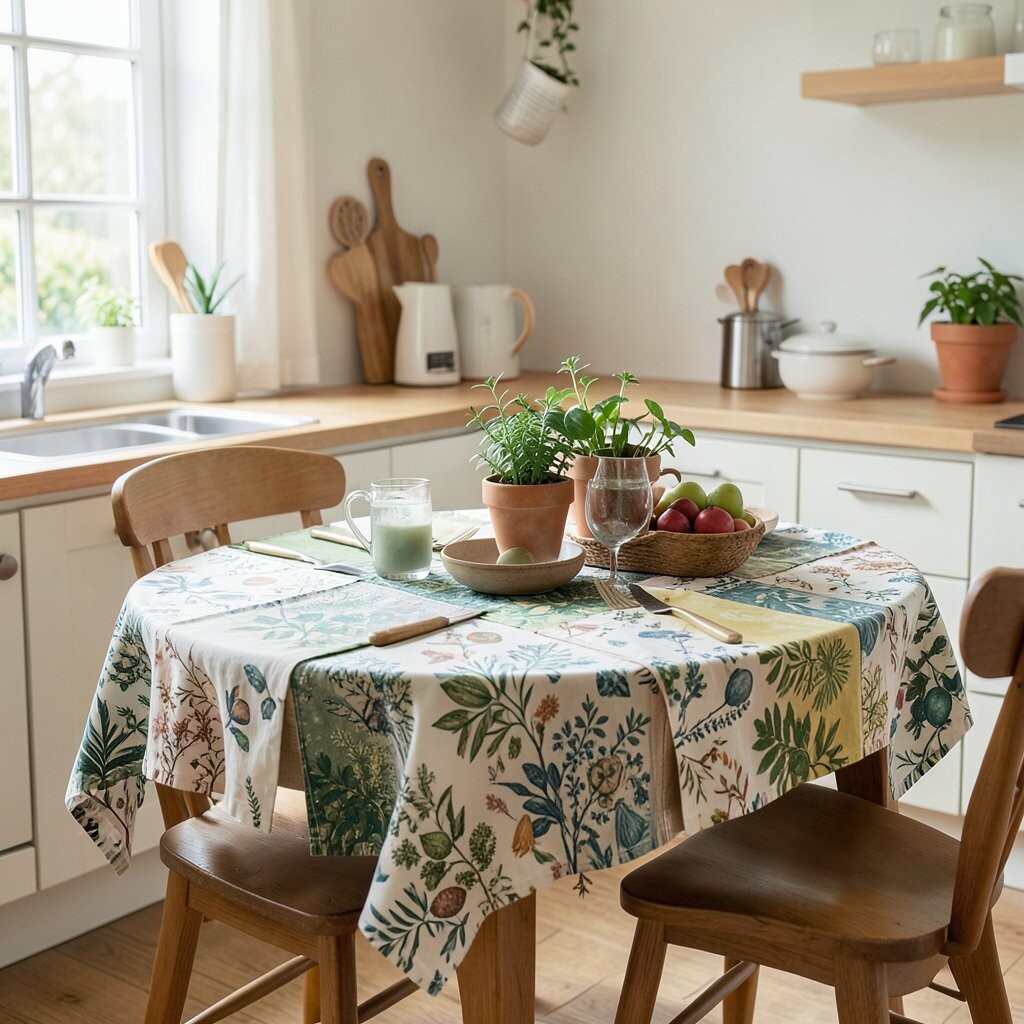
Add personality with table runners or placemats made using plant-based dyes. The colors feel softer than many synthetic prints and can look wonderful in small kitchens.
Place a runner along a narrow counter or drape it over a shelf to make the space feel curated. Pair it with simple ceramics so the pattern becomes the star, not the entire room. To personalize, choose a color that matches your herb pots or your dish towel set.
If you like practicality, pick thicker fabric that wipes clean and holds up to daily use. Cost varies, but you can buy one runner and reuse it in different spots. A trend right now is earthy prints—think leaf motifs and gentle stripes—that match eco decor easily.
For best results in tiny kitchens, keep the fabric small in scale so it doesn’t overwhelm the countertop.
9. Magnetic Reusable Spice Labels and a Refilling Routine
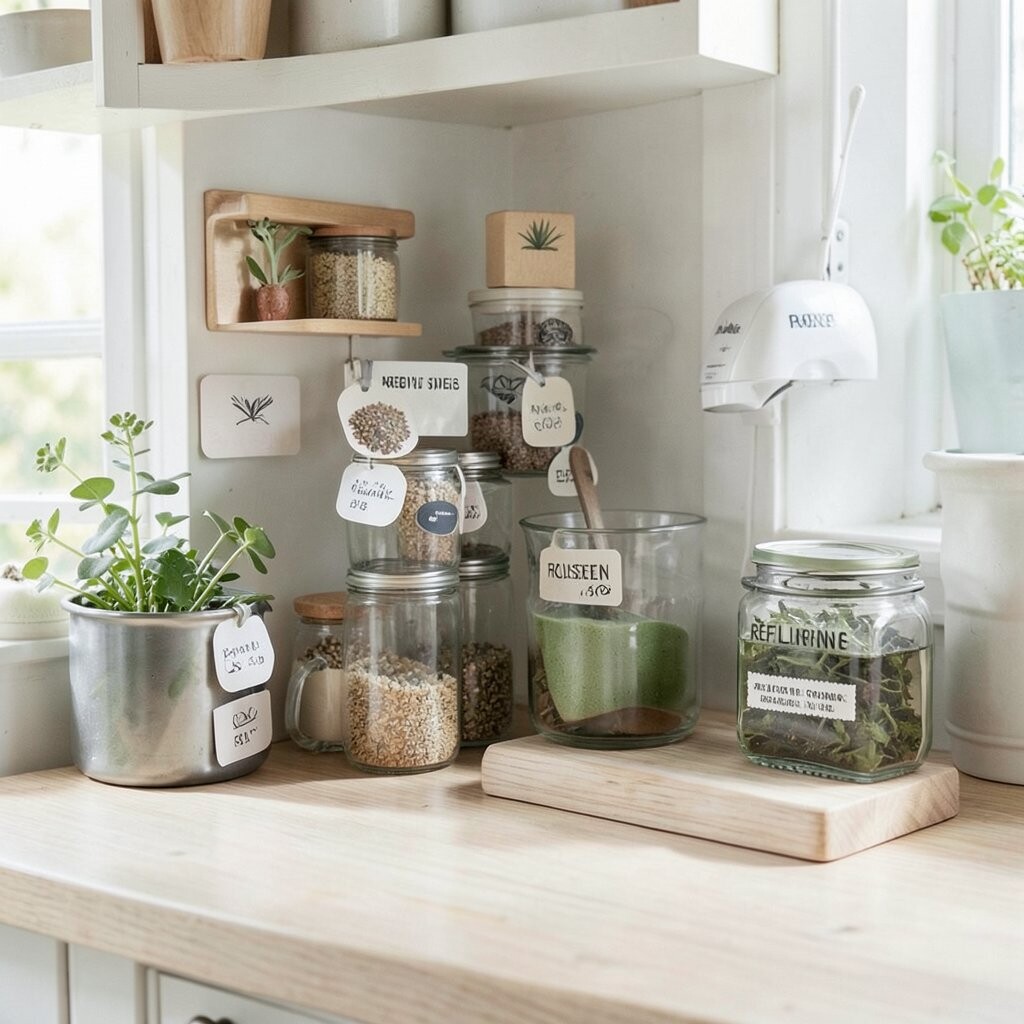
Make your spice zone look neat with magnetic labels on a metal strip. It keeps things readable and avoids constant reprinting of tiny label stickers.
Use glass spice jars with metal lids, then apply labels that you can change as you refill. A refilling routine also helps you buy larger containers less often, which cuts packaging waste. For tiny spaces, store spices vertically on the side of a fridge or near the oven.
To make it unique, choose label cards with handmade fonts or simple icons. If you prefer a modern look, go for black label backgrounds with cream text for contrast. This idea is trending because people love clear organization that still looks warm.
For cost considerations, start with labels first and reuse any jars you already own. Over time, buying refills reduces cost compared with small replacement containers.
10. Bamboo Utensil Holders and Matching Drawer Liners
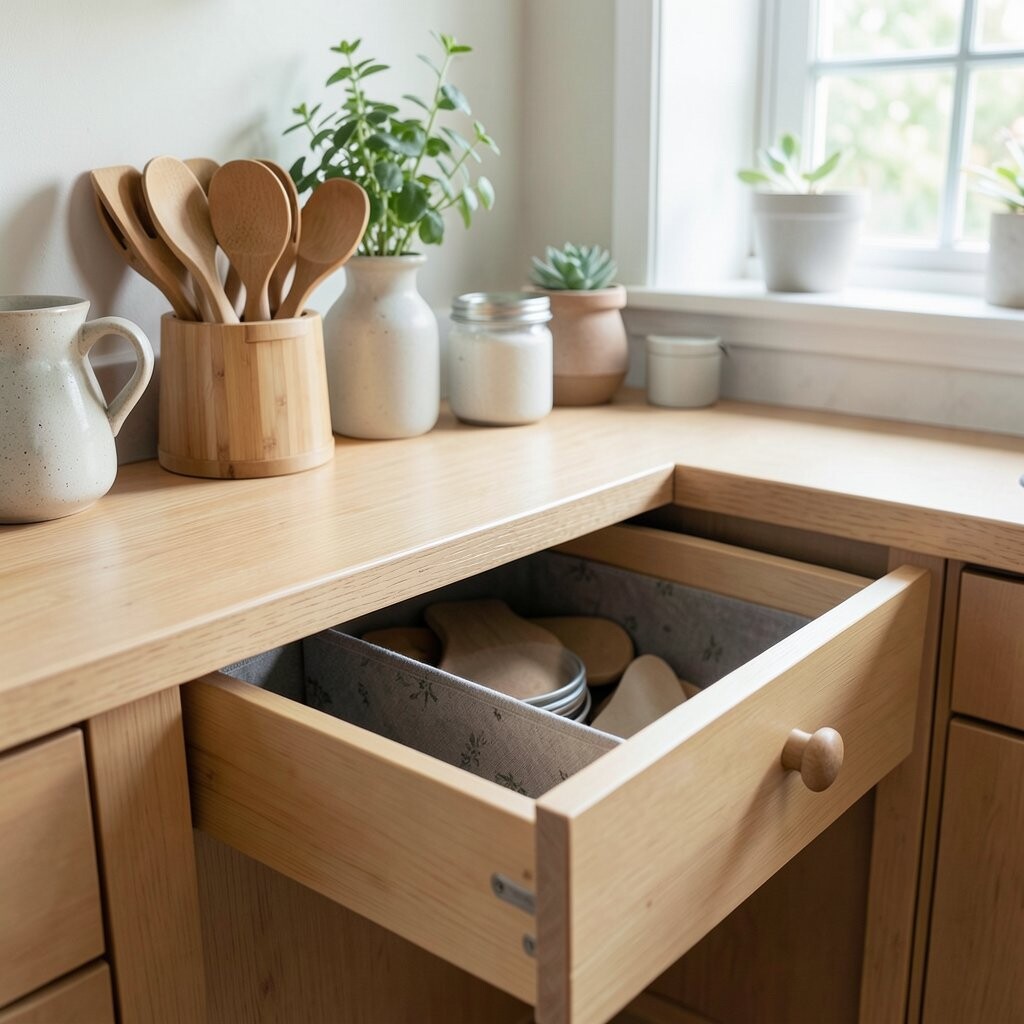
Switch to bamboo utensil holders so your counter looks clean and eco-minded. Bamboo grows quickly, so it’s often a more responsible choice than slower alternatives.
Pair the holder with a thin bamboo or washable fabric drawer liner to protect surfaces and reduce chemical smells from new plastics. Keep utensil pieces visible but grouped by type, like “spoons,” “whisks,” and “tongs.” For personalization, add small tabs on the liner so you can return everything to its spot.
11. Upcycled Metal Plant Stand for Counter Height Storage

Use an upcycled metal plant stand as a decorative multi-level display. It can turn unused corners into a functional storage moment.
Place it near a sunny window and use the shelves for herbs, small bowls, or even a stack of cookbooks. In a tiny kitchen, vertical storage helps you keep counters clear and still show off your style. For uniqueness, spray-paint the stand with a water-based paint in a color that matches your ceramics.
When choosing materials, look for sturdy stands with no sharp edges and wipe clean easily. Cost can be surprisingly low if you find a thrifted stand and refinish it. This trend is popular because it blends vintage charm with eco practicality.
12. Handmade Ceramic Soap Dish and Minimal Counter Set
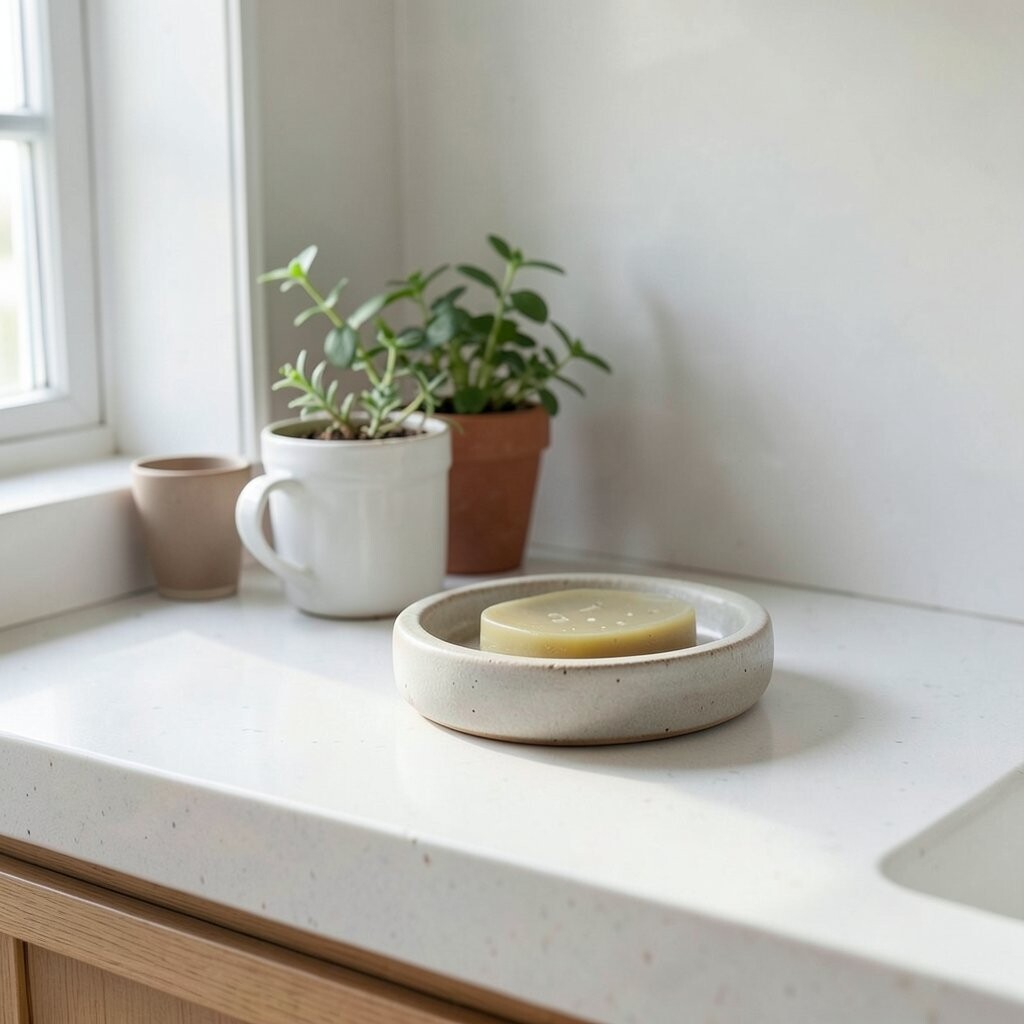
Swap out plastic soap trays for a small handmade ceramic dish. It adds a craft feel and helps your sink area look polished in seconds.
Keep your sink tidy by choosing a minimal set: one soap dish, one small cup for brushes, and one cloth towel nearby. Ceramic is durable, and the heavy weight can reduce the chance of sliding around. Personalize by selecting a dish with subtle speckles or a color that echoes your tile or wall paint.
If you want to keep things eco, choose refillable soap and a brush with replaceable heads. Budget-wise, you can start with just the soap dish first and add pieces later. The current trend is warm, artisan textures, so handmade ceramics fit right in.
13. Reusable Silicone Food Covers for Tiny Fridges

Cover leftovers with reusable silicone food covers to keep your fridge organized and reduce cling wrap waste. They look simple and clean, which works well in compact kitchens.
Choose a set with different sizes so they cover bowls, half-cut fruit, and small containers. Store them stacked in a drawer or hanging on a small hook to avoid counter clutter. For personalization, tie a cloth ribbon around the stack or mark sizes with washable ink.
What makes this unique is the combination of function and flexibility. They stretch without tearing easily, and they’re easy to clean. Cost can be higher at first, but you’ll save money over time compared with constantly buying disposable wrap.
14. Natural-fiber Rug Runner for Warm Floors and Sound Control
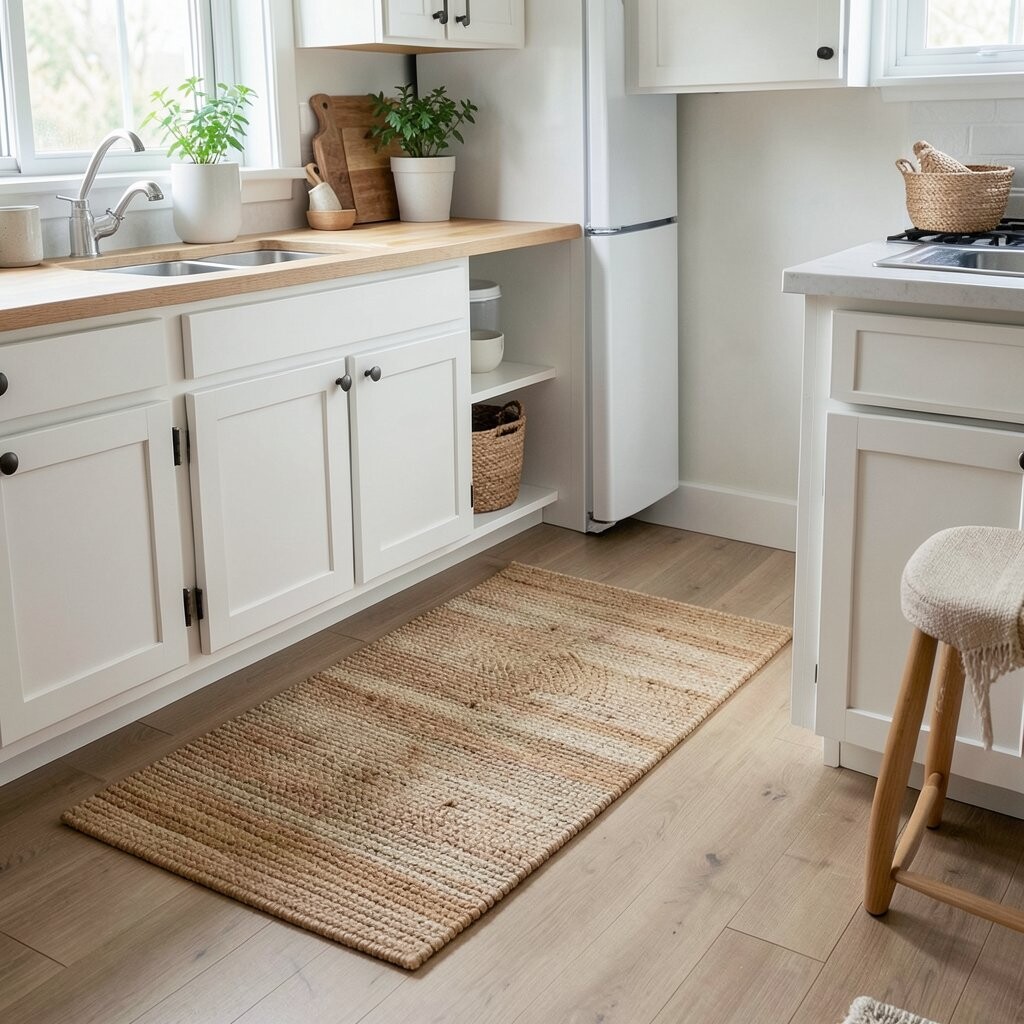
Add comfort with a natural-fiber rug runner in front of the sink or cooking area. It makes a tiny kitchen feel cozier and can reduce footstep noise.
Look for jute, wool, or cotton blends that match your decor and can handle daily spills. Keep the rug small enough for easy movement, and choose a washable option if you can. For personalization, select a gentle pattern so small stains don’t stand out as much.
15. LED Candle-style Lights With Recycled Glass Vessels
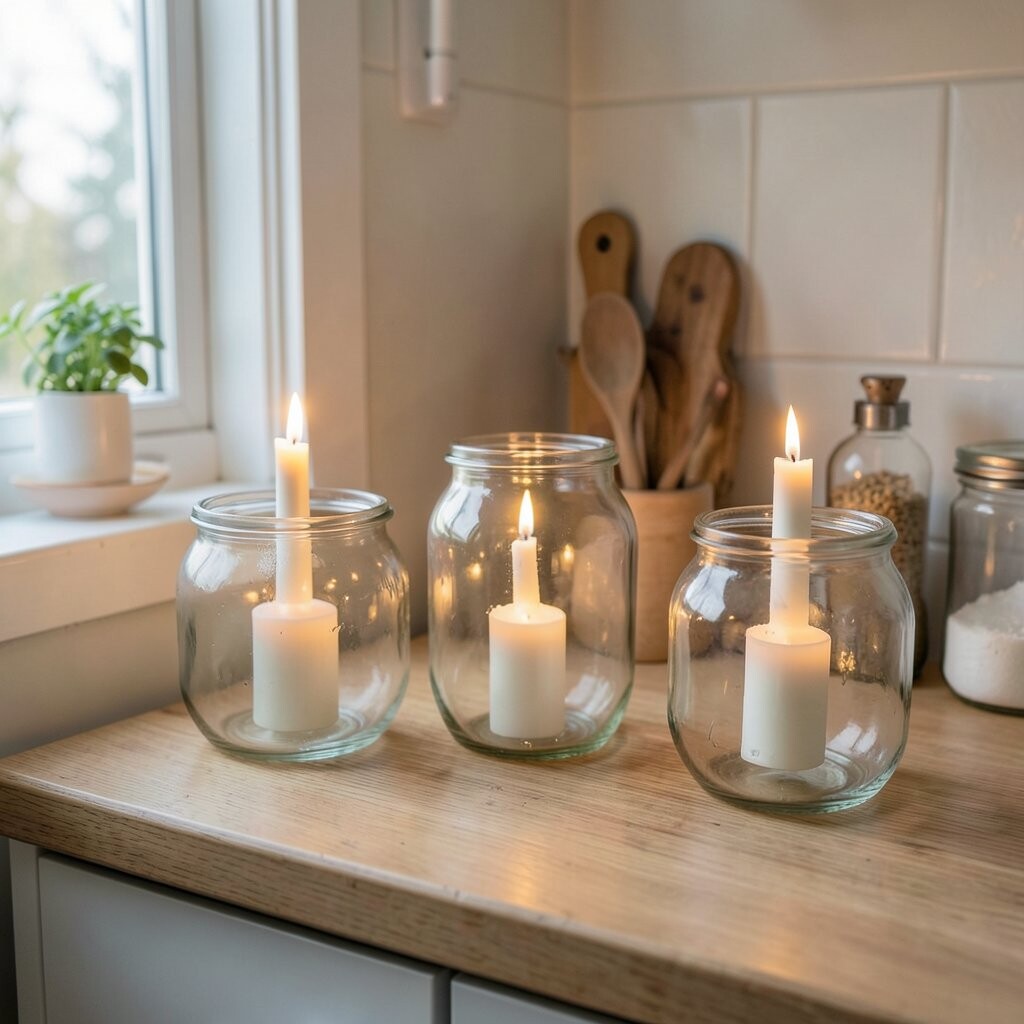
Create a cozy evening vibe using LED candle-style lights inside recycled glass. It brings warmth without open flames, which is safer for smaller kitchens.
Set them on a shelf, windowsill, or dining nook for a gentle glow. Choose a timer so you don’t waste energy, and store the lights neatly when not in use. To make it your own, select glass vessels with different shapes and keep the colors consistent, like clear with green tints.
This idea is unique because it turns decor into a small energy-conscious choice. Cost varies, but LED lights often last a long time, so you get more value from the upfront purchase. As a trend, people are leaning toward “soft light” styling, and this approach fits right in with eco-friendly themes.