
An apron can be more than a uniform—it can be part of the fun. Pick an idea that matches your mood, your cooking plan, and your kitchen space.
1. The “Recipe Narrator” Apron

Wear your apron like a cue card. Write the steps for your favorite dish across the front pocket labels so you cook by rhythm.
As you chop, stir, and taste, the apron keeps you calm and on track. Choose washable fabric paint so you can update notes when recipes change. This idea is unique because the apron becomes a silent teacher you can glance at without grabbing your phone.
2. Color-Coded Station Apron

Give your apron a visual job using three bold colors. One color marks “prep,” another marks “cook,” and the last marks “clean.”
When the colors match what you are doing, you waste less time switching tasks and your workflow feels smoother. Try adding color blocks to the apron ties or using iron-on patches that hold up through regular washing.
For a practical twist, pair it with a matching set of containers or a color marker on your cutting board. A trend right now is “visual organization,” and this fits right into that style without buying new gadgets. Costs stay low if you use fabric scraps, and you can personalize with your favorite kitchen palette.
3. The “Family Cookbook” Photo Apron

Turn memories into motivation by printing a few favorite dish photos on your apron. Arrange them like little chapters across the chest so every cooking session feels personal.
Benefits show up quickly when you feel more excited to start, because the apron makes the kitchen feel like home. Use iron-on transfers for durability, or sew small photo squares into a simple grid with matching thread.
This one is unique because it helps you cook with pride instead of just following instructions. Personalize it with your family’s “signature” meals, and add a tiny tag with who taught you each recipe. If you want to keep it budget-friendly, use printed images from a local print shop or copy photos onto fabric-friendly transfer paper.
You can also rotate the photos seasonally, which is a fun current trend in home decor. Keep the images away from high-heat areas like close to a stove so the print stays bright longer.
4. Weekend “Chef Challenge” Apron

Pick a playful challenge and wear it like a badge. Write “Round 1: One-pan dinner” or “Round 2: Sweet treat” on the front so cooking feels like a game.
This idea is great for turning everyday meals into fun sessions that reduce decision fatigue. For practical use, add a small dry-erase panel or pocket for a jot card so you can switch challenges fast.
5. The Herb Garden Apron

Make your apron smell like fresh flavor by adding herb-themed pockets. Stitch small compartments that hold seed packets, herb scissors, and twine for tying bundles.
This setup encourages you to cook with real herbs more often, which can brighten sauces and soups without extra salt. Choose linen or canvas for the apron fabric so it feels natural and sturdy during prep.
It stands out because it pairs tools with ingredients in one place. Personalize by labeling pockets with herbs you actually use, like basil, cilantro, or rosemary. If you want to watch costs, build pockets from old kitchen towels and reuse what you already have.
6. The “No-Spill” Olive-Oil Messenger Apron

Design your apron around mess prevention and steady pouring. Add a front loop or hook so you can keep a small oil bottle upright and easy to grab.
This benefits both beginners and experienced cooks by reducing slips, drips, and frantic cleanup. For a unique look, decorate the apron with simple icons like a bottle, pepper shaker, and measuring cup using fabric markers.
Practical tip: keep a small microfiber cloth in a pocket for quick wipe-ups between steps. Personalize by matching the icon colors to your kitchen towels. Costs are minimal because you are mainly adding a loop and using marker designs.
7. The “Timekeeper” Apron With Pocket Timers
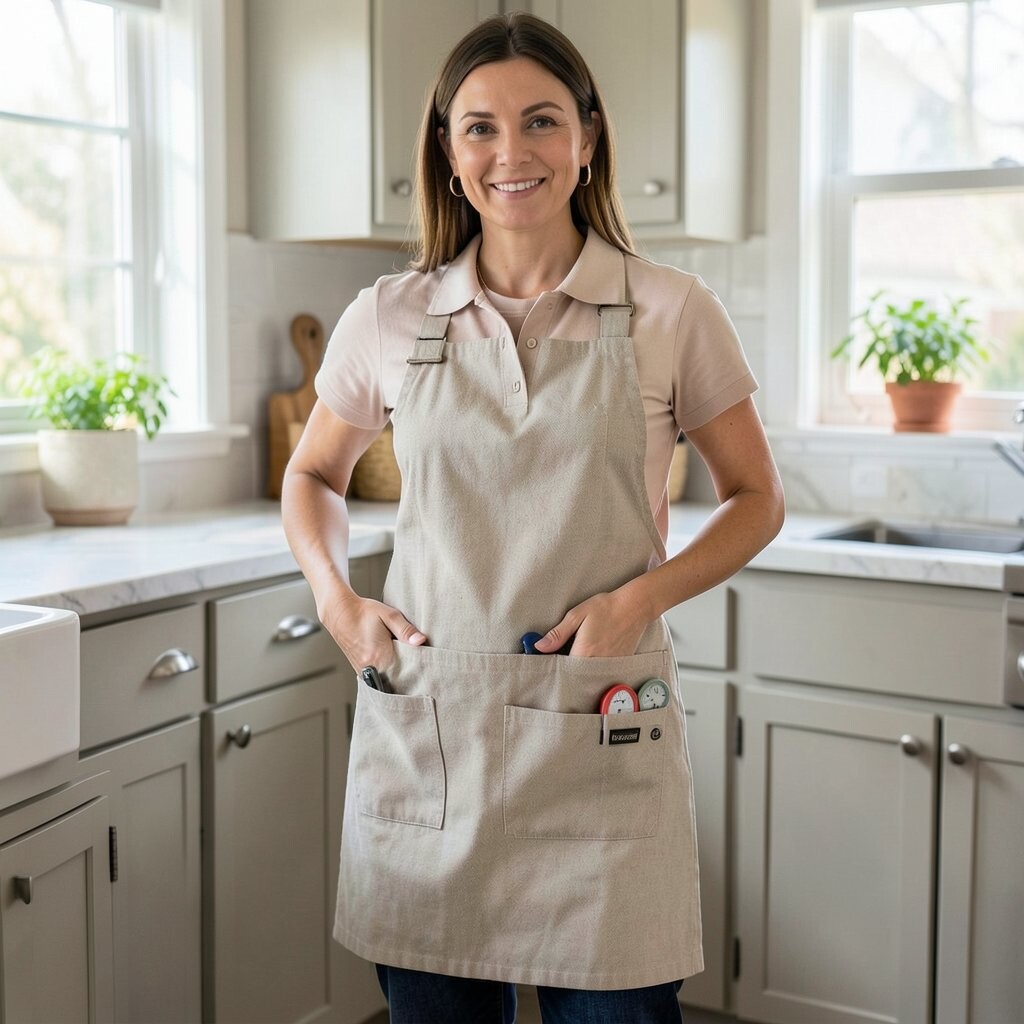
Wear an apron that helps you time things perfectly. Attach two small pockets for clip-on timers, one for cooking and one for resting.
This reduces overcooked edges and helps you coordinate multiple steps. Make it unique by using different timer colors—like blue for simmering and orange for roasting—so you can glance and act.
For practicality, keep your spoon and tongs in the same area every time so you do not hunt mid-cook. Personalize it with your favorite team colors or your kitchen’s color scheme. If you want to stay on budget, use timers you already own and just add the pockets.
8. The “Around-The-World” Flavor Apron

Bring global inspiration to your hands by mapping flavors on the apron. Use sewn-on patches that represent regions, like “Mediterranean,” “Mexican,” or “South Asian.”
This idea makes cooking feel like a journey because you can pick a region before you start. It also helps you learn flavor patterns, which is a big benefit for both fun and skill-building.
Make it unique with pocket cards that list quick pairings, such as garlic + lemon or cumin + lime. Personalize by choosing regions your household already loves. Costs can be low if you print region icons on iron-on paper or use fabric scraps from an old project.
In current kitchens, “theme nights” are popular, and this apron makes it easier to commit. When you cook, keep a small spice tin on a nearby shelf so the apron’s patch becomes a real cue.
9. The Baking “Sweet Signals” Apron

Turn measurements into a playful guide by adding sweet signals to your apron. Sew small marking lines for typical tasks, like “preheat,” “mix,” and “cool.”
This benefits baking because it reminds you to slow down at the right times, like when dough needs rest. It is unique because it treats timing and temperature cues as part of the apron design, not extra clutter.
Practical tip: attach a small pouch for baking weights, parchment, or cupcake liners so you can grab them fast. Personalize the signals with your favorite treat shapes such as hearts, stars, or cookies.
For cost considerations, you can use leftover ribbon and thread if you do not want to buy new materials. Bake-friendly colors are trending, especially soft pastels, so pick shades that match your dessert mood.
10. The “Leftover Legend” Apron

Make leftovers exciting by planning them right on your apron. Add a front pocket labeled “Legend Leftovers” where you note what needs to be used up.
This helps reduce waste while still giving you a creative cooking prompt. It is unique because the apron becomes your reminder system, not just protection for spills.
Practical tip: keep a marker in the pocket and write a quick idea like “fried rice night” or “soup remix.” Personalize it with family nicknames for leftover ingredients, which makes the kitchen feel warmer. Costs stay low because you only need text labels and maybe a washable marker holder.
11. The “Stirring Spoon” Utility Apron

Choose an apron that makes tools feel organized and close at hand. Add a dedicated holder for your favorite wooden spoon and tongs right near your hip.
This benefits safety because you will not leave utensils on hot surfaces or rummage through drawers. It is unique because it turns utensil placement into a steady habit, like a mini workshop layout.
For practicality, reinforce the holder with sturdy fabric backing so it can handle daily use. Personalize with contrasting thread so the tool area looks intentional. If you want to keep costs down, repurpose a belt loop or use strong scrap webbing.
This also fits a current trend toward “station cooking,” where everything has a home. When you cook, you will naturally move from pot to prep with less interruption.
12. The “Spice Map” Apron

Decorate your apron with a mini spice map so every cooking step has a direction. Use stitched lines to represent trails, and place small patches for spices along the routes.
This makes seasoning feel less like guessing, which is a major benefit for confidence. It is unique because the apron turns your spice shelf into a visual path rather than scattered containers.
Practical tips include keeping your most-used spices in uniform jars near your prep spot. Personalize by mapping places you have visited or flavors you associate with certain holidays. Cost considerations are flexible: you can sew fabric patches from scraps or buy pre-made iron-ons.
13. The “Clean As You Go” Apron

Make cleanup part of the fun by wearing a “clean as you go” system. Add pockets that hold a small scrub sponge, a roll of paper towels, and a tiny trash bag hook.
This benefits your cooking because the kitchen stays calmer, and it prevents the big end-of-meal mess. It stands out because the apron actively supports a cleaner workflow, not just a protective layer.
For practical use, keep a separate pocket for a dry towel so you can wipe hands quickly before touching food. Personalize with tidy icons like a wipe, a broom, or a sparkling cup. If you want to save money, build pockets from cut-up dish towels and use Velcro closures.
14. The “Roast, Bake, Sear” Heat Guide Apron

Choose an apron that helps you remember cooking methods and temperatures. Add three sections with icons for roast, bake, and sear, and keep a small note card tucked in each section.
This is useful because it reduces kitchen hesitation when you switch methods. It is unique because it links a visual cue with a real action, like “sear first” or “bake until set.”
Practical tip: write your go-to temperature ranges on the cards, using erasable labels so you can update them later. Personalize by styling the icons in your favorite theme, such as retro kitchen lettering. Cost considerations are friendly here because you mostly need fabric markers and simple cards.
15. The “Seasonal Colors” Apron

Wear the time of year on your apron with seasonal colors and simple patterns. In spring, add leafy green patches; in fall, switch to warm orange and brown accents.
This benefits your creativity because it encourages you to cook with what feels current and fresh. It is unique since you are not just dressing for protection—you are styling the cooking mood.
Practical tip: store a small set of interchangeable patches or pins so you can change the apron look in minutes. Personalize by choosing colors that match your plates or countertop accessories. Costs can be controlled by starting with a few core patches and reusing them every year.
This also matches a trend toward seasonal decor that is easy and reversible. When the kitchen looks different, your cooking energy often follows.
16. The “Themed Date Night” Apron

Turn cooking into a planned moment by adding a date-night theme. Write a romantic prompt like “make it fancy” or “try a new sauce” across the apron front.
This benefits couples and friends because it removes the awkward “what should we cook?” moment. It is unique because the apron becomes part of the event, almost like a costume you wear for the occasion.
Practical suggestions include packing a small menu card in a pocket with starter, main, and dessert ideas. Personalize it by using your initials or a shared inside joke that only you two would understand. Cost considerations are easy since you mainly need fabric paint or a printable label system.
17. The “Cookbook Covers” Apron Upgrade

Refresh your apron by matching it to your favorite cookbook cover. Choose a design and add a fabric patch panel that looks like a book spine, then tie it together with color-matched trims.
This benefits your routine because it makes the cooking space feel coordinated and inspiring. It is unique because it turns reading and recipe inspiration into a wearable piece of art.
For practical tips, use heat-resistant thread if you sew near pocket edges and choose fabric that can handle frequent washing. Personalize with the title of your go-to book, like “Weeknight Favorites,” or add a small date patch for progress. Cost considerations are flexible; you can go low-cost with printed fabric panels or higher-end with custom photo transfers.
Current trends show people love “statement aprons,” and this approach gives you that look without turning cooking into a chore. When your apron feels special, you are more likely to slow down, savor flavors, and enjoy the process.