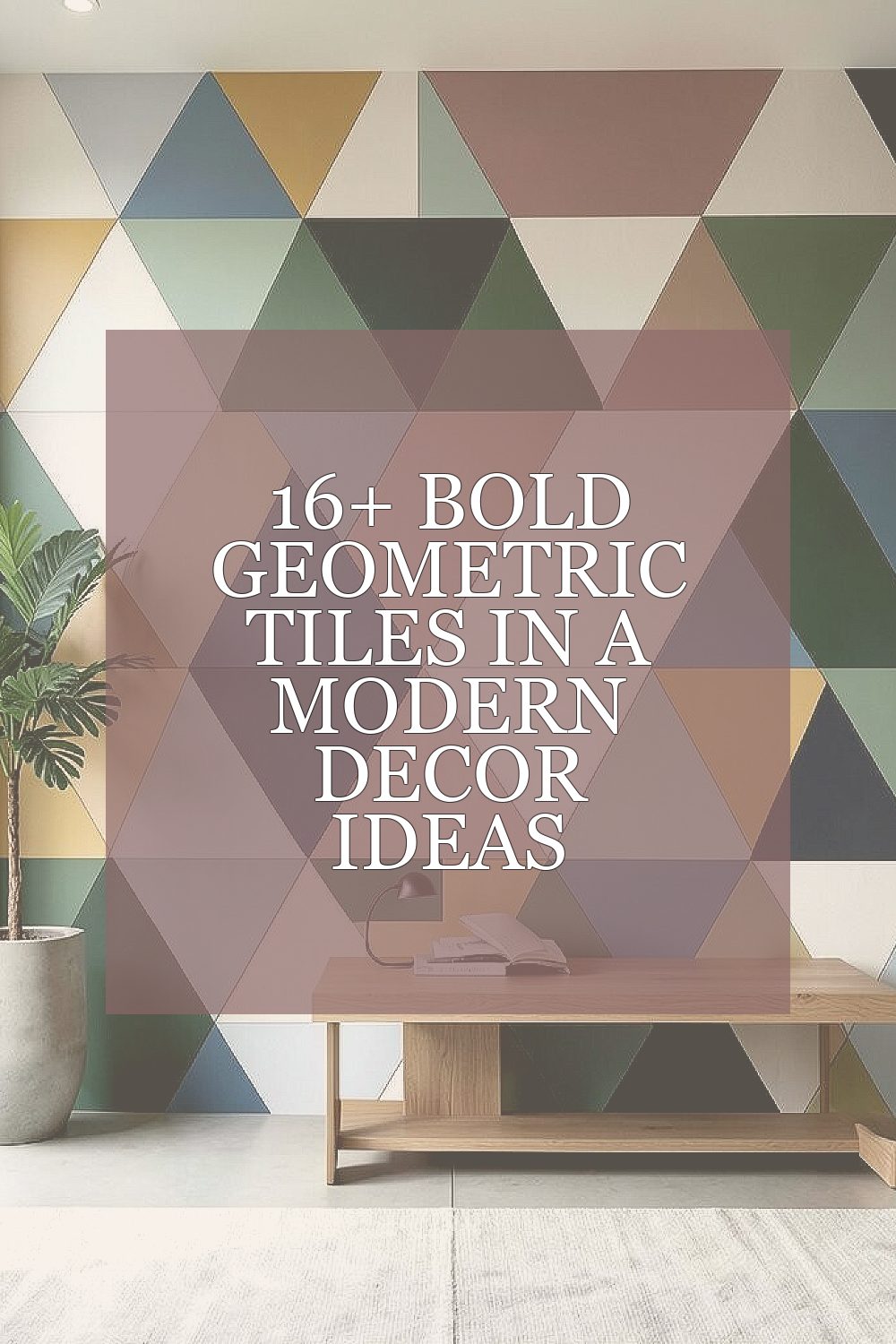
Geometric tiles can make a room feel instantly styled. They add rhythm, shape, and personality without needing extra clutter.
1. Monochrome Hexagon Floor Play

Black-and-white hexagons on the floor create a clean, graphic vibe that feels modern. The pattern also helps small spaces look more organized because your eye follows the repeating shapes.
Choose matte tiles for less glare and more comfort underfoot. In bathrooms or entryways, pair the floor with plain walls in warm white or soft gray. If you want a unique touch, swap one row to a slightly darker shade to mimic a subtle “shadow” grid.
2. Color-Blocked Triangle Accent Wall

A triangle accent wall brings bold energy without looking busy when the colors are limited. Think crisp navy, sunshine yellow, and calm off-white arranged in a careful rhythm.
Because triangles read as movement, this look works especially well behind a console, in a dining corner, or around a fireplace. Keep the rest of the room simple with solid curtains and smooth furniture so the wall stays the star. To personalize, match the triangle palette to existing items like pillow covers, a rug, or artwork.
Budget-wise, an accent wall uses fewer tiles than full-room flooring. For cost control, consider tiling only from chair height upward or using a tile border strip for big impact.
3. Zigzag Herringbone Kitchen Backsplash

A zigzag herringbone backsplash looks sleek and architectural, especially in a modern kitchen. The pattern adds depth that makes even a basic countertop feel more custom.
Go for small-format tiles in a consistent size so the lines stay sharp and tidy around outlets. For extra practicality, seal the grout and choose a stain-resistant finish if you cook often. This style is unique because the “movement” sits where you can see it every day while you prep.
When planning, map your layout around the sink and stove so the zigzags line up neatly with cabinetry edges. If you’re nervous about precision, use a grid approach and dry-lay a section first. For personalization, mix in one narrow stripe row in a contrasting tone like charcoal or soft sage.
Costs can range widely, so compare sample sizes and order extra for cuts and breakage. You can save money by limiting the tile height to the areas that get the most splatter, typically the backsplash zone only.
4. Oversized Op-Art Squares For Living Rooms

Oversized geometric squares create a playful op-art effect that feels bold but still sophisticated. When the colors are muted, like cream, taupe, and muted black, the look stays calm and modern.
This type of tile is unique because it functions almost like wall art, even when used on a feature wall. Keep nearby décor minimal and let a patterned tile take the visual lead. For practical styling, match your grout color to the lightest tile shade to keep lines clean.
5. Persian-Inspired Star Tile In A Modern Bathroom

Star-shaped geometric tiles bring a classic mood into a modern space. The design usually centers on a focal medallion, then radiates into smaller repeating shapes for a structured look.
Even with its traditional influence, you can keep it modern by using neutral colors like ivory, light gray, and charcoal. This benefits you because it pairs well with modern vanity hardware and simple lighting. If you want personalization, choose a star pattern with fewer colors so it feels cohesive instead of busy.
For cost considerations, consider using the star tile only around the shower niche or as a strip behind the sink. That way, you get the wow factor without covering every wall. Choose a high-quality grout and seal it well to handle moisture and daily cleaning.
6. Color Pop Cubes On A Powder Room Wall

Cube-like geometric tiles create a 3D illusion that makes a small powder room feel bigger and more fun. They look like little blocks floating on the wall, which is a great trick for modern décor.
Because powder rooms are smaller, you can splurge on higher-end tiles without blowing the budget. Pair the cubes with a simple vanity, sleek mirror, and modern wall sconces to keep the theme crisp. For personalization, repeat a single accent color—like coral or emerald—only in the tile highlights so the palette stays controlled.
When installing, plan for corners and transitions early so the cube illusion doesn’t get chopped in odd places. Light walls and bright lighting help the dimension show up, even if your room has limited natural light.
7. Patterned Circular Medallion Behind The Tub
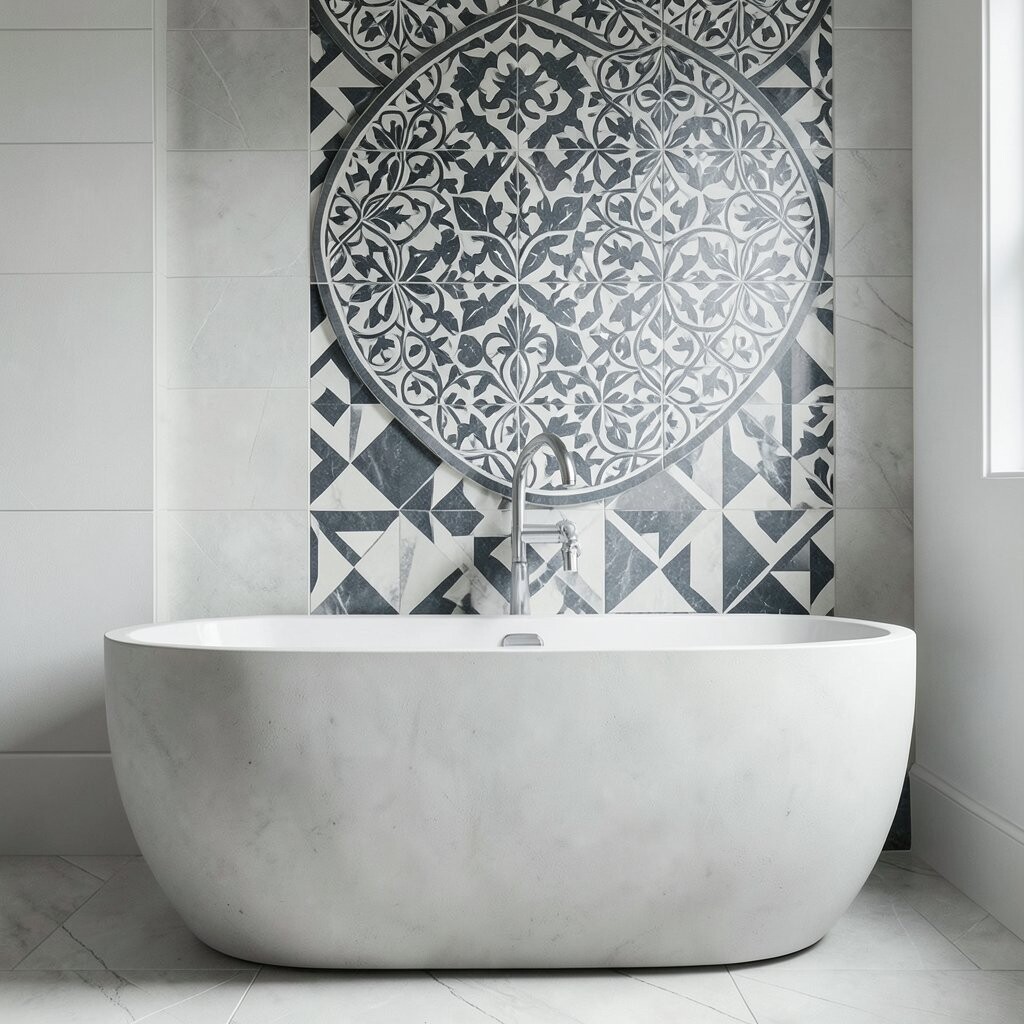
A circular medallion of geometric tiles makes the shower or tub zone feel like a designed spa. The eye naturally centers on the circle, which adds calm and structure in a room that often feels busy.
Use a medallion as the main focal piece, then surround it with simpler geometric repeats so the medallion stays readable. This approach offers the benefit of visual focus without making the entire bathroom feel like a wallpaper. For a unique twist, choose a medallion style that blends triangles and lines rather than only stars.
To make it practical, keep the grout maintenance in mind and pick a grout color that hides minor staining. If you want a personalization idea, repeat one color from the medallion in your towel set or bath mat. Costs can be managed by limiting the medallion area and finishing with less expensive perimeter tiles.
8. French-Modern Diamond Grid In Entryways
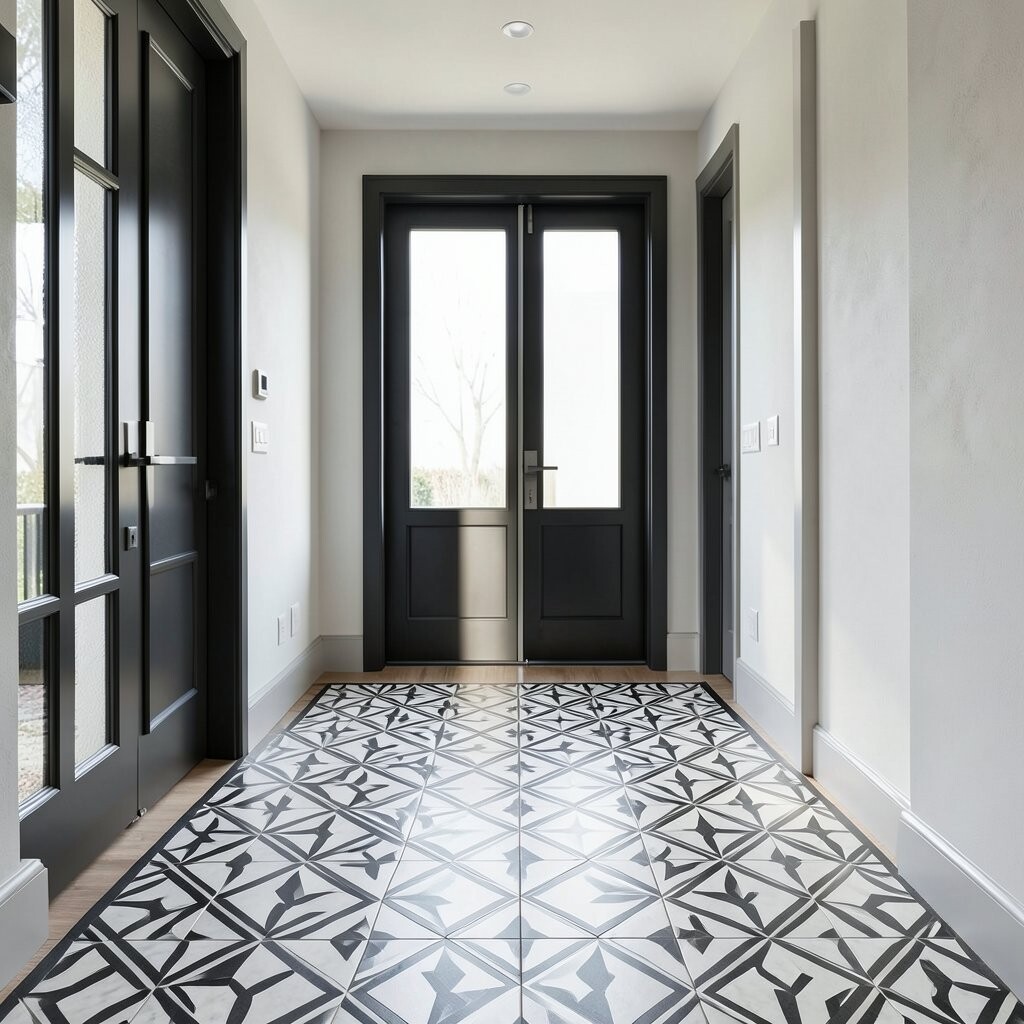
Diamond grid tiles add a clean, directional look that works beautifully in entryways. The pattern guides your eyes toward the door and makes hallways feel more intentional.
This style is unique because it balances movement with order, thanks to consistent spacing and crisp edges. Pair the floor with simple baseboards, a modern bench, and a plain neutral rug to avoid competing patterns. For practical tips, choose slip-resistant tiles for safety, especially during wet seasons.
When budget matters, consider tiling only the main walking zone and using matching flooring in the adjacent areas. Personalization can be as simple as using a slightly darker grout line for high contrast or selecting a warm gray tile for a softer entry feel.
If you’re unsure about color, start with black-and-white diamonds and add color later through accessories like a patterned runner or a bold umbrella stand.
9. Terrazzo-Look Geometric Panels With Clean Lines

Terrazzo-look tiles with geometric panels offer a modern “art floor” effect without messy clutter. The speckled texture feels lively, while the geometric framing keeps it neat and structured.
One major benefit is that terrazzo-style surfaces can hide small stains and everyday wear better than ultra-smooth glossy tiles. This makes them a strong option for kitchens and high-traffic living spaces. For what makes it unique, look for tiles that combine speckle with bold outlines—like thick bands or angular borders.
To personalize, choose a terrazzo palette that matches your wall color and metals, such as warm whites with brass accents or cool whites with chrome. Keep countertops and furniture solid so the floor stays the main texture. If you want less visual intensity, use the geometric panels only in small zones like a kitchen island surround.
10. Monochrome Cross-Hatch For A Statement Nook

Cross-hatch geometric tiles create a stitched, patterned look that feels modern and intentional. They add texture that’s visible up close, but they still read clean from a distance.
These tiles are especially nice in a reading nook, laundry corner, or behind a desk where you want visual interest. The benefit here is comfort for the eye—cross-hatching fills space without using bright color. For uniqueness, use a repeating checker-style cross-hatch border with a calmer center tile.
Cost-wise, cross-hatch patterns can vary by tile size and finishing style, so order samples before committing. A practical tip is to coordinate grout color with your dominant tile tone to keep the grid sharp. Personalization can come from choosing a matte surface if you prefer a softer, more velvety look.
11. Minimal Scandi Lines In A Laundry Room

Scandi-inspired geometric tiles use thin lines and simple shapes to create a relaxed, modern feel. The palette usually stays light, like white, pale gray, and gentle wood tones.
This look is unique because it feels graphic but not loud, which makes it great for functional spaces like laundry rooms. You get the benefit of easy pairing with modern appliances and simple storage. To personalize, pick a tile that repeats only one shape, such as tiny squares or small arcs, so it stays consistent.
For practical tips, choose tiles that are easy to clean and consider mid-tone grout for forgiving maintenance. You can also extend the pattern to the side splash area near folding stations for a cohesive flow. Budget-friendly options often appear in smaller sheets, so compare sheet sizes before ordering.
12. Bold Moroccan-Style Hexagon Border

Moroccan-style hexagon borders bring warmth and character, especially when you keep the colors modern. Look for hexagons with clean lines, then frame them with a simple solid tile field.
This makes the style unique because you get a heritage-inspired edge without covering every surface. A benefit is that borders are easier to plan around doorways and fixtures. For personalization, choose your border colors to match your cabinet handles or a favorite art print.
To keep costs in check, use the border only where it matters most—like the shower edge, behind a vanity, or around a bathtub skirt. Choose a grout that won’t look dingy quickly, because Moroccan patterns can make dirt more noticeable if the grout is too light.
13. Color Gradient Blocks From Floor To Wall

A geometric gradient, made from blocks that step from one color into another, looks like a modern sunrise on your walls. It can be subtle, like sand to light gray, or dramatic, like teal into navy.
This style is unique because the pattern works with the room’s height, drawing the eye up or across. The benefit is visual movement without needing complex shapes everywhere. For practical planning, decide how many shades you want and keep each block size consistent so the gradient feels smooth.
If you want personalization, repeat the same gradient concept in a small accessory area like a shelf back or a built-in niche. Cost considerations vary because gradients require careful ordering and matching; ask for advice on tile batch numbers. Choosing fewer shades can lower costs while still giving a “designer” effect.
When installing, dry-lay a few rows before final bonding so you can adjust the color transition exactly where you want it.
14. Art Deco Fan Shapes In A Modern Hall

Art deco fan-shaped geometric tiles add a glamorous edge while still feeling clean when used with modern finishes. Think black and cream with gold accents, or deep green with soft beige.
The benefit is that the pattern gives you a focal point without requiring extra décor objects. This look is unique because the fan curves create a sense of elegance that straight modern furniture can complement. For personalization, choose a tile that repeats fans in a vertical rhythm so it feels taller and more refined in hallways.
Cost-wise, deco-style tiles can be pricier due to detailed patterning, so consider using them as a half-wall band or a feature strip. Practical tip: keep surrounding walls plain and pick hardware finishes that match your tile accents. If you want a softer look, use a satin or honed finish instead of glossy.
15. Geometric Mosaic Lines With A Clean White Base

Geometric mosaic lines on a white base look fresh and contemporary, like crisp handwriting made of tile. The main field stays bright, and the geometric lines provide structure and interest.
This is unique because the “pattern” becomes a subtle design detail rather than a heavy statement. The benefit is easier styling: you can pair this tile with almost any furniture color and still keep the room cohesive. For practical tips, choose a consistent line direction so the mosaic looks intentional, especially around cabinets or vanity edges.
To personalize, decide where the lines start and end—behind a mirror, along the side of a countertop, or wrapping around a niche. For cost considerations, mosaics often come in sheet form, which can reduce installation time and labor. Ask about grid alignment so the lines don’t get crooked during cutting.
16. Large Triangle Field With A Thin Outline

A large triangle field tile design feels bold and graphic, especially when each triangle is separated by a thin outline. This creates crisp contrast that reads as modern and designed.
The benefit is strong visual impact with a relatively simple overall look. This style is unique because the outline lines act like “design borders,” making the pattern feel sharper and more intentional. For personalization, choose triangle directions that echo the lines in your room—like aligning with cabinet edges or window frames.
17. Geometric Backsplash Tiles In A Bold Single Color

Going bold with a single color—like deep cobalt, burnt terracotta, or forest green—creates a modern backsplash that feels confident. Even without multiple hues, the geometric shapes give it dimension and character.
This approach is unique because it lets the pattern do the work while the color stays focused. You get the benefit of easier coordination with cabinets, countertops, and hardware since the tile doesn’t introduce many new shades. For practical tips, use a glossy or semi-gloss finish if you want light to bounce and brighten the room.
For cost considerations, single-color tiles can be more consistent in pricing and may require fewer special orders. Personalize by choosing one accent element, such as a matching vase or kettle, in the same tile color to tie the look together. If you’re worried about overpowering the space, limit the tile height to the backsplash zone and keep the area above it plain.