
Your kitchen should feel sunny, even on cloudy days. With a few smart upgrades, you can make the whole space brighter and more inviting.
1. Sunlight-First Layout
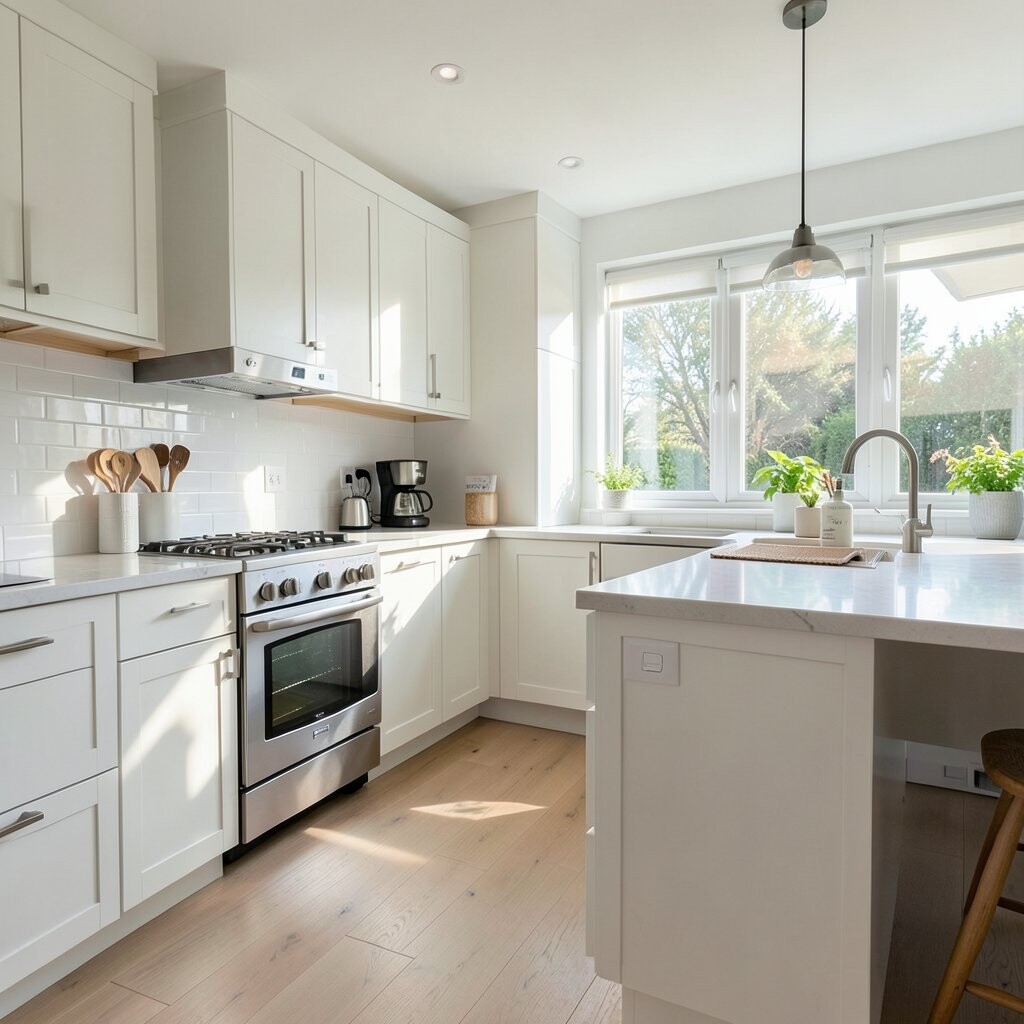
Start by paying attention to how light moves through your kitchen during the day. Then arrange the most-used zones so they catch the brightest natural angles.
A simple shift can make counters feel less cramped and tasks feel easier. If you can, keep the window area open so the light has a clear path. For extra impact, place a reflective surface nearby, like a light backsplash or glossy cabinet doors.
2. Warm White Lighting Layers
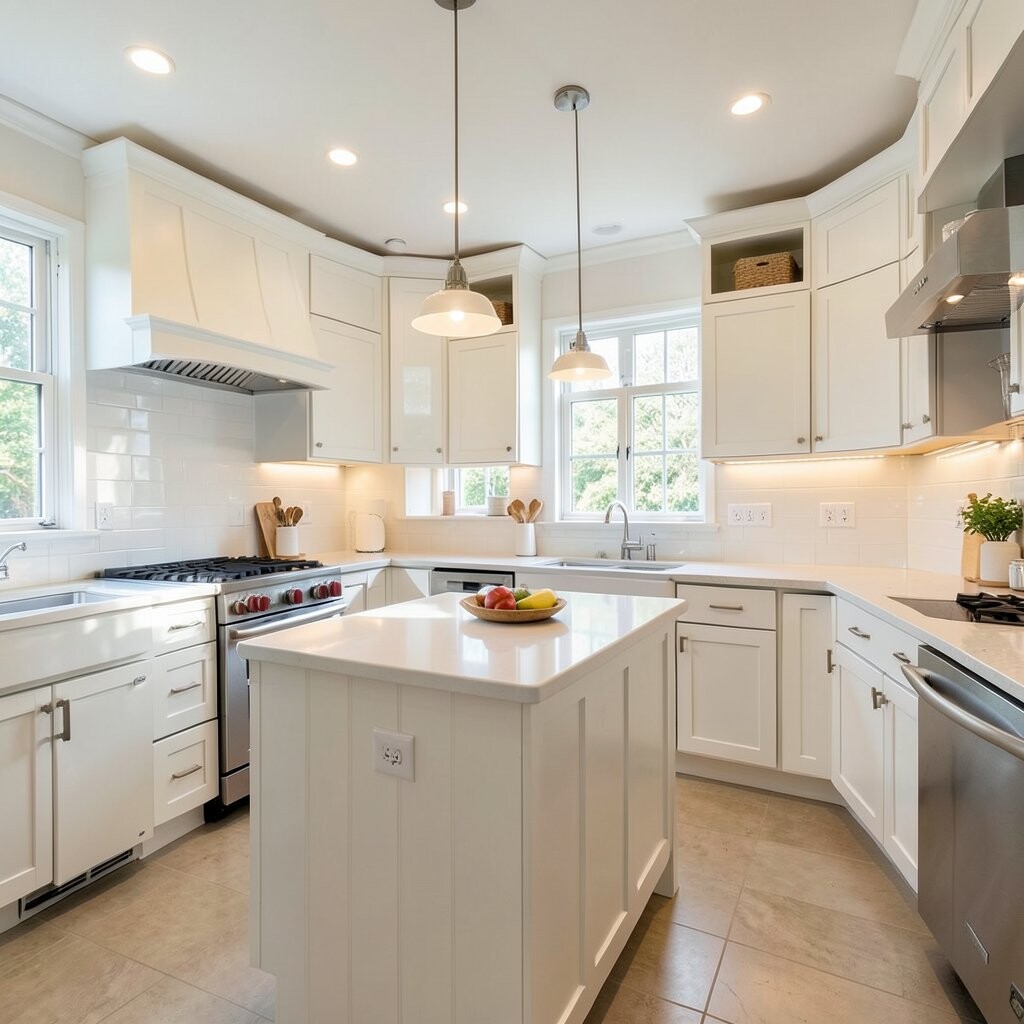
Bright kitchens need more than one bulb in the middle of the ceiling. Use layered lighting so every corner stays comfortable and clear.
Try a mix of ceiling lights for overall brightness, under-cabinet strips for tasks, and a small pendant above a dining nook. Choose warm white tones so the space still feels cozy, not harsh.
To personalize, use dimmers for evening cooking and higher brightness for chopping and cleaning. For cost control, swap bulbs first, then add under-cabinet lighting when you’re ready.
3. Glossy Backsplash That Reflects Light

A shiny backsplash can bounce light around your kitchen like a gentle spotlight. The effect is especially noticeable in kitchens with limited window space.
Choose glass tiles, glossy ceramic, or even a polished slab finish that stays easy to wipe. Go for a light color like soft white, pale gray, or warm beige to keep things airy.
This idea is unique because it works both visually and practically. Reflections help the room look larger, while smooth surfaces make daily cleaning simpler.
If you worry about cost, consider a smaller “statement” section behind the stove and sink. That gives the brightness effect without covering the whole kitchen.
4. Paint Your Cabinets Like a Fresh Morning
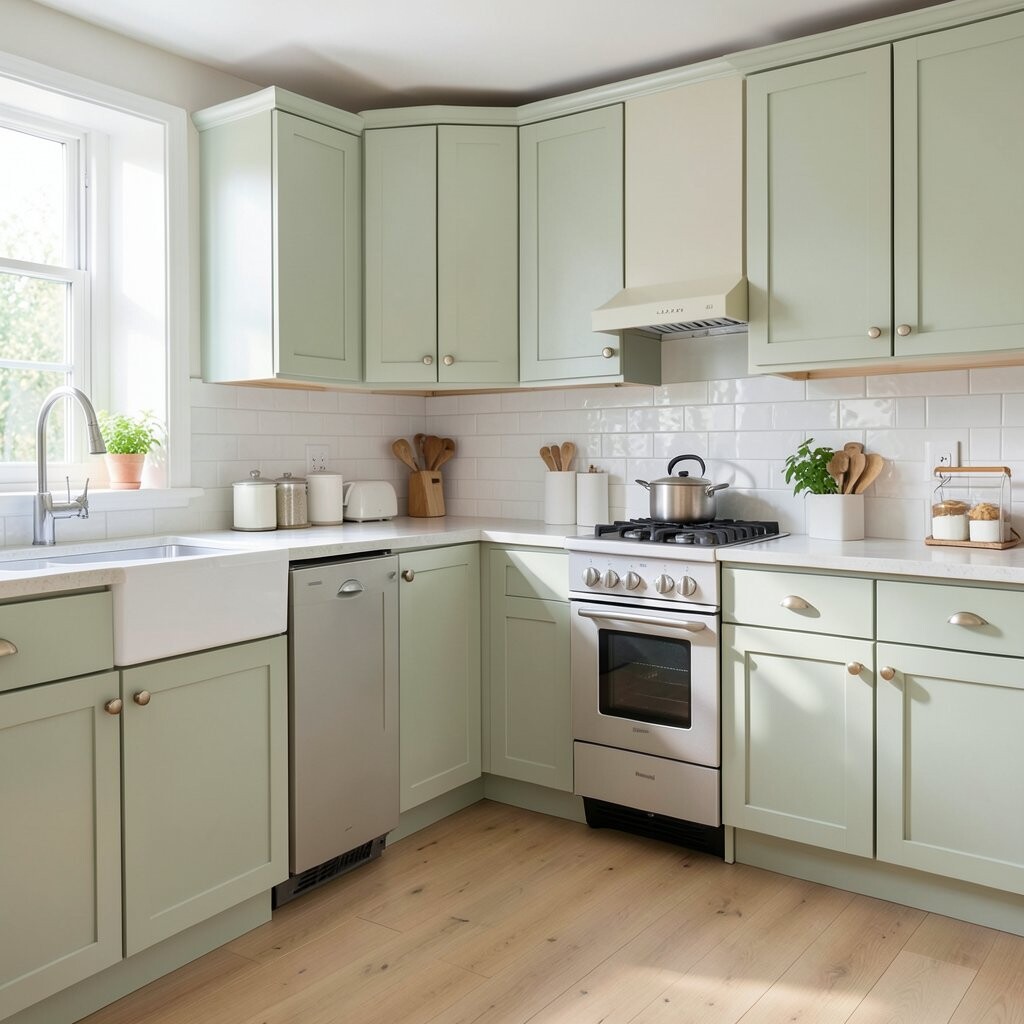
One of the quickest ways to brighten a kitchen is to choose a light cabinet color and refresh the finish. Crisp whites, creamy off-whites, and pale warm grays all make cabinets look cleaner and brighter.
If your cabinets are already in a workable shade, you can update them by sanding and repainting the doors and frames. Use a high-quality primer and a durable cabinet paint to help the finish last.
5. Under-Cabinet Task Lighting
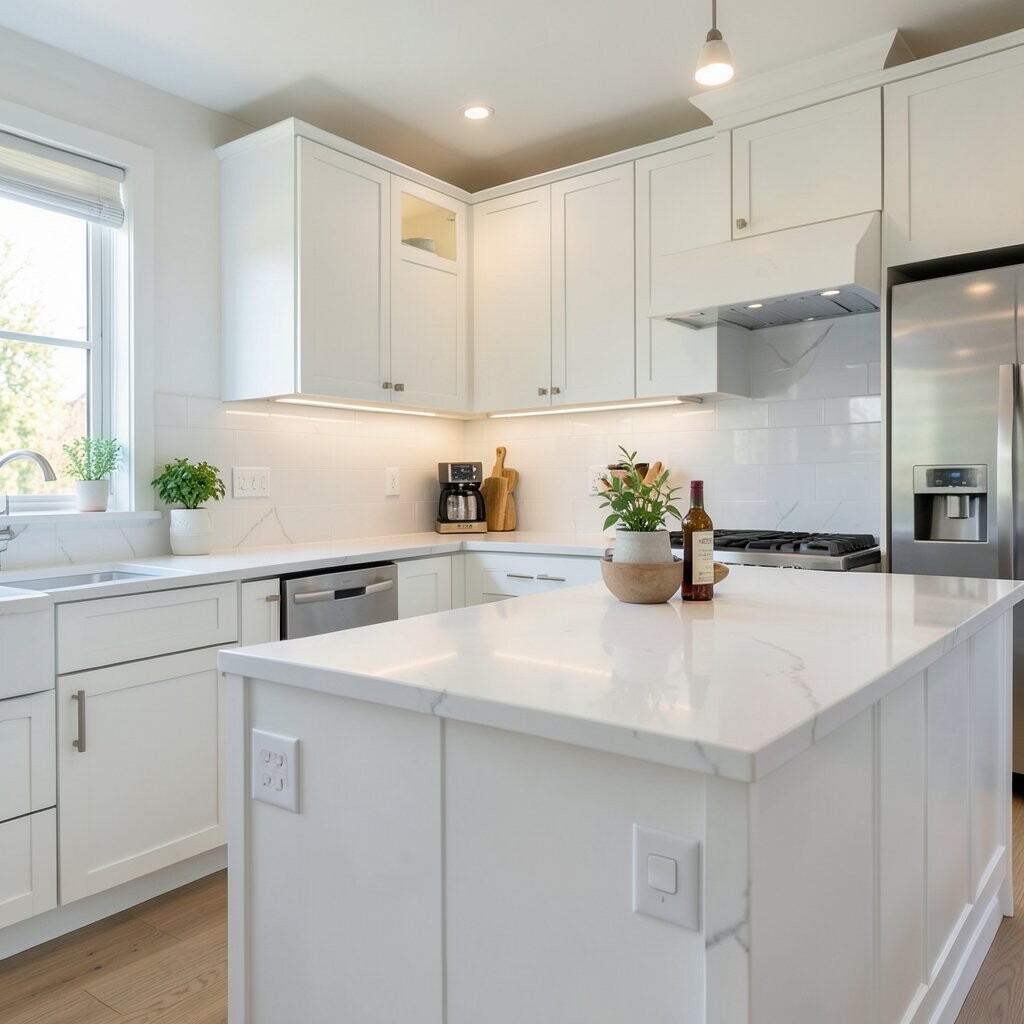
Under-cabinet lighting makes everyday work feel sharper and safer. It reduces shadows where you chop, mix, and read recipes.
LED strips are a popular trend right now because they’re slim, long-lasting, and energy-friendly. Install them with a dimmer or a smart plug so you can change brightness to match the time of day.
For personalization, pick a color temperature that matches your overall lighting plan. Many kitchens look best in the warm-to-neutral range, especially with light countertops.
6. Light Countertops With a Soft Finish
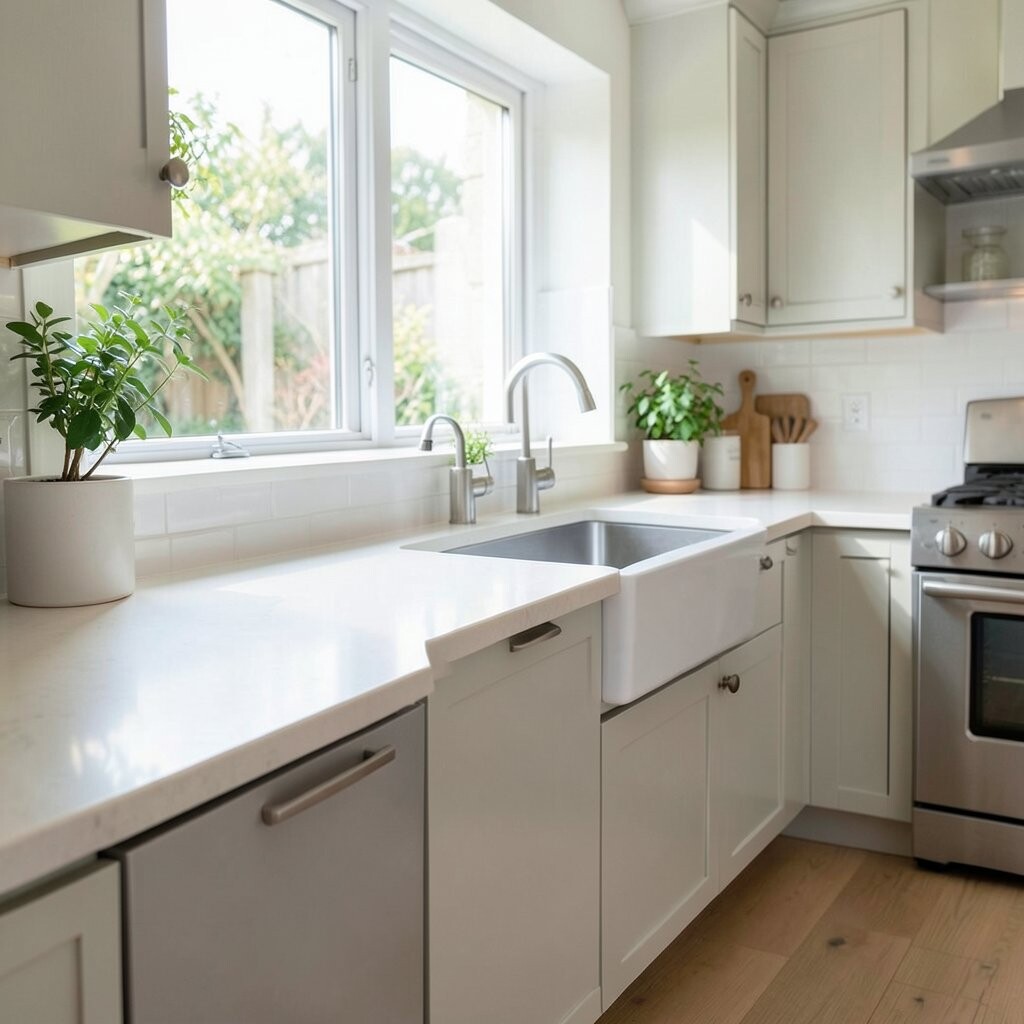
Countertops set the tone for brightness because they take up so much visual space. Bright quartz, light marble-look surfaces, or creamy laminate can make the whole room feel more open.
Look for colors with subtle movement rather than bold patterns, so the surface stays calm. A satin or honed finish can also reduce glare while keeping things bright.
For cost considerations, consider remnant slabs or laminate upgrades before committing to full replacement. If you can’t change the countertop yet, pairing a light mat and clean sink area can still boost the overall look.
7. Reflective Hardware and Fixtures
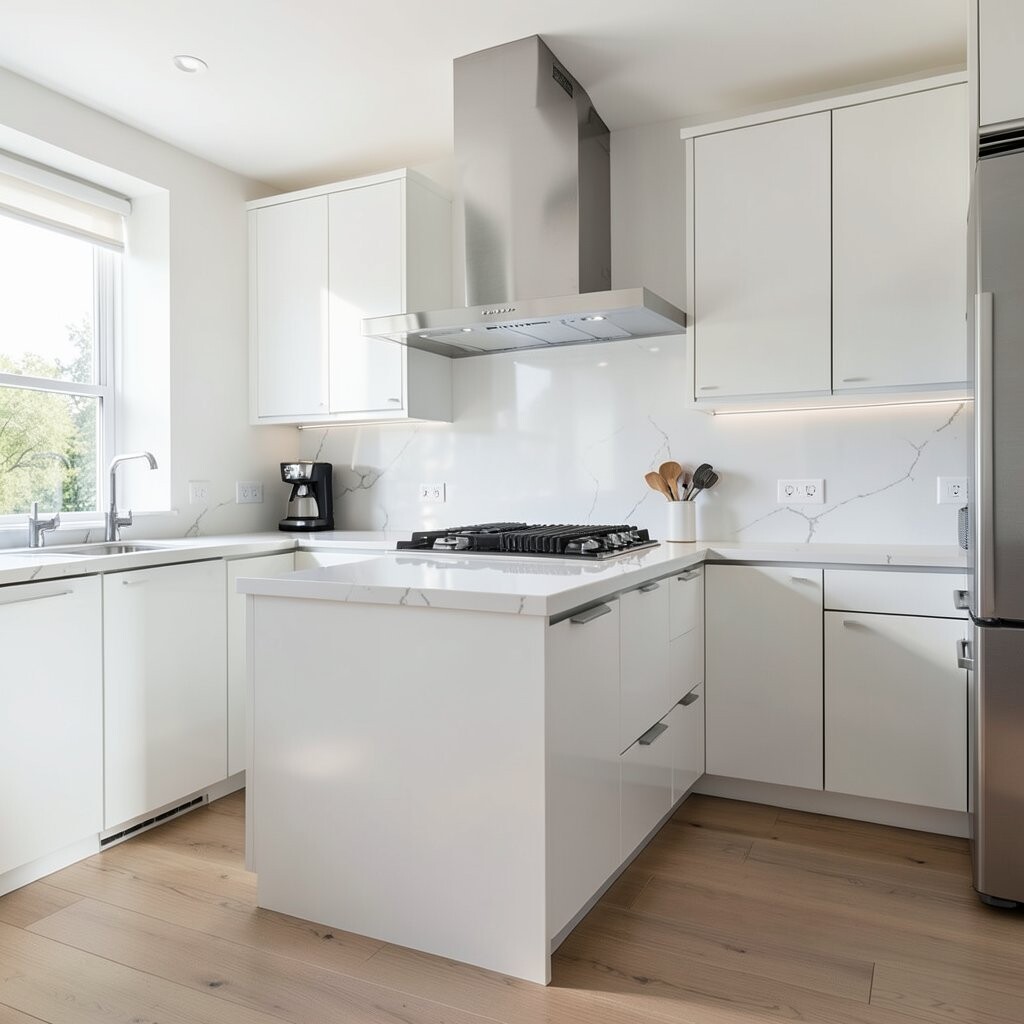
Small details can brighten a kitchen when they catch the light. Swapping outdated knobs and pulls for polished finishes can create a quick glow.
Think brass, brushed gold, polished nickel, or even warm stainless that matches your faucet. This idea feels unique because it uses reflections in tiny moments, not just big paint jobs.
To personalize, mix metals carefully, such as warm handles with a matching faucet. If you prefer a budget-friendly option, replace only cabinet pulls first and add fixture updates later.
8. Ceiling Color That Extends the Airiness
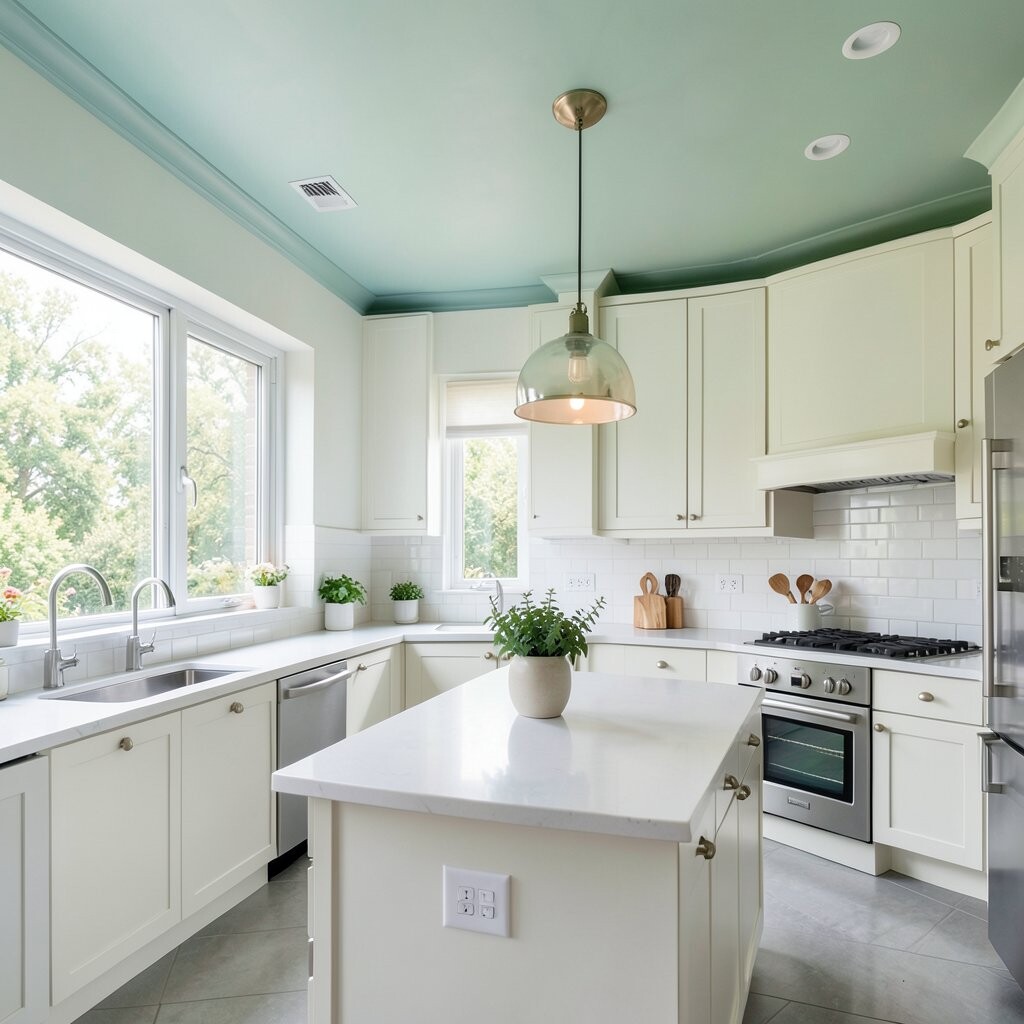
Many people stop at the walls, but the ceiling can help you brighten everything above. A light ceiling color makes the room feel taller and more open.
Choose the same family as your walls, like warm white over cool bright white, to keep the space cohesive. This works especially well with open shelving where you want everything to blend and feel airy.
Consider a semi-gloss or eggshell finish so the paint wipes clean and reflects more light. If your ceiling has marks or older texture, a fresh coat can also make the kitchen look newly cared for.
For a trend-forward look, pair a bright ceiling with soft matte walls and crisp trim. That contrast keeps brightness without turning the room into a glare box.
9. Crisp Window Treatments

Window coverings can either block light or let it flow freely. Light, airy curtains or streamlined shades make a huge difference.
Choose sheer panels, light-filtering roller shades, or bamboo-look roman shades in neutral tones. Keep them simple so sunlight is never fighting heavy fabric.
If privacy is a concern, try layered options like a sheer inner layer with a blackout or thicker outer shade for nighttime. This is a practical way to keep daylight bright and evenings comfortable.
10. Open Shelving With Bright Styling Rules

Open shelves create a light, gallery-like feel when styled with care. They also help you find things faster because everything is visible.
For a bright look, use matching canisters, light-colored dishware, and a few taller items for height. Keep clutter low by limiting what sits out, and store extras in matching containers.
If you want it unique, mix in a small accent like a wooden cutting board set or a glossy ceramic vase. Cost-wise, you can start with only the top shelves and expand later as you get used to the look.
11. Light Floors That Balance the Whole Room

Your flooring plays a bigger role than you might think when it comes to brightness. Light wood, pale tile, or vinyl in warm neutral tones can make the kitchen feel bigger instantly.
Choose finishes that aren’t too dark and avoid extremely high-gloss if you’re worried about slippery glare. A medium sheen helps brighten without feeling flashy.
This idea is unique because it works as a foundation for every other color choice. When floors are light, cabinets and countertops also look cleaner and more contrasted.
12. Color-Managed Accent Walls and Panels
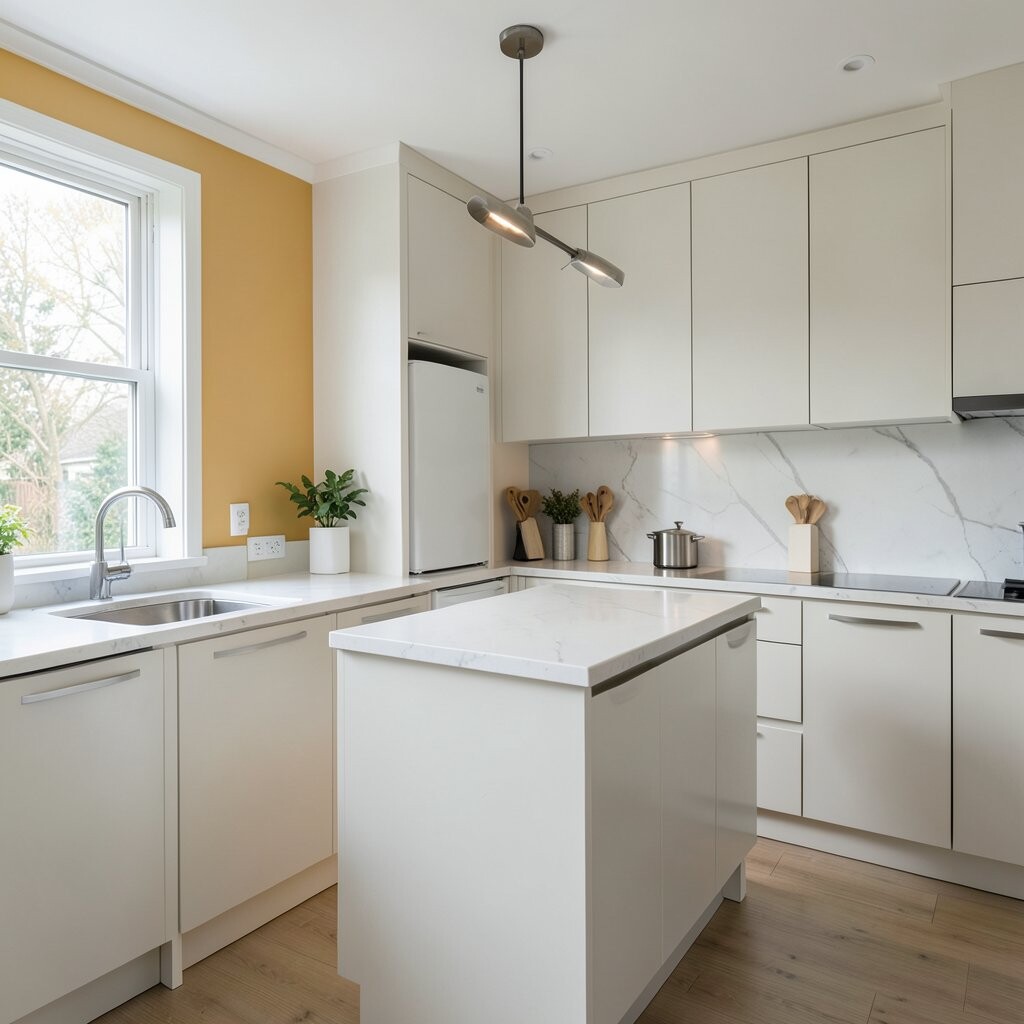
If you don’t want to repaint everything, use one bright accent surface instead. A light accent wall behind the sink or a small panel of color near the dining area can lift the whole mood.
Pick a tone that matches your style, like buttercream, soft sage, or pale sky gray. Keep the rest of the kitchen in neutrals so the accent stays fresh and not overwhelming.
To personalize, add a few matching accessories in the same color family, like towels or utensil canisters. This approach can be cost-effective because it targets only one area.
13. Clear Countertops With Bright Storage

A bright kitchen looks even brighter when counters stay tidy and open. Even if you love tools, you can arrange them so they don’t visually clutter the space.
Use drawer dividers, small baskets, and upright organizers for items you use daily. Clear containers can work well, but frosted or tinted ones can soften the look if you prefer.
This is unique because it changes how light “reads” your kitchen. With fewer dark piles and scattered items, the bright surfaces stand out more.
For cost considerations, start with one drawer or one corner and build from there. You’ll usually see a big visual difference without purchasing everything at once.
14. Fresh Hardware Lighting With a Matching Style

Lighting fixtures can brighten the kitchen and set a style direction. A clean pendant, a modern ceiling fixture, or small wall sconces can add glow where you need it most.
Choose finishes that coordinate with faucets and hardware, so the look feels intentional. If you enjoy the current trend of mixed materials, keep the light fixture in a neutral metal that ties everything together.
15. Light-Scheme Appliances and Small Upgrades
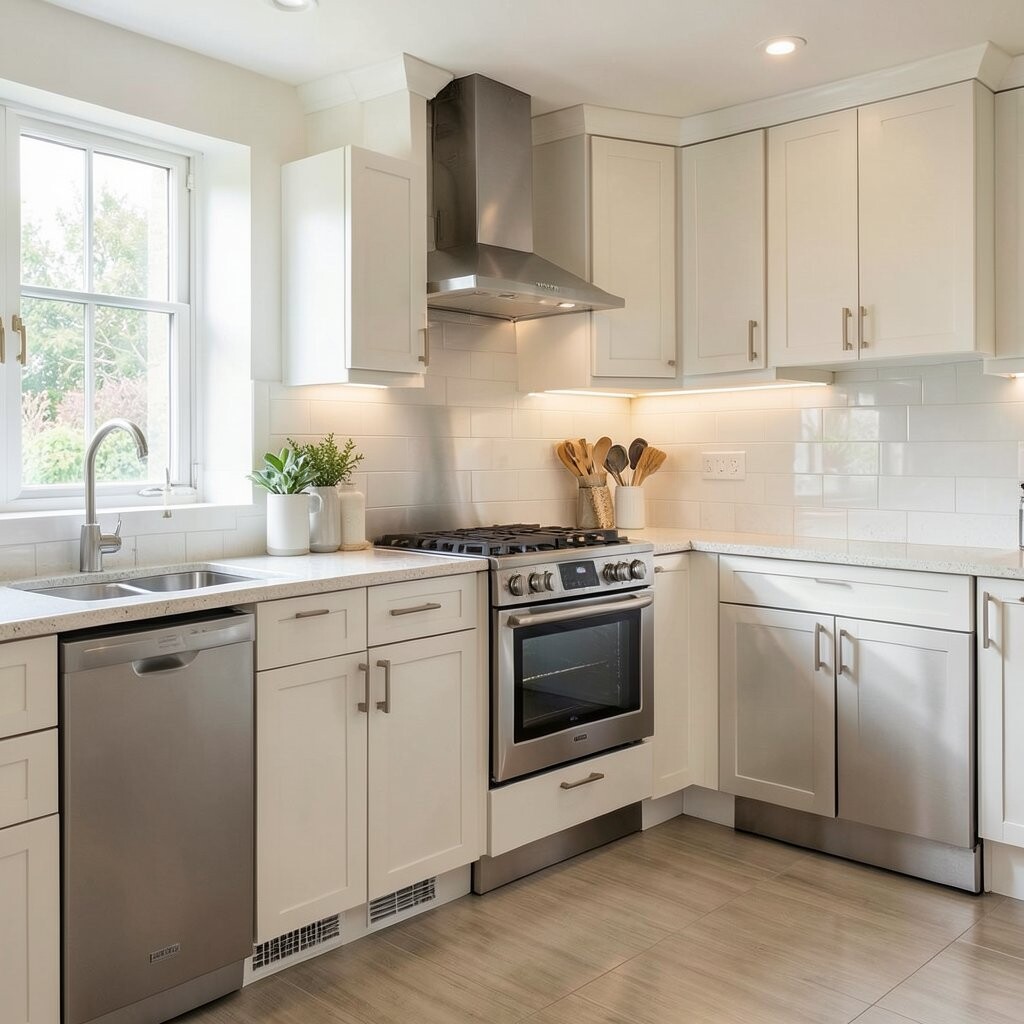
Appliances can brighten a kitchen when their finishes match the light palette. Stainless steel adds brightness through reflection, while white or pale colors can feel softer.
If replacement is too costly, update smaller visible pieces like a kettle, toaster, or countertop mixer. These swaps are budget-friendly and they let you personalize without major construction.
Try matching small appliances to your cabinet tone so the kitchen feels cohesive. This approach keeps the kitchen feeling modern without a full remodel.
16. High-Contrast Backsplash and Trim Edges

Brightness sometimes comes from contrast, not just light color. Using a light backsplash with crisp trim edges can make lines look sharper and the space more defined.
Consider adding a narrow trim strip or a lighter grout tone to brighten the seams. If you prefer subtlety, keep contrast small so it feels clean rather than dramatic.
This idea is practical because it can also hide wear. Bright grout lines can make older tile look newer, especially when paired with a thorough clean and reseal.
17. Smart Pops of Bright Color in Textiles
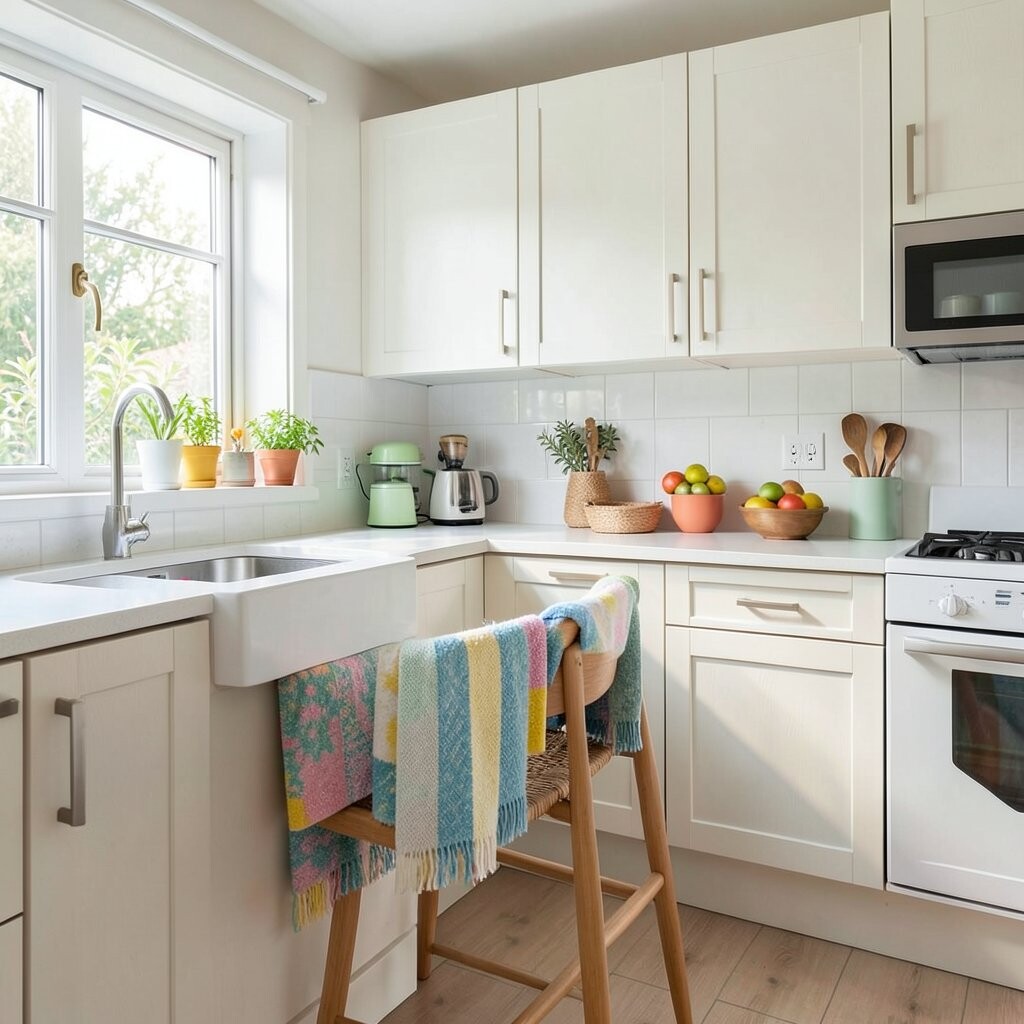
Textiles are an easy way to brighten a kitchen without changing permanent surfaces. Fresh dish towels, seat cushions, and even a table runner can add cheerful color.
Choose bright but friendly shades like sunny yellow, coral accents, or soft mint, and keep the rest neutral. This helps the kitchen feel lively while still looking organized.
If you want a unique look, rotate seasonal colors and stick to one “hero” shade each season. It’s a low-cost way to keep the kitchen feeling new year-round.
18. Mirrors and Reflective Decor in the Right Spots

A well-placed mirror can bounce daylight and make a kitchen feel instantly larger. It works especially well near a window or opposite the light source.
Choose a mirror with a style that fits your kitchen, like a slim framed round mirror or a simple rectangular piece. Decoratively, you can also use mirrored trays or reflective candle holders for small brightness boosts.
For practical tips, avoid placing mirrors directly over cooking areas where splashes might be an issue. Start with one reflective piece, then observe how it changes the space throughout the day.