
Step into a cactus world where color, texture, and shape do the thinking for you. Your garden can become a living studio for ideas that feel fresh and doable.
1. The Sunburst Window Cactus Planter

A row of small cacti creates a bright “sunburst” feel at the center of a windowsill. Each plant leans just enough to point toward the light, so the arrangement feels alive even on quiet days.
Choose a shallow container with drainage and add a gritty cactus mix. Arrange plants from tallest at the back to smallest at the front, then rotate the pot weekly so growth stays even. To keep it creative, add one contrasting accent—like a pale stone layer or a tiny brass label for each cactus.
2. The Pebble Mosaic Desert Corner

Use cacti as the “tiles” and pebbles as the background for a desert corner that looks designed, not accidental. The sharp shapes and matte surfaces make patterns easier to notice at a glance.
Sketch a simple grid with chalk, then place larger cactus clumps where the grid lines intersect. Fill the remaining spaces with pebbles of two or three colors so the scene reads like a mosaic. A unique trick is to run one thin stripe of dark gravel like a border, which makes the whole area feel like a gallery installation.
For cost control, start with two statement cacti and expand as you find cuttings or nursery offsets. Add a shallow drip line or a slow-soak hose so watering stays consistent without flooding the stones.
3. The Vertical Wall Shelf “Cactus Gallery”
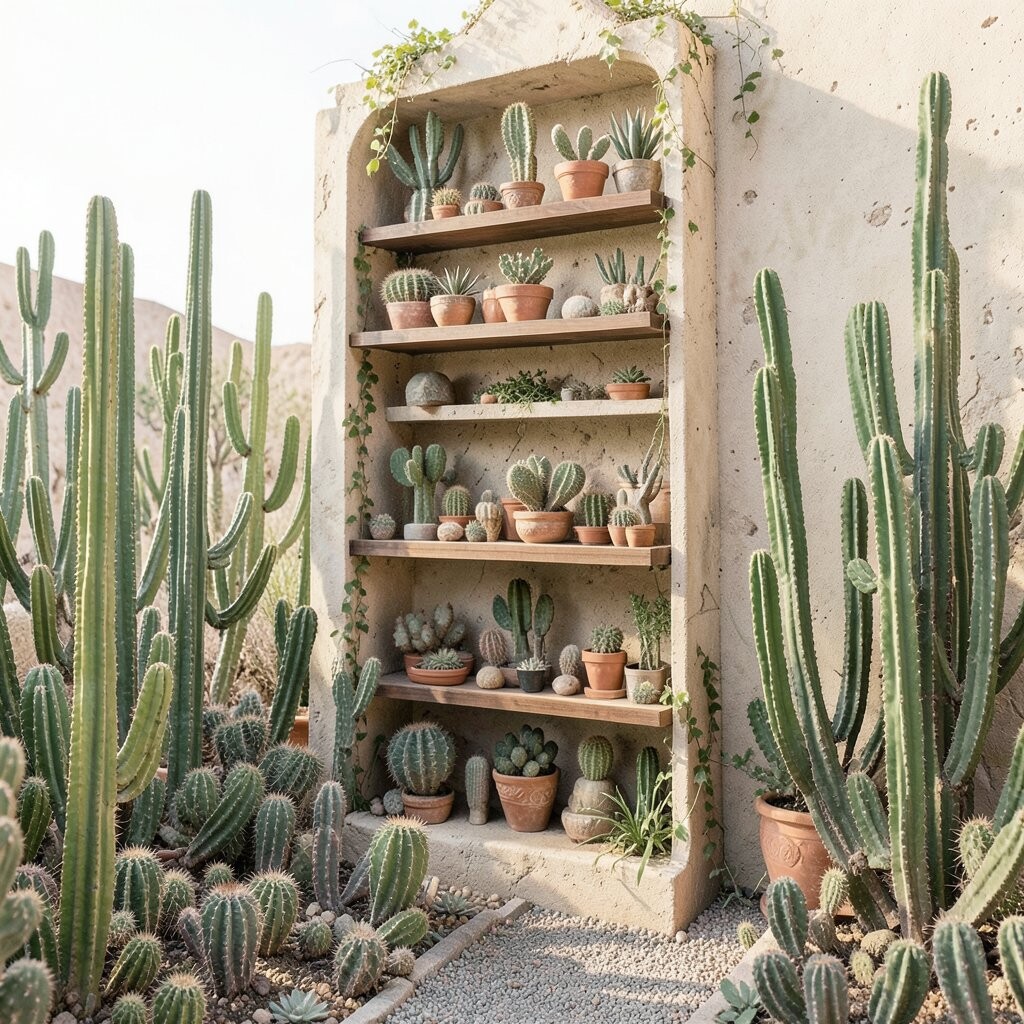
A vertical wall shelf turns cacti into rotating art, so your creativity keeps moving. Light and shadow shift through the day, and that gentle change can inspire you to write, sketch, or plan projects.
Mount sturdy shelves or repurposed wood planks with individual pots that have drainage holes. Space the planters so airflow is clear, and use a tray under each shelf to catch excess water. Personalize it by giving each level a theme, like “morning hues,” “spiky silhouettes,” or “tiny experiments.”
Choose hardy species that tolerate sun and arid air, and check each pot’s soil feel before watering. To cut costs, buy one shelf system and keep reusing containers as plants grow. A current trend is mixing cacti with small succulents in the same pot, which adds variety without making the setup complicated.
When you rearrange for new ideas, take a quick photo first so you can recreate what you liked later.
4. The Tea Cup and Mini Cuttings Fairy Tray

Small cacti in mismatched cups can feel playful instead of strict. When tiny spines meet bright ceramic glazes, the whole tray becomes a desk companion for daydreaming.
Use mini cups with drainage, or punch holes and add a layer of coarse grit for safety. Arrange three sizes—one tall, one medium, and one trailing—so the eye has a clear path. For a creative twist, write one word on a stone label and place it near the cactus you want to “support” that week.
5. The Raised Bed with “Rainbow Channels”

A raised cactus bed gives you control over soil and drainage, which makes the garden feel dependable. Bright channels of color guide the eye across the bed like a road map for your imagination.
Build the bed with a gravelly base, then carve shallow trenches between planting rows. Fill each trench with colored crushed stone—red, tan, and black for a strong contrast—and plant cacti along the ridges. Keep a simple watering schedule by placing a soaker hose near the trench lines rather than over the plant crowns.
Budget-wise, colored gravel can be pricey, so start with narrow stripes and expand later. A unique personalization idea is to match the stone colors to your room decor so the garden “connects” visually to where you spend time.
6. The Barrel Planter “Desert Study” for One Theme

One large barrel planter can become a focused creative zone, like a still-life setup for the outdoors. When everything shares a theme—such as blues, silvers, or warm browns—your mind has fewer distractions.
Pick cacti with similar color tones and vary only in shape, like columnar forms next to rounded ones. Use fresh cactus mix and a thick layer of grit at the bottom to prevent soggy roots. For personalization, paint a small section of the barrel with a chalky finish and note watering reminders or ideas you’re working on.
To keep the cost down, rehome seedlings you grow from offsets rather than buying fully mature plants. Current trend: pairing fewer species with bolder styling, which makes the whole planter look intentional instead of crowded.
As the season changes, adjust the barrel’s placement so each cactus catches the sun it prefers.
7. The Rock-Ledged Cliff Scene in a Container

Create a “mini cliff” by using large rocks as the backdrop and letting cacti sit like they are growing on a rugged slope. The dramatic angles help your brain think in stories, not just plants.
Choose one wide container and layer it with coarse gravel before adding cactus soil. Place a few statement rocks, then tuck smaller cacti at different heights so the arrangement looks staged. Make it unique by carving one tiny pocket where moss or ornamental stones can live, giving a hint of “oasis” without changing the dry vibe.
Water carefully, only when the soil dries fully, and avoid spraying the rock surfaces so they don’t stay wet. For cost considerations, hunt for safe landscaping rocks from your area or use larger stones you already own. A practical tip is to keep a small scoop nearby for quick top-dressing, which helps when gravel shifts after watering.
8. The Spiral Path Planter Bed

A spiral layout naturally guides your eyes, and that makes it perfect for creative thinking while you move slowly around it. Cacti in a spiral bed can look both structured and wild.
Use a garden hose to outline a spiral in the soil, then remove sod and prepare a drainage layer. Plant taller cacti near the center and shorter ones along the edges so the curve feels deep. Add a “story” by placing plants in the order of a color gradient, like green to silver to pale cream.
For practical watering, install a drip line that follows the spiral curve so every section gets treated fairly. If you’re working with limited space, use one compact spiral container instead of a full bed. Personalization idea: stamp small stepping-stone shapes through the gravel so each visit feels like stepping into a design.
9. The Hanging Rope Pot “Spine Cloud”

Hanging cacti feel light and surprising, like a cloud of spines suspended above your patio. The movement from air flow and sun shifts keeps the setup visually fresh.
Use rope or macramé hangers with sturdy planters that have drainage. Select cacti that do well when not constantly soaked, and keep the soil mix gritty so water doesn’t pool. A unique feature is to layer two or three planters at different heights, so the arrangement reads like a skyline.
To keep it practical, rotate the hanging pots every week so sun hits evenly and growth doesn’t lean too far. Start with one or two plants if you’re unsure, then add more once you see how quickly they dry out. Cost-wise, rope hangers are usually cheaper than elaborate racks, and you can reuse them for future plant swaps.
As a trend, many people pair hanging cacti with tiny decorative stones and minimalist pot labels for a clean, modern look.
10. The Vintage Teapot and Saucer Cactus Stage
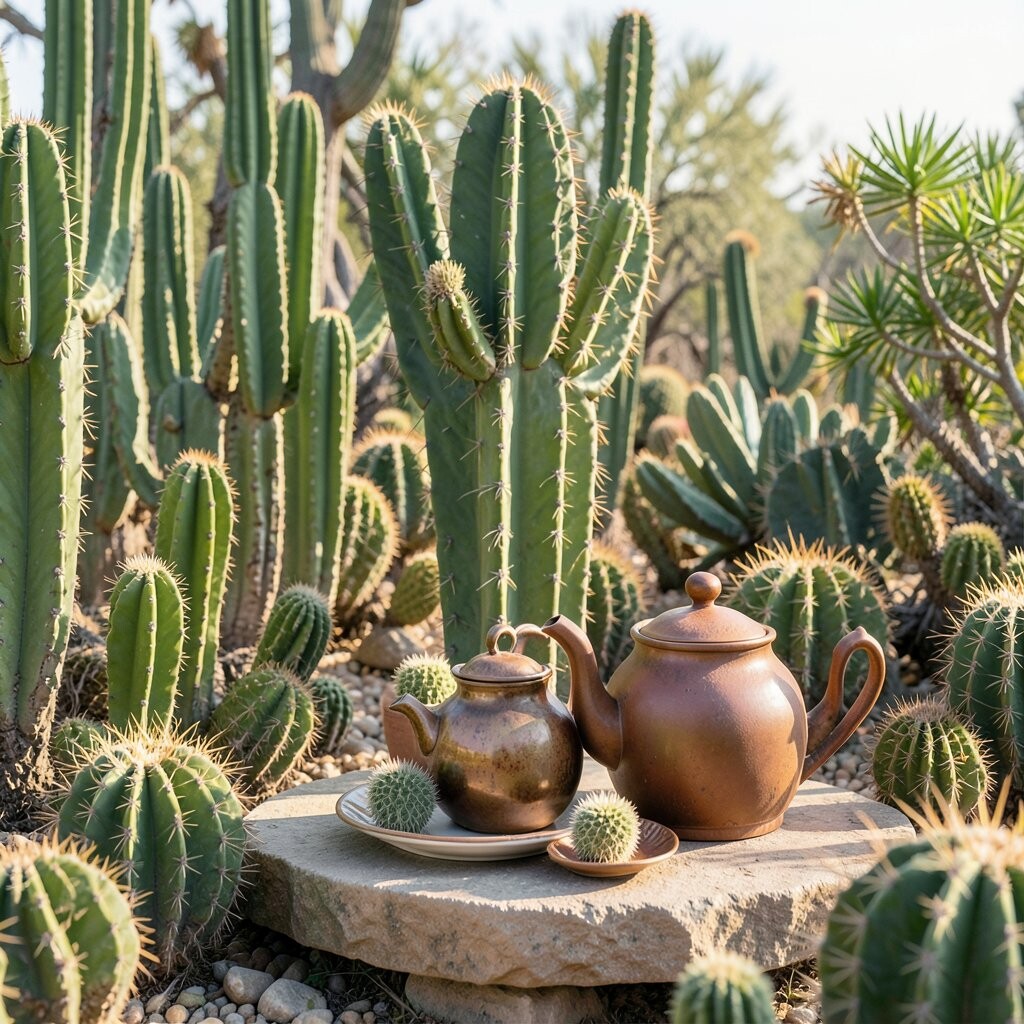
Repurposed teapots are charming, and cacti make them even better because their shapes feel sculptural. A teapot garden can look whimsical while still being practical.
Choose a teapot with a wide opening, add a drainage setup, and place a saucer under it to catch extra water. Fill with cactus mix and plant one main cactus as the “hero,” then add one smaller companion for balance. Personalize it by matching the teapot color to a favorite mug or by adding a tiny figurine that fits your personality.
11. The Border of Mini “Botanical Flags”
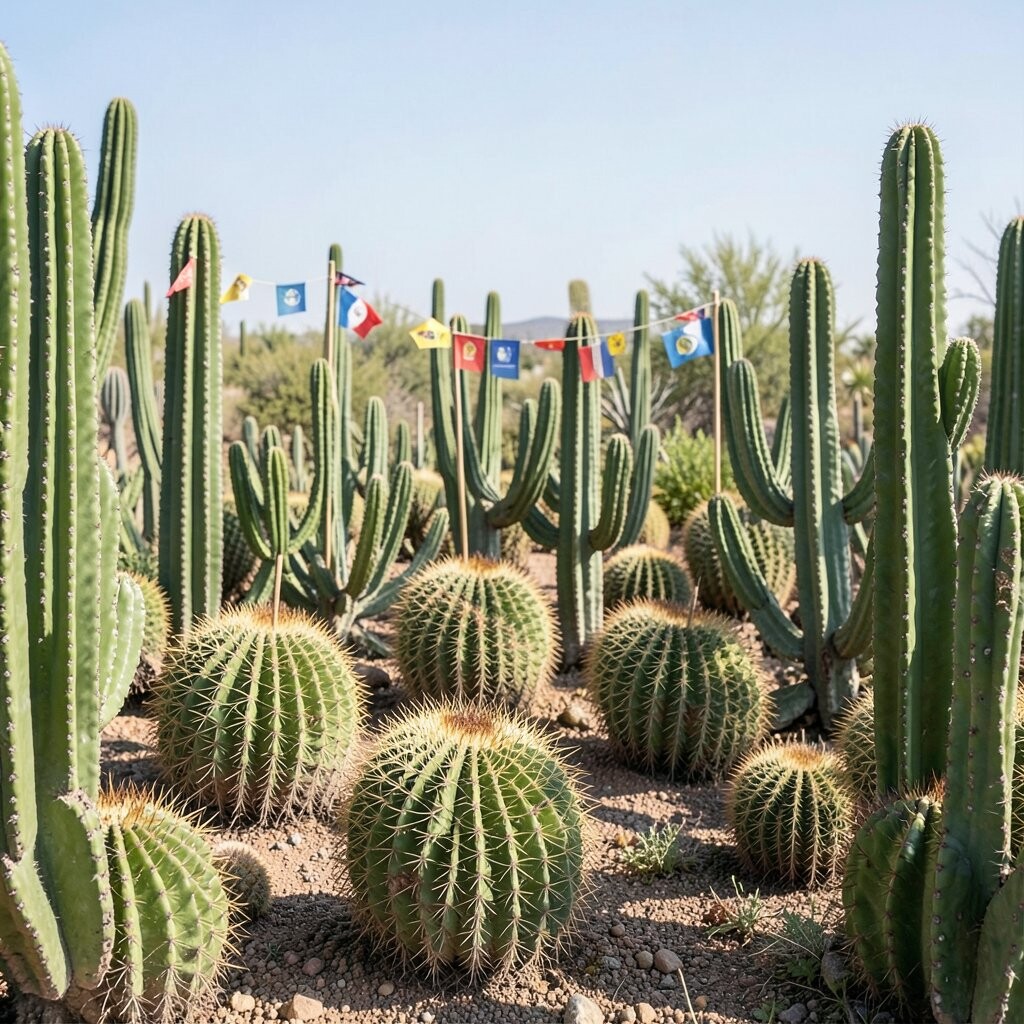
A cactus border can act like a timeline, and that can spark ideas as you walk past it. Tiny labels styled like flags add a playful, organized feel without making the garden look busy.
Plant a line of small cacti along a walkway edge, keeping spacing wide enough for airflow. Create a simple label system using weather-resistant markers, and tie each label to a purpose like “sketch prompt” or “project name.” To make it unique, stagger the label heights so they form a soft rhythm rather than a straight wall.
For cost considerations, use inexpensive plant markers and replace them as needed, since they’re easy to swap. A practical watering tip is to place a soaker hose along the border and check soil dryness with your finger before watering. Current trend: micro-plantings with creative labeling, which helps people treat the garden like a living mood board.
12. The Glass Terrarium “Dry Air Theater”

Even though cacti dislike being too wet, a properly built terrarium can still work if you keep it dry and airy. The glass creates a stage where silhouettes look dramatic.
Use an open or vented glass container, add a thick drainage layer, and keep the soil coarse. Arrange cacti as if they are on a tiny landscape—one central piece, a few supporting plants, and a top layer of gravel for neatness. Personalize the “theater” with colored sand in a small arc or with miniature stones that match your color palette.
Water sparingly and only after the soil fully dries, and avoid closing the lid tightly unless your setup has strong ventilation. Cost-wise, you can repurpose jars or aquarium tanks, which often cost less than buying specialty terrarium glass. As a trend, many gardeners are choosing open-top or lightly covered terrariums to reduce humidity stress while keeping the look modern.
13. The Shared Patio Table “Cactus Craft Station” Planters

A cactus craft station is a creative setup you can use every day, not just admire. When cacti sit near your materials, their steady presence makes your space feel ready for making.
Place one or two medium planters on a sturdy patio table and keep a small tray nearby for gloves, a scoop, and spare labels. Choose cacti with different textures—one spiky and upright, another rounded and calm—so your eyes get variety while you work. Personalize it by painting the table edge or the pot exterior with colors you love, turning the planters into part of your style.