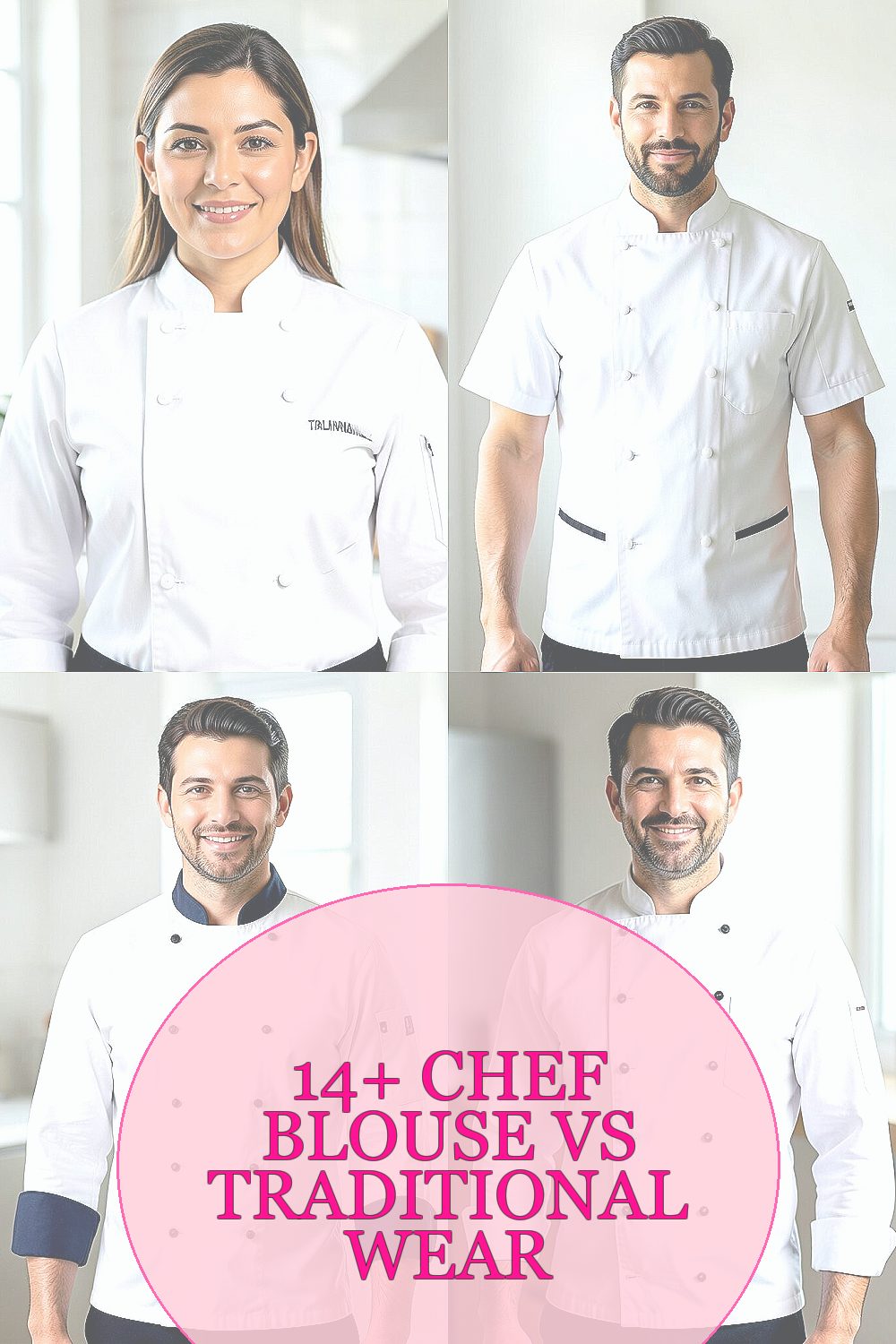
Chef style can look sharp and still be fully work-ready. The right choice of top and fit can change how you move, feel, and present your food to the room.
1. Crisp White Chef Blouse With a Clean Stand-Collar

A crisp white chef blouse instantly reads “professional” the moment you step forward. It also creates a neat visual line that pairs well with both modern and classic kitchens.
The stand-collar frames your neck area and helps the look feel structured, even on busy service days. Many blouses come with breathable fabrics that let you stay comfortable while you lift, chop, and plate. For a practical tip, aim for a slightly tailored fit that still allows easy arm movement when you reach across the counter.
2. Short-Sleeve Chef Blouse With Hidden Vent Panels

A short-sleeve chef blouse can feel lighter without losing that chef identity. Hidden vent panels also keep airflow moving when the kitchen runs hot.
This style is unique because it blends a neat appearance with comfort features that are easy to forget until you feel the difference. You get more comfort during long shifts, and you may notice better breathability near the underarm area. To personalize, choose a blouse with vents in a contrasting inner lining so the detail shows when you move.
On cost, short-sleeve options are often mid-range depending on fabric and stitching quality. Look for reinforced seams at the sleeve edges because that’s where wear starts first. A good trend to watch is subtle internal detailing that doesn’t look loud but adds depth to your look.
3. Button-Front Chef Blouse With Contrast Cuffs

A button-front chef blouse feels classic, but contrast cuffs add a modern twist. The cuff detail draws the eye to your hands, which is perfect since plating is where most chefs spend their focus.
This makes it unique because it’s still easy to wear while offering a “designed” touch. You can also change the vibe just by pairing it with different aprons, from plain black to patterned styles. Practical tip: keep the buttons fastened the same way every shift so the collar and cuffs stay aligned and tidy.
For personalization, match the cuff color to your apron tie, hat band, or even a chef badge lanyard. Cost considerations depend on whether the blouse uses heavier fabric or decorative cuff trim. A current trend is small, intentional contrast—think muted tones like charcoal or deep green rather than bright neon.
When you pick fabric, consider how it presses. Blouses that hold shape can reduce ironing time, which saves both effort and outfit stress.
4. Traditional Double-Breasted Chef Jacket With a Polished Silhouette

A traditional double-breasted jacket looks bold, formal, and unmistakably chef-like. The layered front creates a strong silhouette that photographs beautifully during service and catering events.
This style stands out because the double-breasted design often improves coverage at the chest and helps the jacket sit neatly even while you move. It can feel like armor in a busy station where you need confidence and structure. If you try it, choose a jacket with comfortable stretch or a soft lining so you can bend and reach without feeling tight.
5. Linen-Like Chef Blouse in Soft Cream for Calm, Bright Kitchens

A linen-like chef blouse in soft cream brings a relaxed elegance to the uniform. It looks especially nice in daylight-heavy dining rooms and open kitchens.
This is unique because it softens the typical “all-white” chef look without losing cleanliness. Comfort tends to be a big benefit, since linen-like blends often breathe well. Practical tip: pair it with a crisp apron and keep one set of matching cloths for quick spot cleaning.
Cost can be slightly higher if the blend is premium, but you can often find affordable options that still look expensive. Current trends favor warm neutrals, and cream tops fit right in. Personalize by choosing a blouse with subtle texture or a gentle sheen so it doesn’t look flat under kitchen lights.
6. Black Chef Blouse With Easy-Fold Crease Resistance

A black chef blouse delivers a sleek, dramatic look that hides stains better than many bright fabrics. It also gives a modern edge to classic chef wear.
This design is unique because it’s all about practicality, like wrinkle control and quicker cleanups between rush hours. You benefit from feeling more confident during long services, since small marks are less visible. For tips, avoid overly thin fabric and check whether the collar holds shape after washing.
Personalization ideas include adding a name embroidery on the chest or a small colored thread at the buttonholes. Cost considerations vary based on fabric technology, but crease-resistant blends often cost a bit more. A trend right now is “dark chefwear” for higher-end restaurants and bar-focused kitchens that want a stylish uniform.
7. Traditional Chef Wear in Navy With a Heritage-Style Fit

Navy traditional chef wear looks grounded and timeless. It also feels less stark than white, which can help in kitchens where you’re constantly wiping, rinsing, or handling sauces.
This style is unique because it leans into heritage colors while keeping the familiar jacket structure. Benefits include a strong uniform identity, plus navy can look great with many apron colors. Practical tip: choose a navy shade that matches your kitchen’s overall palette so it blends with other staff uniforms.
To personalize, consider a subtle embroidered stripe on the sleeve or a collar detail that matches your restaurant brand. Cost depends on whether you buy a full jacket set or mix-and-match pieces like shirts and aprons. Current trends include deeper tones and slightly longer sleeves for a refined, tailored look.
When you’re choosing fit, remember that traditional styles often feel roomier in the torso, so try it with your apron on to judge comfort accurately.
8. Ruffled or Pleated Chef Blouse for a Chef-First Statement

A chef blouse with gentle pleats or ruffles can make your outfit feel like part of the dining experience. It adds a creative touch while still reading as professional when styled well.
This is unique because it brings texture to an area people notice—right at your upper body and neckline. The benefit is a confidence boost, especially for chefs who do more front-of-house greeting or demo-style cooking. For a practical tip, keep ruffles small and tidy so they don’t get in the way when you lean over hot equipment.
Personalize by matching the pleat color accents to your apron straps or to your chef hat band. Cost considerations include how the fabric holds pleats after washing, which varies by material. A current trend in some kitchens is adding “show details” that still respect food-service practicality.
9. Chef Blouse With Matching Bib Apron for a Seamless Uniform Look

When your chef blouse and apron match, the whole uniform looks intentional. It creates a clean, cohesive appearance that customers often notice right away.
This style is unique because the blouse becomes part of a uniform system, not a standalone top. Benefits include less outfit mismatch stress and a more polished result in team photos. Practical tip: coordinate colors by picking one dominant shade and one supporting shade, then keep the rest neutral.
For personalization, choose a blouse color that complements your kitchen lighting, like warm whites or cool grays. Cost can be higher if you buy sets, but it may save money if you replace fewer items over time. A trend worth watching is “uniform styling,” where restaurants treat staff clothing like a branded visual identity.
10. Traditional Chef Wear With a Slightly Longer Jacket Hem

A slightly longer traditional jacket hem helps cover more as you bend and plate. It also gives a composed look even when you’re moving quickly between stations.
This is unique because length changes how the uniform behaves during work. Benefits include better coverage at the waist and a more stable silhouette when you’re wearing a belt or apron ties. Practical tip: test the jacket length with your apron and trousers together so you don’t end up with fabric bunching.
11. Chef Blouse in Pastel Sage for a Soft, Modern Kitchen Mood

A sage-green chef blouse brings a calm color tone to your uniform. It feels fresh, especially in kitchens that want a friendly, approachable vibe.
This style is unique because it shifts chefwear away from only white and black while still looking clean. Benefits include a mood-lifting look that can help you feel less stuck in “only traditional colors.” For tips, keep the rest of your uniform simple so the blouse color remains the star.
Personalize by pairing sage with off-white aprons or dark charcoal trousers for contrast. Cost considerations are similar to other blouse options, but specialty dyes sometimes cost a little more. A current trend is gentle botanicals and muted pastels in hospitality uniforms.
When you wash, follow color-care instructions closely to maintain the soft tone and avoid fading.
12. Traditional Chef Wear With Embroidered Chest Logo and Sleeve Branding

Traditional chef wear becomes truly “yours” when you add embroidered branding. A chest logo and sleeve mark can look refined and professional without feeling distracting.
This style is unique because embroidery adds identity while keeping the classic jacket structure. Benefits include a strong team look and better recognition for guests who remember staff names. Practical tip: place embroidery so it doesn’t rub against aprons or backpacks, since friction can shorten the life of the stitching.
Personalization ideas include adding a chef’s name on the sleeve instead of the chest, or matching thread color to your restaurant theme. Cost considerations depend on embroidery size and thread type, but many teams budget for one “signature” item first. A trend is using high-quality stitching that stays crisp under repeat laundering.
13. Chef Blouse With a Wrap or Crossover Front for Easy Access

A wrap or crossover front chef blouse can feel surprisingly practical. It’s built to create a secure fit while still giving you an easier way to adjust your coverage.
This style is unique because the closure method can reduce bulk around the buttons and chest area. Benefits include comfort when you reach across counters and less fuss when your uniform needs a quick adjustment. Practical tip: choose ties or fasteners that stay flat and won’t loosen during service.
To personalize, pick crossover details in contrast stitching or choose a solid tone that matches your apron. Cost can vary, but wrap-style designs sometimes cost more due to the extra construction. Current trends show more chefwear featuring comfort-driven designs that look sleek on the surface.
As a care tip, fasten everything before washing and check how the wrap fabric behaves in the dryer.
14. Traditional Chef Wear With a Stretch-Blend Fabric for Long Shifts

Traditional chef wear doesn’t have to feel stiff. Choosing a stretch-blend jacket lets you keep the classic look while moving with less strain.
This is unique because it keeps familiar structure while upgrading comfort. Benefits include easier bending, quicker arm movement, and a more relaxed feel during constant standing and lifting. Practical tip: test the jacket in motion, like reaching up and bending, before you commit—what feels fine while standing can feel tight while working.
15. Chef Blouse With a Sustainable Fabric Angle and Repair-Friendly Seams

A chef blouse made with more sustainable fabric choices can support your values and still look stylish. Pairing that with repair-friendly seams gives your uniform a longer life.
This style is unique because it’s designed for longevity, not just appearance. The benefit is both practical and emotional, since you spend less time replacing items and more time investing in good fit. For tips, look for durable stitching and consider choosing a fabric blend that withstands repeated washing.
Cost considerations can be higher upfront, but the long-term value often improves when your blouse lasts through many busy weeks. Current trends include “slow uniform” thinking, where restaurants and chefs aim to reduce waste while staying sharp. Personalize by choosing a classic color like white, black, or navy, then add small custom details such as a matching pocket square or a subtle sleeve badge.