Everyday chores can feel calmer when kids have a safe place to play nearby. The right kitchen layout can keep adults working and children happily busy.
1. Cozy Corner Play Nook With Soft Flooring

A built-in corner nook keeps play close without taking over the whole kitchen. Soft flooring helps kids stay comfortable when they sit, build, or color.
Use a cushioned surface like foam tiles covered with a wipeable fabric top. Add a low book ledge and a small tote for art supplies so everything has a home. To keep it tidy, choose a folding table that doubles as a snack station.
2. Open-Plan Island With a Kid-Height Art Shelf

2. Open-Plan Island With a Kid-Height Art Shelf
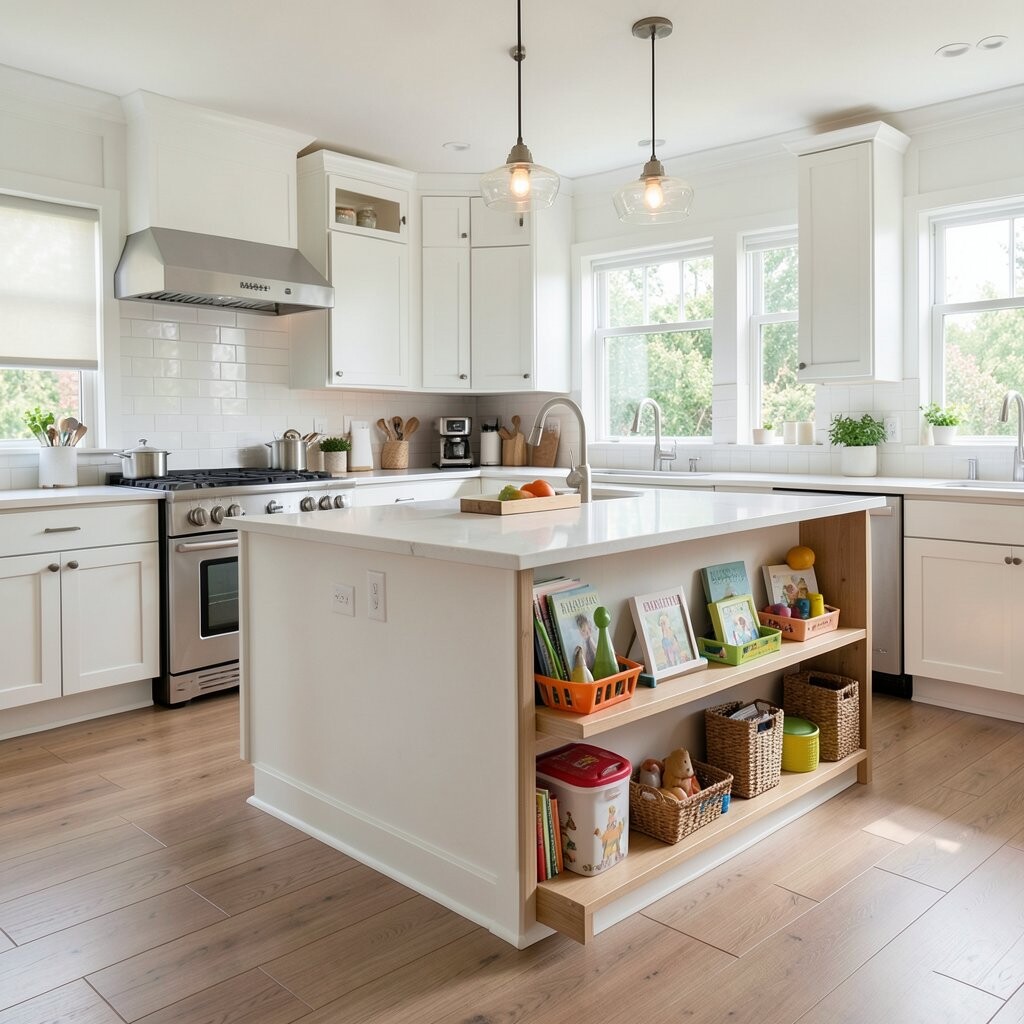
A kitchen island can become a fun hub when you add kid-friendly storage at their height. Adults get workspace, and children get a place for crayons and blocks.
Install a lower shelf under the island’s seating or along the side facing the play zone. Add a magnetic strip for markers and a few labeled bins for quick clean-up. Pick durable finishes like sealed laminate or easy-clean paint to handle daily messes.
For cost control, focus spending on smart storage and resilient surfaces rather than expensive custom cabinets. If you’re remodeling, consider a countertop edge with a smooth radius so it feels safer for bump-prone little explorers. This design works great in modern homes with sightlines that keep adults in view.
3. Window Seat Reading Spot With a Chalkboard Wall
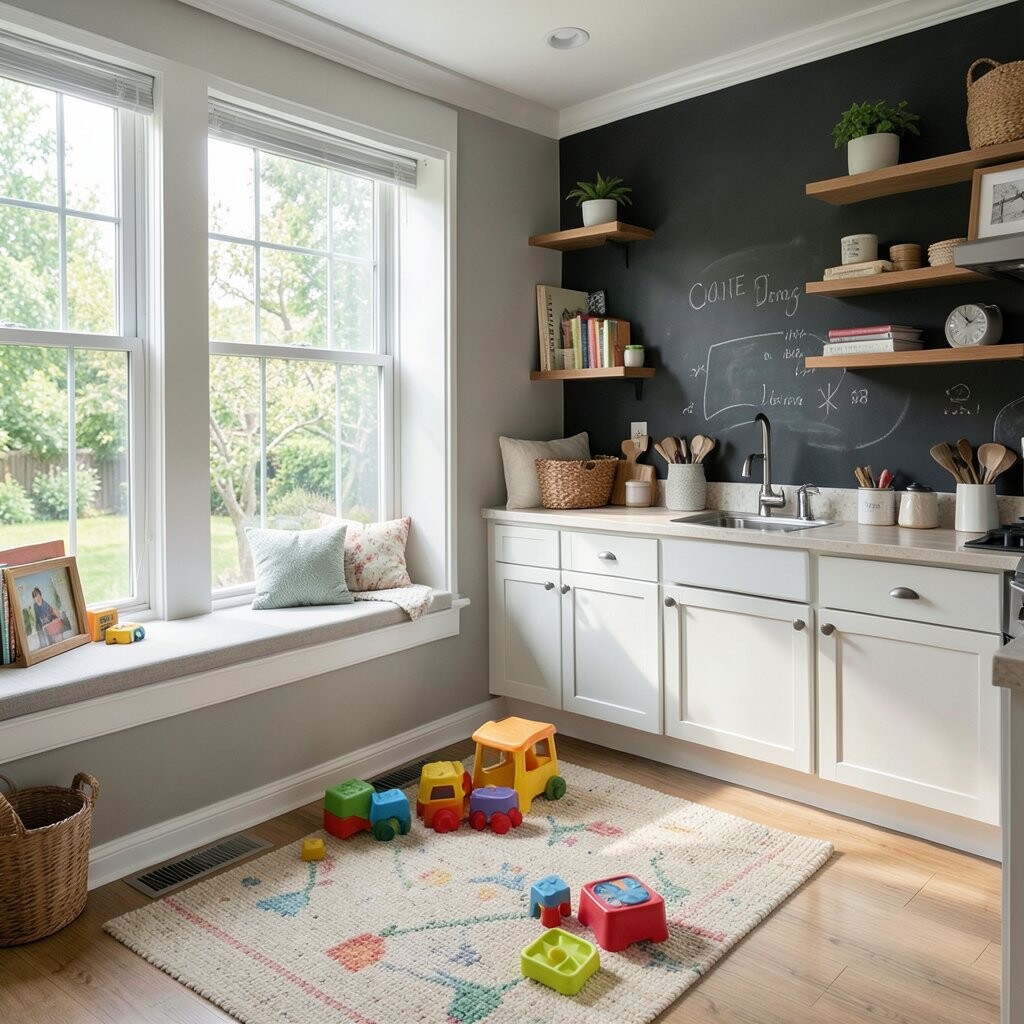
A window seat makes a natural gathering spot, and kids love watching the day outside. When you place it near a chalkboard wall, the area becomes both cozy and creative.
Choose vinyl chalkboard paint for a wall panel that’s easy to wipe with damp cloth. Add built-in cushions with removable covers for laundry days. Keep a small rolling cart nearby for erasers, wet wipes, and paper so you’re not constantly restocking.
This setup encourages calm play while adults cook, since reading and drawing don’t require a lot of room. For personalization, match cushion colors to your curtains or backsplash tiles. If you want to reduce cost, start with peel-and-stick window film and a chalkboard panel instead of major carpentry.
Current trends lean toward warm neutrals plus one bold activity wall, so a single chalkboard zone can feel stylish rather than messy. Use a height marker on the wall to remind kids where to draw. Add soft lighting nearby for evenings when homework and quiet play happen together.
4. Farmhouse Bench With Storage and a Mini Building Table

A farmhouse-style bench brings charm, and the hidden storage keeps toys from roaming the counters. A mini building table tucked beside it helps kids stay engaged during meal prep.
Look for benches with lift-top lids or drawers, then set the play table behind it so the space feels neat when closed. Choose non-slip feet so the bench and table won’t slide on tile. To personalize, paint the bench an inviting color and coordinate toy labels with matching tags.
For practical tips, place the table near a wall outlet for a cordless vacuum or charging station for parents. This design fits families who like a traditional look but still want kid-friendly functionality. Costs vary based on custom carpentry, but ready-made benches and add-on tabletop kits can keep budgets friendly.
To follow current trends, mix natural wood with black or brushed brass hardware for a clean, modern farmhouse feel. Keep the building table surface wipeable so markers and play dough are easier to manage.
5. Galley Kitchen With a Retractable Play Zone

In a galley kitchen, every inch matters, so a retractable play area can be a smart solution. When it’s pulled out, kids have room to play, and when it’s stored, the kitchen feels open again.
Think about installing a fold-down or sliding panel near the walkway, paired with a built-in tray for art materials. Add wall hooks and a small organizer so items don’t spill onto the floor. For safety, choose rounded edges and stable hardware that locks firmly.
To personalize, paint the panel to match your cabinetry or add a graphic decal for a fun theme. This approach can reduce clutter without major renovations because it can work with existing walls. If budget allows, select premium slide mechanisms for smoother everyday use and fewer maintenance issues.
6. L-Shaped Layout With a Dedicated Sensory Corner

An L-shaped kitchen naturally creates a corner that can become a sensory play zone. When it’s placed near storage and out of traffic, it feels safe and intentional.
Use a low cabinet or cubby system for sensory bins, then include a small washable mat for spill control. Add a water-free option like kinetic sand in a tray, plus activity cards for simple tasks. Keep a trash bin within reach so cleanup takes seconds, not minutes.
For uniqueness, choose sensory-themed colors and a calming scent-free approach for everyday play. Consider adding a child-safe curtain or partial screen that blocks distractions while still letting adults see the kids. Costs can stay reasonable by using modular shelving and pre-made bins instead of custom sensory fixtures.
Current kitchen trends often include “quiet zones” and multi-use areas, so this corner can look like part of the design rather than a separate toy room. If you can, place it next to a window for bright light, which makes the space inviting. A simple label system helps kids return items correctly even when you’re busy cooking.
7. U-Shaped Kitchen With a “Play Between Meals” Wall

A U-shaped kitchen wraps around you, and that makes it easier to keep an eye on the play area. With a dedicated wall zone, kids can switch from play to snack without wandering.
Install a vertical pegboard or magnetic organizer at kid height for games, cards, and small construction kits. Create a narrow surface for sorting activities like matching shapes or building rails. Choose kid-proof hardware and double-check that the organizer is securely mounted to studs.
To make it feel special, add a themed mural panel behind the storage so the play wall looks like decor. Keep snack-friendly items nearby, such as cups for crayons and wipeable placemats. Budget-wise, pegboards and modular trays are often cheaper than custom cabinetry and still deliver that polished look.
For personalization, rotate seasonal bins so the play wall never gets boring. This design fits families who want structure, because it encourages clear routines. Pair it with soft seating like a small bench to create a comfortable spot for longer activities.
8. Open Shelving With Kid-Accessible Toy Baskets

Open shelving can look airy, and it works beautifully when you plan storage for kids. When baskets are reachable, children can grab an activity and put it back on their own.
Place daily-use toy baskets on the lowest shelves, and keep adult kitchen items above reach. Choose uniform basket styles so the shelves stay visually tidy even when bins are pulled out. Add simple divider inserts so small pieces don’t scatter across the floor.
To make it unique, mix materials like woven baskets with a few clear bins for quick scanning. Use removable shelf liners for easy cleanup if spills happen. This design is often budget-friendly since it relies on organization and placement more than new build work.
Current trends favor warm woods, natural textures, and functional decor, so baskets can feel like part of the kitchen style. For practical tips, keep only a small number of toys accessible at once and store the rest in a closet. Rotating toys weekly can cut down mess and keep kids more excited about what’s available.
9. Built-In Banquette With a Slide-Out Craft Drawer
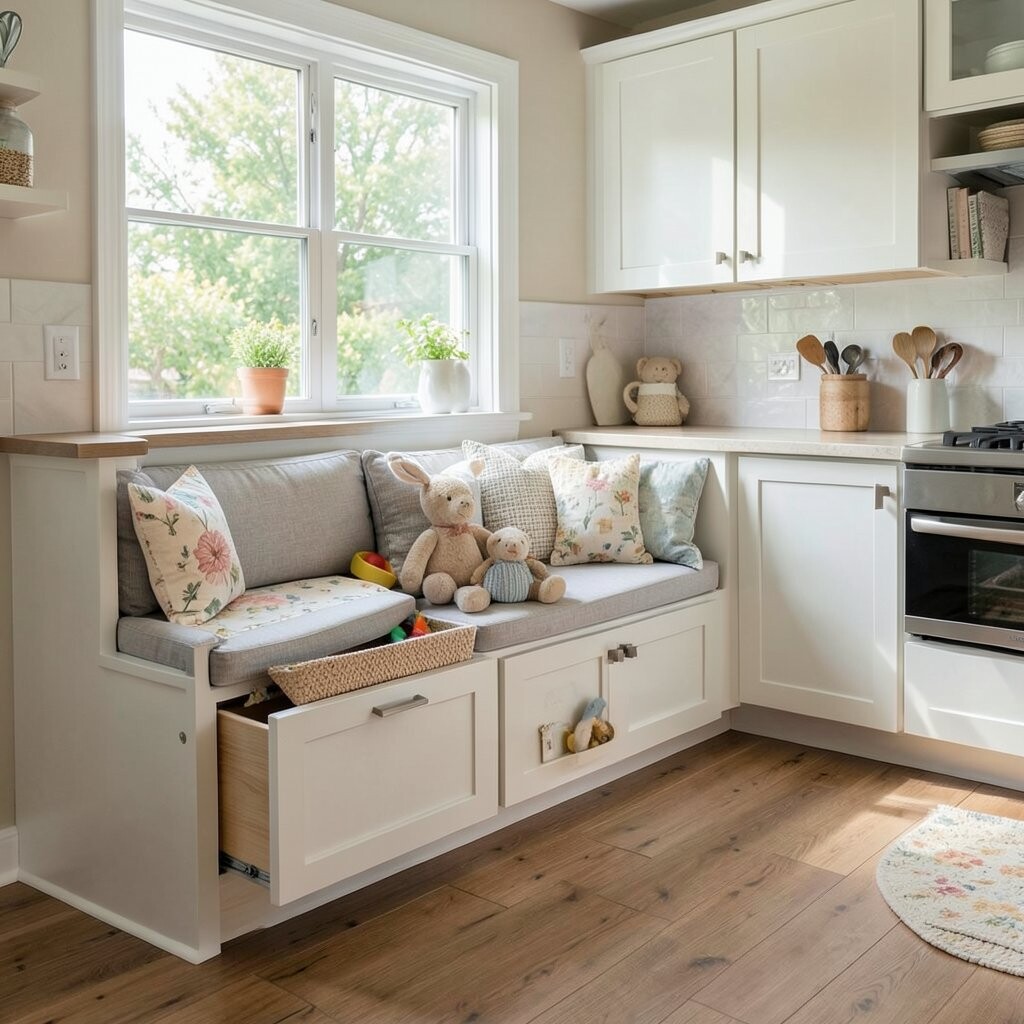
A banquette gives you built-in seating, and the bench can double as a kid play location. With a slide-out craft drawer, you can pull out art supplies exactly when needed.
Build the craft drawer into the bench face so it’s hidden when closed and easy to access when open. Add a wipeable backing and compartments for paper, washable markers, and sticker sheets. Keep a child-sized trash can inside the drawer area to make cleanup more automatic.
This setup is unique because the play station disappears into the furniture, which helps the kitchen look neat. For personalization, choose fabric upholstery that matches your overall color scheme and select patterns that hide small stains. If you want lower cost, start with a freestanding bench and use a pull-out organizer from a home store.
When trends shift toward multifunction furniture, a banquette with built-in storage fits right in. For safety, ensure drawers glide smoothly without pinch points. Keep adult snacks and cooking tools separated so kids can play without accidentally grabbing the wrong items.
The biggest win is routine: kids know that when the drawer is closed, play time is paused. When it opens, it’s craft time, which makes boundaries feel natural rather than strict.
10. Countertop “Mini Kitchen” for Pretend Play

A mini kitchen area inside your real kitchen can be a magical way to keep kids engaged. Pretend play can calm them while you cook, especially when you set it up like a real station.
Create a kid-height counter section using a sturdy cart or a lower table near the main work area. Add pretend pots, a toy sink, and a simple “order” board for role play. Choose washable materials and avoid anything that chips easily, since pretend kitchens get real action.
To personalize, match the toy station with your real appliances’ colors or add a themed backsplash panel. Cost considerations are usually moderate, because you can buy a small table and fill it with affordable toy sets. Look for sets with safe, BPA-free plastic and wipe-clean surfaces for easier maintenance.
Current trends show more parents using role-play to encourage creativity, so this approach feels modern and purposeful. For practical tips, store the toy kitchen accessories in labeled bins so you’re not digging for utensils. Add a small tray for “ingredients” like felt produce for a clean look and less mess on the floor.
If your space is tight, use a foldable cart and keep it out of the main pathway. A little planning makes it feel like a dedicated play corner rather than an extra clutter source.
11. Corner Storage Wall With a Chalk-and-Whiteboard Combo

A storage wall is practical, and it becomes even better when kids can draw on it. A chalk-and-whiteboard combo gives two kinds of fun with one cleanable surface.
Mount the whiteboard portion at kid height and place a chalkboard panel next to it for messier art moments. Add cubbies below for markers, erasers, and magnetic letters. Keep a small microfiber cloth on a hook so wiping is fast and encouraging.
What makes this design unique is that the creative space also holds everyday supplies. For personalization, choose a color palette that matches your kitchen cabinets and add a small calendar board for family routines. Costs can stay reasonable with DIY paint-friendly kits or store-bought board panels.
To handle cleanup, choose erasable chalk or marker options and set paper towels nearby. This design fits current trends that blend home office style with family function. When kids can see their activities clearly, they’re more likely to return supplies to the right spot.
12. Dining-Side Play Table With Parent-Friendly Sightlines

If you want kids busy during dinner prep, place a play table near the dining area. Keeping it within your sightline helps you multitask without stress.
Use a compact table with wipeable surfaces and rounded corners, then add a matching chair that fits the kitchen scale. Set up a “theme drawer” with rotating activities like puzzles, building sets, and simple coloring sheets. Try to keep the table near a wall or corner so it doesn’t block traffic paths.
13. Under-Stair or Pantry-Adjacent Play Studio
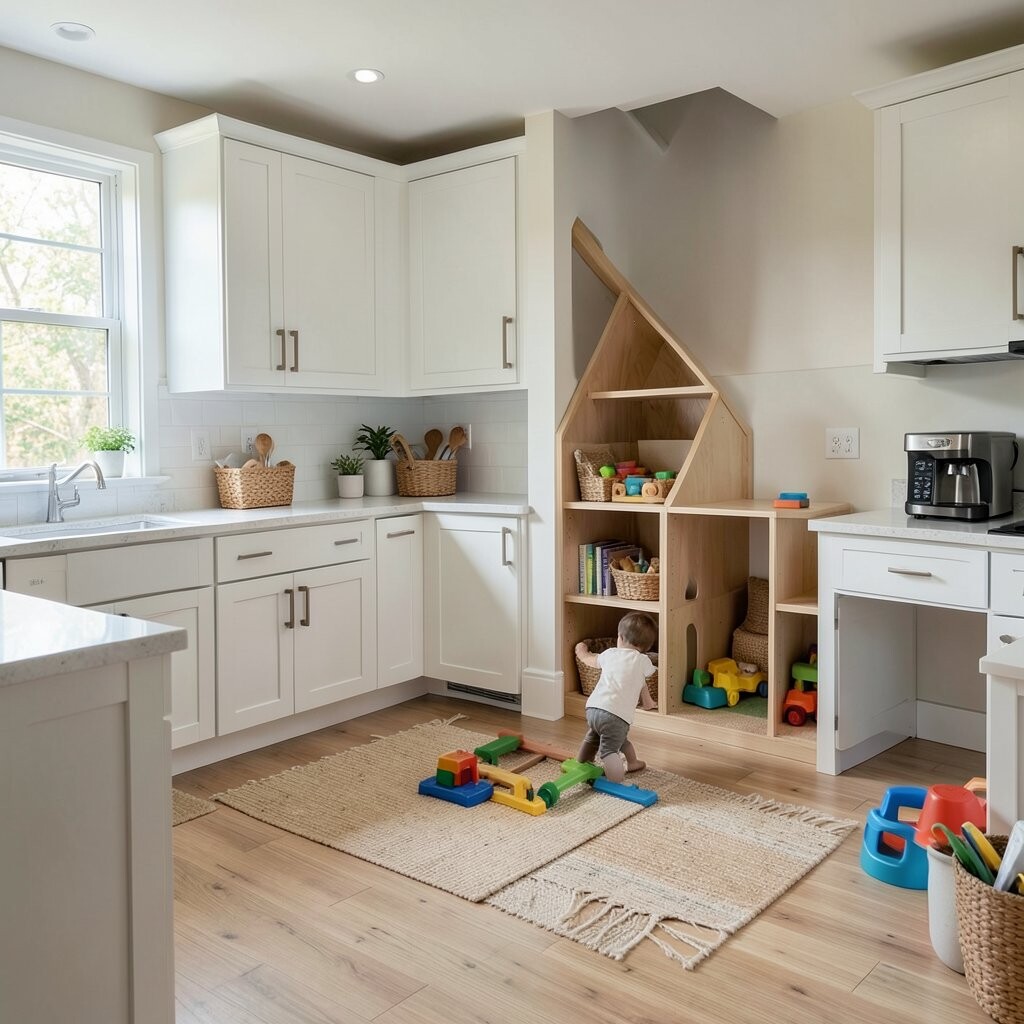
Even a small overlooked space can become a charming play studio near the kitchen. Under-stair storage or a pantry-adjacent nook works well when you set clear boundaries and use easy-clean materials.
Create a small play room feel by using a pocket-door, curtain, or sliding screen that opens during play time. Inside, add low shelving for books, bins for toys, and a soft mat that’s easy to vacuum. For personalization, paint the inside a cheerful color so it feels inviting instead of cramped.
Cost considerations depend on your home, but you can keep things affordable with modular shelving and a washable mat. This design is unique because it uses space that might otherwise stay empty. Current trends embrace “micro rooms” and clever storage, so this studio can look intentional and stylish.
For practical tips, add a simple checklist on the door frame for clean-up steps. Make sure ventilation is good and use odor-control options if the area is enclosed. With a little structure, kids can play safely while adults cook nearby, and the kitchen stays looking like a kitchen.