
A crisp white coat makes you look sharp the moment you step into the kitchen. It also signals professionalism, hygiene, and confidence all at once.
1. Tailored Double-Breasted Coat With Satin Lapels

A double-breasted coat sits neatly on the body and holds its shape. Satin lapels add a subtle shine that looks formal without feeling flashy.
Choose a slim cut through the shoulders and a slightly roomy fit at the torso so you can move easily between stations. Pair it with black chef trousers and polished slip-resistant shoes for a clean, event-ready look. Add a simple watch and a neatly tucked white undershirt to keep the outfit crisp all day.
2. Crisp White Coat Over a Charcoal Waistcoat

This look layers warmth and style without adding bulk. The charcoal waistcoat makes the white coat pop in photos and on the pass.
Opt for a waistcoat with a breathable fabric blend so you stay comfortable during long services. Wear matching charcoal trousers and a dark belt that stays flat and secure. Finish with a black chef jacket-style apron tied at the waist for a tidy front.
To personalize, consider a small embroidered logo on the waistcoat pocket edge. If you’re budgeting, hunt for a coat with a plain lining and spend a little more on the waistcoat. This outfit fits formal dinners, tasting events, and upscale catering teams where presentation matters.
3. Monochrome White Coat With Black Tuxedo-Style Trousers

For a bold formal vibe, go monochrome with sharp black trousers. The contrast creates a high-end look that still feels practical in the kitchen.
Look for trousers with a structured waistband and a clean crease down the leg for a tuxedo effect. Pair with a white coat that has crisp cuffs and a smooth fabric finish so it reads “polished” even when you’re busy. Choose black low-profile non-slip shoes that don’t draw attention away from the tailoring.
Add a black bow tie or a simple necktie depending on the event’s dress code. If you handle hot ovens often, consider a coat with reinforced seams near the pockets for extra durability. When it comes to cost, the trousers are where you can splurge for better drape and comfort.
Keep colors true by laundering in cold water and avoiding harsh bleaches. A quick steam at the start of service can bring back that fresh, crisp coat look fast. This style is especially popular in modern restaurant branding where chefs dress like hosts.
4. Formal Chef Coat With Stand-Collar Shirt and Bow Tie

A stand-collar shirt under your coat looks elegant and modern. It frames your neck and makes a bow tie feel intentional, not random.
Pick a breathable white or light-gray shirt that won’t wrinkle too quickly. Use a bow tie in black, navy, or deep green to add personality while staying classy. For practicality, choose shirt fabric that resists stains and dries quickly between shifts.
5. White Coat With Hidden Piping and Deep Pocket Details

Subtle piping can make a white coat feel tailored, like it belongs in a gallery opening. It also helps the coat look crisp even when it gets busy.
Go for deep, well-placed pockets so thermometers, pens, and order pads stay close without bulging. Try piping in navy or soft gray for a formal twist that won’t overpower your overall look. Pair with dark trousers and a simple belt so the coat remains the focal point.
To personalize, stitch matching thread accents on the inner seam where only you notice. A coat like this can cost more due to extra construction, but the pockets and structure often last longer. This year, clean lines and quiet detailing are trending for chefs who want “formal” without dramatic patterns.
6. Chef Coat With Fine-Stripe Trousers for a Classic Edge

Fine stripes on trousers add height and make your outfit look instantly more formal. It’s a smart way to add style while keeping a traditional kitchen feel.
Choose a stripe that’s subtle, like charcoal-on-black, so it stays elegant under fluorescent lights. Wear a coat with crisp seams and a smooth finish so the stripes don’t compete. Finish with dark socks and slip-resistant shoes that match the trousers.
If you want personalization, add a matching tie in the same tone family as the stripe. Budget-friendly tip: buy the coat first, then choose affordable striped trousers that fit well. Better tailoring in the leg opening can make even a simple outfit look expensive.
7. White Coat With Structured Shoulder Pads and Clean Hem

Structured shoulders give the coat an authoritative silhouette. A clean hem line also helps the coat look neat when you bend, reach, and lean over the pass.
Look for a hem that sits just right, usually around mid-hip, so it stays tidy without restricting movement. Choose a fabric blend that resists heavy wrinkling and holds its shape through service. Pair with plain black trousers to keep the focus on the coat’s architecture.
To keep it formal, wear a tucked-in undershirt and a minimal tie clip if you use a tie. When budgeting, prioritize the coat’s construction because shoulder structure is hard to replicate with simple accessories. This style suits chef roles with strong front-of-house presence and media-friendly positioning.
8. Double Cuff Shirt and White Coat With Minimal Embroidery
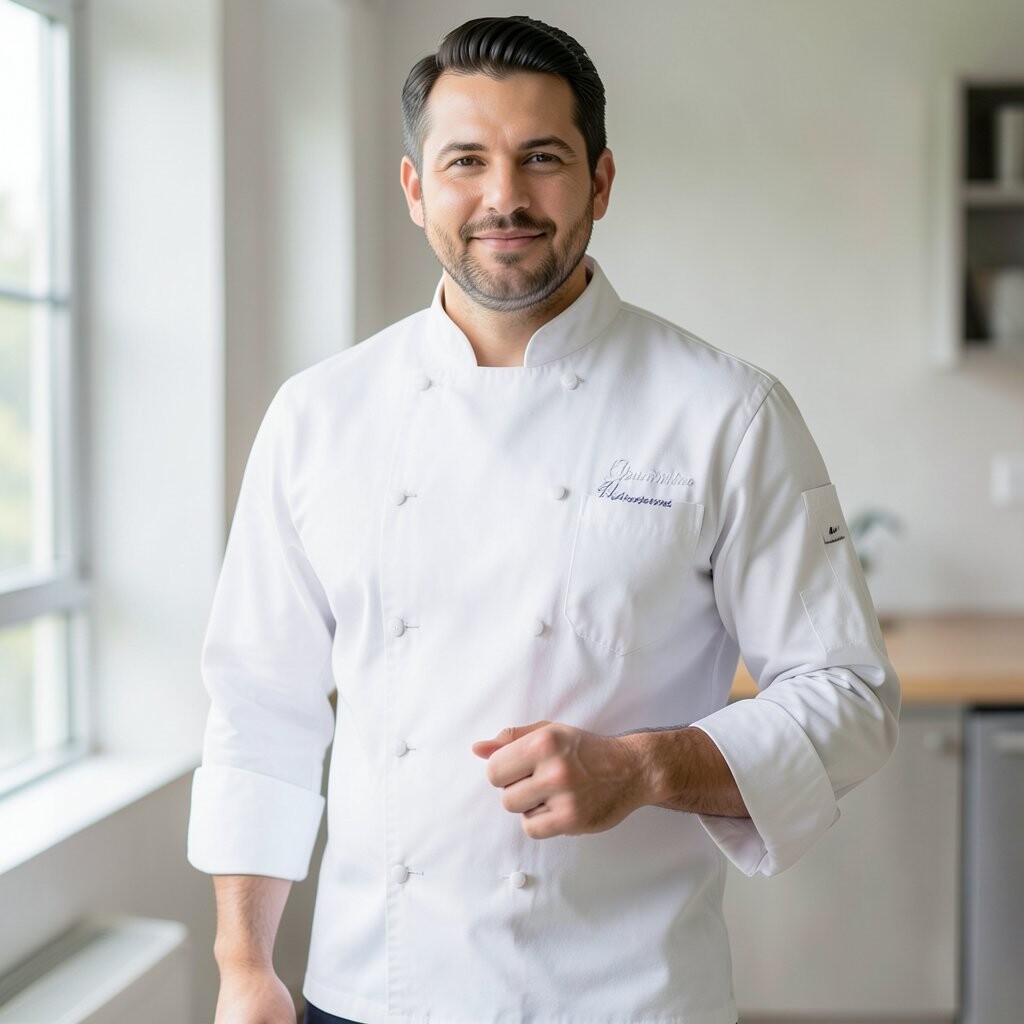
Minimal embroidery feels refined and intentional, especially when it’s small and placed neatly. Double cuffs on your shirt add a classic touch that photographs beautifully.
Pick a coat with a subtle chest emblem or a restrained sleeve detail so it looks premium without clutter. Use cufflinks in silver or black to match your hardware and keep the outfit cohesive. Keep the rest of the look simple with black trousers and a clean belt.
If you like personalization, choose embroidery thread in a shade that matches your restaurant logo. Consider cost carefully: limited embroidery often costs more than plain options, but it can elevate the entire look. For trends, understated customization continues to be popular because it feels modern and timeless.
Before service, smooth the cuffs and give the coat a quick press around the shoulders. This routine takes only a minute and helps everything look “formal” from start to finish.
9. White Coat With Matching Black Apron and Knife Roll Clip

Pairing a crisp coat with a black apron can look extremely polished. The uniform color block makes you look coordinated and ready for a professional shoot.
Choose an apron with clean straps and a secure tie so it sits flat under the coat. A knife roll clip keeps tools organized and prevents awkward swinging while you work. Wear it over a neatly fitted shirt so the apron doesn’t bunch at the waist.
For practical tips, keep your apron pockets balanced so you’re not constantly reaching around. Personalize with embroidered initials on the lower apron edge if your team allows it. Cost-wise, a sturdy apron with good strap hardware may cost more, but it lasts longer than thin fabric.
This outfit is great for plating stations and catering teams because it looks formal while supporting quick movement and tool access.
10. White Coat With Contrast Cuff Tape and Slim Chino Trousers

Contrast cuff tape adds a flash of detail that still feels elegant. Slim chinos give a slightly softer look than dress trousers while staying neat.
Pick cuff tape in navy or forest green for a modern, chef-forward contrast. Choose chinos with a structured waist and stain-resistant finish so they handle real kitchen life. Pair with clean white or black shoes depending on your overall color plan.
To personalize, match the cuff tape color to a tie or pocket square. If you’re controlling costs, chinos can be less expensive than tailored dress trousers, yet they look sharp when the fit is right. This look feels current because many chefs are mixing formal tops with performance-friendly bottoms.
11. Crisp White Coat With a Monogrammed Pocket Square
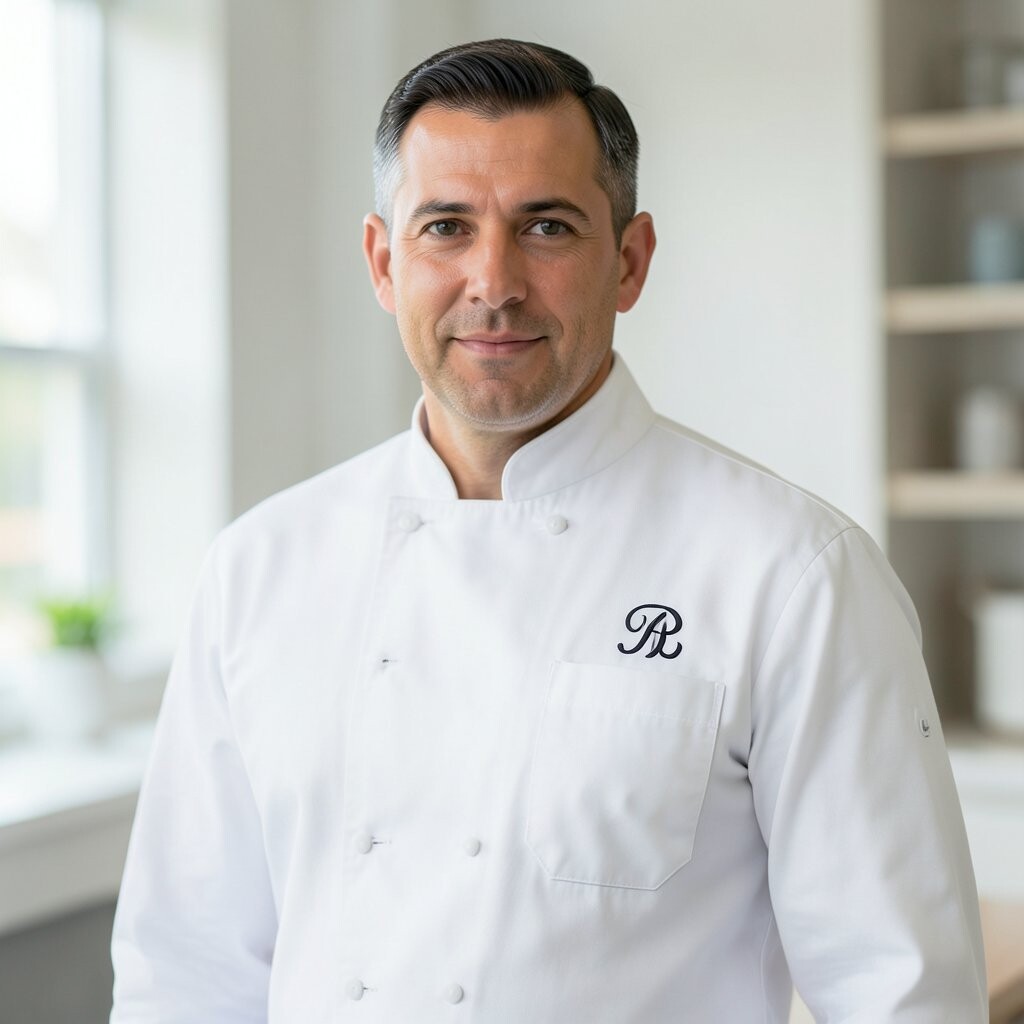
A pocket square can make a chef outfit feel instantly special. Even in the kitchen, it signals care for details.
Use a white coat with a simple chest pocket for best results. Choose a pocket square color that matches your logo or team theme, and keep the fold crisp with a quick refresh each day. Wear a slim tie or bow tie to complete the formal look.
To make it practical, choose fabric that resists wrinkles and doesn’t soak up spills quickly. When budgeting, a pocket square is a low-cost way to personalize without altering expensive clothing. This style is popular for events like charity dinners where chefs act like hosts and presenters.
12. Chef Coat With Formal Belt and Matching Uniform Set

A well-fitted belt can make your white coat look intentional and tailored. When the belt matches the rest of the uniform, the outfit reads “formal” in one glance.
Look for a matching set where the coat, belt, and trousers share similar tones and fabric textures. Choose a belt that lies flat and doesn’t interfere with your apron ties or tool pouches. Wear a tucked shirt with a clean collar so the beltline looks tidy.
Personalization can be as simple as choosing a belt buckle style that suits you. Cost considerations matter here because sets usually cost more, but they save time and improve fit consistency. If you’re new to formal chef wear, a uniform set is often the easiest path to a polished look.
13. White Coat With Leather-Trim Cuffs and Elegant Neckwear

Leather-trim cuffs bring a sophisticated vibe to a classic white coat. It feels upscale while still being grounded in kitchen practicality.
Pair the leather accents with simple black trousers and a clean, structured undershirt. Choose neckwear like a narrow tie or a discreet knit scarf in dark tones. Make sure the neckwear fabric is breathable so you don’t overheat during service.
For practical tips, keep leather-trim coats away from heavy splashes and wipe gently if needed. Consider cost carefully because leather details raise the price, but they also add durability to cuff edges. This outfit works great for chefs who want to look refined during guided tastings and chef-table experiences.
14. Formal White Coat With Black Dress Vest and Gold Buttons
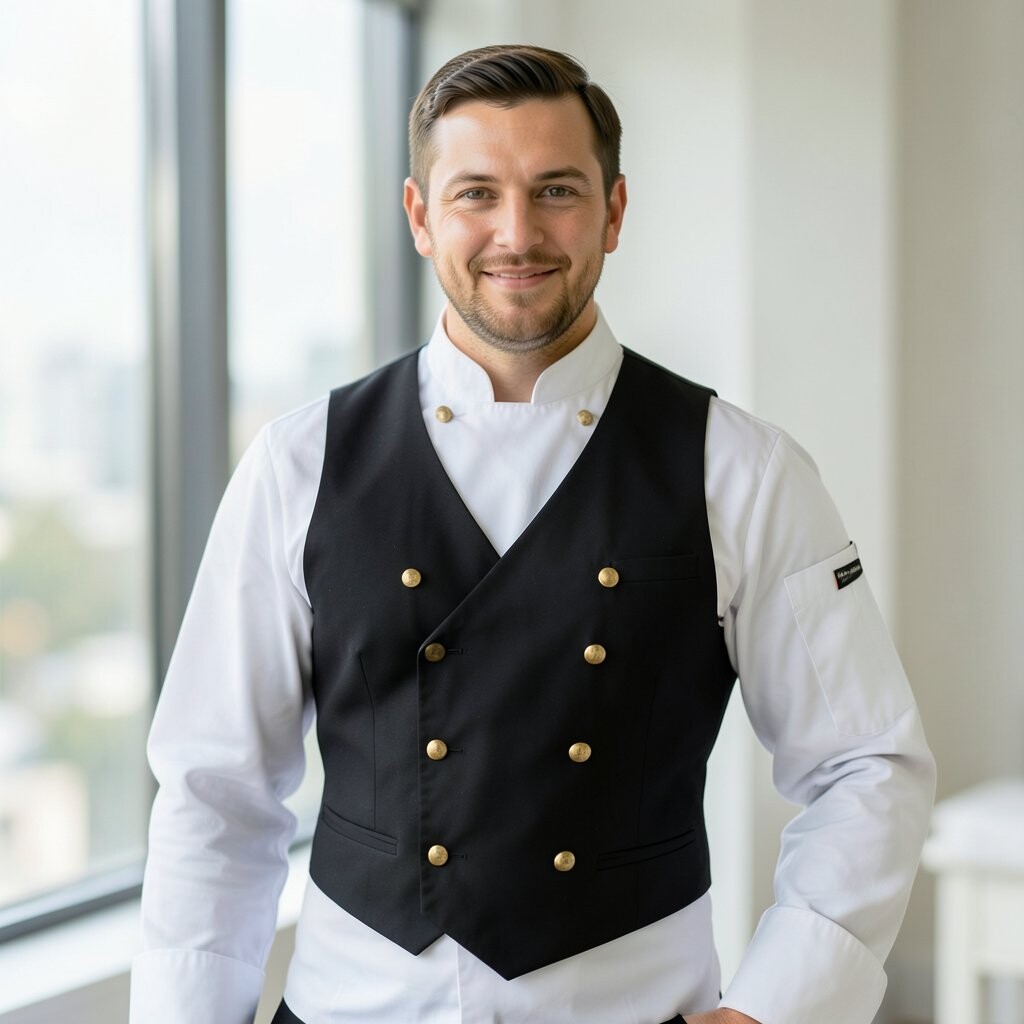
A black dress vest under a white coat creates a striking, formal contrast. Gold buttons add warmth and a classic “evening” feel.
Choose gold accents that coordinate with your restaurant’s decor so the outfit feels cohesive. Wear a dress shirt with a comfortable collar and a clean fit to avoid bunching under the vest. Pair with black trousers and well-polished non-slip shoes for a complete polished look.
Personalize by selecting vest lining colors or monogram details that match your personal brand. If cost is a concern, look for vest-only upgrades and keep the coat plain. Trends show that metallic accents are returning in chef uniforms for special occasions and photo-friendly services.
15. Crisp White Coat With Geometric Lining at the Inner Placket
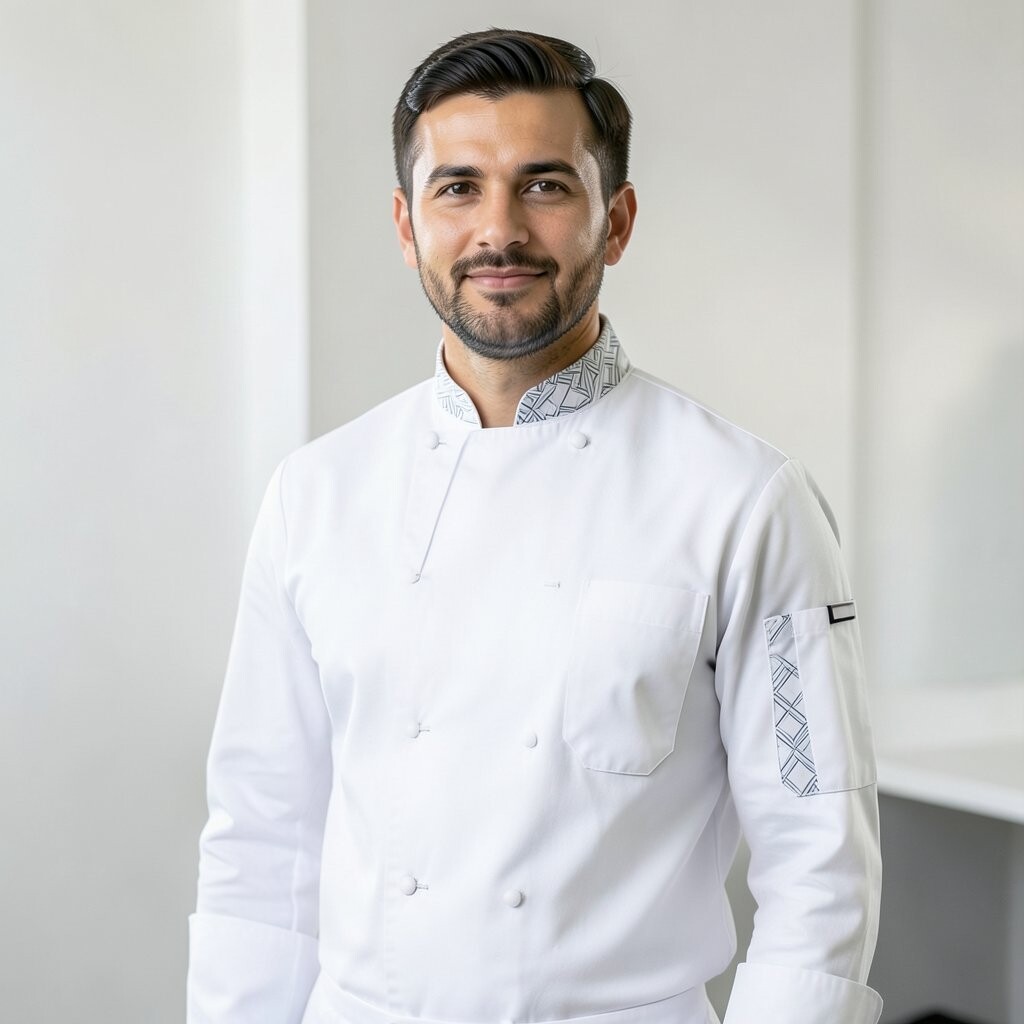
Geometric lining can be hidden most of the time, which makes it feel like a secret styling detail. When you move, the pattern flashes just enough to feel modern.
Look for a coat with clean inner placket construction so the lining doesn’t twist or bunch. Choose geometric shapes in subtle tones like gray, navy, or charcoal to keep it formal. Pair with plain black trousers so the lining stays the unique feature.
To personalize, select lining colors that match a chef coat branding theme or your restaurant logo palette. Cost considerations: lining and construction can add to the price, but the unique style often makes the coat a standout piece. This look is popular for stylized events where chefs present food in a more fashion-forward way.
16. White Coat With Pleated Front Trousers for a Elevated Silhouette

Pleated front trousers give a formal silhouette that looks sharp and confident. They also add ease of movement when your day involves lots of bending and leaning.
Choose pleats that are centered and not overly deep so the trousers look structured, not bulky. Pair with a coat that has a smooth back and fitted shoulders to balance the outfit. Keep accessories minimal so the outfit stays clean and professional.
Personalization can happen through subtle cuff color in your shirt or a tie shade that matches your brand. Budget-friendly tip: you can find quality pleated trousers without spending too much if you focus on fit and fabric weight. Current trends favor tailored comfort, and pleats deliver both style and practicality.
17. Formal Chef Coat With Light Blue Dress Shirt and Navy Tie

Not all formal chef outfits need to be all white and black. A light blue dress shirt plus a navy tie creates a calm, professional color balance.
Pick a shirt that breathes and resists wrinkling, since kitchen heat can make fabric look messy quickly. Wear the crisp white coat unbuttoned at the top when allowed so the tie and collar show clearly. Pair with dark trousers that match the navy tones for a cohesive look.
To personalize, choose a navy tie pattern that stays subtle, like tiny dots or micro-stripes. Cost considerations are usually easier here because the tie and shirt are affordable upgrades compared to coat alterations. This style remains popular because it looks classic and modern at the same time.
18. White Coat With Chef-Grade Tailoring and Statement Buttons

Statement buttons turn a basic chef coat into something you’d wear at a formal event. With the right tailoring, they look intentional and stylish.
Choose a coat with chef-grade tailoring at the shoulders and sleeves so the buttons look aligned, not pulled or crooked. Use statement buttons in matte black, brushed metal, or a muted color that complements your trousers. Keep the rest of the outfit simple so the buttons stay the focal detail.
For practical tips, check button strength and seam reinforcement so the coat survives daily wear. If cost is a factor, consider buying a well-made coat with simpler buttons first, then upgrade buttons later if the coat construction allows it. This approach fits current trends toward customization and personal chef branding.