Your garden can look bigger when you hang the color. These hanging pot projects will give you fresh ways to grow plants in tight spaces.
1. DIY Macramé Plant Hangers With a Weatherproof Twist
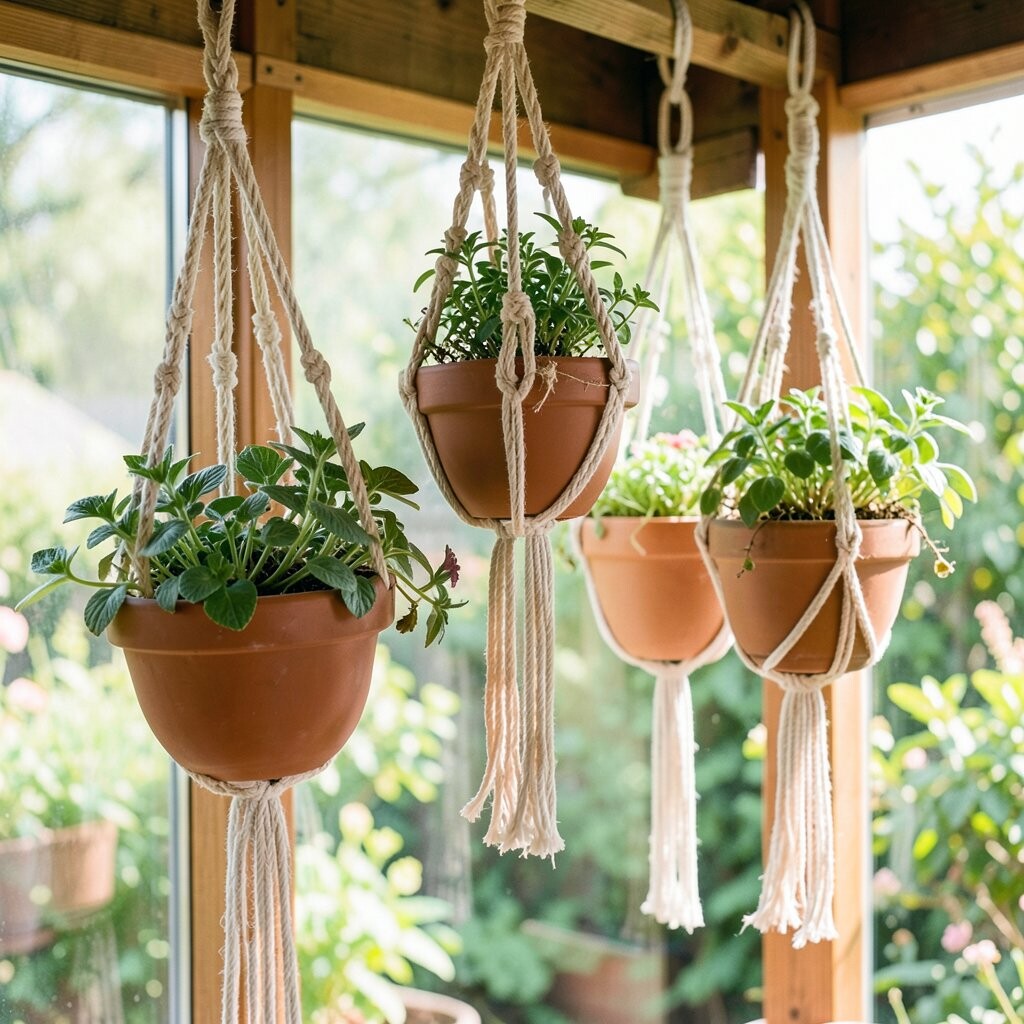
Make a statement with braided rope that frames your pots like living art. Add a simple liner to protect the rope and keep the setup tidy.
Choose cotton or recycled rope, then seal the ends so they don’t fray. Use a plant saucer or plastic drip liner inside the pot so water doesn’t soak the fibers. For a unique look, dye a few strands and alternate lengths so the hanging heights feel intentional.
2. Hanging Herb Pots in a Repurposed Gutters Planter

Repurpose an old metal gutter into a long hanging herb shelf. It’s a clever way to grow multiple flavors in one spot.
Mount short hooks into a sturdy board, then hang the gutter from brackets. Line it with landscape fabric and add small drainage holes for safer watering. Plant basil, mint, and parsley in separate sections so flavors stay distinct.
For practical care, water lightly and more often, since narrow planters dry faster. Keep tall herbs on one end and compact herbs on the other to prevent overcrowding. To fit your budget, scout yard sales for gutters, then spend your money on quality potting mix and labels.
3. Vertical Upcycled Shoe Organizer Hanging Planters

A hanging shoe organizer turns a plain wall into a vertical garden display. It’s lightweight, easy to mount, and great for growing small plants.
Fill each pocket with a mix of potting soil and compost, then add slow-release fertilizer for steady growth. Make sure the organizer has a way for water to drain, either by poking holes or lining it with a breathable fabric layer. Choose shallow-rooted greens like arugula, lettuce, or flowering annuals for best results.
For uniqueness, paint the fabric backing a calm color like sage or sky blue. In hot weather, hang it where it gets morning sun and afternoon shade. If you want a trendier vibe, use pocket labels shaped like tiny chalkboards for an organized look.
Cost stays low because you’re repurposing something you already have. Replace the organizer if it starts to sag, since the fabric will eventually wear down outdoors. Rotate the organizer every week so plants grow evenly toward the light.
4. Terracotta Pot and Chain “Waterfall” Display

Stack terracotta pots with chain so they form a playful waterfall effect. The movement of the chain makes even a small garden feel lively.
Use pots of different sizes, drilling drainage holes and adding a drip tray below. Thread strong chain through pot holes, then vary the spacing so each pot gets enough airflow. For practical tips, wrap the chain contact points with thin felt to reduce chipping and noise.
5. Hanging Succulent Planters in Reusable Food Jars

Turn empty jars into mini hanging gardens that look modern and clean. Succulents love the extra air flow and dry-out time.
Attach twine or wire handles to sturdy jar lids, then secure the jars to a hook rail or porch beam. Add a gravel base, then fill with gritty succulent soil so roots don’t sit in moisture. Choose hardy varieties like echeveria or hens-and-chicks for easy care.
To personalize the display, wrap the jars with textured rope or add a small label tag. Keep watering minimal and let the soil dry completely between waterings. This project is budget-friendly because the main “container” is something you can save from kitchen recycling.
6. Flower-Forward Hanging Basket With a Simple Liner System
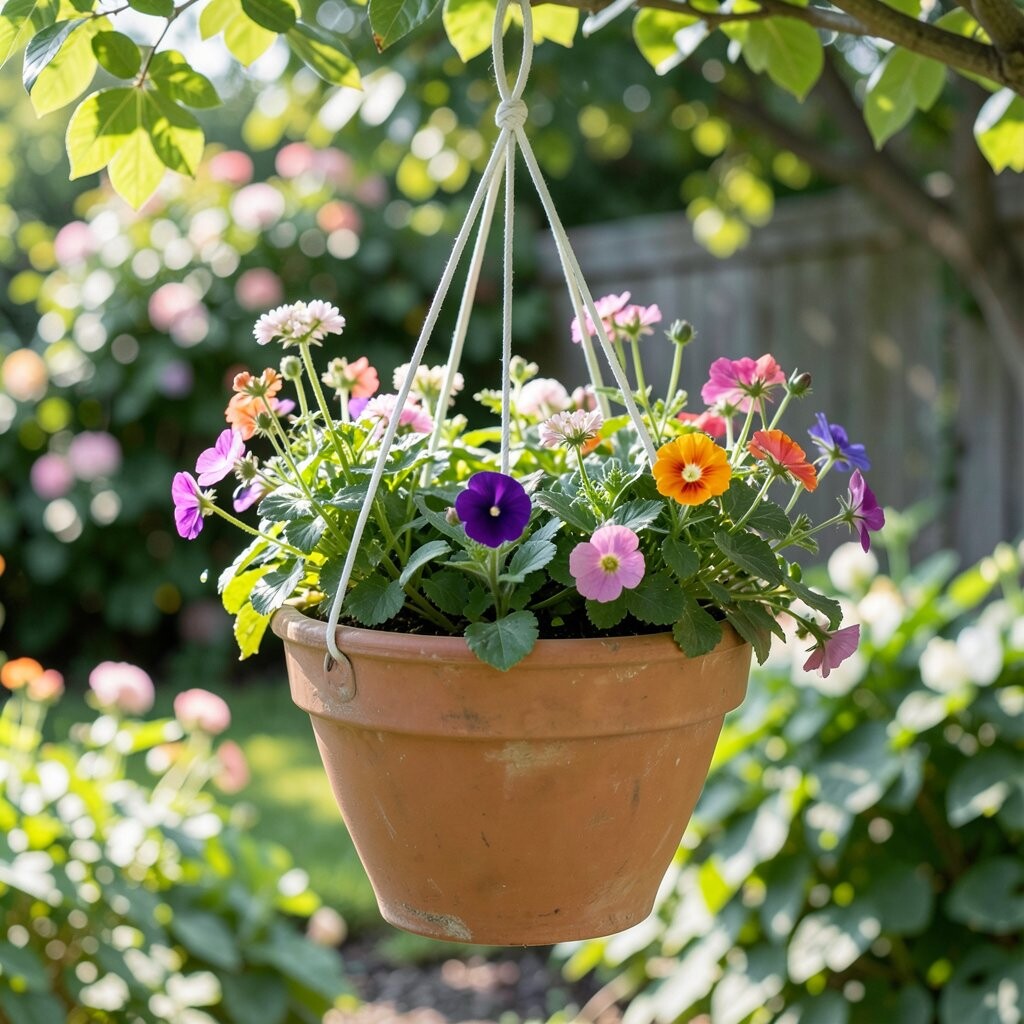
Create a full hanging basket that looks like a bouquet from a distance. A good liner makes the difference between messy drips and neat, confident growth.
Start with a quality basket, then add a coconut coir liner or moisture-retaining liner to help soil stay evenly damp. Use a potting mix designed for containers, and plant in layers so you get blooms around the edges first. Include a trailing plant like lobelia or sweet potato vine for that soft cascading look.
For practical tips, water when the top inch feels dry and don’t let it sit in a puddle. Hang it at eye level so the flowers feel like part of your daily view. You can also add slow-release fertilizer during planting to support consistent color for weeks.
Cost depends on basket quality, but liners and mix are usually the best upgrades for long-lasting results. A current trend is using themed color palettes, like purple-and-white or coral-and-cream, for a styled appearance. Rotate the basket weekly so blooms stay balanced instead of leaning one direction.
7. DIY Rope-and-Driftwood Hanging Planter for Coastal Style
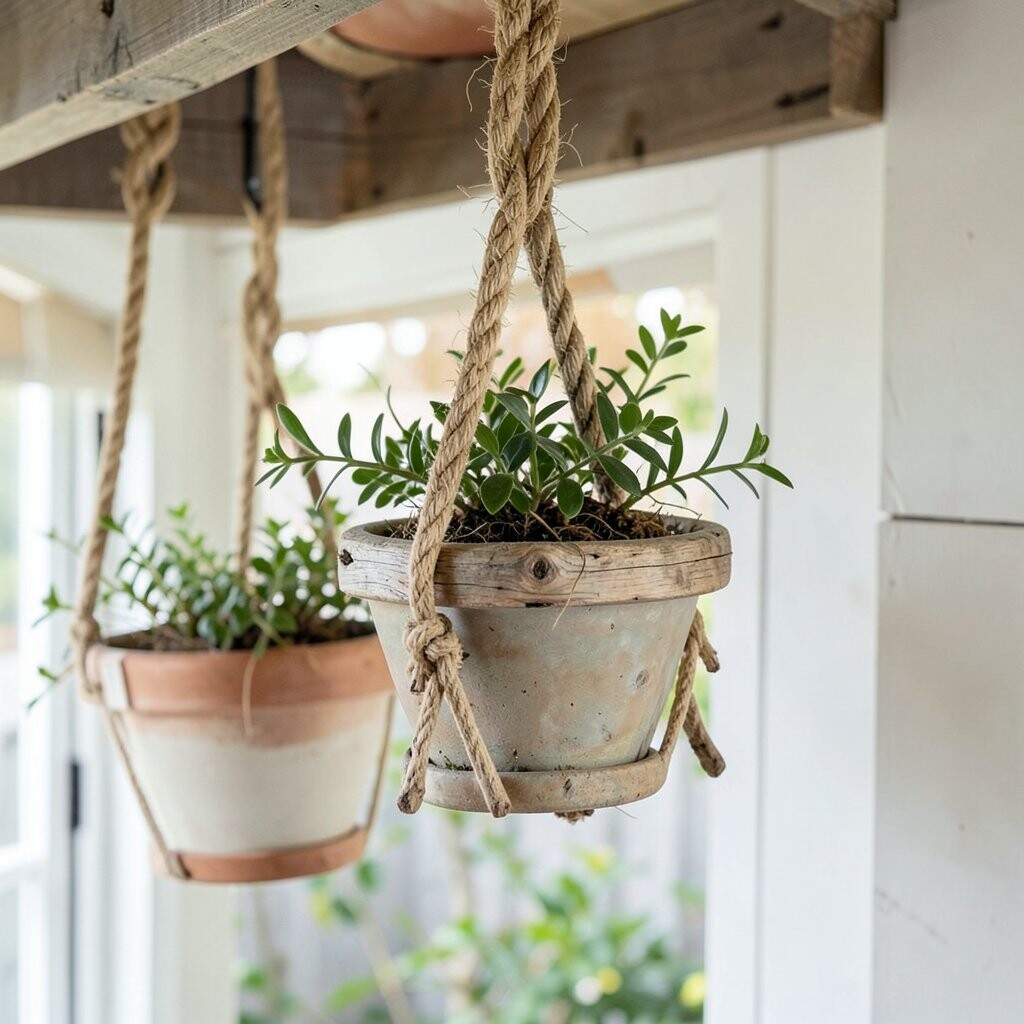
Bring coastal charm into your garden with driftwood and rope. The natural shape of wood makes each planter one-of-a-kind.
Drill holes in the driftwood, then tie rope knots that can hold the weight safely. Use a small hanging pot or a rounded planter, and line it with a drip-protecting barrier. Plant airy varieties like ornamental grasses or trailing ivy that look great in breezes.
For uniqueness, choose driftwood with interesting curves and vary the knot height so the pot swings gently. Keep the rope dry by using a saucer liner and wiping drips after watering. If your area is very rainy, use a weatherproof finish on the wood so it holds up longer.
8. Hanging Paper Lantern Planters for Quick Color Pops

Swap boring planters for hanging lantern-style pots that brighten shady corners. They work especially well for annual flowers and quick seasonal displays.
Use lightweight lanterns or lantern covers, then create a stable insert that holds potting mix and a drainage saucer. Select plants that fit the container size, like marigolds or pansies. Hang multiple lanterns at different heights for a fun “garden chandelier” look.
To make watering easier, lift the lantern insert occasionally so water fully soaks and then drains. Consider using self-watering wicks in small lanterns to prevent fast drying in summer. For cost control, reuse lantern frames and spend on durable liners and potting mix.
Current trends include pastel lanterns paired with herbs, so you can plant mint or thyme in a few lanterns for both beauty and usefulness. Make it personal by choosing a theme for holidays or your favorite color family. Just remember that lightweight lanterns need extra stability in windy spots.
9. Basket Weave Hanging Planters With a Tin Can Twist
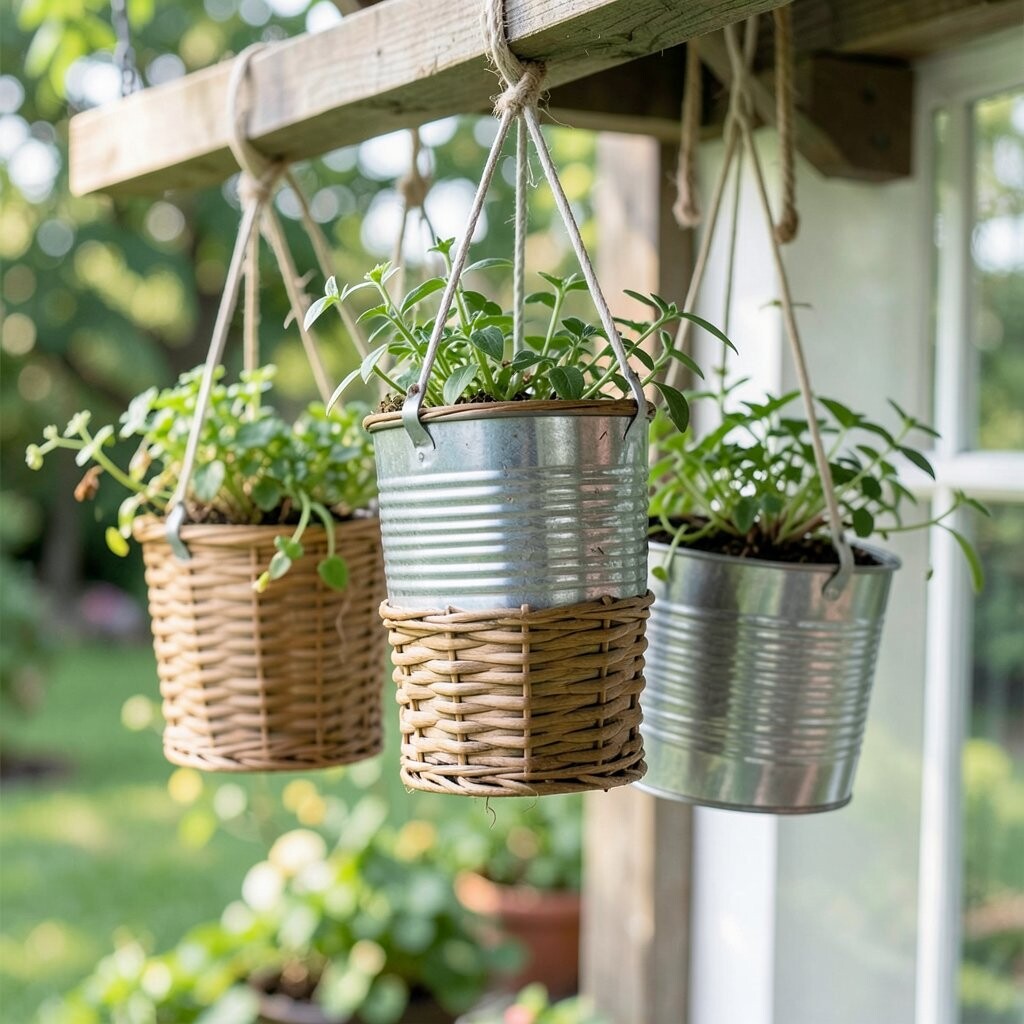
Weave a basket-like look using simple materials and hanging hardware. It gives your garden a handmade, artisan feel without complicated tools.
Use a tin can or metal cup inside as the plant holder, then wrap it with safe weaving strips like raffia or water-resistant craft cord. Poke drainage holes in the inner container and place it inside the woven wrapper. Plant compact flowers or herbs so the roots stay healthy in a smaller volume.
For practical tips, water slowly and watch for runoff, since woven outer layers can trap moisture. Hang the planter near a sheltered area to help prevent fading and rot. Personalize it by mixing textures, like combining smooth twine with rough jute for contrast.
If you want a modern trend, match the cord color to your garden furniture or railing. Cost is usually low because many materials can be found from craft supplies. Replace the inner cup once a season if rust appears.
10. Hanging Pot “Birdhouse” Display for Pollinator-Friendly Gardens
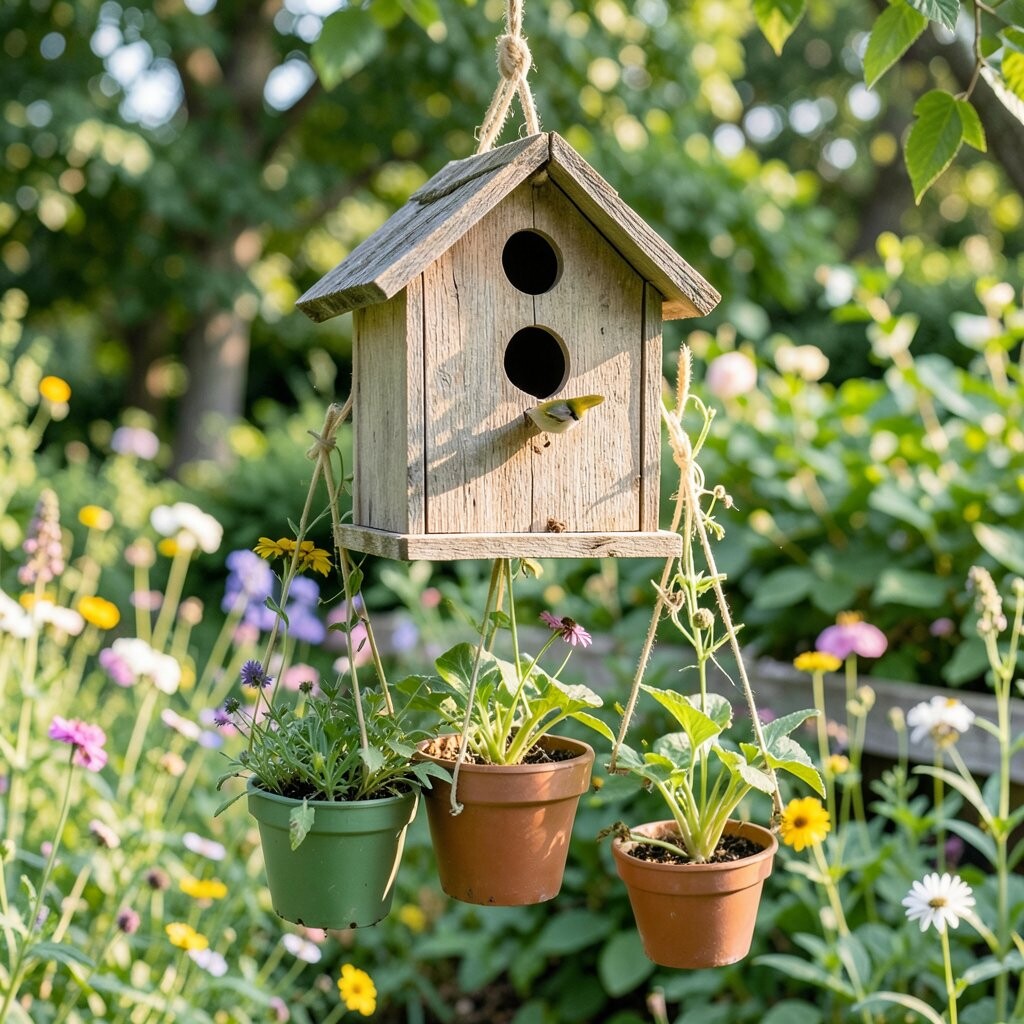
Build hanging pots shaped like tiny birdhouses to invite pollinators into your yard. It’s cute, functional, and gives your plants extra visual interest.
Use small hanging pot holders, then shape wood or plastic panels around them for a birdhouse look. Drill ventilation gaps and add drainage holes so plant roots get air and water doesn’t pool. Choose nectar-rich flowers like nasturtiums, salvia, or dwarf zinnias for best results.
To make this project practical, keep the openings accessible so you can reach soil for watering. Add a simple hook at the top so installation is fast. Personalize with painted details like tiny windows, and use weatherproof paint so the design lasts.
Trends right now favor pollinator-focused plantings, and birdhouse planters fit that style perfectly. If budget is tight, start with one birdhouse design and scale up after you see how the plants perform. Place the display where you’ll spot it daily to enjoy the movement of visiting insects.
11. Stackable Hanging Pots Using PVC Rings and Twine
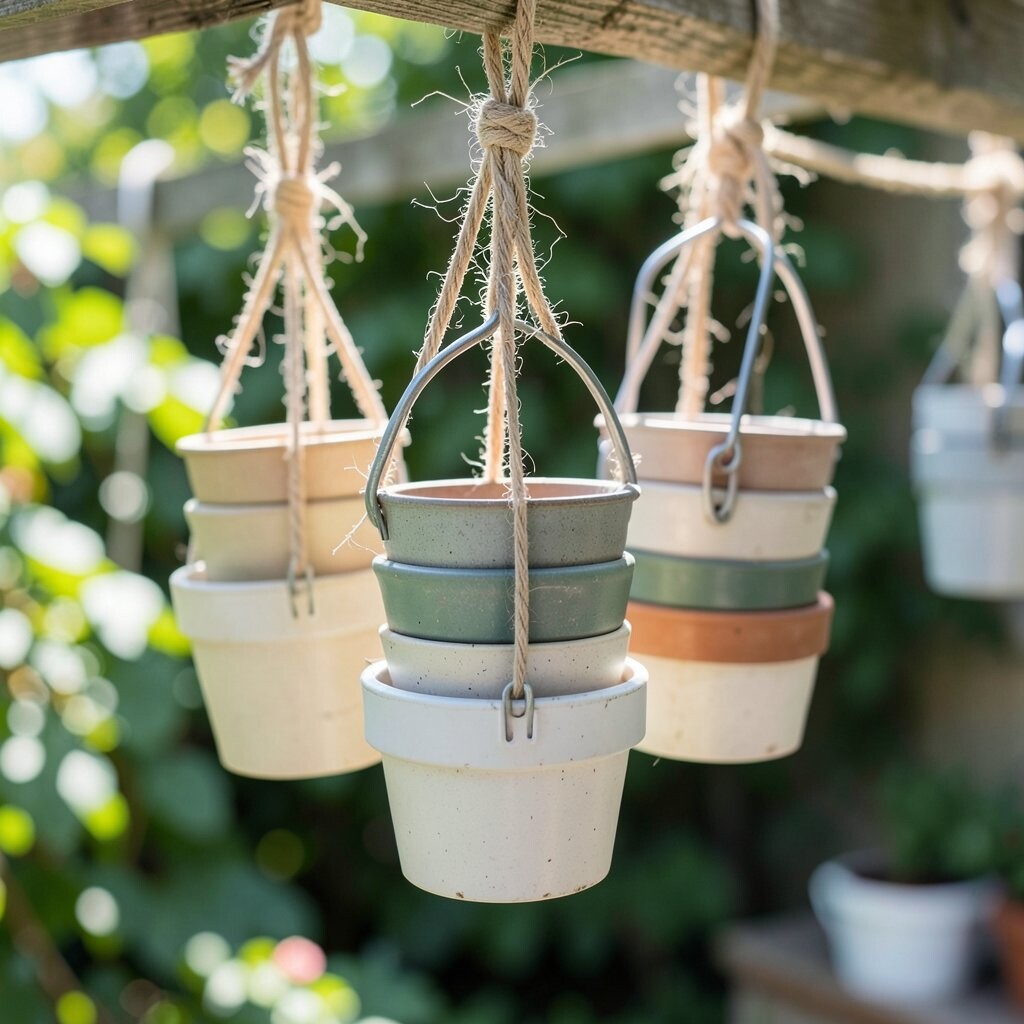
Make a stackable hanging system that uses vertical space like a charm. This project turns one hook into a series of planters with a clean, structured look.
Cut PVC rings or use old plastic rings as spacers, then secure them with twine so each level holds a pot. Make sure each pot has drainage, and add a drip-catching tray below the bottom pot. Plant different heights and textures, like trailing flowers on the lower levels and upright plants on top.
12. Upcycled Teapot Hanging Planters for Whimsical Tea Garden Charm
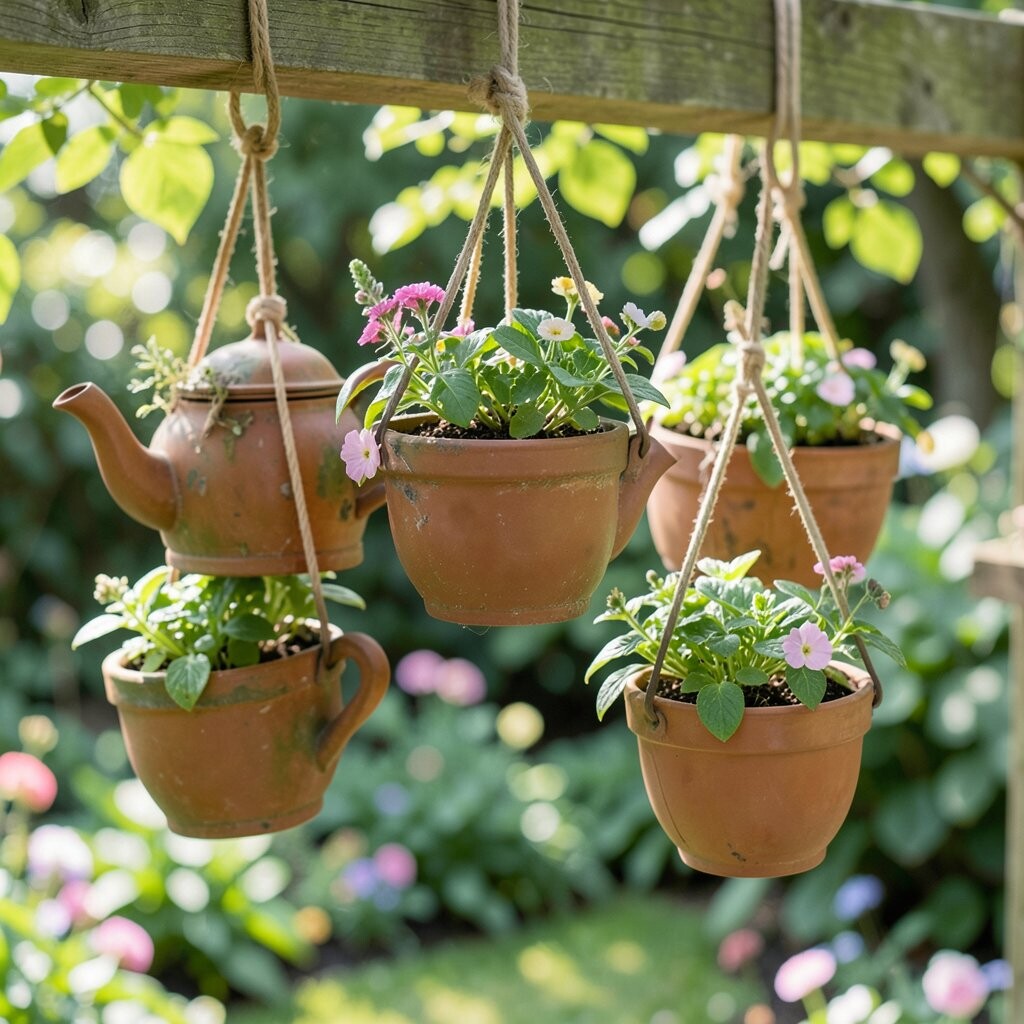
Use an old teapot as a hanging planter for instant whimsy. It’s a conversation starter and a playful way to grow flowers or herbs.
Check that the teapot has a spout for drainage; if it doesn’t, drill a small hole in the bottom. Hang it with strong hooks or a braided chain so the weight stays secure. Fill with potting mix and plant petite blooms like violets or flowering thyme.
For personalization, paint the teapot with a design that matches your patio style, then seal it for outdoor use. Water gently to avoid splashing soil through the spout area. This project can be inexpensive if you find a teapot at a thrift store, but prioritize safe hardware over fancy accessories.
13. Hanging Pot Terrarium Towers With Clear Container Panels
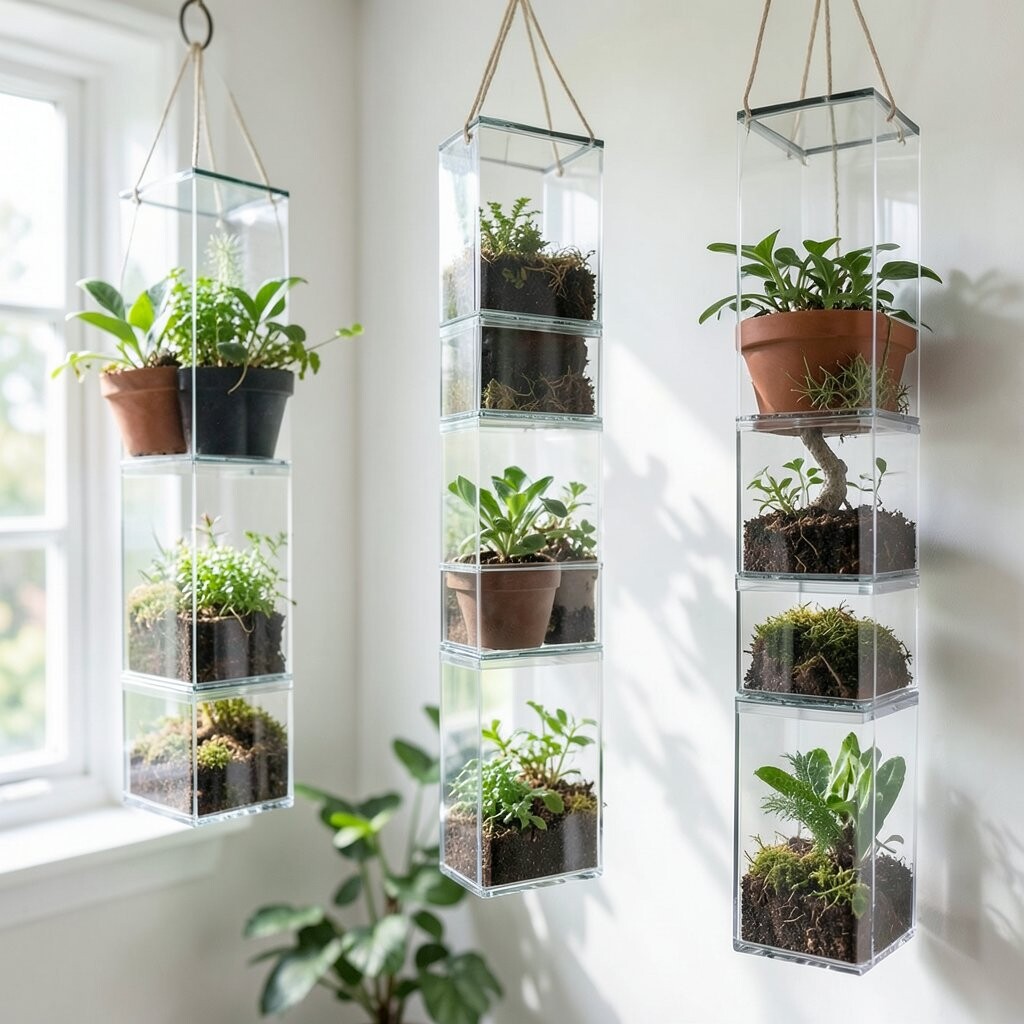
Build a hanging terrarium tower that looks like a miniature greenhouse. Clear panels let you see the plant growth, which is fun and motivating.
Use clear containers or acrylic panels to create a vertical enclosure, then add vents near the top. Place small pots inside so you can remove them for watering without disturbing everything. Choose plants that like steady moisture and bright light, such as small ferns or moss-friendly varieties.
To keep airflow healthy, open vents regularly and wipe condensation when it becomes heavy. Use a lightweight soil blend so the tower isn’t too heavy for the hanging setup. For uniqueness, add tiny decorative stones or miniature natural accents like bark chips.
Cost can be mid-range because clear materials add expense, but you can lower it by reusing acrylic frames. Current trends include “see-through gardening,” where viewers can watch roots and leaves forming. Hang it near a bright window or under covered patio shade if direct sun gets too intense.
14. DIY Hanging “Rain Catch” Planter for Smarter Watering
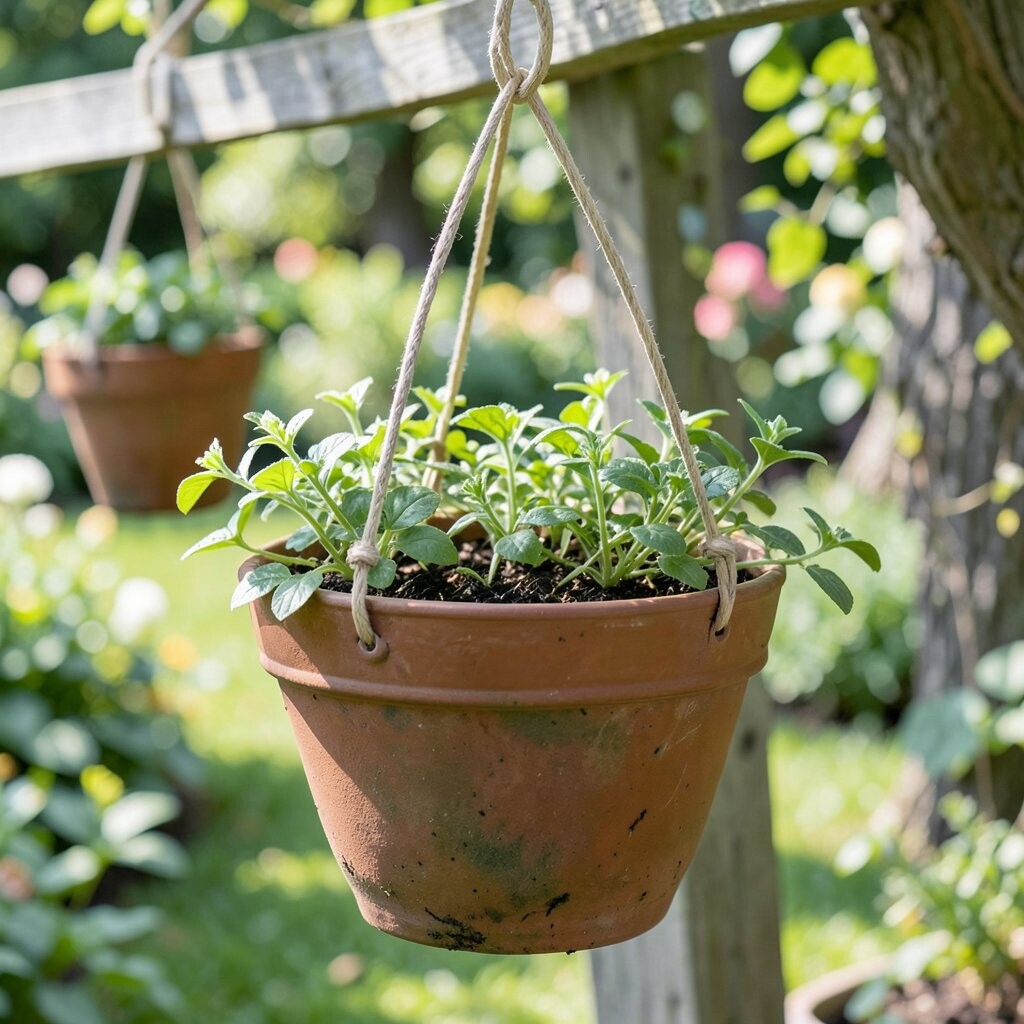
Make hanging pots that work with rainfall so you water more efficiently. It’s a smart project that still looks great and saves you time.
Build a small collection gutter above the hanging pots using a shallow tray or spout section, then route water down into a central drip line. Each pot should still have drainage, but the system helps distribute water more evenly during storms. Add moisture-loving plants like coleus or impatients to benefit from steadier moisture.
For practical tips, test the flow by running a hose for a few minutes and checking for pooling. Clean the rain-catching parts after heavy leaves or debris storms. Personalize the look by painting the tray with a matte color that matches your pots and fence.
15. Hanging Pot “Living Lantern” Using Solar Lights in Planters
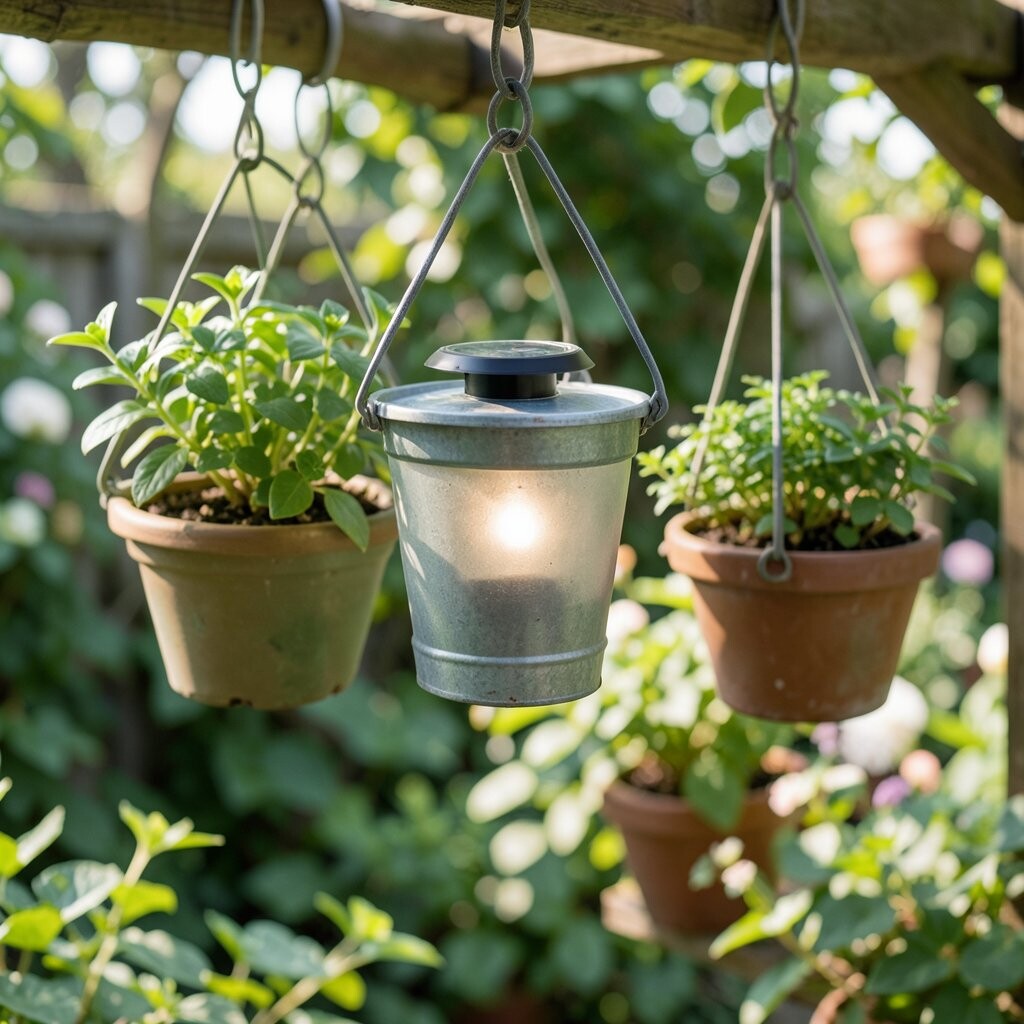
Glow up your patio by pairing hanging planters with warm solar lights. This creates a cozy evening look while your plants keep growing.
Place a small solar light base inside a waterproof liner, then insert it into the planter so it stays secure. Choose plants with dense foliage, like small ornamental peppers or trailing calibrachoa, so the lights look wrapped in greenery. Hang the planters in clusters so the light is more noticeable.
To make it reliable, position lights where they get sun exposure during the day and avoid deep shade. Use a low, stable hanging height so you can enjoy the glow without blocking walking paths. For cost considerations, start with one or two illuminated planters and expand once you’re happy with the nighttime effect.
16. Multi-Size Hanging Pot Wall With Adjustable Hooks
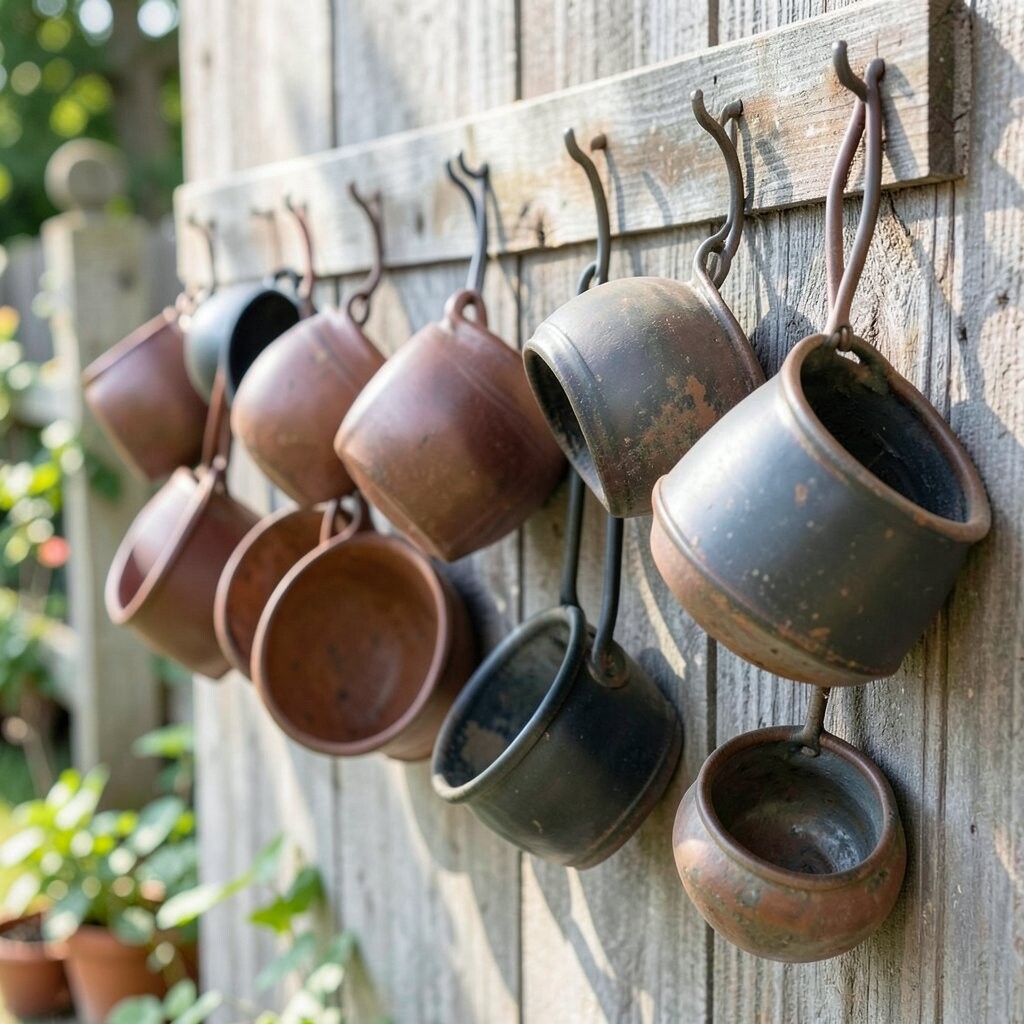
Create a flexible hanging pot wall so you can rearrange plants as they grow. Adjustable hooks are the secret to keeping everything healthy and looking fresh.
Mount a track or a series of sturdy boards, then attach hooks at different heights. Hang pots in different sizes so the layout feels balanced, and choose plants that match their light needs for each section. Use drip trays or saucers to protect the wall and prevent stains.
Personalize by choosing matching pot colors for a coordinated look or mixing colors for a playful vibe. For practical care, rotate pots and check soil moisture more often on the higher, drier levels. This project also fits current trends toward “garden walls,” where small spaces get organized into living displays.
17. Hanging Vegetable Pots With Self-Watering Wicks

Grow your own food using hanging pots that keep moisture steady. Self-watering wicks reduce stress and help vegetables produce more reliably.
Set up a reservoir with a wicking system, then hang the planter so gravity helps draw water upward. Plant compact vegetables like cherry tomatoes, bush beans, and pepper varieties that handle containers well. Add trellises where needed so plants can climb, even while suspended.
For practical tips, test the wick flow before fully planting and adjust the wick thickness if water doesn’t reach the roots. Choose potting mix with good structure so it doesn’t collapse under constant watering. Cost varies, but you can build a DIY wick system from simple supplies, then spend on seeds and starter plants for better harvest results.