
Your shelves are telling a story, even when they feel too full. With a few smart swaps, you can make every inch look intentional.
1. Start With a “Shelf Map” Before You Style
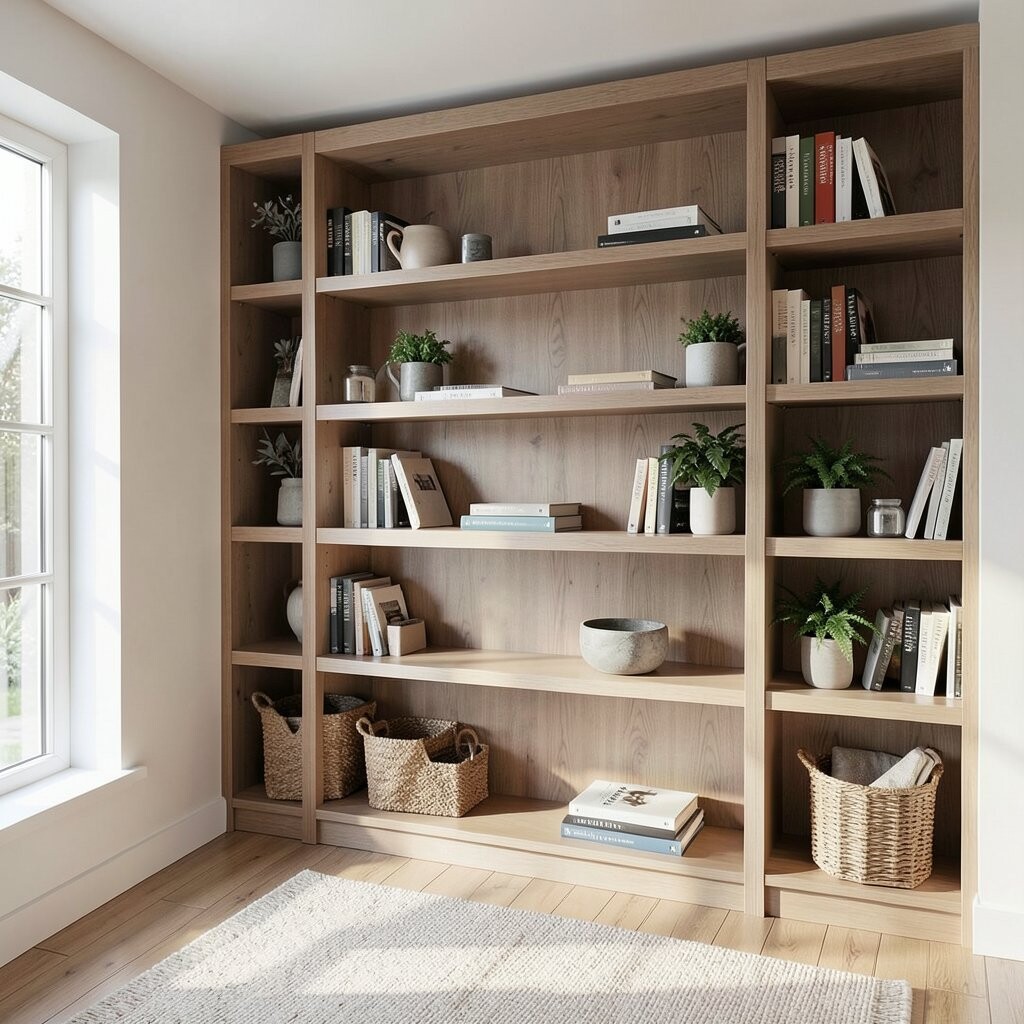
Draw a quick mental map of your shelf zones: left, center, and right. Then decide which zone should feel calm, which should lead the eye, and which can add a pop.
When you plan zones, styling stops feeling random. You’ll place items where they visually “fit” instead of stacking them in the first open spot. This makes the shelf look bigger and more balanced at the same time.
2. Use Color Limits to Create Instant Space

Pick a small color range, like warm neutrals plus one accent. Even if you own lots of things, a tighter palette keeps the shelf from looking crowded.
Try repeating the accent color in two or three places so the whole shelf feels connected. This trick makes small objects look like a coordinated display instead of scattered storage. People often think they need more shelf space, but color control usually does the work.
For personalization, match the accent color to your room art or bedding so the shelves blend naturally. If you love variety, rotate your accent seasonally with flowers, books, or a new ceramic piece. This can be low-cost while still feeling fresh.
3. Mix Sizes on Purpose, Not by Accident

Use the “big, medium, small” rhythm to create depth. A tall item anchors the shelf, while medium pieces fill the middle, and small details finish the look.
Arrange items so you’re not repeating the same height over and over. That repetition makes the shelf feel flat and visually heavy. When heights alternate, the shelf appears lighter and more spacious.
Choose one hero piece like a vase or framed photo, then surround it with supporting items. This makes the shelf feel styled, not just decorated. You can keep most of your collection and still get a new look by shifting their sizes and spacing.
To manage cost, swap in what you already have before buying. If you do shop, look for one sculptural shape that stands out and use everything else as backup.
4. Leave Intentional Negative Space

Negative space is the quiet area that lets everything else breathe. If your shelf is packed edge-to-edge, your eye never gets a rest.
Try leaving a small gap between groups of objects, almost like you’re separating sentences in a paragraph. A few blank inches can make your shelf look twice as curated. This is one of the easiest ways to maximize visual space without buying anything new.
5. Create Mini Vignettes Instead of One Big Pile
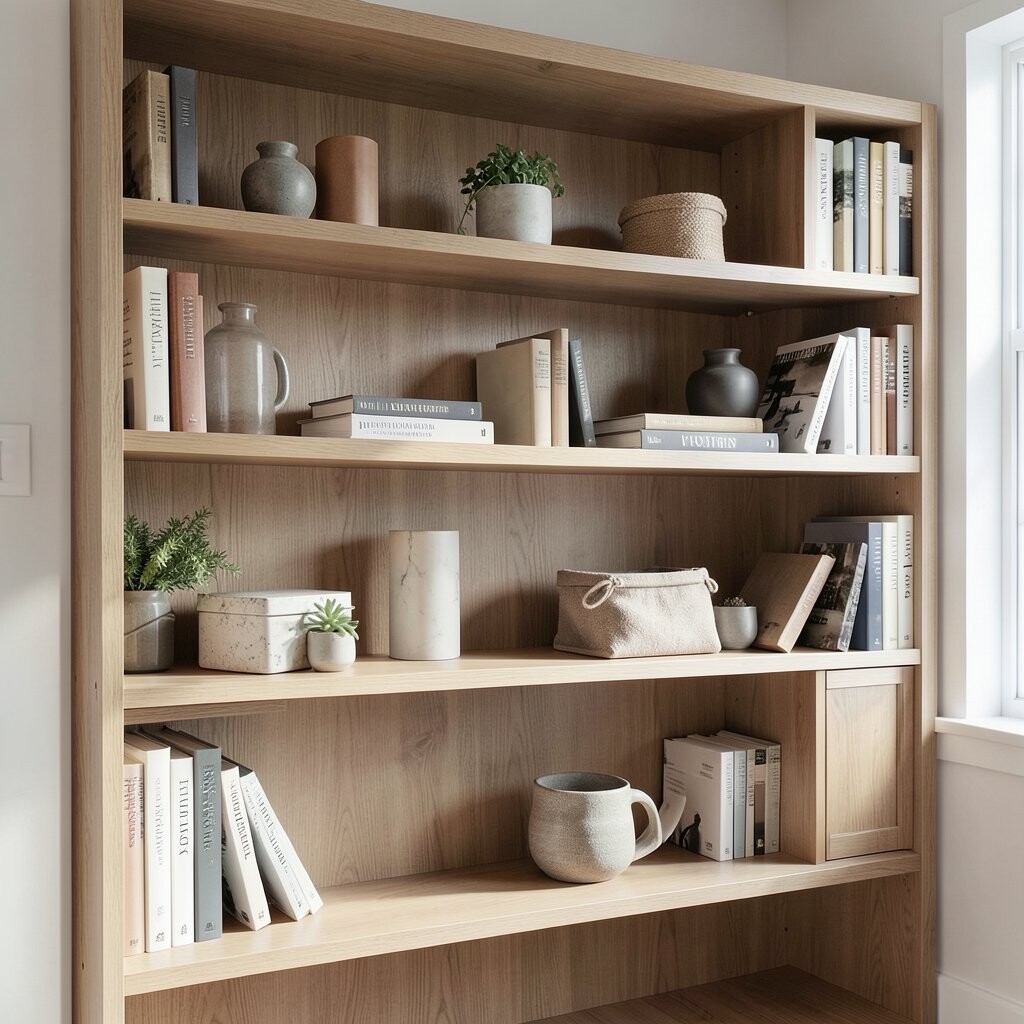
Group items into small “scenes,” such as a candle, a book, and a tiny tray. When objects sit together with a shared purpose, they look more intentional.
Keep each vignette roughly the same visual weight so one area doesn’t overpower the rest. People love full shelves, but mini vignettes give you the feeling of fullness with far less clutter.
For personalization ideas, match each mini scene to a mood like cozy, fresh, or artsy. You could style one corner for reading vibes and another for decorative calm. If you change seasonal decor, vignettes make swaps quick and affordable.
6. Use Vertical Height Like a Styling Superpower

When shelves feel short on space, add vertical interest. Lean a tall frame, set a stacked book tower, or use a slim container to lift the eye upward.
Vertical styling also helps items look less cramped because the shelf takes on a longer “shape.” That shape makes rooms feel taller and more open. You’ll often get a more elegant look from tall, narrow pieces than from wide clutter.
7. Stack Books the “Readable” Way
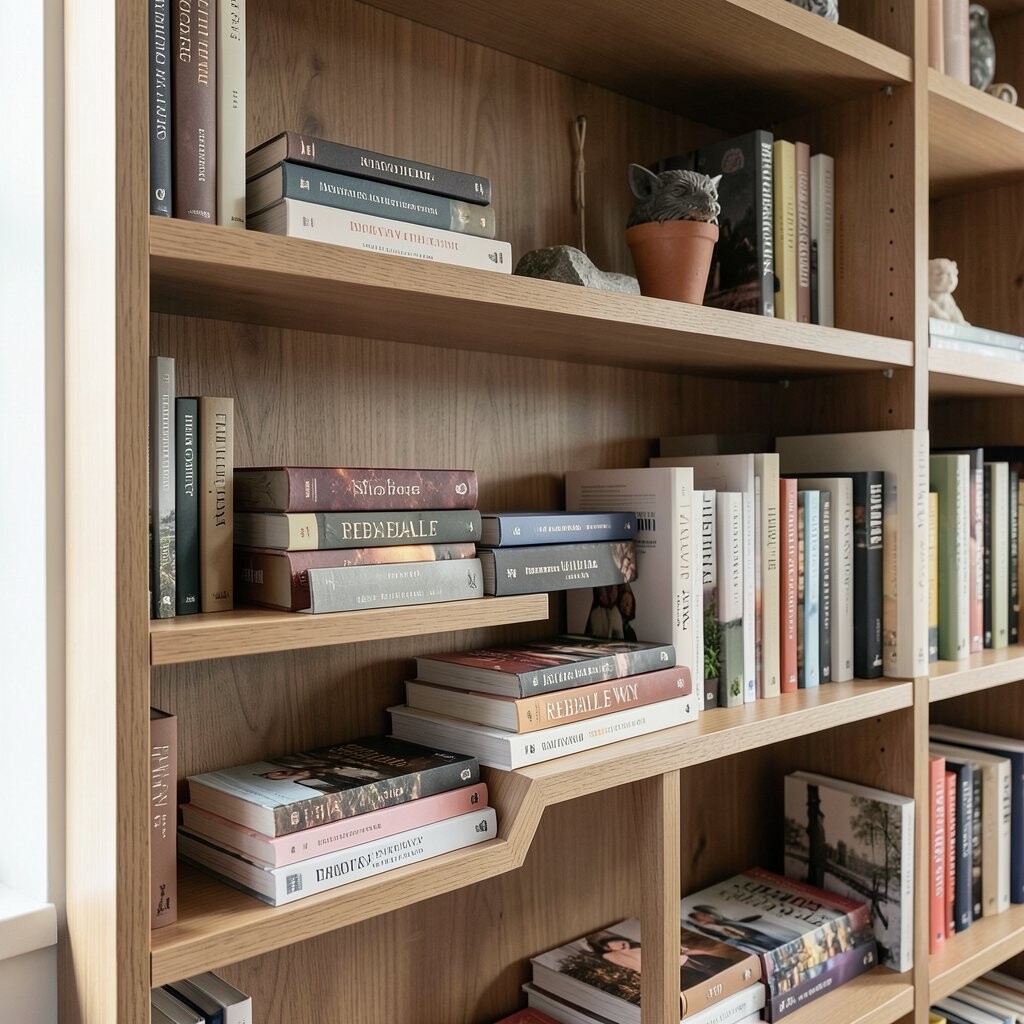
Stack books so their spines face the room or so their covers add color. You can also lay one book flat and stand two behind it for a layered look.
Choose books that share a vibe, like the same color family or a theme such as design or travel. This keeps the stacked area from becoming busy. If you want a quick upgrade, cover-scape with plain paper dust jackets or a neutral book you already own.
For cost considerations, use books you’re already finished with and rotate favorites monthly. A small battery-powered light can also add charm to a book stack without adding clutter. The goal is structure, not stacking everything you own.
8. Add One Tray to Anchor Loose Items

A tray acts like a boundary for smaller objects, such as candles, change trays, or mini plants. It instantly organizes scattered pieces into a single styled grouping.
Choose a tray with a shape that matches your shelf style, like round for soft modern looks or rectangular for crisp minimal setups. This makes the shelf feel designed rather than accidental. Plus, trays help you move items as a unit when you want a refresh.
Uniqueness comes from material too: wood adds warmth, metal adds shine, and ceramic adds texture. Keep the tray centered under a focal point like a vase or framed photo. If you’re on a budget, repurpose a shallow serving plate or even a small picture frame turned into a base.
When decorating trends shift toward cozy textures, trays with natural finishes keep you current without chasing new items constantly.
9. Use Baskets for “Hidden” Organization

If your shelves include random supplies, baskets make them look intentional. A woven basket can hold cables, extra throws, or small accessories while still looking decorative.
Baskets add texture, which is a big trend right now for warm, lived-in interiors. Keep basket sizes varied so they don’t all look like identical storage boxes. This approach maximizes space because you can store while still styling.
To personalize, pick a basket color that echoes your decor, like light rattan for airy rooms or darker tones for moody spaces. If you like switching styles, choose neutral baskets you can keep year-round.
10. Frame a Small Moment With Art or Photos
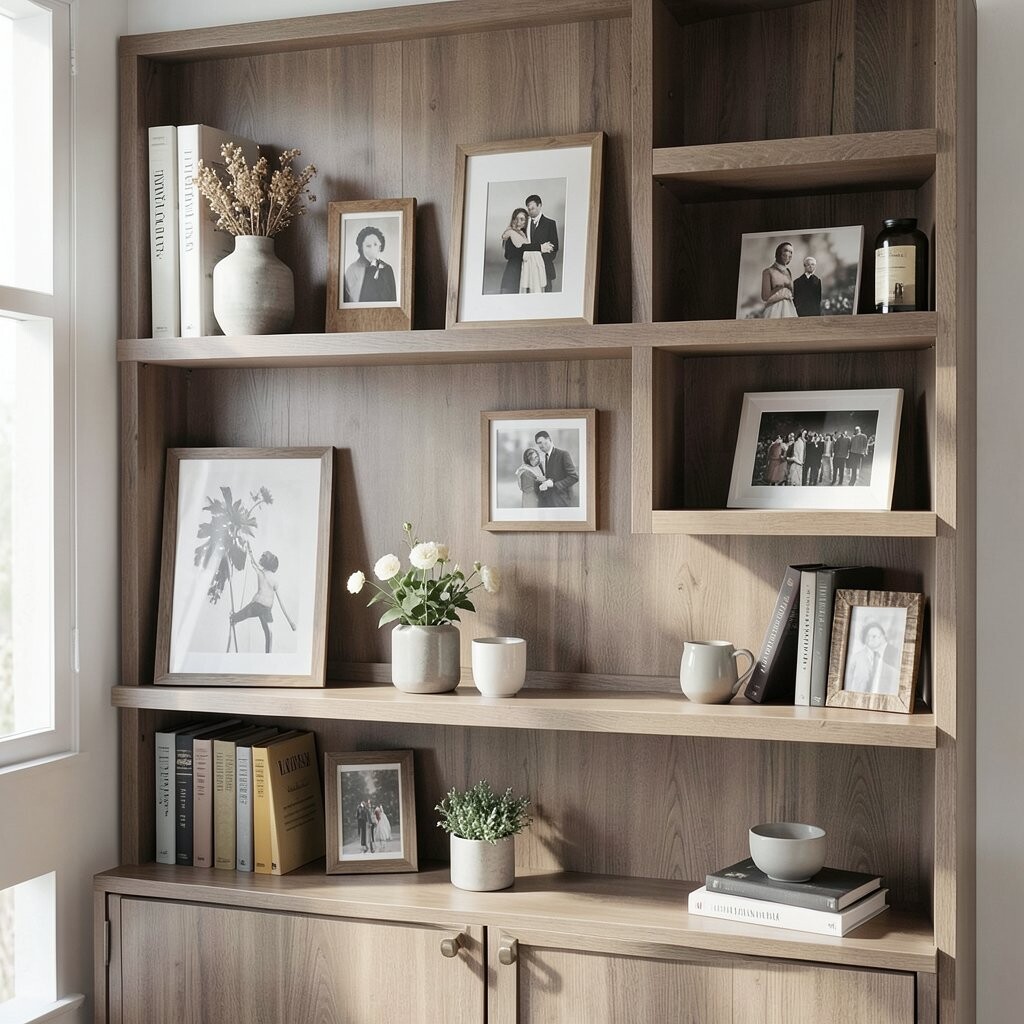
Even one framed photo can make a shelf feel like a gallery wall in miniature. Place it near your center zone so the eye lands there first.
Use frames that match your room finishes, such as black for modern spaces or wood for classic warmth. If you have small prints, consider leaning them against a taller book or object to save space. This adds personality without taking up much shelf width.
11. Repeat Shapes to Make the Shelf Feel Cohesive

Look for one shape to repeat, like circles, rectangles, or fluted details. Repetition feels organized even when the items vary in color or material.
For example, pair a round mirror-like frame with a round clock or a spherical candle holder. This makes your styling look connected instead of random. It also supports the “mini vignette” method because each group shares a visual pattern.
To keep cost low, shop your home first for matching silhouettes. If you buy, look for one item that mirrors a shape already in your collection. Trends often rotate, but shape repetition stays timeless and easy to maintain.
12. Keep Display Items at Eye-Level When Possible

Where you place things matters as much as what you place. Items you see at eye-level should be your most meaningful or most interesting pieces.
If you tuck pretty objects too low or too high, you lose the impact and the shelf can feel cluttered from a distance. Use that top or bottom area for items that work from afar, like books or baskets with clean lines. This makes your shelf feel styled without needing extra space.
13. Add Lighting to Reduce the Need for More Objects

A small lamp or LED candle can change the feel of a shelf instantly. Light draws attention and creates a “glow” that makes shelves look fuller even when they’re less crowded.
Try warm-toned lighting for a cozy effect that fits most home styles. You can place a slim light near a focal piece so the highlight lands where you want it. This is a trend that keeps showing up because it creates atmosphere, not just decoration.
Cost considerations vary, but many battery lights are affordable and easy to move. If you already have candles, consider using them more intentionally as “lighting moments” with a tray. The key is using light as a styling tool rather than another accessory to stack.
14. Style With “One Focal Point Per Shelf”

Choose one main hero item per shelf, such as a vase, sculpture, or framed art piece. Everything else should support it, not compete with it.
When you let one piece lead, the shelf stops looking chaotic. The supporting items can be simpler, and you’ll still get a polished look. This method is especially helpful for narrow shelves where every object has a stronger presence.
For personalization, pick the item that feels most like you, like a souvenir, a family photo, or a crafted piece you love. If you want variety, rotate the focal item with seasons rather than replacing the whole shelf setup. That keeps the change feeling special while staying budget-friendly.
15. Try the “Book Spine Color” Trick for a Clean Look

Instead of arranging books by size alone, arrange them by color bands. This gives the shelf a neat pattern that reads instantly from across the room.
Start with a few base colors, then add accents so the shelf feels intentional. Even if the books aren’t the same topic, the color pattern can unify them. This is a modern styling approach that fits current minimalist and aesthetic home trends.
If your shelf still feels busy, reduce the number of visible book spines and stack some horizontally. This keeps the pattern but adds breathing space. You can do it with what you already have and adjust as your collection grows.
16. Balance Hard and Soft Textures
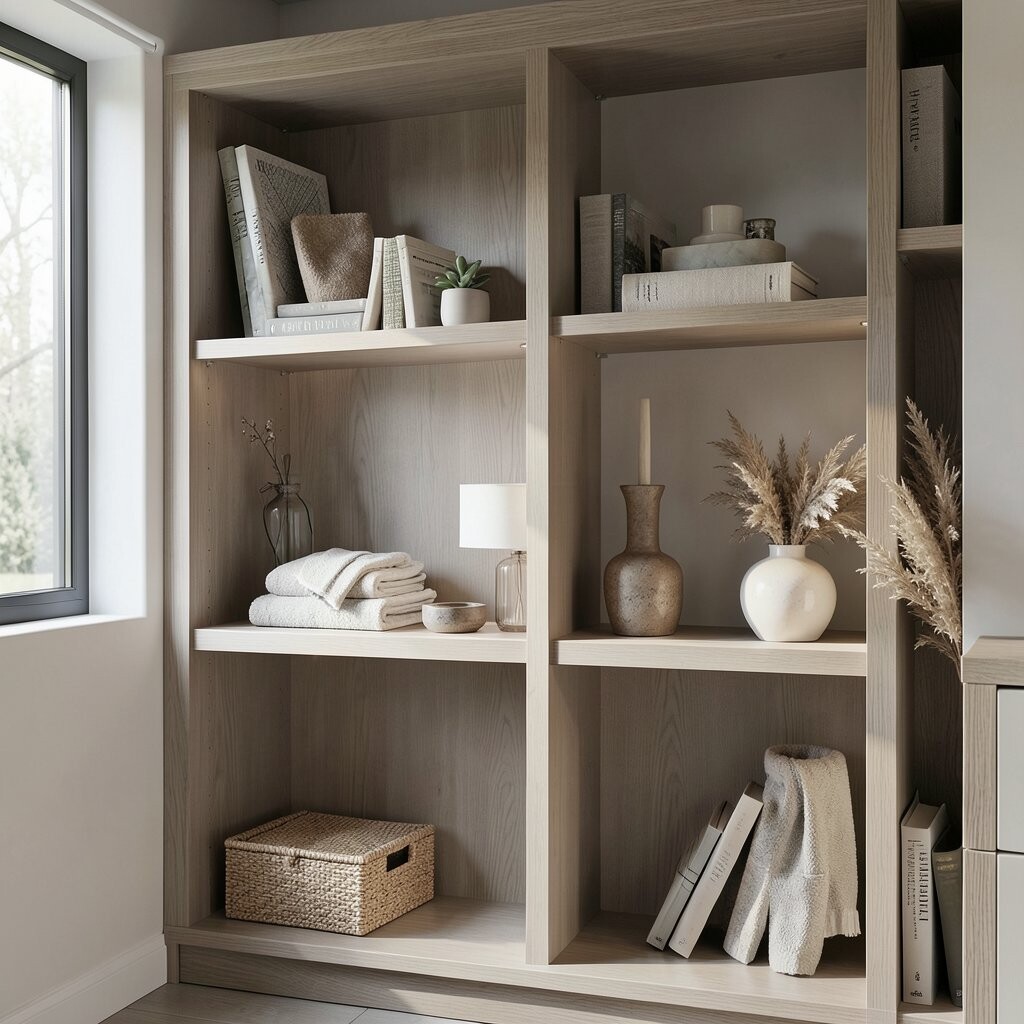
Mix textures so your shelf feels rich instead of flat. Pair smooth ceramics with rough woven materials, or match glossy metal with soft fabric elements.
Soft textures can include small throw-like pieces used as a background under a tray, while hard textures can include glass, stone, or wood. This balance makes shelves look collected and warm. It also helps different items share visual space without looking like random clutter.
17. Rotate Small Details to Keep the Shelf Fresh

You don’t need to restyle everything to get a new look. Swap small details like seasonal flowers, a new candle, or a different framed photo.
Rotation creates change without the stress of starting over. It also keeps your shelf aligned with current trends over time, because tiny updates are easier to adjust than big purchases. If you keep a small “style stash,” like ribbon, mini vases, or themed ornaments, you can refresh in minutes.
For cost considerations, focus on affordable seasonal items and reuse your main anchors like trays and book stacks. Over time, you’ll build a shelf that looks thoughtfully styled year-round. The goal is to keep momentum without turning your home into a constant shopping list.