Clutter hides in the places you don’t think to check. A few smart storage moves can make your kitchen feel calm again.
1. Drawer Dividers That Disappear
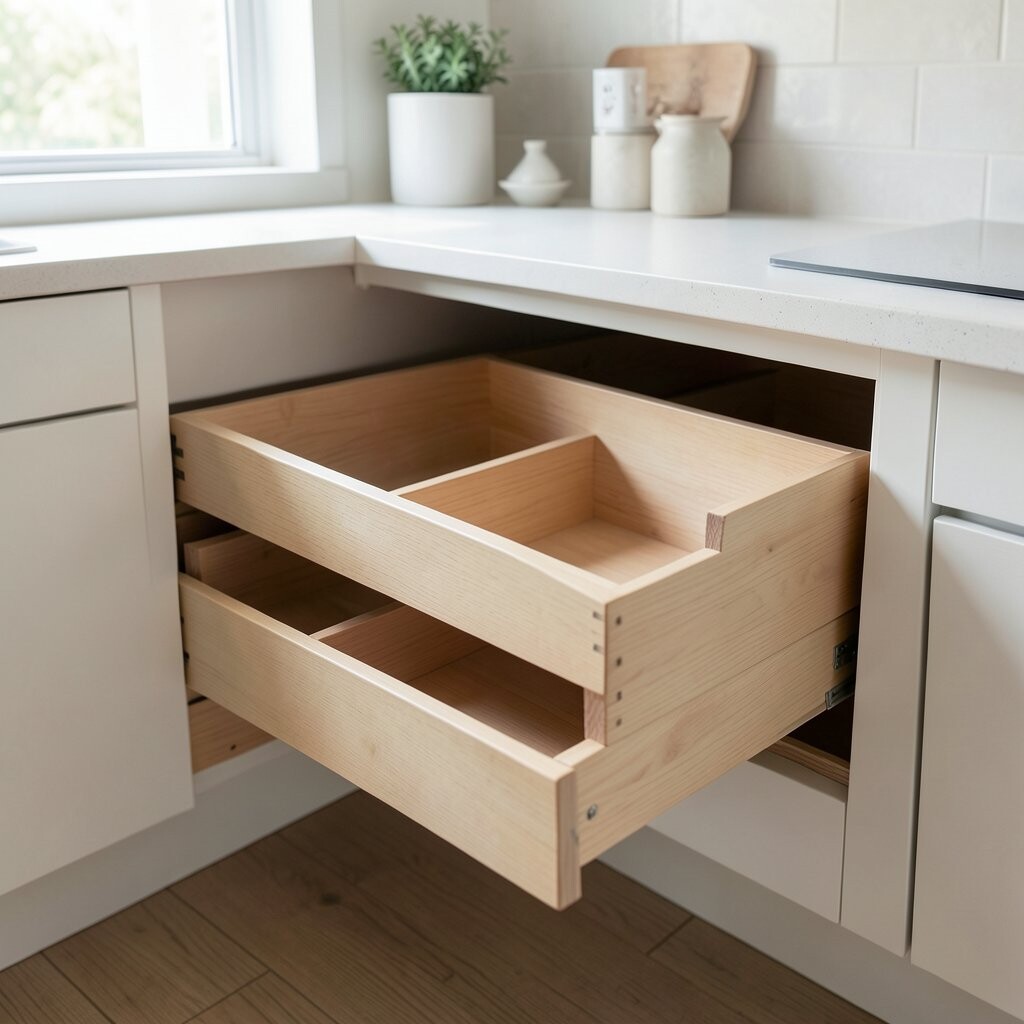
Drawer chaos can feel invisible until you open it. Dividers keep every utensil where it belongs.
Choose slim, adjustable dividers so they fit your exact drawer sizes. Sort by use, like everyday spoons in one zone and rarely used tools in another. For a minimal look, pick neutral colors or clear organizers that match your hardware.
2. Vertical Pan Storage With a Backer Board

Stacked pans steal space and can look messy fast. A vertical setup turns them into neat wall items.
Install a simple backer board and use brackets to hold pans upright. Add soft spacers so they don’t scratch each other. Keep the matching lids in a separate, tidy place to avoid visual clutter.
To personalize, paint the board a matte shade that matches your cabinets. If you want a rental-friendly version, use mounted hooks rated for cookware weight. This is a great choice when you want your most-used pieces instantly visible without countertop buildup.
3. Cabinet Pull-Out Shelves for Rarely Seen Items
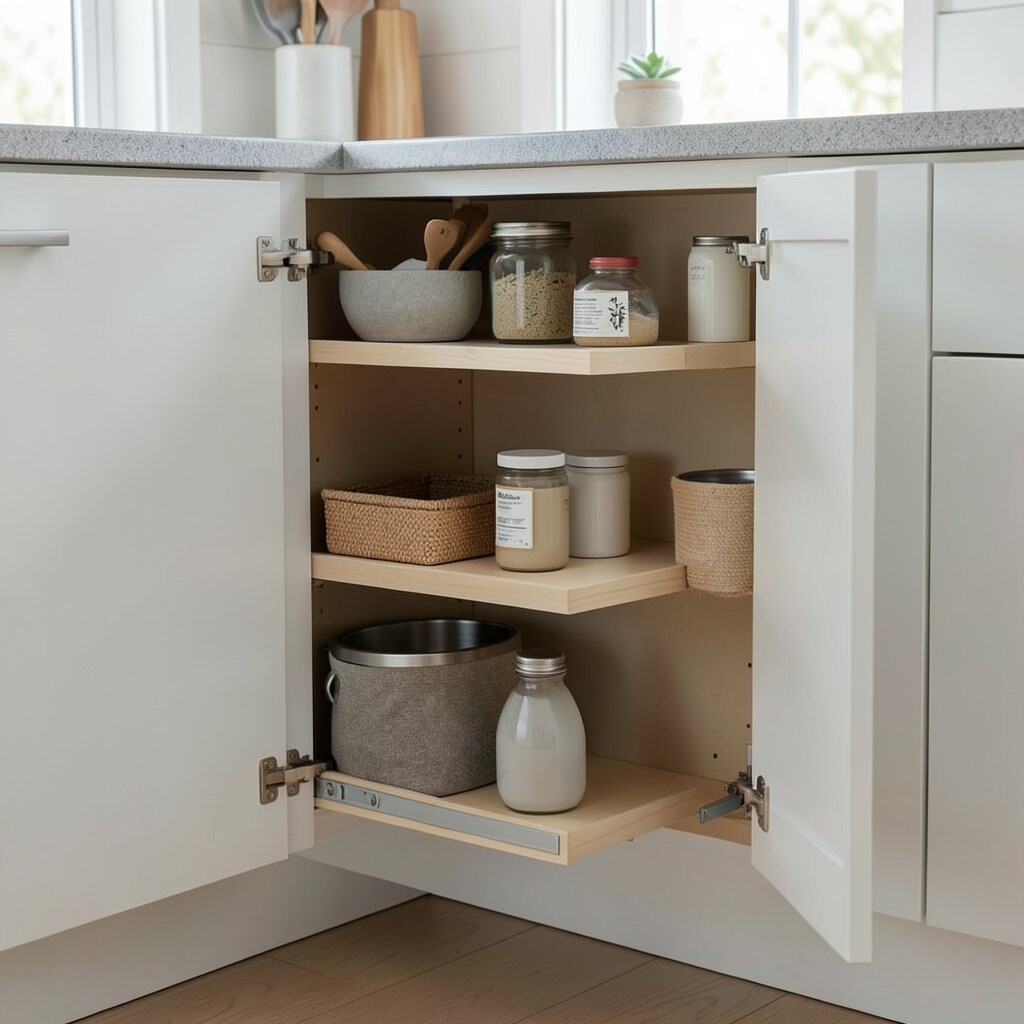
Deep cabinets can become black holes. Pull-out shelves make them usable without rummaging.
Install low-profile slides so you can reach the back easily. Store seasonal serving ware, extra mugs, or backup paper supplies on the lowest shelf that pulls out smoothly. Minimalism isn’t only about what’s visible; it’s also about fast access.
For uniqueness, label shelves with discreet tags on the back edge. If you dislike labels, use color-coded bands on the shelf liners instead. While the cost can be higher than basic organizers, the payoff is smoother daily routines and fewer “where is it?” moments.
Recent trends favor slimmer slide systems and soft-close motion, which keeps things quiet and feels premium. Measure carefully before buying so the shelf fits without blocking doors or hinges.
4. Countertop “Landing Pad” Trays
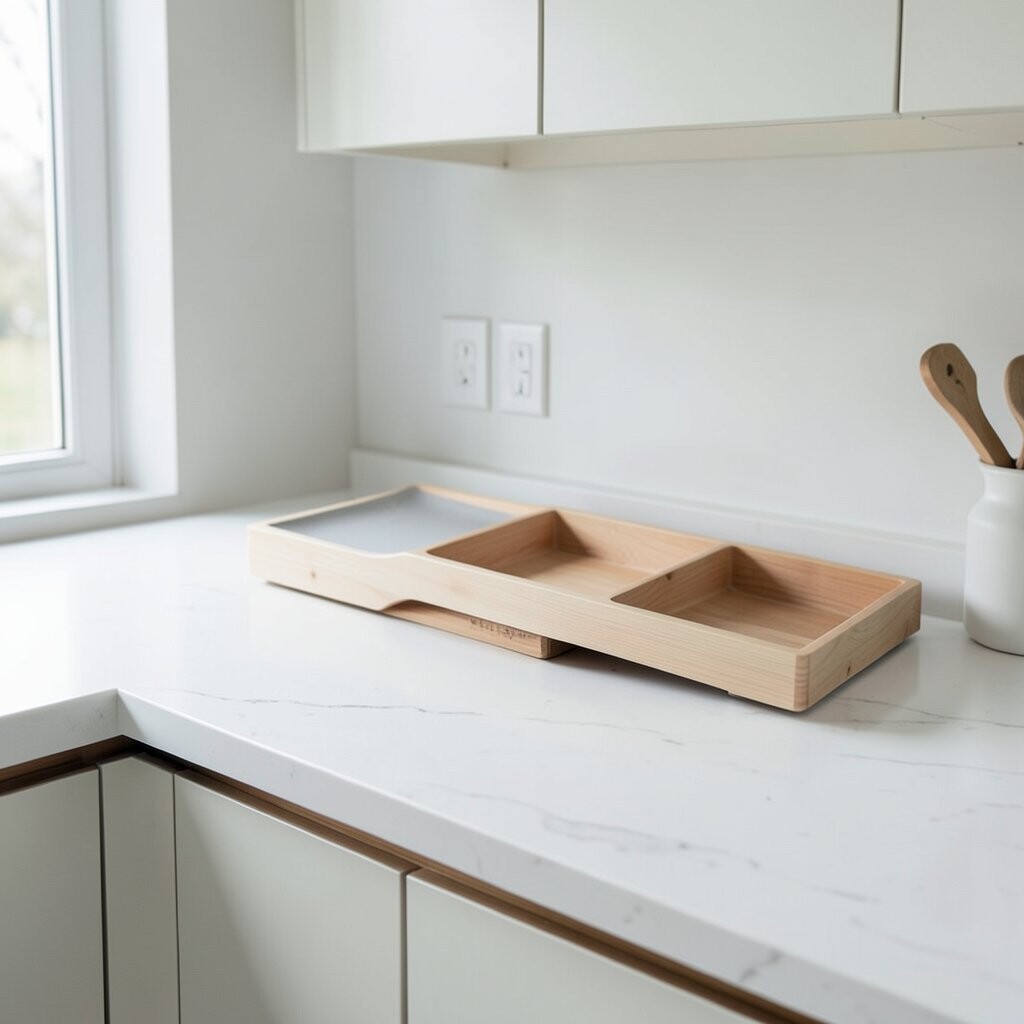
Every kitchen needs a place for items to rest before they get used. A tray acts like a calm landing zone for small daily tools.
Use one minimalist tray for keys, cooking twine, or a few frequently grabbed items like a can opener. Keep the rest stored away so the tray doesn’t turn into a junk shelf. Choose a tray with clean lines and a finish that hides smudges easily.
5. Clear Canisters With Consistent Labels
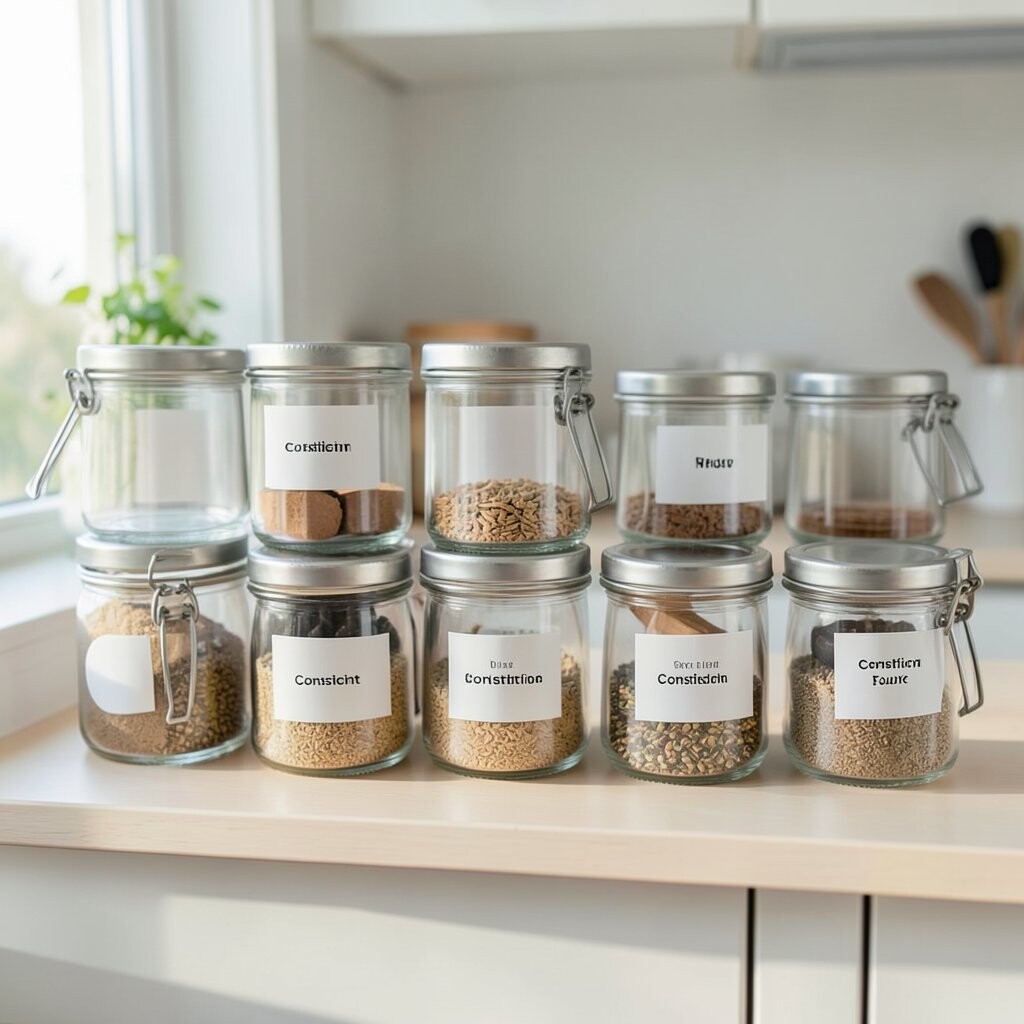
Seeing messy bags of flour can ruin the look of an organized kitchen. Consistent canisters make storage feel intentional.
Use identical jars for items like rice, pasta, and sugar. Label them with simple text and keep font sizes uniform so the shelf stays tidy. When you pour, wipe the rim so everything stays crisp.
For personalization, match canister materials to your kitchen vibe, like matte glass for airy spaces or brushed metal for modern kitchens. This idea can range from budget-friendly to premium, depending on whether you choose basic plastic-free containers or specialty glass sets. Right now, many kitchens are favoring refillable systems, so buying matching canisters gradually is a popular trend.
6. Under-Sink Sliding Basket System

Under-sink storage tends to become a stacked pile of bottles. Sliding baskets bring order without making you crawl inside the cabinet.
Use one basket for cleaning sprays, another for sponges and cloths, and a third for backup refills. Add a water-safe liner so spills don’t stain the cabinet. Keep the most used bottles at the front of each pull-out area for fast, tidy routines.
7. Lid Rack That Matches Your Cabinet Style
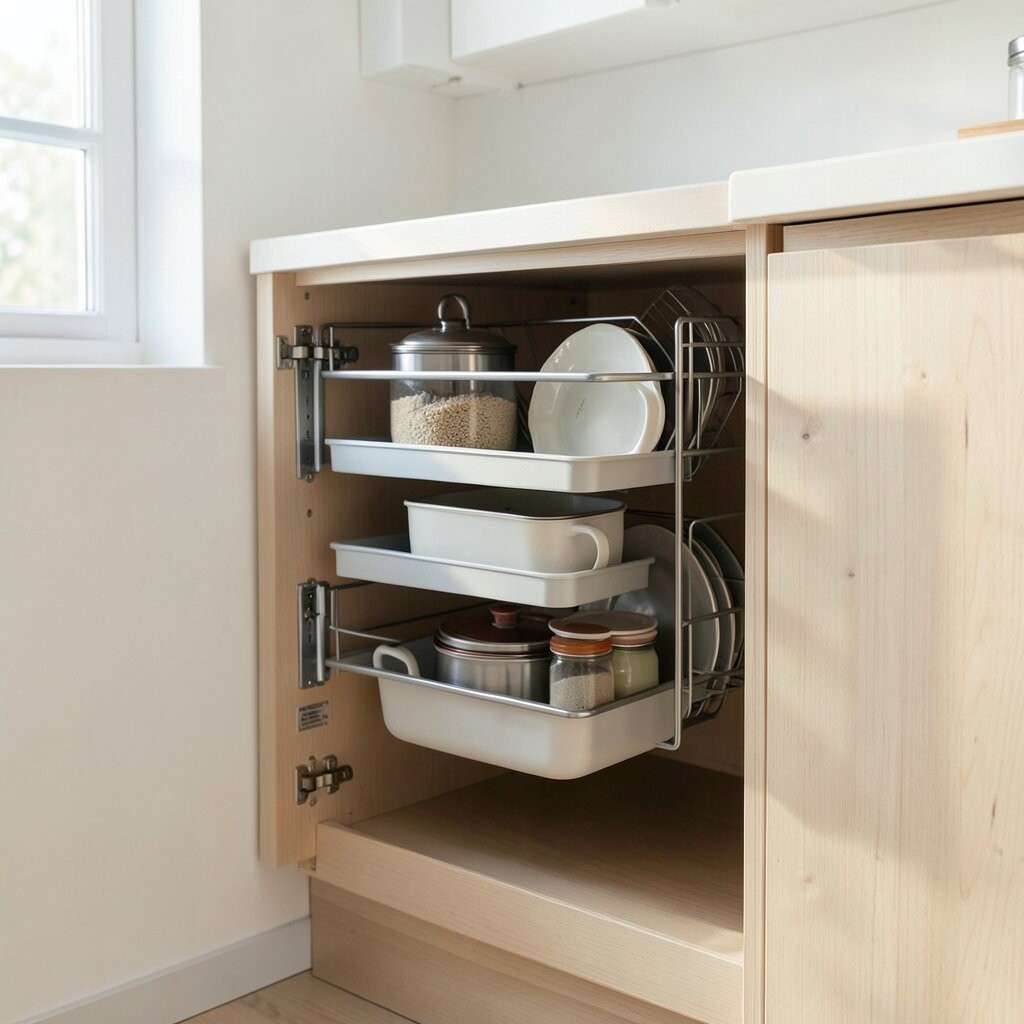
Lids are often the hardest things to store neatly. A dedicated rack stops them from becoming a jumbled clatter.
Choose a lid rack that fits your pan layout and sits neatly behind a cabinet door or inside a drawer. If you have limited space, use a slim vertical rack with dividers for different lid sizes. This keeps the visual noise down because lids no longer spill across multiple shelves.
For personalization, match finishes to your kitchen hardware. Metal racks can look sleek, while wood-toned options feel warm. Costs vary, but a sturdy, well-measured rack usually lasts longer and prevents daily frustration.
8. Spatula and Spoon Organizer by Function
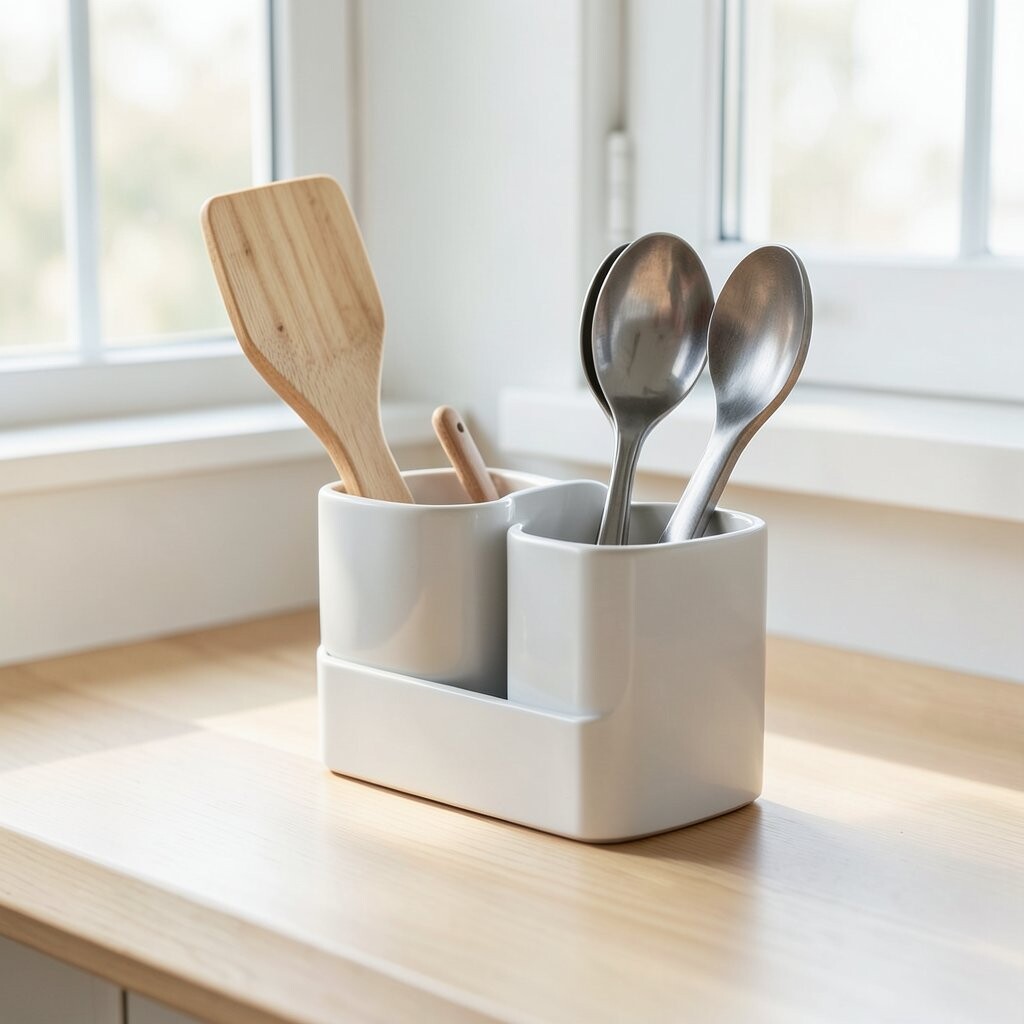
Utensil cups can turn into a messy rainbow. A function-based organizer keeps tools sorted and easy to grab.
Instead of one big holder, use separate sections for cooking utensils, baking tools, and serving spoons. Keep the handles facing the same direction for an orderly look. This small shift reduces clutter because you stop leaving tools on counters “just for now.”
For unique styling, use a single tray with dividers or a minimal wall rail with hooks. Trends show more kitchens moving utensils off counters to free space and improve flow. If you’re on a budget, repurpose a simple utensil tray and add drawer-style dividers inside it.
Personalize by storing your most-used spatula near the stove and less used tools closer to the baking area. That makes the kitchen feel intuitive, not chaotic.
9. Minimal Spice Storage With a Rotation Plan

Spices are small, but they take up a lot of visual space. A compact system keeps them neat and readable.
Pick a spice rack that holds jars in a tight layout, like a drawer insert or slim rotating shelf. Group spices by cooking type, such as baking and savory, so you don’t scan endlessly. Wipe jar fronts once in a while so labels stay clean and aligned.
To make this idea truly minimal, set a “use-first” rotation. Put front-and-center the spices you use weekly, and move older ones to the back. You can even add a simple month marker on labels so you know what to refresh.
Costs depend on whether you choose a wall rack, drawer organizer, or modular set. Many kitchens are trending toward rotating spice carousels for a clean look and easier access. Choose what fits your drawer size and cooking habits.
10. Bulk Storage With a Label-Only Approach
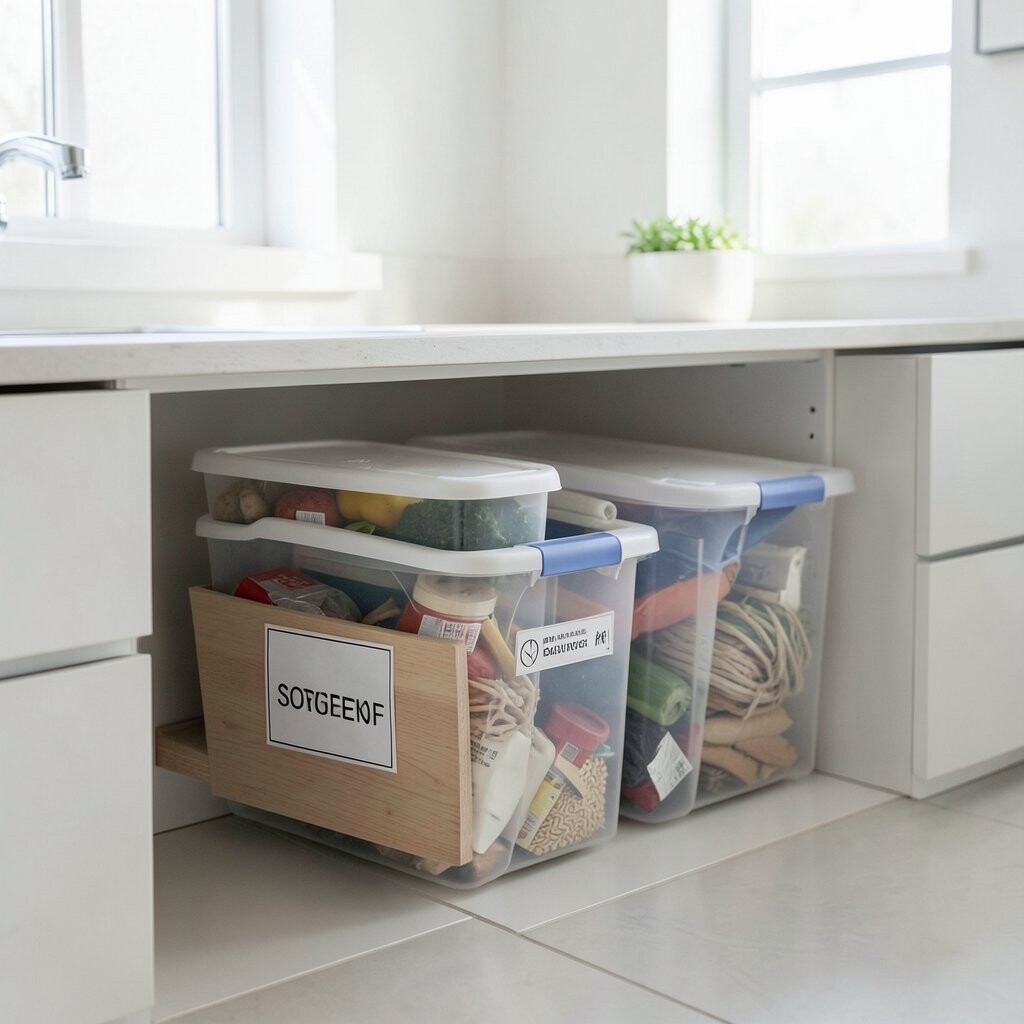
Buying in bulk is great, but the storage can look messy. A label-only approach keeps bulk items tidy without extra clutter.
Use simple storage bags or refillable containers, but keep them uniform with matching closures. Attach neat labels that show the product and a short note like “breakfast” or “baking.” Store bulk goods in one cabinet zone so the rest of the kitchen stays clear.
For personalization, add small color stickers based on food type while keeping labels minimal. This method can be cost-effective because you don’t need expensive custom inserts. Just remember to seal items well to keep freshness and prevent pantry odor mixing.
11. Built-In Peg Rail for Everyday Tools
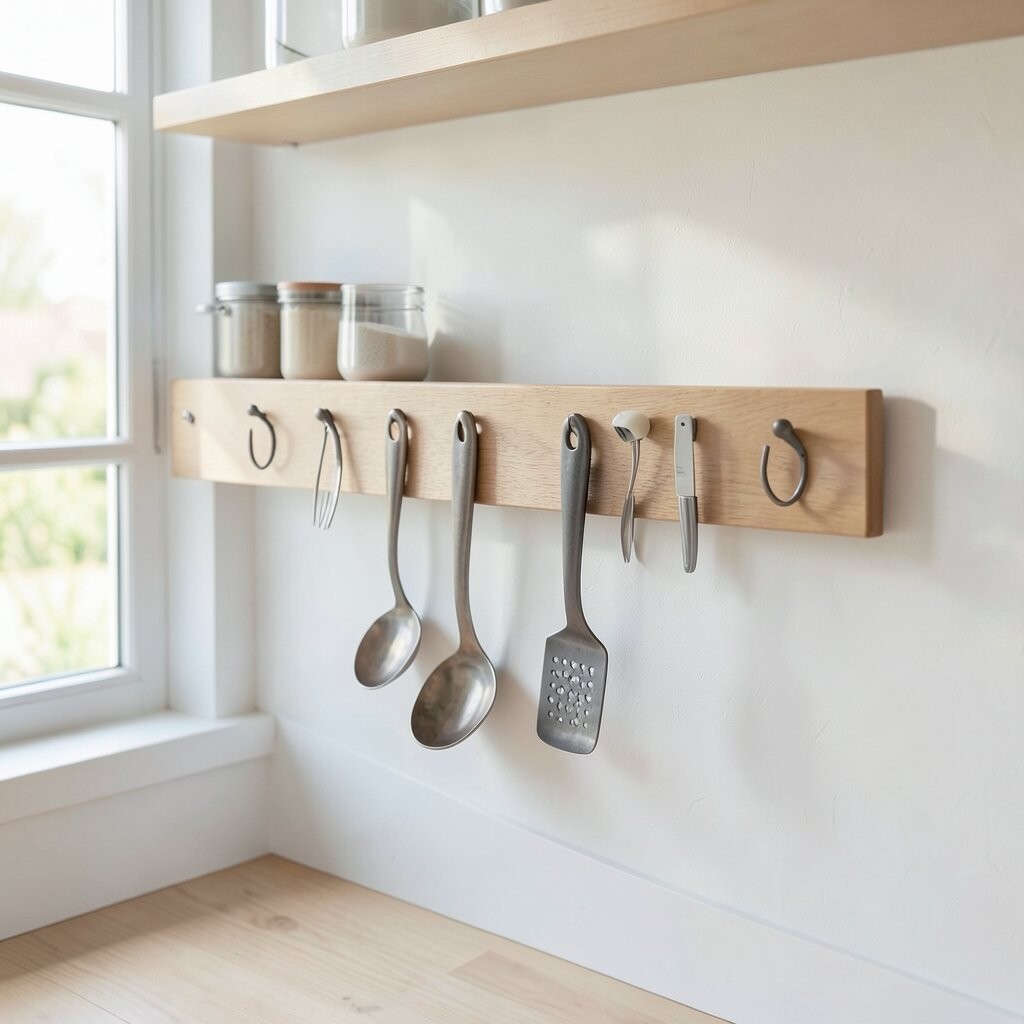
A peg rail can make your kitchen feel like a tidy workshop. It also reduces the temptation to leave tools on the counter.
Hang tools you use daily, like measuring cups, a whisk, and a ladle, while storing rarely used items elsewhere. Keep hooks consistent so everything lines up and looks intentional. Choose a clean finish that matches your kitchen, like matte black or brushed steel.
12. Lazy Susan for Corner Cabinet Efficiency

Corner cabinets waste space because the back is hard to reach. A lazy Susan fixes that problem fast.
Place a rotating tray inside the corner cabinet to store oils, baking sheets, or small appliances you don’t use every day. Arrange items so the most-used ones sit near the edge. This makes the cabinet feel more open, even when space is tight.
For personalization, use a non-slip mat so jars stay steady while you spin. Costs vary based on size and bearing style, but it’s a practical upgrade with quick payoff. Current trends favor smooth-rolling models because they reduce effort and keep the system feeling premium.
13. Appliance Garage With Clear Rules
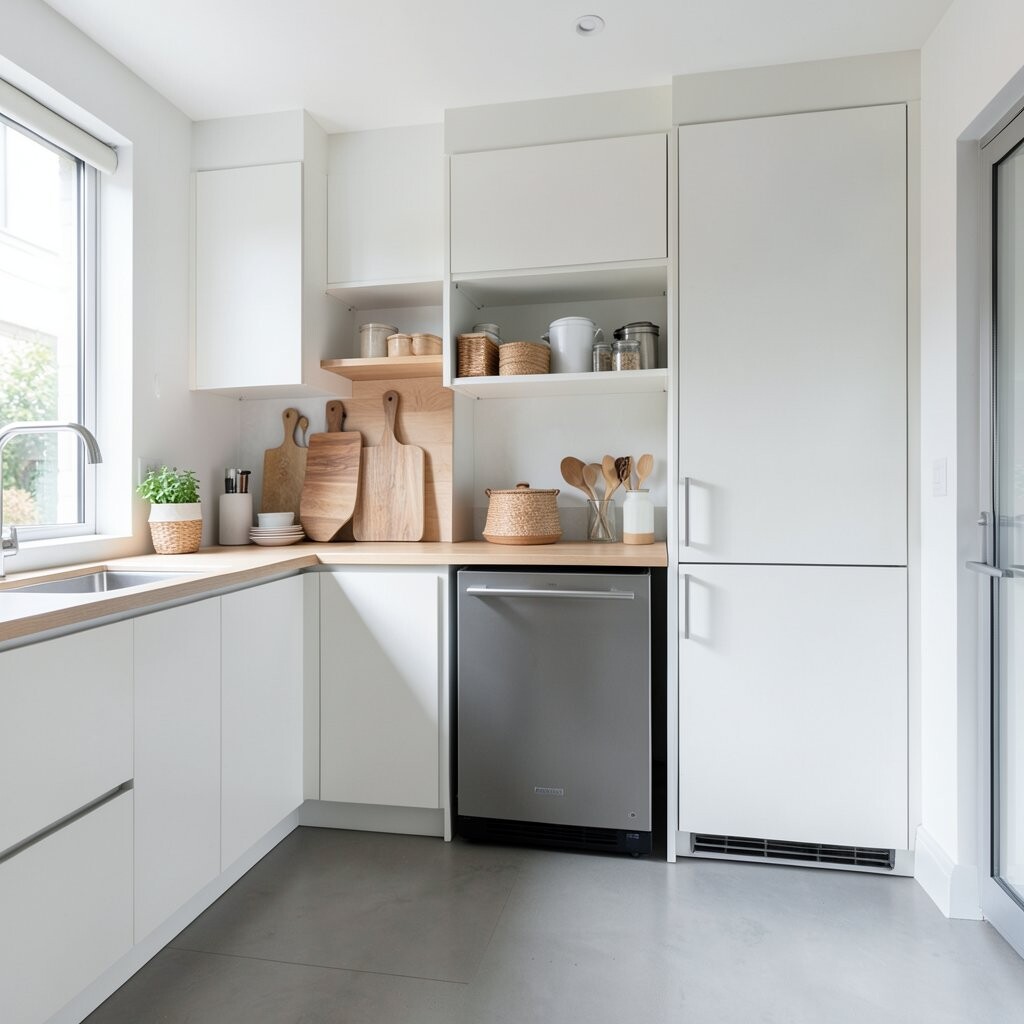
Small appliances can clutter every surface. An appliance garage gives them a home that still feels minimal.
Store the items you use often behind a cabinet door or a lift-up compartment. Set clear rules for what goes inside so the garage doesn’t become a hidden junk drawer. If you have limited space, rotate appliances by season or by need.
To personalize, choose a cabinet face finish that blends in with your cabinetry so the garage disappears visually. The cost depends on whether you already have a built-in option or need an added cabinet. A basic solution using a shelf and door can work well if you measure carefully.
When organizing, keep cords tidy with a single clip system. That one step keeps the area from looking messy even when the door is open.
14. Minimalist Dish Storage With a Vertical Stack
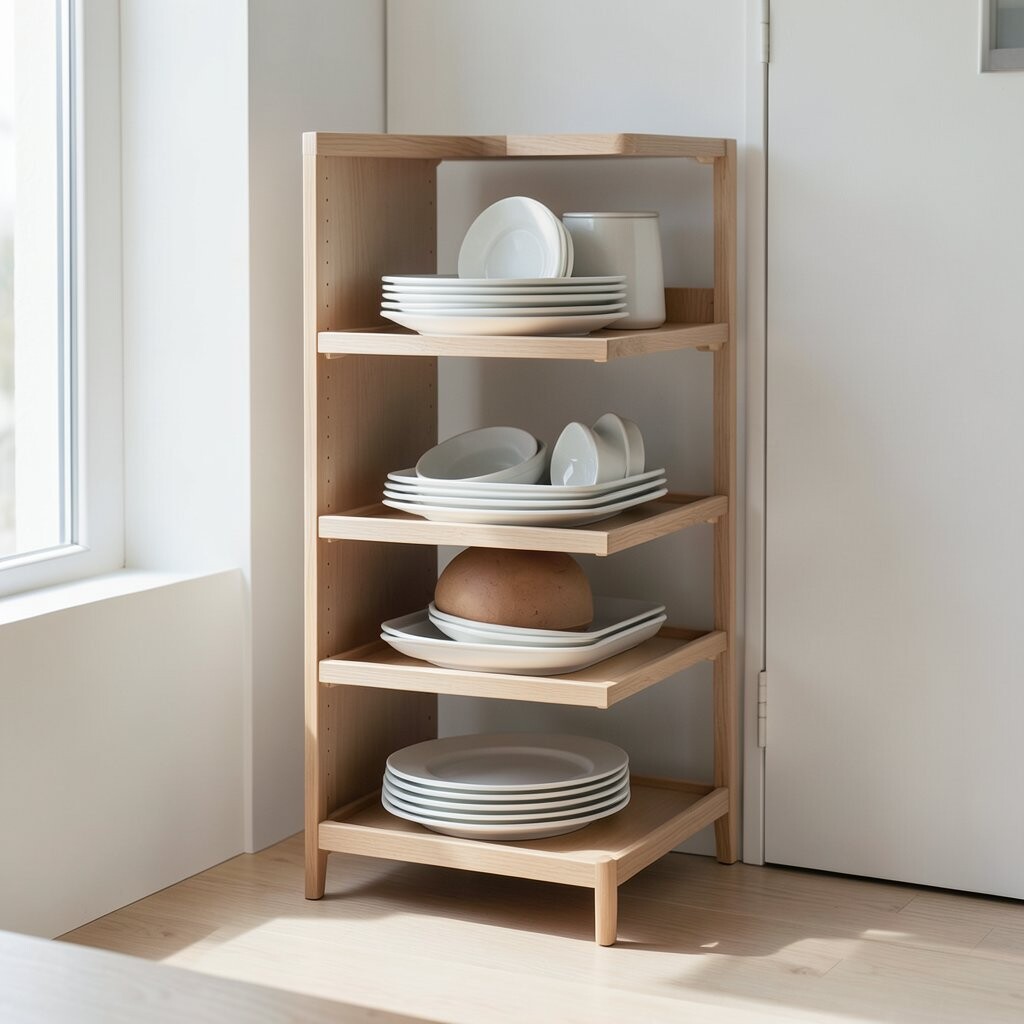
Dish piles can look chaotic, especially when they’re dried. Vertical storage keeps everything calm and easy to dry or grab.
Use a vertical dish rack setup or a slim organizer so plates and bowls dry without sliding together. If you have limited countertop space, consider a rack that includes separate sections for utensils. Choose a model that looks sleek and doesn’t crowd your sink area.
15. Drawer-Organized Baking Essentials
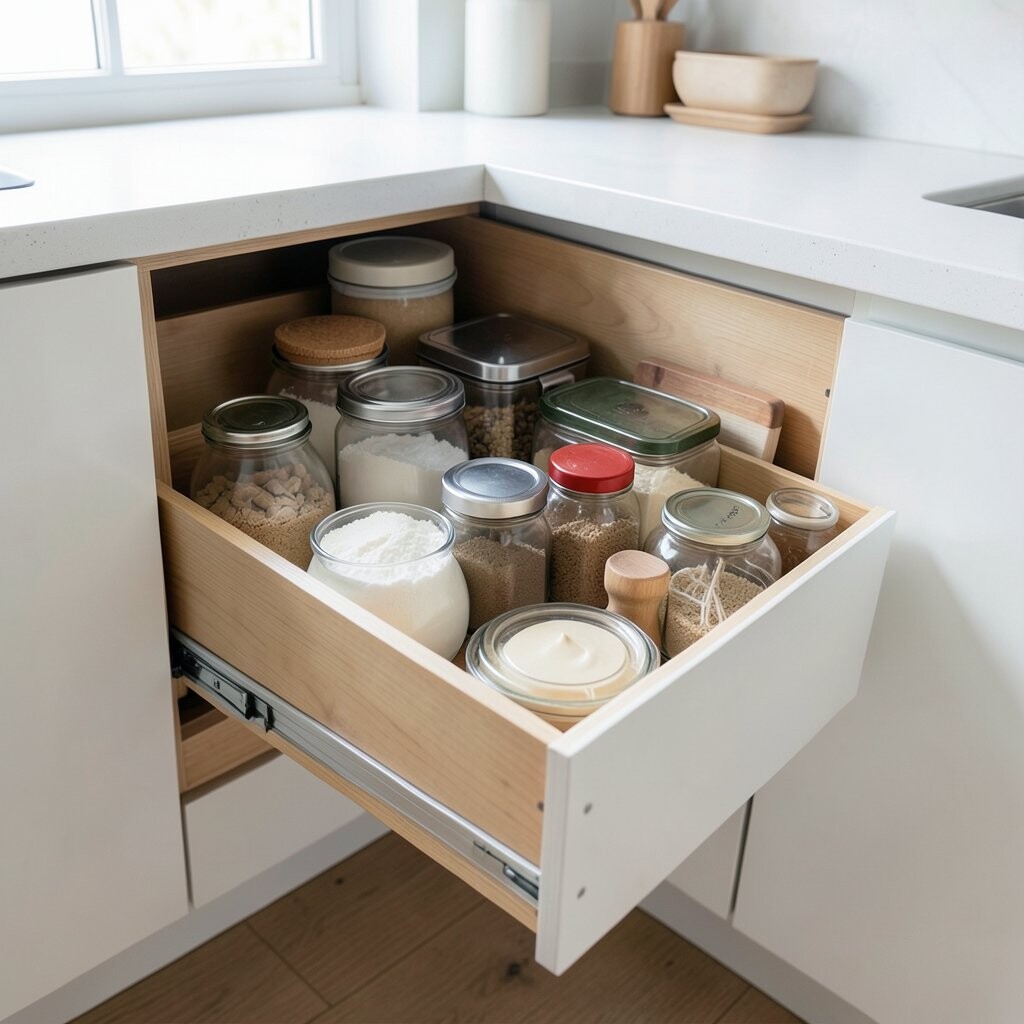
Baking tools multiply quickly, and drawers become crowded. A dedicated drawer system keeps them under control.
Create one baking drawer for measuring cups, spatulas, and piping tools. Use small compartments so items don’t mix, and keep backup basics like parchment stored flat at the back. When you open the drawer, everything should feel visible and easy to reach.
For uniqueness, store your most-used size of measuring cups in a clear front zone. That small change reduces rummaging and helps your kitchen stay tidy under real life. Costs are usually moderate since drawer inserts and dividers are widely available, and you can upgrade over time. A current trend is using modular inserts that can be rearranged as your tools change.
16. Cleaning Supply Bins With One “Home” Per Task
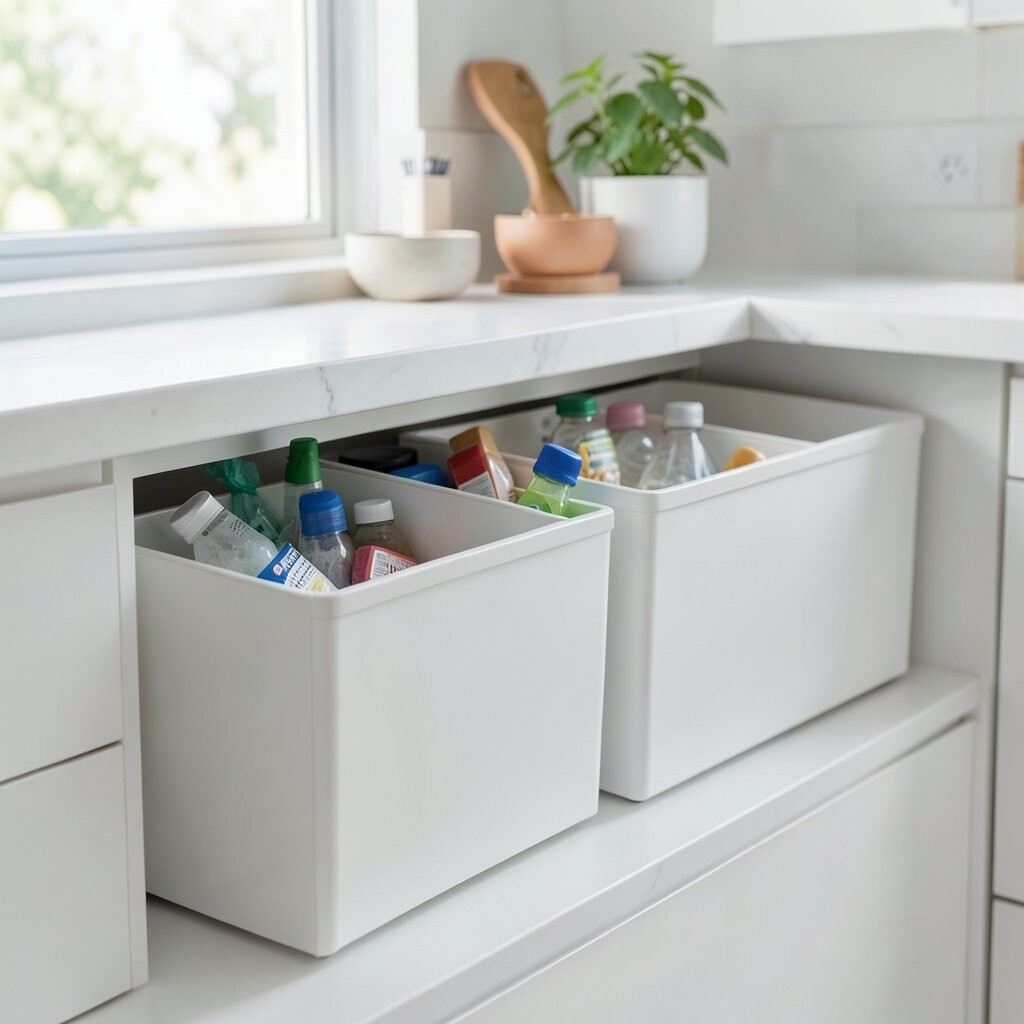
Cleaning bottles scattered around the kitchen create instant visual mess. One home per task makes the system easier to maintain.
Place glass cleaner with glass cloths, and keep kitchen spray paired with scrub brushes in the same bin group. Put these bins under the sink or in a utility cabinet where everything stays together. This reduces the need to search and helps your kitchen look clean even between deep cleans.
17. Wall-Mounted Cutting Board Holders
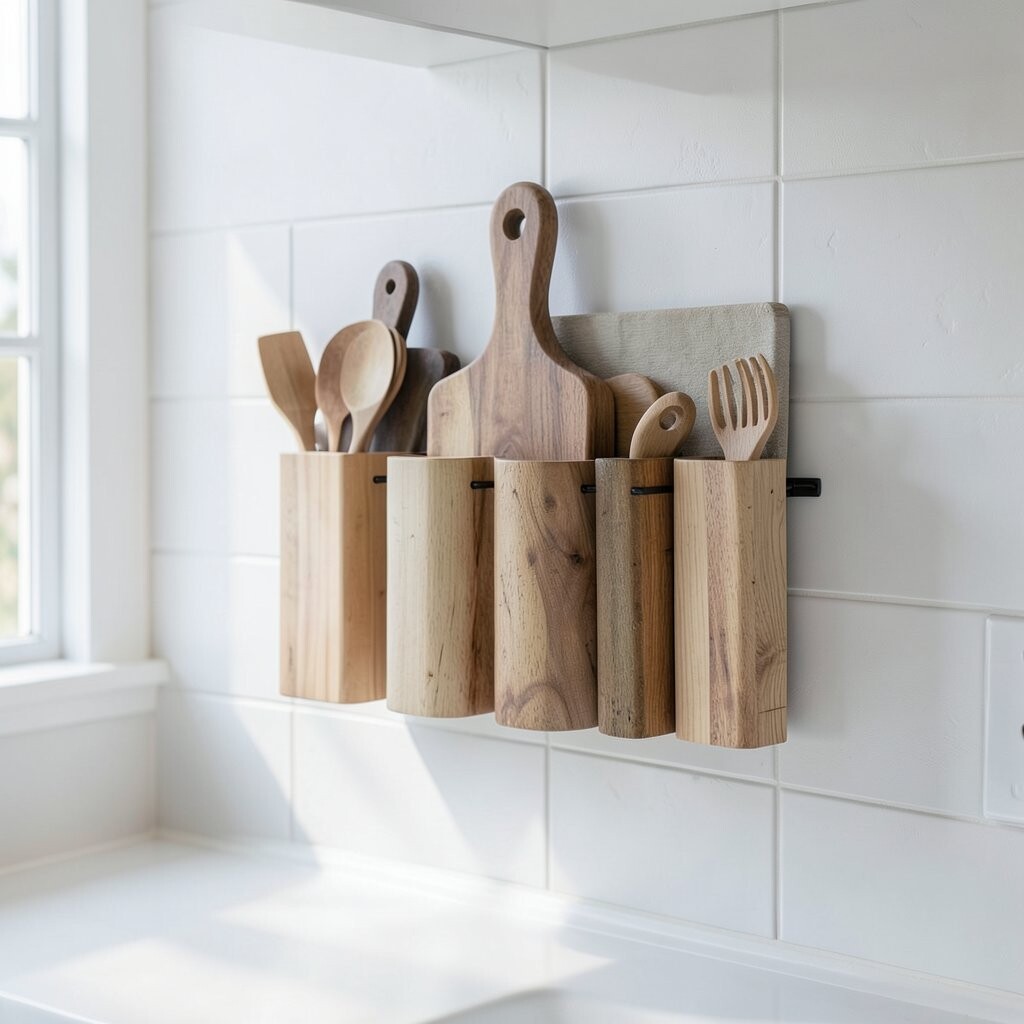
Cutting boards look attractive when displayed, but they also get in the way. Wall holders keep them neat and off counters.
Mount a slim holder where boards can stand upright. Add a second small holder for your knife rest or a cutting board scraper so small items don’t fall behind. Keep the layout simple so your wall stays minimal.
To personalize, coordinate the wood tone or metal finish with your decor. This can be a mid-range cost depending on mounting hardware, but it’s often cheaper than redoing cabinetry. The current trend is mixing open storage with closed storage, using just enough display to keep daily tools accessible.
18. Tidy Trash and Recycling Using Modular Containers

Trash area mess spreads quickly into the rest of the kitchen. Modular bins make disposal look more controlled.
Use a small set of containers under the counter or next to the sink that separates waste types cleanly. Make sure each bin has a lid or a matching cover so the area looks consistent. Keep the liners and gloves in one small compartment so nothing is left loose.
19. A Pantry Zone for “Open-Now” Items Only
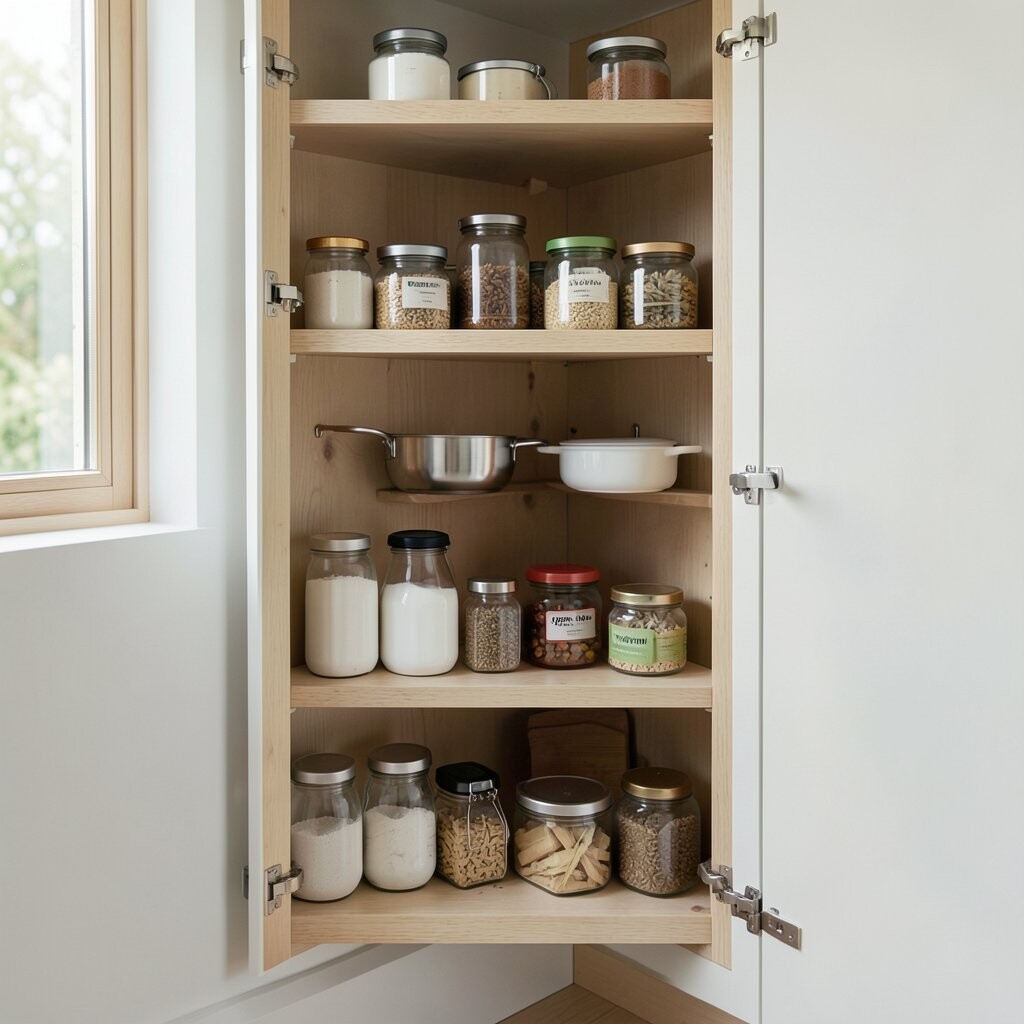
Pantries get messy when every item is always out. A zone for open-now goods keeps the rest hidden and calm.
Designate a shelf section for what you’re currently using, like opened snacks, cereal, and baking staples. Put unopened backups in deeper sections or on higher shelves. This simple rule keeps the visible shelf from filling up with half-finished bags.
For personalization, use two-tone shelf liners: one for open-now and one for backups. Costs are usually low because liners and shelf risers are easy to add. The current trend is “active pantry” organization, where you keep only the daily items accessible.
20. Cabinet Door Storage for Small Bottles
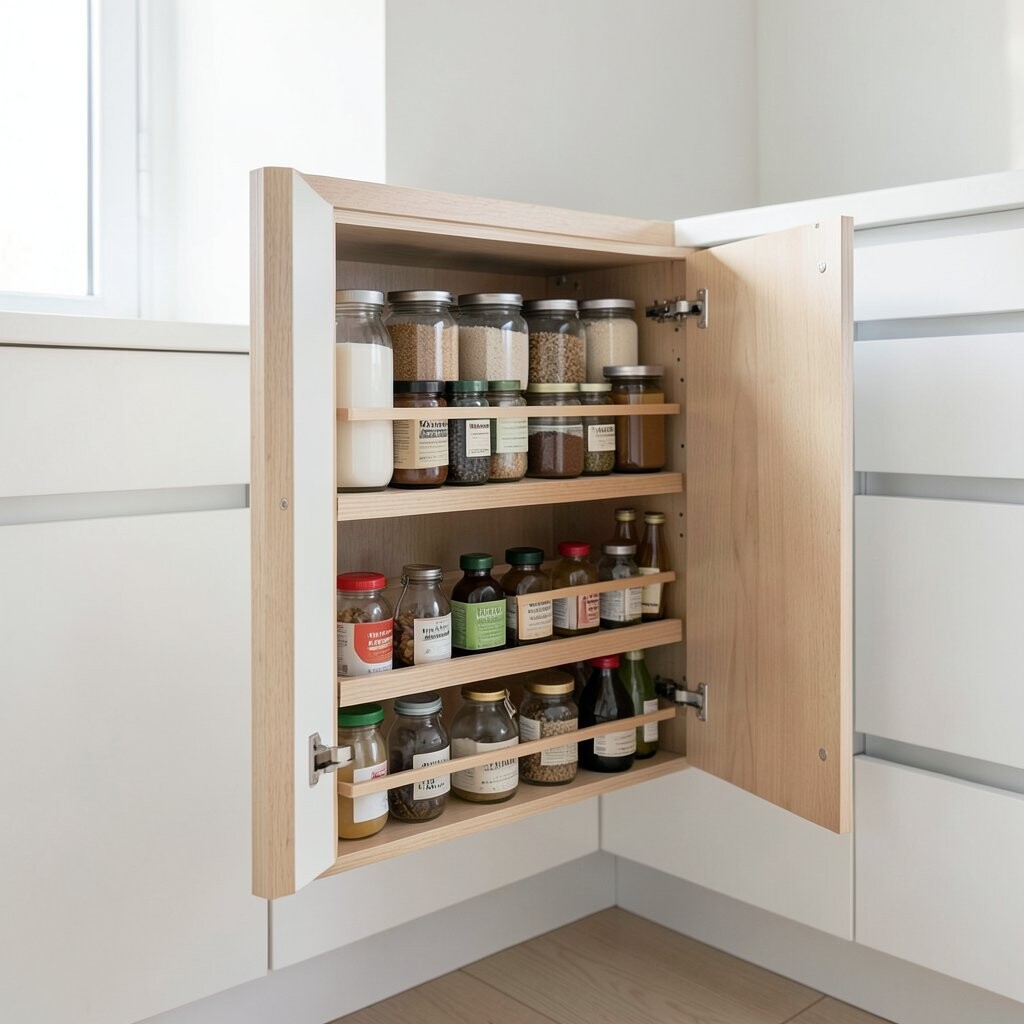
Cabinet doors are wasted space in many kitchens. Door organizers add storage without taking room from shelves.
Install slim bins on the inside of cabinet doors for small bottles like oils, vinegar, and sauces. Keep weights balanced so doors open smoothly and bins don’t sag. This keeps frequently used items close to where you cook, which supports a minimalist workflow.
To personalize, choose clear bins for quick spotting or matte bins for a cleaner visual. This upgrade can be budget-friendly if you start with a few bottles. It also fits the trend of using every inch efficiently while keeping surfaces uncluttered.
21. Match Storage Bags to Reduce Visual Noise

Different bags and labels can make a pantry look busy. Matching storage bags creates a smoother, calmer visual rhythm.
Transfer bulk snacks, grains, and dry goods into uniform bags or containers with the same closures. Use simple tags for contents, and keep the tags consistent in size and placement. When everything looks the same, the whole pantry feels organized.
For personalization, pick a closure color that matches your kitchen palette. Costs range from low if you already have containers to higher if you want premium stackable options. A current trend is “cohesive pantry styling,” where storage items look curated rather than random.
22. Seasonal Rotation Bins With a Clear Label Front

Minimalism stays easier when seasonal items have a plan. Rotation bins help you switch out what you need without long searches.
Use stackable bins for seasonal baking tools, holiday serving trays, or extra dishes, and label them on the front so you know what’s inside. Store them on higher shelves or the back of cabinets. Keep the rotation schedule simple, like switching twice a year.
For unique style, choose bins with matching colors and neat label holders. Costs are reasonable, especially if you buy a few sturdy bins rather than many small ones. This approach aligns with current trends toward flexible systems that adapt as kitchens and routines change.