Natural limestone can make a room feel calm, warm, and grounded. With the right slab, it turns everyday spaces into something special.
1. Coastal-Fresh Limestone Fireplace Hearth

A pale limestone hearth brings a quiet, sunlit feeling to the living room. Its soft veining can look like gentle waves across the stone.
Limestone is naturally cool to the touch, which is great for areas near heat when installed correctly. Choose a honed or brushed finish to hide minor scuffs from daily life. For best results, seal the stone and pair it with a simple fire surround in oak or matte black hardware.
2. Warm Entryway Accent Wall With Limestone Texture
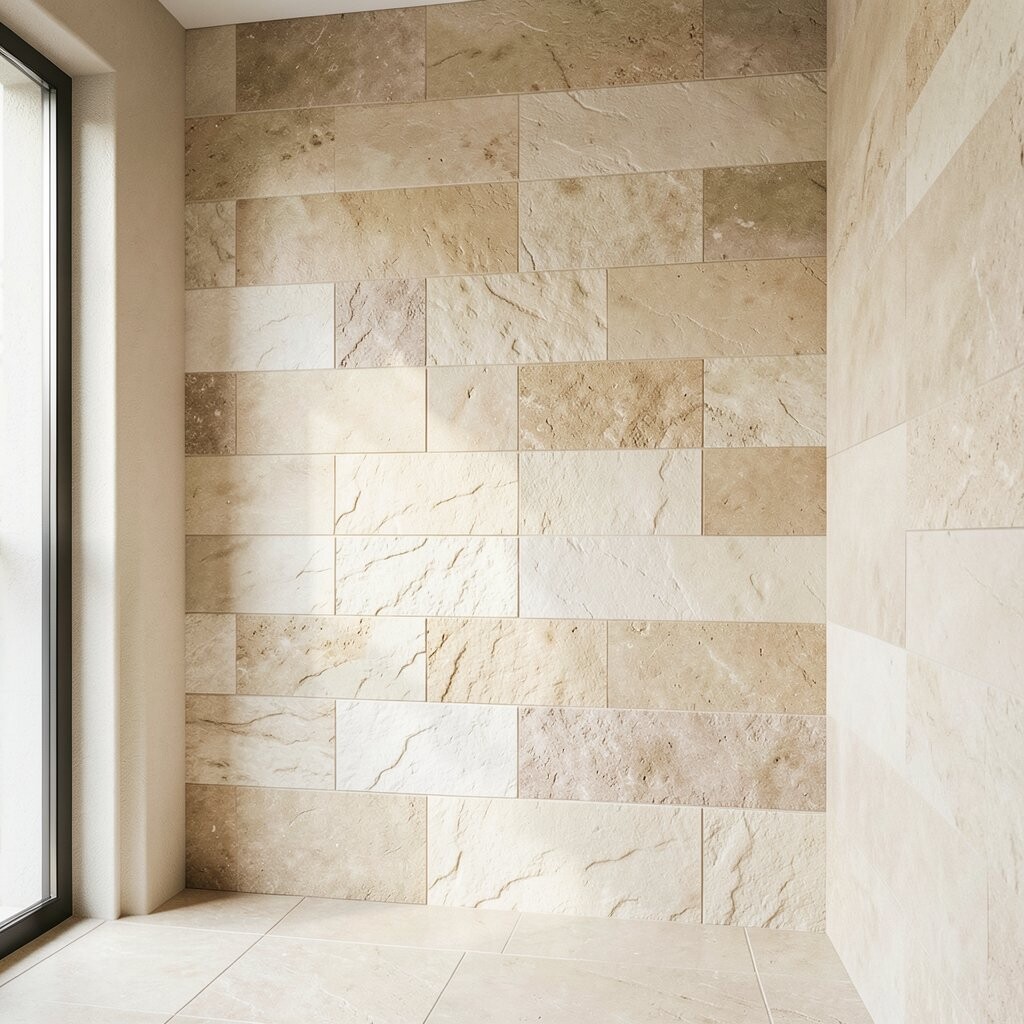
An entryway needs to make a strong first impression, and limestone does that without shouting. Even a small accent wall can add depth through subtle color shifts and natural patterning.
Limestone helps create a welcoming mood because it reads earthy and timeless. To keep the look cohesive, match grout color to the stone’s lighter tones and keep the lines consistent. Consider using slightly larger-format slabs if you want the wall to feel more modern and streamlined.
For cost planning, ask for a quick comparison between full-height slabs and a feature strip. Installing a single accent section often lowers labor time while still giving a premium feel. A trend you’ll see more of lately is “quiet luxury,” where texture does the work and décor stays minimal.
3. Kitchen Countertops That Look Effortlessly Premium
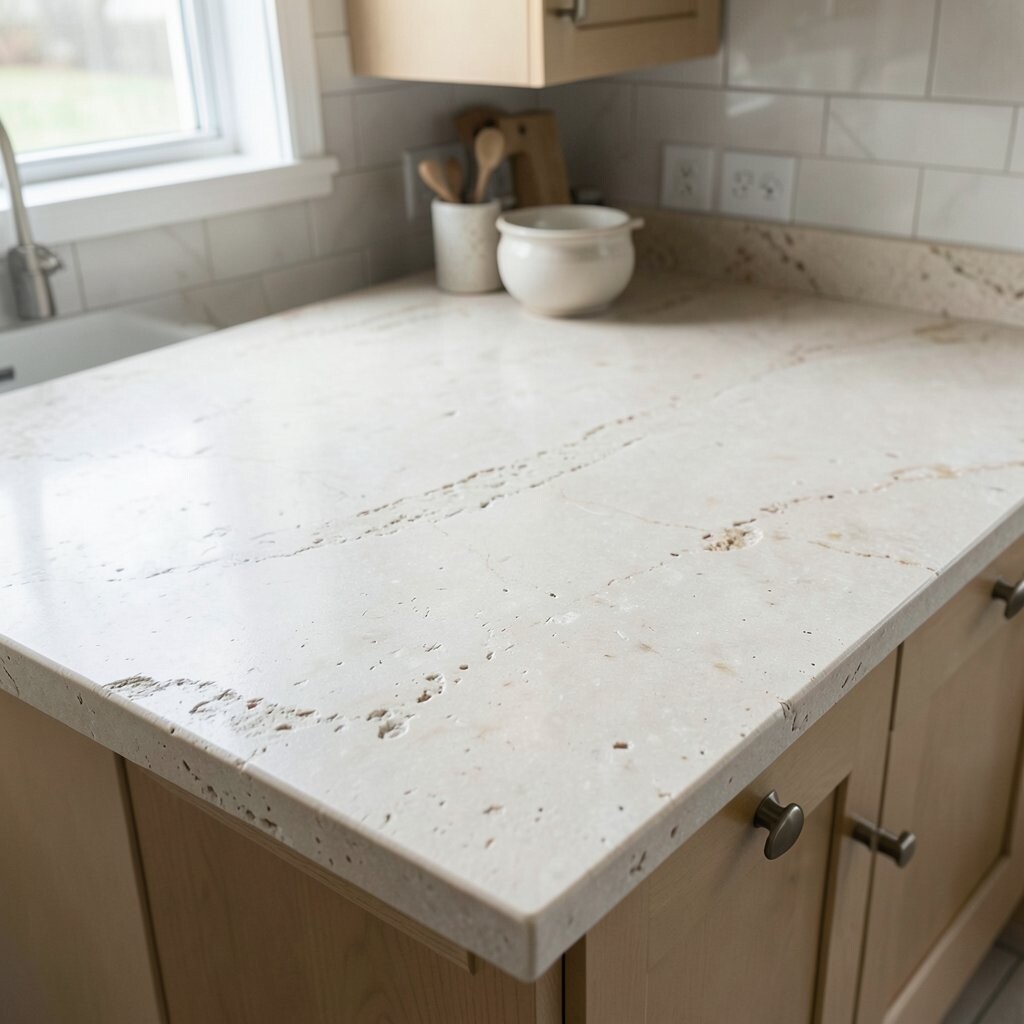
Limestone countertops can give your kitchen a high-end, tailored look. The stone’s movement—tiny lines, soft speckles, and gentle bands—keeps the surface from feeling flat.
One of limestone’s biggest benefits is visual warmth, especially paired with white cabinets, natural wood, or warm-gray paint. It also blends beautifully with modern hardware like brushed brass faucets. If you like practicality, choose a honed finish and keep a simple routine for sealing and wiping.
Be realistic about maintenance, since limestone can be more porous than some engineered options. Use coasters under drinks, wipe spills promptly, and avoid frequent exposure to strongly acidic cleaners. For personalization, pick slabs with fewer dramatic veins for a clean, architectural vibe, or select bolder patterning for a statement look.
Cost considerations depend heavily on thickness, finish, and whether you need edging and cutouts for sinks. Many homeowners manage the budget by selecting a smaller slab area, like only the main island top. Currently, homeowners are trending toward mixed materials, so a limestone island paired with a different countertop elsewhere can feel designer without overspending.
4. Bathroom Vanity Surround With Limestone Calm

A limestone vanity surround can make a bathroom feel spa-like and relaxing. Light limestone tones reflect natural light, which helps smaller bathrooms feel brighter and cleaner.
Limestone’s uniqueness shines through its soft veining, which adds interest without heavy contrast. Seal the stone well in wet areas and choose a finish that resists water spotting. For practical styling, keep the vanity hardware and mirror frame in warm metal shades like bronze or champagne.
5. Living Room Feature Wall With Limestone Stacked-Look Slabs
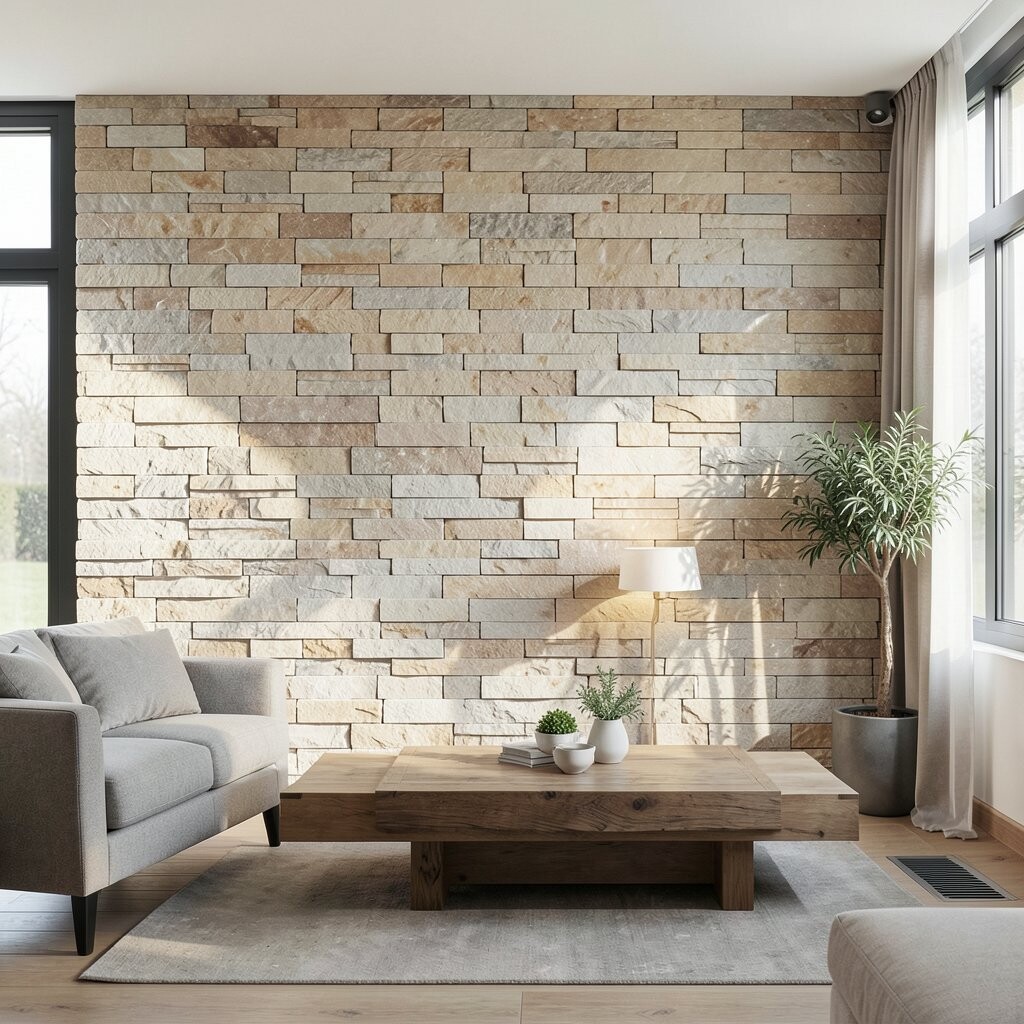
A stacked-look limestone wall brings a modern rhythm to your living space. Each slab piece can show different layers of color, which makes the wall feel handcrafted.
This style is popular because it adds texture while staying neutral enough for many décor themes. It also works well for hiding minor wall imperfections since stone panels can cover uneven surfaces. For a smoother install, plan your layout carefully and keep the pattern orientation consistent where possible.
To personalize, decide on the grout width and color first, since these choices affect how crisp or soft the final look feels. If you want a more coastal vibe, pick warmer creamy limestone and pair it with light linens. Cost-wise, stacked styles can vary widely, so request a material estimate by square footage and include fabrication and sealing in your budget.
6. Outdoor Patio Steps in Slip-Resistant Limestone
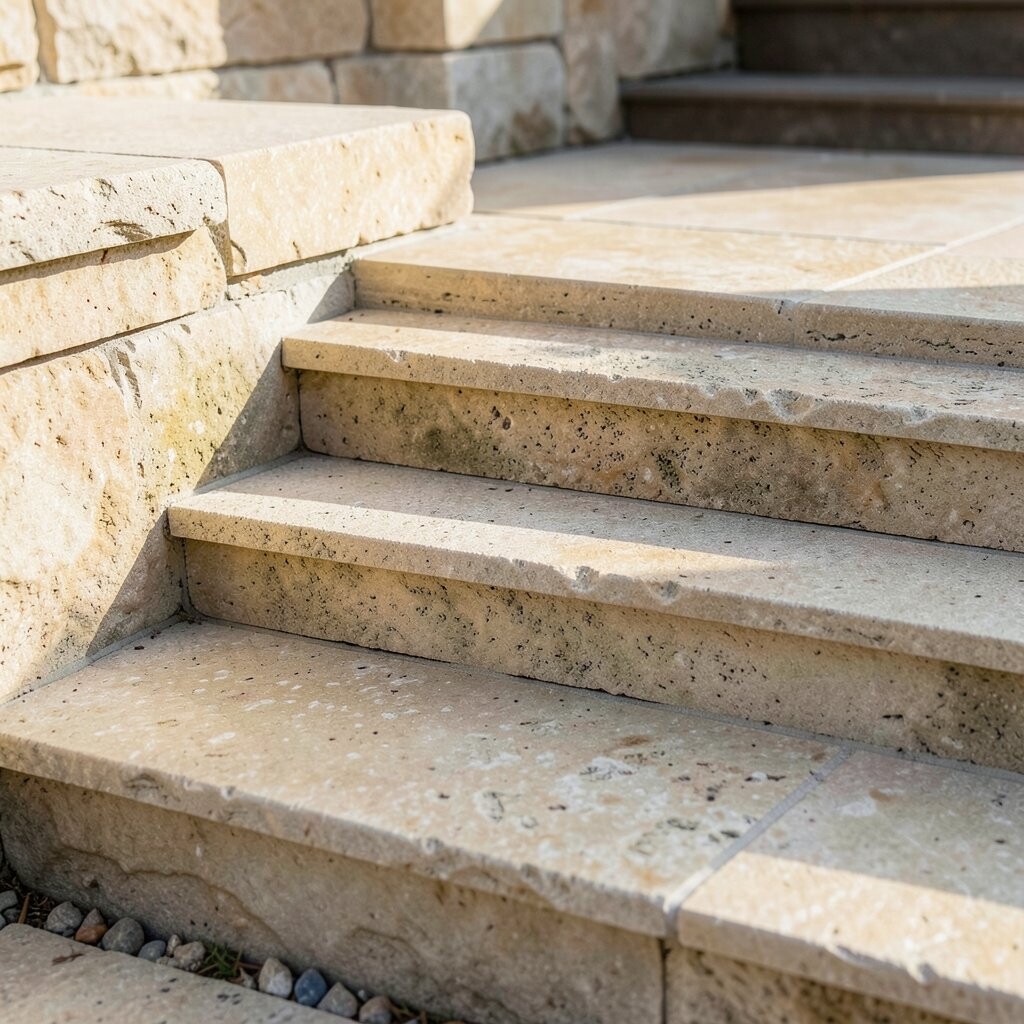
Limestone patio steps can look elegant while handling real outdoor foot traffic. The natural texture can also feel less slippery than some polished stones.
Limestone benefits outdoor living by giving a timeless, earthy foundation to gardens and patios. For safety, ask about a honed or mechanically brushed finish with a slip-resistant surface profile. Keep weeds and grime from building up by sealing the stone and using mild cleaners meant for natural stone.
To make it feel cohesive, match the step stones to your outdoor paving or wall cladding. If you prefer a more personal touch, choose stones with subtle fossil-like specks or gentle layered bands. For current trend momentum, many homeowners are combining stone steps with outdoor kitchens, using matching limestone to unify the whole backyard.
7. Dining Room Table Base or Surround With Stone-Forward Style
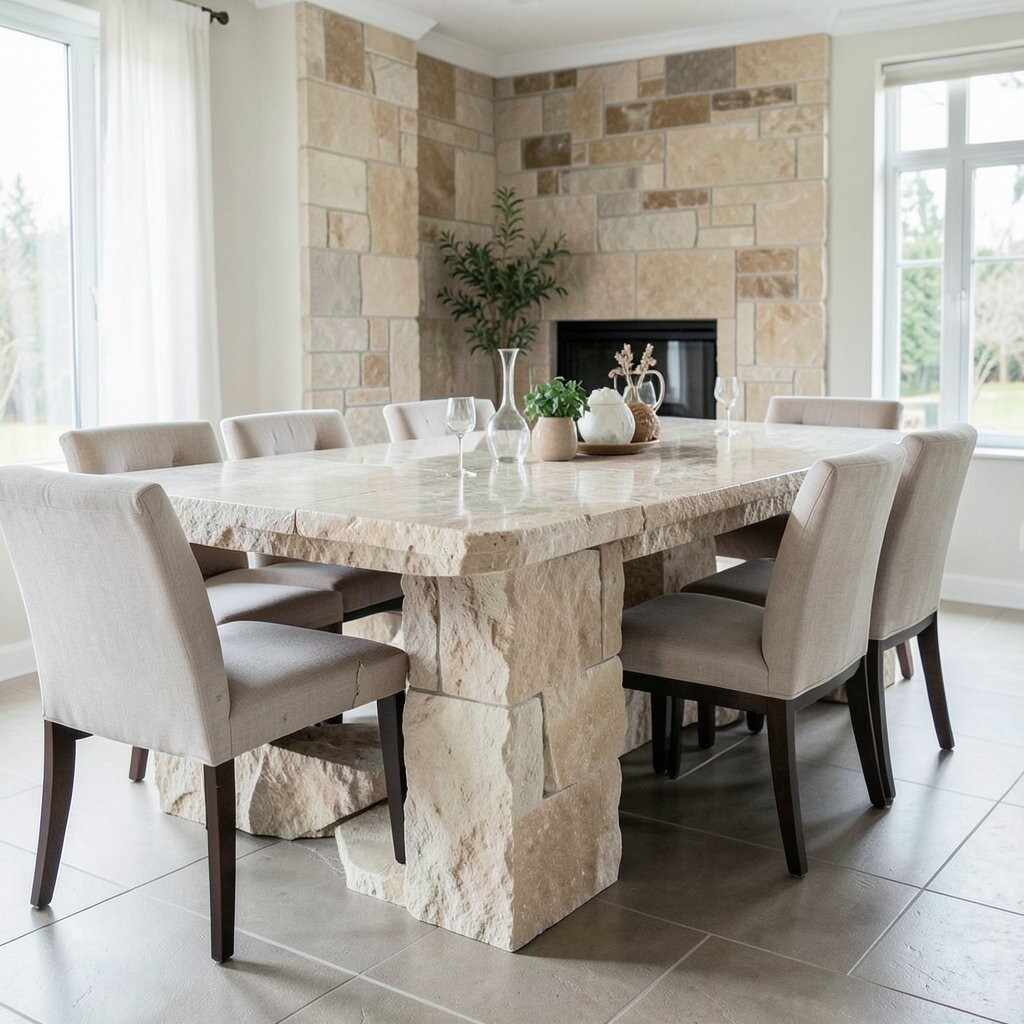
A limestone surround around a dining room feature adds a refined, architectural edge. The stone’s natural patterns can make even simple chairs look thoughtfully styled.
Using limestone here creates a grounded look that pairs well with wood, linen, and warm metallic accents. It also benefits your overall design because limestone tends to sit comfortably between modern and classic. Choose slabs with balanced movement so the room feels elegant, not busy.
Practical tips matter if you’re adding a stone base near daily dining. Protect surfaces from spills and use coasters, especially if you have red wine or citrus drinks. Budget-wise, custom stonework can add cost, so consider using limestone for the frame and using a different surface for the main table top to control spending.
If you want a trend-forward approach, keep the stone look clean and pair it with straight-line lighting and simple wall art. A limestone-forward dining feature also photographs beautifully, which is a sneaky plus if you like hosting.
8. Bedroom Headboard Wall With Soft, Layered Veins
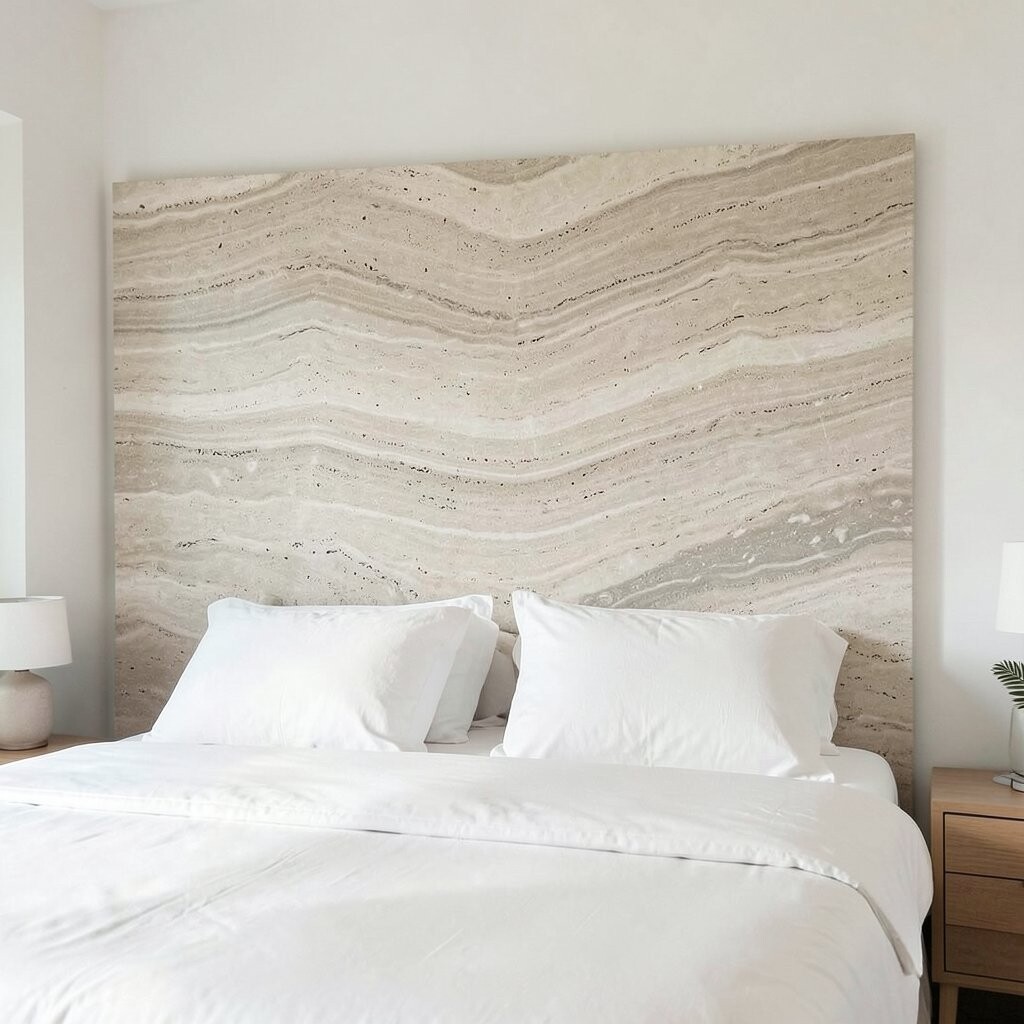
A limestone headboard wall can make your bedroom feel like a quiet retreat. The stone’s gentle tones work well with cozy textiles and low, warm lighting.
This choice is unique because limestone can bring depth without adding clutter. It also supports a calming color palette, especially if you choose beige, cream, or light sand tones. To keep it practical, seal the wall and avoid harsh cleaners when you do routine dusting.
For personalization, decide whether you want a uniform look or more dramatic veining. A consistent pattern feels tailored and modern, while varied slabs feel organic and artistic. Cost considerations usually come down to wall size, slab thickness, and how much trimming the installer needs around electrical outlets and vents.
9. Home Office Wall Panels for Focus and Style

A limestone wall panel behind a desk can create a sense of structure. It adds texture to your workspace without turning the room into a distraction zone.
Limestone benefits a home office by keeping the palette warm and grounded, which can feel less sterile than all-white walls. The stone also has a naturally tactile look, which makes the space feel designed. Choose a honed finish to minimize glare from monitors and overhead lighting.
To make the setup practical, plan for cable routes, outlets, and mounting points before installation day. Use a neutral limestone with soft variation if you want your artwork and desk items to stand out. For budget control, consider installing limestone only on the lower half of the wall or behind the desk area rather than full coverage.
10. Powder Room Statement Wall in Darker Limestone

A darker limestone can add drama to a powder room without needing a full renovation. Think warm taupe or deep charcoal tones that look rich under layered lighting.
This is a great opportunity to show limestone’s uniqueness because the veining becomes more visible. Pair it with a glossy mirror, crisp lighting, and clean modern fixtures for a bold contrast. For practical care, seal the stone and use non-acidic cleaners so the surface stays looking even.
If you want a personalized vibe, choose slabs with strong movement and keep the rest of the room simple. Many homeowners use this tactic to make a small space feel high-end while limiting material costs. A darker limestone trend is also growing because it pairs well with brass and warm wood finishes that are popular right now.
11. Laundry Room Splash Zone Cladding That Wipes Clean
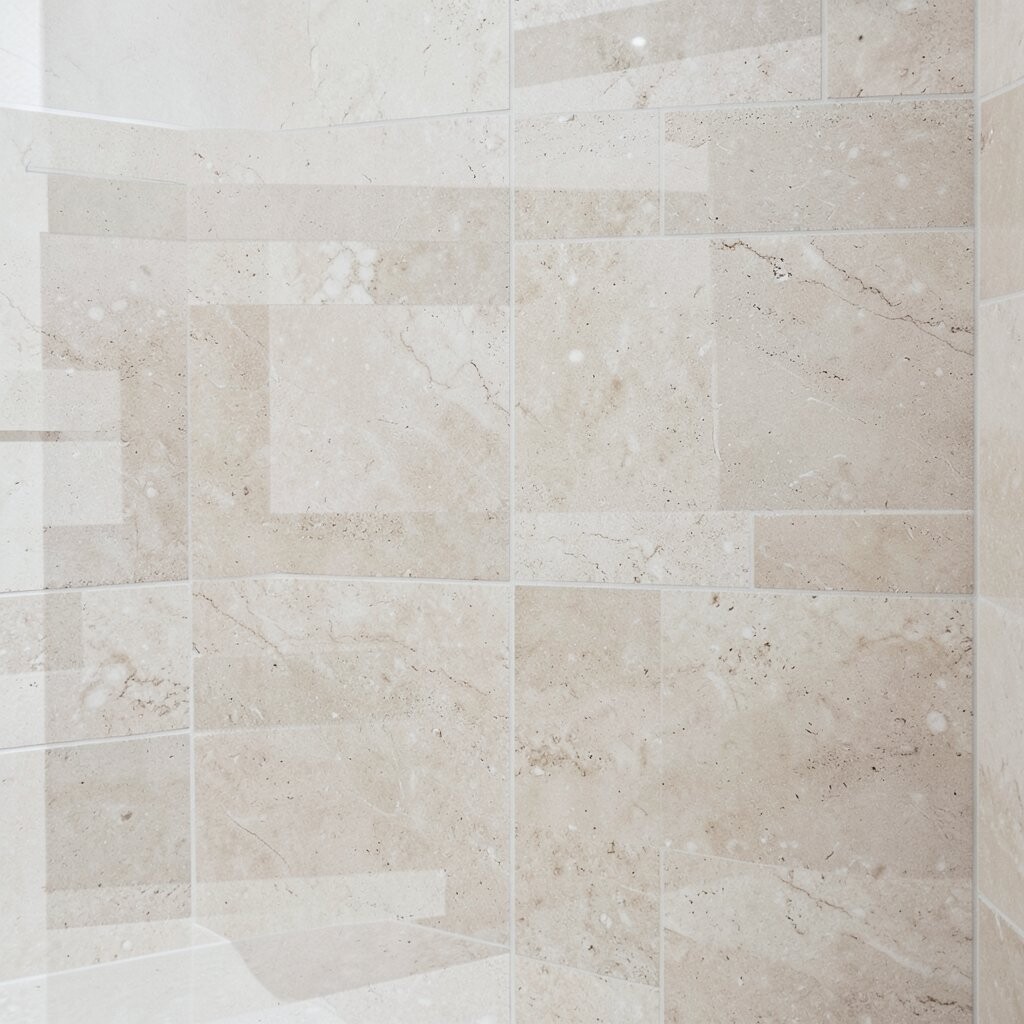
Limestone cladding in a laundry splash zone can look stylish while standing up to day-to-day mess. The key is using the right finish and sealing it well.
Limestone’s benefit here is its natural character, which makes a hardworking space feel more like part of your home design. Choose a honed or brushed surface to reduce visible water marks. Also, protect seams with proper installation practices, because water exposure depends on how edges are finished.
For practicality, consider a vertical installation layout near the sink or folding area so splashes hit stone instead of paint. Personalize with matching countertop materials or hardware in similar tones. Cost-wise, laundry rooms can be a smart investment because the splash zone area is usually smaller than kitchens or main bathrooms.
Current trend ideas include pairing stone with simple cabinetry and durable matte finishes, creating a clean look that feels intentional.
12. Staircase Risers With Limestone Treads for a Grand Feel
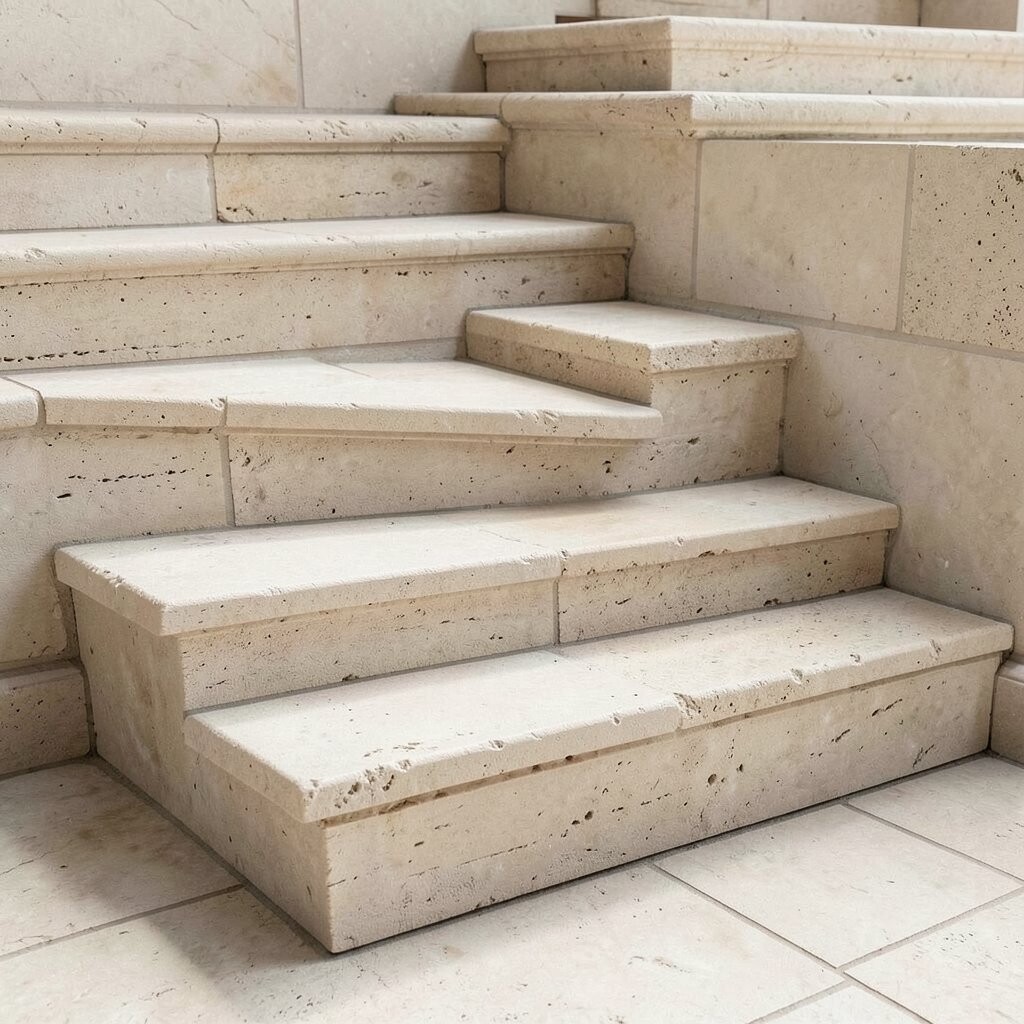
A staircase wrapped with limestone treads and risers instantly upgrades the whole home. The stone’s natural texture adds visual interest with every step.
Limestone is unique on stairs because it can look elegant while still feeling solid and substantial. It also benefits comfort when the finish is chosen properly for traction. Choose a slip-resistant finish and ensure proper sealing to help manage scuffs from boots and daily use.
To keep the design cohesive, match the color family of your limestone to flooring, baseboards, or a nearby feature wall. For personalization, select slabs with a consistent directional grain or choose varied veining for a more artistic, gallery-like effect. Budget considerations include fabrication complexity around nosing, edging, and possible stain treatments to achieve the exact shade you want.
13. Sunroom Floor Panels for Light, Airy Movement
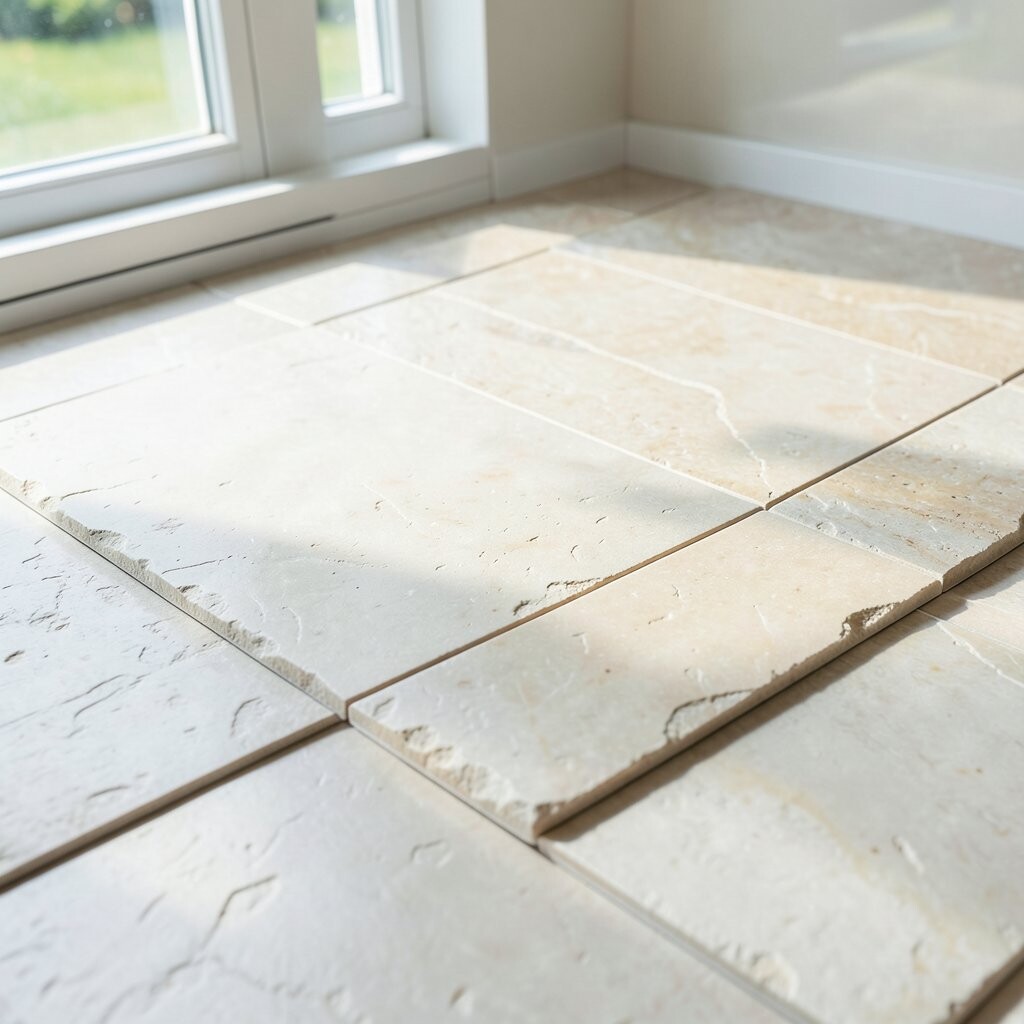
Limestone floor panels in a sunroom can make the space feel bright and breathable. The stone’s soft tones can bounce daylight around the room.
A major benefit is that limestone works well with natural textures like rattan, wicker, and linen. The stone’s movement under changing sunlight keeps the floor visually interesting without heavy patterns. For practical tips, use proper underlayment, maintain sealing schedules, and clean with pH-neutral products to avoid dulling the surface.
To personalize, choose a finish that fits the room’s style, like a brushed finish for a casual feel or a smoother honed finish for more refined lines. Cost varies depending on panel size, grout lines, and whether you need leveling for an existing floor. A trend right now is mixing stone floors with indoor plants and simple, sculptural lighting to create a fresh, lived-in look.
If you have pets, ask your installer about the best finish for traction and scratch resistance while still keeping the stone’s natural beauty.
14. Hearth and Mantel Combo With Limestone for Cozy Evenings
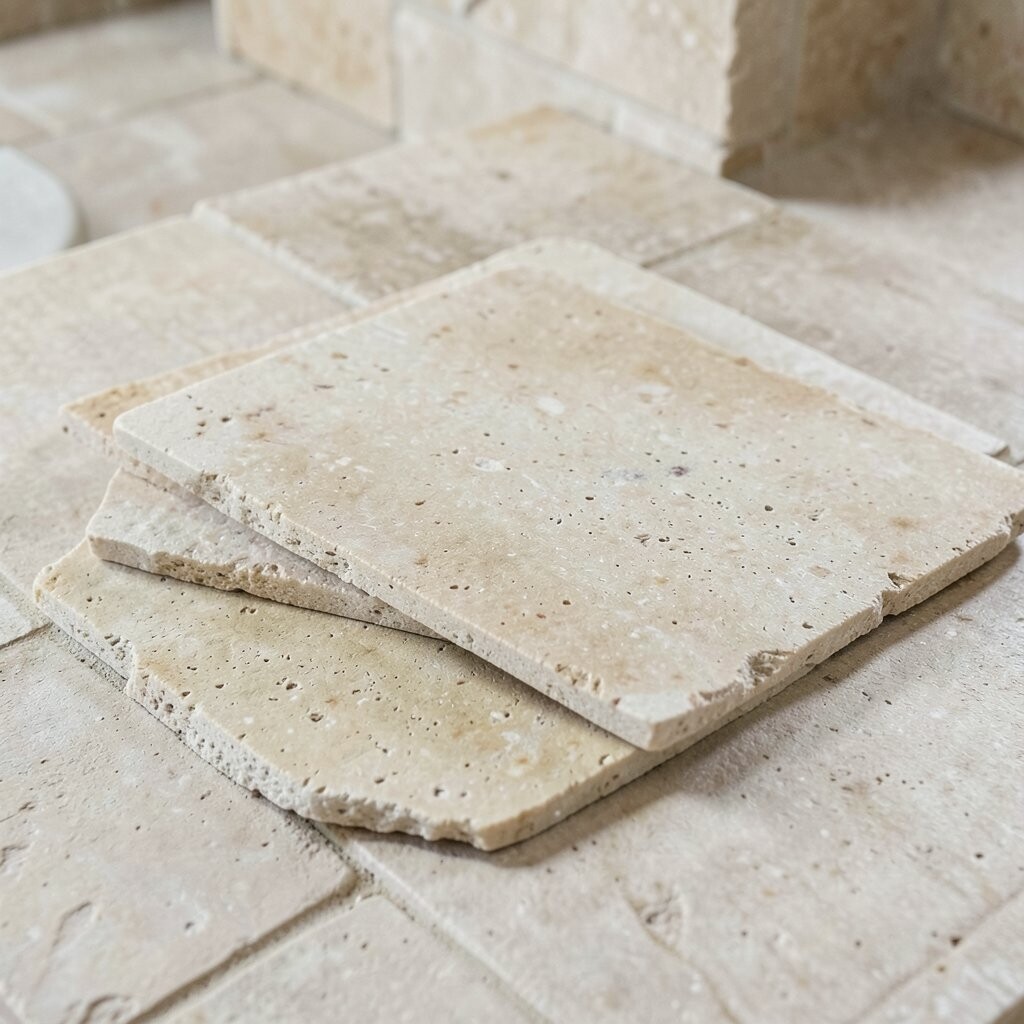
A limestone mantel and hearth combo can make the living room feel instantly warmer. The stone’s natural variation creates a “built for years” look.
Limestone is unique as a centerpiece because it frames firelight beautifully. It also offers a benefit in style flexibility, since you can pair it with rustic beams, modern shelving, or classic molding. Seal the stone and choose finishes that resist soot buildup after frequent use.
For practical tips, plan the mantel height around your lighting and seating so the room stays comfortable. Personalize with a mantel styling plan that repeats seasonally, like simple wood candlesticks in fall and fresh greens in spring. Cost considerations include whether you want thick slab thickness on the mantel or a thinner profile for a sleeker look.
Right now, many homeowners prefer cleaner, streamlined mantel lines paired with textured stone, giving a modern cozy vibe.
15. Kitchen Backsplash With Vertical Limestone Slabs

Vertical limestone slabs behind the counter can make a kitchen feel taller and more elegant. Their natural striations create a subtle, design-forward movement.
This option benefits daily cooking because limestone adds beauty without feeling too reflective. It also helps define zones in open-plan spaces, making it clear where the cooking area begins. Choose grout carefully and seal the stone before daily use so it handles splashes from water, oil, and sauces.
To personalize, match the limestone tone to your hardware and cabinet undertones. Warm beige limestone pairs well with honey oak and warm whites, while cooler greys look crisp with contemporary cabinetry. Cost-wise, a backsplash is often more budget-friendly than full countertops, but labor can still matter due to precise fitting.
16. Entry Nook Wall and Bench Backdrop With Stone-Detailing
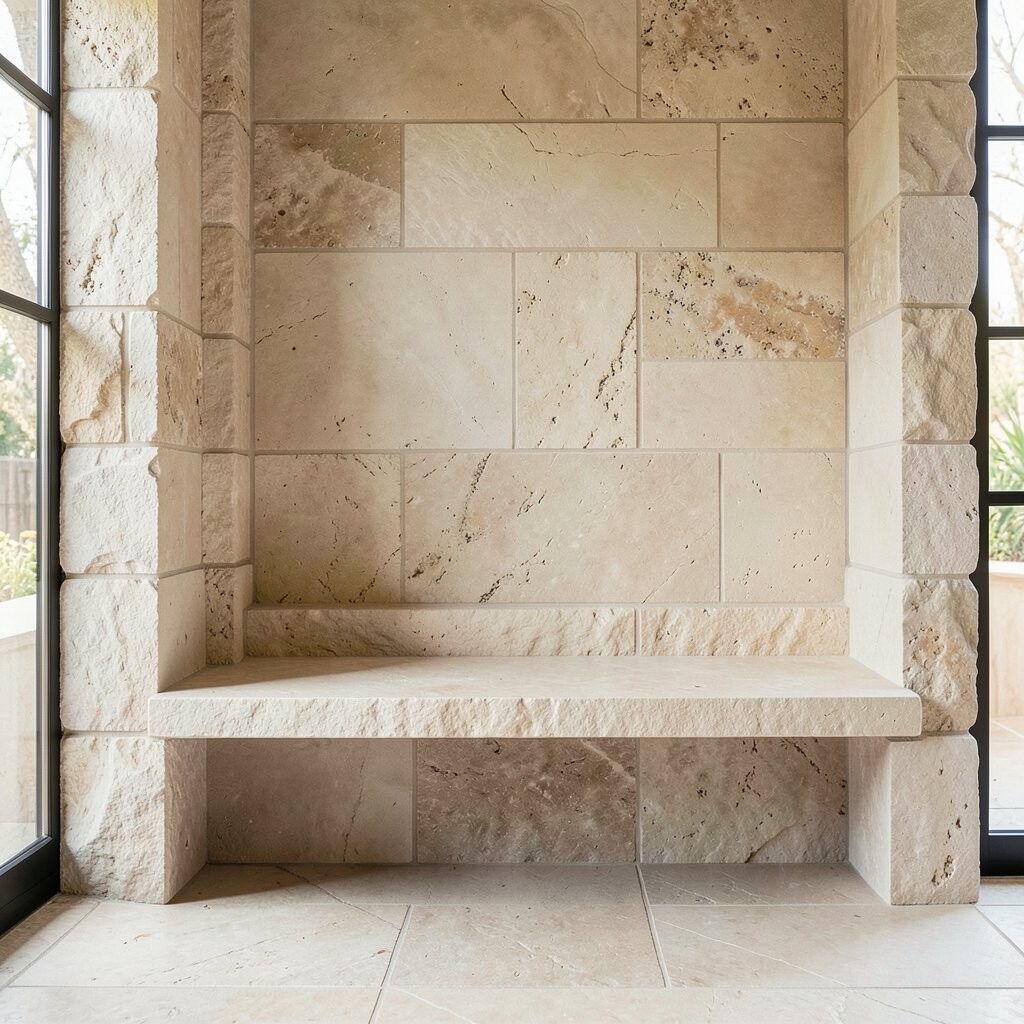
An entry nook with a limestone wall and bench backdrop feels welcoming and organized. The stone gives the nook a defined “moment” even in smaller homes.
Limestone’s benefit here is how well it pairs with practical items like hooks, storage baskets, and shoe areas. The uniqueness comes from how the stone’s veining can frame the bench and create visual rhythm. For practical tips, seal the stone, especially where bags and umbrellas might bump the wall.
Personalize by choosing a limestone shade that complements your flooring and your front door color. If you want a modern look, choose flatter, more uniform slabs and keep the bench lines simple. Budget considerations can improve here because many entry niches are smaller, so the overall stone quantity stays manageable.
A current trend is adding cozy seating with simple styling, so a limestone nook plus a soft cushion can feel boutique-like.
17. Outdoor Lounge Wall With Limestone in Neutral Earth Tones
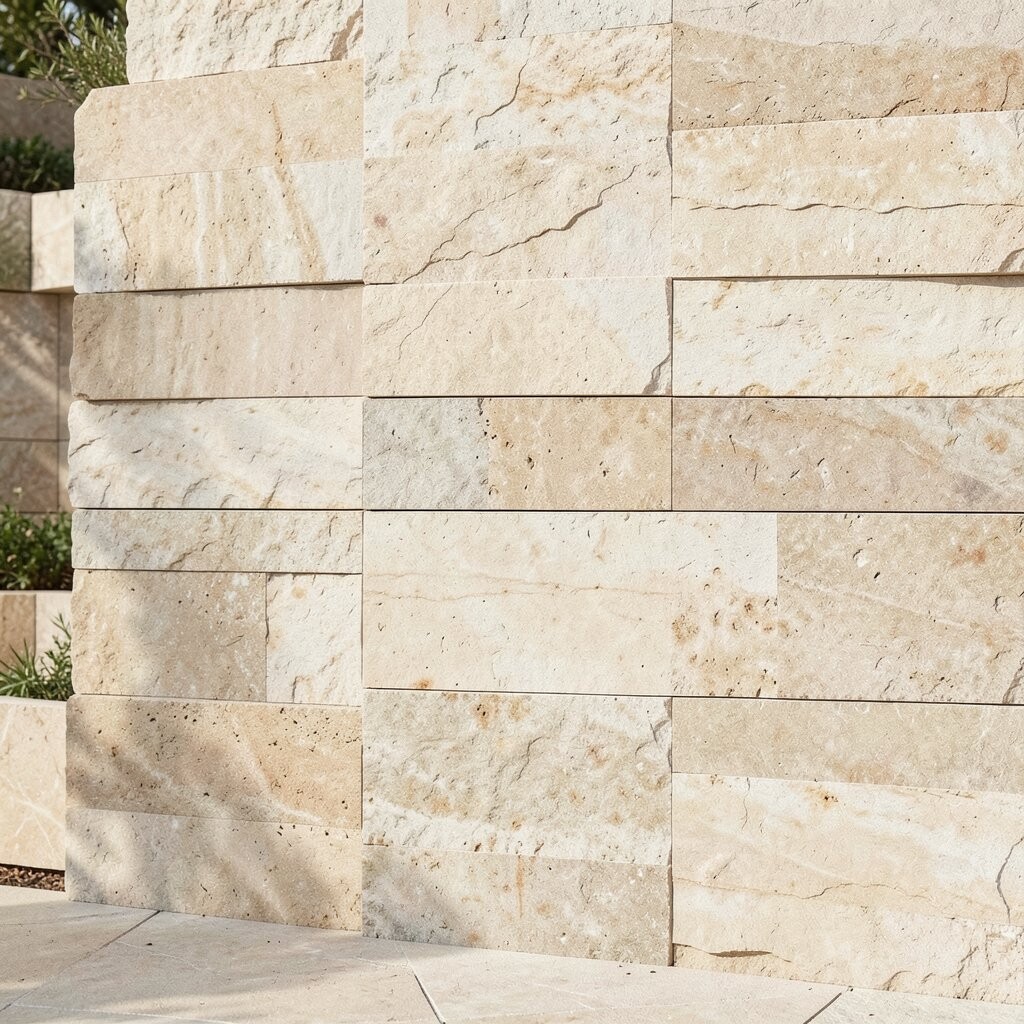
An outdoor lounge wall made of limestone can turn a patio into a true living space. Neutral earth tones help it blend with landscaping and outdoor furniture.
This design is unique because limestone’s natural movement looks different throughout the day. In the morning it can feel bright, and in the evening it can look deeper and more dramatic. For practical tips, use outdoor-rated installation practices, choose a finish suited to weather, and reseal as needed for long-term beauty.
To personalize, consider pairing light limestone with darker wood seating or charcoal cushions for contrast. Cost considerations depend on whether you’re building a full wall or doing a partial feature panel. Many homeowners like to keep lighting minimal and warm, so the stone becomes the main texture in the scene.
18. Built-In Shelving Surround With Limestone Back Panel

Built-in shelves with a limestone back panel look custom and high-end. The stone provides depth behind books, pottery, or framed photos.
Limestone benefits this layout by giving a textured backdrop that doesn’t overwhelm. Its natural veining can make the items on your shelves look more curated, even if you keep styling simple. Choose a consistent tone for a calm display, and consider finishing edges neatly to make the unit look built from one material family.
For practical personalization, plan the shelf lighting so it highlights the stone without causing glare. If the shelves are near kitchens or bathrooms, seal the stone to manage moisture and splashes. Cost considerations include fabrication for cutouts around vents and the extra labor for precise installation surfaces.
19. Walk-In Closet Liner With Limestone Detail Touches

Limestone details in a walk-in closet can make getting ready feel elevated. It’s a stylish way to add texture without covering every surface.
This approach is unique because it adds “design interest” where you can actually enjoy it daily. Limestone’s warm tones help make closets feel less utilitarian and more like a boutique dressing area. For practical tips, seal the stone and keep cleaning products gentle, since closet areas may still get dust and hair from daily routines.
Personalize with strategic placement, like a limestone panel behind a jewelry mirror or a small feature wall near the clothing display. Cost considerations can be managed by limiting limestone to one or two impact zones rather than the entire closet. Current trends often favor small, intentional luxury moments, and stone accents are perfect for that look.
When choosing slabs, pick tones that flatter your lighting so the stone complements your clothing colors and makes mornings feel bright.