
Your drawers have more space than you think. A few smart changes can make getting dressed feel effortless.
1. Label Every Drawer Like a Mini Store

Clear labels save time when you’re in a rush. You’ll also stop the “mystery pile” from growing again.
Use simple wording such as “T-Shirts,” “Socks,” or “Workout.” Pick a label style you’ll enjoy seeing every day, like neat black text or soft pastel tags. For extra polish, place the label on the front edge so it’s visible even when the drawer is half open.
2. Sort by Outfit Groups, Not Just by Clothing Type
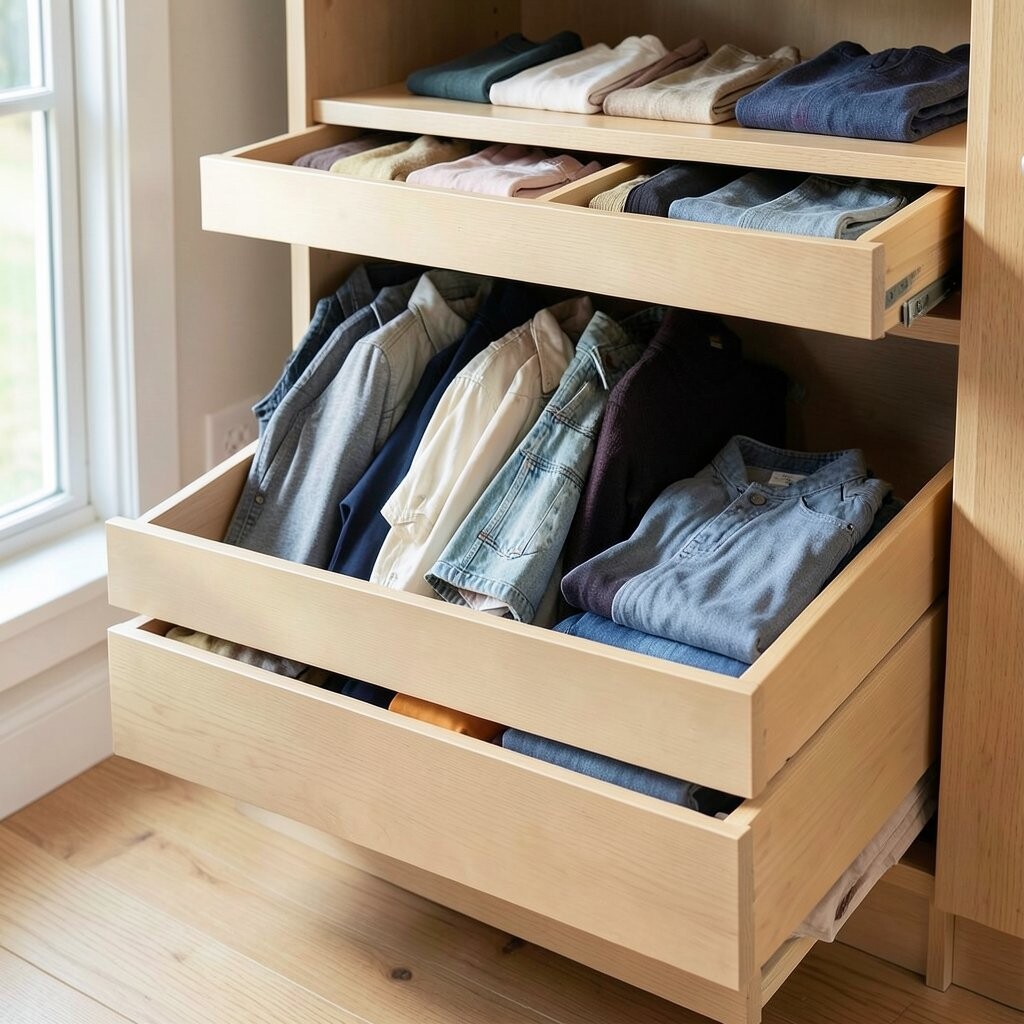
Instead of only separating tops and bottoms, group pieces that go together. This makes mornings feel smooth because your choices are already paired.
Try creating sections for “Casual,” “Work,” and “Weekend” so each drawer becomes a ready-to-wear system. You can also add small “starter outfit” corners with a shirt and matching bottoms folded side by side.
To personalize it, match the drawer colors to the vibe of each group, like calm blues for work clothes and warm tones for weekends. The cost is usually low because you mainly need labels, a few dividers, and maybe a marker you like.
3. Use Drawer Dividers Built for Real Fabric Weight

Different fabrics behave differently, and your dividers should too. A divider that works for light tees may fail for heavier hoodies.
Choose adjustable dividers so you can widen the space for bulky items. Leave a little breathing room for knits so folds don’t collapse into messy stacks.
This setup is unique because it balances your layout to your wardrobe, not a generic “one size fits all” plan. Start with your biggest categories first, then fine-tune the smaller ones around them for a tidy look.
If you’re watching your budget, measure first and then shop for multi-pack dividers that fit your drawer size. When you add new items over time, shift the dividers instead of reorganizing from scratch.
4. Fold in Consistent Blocks Using a Simple Method

Consistent folding is like giving your clothes a neat address. When each item looks similar, everything fits better and stays calmer.
Try a basic “block fold” where each piece becomes a uniform rectangle. Keep the same fold height for all items in that drawer so you can stack without leaning.
5. Create a “Daily Grab” Zone at Eye Level
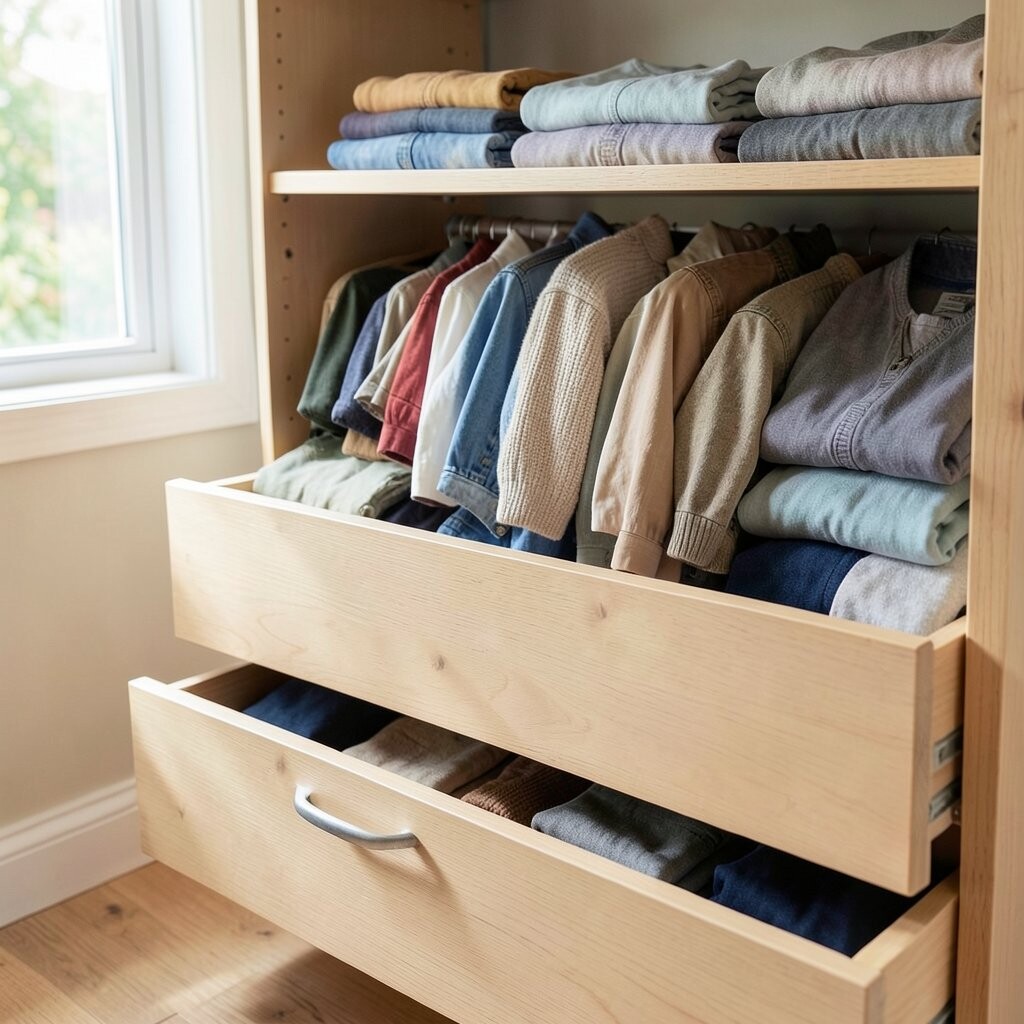
A small section for frequently worn items makes your drawer feel instantly easier. You’ll reach for the good stuff without digging through everything else.
Place your most used items in the front or top area of the drawer, like t-shirts, underlayers, and everyday socks. Reserve the back for seasonal pieces or less-worn favorites.
This idea is unique because it uses everyday habits as the organizer. Over time, you can adjust the zone based on what you actually wear, not what you planned to wear.
6. Add Fabric Trays for Quiet, Clean Separation

Fabric trays make drawers look neat even when the contents are still changing. They also reduce that “folds slipping everywhere” feeling.
Pick trays with sturdy sides so they hold their shape. Use one tray for small items like socks, one for accessories like belts, and another for casual tops.
You’ll love the visual benefit because trays create clear boundaries without hard edges. Consider breathable fabric if you deal with dampness, and choose machine-washable options for easy care.
For cost, start with just two or three trays for your most chaotic drawer. As you see what works, add more gradually.
7. Store Heavier Clothes Flat to Keep Folds Looking Sharp
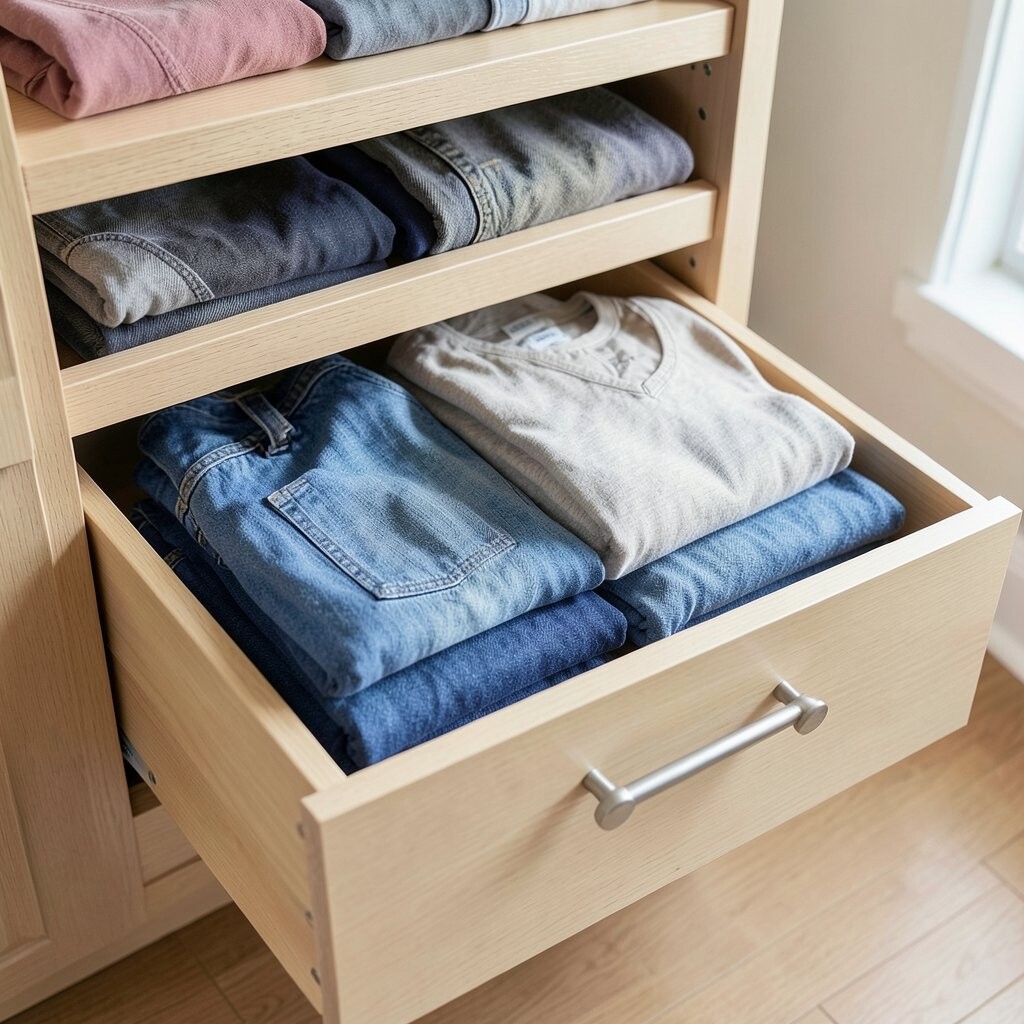
Heavier items like sweaters and denim can crush your neat stacks if stored upright. Flat storage helps them keep their shape longer.
Instead of folding too tightly, make wider folds and lay heavier pieces flat in a dedicated section. Leave a slight gap between items so the fabric isn’t compressed.
This approach is unique because it protects your clothing while also improving the look of the drawer. You may even notice fewer wrinkles and less time re-folding before laundry days.
If you want to keep it budget-friendly, use the existing drawer space and just add one divider panel. Later, you can upgrade with a foam board insert if you want extra structure.
8. Keep Small Items in Labeled Minis or Pouches
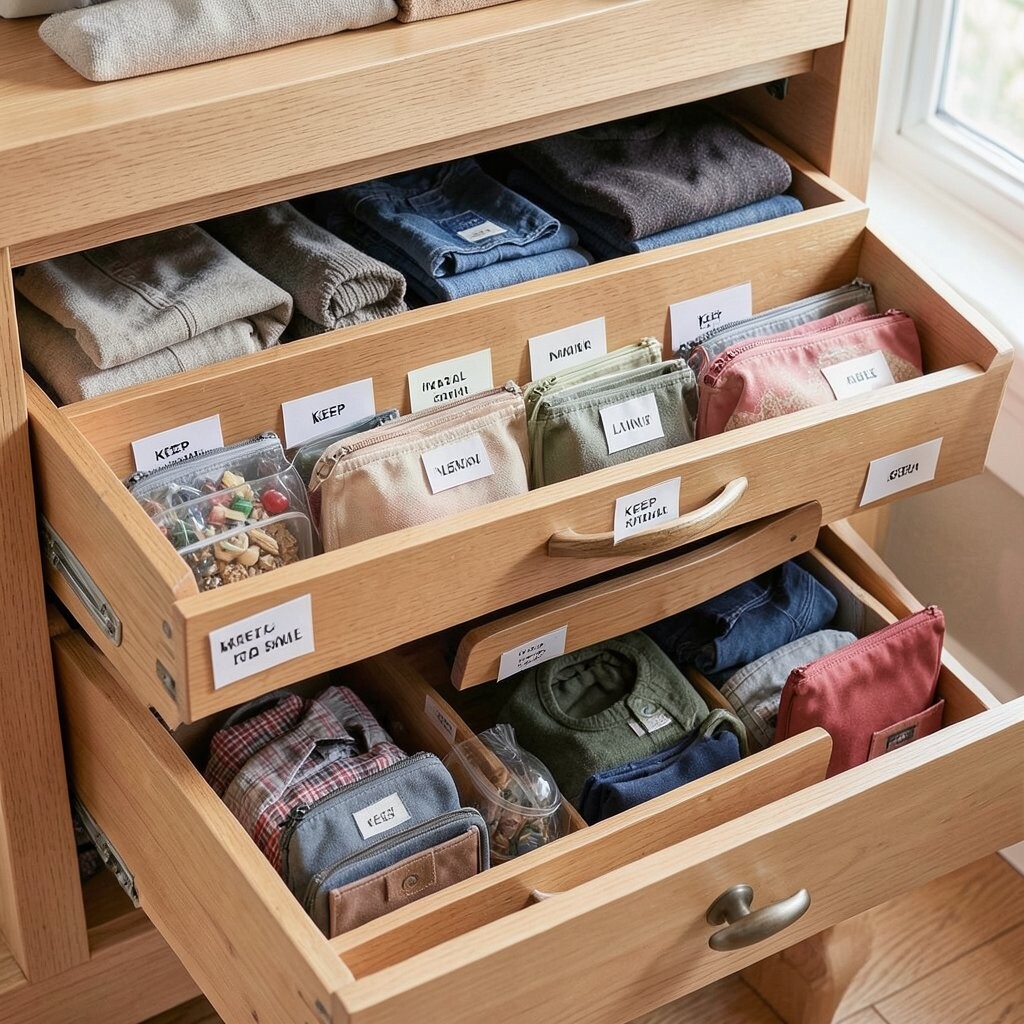
Small items can steal attention and create clutter fast. The trick is to trap them in a small container with a clear purpose.
Use small zipper pouches or mini bins for socks, undershirts, and sports accessories. Then label each container so you don’t have to open everything to find what you need.
This works because it reduces piles and stops items from mixing when you pull one drawer halfway out. Choose see-through pouches if you want quick recognition at a glance.
For trends, many people are using modular organizers that can move between drawers and closets. You can try that too by keeping a couple of pouches that fit multiple storage spots.
9. Match Drawer Layout to Your Laundry Cycle

Your organizing system should match how your clothes actually move. Think about when laundry happens and how you restock drawers afterward.
If you do laundry on weekends, store “incoming” items in one side or back area so fresh pieces don’t blend with worn ones. When it’s time to fold, move the new items into their labeled spaces in one smooth routine.
This idea feels unique because it’s less about perfection and more about keeping flow steady. It also helps you maintain order without feeling like you’re constantly cleaning up.
10. Use Color Cues for Quick Spot-Checks

Color cues turn drawer checking into a quick glance. When everything has a visual pattern, you’ll notice mistakes sooner.
Try grouping similar shades together, like dark colors on one side and bright colors on the other. Even if you don’t want rainbow vibes, two-tone grouping can still look clean and help you find what you want faster.
To personalize, choose drawer liners that match your style, such as neutral grays for a calm look or warm beige for a cozy feel. Keep in mind that liners cost a little more at first, but they also protect drawer bottoms from scuffs.
11. Leave a Small Flex Space for “In-Transition” Clothes
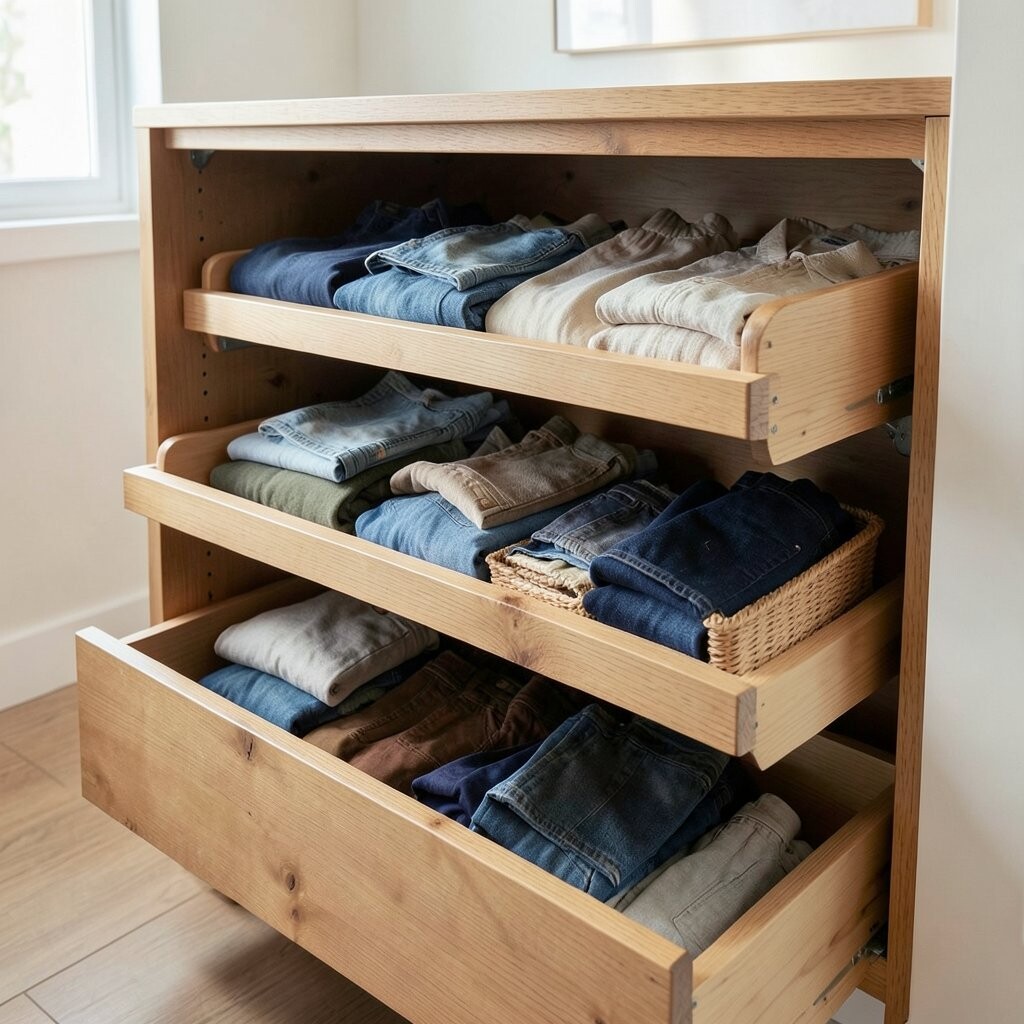
Not everything returns to its home immediately, and that’s normal. A flex space prevents temporary piles from becoming permanent.
Set aside a small corner or section for items that are worn once, waiting to be washed, or temporarily set aside after a day out. When the drawer gets busy, you can move items into flex storage instead of letting them spread.
12. Try Vertical Storage for Certain Types Like Denim and Pants

Vertical storage can make drawers feel taller and easier to scan. When pants stand neatly, you spend less time searching.
For trousers or jeans, try folding them and placing them upright with the waistband facing forward. Use a divider to keep them from tipping, and keep the vertical section for a consistent category only.
This method is unique because it combines space-saving with visibility. You can still keep socks and tees folded flat while using vertical organization just for items that benefit from it.