Every herb bed can feel like a tiny neighborhood for scents and flavors. With a few thoughtful choices, your yard can look cozy and work hard at the same time.
-
1. Teacup Border Herb Garden
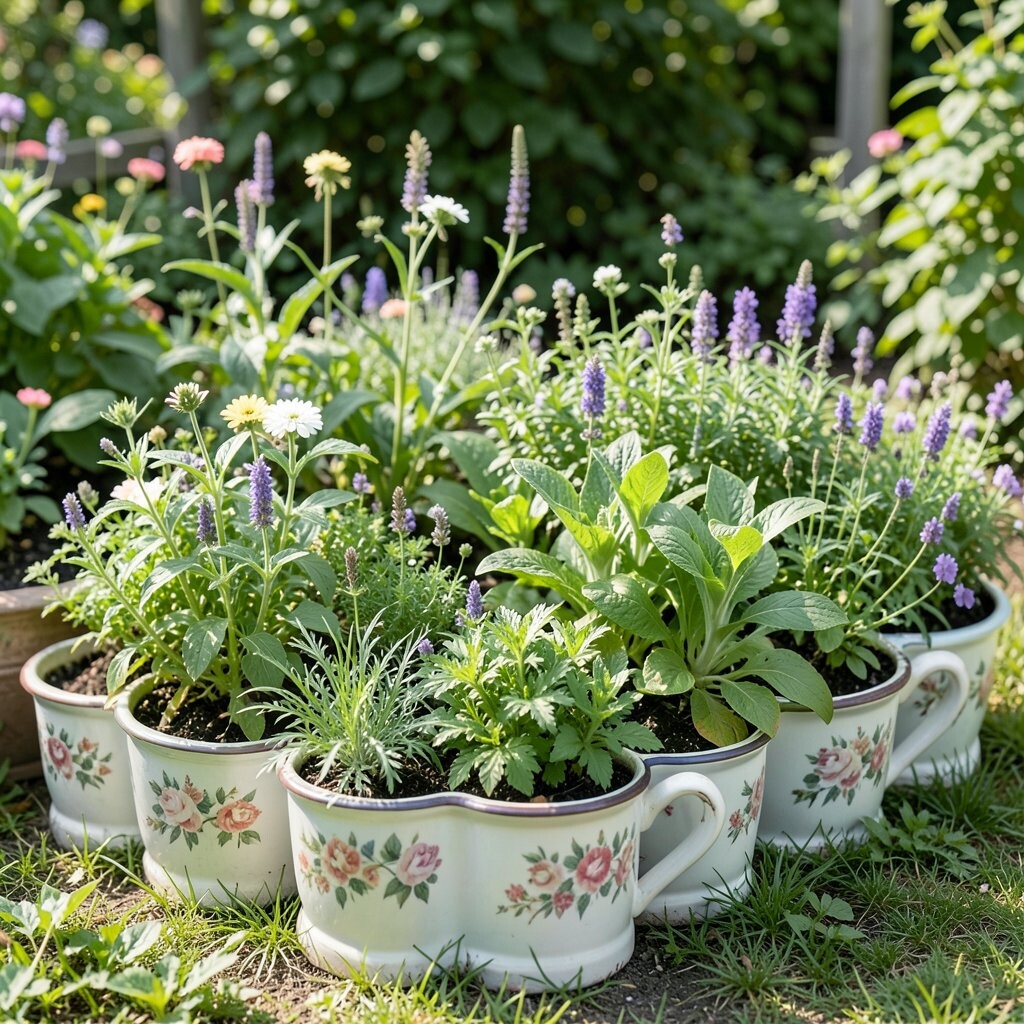
Teacup Border Herb Garden Picture a neat row of small teacups, each one holding a single herb and sitting along a walkway like friendly lanterns. The colors of the china—mint, cream, and soft blue—make even simple greens look special.
This setup is great for people who want herbs close to the kitchen, because you can harvest with almost no travel. Try slow-growing herbs like thyme or chives so the border stays tidy. For best results, make sure every cup has drainage holes and use a saucer to catch extra water.
-
2. Window-Box Herb Library

Window-Box Herb Library Think of a row of window boxes like a small library, where each planter is a “book” of scent. Fresh green leaves spill over the edges, and a warm light makes the herbs look extra alive at dusk.
This idea is perfect for cooking because herbs are always within reach when you’re planning meals. It also supports healthier plants, since good light helps many common herbs stay strong. Use mix-and-match containers in matching colors so the whole scene looks calm and intentional.
Keep costs low by reusing wooden boxes, then line them with food-safe plastic or a barrier to protect them. A current trend is using labeled plant tags with cute handwriting or small chalk boards, so you can quickly remember flavors. Personalize the “library” by placing a different herb for each type of food you love, like basil for Italian nights or cilantro for tacos.
-
3. Spiral Stacked Planters for Easy Harvests

Spiral Stacked Planters for Easy Harvests Imagine a spiral tower of planters where each level holds a different herb, like a winding staircase for flavor. As you walk around it, the textures shift from feathery leaves to thicker, sturdy growth.
This design helps you harvest without bending too much, which is a big comfort benefit. It also saves space, which is helpful if you’re working with a small yard or a patio. Choose herbs that share similar watering needs so every level stays happy.
For a uniqueness boost, paint the outer tower in a weathered style or keep it natural for a rustic vibe. Plan to use a quality potting mix, because herbs in stacked planters dry faster than ground soil. If you want a personalization twist, rotate the plant lineup by season—mint for summer, then swap in hardy options when the weather cools.
-
4. Herb Pillow Garden on an Old Bench

Herb Pillow Garden on an Old Bench Picture a faded wooden bench dressed up with soft “pillow” planters made from fabric grow bags or recycled containers. The herbs spill outward like a gentle curtain, and the whole corner feels welcoming and relaxed.
This is cozy for small spaces and it makes watering easier when you can control how much water each pouch holds. Since herbs are living plants, you’ll get a steady supply of leaves for tea, cooking, and simple kitchen garnishes. For tips, keep taller herbs toward the back and use shorter herbs up front so everything gets light.
Consider cost by searching thrift stores or yard sales for benches and then repurposing grow bags you already have. A current trend is adding soft seating near plants, so the garden becomes a place to relax, not just grow. Personalize the look with patterned cloth wraps or a hand-painted sign that says what each planter is for.
-
5. Mason Jar Herb Hanging Display

Mason Jar Herb Hanging Display Hang a line of mason jars filled with herbs so they sway slightly when the air moves. The glass shows roots and stems, and it feels playful, bright, and a little bit magical.
This setup saves floor space and keeps herbs visible, which encourages you to harvest more often. It can also be fun for kids, since they can watch plants change week by week. Use stable hooks and double-check that the jars are secure before adding soil and plants.
To manage costs, use jars you already have and keep everything consistent with one type of hook. For personalization, arrange the jars by color—lime green leaves together, then deeper greens together. If you’re following current trends, pair this with a small watering can and a simple “herb wall” label so the display looks like intentional decor.
-
6. Mini Gravel Herb Path

Mini Gravel Herb Path Imagine stepping stones bordered by a thin strip of gravel where herbs pop up in small, neat clusters. The stones catch the sun and the plants add a soft green contrast.
This idea looks clean and modern while still feeling quaint and friendly. Herbs benefit from good drainage, and the gravel can help reduce mud in rainy weather. Plant less aggressive herbs close to the stones and choose hardy ones for the gravel edge.
For tips, lay a thin weed barrier under the gravel and then cut openings for plants. Add a top dressing of compost so herbs get nutrients without turning the whole path muddy. Personalize by carving a simple design with herbs—like a small spiral of thyme at the center of the walkway.
-
7. Crate Cart Herb Garden
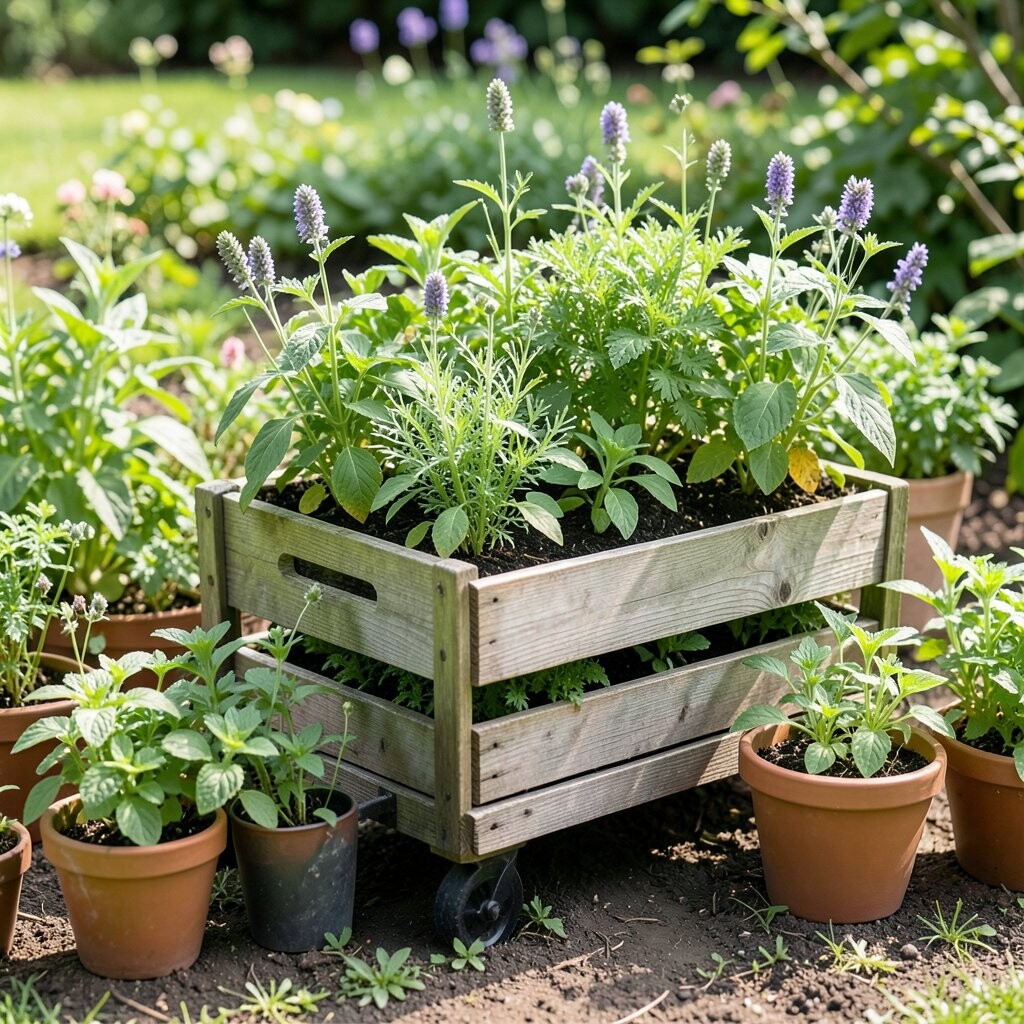
Crate Cart Herb Garden Visualize an old wooden crate cart filled with herbs, with a warm wood look that feels vintage and charming. Herbs tumble over the sides, and the cart makes you want to roll it closer to your door.
Mobility is the big advantage here, because you can move the cart to chase sunlight or shelter from harsh rain. This helps herbs stay healthier and can reduce plant stress. Keep the cart stable by using planters with matching sizes inside the crate.
Cost-wise, crates can be found cheaply, and you can often reuse wheels from a broken garden tool. A current trend is “grow and go” gardening, which means you grow in containers you can reposition. Personalize by adding a small wheel-barcode style label, like “basil aisle” or “mint corner,” for a playful feel.
-
8. Triangle Raised Bed for Tiny Corners
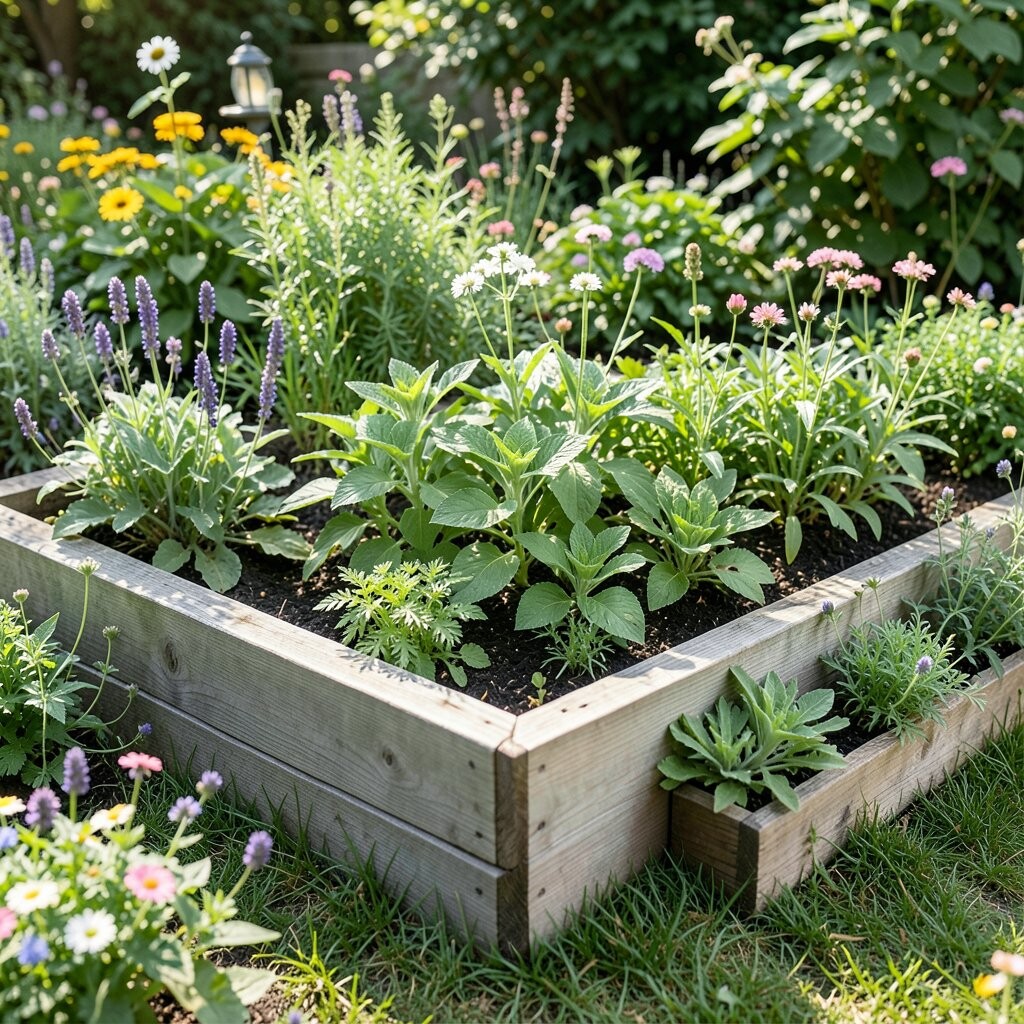
Triangle Raised Bed for Tiny Corners Picture a raised triangle bed tucked into an odd corner where nothing else seemed to fit. The shape gives the space a clever look, and the herbs fill it with a steady, lively green.
This design makes strong use of space, and it’s great for people who want an orderly garden. Herbs planted in a raised bed often grow better because soil quality is easier to manage. Choose herbs that you use often so your effort turns into daily benefits.
For tips, use a simple irrigation plan like a soaker hose along the base to keep moisture even. Cost considerations are manageable because triangular beds use less wood or lumber than large rectangles. Personalize with a border edging—like recycled bricks or metal strips—and plant a “flavor triangle,” such as basil, parsley, and oregano in the three points.
A current trend is using geometric shapes in gardens, and this triangle fits that idea while still feeling quaint. Keep the plants pruned so they stay within the triangle lines and don’t creep into pathways.
-
9. Hanging Gutter Herb Garden
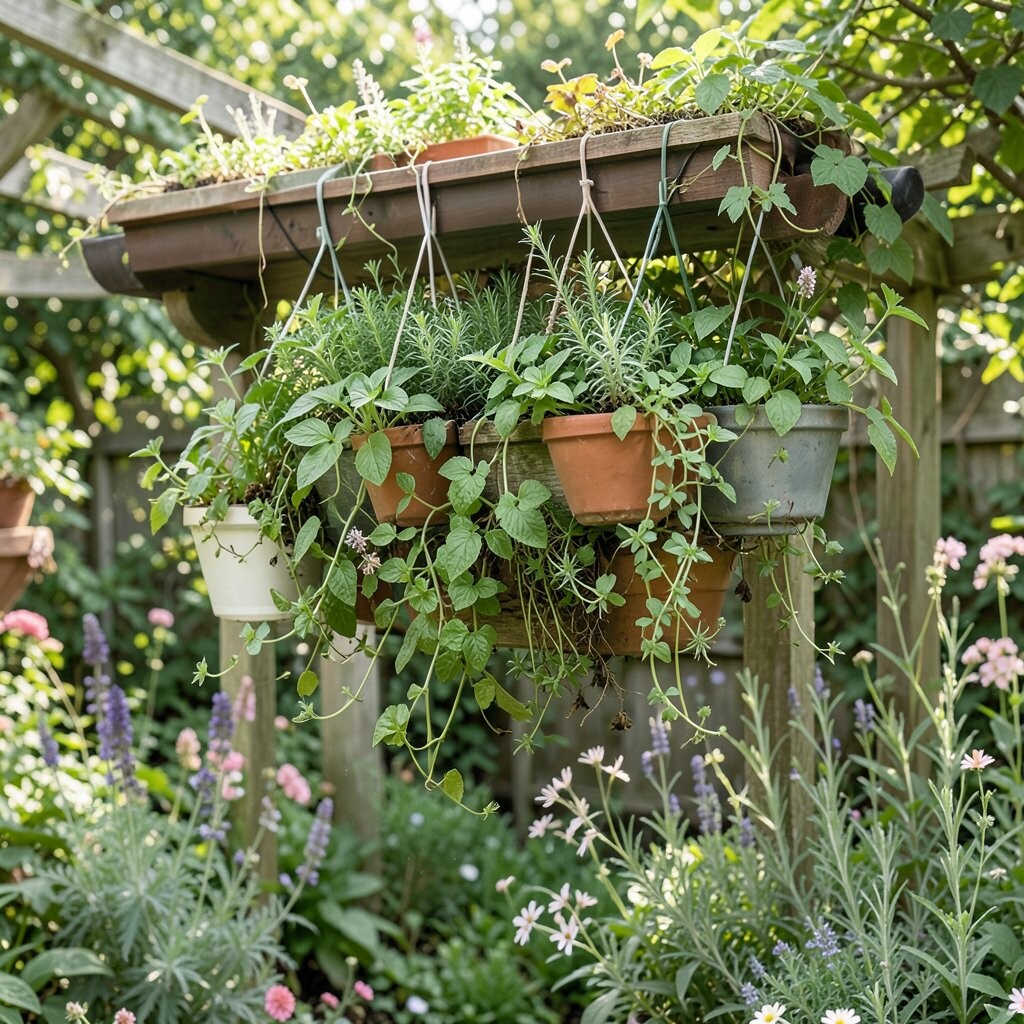
Hanging Gutter Herb Garden Imagine slim herbs growing from repurposed gutters mounted along a fence or wall. The plants spill forward, and water collects neatly through the channel.
This is a smart way to save money because gutters can be found at salvage yards. It also supports healthy growth since drainage is built in. Make sure the gutter has proper slope for water flow so roots don’t sit too wet.
Tips for best results: fill with a quality potting mix, then pack it lightly so roots can settle. Personalize with a color-coordinated fence trim, then add labels that match your kitchen categories, like “salad herbs” or “soup herbs.” If you enjoy trends, the “vertical patchwork” look is popular right now, and gutters help you nail it.
For safety and comfort, keep gutters away from heavy foot traffic areas so you don’t bump them while working.
-
10. Vintage Teapot and Spoon Herb Planters
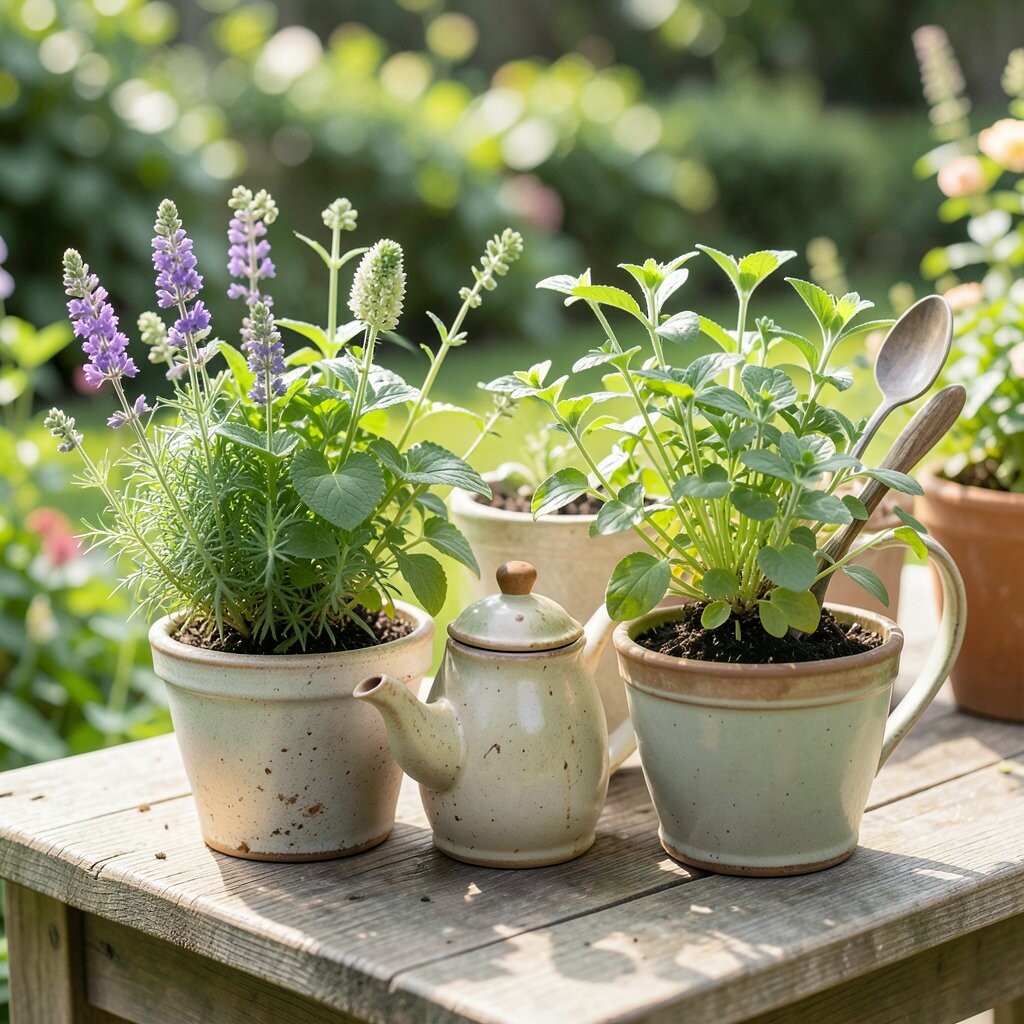
Vintage Teapot and Spoon Herb Planters Picture old teapots and mismatched spoons repurposed as tiny planters, each holding a different herb. The whimsical details make your garden feel like a story, not just a planting area.
This idea brings uniqueness instantly because no two repurposed sets look the same. Herbs can thrive in these containers as long as you handle drainage carefully. Drill holes in the bottom of teapots or use a liner, then add a saucer to protect surfaces.
For tips, choose herbs with similar sun and water needs so you don’t have to treat each “character” differently. Cost can stay low if you shop for thrift items and then focus on plants from your local nursery. Personalize by matching teapot colors to seasonal themes, like cheerful pastels for spring and deeper tones for cooler months.
-
11. Herb Spiral Around a Birdbath

Herb Spiral Around a Birdbath Imagine a birdbath in the center of a circular herb bed, with winding plantings around it. The scene feels peaceful because birds visit, and the herbs add scent every time you pass by.
This arrangement supports pollinators, which is a major benefit for the whole garden ecosystem. Herbs also help you harvest daily because you’ll pass the plants many times a day. Keep taller herbs on the outer edge so sunlight reaches the whole ring.
For tips, use a simple edging so the spiral stays neat, and water at the base instead of soaking leaves. Cost considerations depend on the birdbath, but you can often find a used one for less. Personalize by planting a “bird buffet” mix, like thyme and oregano nearby, plus a few fragrant flowers if your space allows.
A current trend is blending food plants with wildlife-friendly elements, and this layout fits that style beautifully. Just remember to avoid pesticides so the birds and beneficial insects can thrive.
-
12. Recycled Bottle Mini Herbagarden Wall

Recycled Bottle Mini Herbagarden Wall Visualize a vertical wall of small recycled bottles, each one holding a herb in bright, separate pockets. Sunlight turns the bottle sides into tiny highlights, and the whole wall looks energetic.
This is a space-saver and it can be an affordable way to start if you’re already collecting clean bottles. Herbs grown vertically can stay compact, which makes care feel manageable. Drill drainage holes and keep the bottles lined up so water doesn’t pool.
Tips: use a lightweight potting mix made for containers so roots get air. Personalize by painting the bottle caps in a color theme, like warm terracotta for a Mediterranean vibe. If you’re following trends, upcycling projects are still popular, and this gives you a practical, living version of that idea.
-
13. Stack-of-Pots Courtyard Corner
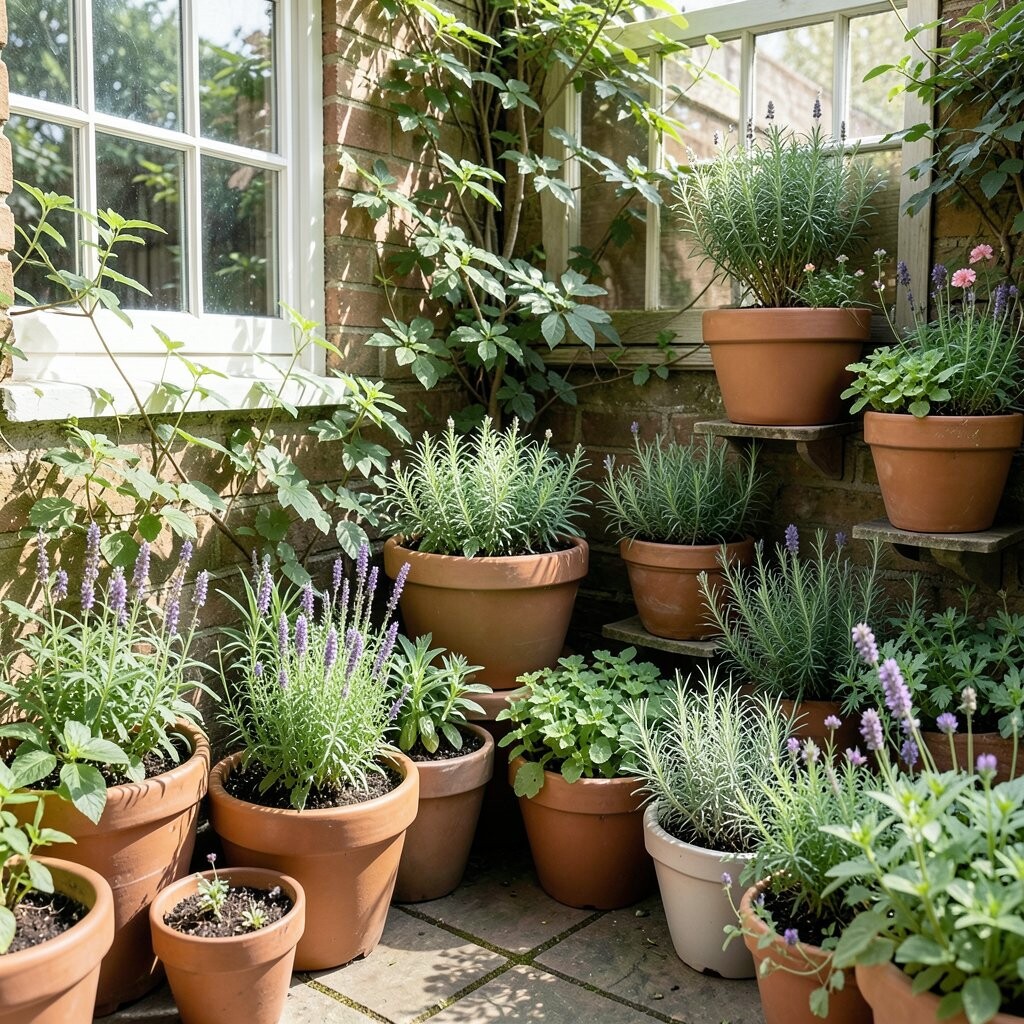
Stack-of-Pots Courtyard Corner Picture a courtyard corner where pots are stacked neatly like a small sculpture, with herbs spilling from each opening. The look is tidy but still wild enough to feel charming and organic.
This design is unique because the garden becomes part of the architecture, not just part of the ground. It also creates different “micro zones,” so you can place herbs with slightly different needs in different layers. Taller pots can hold herbs that love warmth, while smaller pots can hold gentle greens.
For tips, anchor the stack so it doesn’t wobble in wind, and avoid overloading the bottom pots with too much weight. Cost considerations vary, but you can mix sizes you already own to reduce spending. Personalize the stack by painting the rims the same color as your outdoor furniture, or by adding small plant markers with hand-drawn icons.
Many gardeners are using stacked container gardens right now because they look modern and make chores easier. Keep an eye on drying, since stacked pots can warm up quickly in strong sun.
-
14. Tea-Theme Herb Bed With Cute Label Flags

Tea-Theme Herb Bed With Cute Label Flags Imagine a herb bed arranged like a tea menu, with little label flags tucked beside each plant. The bed looks inviting, and the herbs smell amazing when you brush past them.
This is a friendly way to turn your garden into a daily ritual, since you can pick herbs for calming cups. It also helps you remember what each plant is, which leads to better harvest timing. Pick herbs that pair well with drinks, like lemon balm and mint, and keep them separated if you’re worried about spread.
For tips, write labels in simple words and include “best use” notes, like “for tea” or “for cooking.” Cost can be low because label flags can be made from scrap wood, paper tags protected with clear coating, or inexpensive outdoor stakes. Personalize the bed with a color-coded system, such as warm tones for spicy herbs and cool tones for soothing ones.
A current trend is turning herb gardens into “functional decor,” and a tea theme fits that perfectly. Add a small basket near the bed for harvesting tools, so everything feels like a set.
-
15. Raised Barrel Planter With a Wheelbarrow Style Rim
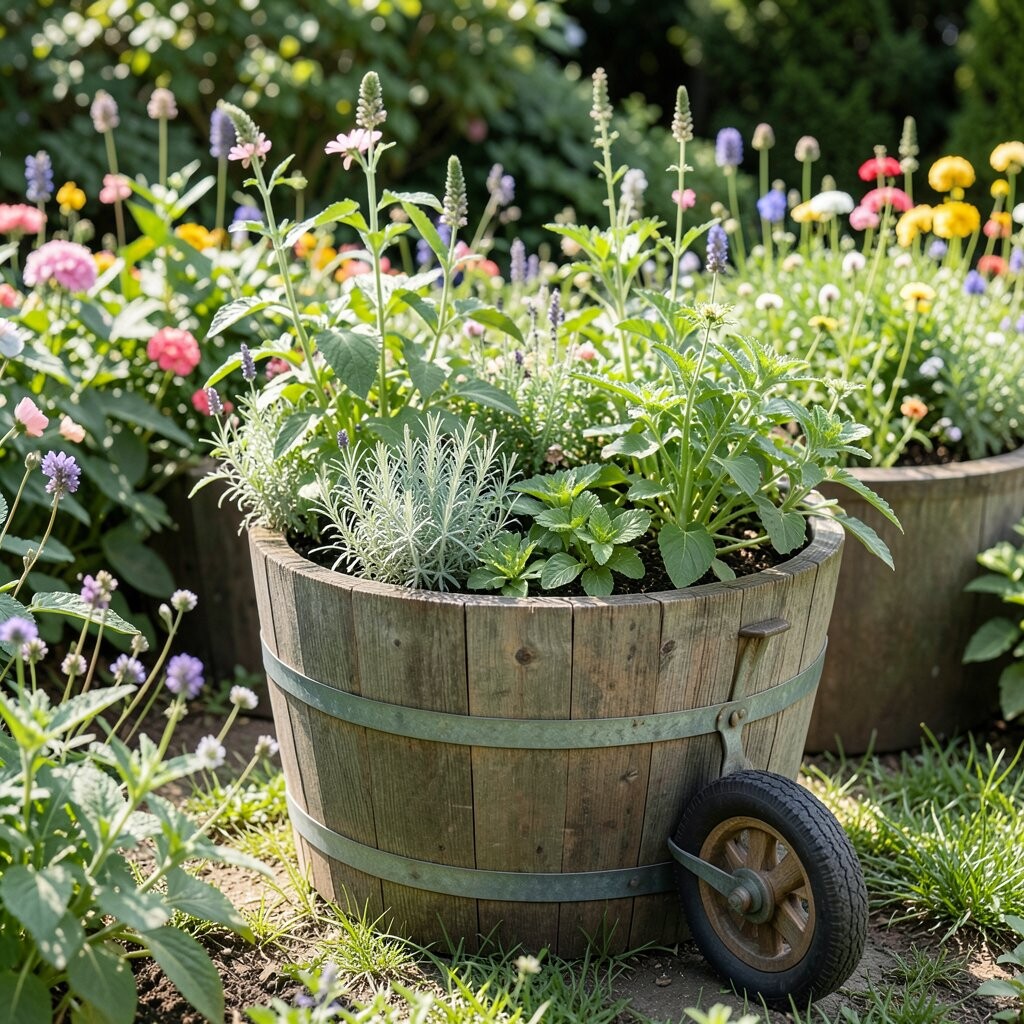
Raised Barrel Planter With a Wheelbarrow Style Rim Picture a barrel planter with a friendly rim, like a little hill you can rest your hands on while you harvest. Herbs fill the barrel in layers, and the wood and soil create a warm, rustic feel.
This idea benefits gardeners who want deep soil without digging up the ground. Barrels hold moisture better than some small containers, which can help herbs stay steady during hot spells. It’s also a great choice for those who like to keep plants in one organized area.
For tips, ensure strong drainage and consider adding a tray under it if you’re on a patio. Cost is often reasonable if you find a used barrel or repurpose one you already have. Personalize the rim with a stenciled herb chart, and plant a “rotation plan” so you swap herbs as seasons change—cool-weather favorites in spring, then heat-lovers in summer.