A calm yard starts with soft light and comfortable shade. The right canopy can make your outdoor space feel like a quiet retreat.
1. Soft Fabric Pergola Canopy for Slow Evenings

Hang sheer outdoor fabric panels from a simple pergola frame. The gentle texture filters harsh sun and keeps the air feeling lighter.
Choose fade-resistant materials made for outdoor use, and pick a color that matches your mood, like warm white or sandy beige. For practical coverage, measure the span first and plan for extra fabric overlap at the edges. In windy areas, use reinforced grommets and reliable tie-downs so the fabric drapes neatly instead of flapping.
2. Retractable Shade Sail Above a Reading Nook

A shade sail stretched overhead gives a modern look and instant comfort. You can fine-tune the angle so the sun moves away from your favorite chair.
Install the sail with corner hardware mounted into sturdy beams or masonry, then leave enough slack for a smooth, tensioned shape. Add a pull-rope system or a small manual winch so you can open and close it as the day changes. This setup is great for renters because the canopy can often be adjusted without major redesign.
To personalize, pick a soft gray, deep olive, or even a muted teal that still feels soothing. Check local hardware spacing and use rust-resistant fasteners, especially near coastal air. Budget-friendly versions start with smaller dimensions, while larger sails cost more due to fabric size and hardware.
3. Bamboo Slat Shade Canopy for Natural Calm

Bamboo slats create a calm, spa-like canopy that looks warm and handmade. Sunlight breaks into gentle stripes, which feels relaxing even on bright days.
You can mount bamboo privacy screens to posts or create a lightweight frame under existing overhead supports. Use weatherproof sealant so the material lasts through rain and sun, and keep airflow in mind so it doesn’t trap moisture. If you want extra shade, layer a light outer screen above the slats.
This idea stands out because it blends shade with texture, like a quiet piece of art overhead. Add small planter boxes along the edges so the canopy feels connected to the garden. Pair it with outdoor pillows in earth tones for an instantly peaceful color story.
Start with smaller sections if you’re new to DIY, since framing and alignment can take some practice. For cost, bamboo can range widely, so compare pre-made panels with raw materials and factor in sealing supplies. A well-sealed bamboo canopy often looks better as it weathers, instead of fading quickly.
4. Living Canopy with Climbing Vines on a Trellis

A trellis covered in climbing vines turns shade into a living, changing experience. As leaves grow, the overhead canopy becomes cooler and more private.
Pick fast-growing vines that tolerate your climate, and plant far enough back from walkways to avoid root issues. Train the vines along the trellis with soft ties, and prune gently to keep the canopy evenly spread. For best results, pair this with drip irrigation so the plants get consistent water during hot weeks.
5. Linen-Curtain Canopy for a Cozy Outdoor Lounge
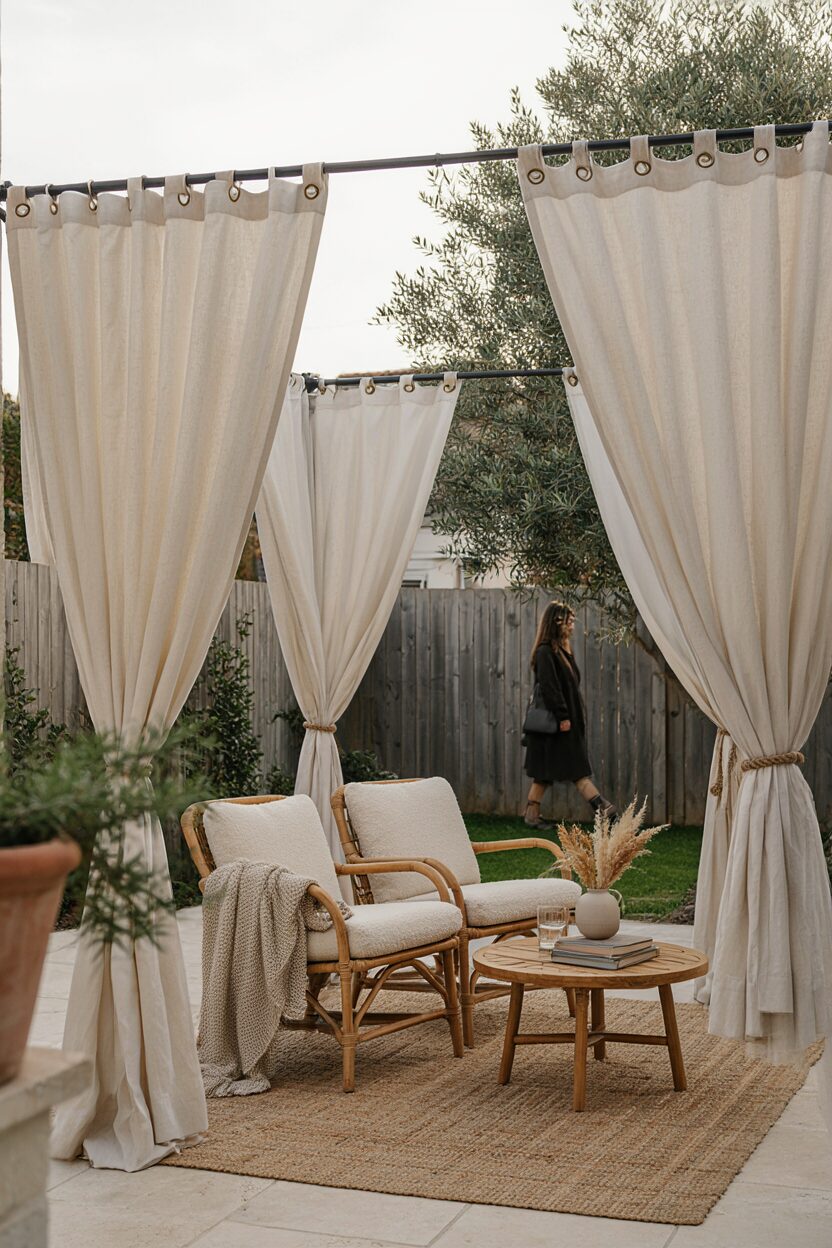
Linen curtains hanging from a sturdy overhead bar make your patio feel like a calm indoor room. The fabric softens the visual lines and adds privacy without feeling heavy.
Choose outdoor-rated linen blends or similar fabrics that handle moisture, and consider a washable option for easy upkeep. Use tiebacks so you can open the curtains when the weather is mild, and close them when the sun is strong. Add a simple valance or grommet track for a clean look that stays in place.
This canopy is unique because it creates a “moving wall” that changes with your day. Place it over a conversation area so the shade feels intentional, not random. For budget, curtain kits can be more affordable than full pergola builds, and you can start with one side before upgrading.
6. Upcycled Umbrella Canopy for Whimsical Shade Corners

An old patio umbrella can become a charming canopy when you refresh it with new fabric and thoughtful placement. It’s a fun way to create shade without starting from scratch.
Look for sturdy frames and replace the canopy with weather-resistant outdoor fabric. Add string lights around the pole base so the space glows in the evening. If you have two umbrellas, space them to create a shared shaded zone that feels cozy for two or more seating spots.
Personalize it with a color you love, like coral, sage, or classic navy, then add a matching outdoor rug. Check compatibility between umbrella size and your furniture layout so the shade lands where you need it. Costs are often lower than installing a new canopy system, especially if you already own the frame.
7. Macramé Shade Panels for Soft Boho Vibes

Macramé shade panels add a boho look and create airy cover that feels gentle. They won’t block every ray like heavy materials, but they reduce glare and add a dreamy feel.
Hang the panels from a wooden beam or a strong outdoor pergola crossbar with secure knots and extra support. Choose rope made for outdoor conditions, or treat it with a protective coating meant for sun exposure. For added comfort, pair this canopy with lighter fabrics and breathable seating.
This idea feels unique because the overhead texture catches light in a different way as clouds pass. It’s also great for layering, since you can add sheer fabric behind it for extra sun reduction. If you’re working with a tight budget, macramé can be found in smaller panels and then expanded later.
Because rope can sag over time, check tension every season and adjust as needed. Avoid placing it directly over grills or areas with lots of sparks, since fibers can be sensitive. With simple care, it can become your signature shaded spot for years.
8. Outdoor Roller Shade Canopy for Clean, Modern Lines

A roller shade canopy gives a tidy, modern look and strong sun control. When you roll it down, the patio feels calm and protected right away.
Mount the shade system to a permanent structure like a pergola beam or exterior wall, then choose fabric rated for outdoor UV exposure. Consider blackout or high-density materials for the brightest afternoons. For convenience, look for a manual crank or motorized option depending on your setup.
This can be especially helpful if your furniture sits near windows or bright sides of your home. Personalize with fabric colors that match your exterior trim, such as crisp white, charcoal, or warm taupe. Cost varies based on width and motorization, so measure carefully and compare sizes before ordering.
9. Lattice and Curtain Hybrid for Pretty Privacy

A lattice canopy topped with curtains offers both shade and a little privacy. It looks decorative from the street and feels comfortable up close.
Build a simple frame with lattice panels, then hang lightweight outdoor curtains from a rod under the top section. Use a color that makes you feel relaxed, like soft cream or muted green. Add tiebacks at the sides so you can open the curtains when you want airflow.
This is unique because it gives structure underneath while keeping the top flexible. For practical tips, ensure the curtains are long enough to cover seated areas but not so long they drag on the ground. Use mildew-resistant fabric and plan to rinse or wash it during high-humidity seasons.
Start with one side over a bench or dining area, then expand once you see how much shade you want. If you’re watching costs, pre-cut lattice sheets and simple curtain rods can keep the project manageable. A well-planned hybrid canopy can also help reduce sun glare on televisions nearby.
10. Sun-Blocking Sail Canopy for a Deck Overhead

For a deck, a properly tensioned shade sail can feel like a protective roof. It creates angled coverage that keeps your outdoor zone cooler without covering everything.
Anchor the sail corners to posts or sturdy wall mounts, and adjust the tension so fabric stays smooth. Use a durable, UV-rated sail fabric and choose a size that covers the furniture layout, not just the deck area. If you live somewhere windy, keep the sail pattern taught but not overly stretched.
11. Party-Ready Canopy with Festoon Lights and Soft Shade

Add a canopy that does double duty: shade during the day and cozy lights at night. Stringing warm lights around a lightweight canopy turns your space into an inviting evening hangout.
Use an outdoor fabric canopy, pop-up structure, or small pergola with lightweight panels, then add battery-powered or weatherproof plugs for safety. Pick bulbs in a warm tone so the shade area feels gentle instead of harsh. Place lighting at both the perimeter and slightly lower heights to create a layered glow.
This idea stands out because the lights make the canopy feel like a destination, not just shade. For personalization, choose a theme color in the fabric or add lanterns in matching tones. Costs can stay reasonable by starting with a smaller canopy section and upgrading lights later.
12. Clear Weather Shield Canopy for Year-Round Comfort

If you want shade but also protection from rain, use a clear canopy system. It can help block wind and keep outdoor seating usable even when weather changes quickly.
Look for outdoor-rated clear panels, retractable options, or clear vinyl sheeting that can roll aside. Seal edges carefully and use hardware that resists rust so the canopy stays tidy. Add side curtains in the heat of summer if you want extra privacy and reduced glare.
This canopy is unique because it balances openness with shelter, so your yard still feels bright and airy. It’s helpful for colder seasons because you can enjoy the space longer. When budgeting, note that clear systems can be pricier due to materials and installation, but they often replace multiple smaller weather solutions.
To personalize, tint panels lightly if you prefer a softer look. Keep panels clean with a gentle outdoor cleaner so they stay transparent and don’t look cloudy. With the right fit, you can enjoy the same seating spot in many seasons.
13. Olive-Tree Style Canopy Using Container Trees and Frames

Create a relaxing green canopy by combining container trees with a simple overhead frame. The shade feels natural, and the view overhead becomes part of the garden.
Choose sturdy patio trees or fast-growing shrubs that handle containers, then place them around an overhead arch or frame. Add a light fabric layer overhead if you need immediate shade while plants grow. Water consistently and use quality potting mix so roots stay healthy in warm weather.
This idea stands out because it blends soft shade with a living landscape, not just fabric or wood. For practical tips, select containers with drainage holes and use saucers if you’re on a deck. Rotate the trees occasionally so they grow evenly and the canopy stays balanced.
Costs can be moderate if you start with smaller plants, and then upgrade container size over time. Look for local nursery recommendations for your zone so the plants thrive. As the canopy thickens, you’ll notice cooler air under the overhead frame during peak sun.
14. Stone-Base Pergola Shade with Outdoor Fabric Valances

A pergola supported by sturdy posts and anchored near a stone feature feels grounded and calm. Add fabric valances beneath the beams for gentle shade and a softer look.
Choose outdoor fabrics that resist sun fade, then pin or clip the valances so you can remove them for washing. Plan for airflow by leaving spaces between valances, which helps the area feel breathable. Match the valance color to your outdoor pillows or the tones of your paving stones for a cohesive design.
This canopy is unique because the materials create a layered style: durable structure below and calming softness above. It works especially well for dining spaces where you want shade while keeping the view open. Consider installation costs if you’re not building it yourself, but a solid pergola often boosts home curb appeal.
15. Lightweight Canopy with Cooling Mist Features

Turn shade into cool comfort by pairing a canopy with a gentle mist feature. The mist and shade work together so outdoor time feels easier in hot months.
Place a shade canopy over seating or a small patio table, then install a low-pressure mist system with outdoor-rated lines. Use timers or automatic controls if available, and keep nozzles positioned so you get a light breeze effect, not soaking water. Always follow safety instructions and avoid electrical outlets near mist where water could reach.
This approach stands out because it focuses on comfort, not just coverage. For practical tips, test the mist pattern before using it regularly and adjust as needed. Costs can vary, but you can start with a smaller canopy area and expand later as you refine the setup.
16. Driftwood-Beam Canopy for Coastal-Looking Peace
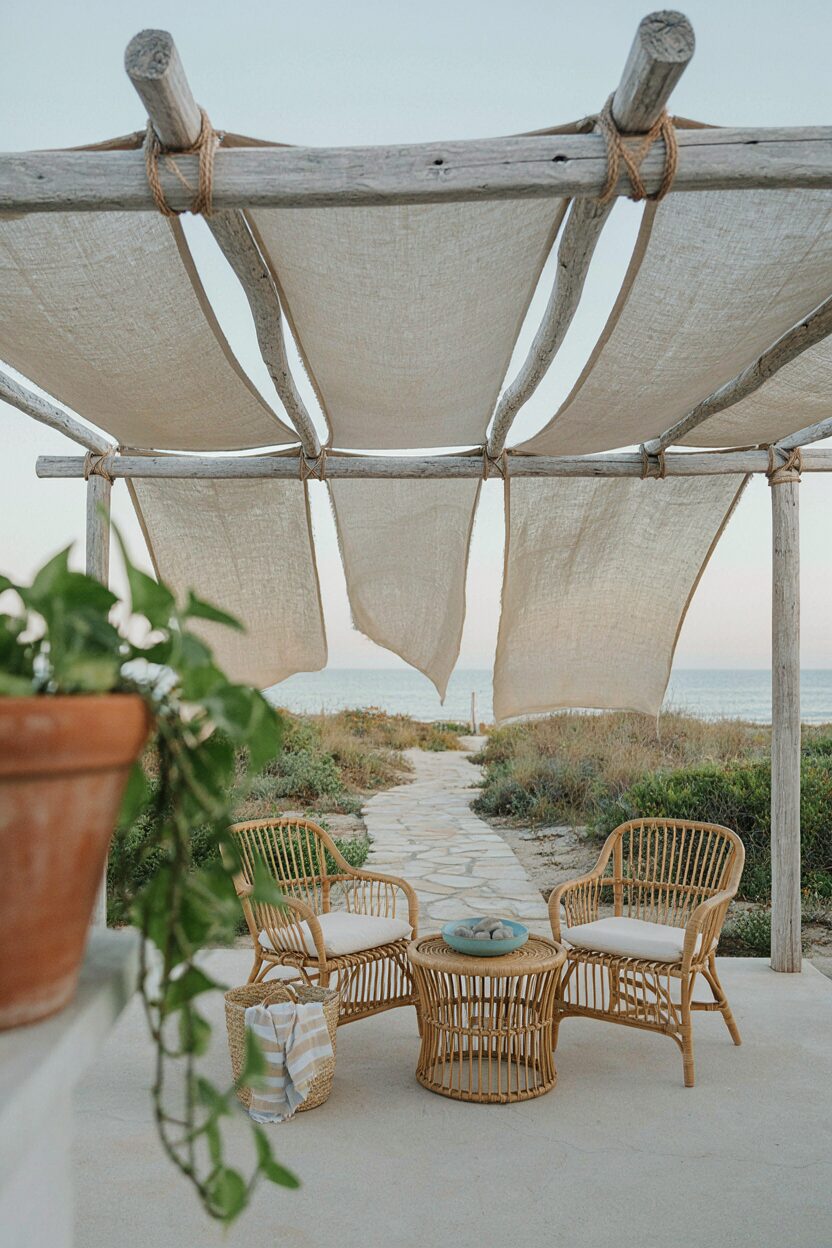
A driftwood-beam style canopy gives a breezy, coastal vibe that feels instantly relaxing. Even if you’re not near the ocean, the look brings in that airy calm.
Use weather-resistant wood or faux driftwood beams mounted onto posts, then hang a light shade fabric or breathable curtain. Choose colors like seafoam, light sand, or soft white to keep the overhead space soothing. Add natural textures like rattan chairs or woven baskets to complete the relaxed theme.
This canopy is unique because the visual story feels cohesive from top to bottom. It’s great for patios that already have coastal touches, like blue accents or stone pathways. For budgeting, consider smaller beam spans first, since larger structures need more materials and stronger anchors.
17. Hammock Canopy Frame for Gentle Daydreaming

Place a hammock under a canopy frame to create a true rest zone. The combination of overhead shade and comfortable lounging turns outdoor time into real downtime.
Use a pergola-like frame or freestanding posts, then cover the top with fabric panels or a sail sized for hammock length. Ensure the canopy doesn’t block airflow, because breathability helps the whole spot feel cooler. Add a side table and a small floor lamp or lantern for a calm nighttime setup.
This idea stands out because it centers the space around rest, not just decoration. For practical tips, check hammock weight limits and make sure anchors can handle dynamic movement. Personalize by choosing a hammock color that matches your outdoor cushions and adding a light throw for evenings.
Costs can be moderate, especially if you reuse posts or an existing frame. If you’re renting, look for freestanding hammock stands that don’t require drilling. With careful measuring, the canopy can create a shaded bubble that feels private.
18. Patio Awning Canopy for Seasonal Sun Control

An awning canopy is a practical choice when you want reliable shade without extra clutter. It’s also easy to retract, so you can adjust shade as the sun shifts.
Mount it to a wall or stable structure and choose fabric that’s built for UV and mildew resistance. Use it over a seating area or near an outdoor kitchen to reduce heat buildup. For personalization, pick a color that complements your home siding and choose patterns that look calm, like subtle stripes or solid neutral tones.
This canopy is unique because it offers predictable coverage with minimal day-to-day effort. Consider whether you want manual control or a motor, based on how often you expect to adjust it. Budget-wise, awnings range from affordable to premium, but they often deliver long-term convenience.
19. Double-Layer Canopy with Sheer Over Shade for Even Comfort

A double-layer canopy uses a top shade layer plus a sheer layer underneath. The result is a soft glow, less glare, and a comfortable feel even during peak sunlight.
Start with a UV-rated shade fabric or sail overhead, then add sheer curtains or mesh below for a dreamy effect. Keep the sheer slightly open at the edges so air can circulate. This setup is unique because it combines protection with softness, so your yard feels both cool and inviting.
For practical tips, measure carefully so the layers don’t tangle, and use strong clips or hooks for secure attachment. Add optional tiebacks so you can pull the sheer aside when you want clearer light. When thinking about costs, note that layering can increase material needs, but it can also make one canopy system work across many seasons.