
A cabin grill area should feel like part of the landscape. Natural wood accents make it warmer, cozier, and easier to enjoy year-round.
1. Stone and Cedar Grill Nook With Bench Seating

Picture a grill tucked beside rough fieldstone and softened with cedar rails. Guests can sit nearby and still feel sheltered from wind and drizzle.
Stone brings a grounded, rugged look that contrasts nicely with clean wood tones. Cedar naturally resists rot, so it holds up better around outdoor cooking zones. For practical comfort, add a simple bench with removable cushions so you can take them inside during wet weeks.
2. Weathered Timber Pergola Over the Cooking Zone

A low pergola made from weathered timber can frame your grill like a cabin stage. The natural grain hides small imperfections and makes the space look settled in.
Shade is one of the biggest everyday benefits, especially on bright summer afternoons. A simple pergola also gives you a place for string lights, planters, or an outdoor fan without drilling into the cabin siding. Keep the wood finish semi-transparent so it blends over time instead of looking too new.
If you want to stretch your budget, use fewer beams and focus on a strong front frame. Pair the structure with matching wood slat shelving for grilling tools, which saves space on countertops and keeps everything within reach.
3. Log-Style Countertop With Cast-Iron Hooks and Shelving

A thick log-style countertop instantly makes a grill area feel handcrafted. The rounded edges look friendly, and the warm tones invite people to gather.
Built-in hooks for spatulas, tongs, and mitts keep daily prep faster. Adding a small shelf above the grill also protects frequently used items from rain splash. This setup is unique because it works like a mini outdoor kitchen, yet it stays rustic without needing fancy materials.
For cost control, consider using pressure-treated lumber for the structure and a wood wrap or veneer for the “log” look. Use heat-resistant surfaces where the grill sits, such as stone veneer or rated metal panels. Regularly tighten screws and check for seasoning cracks during the first season.
To personalize, stain the countertop slightly darker than the surrounding fence so the grill area becomes a natural focal point. You can also add a small wooden nameplate, like your cabin’s initials, for a memorable touch.
4. Rustic Wood Slat Accent Wall Behind the Grill

A wood slat accent wall gives your grill a clear backdrop and helps define the cooking zone. It also adds privacy from neighbors, paths, or driveways.
Use angled or vertical slats to improve airflow and reduce moisture buildup behind the grill. This makes the area feel intentional without blocking all light. For a practical upgrade, leave a small service gap behind the wall so you can access hoses or connections quickly.
5. Pallet-Built Planter Boxes Along the Perimeter

Wood planter boxes help soften the look of a grill and turn it into a garden gathering spot. Pallets add texture fast and can make the space feel collected rather than purchased.
Plants offer natural color and can reduce the visual harshness of stainless steel grills. Choose herbs like rosemary, thyme, and basil so you can snip them while cooking. When you build or buy boxes, line them with a safe barrier and use proper drainage holes so roots don’t stay soggy.
To keep the project simple, build three planter widths and repeat the layout for a cohesive rhythm. If pallets feel risky, use pre-made reclaimed-style planters instead, which costs more but saves time and safety checks.
6. Reclaimed Wood Fence Detail as a Windbreak

A reclaimed wood fence section placed near the grill can act like a windbreak. The mismatched boards create a rich, lived-in texture that looks great in cabin settings.
This is unique because it solves a real cooking problem while also doubling as decor. Less wind can mean steadier flames and more even cooking, especially with gas grills. For practical tips, leave enough spacing so heat doesn’t build up against the wood, and consider adding a noncombustible strip behind the grill line.
Reclaimed materials can vary, so plan for extra sanding and selective replacement of boards that are too worn. Stain the fence lightly to unify the tone, or keep it natural for a fully rustic look. If you’re working on a budget, focus on using reclaimed wood only where it matters most.
7. Natural Wood Lattice Privacy With Hanging Herbs

Lattice panels bring light-and-shadow patterns that feel airy even in a covered area. When you hang herbs on them, the grill zone smells amazing and looks purposeful.
Hiding views without making the space feel closed-in is a big benefit. You can also attach hooks for lanterns or small baskets, which keeps the cooking station tidy. Use outdoor-safe planters and ensure any watering doesn’t drip onto hot surfaces or the grill cover.
For personalization, choose a repeating set of herb colors and sizes so the wall looks curated. A simple trick is to label your herb jars with small wood tags, so every guest knows what to pick. This idea tends to be budget-friendly because lattice and planters are easy to source.
8. Charcoal Table With Live-Edge Wood Surround

A live-edge wood surround frames the grill and makes every edge look one-of-a-kind. The natural curve feels organic and brings the outdoors right into the cooking zone.
Live-edge pieces are unique because they show the tree’s story through grain, knots, and color variation. This can make a simple grill area feel like a centerpiece. For practical use, make sure the wood is sealed for outdoor exposure and that the grill sits on heat-safe framing.
9. Cedar and Steel Combination for a Clean Rustic Edge

Cedar panels paired with matte steel accents can look modern while still feeling cabin-cozy. The warm wood softens the industrial feel, and the steel gives you durability near the grill.
This combination helps with maintenance because steel won’t absorb grease as easily as porous wood. It also fits current trends toward mixed materials, where rustic warmth meets sleek lines. For practical tips, use stainless or powder-coated elements for shelves and tool storage, and keep a drip mat under the prep area.
To personalize, choose steel finishes that match your grill brand and add cedar trim only where it’s visible. That way you control cost while still getting the natural wood look where it matters most.
If you’re on a tighter budget, start with cedar side panels and build the steel shelving later after you’ve tested your cooking routine.
10. Stone and Wood Firewood Storage Bench Under the Grill
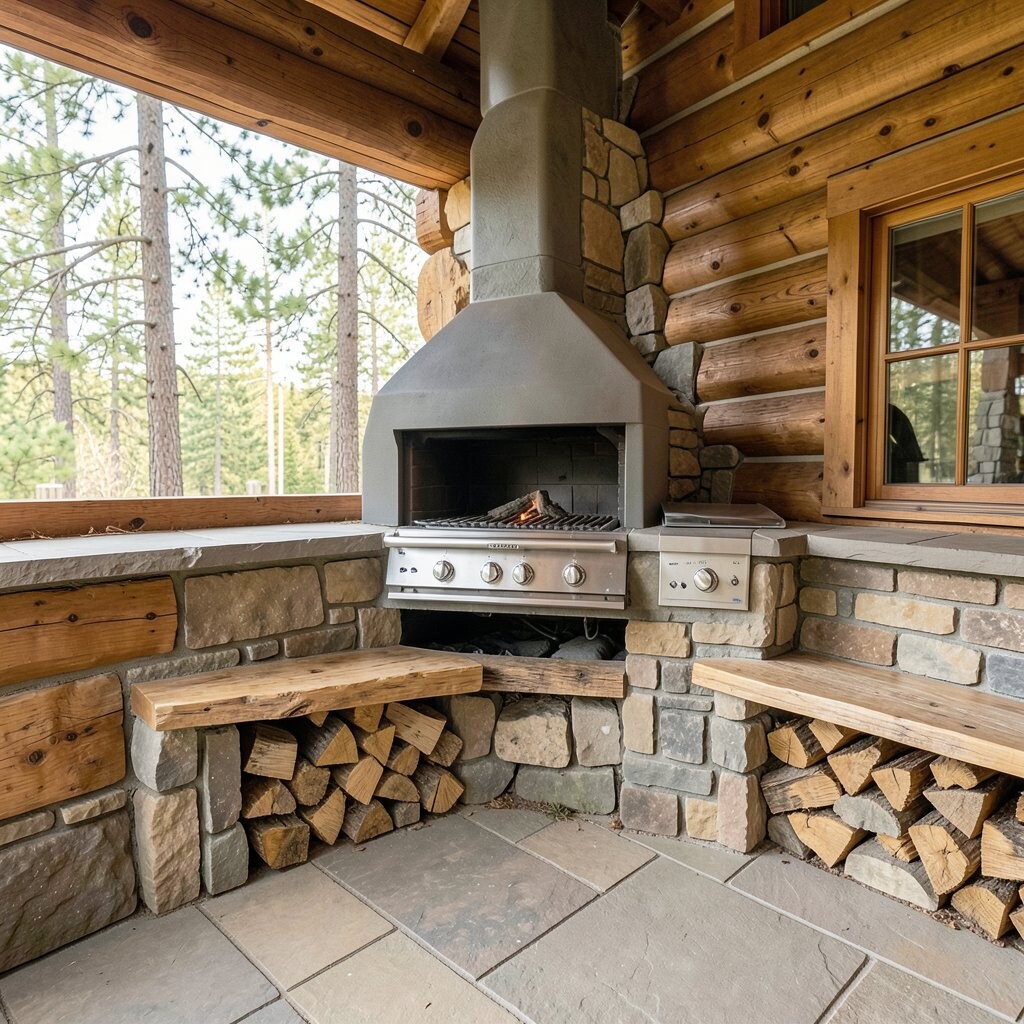
A storage bench built with stone and wood gives your grill area a practical home base. It keeps firewood handy and reduces clutter around seating.
Besides being functional, the stone base adds weight and visual stability, which makes the space feel well-planned. Wood slats on the front soften the look and match other natural accents. For best results, elevate the wood compartment slightly and allow air circulation so logs stay drier.
11. Bamboo-Backed Grill Shelter With Natural Wood Trim
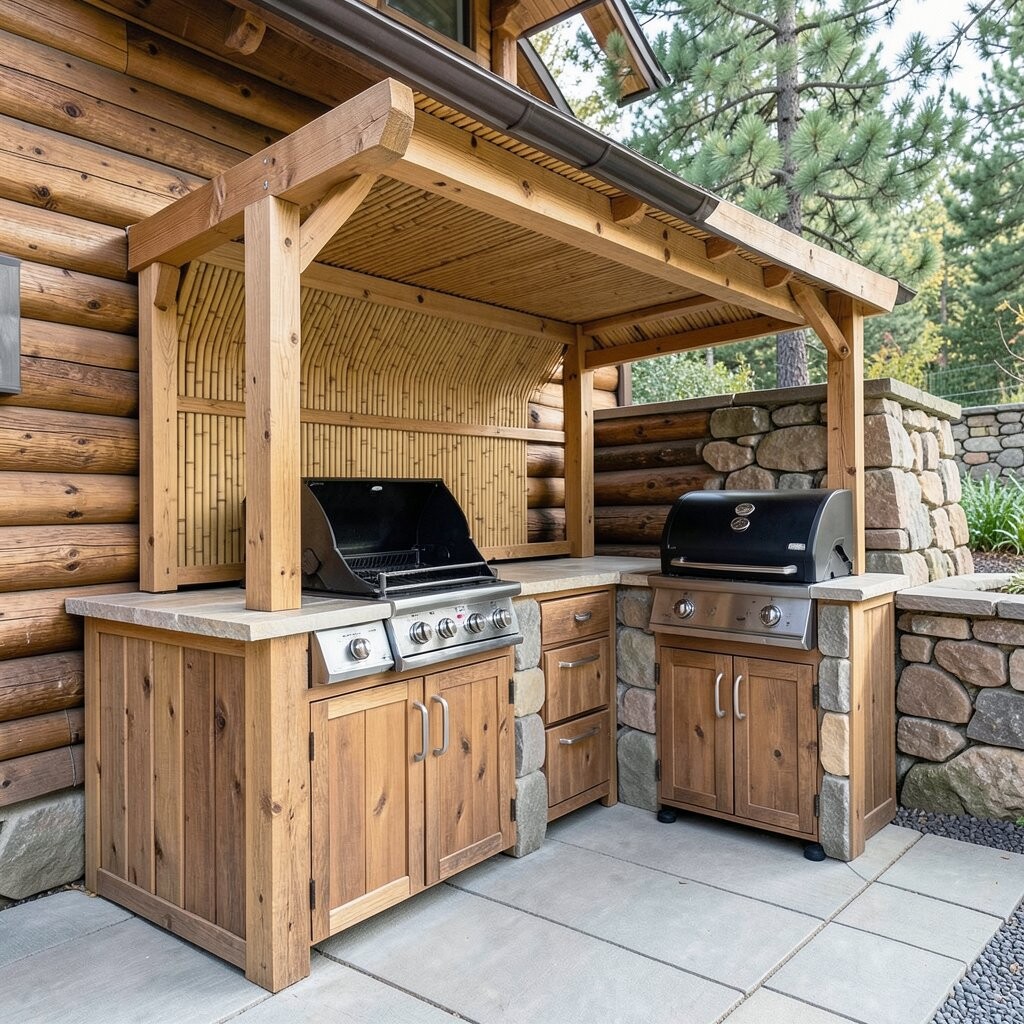
Bamboo can add a fresh, textured background when paired with natural wood trim. It creates a lightweight shelter feel without the heavy look of full walls.
This setup is unique because bamboo brings a subtle vertical rhythm that complements cedar, oak, or pine. The shade benefit is real, and it can also reduce wind at cooking height. For practical safety, keep bamboo and trim at safe distances from high heat and use rated barriers where needed.
To personalize, choose matching natural wood trim colors and add a small shelf for spices. Bamboo tends to be lighter to install, which can lower labor costs. Over time, bamboo can weather nicely, but plan periodic checks and replace sections that fade or loosen.
12. Hand-Carved Wooden Name Sign and Tool Rail Feature

A carved wooden sign above the grill area turns a simple setup into a memorable cabin detail. It also helps guests remember where everything goes, which is surprisingly useful during parties.
Pair the sign with a tool rail made from sturdy wood, so tongs, skewers, and brushes stay organized. This creates a consistent look and reduces the time spent searching for items mid-cook. For cost considerations, carving can be simple with a stencil and outdoor-grade varnish, or you can buy a pre-made rustic sign to save time.
If you like a more personal touch, use a wood species that matches your cabin trim and stain it to the same undertone. A small shelf beneath the rail can hold a bin for extra charcoal or grill-safe liners, keeping supplies out of sight but within reach.
13. Raised Gravel Pad With Cedar Steps and Grill Landing
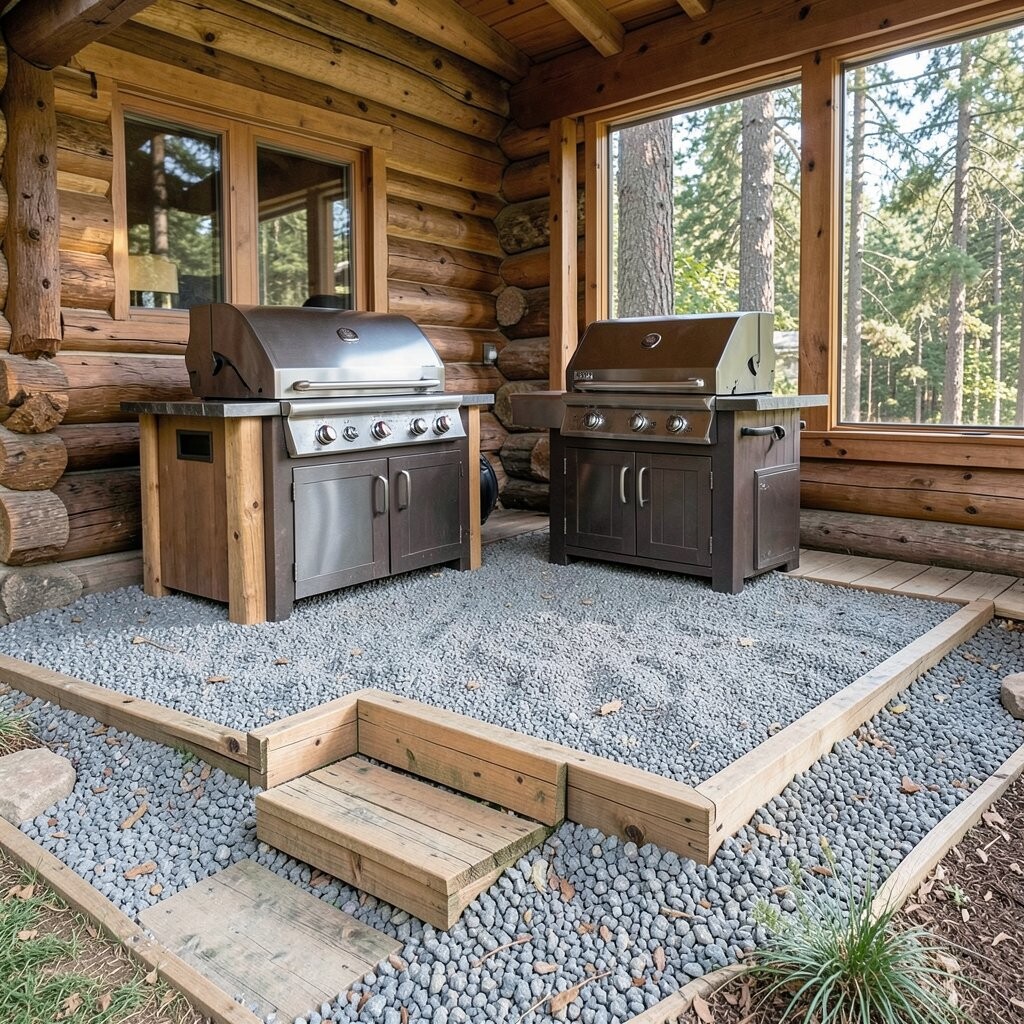
A raised gravel pad keeps the grill area clean and helps water drain away faster. Cedar steps add warmth and make the entry into the cooking zone feel welcoming.
This idea is unique because it changes the whole “feel” of the spot, making it look like a campsite kitchen without sacrificing comfort. Natural wood steps also prevent muddy footing during rainy seasons. For practical tips, level the base, add landscape fabric, and use edging to keep gravel from spreading onto grass.
To stay within budget, start with a smaller landing pad around the grill and expand later if you host more often. Choose cedar tones that match your existing fence or deck for a cohesive look. Add a simple outdoor rug or grill mat in the prep area, and you’ll get comfort without turning the space into a maintenance chore.