
Rustic kitchens feel warm, grounded, and wonderfully lived-in. With a few smart choices, you can make that cozy style work in your own home.
1. Reclaimed Wood Cabinetry

Reclaimed wood brings history into your kitchen. Every board has its own knots, grain, and color shifts that make the whole room feel special.
Pair reclaimed cabinets with a simple hardware finish like black iron or aged brass. You can keep the look cohesive by choosing one wood tone for the uppers and another for the island. To stay practical, seal the wood properly and wipe spills quickly to prevent staining.
2. Stone Countertops With a Soft Edge
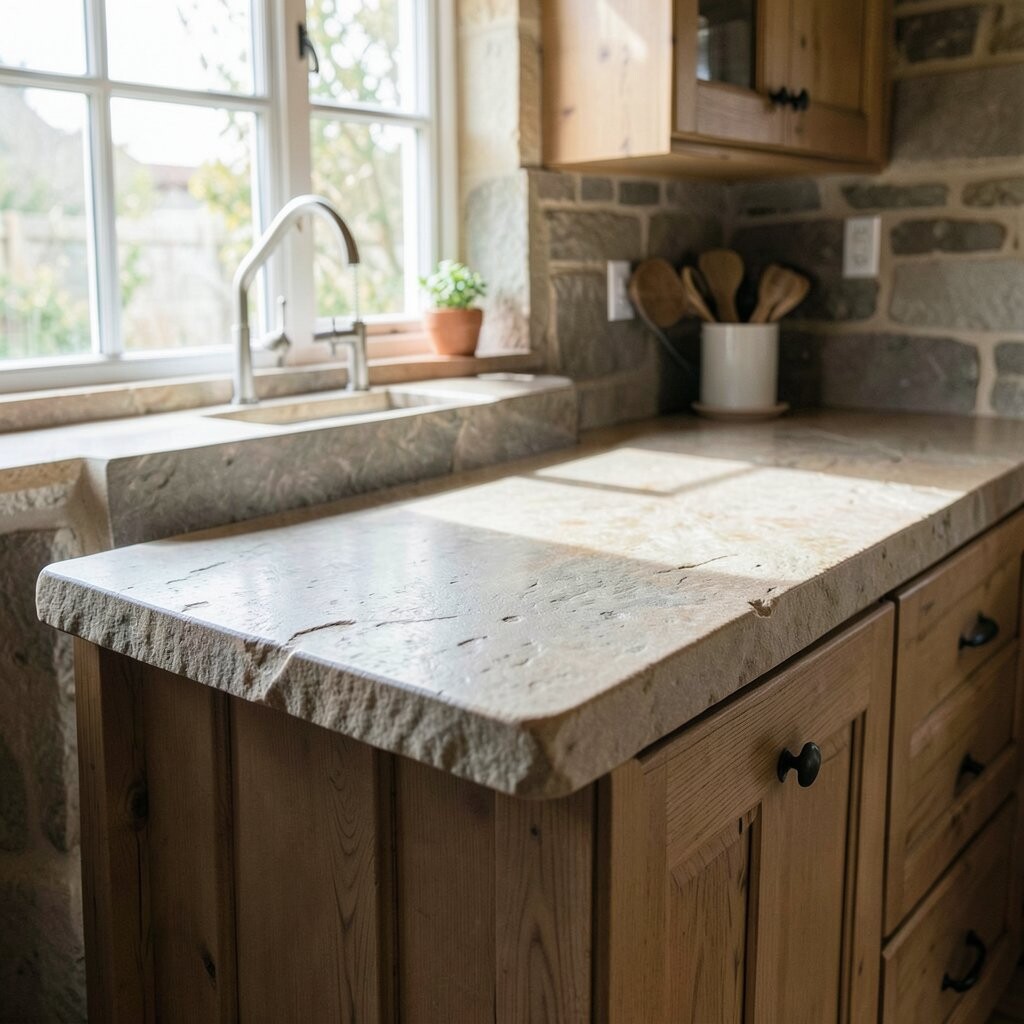
Stone countertops make rustic kitchens feel solid and welcoming. Think of warm travertine or earthy slate that looks great even with everyday mess.
Choose a honed finish to reduce glare and give the surface a gentle, natural texture. If you want a lighter look, go for limestone or soapstone, which can hold patina beautifully over time.
For a budget-friendly path, consider stone-look quartz with a matte finish. Keep maintenance easy by using a sealer on porous stones and using coasters for hot pans and wet glasses.
3. Vintage Lighting That Sets the Mood
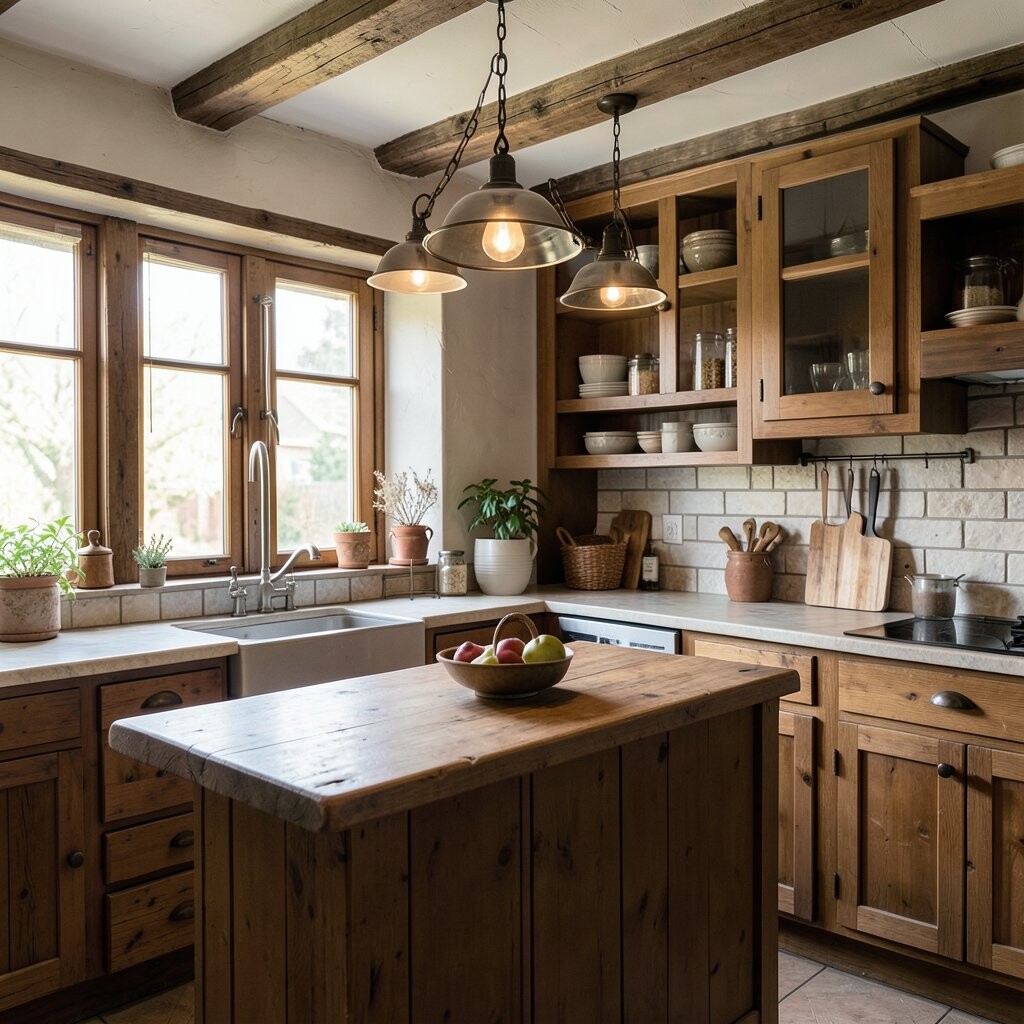
Rustic kitchens glow when you add vintage-style lighting. A pendant over the sink or island can instantly change the way the room feels.
Look for fixtures with distressed metal, frosted glass, or exposed bulbs in a cage style. Match the tones to your cabinet hardware so everything feels planned, not random.
Warm 2700K bulbs help the wood look richer and make evening cooking feel cozy. If ceiling height is limited, try a flush mount with a rustic finish to keep sight lines open.
For cost control, search for “used” or “open box” fixtures and refinish them if needed. Add a dimmer switch to make the light feel just right for breakfast and dinner.
4. Open Shelving With Baskets and Ceramics

Open shelving turns everyday dishes into part of the decor. When you style it well, you get storage and charm in one simple move.
Use sturdy shelves and add woven baskets for towels, chargers, and pantry extras. Keep the shelf styling balanced with a mix of ceramics, glass jars, and a few taller items so it never looks cluttered.
5. Hand-Finished Hardware and Knobs

Small details matter, and rustic kitchens love hardware with personality. Something as simple as a hammered knob can make plain cabinets feel custom.
Choose one metal family, like oil-rubbed bronze or antique brass, and stick with it across drawers and doors. If you like contrast, you can mix matte black pulls with warm wood, but keep the shapes consistent.
Measure carefully before buying so you match hole spacing. If budget is tight, upgrade only the most used areas first, like drawer pulls near the sink and stove.
6. A Big Farmhouse Sink With Matte Finishes

A farmhouse sink adds instant rustic character. It also feels practical because the apron front gives you more room for dishes.
Pick a matte finish like matte white, linen, or brushed nickel to keep it from looking too shiny. Pair it with a sturdy faucet that has a pull-down sprayer or high arc for comfortable rinsing.
Before installing, check cabinet depth and plumbing compatibility, especially in older homes. For a cost-smart approach, consider a sink in a budget-friendly material like fireclay with the finish you want most.
7. Textured Backsplashes in Warm Tones
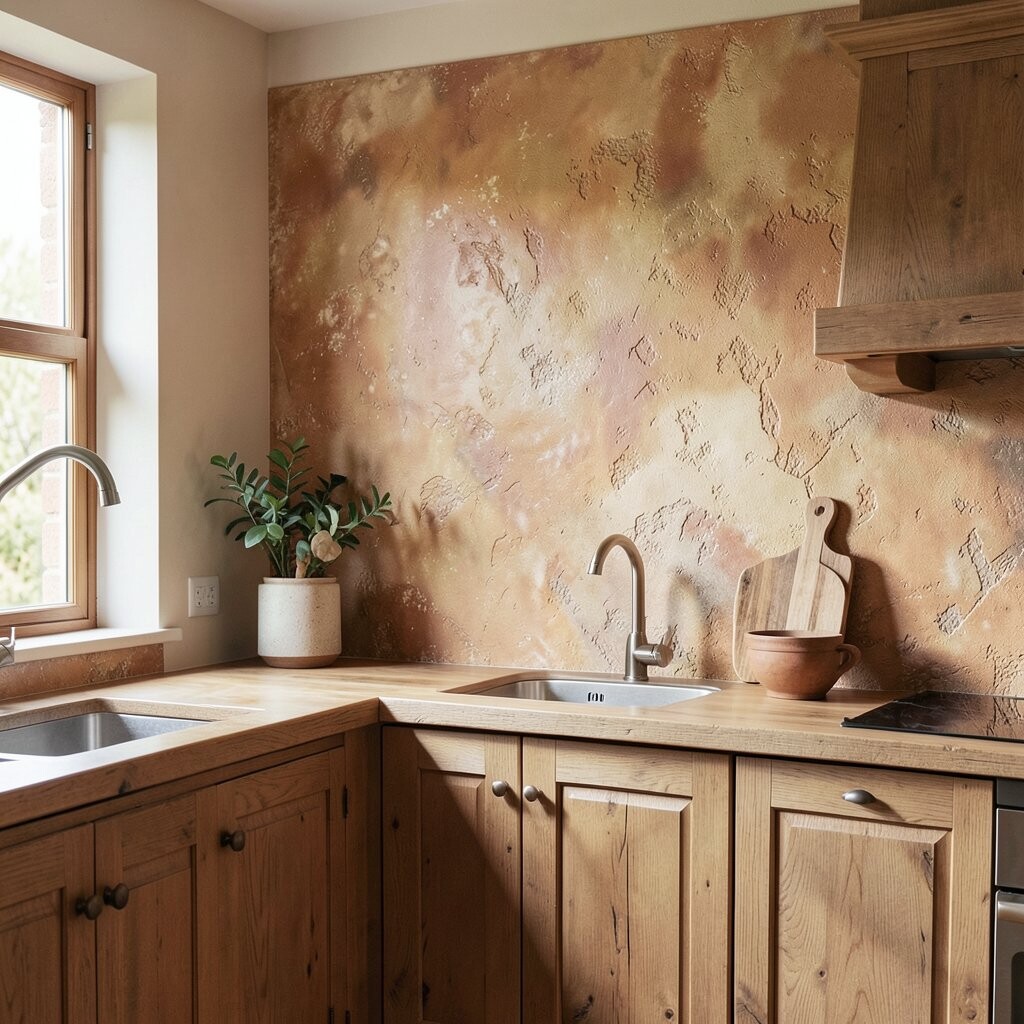
Texture on the backsplash keeps a rustic kitchen from looking flat. You can use tile to add depth while still staying clean and workable.
Try subway tile with a hand-glazed look or opt for small square tiles in muted colors like sage, terracotta, or cream. Grout choice matters too, so pick a warm, medium tone for a soft, aged feel.
If you want something easier to maintain, use a stone-look tile with a matte surface. Seal grout where needed and wipe regularly so the texture stays crisp.
8. Woven Window Treatments and Natural Fabrics

Rustic kitchens feel extra inviting with natural window treatments. Woven shades or simple linen curtains soften the room right away.
Choose light-filtering materials for daytime brightness so the kitchen stays airy. If privacy is a concern, layer sheer curtains with a heavier panel or use Roman shades in a neutral weave.
For a fresh trend, consider cordless styles for safety and a cleaner look. Keep fabric choices consistent with your overall palette, like warm whites, tan, and muted greens.
When you budget, treat curtains as a medium-cost update that changes the whole feel. Washable options help because kitchens collect splashes and steam over time.
9. Open Pantry Nooks and Built-In Storage
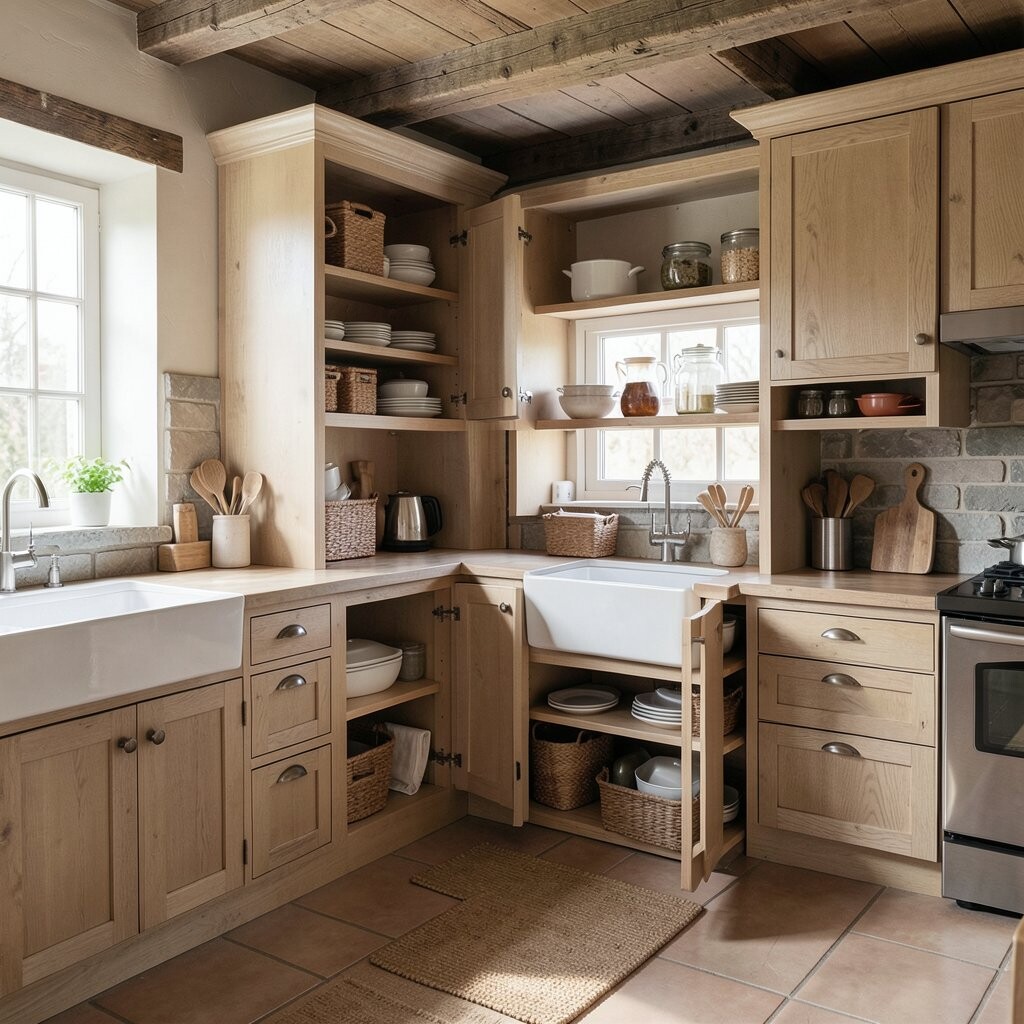
A built-in pantry nook helps your rustic kitchen feel organized and calm. Even small spaces can benefit from shelves that invite use.
Design it so you store items at eye level, like mugs and spices, for easy grab-and-go cooking. Add a sliding barn-style door or simple trim to keep the rustic vibe cohesive.
If you rent or don’t want major construction, use freestanding shelving that matches your cabinet finish. Labeling jars can still look charming when you use consistent fonts and simple lids.
10. Soft White Walls With Distressed Accents
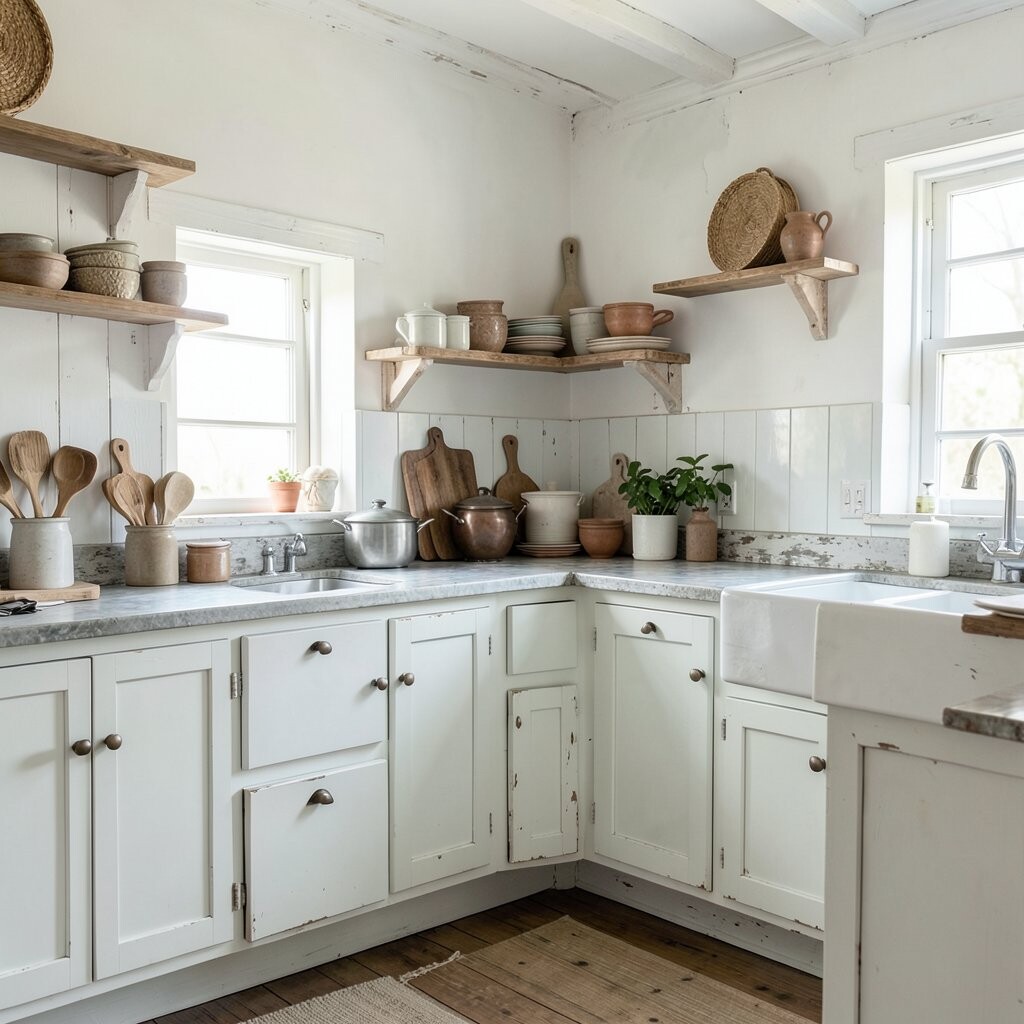
Soft white walls help rustic wood and metal stand out. The room feels brighter while keeping that cozy, warm mood.
Add distressing through accessories like a weathered tray, a vintage ladder shelf, or slightly worn cabinet edges. This mix of clean and aged textures keeps the design from feeling too heavy.
If you worry about the “too farmhouse” look, balance it with modern lines in a few places, like a sleek faucet or straight cabinet hardware. Test paint samples in daylight and evening light so the undertone matches your floors.
11. Rustic Island With Seating and Storage
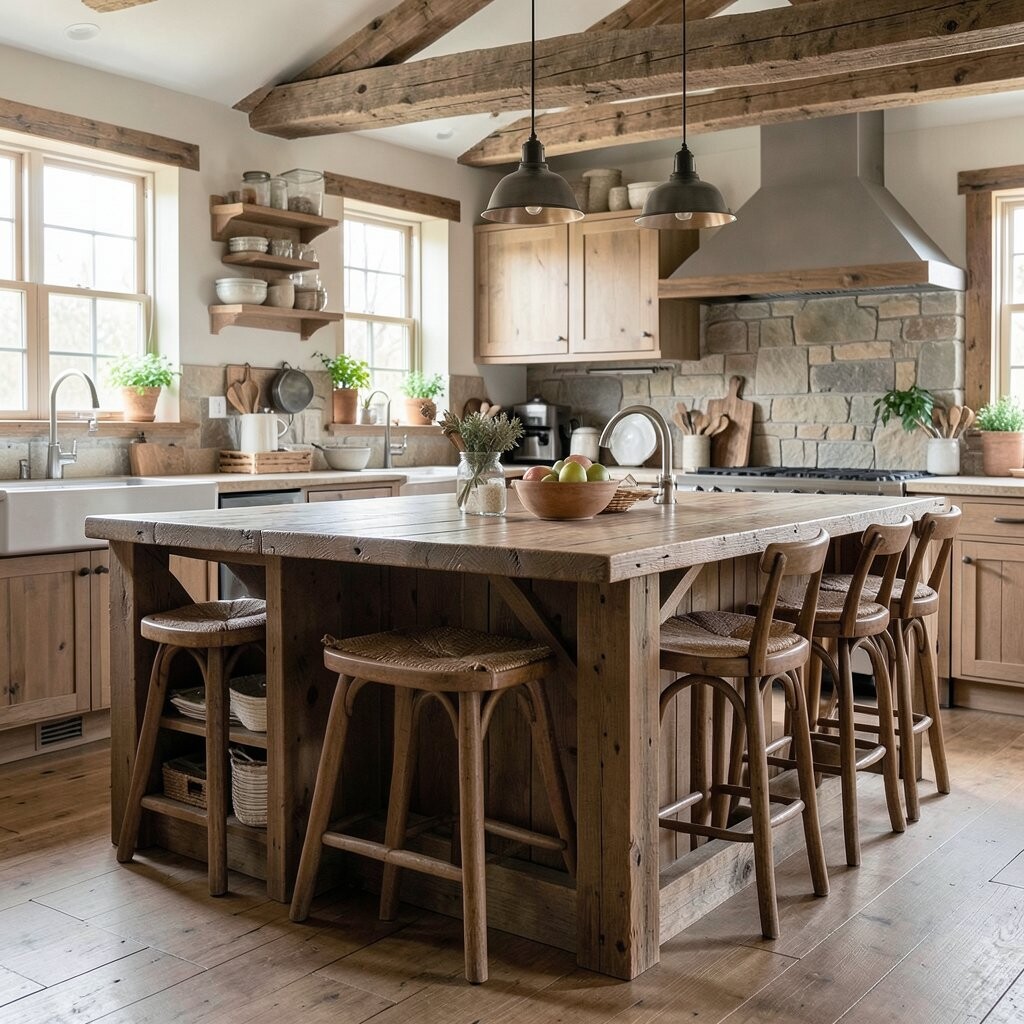
A rustic kitchen island is a natural gathering spot. When it includes seating and storage, it becomes the heart of daily life.
Choose an island with chunky wood legs, a butcher-block top, or a stone surface for durability. Add lower drawers for pots and a drawer insert for utensils to keep things easy to find.
For comfort, include two to four stools with backs or a soft upholstered seat. Match the stool finish to your hardware so the visual style stays consistent.
Cost varies widely, so set your priorities: a quality top matters most for daily use. If the full island is too expensive, try a pre-made island base or refinish an existing one.
12. Butcher Block Countertops With Daily-Friendly Care
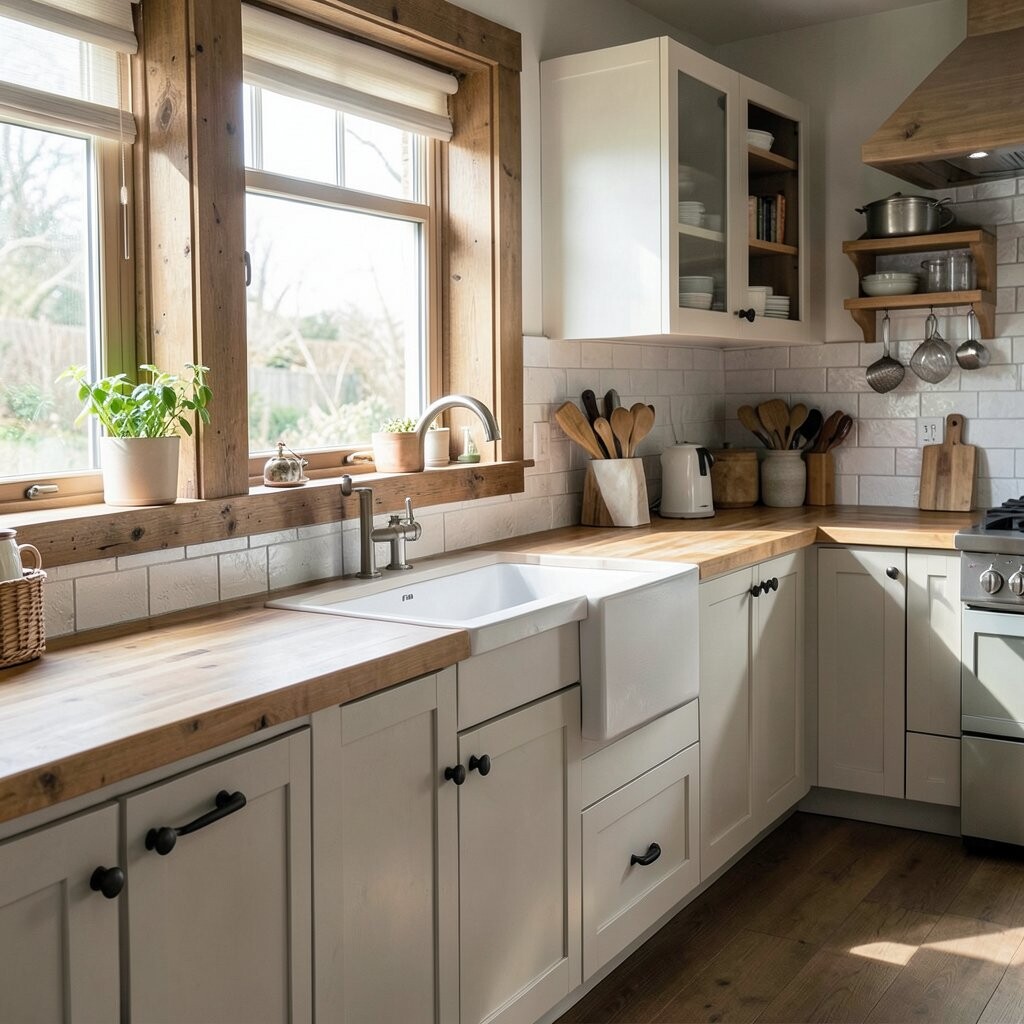
Butcher block counters bring a classic rustic look with a warm touch. They also handle food prep beautifully when cared for the right way.
Seal the wood and keep up with regular oiling to prevent drying and stains. Use cutting boards for knife work and wipe counters after spills, especially acidic liquids.
If you want a smoother surface for daily cooking, choose an edge profile that feels comfortable under your hands. For a budget option, look for pre-finished butcher block and hire installation only if needed.
13. Dark Wood Floors and Light Cabinet Balance

Dark wood floors can make a rustic kitchen feel rich and grounded. They also create a strong base for lighter cabinets and bright countertops.
To balance the look, pair dark flooring with warm whites, cream, or light wood. This contrast helps the room feel larger and keeps shadows from making it too heavy.
Choose durable finishes designed for kitchens, like water-resistant sealants and easy-clean coatings. If you’re remodeling, consider wide-plank floors for an authentic farmhouse feel.
14. Decorative Beams and Ceilings That Feel Historic

Exposed beams add instant character and a “high ceiling” feeling. Even a simple kitchen can feel more architectural with the right ceiling treatment.
If real beams aren’t possible, use faux wood beams that are lightweight and easier to install. Keep the beam color close to your cabinet tone so the room feels connected instead of mismatched.
15. Vintage-Inspired Tile Floors With Pattern

Patterned tile floors add personality without needing extra clutter. Rustic kitchens love geometric shapes, subtle medallions, and classic borders.
Look for small-format tiles in warm neutrals so the pattern feels timeless. Add a runner or rugs in natural fibers like jute or woven cotton to protect high-traffic spots.
For trend timing, muted vintage patterns are popular right now because they pair well with modern lighting and clean cabinet lines. Budget carefully because tile installation can be labor-heavy, so get a few quotes.
16. Distinctive Wall Color Using Earthy Paint Shades
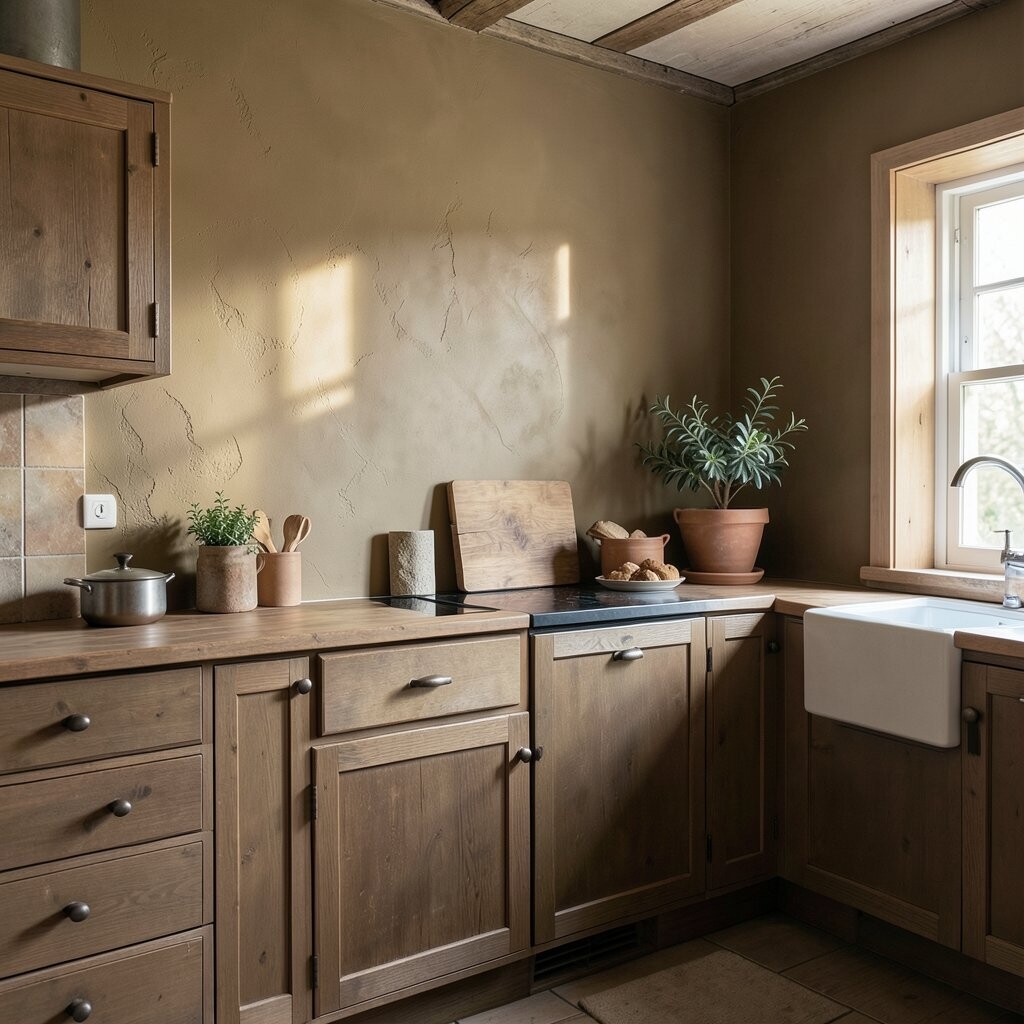
Earthy wall colors can turn a basic kitchen into a rustic retreat. Think clay, olive, warm gray, or soft mocha instead of cool tones.
Choose a satin or eggshell finish so walls can handle splashes and wipe clean. Pair darker paint with bright countertops and lighter wood, or keep everything warm and consistent for a cozy whole-room look.
If you plan to repaint, test a small section first because undertones can shift. For a low-cost update, paint just the backsplash wall or the area around the stove for a feature moment.
17. Layered Decor With a Functional Style

Rustic decor looks best when it has a job. A wooden utensil crock on the counter, a hanging rack for mugs, and a bowl for produce all count as style and function.
Layer textures by mixing wood, metal, linen, and ceramic in small doses. Keep pieces uneven in height for a natural feel, like a tall jar next to a shorter pitcher.
Try seasonal swaps to keep the kitchen fresh, such as fall pumpkins, winter greenery, or spring herbs. If you’re concerned about clutter, use baskets and trays to corral small items.
18. Modern Appliances in Rustic-Ready Finishes
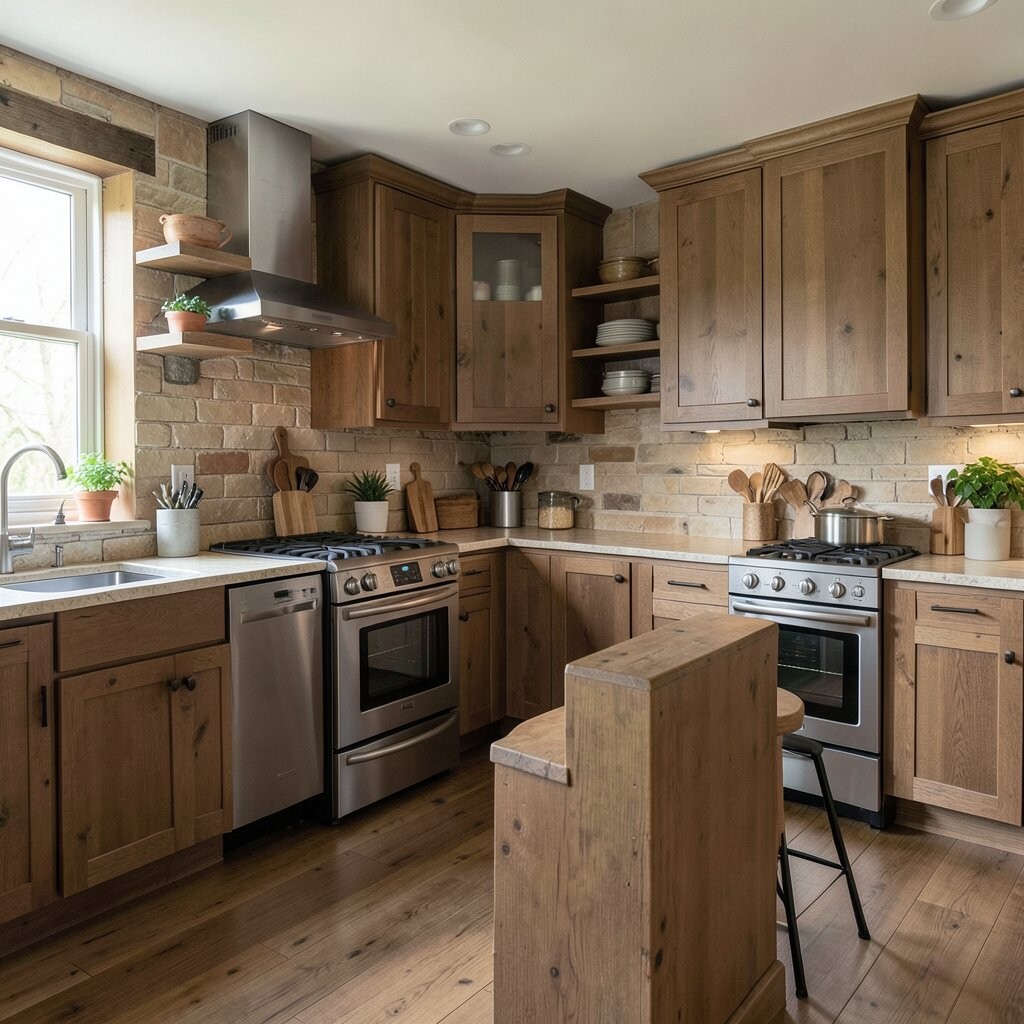
Rustic kitchens don’t have to feel outdated, and appliances can help balance the look. A stainless fridge can work beautifully when surrounded by warm materials and textured surfaces.
Consider finishes like matte black or brushed steel for a softer contrast with wood. If you use a modern vent hood, choose one with simple lines and a warm metal tone to keep it from looking too industrial.
19. Personalized Color Stories With Matching Textures
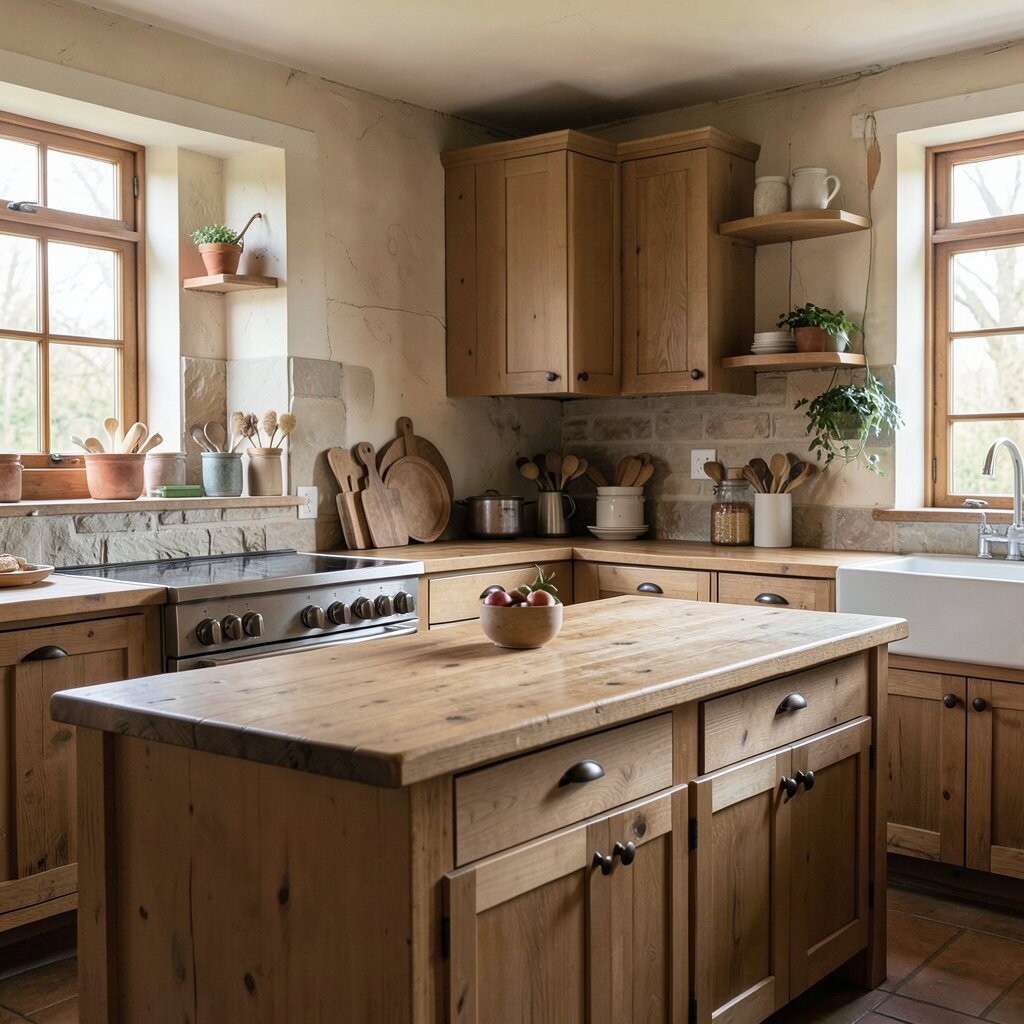
The easiest way to make a rustic kitchen feel truly yours is to build a color story. Start with one main wood tone, then pick two supporting colors from your backsplash, textiles, or cookware.
Repeat those colors through small details like dish towels, jar labels, and stool cushions so the room feels intentional. Add a unique touch, such as a handmade ceramic bowl or a custom sign on the wall, to make it personal.
Keep an eye on cost by prioritizing big-ticket items first, like cabinets, counters, and flooring. After that, you can fine-tune the look with paint, lighting, and decor that are often easier to budget and change over time.