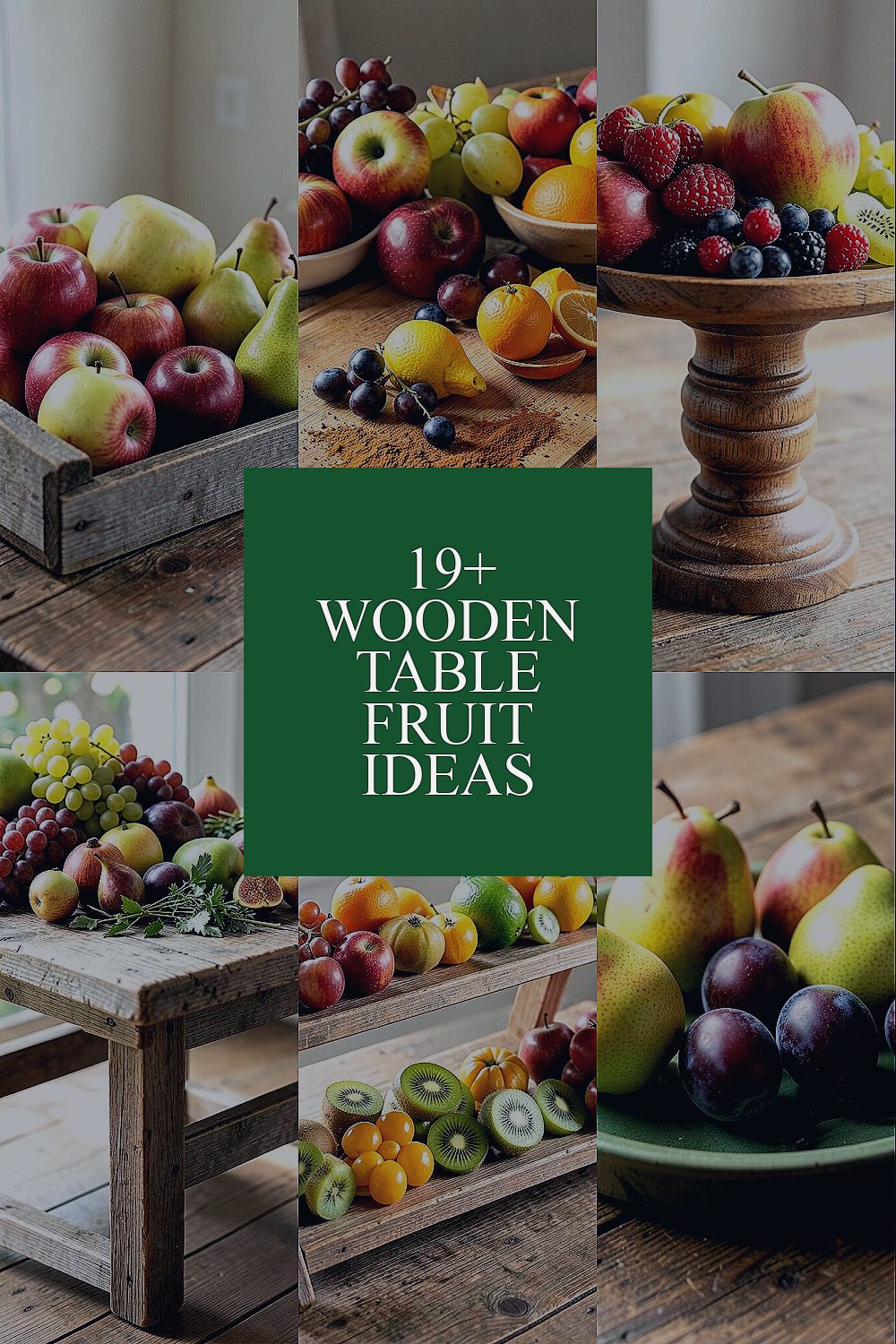
Old wood and fresh fruit are a match that feels instantly homey. You can make your table look inviting in an afternoon, with simple styling moves.
1. Weathered Crate Tray With Apple Rings and Pear Clusters

Start with a weathered wooden crate tray so the base already looks aged and charming. Add thin apple rings in a loose fan pattern and nestle pear wedges beside them.
For extra visual depth, place a small pile of grapes near the back edge so colors step forward as guests look in. This display works because the fruit sits slightly elevated, which makes it easier to see and pick from. Keep it fresh by lining the tray with a clean, food-safe liner and misting whole pears only, not cut fruit.
2. Cutting Board Runner With Autumn Citrus and Cinnamon Dust

Lay a long cutting board across your table as a rustic runner, then tuck citrus segments along the center. Use orange, clementine, and a few lemon halves to create a bright stripe of color.
Sprinkle a tiny pinch of cinnamon in one corner for a cozy look without making everything sticky. This setup is unique because the cutting board doubles as both a serving surface and a decorative centerpiece.
To personalize, add a sprig of rosemary or tied twine to frame the fruit. When budgeting, choose one “hero” citrus variety and fill the gaps with whatever is on sale, since the color mix still reads full. A current trend is warm spice styling, so consider pairing the tray with amber-toned candles for a similar vibe.
3. Turned-Wood Pedestal Stack With Mixed Berries and Stone Fruit

Use a turned wooden pedestal set, or stack crates with risers, to create height at the center. Then fill the top level with berries and the lower level with sliced peaches and nectarines.
The main benefit is better visibility from every seat, since stacked wood shapes guide the eye upward. What makes it stand out is the mix of textures: glossy stone fruit, soft berries, and the smooth curves of the pedestal.
For practical prep, rinse fruit, dry it well, and assemble close to serving time so berries don’t bleed juice. If you want it to last longer, keep strawberries and blueberries on separate small dishes within the display.
Personalize with small labels written on kraft paper, like “Peach” or “Blueberry,” for a farm-market feel. Cost-wise, you can use fewer pieces but arrange them generously at each level so it still looks abundant. Seasonal trend-wise, berry-and-stone-fruit boards are popular because they look like a colorful harvest.
4. Rustic Bench-Style Table With Grapes, Figs, and Hand-Torn Herbs

Place a long rustic board flat like a miniature bench, then line it with clusters of grapes and sliced figs. Scatter torn herbs, such as basil or thyme, around the fruit for a fresh, garden look.
This display feels unique because it blends edible styling with a “just picked” vibe. For tips, keep herb pieces light and airy so they don’t smother the fruit, and wipe sticky fig surfaces quickly with a damp paper towel.
5. Ladder Shelf With Kiwi Spirals and Mango Coins
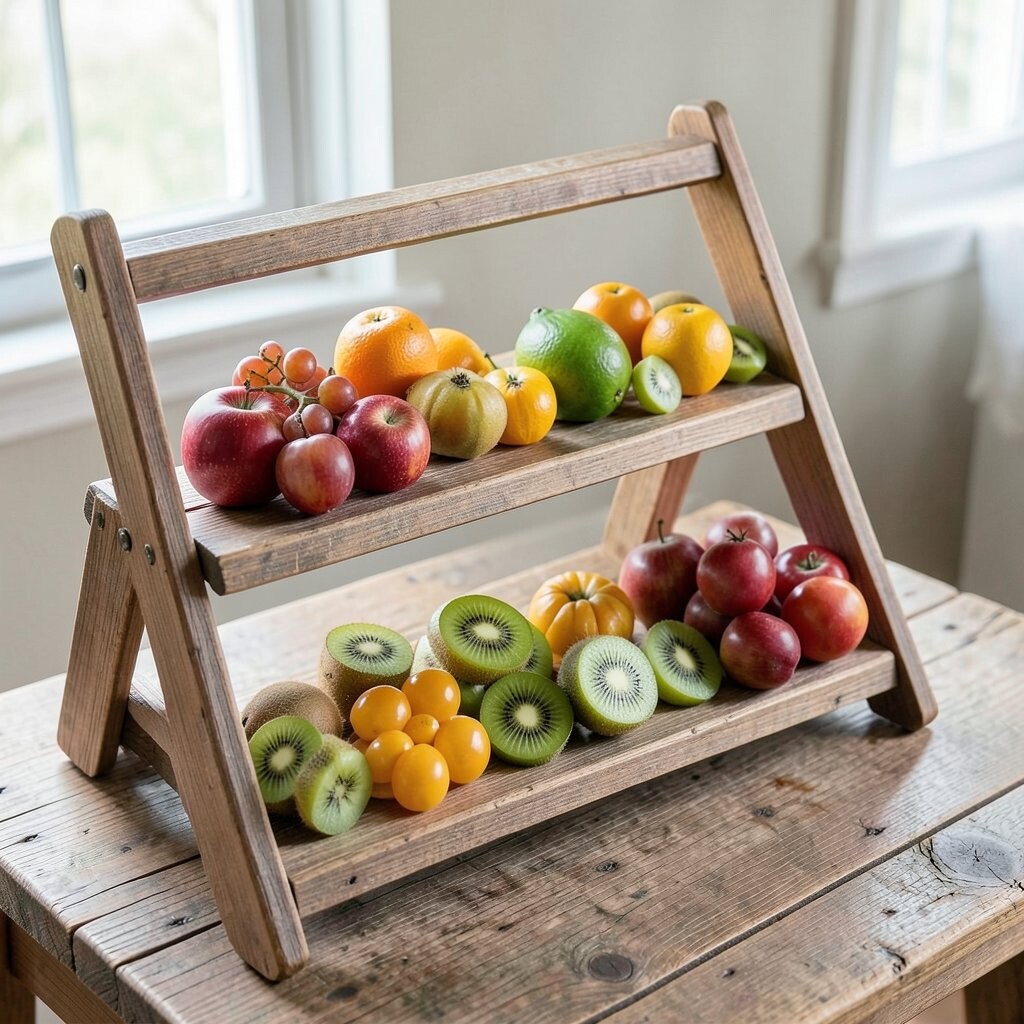
Lean a simple wooden ladder shelf against a neutral wall, and place small bowls on the rungs. Add kiwi spirals in one bowl and mango coins in another for a bright, modern fruit pattern.
This idea is helpful when you want a vertical feature without taking over the whole table. It’s unique because the shelf structure turns fruit into a stacked “gallery,” where colors change as you move around.
To personalize, wrap the base ladder feet with twine or small cloth ties. For cost considerations, use ceramic or inexpensive wooden bowls as long as they match in tone, because the fruit color does most of the work. A current trend is vertical dining styling, so a ladder display can look right at home with party décor.
6. Moss-Green Tray With Pears, Plums, and a Touch of Vanilla Bean

Set a shallow rustic tray on your table and cover it lightly with natural-looking moss or a mossy runner. Arrange halved pears and plums in neat rows, then add one small piece of vanilla bean near the center.
Because the tray is low and cozy, guests can reach the fruit without fuss, which is great for casual gatherings. This one feels special because the scent detail adds warmth, making the display feel more “intentional” than just pretty.
For practical tips, keep moss away from wet fruit juices and choose a food-safe liner if you’re using any greenery substitute. Personalize with a ribbon color that matches your season, like burnt orange for fall or soft green for spring.
If you’re watching costs, pick one main fruit and use the other as accents rather than buying large quantities. The trend here is sensory décor, where scent and texture matter as much as color.
7. Barn-Wood Serving Plank With Watermelon Squares and Feta Crumbles

Use a thicker barn-wood plank for a sturdier base, then cut watermelon into tidy squares. Add small scoops near one side and sprinkle a little feta on the opposite side for sweet-salty contrast.
This display is unique because the fruit becomes part of a light snack board, not only a dessert look. It also benefits guests since the plank edge clearly shows where to pick pieces from.
For practical tips, keep watermelon cubes in a bowl with a paper towel lining, then transfer right before serving to reduce drips. Personalization is easy: add mint leaves or a few honey drizzle lines for a more dressed-up feel.
To manage cost, use smaller blocky cuts from the same watermelon rather than buying multiple melons. A current trend is “fruit boards,” which often blend fresh fruit with savory accents like cheese and herbs.
8. Rustic Corner Still-Life With Peaches, Raspberries, and a Burlap Fringe
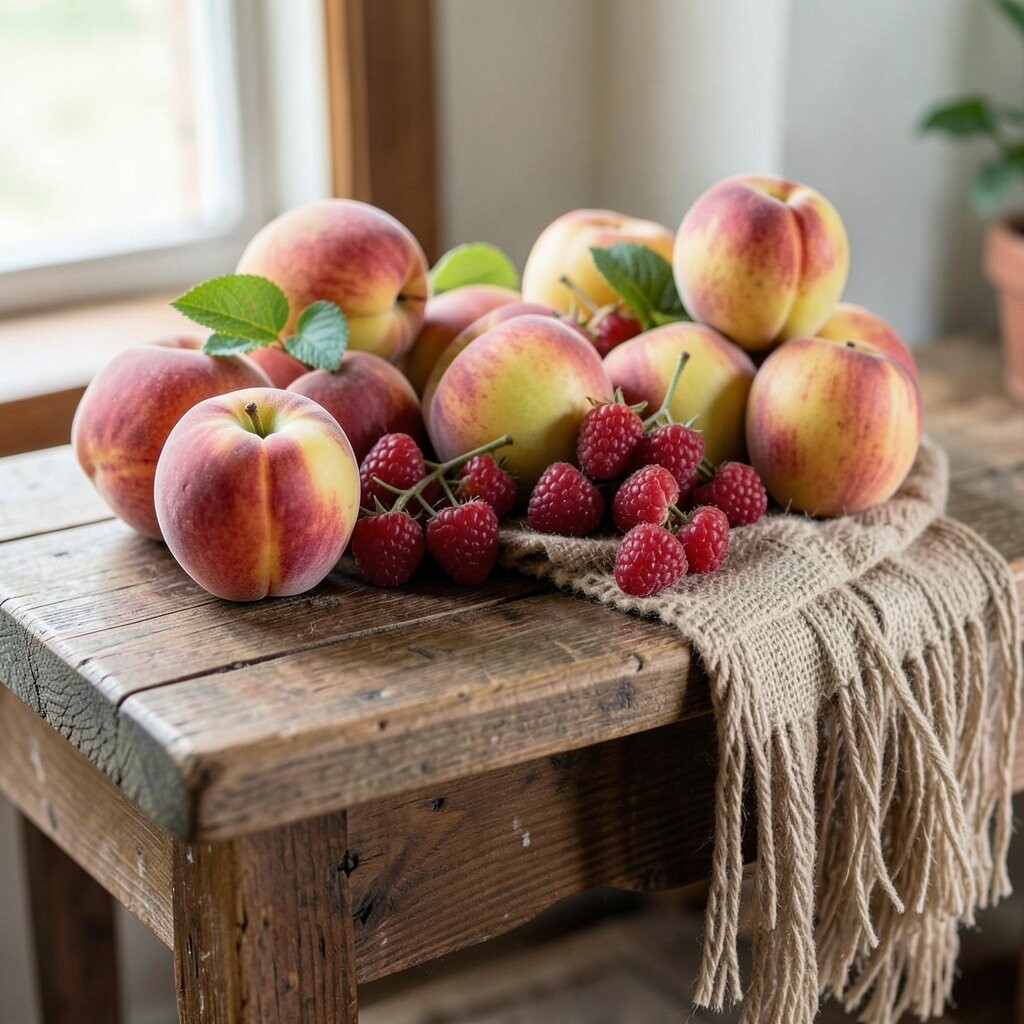
Choose a rustic corner of the table and set a wooden stump-style riser or small pedestal there. Lay peach slices in a soft curve and dot raspberries across the top like a scatter pattern.
What makes it stand out is the burlap fringe tucked under the display, giving it a handmade look. The benefit is that burlap creates a warm background, so fruit colors pop even without extra décor.
Keep things practical by using parchment between burlap and any fruit that could touch moisture. Personalize by choosing a different fabric tone, like light linen for summer or darker burlap for fall.
Cost-wise, you can buy burlap by the yard, so even a small fringe goes a long way. This styling matches a current trend of textured table layers that feel rustic but polished.
9. Slice-and-Stack Wooden Sled With Apples, Grapes, and Toasted Nuts

Use a wooden “sled” or tray with slightly raised edges, then arrange apples and grapes in alternating sections. Add toasted nuts in a small dish so the crunchy look contrasts with the fruit.
This idea is helpful because the compartments keep items separate and tidy, even during refills. It’s unique since the sled shape suggests movement, so the display feels playful and fresh.
For practical tips, coat apple slices with a little lemon juice to slow browning and keep the rest of the tray dry. Personalize with a spice option like nutmeg for fall or a pinch of flaky salt for a modern twist.
Consider cost by choosing nuts you can buy in bulk, then portion them lightly so the display looks rich without overspending. Current trends favor mix-and-match topping stations, and this setup naturally supports that style.
10. Pine Log Base With Seasonal Berries and Cherry Tomato Pop Color

Start with a flat pine log slice as your centerpiece base, then build a berry mound on one side. Add a handful of cherry tomatoes for a surprising pop that still reads fresh and seasonal.
This display benefits from strong natural lines, because the log’s rings guide your arrangement. It’s unique because it blends fruit and garden color in a way that looks intentional rather than accidental.
To keep it safe and clean, add a food-safe liner on top of the log and avoid direct contact with berries if the wood is porous. Personalize by tying a small ribbon around a berry bowl or adding a mini wooden tag for guests.
Cost considerations are usually friendly since log slices can be affordable, especially during craft off-seasons. A current trend is playful color contrast, so the tomato accents give a fresh, contemporary feel.
11. Reclaimed Table Slat With Citrus Half-Moons and Decorative Skewer Flags

Lay reclaimed wooden slats across the table as a base platform, then place citrus half-moons spaced like stepping stones. Add small fruit skewers with flags made from paper or thin twine.
This layout is helpful because the slats create natural texture, so you don’t need many accessories. It’s unique because it combines serving pieces with a fun “mini banner” feature that feels party-ready.
For practical tips, use short skewers and keep flags positioned above the fruit so they stay tidy. Personalize by writing a date or simple flavor notes on the flags, like “Orange & Mint” or “Lemon Fresh.”
Cost-wise, skewers are inexpensive, and one batch can be reused across seasons. The current trend is interactive garnish moments, and skewers invite guests to notice details.
12. Rustic Tray With Honeydew Slices, Blueberries, and a Drizzle Bowl

Use a rustic wooden tray and place honeydew slices as wide, pale arcs. Add blueberries in a small section and include a separate bowl with honey or a light syrup for drizzling.
This setup benefits guests because the drip control is built in; nobody has to guess where sweetness lands. It’s unique since the drizzle bowl turns fruit into a customizable treat.
For practical tips, pat honeydew dry before arranging so it doesn’t make the tray look watery. Personalize by adding a tiny spoon for each pour station if you’re hosting a crowd.
If you’re cost-conscious, buy honey in a larger container and portion it into a small jar, then focus spending on the fruit that looks best. A current trend is “build-your-own” flavor, even for simple fruit displays.
13. Vertical Wooden Board With Grapefruit Cups and Rosemary Handles

Mount a wooden board against a wall or lean it upright near the table, then place small grapefruit cups along the bottom edge. Use rosemary sprigs like handles by tucking them near each cup for a herbal detail.
This display stands out because the vertical board gives your table a statement look without cluttering the center. It’s also practical since cups keep segments contained and neat during serving.
For practical tips, check that rosemary is clean and dry, and avoid letting it soak in juice. Personalize with seasonal color accents, like a warm copper ribbon in fall or a pale green ribbon in spring.
Cost considerations are manageable because you can use reusable cup holders and swap fruit based on what’s affordable. Right now, botanical styling is trending, and rosemary handles fit that look beautifully.
14. Sliding Drawer-Style Tray With Apple Spiral Stacks

Find a rustic wooden drawer organizer or repurpose a small drawer insert as your display base. Stack apple slices in a spiral pattern and place a few curled peels at the edges.
This idea is helpful because the “drawer” concept naturally frames the fruit and keeps it from sliding around. What makes it unique is the satisfying spiral look, which makes even simple apples look special.
For practical tips, use a mandoline carefully, then soak slices briefly in lemon water and drain well before stacking. Personalize by adding a small card with “best served chilled” so guests know how to enjoy it.
Cost-wise, apples are usually budget-friendly, and the spiral technique makes a smaller amount look plentiful. A trend you’ll see in lots of seasonal tables is fruit spirals and tidy patterns, because they photograph well.
15. Rustic Chalkboard-Style Wooden Plank With Seasonal Mix Bowls

Use a wooden plank styled like a chalkboard or painted board as your backdrop, then set small fruit bowls in front. Choose seasonal fruits, like cherries, grapes, and cut melon, so the colors feel current.
This display is unique because it adds a storytelling surface behind the fruit without needing a complicated centerpiece. It benefits guests since the bowls are portioned and easy to reach.
For practical tips, write simple labels with chalk or removable markers and wipe the board clean afterward. Personalize by changing the labels by season, like “Summer Sweet” or “Harvest Bright.”
Cost considerations are often low if you already have paint or can buy a small board. Current trends favor functional décor, and a label board fits that vibe perfectly.
16. Old Window Frame Shelf With Melon Slices and Strawberry Corners

Repurpose a small wooden window frame as a shelf, then place melon slices across the lower area. Add strawberries in the corners so the fruit fills the “grid” look of the frame.
This idea is helpful because the frame acts like a built-in picture, making fruit styling feel curated. It’s unique due to the architectural structure, which turns a simple table moment into wall-level décor.
For practical tips, ensure the window frame is stable and keep berries away from damp spots. Personalize by adding a string of tiny lights around the frame for evening gatherings.
If you’re budgeting, look for window-frame décor at thrift stores, then clean and reinforce it before use. A current trend is upcycled wall décor, and fruit displays look extra charming when they echo that style.
17. Wooden Dough Bowl With Pear Halves, Dried Orange Chips, and Spice Sachet

Place pears into a wooden dough bowl as if they’re nestled in a rustic nest. Add dried orange chips around the top and tuck a small spice sachet near the rim.
This is beneficial because the dough bowl shape naturally holds fruit and keeps pieces from rolling. It’s unique since dried citrus adds color contrast and the sachet adds a cozy seasonal aroma.
For practical tips, keep dried chips separate from wet juices and replace them if they soften. Personalize by choosing sachets with cloves and cinnamon, or swap to something lighter like vanilla and cardamom for spring.
Cost considerations depend on whether you buy a bowl or use a similar wooden serving piece you already own. Current trends include “scented tables,” and a simple sachet is an easy way to join that feeling without clutter.
18. Spindle-Base Pedestal With Cherry Bows and Peach Fans

Use a spindle-base wooden pedestal and place peach slices in gentle fan shapes around the top. Add cherries piled at the center so the display has a sweet focal point.
This display is unique because the fan pattern makes fruit look like décor, not just food. It benefits hosting because the pedestal keeps fruit in a single, easy-to-serve zone.
For practical tips, keep cherry stems (if you prefer) and rinse them just before serving, then dry thoroughly to prevent water pooling. Personalize by draping a thin strip of fabric around the pedestal base for a seasonal accent.
If you want to manage costs, buy peaches that are firm enough to slice and use cherries sparingly as a bright center. The current trend is “focal fruit styling,” where one fruit dominates the center for a bold look.
19. Rustic Farmhouse Tray With Fig Halves, Grapes, and Tiny Honey Jars

Arrange fig halves on a wooden tray and add grapes around them for a rich, jewel-toned pattern. Place one or two tiny honey jars at the side so guests can dip or drizzle.
This idea is helpful because the honey jars keep serving portions controlled and reduce sticky spills. It’s unique since figs bring a distinctive texture, and the honey adds a warm flavor cue that feels upscale.
For practical tips, keep figs slightly spaced so they don’t touch and bruise quickly. Personalize by labeling honey jars with flavor pairings like “Fig & Honey” to make it feel like a specialty tasting station.
Cost considerations are simple: use fewer figs if needed and stretch with grapes, which are usually less expensive. A current trend is small condiment pairings, and honey cups are a perfect rustic match.
20. Wooden Plank Wall Table With Seasonal Fruit Wreath Center

Build a fruit wreath shape on a round wooden board, then place it in the center of a long wooden table plank. Use seasonal fruit rings, such as apple slices or oranges, then fill the inside with berries.
This display is unique because it looks like a holiday wreath even when you’re not fully seasonal. The benefit is that the wreath form gives your styling clear structure, making it easier to arrange without overthinking.
For practical tips, keep the fruit dry and rotate pieces as they sit so color stays bright and edges don’t wilt. Personalize by adding a small wooden fork stand or a ribbon loop so the wreath feels like a centerpiece, not just a snack.
For cost, choose one “ring” fruit that’s affordable and one “filler” fruit for pop, rather than buying many varieties. Current trends lean toward wreath-style food décor because it’s bold, symmetrical, and visually satisfying for photos.