
A good outdoor shade setup can change how your space feels in minutes. The right choice between a canopy and an awning can also save you from harsh sun and annoying heat.
1. Pergola-Style Shade Canopy With Slatted Look
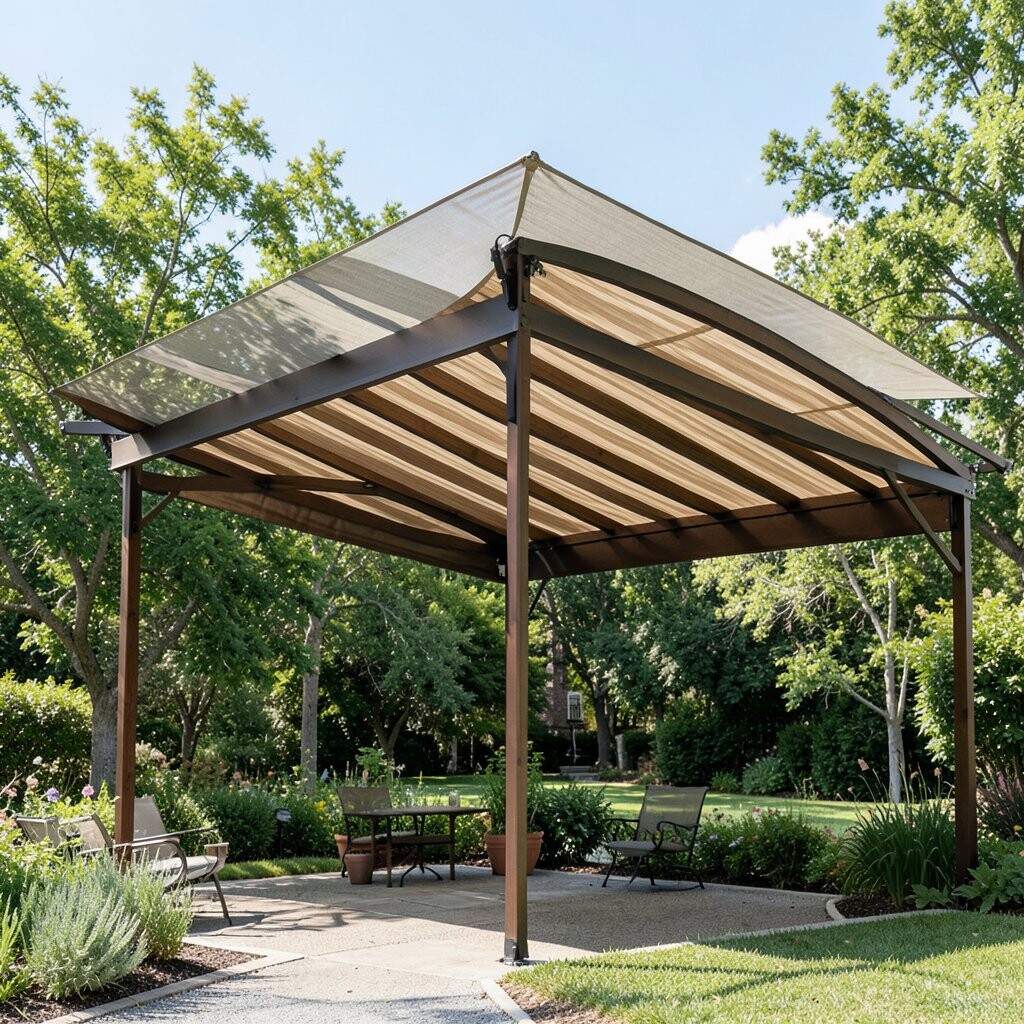
Imagine a canopy that feels airy like a pergola, but still gives dependable shade. The slatted look creates moving light patterns that make patios feel softer.
Choose a canopy frame in powder-coated aluminum or steel for long-term strength. Pair it with breathable shade fabric that blocks UV while still letting some air pass through. For best results, measure your ceiling height and the drop length so the canopy doesn’t block doors or walkways.
2. Retractable Canvas Canopy Over a Grill Zone

A retractable canvas canopy can look classic while protecting your grill area. When the sun gets intense, you pull it out fast and enjoy cooking without glare.
Look for a design with smooth hardware, strong springs, and easy locking positions. To keep the fabric clean, choose solution-dyed canvas or treated polyester, and confirm it has mildew resistance. For cost planning, expect mid-range pricing for manual systems and higher prices for motorized versions.
If you want it to match your outdoor theme, pick trim colors that echo your cushions or outdoor furniture. Add simple side curtains or a shade valance to reduce windblown shadows. Before installation, check local wind ratings and leave enough clearance for fully extended operation.
3. Stationary Awning With Bold Color Blocking

A stationary awning can deliver strong curb appeal, especially when you use bold color blocking. Think navy and cream, or terracotta and white, like a small architectural accent.
Unlike a canopy that often sits above a larger open area, an awning is great for anchoring shade right at a wall. Use it to cover a window, entry, or a dining nook where the sun hits hardest. Make sure the awning extends far enough to cover the area during the time you use it most.
To personalize, choose hardware colors that match your door handles, light fixtures, or fencing. If you’re concerned about long-term fading, select fade-resistant outdoor fabric and confirm the thread is UV-rated. For a realistic budget, expect stationary awnings to cost less than custom canopies with complex frames.
Keep maintenance easy by using a soft brush and gentle cleaner, then letting it dry fully. This type can also reduce heat load indoors by shading windows, which is a practical bonus.
4. Corner-Fit Canopy With Angled Supports

An angled corner-fit canopy can make use of awkward patio spaces that don’t feel “square.” It creates a cozy pocket for seating and helps shade drift away from the corners where sunlight sneaks in.
Opt for a design with adjustable tension or a frame that adapts to slope and uneven surfaces. Before ordering, take measurements at multiple points, because patios rarely stay perfectly level. This option can be more affordable than a fully custom build since many angled systems come in standard sizes.
5. Water-Resistant Awnings for All-Weather Comfort
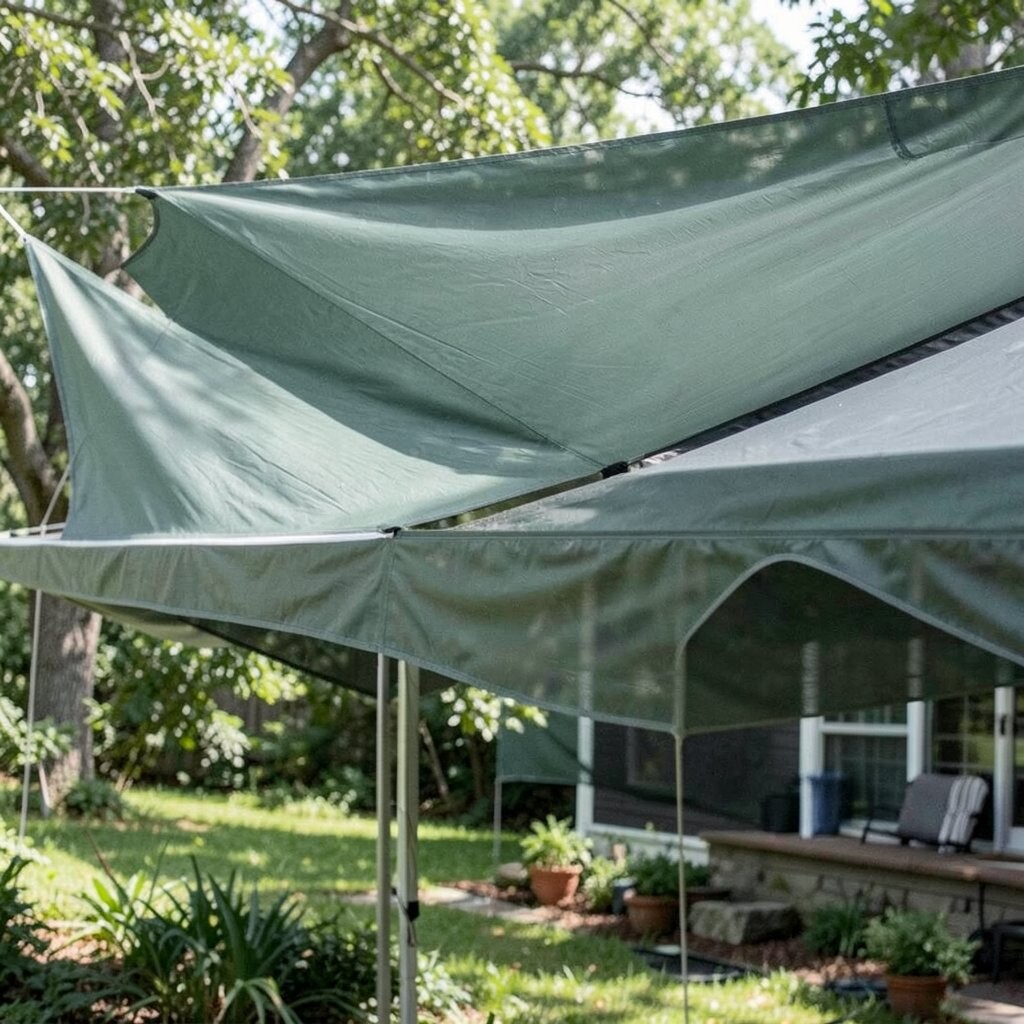
An all-weather awning is built for rainy days and bright afternoons. It keeps the space usable, even when the weather changes quickly.
Choose fabric labeled for water repellency and check seam construction so water doesn’t seep at stress points. Proper slope matters too, so the awning drains instead of pooling. If you live in a windy region, look for reinforced arms and a strong mounting kit designed for outdoor fixtures.
For personalization, match the awning color to outdoor roofing or siding, and add a matching drop-down shade panel if glare is an issue. Budget-wise, water-focused fabrics and stronger arms can raise costs, but they prevent fabric wear that happens with repeated moisture exposure. Consider scheduling inspections each season so hardware stays tight and safe.
6. Clear Vinyl Canopy for Sun Without the Skin Burn

A clear vinyl canopy can protect from sun while keeping your view open. It’s a smart choice when you don’t want to block scenery or make the yard feel enclosed.
Use it over walkways, hot tubs, or a small outdoor lounge so you still get natural light. Look for UV-stabilized vinyl and a frame that vents to reduce heat trapped under the cover. For practicality, choose panels that are easy to clean and avoid sharp edges that can scratch or snag.
To personalize, add colored tint bands or decorative valances that keep it from feeling purely utilitarian. Costs can vary widely because clear systems may involve heavier framing and specialized connectors. If you want the best value, compare panel thickness, warranty terms, and the replacement policy if vinyl needs servicing later.
7. L-Shaped Awning for a Dining Corner
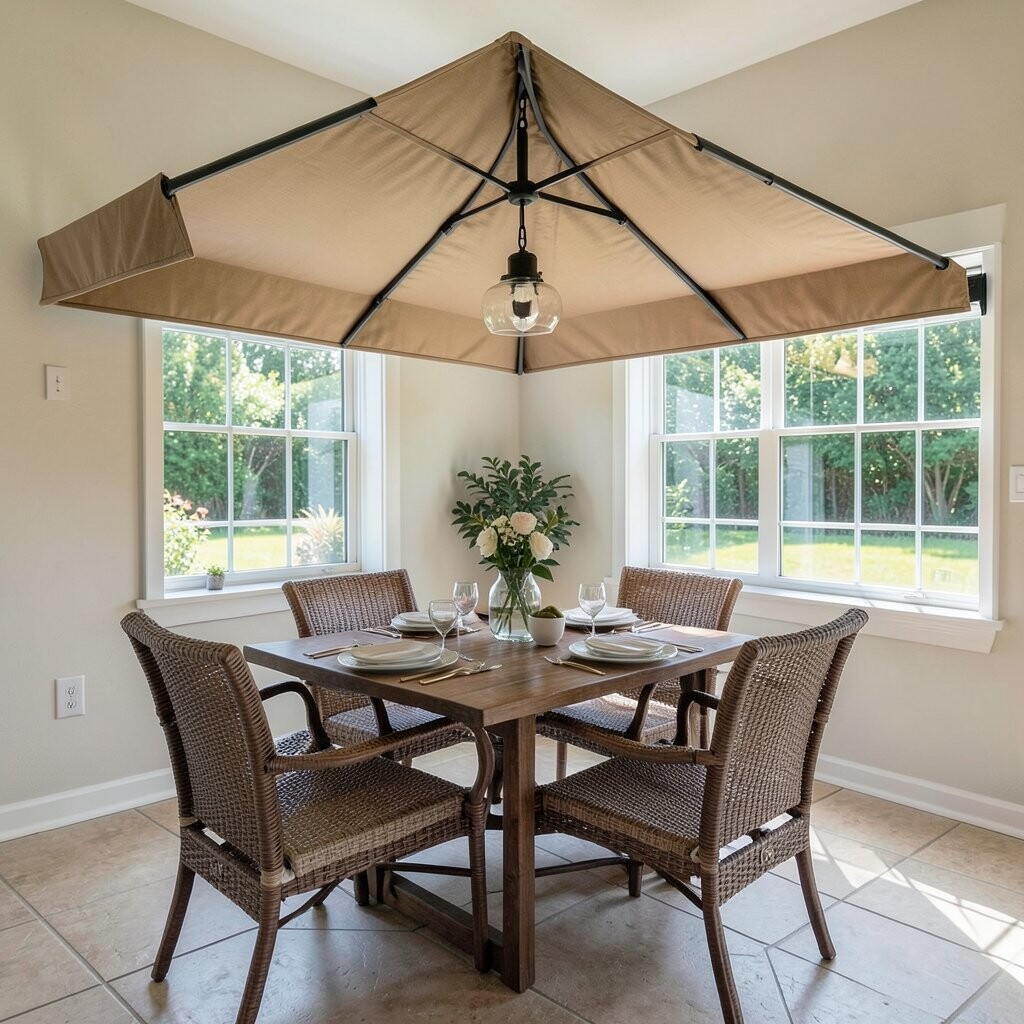
An L-shaped awning can shade two sides at once, which is perfect for a dining corner. It helps you cover the table surface while also protecting people from glare at different angles.
This style is unique because it feels like a custom architectural feature rather than a simple cover. When the sun moves across your yard, the second arm catches the next angle of light. For the smoothest fit, measure the wall space carefully and confirm the mounting points are solid.
To personalize, pick a fabric pattern that hides dust and shows well with your table linens. Consider adding roll-down side panels if your dining corner is exposed to wind. When budgeting, remember that multi-branch awnings often cost more due to extra arms and increased installation labor.
8. Shade Canopy With Built-In LED Lighting

A canopy with built-in LED lighting makes evenings feel instantly welcoming. The glow turns a basic outdoor area into a small “night venue” without needing extra string lights.
Look for weather-sealed lighting and a simple power plan that matches outdoor electrical codes. Warm white LEDs usually feel cozy, while cooler tones can look modern. If you entertain often, place lights slightly higher to reduce shadows on chairs and the tabletop.
This option stands out because it combines shade and ambiance in one structure. It also helps you see clearly when grilling or serving food. Keep personalization simple by adding dimmers so you can adjust brightness as the party grows.
Cost considerations depend on whether the system is hardwired or plug-in. Hardwired options may cost more upfront, but they look cleaner and last longer with proper weatherproofing.
9. Classic Doorway Awning With Decorative Trim

A doorway awning adds instant charm and protects your entrance from sun and light rain. With decorative trim, it can look like a detail pulled from a home design magazine.
Choose a style that fits your home’s personality, whether it’s scalloped edges, modern straight lines, or a gently curved silhouette. Make sure the awning width covers the door swing and leaves room for comfortable entry. For practical tips, verify wall mounting strength and consider a slight pitch so water runs away from the doorframe.
10. Outdoor Bed Canopy for a Reading Nook

If you have a hammock or outdoor daybed, a dedicated canopy can make it feel like a true retreat. The shade softens bright mornings and lets you read comfortably without squinting.
Choose fabric that breathes so heat doesn’t build up under the cover. Many people like fabric that blocks UV but still feels light, so the nook stays cozy rather than heavy. When you install, keep space for airflow around the canopy edges.
This idea is unique because it’s designed for relaxation zones, not just dining or pathways. Personalization can be as simple as matching the canopy color to outdoor throw pillows or choosing a subtle stripe pattern. Costs depend on whether you choose a compact kit or a larger custom frame, and you can often save money with a narrower span.
11. Retractable Side Panels for Wind and Glare

Retractable side panels can turn a basic canopy or awning into a shield against wind and sideways glare. You can open them when it’s breezy and close them when sunlight hits directly.
Look for panels that roll smoothly and lock securely, so they don’t flap. Choose outdoor fabric that resists tearing and fading, and confirm the panel seams are reinforced. This makes a big difference in coastal or open-yard areas where breezes are frequent.
Personalize the look with panel height that matches your seating, and select hardware finishes that blend with your frame color. Budget-wise, adding side panels increases cost, but it often reduces the need for extra accessories like separate curtains. A helpful tip is to plan for storage space where panels can roll without snagging furniture.
12. Canopy Over a Play Area With Easy Cleaning

A shade canopy over a play area keeps kids comfortable while they run around outside. It reduces harsh sunlight and gives parents a calmer place to watch.
For a practical setup, choose fabric that wipes clean and resists mildew. Consider a lower canopy height if you want shade closer to the ground, but make sure adults can still stand and move safely. Secure anchoring is essential, especially if kids are active and swing equipment under the shade.
This option feels unique because it’s about daily usability and safety as much as it is about style. Personalize with fun accent colors that match your outdoor toys, while sticking to neutral main frame tones for durability. In cost planning, factor in stronger fasteners and hardware designed for frequent use and occasional impacts.
13. Awnings With Thermally Efficient Materials
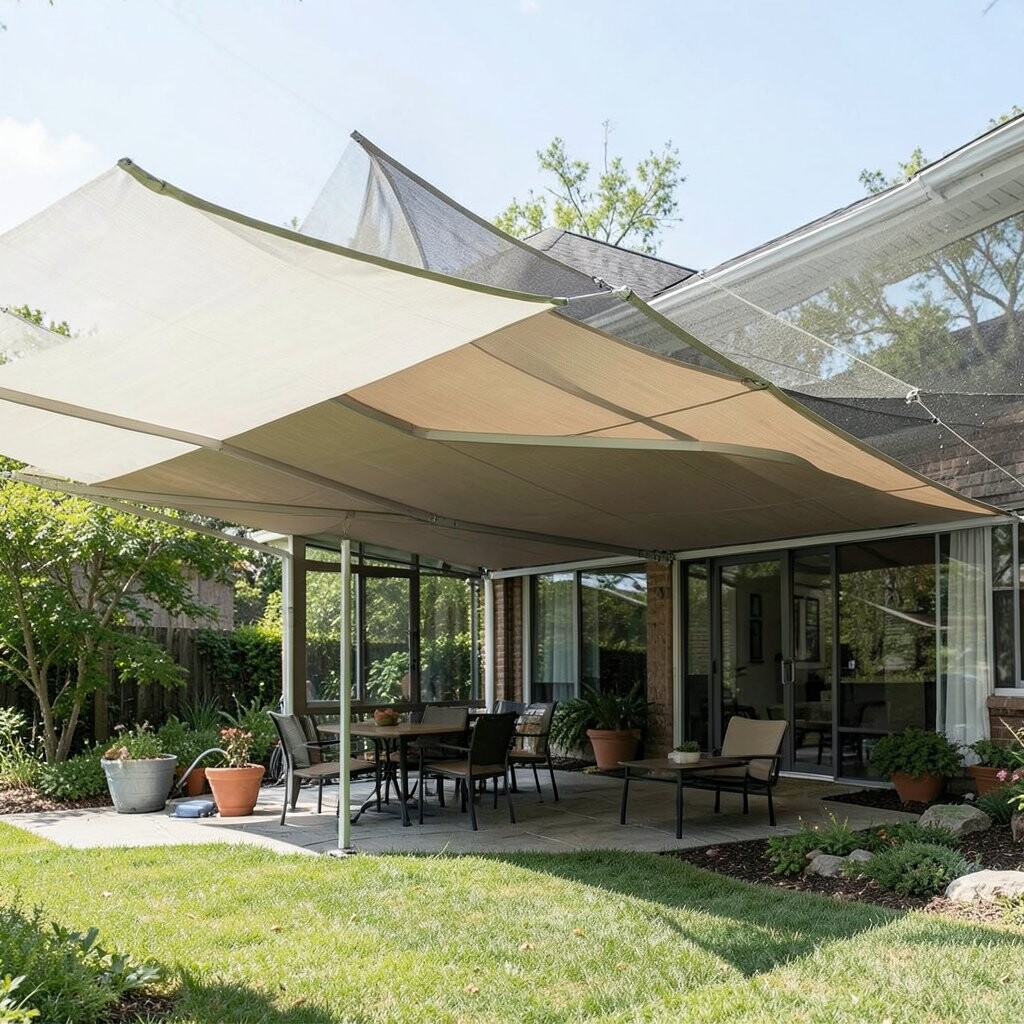
Thermally efficient awnings can help reduce heat that enters through windows. The result is a cooler interior and less strain on air conditioning.
Look for awning fabric that’s rated for UV reduction and consider lighter colors to reflect heat. If you’re planning both indoor comfort and outdoor comfort, pair your awning with well-placed outdoor blinds or curtains. For practical tips, install or adjust it so it shades the glass during peak afternoon sun.
This idea stands out because it connects outdoor style to indoor savings. Personalization is easy too—choose a color that matches shutters or exterior trim. Budget-wise, higher-performance fabric can cost more, but the longer lifespan and energy efficiency can make it worth considering.
Always check installation requirements so the awning doesn’t interfere with window operation. A well-fitted system stays functional for years.
14. Arched Canopy for a Soft, Elegant Look

An arched canopy feels elegant and adds gentle curves to your outdoor design. It can make a patio seem more inviting, especially when paired with rounded furniture shapes.
Pick materials that handle weather and don’t warp over time, like quality aluminum framing. For the best visual balance, center the arc above your seating area or path. If you’re budgeting, arched frames can cost more than flat canopies, but they often bring a standout look that feels custom.
15. Sunshade Awnings in Layered Fabric Textures

Layered fabric textures can make shade feel rich instead of plain. Think a breathable top layer over a slightly thicker layer for extra comfort and style.
This approach is unique because you can change the mood depending on how much shade you want. Use one fabric that blocks glare and another that diffuses light for softer illumination. For personalization, select complementary patterns that hide dust and match cushion fabrics.
Practical tips include checking how layers interact during wind, because stacked fabric needs solid tension control. When budgeting, layered systems may cost more, but they can extend comfort and reduce the need for additional accessories. Choose materials labeled for outdoor use, and confirm care instructions so cleaning stays manageable.
16. Shade Canopy for a Side Yard Seating Strip

A side yard seating strip might be narrow, but it can still be comfortable with the right canopy. A long, streamlined cover makes the space usable without forcing a complete patio redesign.
Choose a canopy that stretches along fencing or a property edge and provides consistent shade where you place chairs. It’s practical to position it so light doesn’t shine directly into seating angles. For personalization, consider fabric colors that coordinate with fencing and exterior walls.
This idea stands out because it respects small spaces while improving comfort. Costs depend on length and mounting options, but you may save money by using a simpler frame design. Measure carefully and confirm you have enough clearance for doors, gates, and walkway traffic.
17. Retractable Awning With Manual Crank Control

A manual crank retractable awning is a classic choice that’s dependable and easy to operate. It gives you control without needing wiring or a remote.
This is unique because you can set it to partial shade, which is helpful when clouds roll in or sun shifts. Look for smooth gearing and a locking mechanism that holds the fabric securely. For practical tips, test the operation before full installation and ensure it won’t bump window hardware or rails.
For personalization, choose a fabric color that matches the mood you want, from warm and inviting to crisp and modern. Cost considerations are often better than motorized systems, but higher-quality cranks and arms can raise price. When budgeting, include installation and hardware checks for long-term safety.
18. Canopy With Removable Covers for Seasonal Changes

Removable covers let you change your shade setup by season. It’s like giving your outdoor space a wardrobe, so the structure works in summer and opens up in cooler months.
Choose a system where covers can be swapped safely without complicated tools. This idea is unique because it helps you manage wear—when the fabric is removed, it’s less exposed to storms and debris. Personalize by choosing different fabric colors or patterns for each season or theme.
Budget-wise, removable systems can cost more at purchase, but they may reduce replacement needs over time. Practical installation tips include confirming how the cover storage works and ensuring the frame remains weather-resistant. If you live where winters are harsh, this option can be especially appealing.
19. Awning With Decorative Valance for Added Style

A valance adds a decorative “finish” to awnings and helps them look built-in. It can hide the upper arms and make the whole setup look more intentional.
This idea stands out because the valance creates style even when the awning is retracted. Choose scalloped edges, straight geometric lines, or a gently patterned valance depending on your home style. For practical tips, confirm the valance height keeps airflow comfortable and doesn’t collect too much debris.
Personalization is simple—match the valance fabric trim to cushions, outdoor rugs, or nearby accessories. Cost considerations depend on custom shapes, but standard valance designs can keep pricing reasonable. Consider ordering replacement fabric or having a plan for cleaning the valance regularly.
20. Shade Canopy for Pool Deck Comfort
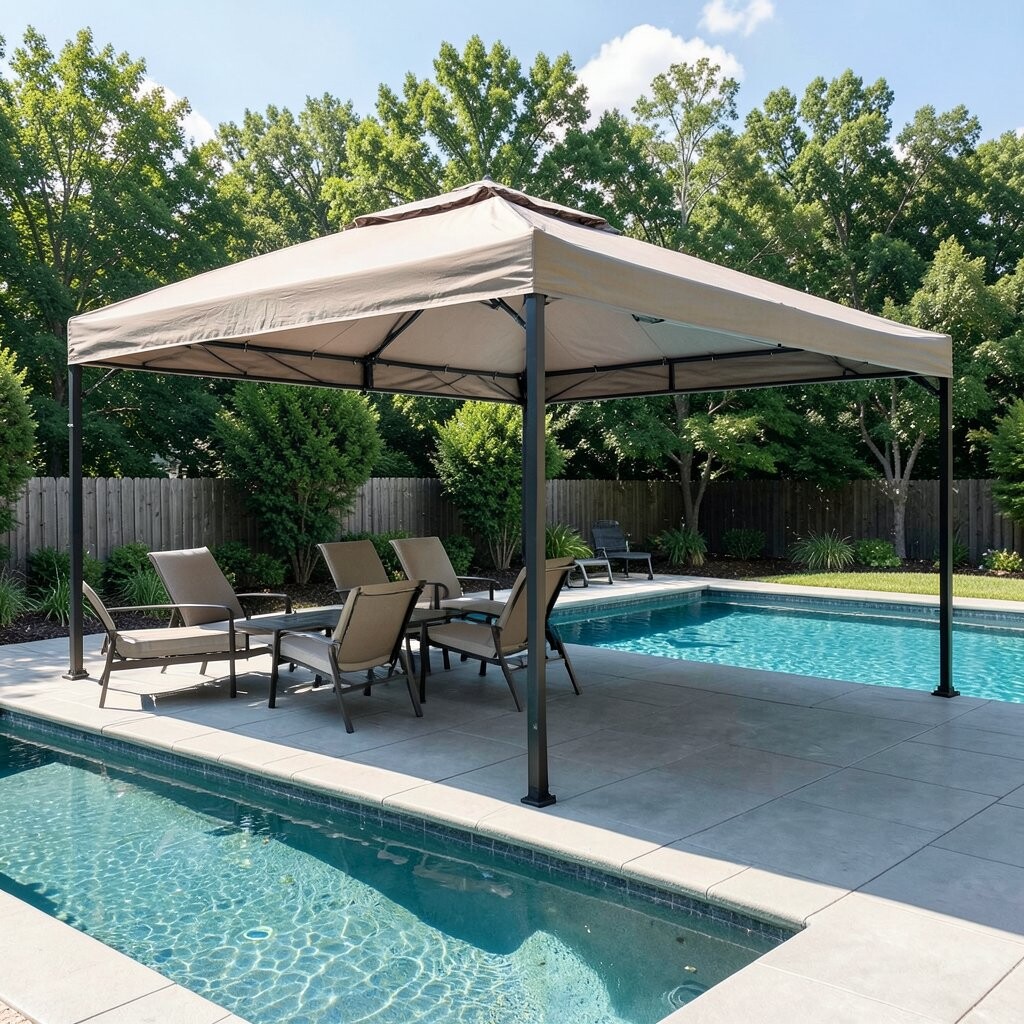
A canopy over a pool deck can make the area feel more luxurious and comfortable. It helps reduce sun glare off the water and makes lounging more enjoyable.
Choose materials that handle chlorine mist and strong sun, since pool environments can be tough on fabrics. Aluminum frames and specialized outdoor coatings usually perform well. For practical tips, make sure the canopy doesn’t restrict safety movement around ladders or steps.
This option feels unique because it’s designed around a high-heat environment with reflective surfaces. Personalize with fabric colors that complement your pool tile or surrounding stone. Budget-wise, pool-deck canopies can cost more because of size, anchoring needs, and weatherproofing upgrades.
21. Minimalist Awnings With Clean Modern Lines
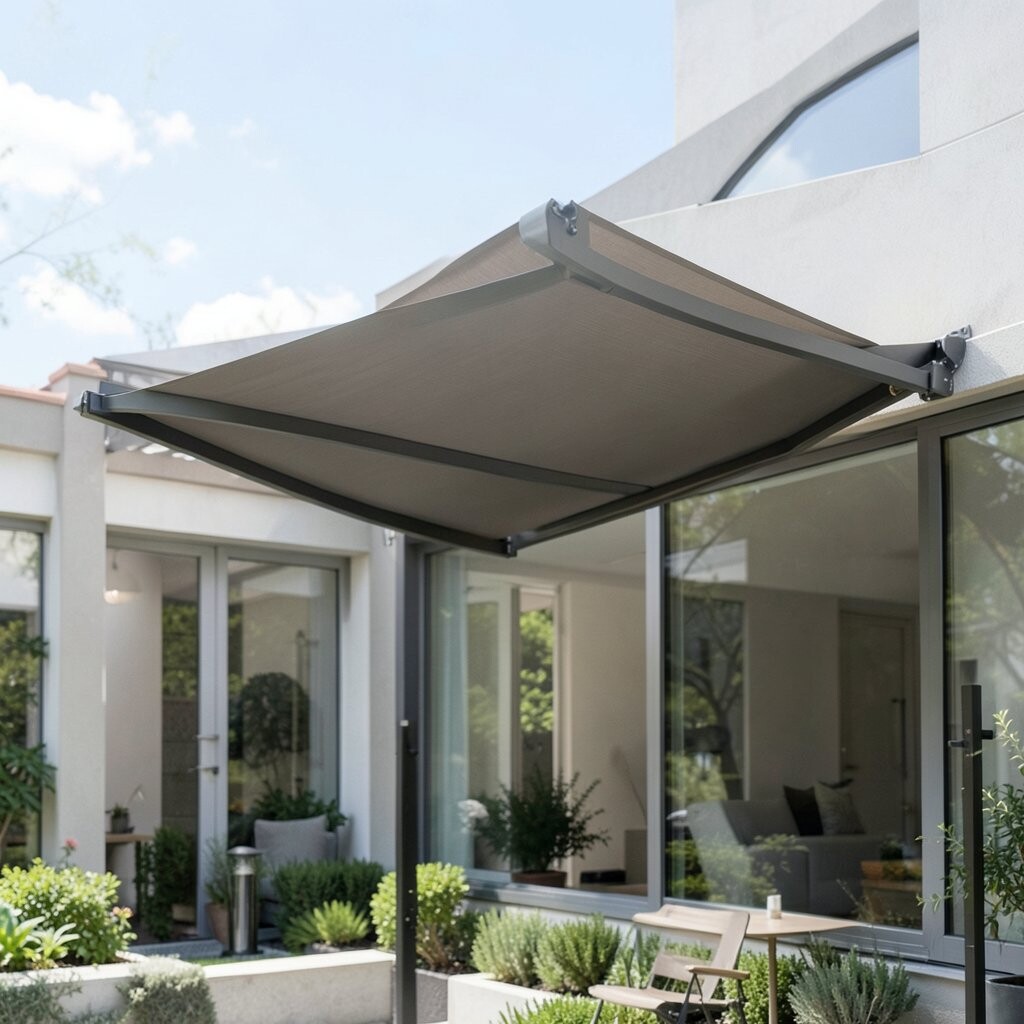
Minimalist awnings are a great pick if you want shade without visual clutter. Clean lines and simple shapes suit modern homes and tidy outdoor landscaping.
Look for narrow profiles, sturdy brackets, and fabric in neutral tones like gray, sand, or soft white. This unique style works well when you want the architecture to stay the star. For cost considerations, minimalist designs can be mid-range because they avoid overly complex shapes, but premium fabric and strong brackets still matter.
For personalization, add matching outdoor lighting or a simple planter layout underneath. Install with careful leveling so the awning drains properly and stays crisp in appearance. If you’re comparing canopies and awnings for a clean look, an awning often wins when shade needs to align with a wall.