
Small kitchens can feel cramped, but smart planning turns them into efficient spaces. With the right utility ideas, every square inch starts working harder for you.
1. Magnetic Knife Strip on the Side Wall

A magnetic strip keeps knives visible and ready without taking up drawer space. It also frees up counter room for cutting and small appliances.
Mount it on a sturdy wall near your main prep zone so you grab tools in one motion. Choose a strip finish that matches your hardware for a cleaner look. If your knives are heavy, use strong anchors and keep the strip away from areas that get splashed often.
2. Pull-Out Pantry Shelf for Tall Cabinets

A pull-out shelf turns a deep cabinet into an organized pantry you can reach. You stop digging and start finding ingredients fast.
Install a narrow pull-out organizer in a tall cabinet to store snacks, baking items, or canned goods. Measure your cabinet depth and allow a little clearance so the shelf slides smoothly. If you like a “right at eye level” setup, add a second shallow pull-out for daily items.
For cost, start with one shelf for the most-used cabinet, then expand later. A popular trend right now is multi-tier pull-outs that show labels and reduce clutter. Personalize by adding small bins for spices and rotating them based on what you cook most.
3. Corner Lazy Susan for Pots and Spices
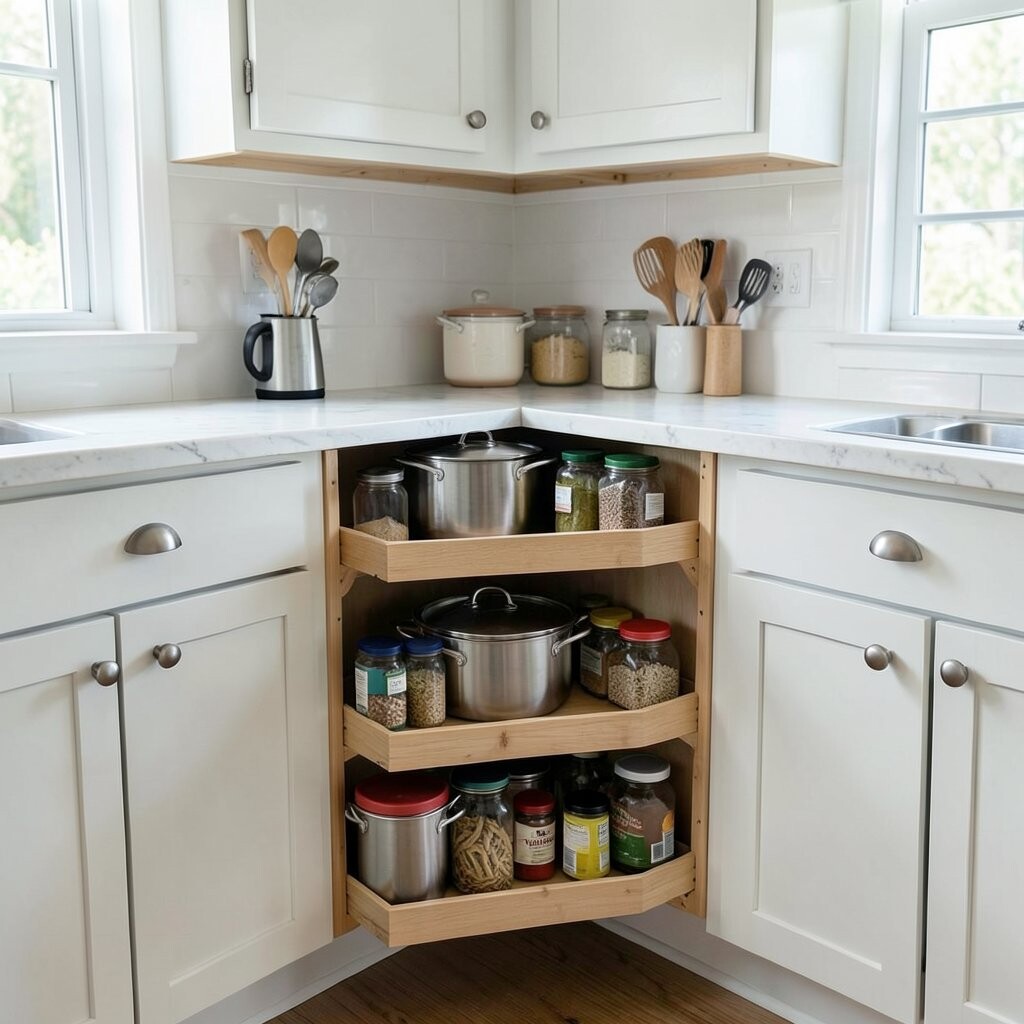
Corner cabinets are awkward, but a lazy Susan makes them usable. Suddenly, pots, pans, and spices sit in reach instead of getting lost.
Choose a model designed for your cabinet size and add it where it fits best, usually in the deepest corner. Put heavier items on the bottom tier and lighter spice jars on the top tier. Give labels a quick refresh so you can spot what you need at a glance.
For practicality, use non-slip mats so items don’t slide when you spin the turntable. Many homeowners like the “mix-and-match” trend of combining a lazy Susan with pull-out drawers nearby. You can also tailor the layout by storing baking sheets on a separate pull-out shelf beside it.
Budget-wise, a single corner insert can be more affordable than replacing cabinetry. If you’re handy, some kits install with basic tools, but professional help can ensure perfect alignment.
4. Under-Shelf Lighting for Dark Work Areas
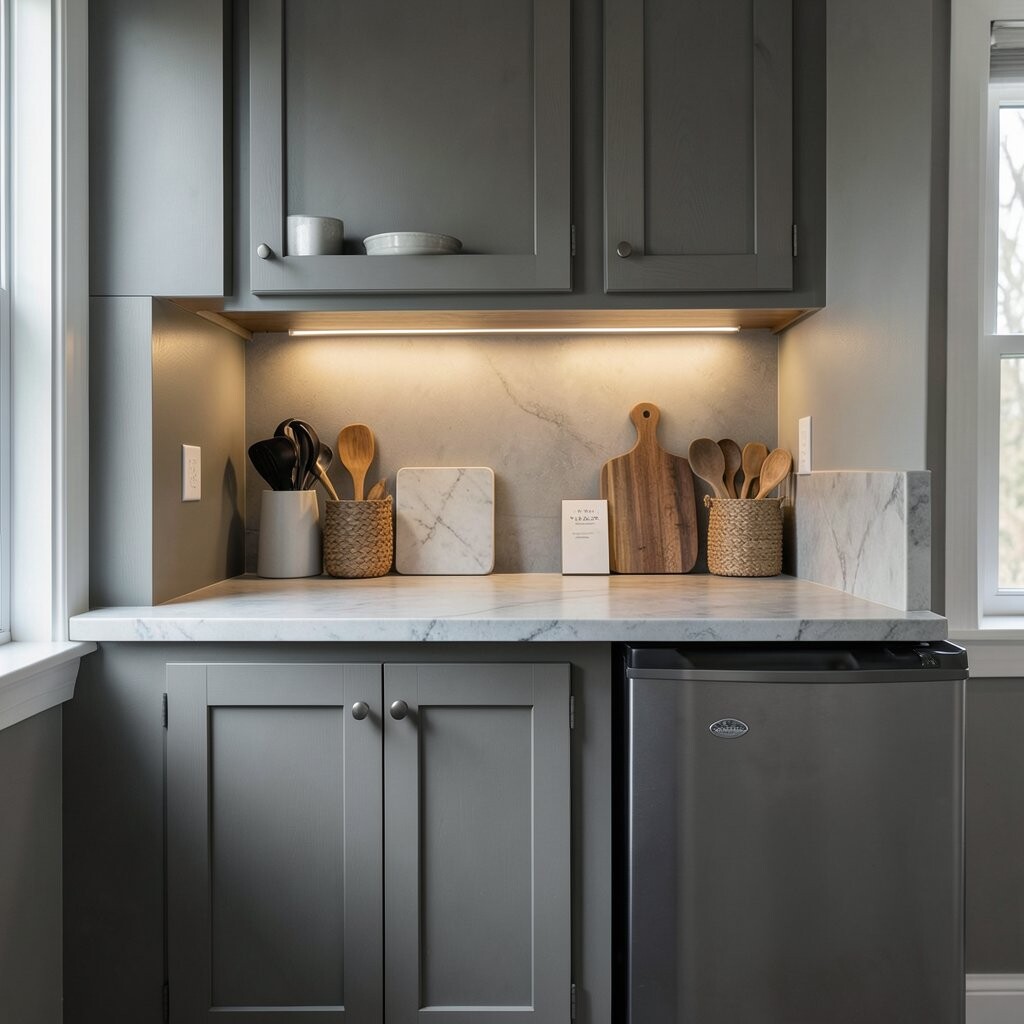
Good lighting makes a small kitchen feel bigger and easier to use. Under-shelf lights brighten counters without adding bulky fixtures.
Use LED strips or puck lights under cabinets so you can see cutting boards, stove controls, and spills right away. Opt for warm white for a cozy feel or neutral white for crisp task visibility. If you want extra control, add a dimmer so the kitchen works for cooking and for casual evenings.
5. Fold-Down Table Attached to a Wall

A fold-down table creates an instant prep or dining spot when you need it. When you don’t, it disappears and restores floor space.
Look for a table with a sturdy hinge and a locking brace so it feels stable during meal prep. Pair it with wall hooks or a small shelf nearby for utensils and a cutting board. For personalization, match the tabletop finish to your cabinets so it looks built-in.
In today’s designs, fold-down desks and tables are common in small apartments because they multitask. To keep costs manageable, you can choose a simple model and add a removable tray for cleaning and storage. Measure your clearance carefully so doors and drawers still open smoothly.
6. Vertical Pegboard for Utensils and Measuring Tools
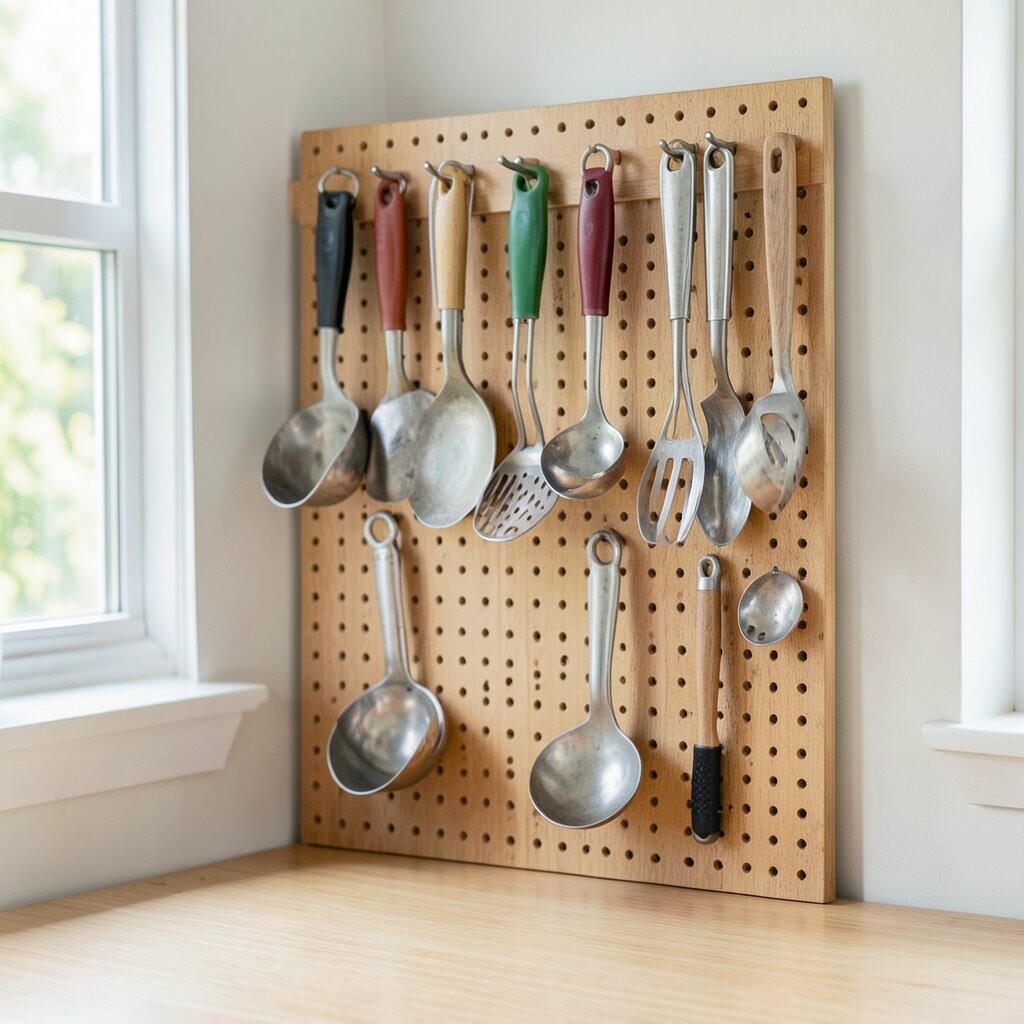
A pegboard is a flexible way to store tools without cluttering counters. You get a clear visual layout and quick grab-and-go access.
Mount pegboard near the prep zone and hang spatulas, ladles, measuring cups, and a few everyday gadgets. Use adjustable hooks so you can shift items as your cooking habits change. Add small baskets for rubber bands, twist ties, or spare batteries for kitchen scales.
For a modern look, choose a pegboard frame color that blends with your backsplash or cabinet hardware. Current trends favor open, tool-first kitchens because they reduce drawer rummaging. Personalize by dedicating zones: one for baking, one for cooking, and one for cleanup tools.
7. Drawer Dividers Built for Your Cooking Style
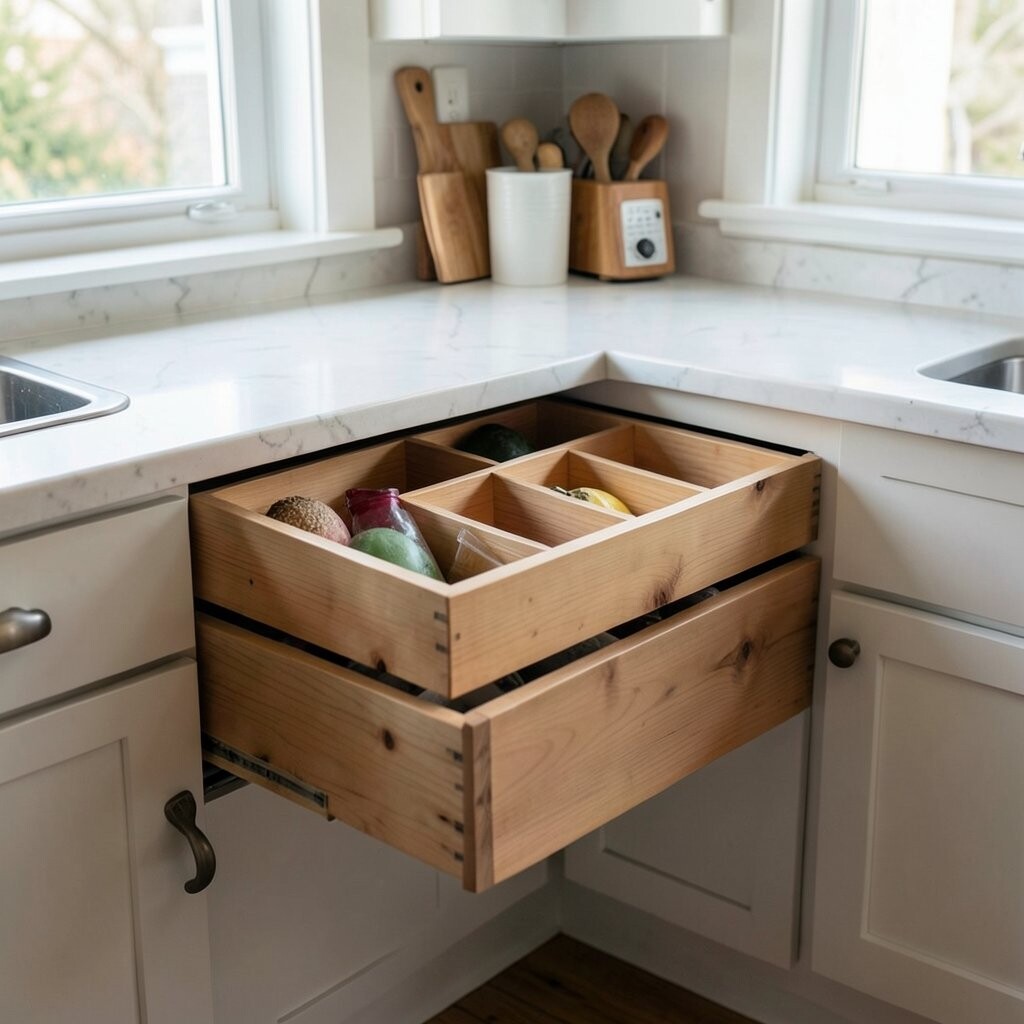
Custom-feeling drawer dividers help everything stay in its place. When your tools fit neatly, your drawers become easy to use and faster to clean.
Start by sorting utensils by daily use, then plan compartments that match the sizes you actually have. Foam organizers work well for odd shapes, while acrylic dividers look crisp and easy to wipe. Keep the top drawer for grab tools like peelers, scissors, and frequently used spoons.
If you’re budgeting, buy a divider set that adjusts, then add specialty inserts over time. A unique advantage of dividers is that they reduce “hidden mess,” since loose items can’t spill into random corners. For personalization, label compartments lightly so kids or guests can put things back correctly.
Trend-wise, many small kitchens now use standardized drawer zones to streamline cooking flow. Think of it like a mini station: prep tools together, cooking tools together, and cleanup tools together.
8. Stackable Food Storage That Shows What’s Inside

When containers stack neatly and look organized, your fridge and pantry feel calmer. Clear labeling also helps you use older items first.
Choose stackable bins or containers with matching lids so you don’t waste time searching. Keep a small rotation system by placing “ready to use” items at the front. Add a simple label area so you can write with a marker and refresh as your pantry changes.
To save money, start with the containers for your most common foods like rice, pasta, snacks, or baking mix. Many people are switching to modular sets because they expand gradually instead of buying everything at once. Personalize with color coding, such as blue for breakfast items and green for snacks.
Current trends lean toward transparent storage and “open shelving” style organization, even inside cabinets. If you worry about clutter, choose semi-opaque bins and keep the most visual items in the most eye-level spots.
9. Rail System for Pots, Pans, and Hanging Accessories

A ceiling or wall rail system turns kitchen storage into a tidy display. Hanging pots and pans frees cabinet space and makes cooking tools feel easy to reach.
Install a rail above your stove area and hang frequently used items with hooks that match their weight. Add a few shelves or baskets for small essentials like foil, sponges, or kitchen towels. This is especially useful in small kitchens where every cabinet opening matters.
For uniqueness, mix sizes of hooks so the display looks intentional, not random. Choose finishes that match your faucet or light fixtures so the whole kitchen looks cohesive. Many trends now favor practical “open utility” setups, where function looks like style.
Cost can vary, but you can start with a smaller rail for pots only, then expand with baskets later. If you rent, look for non-drill alternatives or a professional mounting plan so it stays secure.
10. Appliance Garage for Countertop Clutter

An appliance garage hides bulky tools and keeps your counter clear. Instead of letting gadgets sit out, you store them neatly and still reach them quickly.
Use a cabinet or DIY slide-out shelf with a door to cover your toaster, coffee maker, or blender. Keep only the items you use most so you don’t waste time opening it for things you rarely touch. A clear benefit is that the kitchen stays visually calm, which makes small spaces feel bigger.
11. Slim Over-the-Sink Organizer for Daily Tasks
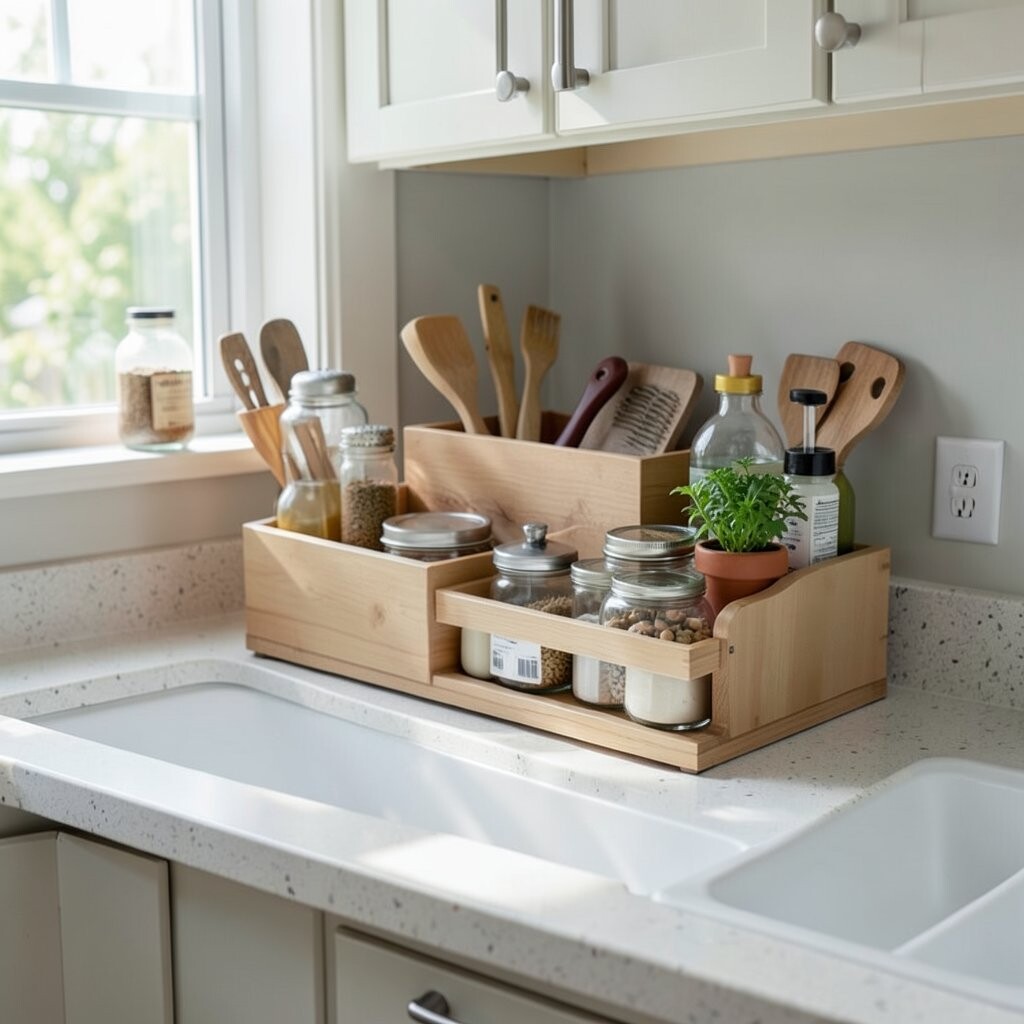
The area above and next to the sink becomes prime storage in a small kitchen. A slim organizer keeps soap, brushes, and drying tools in one spot.
Choose a unit that fits your space and includes hooks for sponges or a small rack for rinsing items. This helps you keep the counter dry and reduces mess buildup. For personalization, pick an organizer color that matches your soap dispenser or faucet finish.
If you prefer a more flexible setup, use a vertical rack system so you can rearrange parts as your routine changes. People are currently choosing countertop organizers that look minimal and don’t block sink access. Cost-wise, these usually start affordable, and you can upgrade components later.
12. Sliding Shelves Inside Cabinets Instead of Swing Doors
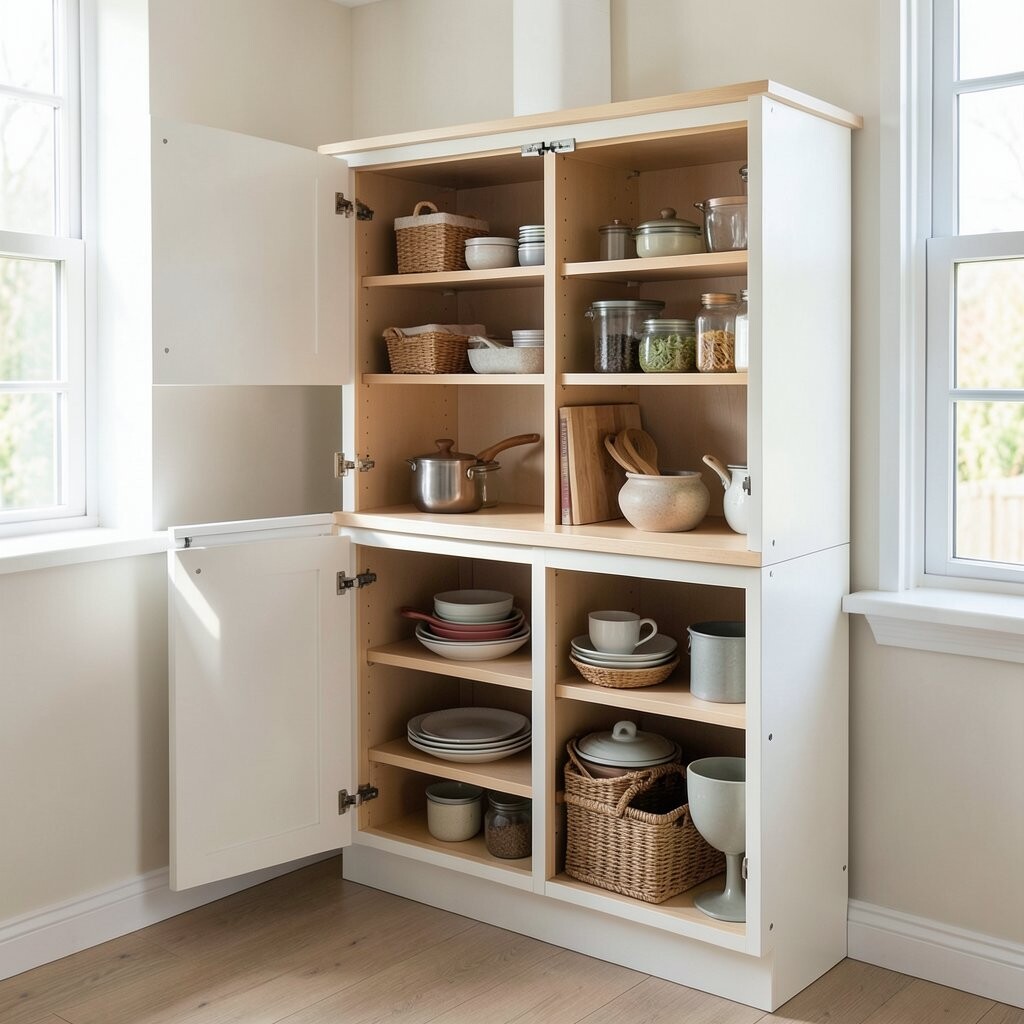
Sliding shelves make deep cabinets easier to reach than swing-out doors. You get full access without bending or digging.
Install rails and create shelves that pull forward so you can see items clearly. Store bulk items or baking supplies on these shelves for quick grabbing. If you love neatness, add a consistent system of containers and labels so everything looks uniform.
This idea is unique because it changes how you move around the kitchen. You’ll reach less often for tools in crowded areas, which keeps the workflow smoother. For cost, you can start with the cabinet that holds your most-used supplies and upgrade one at a time.
Trend-wise, more people are replacing wasted cabinet space with built-in-like sliding systems. Choose finishes that match your existing hardware so the upgrade looks intentional, not temporary.
13. Corner Drawer for Baking Sheets and Cutting Boards

Instead of leaning cutting boards and baking sheets upright, store them flat in a dedicated drawer. This saves space and prevents scratches and warping.
Build or buy a shallow “board storage” drawer that fits your items without squeezing. Place cutting boards in a vertical slot and add a divider for baking sheets so they stack neatly. Keep one drawer for prep boards and another for bakeware if your space allows.
The unique part is that you create a single home for messy-to-store items. You reduce clutter on the counter and avoid the usual “board pile” that eats up shelf space. Personalize by adding a small tray for oil, salt, or herbs that you use during prepping.
Cost considerations depend on whether you DIY or purchase an insert kit, but either option usually costs less than redoing cabinets. If you rent, consider a freestanding organizer that slides under an adjacent shelf for similar benefits.
14. Rail Hooks Under Cabinets for Towel and Tool Storage

Adding hooks under cabinets uses a zone people often overlook. It’s a simple way to store towels, measuring spoons, and small utensils without taking counter space.
Use the underside rail to hang dish towels or a lightweight caddy for frequently used tools. Make sure hooks are positioned so they don’t interfere with cabinet doors when opened. Keep items light and easy to remove for cleaning.
This makes your kitchen feel more tailored because it creates “micro-zones” for specific tasks. It’s also a trend in small apartments where wall space is used efficiently. If you want personalization, assign each hook a job, like one for cooking towels and one for everyday utensils.
15. Use a Rolling Cart as a Mobile Prep Station
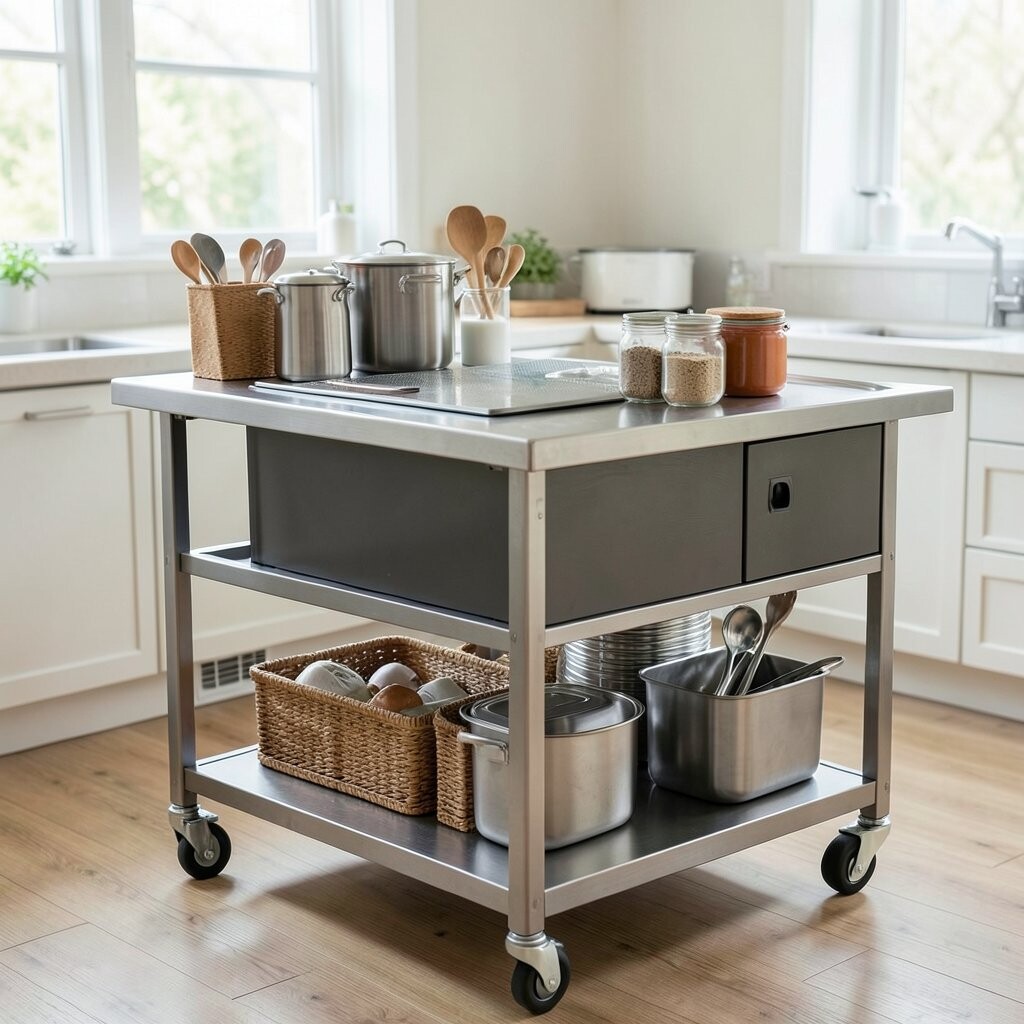
A rolling cart adds extra workspace that moves where you need it. When the kitchen is busy, you roll it aside and free the area.
Pick a cart with a countertop surface, shelves, and hooks if possible so it can hold spices, utensils, and small appliances. Choose caster wheels that lock for safety when chopping or using hot pans. Keep frequently used items on the cart for a “mini kitchen” feeling.
Unique to this idea is the flexibility: one day it’s a coffee station, and another day it’s a meal prep island. Many people are currently choosing slim rolling carts because they fit narrow hallways and corners. For cost, a basic cart can be affordable, and you can upgrade shelves or add bins as your needs change.
16. Removable Pantry Door Shelves for Easy Reorganization

Door-mounted shelves use space that often sits empty. They’re great for items that you reach for often.
Install removable shelves on the inside of the pantry door for spices, small snacks, or cooking oils. Make them adjustable if you can so you can change the setup seasonally. This keeps your pantry organized and reduces clutter inside the main shelves.
If you want something unique, use small clear containers on the shelves so you can see levels quickly. For cost, door racks are usually less expensive than major cabinet upgrades. Current trends favor modular storage, which means you can rearrange without starting over.
Personalize by grouping items by meal type, like “taco night” seasonings or “baking” essentials. As your habits shift, the removable shelves can keep up.
17. Color-Coded Canisters for Quick Scanning
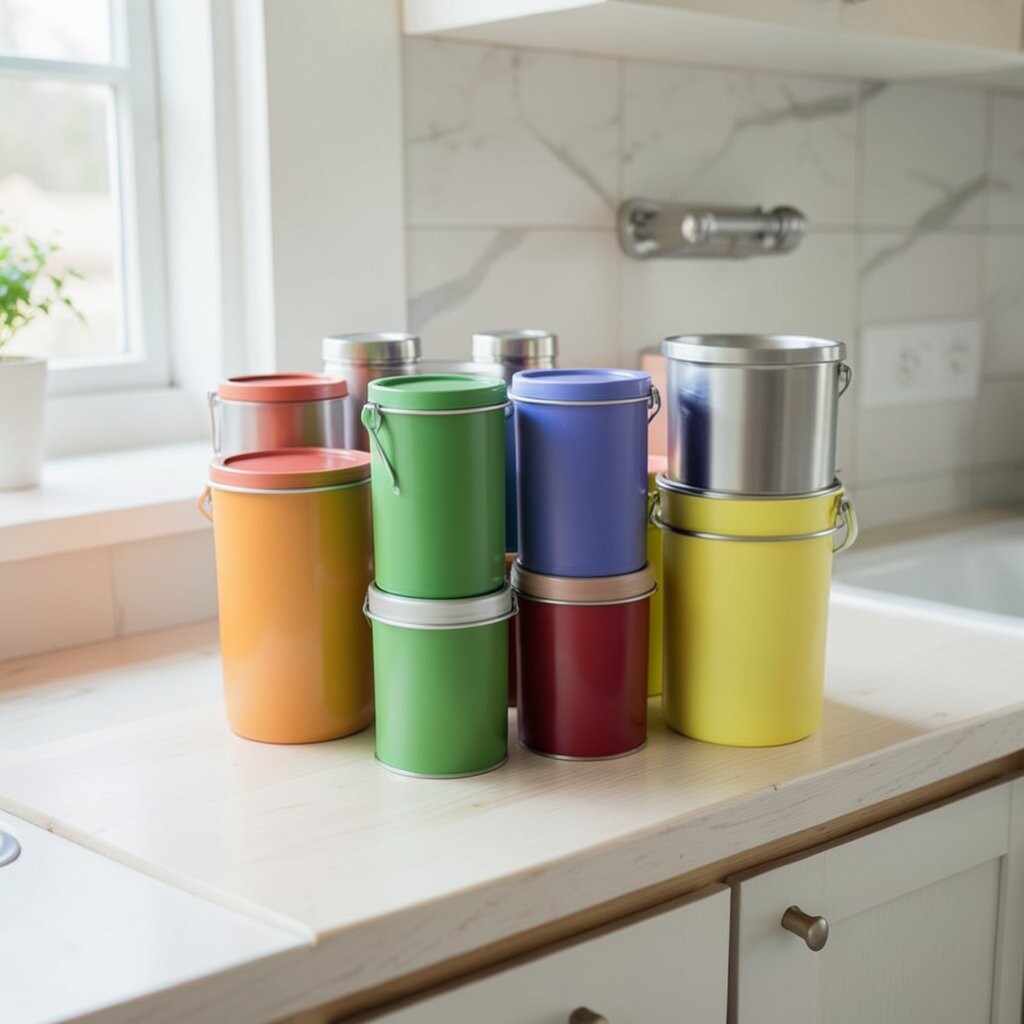
Color-coded canisters help you scan your pantry in seconds. It’s a small detail that makes storage feel organized without a lot of effort.
Use similar canisters for dry goods like flour, sugar, pasta, or cereal and assign each a label and color. Keep the most-used canisters at eye level and place backup containers higher or lower. This visual system reduces the chance of buying duplicates and helps you plan meals faster.
What makes this idea unique is the combination of aesthetics and utility. Your pantry looks neat, but you also spend less time searching. In current kitchen trends, “intentional pantry styling” is popular, especially on open shelves and in reachable cabinet zones.
Budget considerations are important, so start with canisters for your top five staples. Look for refillable or stackable options to reduce waste and save money long-term. Personalize the look by matching the canister colors to your kitchen theme.
18. Compact Sink Sprayer and Extended Hose Setup

A better sink sprayer improves daily cleaning and reduces water mess on small counters. It can also speed up rinsing dishes and prepping vegetables.
If your sink has limited reach, consider an extended hose sprayer or a compact add-on sprayer head. Position it so you can spray into corners, deep pots, and baking trays without leaning. This makes cleanup more efficient and helps keep counters clear while you wash.
It’s unique because it changes how you use your kitchen without adding storage clutter. When cleanup is faster, your kitchen stays tidy longer. For cost, sprayer upgrades are usually mid-range compared to cabinet remodels, making them a practical investment.
Trend-wise, many homeowners focus on “small comfort upgrades” that add big convenience. Personalize by choosing a finish that matches your faucet and keeping a small caddy for soap nearby.
19. Shelf Above Fridge or Tall Cabinet for Bulk Storage
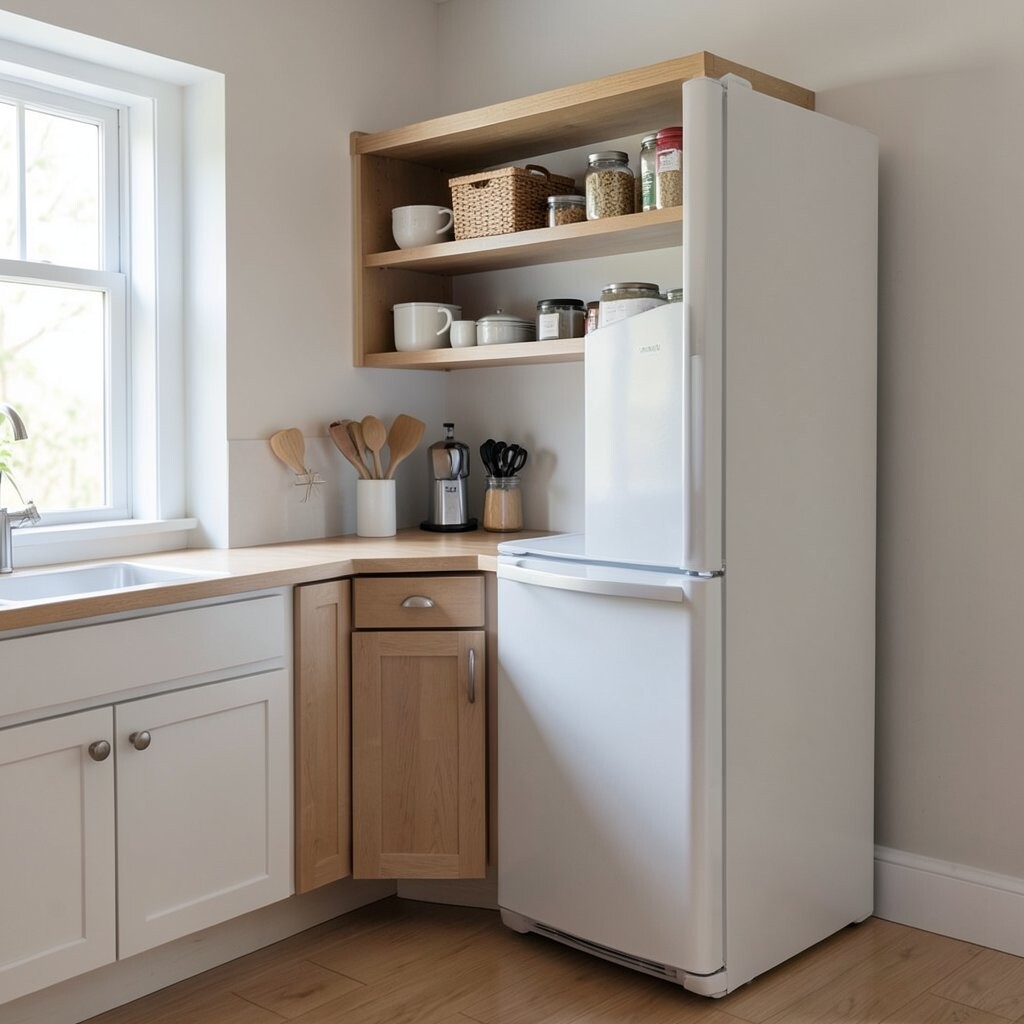
The space above a fridge or tall cabinet is often empty, but it can store less-used items. Using the upper zone adds capacity without affecting your main counter area.
Add a sturdy shelf or use a high cabinet organizer to store bulk goods, backup supplies, and seasonal cookware. Keep it reachable with a safe step stool, and avoid storing items that you’ll need daily. For safety, secure shelves so items don’t shift when you open doors below.
This idea is unique because it uses the “vertical ceiling” space that most people forget. It benefits you by keeping frequently used items at eye level while hiding the extras. Current trends lean toward tall storage solutions and maximizing vertical real estate, especially in apartments and compact homes.
Cost-wise, a shelf system can be affordable, particularly if you measure carefully and install it yourself. Personalize by adding labeled bins for bulk snacks, extra linens, or holiday serving items so the shelf stays organized year-round.