Small kitchens can feel crowded fast, but they don’t have to. Vintage style brings order that looks charming.
1. Labeled Apothecary Jars for Dry Staples
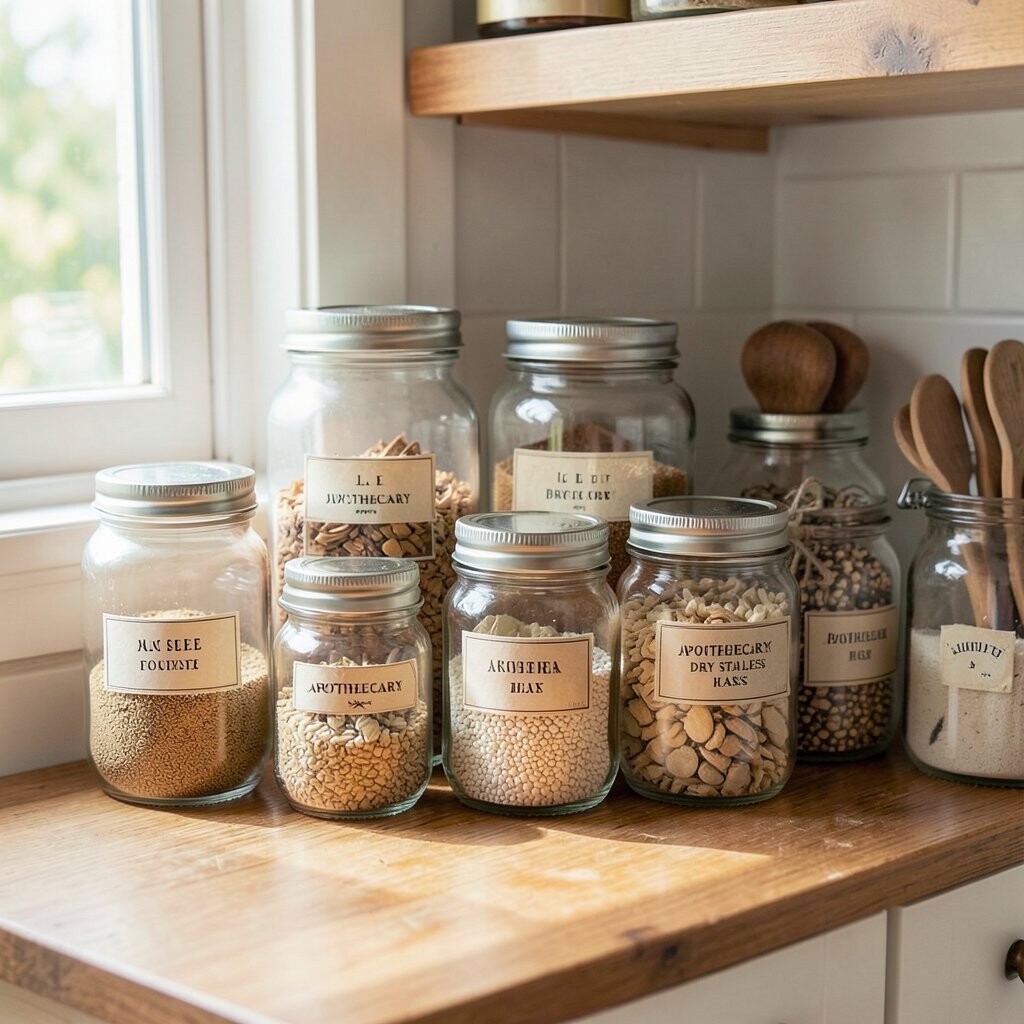
Choose matching glass jars with paper labels that look like old apothecary tags. Put them on one counter run or in a shallow cabinet section.
Use a label maker with dark ink to write “rice,” “oats,” and “flour” in a tidy style. Keep only the staples you use often, so the shelf stays light and uncluttered. For personalization, add small color dots to match your kitchen theme, like sage green or faded cream.
2. Repurposed Tin Canisters on a Wall Rail
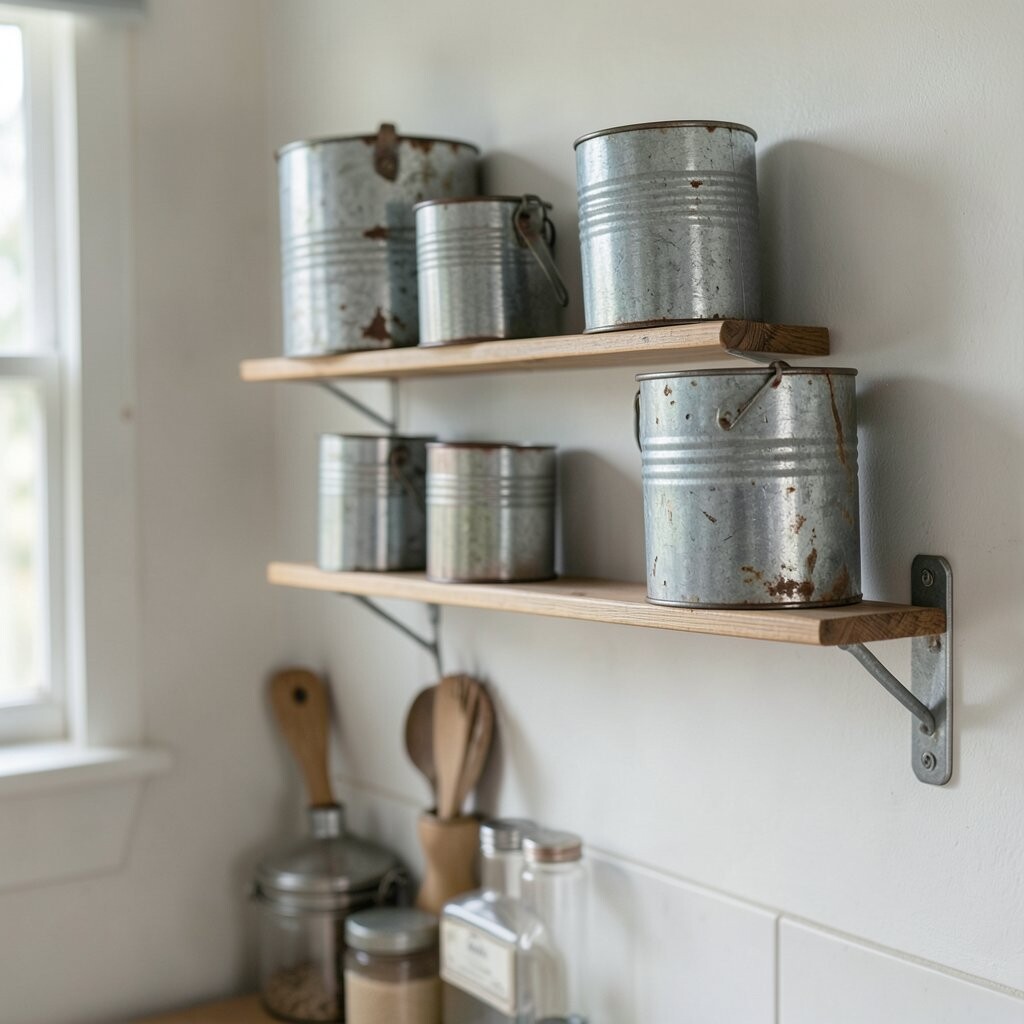
Mount a vintage-style wall rail and hang small tin canisters for daily items. It turns unused vertical space into an easy grab zone.
Store tea bags, sugar packets, cinnamon, or snack mixes in each canister so you can see what’s running low. Choose tins that clip on securely, then wipe them often to avoid dust buildup. If you’re working with a tight budget, hunt for mismatched tins at thrift stores and unify them with one color spray paint.
When you organize by frequency, you place “grab now” items at eye level and reserve the rest for the lower row. This keeps your tiny kitchen calm during busy mornings. The best part is that the rail looks decorative even when it’s filled.
3. Drawer Dividers With a Farmhouse Feel
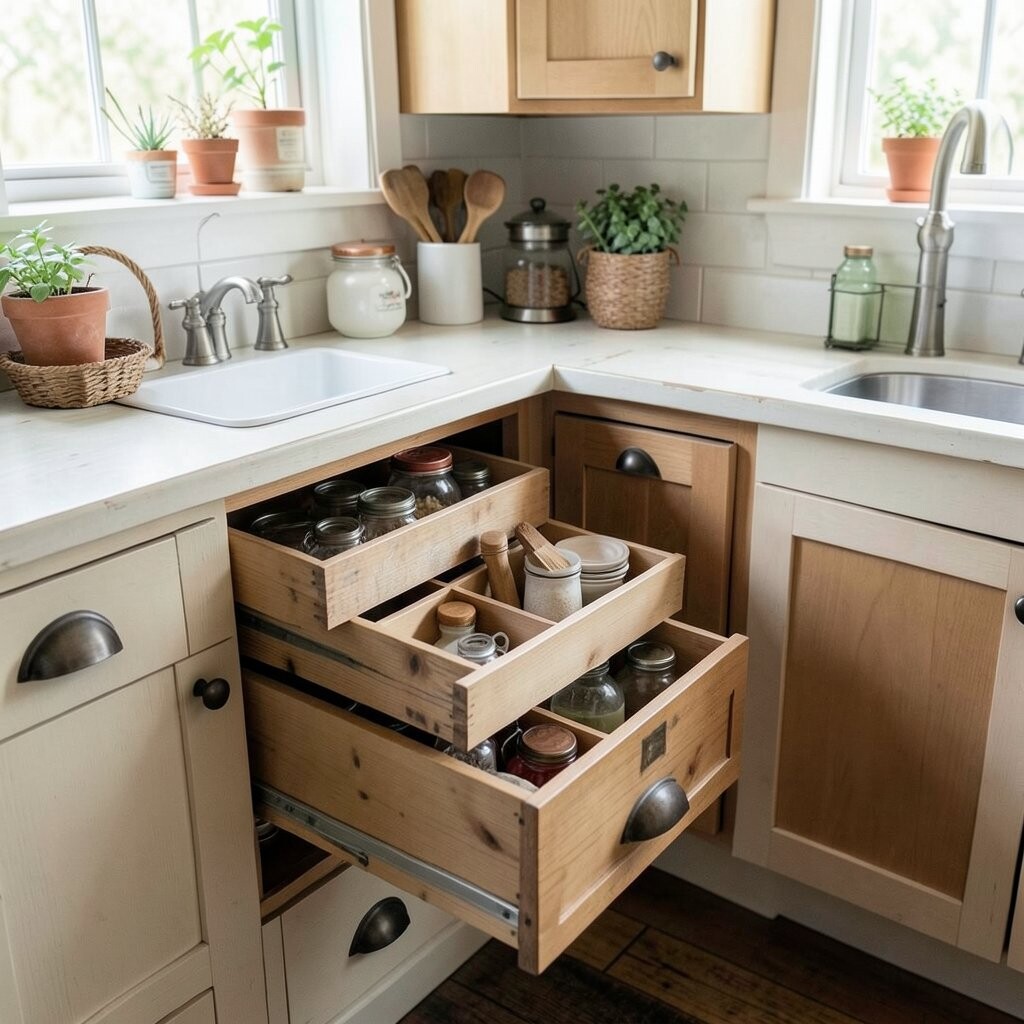
Swap cluttered drawer chaos for simple dividers made from wood, bamboo, or vintage-looking plastic. A drawer that holds shape makes cooking feel smoother.
Group tools by type, like measuring spoons together, spatulas together, and pens or note cards in a small corner pocket. Add a thin strip of felt or foam liner to stop items from sliding and to protect fragile handles. For a unique touch, paint or stain dividers in warm tones like honey or walnut.
To make it practical, measure your drawer width before buying and allow space for growth when you add new gadgets. If you need a low-cost fix, repurpose old cutting boards to create sturdy divider panels. This hack also helps you quickly spot missing pieces, which is great for shared households.
When your drawer is neat, you spend less time rummaging and more time cooking. It’s a small change with a big “tiny kitchen makeover” effect.
4. Hanging Under-Cabinet Baskets for Produce Prep

Install wire baskets or small under-cabinet holders for onions, lemons, or herbs so they stay visible and reachable. This keeps counters free while still showing what you have.
Use baskets with hooks or mounting brackets designed for kitchen use, then group items by how fast you go through them. Add a liner like parchment paper or a thin cloth to reduce mess and keep things from rolling. For cost savings, start with just one basket for herbs or onions, then expand when it proves useful.
5. Vintage-Style Spice Cards Inside a File Folder

Convert a classic file folder into a spice card system for a neat, old-school look. It’s like a tiny pantry library without the clutter.
Write spice names on cards and store them in clear sleeves inside the folder, then label the back of each jar so matching is easy. Keep the folder near where you cook, such as by the stove or inside a cabinet door pocket. For personalization, choose a folder with floral patterns or subtle distressed edges.
This setup helps you plan meals because you can scan your spices in seconds. It also makes refills more consistent, since you always see what you own and what’s almost gone. Look for inexpensive card sleeves and a folder from a stationery store, thrift shop, or discount aisle.
6. Tea Towel Roll-Up Storage on Cabinet Side Hooks

Roll your tea towels and store them vertically using cabinet side hooks or small rings. You get an organized look that feels practical and vintage.
Keep the hooks near where you dry dishes so towels stay within reach. Rotate towels by usage, placing the most used one on top and saving specialty towels for later. If you like a charming theme, use hooks in brushed brass or matte black to match other hardware.
To make this hack work in a truly tiny kitchen, use only two to four towels so you don’t create a new storage problem. Many people waste space by storing too many towels, and that’s the opposite of what you want.
7. Corner Lazy Susan Using a Repurposed Turntable
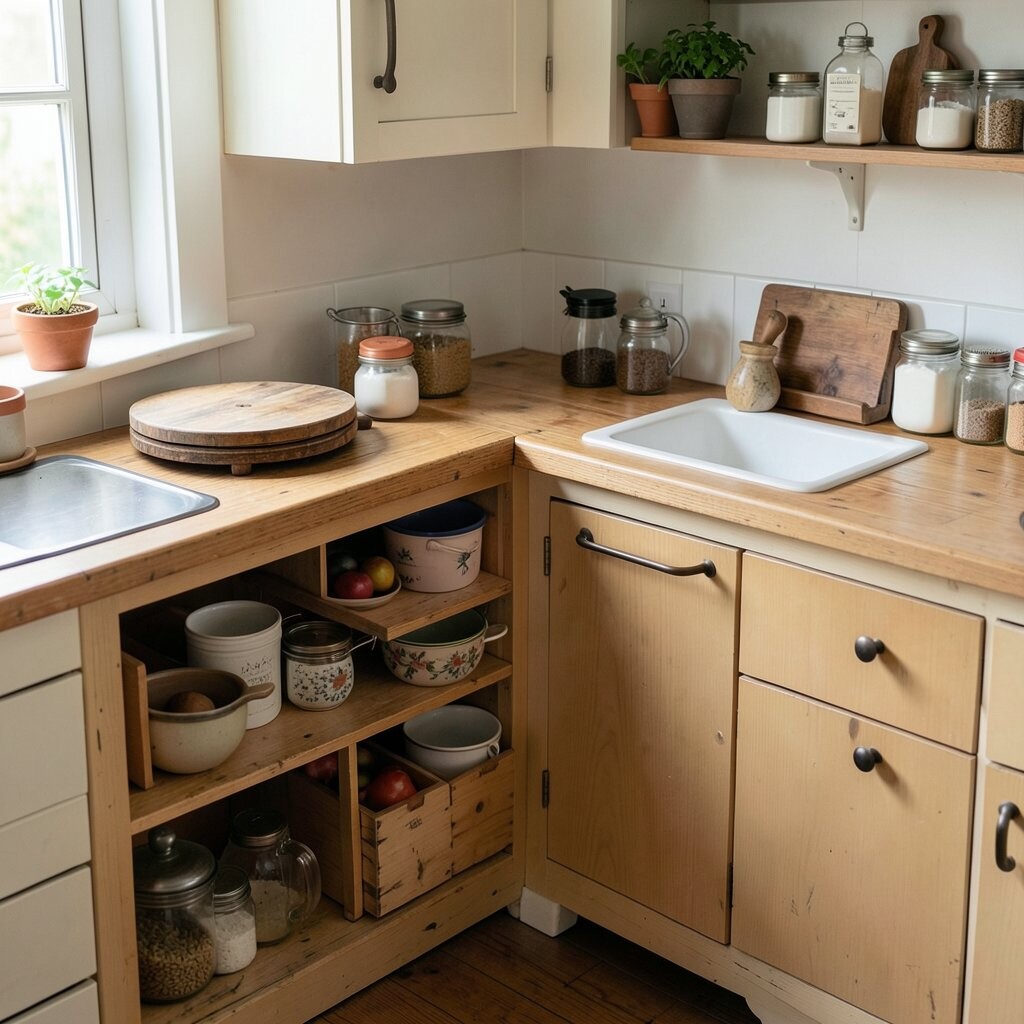
Place a thrifted turntable or shallow lazy Susan in a corner cabinet to tame awkward angles. It turns a dead space into a quick “spin and grab” pantry.
Use it for small jars, baking supplies, or bottles you reach often, like vanilla and cooking oil. Add small paper labels so you can return items to their exact spot after every use. For personalization, paint the base in a muted cream or seafoam color so it matches your kitchen vibe.
If the items slide, use a non-slip mat underneath or cut circles from drawer liner material to fit the top. This is a low-cost hack that can feel high-end. The convenience also means fewer items get lost behind other items.
8. Vintage Tins for Cleaning Tabs and Dish Supplies
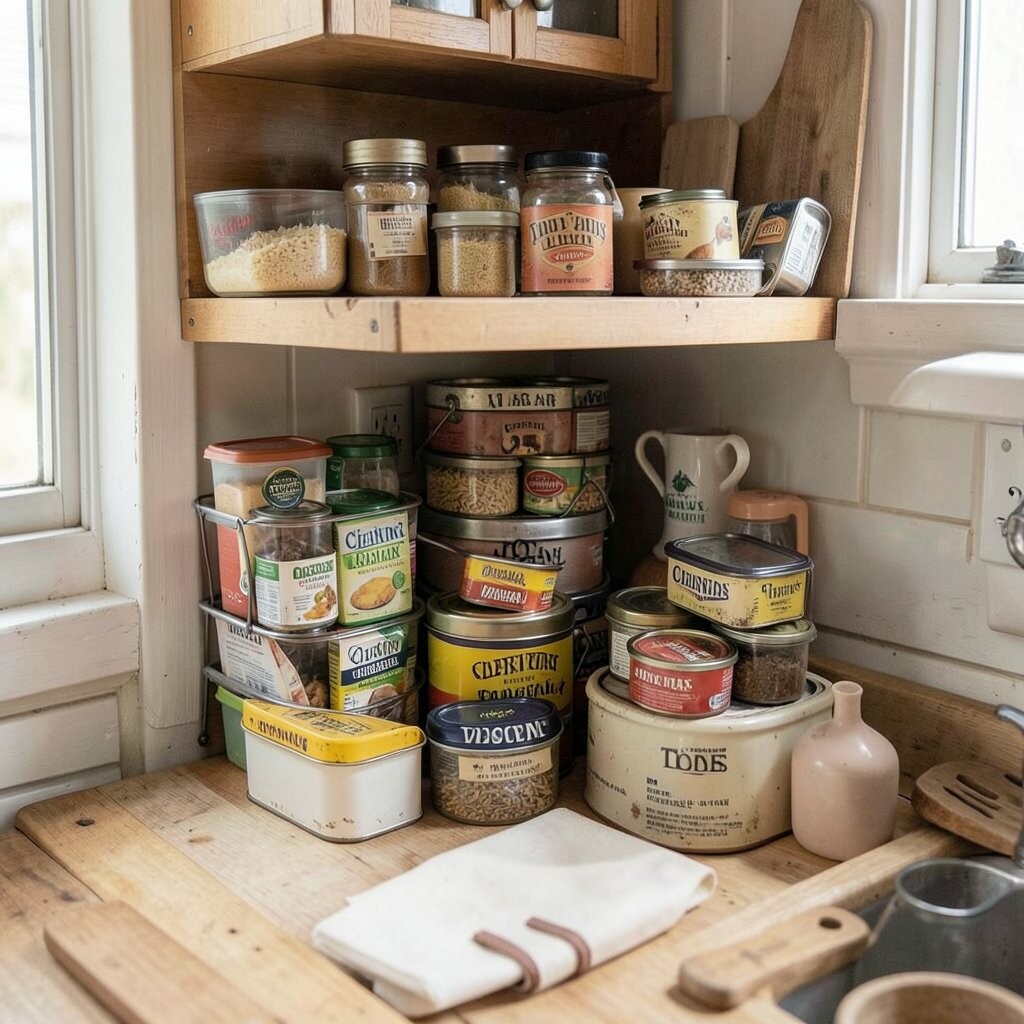
Store dish tabs, sponges, and cleaning pods in tidy vintage tins with airtight lids. When everything has a home, your sink area stays welcoming.
Put one tin near the sink for quick restocks and another tin tucked inside a cabinet for backups. Use a simple label like “pods,” “sponges,” or “refills” so family members can keep things orderly. If you prefer a softer look, choose tins with muted patterns rather than bright colors.
To keep it practical, keep only one size of pod or soap type in each tin. Mixing too many formulas makes it harder to grab the right thing and can create waste. This hack also protects supplies from moisture in small, humid kitchens.
When your cleaning zone is neat, the whole kitchen looks more put-together, even during busy weeks.
9. Cabinet Door “Recipe Book” Pocket Organization
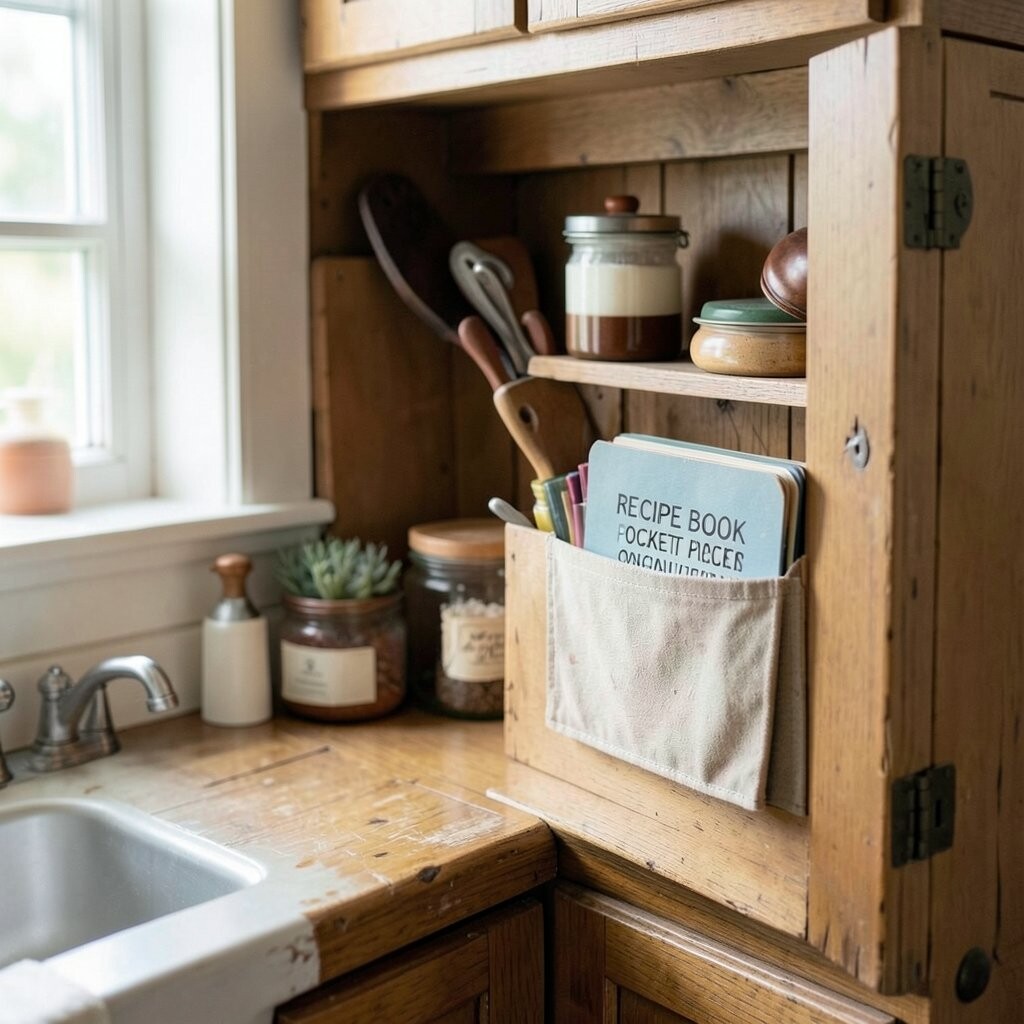
Use a vintage-style file pocket or cookbook holder attached inside the cabinet door. It’s a clever way to store recipes, baking instructions, and small packets without using more shelf space.
Keep your most-used recipe cards near the ingredients so cooking steps feel close at hand. Add clear sleeves for spice mixes or quick-reference guides like “pasta chart” or “tea ratios.” For uniqueness, pick a holder with classic lines or a distressed look that fits your kitchen theme.
To stay organized, limit what you store inside to paper items and small sachets only. If you start adding random containers, the pocket becomes clutter again. This is a small organizational anchor that prevents tiny messes from spreading.
Pair it with jar labels so your kitchen has a consistent “old-fashioned system” feel.
10. Small Rolling Cart With a Thrifted-Look Top Shelf
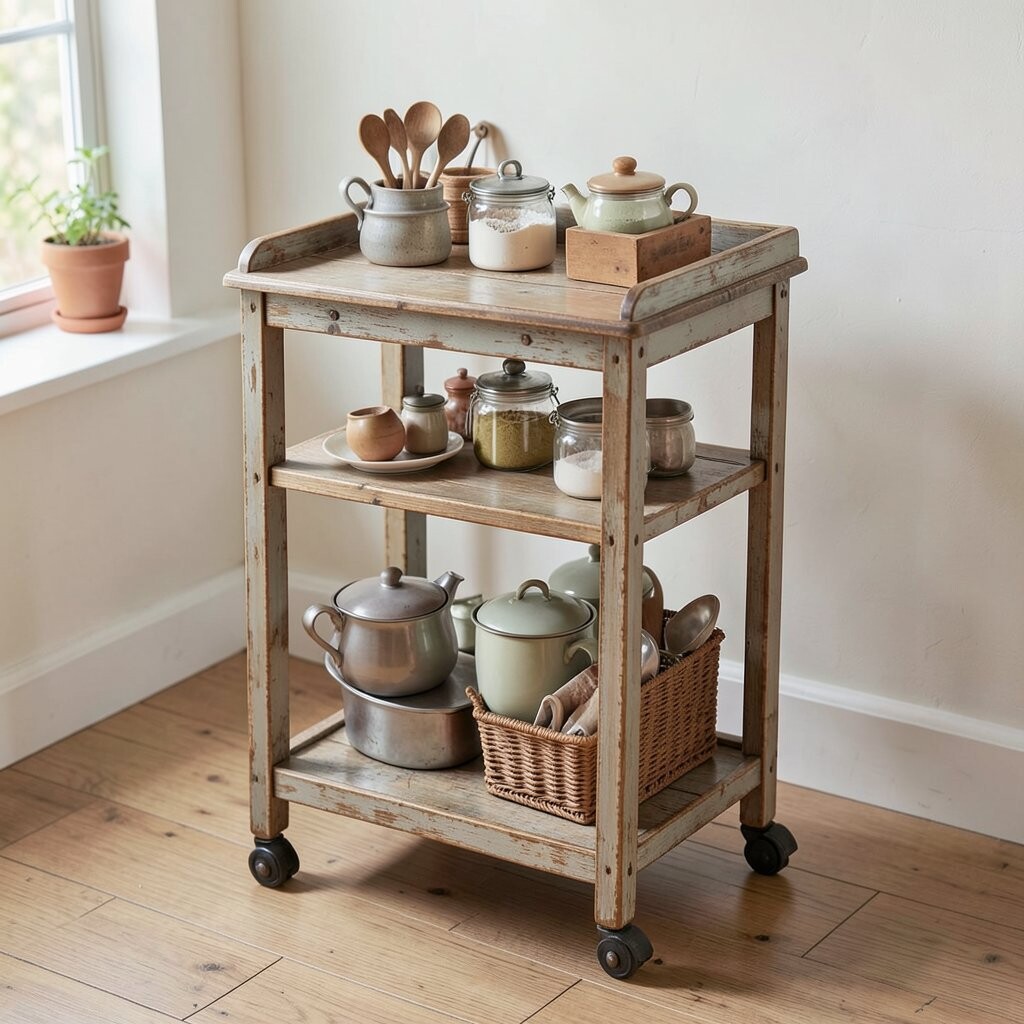
Add a narrow rolling cart for staging prep items, snacks, or breakfast tools. Choose one with a top shelf that looks like vintage metal or wood, so it blends into your decor.
Use the lower shelves for bulk-but-small items like bags of chips, extra napkins, or tea. Keep frequently used items on the top shelf, since it’s what you’ll reach for during cooking. For personalization, wrap a roll of butcher paper in a ribbon holder on the cart so you get a charming “market” vibe.
If you worry about cost, look for a used cart at secondhand stores or yard sales. A cheap cart plus a small makeover like new wheels or a simple stain can look brand new. This hack is great because it’s flexible; you can move it when your kitchen layout changes.
11. Mug Hooks by the Sink With Matching Colors

Hang mugs on hooks near the sink or coffee corner instead of stacking them in a crowded cabinet. It keeps your favorite cups visible like a vintage café display.
Choose hooks that match your hardware, then space them so mugs don’t clink too often. Sort by size, putting larger mugs on one side and smaller ones on the other. For personalization, pick a color theme for labels or use the same twine wrap on the hook handles.
This works especially well for tiny kitchens because it reduces cabinet clutter and makes morning routines faster. If you’re short on wall space, use a single row of hooks and store rarely used mugs inside a cupboard. Consider using coaster clips or felt pads to protect mug handles and prevent scratches.
12. Mason Jar Canisters for Baking “Grab Bins”

Make baking easy by filling mason jars with frequently used supplies like baking soda, sprinkles, or mini chocolate chips. Keep them together in one spot so you don’t hunt across shelves.
Use a small tray or shallow basket at the bottom of a cabinet to hold the jars, so they don’t roll or shuffle. Label each jar clearly and include an estimate like “1 cup” for fast measuring. For unique styling, add a ribbon loop around jar lids or use vintage-style chalk labels.
To keep costs down, use jars you already have and focus on buying labels or a tray. This hack keeps your baking inventory tidy and also reduces expired “mystery ingredients.” When you can see what you own, you bake more without the stress.
13. Rolling Wire Shelf for One-Shelf Pan and Pot Control
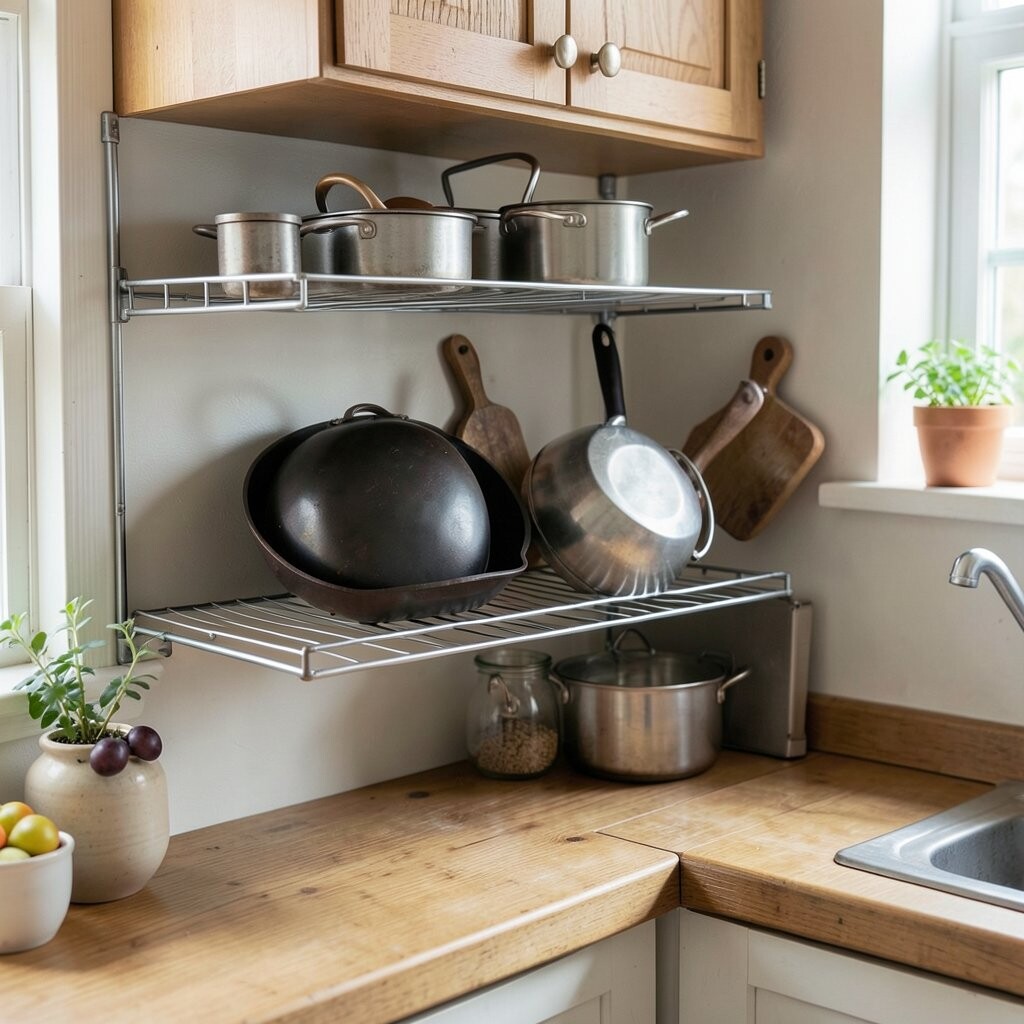
Install a slim pull-out wire shelf to manage lids and small pans in a narrow cabinet. It’s a space-saver that still feels vintage-modern when you pair it with decor.
Store lids vertically or in a dedicated spot so they don’t wedge and chip. Put lighter pans on upper levels and heavier items on sturdier placements. If you’re customizing, add a wooden dowel or short guard to prevent items from falling forward when you pull out the shelf.
This hack is unique because it tackles one of the hardest tiny kitchen problems: lid and pot chaos. It also helps you quickly find the right size pan, which makes cooking less frustrating. Set a budget by choosing a smaller pull-out shelf that fits one cabinet section first.
14. Under-Sink “Bottle Library” With Tagged Baskets
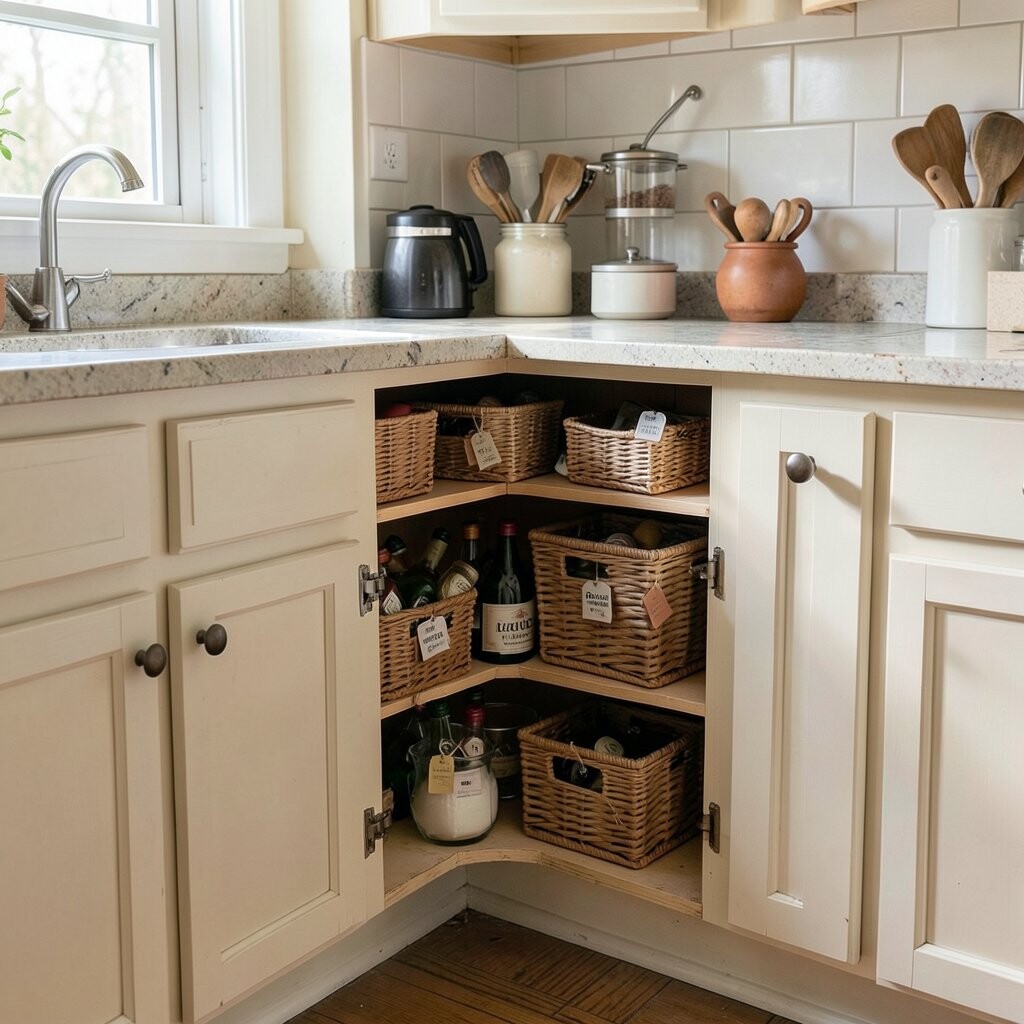
Create an under-sink system using labeled baskets or caddies for bottles, cleaning cloths, and backup refills. It turns a messy space into a neat little library.
Use separate baskets for trash bags, sponges, and cleaning solutions so spills don’t mix. Add tags to each basket and keep the heaviest bottles at the back where they won’t tip. For personalization, use kraft paper tags tied with twine to echo a vintage market look.
15. Narrow Countertop Chalkboard for One-Pantry List
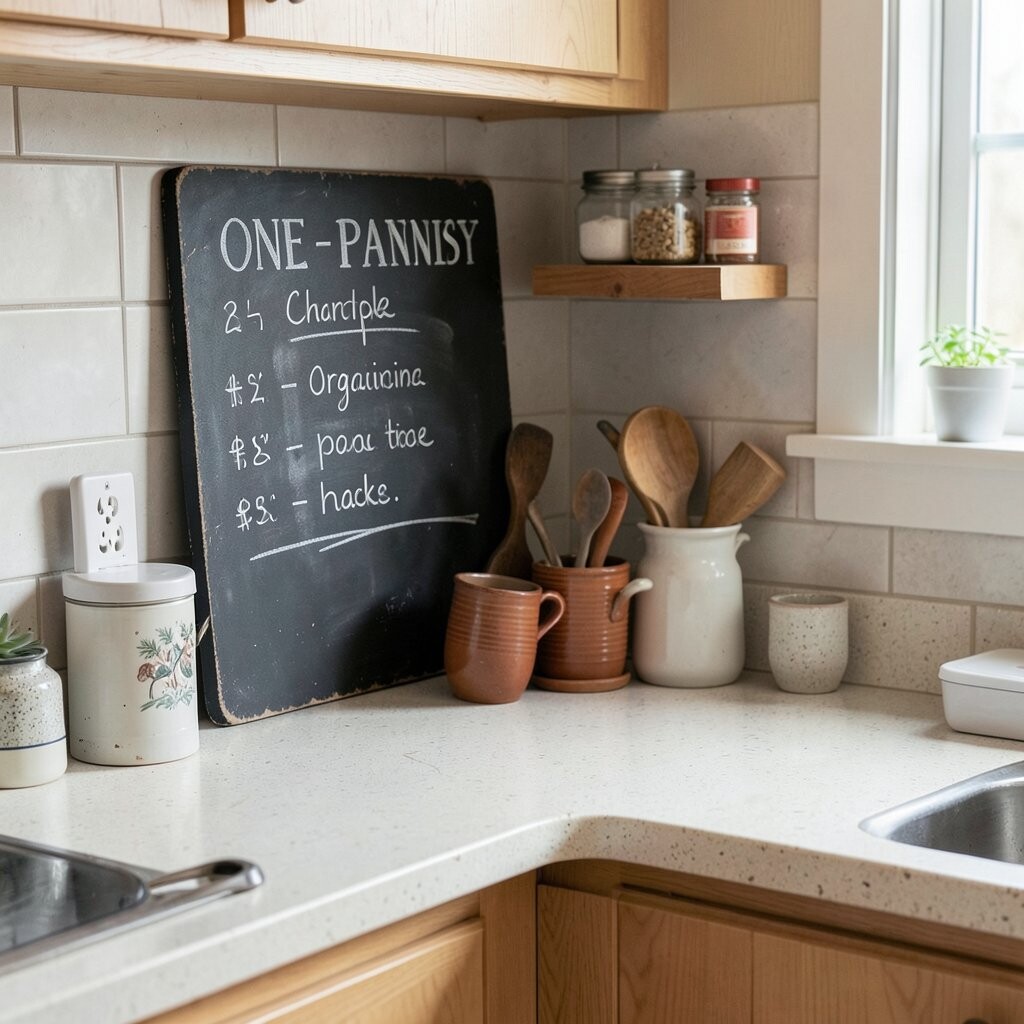
Place a small chalkboard or magnetic board on the wall near your pantry door. Write a short “running list” so you restock without searching through everything.
Keep it simple with categories like “pasta,” “snacks,” and “breakfast,” and erase daily when you buy something. This small step reduces the temptation to buy duplicates and adds order to your routine. If you want a vintage flair, choose an arched board frame or a weathered finish.
For cost, you can use a scrap of chalkboard paint on wood or repurpose an old frame with a chalkboard insert. It also works beautifully in tiny spaces because it’s wall-based and doesn’t steal counter room.
16. Repurposed Photo Frames for Front-Facing Storage Labels
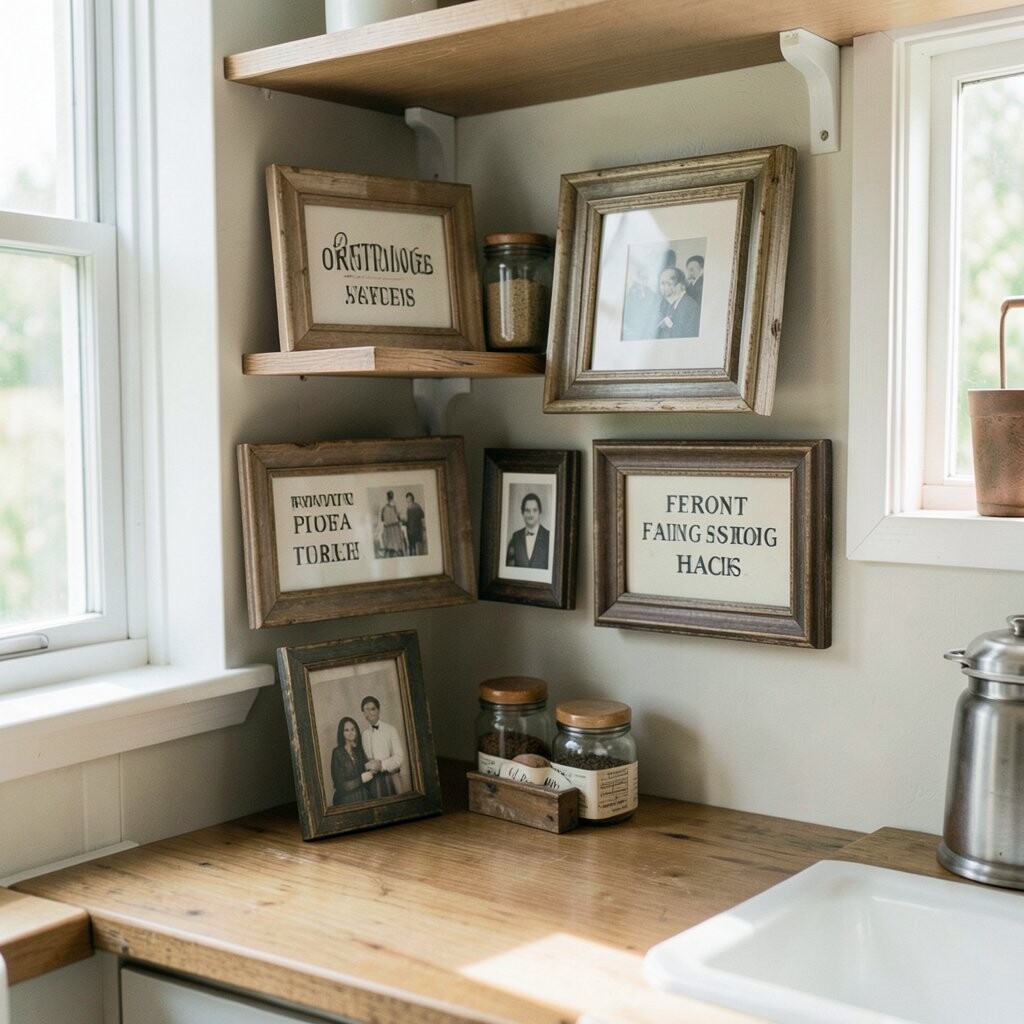
Turn simple frames into front-facing label holders for your most-used cabinet shelves. It gives your organization a vintage “display” feel instead of a plain label system.
Insert printed cards that list what goes inside each compartment, then place the frame at eye level on shelf ends. This makes it easy for everyone to return items correctly, especially in small homes. If you want it unique, vary frame sizes like a gallery wall and match the color to your kitchen accents.
1. Labeled Apothecary Jars for Dry Staples
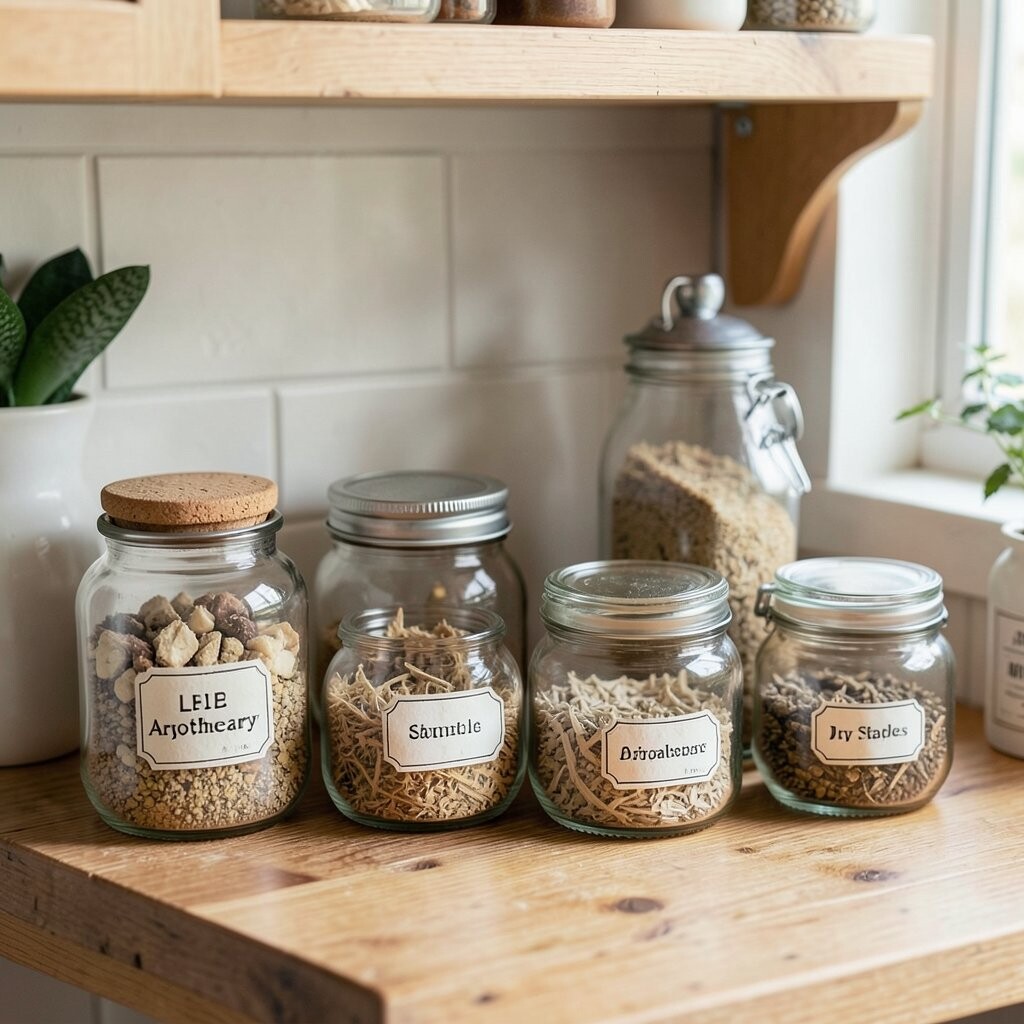
Choose matching glass jars with paper labels that look like old apothecary tags. Put them on one counter run or in a shallow cabinet section.
Use a label maker with dark ink to write “rice,” “oats,” and “flour” in a tidy style. Keep only the staples you use often, so the shelf stays light and uncluttered. For personalization, add small color dots to match your kitchen theme, like sage green or faded cream.
2. Repurposed Tin Canisters on a Wall Rail
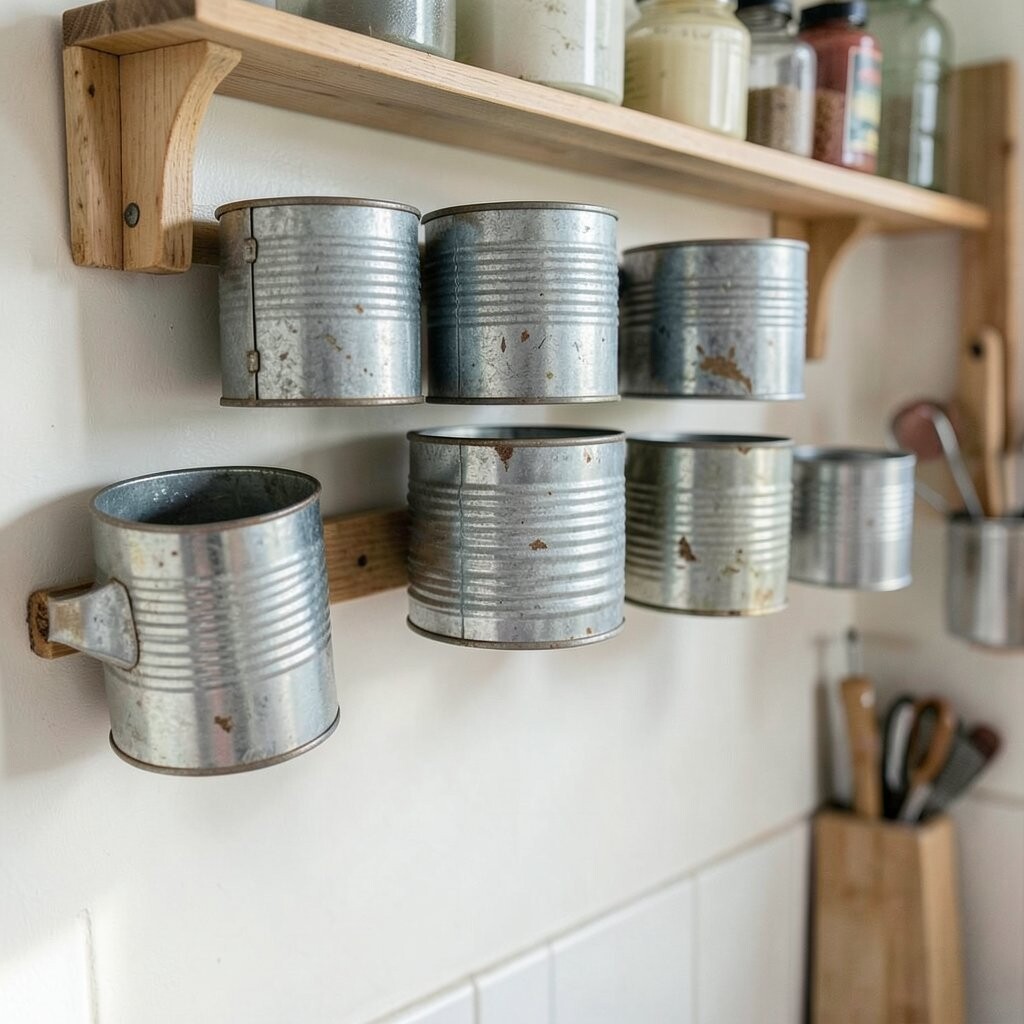
Mount a vintage-style wall rail and hang small tin canisters for daily items. It turns unused vertical space into an easy grab zone.
Store tea bags, sugar packets, cinnamon, or snack mixes in each canister so you can see what’s running low. Choose tins that clip on securely, then wipe them often to avoid dust buildup. If you’re working with a tight budget, hunt for mismatched tins at thrift stores and unify them with one color spray paint.
When you organize by frequency, you place “grab now” items at eye level and reserve the rest for the lower row. This keeps your tiny kitchen calm during busy mornings. The best part is that the rail looks decorative even when it’s filled.
3. Drawer Dividers With a Farmhouse Feel
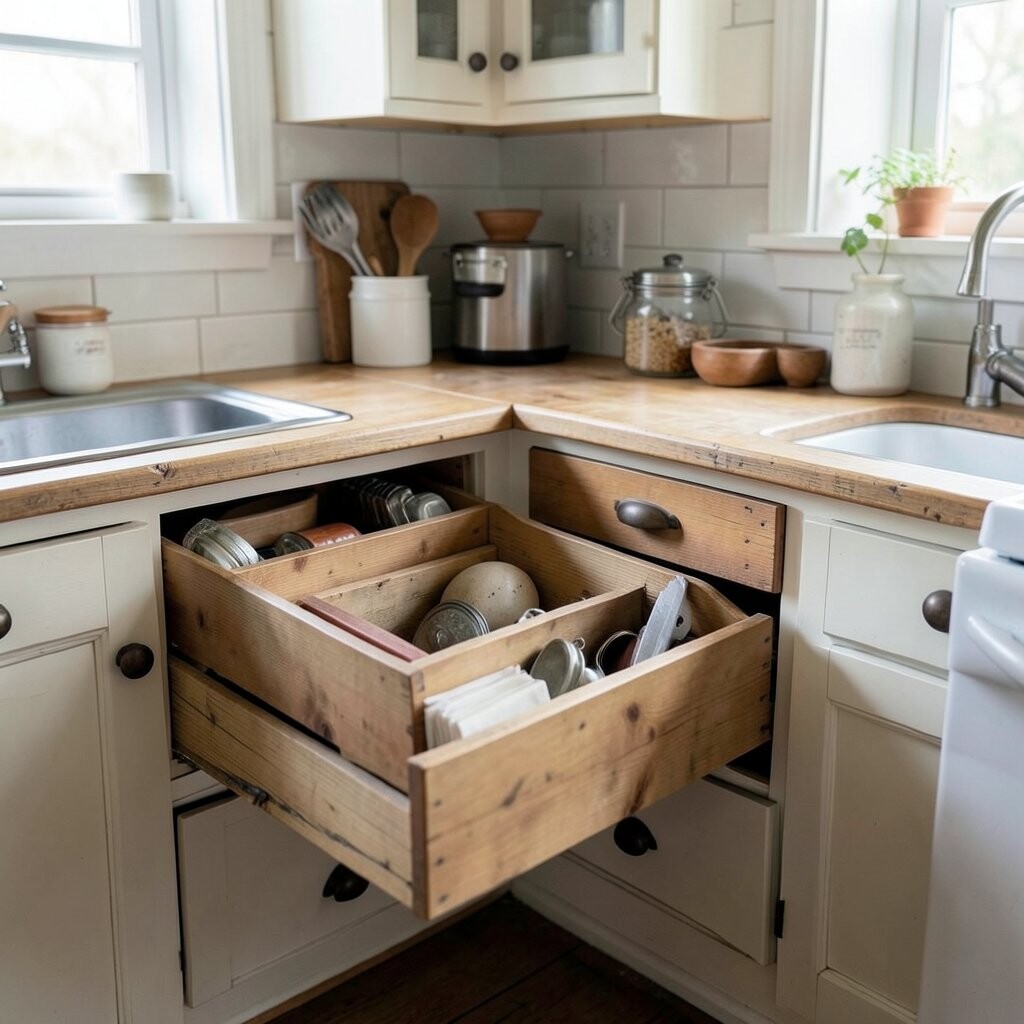
Swap cluttered drawer chaos for simple dividers made from wood, bamboo, or vintage-looking plastic. A drawer that holds shape makes cooking feel smoother.
Group tools by type, like measuring spoons together, spatulas together, and pens or note cards in a small corner pocket. Add a thin strip of felt or foam liner to stop items from sliding and to protect fragile handles. For a unique touch, paint or stain dividers in warm tones like honey or walnut.
To make it practical, measure your drawer width before buying and allow space for growth when you add new gadgets. If you need a low-cost fix, repurpose old cutting boards to create sturdy divider panels. This hack also helps you quickly spot missing pieces, which is great for shared households.
When your drawer is neat, you spend less time rummaging and more time cooking. It’s a small change with a big “tiny kitchen makeover” effect.
4. Hanging Under-Cabinet Baskets for Produce Prep
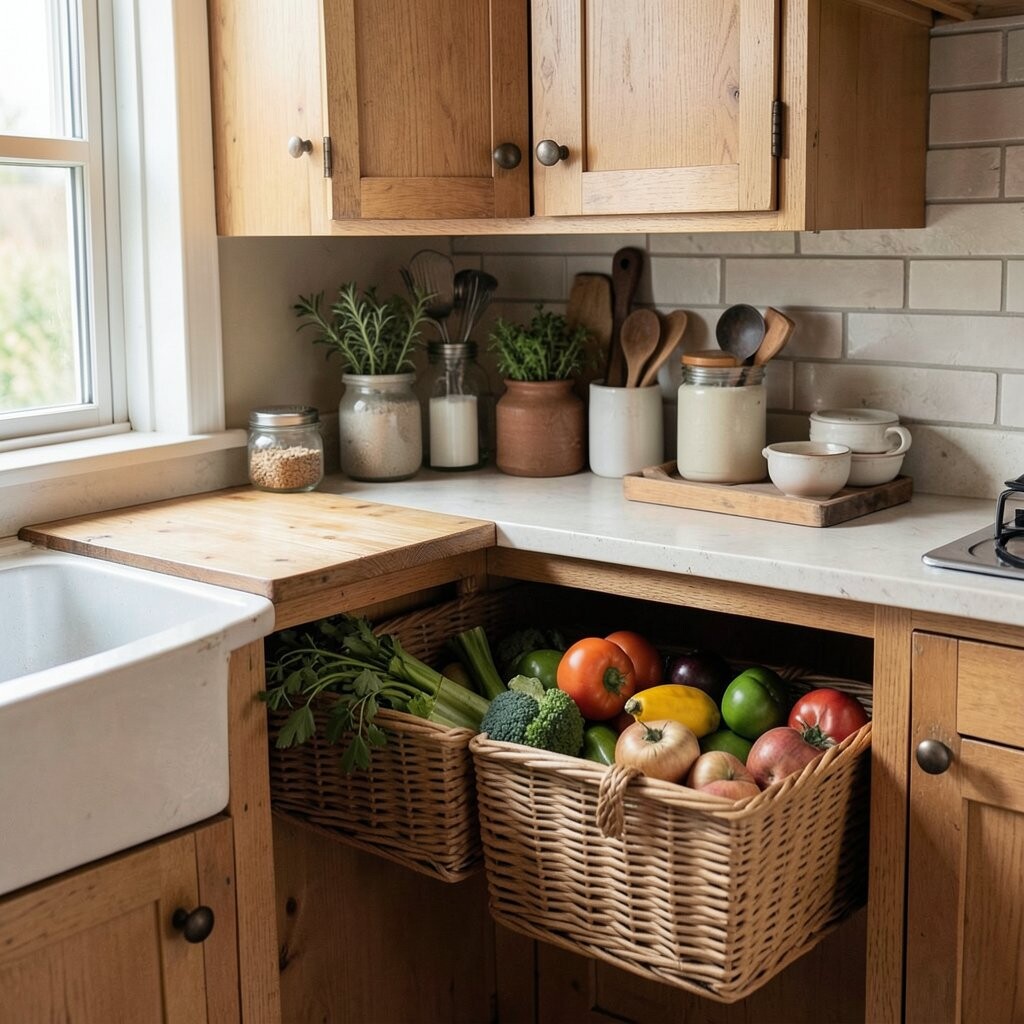
Install wire baskets or small under-cabinet holders for onions, lemons, or herbs so they stay visible and reachable. This keeps counters free while still showing what you have.
Use baskets with hooks or mounting brackets designed for kitchen use, then group items by how fast you go through them. Add a liner like parchment paper or a thin cloth to reduce mess and keep things from rolling. For cost savings, start with just one basket for herbs or onions, then expand when it proves useful.
5. Vintage-Style Spice Cards Inside a File Folder
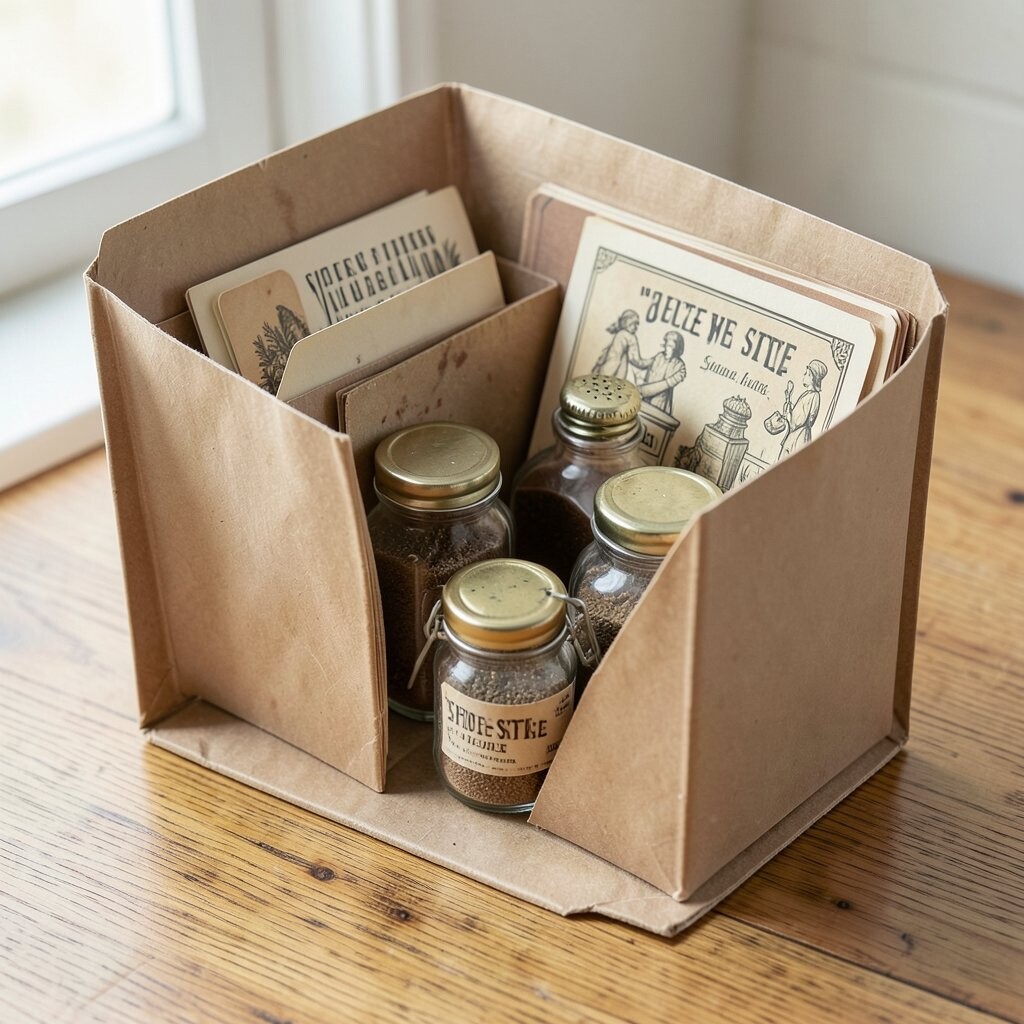
Convert a classic file folder into a spice card system for a neat, old-school look. It’s like a tiny pantry library without the clutter.
Write spice names on cards and store them in clear sleeves inside the folder, then label the back of each jar so matching is easy. Keep the folder near where you cook, such as by the stove or inside a cabinet door pocket. For personalization, choose a folder with floral patterns or subtle distressed edges.
This setup helps you plan meals because you can scan your spices in seconds. It also makes refills more consistent, since you always see what you own and what’s almost gone. Look for inexpensive card sleeves and a folder from a stationery store, thrift shop, or discount aisle.
6. Tea Towel Roll-Up Storage on Cabinet Side Hooks
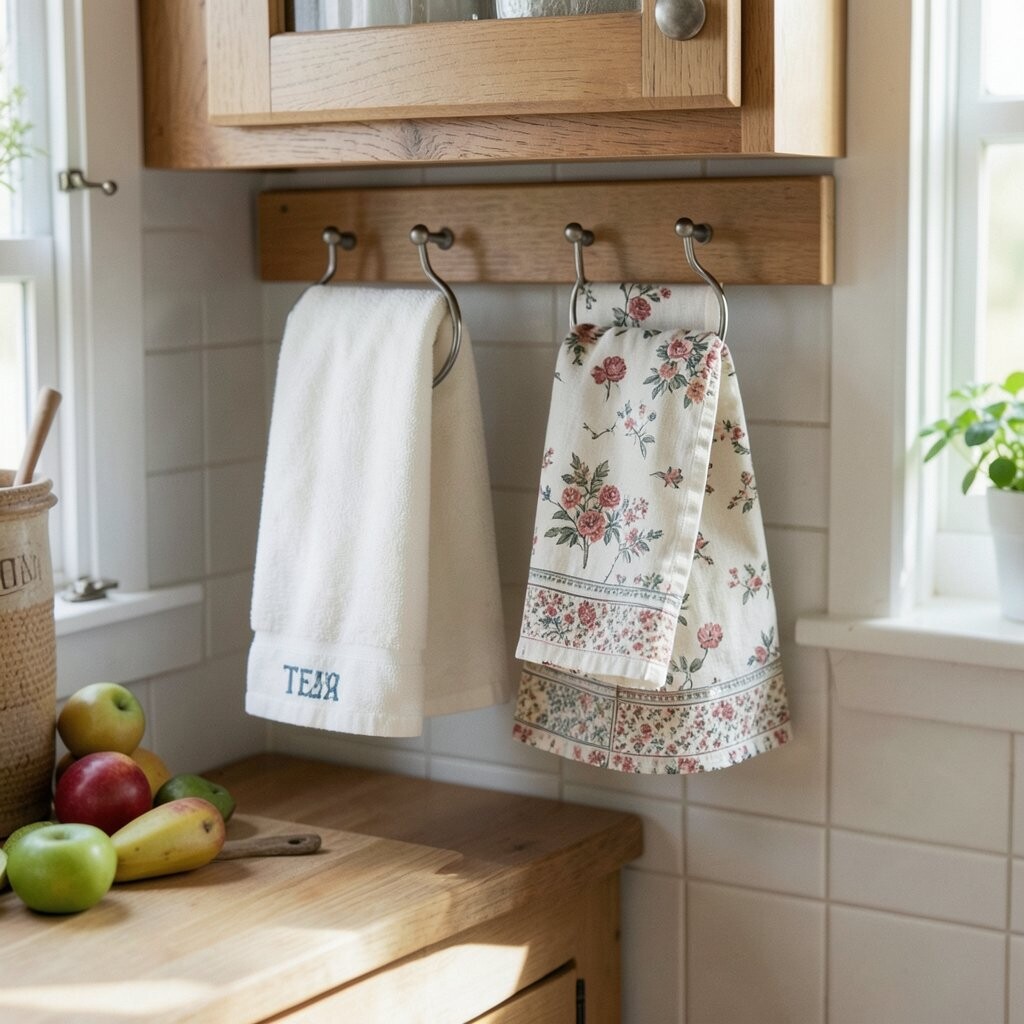
Roll your tea towels and store them vertically using cabinet side hooks or small rings. You get an organized look that feels practical and vintage.
Keep the hooks near where you dry dishes so towels stay within reach. Rotate towels by usage, placing the most used one on top and saving specialty towels for later. If you like a charming theme, use hooks in brushed brass or matte black to match other hardware.
To make this hack work in a truly tiny kitchen, use only two to four towels so you don’t create a new storage problem. Many people waste space by storing too many towels, and that’s the opposite of what you want.
7. Corner Lazy Susan Using a Repurposed Turntable

Place a thrifted turntable or shallow lazy Susan in a corner cabinet to tame awkward angles. It turns a dead space into a quick “spin and grab” pantry.
Use it for small jars, baking supplies, or bottles you reach often, like vanilla and cooking oil. Add small paper labels so you can return items to their exact spot after every use. For personalization, paint the base in a muted cream or seafoam color so it matches your kitchen vibe.
If the items slide, use a non-slip mat underneath or cut circles from drawer liner material to fit the top. This is a low-cost hack that can feel high-end. The convenience also means fewer items get lost behind other items.
8. Vintage Tins for Cleaning Tabs and Dish Supplies
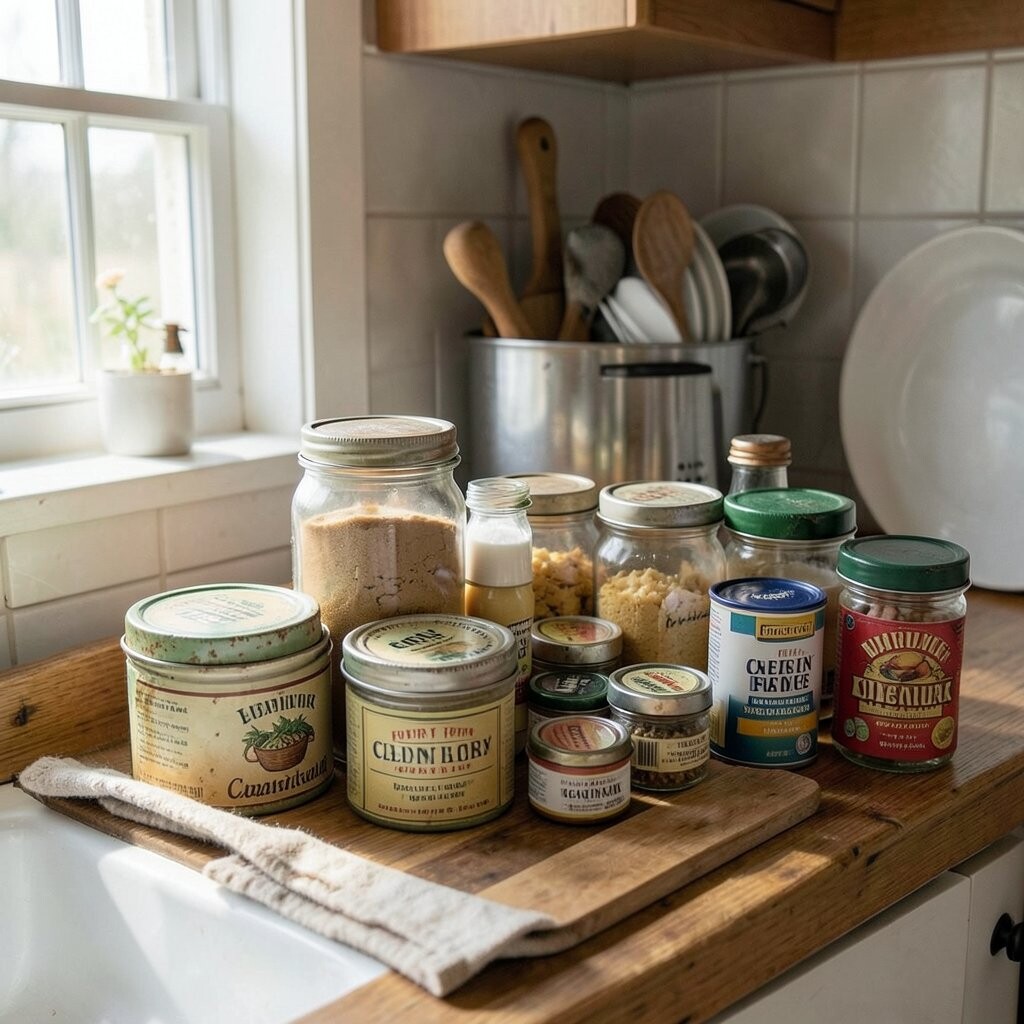
Store dish tabs, sponges, and cleaning pods in tidy vintage tins with airtight lids. When everything has a home, your sink area stays welcoming.
Put one tin near the sink for quick restocks and another tin tucked inside a cabinet for backups. Use a simple label like “pods,” “sponges,” or “refills” so family members can keep things orderly. If you prefer a softer look, choose tins with muted patterns rather than bright colors.
To keep it practical, keep only one size of pod or soap type in each tin. Mixing too many formulas makes it harder to grab the right thing and can create waste. This hack also protects supplies from moisture in small, humid kitchens.
When your cleaning zone is neat, the whole kitchen looks more put-together, even during busy weeks.
9. Cabinet Door “Recipe Book” Pocket Organization

Use a vintage-style file pocket or cookbook holder attached inside the cabinet door. It’s a clever way to store recipes, baking instructions, and small packets without using more shelf space.
Keep your most-used recipe cards near the ingredients so cooking steps feel close at hand. Add clear sleeves for spice mixes or quick-reference guides like “pasta chart” or “tea ratios.” For uniqueness, pick a holder with classic lines or a distressed look that fits your kitchen theme.
To stay organized, limit what you store inside to paper items and small sachets only. If you start adding random containers, the pocket becomes clutter again. This is a small organizational anchor that prevents tiny messes from spreading.
Pair it with jar labels so your kitchen has a consistent “old-fashioned system” feel.
10. Small Rolling Cart With a Thrifted-Look Top Shelf
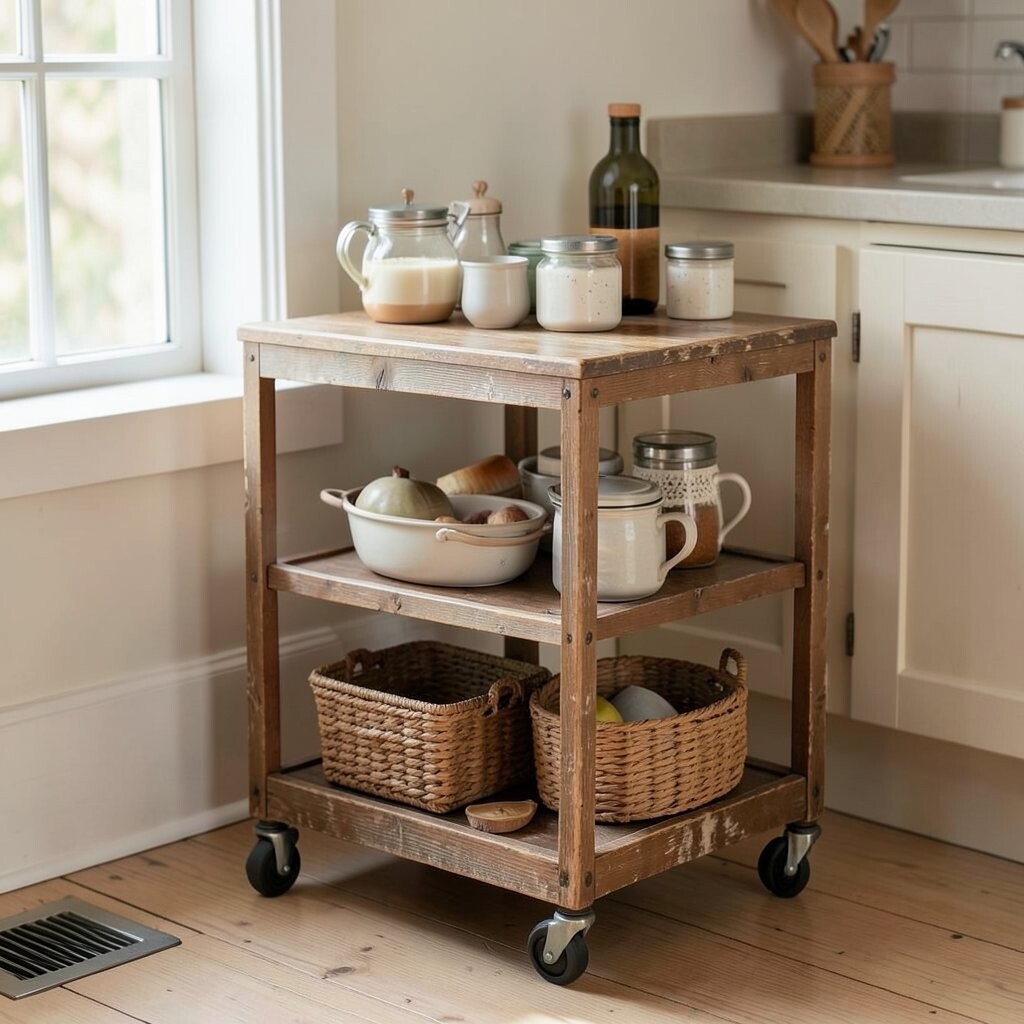
Add a narrow rolling cart for staging prep items, snacks, or breakfast tools. Choose one with a top shelf that looks like vintage metal or wood, so it blends into your decor.
Use the lower shelves for bulk-but-small items like bags of chips, extra napkins, or tea. Keep frequently used items on the top shelf, since it’s what you’ll reach for during cooking. For personalization, wrap a roll of butcher paper in a ribbon holder on the cart so you get a charming “market” vibe.
If you worry about cost, look for a used cart at secondhand stores or yard sales. A cheap cart plus a small makeover like new wheels or a simple stain can look brand new. This hack is great because it’s flexible; you can move it when your kitchen layout changes.
11. Mug Hooks by the Sink With Matching Colors
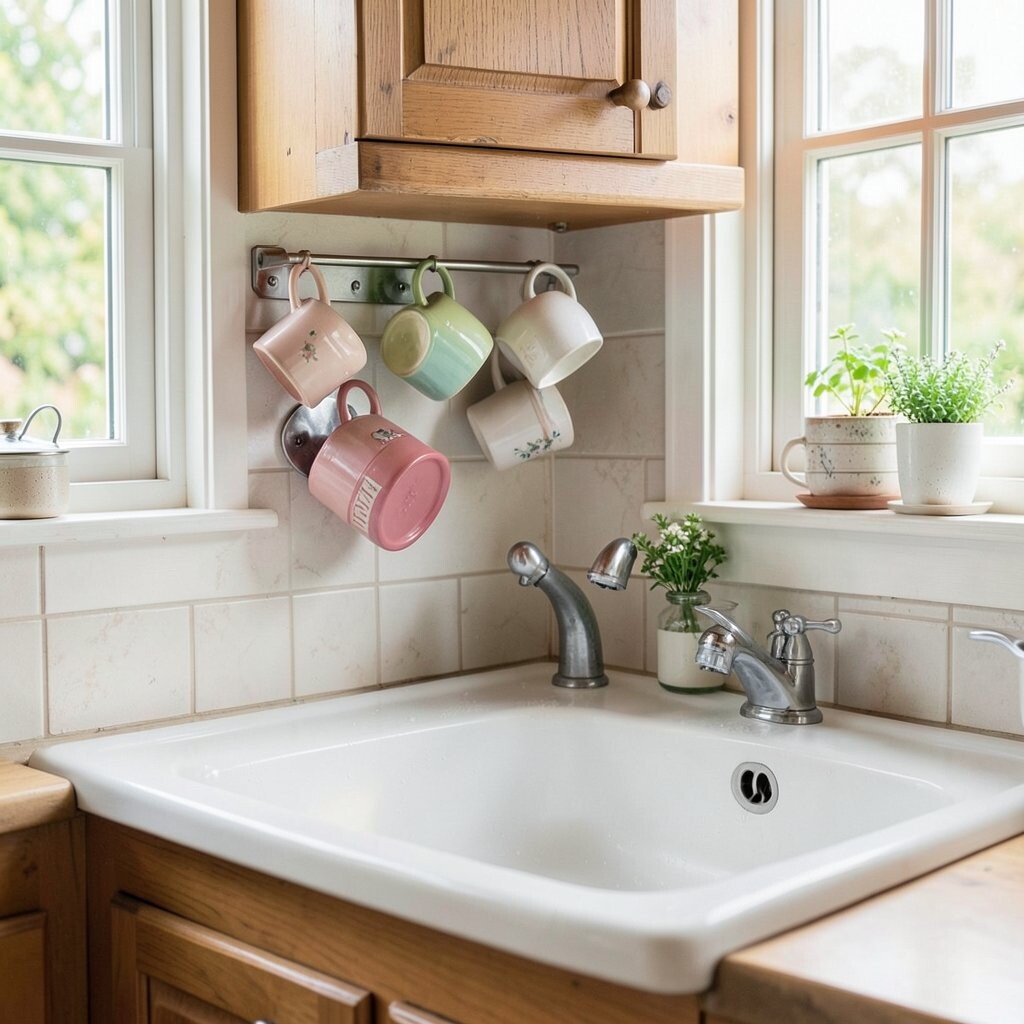
Hang mugs on hooks near the sink or coffee corner instead of stacking them in a crowded cabinet. It keeps your favorite cups visible like a vintage café display.
Choose hooks that match your hardware, then space them so mugs don’t clink too often. Sort by size, putting larger mugs on one side and smaller ones on the other. For personalization, pick a color theme for labels or use the same twine wrap on the hook handles.
This works especially well for tiny kitchens because it reduces cabinet clutter and makes morning routines faster. If you’re short on wall space, use a single row of hooks and store rarely used mugs inside a cupboard. Consider using coaster clips or felt pads to protect mug handles and prevent scratches.
12. Mason Jar Canisters for Baking “Grab Bins”

Make baking easy by filling mason jars with frequently used supplies like baking soda, sprinkles, or mini chocolate chips. Keep them together in one spot so you don’t hunt across shelves.
Use a small tray or shallow basket at the bottom of a cabinet to hold the jars, so they don’t roll or shuffle. Label each jar clearly and include an estimate like “1 cup” for fast measuring. For unique styling, add a ribbon loop around jar lids or use vintage-style chalk labels.
To keep costs down, use jars you already have and focus on buying labels or a tray. This hack keeps your baking inventory tidy and also reduces expired “mystery ingredients.” When you can see what you own, you bake more without the stress.
13. Rolling Wire Shelf for One-Shelf Pan and Pot Control

Install a slim pull-out wire shelf to manage lids and small pans in a narrow cabinet. It’s a space-saver that still feels vintage-modern when you pair it with decor.
Store lids vertically or in a dedicated spot so they don’t wedge and chip. Put lighter pans on upper levels and heavier items on sturdier placements. If you’re customizing, add a wooden dowel or short guard to prevent items from falling forward when you pull out the shelf.
This hack is unique because it tackles one of the hardest tiny kitchen problems: lid and pot chaos. It also helps you quickly find the right size pan, which makes cooking less frustrating. Set a budget by choosing a smaller pull-out shelf that fits one cabinet section first.
14. Under-Sink “Bottle Library” With Tagged Baskets
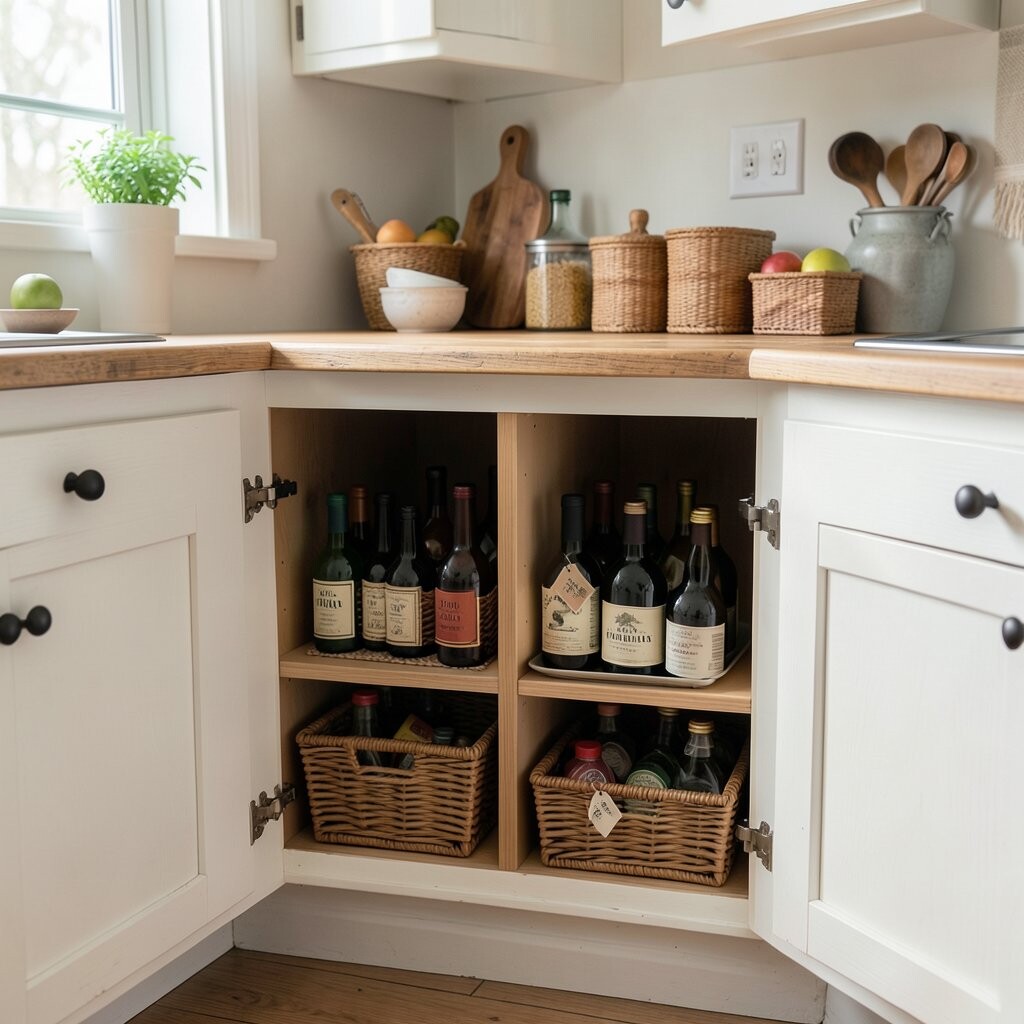
Create an under-sink system using labeled baskets or caddies for bottles, cleaning cloths, and backup refills. It turns a messy space into a neat little library.
Use separate baskets for trash bags, sponges, and cleaning solutions so spills don’t mix. Add tags to each basket and keep the heaviest bottles at the back where they won’t tip. For personalization, use kraft paper tags tied with twine to echo a vintage market look.
15. Narrow Countertop Chalkboard for One-Pantry List
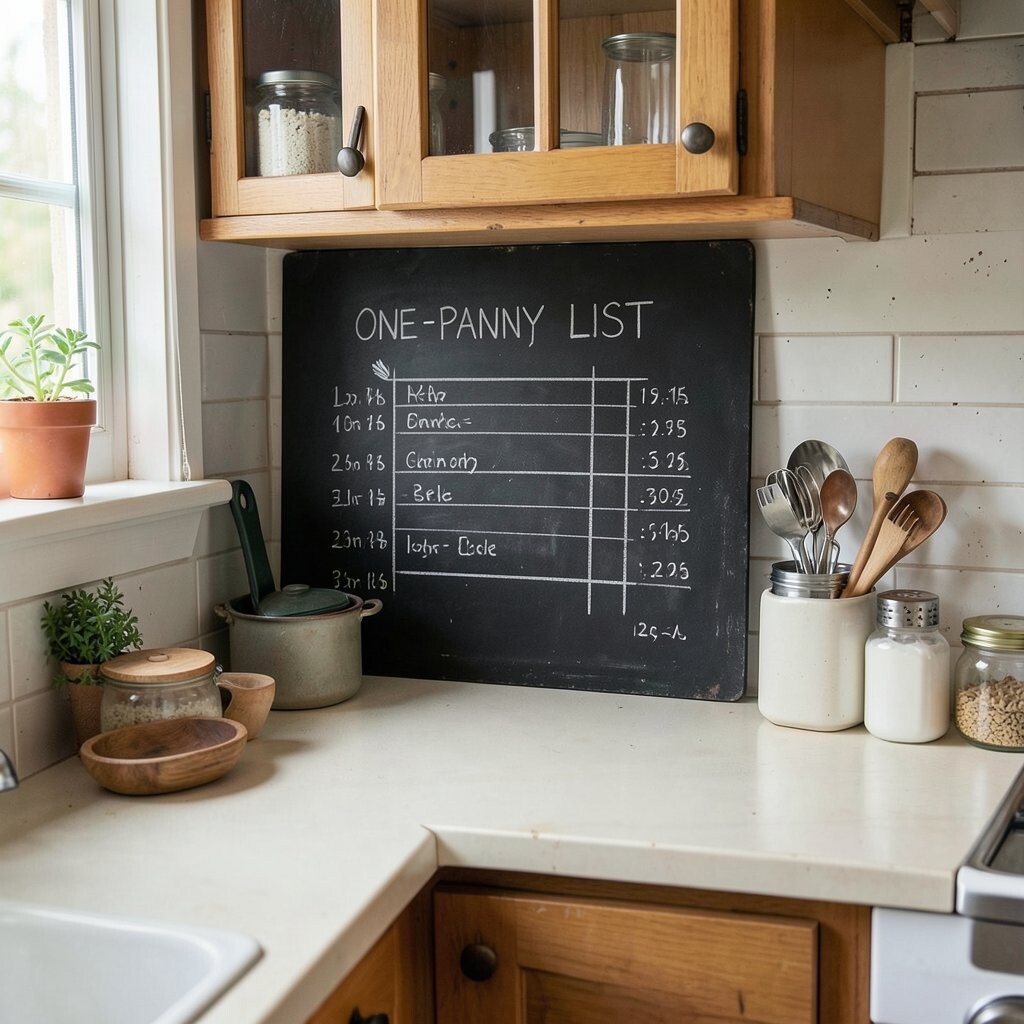
Place a small chalkboard or magnetic board on the wall near your pantry door. Write a short “running list” so you restock without searching through everything.
Keep it simple with categories like “pasta,” “snacks,” and “breakfast,” and erase daily when you buy something. This small step reduces the temptation to buy duplicates and adds order to your routine. If you want a vintage flair, choose an arched board frame or a weathered finish.
For cost, you can use a scrap of chalkboard paint on wood or repurpose an old frame with a chalkboard insert. It also works beautifully in tiny spaces because it’s wall-based and doesn’t steal counter room.
16. Repurposed Photo Frames for Front-Facing Storage Labels
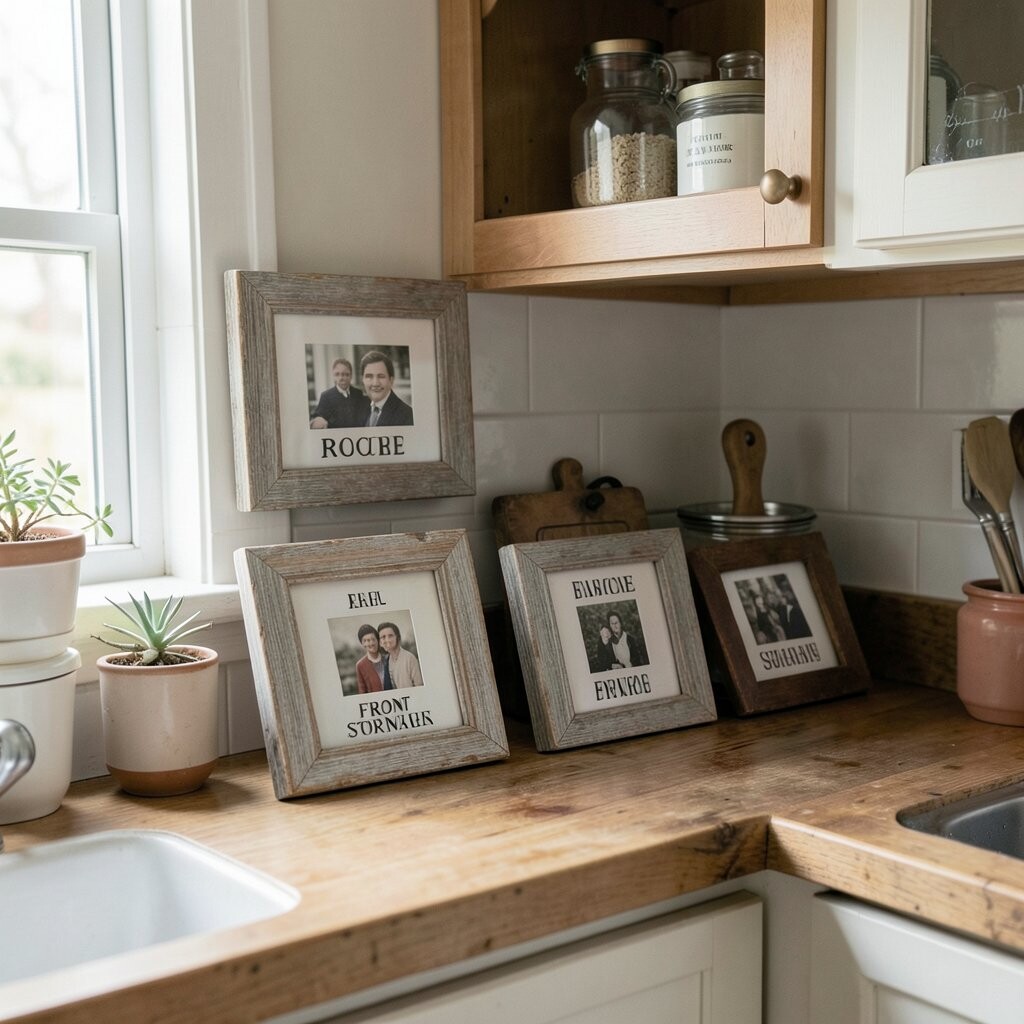
Turn simple frames into front-facing label holders for your most-used cabinet shelves. It gives your organization a vintage “display” feel instead of a plain label system.
Insert printed cards that list what goes inside each compartment, then place the frame at eye level on shelf ends. This makes it easy for everyone to return items correctly, especially in small homes. If you want it unique, vary frame sizes like a gallery wall and match the color to your kitchen accents.