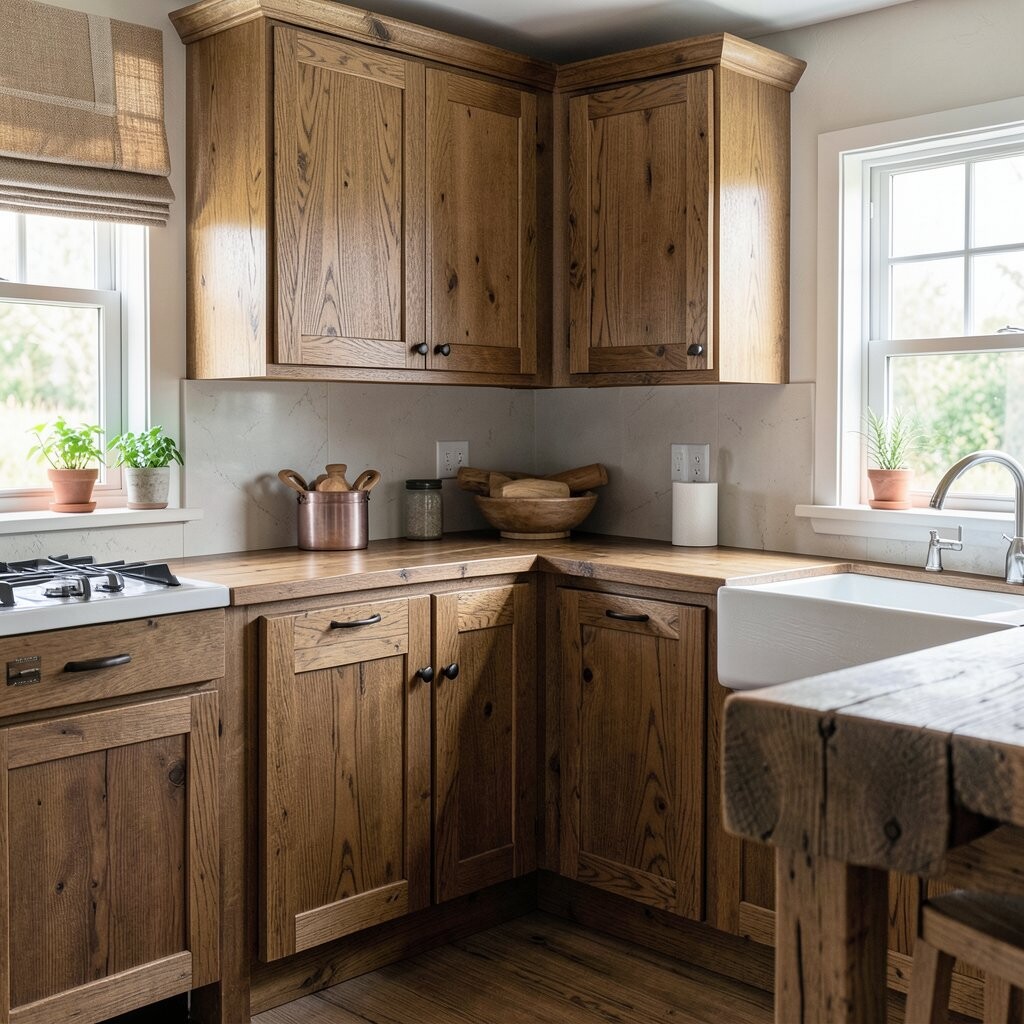
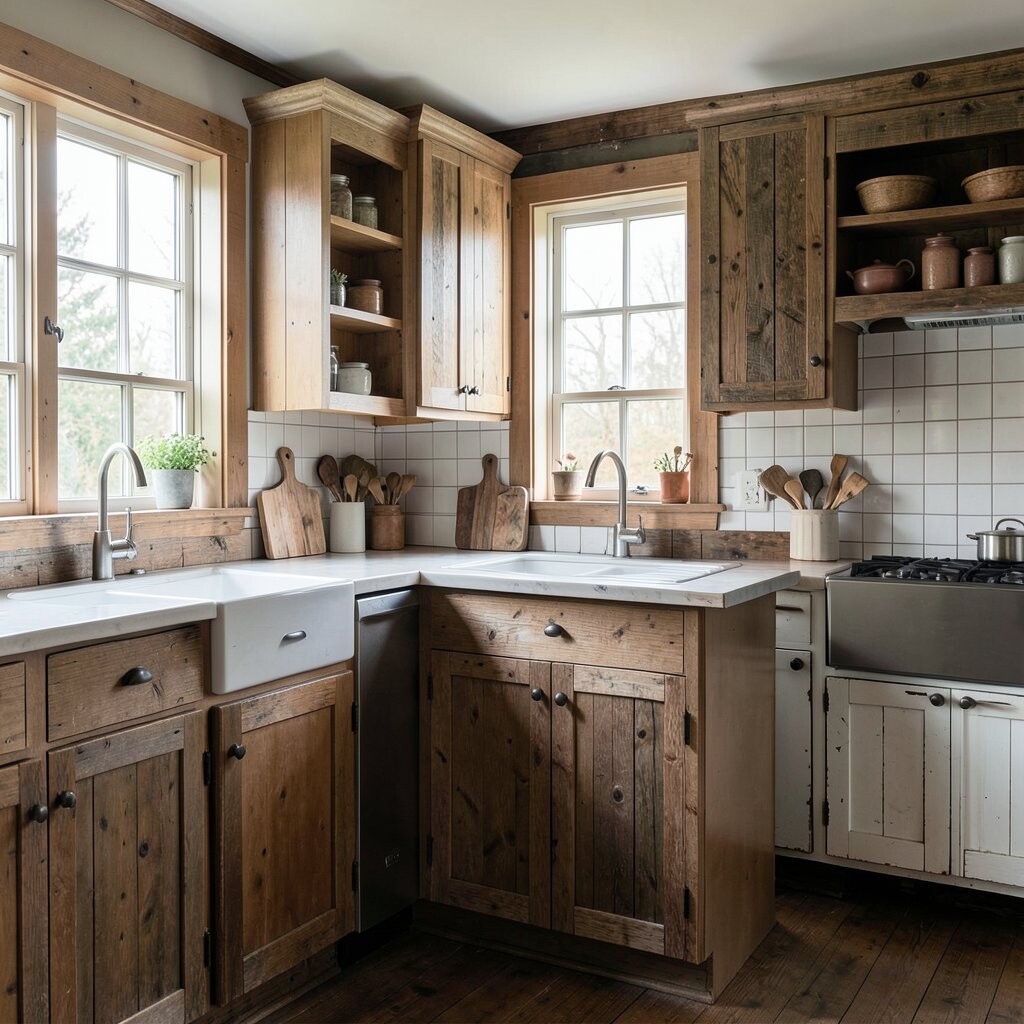
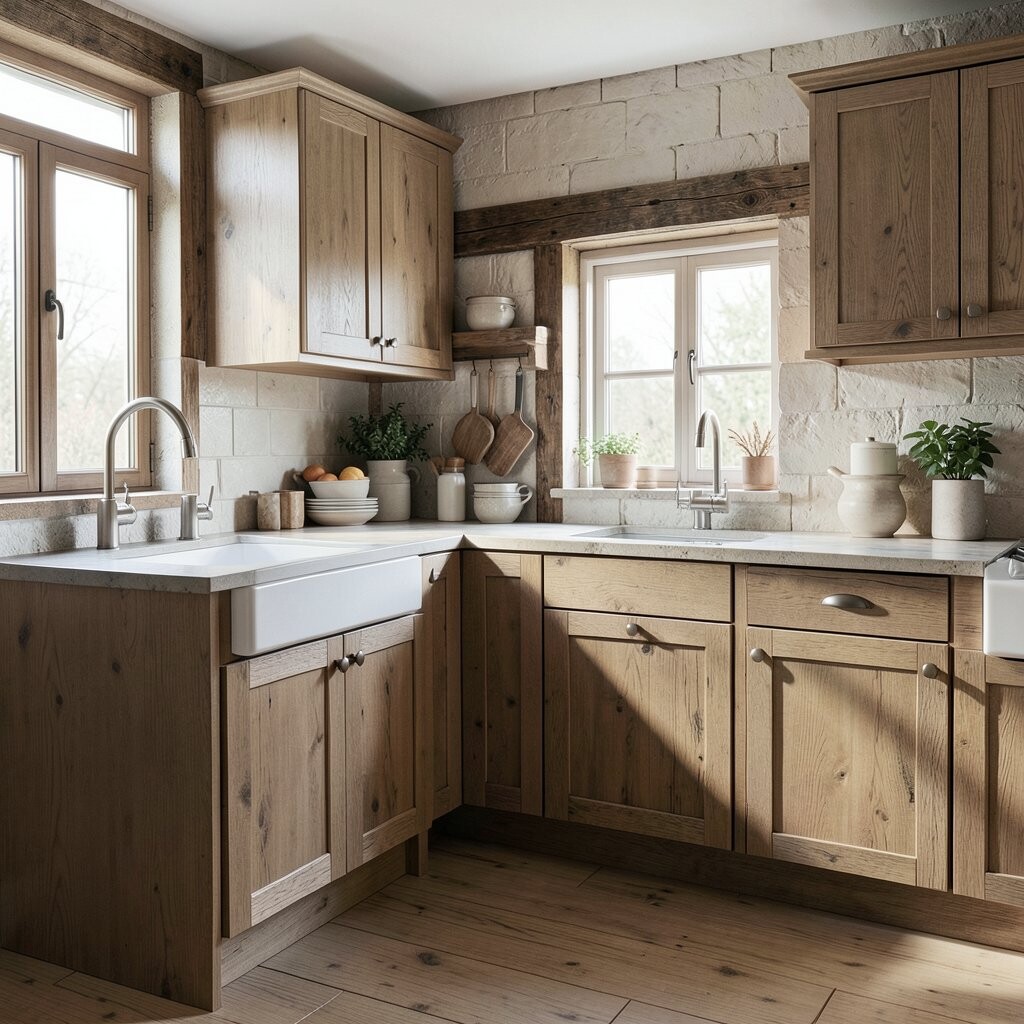
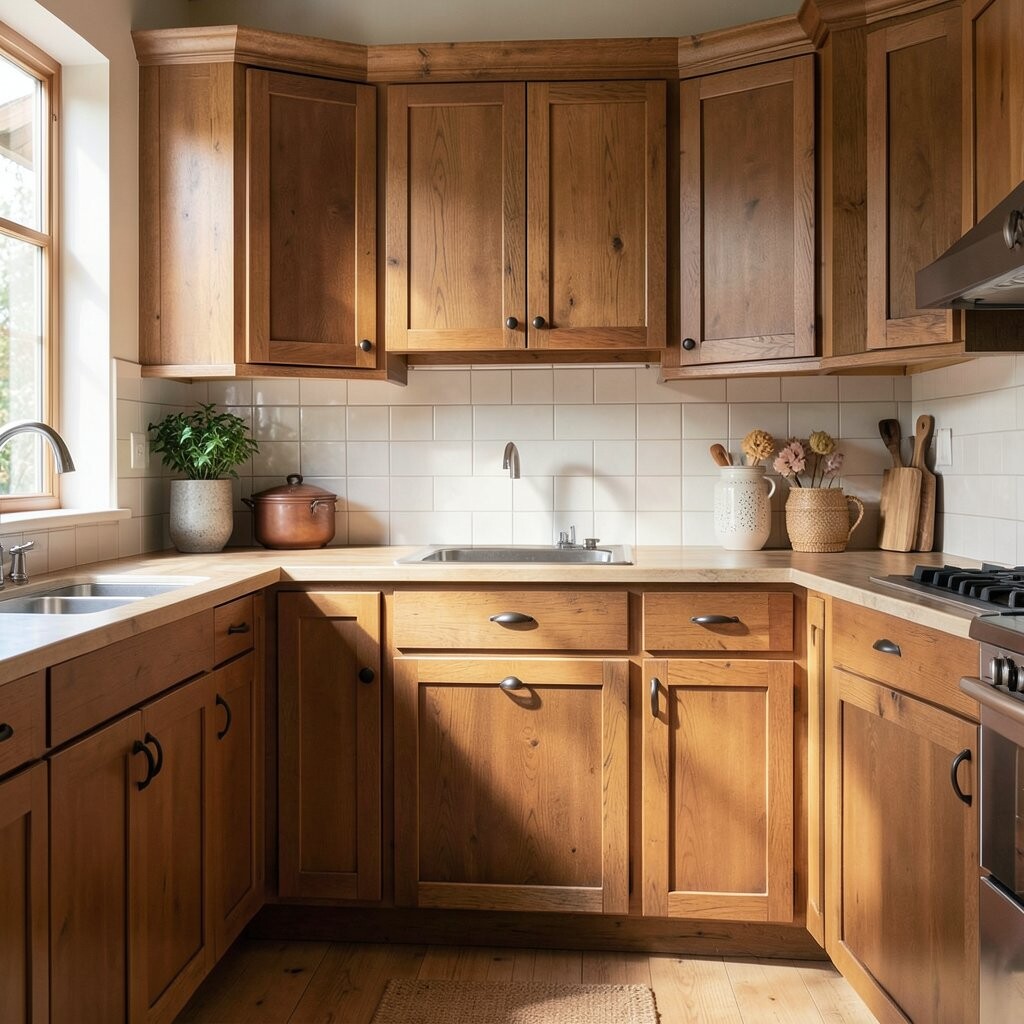
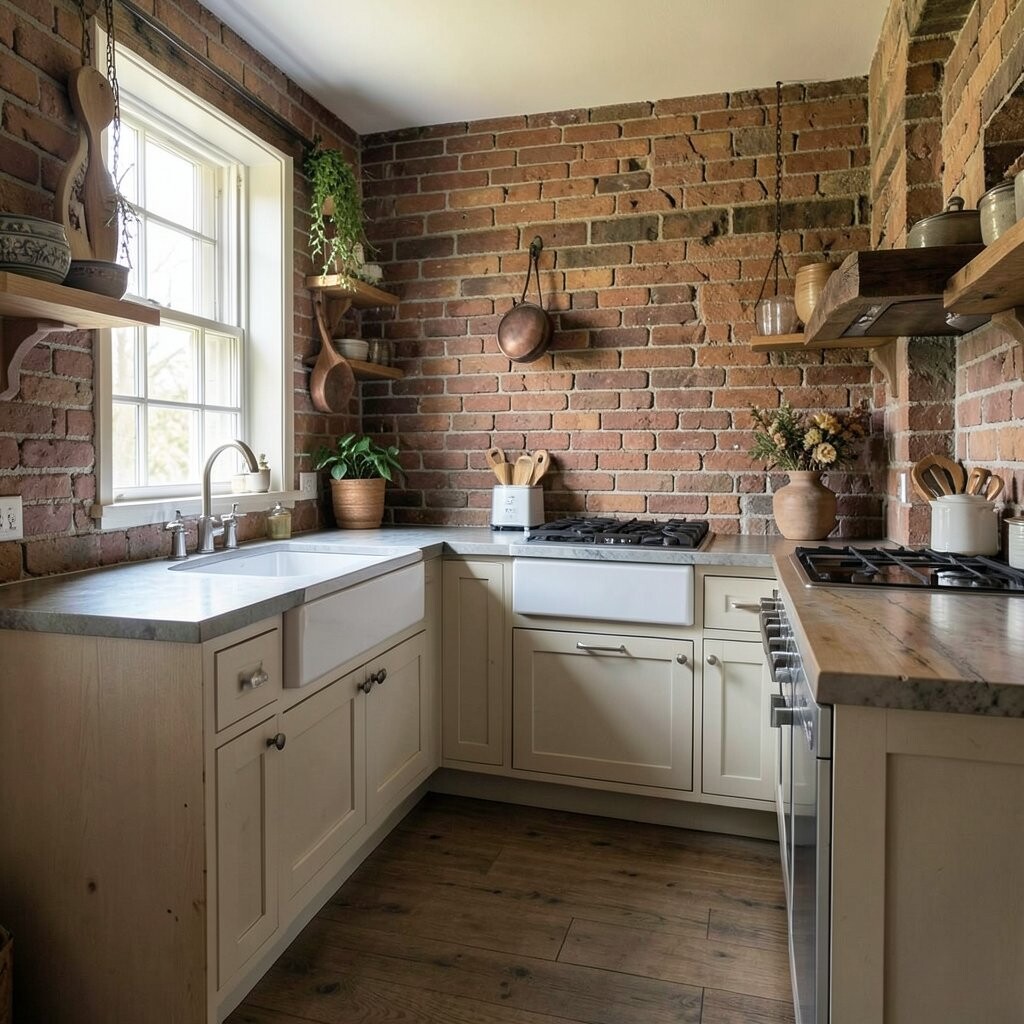
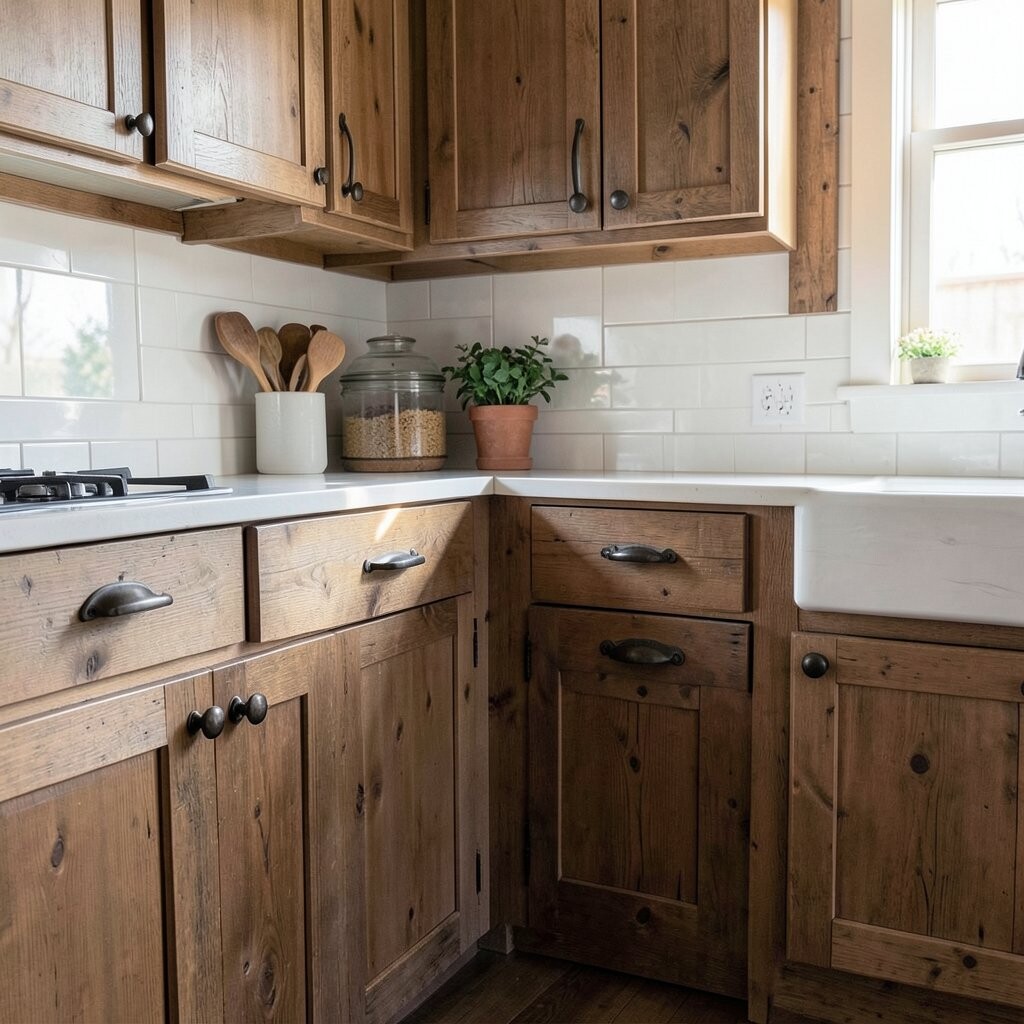
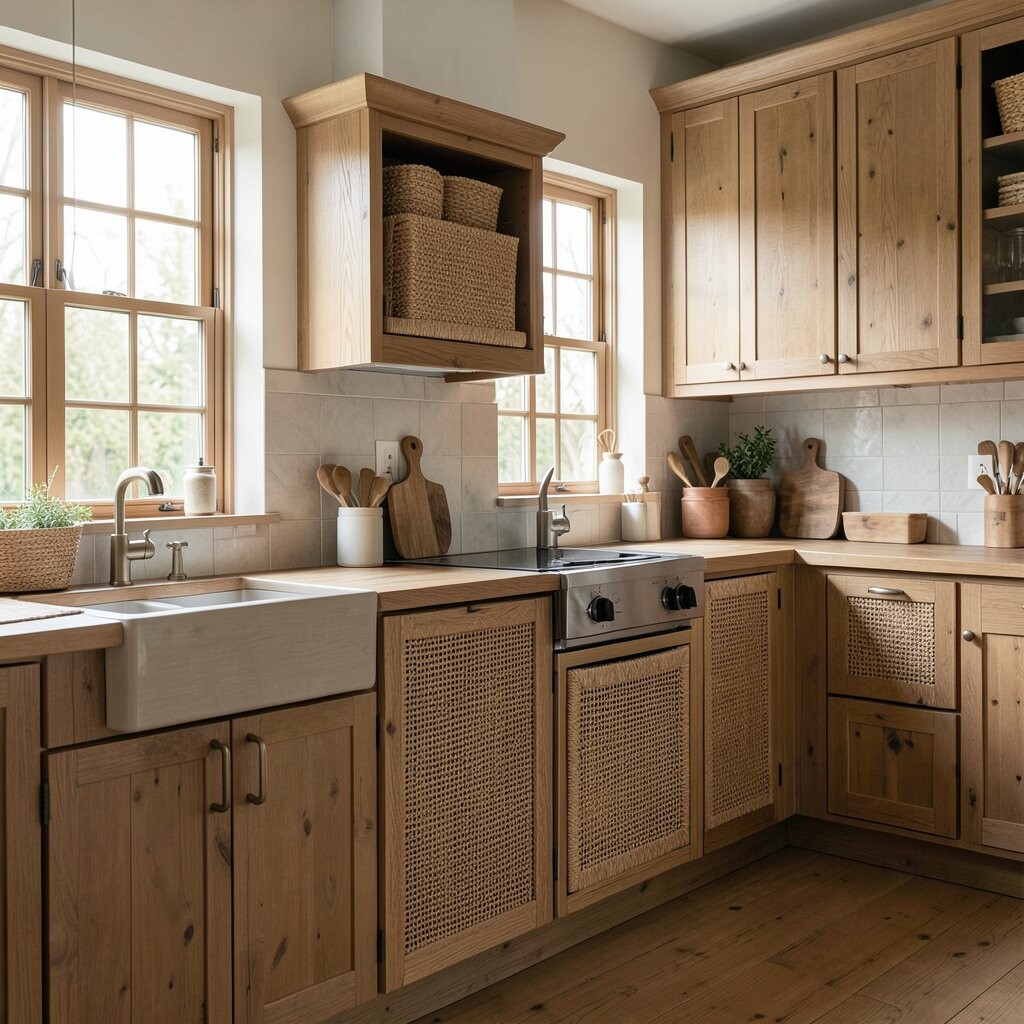
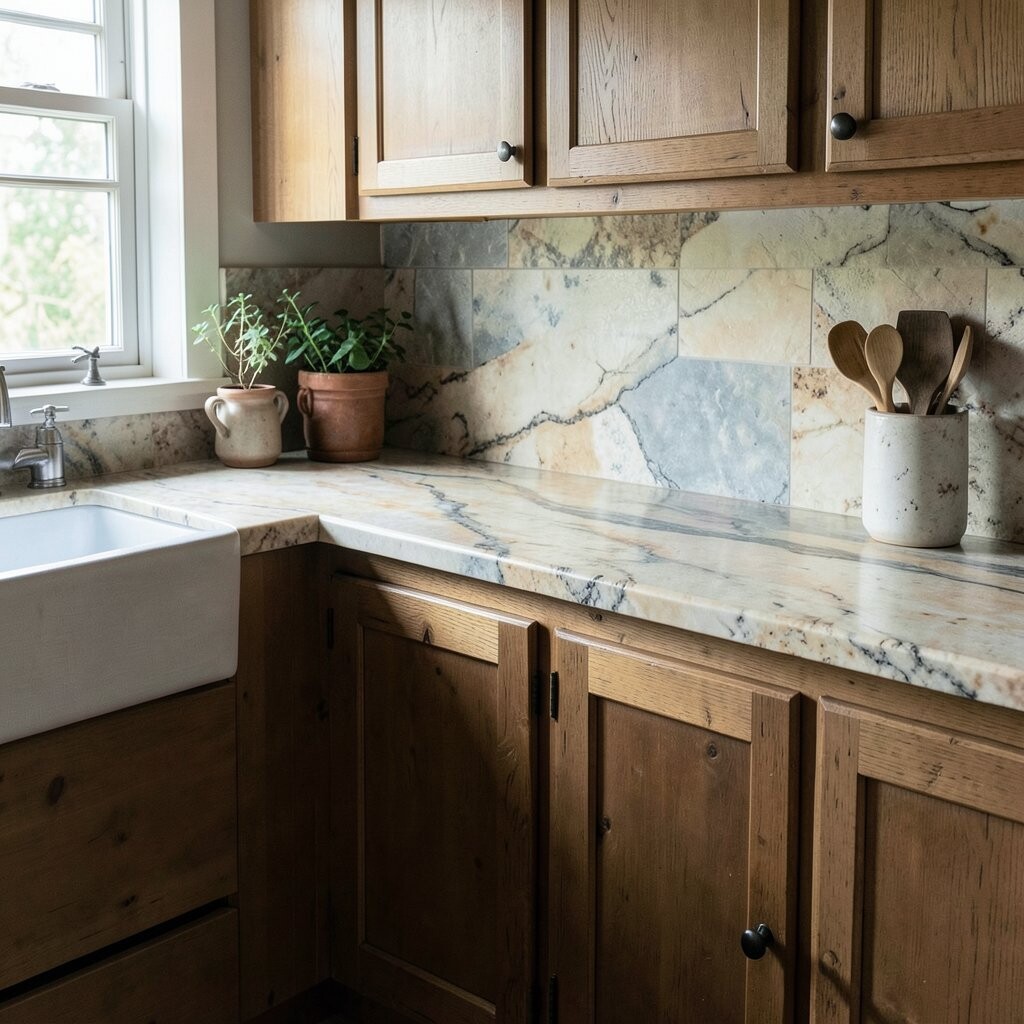
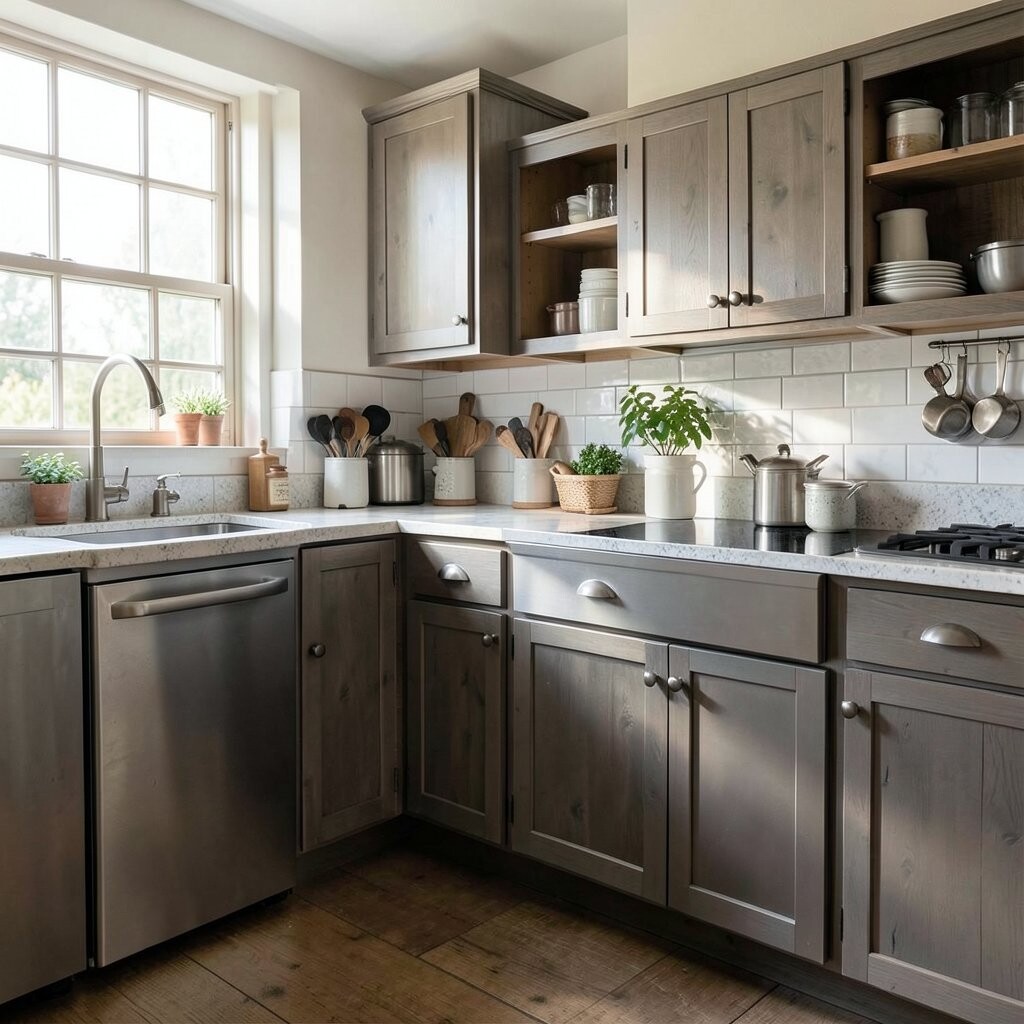
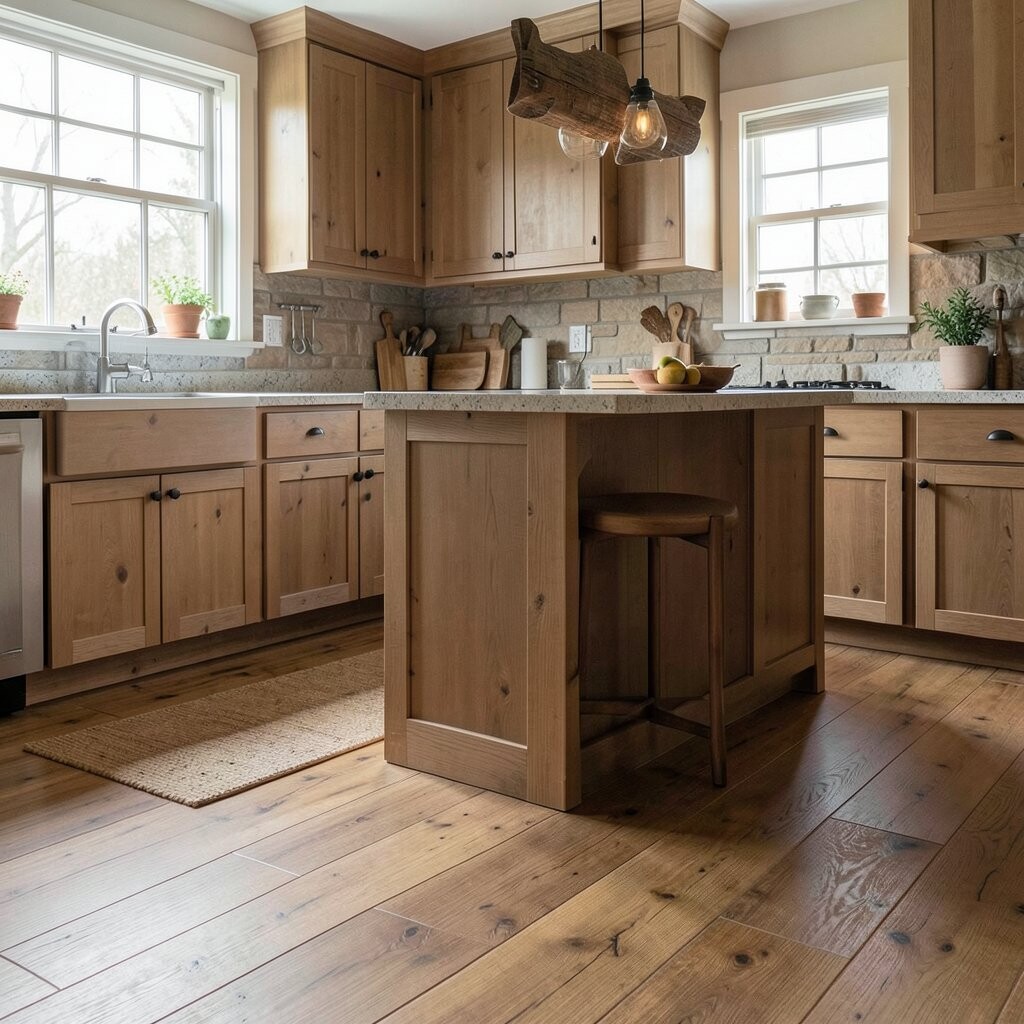
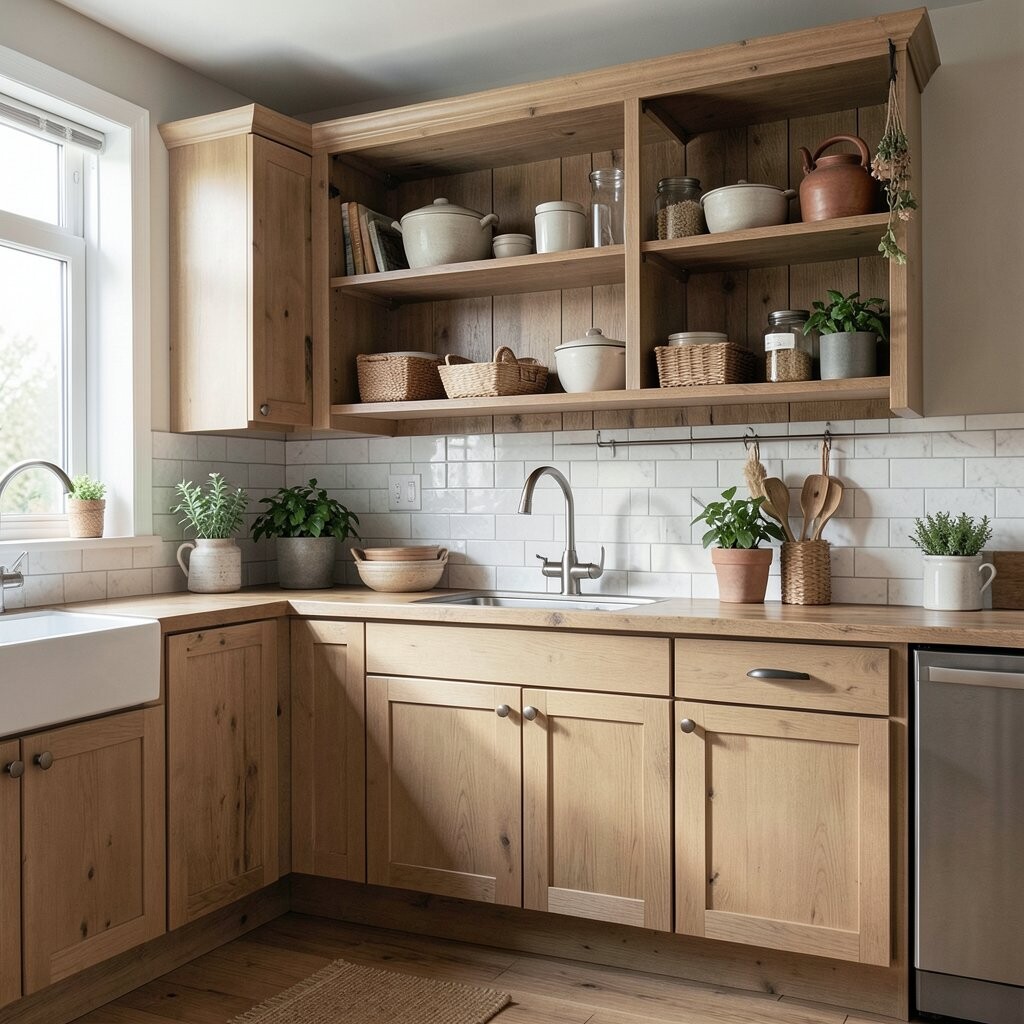
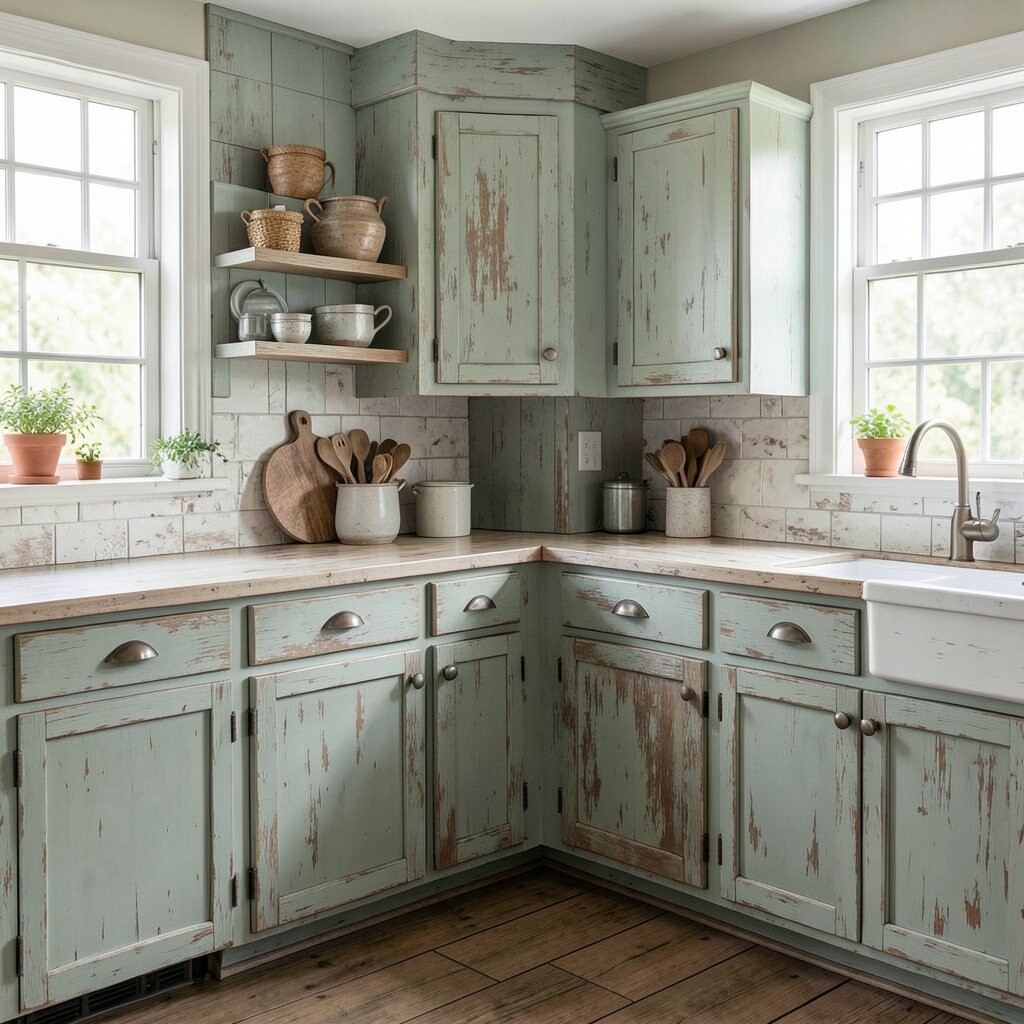
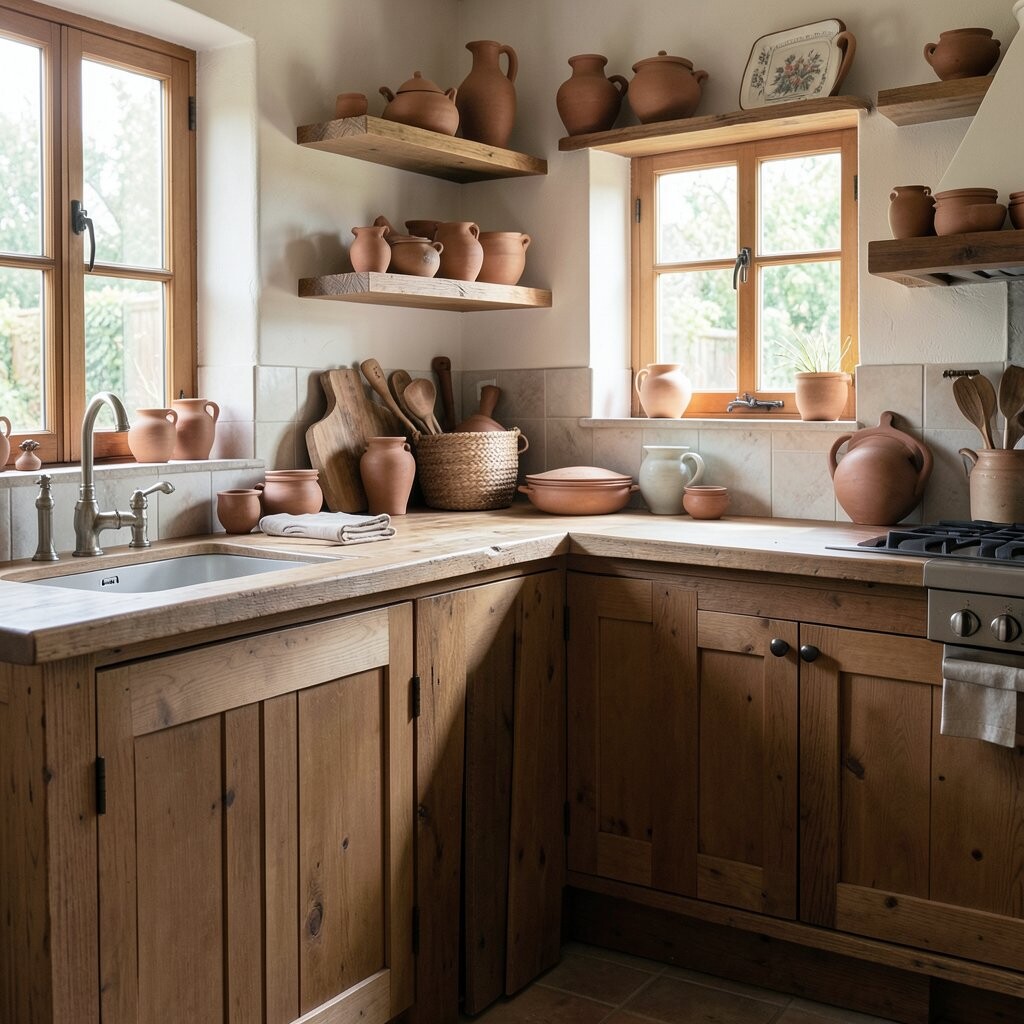
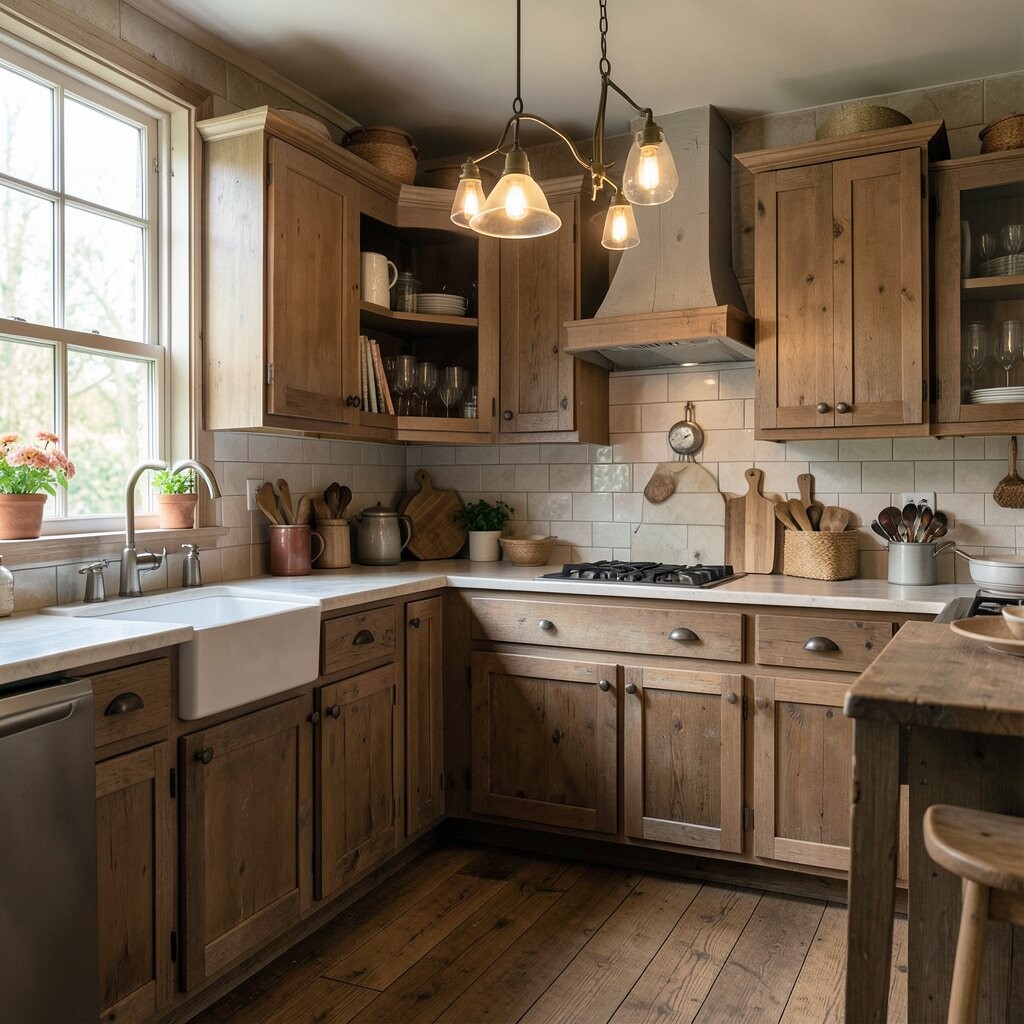
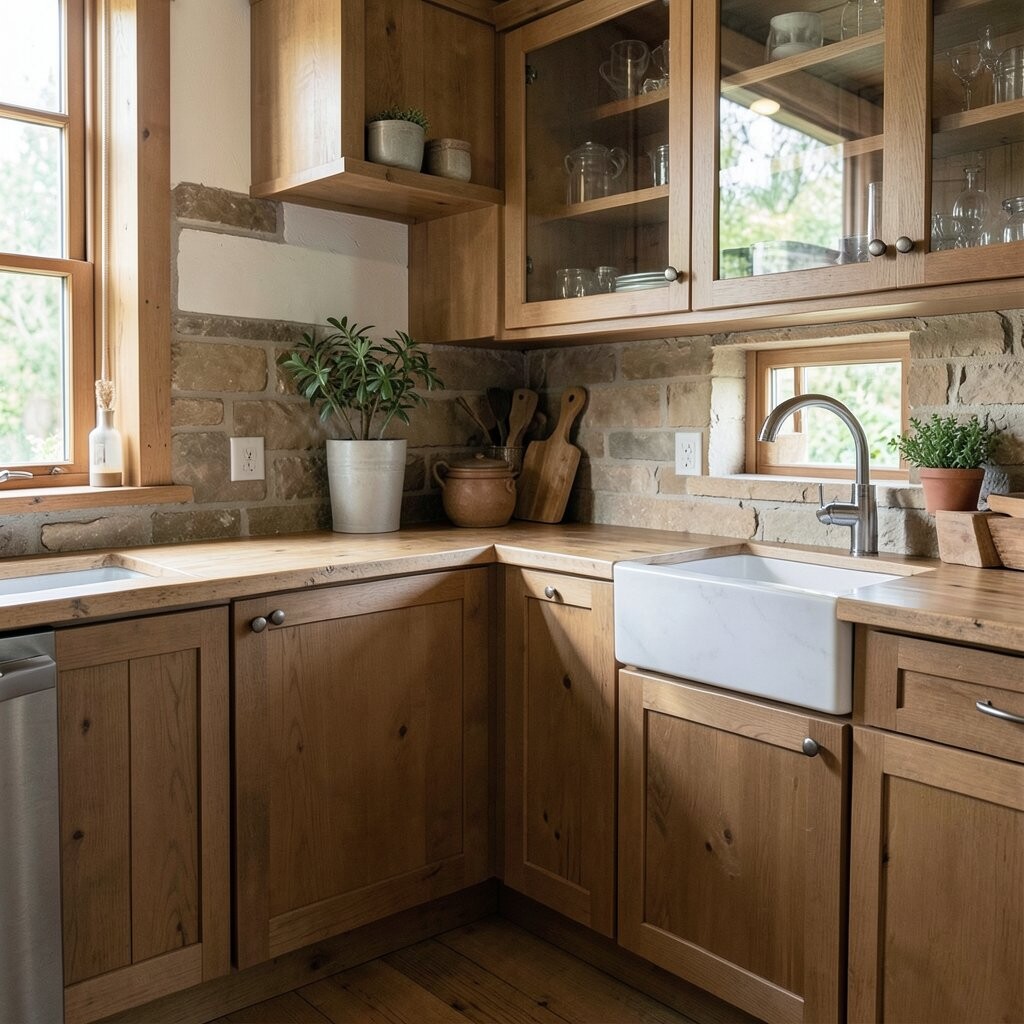
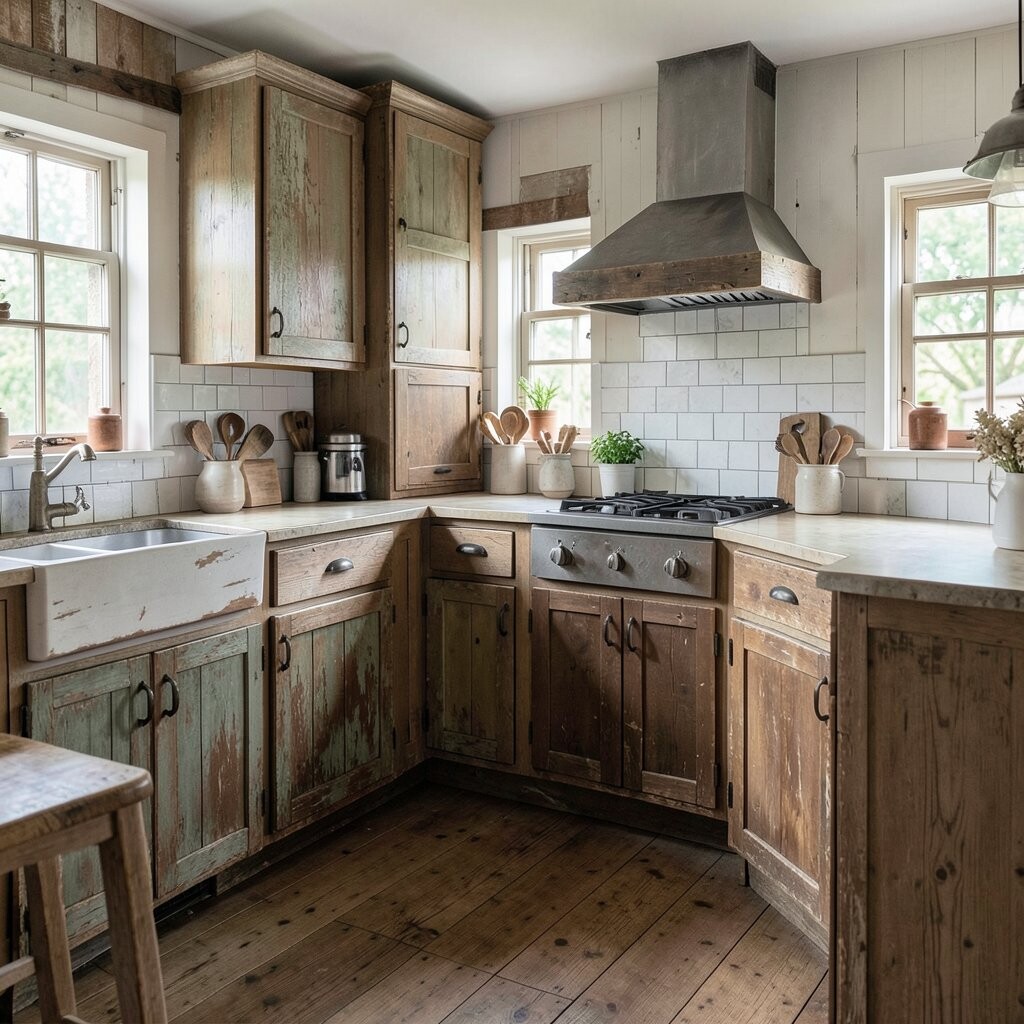
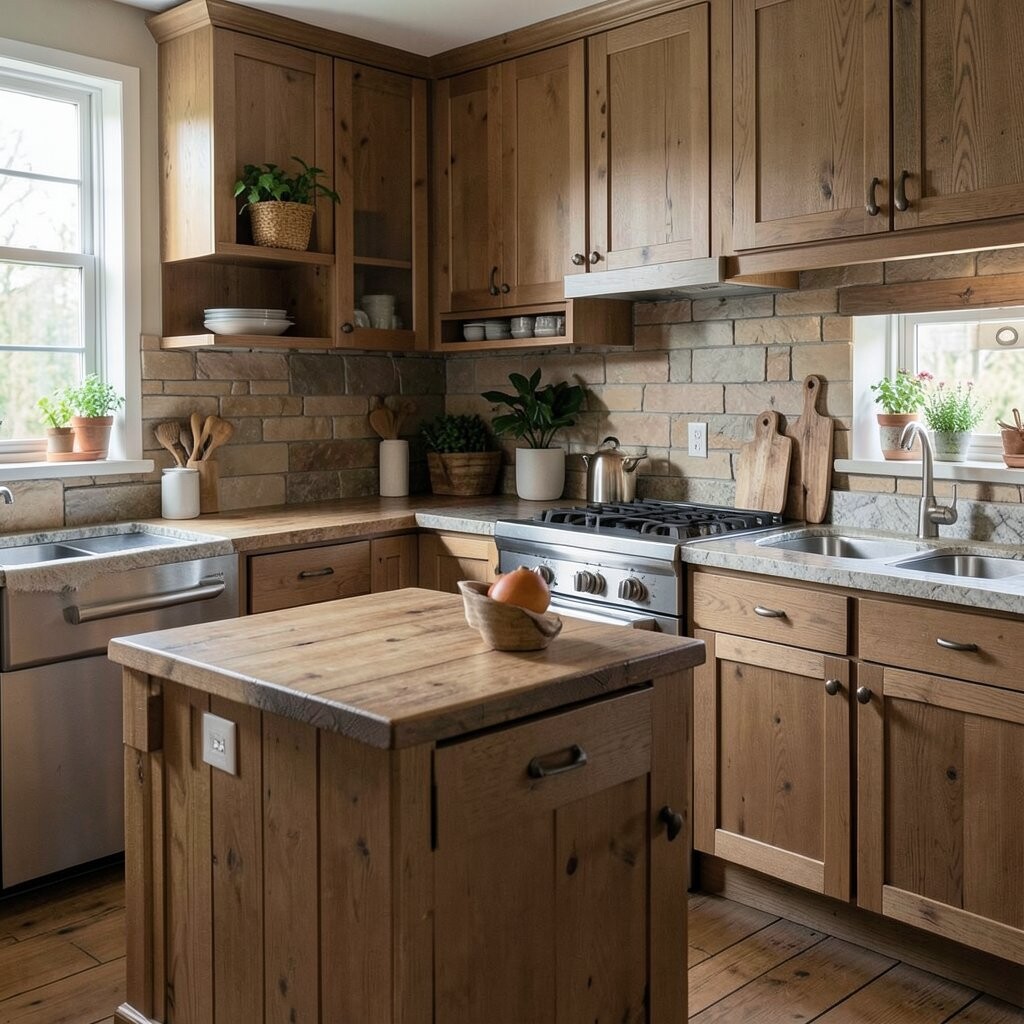
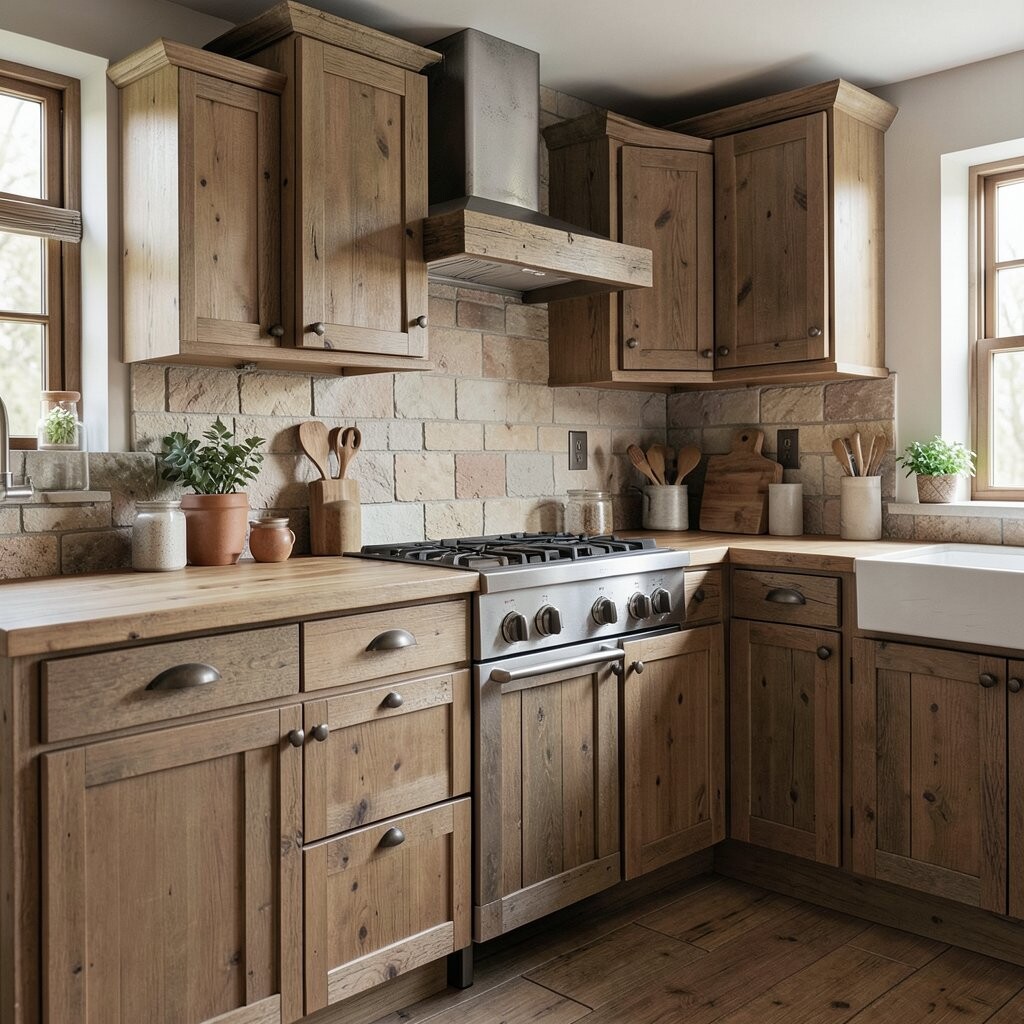
Wood with open grain brings a natural, lived-in look that feels honest and warm. It adds soft color, simple texture, and a cozy feel that works well with almost any rustic style.
Look for oak, pine, walnut, or reclaimed boards if you want a more relaxed mood. Lighter woods can brighten a small kitchen, while darker woods create a rich and snug feel, and both choices can fit different budgets.
2. Add Stone for a Grounded Feel
Add Stone for a Grounded Feel
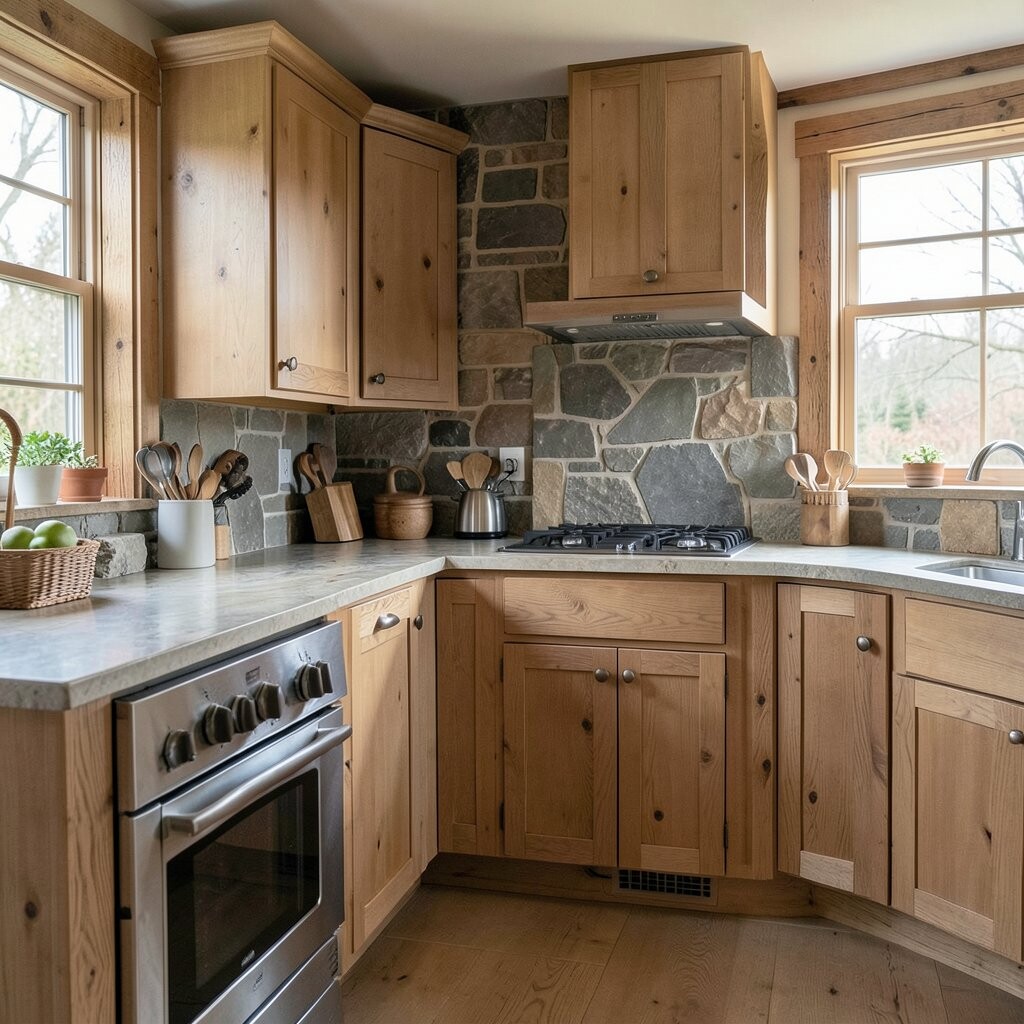
Stone gives a rustic kitchen a strong, earthy look that feels calm and sturdy. It can show up on floors, backsplashes, counters, or even a single accent wall.
Rough-cut stone feels bold and old-world, while smoother stone can look cleaner and easier to care for. If natural stone is too costly, stone-look tile can give a similar style at a lower price.
Try matching stone colors to your cabinets so the room feels balanced and warm. Soft gray, sandy beige, and deep brown all work well, and they can help the space feel timeless rather than trendy.
3. Pick Matte Finishes for a Soft Look
Pick Matte Finishes for a Soft Look
Matte finishes stop a rustic kitchen from feeling too shiny or cold. They make wood, metal, and painted surfaces look softer and more natural.
This finish also helps small marks and fingerprints stand out less, which is useful in a busy kitchen. A matte cabinet, faucet, or tile choice can make the whole room feel calm and easy to live with.
If you want a more personal touch, mix matte surfaces with one glossy item, such as a vase or light fixture. That small contrast can add charm without breaking the cozy feeling.
4. Use Reclaimed Materials for Character
Use Reclaimed Materials for Character
Reclaimed wood, brick, and metal bring instant story and soul to a rustic kitchen. Their worn edges, old nail holes, and faded tones make the room feel unique and full of history.
These materials can also be a smart way to save money if you source them from salvage yards or local reuse shops. Because each piece is different, your kitchen will have a look that no catalog can copy.
5. Balance Rough and Smooth Surfaces
Balance Rough and Smooth Surfaces
A cozy kitchen needs both texture and comfort, so rough and smooth materials should work together. A rough wood beam can look lovely next to a smooth counter or painted cabinet.
This mix keeps the room from feeling too heavy or too plain. It also lets you personalize the space by choosing which features feel bold and which ones feel soft.
For a current rustic trend, pair distressed wood with cleaner lines and simple shapes. That style feels fresh while still keeping the warm farmhouse mood many people love.
6. Choose Warm Cabinet Colors
Choose Warm Cabinet Colors
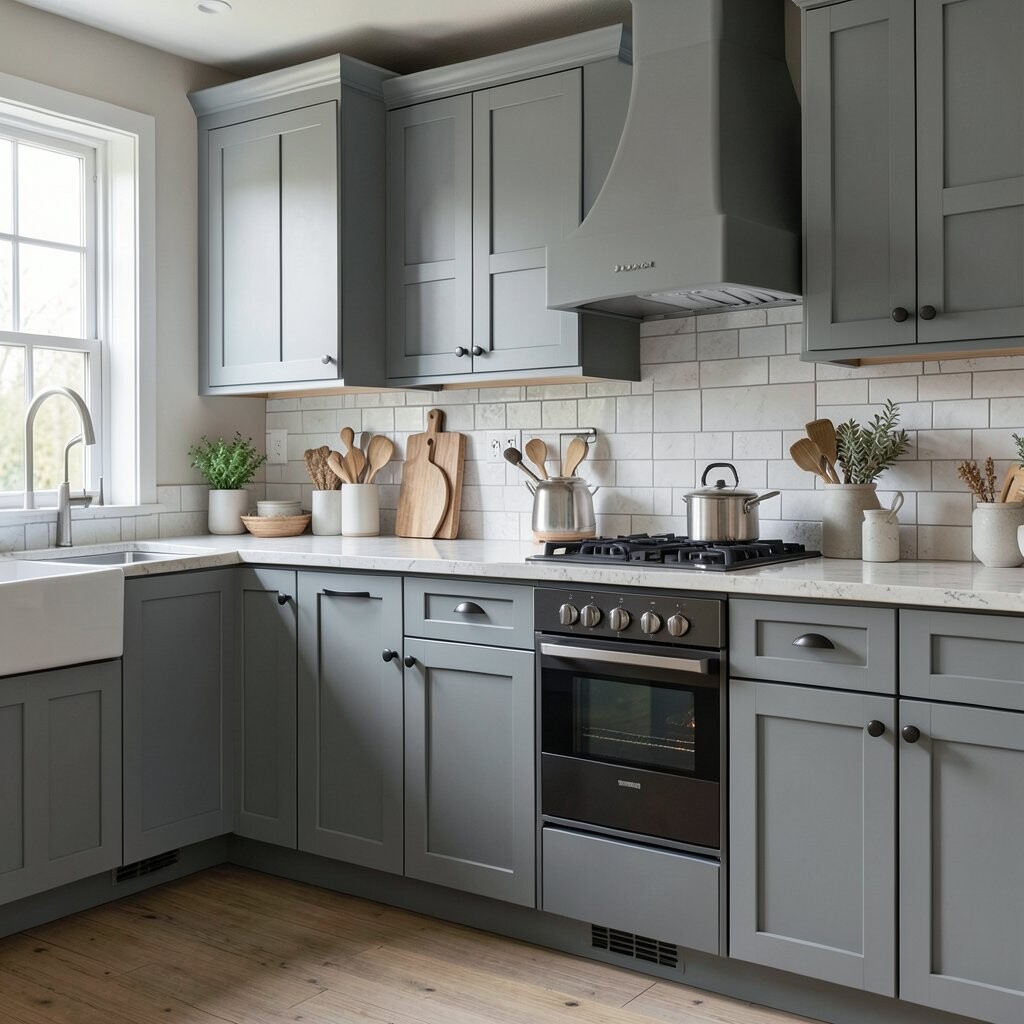
Cabinet color can change the whole feeling of a rustic kitchen. Warm whites, cream, sage, clay, and soft brown tones help the room feel cozy instead of sharp.
These colors work well with natural wood, woven baskets, and old-style hardware. They are also easy to match with many counter materials, which makes planning simpler and often less expensive.
If you want more personality, paint the island one shade darker or lighter than the main cabinets. That small change adds depth and gives the room a handmade feel.
Warm tones are also popular in today’s rustic kitchens because they make the space feel lived in and friendly. They can help a busy kitchen feel restful, even when there are lots of tools and dishes around.
7. Bring in Brick for Old-World Charm
Bring in Brick for Old-World Charm
Brick gives a kitchen a classic rustic look with a cozy, weathered feel. Its red, brown, or pale tones add warmth and texture without needing a lot of decoration.
An exposed brick wall can become the star of the room, while brick tile offers a similar effect at a lower cost. Brick also works well with wood shelves, iron lights, and simple pottery.
If full brick feels too heavy, use it in a small area like behind the stove or around a breakfast nook. That smaller touch still adds charm and keeps the room easy to maintain.
8. Select Hardware That Feels Handmade
Select Hardware That Feels Handmade
Cabinet pulls and knobs may seem small, but they shape the whole mood of the room. Hand-forged iron, aged brass, and brushed bronze all support a rustic style with quiet charm.
These finishes feel warmer than shiny chrome and often pair better with wood and stone. They can also be affordable, especially if you replace only the most visible pieces first.
For a more personal look, mix a few different but related hardware shapes across drawers and doors. That makes the kitchen feel collected over time instead of bought all at once.
9. Use Natural Fiber Details
Use Natural Fiber Details
Woven textures bring a soft, homey touch to rustic kitchen materials. Jute, seagrass, linen, and cotton can all help the room feel relaxed and welcoming.
These materials work well in rugs, curtains, seat cushions, and basket storage. They are usually budget-friendly, easy to swap out, and great for changing the feel of the room without a big project.
Try placing a woven runner near the sink or a few baskets on open shelves. Those small touches can make hard surfaces feel gentler and more comfortable.
Natural fibers are also a big trend in cozy kitchen design right now because they soften spaces filled with stone, wood, and metal. They help rustic rooms feel finished without looking overly styled.
10. Pick Countertops That Age Gracefully
Pick Countertops That Age Gracefully
Rustic counters should look good even as they pick up a little wear. Materials like butcher block, honed stone, and sealed concrete can all develop character over time.
Butcher block feels warm and friendly, while stone gives a sturdier, cooler look. Concrete can feel bold and simple, and it may cost less than some natural stone choices depending on the install.
If you cook often, choose a surface that matches your habits and cleaning style. A beautiful counter is useful only when it fits the way your family really lives.
11. Mix Metals in a Gentle Way
Mix Metals in a Gentle Way
Rustic kitchens do not need every metal item to match exactly. Soft mixes of iron, brass, and copper can make the room feel collected and personal.
This mix adds depth and a handcrafted mood, especially when the finishes are not too shiny. It also gives you more freedom to shop secondhand, which can help keep costs down.
Use one metal for larger items and another for small accents so the look stays calm. That trick keeps the design from feeling messy while still giving it charm.
12. Choose Flooring That Feels Warm Underfoot
Choose Flooring That Feels Warm Underfoot
Flooring changes both the look and the comfort of a rustic kitchen. Wide-plank wood, wood-look tile, and warm-toned stone all help the room feel cozy and grounded.
Wood floors bring natural beauty, but they may need more care in wet areas. Tile can be easier to clean and often lasts a long time, which makes it a smart choice for busy homes.
If you want a softer feel, add a washable rug near the sink or stove. That simple layer adds color, comfort, and a little extra personality.
Today, many rustic kitchens use flooring that looks aged but performs like modern material. That gives you the old-fashioned style you want with less worry in daily life.
13. Add Open Shelving With Honest Materials
Add Open Shelving With Honest Materials
Open shelves can make a rustic kitchen feel airy and personal. Wood shelves with metal brackets create a simple look that shows off dishes, jars, and everyday items.
This choice can also save money because open shelving often costs less than full upper cabinets. It works best when you enjoy keeping things tidy and like to see your favorite items on display.
Mix useful pieces with pretty ones, such as bowls, mugs, and a few cookbooks. That balance helps the shelves feel warm instead of crowded.
For extra coziness, choose shelf materials that echo your counters or island wood tone. Matching small details like this can make the whole kitchen feel well planned.
14. Use Weathered Paint for Soft Charm
Use Weathered Paint for Soft Charm
Weathered paint gives cabinets, tables, and chairs a gentle aged look. It creates a rustic mood that feels homey and real instead of too polished.
Soft distressing can hide small marks and make older furniture feel useful again. That is helpful if you are reworking items you already own, since repainting costs less than buying new pieces.
Keep the wear subtle so the room still feels clean and inviting. A little fade on edges or corners is often enough to give the space character.
15. Bring in Clay and Ceramic Pieces
Bring in Clay and Ceramic Pieces
Clay and ceramic materials add a handmade touch that fits rustic kitchens very well. Their soft shapes and earthy colors bring warmth to shelves, counters, and table settings.
These pieces do not need to be fancy to feel special. A simple handmade bowl, pitcher, or tile can add charm without a large price tag.
Try mixing smooth glazed pieces with raw or matte ones for a richer look. That contrast can make the kitchen feel collected, thoughtful, and uniquely yours.
Ceramic accents also match the current love for artisanal home style. People want rooms that feel personal, and these items help tell that story in a quiet way.
16. Pick Lighting That Feels Soft and Old-Fashioned
Pick Lighting That Feels Soft and Old-Fashioned
Lighting affects the mood as much as any cabinet or counter material. Lantern-style pendants, shaded sconces, and warm bulbs all help rustic kitchens feel gentle and inviting.
Choose fixtures made with aged metal, glass, or wood details to keep the style consistent. These finishes can be affordable if you shop at home stores, resale shops, or online sales.
Warm light is especially important because it makes wood and stone look richer. It also helps the kitchen feel cozy at night, which is perfect for family meals or quiet tea time.
17. Include Glass in a Simple Way
Include Glass in a Simple Way
Glass can balance out heavier rustic materials and keep the kitchen from feeling too dark. Clear cabinet doors, glass jars, and small pendant shades add light and openness.
This material works well with wood, brick, and iron because it brings a clean note to the mix. It also helps you show off dishes or pantry items in a neat and pretty way.
If you want to stay on budget, use glass in small areas instead of everywhere. A few visible shelves or a glass-front cabinet can make a big visual difference.
18. Think About Patina and Aging
Think About Patina and Aging
Rustic style often gets better as it ages, so choose materials that can handle a bit of wear. Copper, brass, wood, and natural stone can all develop a lovely patina over time.
That aged look adds uniqueness and makes the kitchen feel like it has a story. It is also useful because small marks and color shifts can blend in instead of standing out.
If you prefer a neater look, seal surfaces where needed and care for them gently. That way you keep the cozy style while still protecting your investment.
19. Match Materials to Your Daily Life
Match Materials to Your Daily Life
The best rustic materials are the ones that fit how you cook, clean, and gather. A busy family may need tough counters and easy-clean floors, while a quiet home might focus more on looks and texture.
Personal comfort matters as much as style, so think about heat, spills, pets, and foot traffic. Choosing the right material for your habits can save money later by lowering repairs and replacements.
Make a short list of what matters most, such as warmth, low care, or a handmade feel. That simple step can keep you from buying pieces that look nice but do not suit your life.
Many current rustic kitchens blend beauty with function, and that is a smart trend to follow. A room that works well will always feel more inviting than one that only looks good in photos.
20. Layer Different Rustic Textures
Layer Different Rustic Textures
Texture is what gives a rustic kitchen its cozy charm. When wood, stone, metal, fabric, and ceramic all work together, the room feels full and welcoming.
Do not rely on just one material, or the space may feel flat. A mix of textures brings depth, uniqueness, and a more personal look that can fit small or large budgets.
Start with one main material, then add a few supporting ones that repeat the same warm mood. This makes the design feel steady and thoughtful while still leaving room for your own style.
Layering textures is also one of the easiest ways to make a kitchen feel current without losing its rustic heart. It keeps the room cozy, friendly, and ready for everyday life.