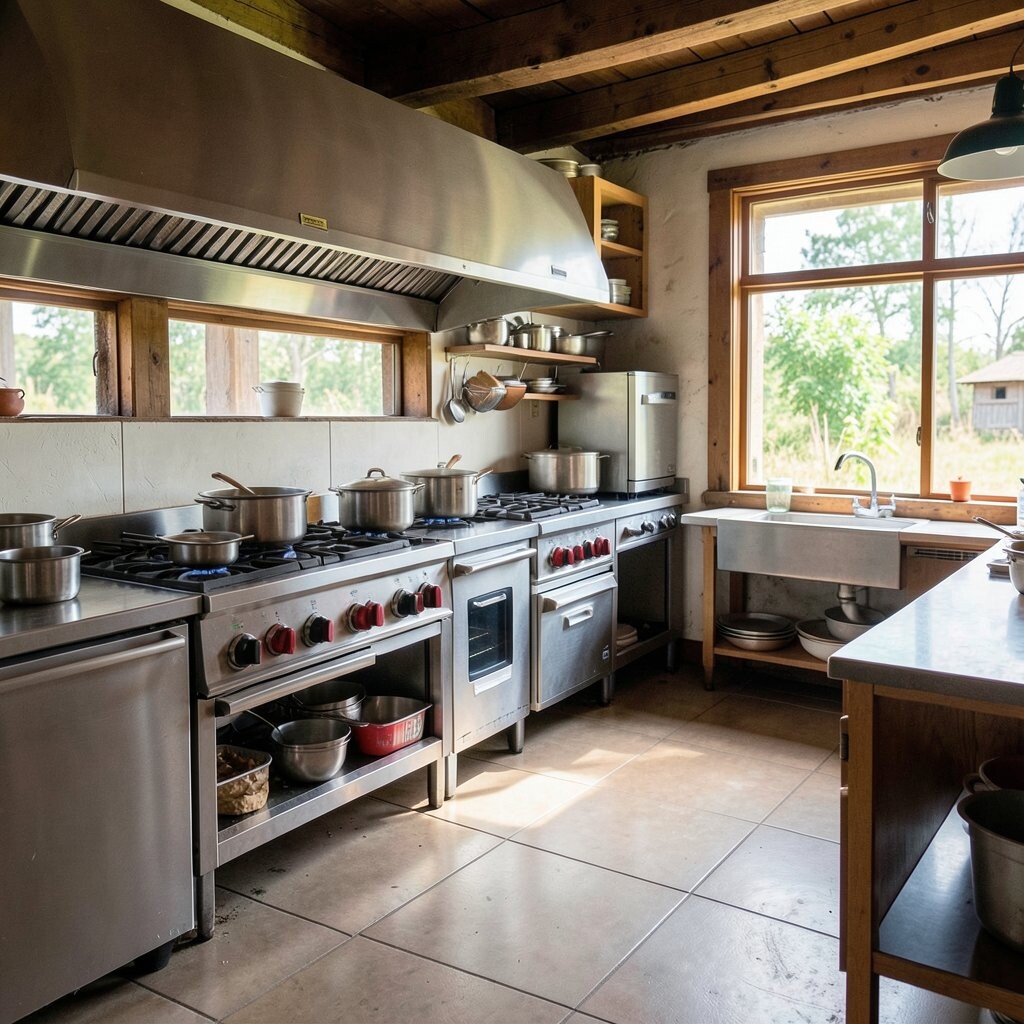
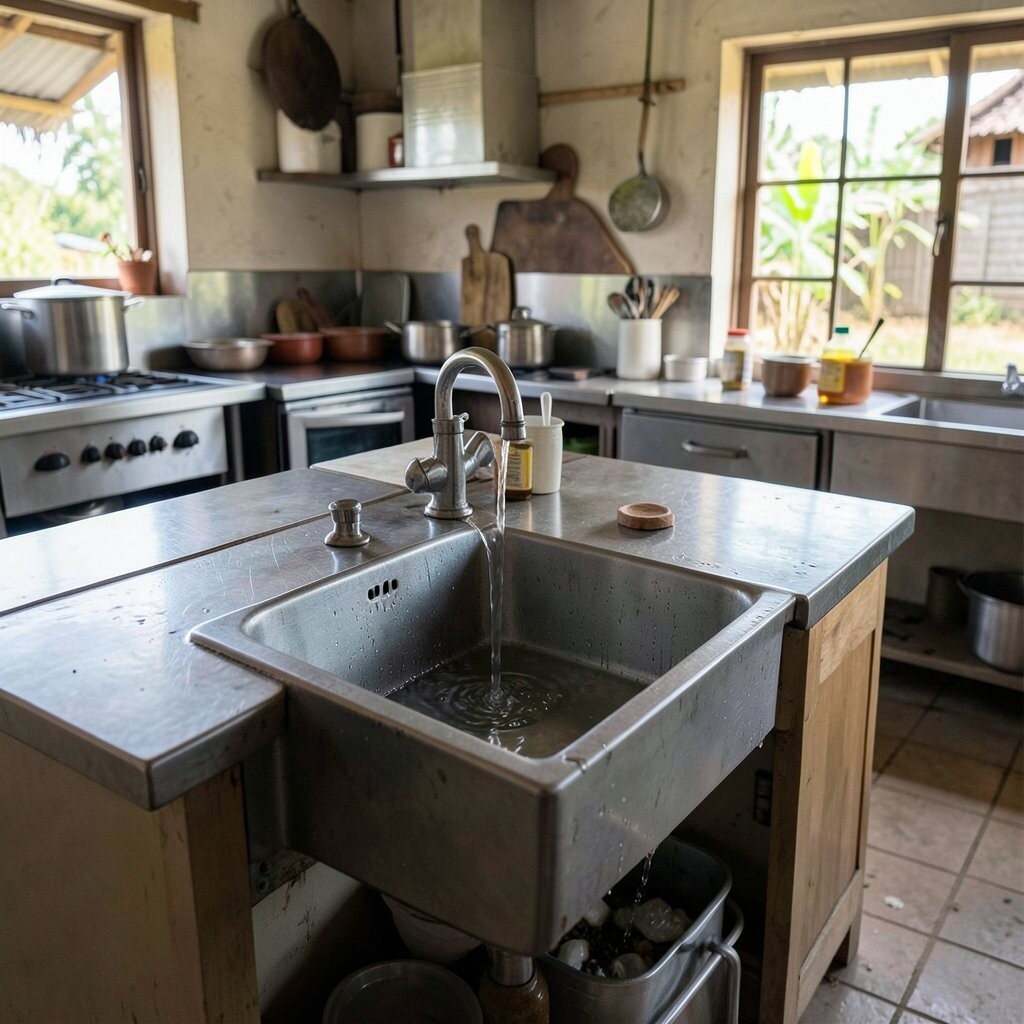
A prep zone near a window can make the whole kitchen feel fresh and open. Sunlight helps cooks see colors, cuts, and spills more clearly.
This setup is useful because it can lower eye strain and make food work feel easier. A simple stainless table, a wooden board, and a few hanging tools can give the space a clean look. If the budget is tight, start with one sturdy table and add shelves later.
2. Use Open Shelving for Fast Access
Use Open Shelving for Fast Access
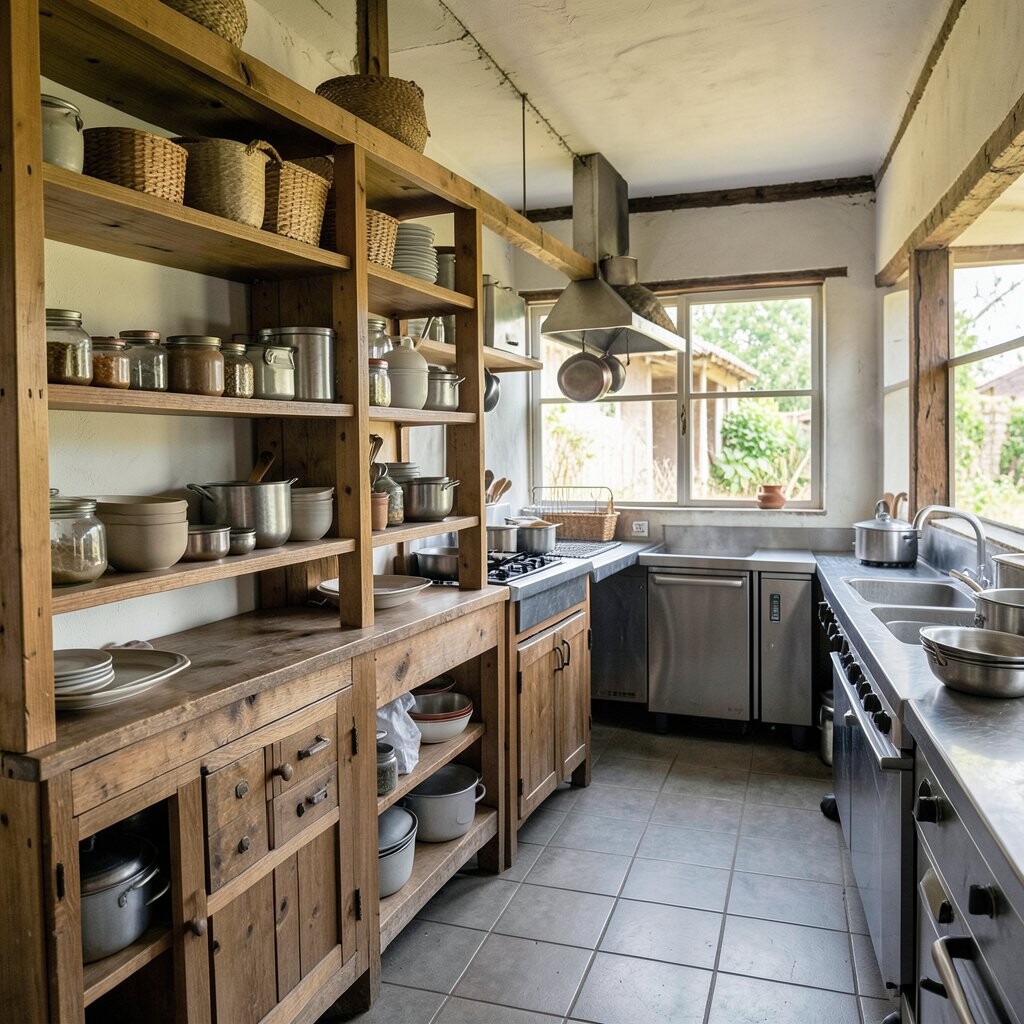
Open shelves can turn plain walls into useful storage. They also make the kitchen look busy in a good way, with bowls, jars, and pans easy to reach.
This idea helps cooks grab items fast during rush times. It can also cut down on cabinet costs and make the room feel larger. Try clear jars, labeled bins, and a few local clay pots for a personal touch.
Many rural kitchens now mix open shelves with simple metal racks for a modern farm-style look. This style feels neat without being fancy. It works well when staff need to move quickly and keep tools in view.
3. Set Up a Wood-Fired Corner for Special Dishes
Set Up a Wood-Fired Corner for Special Dishes
A wood-fired corner can bring deep flavor and a cozy look to the kitchen. The smoke, brick, and glowing heat create a strong, rustic feel.
It can be a big draw for guests who want food with a local touch. The setup may cost more at first, but fuel can be low-cost in areas with wood access. Add a heat-safe prep shelf nearby so staff can move pans with less fuss.
For a personal twist, use local stone or clay around the oven face. That makes the space feel tied to the land and the town. A well-placed fan and good chimney design help keep the air safer and more pleasant.
4. Keep a Simple Herb Wall Close to the Stove
Keep a Simple Herb Wall Close to the Stove
A herb wall can look green, fresh, and alive right inside the kitchen. Small pots of basil, mint, thyme, and parsley bring color to plain walls.
This idea saves time because cooks can snip herbs right where they need them. It also adds fresh flavor without extra trips to storage. Use low-cost wall planters or recycled tins if you want a budget-friendly setup.
5. Choose Heavy-Duty Counters That Can Take a Beating
Choose Heavy-Duty Counters That Can Take a Beating
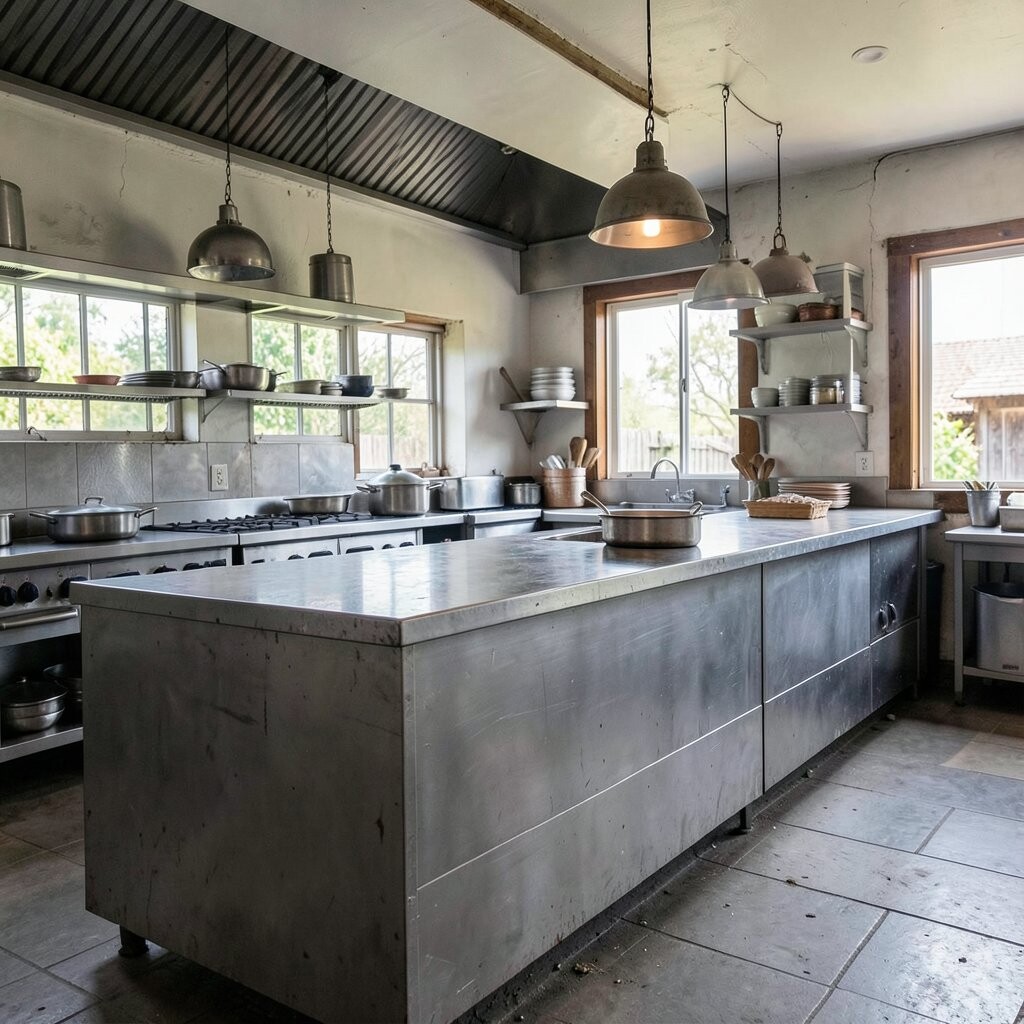
Strong counters are a smart choice in busy rural kitchens. They handle hot pans, rough chopping, and long work hours with less damage.
Concrete, stone, or thick stainless steel can last a long time. That means fewer repairs and less money spent later. If you want a warmer feel, pair hard counters with wooden cutting boards and simple cloth runners.
Current kitchen design trends also favor tough surfaces that are easy to wipe clean. In a rural setting, that practical look fits right in. A matte finish can hide marks better than shiny tops and still look neat.
6. Add a Farm-to-Table Sorting Station
Add a Farm-to-Table Sorting Station
A sorting station makes fresh produce easier to wash, trim, and pack away. It can sit near the back door so vegetables come in and get handled fast.
This setup helps keep dirt out of the main cooking area. It also supports local buying, which is a big plus in rural food service. A simple sink, bins, and a drain rack can do the job without a huge bill.
To make it feel special, use baskets from local makers or wooden crates from nearby farms. That gives the station a handmade look. Clear labels for greens, roots, and herbs keep things tidy and easy for new staff.
7. Use Hanging Racks to Free Up Floor Space
Use Hanging Racks to Free Up Floor Space
Hanging racks can make a small kitchen feel less crowded. Pots, ladles, and pans stay off the floor and within easy reach.
This helps with safety because staff are less likely to trip over clutter. It also gives the room a lively, well-used look. If money is tight, start with one rail and a few hooks before adding more.
8. Create a Warm Baking Nook
Create a Warm Baking Nook
A baking nook can make bread, pies, and pastries easier to manage. A calm corner with flour bins and trays feels soft and inviting.
This area works well because baking needs focus and steady tools. It can also help keep sweet smells away from strong savory prep. Use a small mixer, labeled jars, and a rolling pin holder to keep the nook neat.
For a unique touch, paint the nook in a warm color like cream, sage, or clay red. That can make the space feel homey without much cost. Many kitchens now use cozy color blocks to make work zones easier to spot.
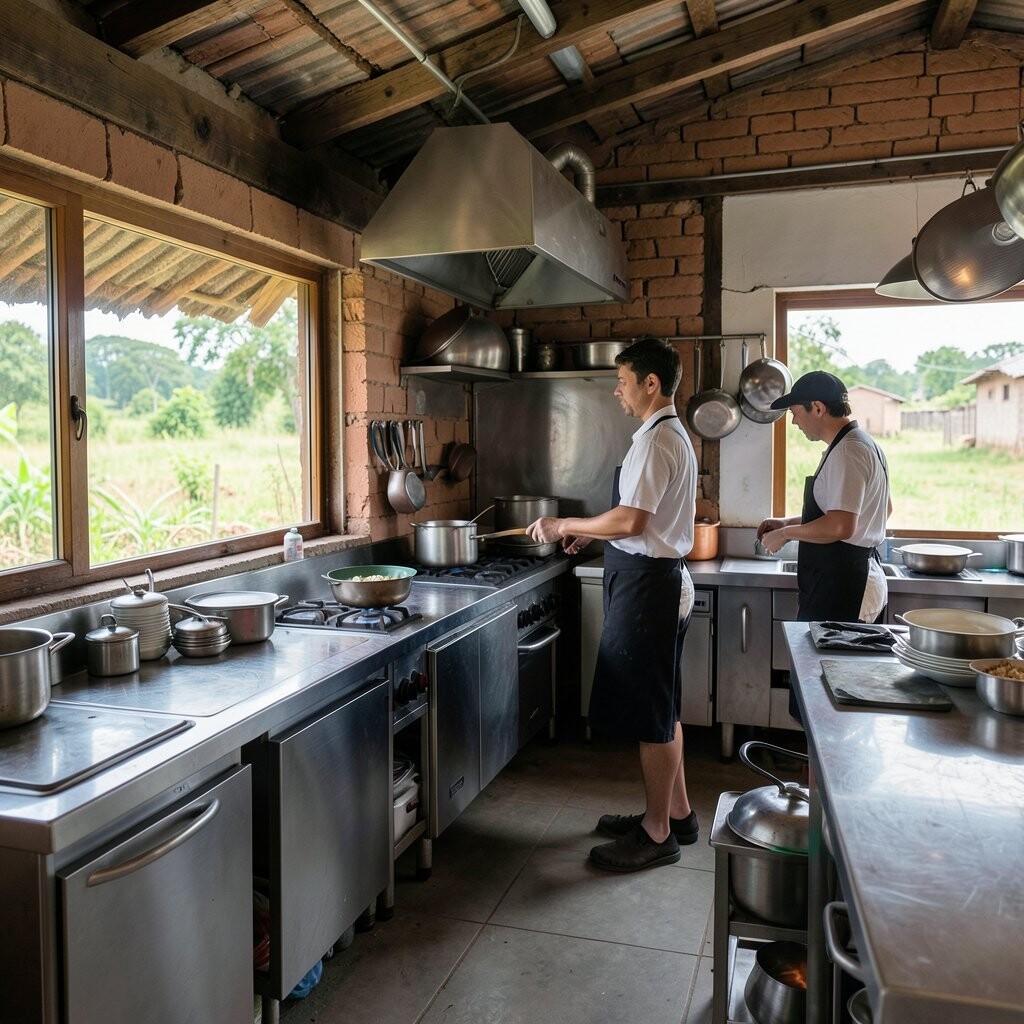
9. Install a Smart but Simple Ventilation System
Install a Smart but Simple Ventilation System
Good airflow can change how a kitchen feels in a big way. Less smoke and heat mean cooks can stay sharp and comfortable longer.
In rural areas, a simple hood, wall fan, or roof vent can work well. This can also protect walls and ceilings from grease buildup. Choose a system that fits the room size so you do not spend more than needed.
Some kitchens now pair basic vents with energy-saving fans. That keeps power use lower while still moving air well. A cleaner air space can also help food smell better and keep staff happier during long shifts.
10. Make a Local Ingredient Display Near the Entrance
Make a Local Ingredient Display Near the Entrance
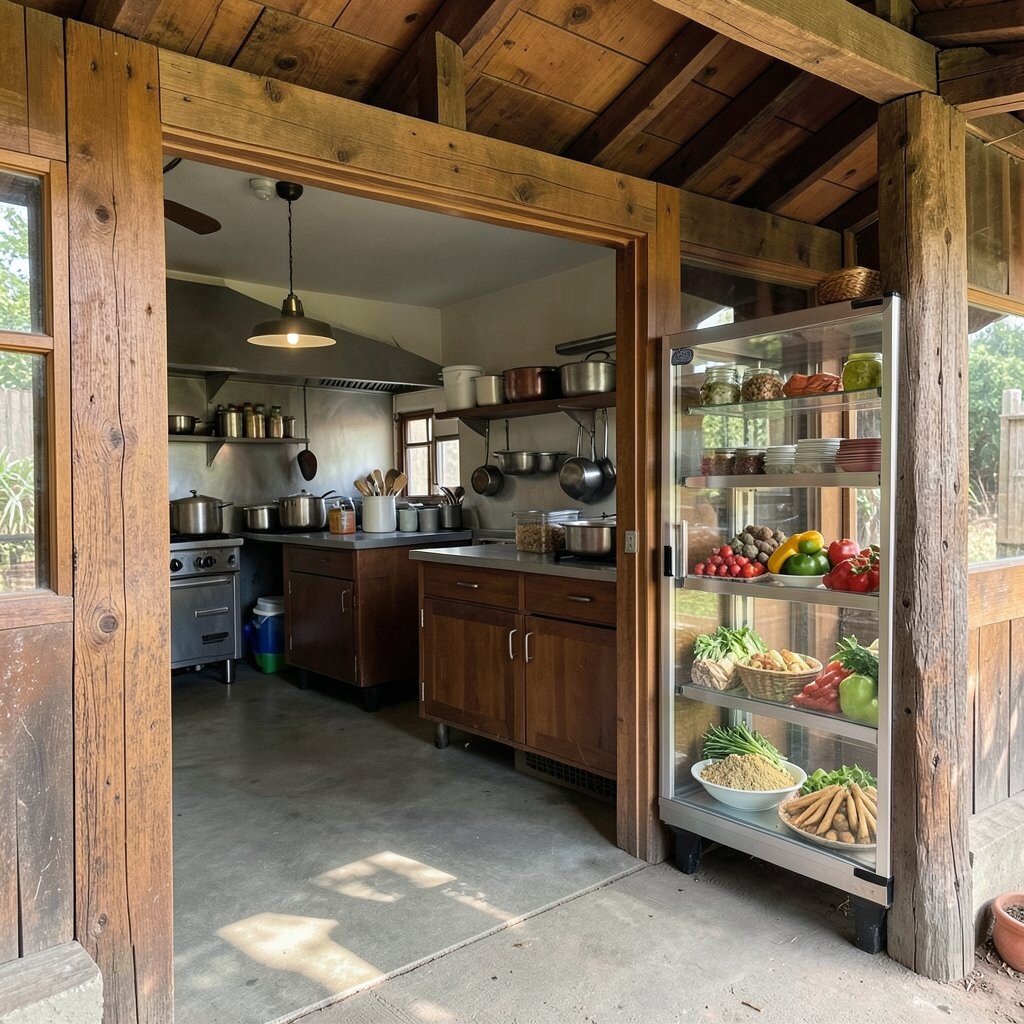
A local ingredient display can greet guests with color and charm. Fresh eggs, squash, grains, and jars of jam can tell a story before the meal even starts.
This idea gives the kitchen and dining area a strong rural identity. It can also support local growers and small makers. Use simple wooden crates, woven baskets, and handwritten tags for a low-cost display.
11. Set Up a Wash Station With Clear Flow
Set Up a Wash Station With Clear Flow
A wash station with a clear flow can save time and reduce mess. Dirty items move in one direction, and clean items leave another way.
This makes the kitchen feel calmer and more organized. It also helps stop cross-contamination, which is very important for food safety. A deep sink, drying rack, and splash guard are useful pieces that do not need to be fancy.
For a personal touch, add a small shelf for soap, brushes, and cloths in matching colors. That tiny detail can make the station look cared for. Simple signs showing where items go can help new workers learn fast.
12. Use Local Wood and Stone for a Rustic Look
Use Local Wood and Stone for a Rustic Look
Local wood and stone can give a kitchen a strong sense of place. The textures look natural, sturdy, and full of character.
This choice can also lower shipping costs if the materials are nearby. It fits rural settings well and can make the room feel less cold than all-metal designs. Seal the surfaces well so they stay easy to clean and last longer.
Many current designs mix rough natural materials with sleek lights or simple steel tools. That balance feels fresh without losing the country charm. If you want a personal style, use wood from a family property or stone from a local source.
13. Design a Quick-Grab Breakfast Line
Design a Quick-Grab Breakfast Line
A breakfast line can help the kitchen move smoothly during the first rush of the day. Eggs, bread, fruit, and coffee can all sit in one easy path.
This setup saves time and keeps morning service from feeling messy. It is especially helpful in rural spots where staff may be small and roles may overlap. Use warming trays, labeled containers, and a tidy shelf for cups and plates.
To make it feel special, add a small chalkboard with the day’s breakfast choices. That gives the area a friendly, old-school look. A few low-cost upgrades, like matching canisters or a small lamp, can make the line feel polished.
14. Add a Small Canning and Preserving Area
Add a Small Canning and Preserving Area
A canning area can be a smart fit for rural kitchens with local harvests. Jars, lids, and bubbling pots create a busy and colorful scene.
This space helps save extra produce and cut down on waste. It can also support seasonal menus and house-made condiments. Keep shelves strong, use heat-safe surfaces, and store jars by type for easy use.
Many kitchens now like preserving because it feels practical and old-fashioned at once. It also gives chefs more control over flavor and supply. If the budget is small, begin with a single pot and a few shelves, then grow from there.
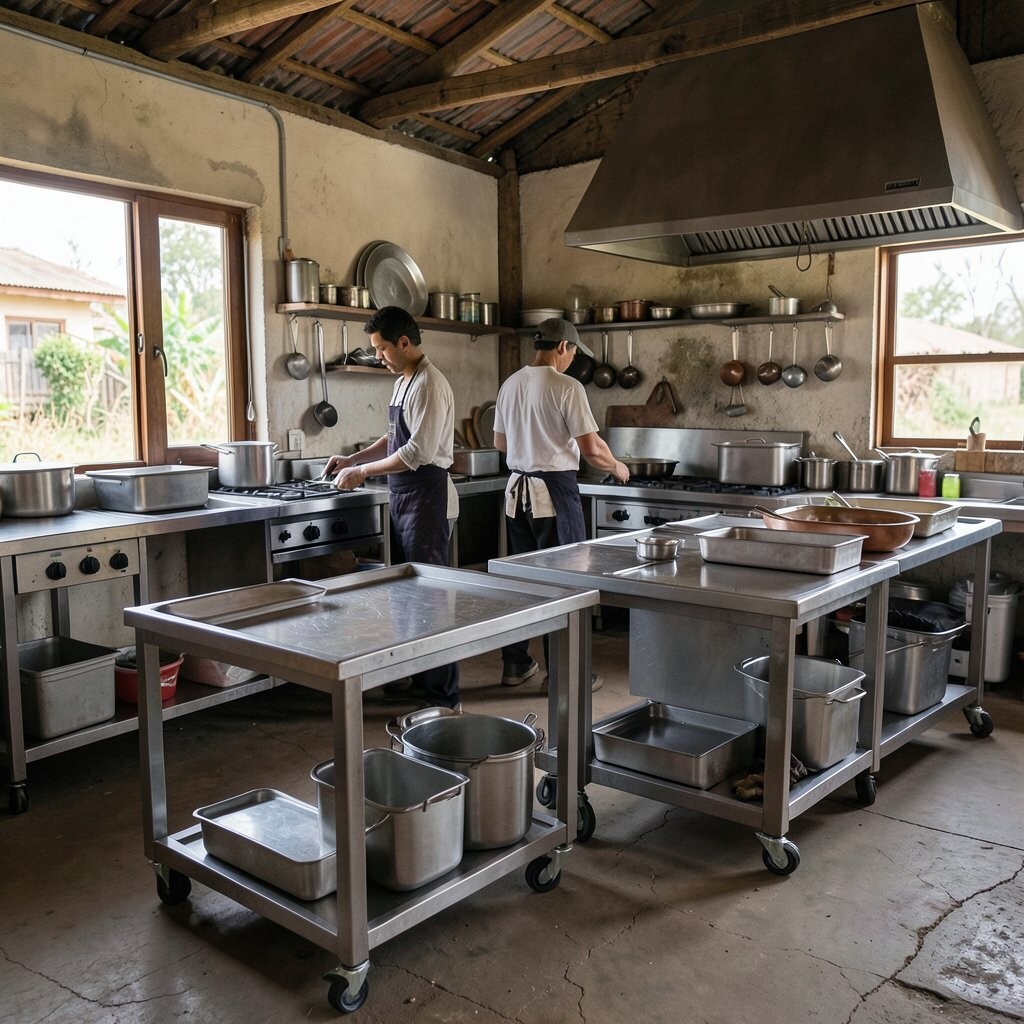
15. Use Mobile Prep Tables for Flexibility
Use Mobile Prep Tables for Flexibility
Mobile prep tables can move where the work is needed most. Their wheels make the kitchen feel more flexible and less fixed in place.
This is helpful in rural kitchens where space may change with the season or event. It also lets staff clean under and around tables more easily. Choose locking wheels so the table stays put when in use.
To personalize the look, use table covers in soft colors or simple checked patterns. That can make the room feel friendly instead of plain. Mobile tables are a smart spend because they can serve many jobs without taking much room.
16. Create a Cozy Staff Corner for Short Breaks
Create a Cozy Staff Corner for Short Breaks
A small staff corner can give workers a place to rest and reset. Even a tiny bench, shelf, and water station can make a big difference.
This helps morale, which often improves the whole kitchen mood. A cared-for team tends to work better and stay more focused. Keep the corner simple, with easy-to-clean seats and a few hooks for aprons.
For a warm touch, add a plant, a framed local photo, or a handmade mug shelf. That makes the space feel human and not just useful. Many kitchens now pay more attention to staff comfort because it supports better service.
17. Set Up Clear Labeling for Every Storage Area
Set Up Clear Labeling for Every Storage Area
Clear labels can make a kitchen feel calm and easy to use. When everything has a name, staff spend less time guessing.
This is a low-cost way to cut errors and waste. It also helps new workers learn the space faster. Use large print, waterproof tape, and color codes for dry goods, cold items, and tools.
A neat label system can also look good on open shelves and in fridges. That visual order makes the kitchen seem more professional. If you want a personal style, use hand-drawn tags or local language names alongside English ones.
18. Bring in Energy-Saving Equipment
Bring in Energy-Saving Equipment
Energy-saving equipment can lower bills and reduce strain on rural power systems. Efficient fridges, burners, and lights can keep the kitchen running better.
This matters because rural kitchens may face higher utility costs or uneven power supply. Better machines can also run cooler and last longer. When buying, compare repair needs as well as the sticker price.
Current trends strongly favor equipment that uses less power and makes less heat. That can make the kitchen more comfortable for everyone. A smart upgrade plan can start with the most-used tools first, then move to the rest later.
19. Use Color to Guide the Work Flow
Use Color to Guide the Work Flow
Color can do more than make a kitchen pretty. It can show where to chop, cook, wash, and store with very little effort.
This makes busy work easier to follow and helps prevent mistakes. It also gives the room a cheerful, lively feel that suits rural hospitality. Try painted wall sections, colored bins, or bright signs to mark each area.
For a personal touch, choose colors that match the local landscape, like wheat, pine, or clay. That keeps the kitchen connected to its setting. The best part is that paint and small decor changes usually cost far less than big remodels.
20. Build a Display Kitchen Window
Build a Display Kitchen Window
A display kitchen window can let guests see the care behind the food. Watching fresh meals come together can make the whole place feel more alive.
This idea works well for bakeries, cafes, and farm restaurants. It builds trust because people can see the clean work and busy hands behind the counter. Keep the view tidy with matching tools, neat aprons, and a clear counter line.
Some modern rural kitchens use this style to mix charm with openness. A small window frame, a warm light, and a few hanging herbs can make it feel inviting. It does not need a huge budget if the main focus is good organization.
21. Add a Seasonal Menu Board With Local Art
Add a Seasonal Menu Board With Local Art
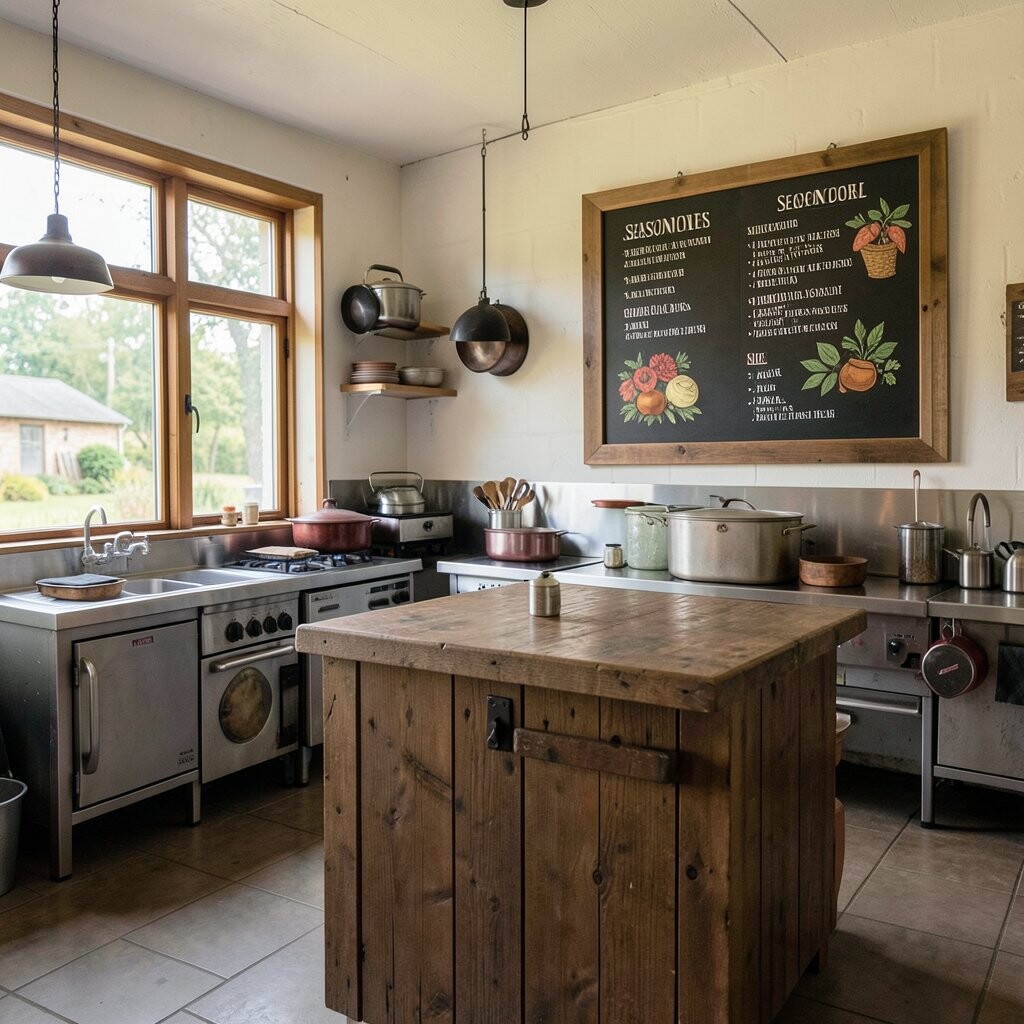
A seasonal menu board can make the kitchen feel current and full of life. It shows what is fresh now and gives the room a changing look.
This helps cooks plan around local supply, which can save money and reduce waste. It also gives guests a reason to try new dishes made from nearby ingredients. Use chalk, wood, or a simple framed board that fits the room style.
For a unique touch, decorate the board with local art, farm sketches, or hand lettering. That can make the kitchen feel personal and memorable. The trend toward seasonal, local food is strong, and this small feature fits it well without needing a big spend.