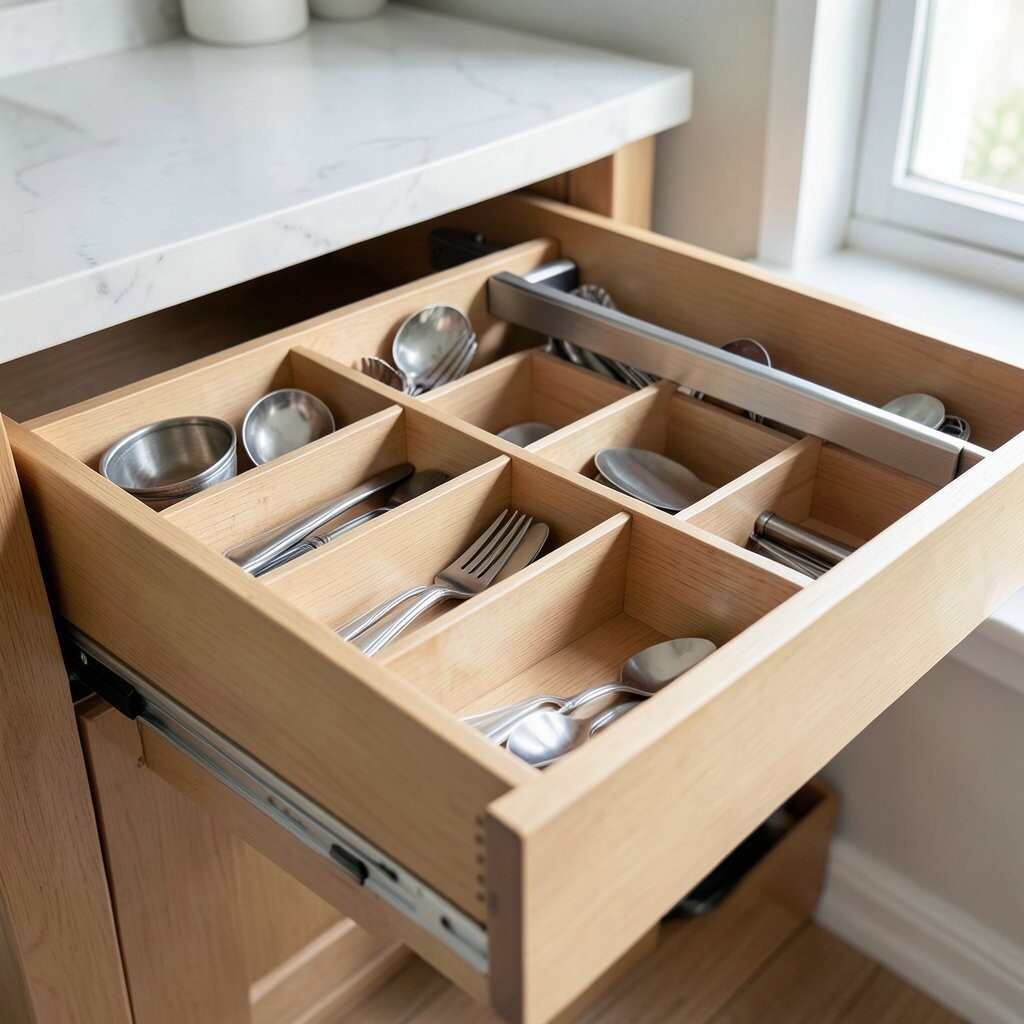
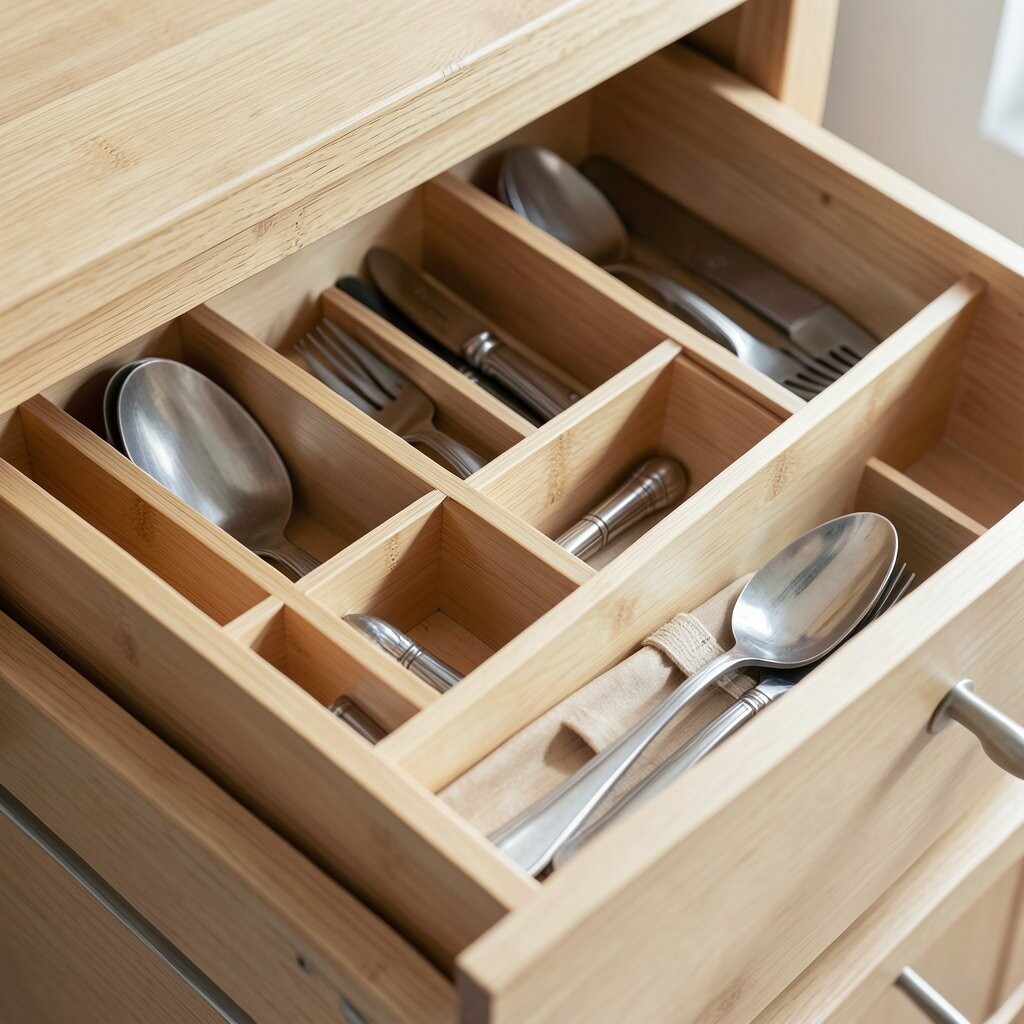
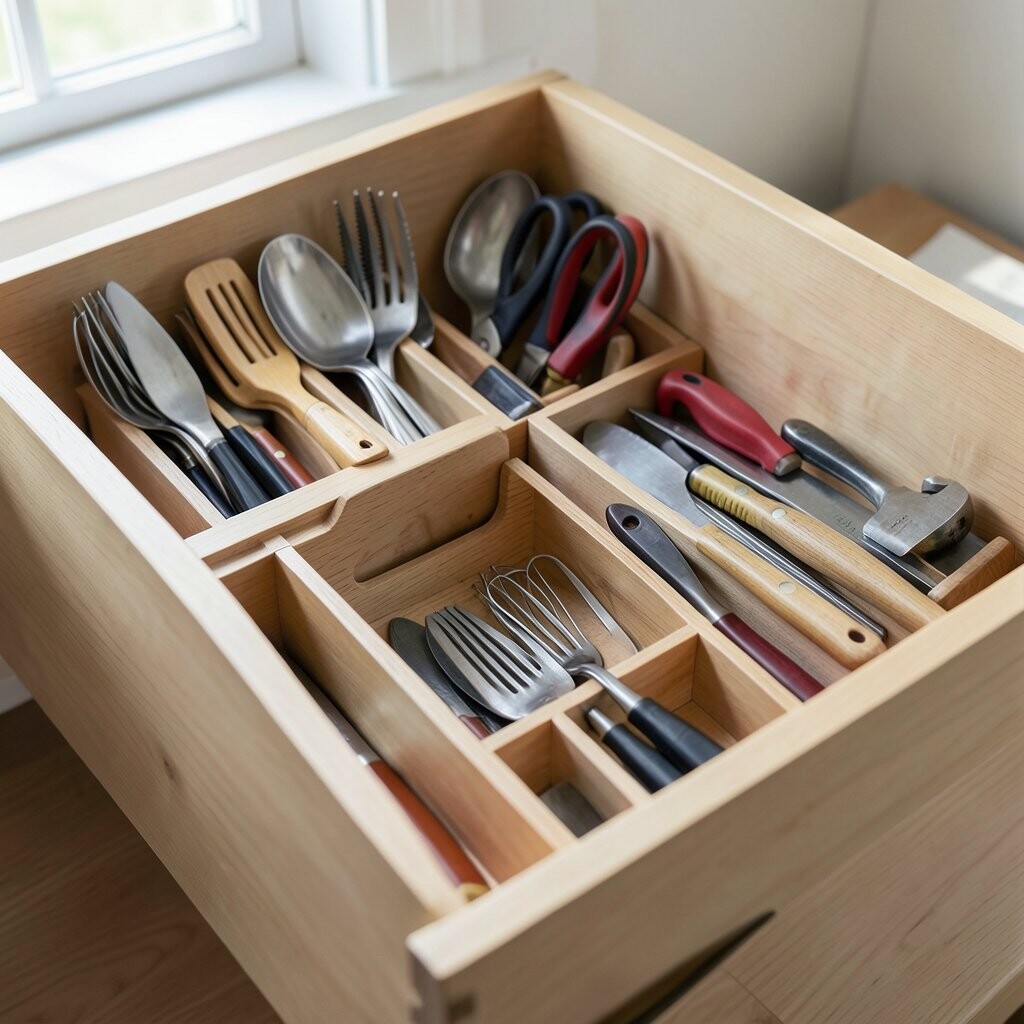
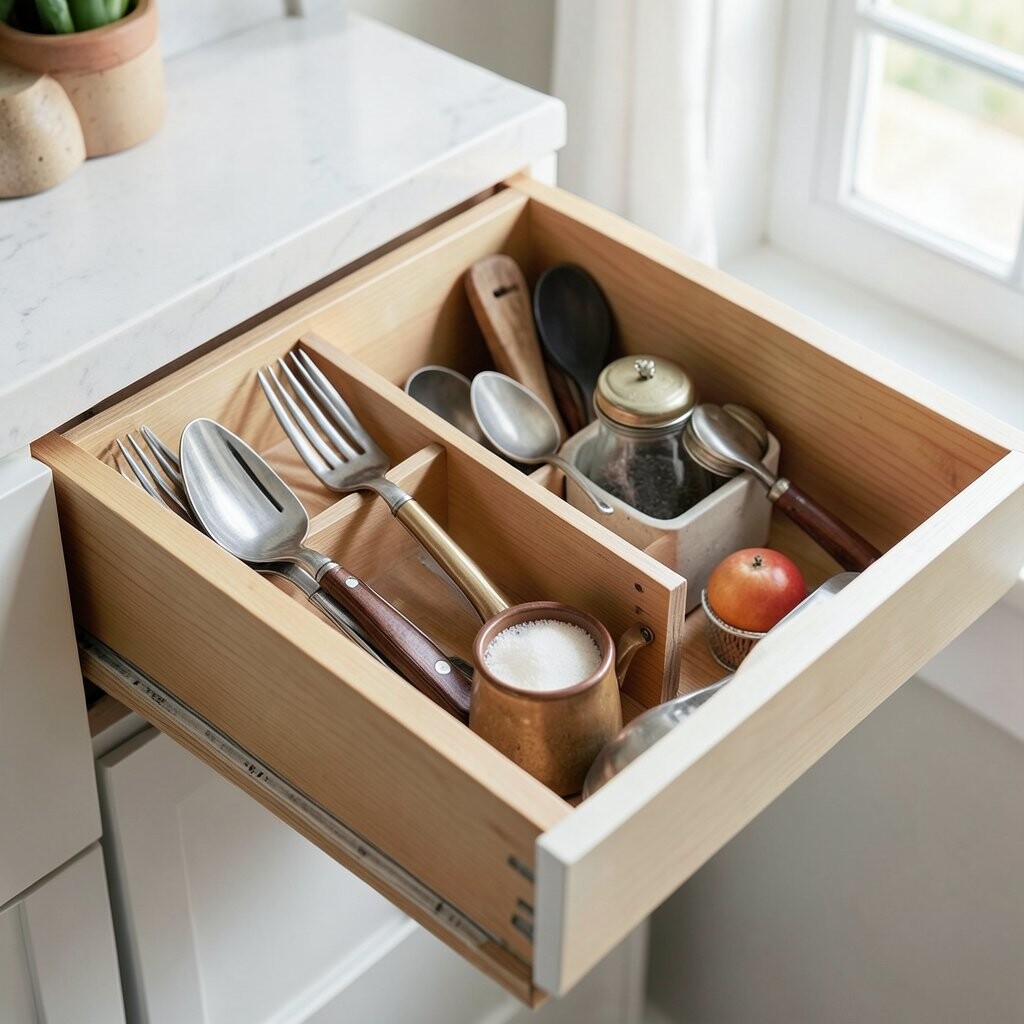
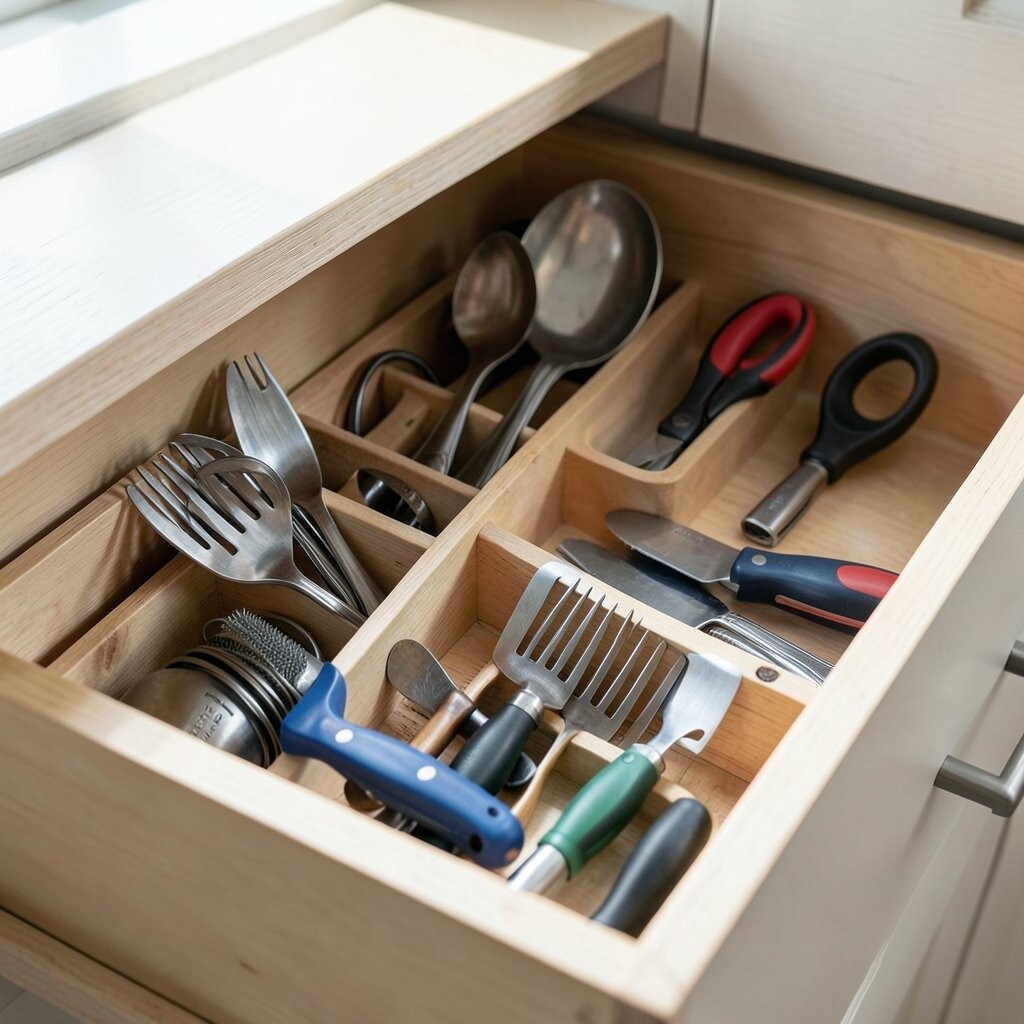
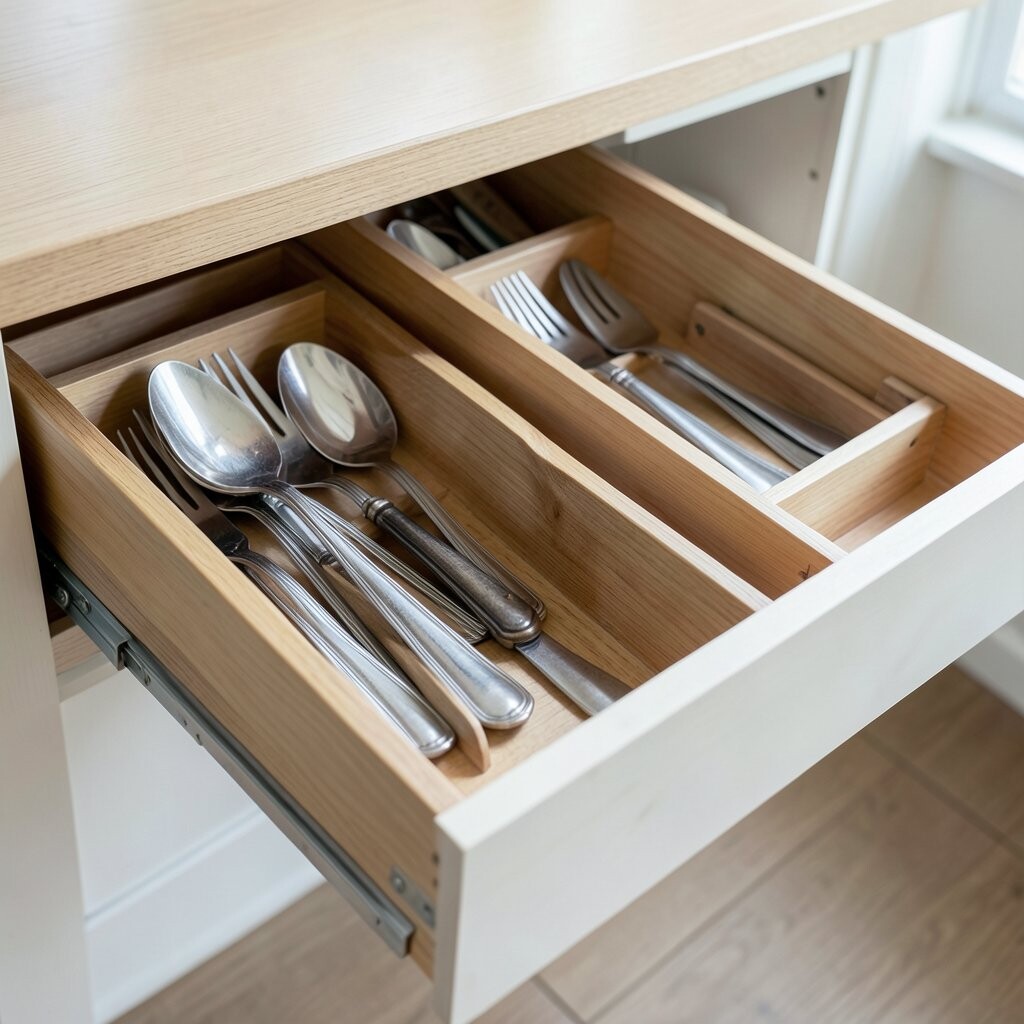
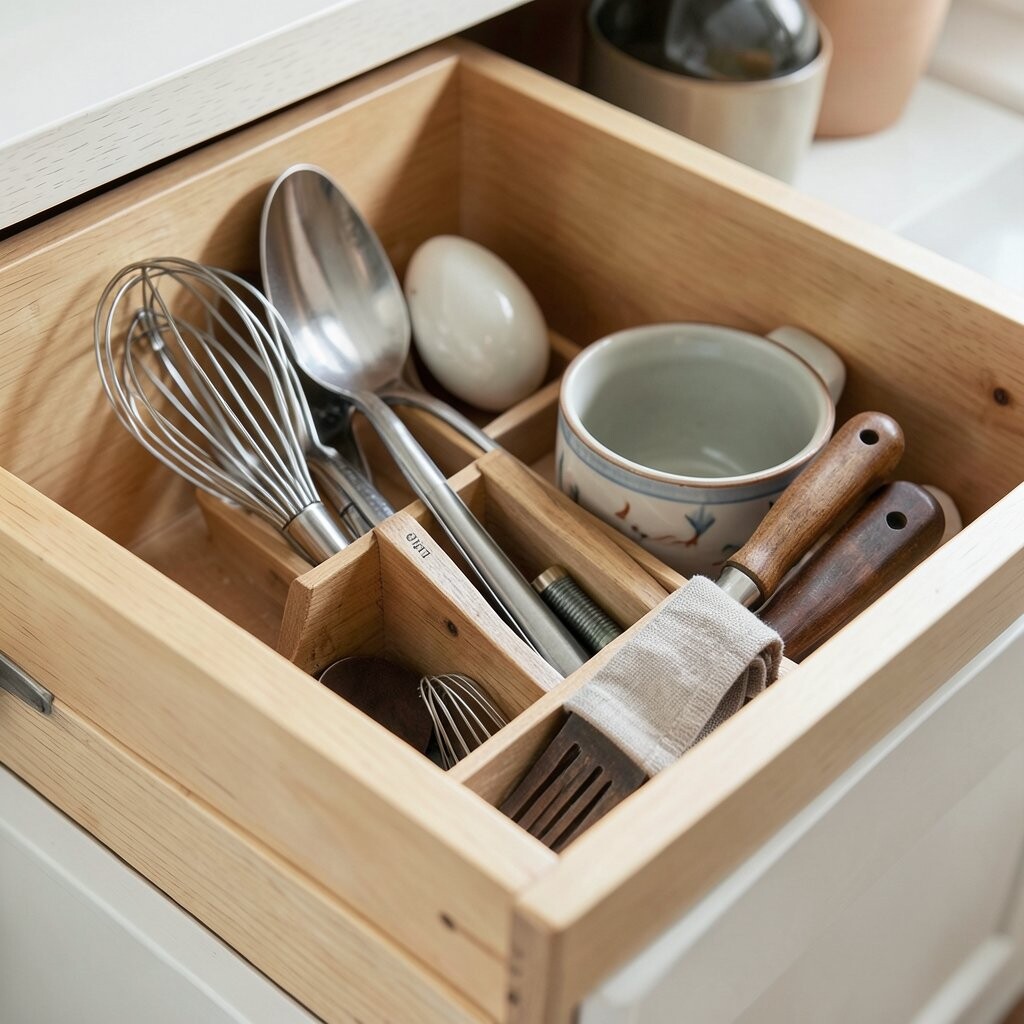
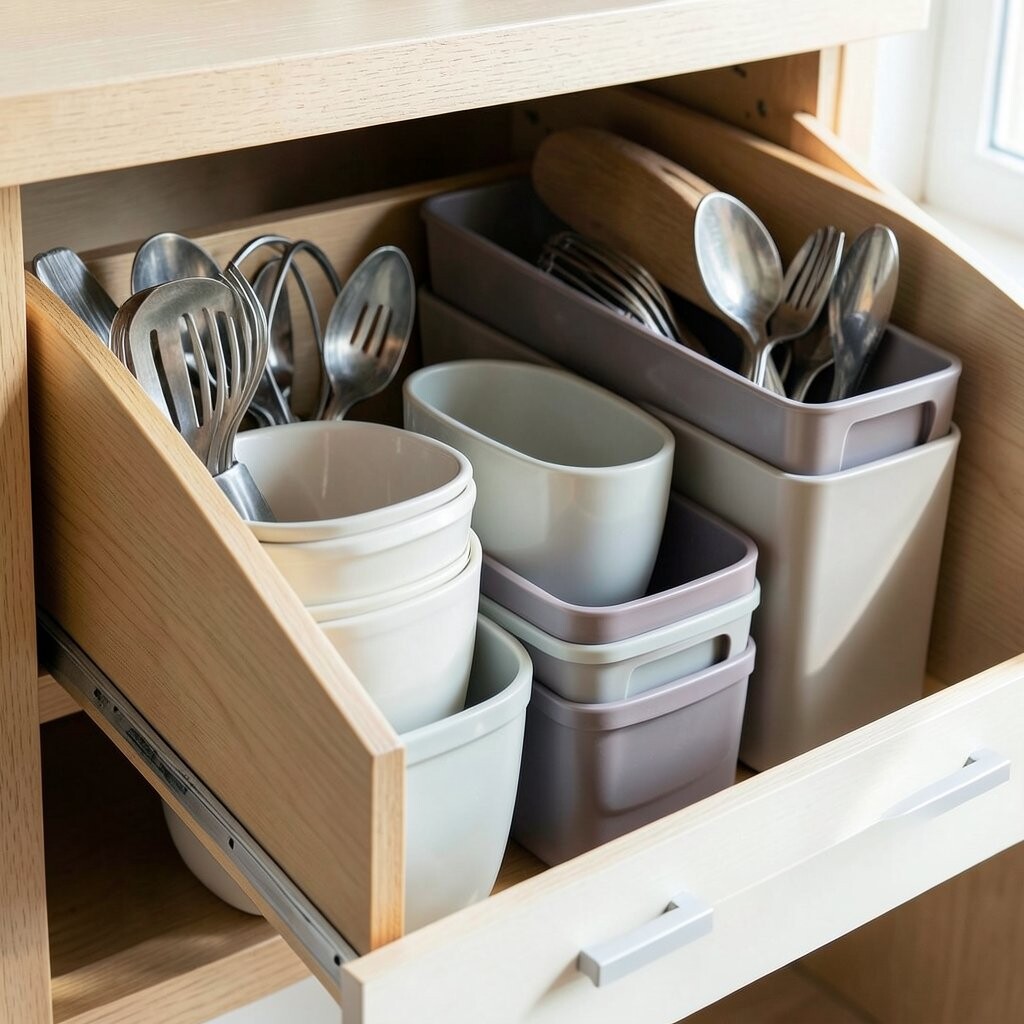
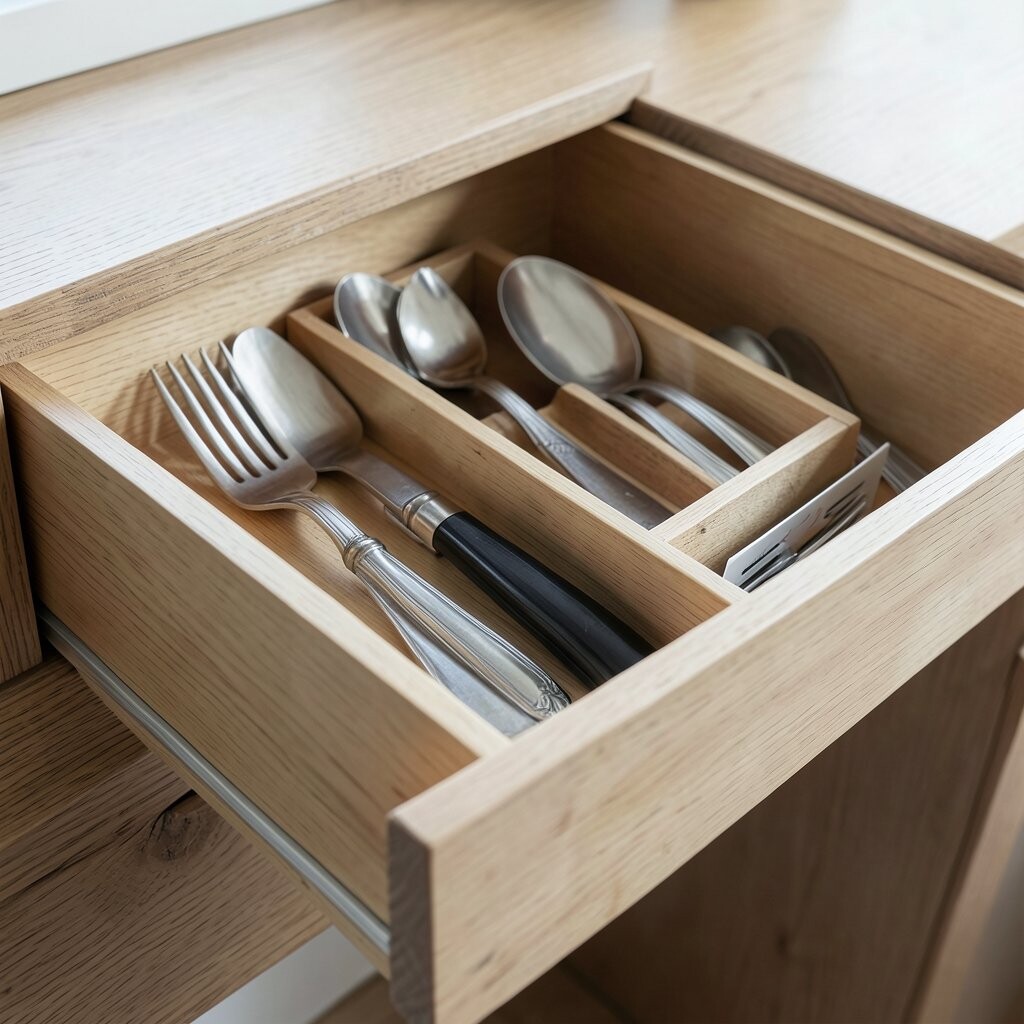
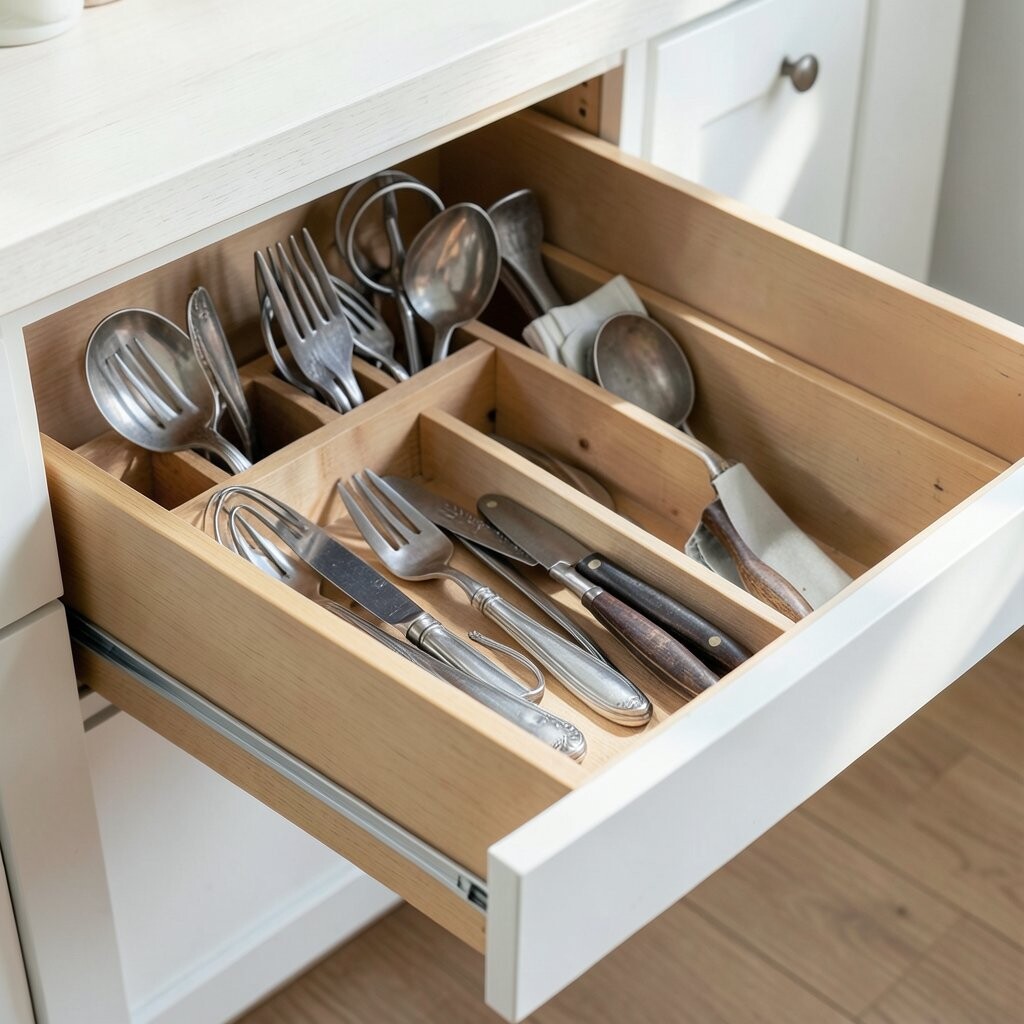
Adjustable drawer dividers create clean lanes for forks, spoons, and cooking tools. The drawer looks neat right away, and each item stays easy to grab.
This idea works well because the sections can change as your utensil set grows or shrinks. It is a simple choice for renters, busy families, and anyone who wants a tidy look without a big price tag. Pick wood for a warm feel or clear plastic for a lighter, modern style.
2. Try Deep Bamboo Inserts
Try Deep Bamboo Inserts
Deep bamboo inserts bring a calm, natural look to a kitchen drawer. They also feel sturdy and smooth, which makes them pleasant to use every day.
These inserts are great for larger utensils that need a little more room. Bamboo is often seen in current kitchen trends because it looks fresh and works with many styles. If you want a warmer feel, choose a light finish; if you want a bold look, pair it with dark drawer liners.
They can cost more than basic plastic trays, but they often last longer and look more polished. You can personalize the layout by giving each section a special job, such as one for serving tools and one for prep tools. That makes the drawer easier to keep in order over time.
3. Add a Two-Tier Utensil Tray
Add a Two-Tier Utensil Tray
A two-tier tray uses vertical space in a smart way. It gives the drawer a stacked look that feels clever and modern.
This style is helpful when the drawer is shallow but you still need room for many tools. The top level can hold everyday items, while the lower level can store extras like tongs or peelers. It is a neat option for people who want more storage without buying a bigger cabinet.
Look for trays with smooth edges so items slide in and out with ease. Some versions are made from budget-friendly plastic, while others use metal or wood for a more upscale feel. You can make it your own by placing the most-used tools on top and the less-used ones below.
4. Sort Tools by Task
Sort Tools by Task
Grouping utensils by task makes the drawer feel smart and easy to use. Cooking tools, serving tools, and baking tools each get their own space.
This setup saves time because you do not have to search for the right item while cooking. It also gives the drawer a clear, balanced look that feels calm. A simple label on each section can help everyone in the home keep things in the right place.
5. Use Clear Plastic Trays
Use Clear Plastic Trays
Clear plastic trays make it easy to see every utensil at a glance. The drawer looks light and open, which can help a small kitchen feel less crowded.
These trays are often low cost and easy to find in many shapes. They work well for people who want a fast fix that still looks tidy. If you like a sleek trend, mix clear trays with a drawer liner in a soft color.
Because the trays are see-through, they make it simple to spot gaps and keep the drawer from getting overfilled. You can personalize the layout by using one tray for prep tools and another for eating tools. That little change can make daily cooking smoother.
6. Create a Cooking Zone
Create a Cooking Zone
A cooking zone keeps spatulas, ladles, tongs, and whisks together in one place. The drawer feels like a mini work station instead of a random pile.
This idea is useful for people who cook often and want tools close at hand. It also helps cut down on clutter in other drawers and on the counter. A slim divider or tray can make the zone look neat and simple.
You can make the zone fit your habits by adding a small spot for a favorite garlic press or thermometer. Cost can stay low if you use what you already own and only buy one organizer piece. The result feels personal and practical at the same time.
7. Use a Drawer With Custom Cut Foam
Use a Drawer With Custom Cut Foam
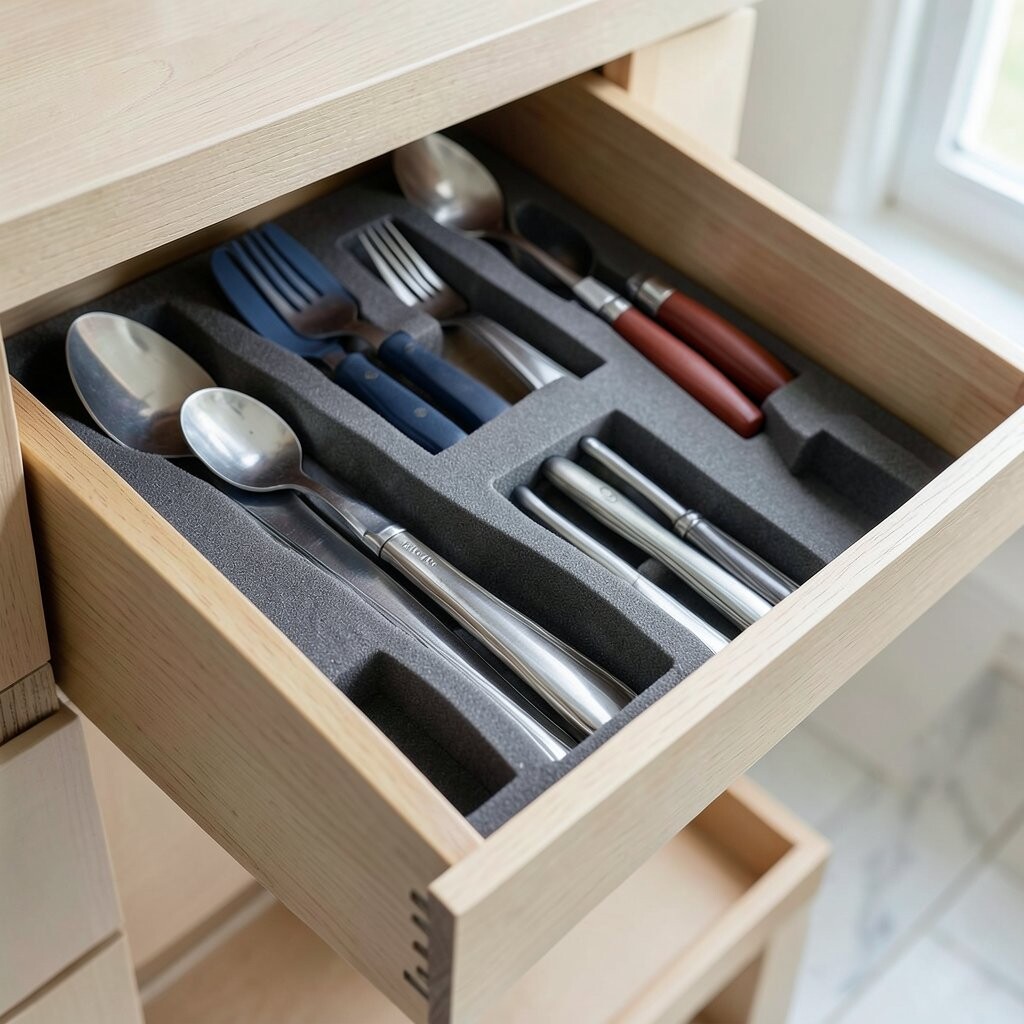
Custom cut foam gives each utensil its own exact spot. The look is crisp and professional, almost like a chef’s drawer.
This choice works best for people who want strong order and do not mind a little setup work. Foam keeps tools from shifting, which is great for sharp items or delicate gadgets. It can cost more at first, but the neat result often feels worth it.
You can shape the foam to fit your most used tools and leave out space for extras you do not need every day. Dark foam with silver tools creates a bold modern style, while light foam feels softer. It is a good pick if you enjoy a clean, custom feel.
8. Stack Small Items in Mini Cups
Stack Small Items in Mini Cups
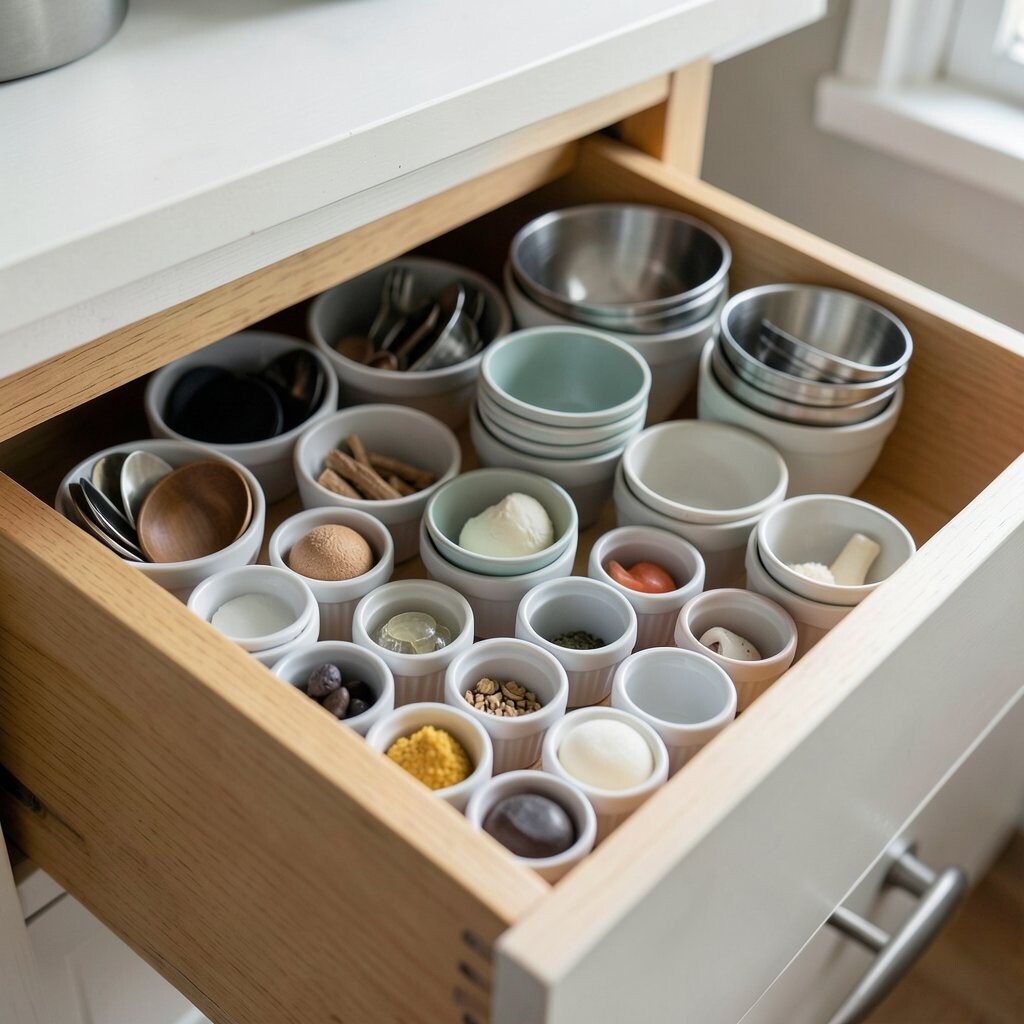
Mini cups or small bins can hold tiny kitchen tools that get lost easily. Measuring spoons, bag clips, and peelers stay grouped instead of sliding around.
This method gives the drawer a playful, organized look. It is also a smart low-cost fix because many cups can come from items you already have. If you want a pretty touch, choose matching colors or simple glass jars with smooth edges.
Keep the cups low enough so the drawer still closes with ease. You can personalize each cup for a different job, like one for baking tools and one for snack helpers. That makes the drawer feel neat without needing a large organizer.
9. Add Labels to Each Section
Add Labels to Each Section
Labels make it easy for everyone to know where each utensil belongs. The drawer stays orderly because the rule is clear from the start.
This idea works well in shared kitchens and busy homes. It can also help kids put things back in the right place after helping with meals. Simple printed labels, chalk labels, or handwritten tags can all look nice.
If you like a modern trend, use small black-and-white labels for a clean style. If you want a softer feel, try handwritten labels on kraft paper. The cost is usually very low, but the payoff in daily ease is big.
10. Choose a Tray With Soft Lining
Choose a Tray With Soft Lining
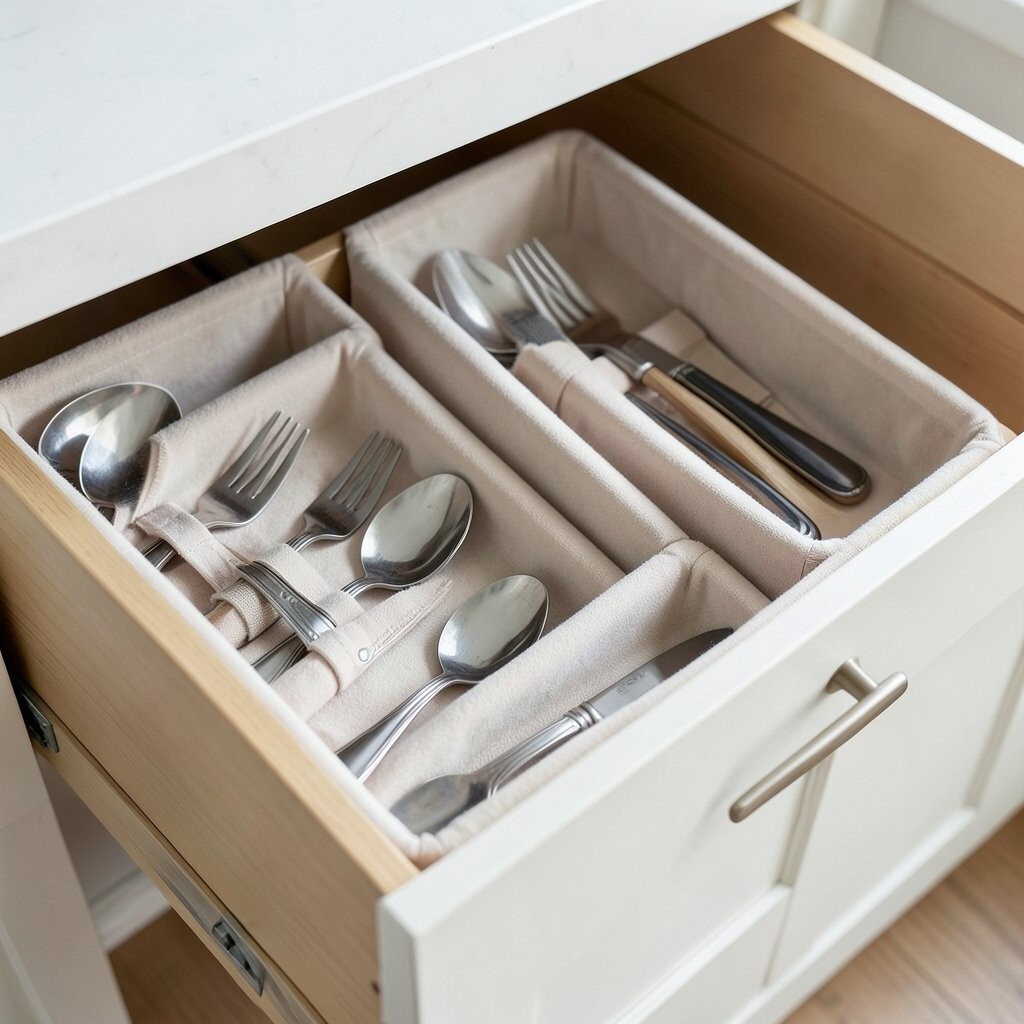
A soft-lined tray gives utensils a gentle place to rest. It can also reduce noise, which makes opening the drawer feel calmer.
This choice is helpful for metal tools that can clink and slide. The lining can make the drawer look richer and more finished. Suede-like liners, felt pads, and rubber mats are all popular options right now.
You can match the lining to your kitchen colors for a custom feel. Some liners cost very little, while thicker ones may cost more but last longer. The soft texture adds a cozy touch that many people enjoy.
11. Keep Everyday Tools at the Front
Keep Everyday Tools at the Front
Placing everyday tools at the front makes the drawer much easier to use. You can grab a spoon or spatula fast without digging through the whole space.
This setup gives the drawer a smart flow that fits real life. Less-used items can go toward the back, where they still stay neat but out of the way. It is a simple habit that can save time during cooking and cleanup.
You can personalize the front row by choosing the tools that match your routine best. If you bake a lot, place measuring spoons near the front; if you cook often, keep tongs and turners there. The cost is free, but the convenience is huge.
12. Use a Narrow Tray for Long Tools
Use a Narrow Tray for Long Tools
Long tools like spatulas, wooden spoons, and ladles need a space that fits their shape. A narrow tray keeps them lined up neatly instead of crossing over each other.
This idea gives the drawer a tidy, straight look that feels calm. It also helps protect long handles from bending or getting scratched. Slim trays are a good trend for kitchens that want both style and function.
Choose wood for a warm farmhouse feel or metal for a sharper modern look. The price can stay friendly if you pick a basic tray and skip extra features. Adding a small divider at the end can stop tools from drifting around.
13. Mix Open and Closed Sections
Mix Open and Closed Sections
Some utensils need quick access, while others can stay tucked away. Mixing open and closed sections gives the drawer a balanced and useful layout.
This style looks interesting because it breaks up the space in a thoughtful way. Open spots make grabbing tools easy, and closed spots help hide clutter. It can be a nice choice for people who want a drawer that feels both neat and relaxed.
You can use a small box or insert to create the closed part without spending much. Personalize the open section with your most loved tools or a bright liner for a fun pop. The mix makes the drawer feel like it was made for your own cooking habits.
14. Keep Baking Tools Together
Keep Baking Tools Together
Baking tools often work best when they stay in one special area. Measuring cups, spoons, spatulas, and whisks can all sit side by side.
This setup gives the drawer a sweet, ready-to-bake feel. It saves time when you are mixing dough or making treats because everything is easy to find. A shallow tray with small sections works well for this kind of group.
You can add a label or use a color theme to make the section feel extra fun. If you bake only now and then, you do not need an expensive organizer; a simple tray can do the job. The neat grouping also helps stop tiny tools from getting lost.
15. Use Stackable Bins for Extra Flexibility
Use Stackable Bins for Extra Flexibility
Stackable bins make the drawer feel smart and flexible. They let you build up storage in a way that fits the space you have.
This idea is great for drawers that hold a mix of large and small utensils. You can stack one bin for prep tools and another for serving pieces. The look is tidy and a little modern, which fits many current kitchen styles.
Some stackable bins are very affordable, while sturdier ones may cost more but feel stronger. You can personalize the setup by changing the stack as your needs change through the year. That makes this option handy for growing families and frequent cooks.
16. Add a Small Catchall Corner
Add a Small Catchall Corner
A small catchall corner can hold odd tools that do not fit anywhere else. It keeps the drawer from looking messy when you have one awkward item or two.
This corner works well for tiny gadgets, spare peelers, or a favorite herb cutter. The drawer still looks organized because the catchall has a clear home. A small dish or cup can make the corner look intentional instead of random.
You can choose a pretty bowl, a wood block, or a simple tray depending on your style. Cost can be almost nothing if you reuse a small container from another part of the home. The corner gives you room to be practical without losing the neat look.
17. Use Color to Guide Placement
Use Color to Guide Placement
Color can help turn a plain utensil drawer into a cheerful, easy system. Matching trays, liners, or bins make the space look lively and well planned.
This idea can be especially fun in family kitchens. Different colors can stand for different jobs, like blue for baking or green for prep tools. It adds a playful touch while still keeping the drawer orderly.
If you like a softer trend, try muted shades like sage, cream, or gray. Bright colors can feel bold and happy, but they do not have to cost much if you pick simple plastic organizers. The color plan can also reflect your own taste and make the drawer feel personal.
18. Store Rarely Used Tools in the Back
Store Rarely Used Tools in the Back
Putting rarely used tools in the back keeps the front of the drawer clear. The space feels calm because the items you need most stay easy to reach.
This is a simple habit that can make a big difference in how the drawer works. It also helps keep special tools safe from daily wear and tear. A deeper tray or divider can help hold those back-row items in place.
You can personalize the back area with tools that matter to your cooking style, like a pastry cutter or a melon baller. This setup costs little because it mostly depends on smart placement. The drawer ends up feeling easier to use and less crowded.
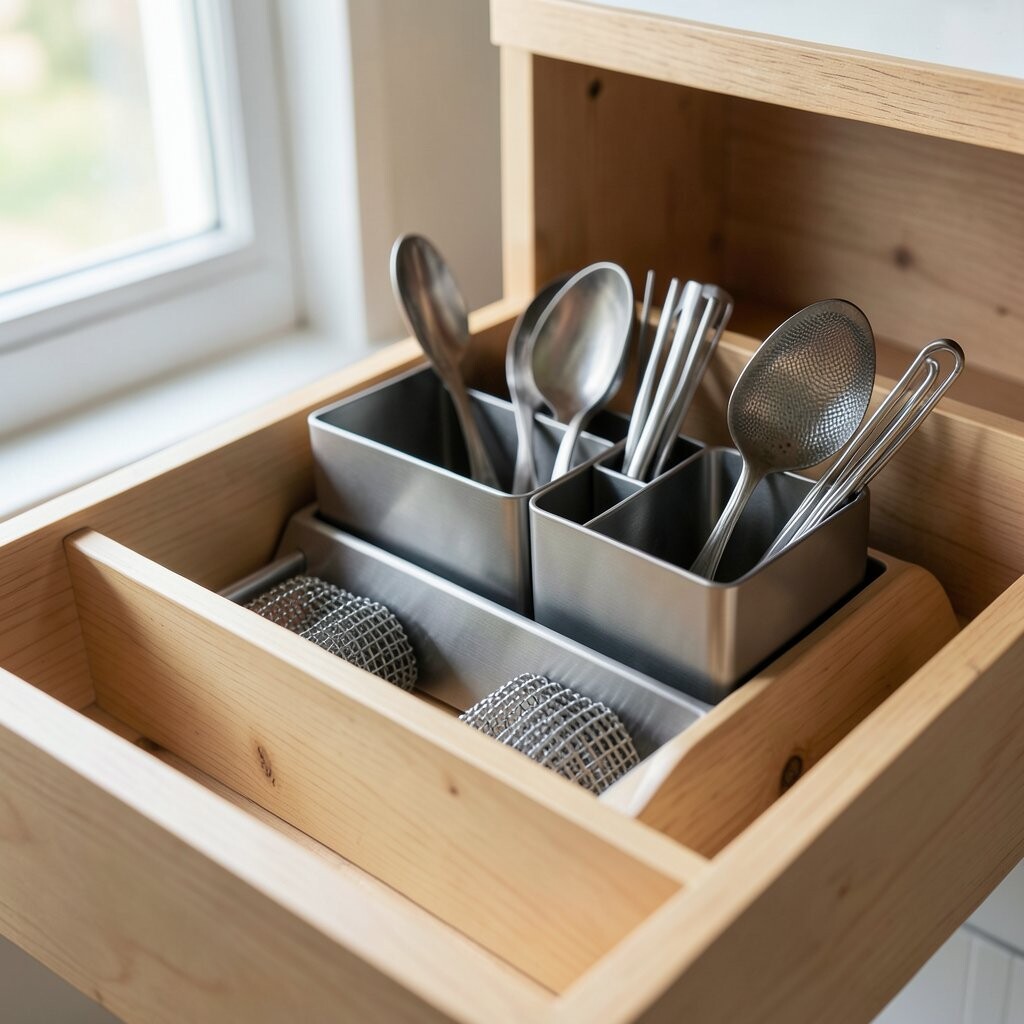
19. Choose a Minimalist Metal Organizer
Choose a Minimalist Metal Organizer
A minimalist metal organizer gives the drawer a clean, sharp look. Thin lines and simple shapes can make the whole space feel more open.
This style is popular in modern kitchens because it looks sleek and easy to maintain. Metal organizers often wipe clean fast, which is a nice bonus after cooking. They can cost a bit more than basic plastic, but they often feel sturdy and stylish.
You can soften the look by pairing metal with a warm wood drawer or a light liner. If you want a custom feel, mix metal sections with one small bin for loose tools. The result is neat, fresh, and easy to live with.
20. Build a Drawer Around Your Habits
Build a Drawer Around Your Habits
The best utensil drawer is the one that fits the way you cook every day. When the layout matches your habits, the drawer stays neat with less effort.
Think about what you reach for most, what you rarely use, and which tools always seem to get in the way. Then shape the drawer around those needs with trays, dividers, or bins. This personal approach often works better than copying a setup that looks nice but does not fit your routine.
You can keep costs low by using a few simple pieces instead of a full organizer set. Add a label, a favorite color, or a special tray to make it feel like yours. A drawer built around your real life can be one of the easiest ways to keep the kitchen calm and tidy.