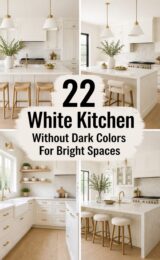
Pick a bright, soft shade for the walls and big pieces like the sofa or bed frame. Your eyes travel smoothly when there is less contrast to break the room into tiny pieces.
Think creamy white, pale gray, warm greige, or a very light tint that matches your style. Keep trim and ceilings in the same family so lines look calm and continuous. For personalization, add color with pillows and art instead of painting everything darker.
Use mirrors on purpose, not by accident
Use mirrors on purpose, not by accident
A mirror can bounce light and make a wall feel twice as deep. Place it across from a window so daylight travels farther into the room.
If you like cozy vibes, choose a mirror with a thin frame so it doesn’t feel bulky. For a modern look, try an arched or rounded shape; for classic style, go with simple wood or metal.
Keep the mirror at about eye level and make sure it reflects something pleasant, like art or a plant. Start small with one mirror if you’re on a budget, then add a second later if it feels right.
Mount curtains closer to the ceiling and wider than the window
Mount curtains closer to the ceiling and wider than the window
When curtains start near the ceiling, your room looks taller. Hang the rod slightly above the top of the window and extend it beyond the sides.
Use light, airy fabric that moves easily, like sheer linen blends or smooth cotton. If you prefer privacy, layer with a thinner panel you can close at night. This trick gives you height and softness without losing function.
Choose curtain colors that echo your wall tone for a smooth look. You can personalize with a subtle pattern or solid color that matches your bedding.
Cost-wise, you can reuse existing curtains by adjusting rod placement and hemming. If you’re buying new, shop for ready-made panels and add a small amount of fabric only where needed.
Pick furniture with legs you can see
Pick furniture with legs you can see
Furniture that sits up off the floor keeps the lower area open. You can spot this instantly with chairs, tables, and sofas that show their legs.
That visual openness helps your brain think the room is bigger. For tips, look for slim arms, rounded corners, and a lighter color finish.
Go for one big rug instead of many small ones
Go for one big rug instead of many small ones
A larger rug anchors the seating area and makes the room feel planned. When rugs are too small, the space can look chopped into sections.
Try to place the front legs of chairs and couches on the rug so everything connects. If you love layering, keep it simple: one main rug plus one thin accent on top.
For personalization, choose a pattern that matches your wall color story. On a budget, consider washable rugs and look for sale deals on sturdy indoor options.
Clear the sightlines with smart storage
Clear the sightlines with smart storage
Keep pathways open by hiding everyday clutter. When you can see more floor and wall, the room feels less crowded.
Use baskets, bins, or closed cabinets for items you use often but don’t want on display. Try storing charging cords, remotes, and mail in one catch-all spot. Personalize the look with matching containers so storage looks like part of the style, not a bandage.
Hang shelves that match the wall color
Hang shelves that match the wall color
Low, floating shelves keep the look light and tidy. If the shelves blend with the wall, they don’t feel like heavy furniture.
Arrange books vertically for a tall, neat feel, and mix in a few personal objects like a small plant or framed photo. Use the “less but better” rule: fewer items on each shelf usually looks bigger.
For cost, consider inexpensive wall systems or simple brackets with painted wood. Choose a finish that matches your room’s undertone so everything feels pulled together.
Swap bulky light fixtures for smaller, brighter options
Swap bulky light fixtures for smaller, brighter options
Lighting affects how wide a room feels. A dark, heavy fixture can make ceilings seem lower and corners feel heavy.
Try a sleek ceiling light, a slim pendant, or a floor lamp with a narrow base. Use warm-white bulbs for comfort, but keep brightness high enough to avoid dim patches. If you want a current trend, look for minimal shapes in brushed metal or matte black with a soft glow.
Personalize by adding a fabric shade color that echoes your cushions or curtains. A quick tip: place a lamp near a wall to bounce light around instead of only lighting the center.
Cost considerations are friendly here because you can often replace just the bulb, shade, or fixture head. If wiring is tricky, choose plug-in options or use a licensed electrician when needed.
Use vertical lines to trick the eye upward
Use vertical lines to trick the eye upward
Vertical stripes, tall art, and floor-to-ceiling curtains create height. Your eyes read those lines as “up,” which makes the room feel taller and less cramped.
Try a tall framed print, a skinny mirror, or a lamp with a slender shape. If you’re feeling bold, choose a subtle vertical wallpaper strip on one wall instead of covering everything.
Keep your furniture layout simple and open
Keep your furniture layout simple and open
Try arranging items so you have a clear path from door to main seating. When traffic moves freely, the room feels smoother and bigger.
Float the main piece slightly away from the walls when it makes sense, then use smaller items to fill gaps. A small table used as a “bridge” can help connect seating without making it feel packed.
For personalization, set a gentle “landing zone” with a tray for keys or a cozy throw. Budget tip: rearranging costs nothing, and it often beats buying new furniture.
Choose bedding and throws in matching tones
Choose bedding and throws in matching tones
When bedding looks coordinated, your bedroom reads as calmer and more spacious. Pick sheets, comforters, and duvet covers that share similar colors and brightness.
Add texture with knitted throws or smooth satin-like fabrics, but keep the overall palette steady. For personalization, weave in a tiny pattern like thin stripes or small dots that won’t fight the room. This is a trend right now: “soft monochrome” styling that looks modern and expensive without feeling stiff.
Make your TV wall feel lighter
Make your TV wall feel lighter
If you have a TV, avoid stacking it on a thick, dark cabinet. A lighter media unit or wall-mounted setup opens the room visually.
Keep cables hidden by using cord covers or an in-wall style kit where possible. Add one or two decorative pieces, but don’t turn the area into a clutter shelf.
For cost, start with a console that’s lower and lighter, then upgrade in phases. A quick personalization tip: place a slim plant or artwork beside the TV to soften the technology vibe.
Go for rounded corners and soft shapes
Go for rounded corners and soft shapes
Sharp corners can make a small room feel even tighter. Rounded furniture and curved decor help the eye move around smoothly.
Look for an oval mirror, a round coffee table, or a cushioned chair with gentle edges. Soft shapes also feel inviting, which matters when you want the room to feel comfortable, not just “bigger.” Pair these with light colors to keep the vibe airy.
Personalize by matching your shapes in small ways—like round wall hooks or a circular tray. On a budget, swap just one item, such as a round mirror, and let it set the theme.
Current trend to notice: curved silhouettes in furniture and decor are showing up a lot in modern small-space styling. A single curved accent can give you that look without replacing everything.
Use one statement wall only
Use one statement wall only
If you love color, pick one wall for a bold paint shade or wallpaper. Too many dramatic walls can make the room feel like it shrinks from every side.
Choose the feature wall behind your bed, your sofa, or a dining spot. Keep the other walls light so they act like a visual “pause.”
Add a gallery that doesn’t look cluttered
Add a gallery that doesn’t look cluttered
Wall art can make a room feel intentional and taller, but only if it’s spaced well. Skip tiny scattered frames and try a bigger grouping instead.
Create a clean grid with matching frames or consistent spacing. If you want personalization, include one larger piece that holds meaning to you, like a print from a trip or a family photo.
Cost considerations: many people frame affordable prints to get a polished look. If you’re renting, use removable frames or peel-and-stick art templates to keep your walls safe.
Hang curtains in a breathable fabric
Hang curtains in a breathable fabric
Breathable fabric can make a room feel like light is floating. The more the fabric moves gently, the more “open” the room feels.
Choose sheer layers for daytime and thicker layers for nighttime, so you get both airiness and privacy. Tie-backs or simple clips can keep them from pooling too much. Personalize with colors that match your throw pillows, but stay within the same light family for a bigger look.
Set up a mini “drop zone” near the door
Set up a mini “drop zone” near the door
A small drop zone stops items from spreading across tables and floors. When clutter stays in one place, the room looks cleaner and larger.
Use a slim console, a wall hook, or a narrow shelf with a tray on top. Add a basket for keys and sunglasses so you don’t search around at night.
For personalization, paint the tray a fun color or use a patterned basket that matches your style. Budget-friendly tip: repurpose a shallow drawer or small cabinet you already own and add labels.
Choose transparent or glossy accents
Choose transparent or glossy accents
Some materials “disappear” visually, which helps a room look bigger. Glass, acrylic, and shiny finishes can catch light and reduce heavy visual weight.
Try a glass vase, a clear chair silhouette, or a shiny tray on a coffee table. Keep it balanced; one or two glossy accents usually look stylish without feeling flashy. This is a common trend in modern small-space design because it keeps the look airy.
Personalize with decorative objects inside clear containers, like cotton stems or colorful stones. Cost consideration: if you don’t want to buy new, use glass jars and clean them up with labels that match your decor.
Keep the floor visible with tidy rug edges
Keep the floor visible with tidy rug edges
Visible floor space gives a room room to breathe. Make sure rugs don’t cover too much area, and keep edges neat so nothing looks messy.
If a rug curls or bunches, smooth it out right away. You can also use rug pads to keep it flat and safe, which makes the room look instantly more polished.
Personalize with plants placed at different heights
Personalize with plants placed at different heights
Plants add life and color while still feeling light. When you use more than one height, you create depth, which helps the room look larger.
Use a taller plant in a corner, a medium plant on a shelf, and a small one on a side table. Make sure the light matches the plant’s needs so it stays healthy and beautiful.
For personalization, choose pots that match your palette—terracotta, neutral ceramic, or modern black. Budget-friendly option: swap clippings with friends or pick hardy plants that grow well in indoor light.
Use smart styling: fewer items, better placement
Use smart styling: fewer items, better placement
When surfaces are busy, the room looks smaller. A simple styling plan makes your space feel intentional and roomy.
Try the “one tray rule” on coffee tables, dressers, and nightstands. Place a few items that belong together—like a book, a candle, and a small decorative bowl—then stop. Personalize by choosing pieces that reflect your daily life, but keep them in a tight group so the room feels clean and open.