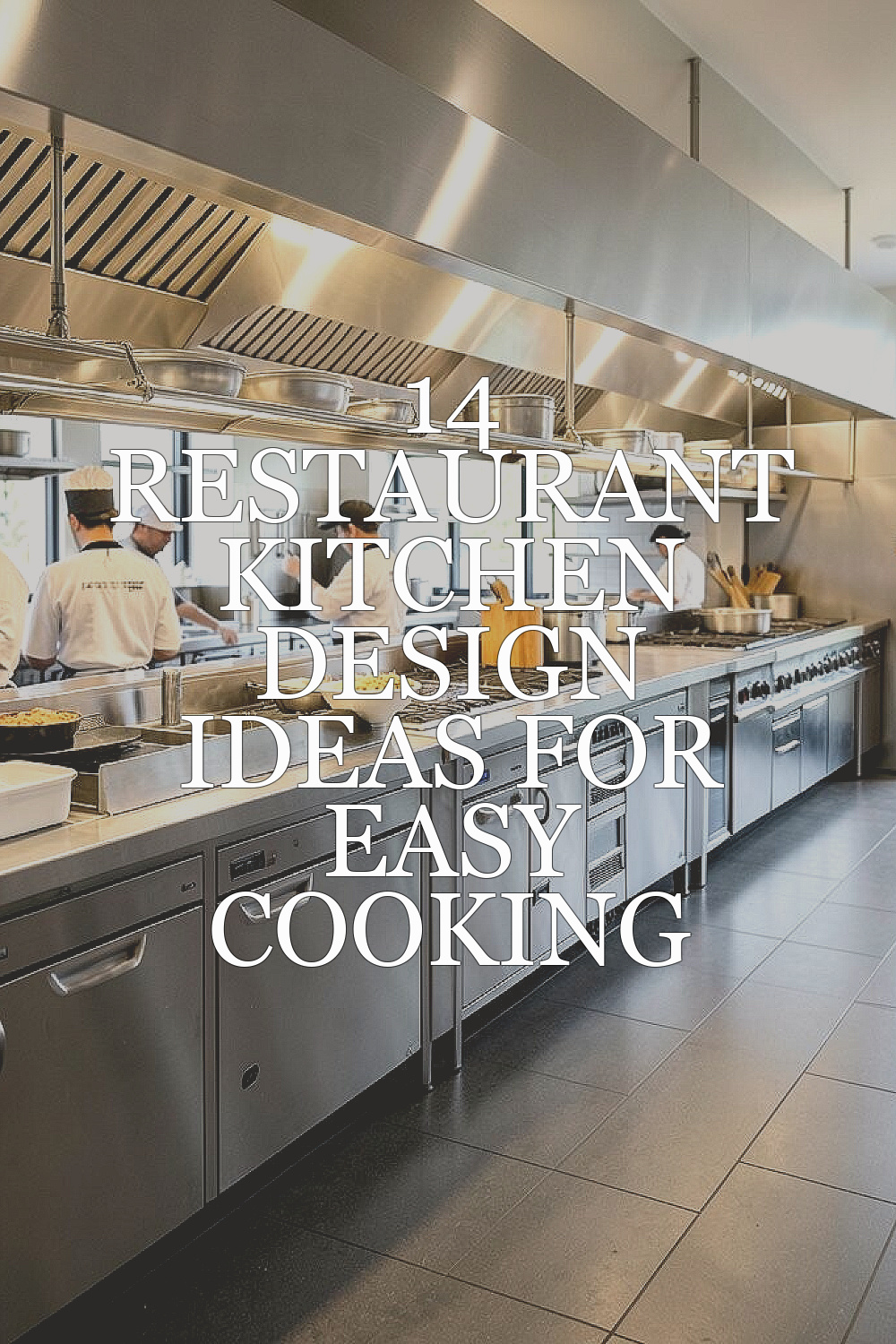
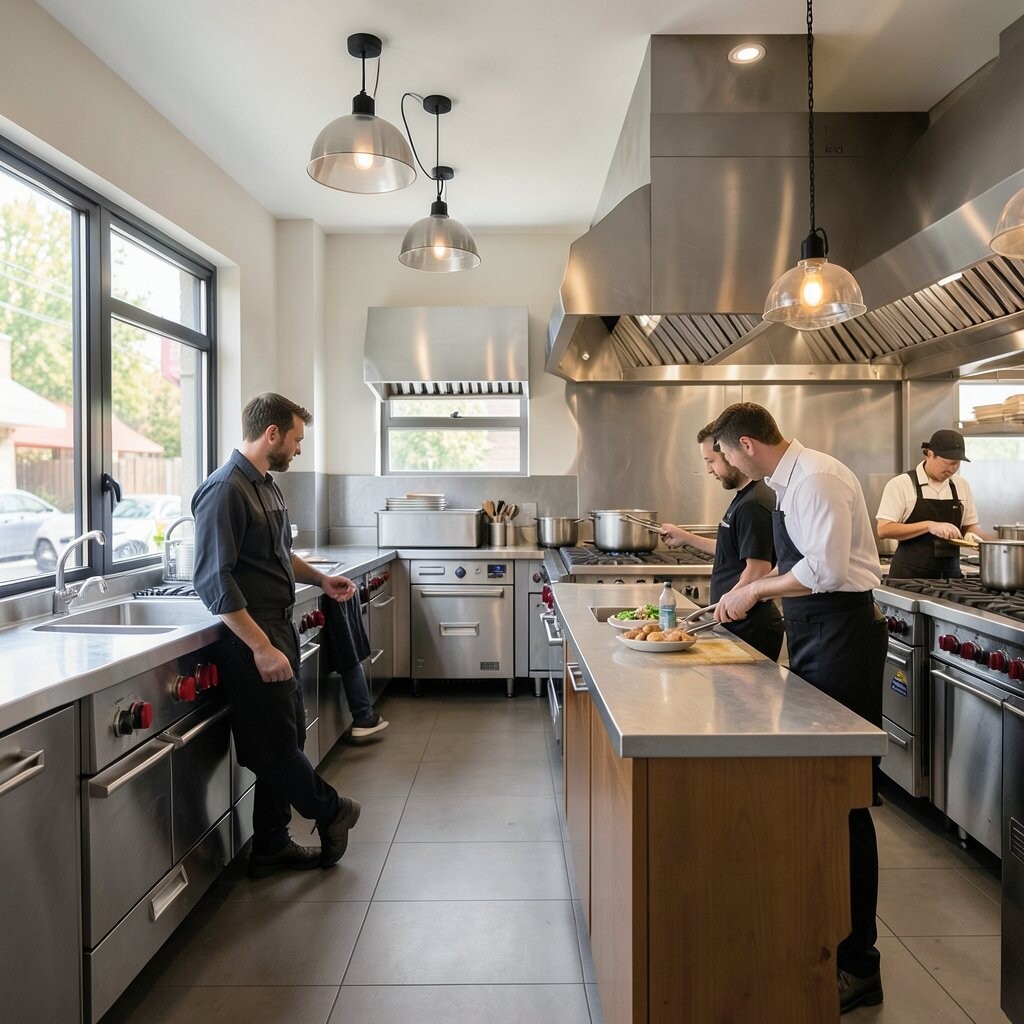
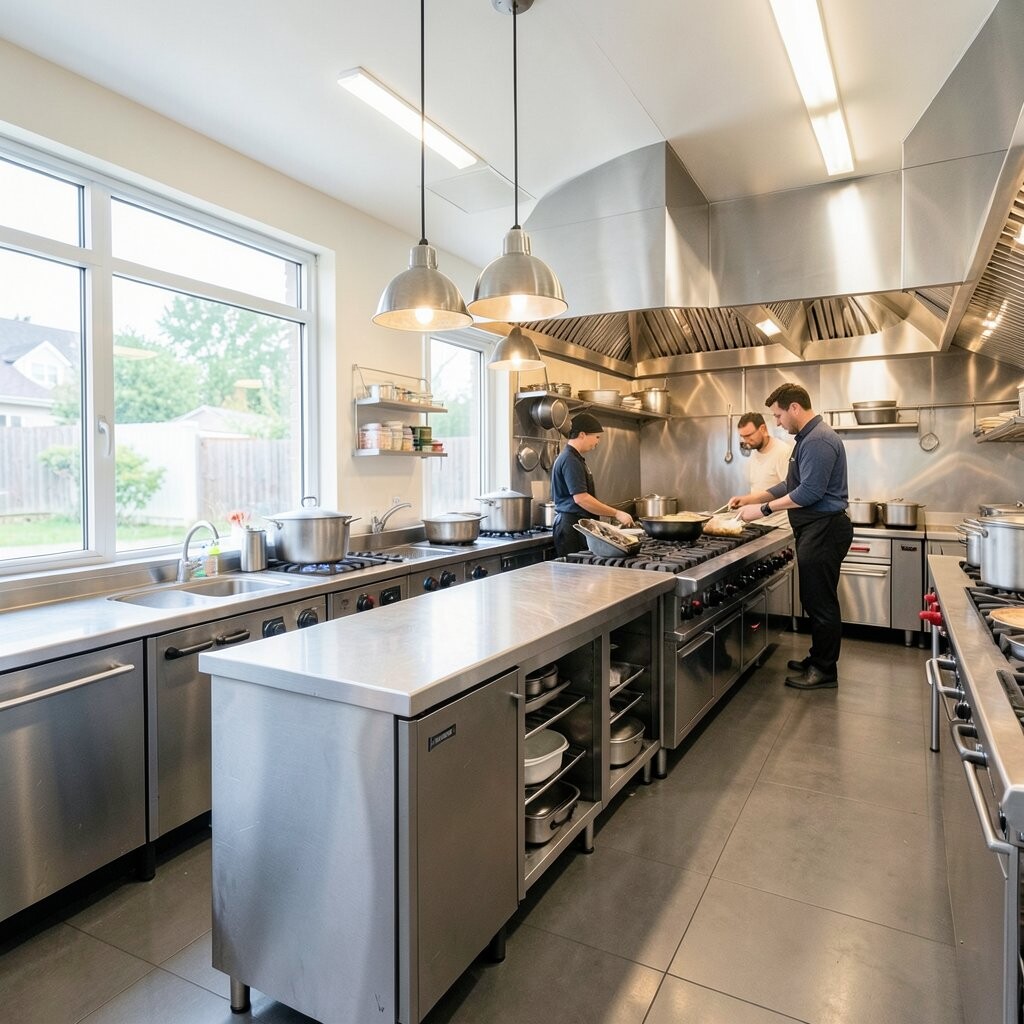
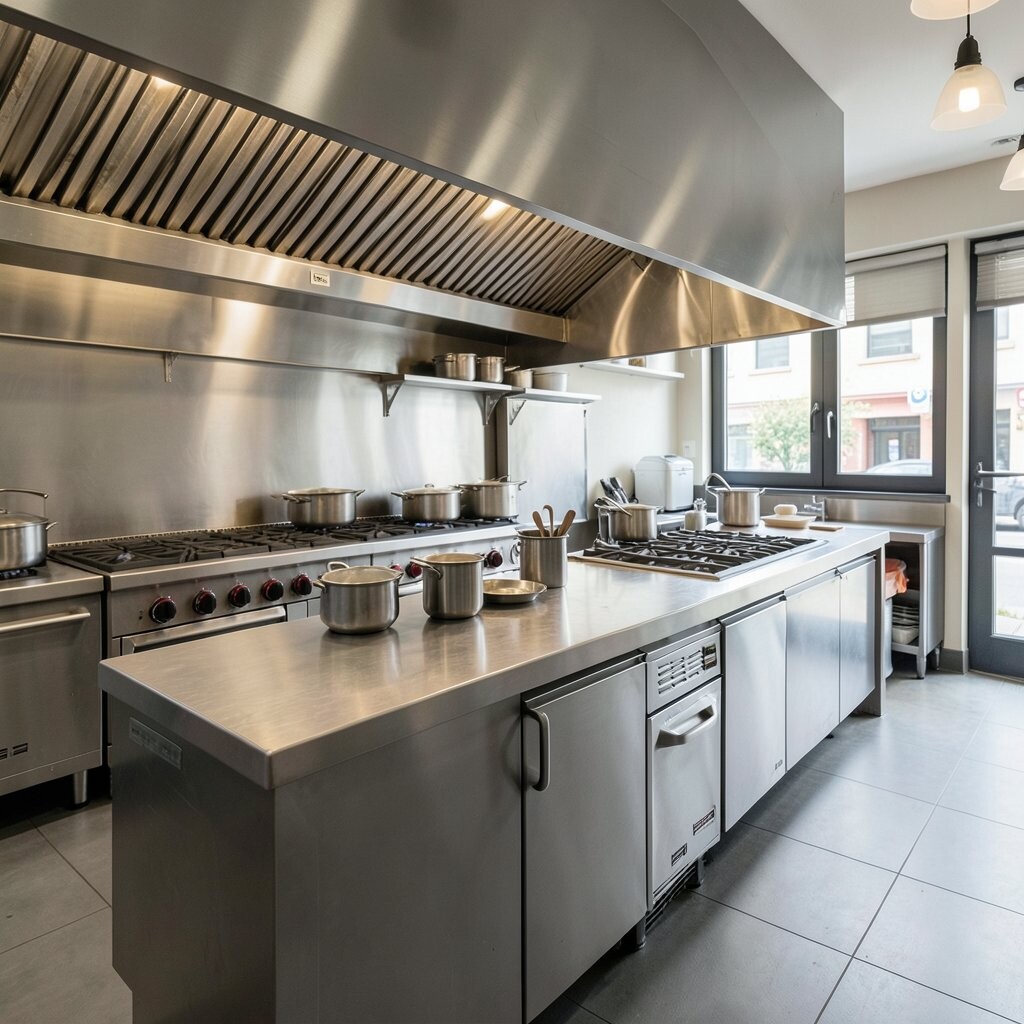
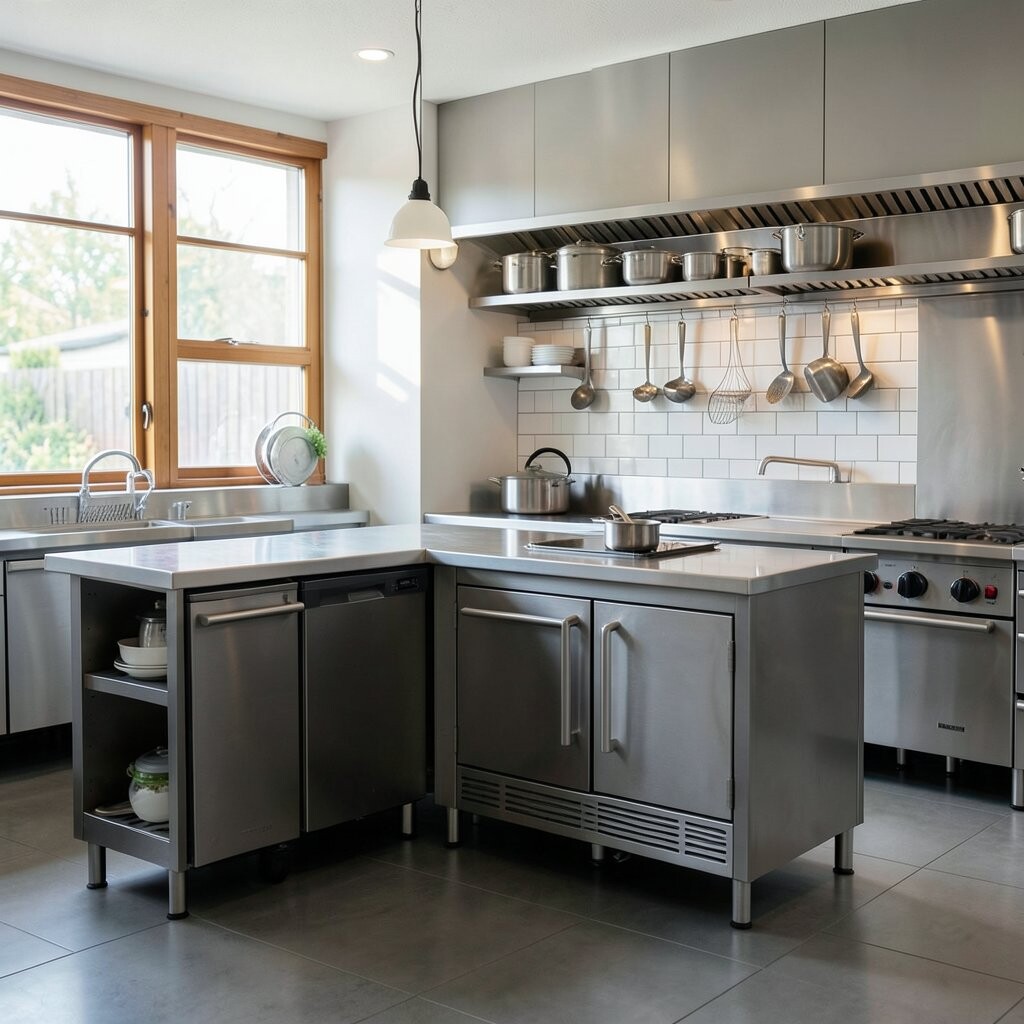
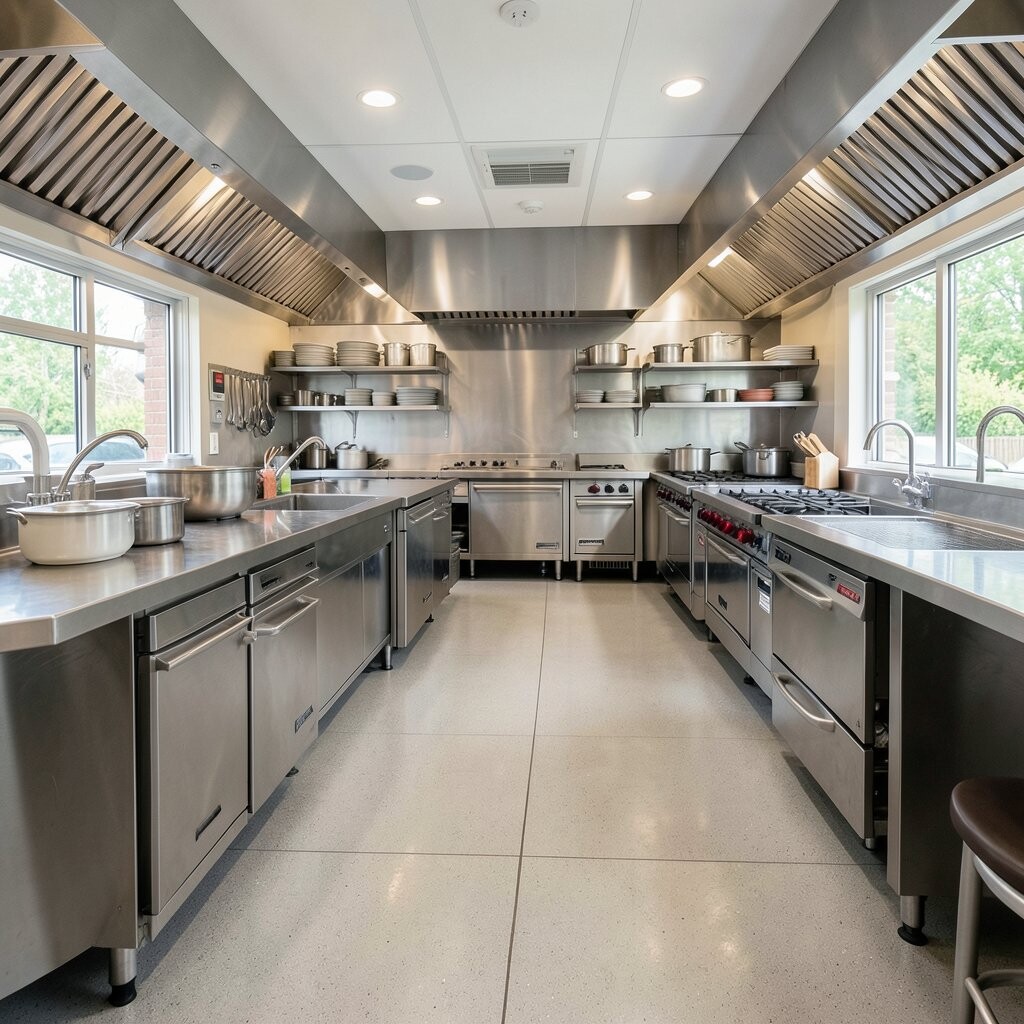
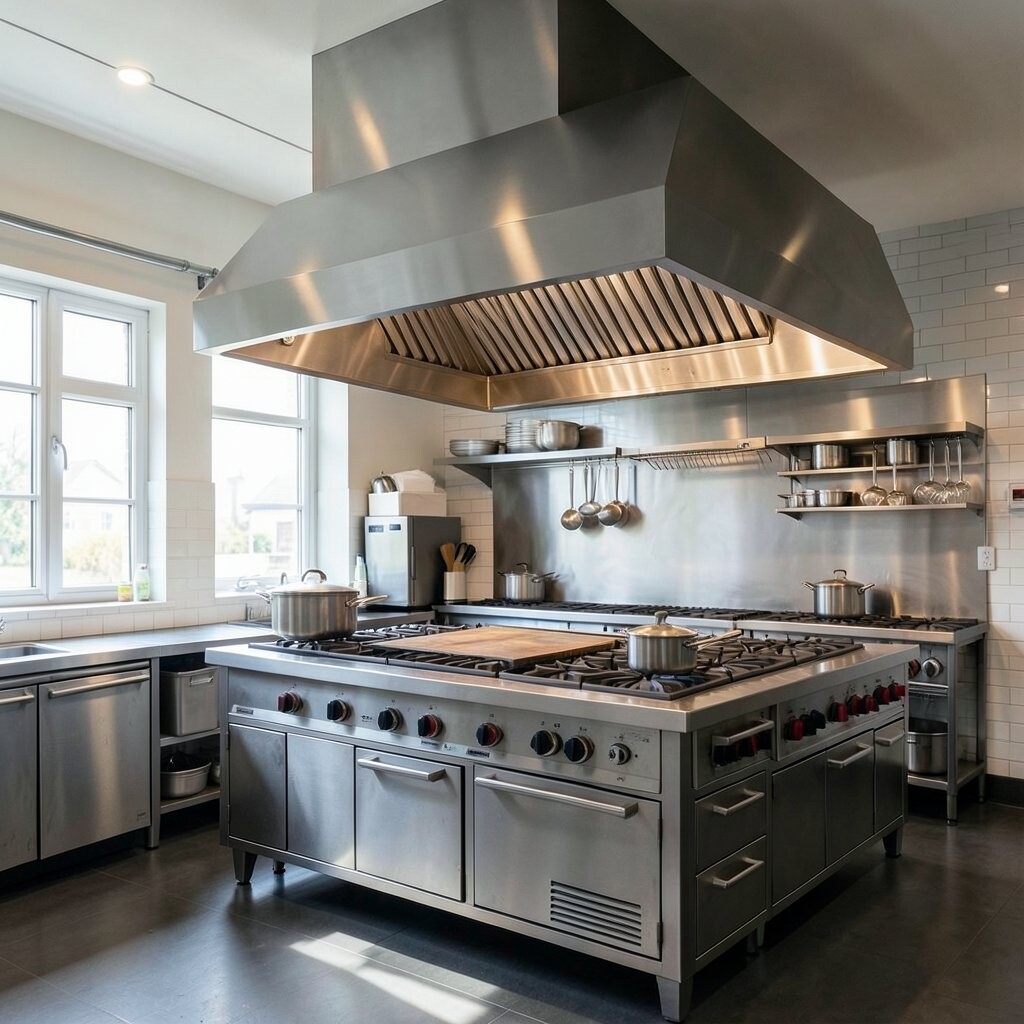
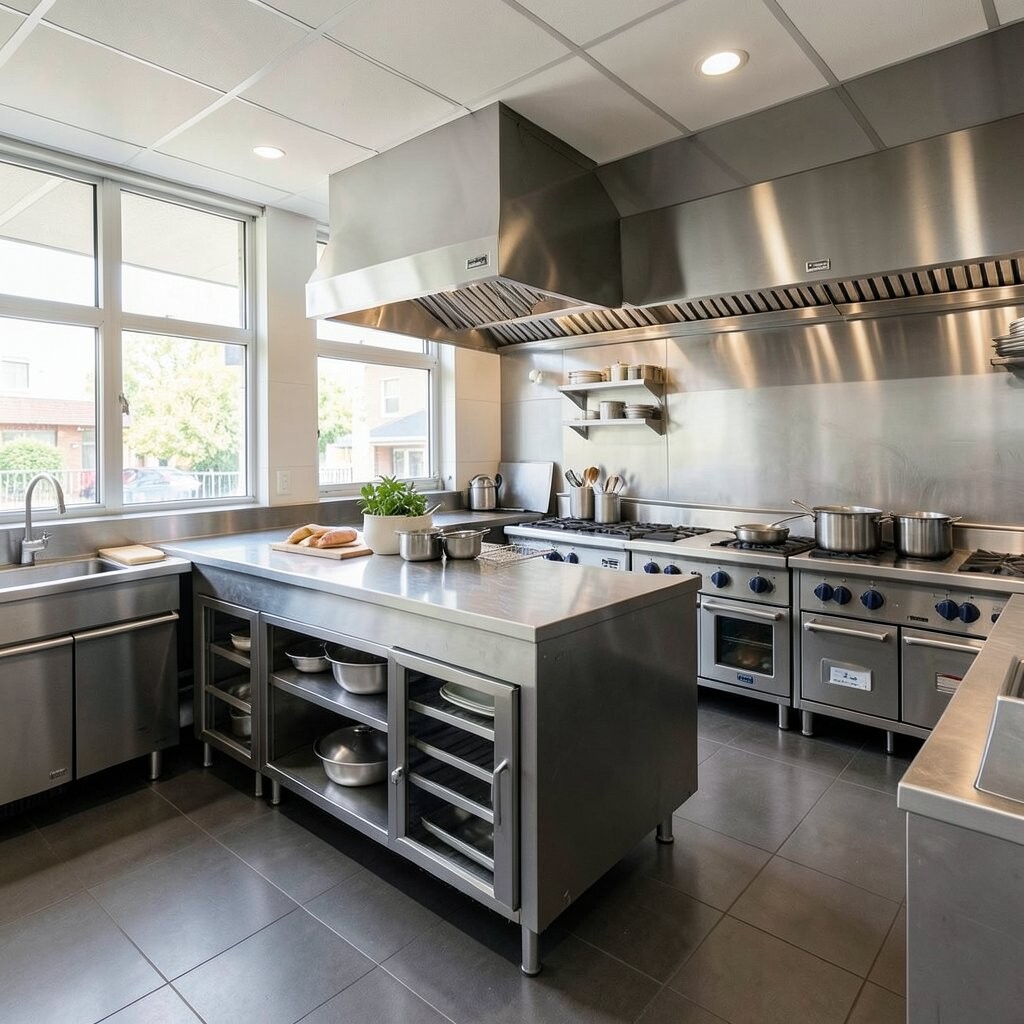
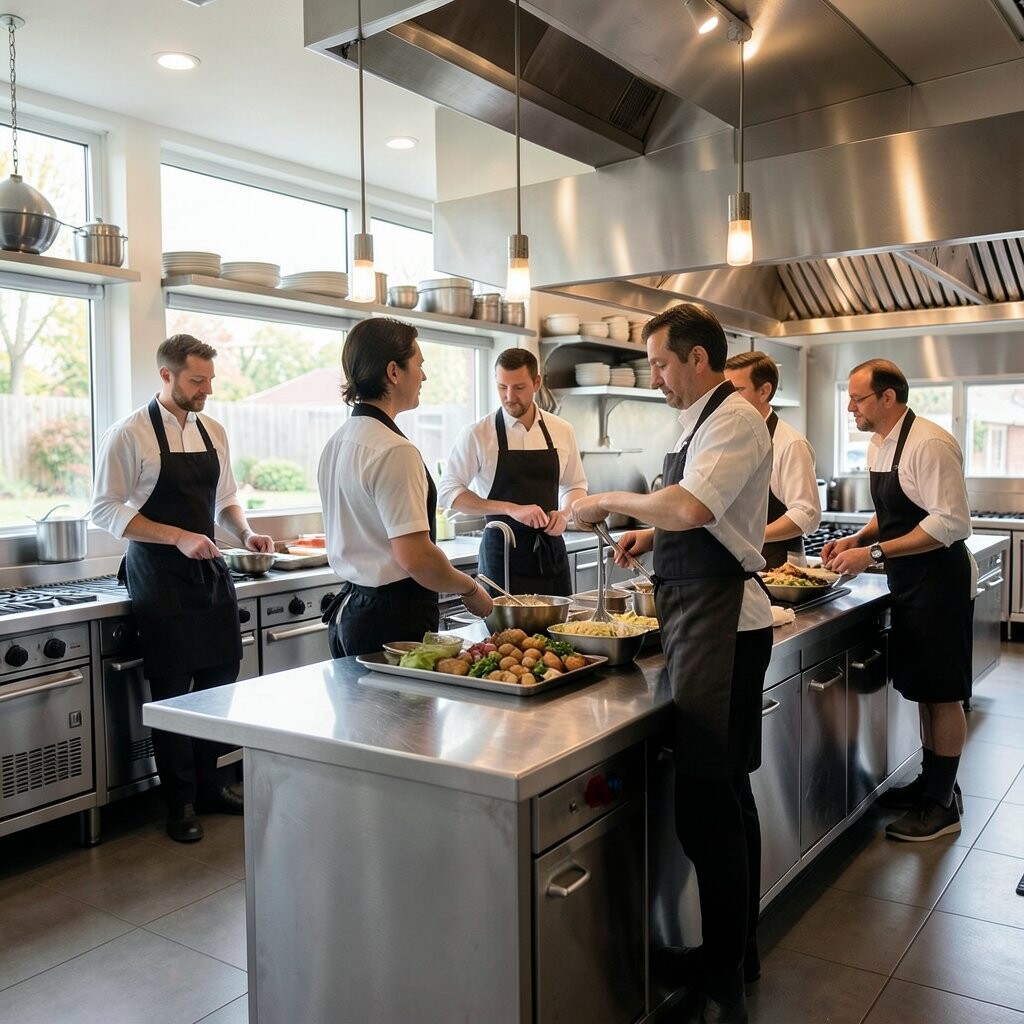
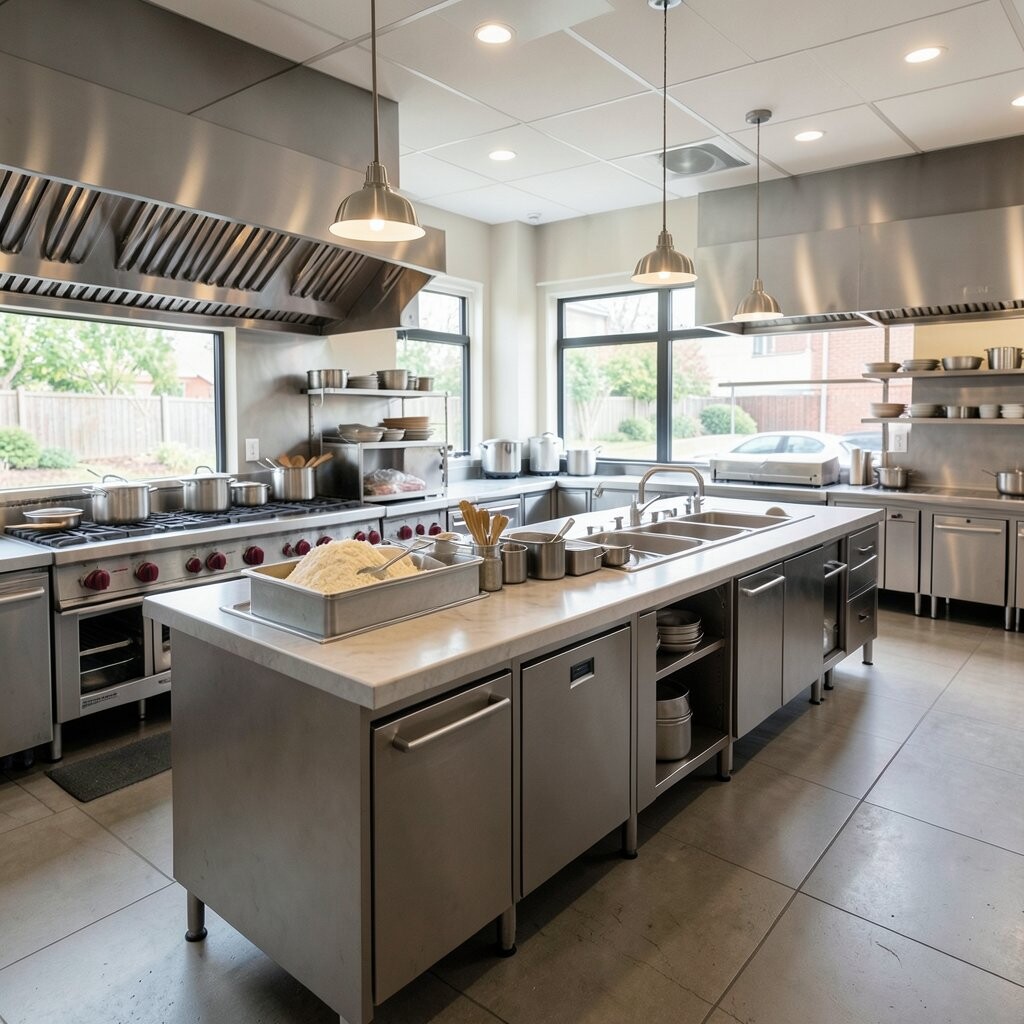
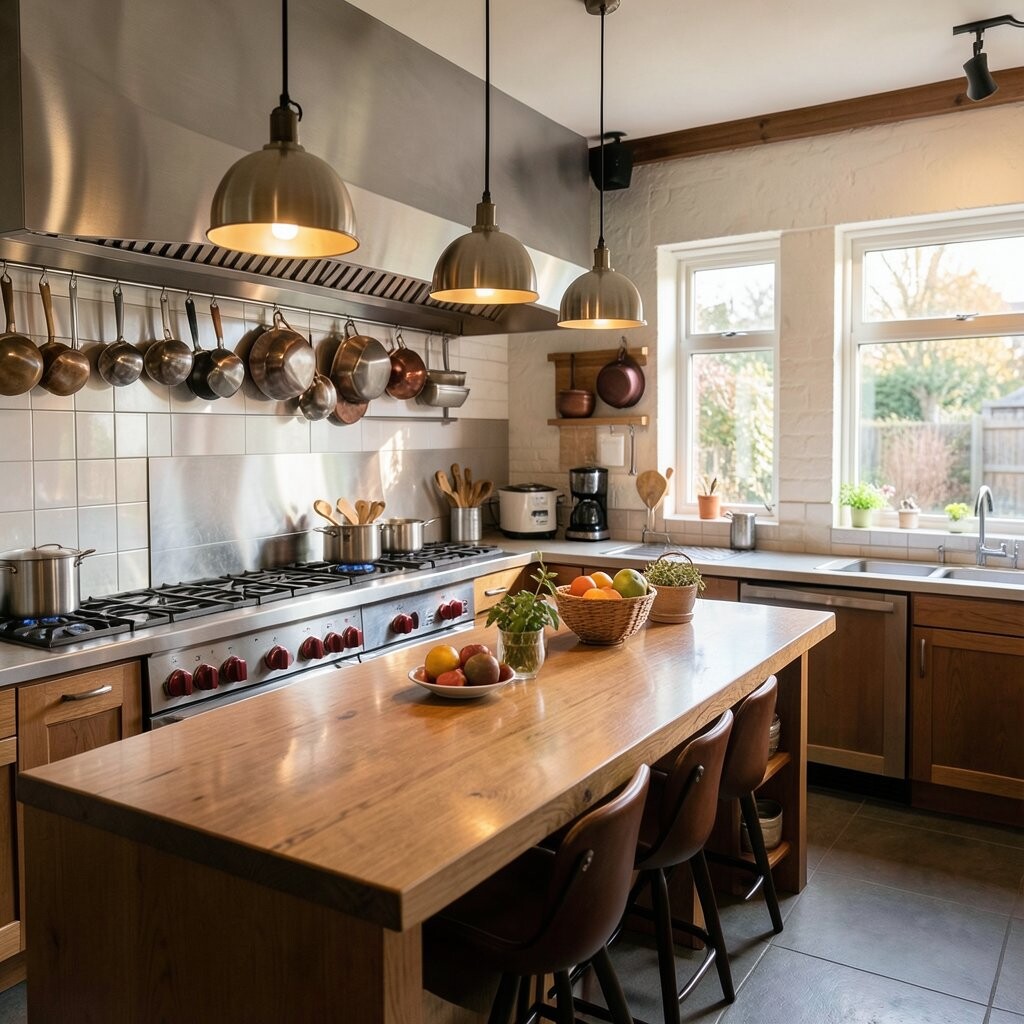
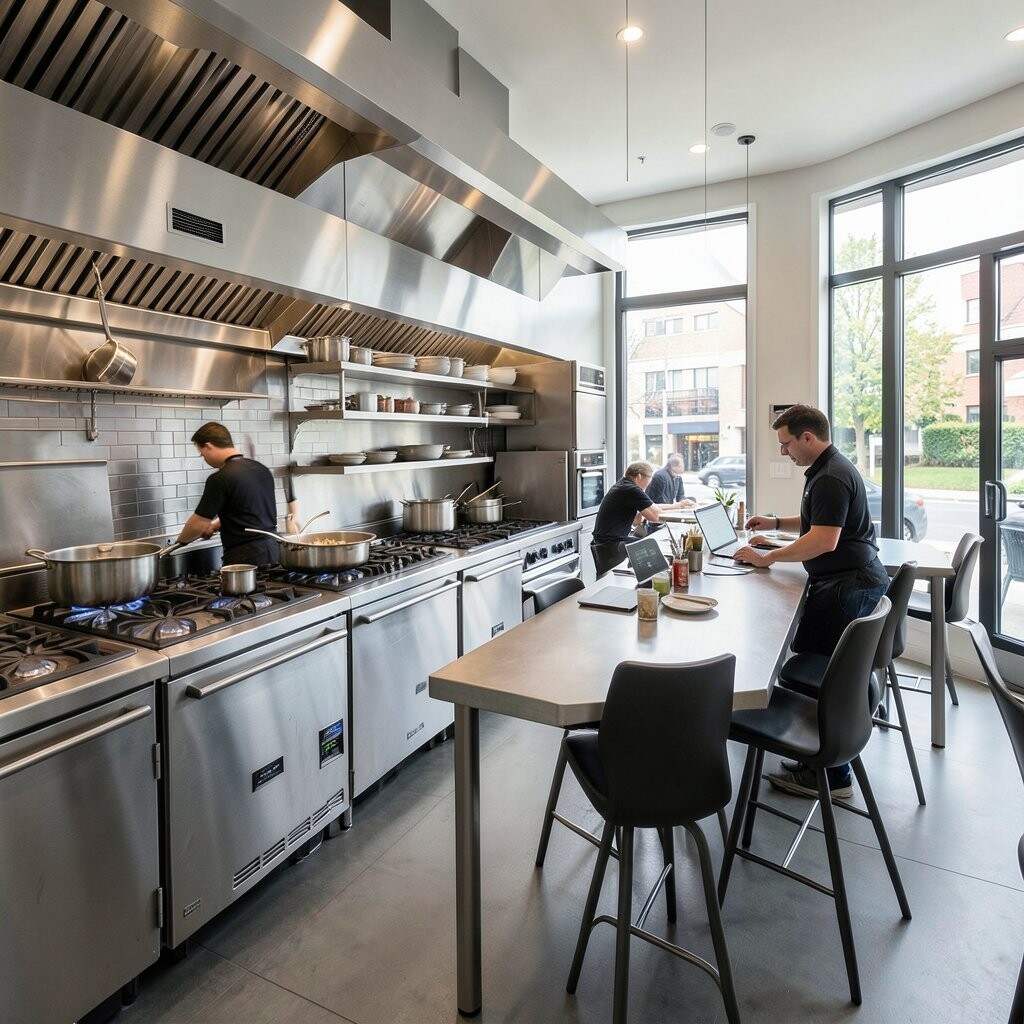
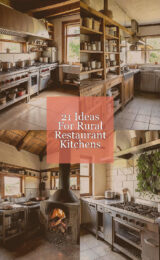
An open prep line gives the kitchen a bright, active look that feels alive. Chefs can see ingredients, tools, and team members without turning around too much.
This setup helps speed up work and cuts down on missed steps. It also makes the space feel larger, which is helpful in a small restaurant. Add labeled bins, matching containers, and clean metal shelves for a tidy style that still feels warm.
2. Smart Work Zones for Faster Flow
Smart Work Zones for Faster Flow
Work zones help each task have its own place, so the kitchen feels less crowded. One area can handle chopping, another can handle cooking, and another can handle plating.
This clear setup reduces bumps and mix-ups during rush time. It also gives each cook a simple path to follow, which can lower stress. Many modern kitchens use this idea because it saves time and makes training easier for new staff.
You can make each zone feel special with different lighting, shelf colors, or small signs. If the budget is tight, start with movable carts and simple dividers instead of full built-ins. A zone plan can grow with the restaurant as menus and teams change.
3. Bright Lighting That Helps Every Task
Bright Lighting That Helps Every Task
Good lighting can change the whole mood of a kitchen. Bright white lights help workers see clearly, while warm accent lights can make the room feel less harsh.
This makes chopping, reading labels, and checking food much safer. It can also make stainless steel counters shine in a clean, polished way. LED lights are popular now because they use less power and last a long time.
Try under-cabinet strips for prep areas and stronger lights over stoves and sinks. Dimmable lights can be a smart choice for kitchens that serve both lunch and dinner. For a personal touch, use fixtures that match the restaurant style, from modern black frames to soft brass details.
4. Durable Surfaces That Stand Up to Heavy Use
Durable Surfaces That Stand Up to Heavy Use
Restaurant kitchens need surfaces that can handle heat, spills, and constant cleaning. Stainless steel, sealed stone, and strong laminate are all useful choices.
These materials keep the kitchen looking neat even during busy shifts. They are also easier to wipe down, which helps with food safety. A simple, tough surface design can save money over time because it lasts longer.
Mixing materials can add character without giving up strength. For example, a butcher-block prep table can sit beside steel counters for a warmer look. If you want a custom feel, choose edge details or cabinet colors that fit the dining room theme.
5. Compact Storage That Uses Every Inch
Compact Storage That Uses Every Inch
Storage can make or break a kitchen, especially in a small restaurant. Tall shelves, pull-out drawers, and wall racks help keep tools close at hand.
When items have a clear home, cooks waste less time searching. That also keeps counters open for food work and makes the room feel less messy. Many kitchens now use hidden storage to keep the look sleek and simple.
Think about storing items by how often they are used. Daily tools should stay near prep areas, while backup supplies can go higher or lower. Baskets, hooks, and clear bins are low-cost ways to make storage feel personal and easy to use.
6. Easy-Clean Floors for Safer Workdays
Easy-Clean Floors for Safer Workdays
Kitchen floors take a lot of abuse from water, grease, and fast foot traffic. Slip-resistant tile, sealed concrete, and vinyl made for commercial use are strong choices.
A clean floor helps the kitchen feel fresh and safe. It also makes spills easier to spot before they cause trouble. Many owners now choose neutral floor colors because they hide marks better and match many design styles.
Drain-friendly layouts can help in areas near sinks and dish stations. If the budget is limited, focus on the busiest spots first and upgrade the rest later. A floor pattern, like a checker or a soft stone look, can add style without making cleaning harder.
7. A Strong Vent Hood With Style
A Strong Vent Hood With Style
A good vent hood pulls heat, smoke, and smells away from the cooking area. That keeps the kitchen cooler and more pleasant for the team.
It can also make the room look more professional and polished. Sleek stainless hoods are still popular, but softer finishes and custom panels are showing up in newer restaurant spaces. The right hood can become a design feature instead of just a machine.
Choose a hood size that fits the cooking line well so it works as hard as the stove does. If you want a unique look, add trim that matches the restaurant brand or wall color. Good ventilation is worth the cost because it supports comfort, safety, and better air quality.
8. Flexible Seating Near the Kitchen Pass
Flexible Seating Near the Kitchen Pass
A pass area with nearby seating or a small waiting spot can help the front and back of house work together. It also gives the kitchen a more open and welcoming feel.
This design helps food move faster from stove to table. It can also make plating easier because servers and cooks can communicate quickly. Some restaurants use a bar ledge or counter seating to create a lively, modern feel.
Small touches like stools, pendant lights, or a wood counter can make the space feel warm. If room is tight, use slim seating that does not block movement. A pass area can reflect the restaurant style, from casual and cozy to sharp and trendy.
9. Built-In Equipment That Saves Space
Built-In Equipment That Saves Space
Built-in ovens, fridges, and dish units can make a kitchen look neat and planned. They also free up floor space for movement and prep work.
This kind of setup is helpful in busy kitchens where every step matters. It reduces clutter and can make cleaning faster. Built-in pieces often give the room a custom look that feels higher end.
Think about the order of use when placing equipment so cooks do not need to cross paths too much. A custom cabinet front can hide some appliances and make the room feel more unified. While built-ins can cost more at first, they may pay off through better flow and a cleaner look.
10. Color Cues That Guide the Team
Color Cues That Guide the Team
Color can do more than look nice in a restaurant kitchen. It can help people know where things belong and where they need to go.
For example, one color can mark prep tools, another can mark cleaning supplies, and another can mark takeout items. That makes the kitchen easier to learn and easier to keep in order. Bright accents are a current trend because they add energy to plain steel and tile.
Use color in small, smart ways so the room does not feel busy. Paint, tape, bins, and shelf labels are low-cost tools that do a lot of work. A personal color plan can also match the restaurant logo or menu style.
11. Prep Tables With Built-In Convenience
Prep Tables With Built-In Convenience
Prep tables with shelves, drawers, and cutting areas help cooks stay in one spot longer. That means less back-and-forth and more steady work.
The kitchen looks more organized when tools are built into the table instead of spread around. It also helps keep sharp tools and ingredients close, which is useful during rush hours. Many chefs like tables with wheels because they can move them when the layout changes.
Think about adding a knife strip, small shelf, or bin holder right on the table. If you want a custom touch, choose table edges or legs that fit the room style. Good prep tables are an easy way to balance comfort, function, and cost.
12. Smart Dish Areas That Cut Down on Chaos
Smart Dish Areas That Cut Down on Chaos
A dish area works best when dirty and clean items have clear paths. This keeps the kitchen from feeling jammed up during busy service.
Shorter paths mean fewer spills and less waiting. It also helps keep noise and steam away from the main cooking line. Modern kitchens often use stainless racks and deep sinks because they are simple and strong.
Place soap, drying racks, and trash bins where they are easy to reach but not in the way. A small wall shelf can hold extra sponges, gloves, and towels without taking up counter space. If you want a nicer look, use matching bins and a clean backsplash to make the area feel finished.
13. Warm Touches That Make the Kitchen Feel Human
Warm Touches That Make the Kitchen Feel Human
Even a hard-working restaurant kitchen can feel friendly with the right details. Wood accents, soft wall colors, and a few plants in safe spots can make the room feel less cold.
These touches can lift the mood for the staff during long shifts. They also make the kitchen feel more connected to the dining room style. A warm look is a growing trend because many restaurants want spaces that feel both pro and personal.
Try a wood shelf, a painted wall, or framed menu art near the entrance to the kitchen. Small decor choices can be low cost but still make a big difference. Personal touches help the team feel proud of the space they work in every day.
14. Technology-Friendly Layouts for Modern Cooking
Technology-Friendly Layouts for Modern Cooking
Modern kitchens often need room for tablets, screens, and smart tools. A tech-friendly layout gives each device a safe place without cluttering the counters.
This can help orders move faster and reduce mistakes. It also makes the kitchen feel current and ready for busy service. Many new restaurants use digital displays because they are easy to read and simple to update.
Keep cords tucked away and place screens where they are easy to see but not in the splash zone. If you want a custom setup, build a small charging station or device shelf into the wall. Tech features can be worth the cost when they help the team stay organized and calm.