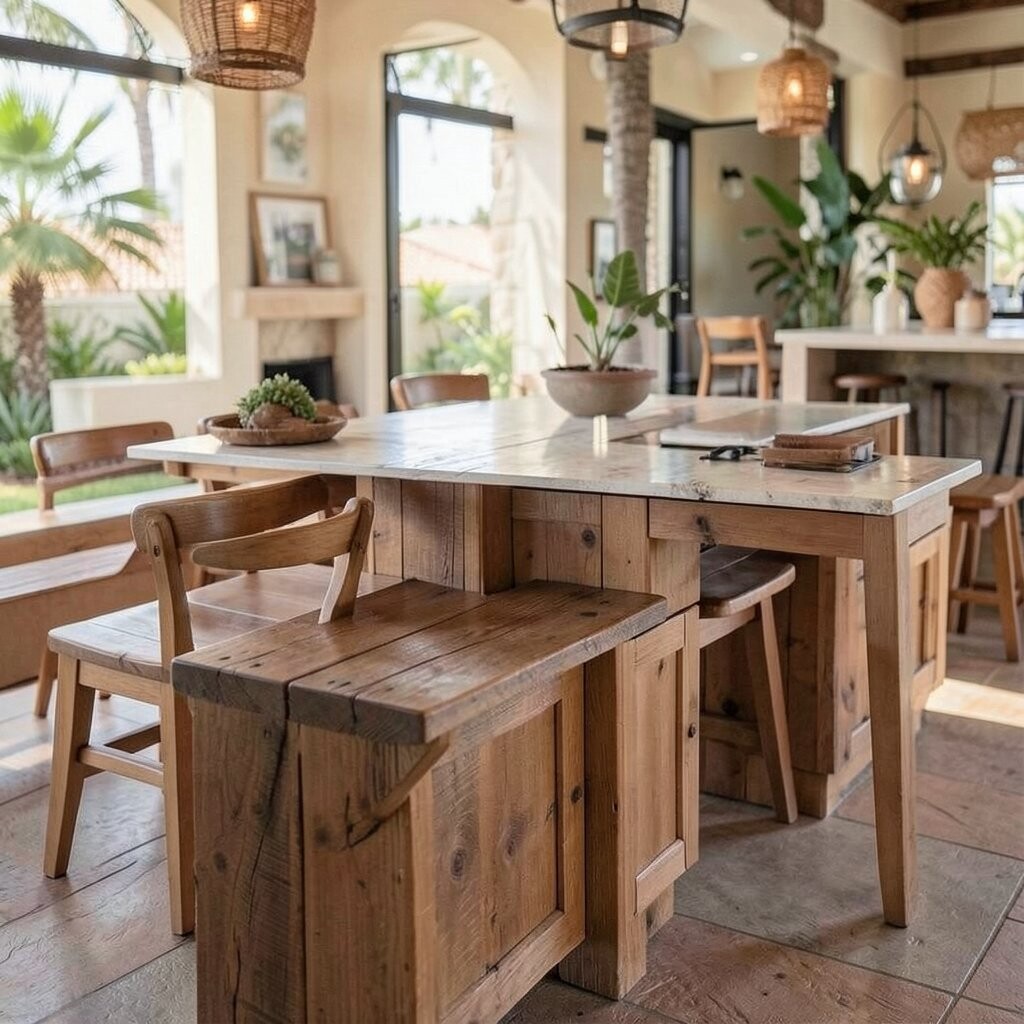
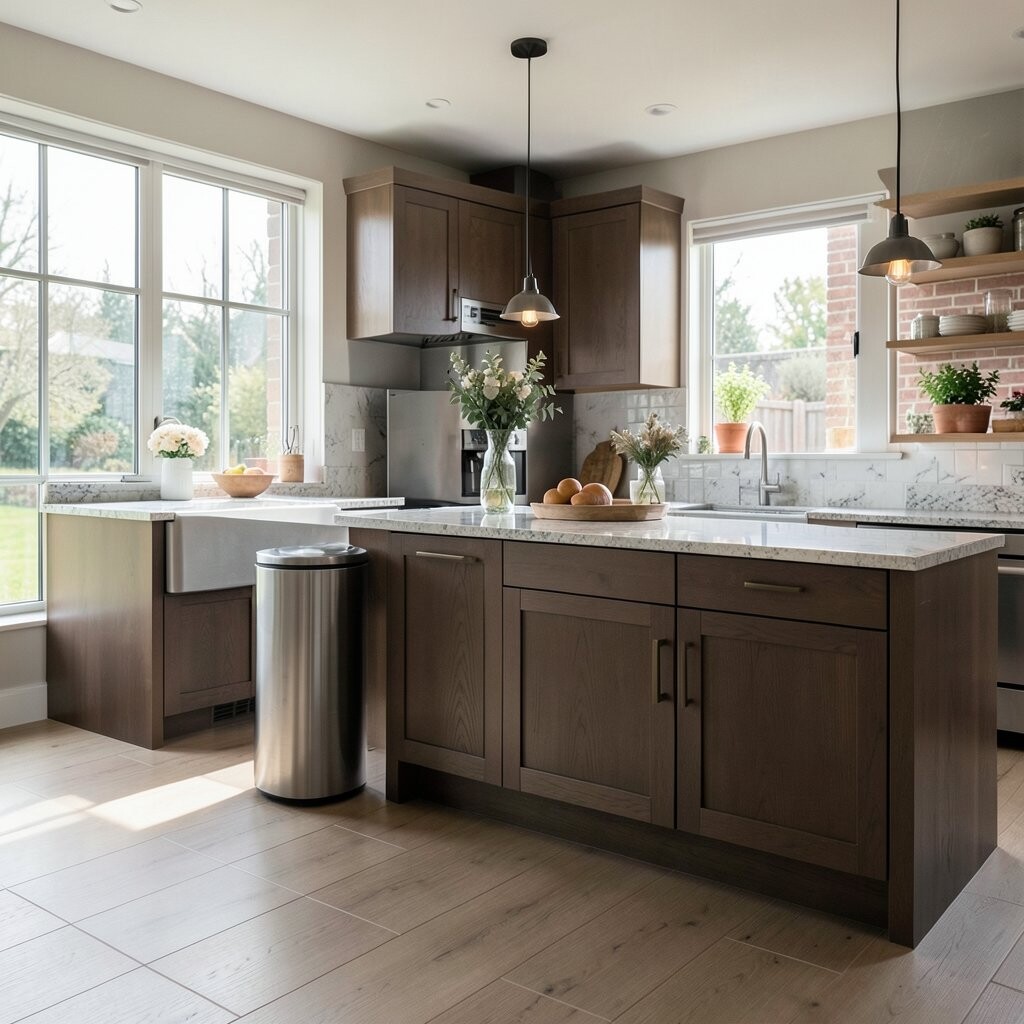
Think about the island as a helper, not just a pretty center spot. If it will hold food prep, schoolwork, or family meals, the surface must fit all those jobs.
A smooth and sturdy look can make the kitchen feel calm and inviting. Busy homes often need materials that resist spills, scratches, and heat. A smart choice here can save money later because repairs and replacements may happen less often.
2. Match the material to your kitchen style
Match the material to your kitchen style
The island should feel like part of the room, not a random piece dropped in the middle. Warm wood gives a cozy feel, while stone brings a rich and polished look.
Shiny finishes can feel modern, and matte surfaces can feel soft and relaxed. You can also personalize the island with mixed materials, such as wood on the base and stone on top.
Popular styles often lean toward natural textures and simple lines. If your kitchen already has bold cabinets or bright tile, a quieter island material can help balance the scene.
3. Think about how much care each material needs
Think about how much care each material needs
Some island materials need more wiping, sealing, or gentle handling than others. That matters a lot in a home where the kitchen sees daily action.
Quartz is often loved for being easy to clean, while some woods need regular care to stay strong. Stone can look beautiful, but some types may show stains if spills sit too long.
Before choosing, picture your real routine instead of the perfect one. A low-maintenance surface can feel like a gift on busy mornings, and it may also keep long-term costs more predictable.
If you enjoy a hands-on home project, a material that needs a little upkeep may still be a good fit. Just make sure the time and care feel pleasant, not tiring.
4. Choose a surface that handles daily wear
Choose a surface that handles daily wear
An island gets touched, leaned on, and bumped all the time. That means the material should stand up to plates, bags, keys, and hot pans.
Hard-wearing choices like quartz, granite, or thick butcher block can make the island feel dependable. They also help the space keep its good looks longer, which adds value to the kitchen.
If your household has children or pets, durability becomes even more important. A strong surface can reduce worry and make the island feel ready for real life.
5. Consider the color before you commit
Consider the color before you commit
Color changes the whole feeling of the room right away. Light shades can make the kitchen feel airy, while darker tones can look rich and dramatic.
Neutral colors often work well because they stay stylish for a long time. Bold colors can make the island special and personal, especially if you want it to stand out as a focal point.
6. Decide if you want the island to blend or stand out
Decide if you want the island to blend or stand out
Some kitchens look best when the island matches the cabinets and countertops. Others feel more alive when the island has its own bold look.
A painted base with a wood or stone top can create a nice mix. This kind of detail can make the island feel custom without needing a huge budget.
If you want a trend-driven look, two-tone kitchens are still very popular. If you prefer a timeless feel, keeping the island close to the rest of the room can be a safe and lovely choice.
7. Pay attention to heat and stain resistance
Pay attention to heat and stain resistance
Kitchen islands often catch spills, hot dishes, and food messes. A material that resists heat and stains can make cooking feel much easier.
Some stone tops do well with heat, while certain woods and laminates may need more care. Even strong materials can benefit from trivets, cutting boards, and quick cleanup.
This is a great place to think about your habits. If you cook often or host guests, a tougher material may be worth the extra cost.
A surface that keeps its good looks after real use can make the whole kitchen feel polished. It can also help the island stay useful for years, not just for a short time.
8. Think about the edge style and shape
Think about the edge style and shape
The edge of the island can change how safe and stylish it feels. Soft rounded edges can feel friendly and family-ready, while sharp edges can look crisp and modern.
Different shapes also change the way light moves across the surface. A thick edge can make the island look bold, while a slim edge can make it feel light and clean.
If little hands are often around, smoother edges may be a smart pick. For a more custom look, a special edge detail can add charm without changing the whole design.
The edge style is one of those small choices that makes the island feel finished. It can quietly lift the look of the entire room.
9. Look at how lighting will touch the material
Look at how lighting will touch the material
Natural light and lamp light can change the color and shine of an island surface. A glossy top may sparkle in bright light, while a matte finish can soften the glow.
Before deciding, imagine how the island will look in the morning, at dinner, and at night. Some materials show fingerprints and smudges more than others when the light is strong.
This matters because the island sits in the center of the kitchen and gets noticed right away. A material that looks good from many angles can make the space feel calm and put together.
10. Check your budget before falling in love
Check your budget before falling in love
It is easy to admire a beautiful stone or custom wood top, but the price can change fast. Material cost, installation, sealing, and support work can all add to the final bill.
Laminate, tile, butcher block, quartz, and natural stone each sit in different price ranges. Some look high-end without a huge cost, especially when the base design is simple.
If you want a rich look on a smaller budget, focus on one strong feature instead of everything at once. For example, a nice top with a painted base can feel stylish and personal.
Planning early helps you stay in control and avoid stress later. A material that fits your budget now can leave room for lighting, seating, or storage upgrades too.
11. Think about comfort for hands and elbows
Think about comfort for hands and elbows
The island is not only for cooking; it is also a place to lean, chat, and sit. A surface that feels pleasant under your hands can make the kitchen feel more welcoming.
Wood often feels warm and soft compared with stone, which can feel cooler and harder. That difference may matter if the island will be used for long meals, homework, or baking.
Comfort can be personal, so trust what feels right to your home life. If you like a cozy touch, a wood detail or mixed-material design can make the island feel more human and less cold.
12. Decide how much personality you want to show
Decide how much personality you want to show
Some islands look best when they stay simple and quiet. Others become the star of the room with dramatic veining, bold color, or a special wood grain.
Personal touches can make the island feel made for your family. A unique material choice may reflect your taste, your cooking style, or even the mood you want the kitchen to give off.
Trendy choices like waterfall edges and mixed finishes can bring a fresh feel. Still, your own taste matters more than any passing style because this is a surface you will live with every day.
If you love a calm look, choose a material with soft movement and gentle color shifts. If you love drama, a striking top can make the island unforgettable.
13. Check if the material works with seating
Check if the material works with seating
Many kitchen islands serve as a place for stools, snacks, and quick talks. The edge, thickness, and overhang all affect how comfortable that area feels.
Some materials make a slim top look elegant, while others need a thicker build for support. A well-planned seat area can make the island more useful without making it feel crowded.
If children or guests will sit there often, choose a finish that feels pleasant and is easy to clean around the edges. A smart seating setup can turn the island into the true heart of the kitchen.
Think about leg room, stool height, and how people move around the space. A beautiful surface is best when it also works well with real life.
14. Consider mixed materials for a custom look
Consider mixed materials for a custom look
Mixing materials can make an island feel special and layered. Wood, stone, metal, and painted finishes can all work together in fun ways.
This approach can also help with cost, since the most expensive material can be used only where it matters most. For example, a durable top with a simpler side panel can still feel rich and stylish.
Mixed materials are a big current trend because they add depth without making the room feel heavy. They also let you personalize the island so it matches your taste more closely.
When mixing, try to keep the colors or textures connected in some way. That little link helps the design feel thoughtful instead of busy.
15. Think about how the material will age
Think about how the material will age
Some surfaces get better with time, while others show wear more clearly. Wood may gain charm, and some stones may keep their beauty for a very long time with care.
It helps to picture the island five years from now, not just on the day it is installed. A material that ages well can keep the kitchen feeling loved and lived in.
Scratches, dents, and color shifts are not always bad. For some homes, those marks add character and tell a story of family life.
If you want a spotless look for years, choose a surface known for steady performance. If you like a more natural, lived-in feel, a material with personality may suit you better.
16. Make sure the material fits your cleaning habits
Make sure the material fits your cleaning habits
Some people wipe the kitchen many times a day, and others prefer a quick clean at night. Your material should fit the rhythm of your home.
Nonporous surfaces can be a big help because they are easier to sanitize and less likely to hold stains. Porous materials may need sealing or extra care, which can be fine if you enjoy that kind of upkeep.
If your island will hold snacks, crafts, or homework, easy cleaning becomes even more valuable. A surface that cleans fast can make the kitchen feel lighter and less stressful.
Look for a finish that hides small marks if you want less fuss. A soft pattern or gentle texture can be both pretty and practical.
17. Think about resale value if you may sell later
Think about resale value if you may sell later
Even if this kitchen is for you now, future buyers may notice the island right away. Strong, popular materials can help the room feel more appealing and polished.
Quartz, stone, and well-finished wood often have wide appeal because they look clean and lasting. Very unusual choices can be lovely too, but they may not suit every buyer.
If resale matters, a balanced design is often the safest path. You can still add personality through paint, stools, lighting, or decor without making the material too risky.
A smart island choice can make the kitchen feel fresh now and still feel valuable later. That is a nice blend of beauty and planning.
18. Ask for samples and see them in your own space
Ask for samples and see them in your own space
Material samples can look very different under your kitchen light than they do in a store. Seeing them at home helps you notice color shifts, shine, and texture in a real setting.
Place the samples near cabinets, flooring, and wall paint so you can compare everything together. This simple step can prevent costly regrets and help you feel more sure of your choice.
If you can, test how the material feels with a spoon, a cup, or a warm plate. The best island material is not just pretty; it should fit your daily life in a natural way.
Take your time with this stage, because it often decides the whole mood of the kitchen. A sample in your own light can tell a much truer story than a photo ever could.