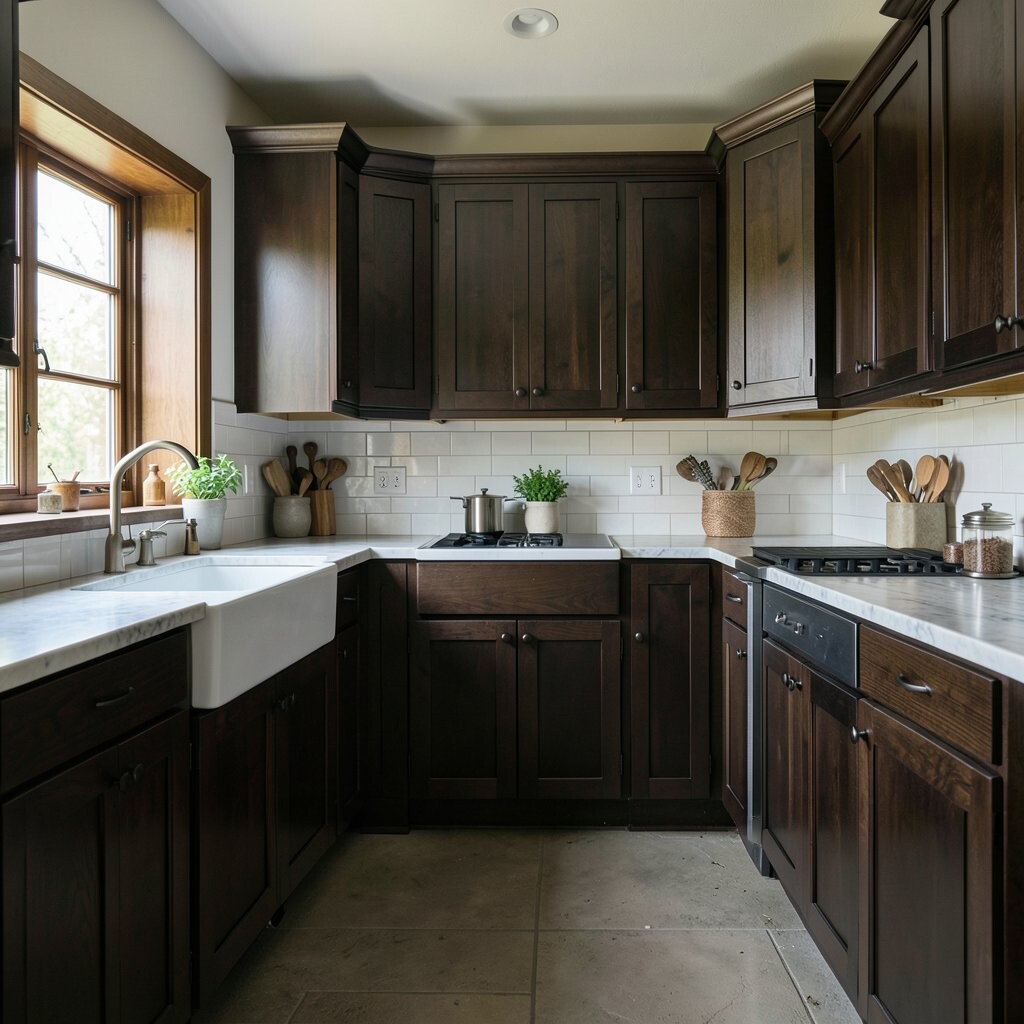
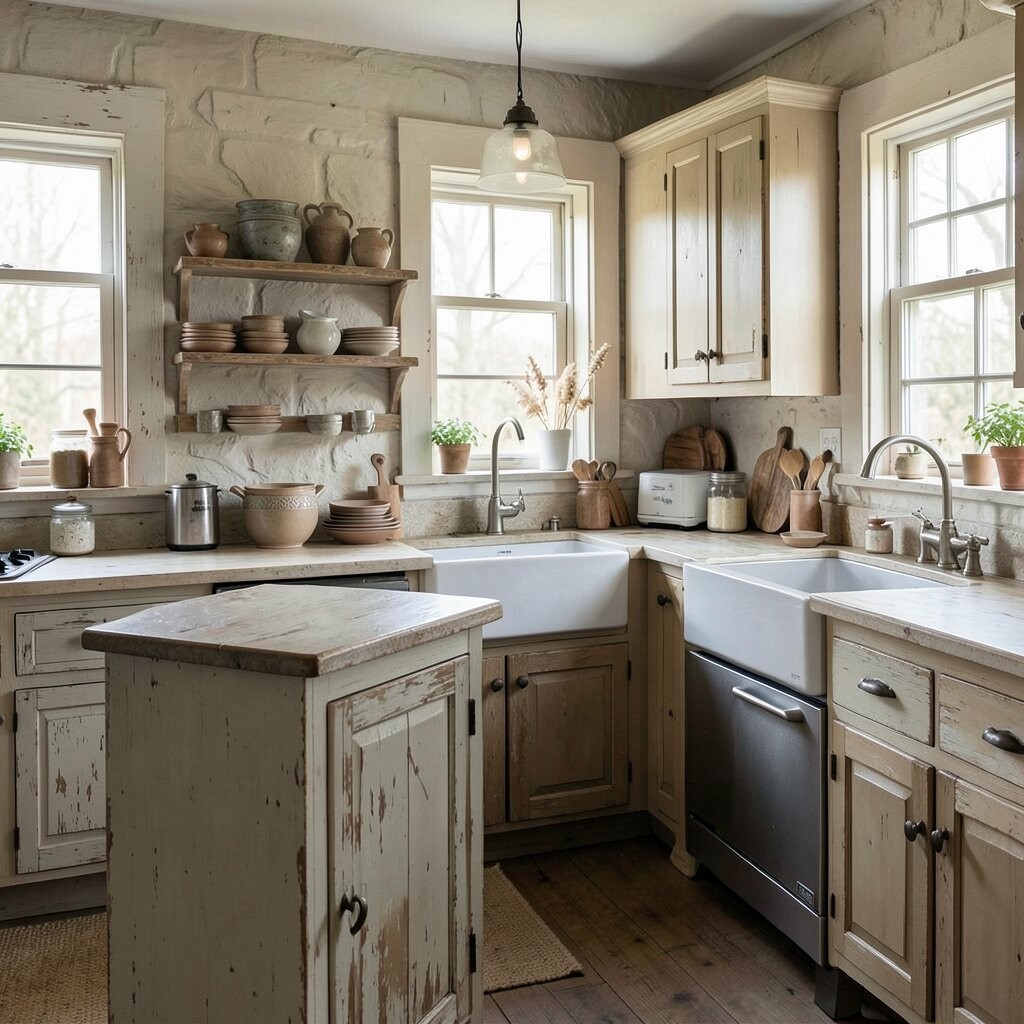
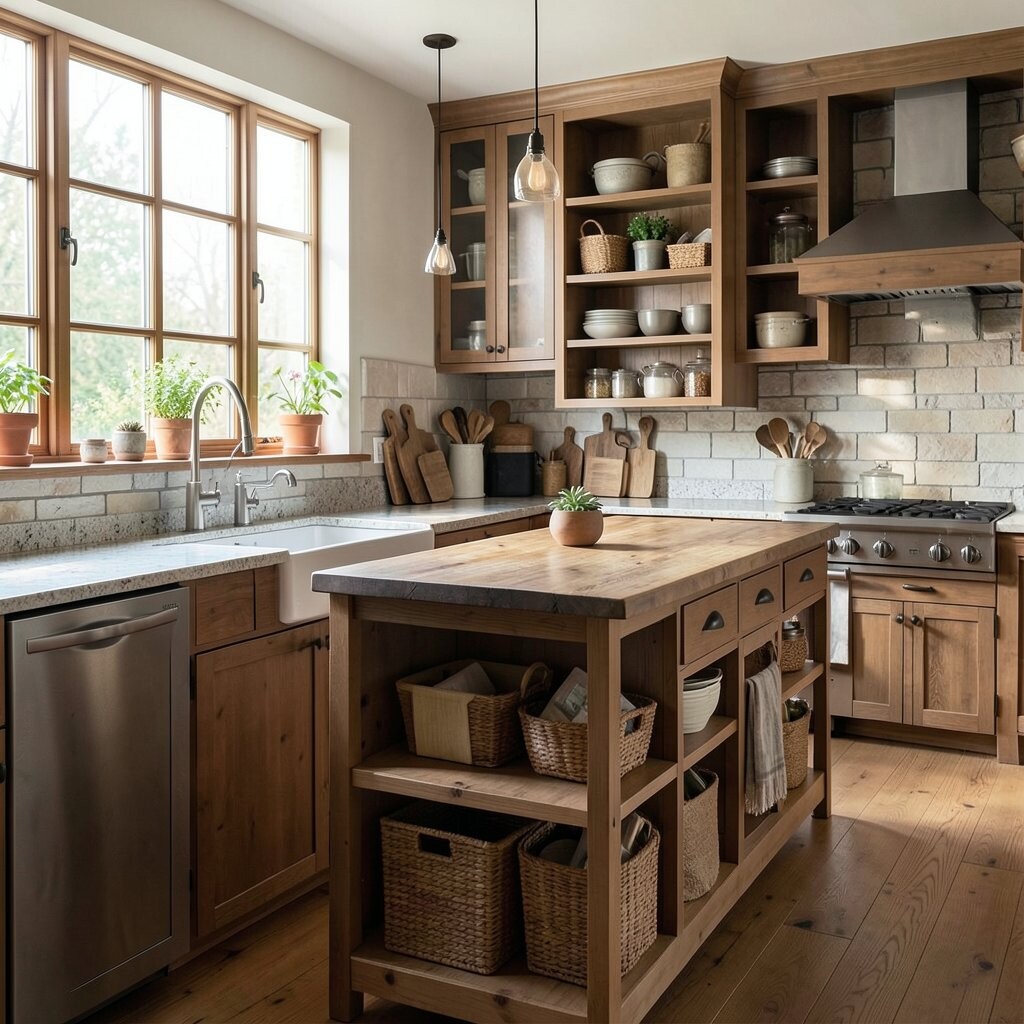
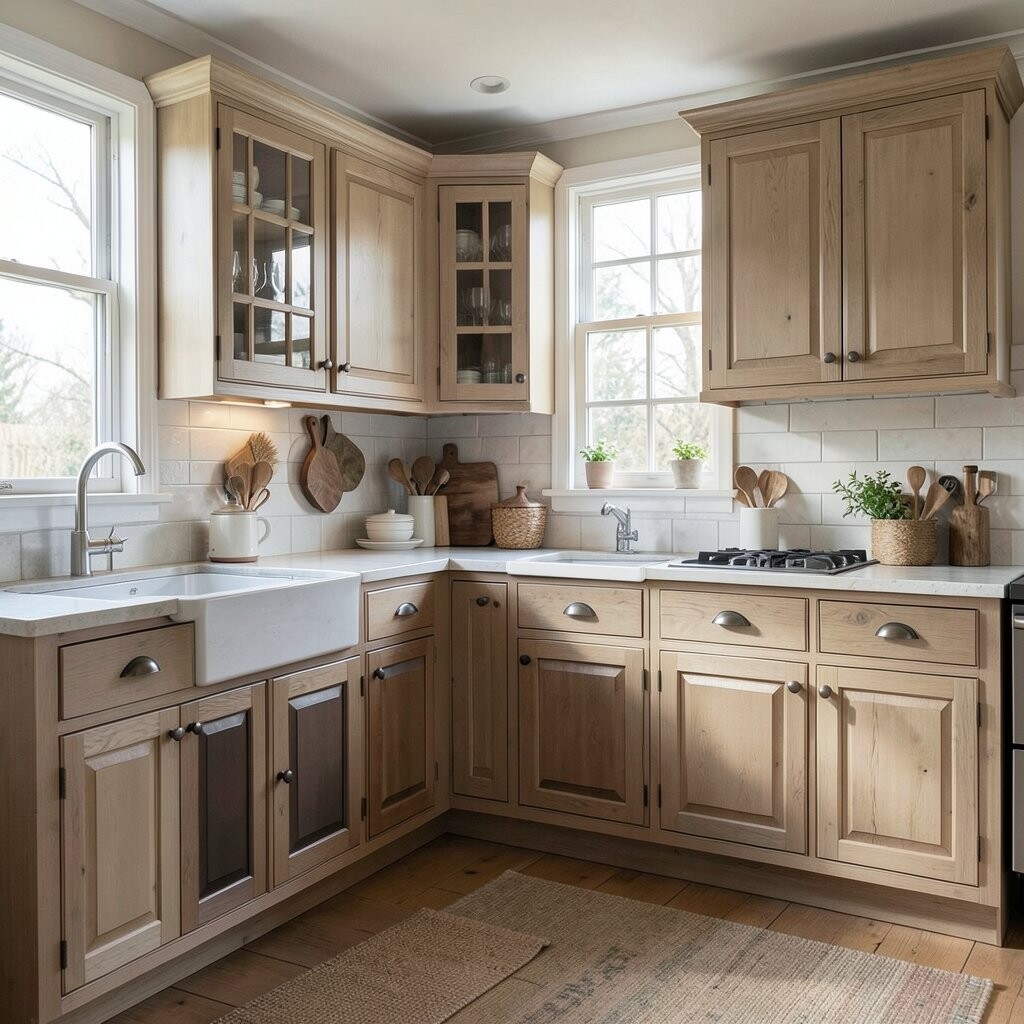
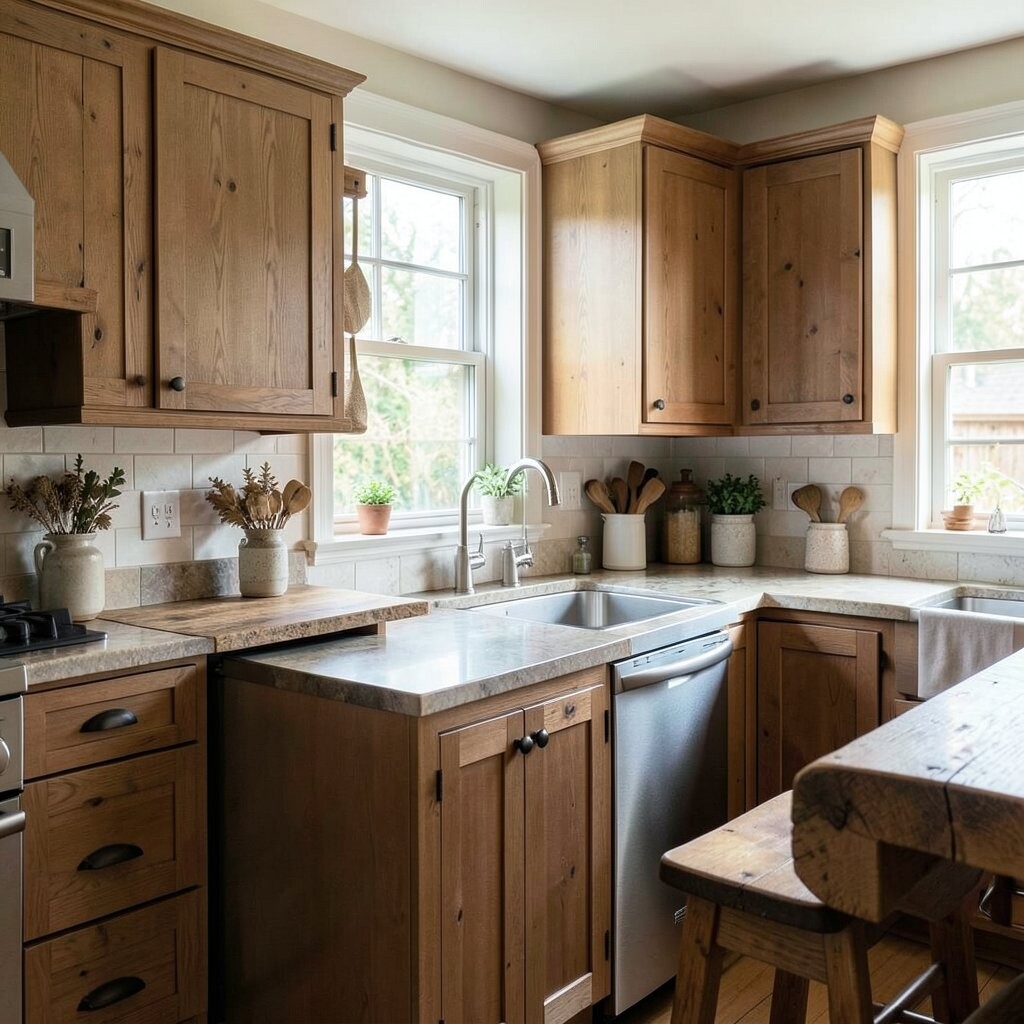
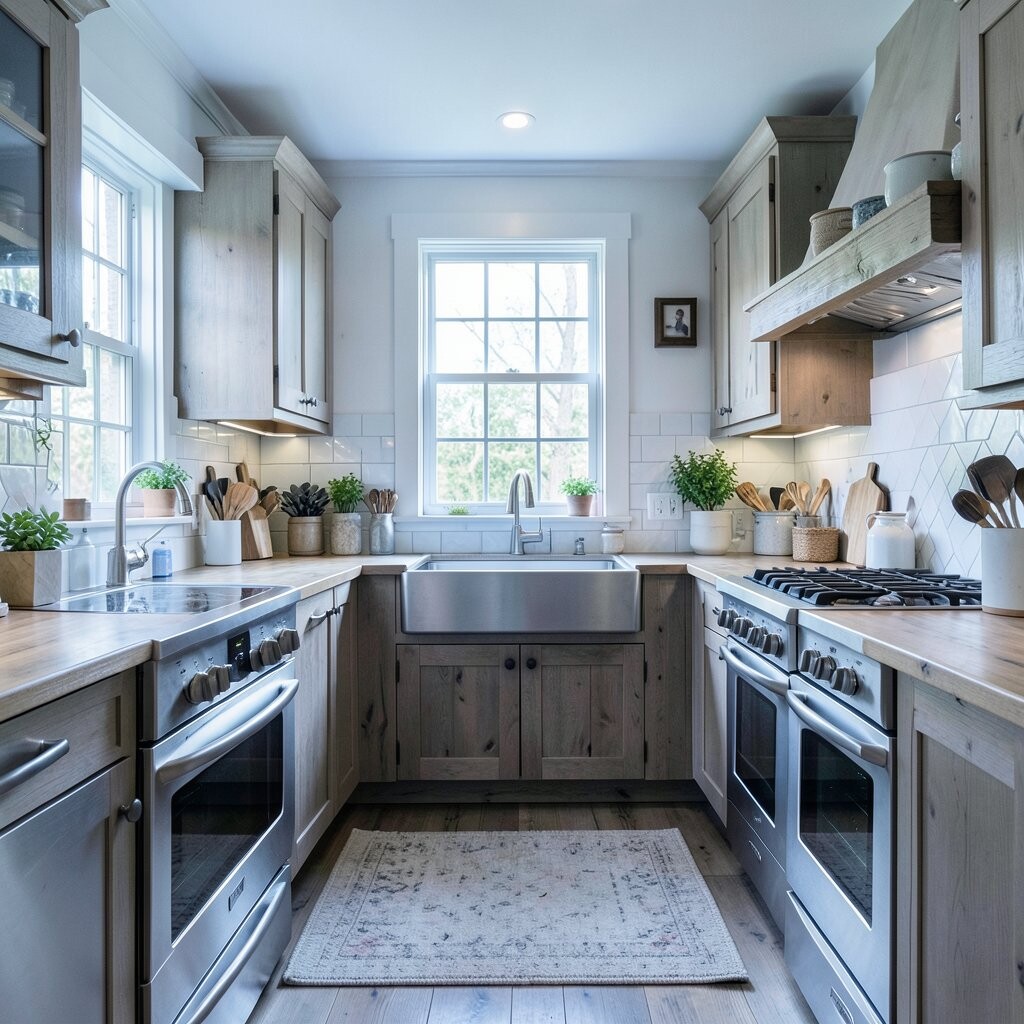
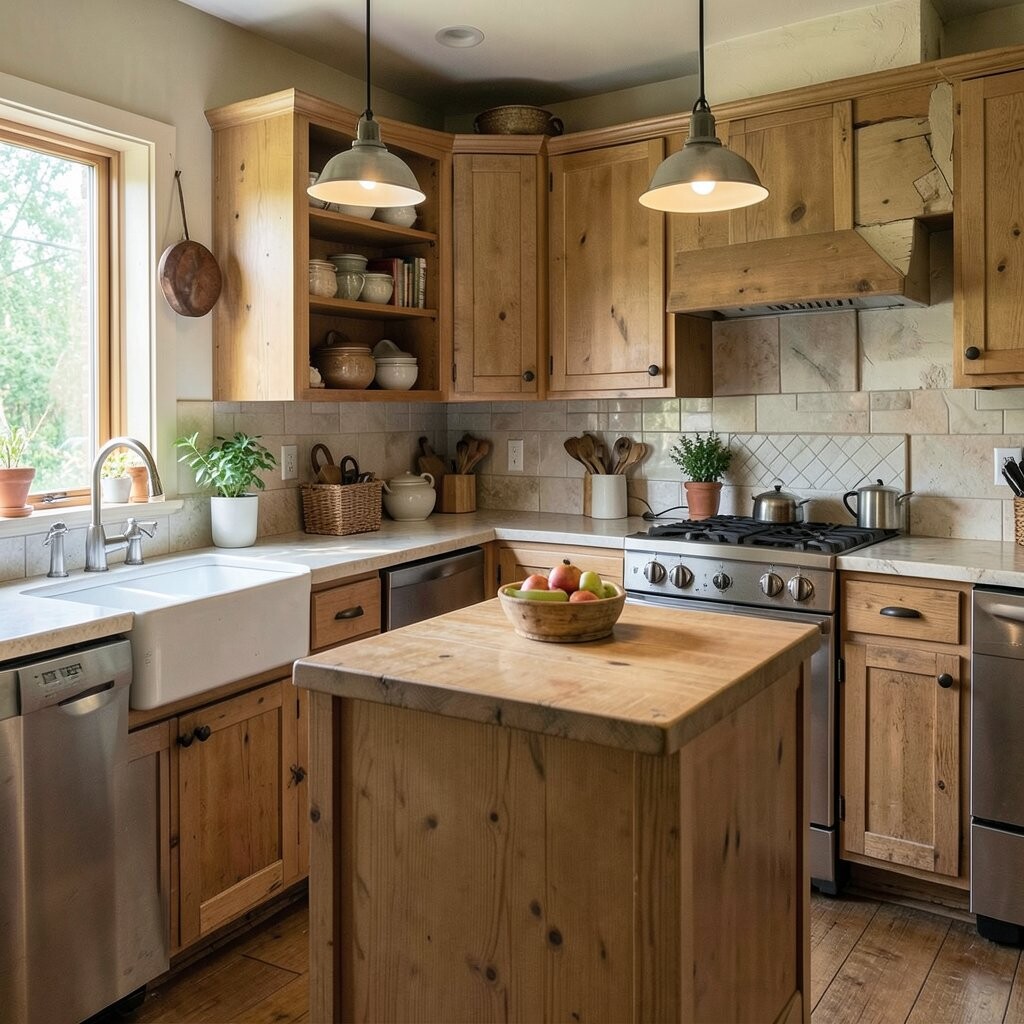
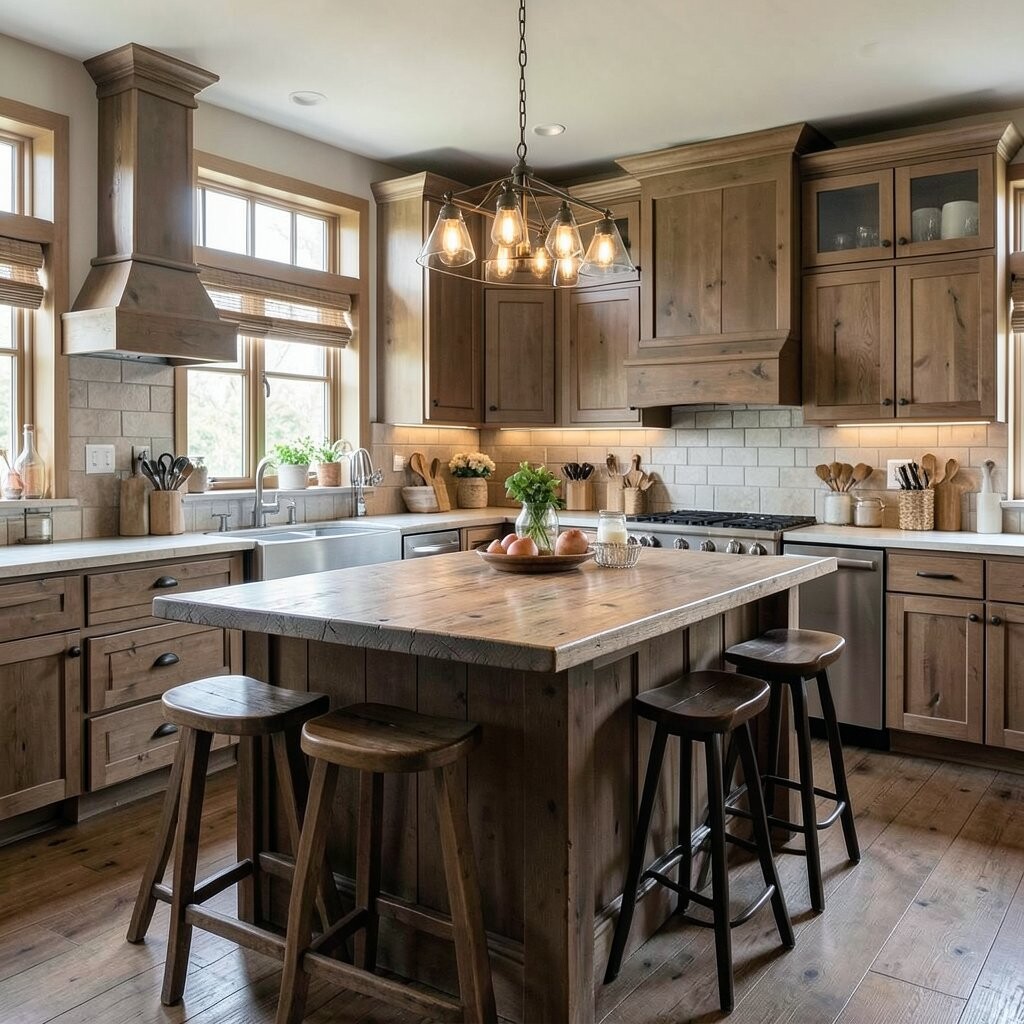
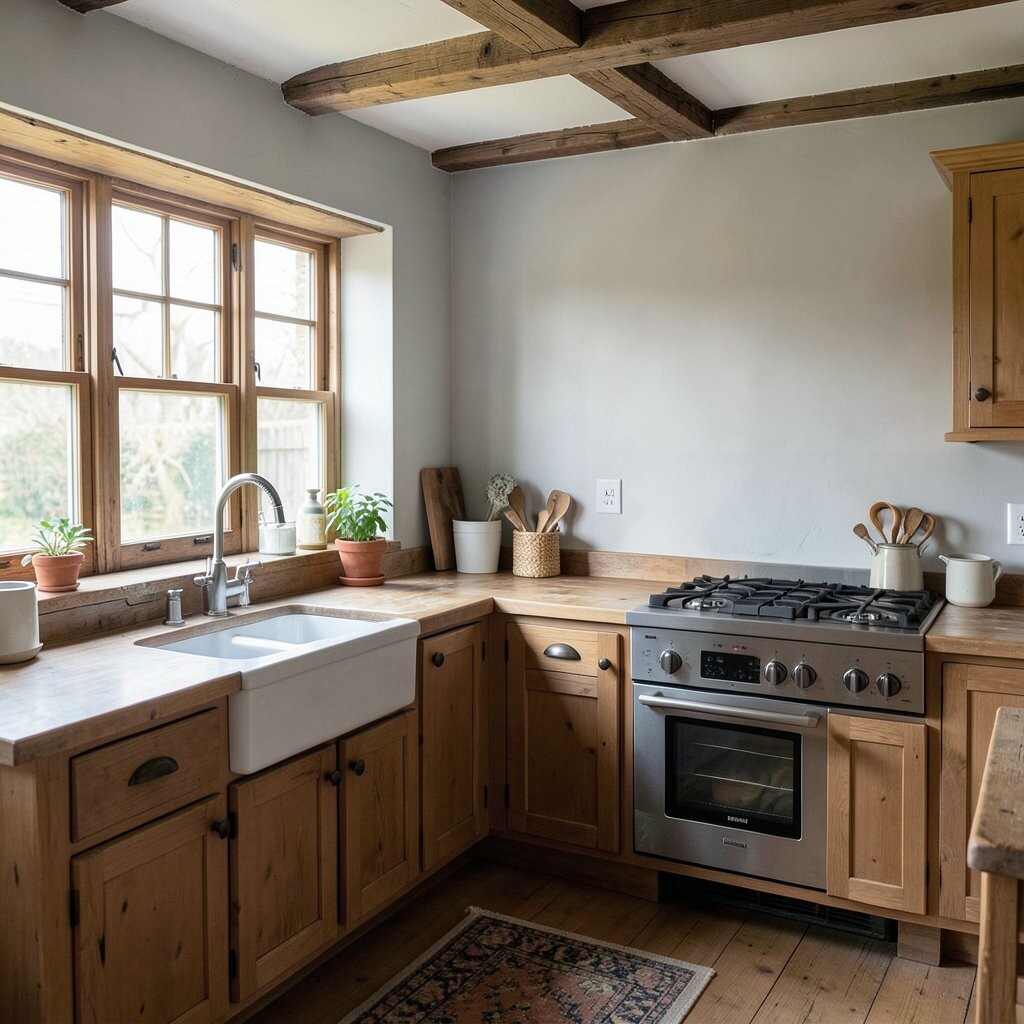
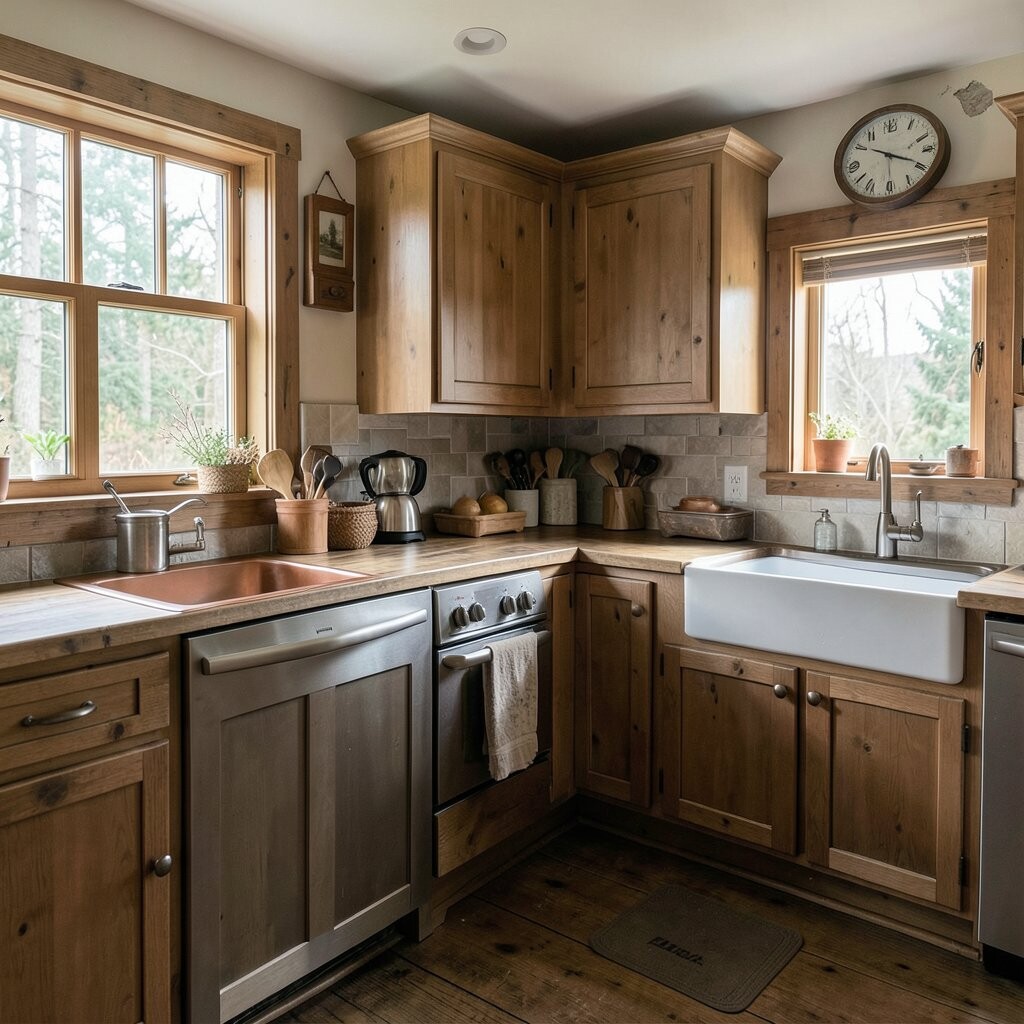
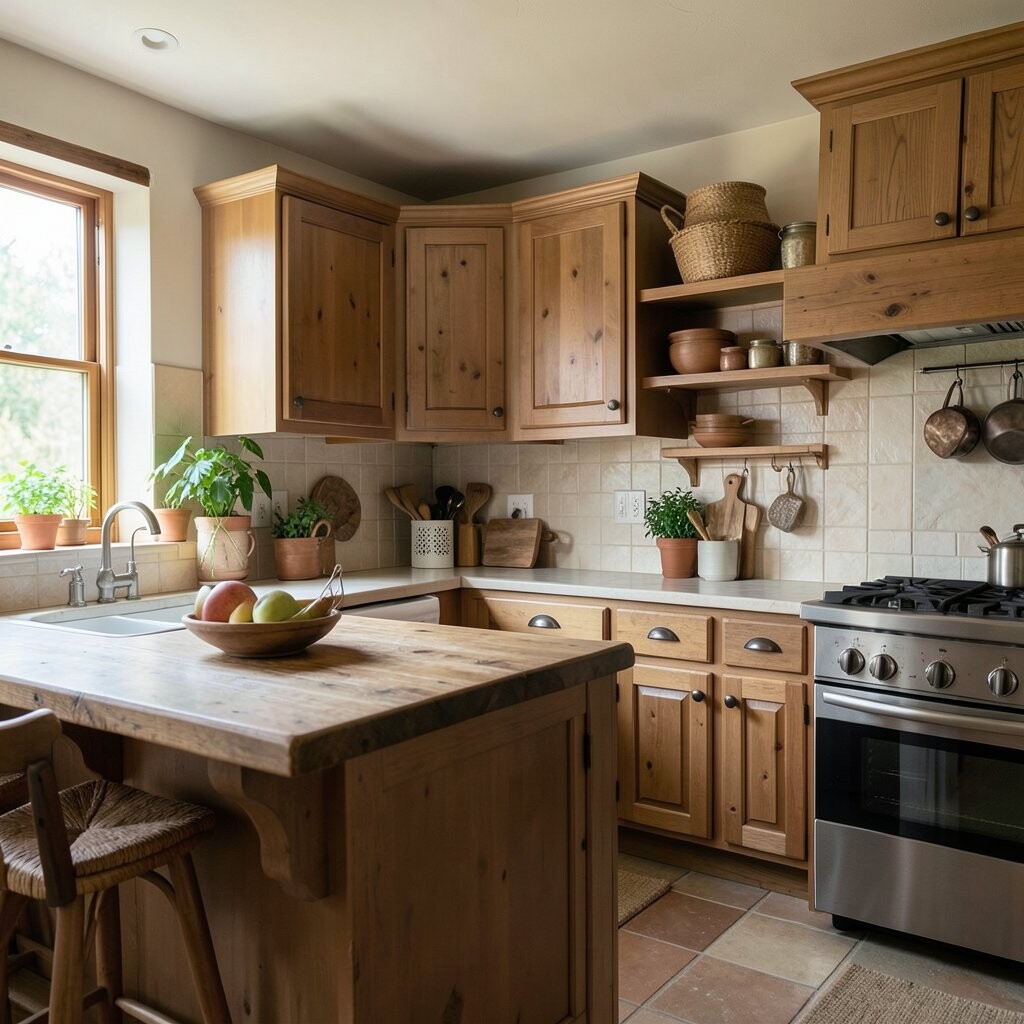
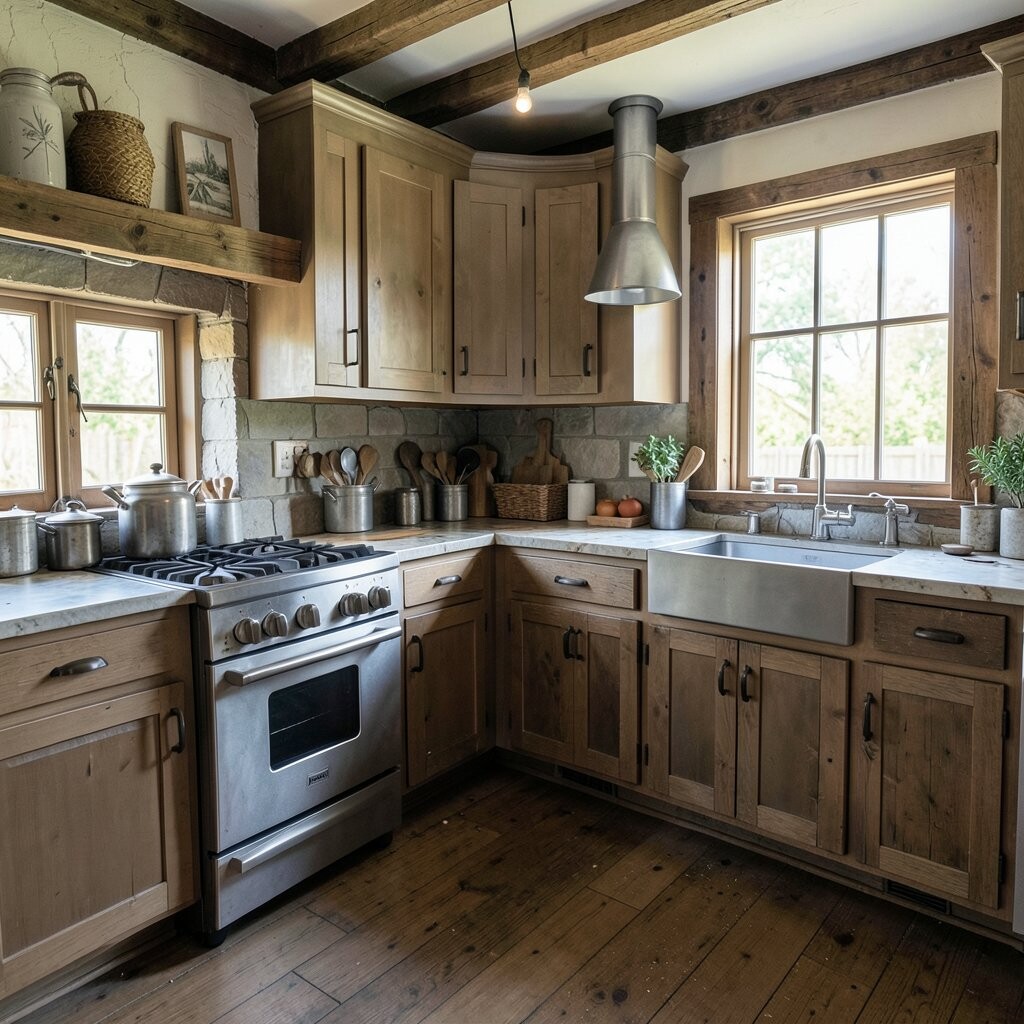
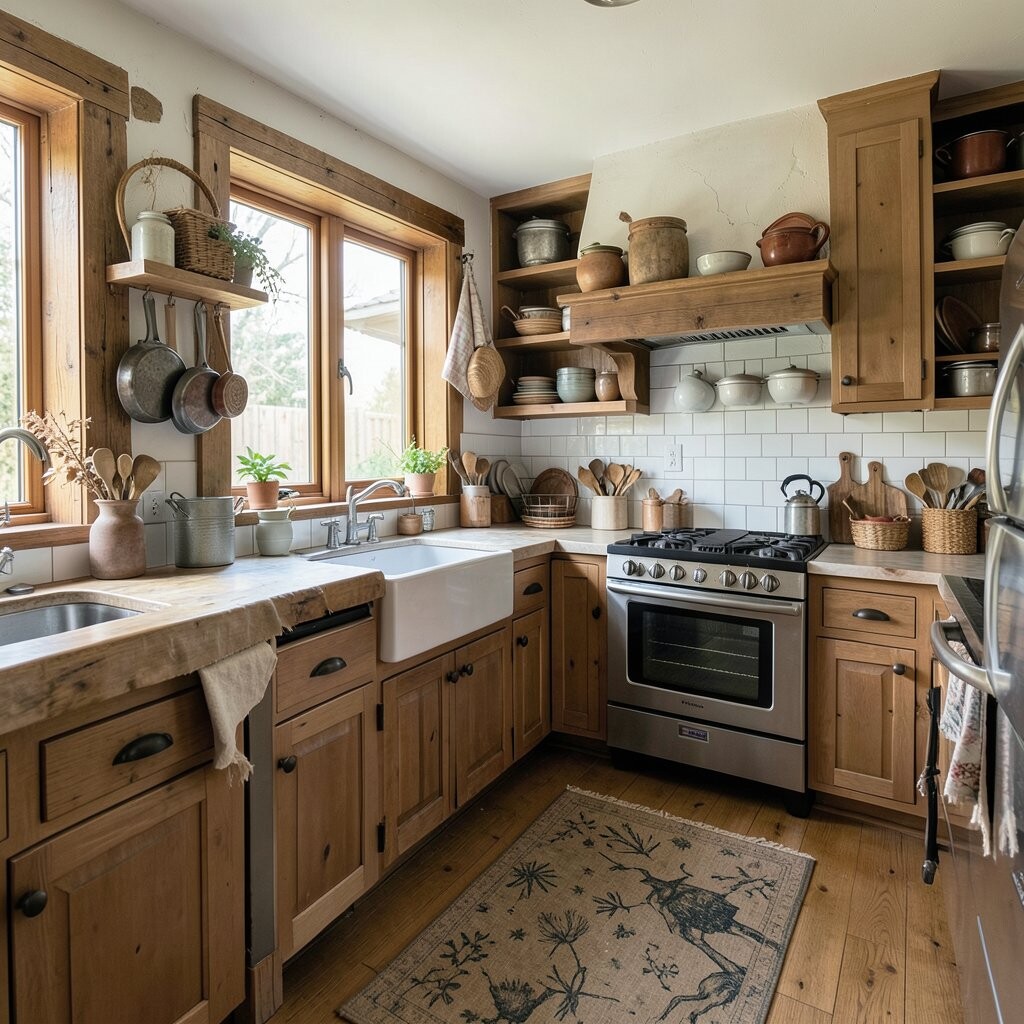
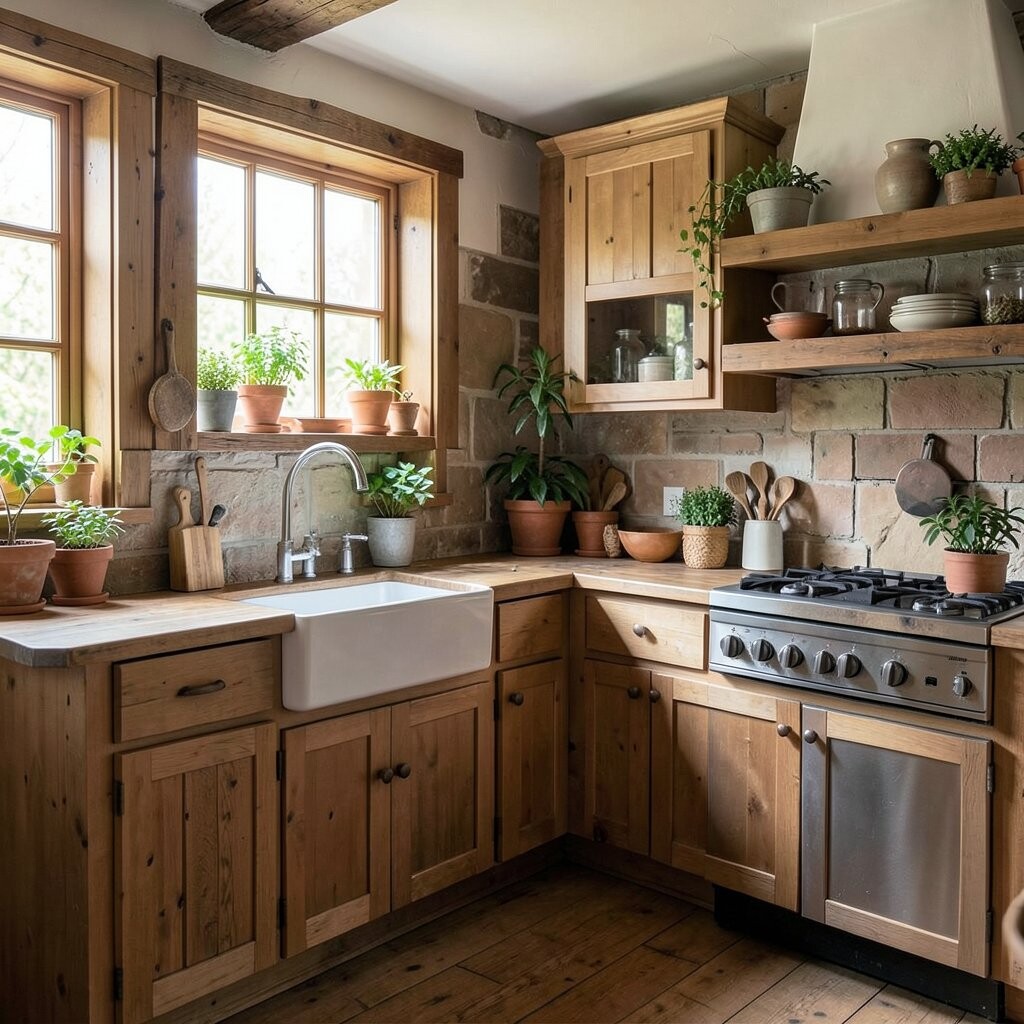
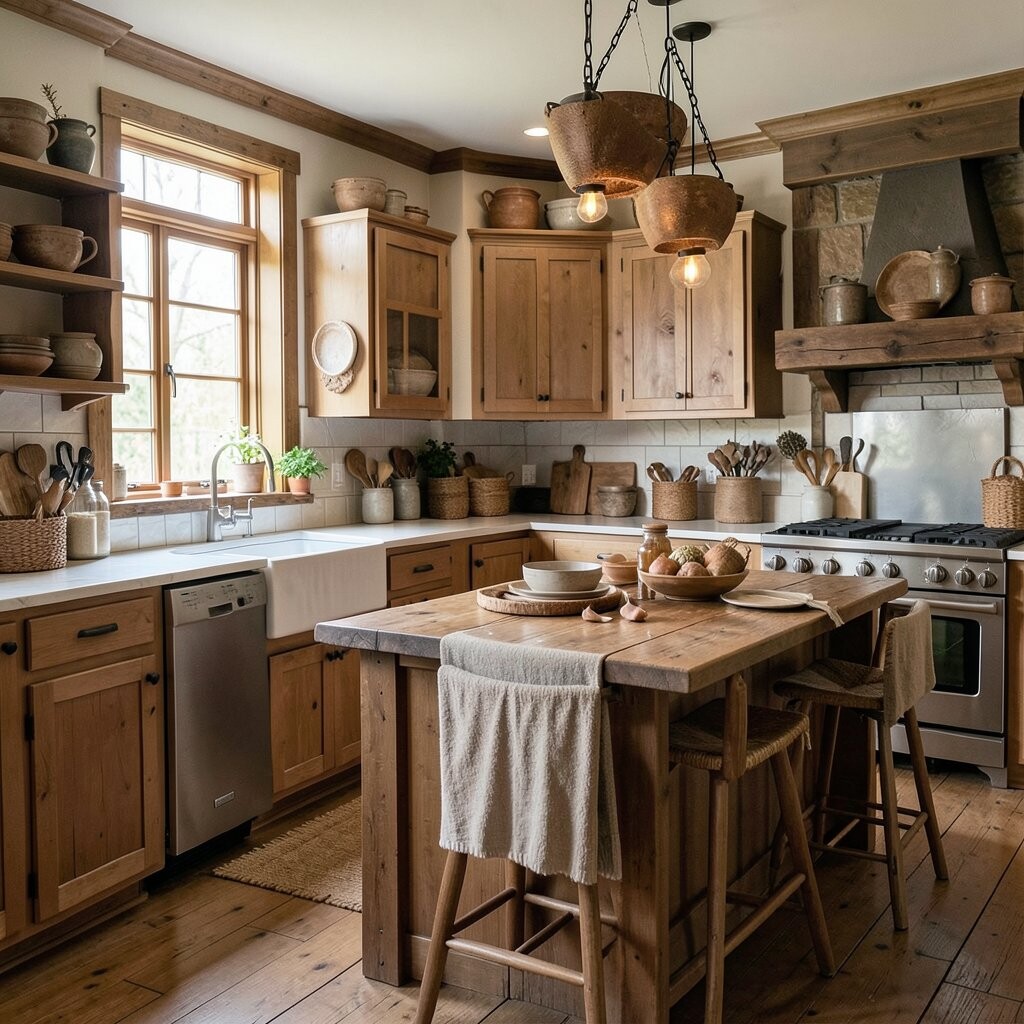
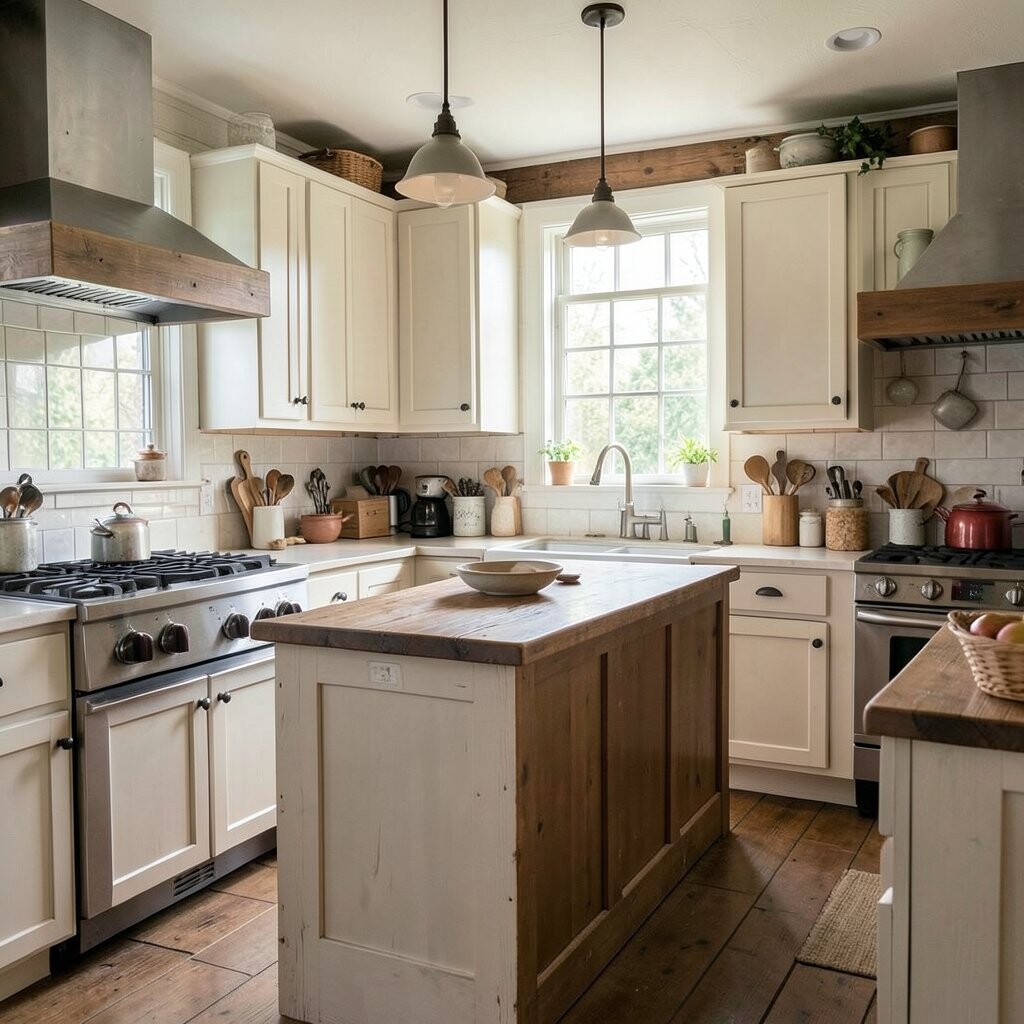
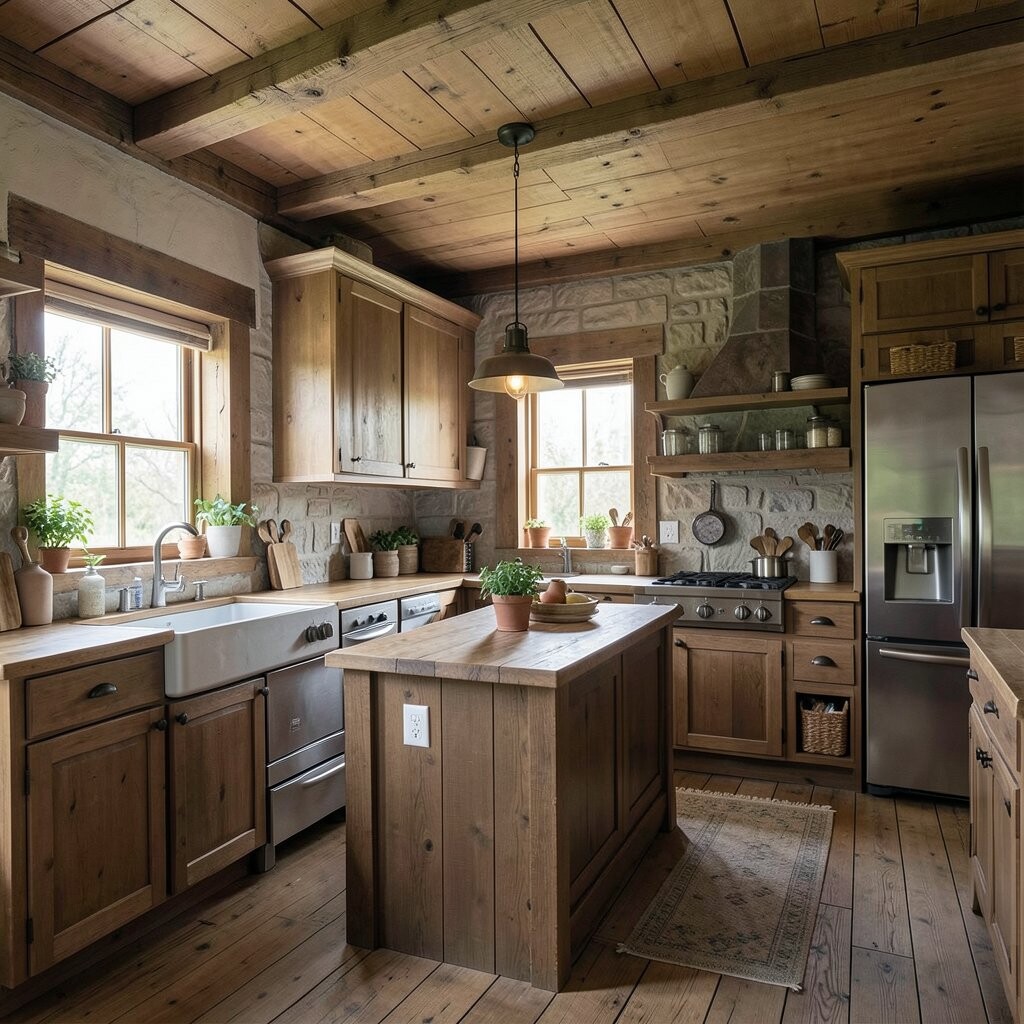
Dark wood can make a rustic kitchen feel heavy and closed in. A room that should feel cozy may end up looking dull.
Mix in lighter wood, painted shelves, or pale counters to balance the space. This keeps the room bright while still giving it that natural, old-world look. It can also save money, since you may only need a few lighter pieces instead of a full redo.
2. Ignoring Natural Light
Ignoring Natural Light
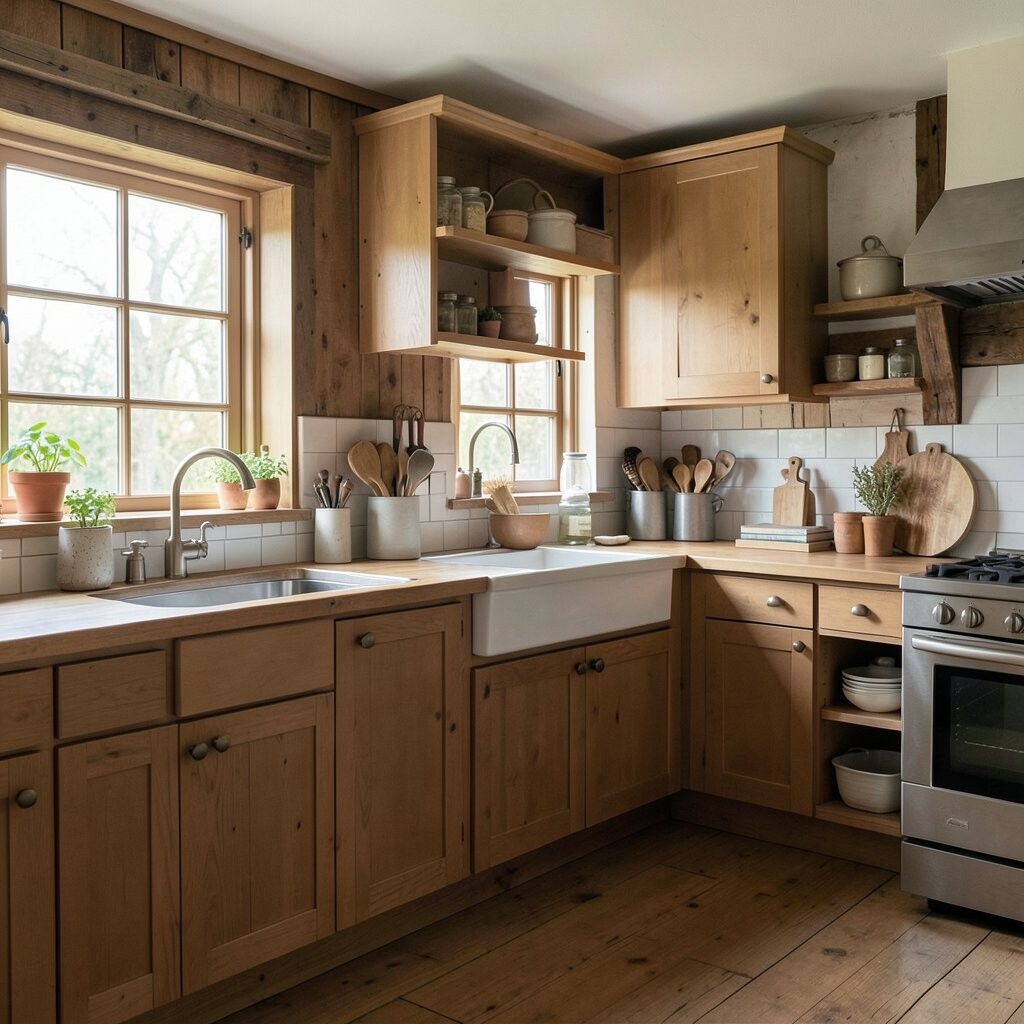
Rustic style looks best when sunlight can show off its warm textures. If windows stay covered with thick drapes, the kitchen can feel small and shadowy.
Use simple linen shades, soft curtains, or no window covering at all if privacy allows. This makes wood grains, stone, and metal details stand out in a fresh way. A brighter room also helps a small kitchen feel more open without a big budget.
Try adding a mirror, a glass cabinet door, or light-colored backsplash tile near the window. These small changes can bounce light around the room and make your rustic style feel more alive. They also fit current trends that favor airy, relaxed spaces over heavy ones.
3. Overcrowding the Room with Farmhouse Signs
Overcrowding the Room with Farmhouse Signs
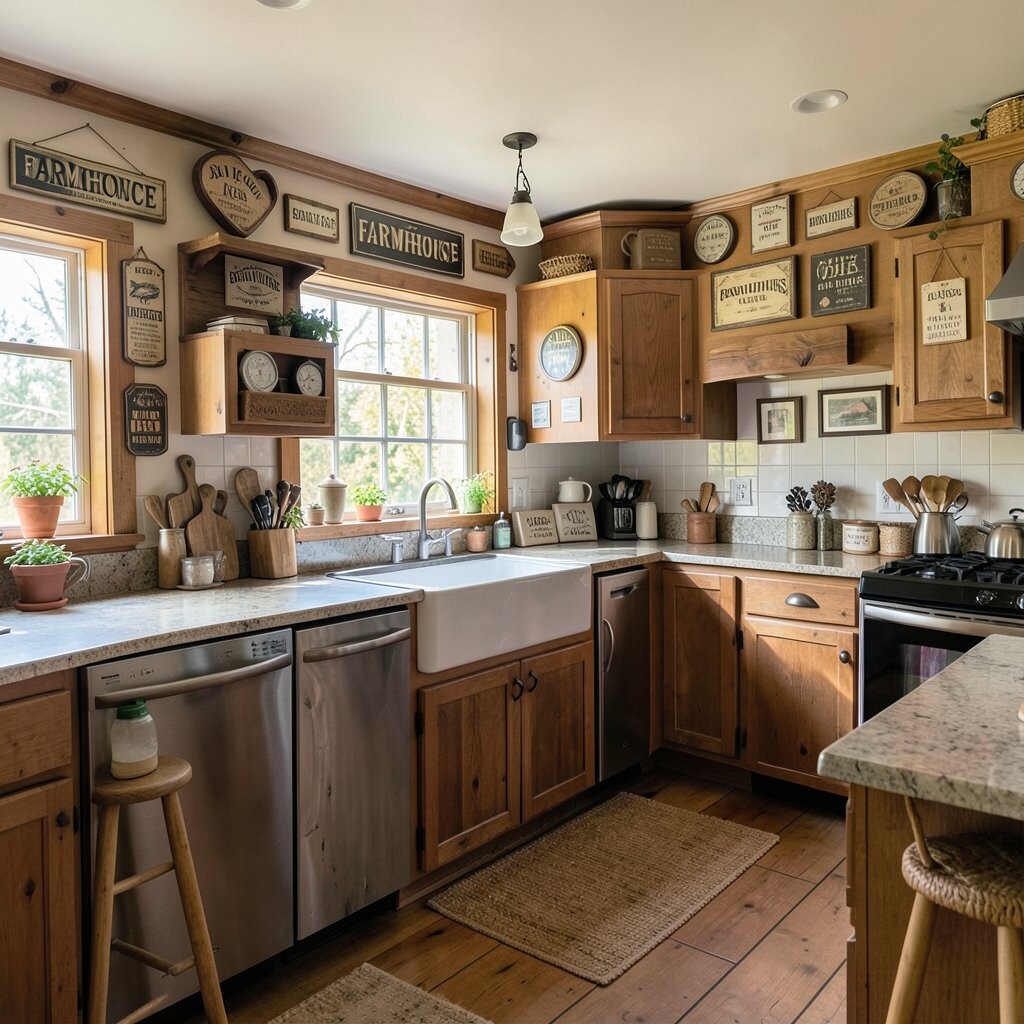
Too many signs, sayings, and wall pieces can make the kitchen feel loud. Instead of rustic charm, the room may look like a store display.
Pick a few items that mean something to you, such as a family recipe board or an old cutting board. This gives the room a personal touch without creating clutter. Unique pieces with history often cost less than buying many trendy decorations.
Leave some blank wall space so the eye can rest. A simple wall with one strong focal point often feels more stylish than a crowded one. If you want more color, use linens, bowls, or plants instead of more signs.
4. Choosing Fake Distressed Pieces Everywhere
Choosing Fake Distressed Pieces Everywhere
Rustic style works best when it feels honest, not forced. Too many fake scratches and fake age marks can make the room look cheap.
Real wood, simple metal, and worn finishes tell a better story. Even one old stool or cabinet can bring more charm than several fake antique items. Natural wear often adds character in a way that new distressing cannot match.
5. Skipping Functional Storage
Skipping Functional Storage
A rustic kitchen should feel warm, but it still needs to work well every day. If tools and dishes have no home, the room quickly turns messy.
Use baskets, open shelves, hooks, and deep drawers to keep things easy to reach. These pieces can look beautiful and help the room stay neat at the same time. Smart storage also keeps extra spending down because you buy less duplicate storage gear later.
Try open baskets for produce, a wall rack for pans, or a small cabinet for everyday dishes. These choices add texture and make the kitchen feel lived in. They also fit the current love for practical, tidy rooms with a natural look.
6. Picking the Wrong Finish on Cabinets
Picking the Wrong Finish on Cabinets
Shiny cabinet doors can clash with the soft, cozy feel of rustic design. The room may start to look too modern or too polished.
Matte paint, weathered stain, or a soft satin finish usually works better. These finishes show off wood tone and keep the space feeling warm. If you repaint instead of replacing cabinets, you can save a lot of money while still changing the mood.
Cabinet color should match the rest of the room, too. Cream, sage, muted blue, and warm gray are popular right now because they feel calm and easy to live with. You can add personality with hand-forged pulls or simple leather handles.
7. Forgetting Texture on the Surfaces
Forgetting Texture on the Surfaces
A rustic kitchen should have layers you can see and feel. If every surface is smooth and flat, the room may lose its charm.
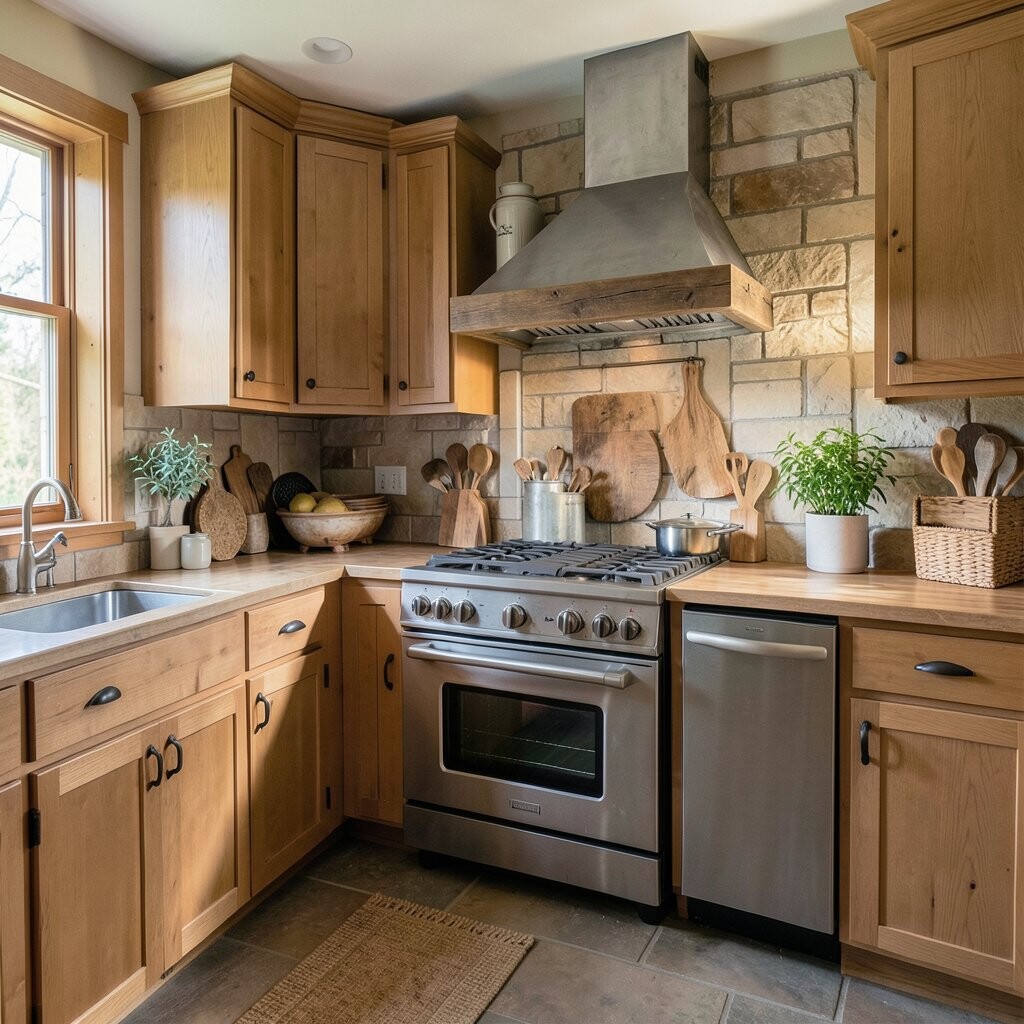
Mix wood grain, stone, woven fabric, and rough metal for a richer look. This creates depth without needing bright colors or fancy decor. A room with texture often feels more welcoming and unique than one filled with plain surfaces.
Even small items can help, like a woven runner, clay bowl, or textured tile behind the stove. These details are often affordable and easy to switch out later. They also let you personalize the room in a soft, simple way.
Be careful not to go too far with texture either. A few strong pieces usually work better than a pile of competing patterns and rough finishes. Balance is what keeps rustic style feeling calm instead of busy.
8. Using Bright, Cool Lighting
Using Bright, Cool Lighting
Blue-white bulbs can make warm wood and stone look flat. They may also make the room feel more like an office than a kitchen.
Choose soft, warm light that adds a gentle glow in the evening. Pendant lights, wall sconces, and under-cabinet strips can all help set the mood. Good lighting is worth the cost because it improves both style and daily use.
Look for fixtures with iron, brass, or aged bronze details if you want a rustic feel. These finishes are on trend and pair well with natural materials. You can also add dimmers so the space feels bright during cooking and soft during meals.
9. Making the Color Palette Too Busy
Making the Color Palette Too Busy
Rustic kitchens look best when the colors feel calm and connected. Too many bold shades can make the room feel scattered.
Stick to a few main colors, like wood tones, cream, green, or dusty blue. This helps the whole kitchen feel pulled together and easy on the eyes. A simple color plan can also make decorating less costly because you make fewer mismatched purchases.
Personal touches can still shine through in small ways. A red kettle, patterned dish towel, or blue crock can bring life to the room without taking over. That kind of small pop keeps the kitchen fun while protecting the rustic mood.
10. Choosing Furniture That Feels Too Heavy
Choosing Furniture That Feels Too Heavy
Bulky tables and oversized chairs can crowd a rustic kitchen fast. The room may feel weighed down instead of cozy.
Look for pieces with open legs, slimmer shapes, or lighter wood tones. These choices keep the room easy to move through and make the floor look more open. They can also cost less than large custom furniture while still giving the room character.
A small bench, round table, or mixed chair set can add personality without taking over. This style feels relaxed and current, especially in kitchens that blend old and new. A lighter layout also makes cleaning simpler, which is always a plus.
11. Leaving the Walls Bare and Cold
Leaving the Walls Bare and Cold
Blank walls can make a rustic kitchen feel unfinished. The room may have good cabinets and counters, but still seem empty.
Add art, wood shelves, old tools, or framed fabric pieces to warm things up. These wall details help tell a story and make the kitchen feel more personal. You do not need much money to create that feeling, especially if you use thrifted or handmade items.
Try a gallery of small pieces instead of one huge print if you want a softer look. A mix of shapes and frames can feel collected over time, which fits rustic style well. Just keep enough space between items so the wall stays calm and easy to read.
Open shelves can also help fill a wall while adding function. Stack bowls, jars, and pitchers in a neat way for a display that looks useful, not staged. That balance is a big part of what makes rustic kitchens feel so inviting.
12. Forgetting About Real-Life Messes
Forgetting About Real-Life Messes
A rustic kitchen should look beautiful, but it also needs to handle spills, crumbs, and daily use. Choosing delicate finishes that stain easily can cause stress later.
Select surfaces that are easy to wipe clean, like sealed wood, durable stone, or washable paint. This makes the kitchen better for busy families and saves repair costs over time. A pretty room feels even better when it works in real life.
Use washable rugs, sturdy stools, and simple cabinet hardware that can take wear. These smart choices keep the rustic look strong without making chores harder. Rustic style should feel lived in, not hard to maintain.
13. Matching Everything Too Perfectly
Matching Everything Too Perfectly
Rustic spaces often look best with a little mix and mismatch. If every piece is too perfect, the room can lose its soul.
Blend old and new items, different wood tones, and a few varied metal finishes. This gives the kitchen a collected feel that looks warm and natural. It also gives you more freedom to shop secondhand, which can help keep costs lower.
Try pairing a modern light with a worn table or simple stools with a vintage cabinet. That mix feels fresh and current while still honoring rustic roots. A room with small differences often feels more interesting than one that looks copied from a catalog.
Personalization matters here, too. A family chair, handmade mug, or old bread box can add just the right amount of charm. These special pieces keep the space from feeling too staged.
14. Using Cold Metal in Large Doses
Using Cold Metal in Large Doses
Metal is part of rustic style, but too much cold steel can make the room feel hard. The kitchen may end up looking industrial instead of warm.
Balance metal with wood, cloth, pottery, and greenery. A warm mix softens the look and keeps the space friendly. You can also choose aged brass, black iron, or bronze for a richer feel without a huge cost.
Small details make a big difference here. Handles, light fixtures, and shelf brackets can carry the metal theme without taking over the whole room. This is a smart place to spend a little more if you want lasting style.
15. Filling the Space with Too Many Patterns
Filling the Space with Too Many Patterns
Rustic kitchens can handle pattern, but too much of it can make the room feel restless. Busy curtains, rugs, tile, and dishes may fight with each other.
Choose one or two pattern spots and keep the rest simple. A striped runner or checkered towel can add charm without overwhelming the space. This kind of restraint also helps your room feel more timeless and less tied to a short trend.
When patterns stay limited, the materials get to shine. Wood, stone, and metal look richer when they are not competing with every surface. You can still make the room feel playful by swapping in a patterned bowl or apron when you want a change.
If you enjoy a bolder look, keep the colors quiet so the room does not become too loud. Soft pattern in muted shades is easier on the eyes and often feels more rustic. That approach gives you style without raising the visual noise.
16. Forgetting Greenery and Life
Forgetting Greenery and Life
A rustic kitchen can feel a little stiff without something living in it. Plants, herbs, or fresh branches bring in color and movement.
Use small pots of basil, rosemary, or thyme on a sunny sill or shelf. These herbs look pretty and also help when cooking, so they add both beauty and benefit. Fresh greenery is a low-cost way to keep the space feeling active and cared for.
Seasonal branches in a pitcher or a small vase of wildflowers can also work well. They add a soft touch and change the mood without much effort. This is a simple way to personalize the kitchen and keep it from feeling frozen in place.
17. Choosing Oversized Decor
Choosing Oversized Decor
Big decor pieces can overpower a rustic kitchen, especially if the room is small. Instead of cozy, the space may feel stuffed.
Pick items that fit the scale of your kitchen, like smaller clocks, modest shelves, or narrow baskets. These pieces help the room feel balanced and easier to use. Smaller decor can also be more affordable, which helps when you are decorating on a budget.
Look at the whole room before buying anything new. If the table, cabinets, and light fixtures already have strong shapes, the decor should stay simple. That keeps the rustic feel clean and welcoming.
18. Overusing Trendy Farmhouse Details
Overusing Trendy Farmhouse Details
Trendy farmhouse touches can be fun, but too many of them may age fast. The kitchen can start to feel dated before you even finish decorating.
Choose classic rustic pieces that will still look good later, like real wood, stone, pottery, and simple iron accents. These materials stay strong even as style changes. A classic base also lets you update the room later without replacing everything.
If you want current style, use it in easy-to-swap items. A trendy rug, a new light bulb shape, or a fresh set of stools can give the kitchen a modern edge. That way, your bigger investments remain timeless and your costs stay under control.
Personal style should matter more than copying what is popular online. A kitchen that reflects your life will always feel better than one that only follows a trend. That is the real charm of rustic decorating.
19. Forgetting the Ceiling and Floor
Forgetting the Ceiling and Floor
Many people focus on cabinets and forget the top and bottom of the room. But the ceiling and floor can change the whole feel of a rustic kitchen.
Wood beams, beadboard, painted planks, or even a simple ceiling light can add warmth overhead. On the floor, a natural rug, worn wood, or stone tile can ground the room and make it feel complete. These choices can be pricey, so it helps to plan carefully and use them where they matter most.
If a full update is not possible, use smaller touches instead. A runner rug, hanging shelf, or painted ceiling detail can still make a big difference. These upgrades help the kitchen feel finished without a full remodel.
20. Not Making the Space Your Own
Not Making the Space Your Own
The biggest mistake is copying a rustic look without adding any personal meaning. A kitchen can be pretty and still feel empty if it does not show who lives there.
Bring in family recipes, heirloom tools, favorite mugs, or handmade bowls to give the room a heart. These details make the space unique and help it feel like home every day. Many of the best personal touches cost very little but add the most value.
Use the room in a way that fits your life, not just a picture online. Maybe that means a baking corner, a tea shelf, or a display for cast-iron pans you actually use. When the space reflects your habits and tastes, the rustic style feels natural instead of staged.
Think about what makes you feel calm and happy when you walk in. A rustic kitchen should welcome you with warmth, charm, and a sense of ease. That feeling comes from honest choices, not from trying to make the room perfect.