12 Dining Sofa Without Legs Ideas For A Sleek Look
Your dining space can feel sharper without changing the whole room. A sofa designed to sit close to the floor makes the scene feel calm and put-together.
From smooth textures to smart styling, the right “no-legs” look can make everyday meals feel more special. Keep reading for ideas that are stylish, practical, and easy to personalize.
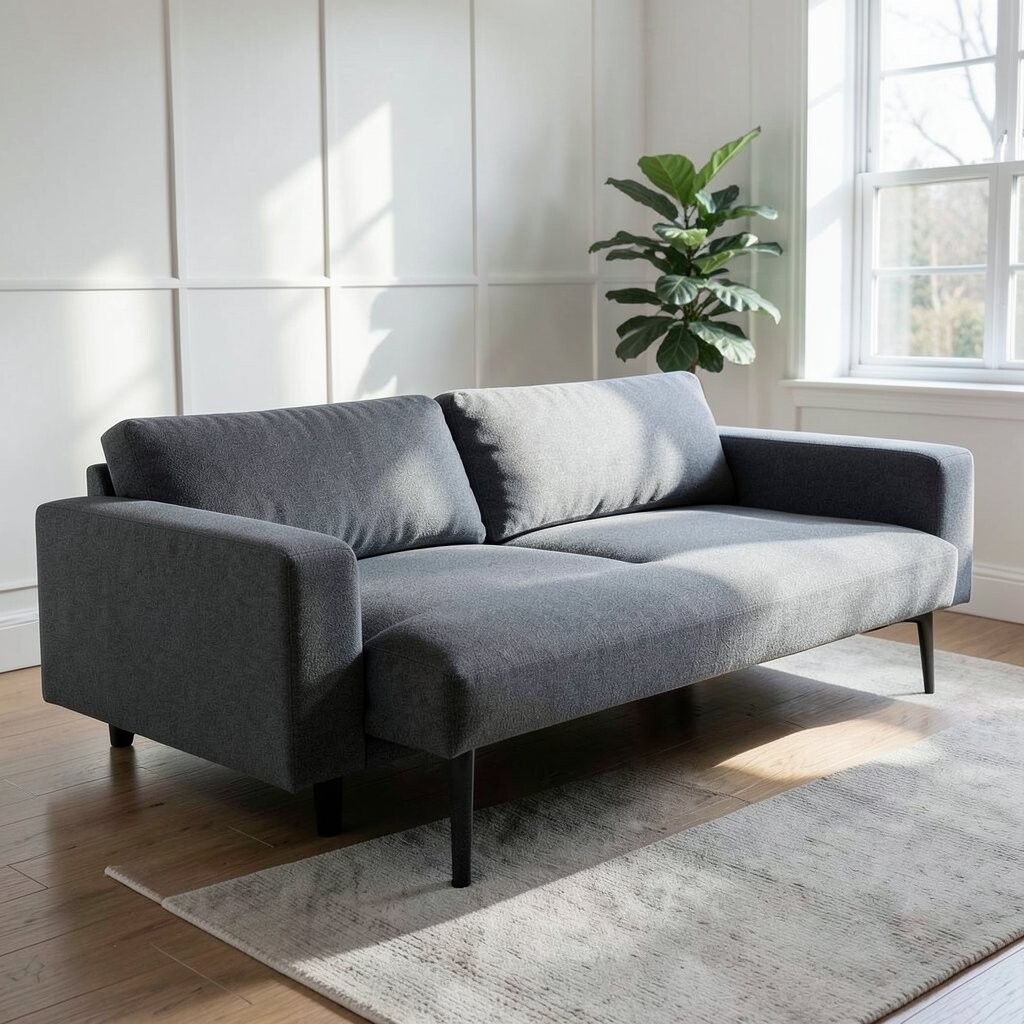
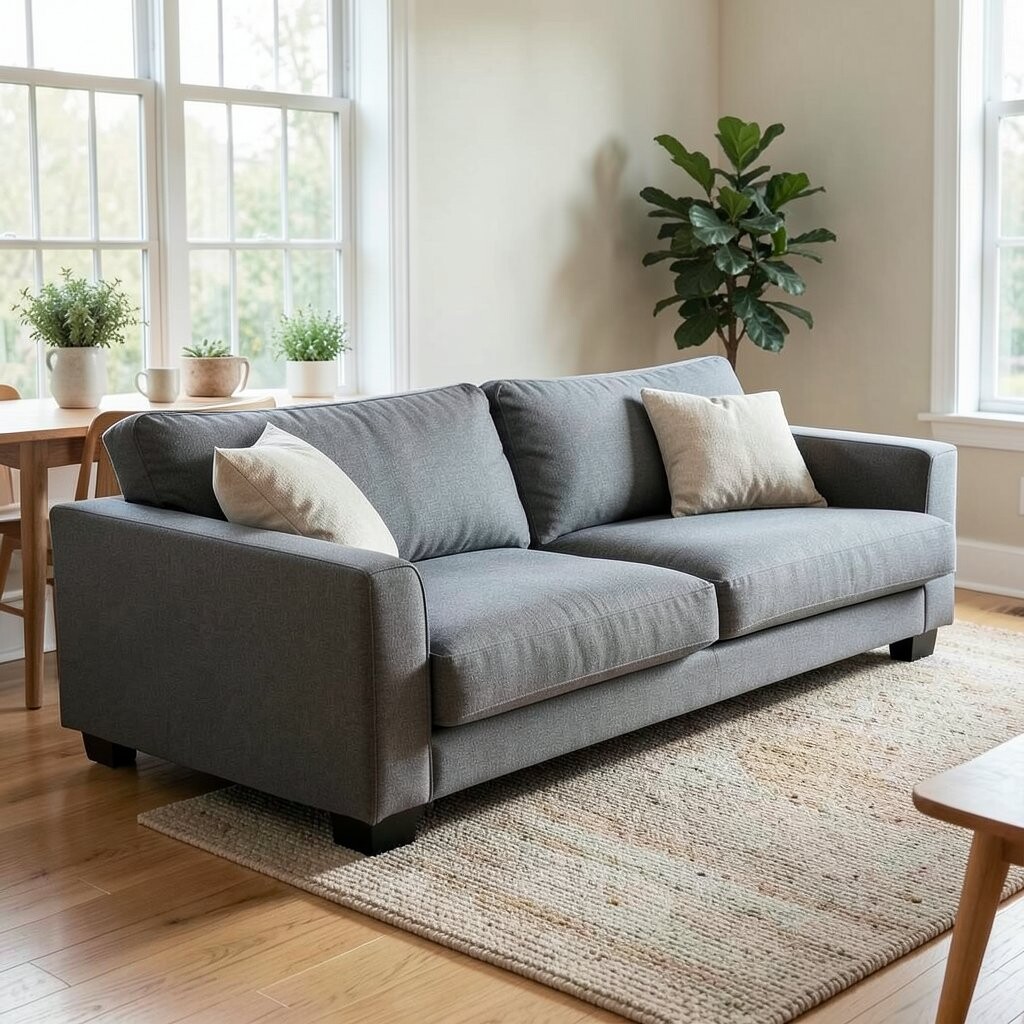
A low-profile sofa without legs gives a neat, grounded look that sits right in the dining zone. Its flat base and close-to-floor height can make your room feel wider and tidier.
Choose a fabric with a subtle texture, like woven linen or a fine boucle, for a soft but not fussy finish. This style helps you keep sight lines open, which is great if your dining area is also used for work or homework. For tips, measure the table height first so the seating feels comfortable and not cramped.
If you want it to feel extra sleek, pick a solid color that matches your dining chairs or table legs. A matching rug underneath can also help the sofa feel “built in.” When thinking about cost, remember that mid-range upholstery tends to last longer if it has a sturdy inner frame and quality foam.
Personalization idea: add seat piping in a contrasting color, but keep it thin for that clean edge. Current trend: tone-on-tone neutral palettes, like warm greige with cream accents, keep the look modern and calm. To make it actionable, start by choosing one main color and repeat it in a centerpiece or curtains.
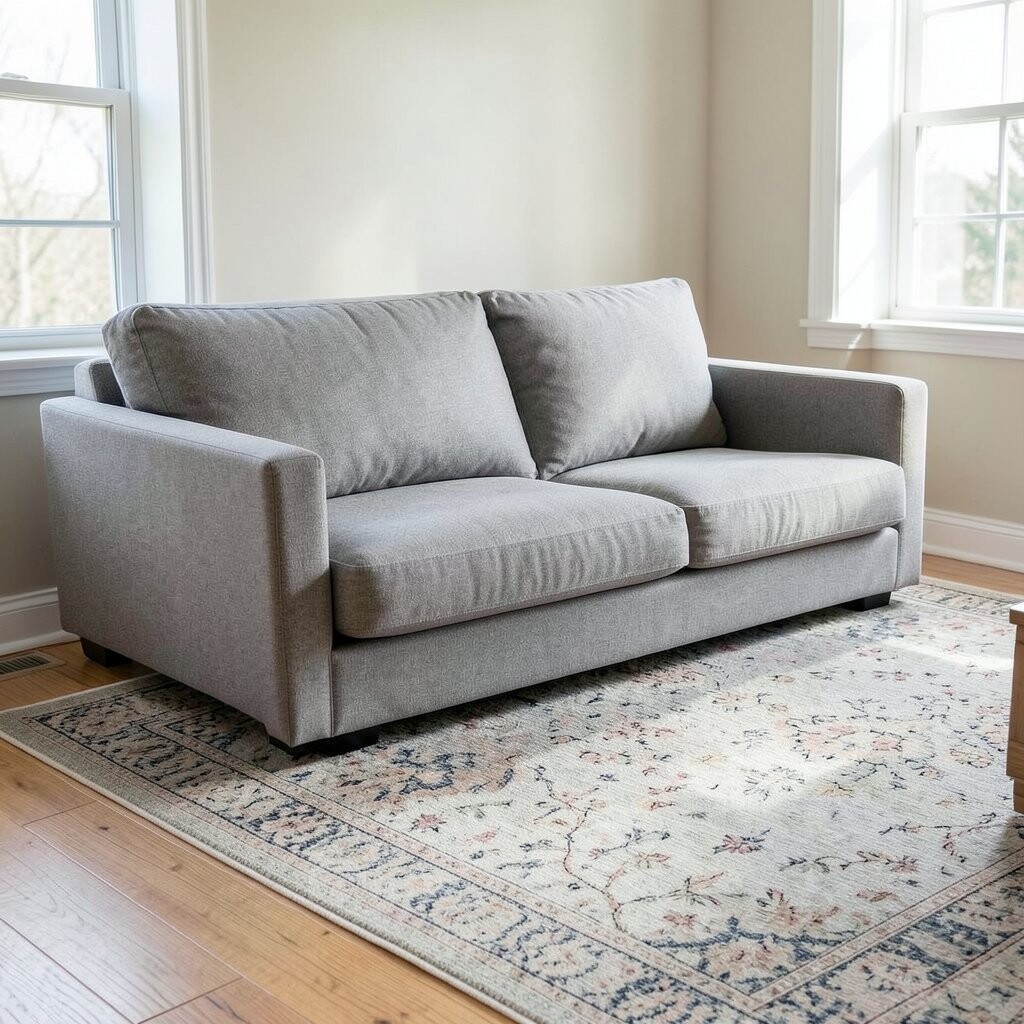
2. Track-Arm Sofa with a Continuous Base
Track-Arm Sofa with a Continuous Base
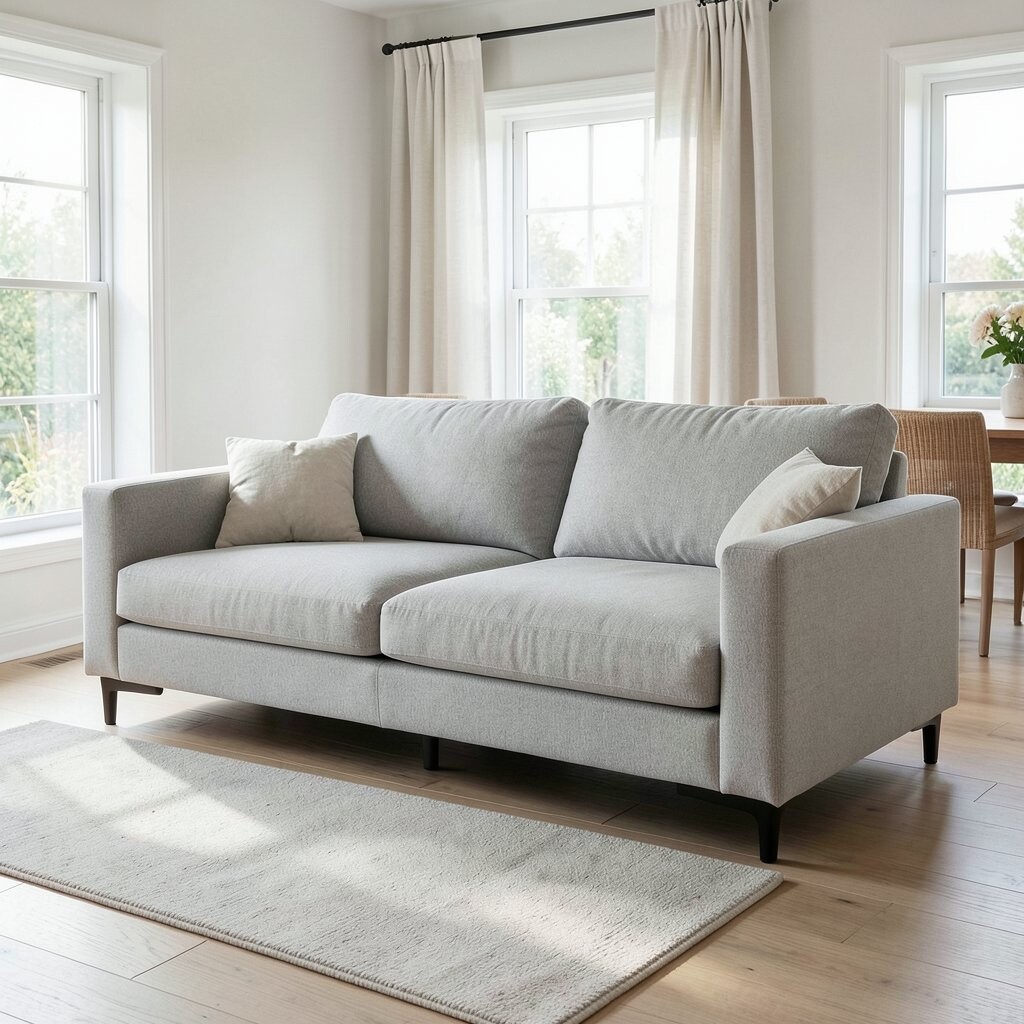
A track-arm dining sofa without legs often looks smooth and tailored, like a modern piece made for real life. The continuous base creates a strong line that makes the whole dining area feel organized.
One big benefit is visual balance: the low shape helps your table and wall art line up nicely. It also feels practical because fewer raised parts means easier cleaning around the seating area. For tips, choose a version with removable cushions if possible, especially if you snack often.
To keep it unique, look for a sofa with gentle tufting or a clean stitched pattern. That small detail can make a “simple” style feel custom without being too loud. Cost consideration: sofas with removable covers may cost more at first, but they can save money later by making deep cleaning easier.
Personalization idea: pair it with slim dining cushions in a coordinating fabric, so the sofa still feels unified. Current trend: crisp tailoring, like welt seams and structured edges, stays popular because it reads clean even in busy homes. If you want extra sleek, place the sofa flush to the rug edge and keep the rug color close to the upholstery.
3. Velvet No-Leg Sofa in Deep Jewel Tones
Velvet No-Leg Sofa in Deep Jewel Tones
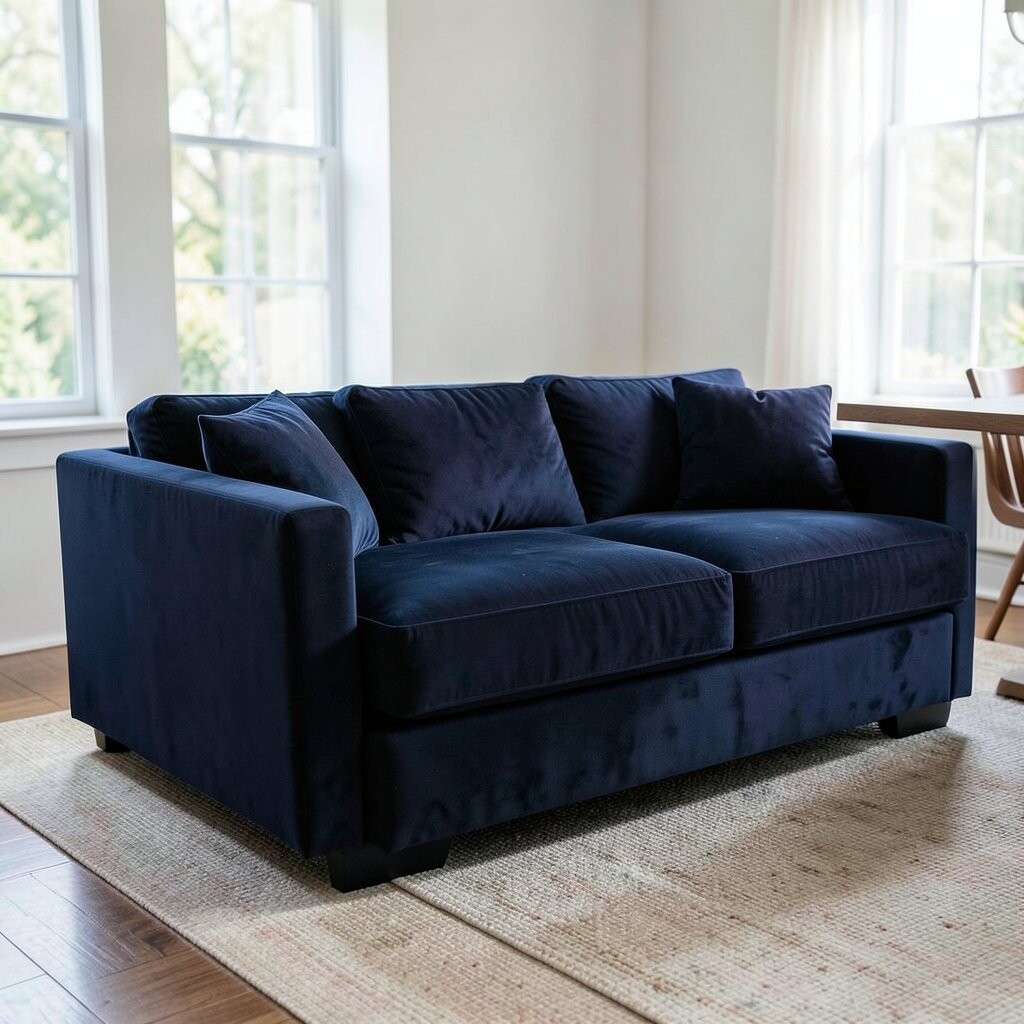
Velvet makes a dining sofa look rich, and without legs it can feel even more elegant. When the base sits low, the fabric catches light softly and creates a luxurious glow.
This is a great option if you want drama without clutter, because the long, low silhouette keeps the focus on color and texture. A benefit you’ll feel daily is comfort: velvet cushions often look plush and inviting for longer meals. Tip: choose velvet that has a tight weave so it resists crushing from everyday use.
For a unique touch, try colors like emerald, navy, or deep plum that still work with neutral plates and glassware. You can personalize with gold or brass accents, like a tray or candle holders, to match the sheen of velvet. In terms of cost, velvet finishes can be pricier, but a high-quality velvet tends to last better and look better longer.
Current trend: jewel tones paired with warm woods and matte black decor for a modern “gallery” vibe. To make it actionable, keep your table styling simple—one hero centerpiece, then let the sofa do the bold talking.
4. Stonewashed Fabric Sofa for a Casual-Sleek Look
Stonewashed Fabric Sofa for a Casual-Sleek Look
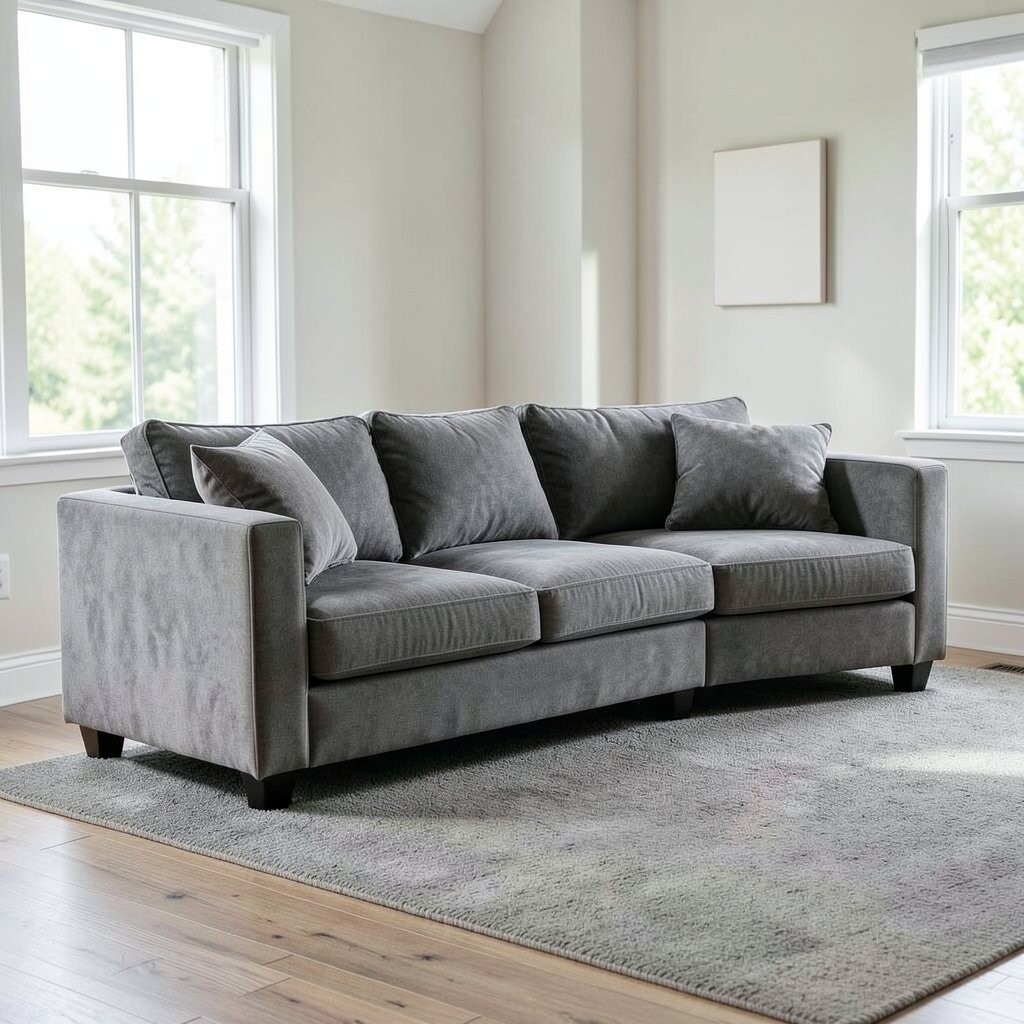
Stonewashed or garment-dyed fabrics give a soft, lived-in style that still looks tidy. With no legs, the look feels clean and continuous, like the sofa belongs right where it sits.
You’ll love the benefit of easy everyday comfort: these fabrics often hide minor marks better than high-gloss materials. For tips, choose a fabric shade slightly darker than your chair color so it blends beautifully even on busy days. Personalization idea: add a couple of coordinating throw pillows with simple geometric lines.
Cost consideration is practical here: stonewashed upholstery can fall into mid-range pricing, and it often looks great even if you don’t baby it. A unique angle is to match the sofa tone with your dining table finish, like walnut or oak. Current trend: “soft durability,” where comfort fabrics look polished and modern at the same time.
If you want the sleek factor, keep the sofa cushions aligned and avoid extra bulky covers. Pair it with a low-pile rug so the floor view stays uninterrupted and neat. For a fast upgrade, swap in plates and napkins that match the stonewashed color family.
5. Monochrome Platform Seating with Hidden Support
Monochrome Platform Seating with Hidden Support
A monochrome no-leg dining sofa can look like part of the architecture. When the color flows from seat to base in one uninterrupted look, it creates a sleek, calm “block” of comfort.
This style helps the whole room feel coordinated, which is a big benefit if you have lots of patterns elsewhere. You also get a clean look in photos and day-to-day because the visual noise stays low. Tip: choose one shade and repeat it in your wall color, art frames, or curtain panels.
For uniqueness, look for subtle seams or a matte finish that avoids shine. If your room has bright light, matte textures can reduce glare during meals. Cost consideration: platform-style sofas may be more efficient in design, so you can sometimes find good value without sacrificing comfort.
Personalization idea: add a single accent throw in a slightly different shade to create depth. Current trend: quiet luxury vibes, where everything looks high-end but not flashy, fit this option well. To make it actionable, measure your open floor space and center the sofa so it feels intentional, not crowded.
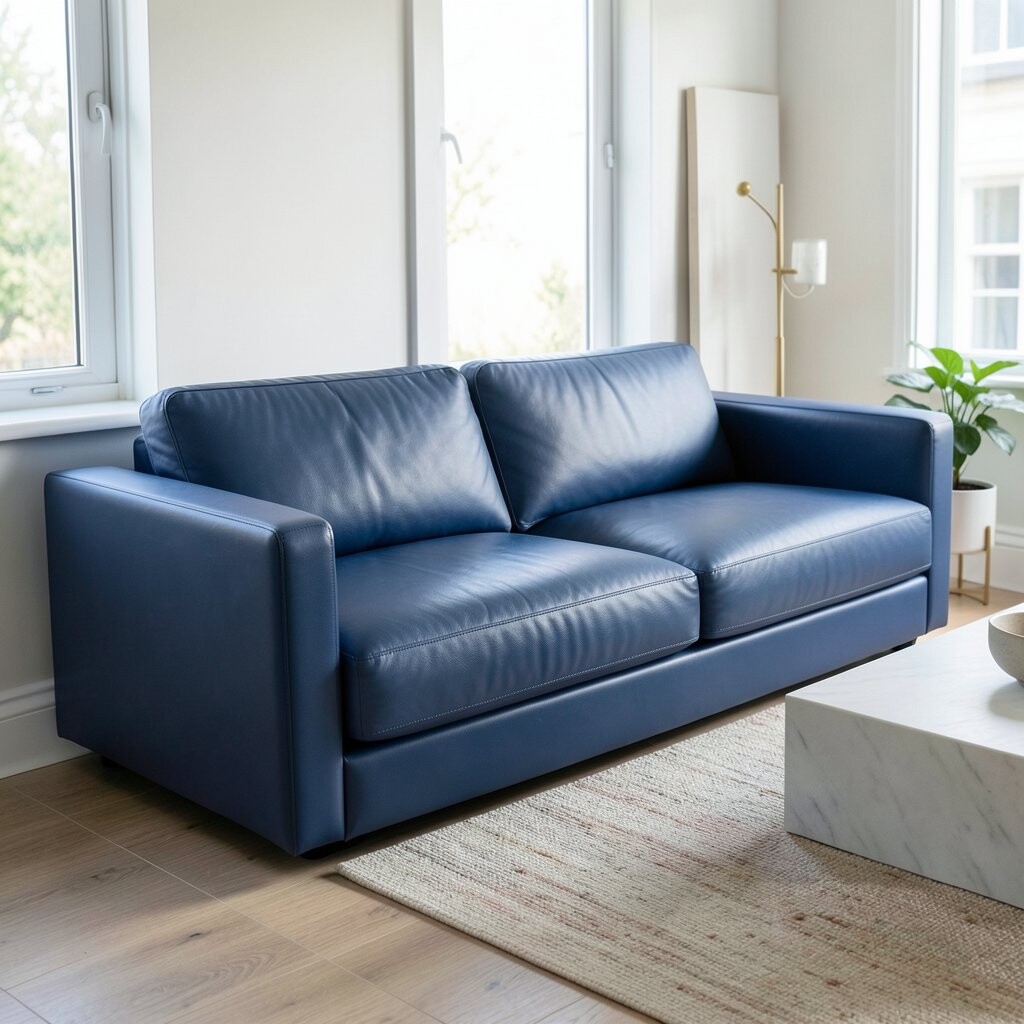
6. Crisp Leather Sofa with a Seamless Base
Crisp Leather Sofa with a Seamless Base
Leather without legs offers a clean, modern feel that also wipes down easily. The low profile makes the sofa look streamlined, like it’s designed for a sleek dining corner.
A benefit is maintenance: leather often resists stains and can be cleaned with a simple wipe after meals. It can also look more structured, which keeps your dining area from looking too soft. Tip: pick a leather color that complements your table, such as cognac with warm wood or charcoal with black metal frames.
To keep it unique, look for leather with a natural grain or a soft matte finish. Avoid overly shiny options if you want that “quiet sleek” look. Cost consideration: leather may cost more, but it can be worth it if you choose quality and keep it conditioned.
Personalization idea: use slim, matching dining cushions so the sofa looks finished rather than empty. Current trend: mix leather seating with minimal metal accents and simple ceramics. If you want action steps, select a leather color first, then build your table setting around it for a cohesive look.
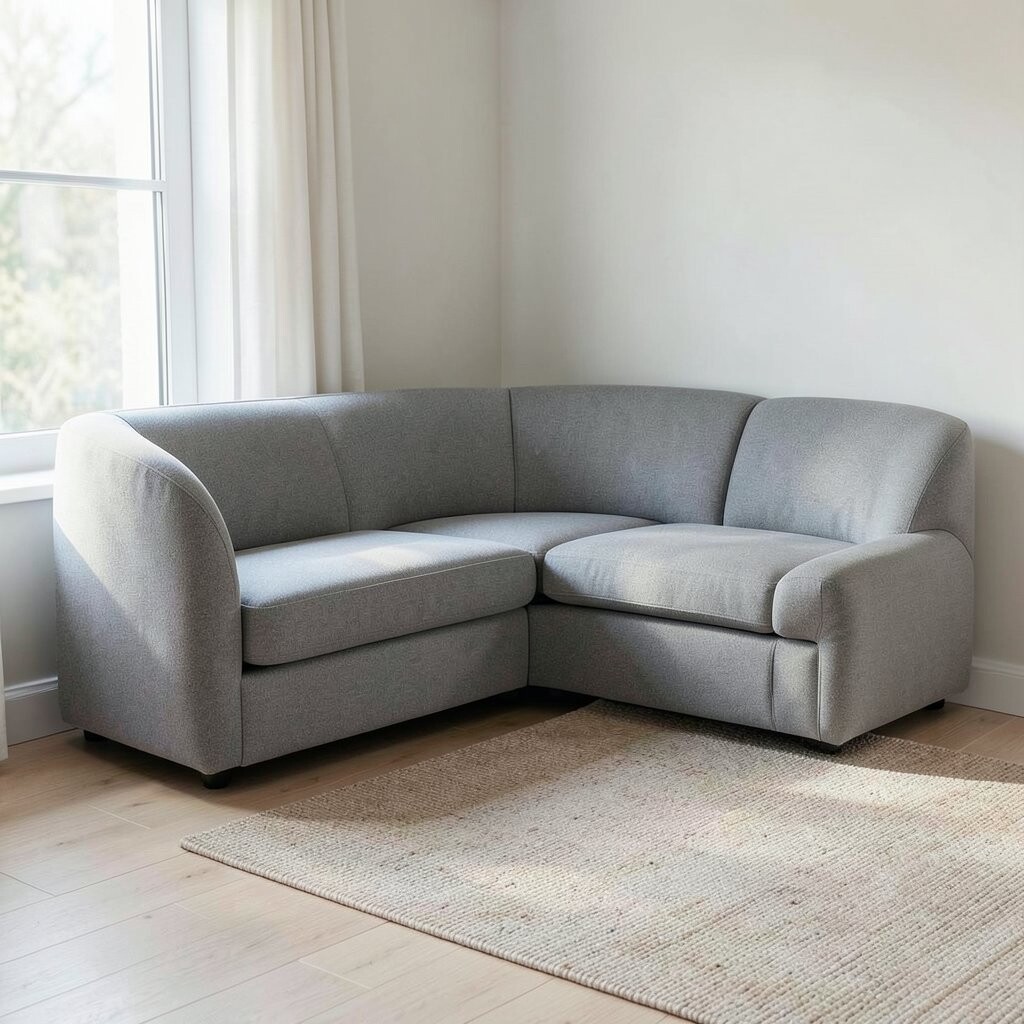
7. Rounded Corner-Back Sofa for Soft Geometry
Rounded Corner-Back Sofa for Soft Geometry
A rounded corner-back sofa without legs brings friendly shape into a dining space. Instead of sharp corners, you get smooth curves that make the room feel calmer and more welcoming.
This is a great benefit if your dining area has angles, like a square table with straight walls. The curve helps soften the whole layout and can also guide how people sit and pass by. Tip: choose a fabric that looks consistent in color, because curved shapes show texture more clearly.
For uniqueness, find a sofa that has a gentle rolled edge or a subtle channel seam. That way, the curve looks designed, not accidental. Cost consideration: rounded styles can cost a bit more because of the custom shaping, but they often look more “designer” in return.
If you like personalization, match the sofa curvature with rounded decor—like a round mirror, a curved tray, or circular candle holders. Current trend: soft geometry paired with minimal modern pieces, so the rounded sofa becomes a centerpiece. To keep it sleek, keep pillow count low and choose small-scale patterns, not big loud prints.
8. Two-Tone No-Leg Sofa for a Modern Edge
Two-Tone No-Leg Sofa for a Modern Edge
A two-tone dining sofa without legs can look bold while still feeling sleek. When you combine a darker base with a lighter seat, the sofa looks like it has built-in depth.
This style offers a practical benefit: the darker shade on the lower part can help hide everyday marks. It also gives your dining space a stylish frame, like a tailored outfit for your table. Tip: keep the color difference subtle, so the look stays clean and not chaotic.
For uniqueness, consider color blocking with piping or a thin contrast seam. You can personalize by choosing a second tone that already exists in your room, like curtain fabric, a chair accent, or artwork mat colors. Cost consideration: custom colors can raise price, so check if the sofa has standard fabric combinations available.
Current trend: contrast panels that look minimal, such as black-and-cream or navy-and-sand. To make it actionable, pick one contrast pairing that feels natural for you and then match the rest of your accessories to the lighter tone for balance.
9. Built-In Look Sofa with Matching Rug Edge
Built-In Look Sofa with Matching Rug Edge
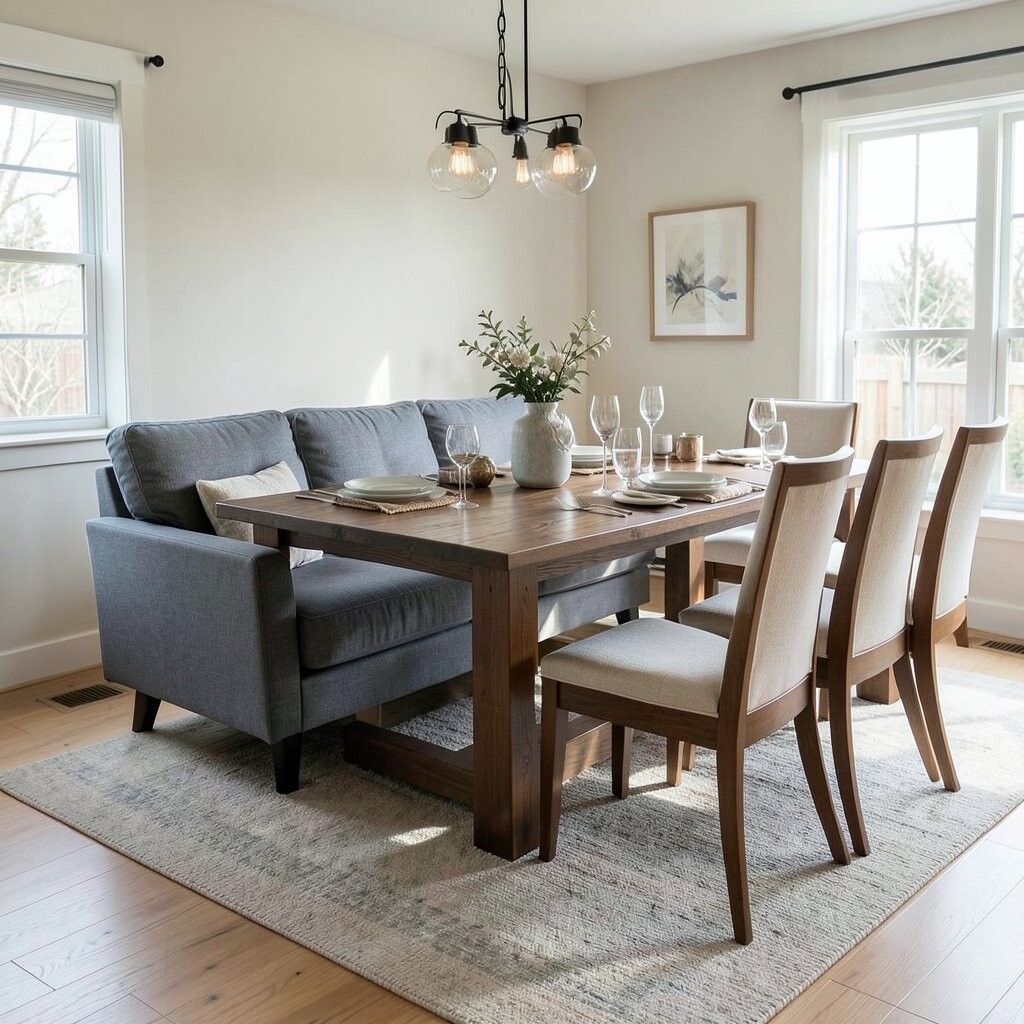
If you want the “built-in” vibe, choose a dining sofa without legs that looks like it blends into the space. A low base and clean fabric finish can trick the eye into seeing it as part of the room.
This benefit shows up fast: you’ll feel more organized, and the dining zone will look intentional. For tips, pick a sofa length that aligns with your table width, so the layout looks designed. You can also choose a fabric close to your wall or trim color for an even smoother blend.
To make the look unique, coordinate the sofa color with the edge of the rug. When the rug border matches the base tone, everything looks like a single story instead of separate pieces. Cost consideration: built-in look sofas sometimes cost more, but you can still get the effect with smart styling if you choose a simple design.
Personalization idea: add a narrow row of decorative books on a nearby shelf or a slim plant stand to echo the clean lines. Current trend: creating zones with furniture placement rather than extra decor. Action step: measure your wall space, then position the sofa so there’s equal space on both sides for a neat symmetry.
10. Performance Fabric No-Leg Sofa for Busy Households
Performance Fabric No-Leg Sofa for Busy Households
Performance fabric is a smart choice for a dining sofa that sees real life. Without legs, the sofa stays streamlined, and the cushions look neat even after everyday use.
A benefit you’ll notice quickly is stain resistance, which matters when drinks and sauces happen. Many performance fabrics also dry faster and hold their shape, so meals feel less stressful. Tip: ask about stain treatment ratings and cushion foam density before buying.
This is also where uniqueness can shine, because performance fabrics now come in modern colors and textures. You can personalize with an accent throw that matches your dining season, like autumn tones or cool summer colors. Cost consideration: performance fabric might cost more upfront, but it can help you avoid replacement sooner, which is money-smart over time.
Current trend: practical elegance, where homes look styled but are still comfortable. To make it actionable, pick a color that works with both light and dim lighting, such as warm gray or soft charcoal.
11. Minimal Slatted-Base Sofa with Clean Upholstery
Minimal Slatted-Base Sofa with Clean Upholstery
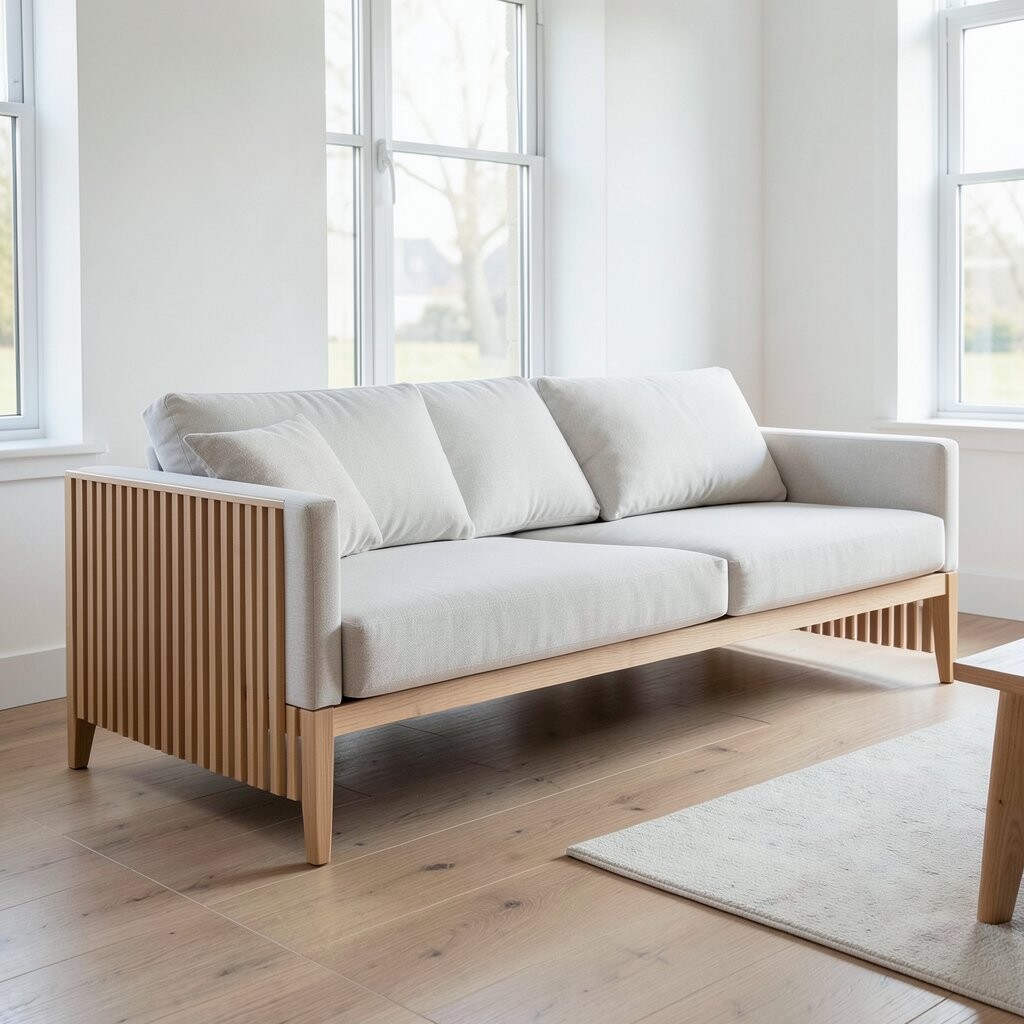
A minimal slatted-base sofa without legs can look like it’s floating above the floor. Even when it’s not literally floating, the design feels airy because the base stays visually light.
This offers a benefit for many rooms: it reduces the heavy look that bulky seating can bring. It also helps with airflow underneath, which can be helpful if your dining area gets humid. Tip: choose a sofa cover that stays wrinkle-resistant so the sleek appearance holds all day.
For uniqueness, look for slats that are subtle and aligned, not messy. You can personalize by selecting upholstery that matches your existing metal tones, like brushed steel or matte black. Cost consideration: slatted designs can vary, so compare warranties and frame construction rather than only the fabric price.
Current trend: light minimalism paired with comfortable seating, so the dining space feels modern without being cold. To make it actionable, keep accessories simple—one centerpiece and a tidy set of napkin rings that match the sofa details.
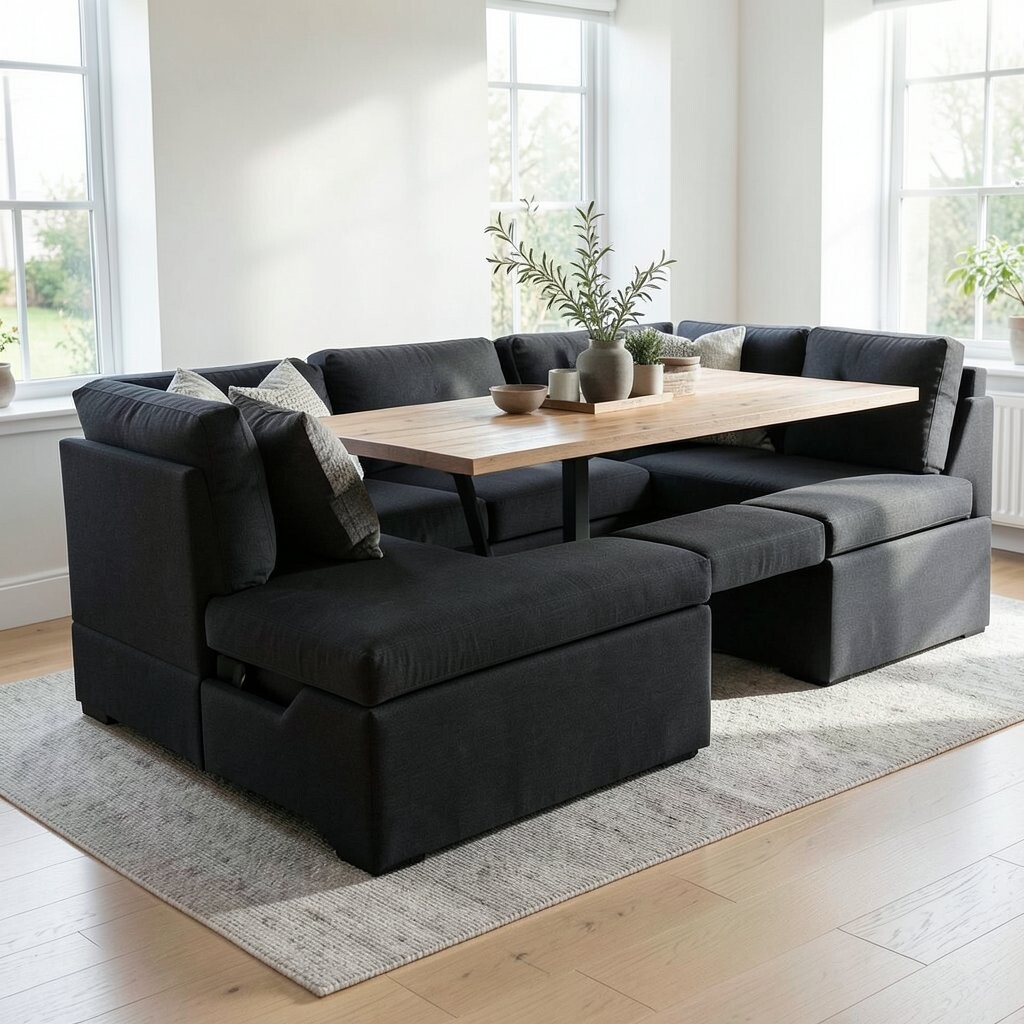
12. Sleeper-Ready or Expandable No-Leg Dining Sofa
Sleeper-Ready or Expandable No-Leg Dining Sofa
An expandable or sleeper-ready dining sofa without legs is great if your home adapts all the time. The sleek base helps it still look neat, even when it’s meant for guests.
This benefit is flexibility: you can host friends for dinner and still have space to relax afterward. Tip: prioritize smooth, easy mechanisms so you’re not struggling when you need extra space. Choose a fabric that looks good in both day and night settings, since the dining sofa often becomes part of your living area vibe.
For uniqueness, pick a design that hides the extension in a clean way, so the sofa keeps its streamlined lines. Personalization idea: add a slim set of matching throw pillows that double as guest bedding accents. Cost consideration: expandable options may cost more, but they can replace other furniture, which can save money in the long run.
Current trend: multifunctional furniture that keeps the same style, so your room feels consistent. To make it actionable, decide how you’ll use it most—daily lounging, occasional hosting, or both—and then choose the cushion thickness that fits your comfort needs.