1. Go for a compact dining nook with smart storage
Go for a compact dining nook with smart storage
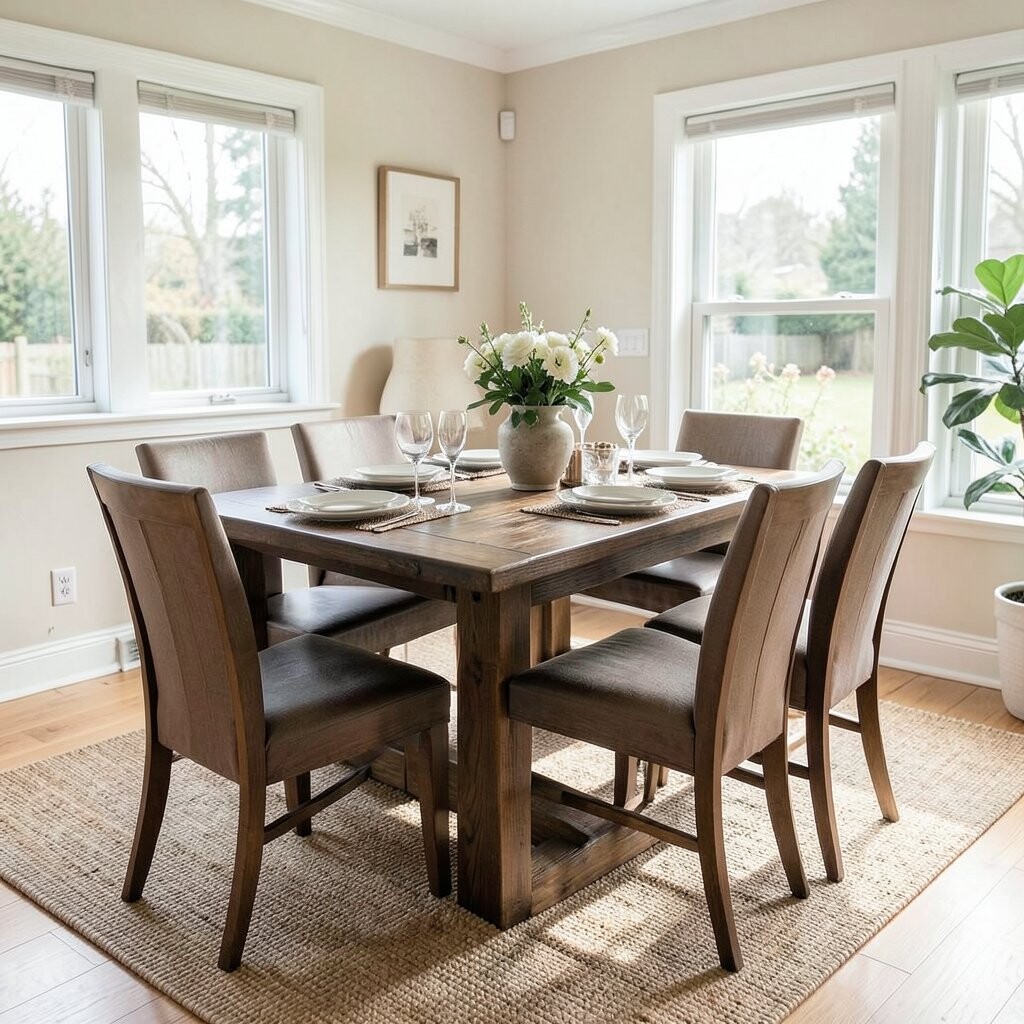
Picture a small corner with a tidy bench and hidden drawers underneath. Soft light hits the table like a warm spotlight.
This works great because you gain extra places to keep napkins, serving spoons, and extra placemats. Choose pieces that double as storage so clutter stays out of sight. For a budget-friendly start, look for secondhand benches or tables and add fresh paint or new cushions.
2. Build a “hosting zone” in a larger dining area
Build a “hosting zone” in a larger dining area
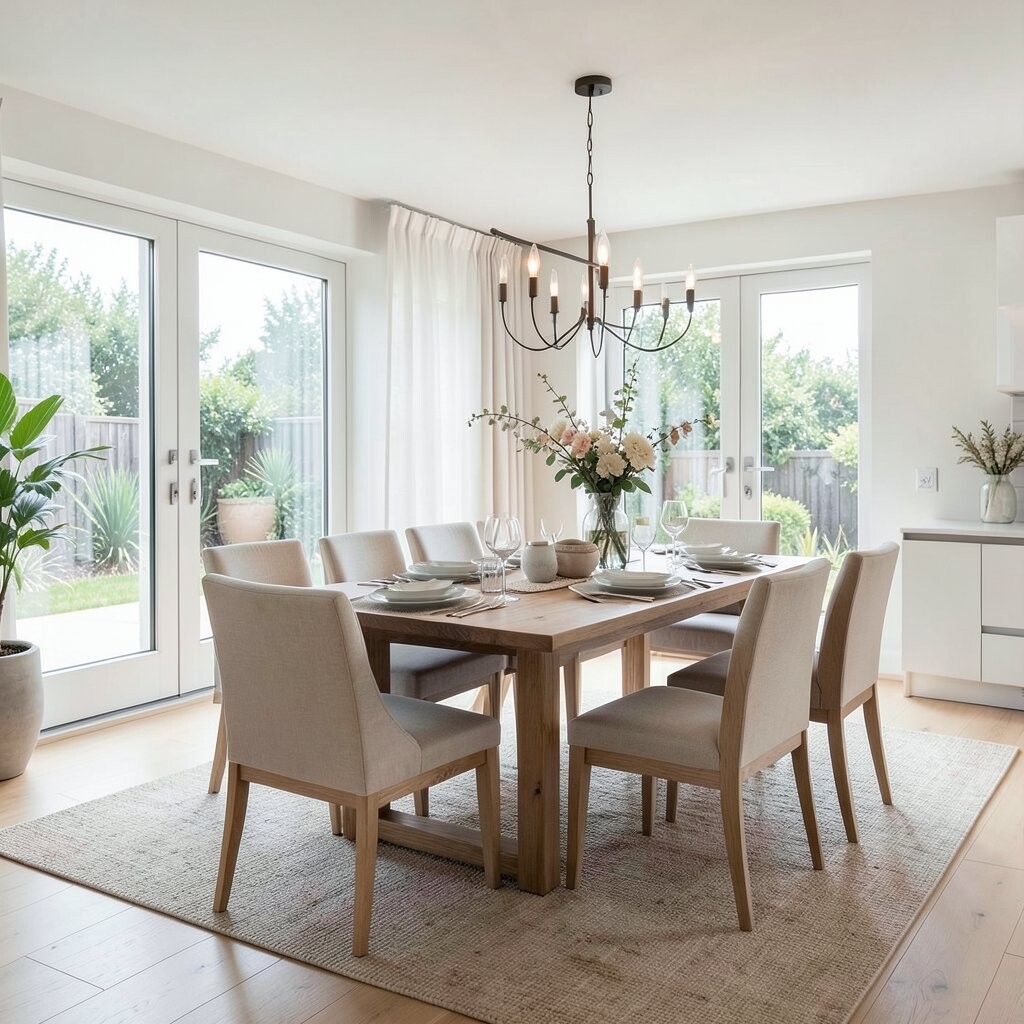
Imagine a bigger room where the table feels like the main stage. Chairs line up neatly, and there is space to move without bumping.
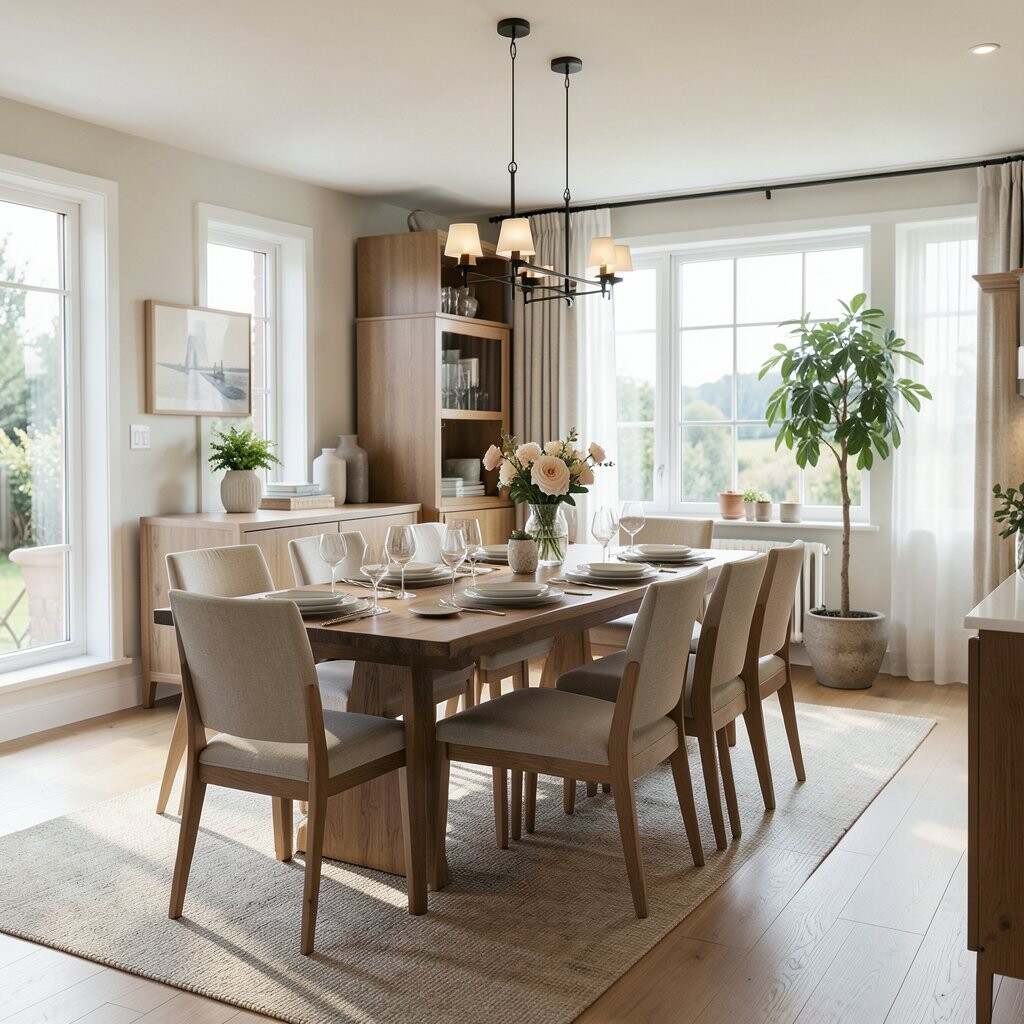
You can add a sideboard and a bar cart so guests can grab drinks and snacks easily. It also helps meals feel smooth because everything is close by. Trend-wise, mixing wood tones with black metal accents is popular, and it looks modern without feeling cold.
If you want to personalize, match the sideboard handles to a favorite color from your living room. Cost can vary, so consider a simpler table first and upgrade storage later.
3. Choose the right lighting: pendant glow vs layered lamps
Choose the right lighting: pendant glow vs layered lamps
In a small space, a single pendant can make the dining area feel taller. Think of a neat glass shade that reflects light across the tabletop.
In a large space, layered lighting is key, like a pendant plus a floor lamp near the corner. This makes the room feel cozy during long dinners, not empty or flat. Warm bulbs, dimmers, and soft shades are current favorites.
To personalize, pick a light finish that matches your hardware—brass, matte black, or brushed nickel. If you’re watching costs, swap bulb type and add a dimmer before buying new fixtures.
4. Use a bold rug to define the dining area
Use a bold rug to define the dining area
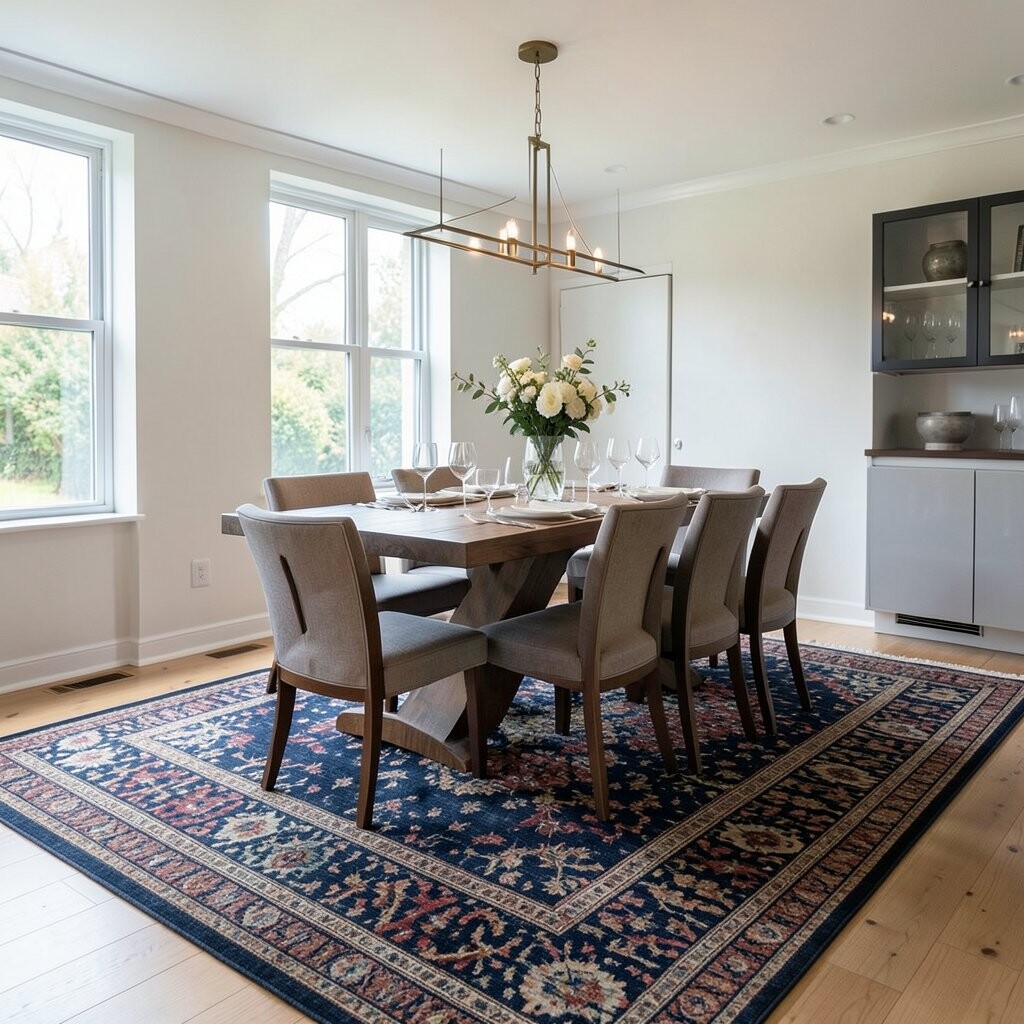
Even when the walls feel far away, a rug can “hold” the dining zone in place. Picture a patterned rug that looks great from the doorway and under your chairs.
For small rooms, choose a lighter color or a small pattern so the area feels open. For larger rooms, go for a bigger rug that fits under the front chair legs too. This helps with comfort and also protects floors.
5. Pick chairs that fit your body and your budget
Pick chairs that fit your body and your budget
Small dining areas shine with slim chairs that tuck in neatly. Imagine dining chairs that look light but still feel comfy.
Look for cushions, supportive backs, or chairs that stack if you need extra flexibility. In larger rooms, you can go for more statement chairs like upholstered seats or mix-and-match styles. This is a fun trend right now: pairing two chair styles while keeping one shape rule.
To personalize, add seat covers in your favorite color for easy seasonal change. Cost-wise, prioritize comfort first, then focus on style details like chair legs and fabric.
6. Create a “floating” look with a wall-mounted buffet
Create a “floating” look with a wall-mounted buffet
Picture a narrow wall shelf with a few plates and candles, but no bulky furniture blocking the floor. It makes a small dining area feel airy and organized.
A wall-mounted buffet helps you use vertical space without crowding the room. Add hooks for utensils or a small ladder-style organizer for serving boards. If you like current trends, try open shelving with baskets to keep things tidy.
7. Go for a long table for family nights
Go for a long table for family nights
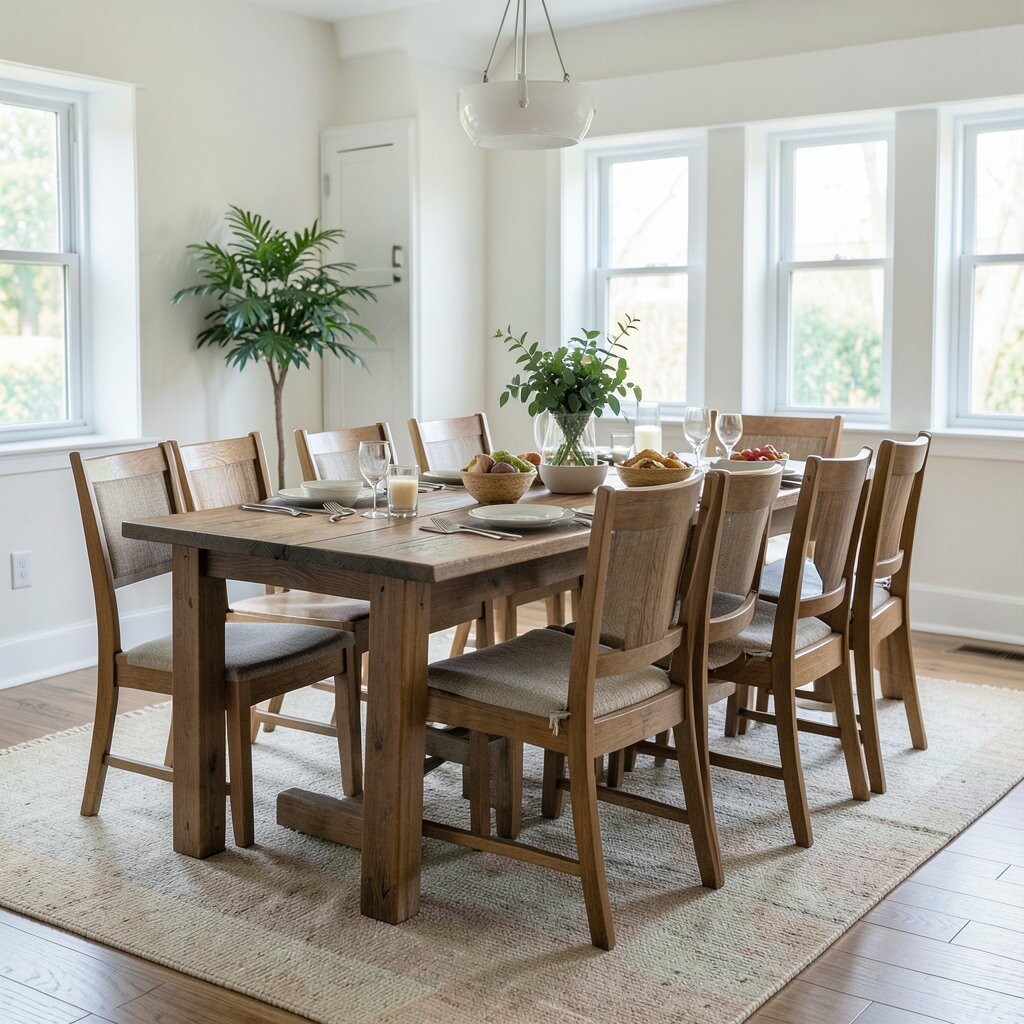
In a larger dining area, a long table can turn meals into gatherings. Imagine the table stretching across the room with space for everyone to sit and talk.
Long tables also make serving easier because you can place bowls and platters in the middle. For personalization, choose a wood finish that matches your floors, or add a stain that brings out warm tones. People are loving natural oak, walnut, and mixed-material tables lately.
If you’re budgeting, you can start with a simple table and then add a high-impact runner and matching centerpiece. Upgrading chairs later is another smart way to control costs.
8. Use a drop-leaf table for flexible daily life
Use a drop-leaf table for flexible daily life
For small spaces, a drop-leaf table is like a friendly helper. It can sit compactly and then open up when you need it most.
This gives you a real dining surface without sacrificing walk space. Add two wall-mounted shelves nearby for dishes and glasses so you don’t have to carry items far. Consider choosing a finish that blends with your cabinetry to keep the look calm.
To personalize, paint the inside edge with a contrasting color, or switch hardware for a new feel. Cost can stay reasonable if you pick a durable frame and then upgrade the top later.
9. Style with a gallery wall of plates and art
Style with a gallery wall of plates and art
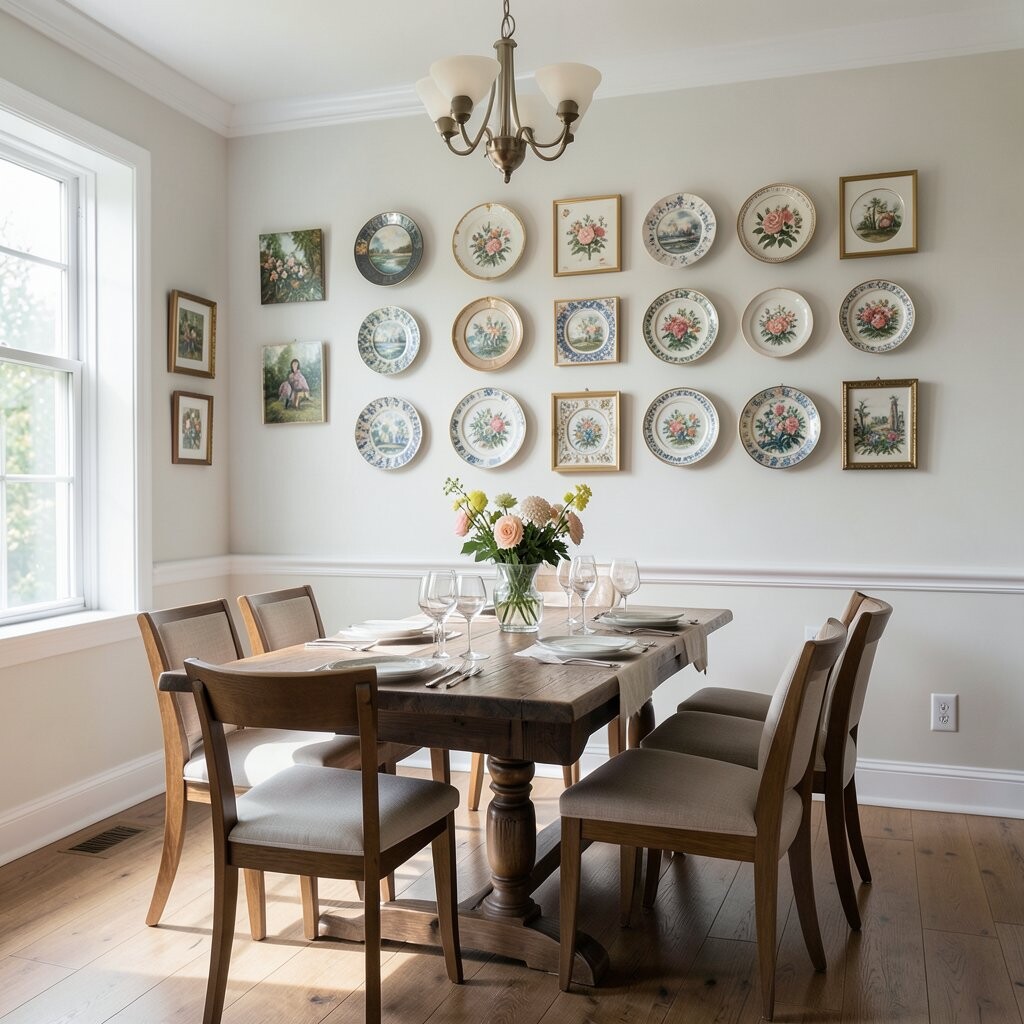
Look at your blank wall and imagine it filled with framed art and decorative plates. In a small dining nook, this can add personality without taking floor space.
You can also use it to set the mood: soft botanical prints feel relaxed, while bold abstract shapes feel energetic. In a larger dining space, a bigger, calmer gallery can balance all that open wall area. Keep frames coordinated in color for a tidy, trendy look.
10. Add a sideboard, but keep it the right height
Add a sideboard, but keep it the right height
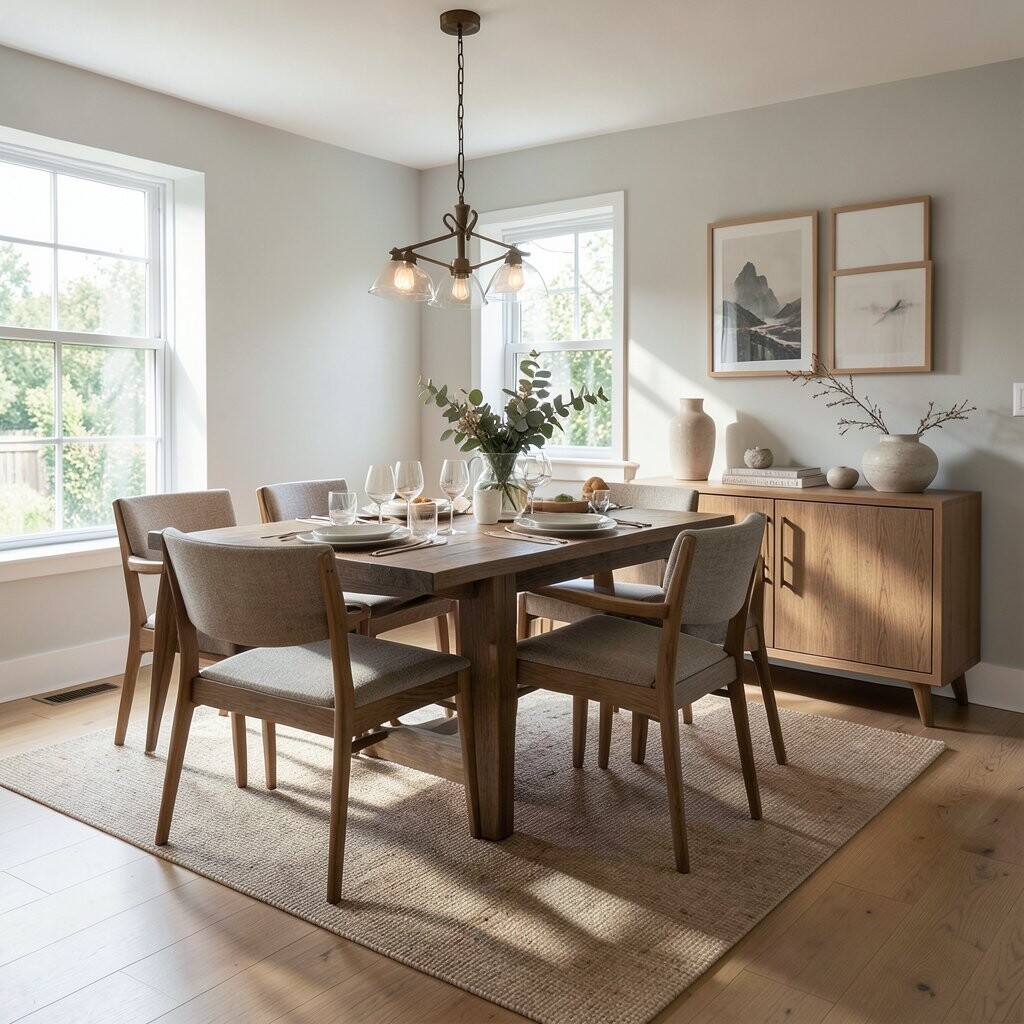
In a larger dining area, a sideboard is a practical beauty tool. Imagine it sitting at the side, with plates and linens stacked neatly inside.
It helps your hosting because you can store serving items close to the table. A good height also prevents it from looking bulky, especially when you pair it with tall lamps. For small spaces, a narrow console can do the job without eating the room.
To personalize, style the top with a tray, candles, and one tall element like a vase. If budget matters, hunt for solid wood pieces on sale and update paint or stain.
11. Go for a round table to soften the room
Go for a round table to soften the room
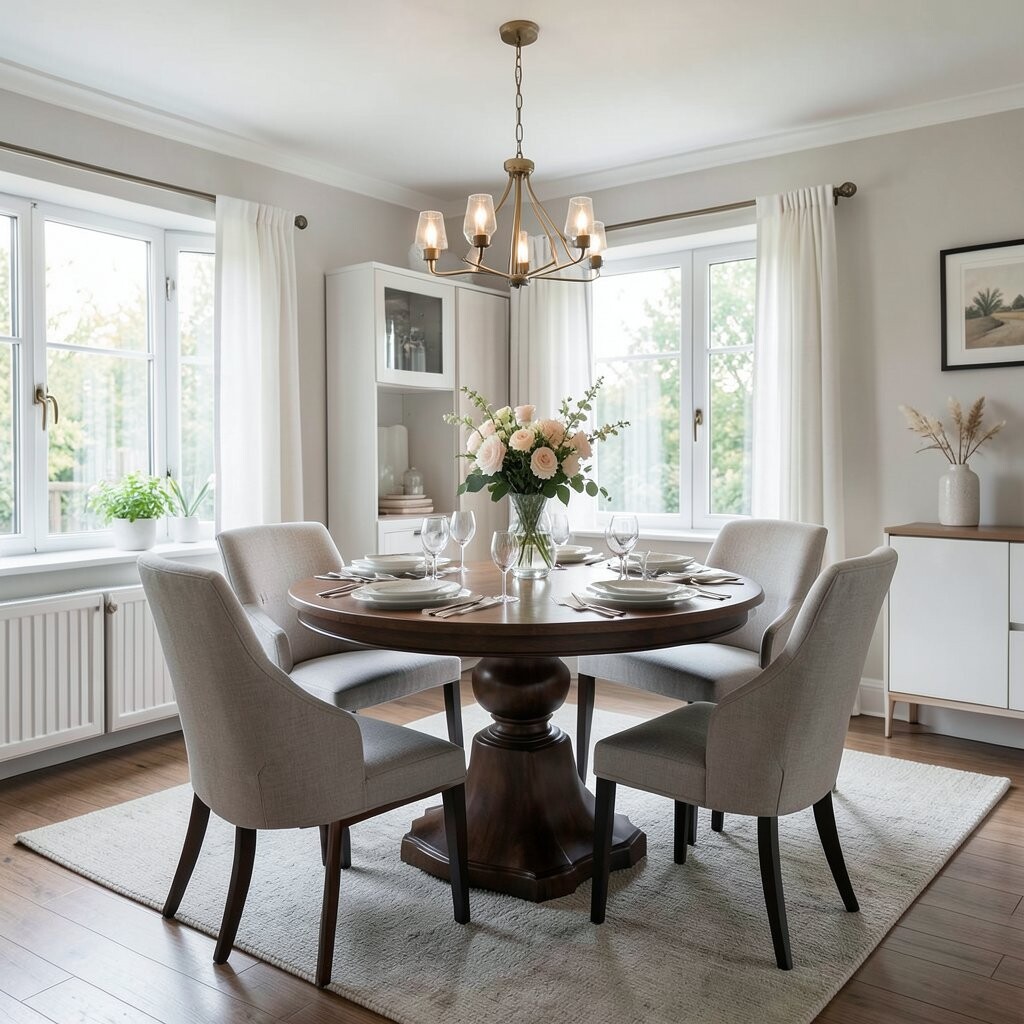
Round tables feel warm and friendly, and they help in tight layouts. Picture a smooth tabletop with chairs spaced evenly, like a cozy circle.
In small areas, round tables move traffic flow better because corners take less visual space. In larger areas, a round table can be a stylish “break” from square furniture. Many people love farmhouse meets modern right now, and round tables fit that vibe easily.
12. Use a statement centerpiece that fits the season
Use a statement centerpiece that fits the season
Think about how a simple centerpiece can make the whole room feel dressed. In a small dining area, a low centerpiece keeps everything feeling open.
For larger spaces, you can go taller, like a vase with branches or a sculptural bowl. This creates a focal point that looks good for photos and everyday meals. The current trend is natural textures: linen napkins, clay tones, and greenery that looks effortless.
Personalize with items that mean something to you, like a small family cookbook stand or a ceramic piece from a local maker. Cost can stay low if you use seasonal flowers or even faux greenery you can reuse.
13. Choose the right wall color for dining energy
Choose the right wall color for dining energy
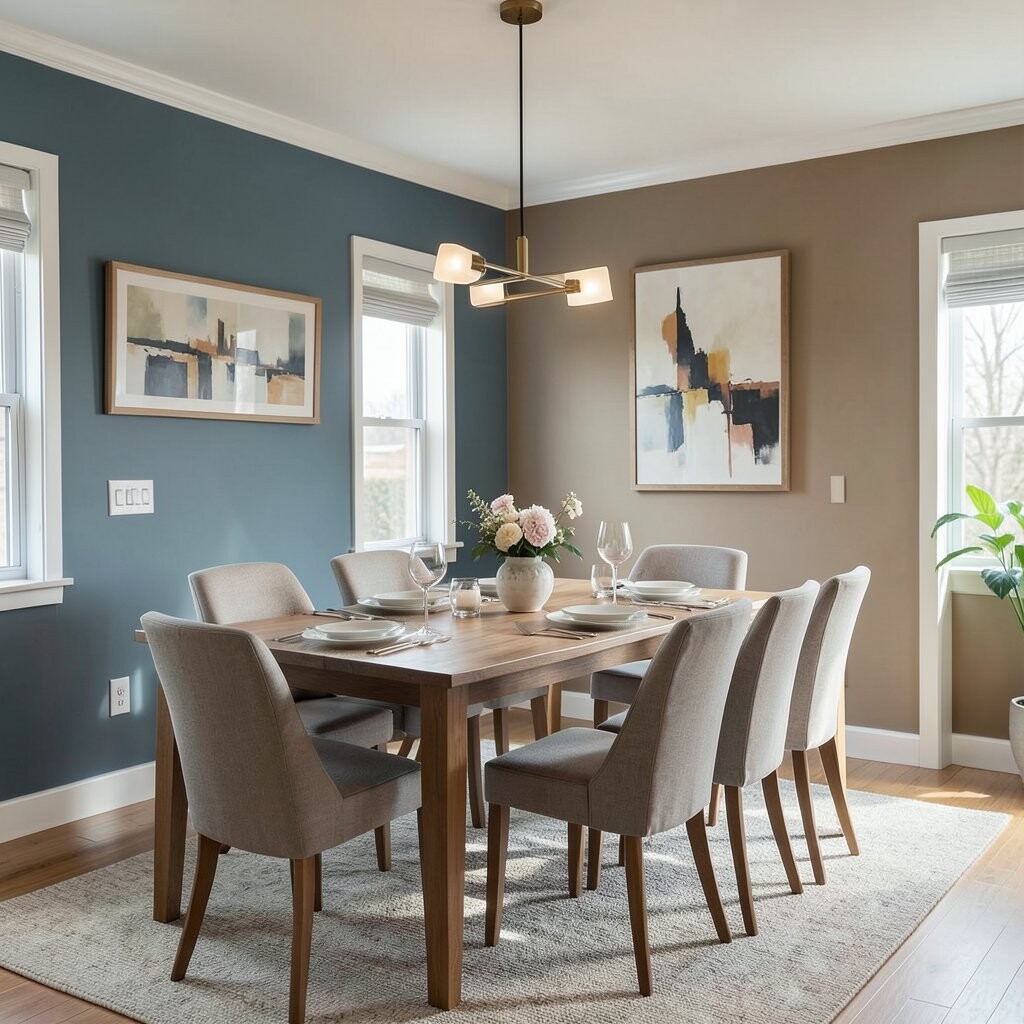
Color can change how food looks and how the room feels at night. Imagine warm paint tones making your table glow.
In small dining areas, lighter shades can make the space seem bigger and brighter. In larger areas, deeper colors like green-gray or rich terracotta add drama and warmth. People are leaning into cozy, grounded hues instead of super-cold whites.
To personalize, paint one accent panel behind the table or use removable wallpaper for a budget-friendly change. Consider how much natural light you get before picking a darker shade.
14. Add window treatments that frame the view
Add window treatments that frame the view
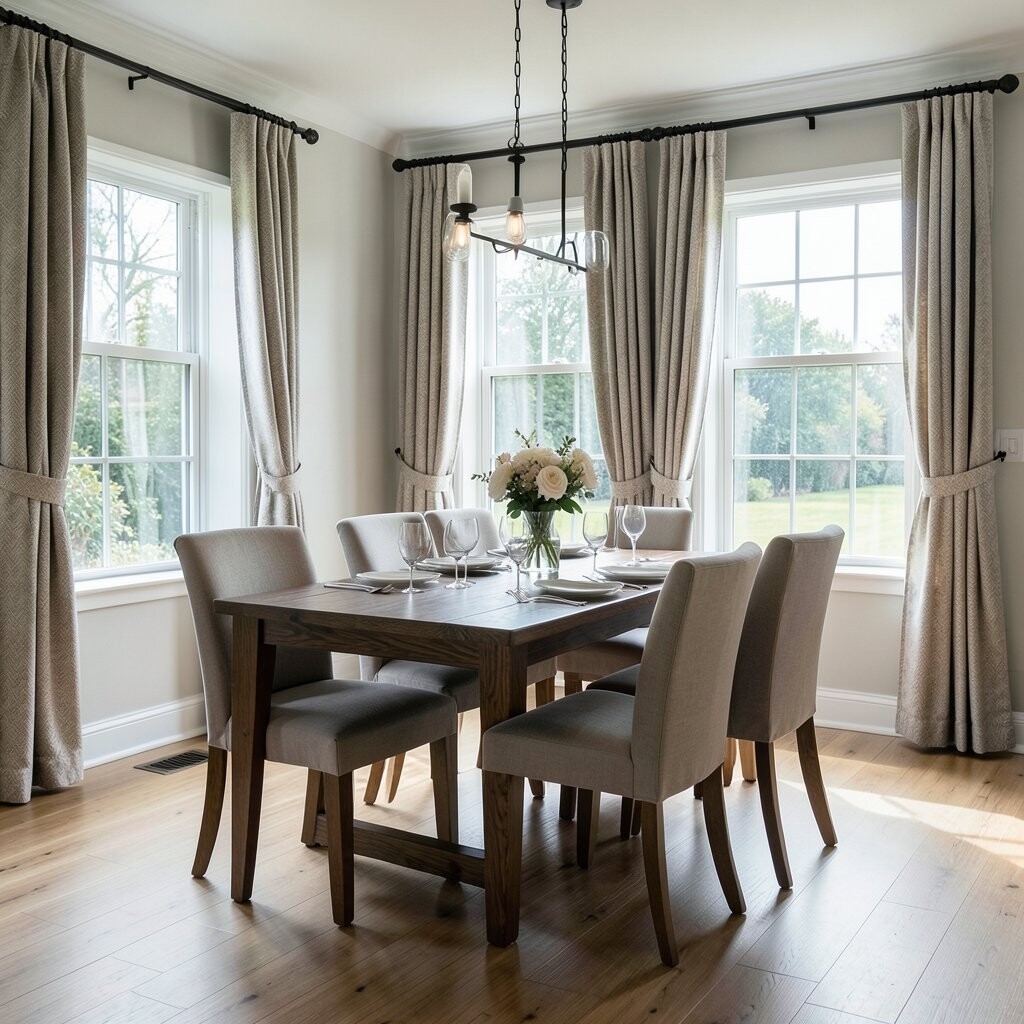
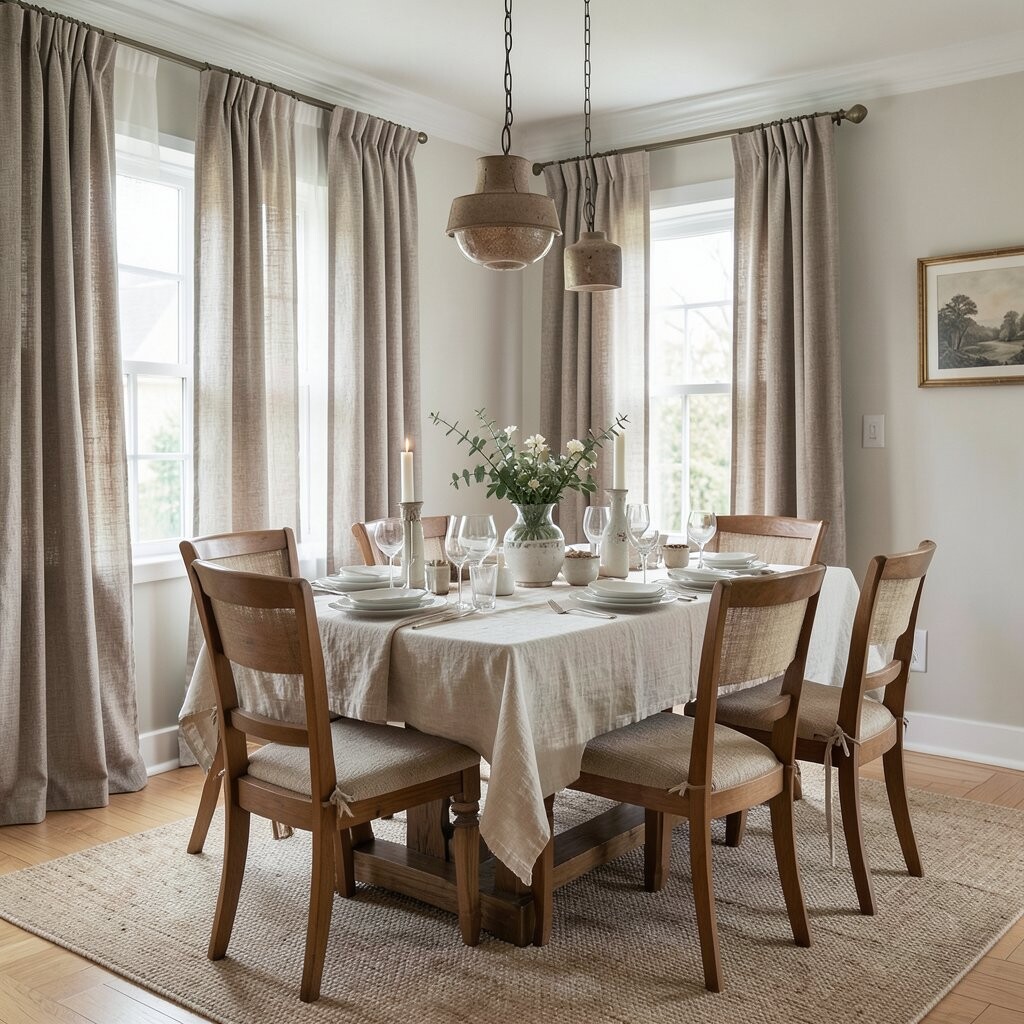
Good window coverings can make a dining area feel finished. Picture soft curtains brushing the floor and catching light near the table.
Small spaces do well with simple sheers or café curtains that don’t block too much. Large spaces can handle layered treatments like sheer plus drapes for a hotel-like vibe. This also helps with privacy and makes evening dinners feel more intimate.
15. Personalize with a custom place-mat and runner set
Personalize with a custom place-mat and runner set
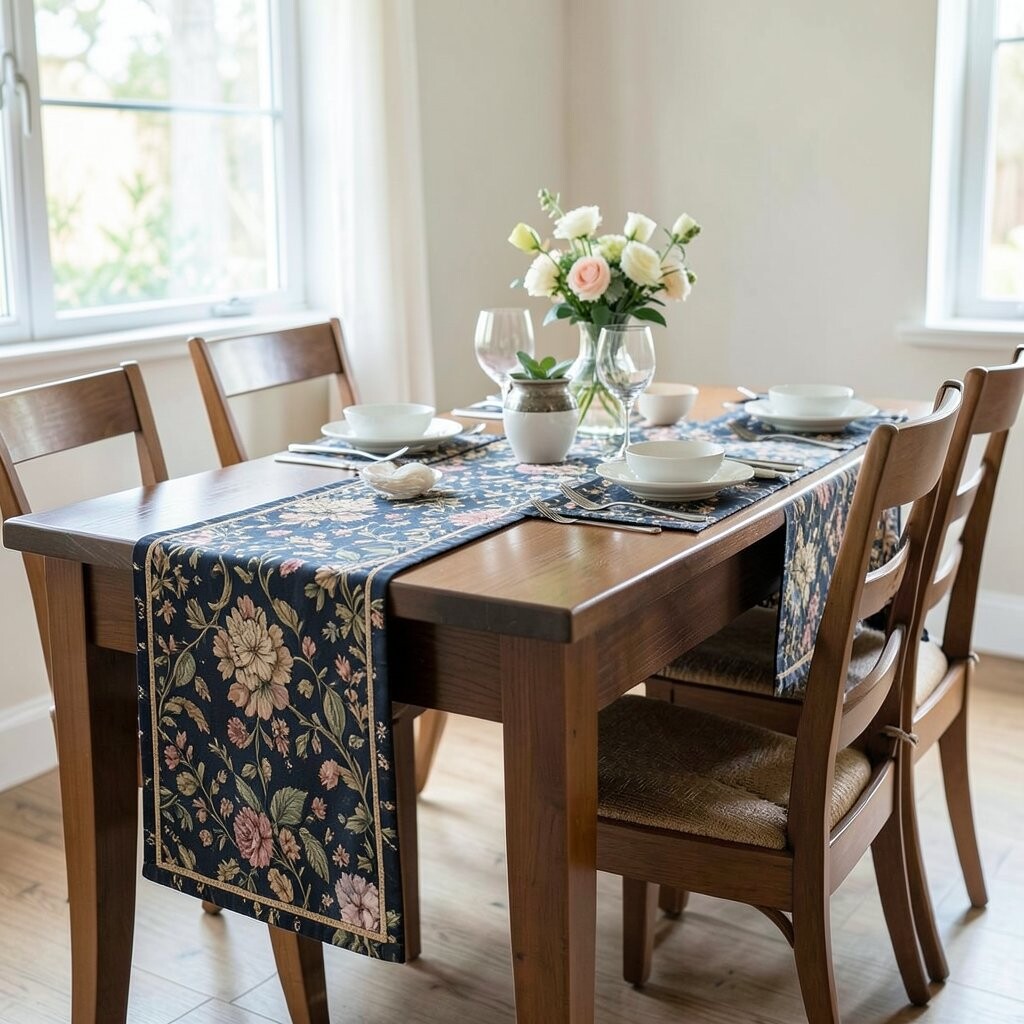
When you set the table, it instantly looks more special. Imagine neat place mats with a runner that matches your style.
In small spaces, lighter patterns keep it airy and fun without feeling busy. In larger spaces, you can use bolder patterns and mix textures, like linen with a subtle woven runner. Current trends include earthy colors, hand-drawn patterns, and textured fabrics.
Personalize with monograms, initials, or a color that matches your dining chairs. Cost-wise, start with a small set for everyday use and add more for holidays later.
16. Make a “drop zone” for everyday items
Make a “drop zone” for everyday items
Picture a neat tray by the door or near the dining room that catches keys and mail. In a small home, this is a tiny habit that keeps the dining space calmer.
You can place a small drawer unit, basket, or slim console to hold items you grab before meals. This helps you keep napkins, candles, and menus in one spot. Personalize with a tray color that matches your dining table finish so it looks planned, not random.
17. Choose wall mirrors to bounce light in big rooms
Choose wall mirrors to bounce light in big rooms
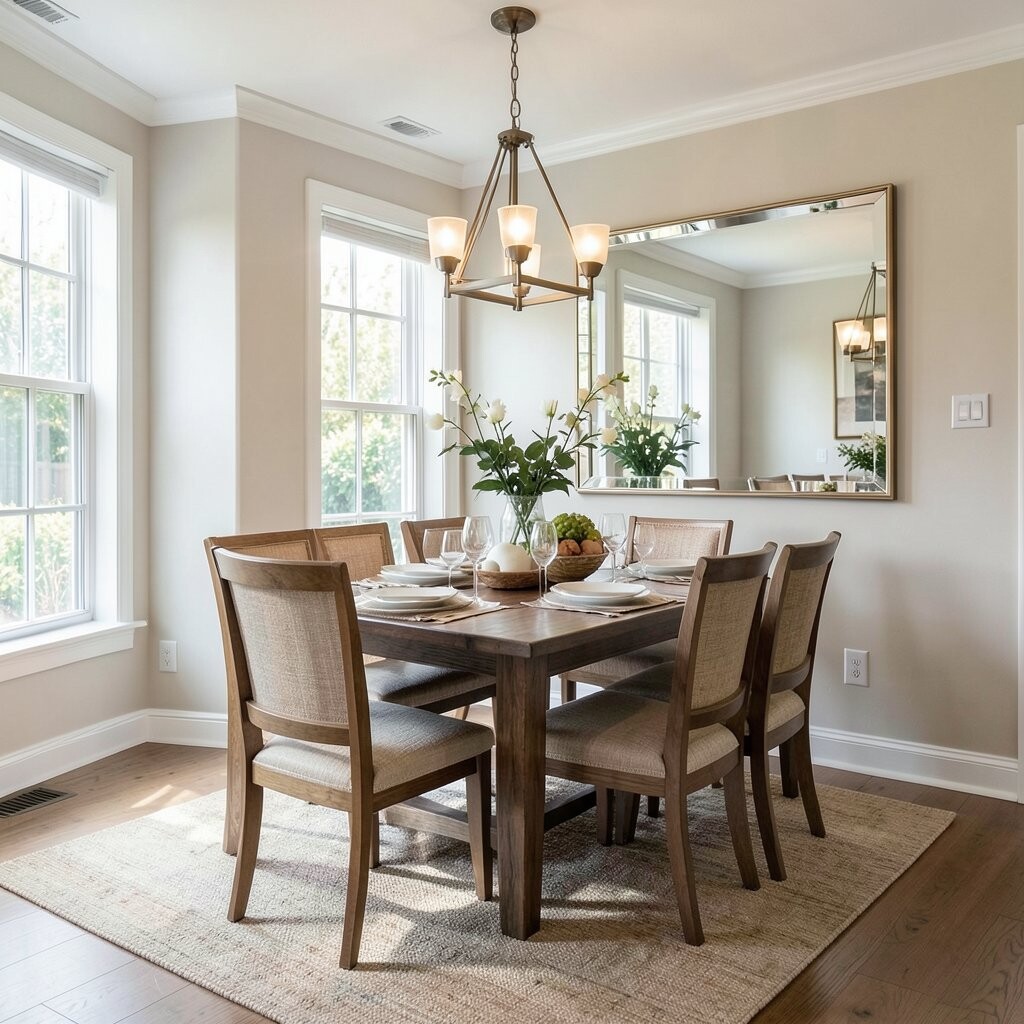
In a large dining area, an oversized mirror can make the room feel more connected. Imagine reflections that stretch the space and make dinner look brighter.
Mirrors also help with lighting by reflecting lamp glow and daylight into corners. For uniqueness, choose a frame style that fits your decor—arched, ornate, or modern thin lines. This is a popular trend because it adds style and function at the same time.
To personalize, place the mirror opposite your best light source or artwork. Budget-wise, look for a mirror with a simple frame and refinish it if needed.
18. Use a bench seat to save space and add comfort
Use a bench seat to save space and add comfort
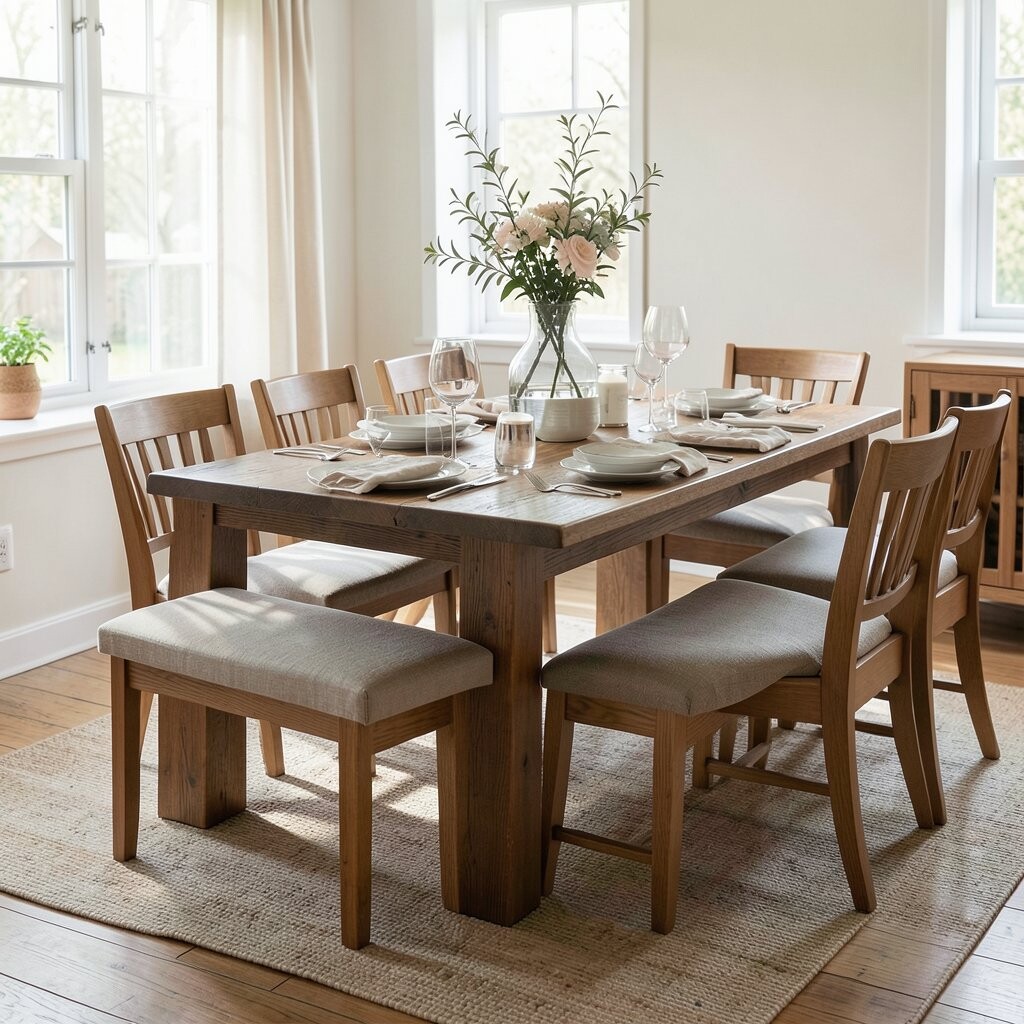
A bench can make dining feel relaxed, and it often fits better in smaller layouts. Imagine sitting on a cushioned bench while the table stays close and neat.
Bench seating can reduce the number of bulky chairs and open up the floor. It’s also great for families because it’s easy to rearrange for different group sizes. For trend vibes, try a bench with a mix of wood and fabric so it looks warm and modern.
Personalize by choosing a fabric print that matches your dining art, like subtle stripes or small checks. Cost can be controlled by starting with a bench and adding chair backs only where needed.
19. Style a reading bar or beverage shelf nearby
Style a reading bar or beverage shelf nearby
Some dining spaces become living spaces, and that’s not a problem. Picture a small shelf with tea, glasses, and a couple of cookbooks within reach.
In small areas, a beverage shelf can cut down on trips to the kitchen and keep serving easy. In larger areas, you can make it a full “drink station” with trays, bottle holders, and glassware. This adds uniqueness because it shows your daily habits, not just your decor.
20. Add texture with curtains, linen, and ceramic details
Add texture with curtains, linen, and ceramic details
Texture makes a dining area feel rich, even when the room is simple. Imagine linen napkins, a woven runner, and small ceramic bowls catching light.
Small spaces benefit from texture that doesn’t crowd the layout, like soft fabrics and matte finishes. Large spaces can handle layered textures, including rugs with depth and upholstered chairs. Current trends favor natural materials that look cozy and lived-in.
Personalize by choosing one “signature texture” like rattan, boucle, or handmade pottery. Cost-wise, you can get the look with affordable accessories first, then upgrade big furniture later.
21. Use wall shelves to display everyday dishes tastefully
Use wall shelves to display everyday dishes tastefully
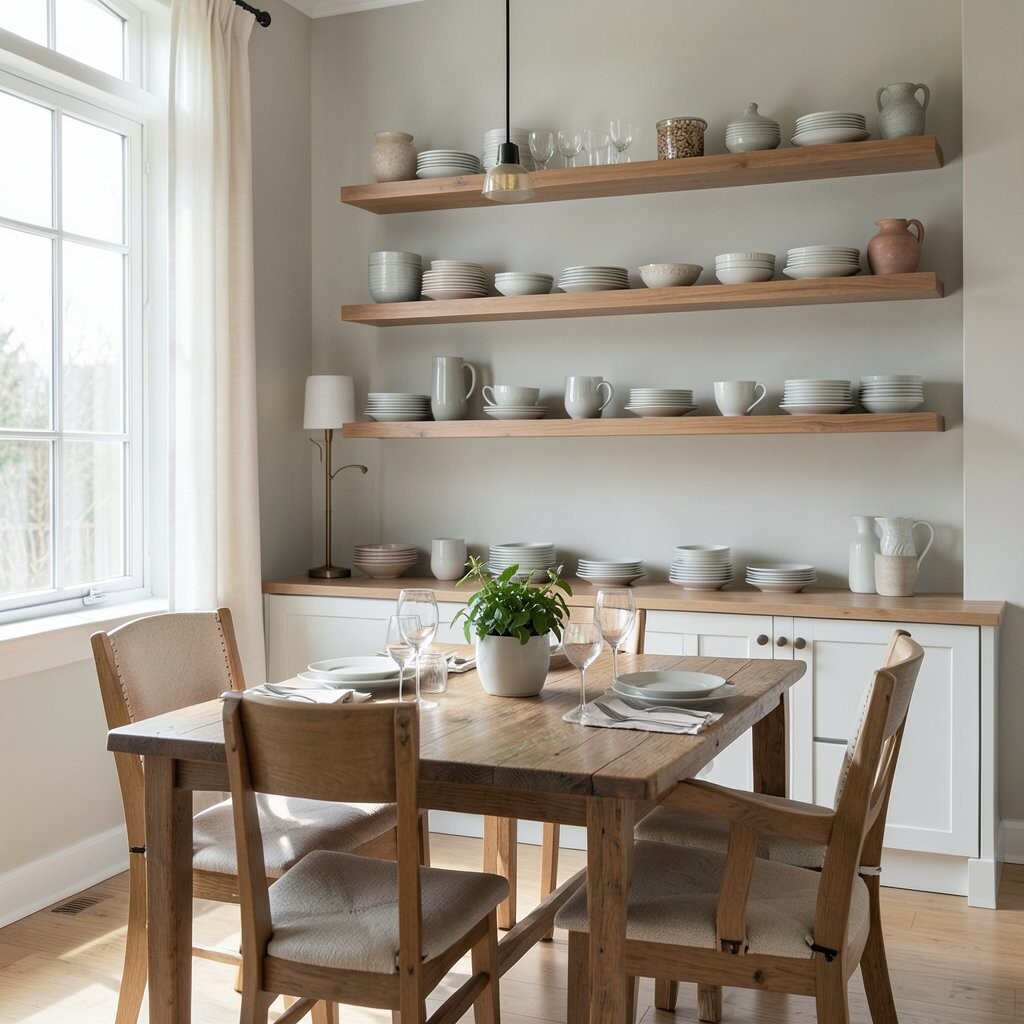
Imagine plates set neatly on open shelves, like a museum for your favorite sets. In a small dining area, this can replace bulky cabinets.
Open display makes the space feel personal and also saves time because dishes are easy to grab. For small kitchens and small dining zones, choose shelves that fit your width and avoid going too deep. For larger rooms, you can use shelves as decor backdrops behind a table.
To personalize, mix colors within the same family, like cream plus muted sage. If cost matters, use affordable shelf brackets and focus spending on a few special dishes.
22. Balance big furniture with lighter decor and open air
Balance big furniture with lighter decor and open air
If your dining area is large, heavy furniture can make it feel cold. Picture a big table paired with airy curtains, light-colored rugs, and slim decor pieces.
In small spaces, the opposite idea helps too: keep decor tight and focused so the room doesn’t feel stuffed. A good rule is to balance visual weight, like pairing a bold table with simple wall art. This makes the room feel “designed” instead of just full.
For personalization, add a single artwork piece that matches your style and keep other decor quiet. Cost-wise, you can shift the whole look with paint, lighting bulbs, and accessories long before buying new furniture.