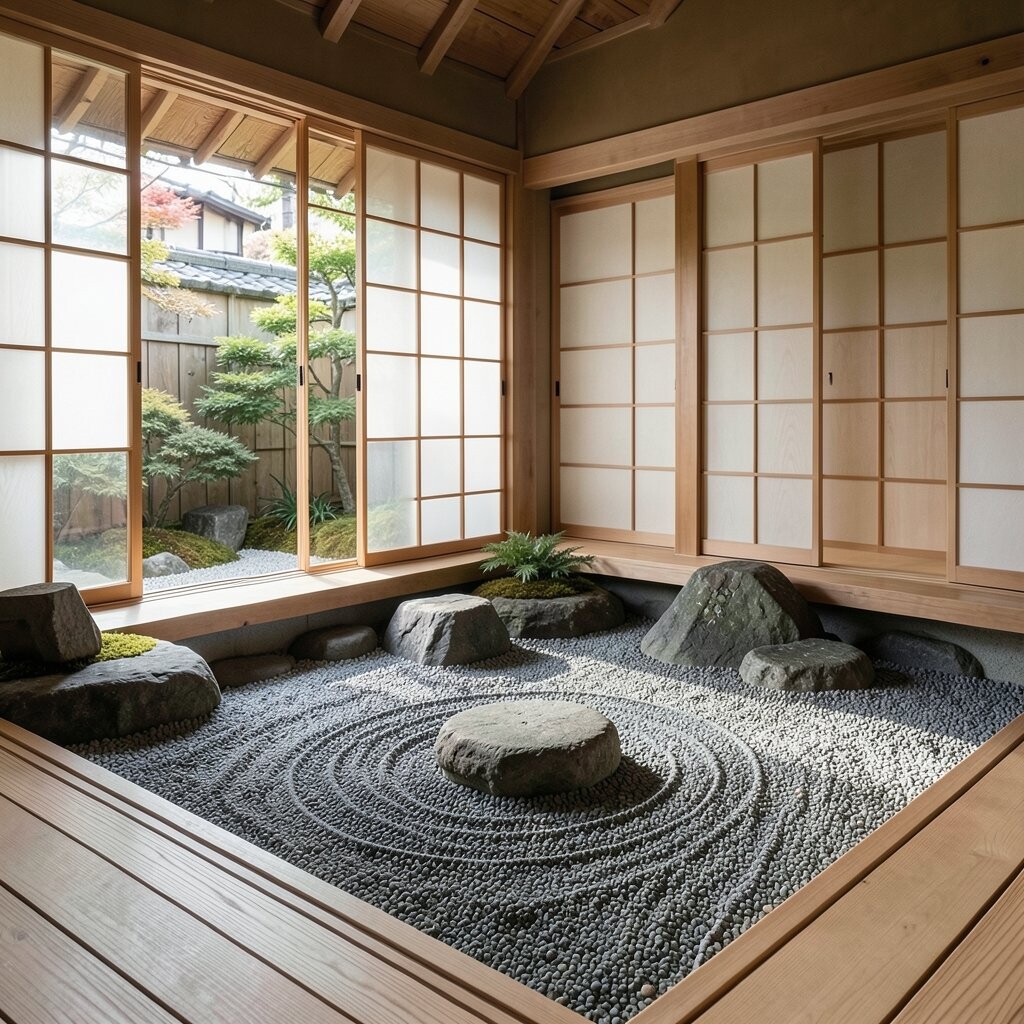
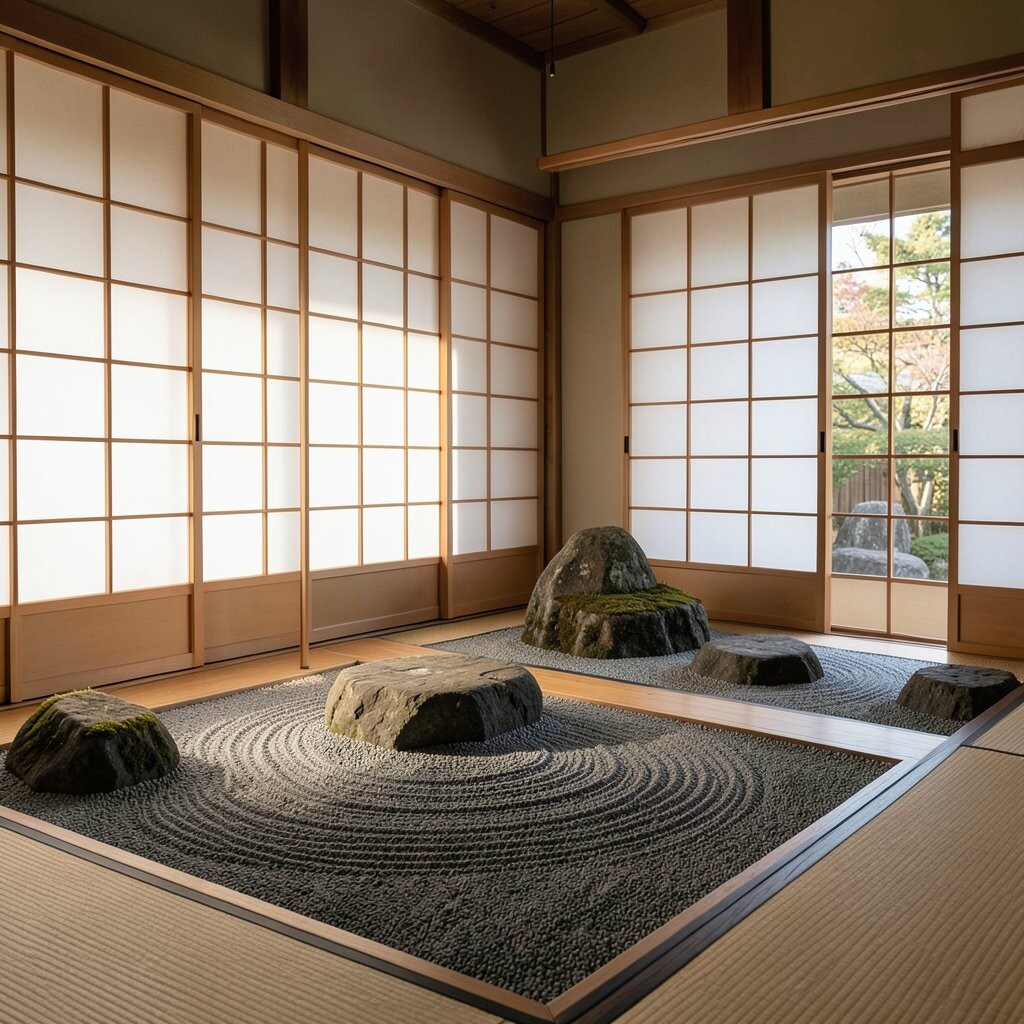
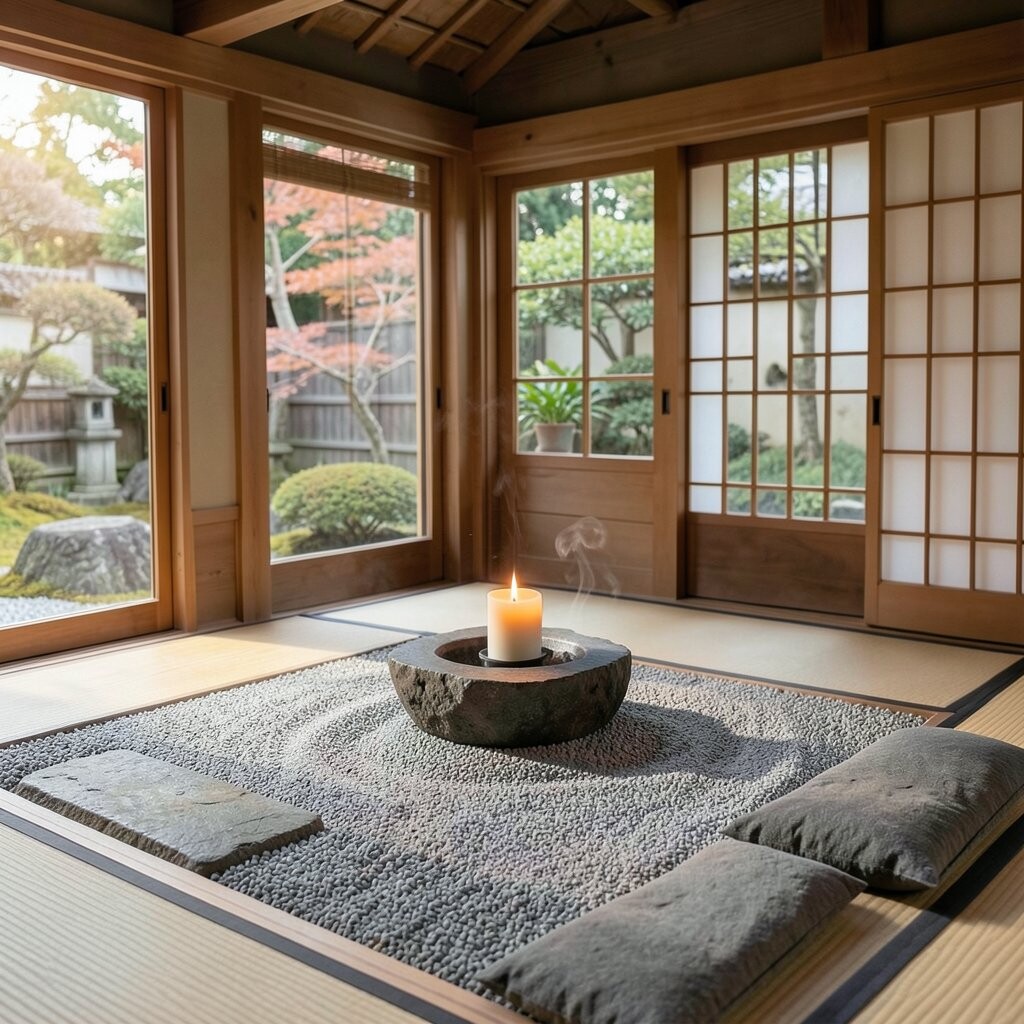
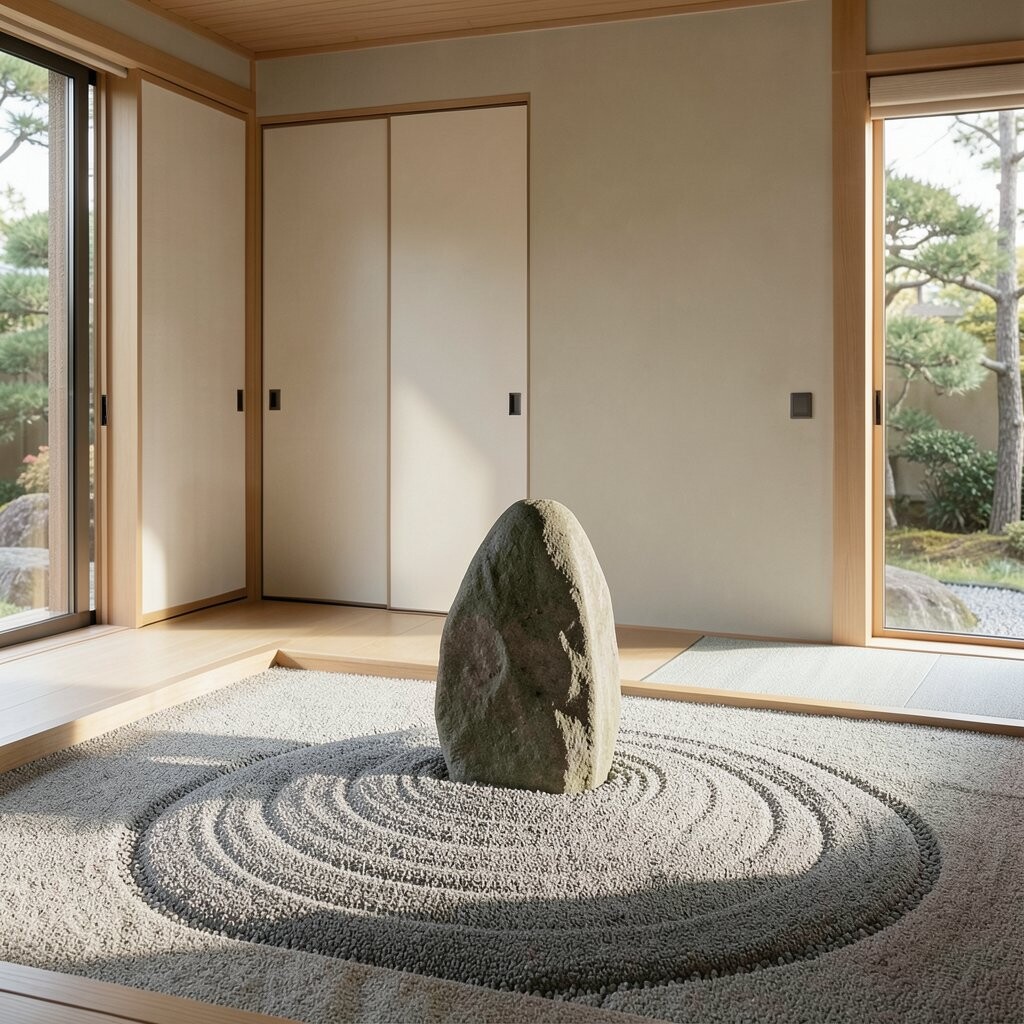
Picture a small patch of smooth gray gravel set in a shallow tray or low floor frame. A simple wall silhouette behind it makes the space look like a mini garden.
Lightly rake gentle lines so they look like waves and you can reset the pattern anytime. This creates a calming ritual that helps your mind slow down. Consider adding a small candle cup or an LED tea light for cozy evenings.
Use natural stone rakes so the lines look clean instead of messy. For personalization, place a smooth river rock near one corner as a “focus point.” If you rent, choose a freestanding tray that you can move without damage.
Cost can stay low when you use a small area and fewer stones. A quality gravel tray is usually cheaper than building a whole room feature. Right now, more people are using “micro-zen” setups in apartments, because they fit modern layouts.
2. Soft-Shadow Shoji Light
Soft-Shadow Shoji Light
Imagine sheer paper panels casting warm, honey-colored shadows across your wall. The room feels gentle, like morning fog drifting through a garden.
Shoji-inspired light softens harsh glare and can help you relax in the evening. Use it near a reading chair or beside a low table. The airy look also makes rooms feel larger without adding clutter.
Try a slim folding screen, or hang a shoji-style translucent panel behind a lamp. Personalize with a fabric pattern that matches your favorite bedding colors. For tips, keep the light source warm-toned so the glow stays cozy.
Costs range from budget-friendly translucent curtains to pricier custom panels. A popular trend is layering sheer screens with warm LED bulbs for a “glow at night” vibe. Choose simple frames in natural wood to keep the Zen feeling honest.
3. Bare Wood + One Living Plant
Bare Wood + One Living Plant
Think of an uncluttered room with pale wood floors and a single plant placed like a quiet guest. The leaves sway slightly near a window, adding soft motion to stillness.
A minimalist base reduces visual noise, which can help your brain feel calmer. One plant also gives you a natural focal point for breaks. Choose a hardy option like a small bamboo stand, jade plant, or a simple bonsai-style tree.
Keep the container simple: ceramic in off-white, dark brown, or brushed stone. For personalization, rotate the plant pot seasonally so the “look” changes without major renovations. Add a small tray of stones beneath the pot for a garden-style finish.
This concept is often budget-friendly because you control how many items you buy. A good plant and a matching pot can cost less than decorative furniture. Current trends lean toward “less, but better,” and this fits that mood perfectly.
Water carefully and wipe leaves so the plant looks crisp. Place it where it gets gentle light, not harsh midday sun. If you travel, choose a plant that tolerates a short stretch of neglect.
4. Tea Table with Calm Spacing
Tea Table with Calm Spacing
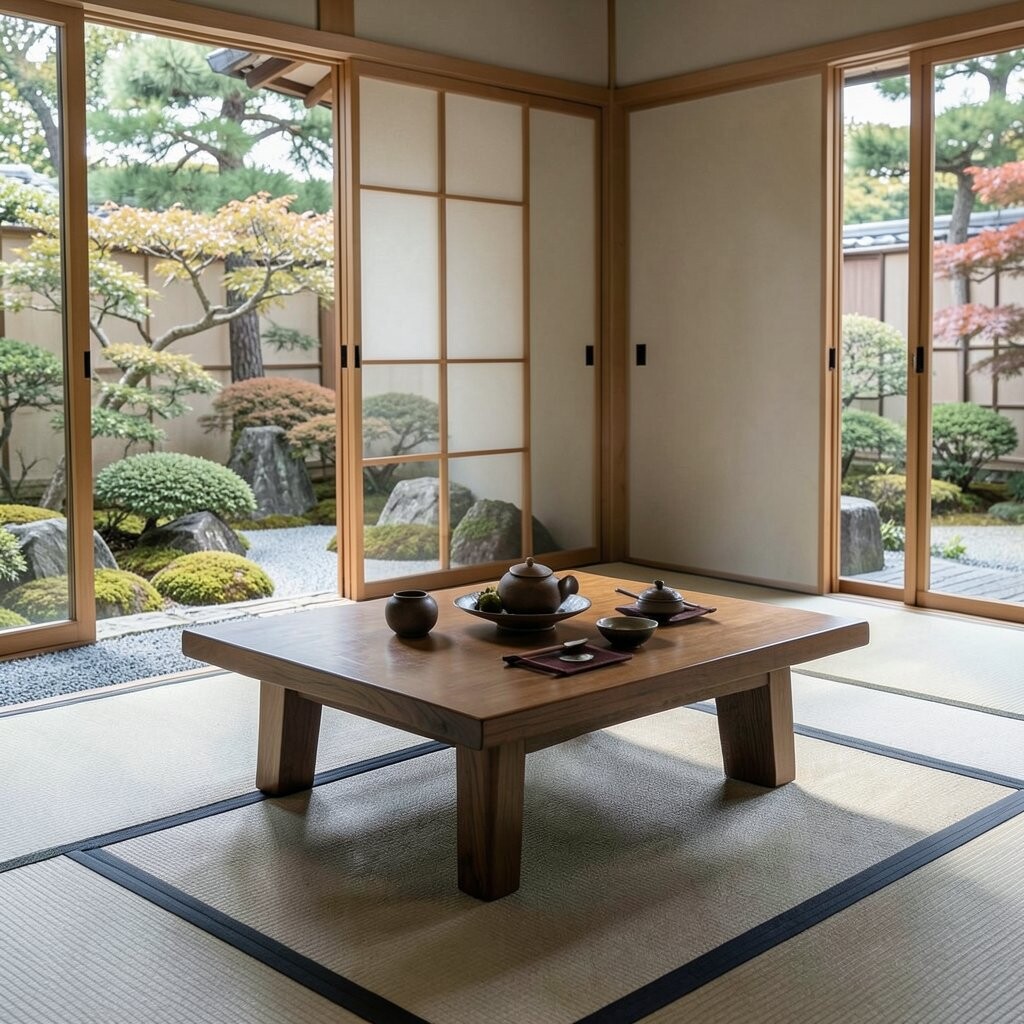
Picture a low tea table in a clear circle where you can sit comfortably on cushions. Empty space around it feels intentional, like the garden path has room for footsteps.
Zen-inspired spacing can make the room feel breathable and organized. Keep the surface simple with a small tray, two cups, and a folded cloth. This helps you slow down and enjoy the ritual instead of rushing to the next task.
Personalize by using a tray that matches your favorite stone or wood tones. Add a tiny incense holder or a small bowl for seasonal items like pebbles or dried flowers. For tips, choose a mat or rug with a natural texture so the area feels grounded.
Costs vary based on table material and size, but you can start with a thrifted low table. A cushion set can be an affordable upgrade compared to buying new seating. This idea is trending as more people enjoy at-home tea, journaling, and slow evenings.
5. Corridor of Stillness (Indoor Path)
Corridor of Stillness (Indoor Path)
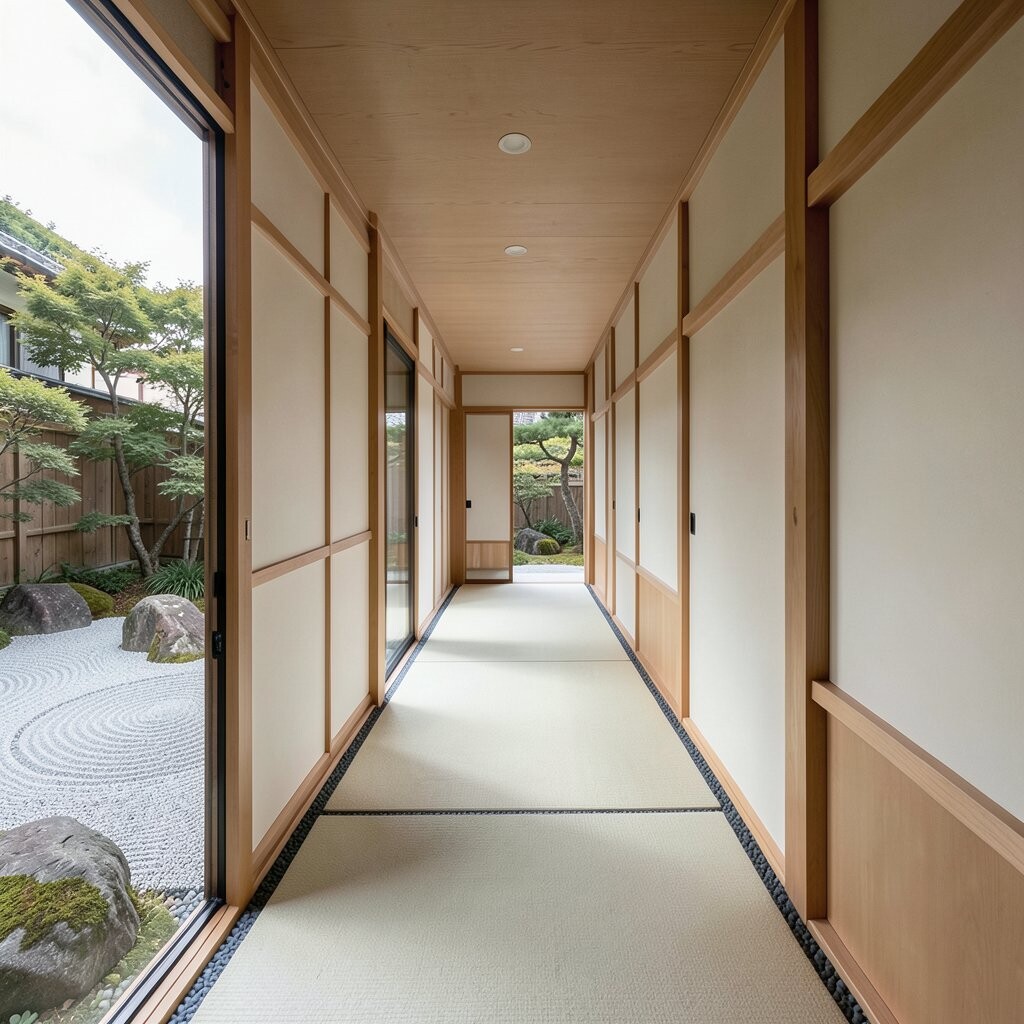
Imagine a hallway or living-room path that guides your eyes toward a quiet corner. The floor looks clear, and the walls feel soft and warm.
A guided path reduces the “clutter scramble” feeling when you walk through your home. It also makes your space more functional because your layout supports movement. Try adding a narrow runner rug with a calm pattern or a plain neutral finish.
For uniqueness, place a small stone sculpture or a tall plant at one end of the path. Add one wall lantern or a simple light fixture to create an inviting rhythm. Keep the path free of extra shelves so the flow stays gentle.
Costs are manageable because you can focus on flooring accents instead of big furniture purchases. Runner rugs and wall lighting are often easier upgrades than renovations. Current trends favor “intentional movement,” which means designing where your feet naturally go.
Tip: use the same wood tone in small details, like picture frames or a console. Small consistency helps the space feel calm, not random. If you want more Zen, keep shoes and bags stored away so the path stays clear.
6. Water-Inspired Calm Wall Art
Water-Inspired Calm Wall Art
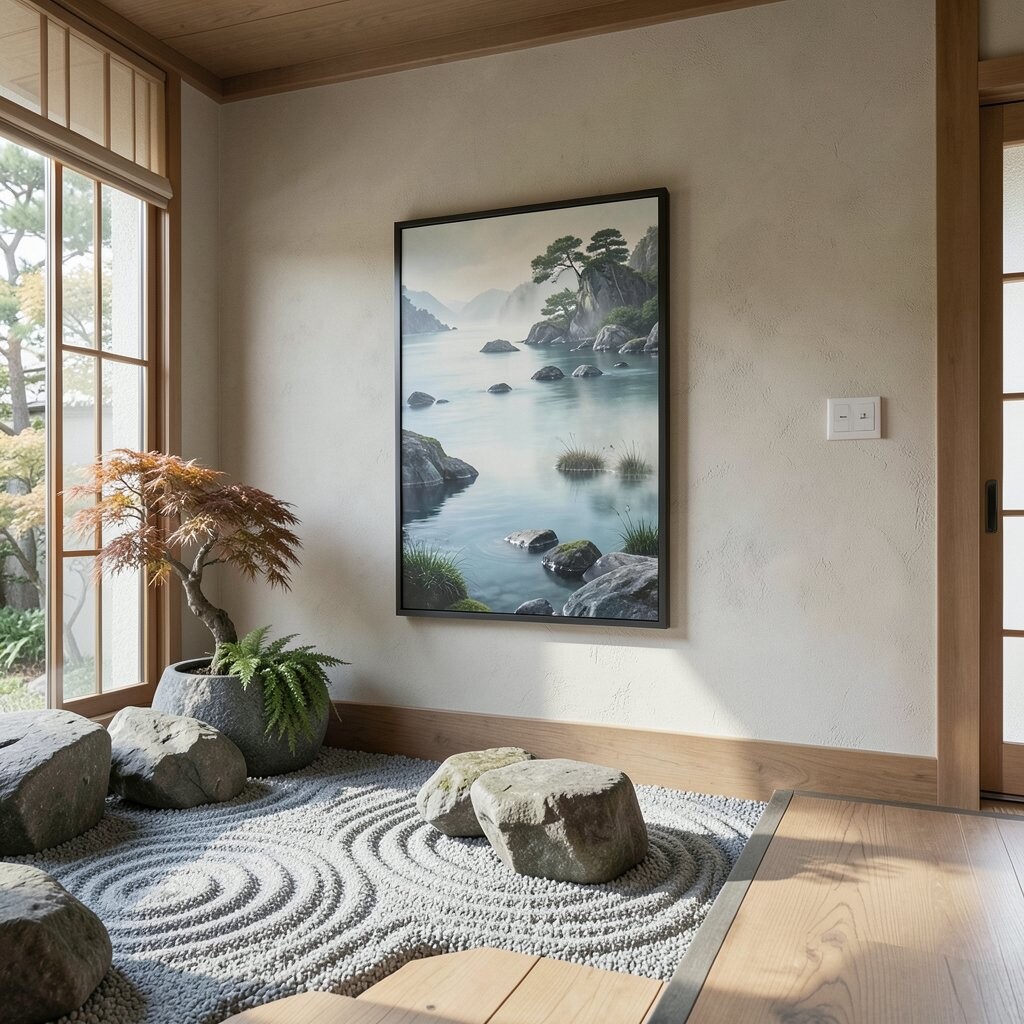
Picture a wall piece that looks like gentle ripples, not busy shapes. The lines curve slowly, like wind moving across a pond.
Water-themed art can create a soothing mood and lower visual stress. Place it where you spend quiet time, like near a reading chair or meditation spot. Choose colors like soft gray, muted green, and warm cream for a Zen-friendly palette.
Personalize by selecting art that feels meaningful to you, such as a print inspired by mountain mist. Frame it in simple wood or dark metal for a clean look. If you like DIY, paint a few wave lines on a plain canvas with a single brush style.
7. Bamboo Fence-Style Room Divider
Bamboo Fence-Style Room Divider
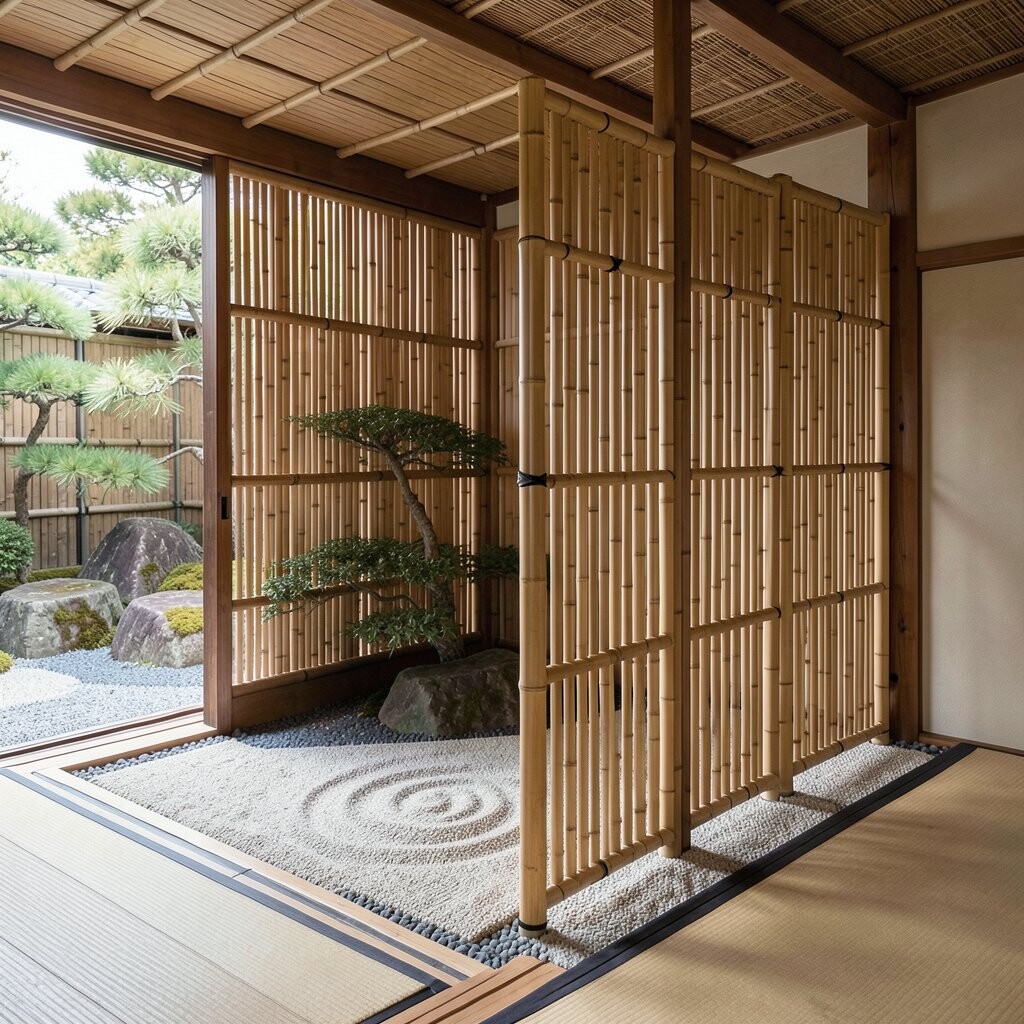
Imagine a bamboo-textured divider separating your space without making it feel closed. It creates privacy while still letting light move freely.
A divider helps you create zones, like a mini office, a calm lounge, or a soft entry. This supports focus and reduces distractions at home. Look for panels with open spacing so the airiness stays.
For uniqueness, choose a divider with a slight natural curve or a woven texture. Add a small shelf at the bottom for stones or a ceramic incense holder. Tip: keep decorations on the divider minimal so it stays elegant.
Costs can vary, but ready-made screens are often cheaper than custom carpentry. A woven or bamboo-look option is usually a good balance of price and style. This is a current trend because people want “soft boundaries” instead of heavy walls.
8. Sand + Stone Balance Tray
Sand + Stone Balance Tray
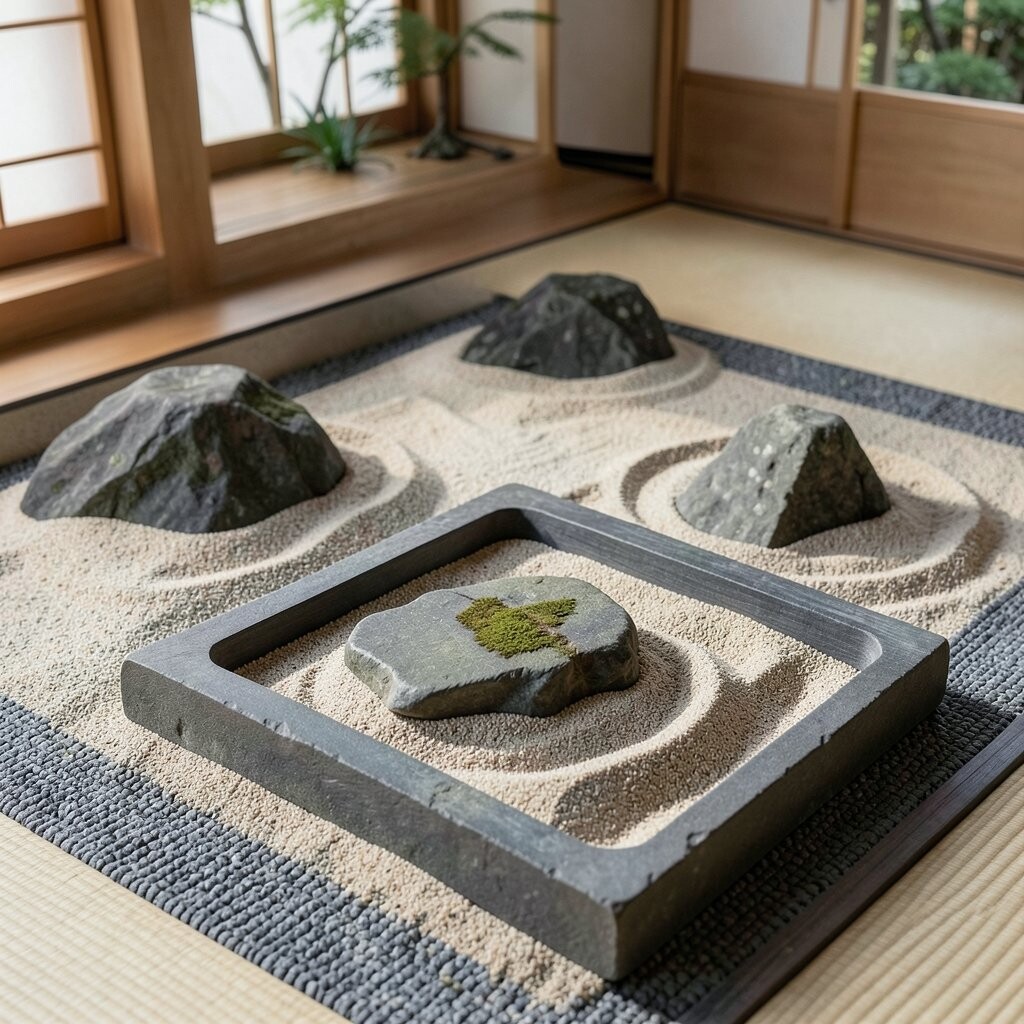
Picture a shallow tray filled with pale sand and a few carefully placed stones. Each item looks like it has a reason to be there.
This balance concept can help you build calm focus through small actions. When you rearrange stones, you practice patience and mindful attention. It also looks elegant as decor even when you are not touching it.
Personalize the set by using stones from a meaningful place or choosing two shapes you love. Try a single tall stone as a “mountain,” and two smaller stones as “companions.” For tips, keep the tray size modest so it doesn’t feel busy.
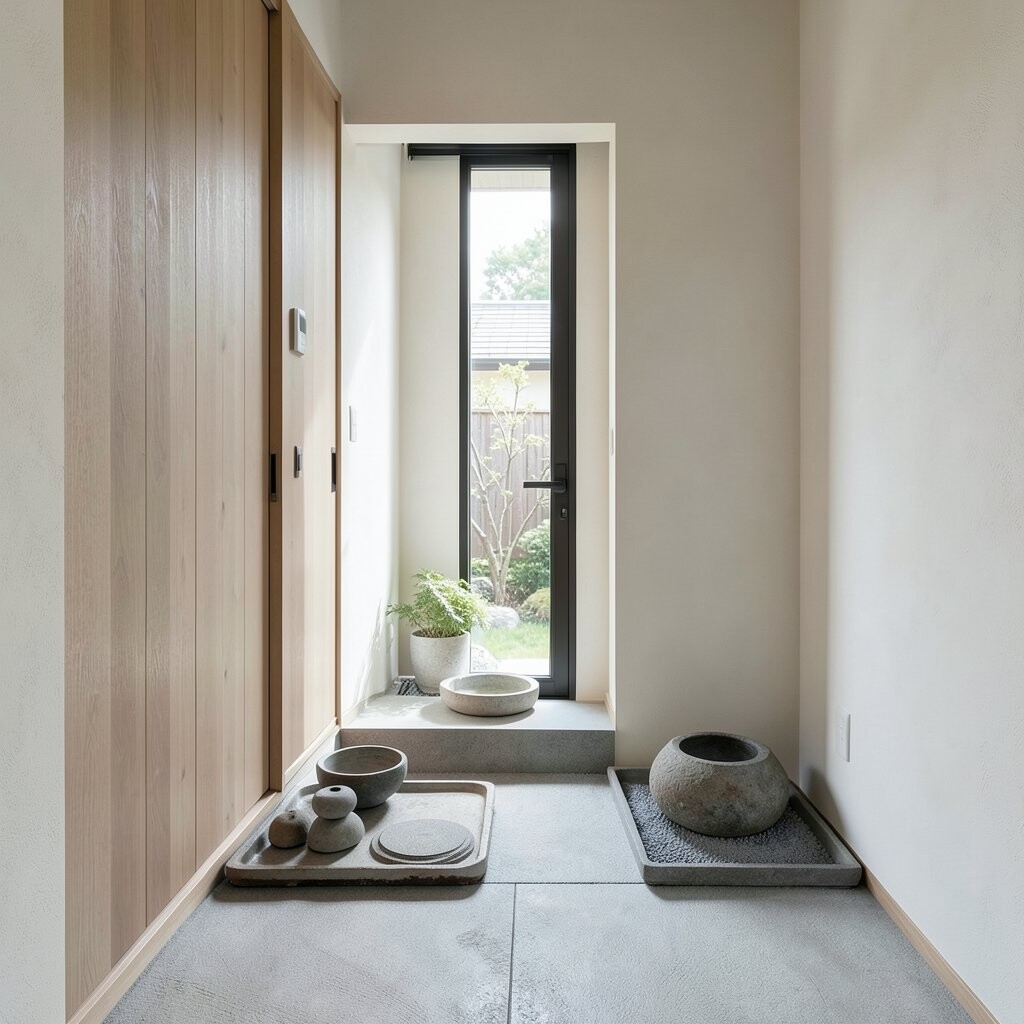
9. Minimal Entryway with Stoneware Trays
Minimal Entryway with Stoneware Trays
Imagine stepping into an entry that feels calm instead of crowded. A stoneware tray catches keys, and a simple bench holds one tidy set of items.
A calm entry reduces stress because you can find what you need quickly. It also prevents tiny items from spreading around the house. Use a tray for mail, a small bowl for change, and a hook for one everyday coat.
For personalization, match tray colors to your flooring tone—warm browns, cool grays, or creamy whites. Add a tiny arrangement of dried grass in a vase for a soft garden mood. Tip: keep the entry surface near-empty so it stays soothing.
Costs are usually low because you can start with a few functional pieces. Thrifted trays and a simple bench can work beautifully. This idea fits current trends toward “quiet organization” and looks good in both modern and traditional homes.
Make it a habit: clear the tray at night and reset it in the morning. That small routine works like a mini Zen reset. Over time, your entry becomes a calm starting point.
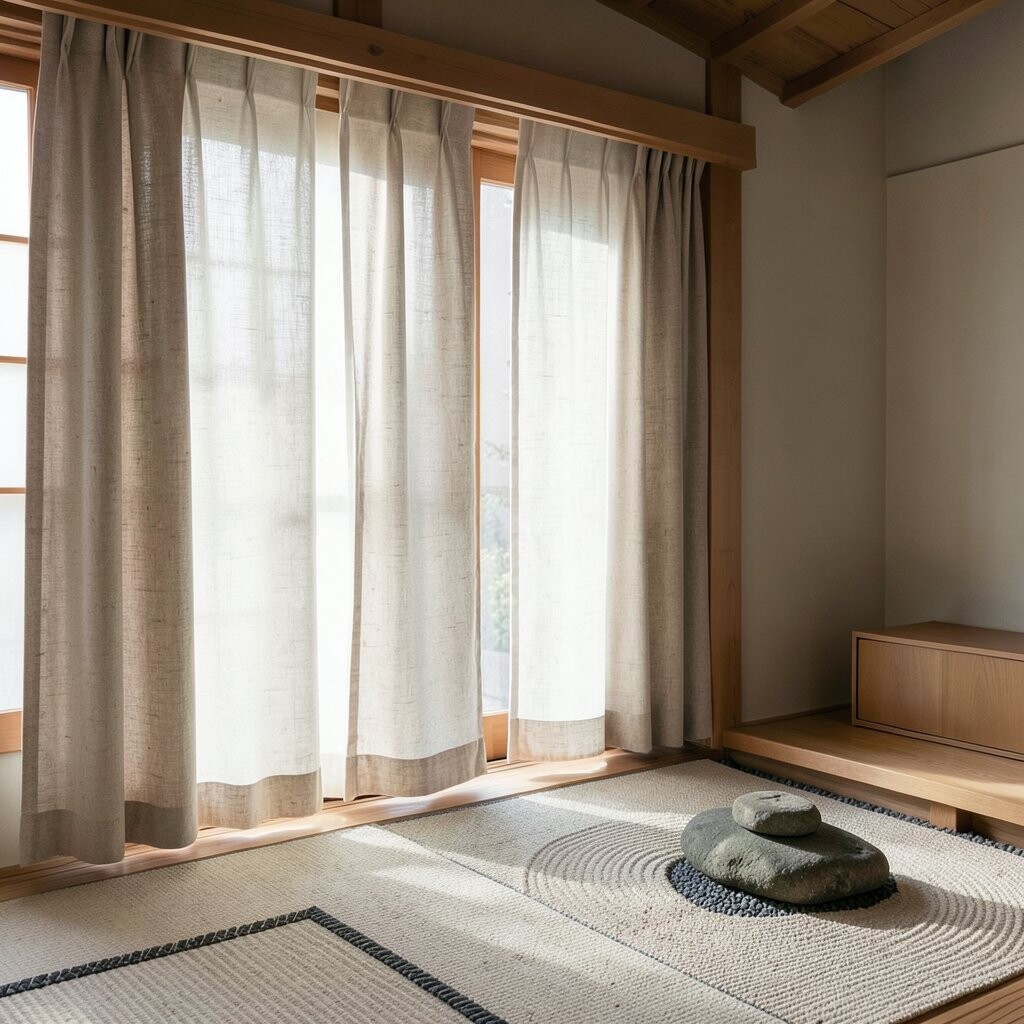
10. Linen Curtains for Soft, Unhurried Light
Linen Curtains for Soft, Unhurried Light
Picture linen curtains hanging loosely, letting daylight drift in like a soft whisper. The room feels calm because the light is evenly spread.
Linen can reduce glare and make the space feel warm without needing extra decor. It also gives a natural texture that matches Zen interiors. Choose neutral colors to keep everything grounded.
Personalize by selecting a slightly thicker linen for a richer drape or a lighter one for airy mornings. Pair the curtains with a simple curtain rod in brushed wood or matte metal. Tip: hang them high and wide to make the room feel bigger and more peaceful.
11. Candle Seasoning + Incense-Free Options
Candle Seasoning + Incense-Free Options
Imagine a small scent moment that feels respectful and gentle. A candle glow sits beside a tidy stone bowl, and the air feels warm.
Scent can support relaxation when it is used thoughtfully. If you like Zen atmospheres, choose mild, clean-smelling options like cedar or soft herbal notes. Keep smoke in mind and consider incense alternatives if you have sensitivities.
For personalization, use a reusable candle tin in a stone color or a matte ceramic dish. Add a small written cue like a “slow breath” reminder card near your spot. Tip: place the scent items away from paper screens to keep things safe.
Costs can start small because a candle and a simple holder are affordable. Current trends include low-smoke, clean-burning scents and minimalist fragrance routines. Choose one signature scent so your home feels consistently calm.
Try a schedule: light it when you journal, read, or drink tea. When it’s time, blow it out and reset the area. This creates an intentional rhythm that feels very Zen.
12. Tatami-Inspired Flooring Zones
Tatami-Inspired Flooring Zones
Picture a floor area defined by a woven mat texture, like stepping onto calm earth. Even on a busy day, your feet feel softer and your mind slows.
Zoning with tatami-inspired mats can make a living room more flexible. You can create a sitting spot for gaming, reading, or quiet talks. It also helps sound feel less sharp because the texture absorbs some noise.
Personalize the pattern by choosing neutral weaves with subtle variation. Add a low table and cushions in matching tones for a complete look. Tip: keep the rest of the room simpler so the mat becomes the natural anchor.
Costs depend on whether you buy mats or a larger system, but mats are usually the easiest start. This is trending because many people want multipurpose rooms that still feel serene. Look for durable, easy-to-clean materials if you have pets or kids.
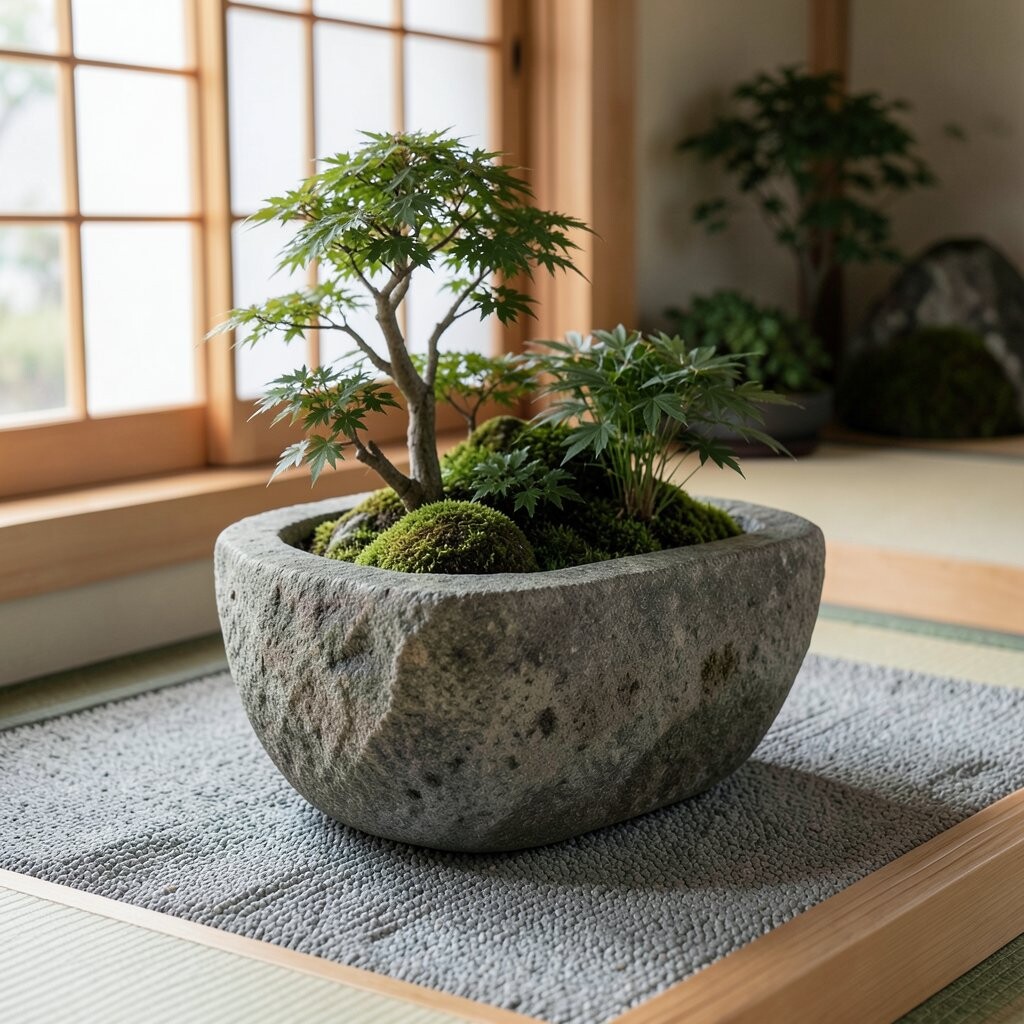
13. Stone-Like Planter with Mini Garden Vignette
Stone-Like Planter with Mini Garden Vignette
Imagine a planter that looks carved from stone, paired with small moss or pebbles. The vignette feels like a tiny landscape you can admire daily.
A mini garden vignette brings nature indoors and adds a living focal point. It can also support wellbeing because greenery is soothing to most people. Keep the overall arrangement simple so it stays Zen, not crowded.
Personalize with one theme: “mountain and forest,” “river bend,” or “coastal calm.” Add moss sparingly for texture, and use smooth stones for clean lines. Tip: mist lightly if you use moss so it stays fresh.
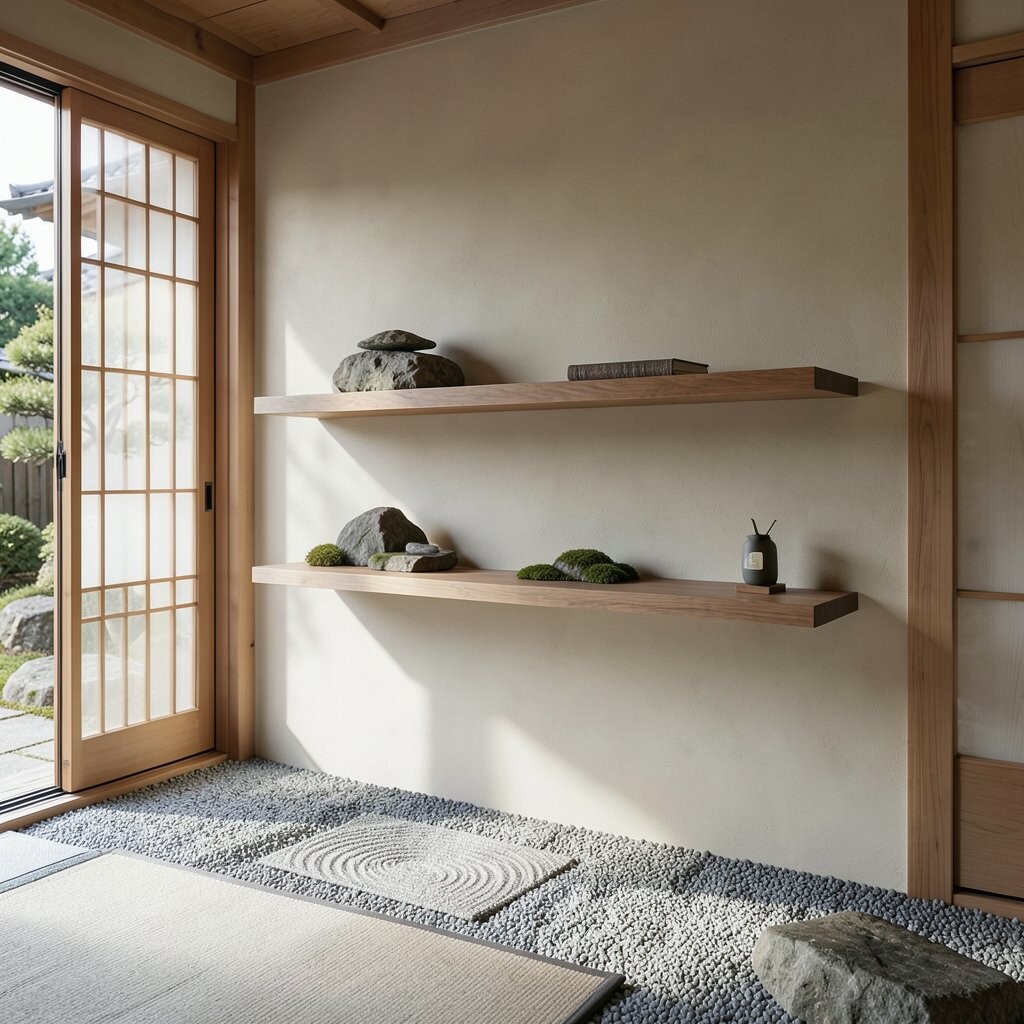
Picture a floating shelf with uneven spacing, like a garden hillside. One side has a tall object, while the other side has small calm details.
Asymmetry can feel modern while still following Zen design ideas. It keeps your eye moving gently instead of staring at a symmetrical “perfect” layout. Use it to showcase one plant, one stone object, and one small book or ceramic piece.
For personalization, choose shelf contents that match your life: travel stone, a handmade bowl, or a family photo in a minimal frame. Tip: leave blank space on purpose; blank space is part of the design. Avoid adding too many tiny trinkets that break the calm feeling.
Costs can stay moderate because a simple shelf and a few items often do the job. Current trends show people styling shelves like mini art exhibits rather than storage areas. Choose matte finishes so everything feels quiet and grounded.
If you want a budget approach, use a reclaimed wood shelf and paint it in a soft neutral tone. Then add just three objects. Your room will look curated without looking expensive.
15. Quiet Storage with Hidden Clutter
Quiet Storage with Hidden Clutter
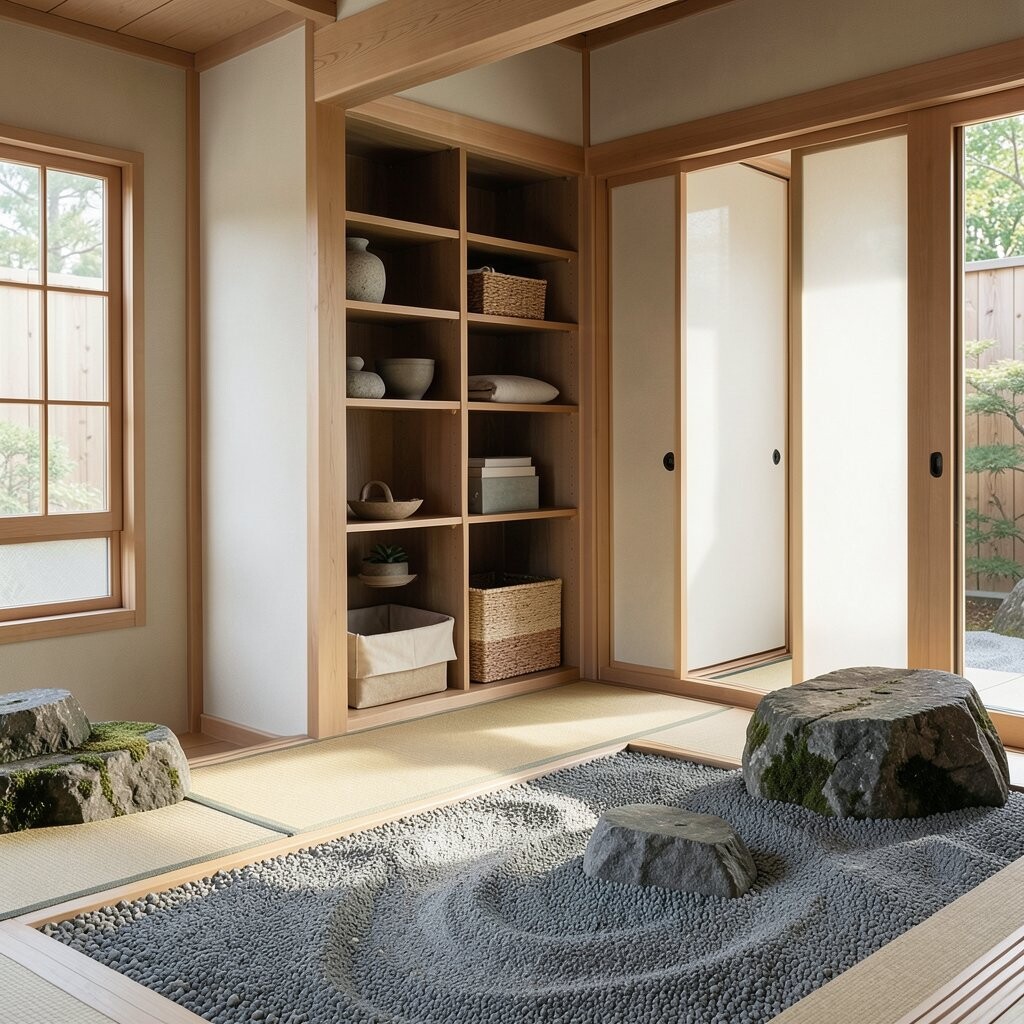
Imagine your living area staying open and calm because storage is hidden. Handles disappear, surfaces stay clear, and the room looks ready for rest.
Hidden storage supports a Zen look by reducing visual mess. Less clutter can make it easier to relax and focus. Use cabinets, baskets, and closed bins to keep daily items tidy.
Personalize storage labels with simple calligraphy-style tags or neutral labels that blend in. Tip: keep one basket for “soon to be used” items so you avoid constant dumping. If you don’t want new furniture, use stackable organizers inside shelves.
16. Minimal Color Palette with One Accent Stone
Minimal Color Palette with One Accent Stone
Picture a room that mostly uses soft creams, warm beiges, and gentle grays. Then, one accent pops like a bright stone in the middle of sand.
A minimal color palette helps your eyes rest and reduces mental noise. One accent adds interest without turning the room into a busy place. Pick an accent tone inspired by nature, like deep green, muted blue, or clay orange.
Personalize by choosing one standout element: a cushion, a small rug corner, or a ceramic vase. Tip: repeat the accent in a tiny way elsewhere, such as in a frame or a book spine. This ties everything together like a garden theme.
Cost considerations are flexible because you can update color with removable items. Swap cushions, add a small throw, or repaint one small wall section. This concept matches current trends toward calm neutrals and intentional pops.