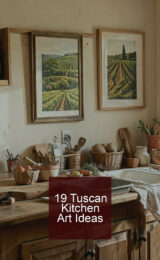
Warm kitchens have a quiet kind of magic. Tuscan texture brings that feeling home.
Soft surfaces, rough stone, and worn wood can make a room feel lived in and loved. These ideas work in big kitchens and small ones, with choices for many budgets and styles.
Hand-plastered walls bring a gentle, cloudy look that feels calm and old-world. The finish has tiny bumps and soft shadows that make light look richer.
This texture hides small wall flaws, which is a nice bonus in busy homes. For a custom touch, pick a warm cream or sand color, and use a matte sealer to keep the look natural.
2. Reclaimed Wood Beams
Reclaimed Wood Beams
Reclaimed wood beams add age, warmth, and a strong rustic line across the ceiling. Their grain, knots, and faded color make the room feel more grounded.
They work well over island spaces and open kitchens where the ceiling needs interest. Real reclaimed beams can cost more, so faux beams are a smart budget choice that still gives the same cozy feel.
Many people pair them with simple pendant lights for a clean mix of old and new. If your kitchen is small, painted beams in a soft brown can add texture without feeling too heavy.
3. Terra Cotta Floor Tiles
Terra Cotta Floor Tiles
Terra cotta tiles bring a sunny, earthy look that feels very Tuscan. Their warm color and slight unevenness make the floor feel handmade and friendly.
They are strong underfoot and age in a beautiful way over time. Seal them well to help with spills, and choose larger tiles if you want fewer grout lines and a calmer look.
For a personal touch, mix in patterned border tiles around the room edge. This style is still very popular because it feels natural and cozy, not cold or slick.
4. Rough-Sawn Open Shelving
Rough-Sawn Open Shelving
Rough-sawn shelves bring raw wood grain right into view. They look simple, useful, and full of character.
These shelves make everyday dishes part of the decor, which can save cabinet space too. Use them for clay bowls, glass jars, and olive oil bottles to build a relaxed Tuscan mood.
If full wood shelves are too pricey, look for stained pine or pine with a distressed finish. Keep the display neat, since a few well-chosen pieces look better than a crowded shelf.
5. Wrought Iron Accents
Wrought Iron Accents
Wrought iron adds a dark, slender texture that stands out against warm walls and wood. It feels strong and old-fashioned in the best way.
Try it in pot racks, chair backs, or cabinet pulls for a simple touch. Small iron pieces are easy on the budget and help tie the room together without taking over.
Matte black hardware is a current trend, and it fits Tuscan style very well. If you want a softer look, choose iron with a worn bronze finish instead of pure black.
Mixing iron with wood keeps the kitchen from feeling too shiny or formal. That balance is one reason this detail works so well in cozy spaces.
6. Beadboard Backsplashes
Beadboard Backsplashes
Beadboard brings slim vertical lines that feel neat and homey. It gives the wall a gentle rhythm without asking for too much attention.
This is a nice choice for a cottage-tuscan blend, especially in smaller kitchens. Paint it a creamy white or dusty olive, and add a water-resistant coating for easier cleaning.
Compared with tile, beadboard can cost less and install faster. It also lets you change color later if you want a fresh look without a big remodel.
7. Honed Stone Countertops
Honed Stone Countertops
Honed stone countertops have a soft, velvety finish that feels less shiny than polished stone. That quiet surface gives the kitchen a calm, classic look.
Marble, soapstone, and limestone can all work well in Tuscan-inspired rooms. Honed finishes are nice because they hide fingerprints better and feel more relaxed for daily life.
Stone can be an investment, so think about where you want to spend and where you can save. A stone island top with wood counters around it can make the room feel rich without using stone everywhere.
People also like this finish because it pairs well with warm metals and rustic cabinets. It brings in just enough smoothness to balance rougher textures in the room.
8. Distressed Cabinet Paint
Distressed Cabinet Paint
Distressed cabinet paint gives cabinets a worn, lived-in look that feels warm and familiar. The soft chips and rubbed edges make the kitchen seem like it has a story.
This finish works well in cream, sage, muted blue, or clay tones. You can distress a few spots by hand for a light touch, or keep it more subtle if you want a cleaner look.
Painting existing cabinets is often cheaper than replacing them, which makes this a smart update. Use good primer and sealant so the finish lasts through daily use.
9. Ceramic Jug Displays
Ceramic Jug Displays
Ceramic jugs add smooth curves and a handmade feel to open corners and shelves. Their glazed surfaces catch light in a soft, friendly way.
Choose jugs in cream, honey, or green to echo Tuscan colors. They can hold flowers, wooden spoons, or nothing at all and still look lovely.
This is one of the easiest ways to add texture on a small budget. Group a few sizes together so the display feels collected, not random.
Handmade pottery is very on trend right now, and it fits Tuscan kitchens beautifully. Even one large jug near the stove can make the whole room feel warmer.
10. Brick Arch Details
Brick Arch Details
Brick arches bring a strong architectural texture that feels timeless and cozy. The curved shape softens the room while the brick surface adds depth.
You can use an arch over a pantry opening, stove alcove, or pass-through. Real brick costs more and needs more work, but thin brick veneer gives a similar effect for less.
Warm red or brown brick looks best with cream walls and wood cabinets. If you want a fresher look, limewash can soften the color while keeping the texture visible.
This detail makes the kitchen feel special without needing a lot of extra decor. It is a favorite in larger homes, but even a small arch can make a big impression.
11. Linen Window Panels
Linen Window Panels
Linen panels bring a soft, airy texture that feels light but still natural. The fabric moves gently and lets in a warm glow.
These curtains are perfect for kitchens that need a cozy touch without heaviness. Natural linen in oatmeal, flax, or faded white works especially well with Tuscan colors.
Linen can cost more than basic cotton, but it often looks richer and lasts well. If you want a lower-price option, blend linen with cotton for a similar feel.
Try simple rod pockets or clipped rings for an easy, relaxed style. That small detail helps the whole space feel less formal and more welcoming.
12. Mosaic Tile Insets
Mosaic Tile Insets
Mosaic insets add tiny pieces of color and shine in a way that feels lively. They can turn a plain backsplash or floor border into a small work of art.
Use them around the stove, sink, or behind open shelves for a special focal point. Mosaic tile can cost more in labor, so placing it in one area helps keep the budget under control.
Earthy greens, golds, and deep blues fit Tuscan style very well. For a personal look, choose a pattern that reminds you of a favorite trip, garden, or family table.
This texture is also great for mixing old and new design ideas. It gives the room a fresh spark while still feeling rooted in tradition.
13. Weathered Wood Island Base
Weathered Wood Island Base
A weathered wood island base adds a solid, grounded feel right in the center of the room. The worn surface makes the island look like a piece of old furniture.
This works well when the rest of the kitchen has smoother finishes. The contrast makes the island stand out and helps the room feel layered and rich.
If a full custom island is out of reach, try adding wood panels to an existing base. Staining them in walnut, oak, or driftwood tones can change the mood without a full rebuild.
Many homeowners like this look because it hides small scuffs from daily use. It also gives you a chance to bring in another wood tone for more depth.
Top it with stone or butcher block for even more texture and practical use. That mix feels very Tuscan and very easy to live with.
14. Textured Range Hood Plaster
Textured Range Hood Plaster
A textured plaster range hood can become the heart of the kitchen. Its soft curves and hand-finished surface make the cooking zone feel warm and special.
Pair it with a simple trim line or a stone shelf for added charm. This feature can be custom and pricey, but a faux hood cover with plaster-style paint can give a similar look.
Soft white, sand, or pale mushroom shades work best for this style. Keep the rest of the area simple so the texture can shine.
This trend keeps growing because it feels built-in and elegant without being cold. It adds a handmade feel that fits Tuscan kitchens very well.
15. Clay Pot Groups
Clay Pot Groups
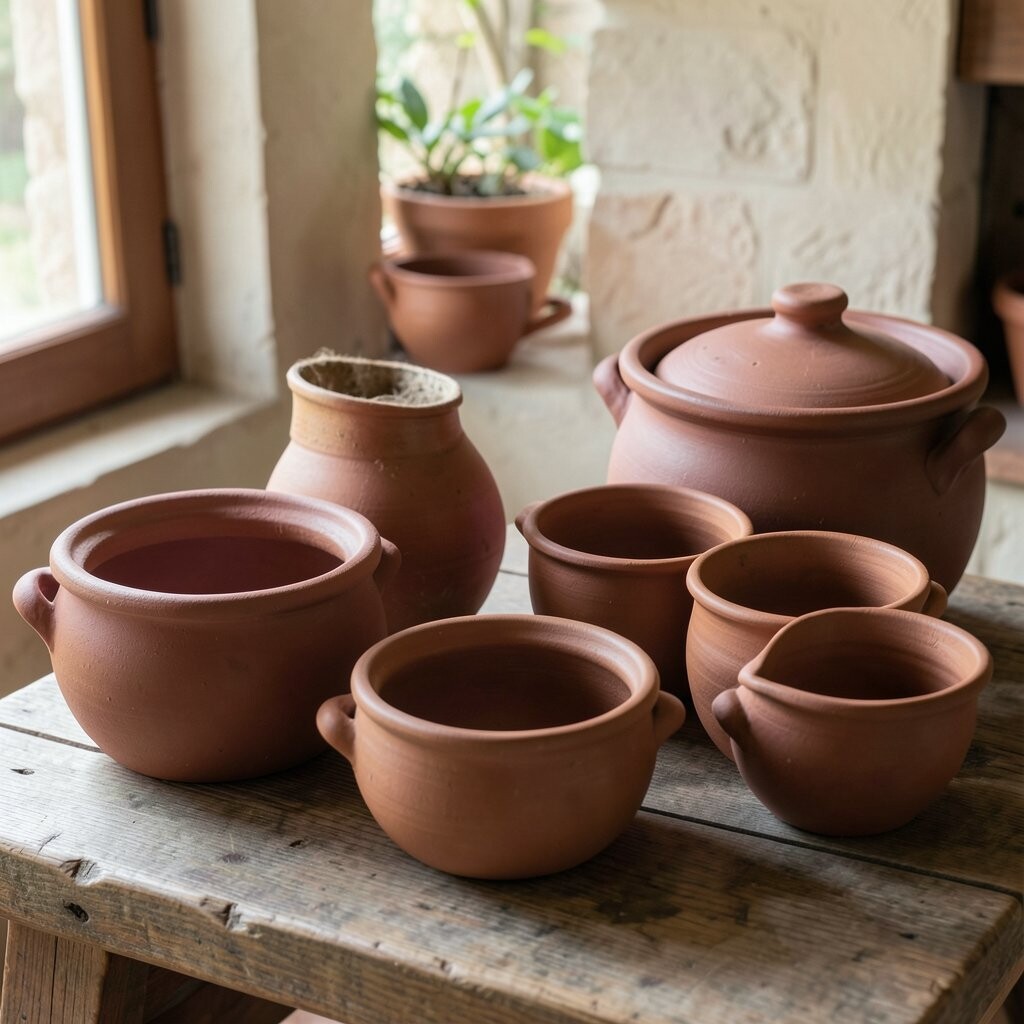
Clay pots bring earthy color and a dry, rough surface that feels honest and simple. Their shape and finish can make even a shelf corner look thoughtful.
Use them for herbs, utensils, or just as display pieces near a sunny window. Unglazed clay is usually less expensive than fancy decor, which makes this an easy way to build texture on a budget.
Try mixing tall and short pots so the arrangement feels relaxed. A few small imperfections are a good thing here, since they add to the handmade charm.
Fresh basil or rosemary in a clay pot adds scent as well as style. That extra layer makes the kitchen feel alive and inviting.
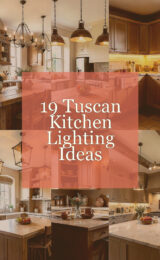
16. Hammered Metal Lighting
Hammered Metal Lighting
Hammered metal lights bring tiny dents and soft reflections that feel full of character. The surface catches light in a lively but gentle way.
Choose pendants or a lantern-style fixture above the island for a Tuscan glow. Bronze, copper, and dark iron finishes work well with wood, stone, and plaster.
These lights can range from affordable to high-end, so there is room for many budgets. If you want a custom look without the custom price, shop for a simple shape with a textured finish.
Pair them with warm bulbs so the metal looks richer at night. The result is cozy, a little rustic, and easy to love every day.
17. Natural Fiber Rugs
Natural Fiber Rugs
Natural fiber rugs add a woven texture that feels soft and simple underfoot. Jute and sisal bring a dry, rustic look that suits Tuscan spaces well.
They can help define a kitchen zone, like the space in front of the sink or island. If you need more comfort, choose a rug with a padded backing or layer it over a washable base rug.
These rugs are often budget-friendly, though thicker weaves may cost more. Keep in mind that kitchens need easy cleaning, so pick a style that can handle crumbs and spills.
Neutral tones work best if you want the room to feel calm. A subtle border or woven stripe can add just enough detail without making the space busy.
18. Open Crockery Storage
Open Crockery Storage
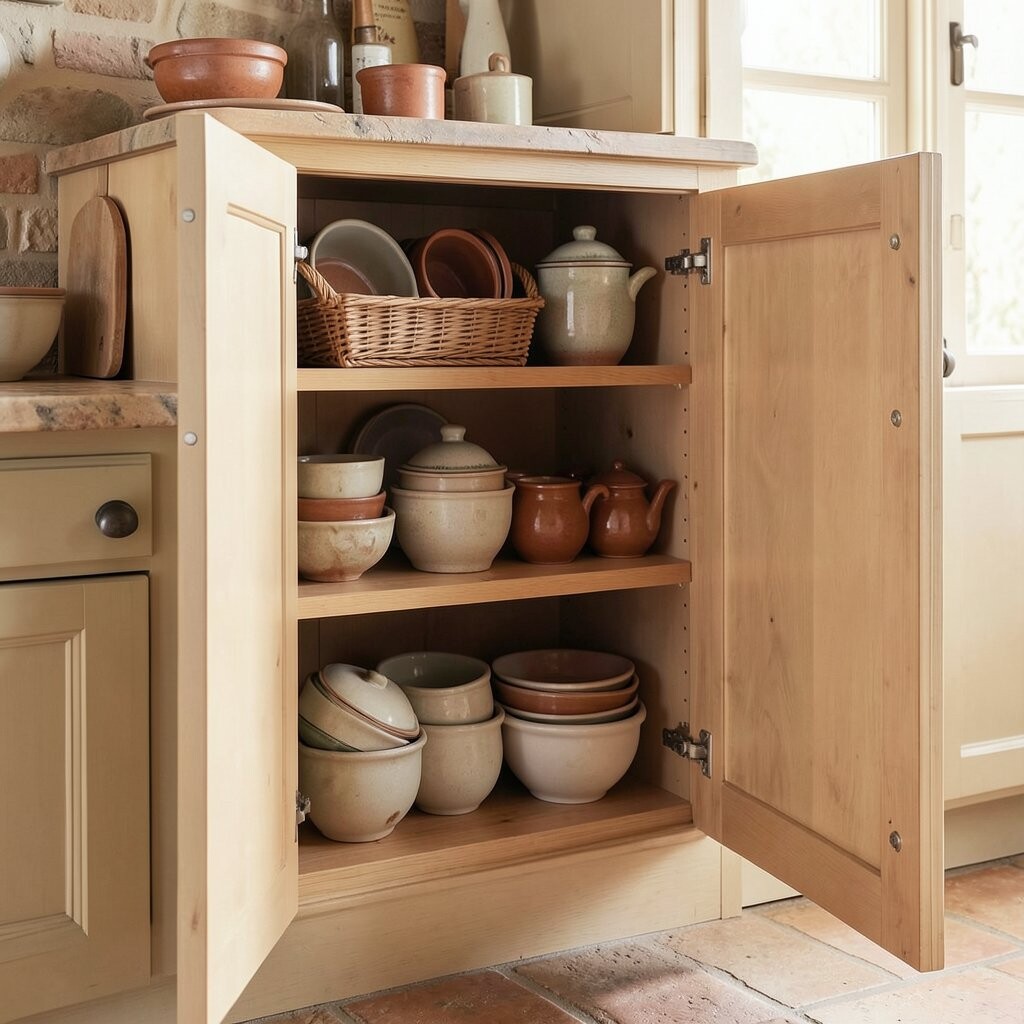
Open crockery storage turns plates and bowls into part of the texture plan. Stacks of stoneware and ceramic bring soft color and quiet shape to the room.
It is useful too, since the things you use most stay close at hand. Try mixing plain dishes with a few patterned pieces for a look that feels collected over time.
This idea costs little if you use what you already own. To keep it neat, choose a shelf or cabinet opening and stick with similar color families.
Muted greens, creams, and browns fit the Tuscan style best. The result feels warm, practical, and very personal.
Open storage also makes it easy to refresh the room with the seasons. A new bowl set or woven tray can change the feel without a big update.
19. Tumbled Marble Surfaces
Tumbled Marble Surfaces
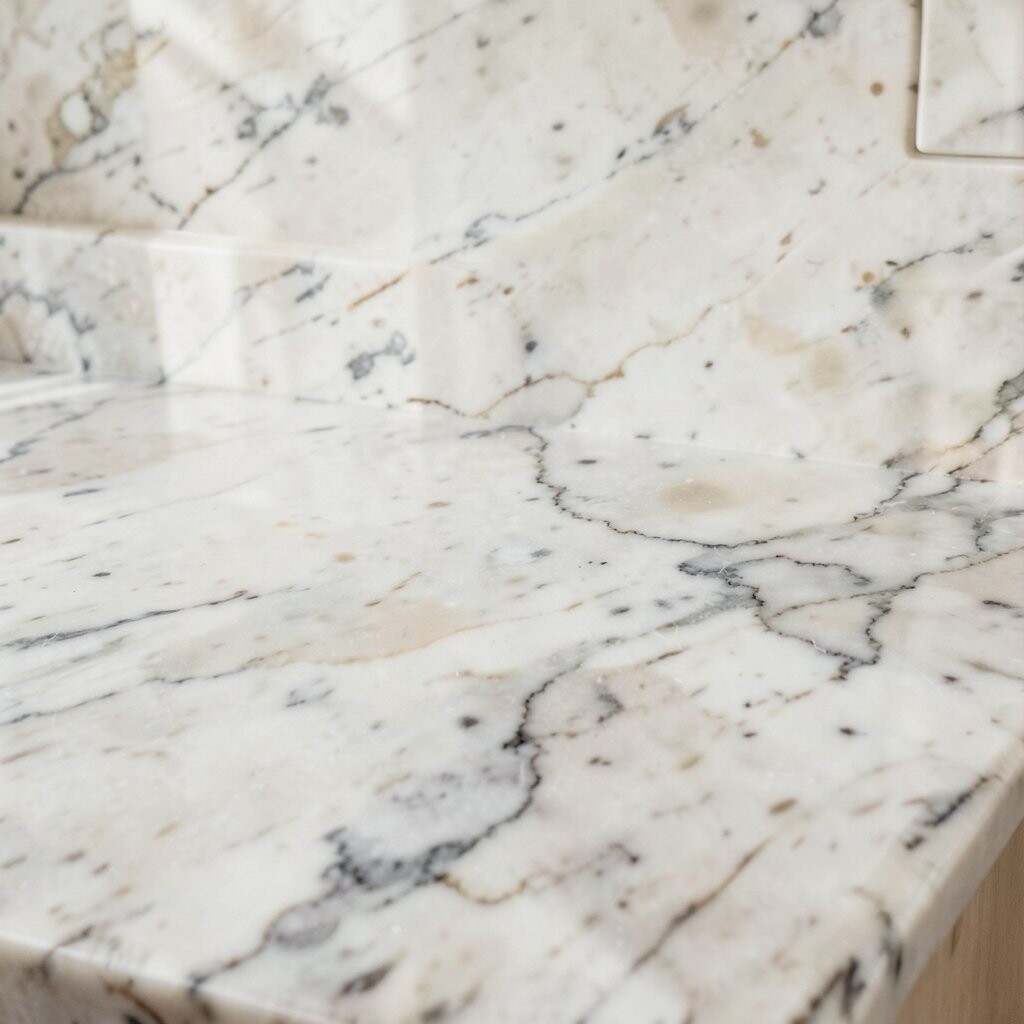
Tumbled marble has soft edges and a slightly worn surface that feels gentle and classic. It adds movement without looking too polished or new.
Use it for backsplashes, floors, or a small accent wall near the sink. The subtle texture pairs nicely with wood grain and aged metal, which helps the whole room feel connected.
Marble can be a bigger expense, so smaller areas are a smart place to use it. A tumbled finish also helps the stone feel less formal and more relaxed for daily life.
This look is still popular because it feels elegant but not stiff. If you want more color, choose marble with soft gold or gray veining.
20. Carved Wood Details
Carved Wood Details
Carved wood details bring a touch of art into the kitchen. A carved cabinet panel, chair back, or corbel can make the room feel rich and old-world.
These details give the eye something special to rest on, which helps busy kitchens feel more personal. They can be simple or ornate, so you can match them to your comfort level and budget.
If custom carving is too costly, look for ready-made trim pieces or furniture-style cabinet fronts. A small amount goes a long way, especially when the rest of the kitchen stays calm and simple.
Warm stains and soft cream paint both work well with this finish. It adds a sense of craft that feels right at home in a Tuscan setting.
21. Mixed-Texture Layering
Mixed-Texture Layering
Mixed-texture layering is what makes a Tuscan kitchen feel full and lived in. When stone, wood, metal, fabric, and clay sit together, the room gains depth and warmth.
Try blending smooth counters with rough walls, or soft curtains with sturdy beams. The best spaces balance hard and soft surfaces so nothing feels too flat or too busy.
This approach is very flexible, which makes it good for all kinds of homes and budgets. Start with one main texture, then add small touches until the room feels complete.
Personal touches matter most here, like a family board, a favorite jug, or a handwoven runner. The kitchen becomes cozy because it reflects real life, not just a style list.
Current design trends still lean toward layered, natural rooms that feel calm and easy to use. Tuscan texture fits that mood well because it feels warm, timeless, and wonderfully human.