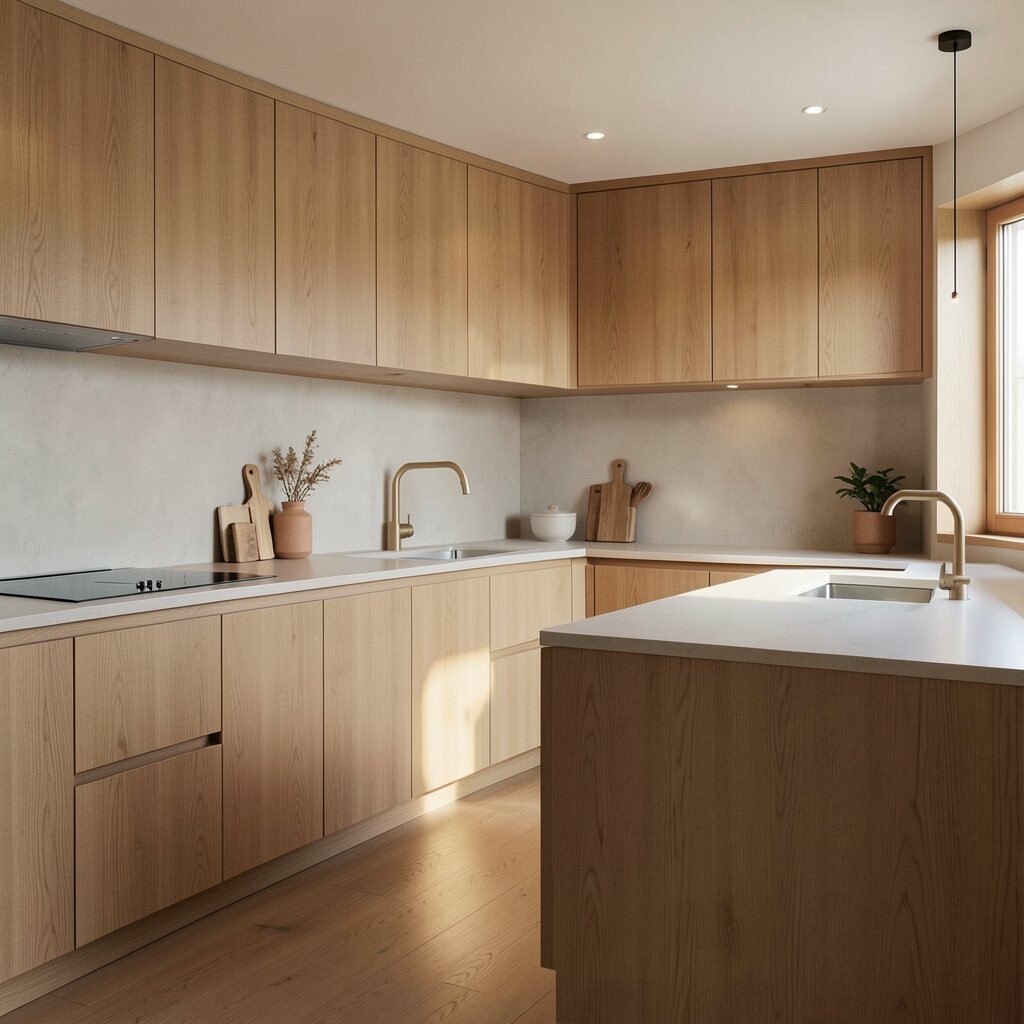
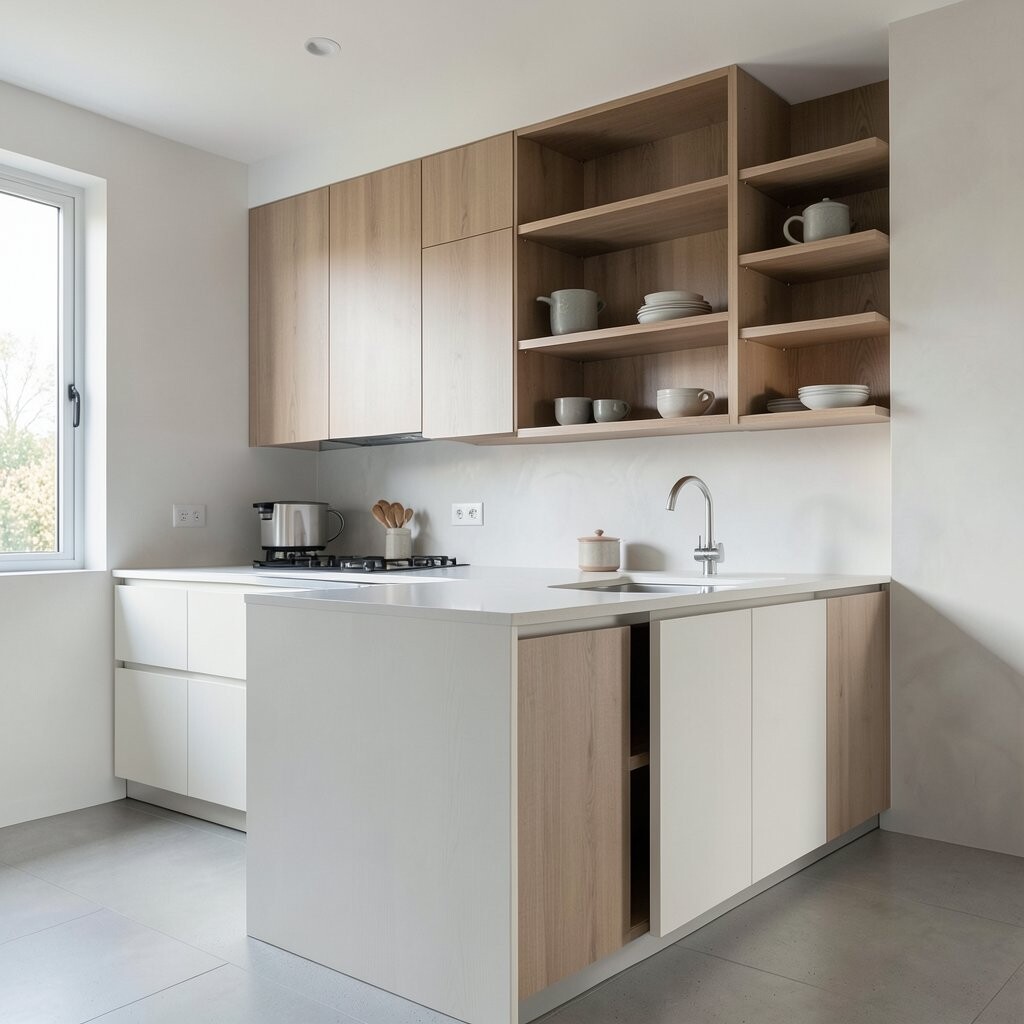
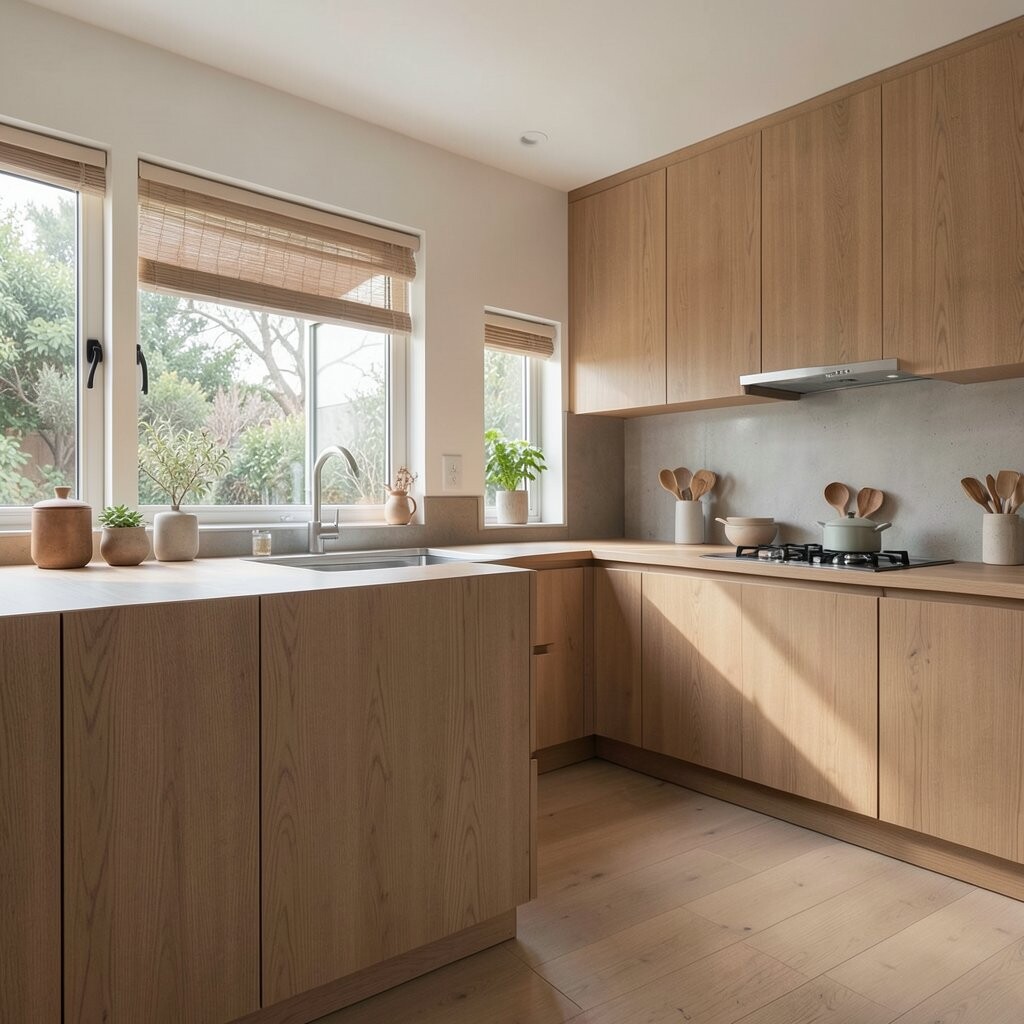
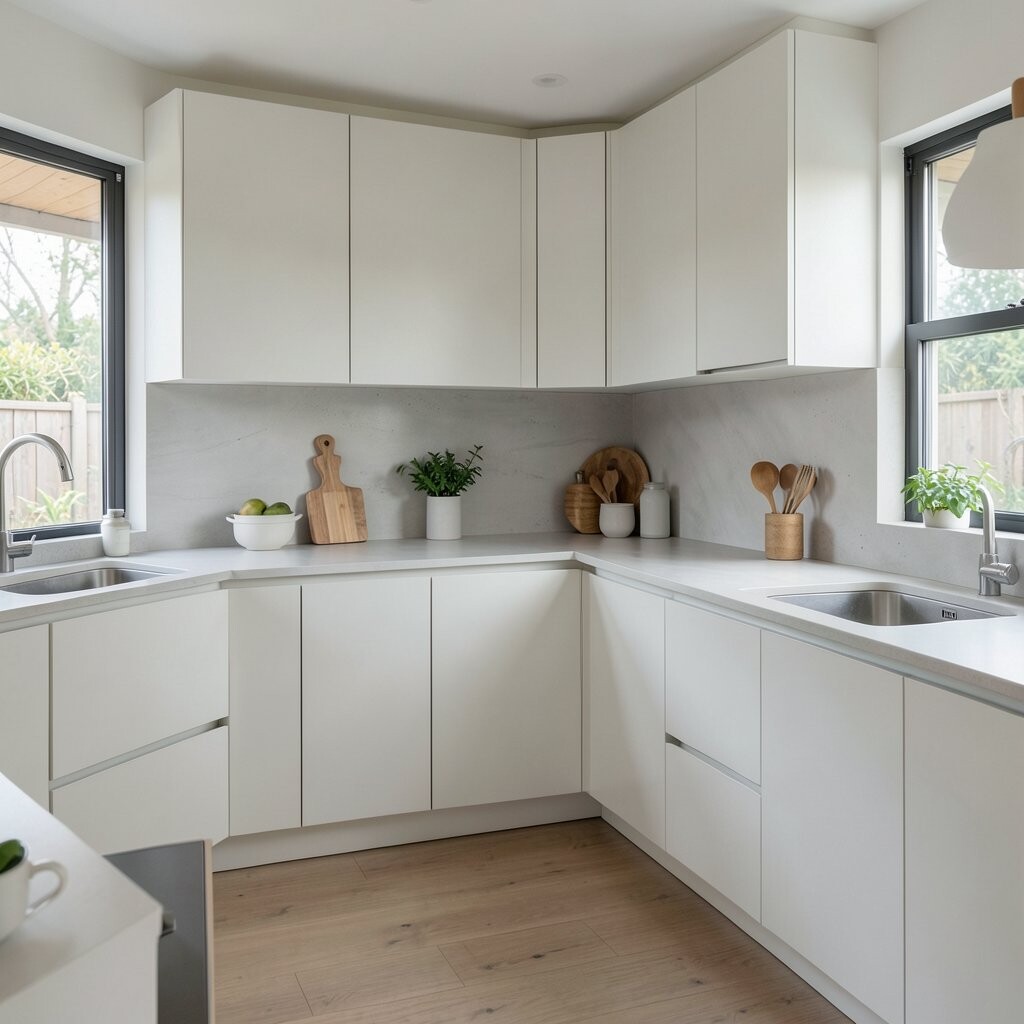
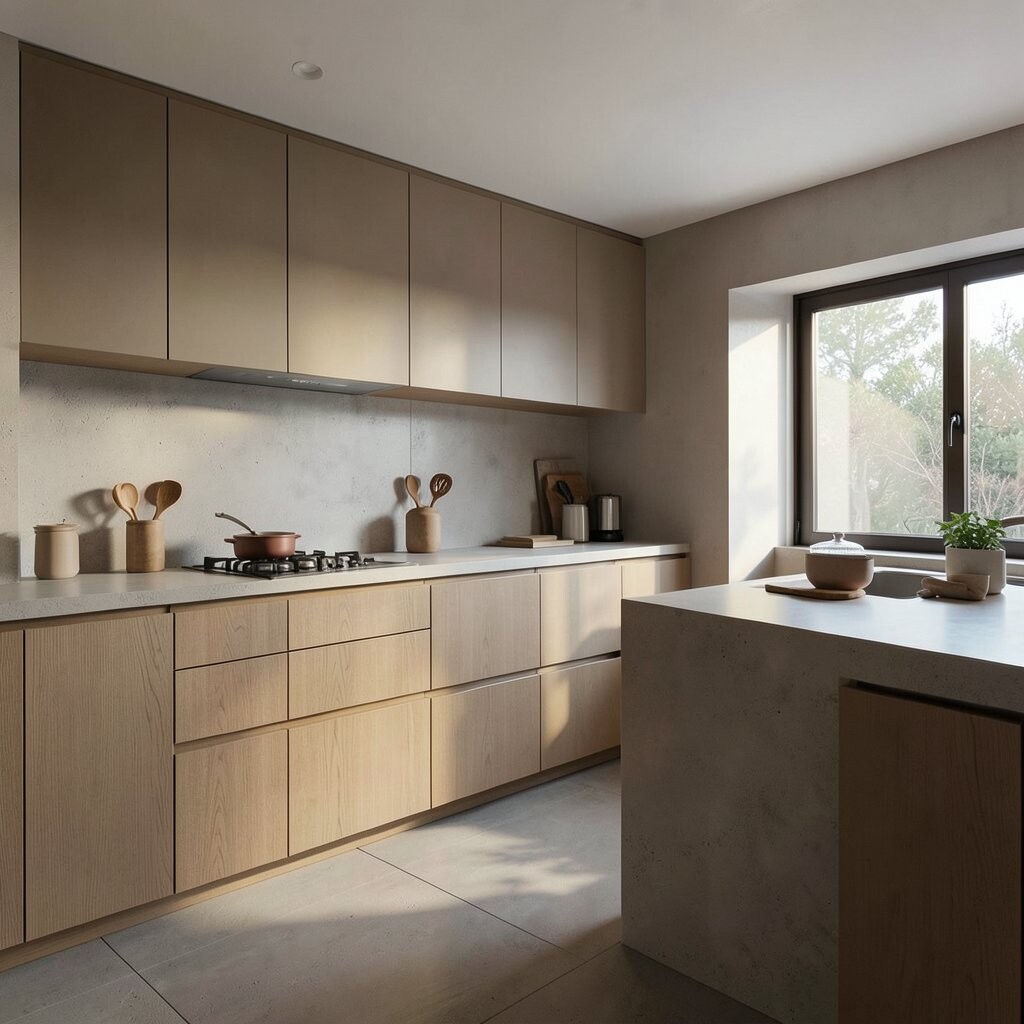
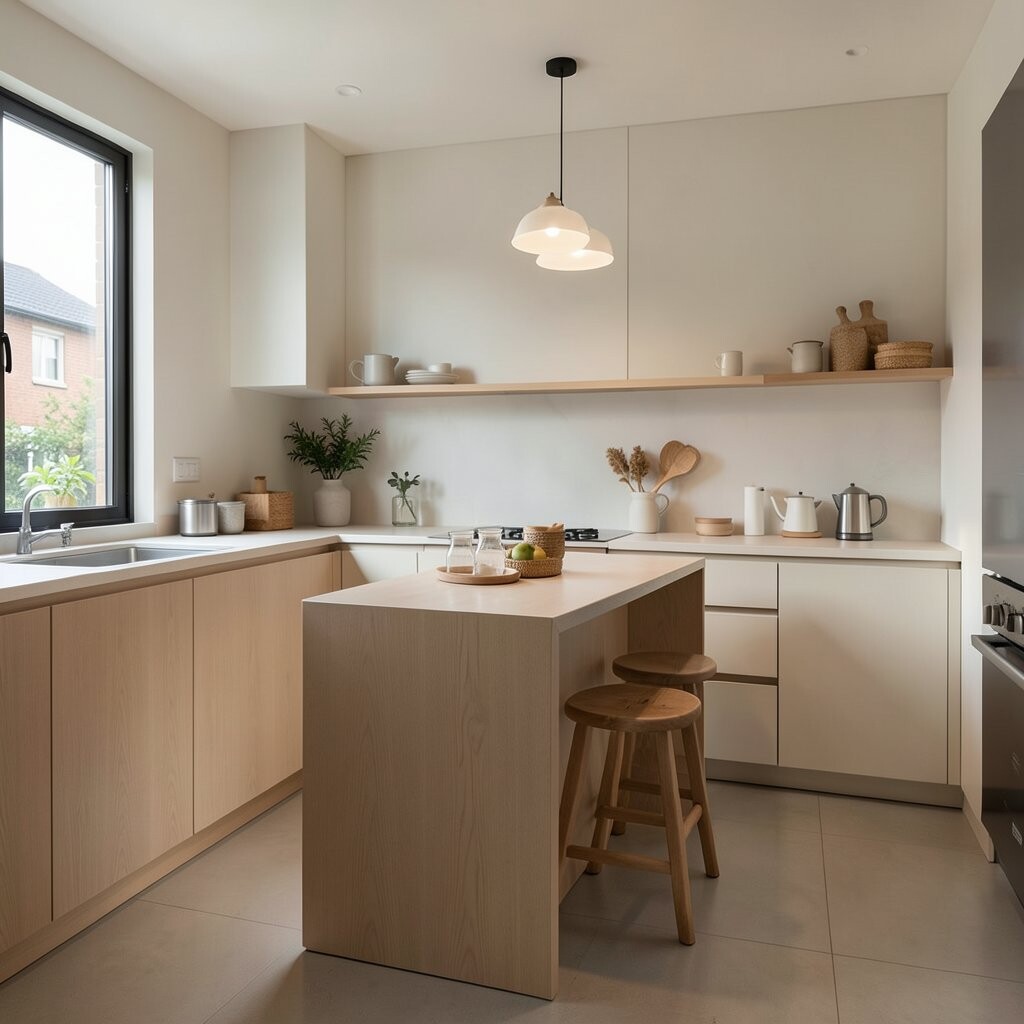
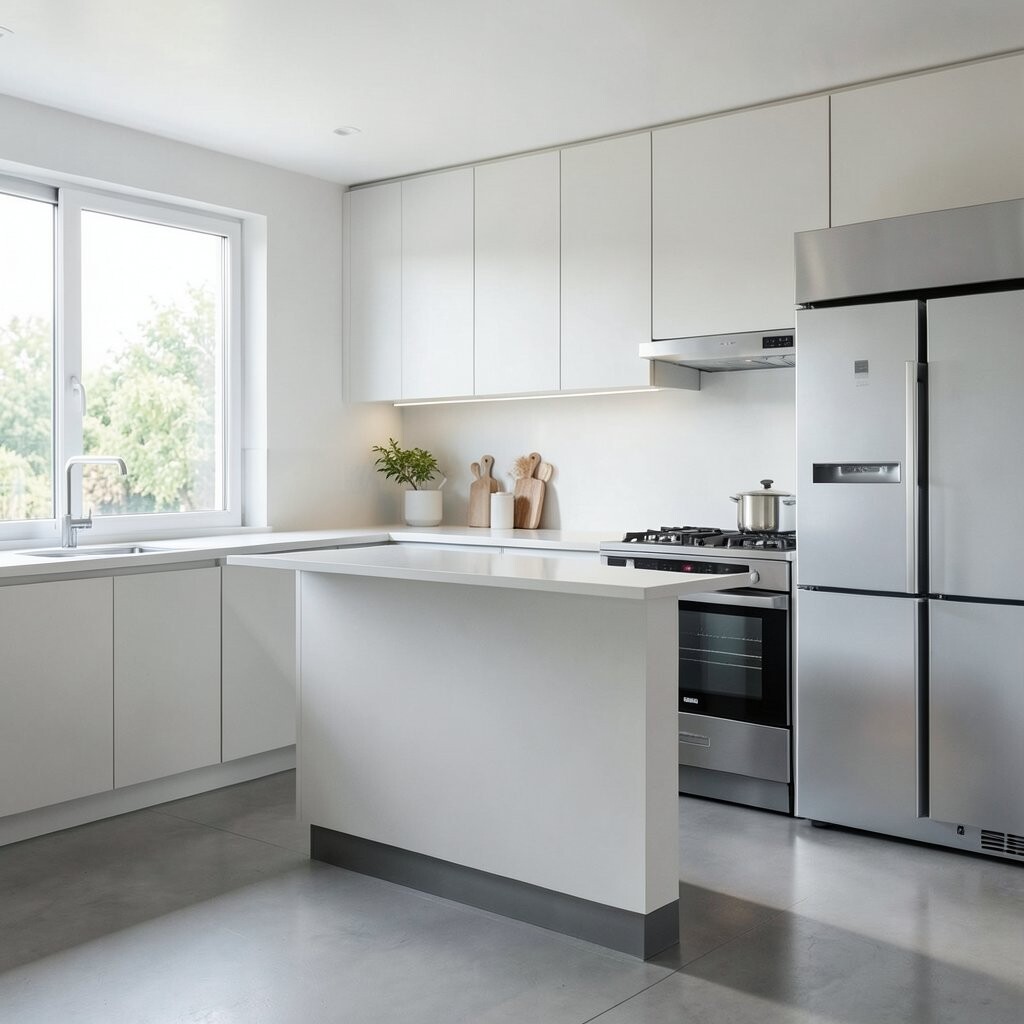
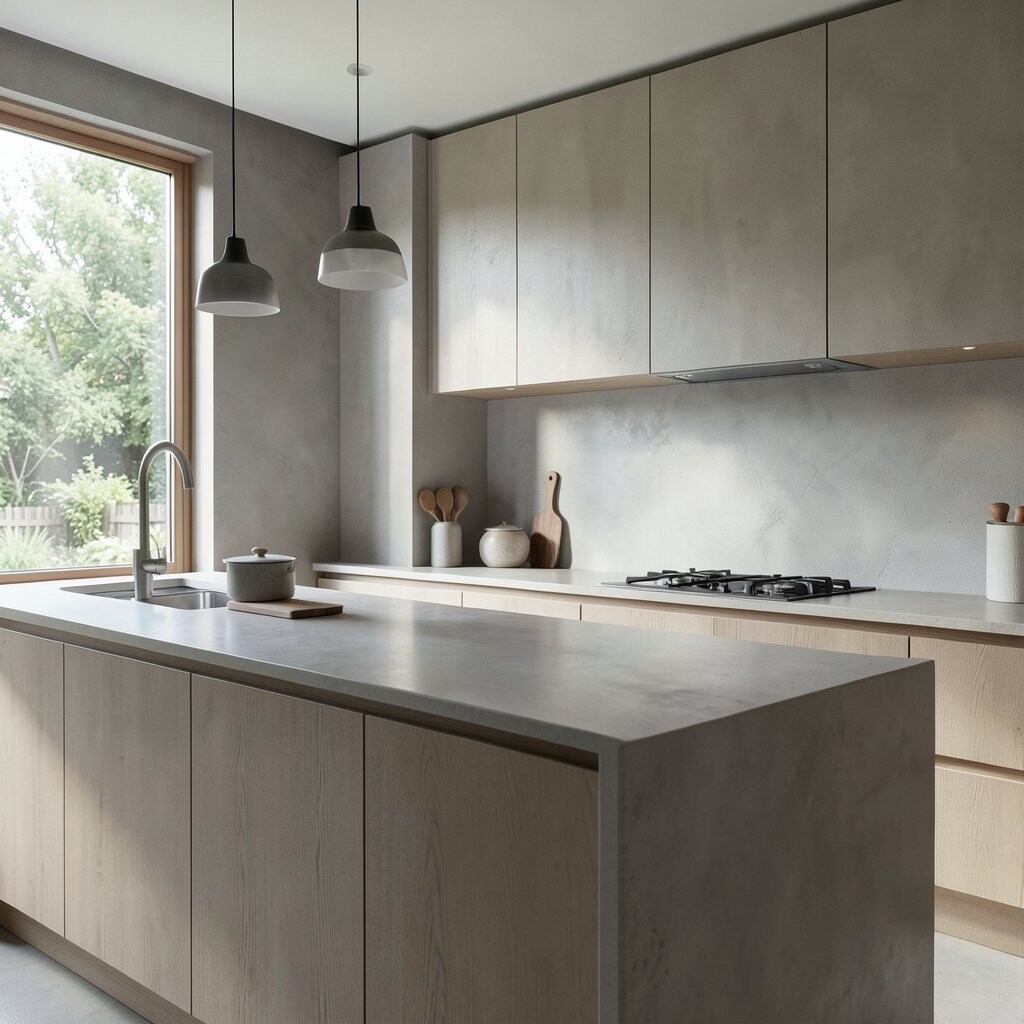
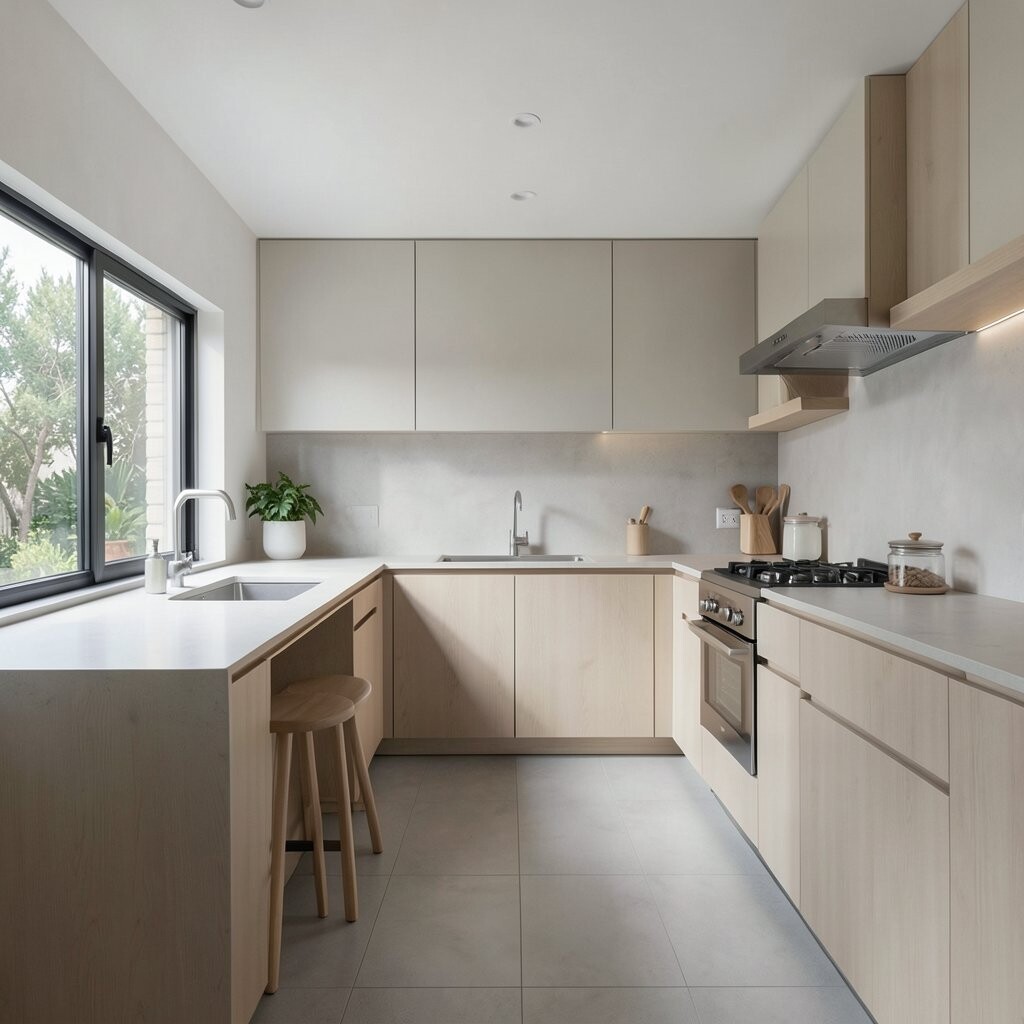
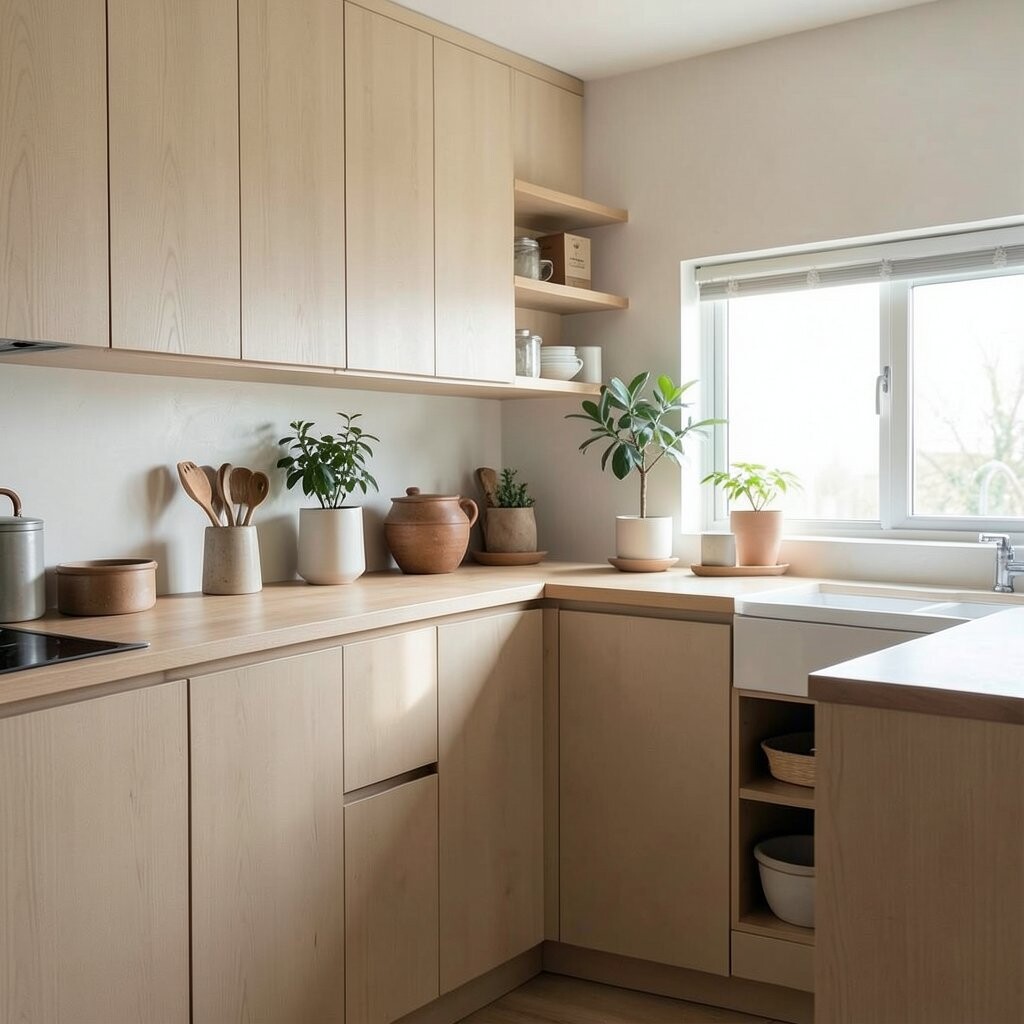
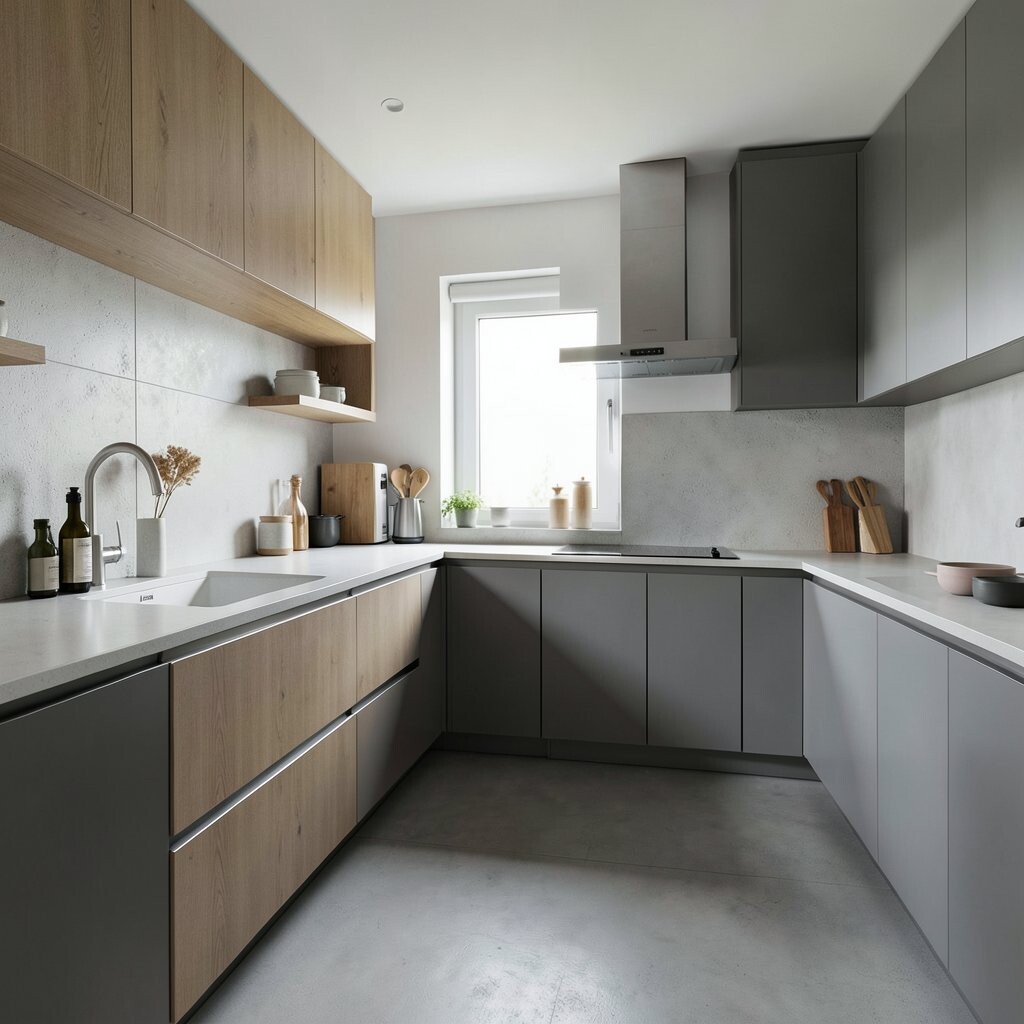
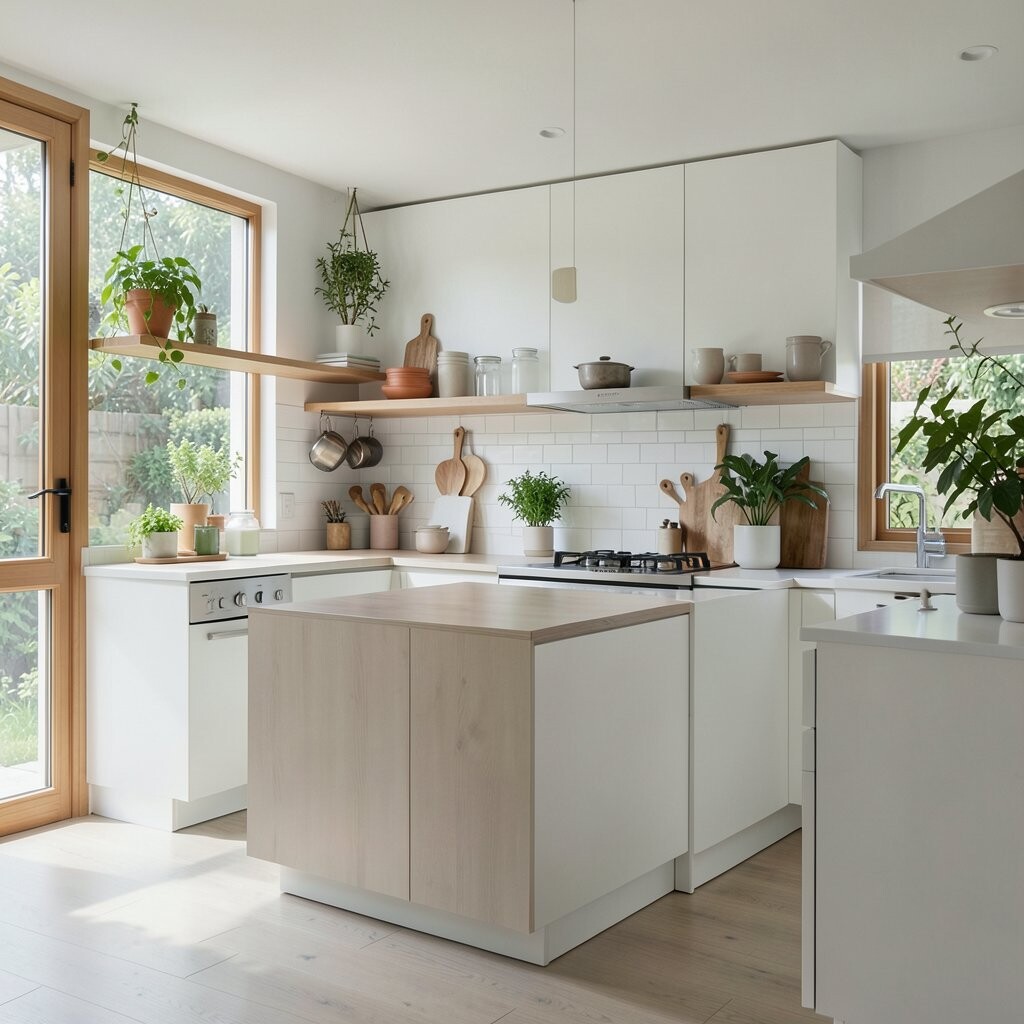
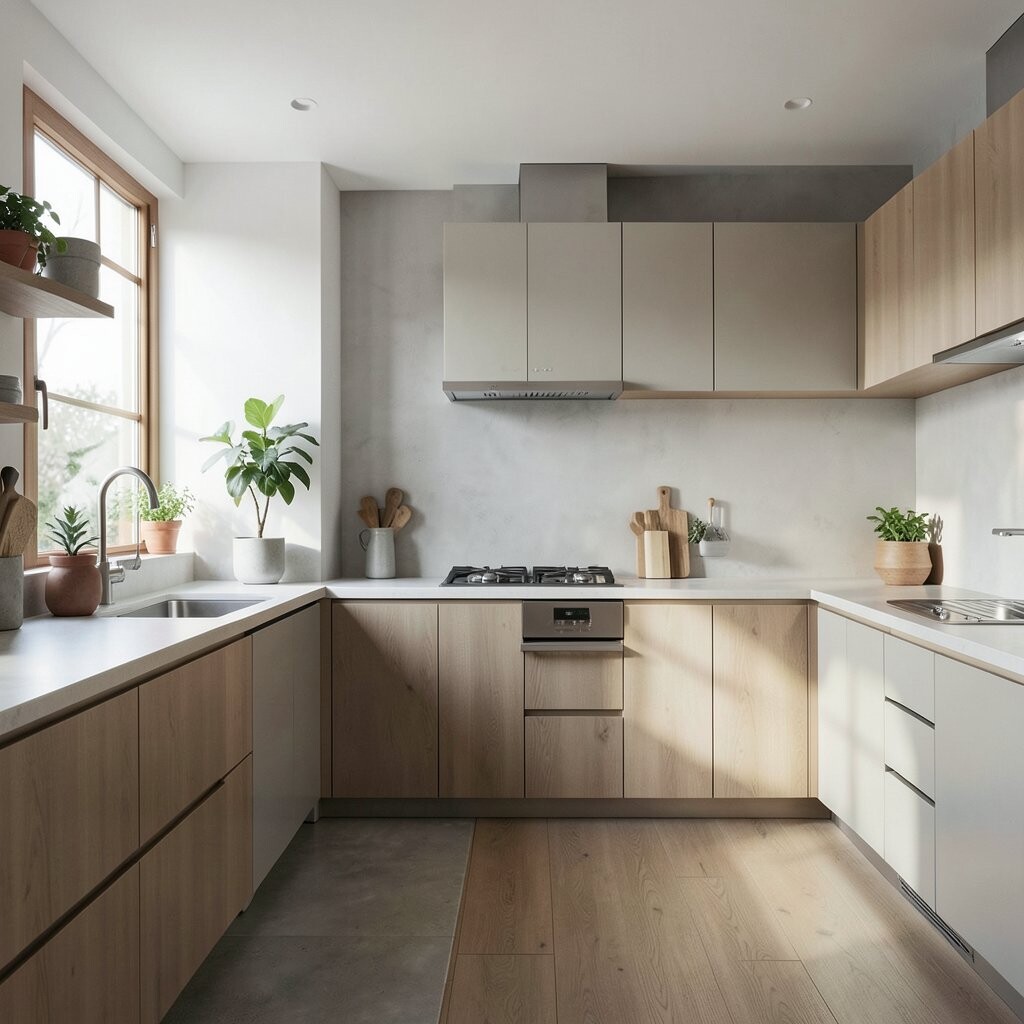
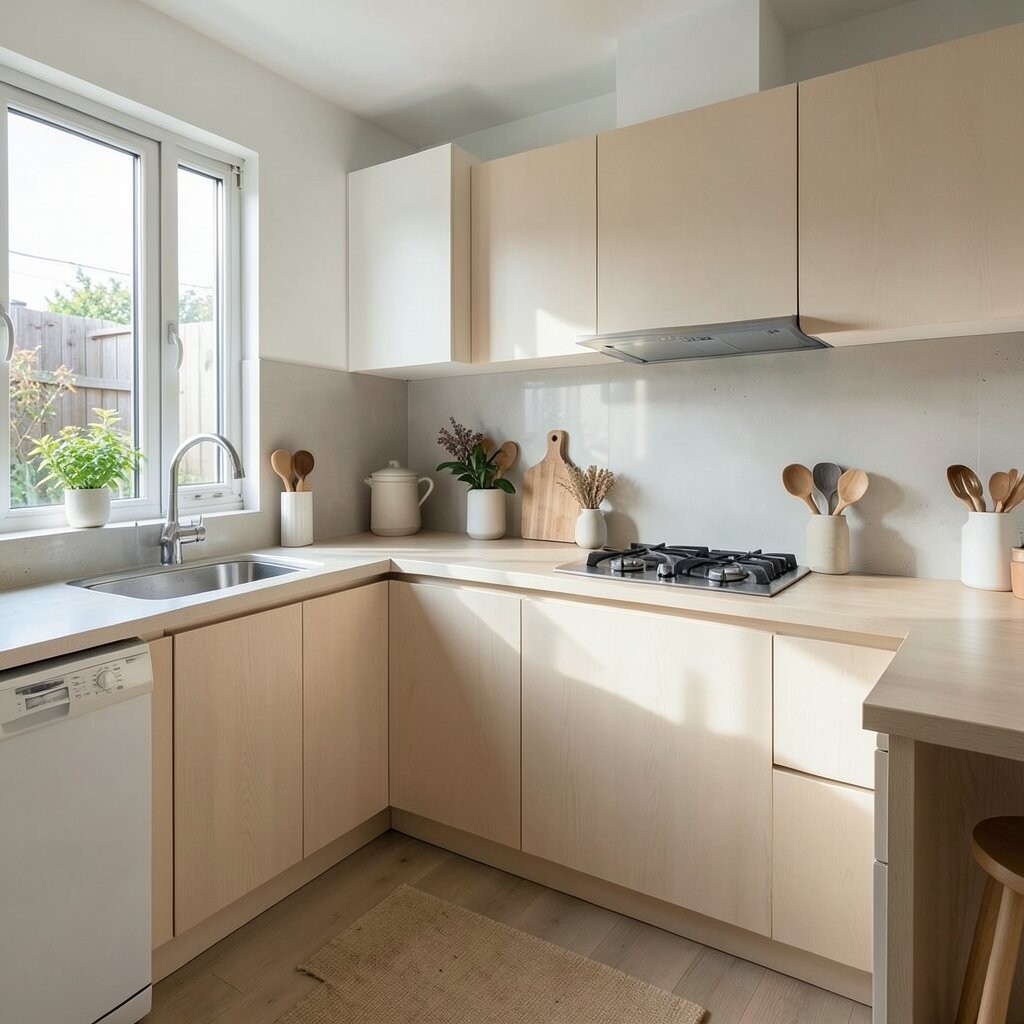
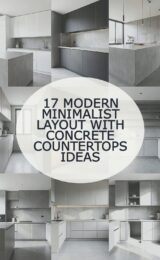
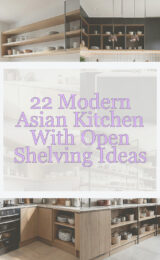
An Asian kitchen often starts with natural wood, smooth edges, and a peaceful flow. A minimalist kitchen uses the same calm feeling, but strips away extra detail so the room feels open and light.
Both styles can make a small room feel more restful and easier to use. Try pale oak, bamboo, or matte beige cabinets if you want that quiet look without spending too much. Add one or two handmade pieces, like a ceramic bowl or woven tray, to give the room a personal touch.
2. Clean Counters with Hidden Storage
Clean Counters with Hidden Storage
These kitchens look their best when the counter stays clear and simple. Hidden storage helps keep pans, spices, and small tools out of sight, which makes the whole room feel neat.
Asian-inspired spaces often use sliding doors or built-in shelves for a tidy feel. Minimalist kitchens love flat-front cabinets and push-open drawers, and both styles can save time during cleanup. If you are watching your budget, choose smart organizers instead of a full remodel so you get the look for less.
Open counters also make cooking feel less crowded. A few labeled jars and a single cutting board can give the room style without making it feel busy.
3. Soft Lighting and Gentle Shadows
Soft Lighting and Gentle Shadows
Lighting can change the whole mood of the kitchen in a big way. Asian kitchen designs often use soft warm light that feels cozy and calm.
Minimalist kitchens may use hidden strip lights or simple pendant lamps for a clean look. Both styles work well with dimmable bulbs, which help make dinner time feel relaxed and morning prep feel bright. For a fresh trend, many homes now mix warm lighting with natural textures so the kitchen feels modern but still welcoming.
Paper lantern styles or frosted glass shades can bring in a gentle glow. Choose fixtures that match your cabinet color so the space feels planned and polished.
If you want a low-cost update, swap harsh white bulbs for softer ones. That small change can make the whole room feel more inviting right away.
4. Open Shelves or Hidden Cabinets
Open Shelves or Hidden Cabinets
Open shelves can make an Asian kitchen feel airy and lived-in, while minimalist kitchens often lean toward closed cabinets. Each choice changes how much of your dishes and tools are on display, so the room can feel more lively or more quiet.
Use open shelves to show off pretty bowls, tea cups, or jars with dry goods. Closed cabinets are better if you want a neat look with less visual clutter, and they are great for busy families. A mix of both can give you style and function without raising the cost too much.
5. Natural Materials That Feel Honest
Natural Materials That Feel Honest
Wood, stone, clay, and woven textures help both styles feel real and warm. Asian kitchen design often favors materials that bring a strong link to nature, while minimalist kitchens use them in a more simple and smooth way.
Think of a stone backsplash, a wooden table, or a rattan basket beside the sink. These pieces add character without needing bright colors or fancy shapes, which keeps the room calm. If you want a current look, mix matte finishes with one raw texture so the space feels modern but not cold.
Natural materials can also age well, which is great for long-term value. You may spend a little more at the start, but the room can stay beautiful for years.
Pick one feature to highlight, like a wood island or a stone prep wall. That simple choice can make the kitchen feel special without turning it busy.
6. Smart Layouts for Small Spaces
Smart Layouts for Small Spaces
Small kitchens need good planning more than fancy decoration. Asian kitchen layouts often make use of every inch, and minimalist kitchens do the same by keeping the path open and clear.
Try a narrow prep zone, a wall-mounted rack, and a slim dining ledge if the room is tight. These ideas can make cooking feel easier and help you move around without bumping into things. Many people like this style because it looks neat and can save money on extra furniture.
Choose pieces that do more than one job, like a bench with storage inside. This keeps the room useful and gives it a clean, well-planned look.
7. Earthy Color Palettes
Earthy Color Palettes
Soft browns, sand, cream, sage, and charcoal fit both Asian and minimalist kitchens very well. These colors feel easy on the eyes and help the room stay calm even when it is full of activity.
An Asian-inspired room might use deeper tones with richer wood grain. A minimalist kitchen often stays lighter, with white, beige, and gray leading the way. If you want a fresh trend, add one muted green or clay accent so the space feels current but still peaceful.
Paint is one of the cheapest ways to change the whole look. A careful color choice can make even basic cabinets feel more stylish and thoughtful.
Keep the palette tight so the room does not feel noisy. That makes it easier to match dishes, towels, and small decor pieces.
8. Tea Corners and Quiet Ritual Spaces
Tea Corners and Quiet Ritual Spaces
A small tea corner can give an Asian kitchen a lovely sense of calm. Minimalist kitchens can use the same idea, but with fewer items and a cleaner setup.
Place a kettle, a tea tray, and a few cups on a small shelf or cart. This creates a special spot for slow mornings and relaxed evenings, which adds comfort to daily life. You can personalize it with your favorite mugs, a family teapot, or a tiny plant for a fresh touch.
9. Streamlined Appliances with a Sleek Look
Streamlined Appliances with a Sleek Look
Big appliances can take over a kitchen if they are not chosen carefully. Both styles look better when appliances blend in instead of shouting for attention.
Panel-ready fridges, flat cooktops, and simple hood designs fit the minimalist mood very well. In Asian-inspired rooms, stainless steel and compact appliances can still work if they are arranged in a neat and balanced way. If your budget is tight, focus on matching finishes rather than buying the newest model.
Small upgrades can also help, like a toaster in a soft color or a kettle with a simple shape. These tiny choices can make the room feel coordinated and fresh.
Try to group appliances in one area so the counters stay open. That makes cleaning faster and keeps the eye moving smoothly around the room.
10. Texture That Adds Quiet Interest
Texture That Adds Quiet Interest
Texture gives a room depth without adding clutter. Asian kitchen design often uses woven, brushed, and grainy surfaces to create warmth, while minimalist design keeps the same idea but in a more controlled way.
Think of a ribbed cabinet front, a stone bowl, or a linen curtain by the window. These small details make the room feel fuller and more inviting. A textured backsplash is a smart trend because it adds style without needing bright colors or extra decoration.
Keep the shapes simple so the textures can do the talking. This helps the room feel calm instead of busy.
11. Balanced Symmetry and Calm Flow
Balanced Symmetry and Calm Flow
Symmetry can make a kitchen feel steady and pleasing to the eye. Asian kitchens often use balance in the placement of furniture, art, and cooking tools, while minimalist kitchens rely on order and clean lines.
Try matching stools, twin pendant lights, or shelves that sit at the same height. This gives the room a peaceful rhythm and makes the layout easier to read. It can also help a smaller kitchen feel more put together without much extra cost.
Personal touches still matter, so you do not need perfect mirror images everywhere. A single vase or bowl in the center can warm up a balanced layout and keep it from feeling too strict.
Use this idea if your kitchen feels messy even when it is clean. Good balance can make the whole space seem calmer right away.
12. Sliding Doors and Space-Saving Moves
Sliding Doors and Space-Saving Moves
Sliding doors are a smart match for both kitchen styles. They save space, look neat, and can make a room feel more modern.
Asian-inspired kitchens often use them to soften the transition between rooms. Minimalist kitchens like them because they keep the walls and walkways open. If you want a cost-friendly choice, consider a sliding pantry door or a simple glass divider instead of a full renovation.
Frosted glass or light wood can keep the area bright while still giving privacy. This is a great way to make a home feel larger without adding square space.
Choose hardware that matches your cabinet finish so the look stays smooth. Even small details like handles can help the whole design feel polished.
13. Simple Decor with Meaning
Simple Decor with Meaning
In both styles, decor works best when it means something. A kitchen does not need many objects to feel warm and personal.
A framed print, a tea tin from a trip, or a bowl made by a local artist can give the room a story. Asian kitchen spaces often welcome meaningful decor, while minimalist kitchens prefer just a few well-chosen items. This keeps the room from feeling crowded and helps the design stay easy to clean.
Pick decor that also serves a purpose when you can. A pretty tray, a useful spoon rest, or a strong cutting board can add style and function at once.
14. Bold Contrast Used in Small Doses
Bold Contrast Used in Small Doses
Sometimes a little contrast can make the whole kitchen pop. Dark and light together can look sharp in a minimalist kitchen, while Asian design may use contrast to highlight wood, stone, or black metal details.
Try black hardware on light cabinets, or a dark shelf against a pale wall. This creates a strong visual point without making the room feel heavy. If you are on a budget, hardware swaps and paint changes are two of the easiest ways to get this look.
15. Fresh Green Touches and Indoor Life
Fresh Green Touches and Indoor Life
Plants bring life into both Asian and minimalist kitchens. They add color, softness, and a sense of care without needing much space.
Small herbs on a sill, a bamboo plant near the sink, or a single leafy branch in a vase can make the kitchen feel lively. The trend toward indoor greenery is strong because it makes rooms feel healthier and more welcoming. You can personalize the look by choosing herbs you cook with often, like basil or mint.
Use simple pots in clay, white, or woven styles to keep the look clean. That way the plants feel like part of the design instead of an extra mess.
Just a few green accents can brighten a kitchen that feels flat. They also give you something pleasant to care for during busy days.
16. Quiet Corners for Cooking and Rest
Quiet Corners for Cooking and Rest
A peaceful kitchen corner can make daily life feel softer and more organized. Asian kitchens often make room for a quiet prep space, while minimalist kitchens use empty space to create breathing room.
Set aside a small area for chopping, tea, or reading recipes without clutter. This kind of zoning helps the room work better and feel less stressful. A slim bench, a small stool, or a wall-mounted shelf can create that feel without much cost.
Use gentle materials and simple shapes in the corner so it feels like part of the whole room. When the eye sees fewer distractions, the kitchen seems bigger and more restful.
17. Mix of Old and New
Mix of Old and New
Many of today’s best kitchens mix old charm with new simplicity. That blend works well because it feels lived-in, useful, and current all at once.
You might pair a traditional wood table with plain cabinets or place a simple metal light above a vintage stool. Asian kitchen style often leans into heritage pieces, while minimalist kitchens reduce them to one or two strong accents. This mix can also help with cost since you may keep some older pieces instead of replacing everything.
Look for one item from the past and one item with a modern shape. Together they can tell a story that feels unique and easy to love.
18. Easy Personal Style That Still Feels Calm
Easy Personal Style That Still Feels Calm
The best kitchen is the one that fits your life, not just a picture online. You can keep an Asian-inspired kitchen warm and rooted, or a minimalist kitchen neat and bright, while still making it feel like yours.
Start with the colors, textures, and storage style that match your daily habits. Then add personal touches, like a special teapot, family photos in simple frames, or favorite bowls that make cooking feel happy. Current design trends still favor calm rooms, natural finishes, and thoughtful details, so both styles can stay fresh for a long time.
Keep your choices simple, useful, and easy to live with. That way the kitchen stays beautiful, comfortable, and ready for real everyday moments.