
Your mugs deserve a shelf that feels calm, not chaotic. Once you fix the clutter, even making coffee feels smoother.
1. Categorize by Mug Style and Use

Start by grouping your mugs like you’re setting up for different moods. Put everyday mugs together and save the fancy ones for special days.
When everything has a home, you waste less time hunting for the right size. A simple method is to sort by shape, like wide-rim mugs, tall travel mugs, and small espresso cups. If you label each group on the back of a shelf, you’ll keep the system going without extra effort.
2. Add Simple Shelf Dividers for Instant Order

Messy shelves often happen because mugs slide into each other. Dividers stop that and make your arrangement look tidy fast.
Use thin acrylic or wood panels to create lanes that match your mug sizes. Leave a little spacing so handles don’t bump and chip. If your shelves are uneven, cut or adjust dividers so they sit snugly.
For a budget-friendly option, you can repurpose cutting boards as dividers. This gives you a functional “fence” and adds a bit of warmth to the shelf.
3. Turn a Ledge into a Handle-Friendly Mug Zone
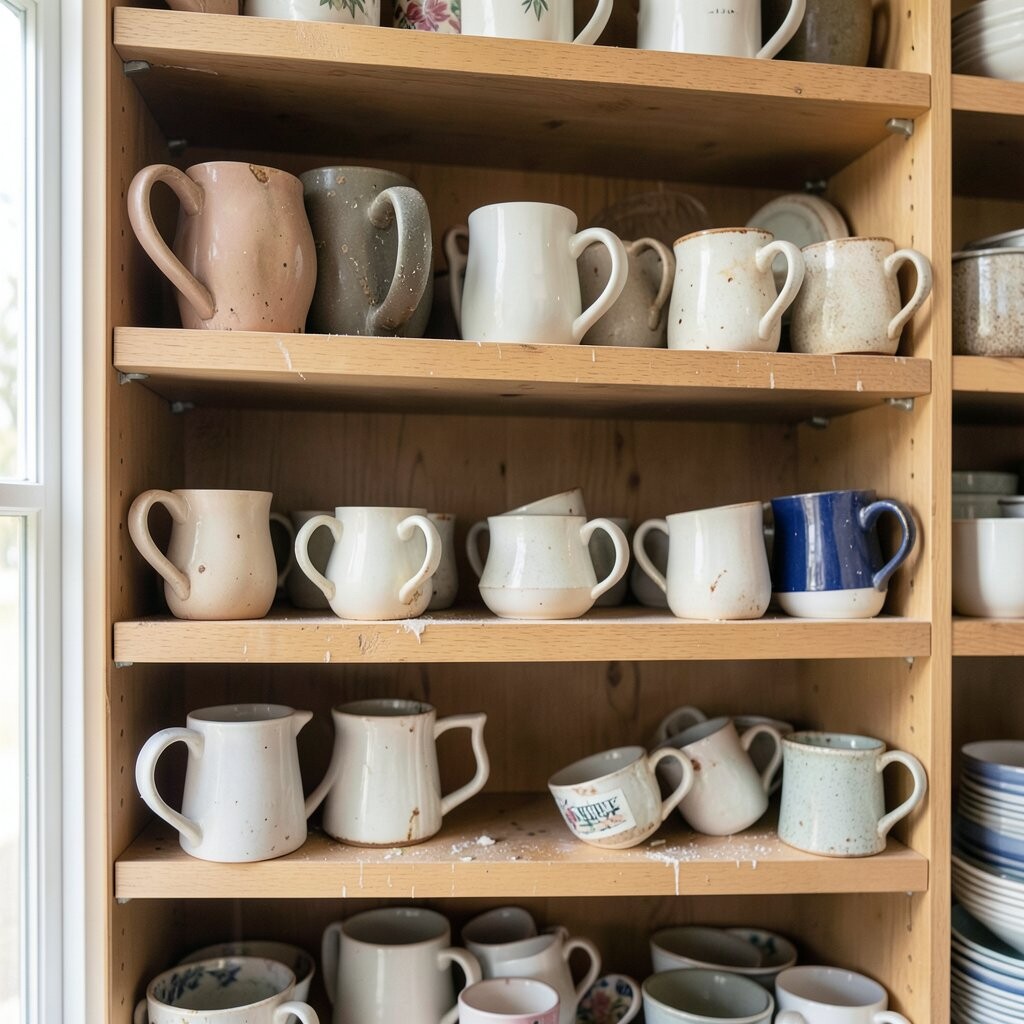
Handles are the first thing that gets tangled when shelves get crowded. A small ledge or raised rail keeps mugs from twisting and clacking together.
You can create this with a narrow wooden strip or even a repurposed metal shelf edge. Place mugs so the handles face outward for easy grabbing. This small change makes the whole shelf look organized right away.
To personalize, match the rail color to your kitchen hardware, like black for modern looks. For practical setup, measure your tallest mug and leave clearance above the rail. That way, mugs won’t scrape when you pull them out.
If you’re concerned about cost, use wood scraps from a hardware store or check discount bins. Thrift shops sometimes have unused shelf components that work with minor adjustments.
4. Use a “First Grab” Front Row

Put the mugs you reach for most at the front of the shelf. This prevents constant rearranging and keeps the rest undisturbed.
Try placing travel mugs or morning favorites where your hand lands naturally. Keep rarely used mugs slightly back or on a higher spot. You’ll still see everything, but you won’t keep bumping the same items.
5. Add Labels That Match Your Shelf Style

Labels make organization feel less like work and more like design. They also help everyone in the house return mugs to the right place.
Use painter’s tape for temporary labels, then swap to cardstock or a label maker later. Choose a font or color that fits your kitchen theme, like soft neutrals for cozy spaces. You can label by “everyday,” “guests,” “tea,” or “hot cocoa.”
If you love current trends, try minimal, modern label tags or small chalkboard stickers. They’re inexpensive, easy to replace, and look clean on wooden shelves.
6. Use Vertical Spacers to Prevent Clutter Drift

When there’s too much empty space, mugs can drift forward and pile up again. Vertical spacers help them stay aligned and upright.
Make spacers with foam blocks, cork sheets, or small felt-covered stands. Place them between mug rows so the base can’t slide. This also protects finishes by reducing rubbing between mugs.
To keep it practical, use spacers that won’t scratch—felt is a quick fix. For personalization, paint spacers to match your shelf or leave them natural for an earthy vibe. If your shelves are deep, combine spacers with a front stopper so mugs stay put.
7. Create a “Stack and Rotate” System for Extra Sets

If you own more mugs than shelf space, stacking helps, but only when it’s organized. A stack-and-rotate system keeps the “extra” mugs tidy and easy to access.
Set aside a specific stack spot, then rotate your mugs by date or use frequency. For example, when you grab a mug from the back of the stack, move it to the front. That prevents old stacks from becoming forgotten mess.
For uniqueness, use a tray to hold stacks so they look intentional instead of piled. Add a cloth napkin or a simple coaster under the tray for a cleaner look. This method works well for seasonal mugs, too.
8. Add a Hanging Rack or Pegs Before You Rearrange Everything

Even if your shelves are the focus, a small hanging area can reduce shelf crowding. Pegs or hooks give mugs a second option that looks stylish.
Choose hooks that support handles without crushing them. If you hang mugs, keep heavier ones on lower hooks and lighter ones above. This keeps the display secure and prevents awkward wobbling.
To make it feel intentional, mix mugs by color or pattern on the hanging side. You can also keep matching sets together for a curated look. For practical tips, leave space between hanging mugs so they don’t knock when you grab one.
Cost varies, but you can keep it budget-friendly with a small peg rail and basic hooks. Look for hardware-store sales or repurpose an old utensil bar if it fits your style.
9. Protect Your Shelf with Liners and Non-Slip Layers

Many messy shelves aren’t just about arrangement—they’re about slipping. A non-slip liner helps mugs stay still and keeps the shelf surface cleaner.
Use silicone shelf mats, grippy rubber pads, or even a cut piece of cork. This reduces scraping and makes mugs easier to reposition without sliding. It also helps with light spills because the liner catches drips.
For personalization, pick liners that match your kitchen color palette, like neutral beige or soft gray. If you’re going for a trendier look, textured liners mimic modern “spa-like” home vibes. A simple liner can make your organization feel upgraded without major changes.
If your shelves are already scratched, liners hide wear and extend the life of the surface. It’s a smart, low-effort move that looks good immediately.
10. Arrange by Size with a Clear “Tall-to-Short” Flow

One of the quickest ways to make a shelf look neat is using a clear size pattern. Try placing tall mugs on one side and moving down to smaller mugs.
This creates a visual rhythm, so the shelf doesn’t feel random. Keep similar widths together to avoid handle collisions. When your eyes can predict the layout, clutter feels less overwhelming.
You can also use a simple rule like “tall mugs at the corners, small ones in the center.” For personalization, rotate a favorite color mug through each shelf to create a highlight spot. This gives your display personality without making it busy.
11. Add a Small Tray or Basket for Loose Accessories

Messy shelves aren’t only mugs—things like stir sticks and packets can spread around. A tray or basket pulls those loose items into one tidy zone.
Choose a tray that matches your shelf height, so it doesn’t take up the mug space. Put things like tea bags, cocoa packets, or sugar packets in the same basket. That way, your shelf looks organized even when you keep essentials nearby.
To keep it unique, use woven baskets for warmth or sleek metal trays for a modern feel. If you prefer a low-cost option, repurpose a small storage bin with a fresh coat of paint. This is one of the easiest ways to reduce visual clutter instantly.
12. Use Shelf “Zoning” with Different Sections for Hot vs Cold

Separate mugs by how you use them and your shelf instantly feels easier. Hot drinks and cold drinks can look different, so treat them like different zones.
Place mugs meant for coffee and tea on one shelf area, and keep mugs for smoothies or water on another. This reduces the need to dig around when you’re in a hurry. You can also group by temperature features, like insulated tumblers on the cold side.
13. Install Adjustable Clips to Keep Mugs from Sliding

If your mugs keep migrating, a gentle grip can solve it. Adjustable clips add control without needing heavy furniture changes.
Look for shelf clips or cabinet organizers that clamp lightly and hold items in place. Position them at the edges of mug stacks so handles and bases stay aligned. This is especially helpful for shelves that are slightly angled or deeper than standard.
For personalization, choose clips in a finish that matches your kitchen hardware, like brushed nickel or matte black. When budgeting, search for multipacks, since clips are often sold in sets. This approach keeps your organization steady, even after frequent daily use.