
Glass cabinets can make your home feel brighter without removing privacy. When you choose the right style, they also help your everyday items look organized.
1. Start With the Right Purpose

Think about what you want your glass cabinets to do in your space. A display cabinet for dishes feels different from a storage cabinet for pantry items.
For a dining room, glass-front doors can show everyday dinnerware in an attractive way while keeping dust away. In a living room, cabinets with glass panels often work best for books, decor, and small collectibles because they create a neat “wow” moment. If you need practical storage, pair glass doors with drawers or shelves inside so you get both visibility and function.
2. Match the Style to Your Home’s Look

Glass cabinets look good in many design styles, but the frame and hardware decide how they blend. A modern home often prefers clean lines and simple metal frames.
For a farmhouse vibe, consider cabinets with thicker wood trim, warm finishes, and subtle hardware that feels friendly instead of shiny. For a classic or traditional interior, look for detailed molding or arched glass that feels elegant but not fussy. If your home leans contemporary, slim frames and minimal handles can make the cabinets feel light, even when they hold a lot.
Personalize by choosing a finish that already appears in your room, like matching your coffee table wood tone or coordinating with your door handles. When the cabinet’s “frame look” matches your existing style, the glass becomes a feature instead of an item that feels out of place. This is one of the easiest ways to make the cabinet look built-in, even if it isn’t.
3. Choose Clear, Frosted, or Mixed Glass

Glass choice changes both the mood and how much you can see. Clear glass gives a crisp view, while frosted glass creates a softer, calmer look.
If you want your shelves to feel airy, clear glass makes the cabinet look almost weightless. If you store items you don’t want on display, frosted or textured glass helps hide clutter while still adding openness. Mixed glass designs, such as clear doors over decorative shelves and frosted doors over storage, can feel especially thoughtful.
Pay attention to reflections too, because bright lights can make clear glass shine. In rooms with lots of windows, textured glass may look better during the day, since it reduces glare. For bathrooms or laundry spaces, frosted panels often feel more private without blocking the cabinet’s usefulness.
To make it practical, plan what you will show versus what you will hide. Dishes and favorite glassware can look beautiful behind clear panels, while spare linens can look calmer behind frosted sections.
4. Measure Space and Plan the Placement

Before you fall in love with a style, measure the wall and the area where the cabinet will sit. Glass cabinets need enough clearance for doors to open smoothly.
Check both width and depth, including handles and any trim that sticks out. If you plan to place the cabinet near an outlet, vent, or walkway, leave extra space so you can access things without bumping into the doors. Also consider how high you want the top shelf so you can reach what you store most often.
5. Pick the Right Shelving Layout

The inside layout is where the cabinet becomes truly useful. Shelves that adjust let you store tall bowls, pitchers, or serving trays without forcing everything to fit.
If you plan to display small items, look for narrower shelf spacing and enough height so items don’t crowd each other. For mixing function and style, add a lower section with solid doors or deeper shelves for storage that you don’t want to see. This keeps the cabinet from looking too busy while still giving you lots of room.
For personalization, think about your routine. If you host guests, use the shelves for serving pieces you grab quickly, like platters and mugs, so everything looks ready. If you shop frequently, plan for space where boxes can’t be seen, so you store backups inside and keep the visible shelves neat.
6. Consider Lighting Inside or Nearby
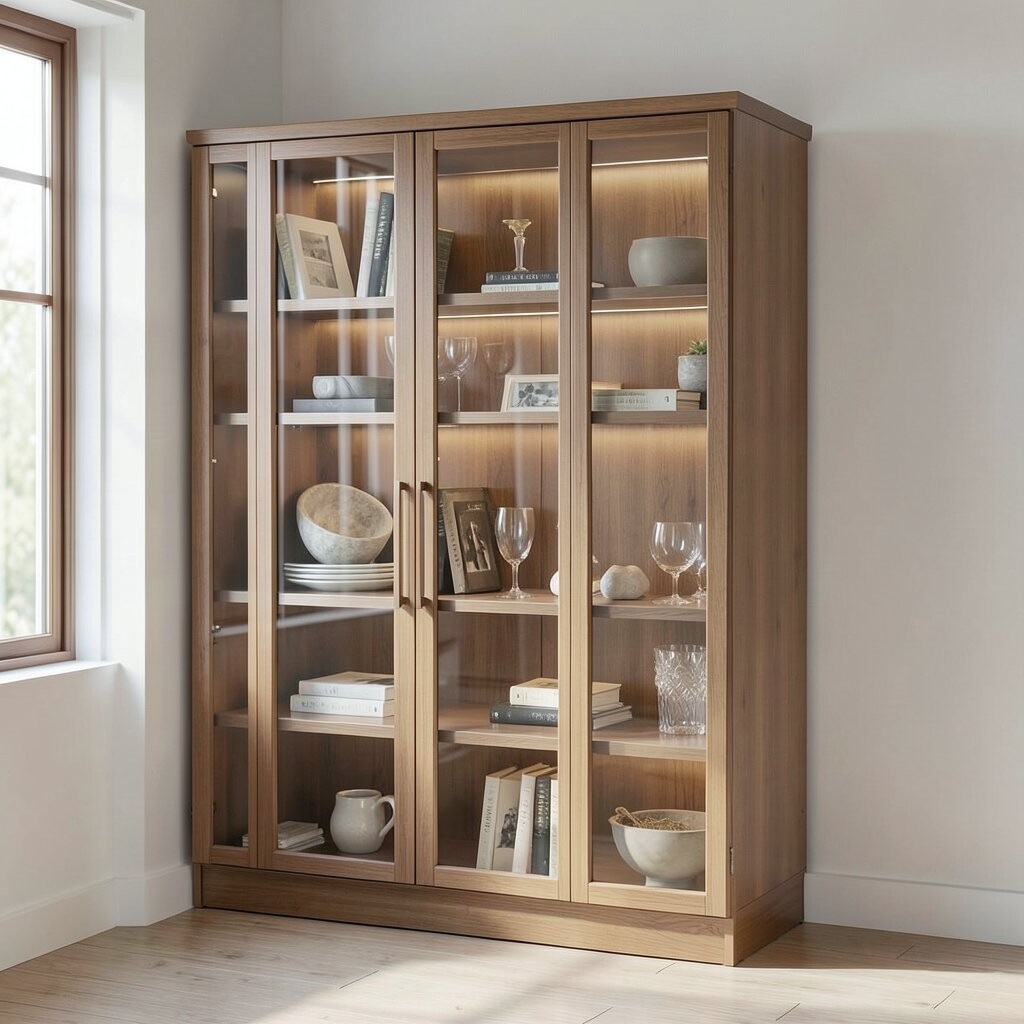
Lighting can make a glass cabinet feel like a mini display case. Even small LED strips can add warmth and help your items look more intentional.
Interior lighting is a great choice when the cabinet sits in a darker corner or away from windows. Wall-mounted lights near the cabinet can also work, but you’ll want to avoid harsh glare that washes out the shelves. Choose a color temperature that matches your existing lighting, like warm white for cozy rooms and neutral white for kitchens.
If you like a dramatic look, consider lighting that softly highlights the back panel, which can make the glass reflect less and the contents stand out more. For a practical option, choose lights with a simple on/off switch so you can show your favorite items only when needed. This gives you control without making everyday use feel complicated.
7. Focus on Frame Materials and Durability
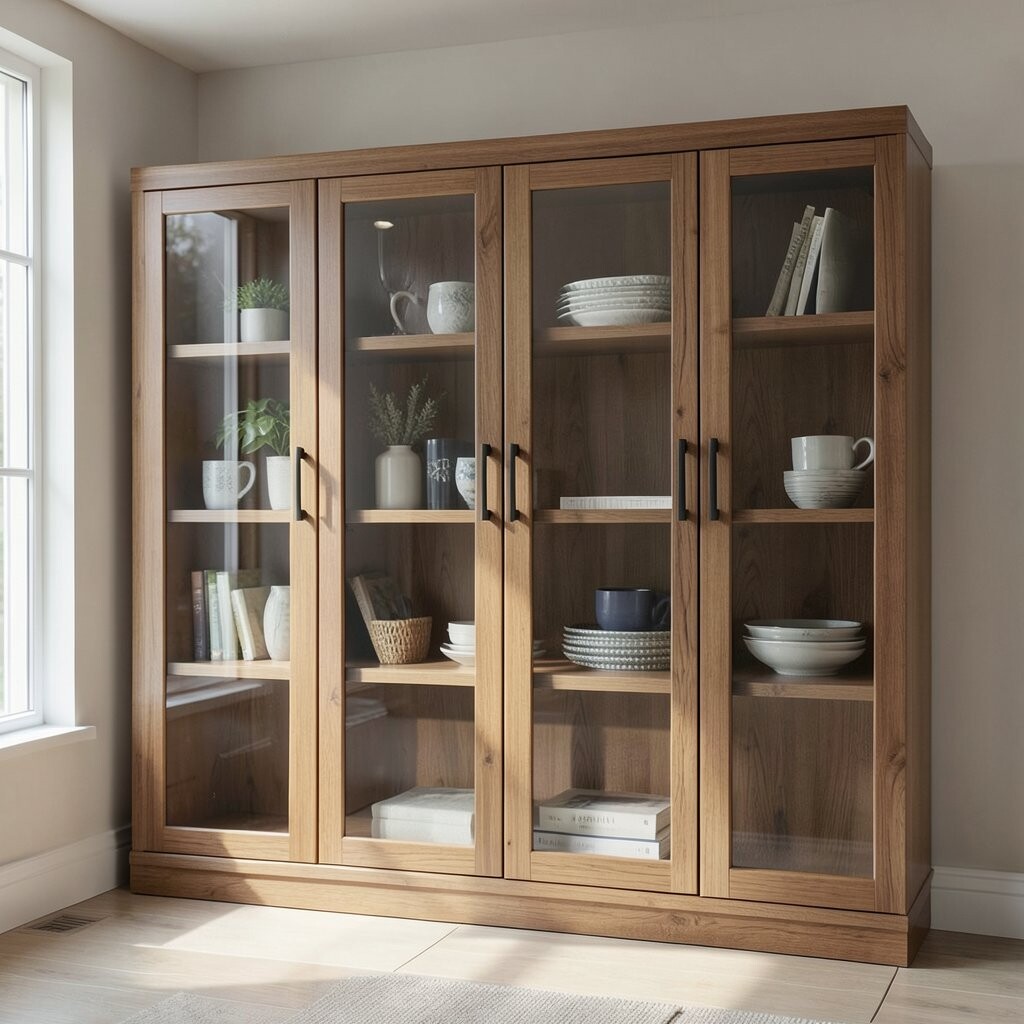
The cabinet frame affects both appearance and long-term durability. Wood frames can feel cozy and homey, while metal frames often look sleek and modern.
For everyday families, look for strong joinery and stable hardware that won’t wobble. If you choose glass, consider tempered or safety glass because it’s made for everyday home life. Hardware such as hinges and handles should feel solid when you open the doors, not loose or stiff.
Consider the climate in your home too. If your area has high humidity, certain finishes can resist warping or swelling better than others. Choosing a durable frame and quality finish can save you headaches later.
To test durability before buying, check reviews and ask about warranties. If the store allows it, gently open doors and inspect how shelves lock into place. These small checks can reveal how well the cabinet will hold up over time.
8. Think About Privacy and Everyday Mess

Glass cabinets look beautiful, but they can also show what’s inside. If you prefer a clean, calm look, plan for how visible your items will be on normal days.
Clear glass makes everything easy to see, so you’ll want matching containers, neat stacks, and consistent color tones. Frosted glass can hide clutter and keep things feeling relaxed even when you’re busy. For a balanced approach, use clear glass for your “pretty” items and solid panels or frosted sections for everyday storage.
9. Decide on Door Style and Opening Method

The door style changes how the cabinet feels and how you use it. Hinged doors look traditional and give full access to the shelves.
Sliding doors can save space in tight areas because they don’t swing outward. For smaller rooms, this can make a glass cabinet much easier to fit. If you want a modern feel, consider frameless or minimal hardware door designs that blend with the room.
Try to picture the cabinet in daily use, not just in photos. If you reach for items often, you may prefer doors that open wide and smoothly. Also consider the way the cabinet will sit near furniture so door movement won’t collide with chairs, tables, or walkway traffic.
For a more personalized touch, choose a door height that matches what you store most. Some people prefer upper shelves for display and a lower area for storage, which can be easier to manage day to day.
10. Plan for Cost and Quality Balance

Glass cabinets can range from budget-friendly to custom-built, and price usually reflects materials and construction. Spending more on strong frames and better glass can pay off in durability and long-term satisfaction.
Start by setting a realistic budget, then decide where you’ll invest most. Many buyers choose to spend on glass quality and hardware since these parts are used every day. If the budget is tighter, you can still get a great look by focusing on clean lines, a good finish, and a functional layout.
Watch for deals, but don’t ignore build details. A cabinet that looks similar online may have thinner shelves or cheaper hinges, which can matter when you load dishes or decor. Compare thickness of materials, how shelves adjust, and whether replacement parts are available.
11. Compare Your Storage Needs to Your Space
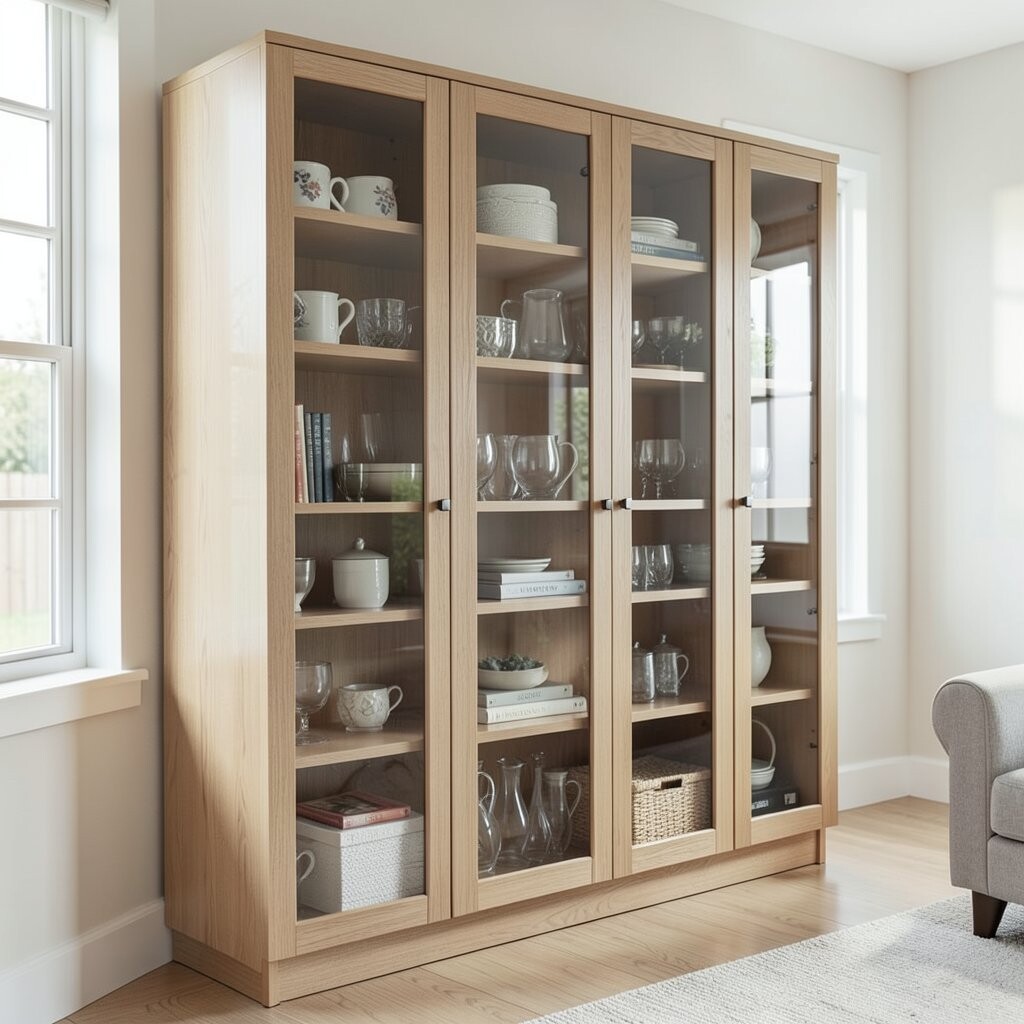
Think about what you will store before you choose a size. A cabinet for stemware needs a different layout than one for board games or bulk kitchen supplies.
If you have shallow storage needs, a narrower cabinet can keep the room from feeling crowded. If you store taller items, make sure shelf heights can adjust and that the top clearance fits your tallest pieces. It helps to measure a few real items at home, like bowls, platters, or serving trays, and use those measurements to plan the shelves.
Also think about how often you use items. Everyday dishes benefit from easy access, while special-occasion pieces can live higher up behind glass for a “ready for guests” feeling. This approach makes the cabinet practical instead of only decorative.
12. Choose a Finish That Hides Wear
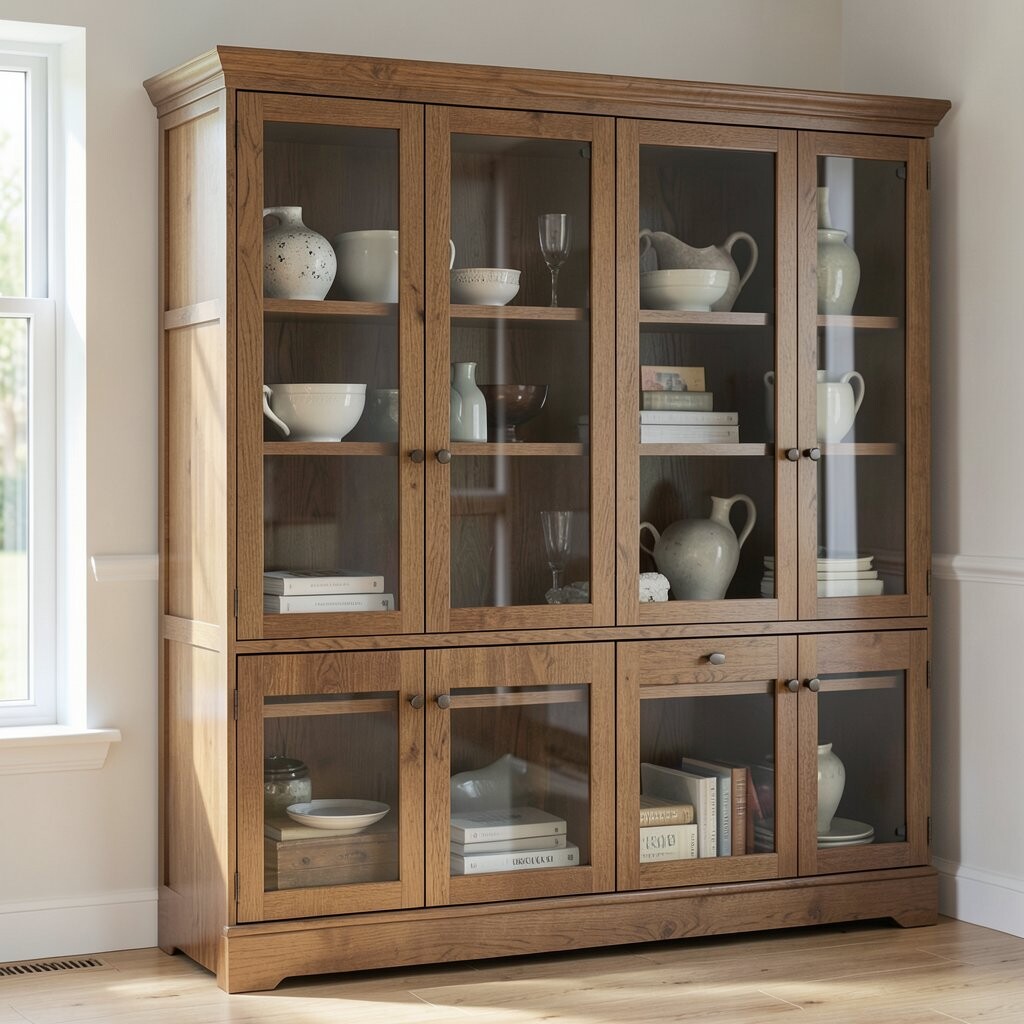
Cabinet finishes affect how your cabinet looks over time. A smooth finish can feel clean and modern, while textured finishes can help hide small scratches.
For kitchens and dining rooms, consider finishes that resist fingerprints and smudges, especially if you choose clear glass and want the cabinet to stay looking polished. Wood stains can hide wear in a way that light paint sometimes can’t, depending on the surface quality. If you have pets or kids, durability matters even more.
Personalize the vibe by pairing your cabinet finish with nearby details like table legs, picture frames, or light fixtures. When the finish feels coordinated, the glass reflections look intentional instead of random. Keep in mind that metal hardware should match or complement your other metals, such as brushed nickel, black, or brass.
13. Look at Back Panels and Interior Color

The inside back panel can change how your items appear through the glass. A white or light back makes dishes look brighter, while a darker back adds drama.
If you want your cabinet to feel airy, choose lighter interior colors that reflect light. For a cozy dining room, a warm wood back or muted neutral can make glassware look rich and inviting. Some cabinets also use textured backs, which can add depth and reduce the flat “empty box” look.
When you plan the cabinet contents, think about contrast. Clear glass with a light back can make colorful plates pop, while darker backs can make metallic serveware look more elegant. This small design detail can be one of the biggest differences you see in real life.
14. Style the Contents Like a Display, Not a Storage Bin

Glass cabinets make your items visible, so styling matters. Even if you use it for everyday storage, you can keep it looking neat with simple organizing habits.
Group items by type, color, or size so the shelves look intentional. Use matching bowls, consistent glass shapes, or uniform trays so the display feels calm. Add small accents like a single vase or a framed photo to create a focal point, but avoid cluttering every shelf.
If you store food or boxes, consider decorative containers that look good through glass. Labeling can help you maintain order, and it keeps you from hunting when you need something quickly. This turns the cabinet into a practical system that still looks stylish.
15. Check for Easy Cleaning and Maintenance

Glass cabinets look crisp when they’re clean, so cleaning needs should be part of your choice. Clear glass can show smudges and fingerprints, especially near handles.
Look for cabinets with accessible door frames and smooth surfaces that wipe down easily. If you choose interior lighting, make sure the wiring and components are safe and not in a spot that traps dust. Tempered glass and sturdy frames generally handle routine cleaning well.
To keep it manageable, adopt a simple routine. Wipe glass with a microfiber cloth and a gentle cleaner, and dust shelves regularly to prevent buildup. If you style with trays and containers, you can lift and clean faster instead of trying to scrub around every item.
16. Keep Trends in Mind, but Choose What You’ll Love

Trends can guide you, but the best cabinet is the one you’ll still enjoy years from now. Right now, many homes lean toward clean lines, warm wood tones, and minimal metal hardware.
Another popular trend is combining glass with hidden storage, so only the best-looking items are visible. People also like subtle lighting inside cabinets to make displays feel elevated without needing heavy decor. Open, airy layouts are common too, since glass naturally lightens the visual weight of furniture.
Use trends as inspiration for details like lighting style, back panel color, or door hardware. Then anchor the design with your existing home features so it doesn’t feel temporary. This keeps your cabinet feeling current while still feeling like it belongs in your home.
17. Personalize With Smart Accessories and Styling Sets
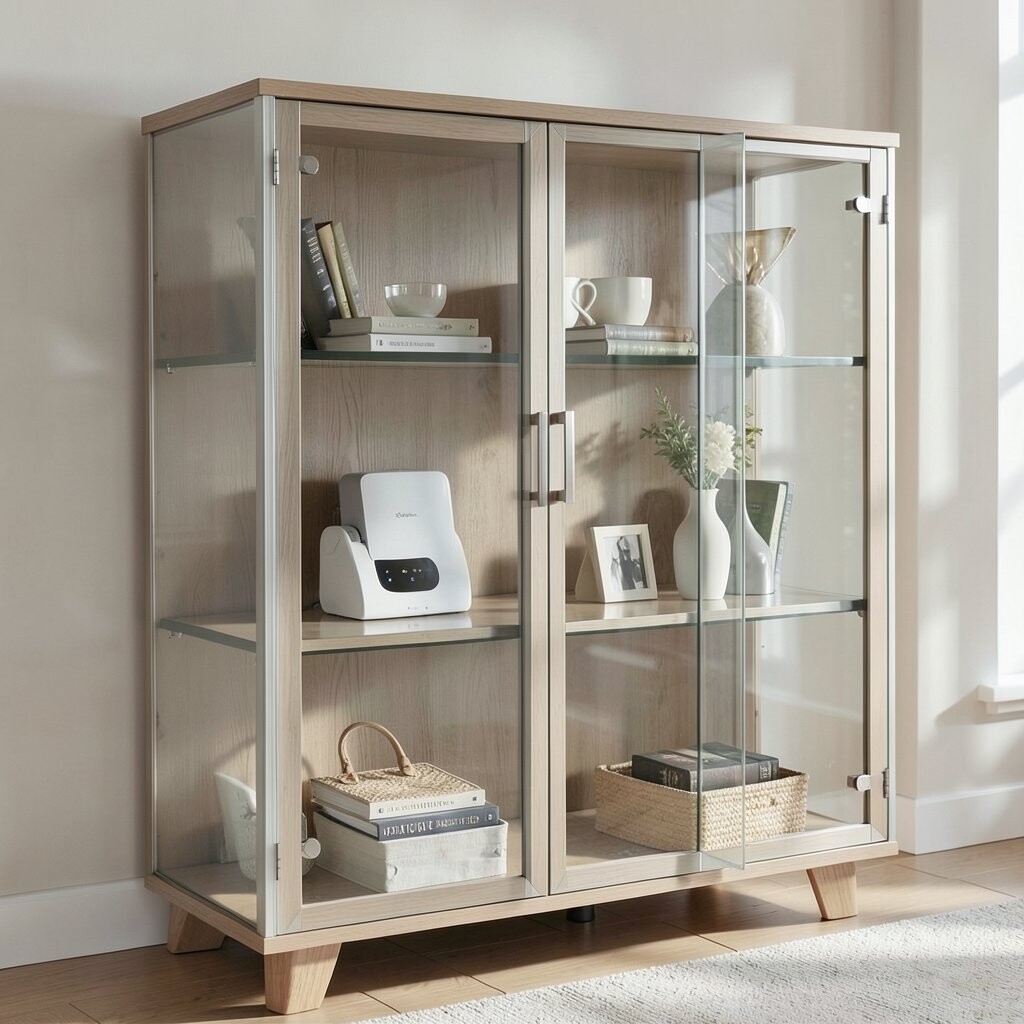
The best glass cabinets feel tailored to your life, not just the room. Simple accessories can help you create a consistent look across shelves.
Try using matching risers, clear canisters, and small baskets so items stay separated but still look neat through the glass. Add tray inserts for serving pieces, and keep things like napkin holders or tea sets in a single “zone” so the cabinet looks organized at a glance.
For a playful touch, coordinate decorative items with seasonal colors, swapping a few pieces without changing the cabinet itself. You can also personalize the look with a styled back panel insert, such as a fabric runner behind the shelves, if the cabinet design allows it. This lets you refresh the cabinet without a full replacement.