
Small kitchens can feel calm and bright with smart styling. You just need a few minimalist tricks that fit your space.
1. Clear Counter Rules With a “Landing Zone”
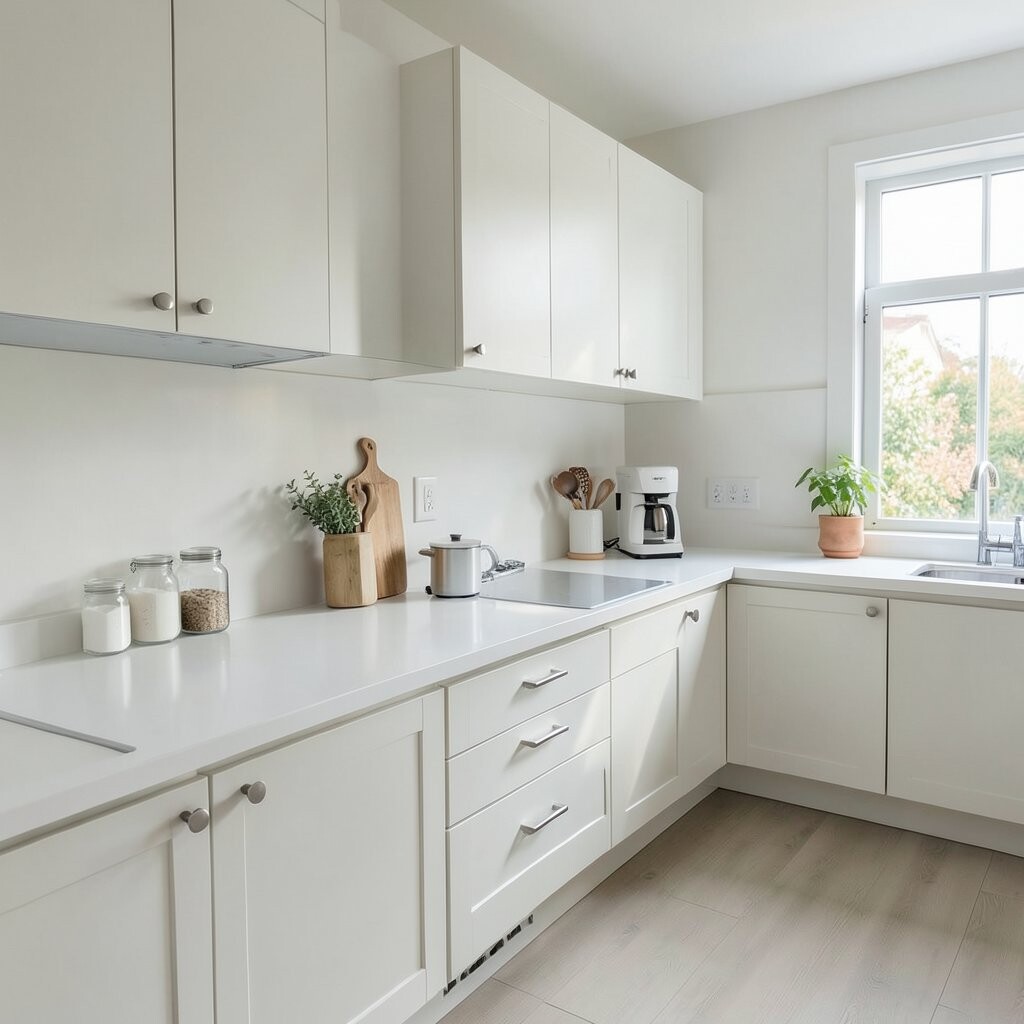
Pick one small spot where keys, mail, and cooking items can land. When everything else has a home, your kitchen looks instantly tidy.
Use a tray or shallow basket on the counter as your landing zone so items don’t spread out. Keep only the essentials there: a soap bottle, a folded towel, and maybe one small cutting board. Rotate what sits out each week to maintain that fresh, uncluttered feel.
2. Stick to a Tight Color Palette
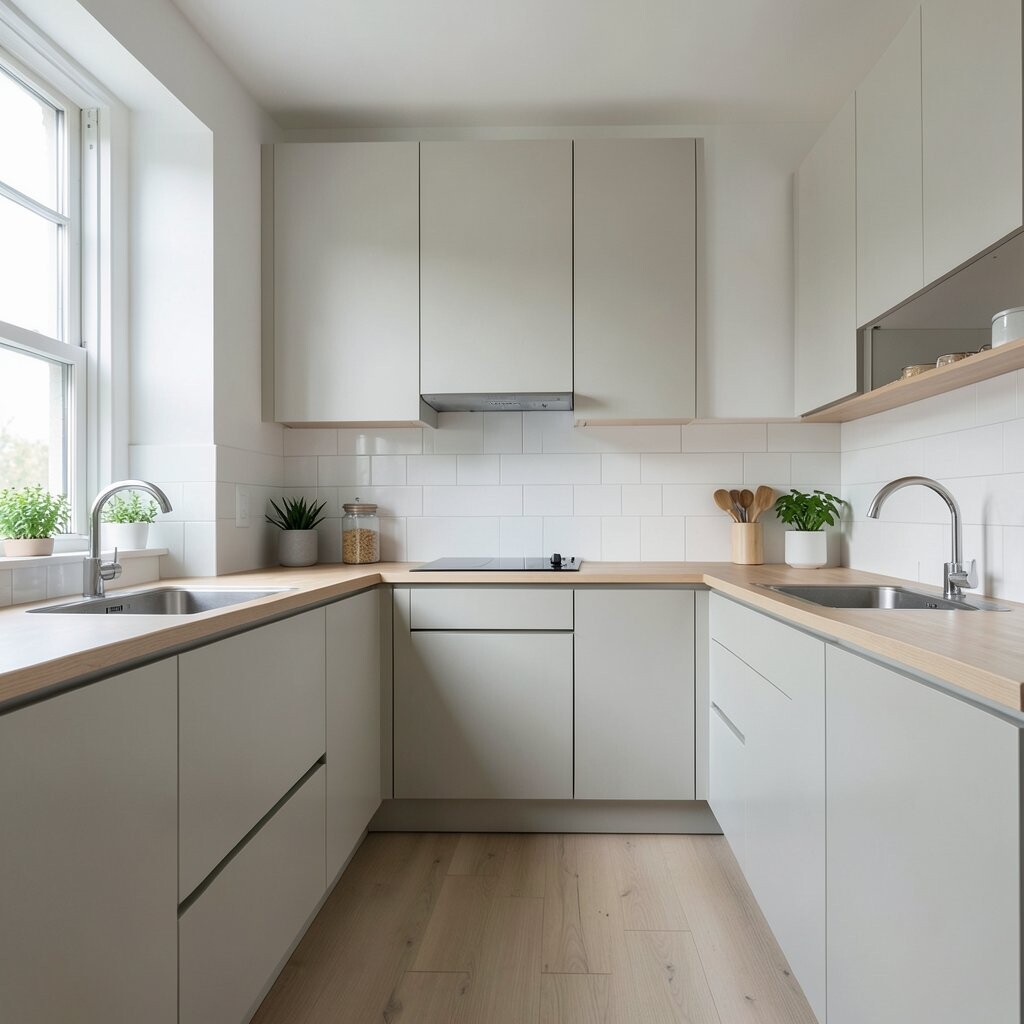
Minimalism works best when your colors stay calm and consistent. Choose two main tones and one accent color, then repeat them across the room.
For example, use warm white cabinets, light wood counters, and a soft black accent in the faucet and hardware. This makes the kitchen look more “designed” even when you’re working with limited square footage. Keeping the palette tight also helps tiny spaces feel bigger because the eye isn’t jumping around.
Cost-wise, you can start with affordable changes like matching dish towels, a unified set of containers, and one cohesive rug. If you want a bigger shift, repainting one cabinet or replacing cabinet pulls can be a high-impact upgrade without remaking the whole room.
3. Choose Open Shelving Only Where It Helps
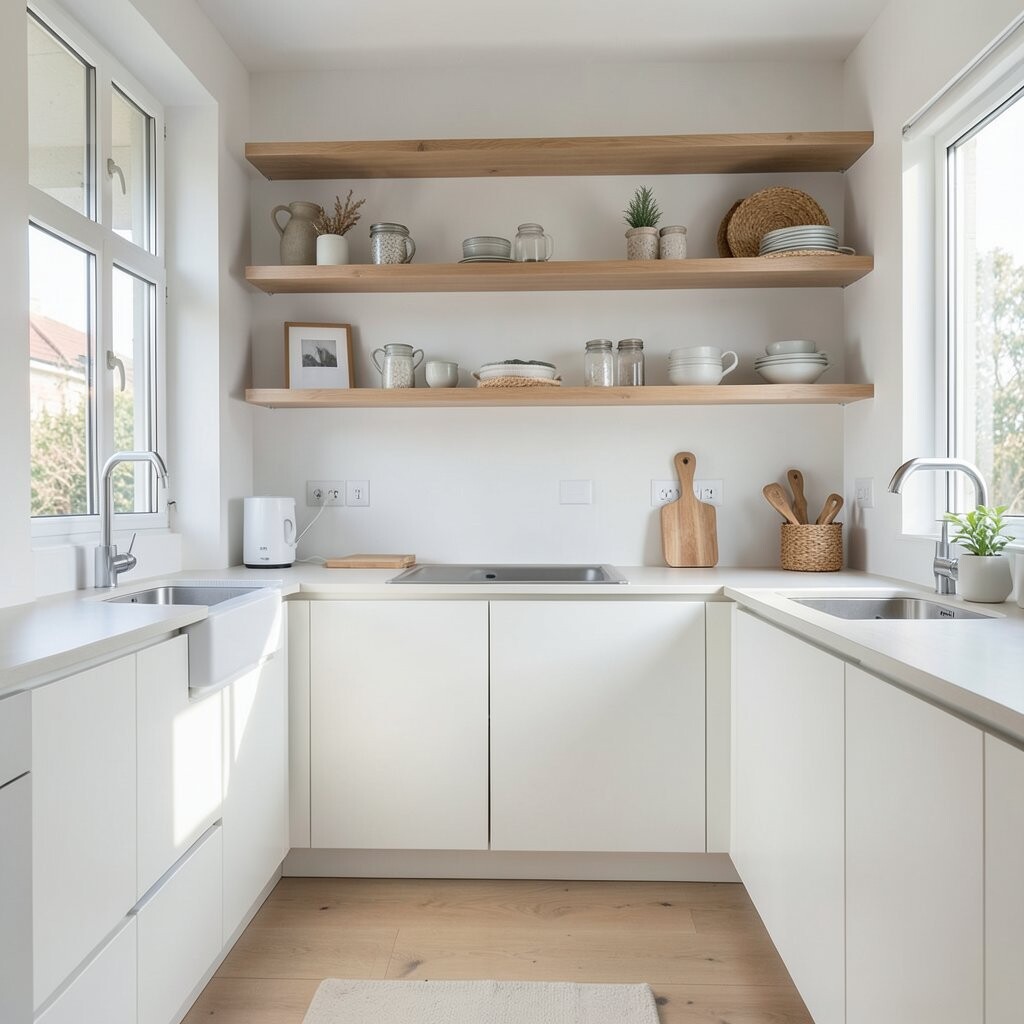
Open shelving can make a kitchen feel airy when it’s styled carefully. If your cabinets are tight, a few shelves can hold everyday items within easy reach.
Limit open shelves to what you actually use often, like glasses, mugs, and a small selection of bowls. Style them like a display: group similar items together and leave some space between stacks. Use matching containers or simple glass jars to keep the visual clutter low.
Try adding thin rail shelves or minimal brackets so the hardware stays subtle. For a personalized touch, show off a favorite ceramic bowl or a small plant in a clean pot. This idea works with most styles, from modern to farmhouse, as long as the shelf stays curated.
If you’re on a budget, start by removing a few items from your current shelves and reorganizing before buying anything new. Trends in small kitchens often lean toward “intentional openness,” meaning less hiding, but more control.
4. Mount a Pegboard for Vertical Organization

A pegboard turns unused wall space into an organized landing area. Instead of cluttering counters, you hang tools and keep them visible.
Choose a simple color pegboard and use matching hooks so it looks clean. Hang frequently used items like measuring cups, spatulas, and a whisk, then keep the rest in drawers. For practicality, place heavier tools lower and lighter tools higher so grabbing them is easy.
5. Use Slim Drawers for “No-Fuss” Storage
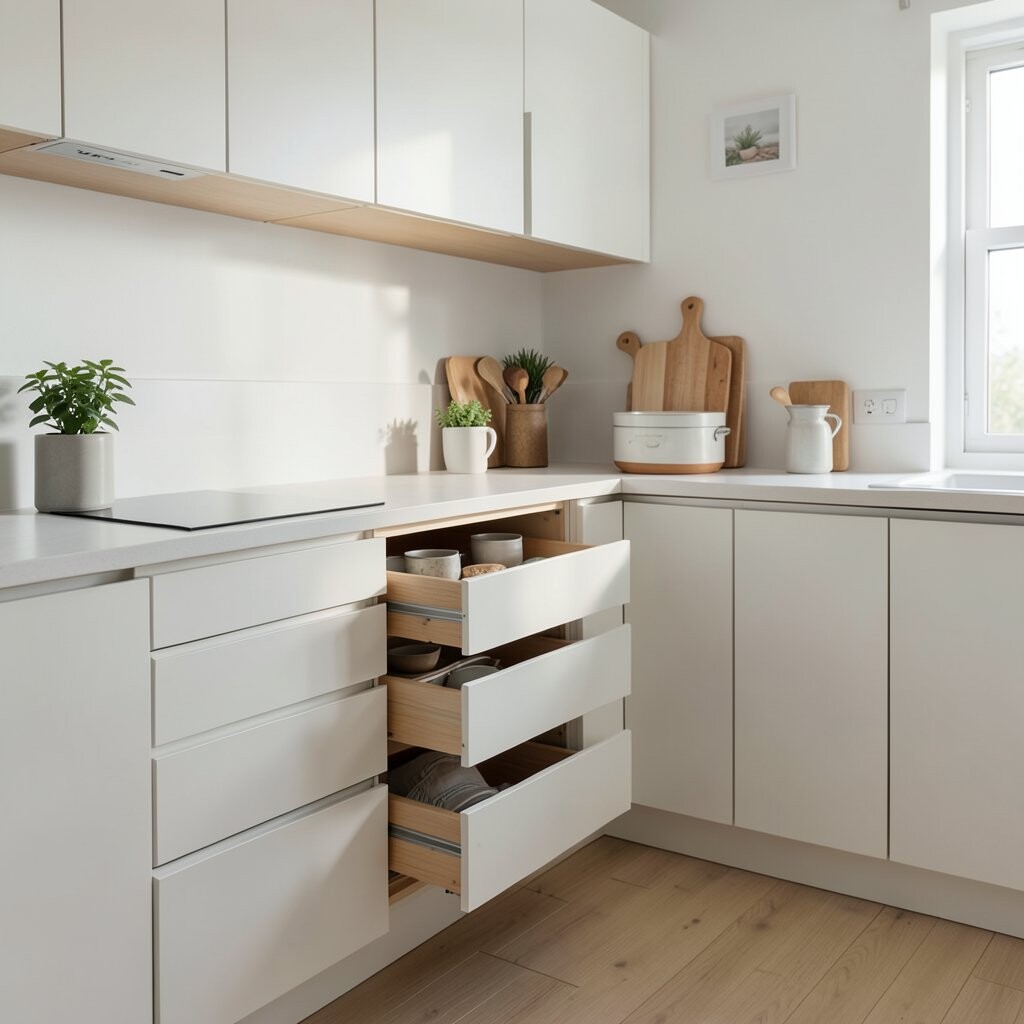
Drawer storage makes a tiny kitchen feel calmer because it hides mess. You can also find items faster when everything has a slot.
If your kitchen doesn’t have perfect drawer organization yet, add small inserts or dividers. Label categories like “cooking utensils,” “baking tools,” and “snack prep” to make cleanup quicker. Keep similar items together so you’re not digging through drawers every time.
For a unique touch, paint the drawer dividers a muted accent color or use plain fabric labels that match your palette. This is a popular minimalist trend because it supports “closed storage” while still making everything easy to reach. Many organizing inserts are inexpensive, so even a small investment can make a big difference.
6. Hide Small Appliances in a Cabinet with a Routine

Small appliances look tidy when they’re stored rather than displayed. A cabinet or shelf with a simple “appliance rule” keeps your counters open.
Pick a routine: when you’re done cooking, return the appliance to its home right away. This prevents the daily buildup that makes tiny spaces feel chaotic. If you use something often, leave it out once a day, then put it away at night.
Cost considerations are real here, so focus on improving how you use what you already own. Add a shelf liner, a cable tie, and a small tray for cords to keep the cabinet clean and safe. Your kitchen will look more minimalist even without buying new furniture.
7. Match Your Textiles for Instant Calm

Dish towels, oven mitts, and pot holders can either add chaos or create harmony. Minimalist kitchens usually look best when textiles share similar colors and patterns.
Choose two towel styles and rotate them, instead of having many random ones. Use one neutral towel for everyday tasks and one accent towel for a pop of personality. Keep them folded and aligned so the visual rhythm stays smooth.
For practical tips, hang towels on hooks near the stove or sink so you grab them quickly. Personalize with a subtle pattern, like a thin stripe or a tiny dot, rather than bold prints that compete with everything else. Even thrifted textiles work well when they match your palette.
Trends now favor simple, washable cotton and linen blends that look good even when they’re slightly worn in. It feels lived-in, not cluttered, which is perfect for tiny apartment kitchens.
8. Put a Single Statement Plant on a Shelf
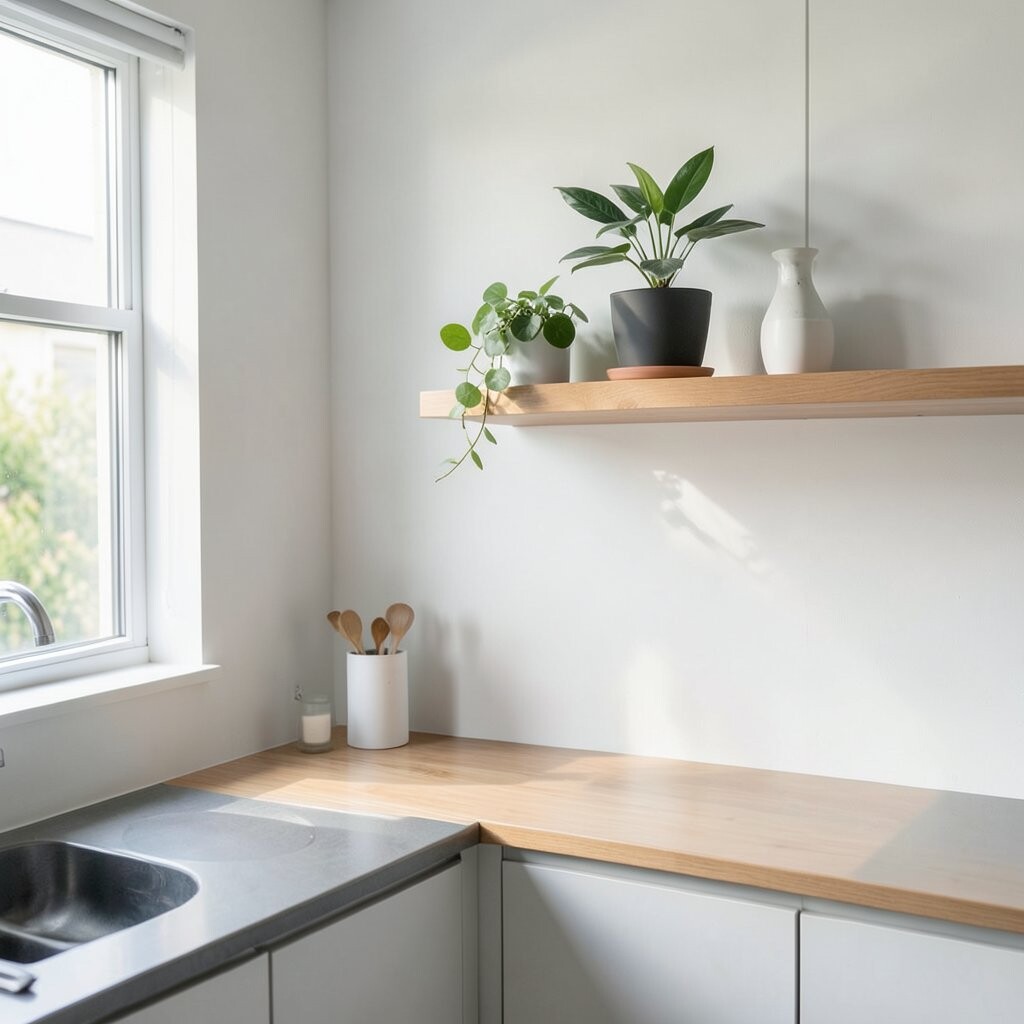
A small plant adds warmth and softness without taking up floor space. In minimalist styling, one plant can be enough to bring the whole kitchen to life.
Place a hardy herb like basil, rosemary, or a low-light plant where it gets some natural light. Use a simple ceramic pot in your chosen accent color so it blends into the palette. Keep leaves trimmed and wipe the shelf so the plant looks intentional, not messy.
9. Switch to One Style of Matching Containers
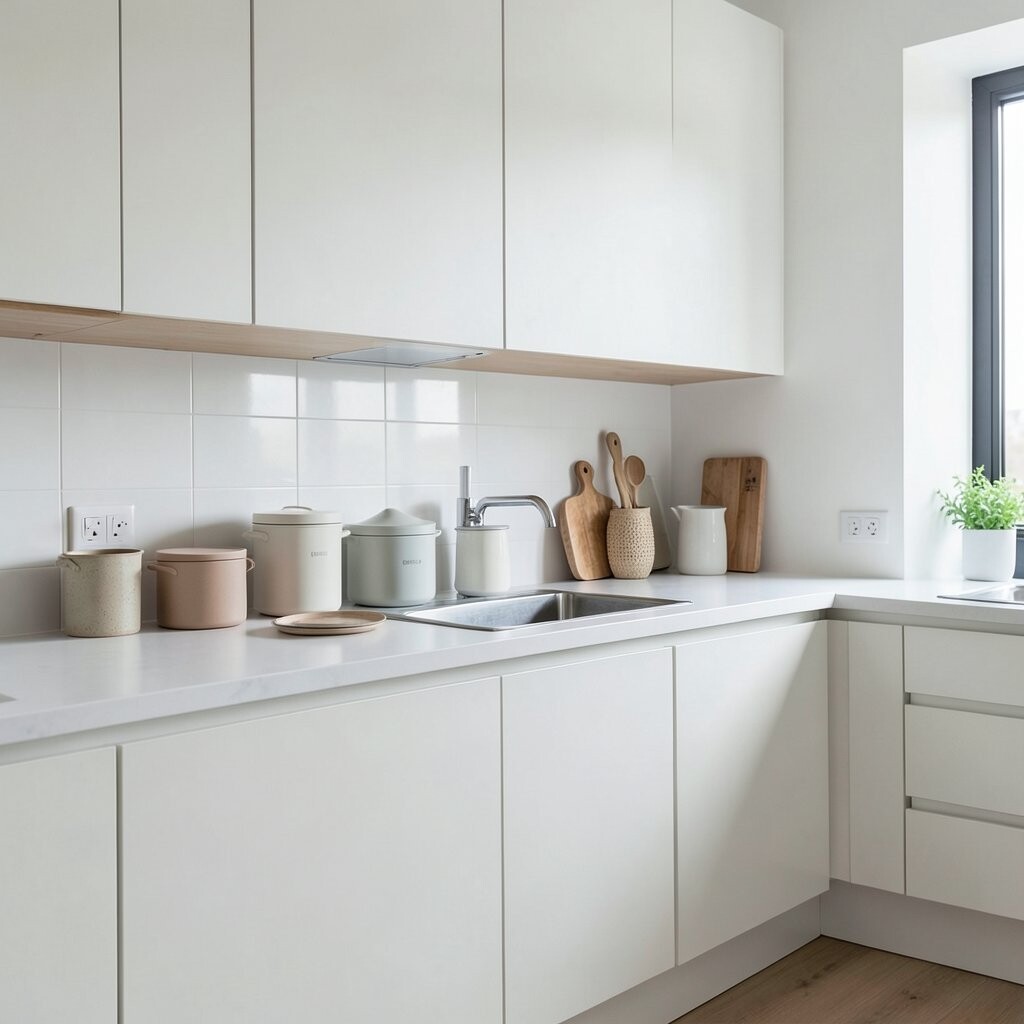
Using the same container style makes a small kitchen look organized right away. Your pantry and countertop area will feel more uniform and less visually busy.
Pick a set of containers in glass or matching plastic with tight lids. Fill them with staples like rice, pasta, flour, and oats, then label them neatly. Keep the number of containers small, focusing on what you truly use weekly.
For personalization, add a handwritten label style that matches your vibe, such as clean block lettering or simple cursive. This idea is affordable over time because you can buy containers one or two at a time. Many people follow this minimalist trend to reduce “visual noise” from mixed packaging.
Make it practical by storing backup refills in a closed pantry shelf or cabinet. That way the open counter display stays tidy and your kitchen stays functional.
10. Choose a Minimal Sink Setup

A sink area sets the tone for the whole kitchen. If it looks clean, the rest of the space feels easier to manage.
Use one soap dispenser, one brush, and one small tray to catch drips. Keep the sponge hidden in the tray and store extra cleaning supplies under the sink. When you rinse dishes, wipe the counter right after so the area stays minimalist and bright.
If you want a unique touch, choose a dispenser in matte black, warm white, or brushed steel to match your fixtures. Cost is usually low since you can start with a tray and one dispenser. This is a trend that supports the “micro-clean” habit that tiny kitchens need.
11. Create a “Kitchen Map” With Storage Zones
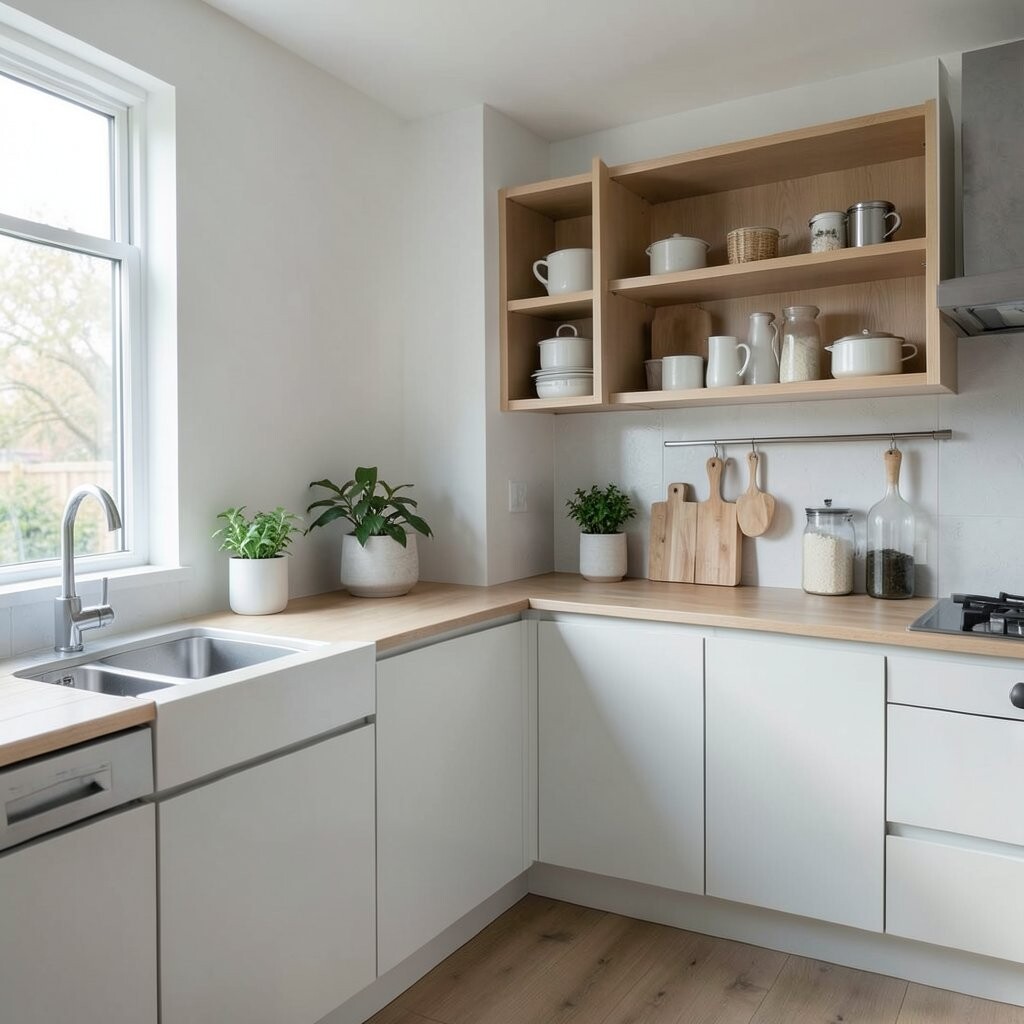
Minimalism becomes easier when you store items by how you use them. Think about where your hands naturally go while cooking.
Create three zones: prep, cook, and clean. Put cutting boards and knives near the prep area, place oils and spices near the stove, and keep dish tools near the sink. This reduces clutter because you won’t pile things in the wrong place.
Try using small baskets or labeled bins inside cabinets so each zone stays contained. Personalize by choosing a label style that feels friendly and simple, not too formal. The benefit is big: you’ll spend less time hunting and more time enjoying cooking.
If you’re renting, use removable hooks and adhesive organizers. Many tiny-apartment upgrades can be undone later, which keeps costs and stress low. This zone method is a minimalist favorite because it’s functional, not just pretty.
12. Use Light Flooring or a Small Rug With Clean Lines
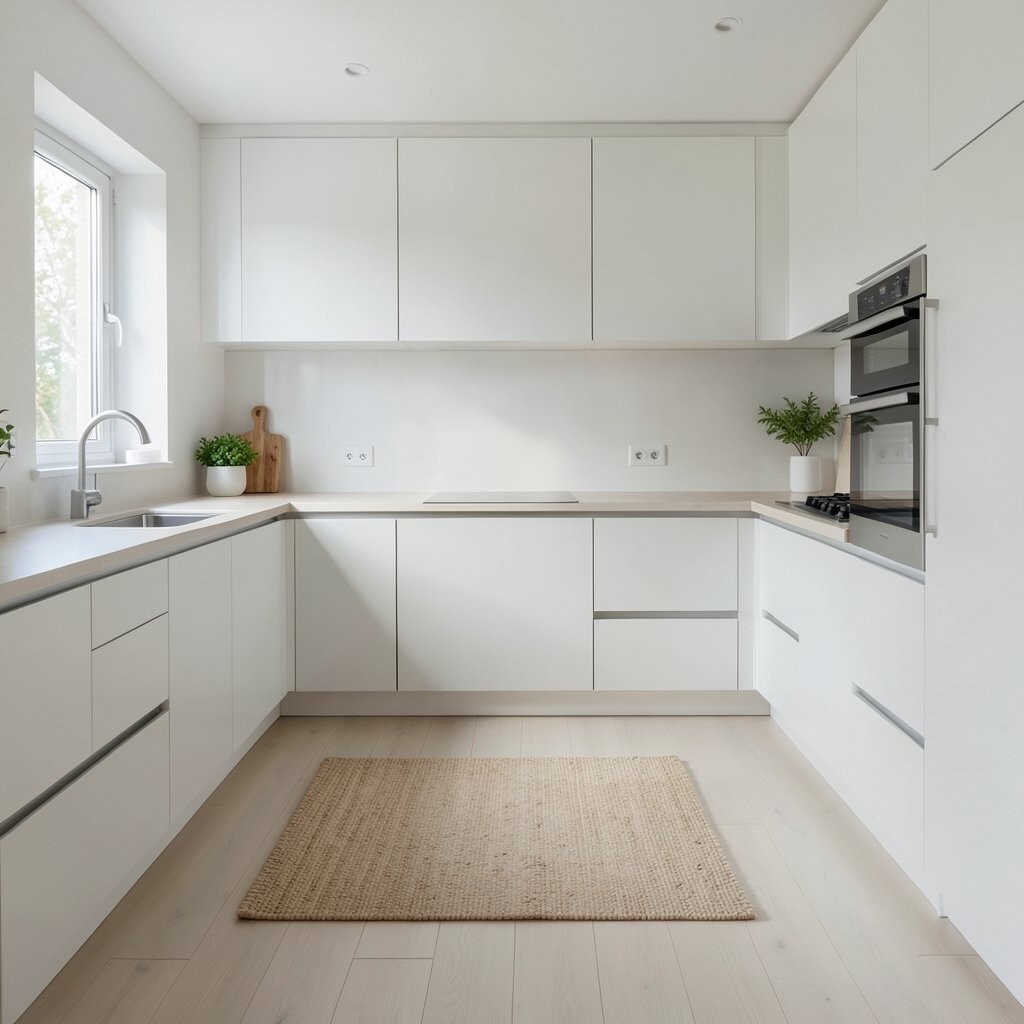
The floor and rug under your kitchen setup affect how open the space feels. Light colors and simple patterns can make everything appear larger.
Choose a small rug with a flat weave and easy cleaning, especially near the sink. Use colors that match your palette so it doesn’t fight with cabinets or countertops. If you spill often, look for washable materials or slip-resistant backing.
13. Keep Lighting Simple and Bright

Good lighting makes a minimalist kitchen feel welcoming instead of bare. You don’t need fancy fixtures, just clean, bright light where you cook.
Use warm-white or neutral bulbs so the kitchen looks consistent throughout the day. Add a simple under-cabinet light bar if you have shadowy corners. For practicality, aim lighting at counters and the sink, not just the center of the room.
If you love design, choose one slim pendant or a minimal ceiling fixture that complements your hardware. Cost can vary, so start with bulbs first, then upgrade fixtures later. This is aligned with current trends that prioritize task lighting in small apartments.
14. Elevate Items With a Small Tiered Tray
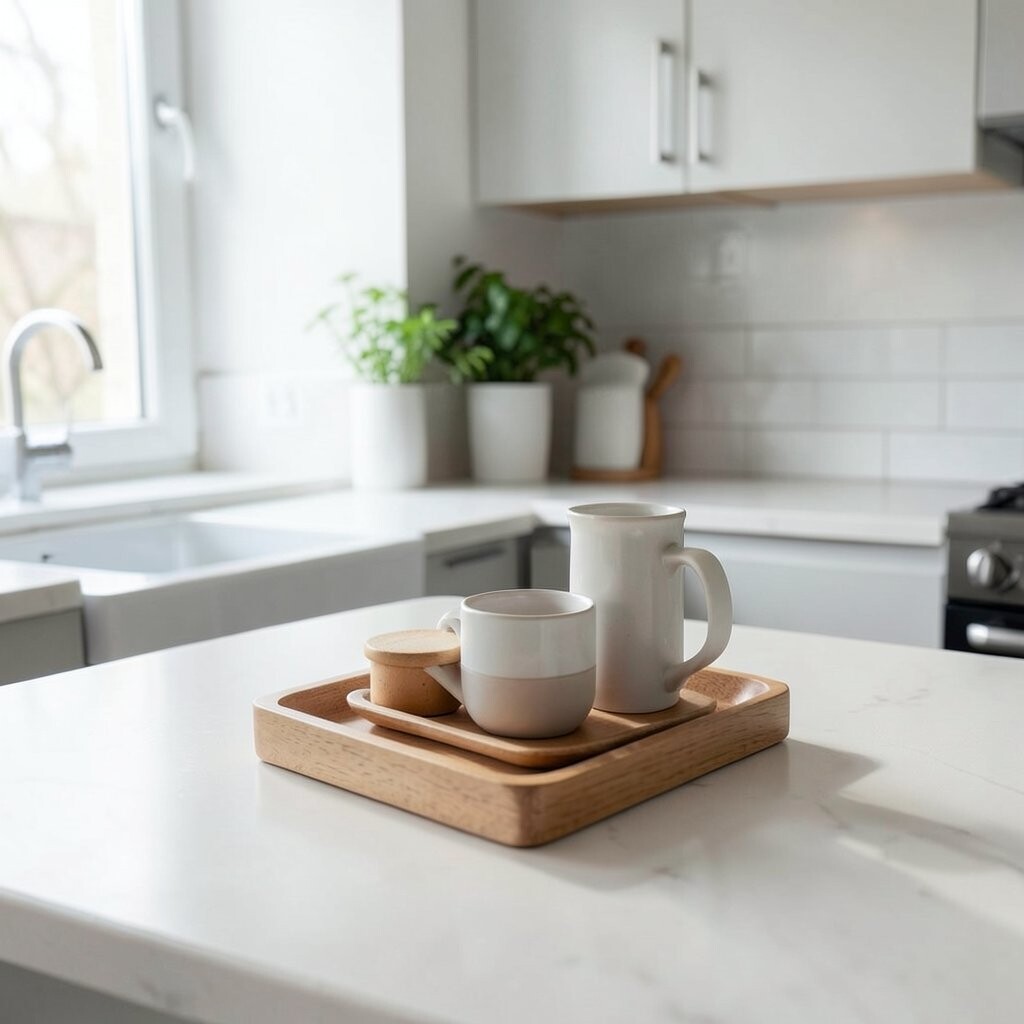
A tiered tray gives you a designated “display spot” without spreading items around. It helps you style small essentials in a neat stack.
Use it for breakfast items like sugar, tea bags, or a few snack containers. Keep the number of items limited so the tray looks curated, not crowded. This uniqueness is in the way it combines organization and styling in one visible place.
Personalize it by choosing a tray material that fits your kitchen, like wood for warmth or metal for a sleek look. If you’re budgeting, use what you already have, such as a stackable plate stand from a thrift store. Minimalist kitchens often use multi-level serving pieces to make small spaces feel intentional.
15. Repeat Hardware Details for a “Built-In” Feel
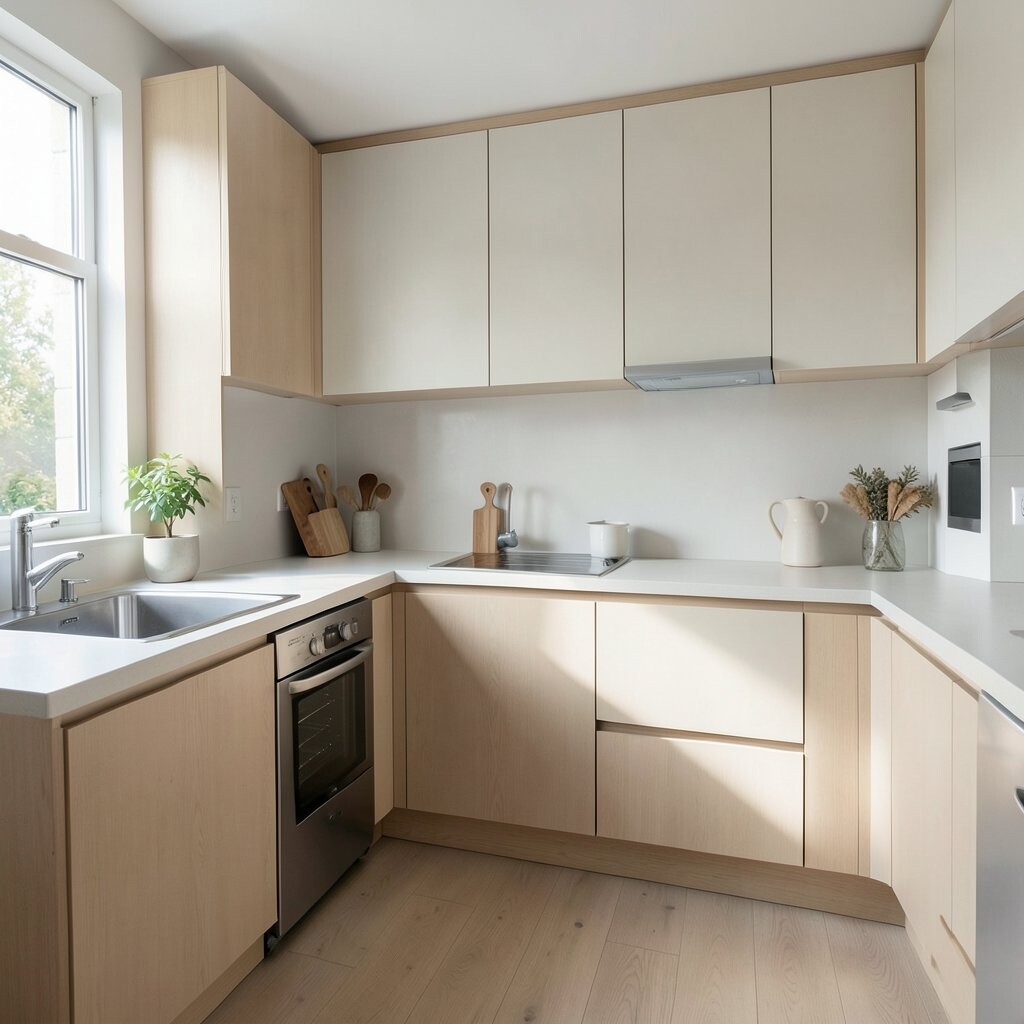
When cabinet pulls and drawer knobs match, the kitchen looks more cohesive. Cohesion is a major minimalist secret in small apartments.
Swap mismatched hardware for a single finish like brushed nickel, matte black, or warm brass. Choose a style that feels simple, with rounded edges and clean lines. You’ll also notice fewer visual interruptions when your eye moves around the room.
16. Choose a Compact Cutting Board System
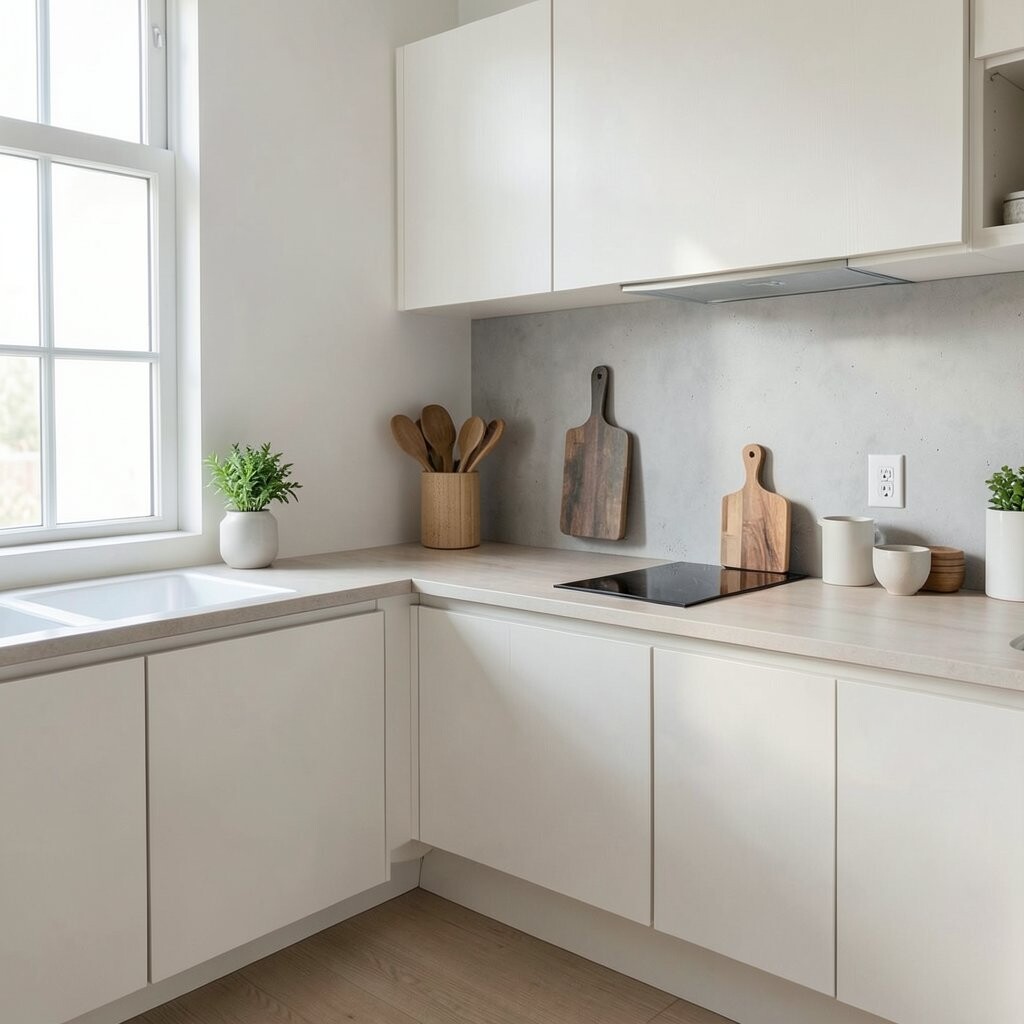
Cutting boards can take up space if you store them randomly. A compact system keeps boards organized and makes prepping easier.
Use a vertical board holder or store boards standing up in a drawer. Keep one main board out for daily use and store the rest neatly. This helps because the board you need is always ready while counters stay clear.
For practical tips, use different boards for different tasks, like one for vegetables and one for meat-free prep. Personalize with a board color that matches your palette or add a simple rubber base to prevent slipping. Cost is often moderate, but you can start with one quality board and a holder.
Current trends favor functional beauty, meaning the cutting board setup can look neat and still be used every day. It’s a minimalist upgrade that pays off quickly.
17. Store Spices Vertically in a Narrow Rack

Spices are small, but they can make a kitchen look busy fast. Vertical spice storage turns a clutter pile into a clean, organized display.
Choose a slim rack that fits inside a cabinet or on the side of a pantry shelf. Label jars so you can find what you need without opening five containers. Keep jars consistent in shape and size for a minimalist look.
If you want a unique twist, use a magnetic strip for metal canisters or a rotating organizer if space allows. This setup is helpful for tiny kitchens because it uses vertical space rather than drawer space. Many minimalist kitchens are trending toward “visible order,” where small categories look neat and repeatable.
18. Add a Slim Runner Organizer for Cooking Essentials

When you cook, you want tools nearby, but you don’t want them scattered. A slim organizer can act like a mobile station you use in short bursts.
Place a narrow tray near the stove and set out oils, a spoon rest, and a few frequently used spices. When you finish, slide everything back into its storage home. This method keeps counters clear while still making cooking feel convenient.
19. Style One Wall Corner With a Purpose
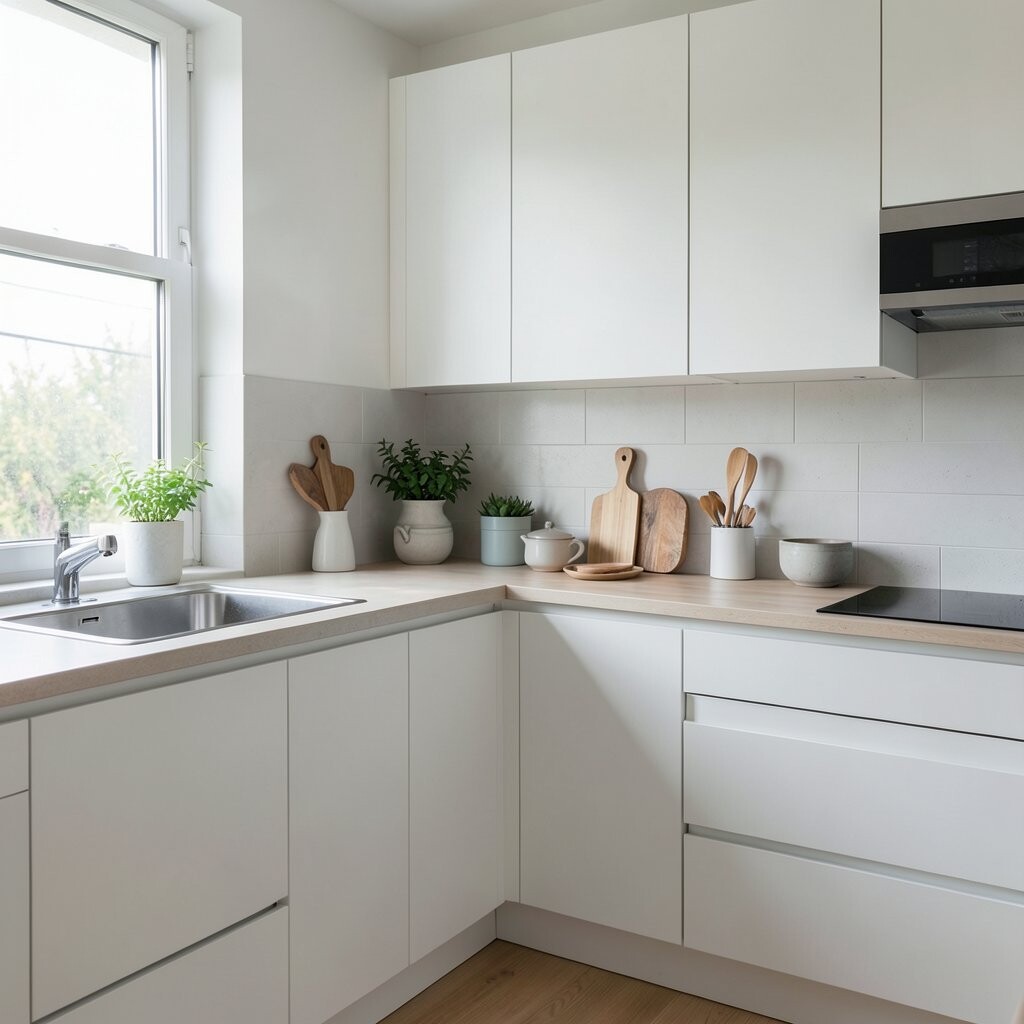
Instead of decorating the whole kitchen, focus on one wall corner that adds function. A single styling spot makes the room feel intentional and not cramped.
Use a small shelf, a narrow cabinet, or a utensil rail to create a “purpose zone” for daily items. Add just a few items: one framed print, a small plant, and a tidy container set. Personalize it with your favorite colors or a small seasonal touch, like a neutral bowl for citrus.
Cost considerations are flexible here since you can start with peel-and-stick hooks, a thrifted frame, or a simple shelf bracket kit. This idea fits modern trends that focus on minimal, functional decor rather than filling empty space. Your tiny kitchen will feel styled because the corner has a clear job.